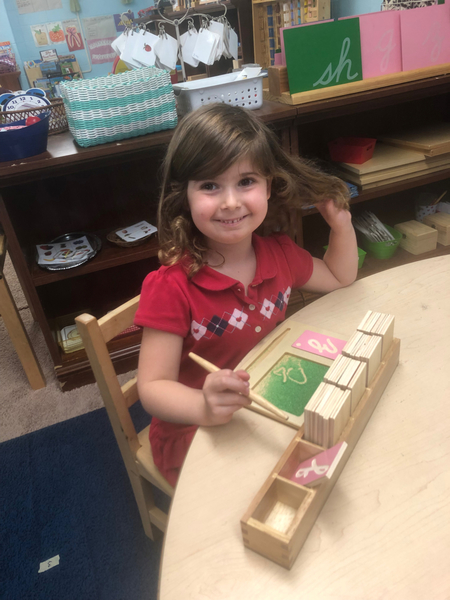
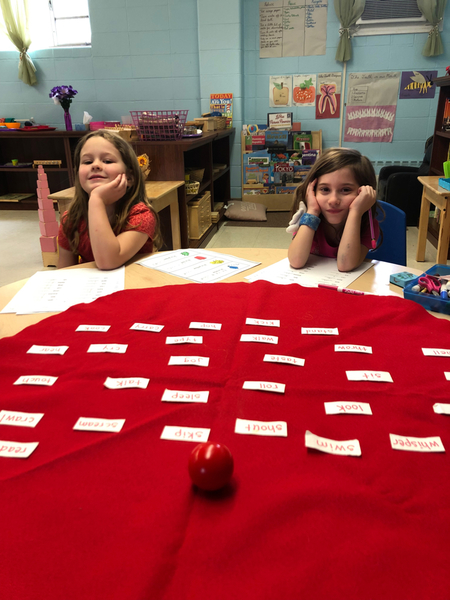
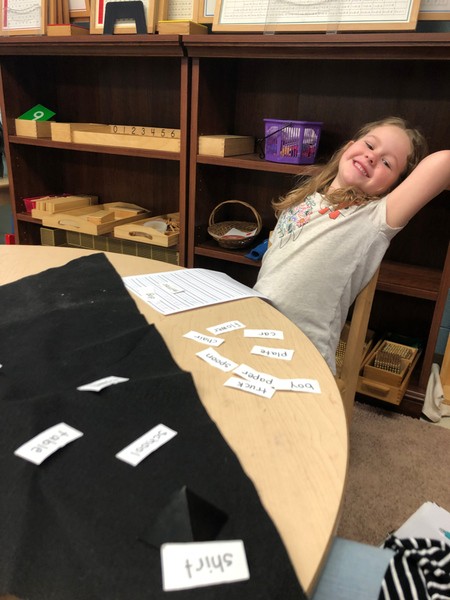
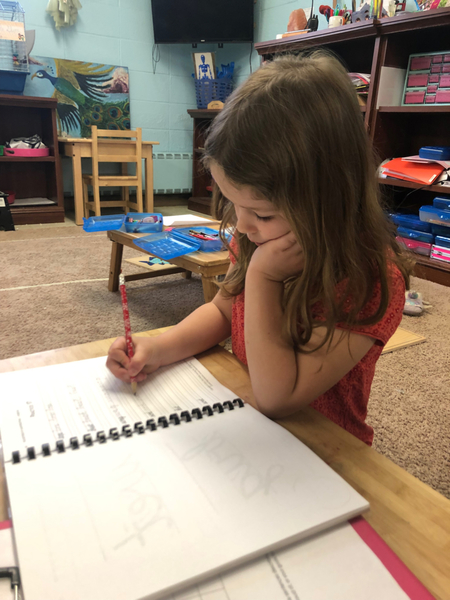
This week our “Peek” was written by a few of our students! These students read our previous blogs, took pictures around the room, and filled in a blog template. The students did some editing together, and with a teacher, so what you will read below is their final product. There are still some misspelled words in their final product, but in a Montessori classroom we focus on the process, instead of the end result. Dr. Montessori believed when we put all of the emphasis on the final product, we devalue everything leading up to that point. This can discourage repetition which will make mastery of a skill difficult. The purpose of the students writing the blog is to provide you with a glimpse into the room through their eyes, to provide them with practice of real world skills, and to give them a deeper understanding of the materials in the room. We hope you enjoy their work!
“A Peek at Our Week” by the Annelise and Caiden
The first graders learned how to make an uppercase cursive n. The second graders learned imaginary island. The third graders learned all about adverbials. The forth grade learned about the Iron Age. The fithe graders learned about square roots.
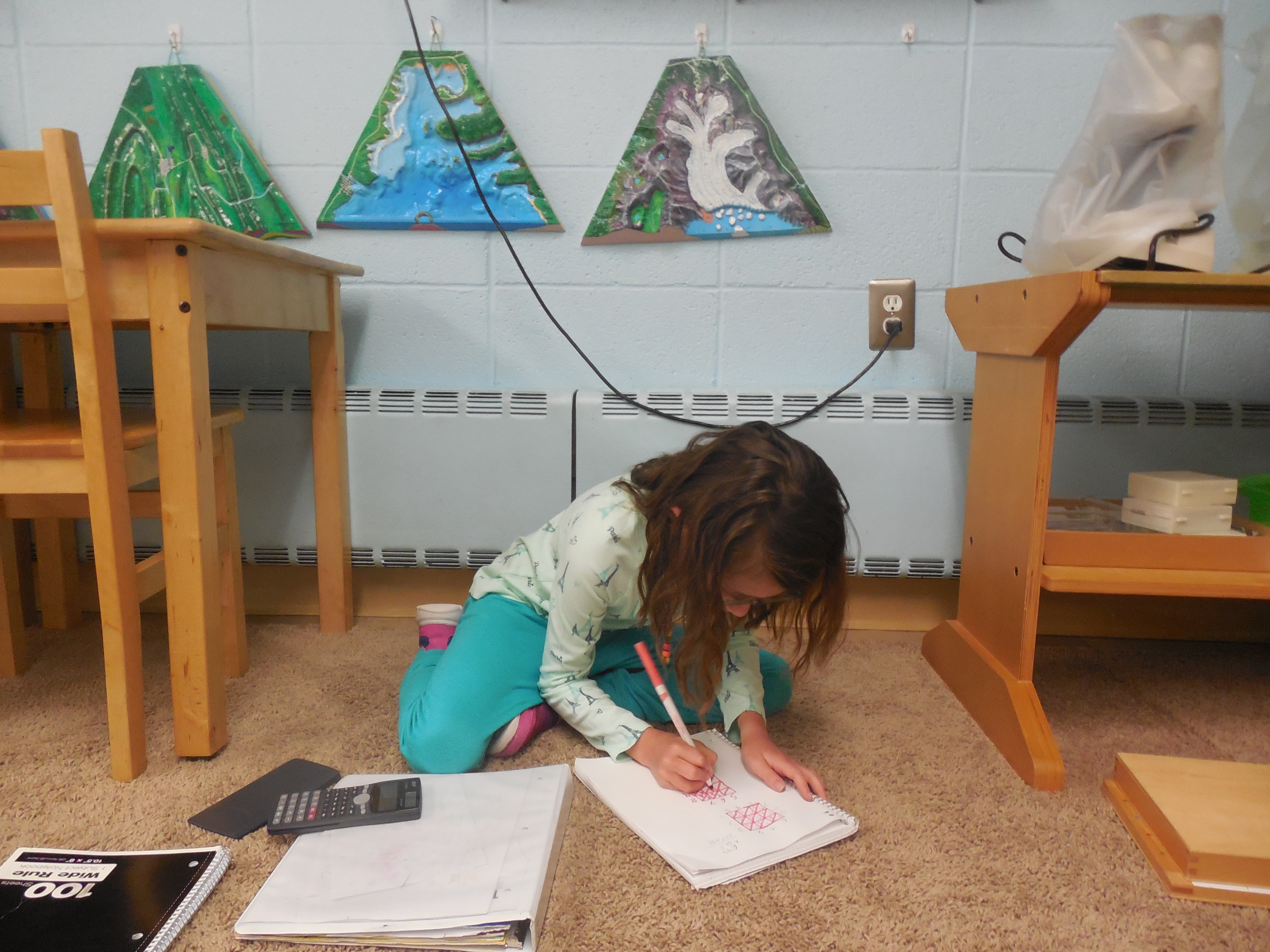
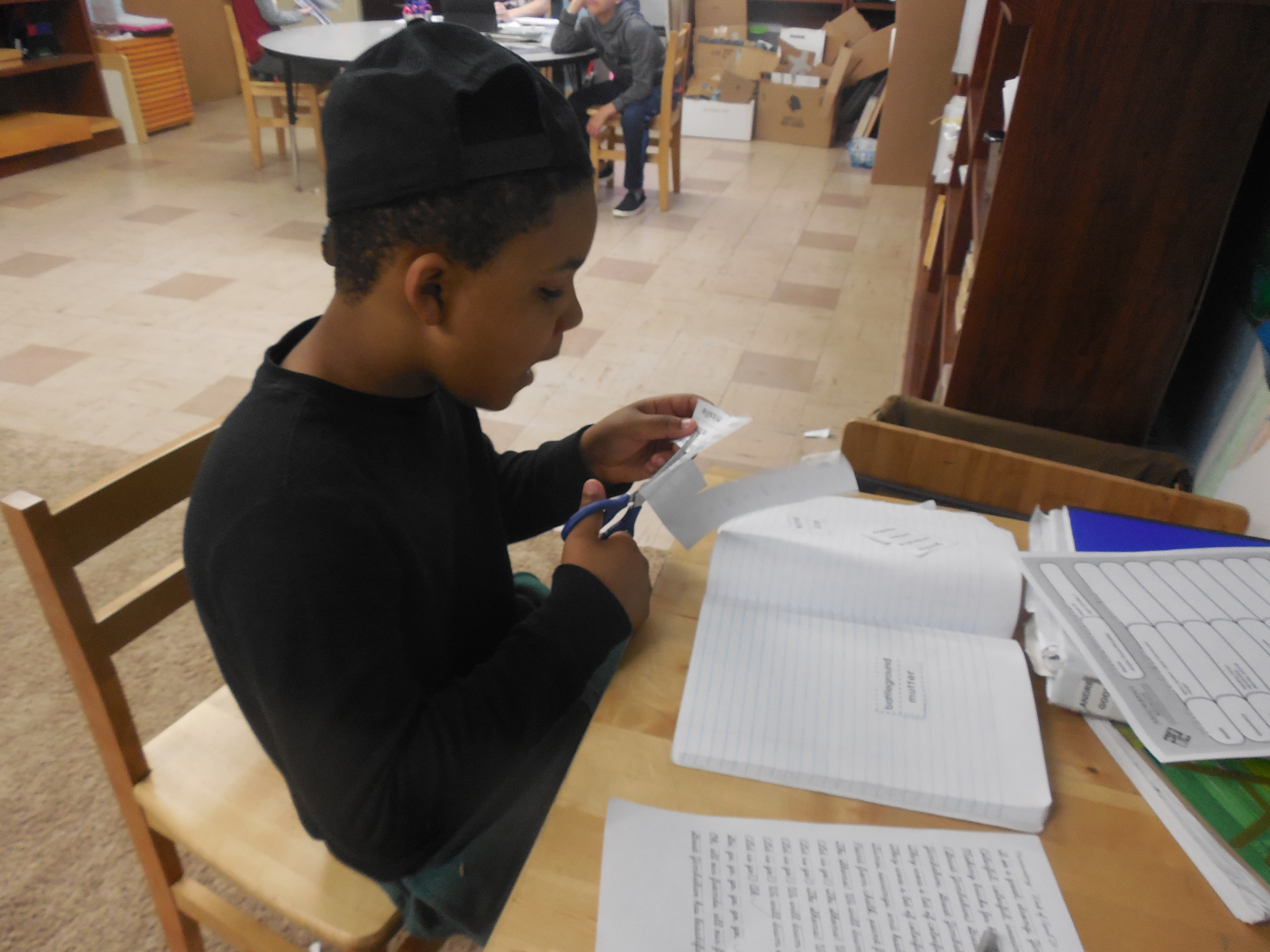
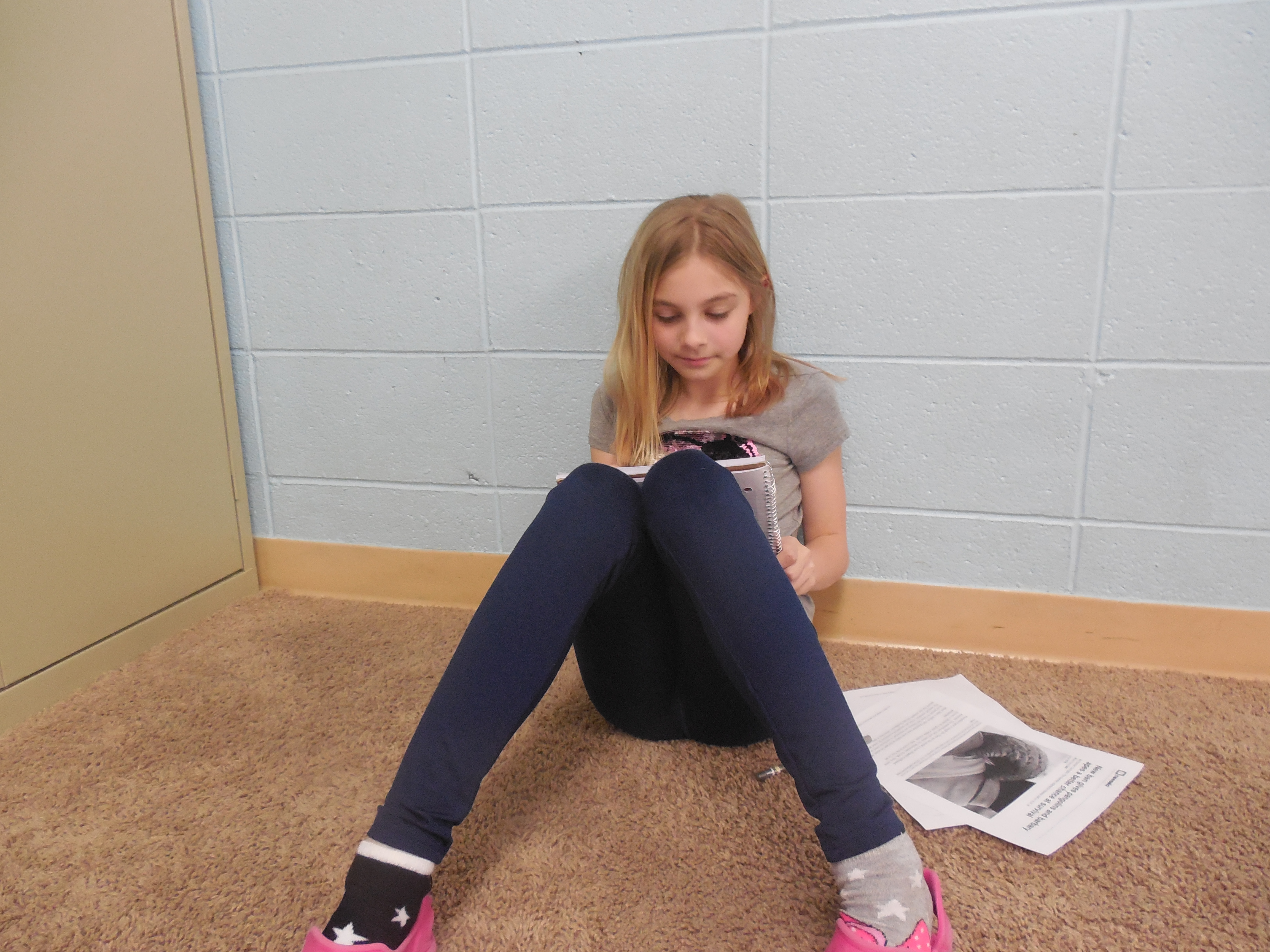
They are doing research on animals. They are researching cats.This student is working on Latis Multiplication. She checked her ecwashon with the calculator.This student is working on spelling. He is also working on handwriting.This student is writing about pangolins being indangered. She learned that people should stop killing them.
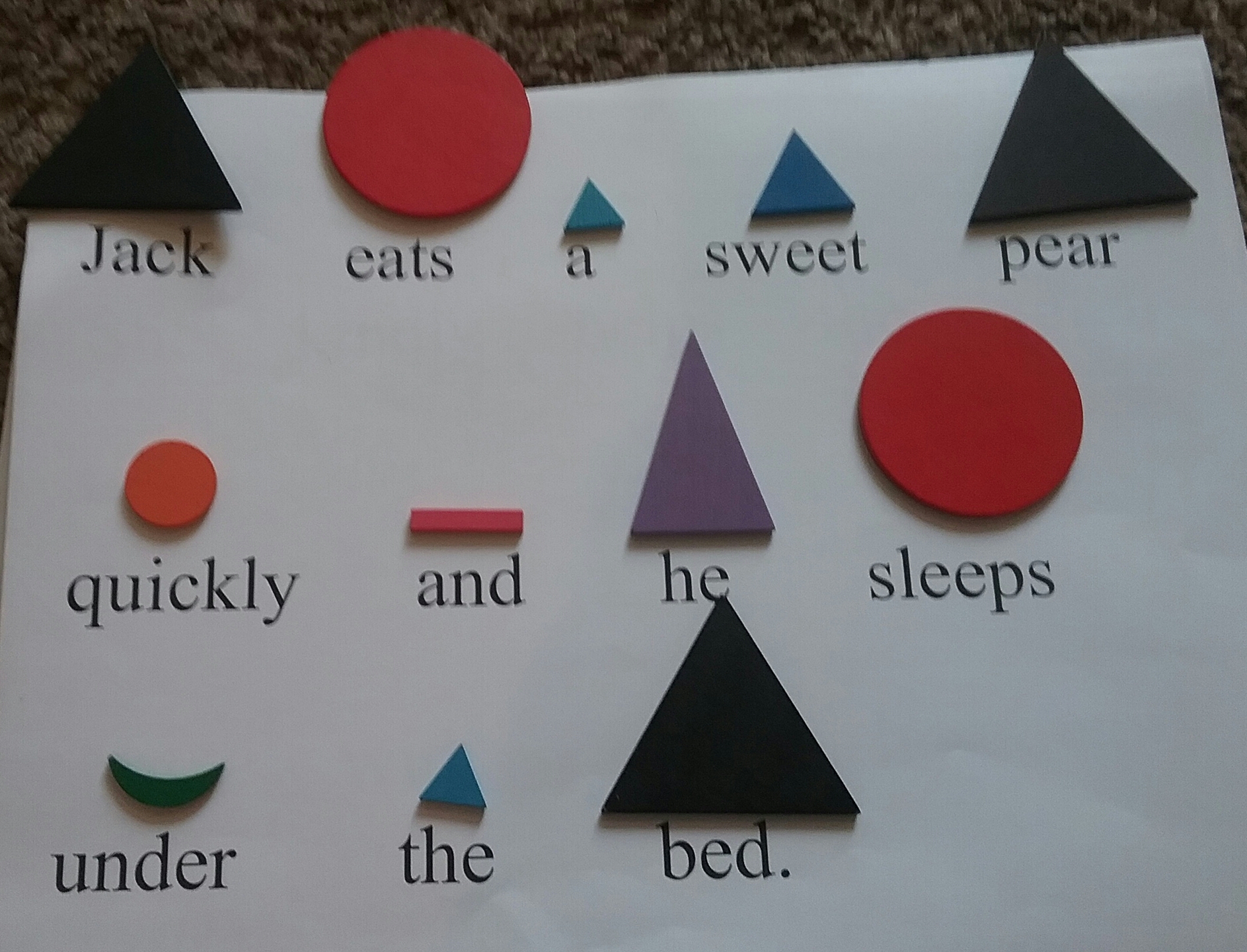
Lesson: Preposition- I described as a “where word” NOT a werewolf. It identifies where or when something is.
Look at all those colors. This sentence had a noun, verb, article, pronoun, adjective, adverb, conjunction, preposition. Can you identify all the parts of grammar? My kindergarten students can!
Cultural Subjects: We can now count to ten in 28 different languages (English, Sign Language, Latin, Spanish, German, French, Greek, Japanese, Arabic with the Lebanese Dialect, Italian, Russian, Romanian, Swedish, Tagolog, Hebrew, Korean, Hungarian, Irish, Kiswahili, Welsh, Dutch/Flemmish, Polish, Serbo-Croation, Cebuano, Malay, Hindi, Farsi, Turkish).
Next Week: Line Time: Interjection
Sight Words of the Week: which what
Synonym of Week: SNEAKY (underhanded, dishonest, tricky, secretive, sly)
Line Time: We progressed with learning our songs for the International Festival and learned our lines for the show. I have to say the students ROCKED the International Festival. A big shout out to Kathleen and Ashlie for getting the students ready with he songs, lines, and craft. Also, I want to recognize Yao An for volunteering her time to teach the students to sing in Chinese.
On a sad note: This was the last International Festival my favorite and only daughter will attend. She started out as a first grader running around the auditorium handing out programs to unsuspecting adults. She did this until she became a teen and it seemed had less energy for the running of the laps. She since has attended to see the cuteness and food. For the next four springs she will be located in Bowling Green, Ohio/BGSU. Appreciate your children when they are actually children because before you know it they will be teenagers waiting to go to university.
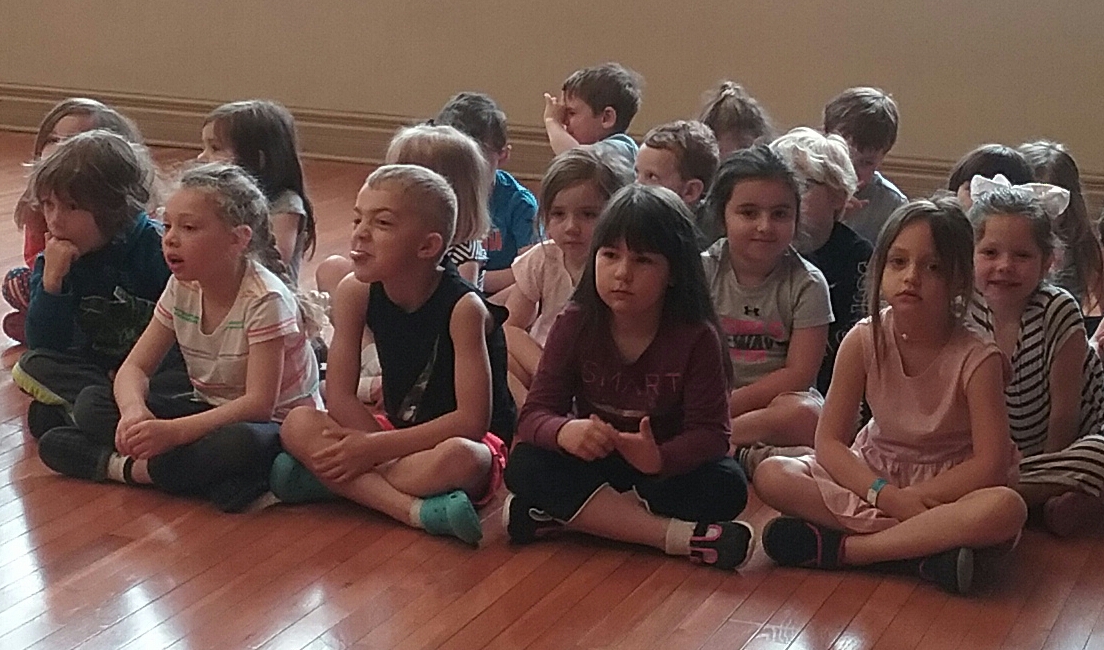
The students patiently waiting during practice. Except, maybe, not the boy in the front row. LOL
“Concentration is the key that opens up to the child the latent treasures within him.” – Maria Montessori
An interesting story in one of Montessori’s books is about a time when she visited a school and saw a child so deep in concentration, that she did not notice a single thing around her. Dr. Montessori said they danced around the child and even picked up the child in her seat, yet she did not lose concentration. We see similar instances in our classroom when students find purposeful work. In the elementary classroom, this is often work they have chosen to complete themselves. Whether it is a research project they have independently compiled throughout the year, a math work they are working towards, or a project they are building, immense concentration happens every day in our environment.
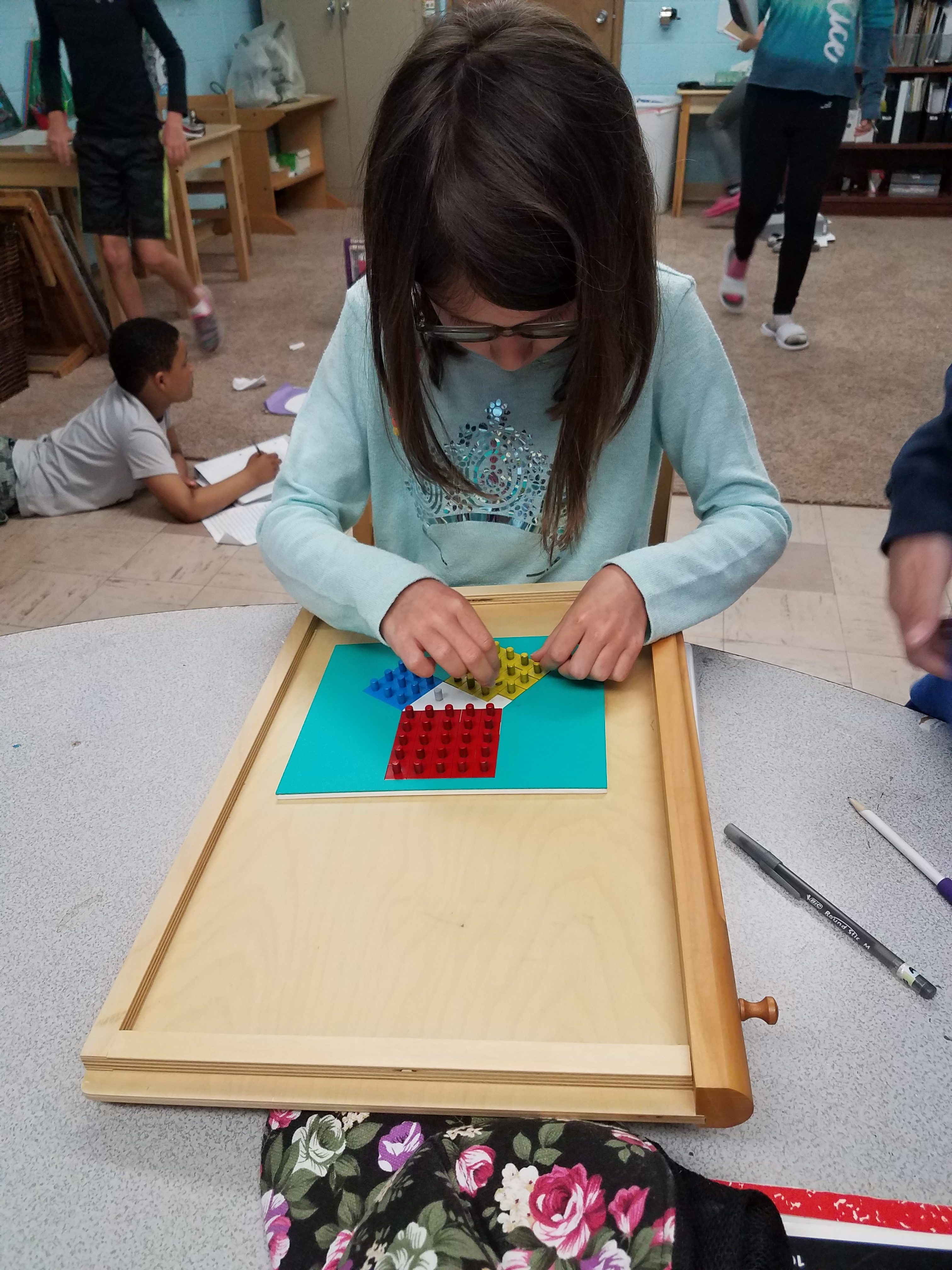
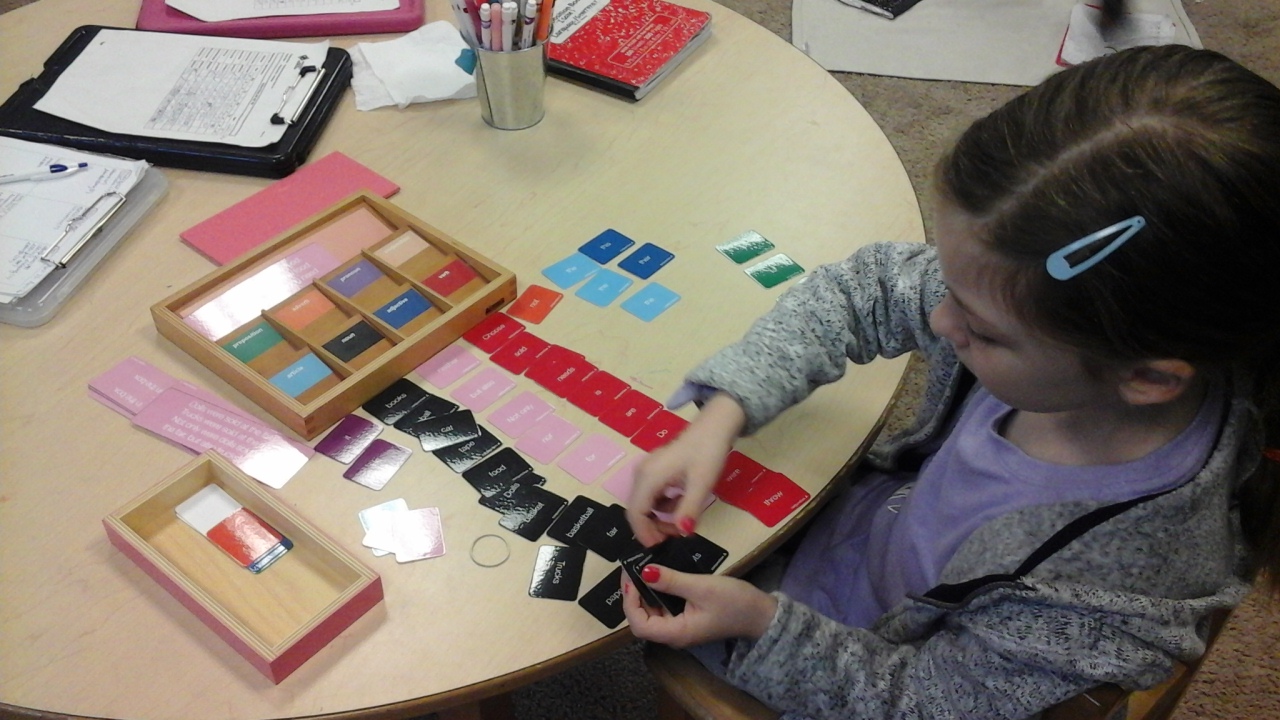
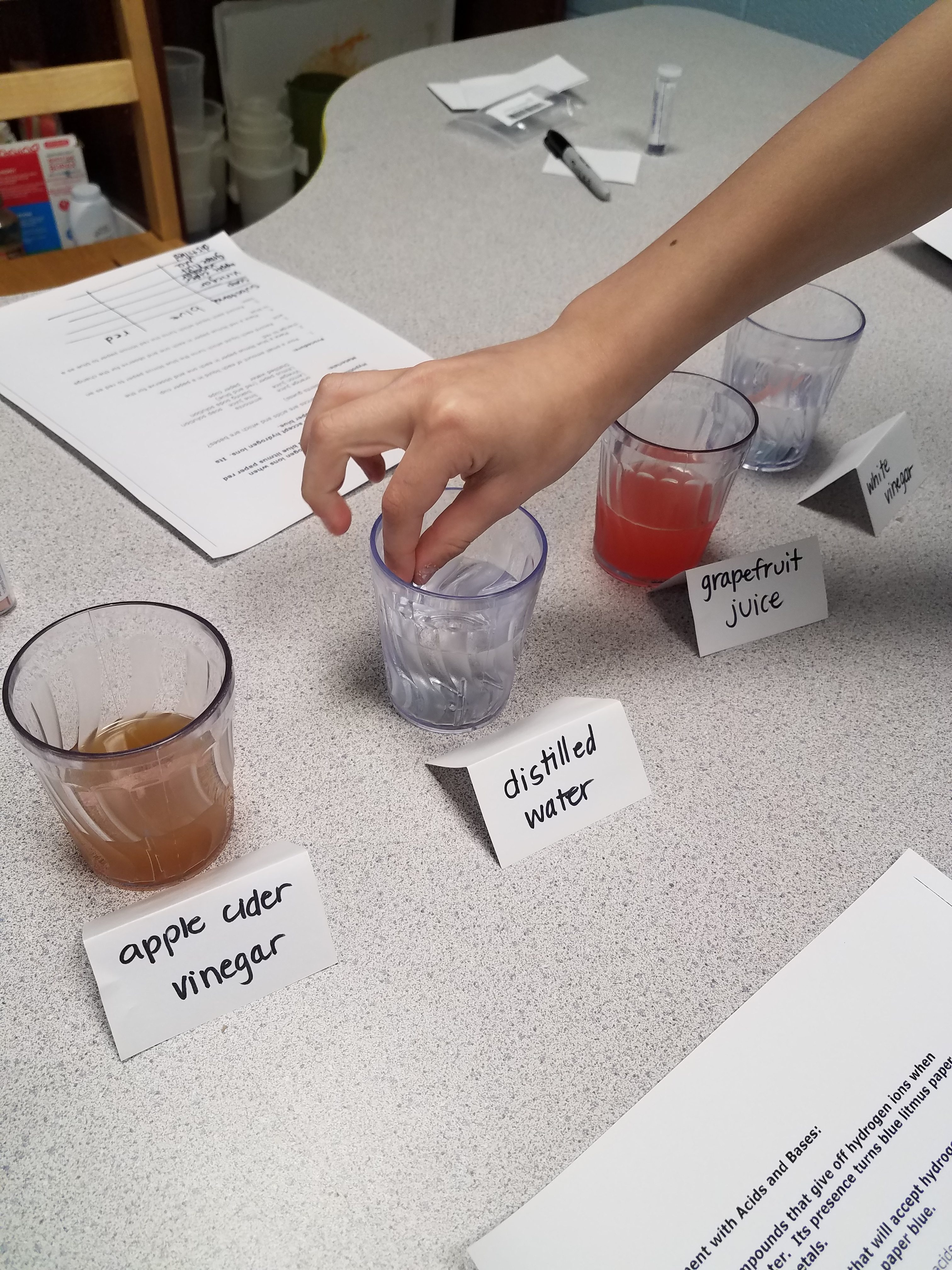
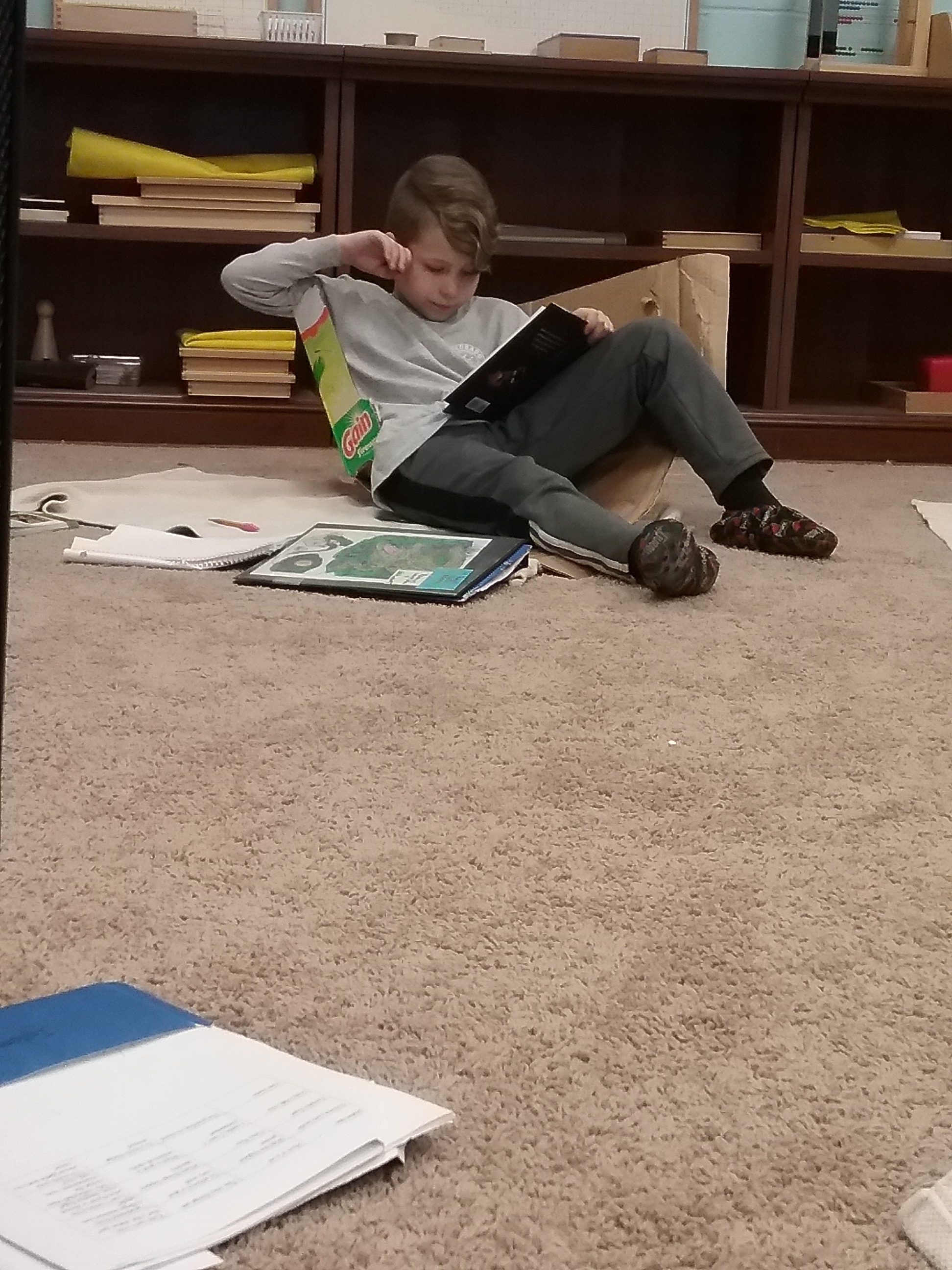
This third year student is using our Pythagorean Theorem tray with a right-angled scalene triangle. She discovered in our lesson that the sum of the squares built on the legs is equivalent to the square of the hypotenuse.This second year student is working with our Conjunction Grammar Box to recognize the different parts of speech. Each morning to continue building upon our knowledge we find the definition for the “Word of the Day.” After recording the definition, someone volunteers a sentence using the word and we all discuss the parts of speech. Recognizing patterns of the parts of speech in a sentence leads students to more creative writing.Our fourth year students completed a lab to find acids and bases in our everyday lives! We used blue and red litmus paper to test liquids like grapefruit juice, apple cider vinegar, distilled water, and a soap solution. Before testing, we hypothesized which liquids would be acids and which would be bases. After testing, the fourth years were very close to being correct!Sometimes a laundry detergent box is the perfect seat for some morning reading!
A Peek at Next Week
Next week, our first year students will practice adding and exchanging values of coins, will be introduced to the interjection, and will review recent math concepts. Our second year students continue working to recognize parts of speech and will review math concepts. Our third year students will measure liquids by volume, will be introduced to adverbials, and will complete TerraNova Assessments. Our fourth year students will find the square of a two-digit number, will discuss the Iron Age, and will complete TerraNova Assessments. Our fifth year students will continue working with square roots and continue to research Ancient Civilizations.
REMINDERS:
Please check your email to remain up to date on our International Festival week, including information on making your African dish or dessert.
Thursday, May 9 – Elementary Gradparents’ Day
Friday, May 10 – Moms and Muffins
Week of May 13 – OPTIONAL Parent-Teacher Conferences – Sign up here
May 14 and May 15 – Final “Bring Your Parents to Work Time” – sign up here
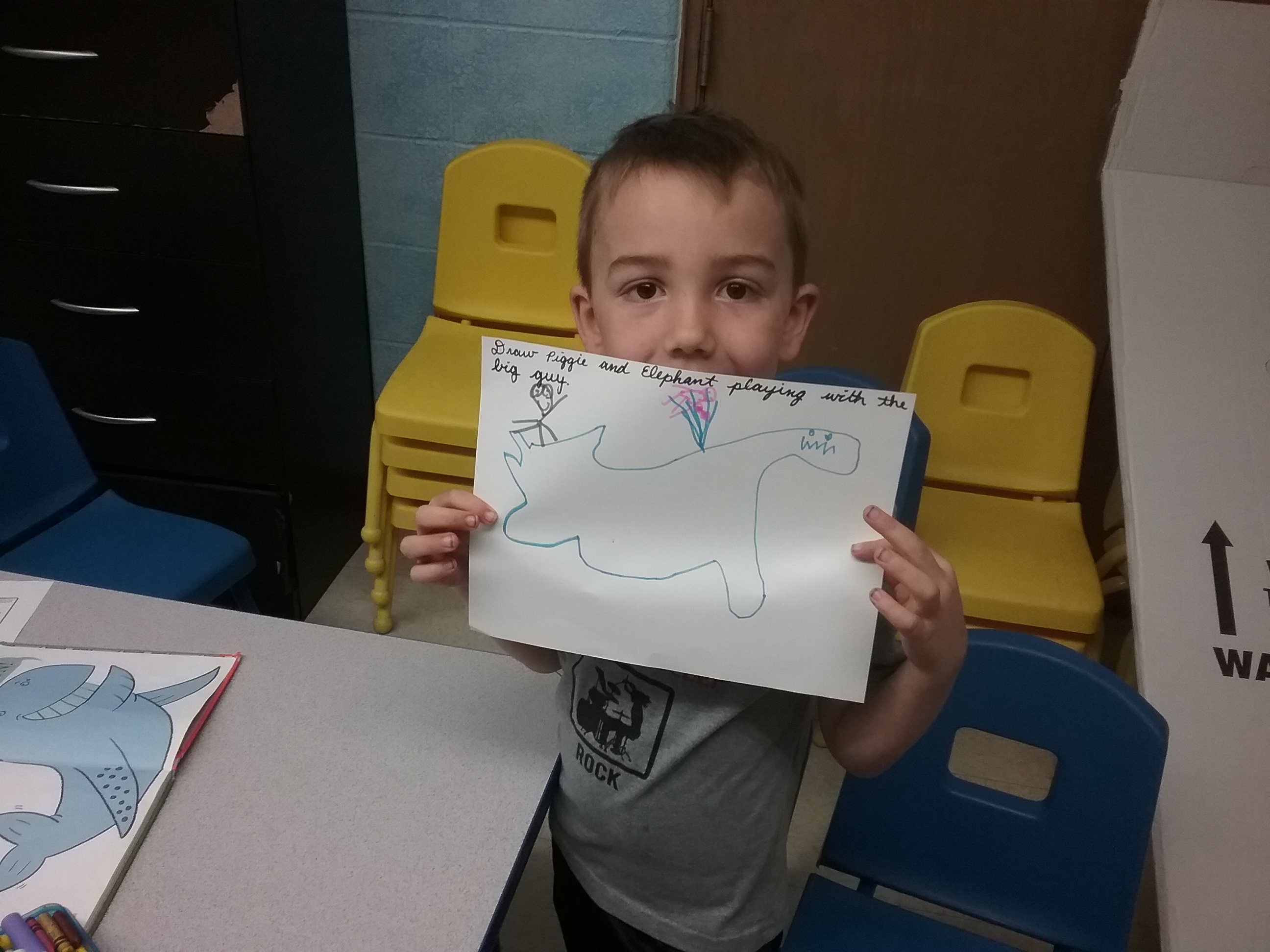
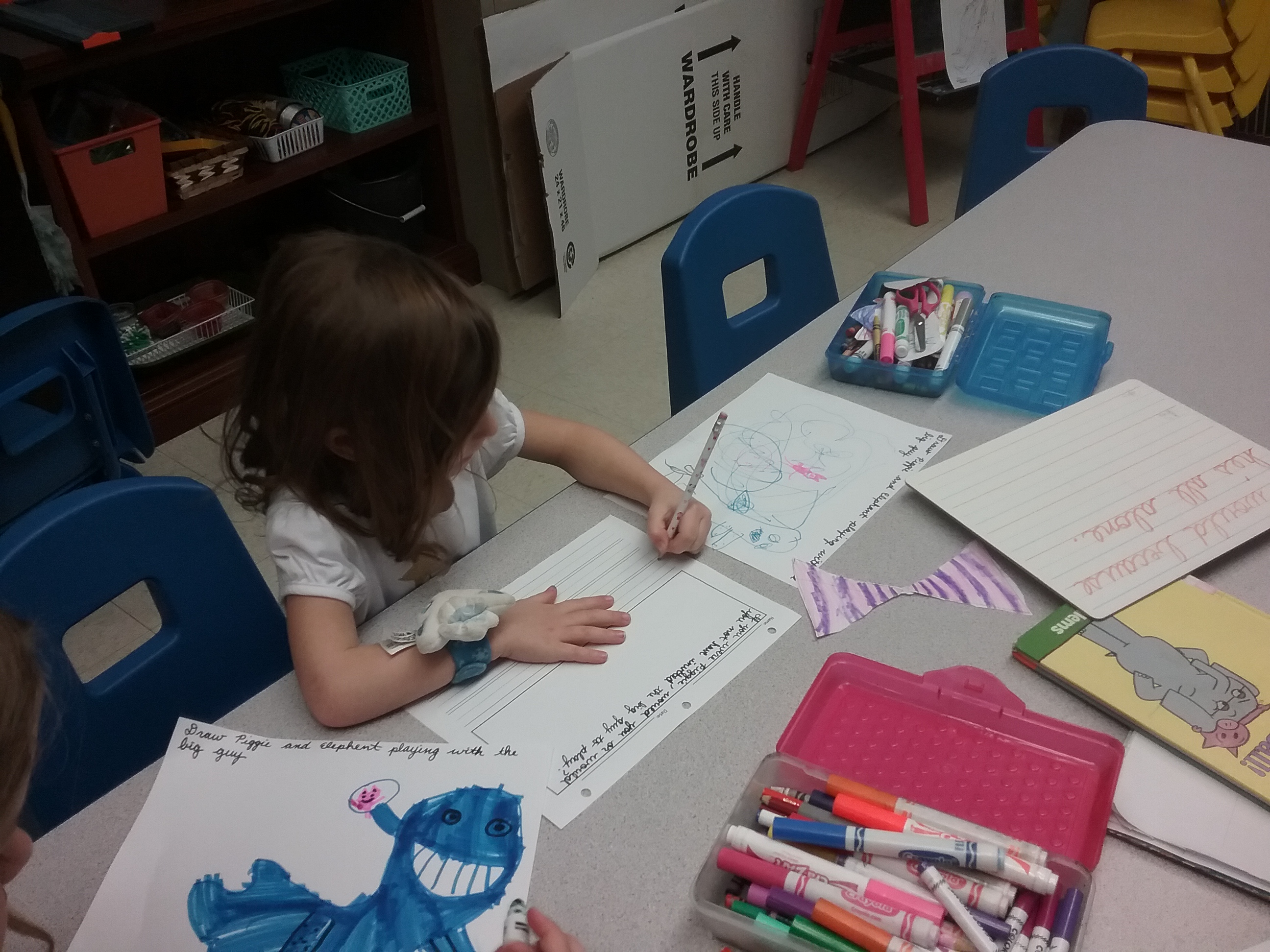
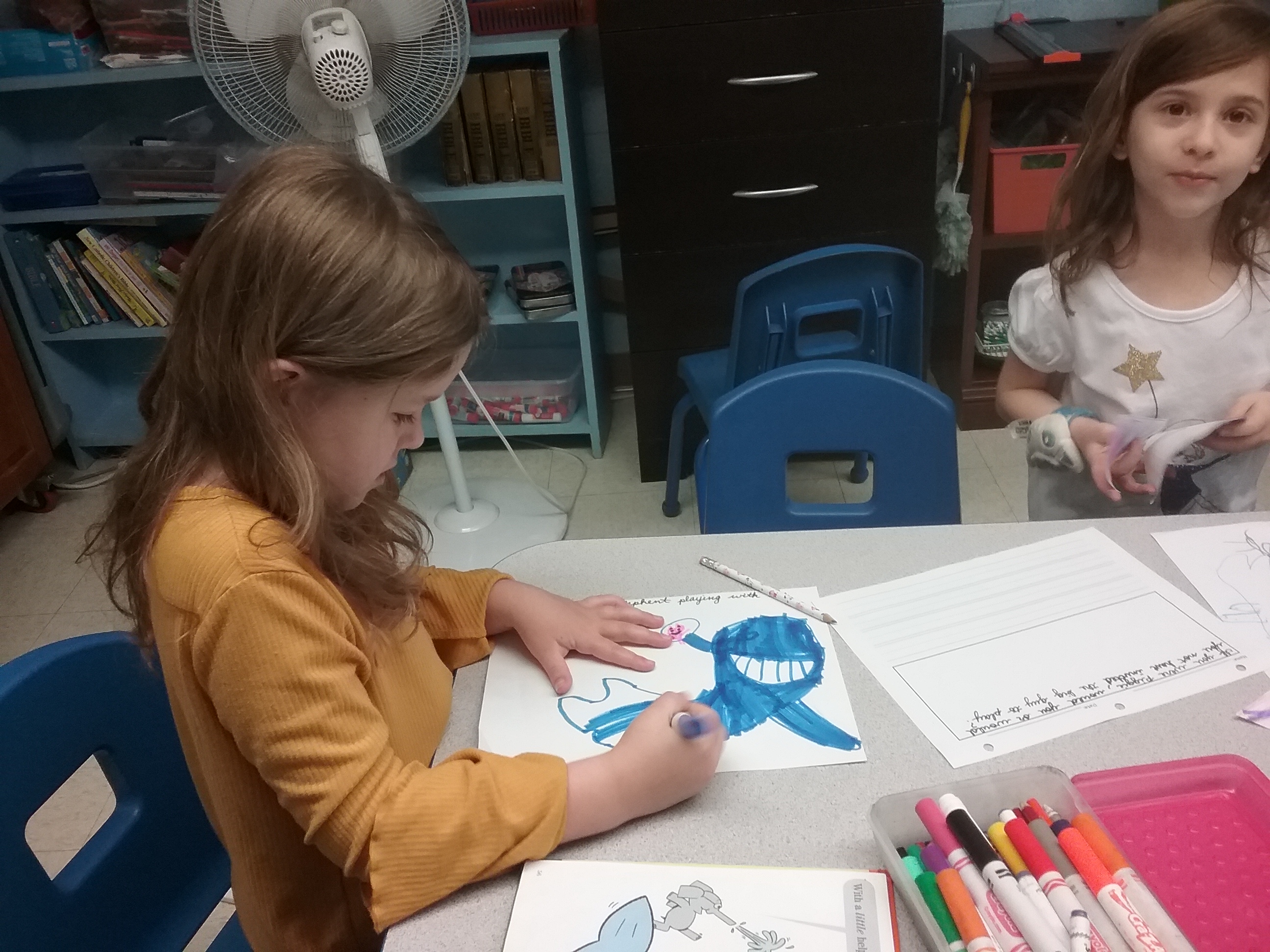
After returning from spring break, we started reading books from the library for reading group. Our first book was A Big Guy Took My Ball by Mo Willems. This story is from the Elephant and Piggie series. In the book, Piggie tells Elephant (Gerald) that a big guy took the ball that he found. Gerald tells him that he will get the ball back for him. Well, Gerald finds out just how BIG this “big guy ” is. He ends up being a whale and the ball belonged to him. The big guy was sad because no one would play with him. Instead of getting mad, Piggie and Gerald invite the whale to play together.
The kindergartners particiated in activities that went along with the story. They wrote their own questions about the story, drew pictures of their interpretations of the how the characters felt and diferent scenes, along with particitpated in discussions. By the last reading of the book, they were all reading the story along with me!
A Peek Into the Next Two Weeks
-The Kindergartner will be listening to another Elephant and Piggie book.
-The students will be participating in interpretive and evaluative acivites.
Line Time: We are progressing with learning our songs for the International Festival and learning our lines for the show. I have to say the students are doing very very well.
Cultural Subjects:
Your children can now count to ten in 25 languages (English, Latin, Sign Language, Spanish, German, French, Japanese, Greek, Arabic with the Lebanese Dialect, Italian, Russian, Romanian, Swedish, Tagolog, Hebrew, Korean, Hungarian, Irish, Kiswahili, Welsh, Dutch/Flemmish, Polish, Serbo-Croation, Cebuano, and Malay).
Trivia Question: In high school my football jersey was number 86. Why did I chose this number? This is a tough one!
Hint: It is a reference to a 1960’s television show. {you can not google this} bwahahaha
For those of you who are interested I dislocated my right thumb in practice my senior year.
You Ever Notice?: You get gobs of left overs for Thanksgiving but no one gives leftovers for the Easter Meal (especially if lamb is served).
Peek In Our Classroom:
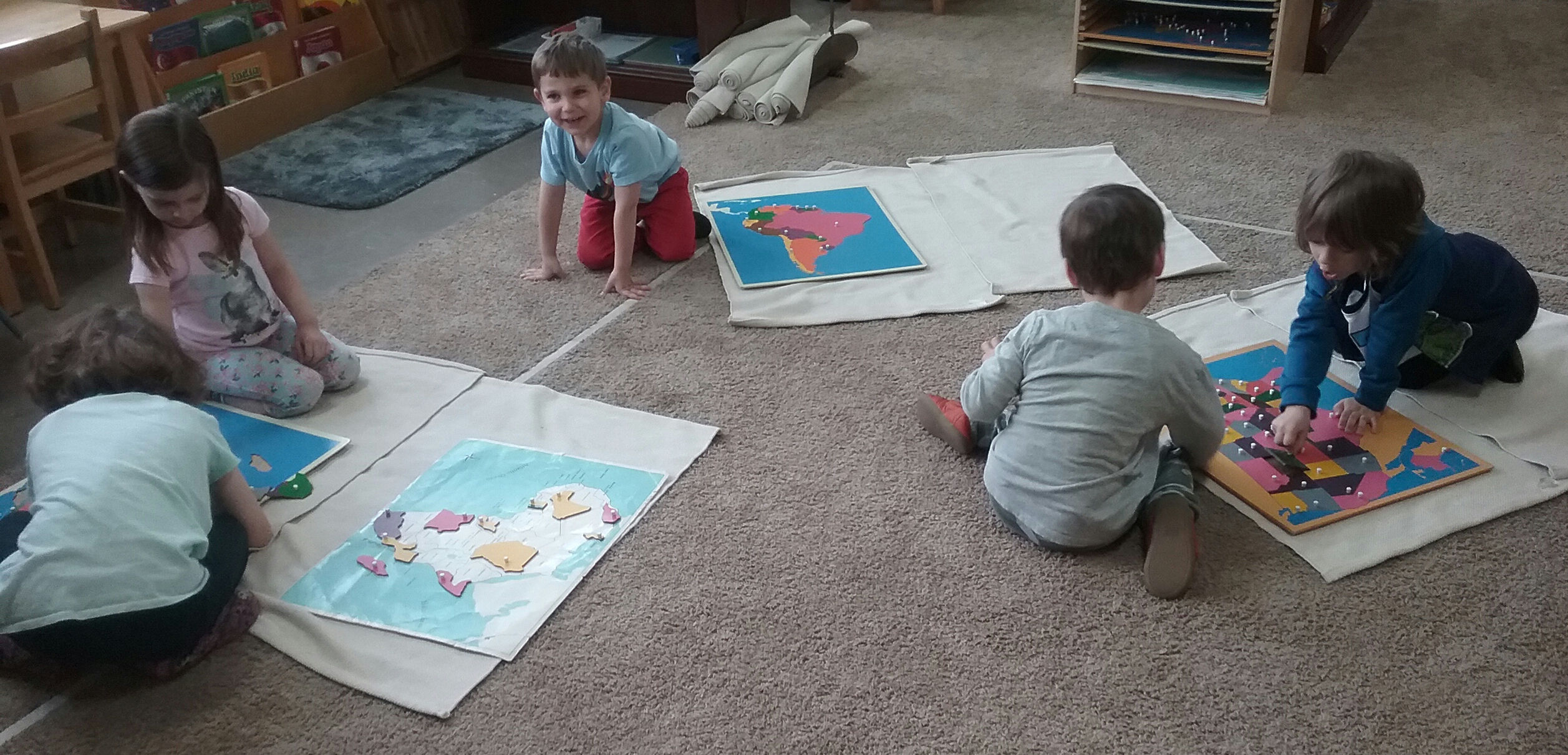
An odd thing has been happening in my classroom. It is a phenomenon of an increased interest in puzzle maps. It may be that many students are in a sensitive period or they saw an older student (who is in a sensitive period) work with the puzzle map and they followed. In any event I have never seen this kind of interest in puzzle maps but I am lovin it!
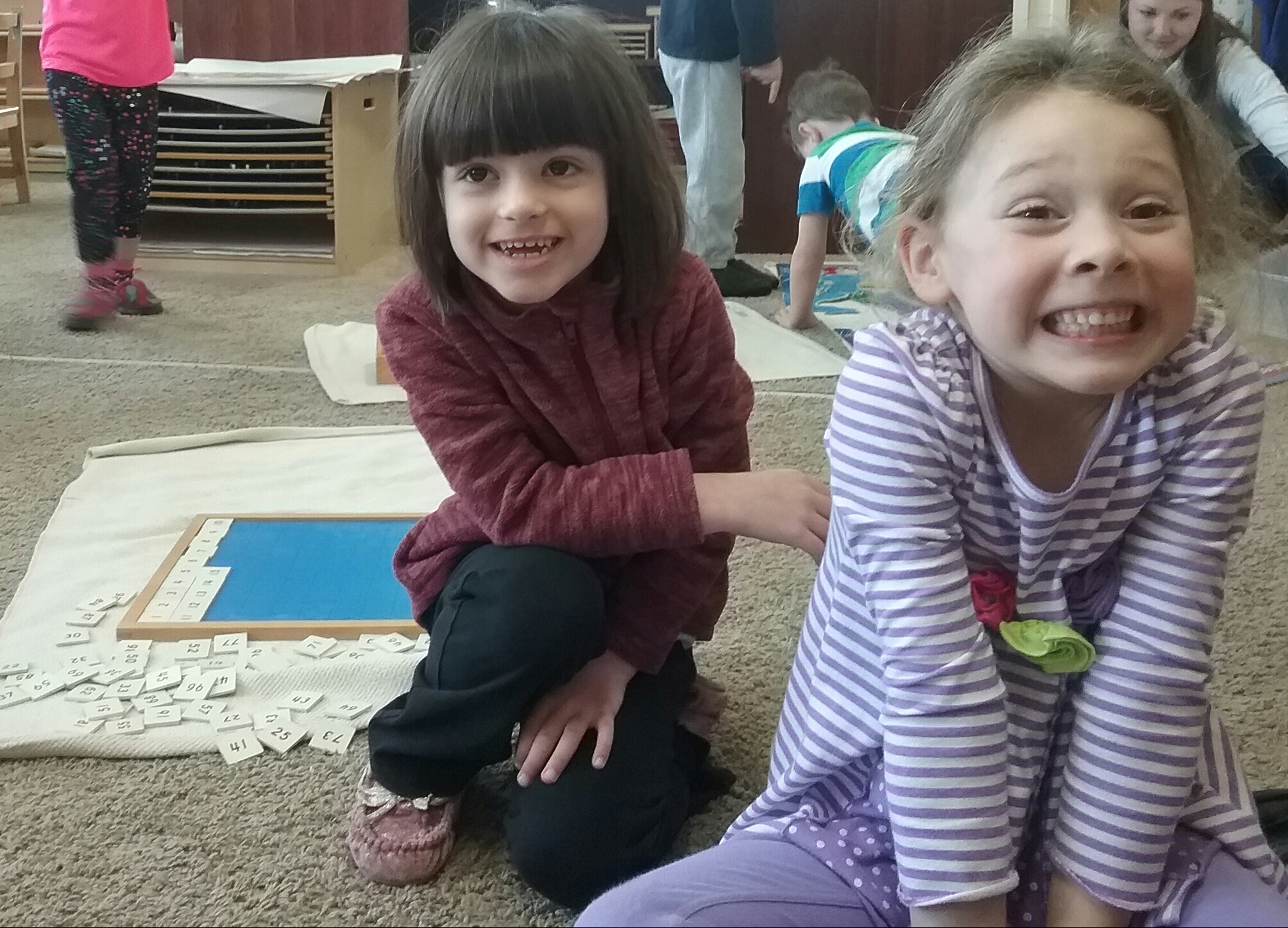
The Hundred Board is a fun and educational exercise found in the Montessori classroom to help children with their counting from 1 to 100. This is a material that breaks away from the concrete to the abstract portion of math.
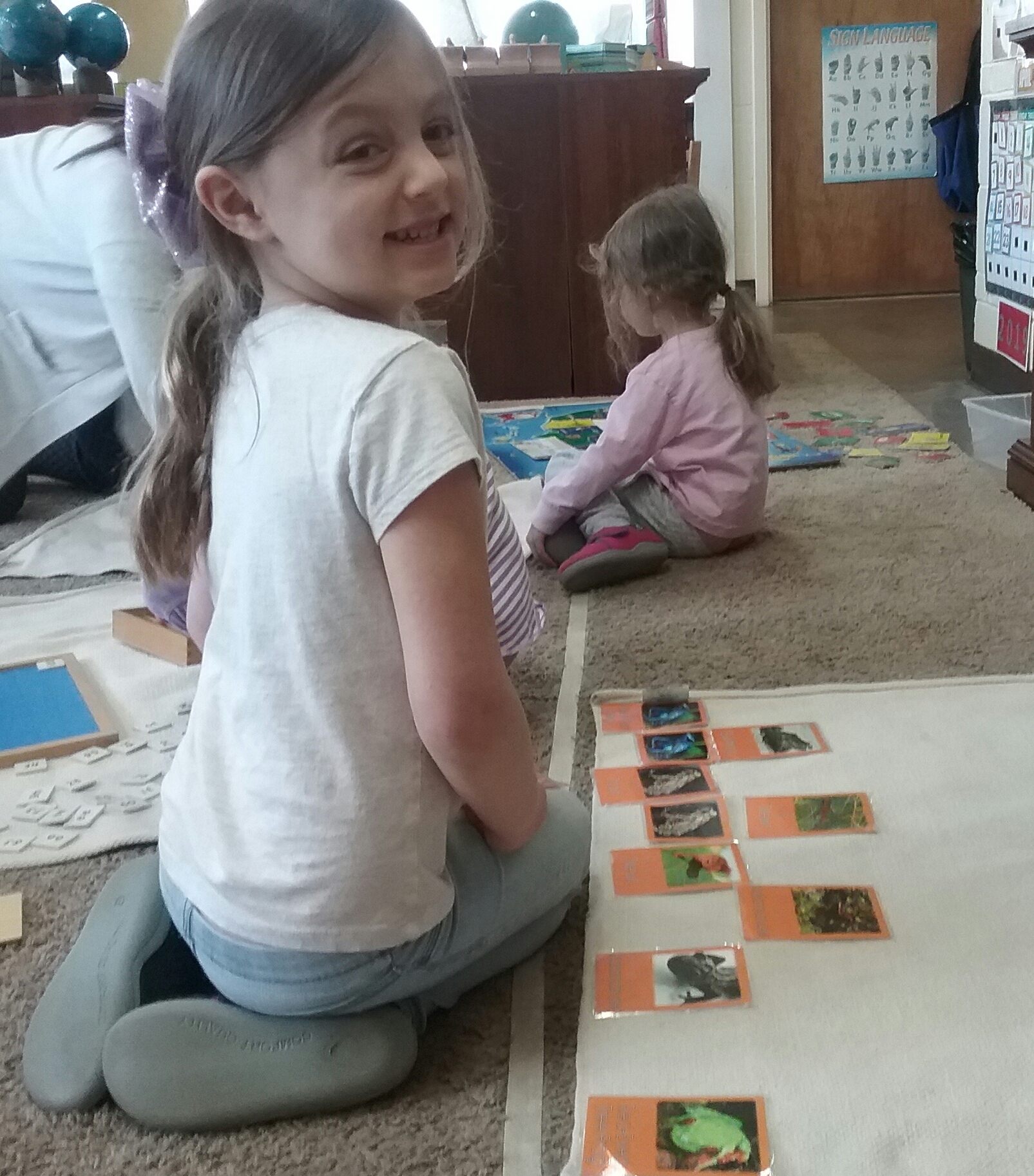
I have science cards in my classroom. They are three part cards (one with just a picture, one with the picture and word, and one with just the word.) This student is working with the amphibian box.
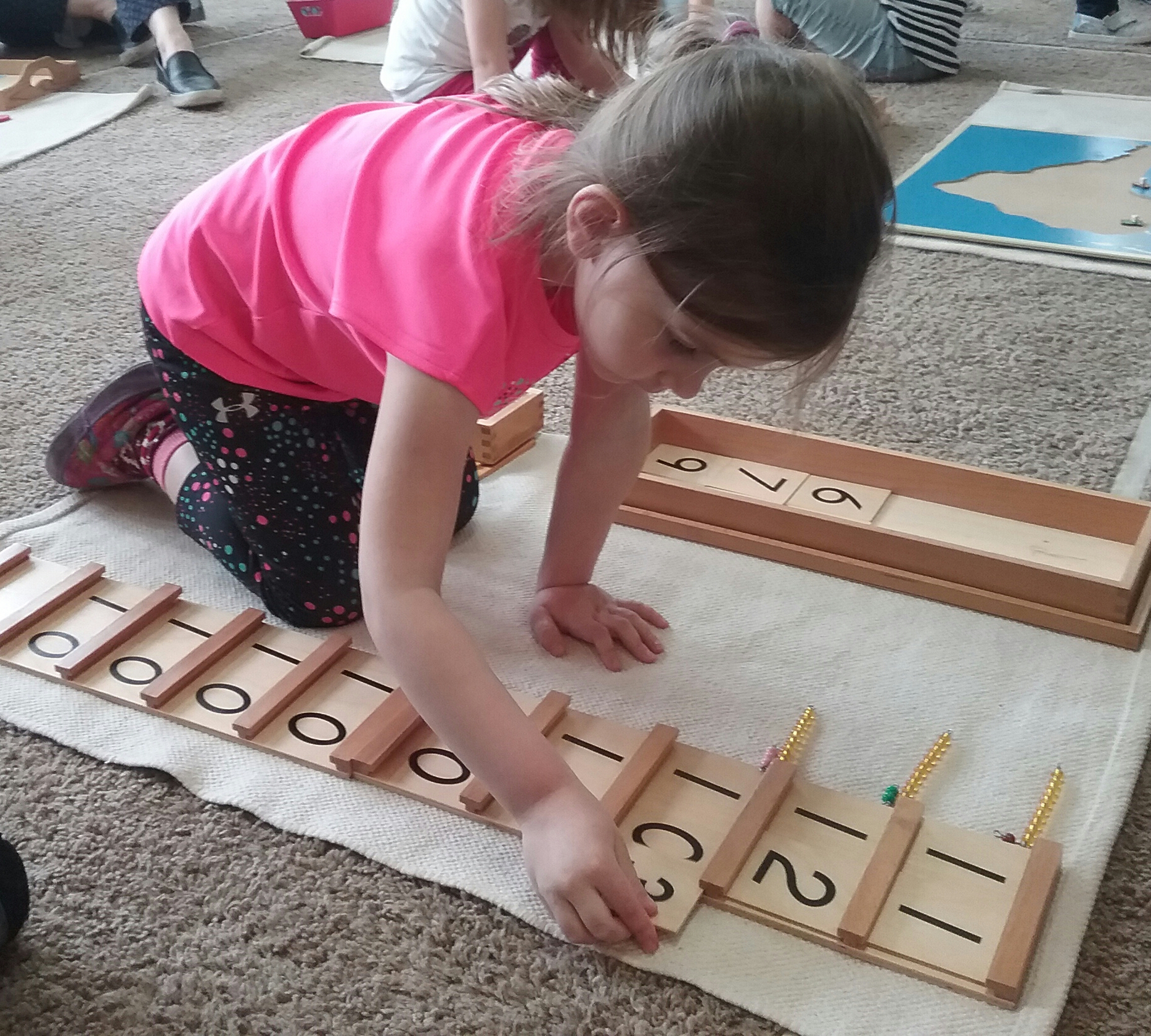
This student is working on the teen board found in the math area. The numbers 11-19 are more of a challenge for a child to learn as their names are more complicated than those of the rest of the number system (11,12,13,15 do not follow the rules like 14,16,17,18,19). The teen board helps to develop an understanding of how these numbers are formed from a ten and units and this teaches the foundations of the decimal system. The child associates between the quantity (concrete) and the numbers (abstract).
Next Week: Line Time- International Festival Preparation
Letter Of The Week- None scheduled due to International Festival Practice
Rhyming Word Of The Week- None scheduled due to International Festival Practice
Next Language will be- None scheduled due to International Festival Practice
Snack will be brought to you by Hunter
Upcoming Events:
International Festival Practice Wednesday, May 1st | Cuyahoga Falls High School, 6pm-7pm
International Festival Friday, May 3rd | Cuyahoga Falls High School, 5:30pm | Early Dismissal 12 Noon
—Moms and Muffins, Friday May 10th, 7am to 7:45am—
—Grandparents Day, Tuesday May 14—
Fun, Frolic, and Friends:
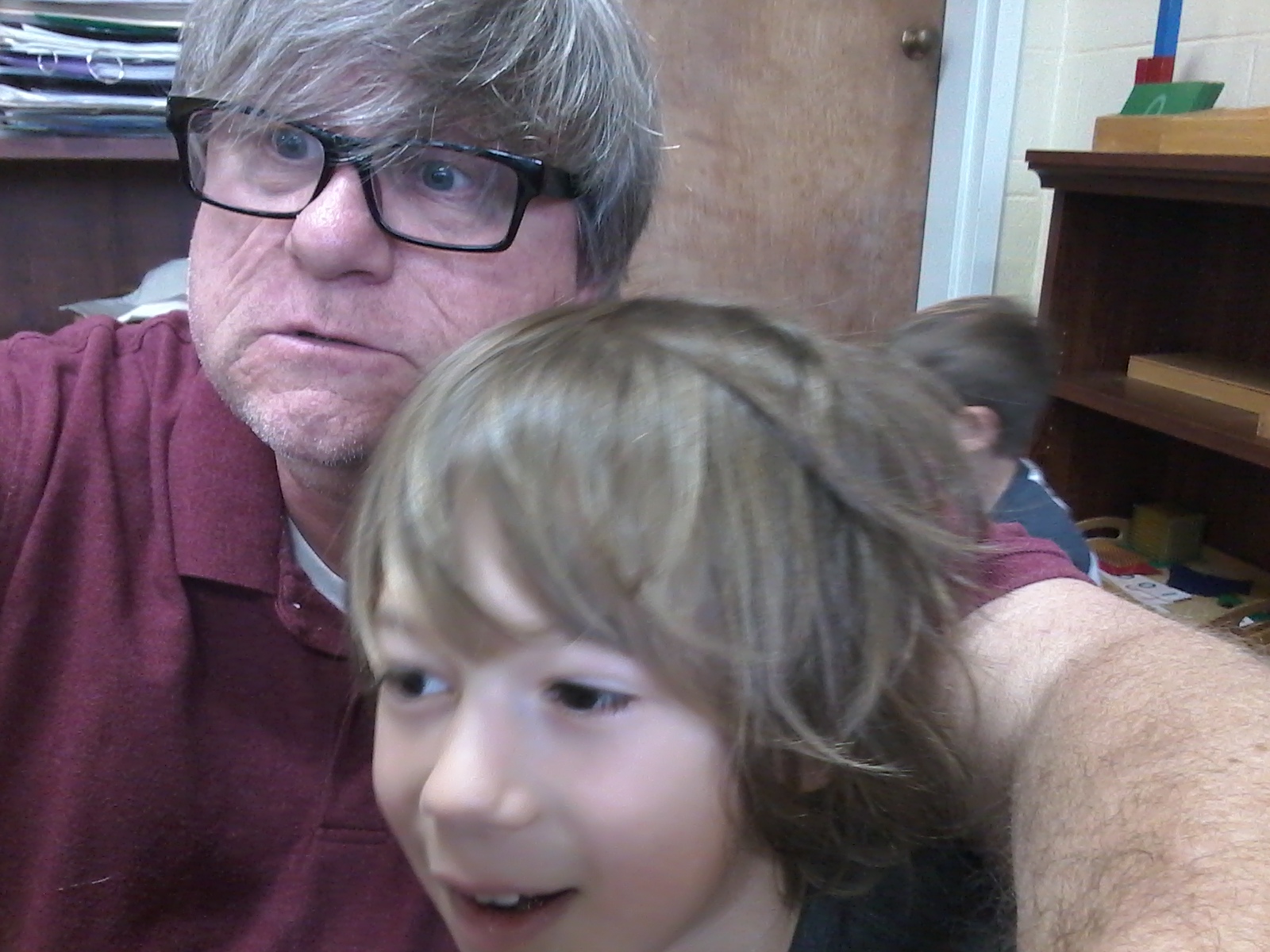
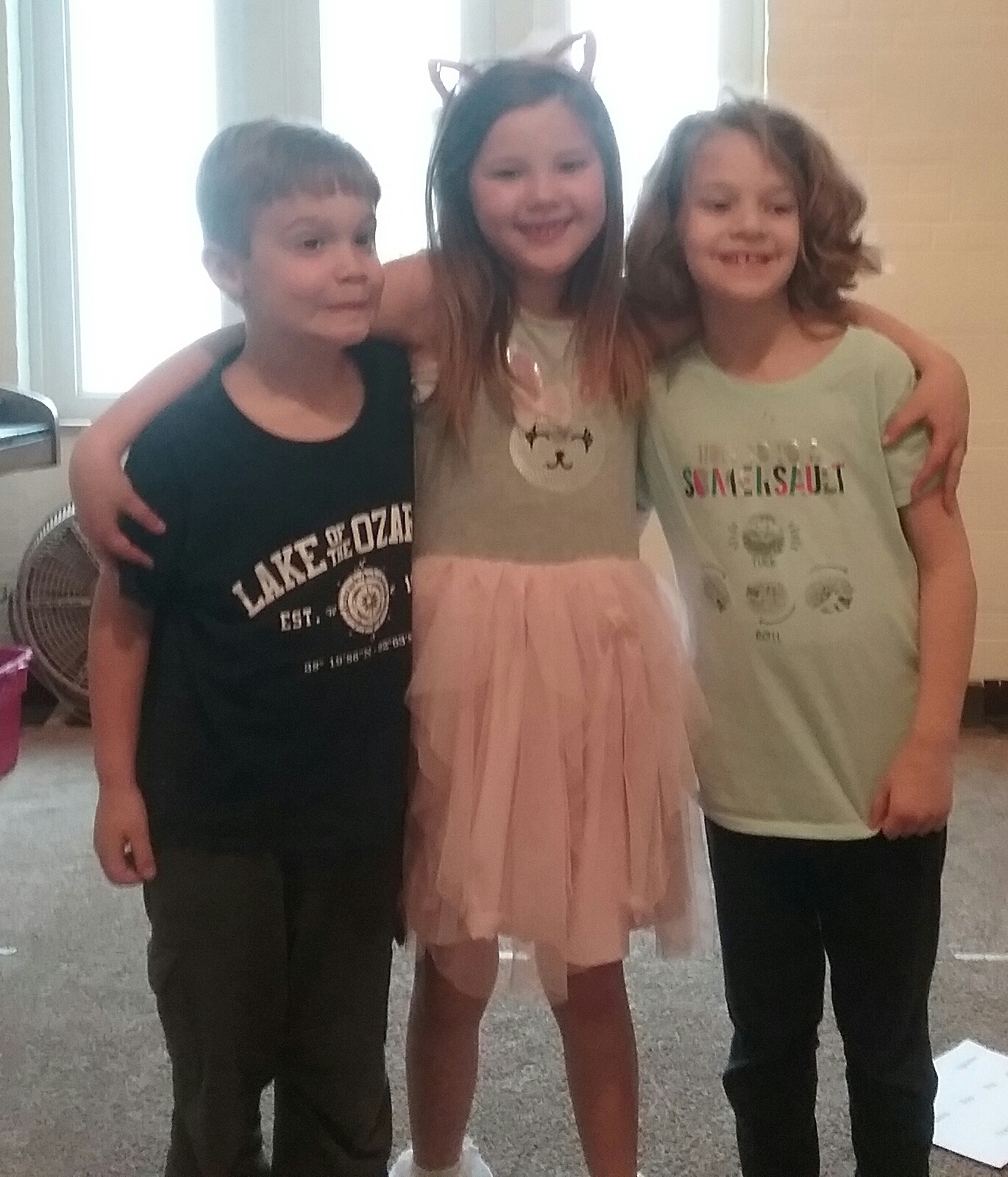
My long hair is catching up with his. He claims I will never catch up with him. We will see.
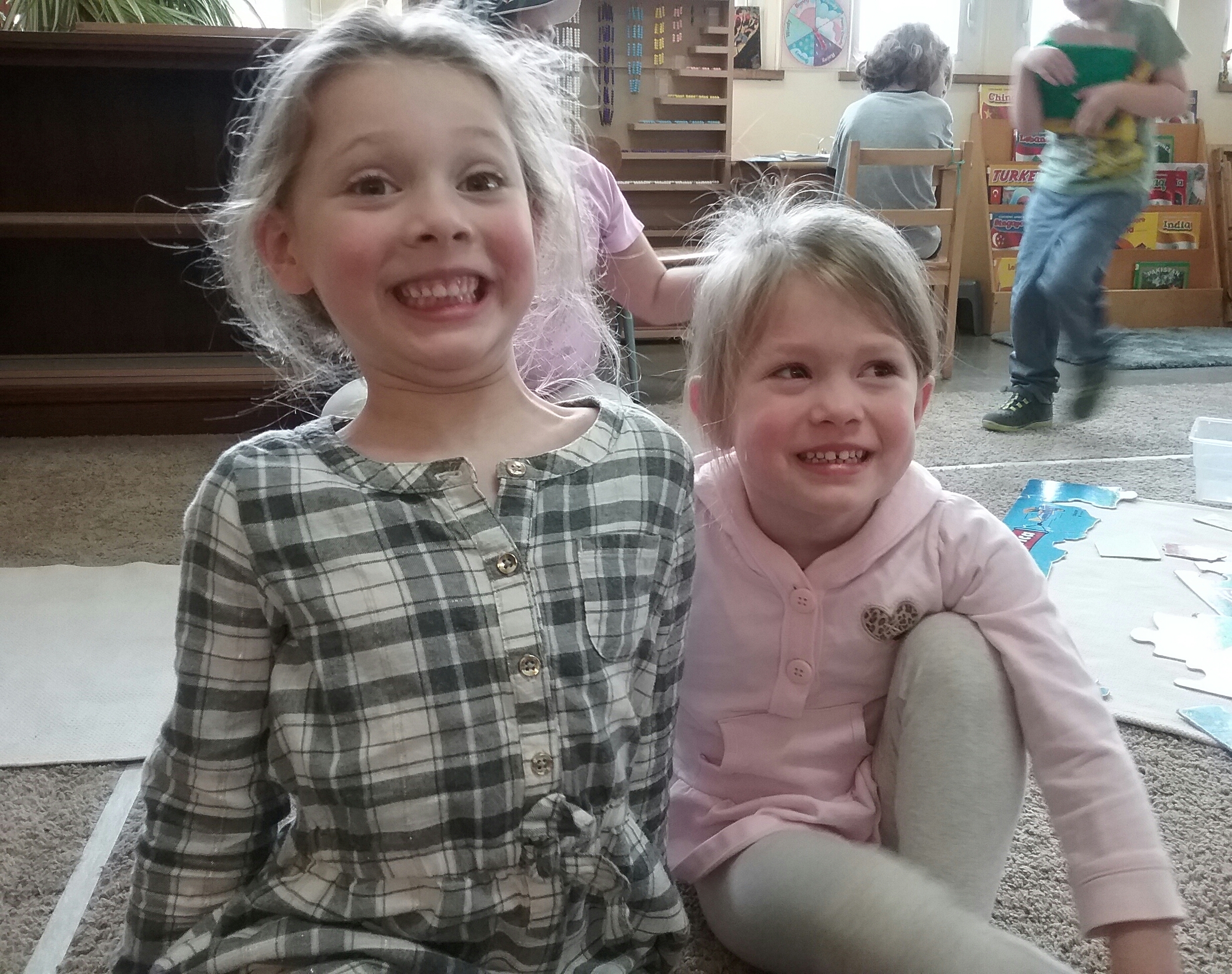
Cheesy grins and what looks like a student running in the background. He can not wait to work on the sandpaper letters.
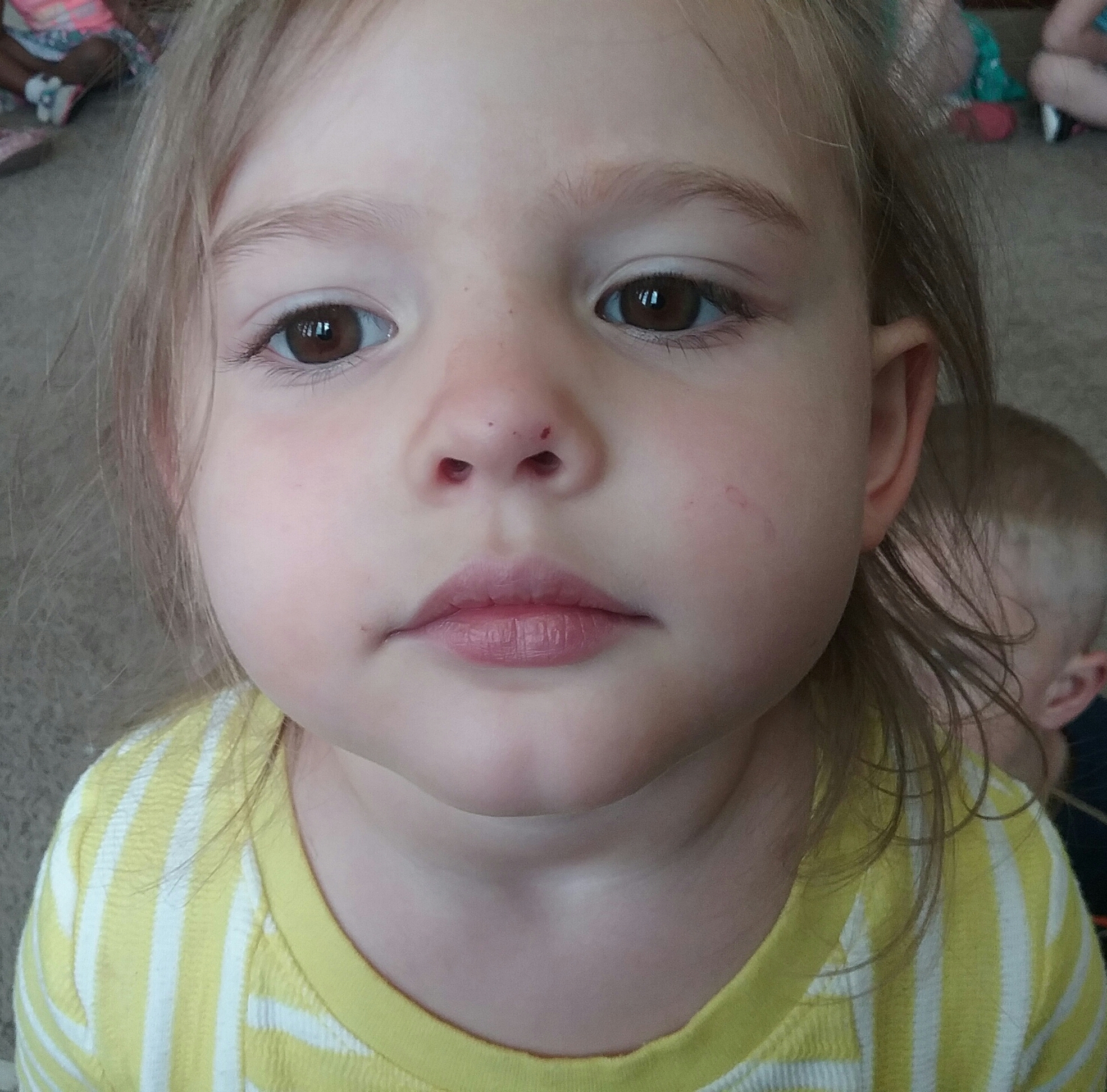
You shoulda seen the other guy. Notice the scratch on her nose?
North America: Is the third largest continent in the world. There are four big countries: Canada, Greenland, the United States and Mexico. It has high mountains and flat grasslands. It has swamps, forest, deserts and even volcanoes. Most people speak English, Spanish or French.
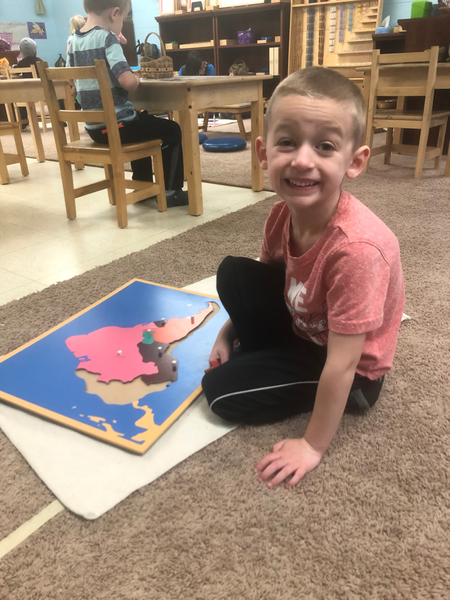
South America: Is the fourth largest continent in the world. It has tall mountains and flat grasslands. The worlds largest rain forest is in South American and is called the Amazon rain forest. There are may unusual plants and animals.
Work Time:
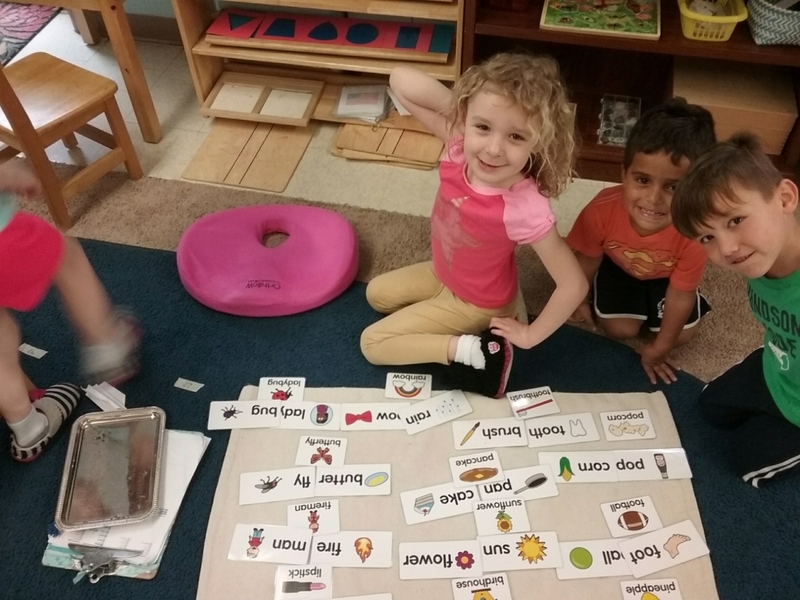
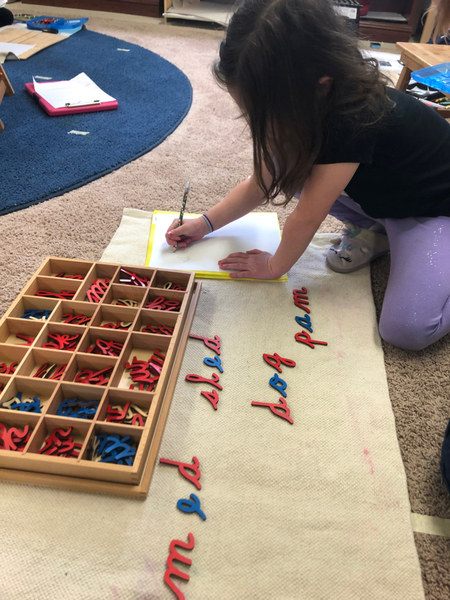
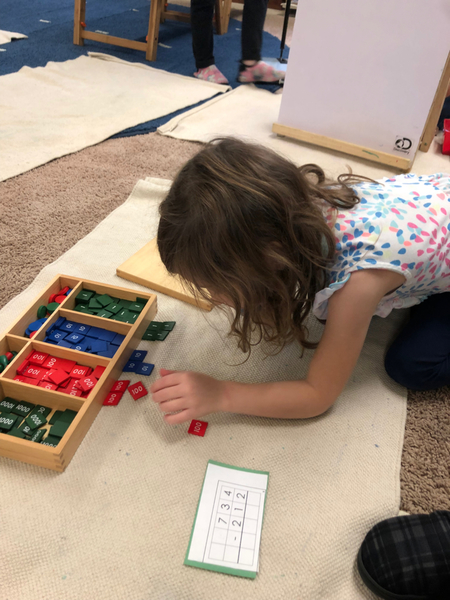
Compound Words: These students are learning that when two words are used together they form a new meaning. For example, sun and flower becomes sunflower.Movable Alphabet: This child is practicing blending and forming words using the different letter sounds she has mastered med, sled, dog and pam.South America Map: This child is learning the names of the countries and where they are located on a map.Stamp Game: This child is doing static subtraction problems using the stamp game.Cursive Sand Tray Writing: This child is practicing writing the lowercase cursive z in the sand tray. She is developing multiple skills involving her eyes, arms, hands, memory, posture and body control.
Guest Reader:
Reminders:
April 22 | Easter Monday | No School
April 26 | Bring Your Parent to Work Time
May 1 @ 6:00 pm – 7:30 pm | International Festival Rehearsal | Cuyahoga Falls High School
May 3 | Early Dismissal 12:00pm | No Afterschool care available
May 3 @ 5:30 pm – 9:00 pm | International Festival Show| Cuyahoga Falls High School
Lessons: Conjunctions- a word used to connect clauses or sentences. It acts like a bridge. We focused on and, but, or.
Cultural Subjects: We can now count to ten in 28 different languages (English, Sign Language, Latin, Spanish, German, French, Greek, Japanese, Arabic with the Lebanese Dialect, Italian, Russian, Romanian, Swedish, Tagolog, Hebrew, Korean, Hungarian, Irish, Kiswahili, Welsh, Dutch/Flemmish, Polish, Serbo-Croation, Cebuano, Malay, Hindi, Farsi, Turkish).
Next Week:
Line Time: Prepositions
Sight Words of the Week: None planned due to International Festival practice
Synonym of the Week: None planned due to International Festival practice
Spring is here! We are excited for all the new opportunities Spring brings even if that includes a ton of rain!
Throughout the week, I get to glance in on all of the Enrichments that take place at Absorbent Minds and see the smiling faces of our dancers, the concentration on the our students perfecting a design in Art and the beautiful sounds coming from class with Ms. Lisa.
Below are a few snap shots of what our Enrichements have consisted of over the past several weeks! As you enter the building at drop-off or pick-up, we hope you can take a moment to admire your child’s talent on the bulletin boards that line our entrance hallway!
ART
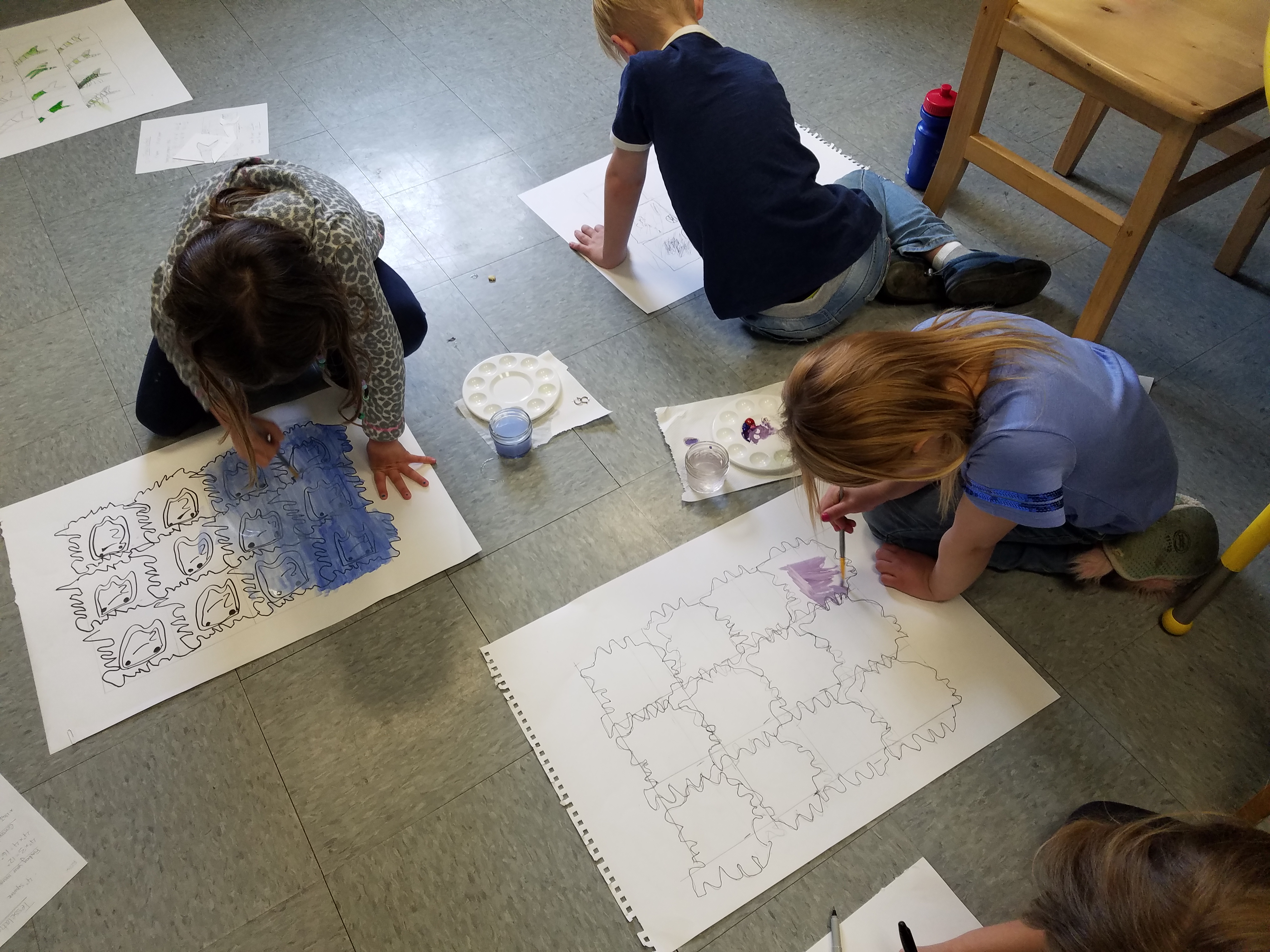
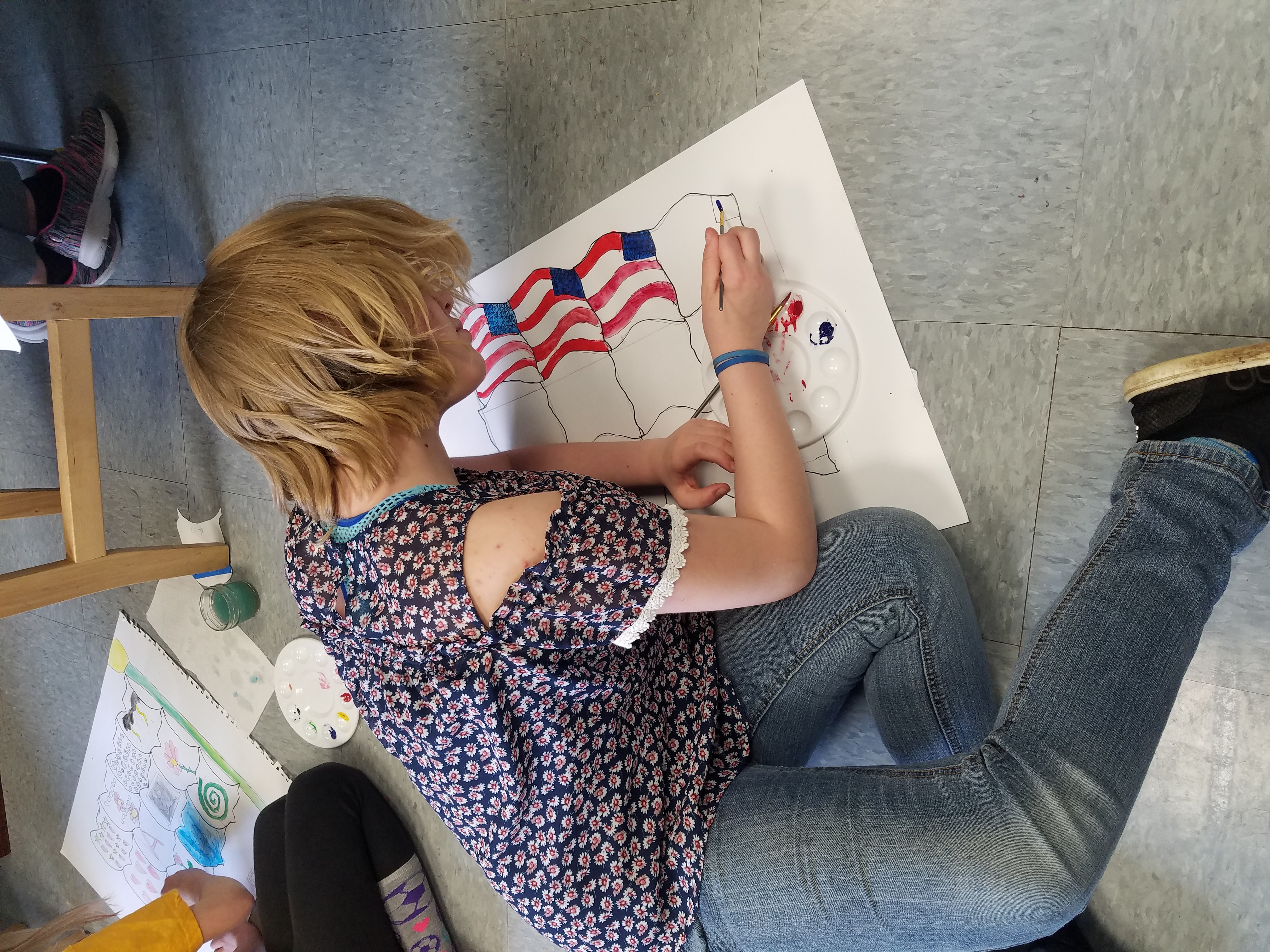
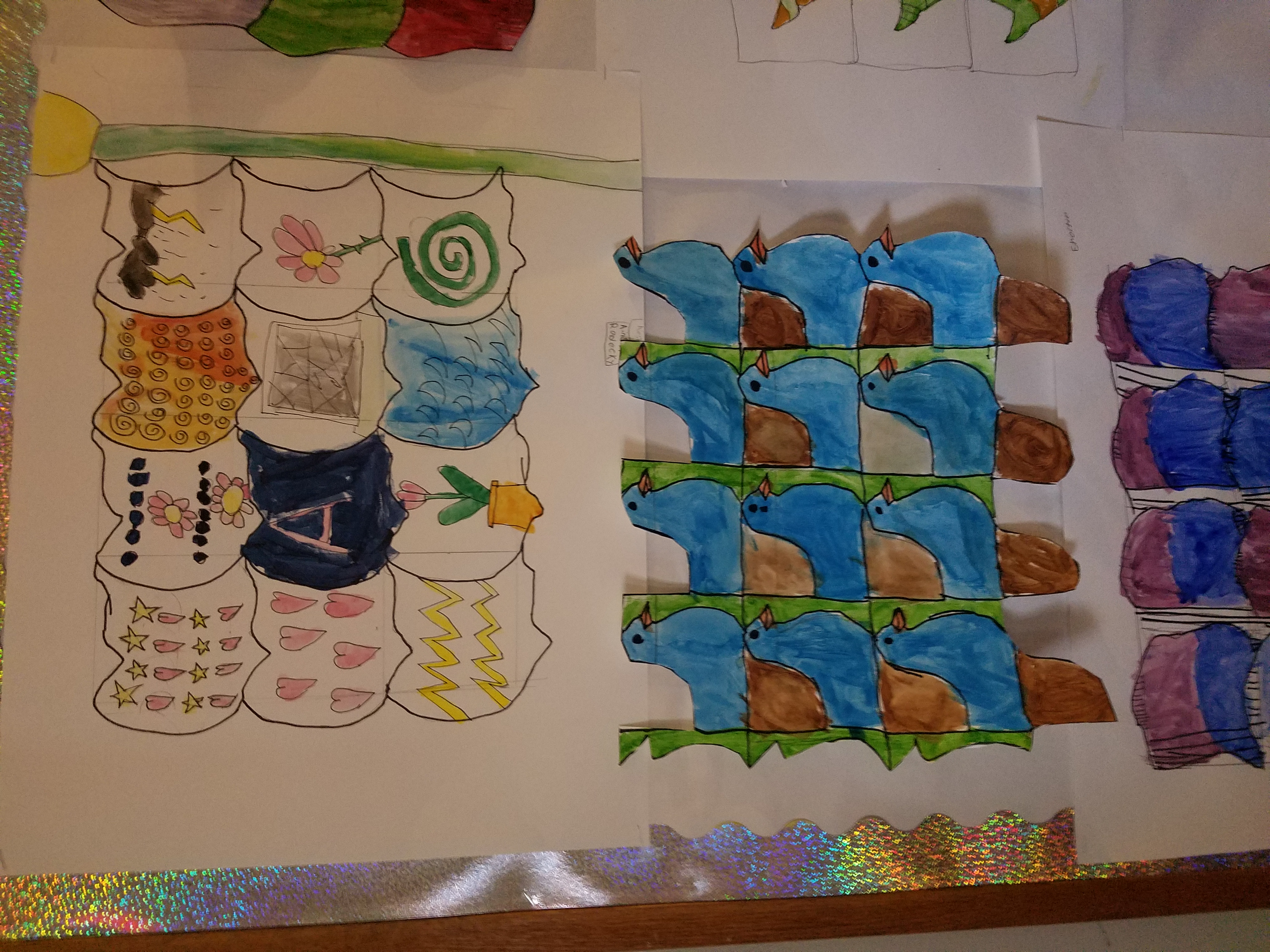
These students are working diligently on their tessallation projects.
Each child chose their own pattern then carefully recreated it resulting in beautiful ongoing pictures.
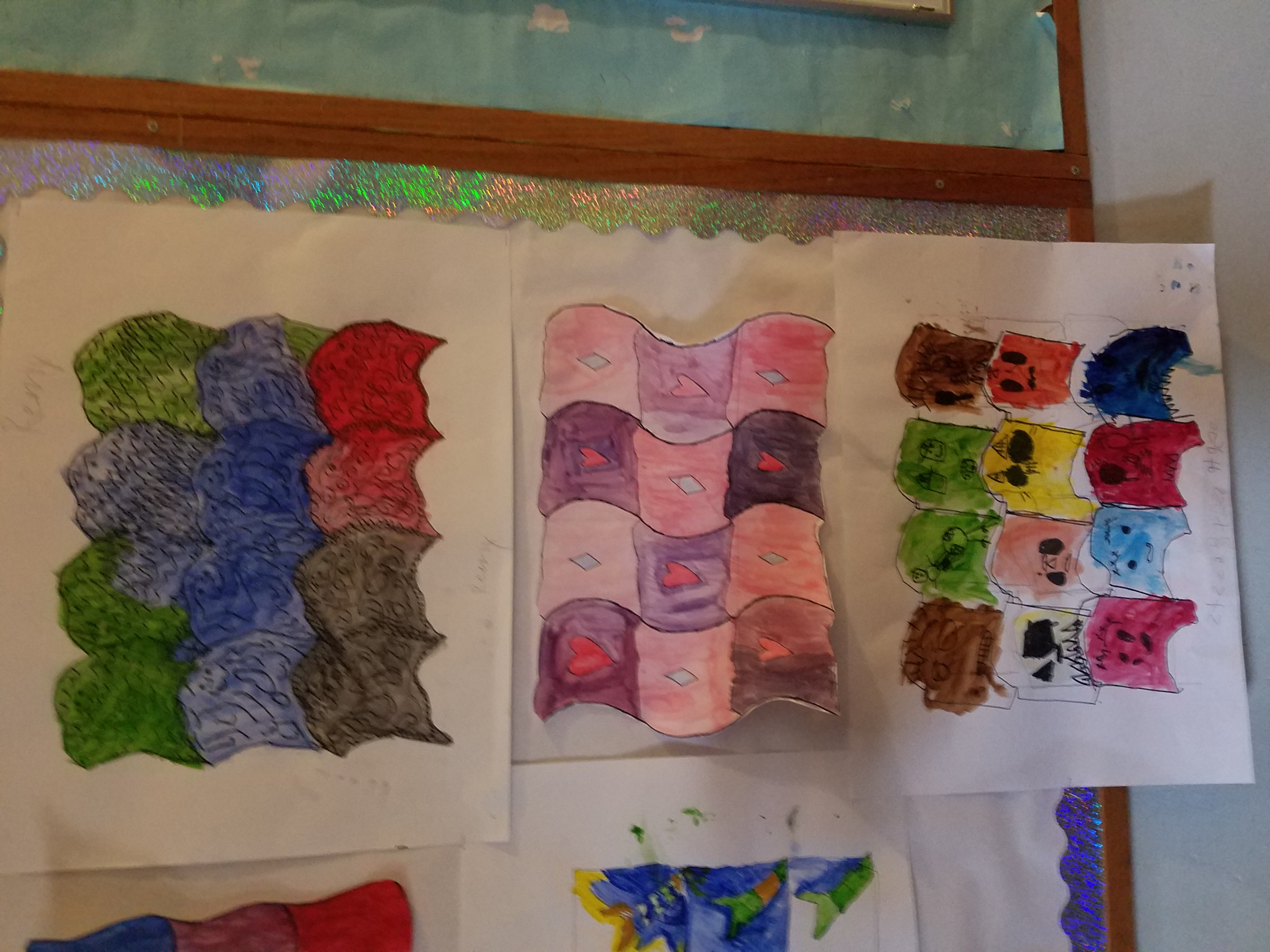
Finally, they were able to choose whether or not they wanted to add color to their desigs. Some used water color paints. Others chose to add dimension by drawing patterns withing their shapes. We observed for several weeks how each student took their time to create their perfect tessallation.
Here are a few finished products!
—————
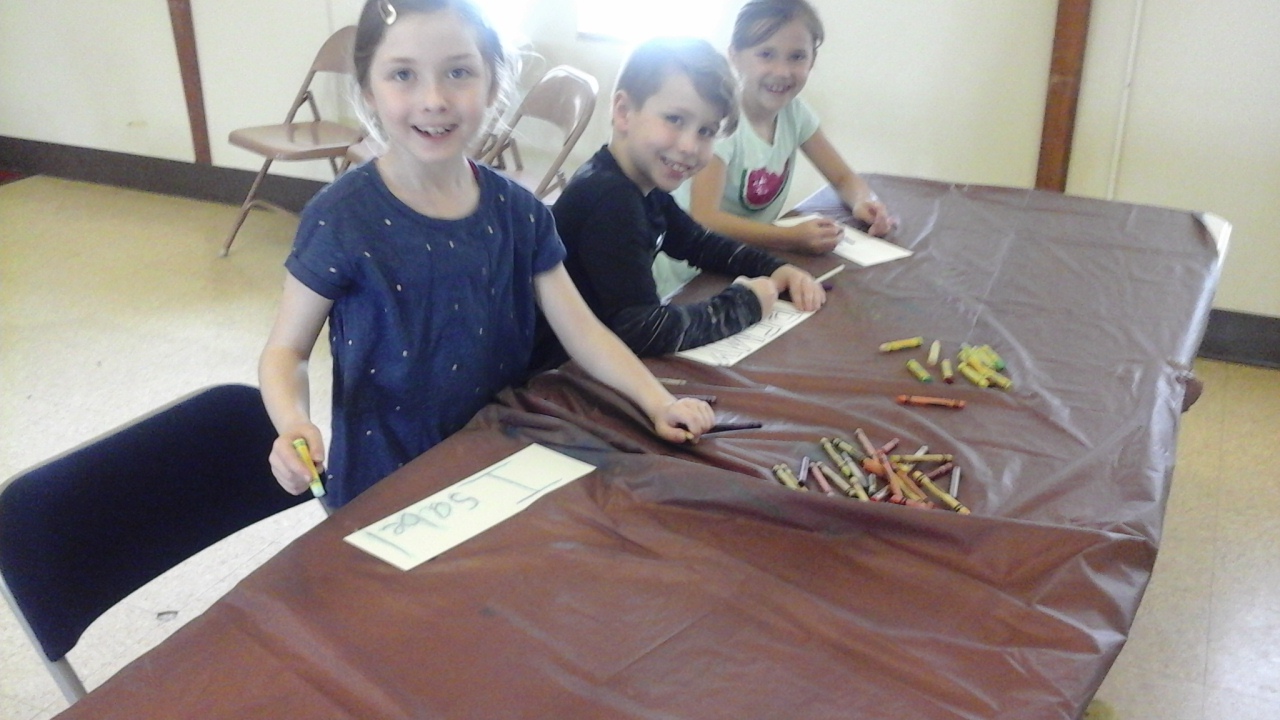
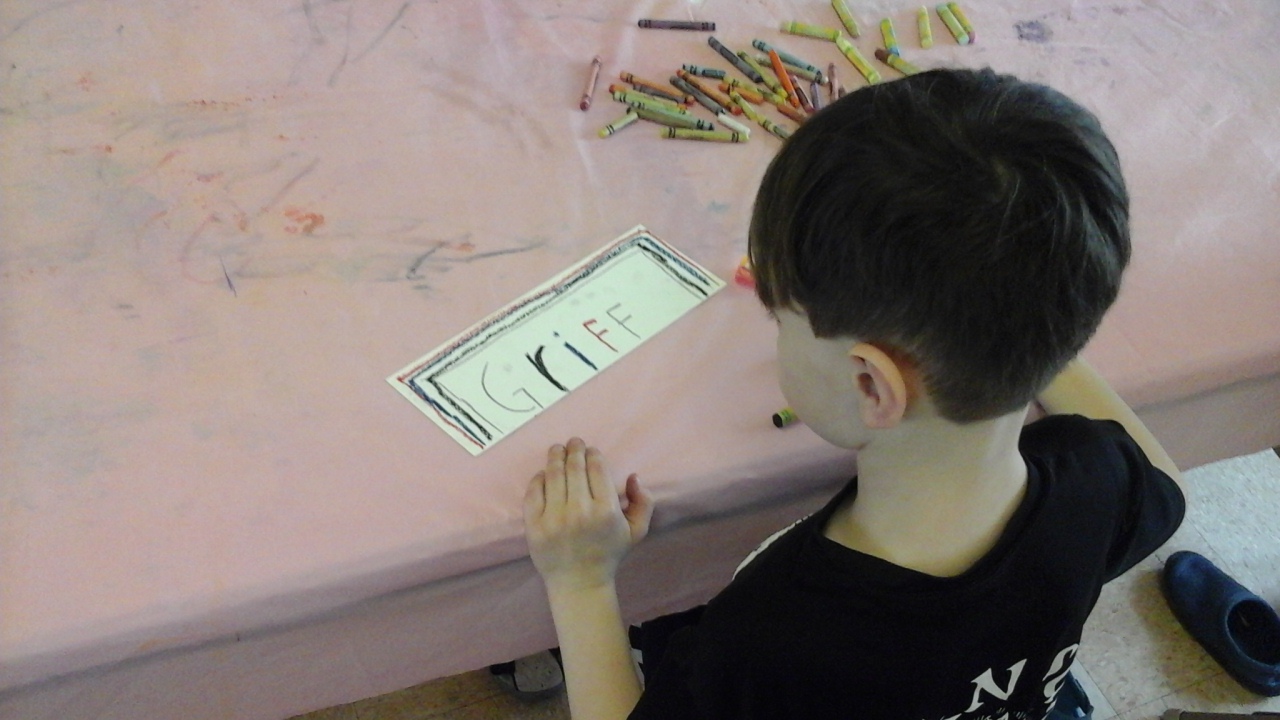
Having fun with designing their names in chalk!
MUSIC
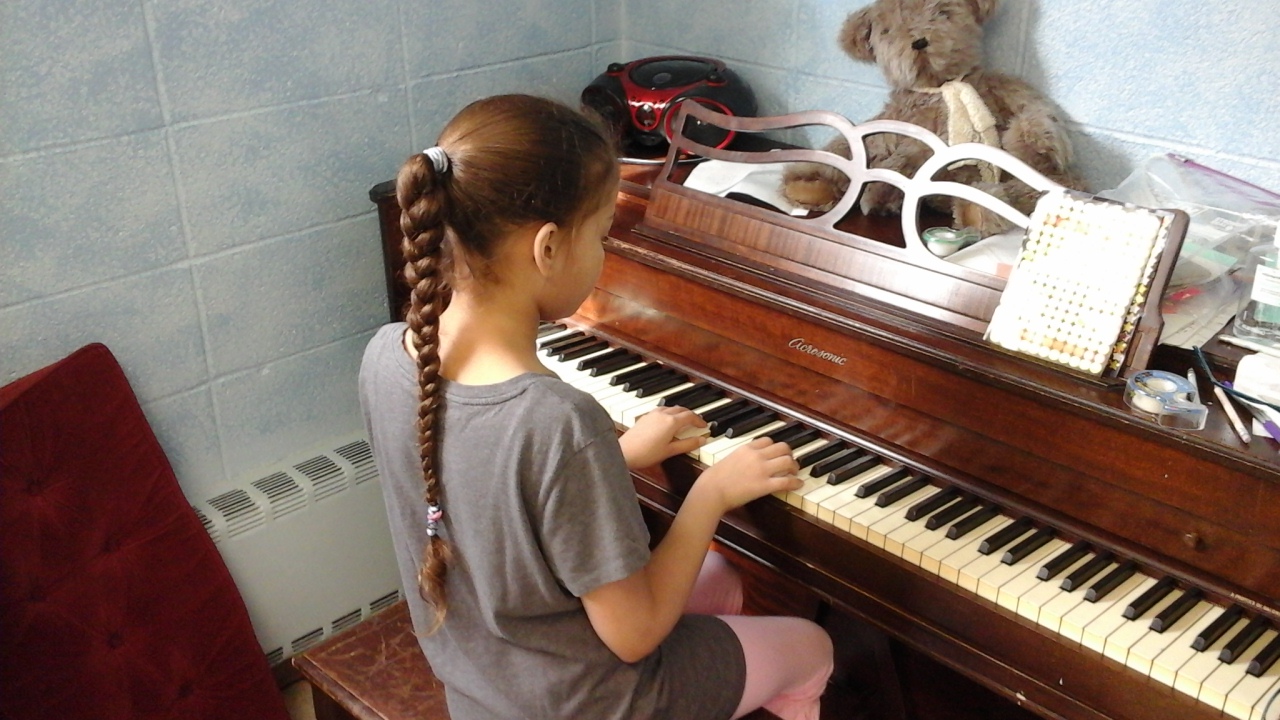
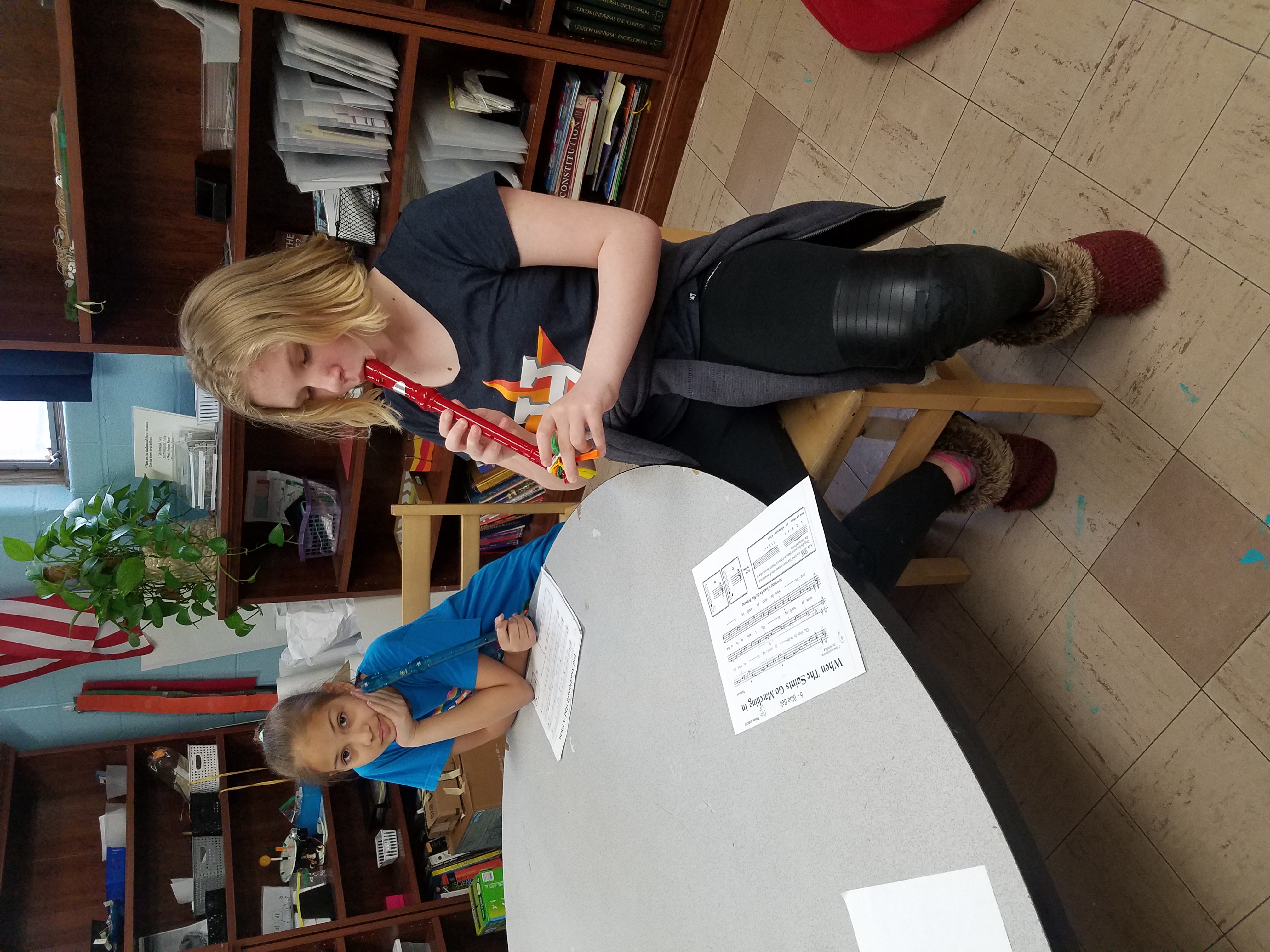
I had the joy of listening to this student play me her International Festival piano piece. She already has it committed to memory!
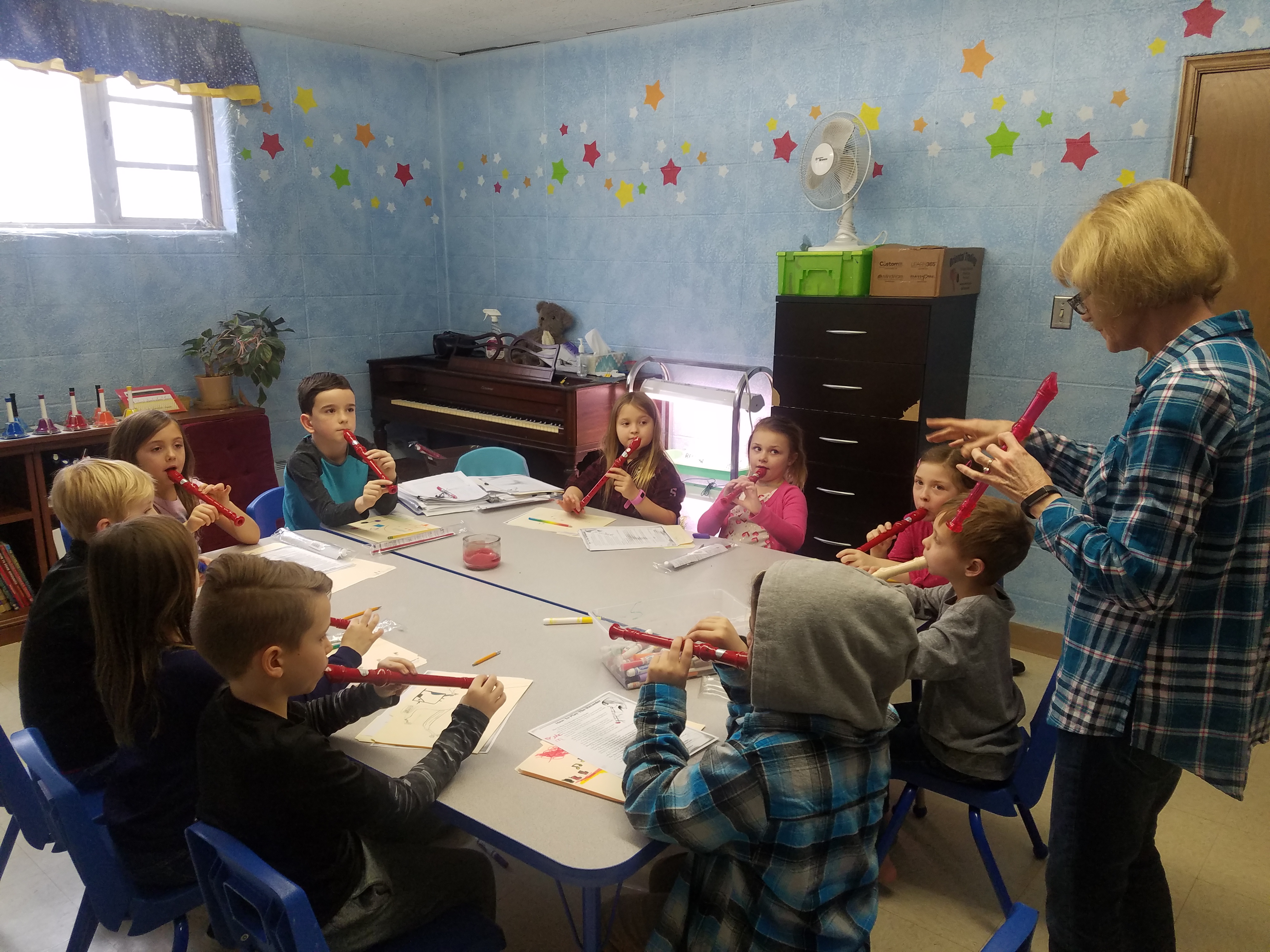
Practicing with Ms. Lisa
DANCE
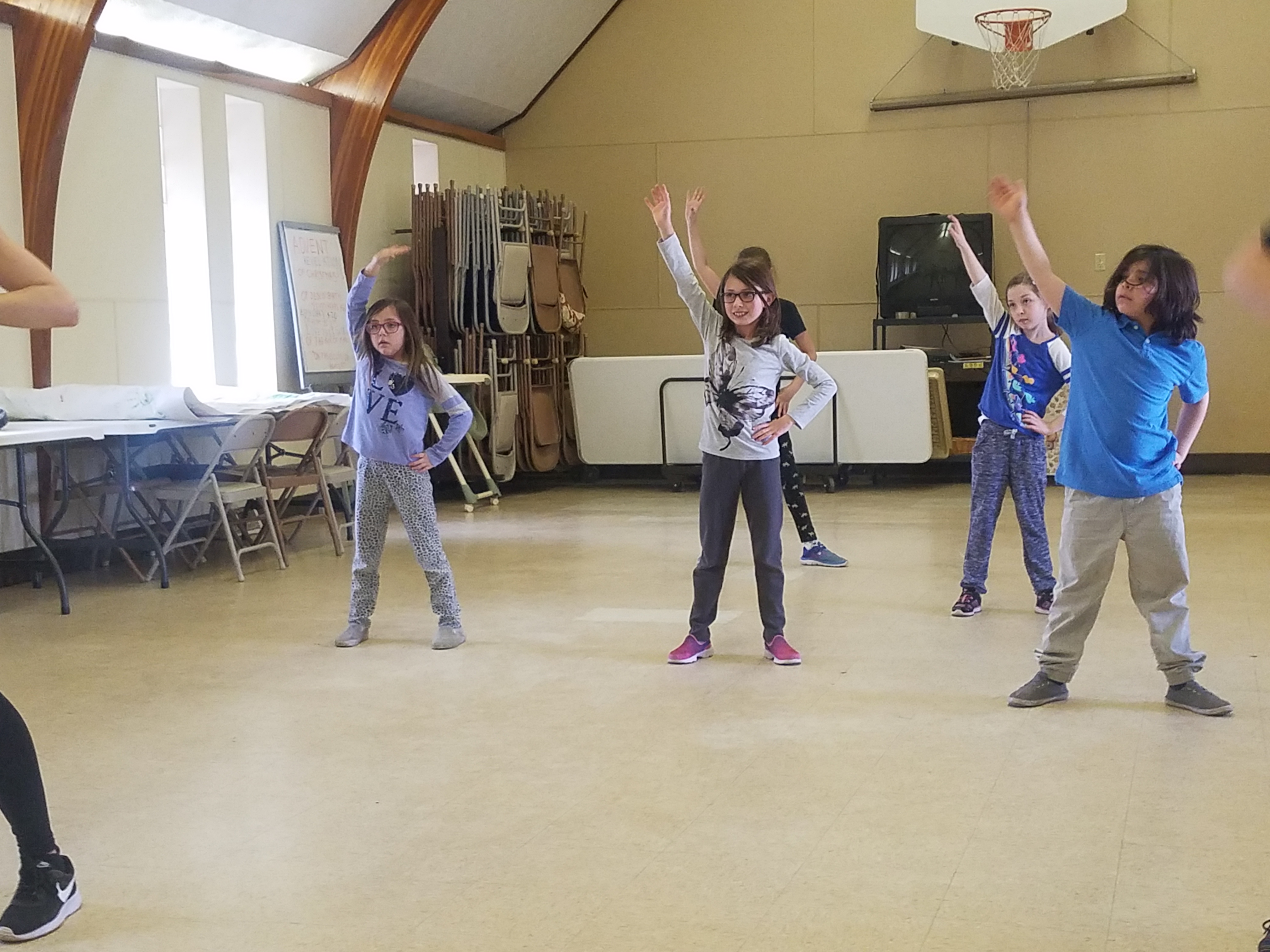
Swimming through their moves to “Baby Shark”!
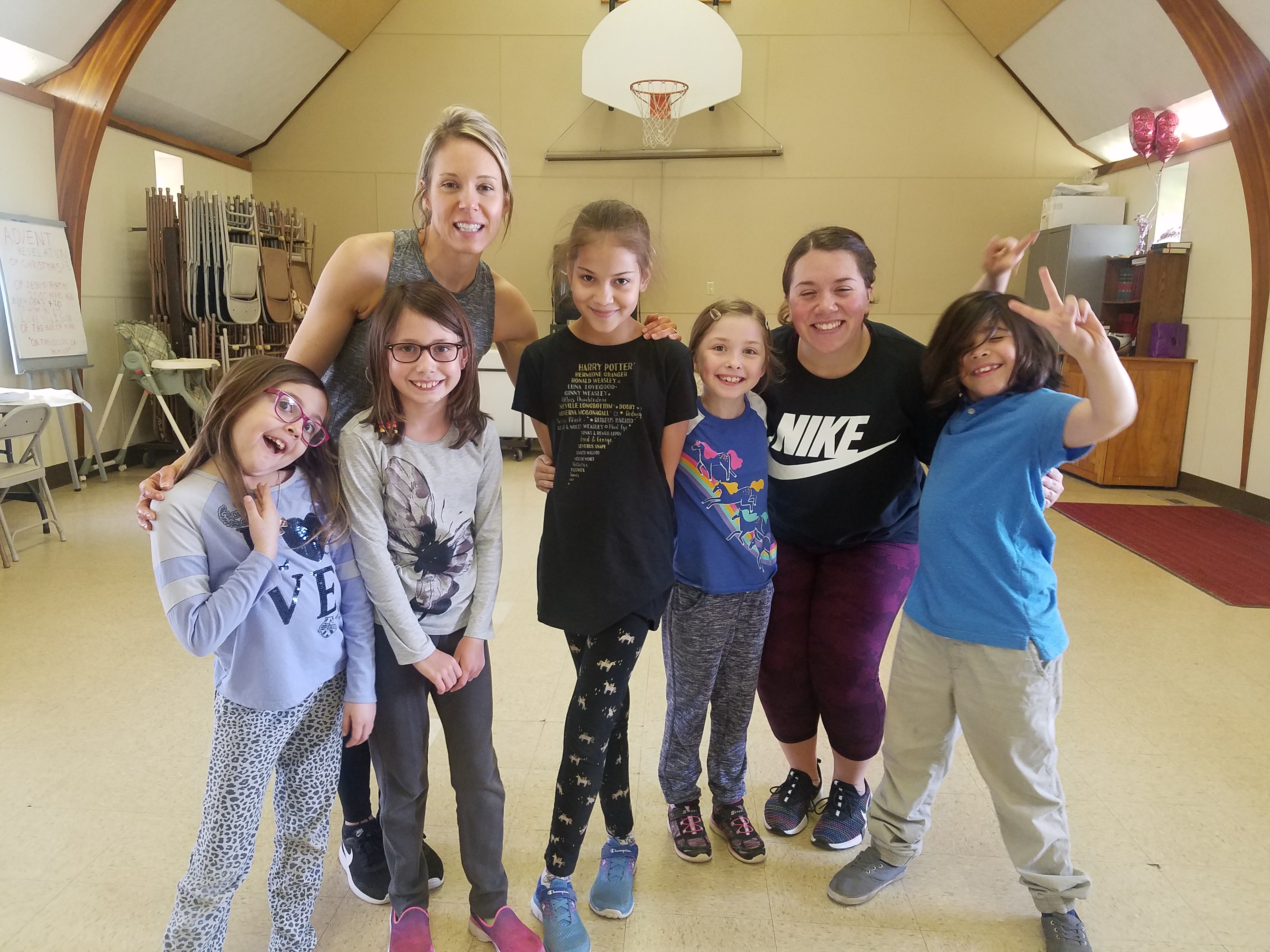
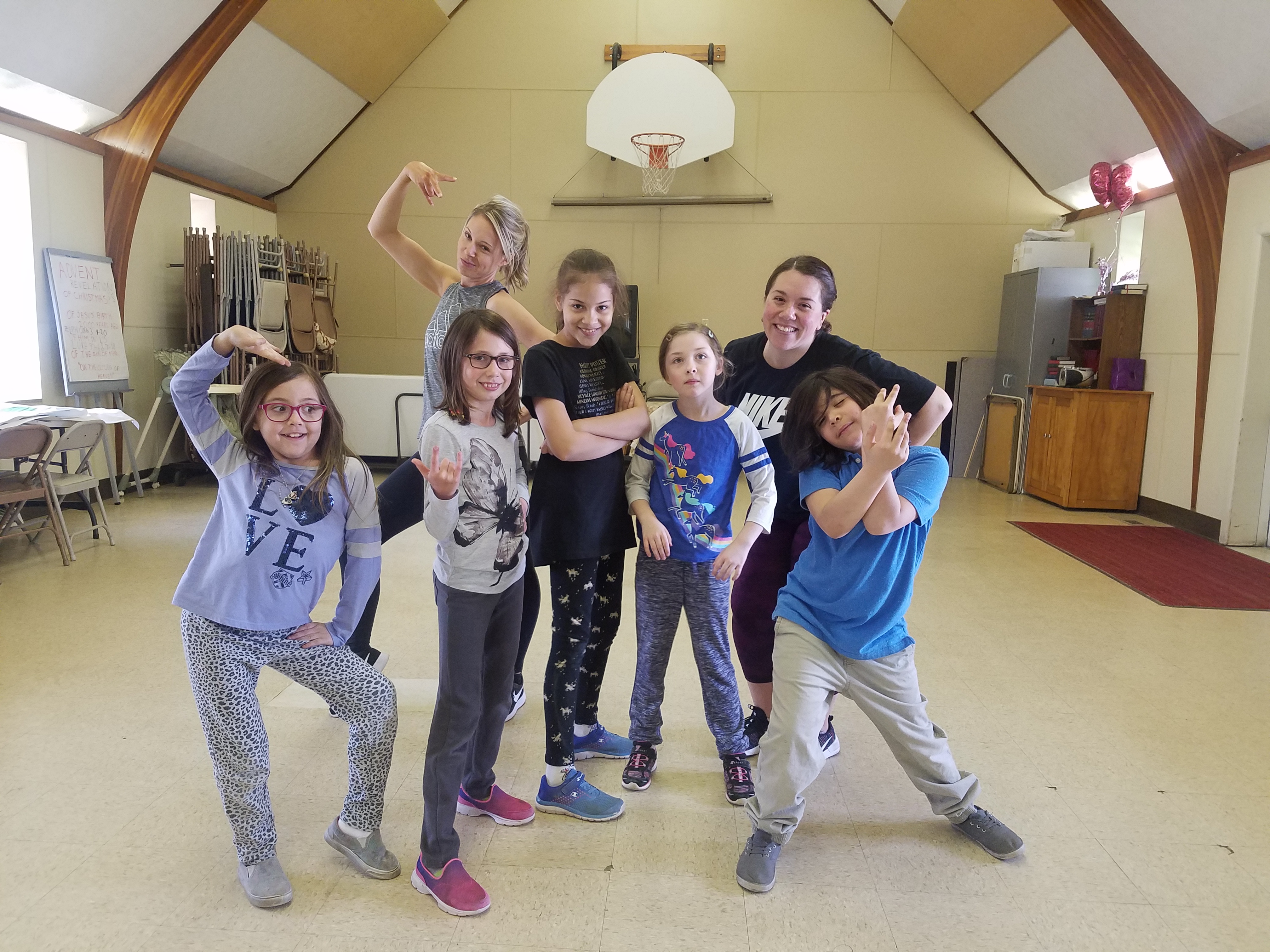
Last day of dance with Ms. Elisabeth. The dancers love to strike a pose : )