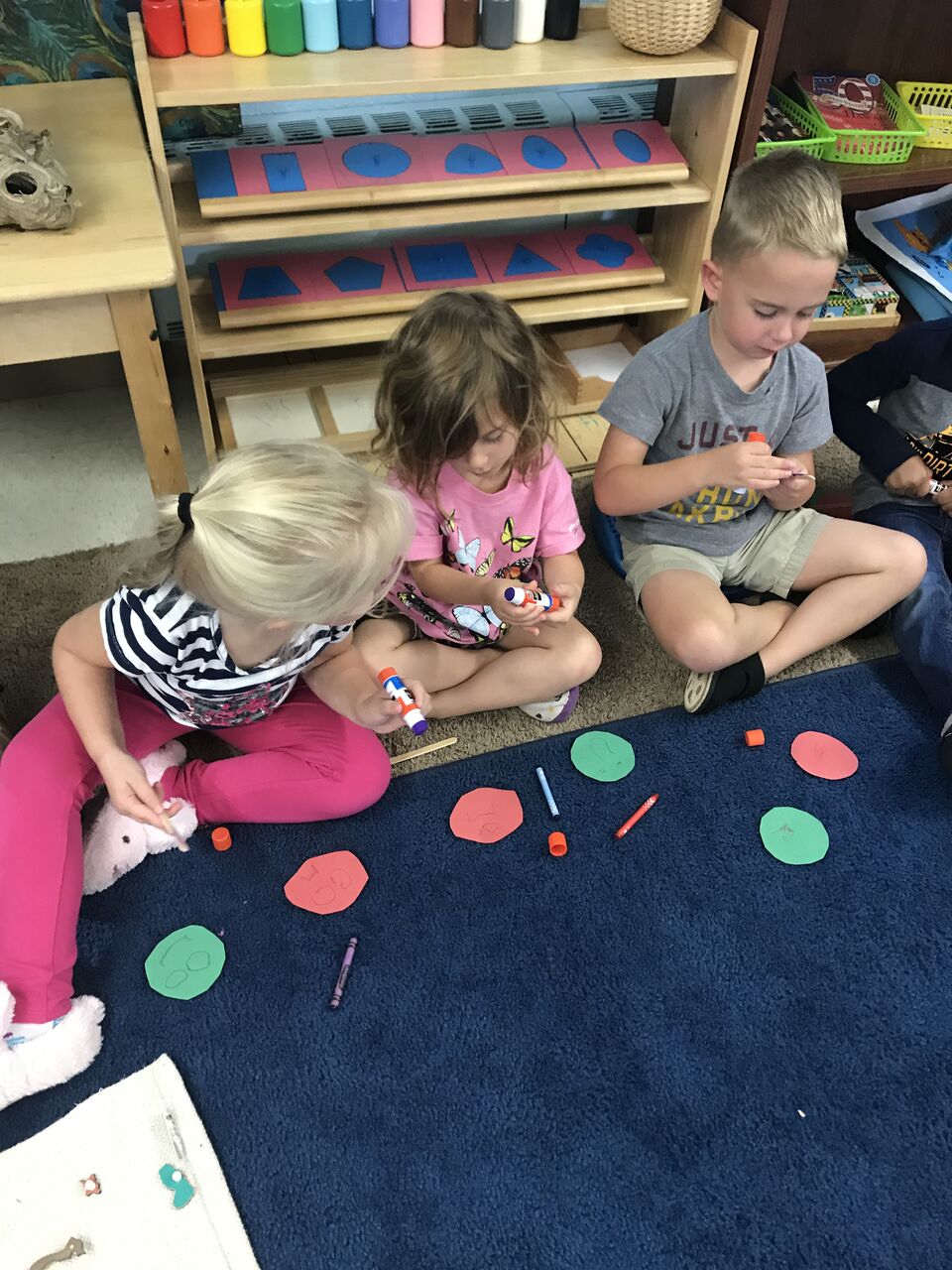
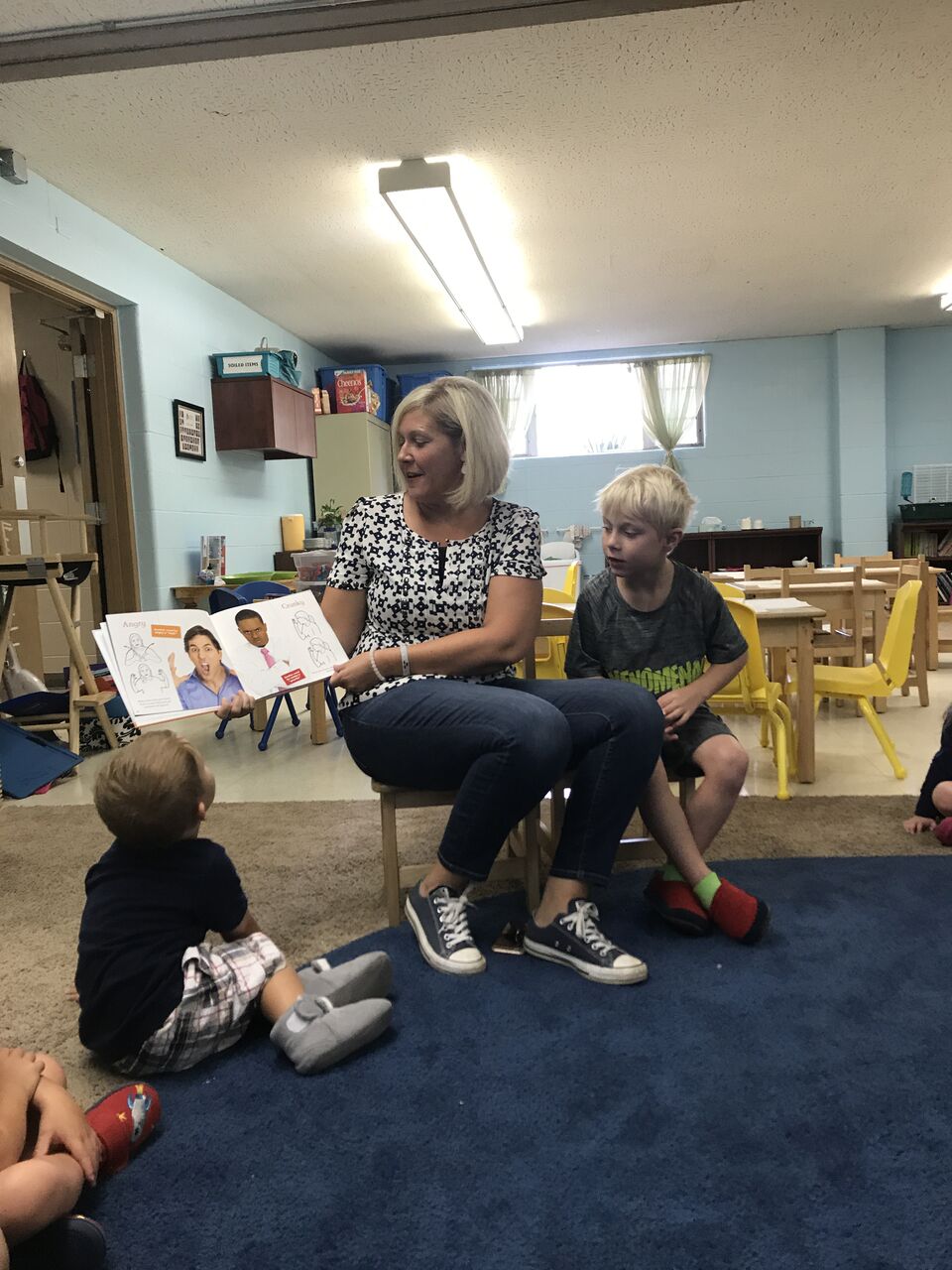
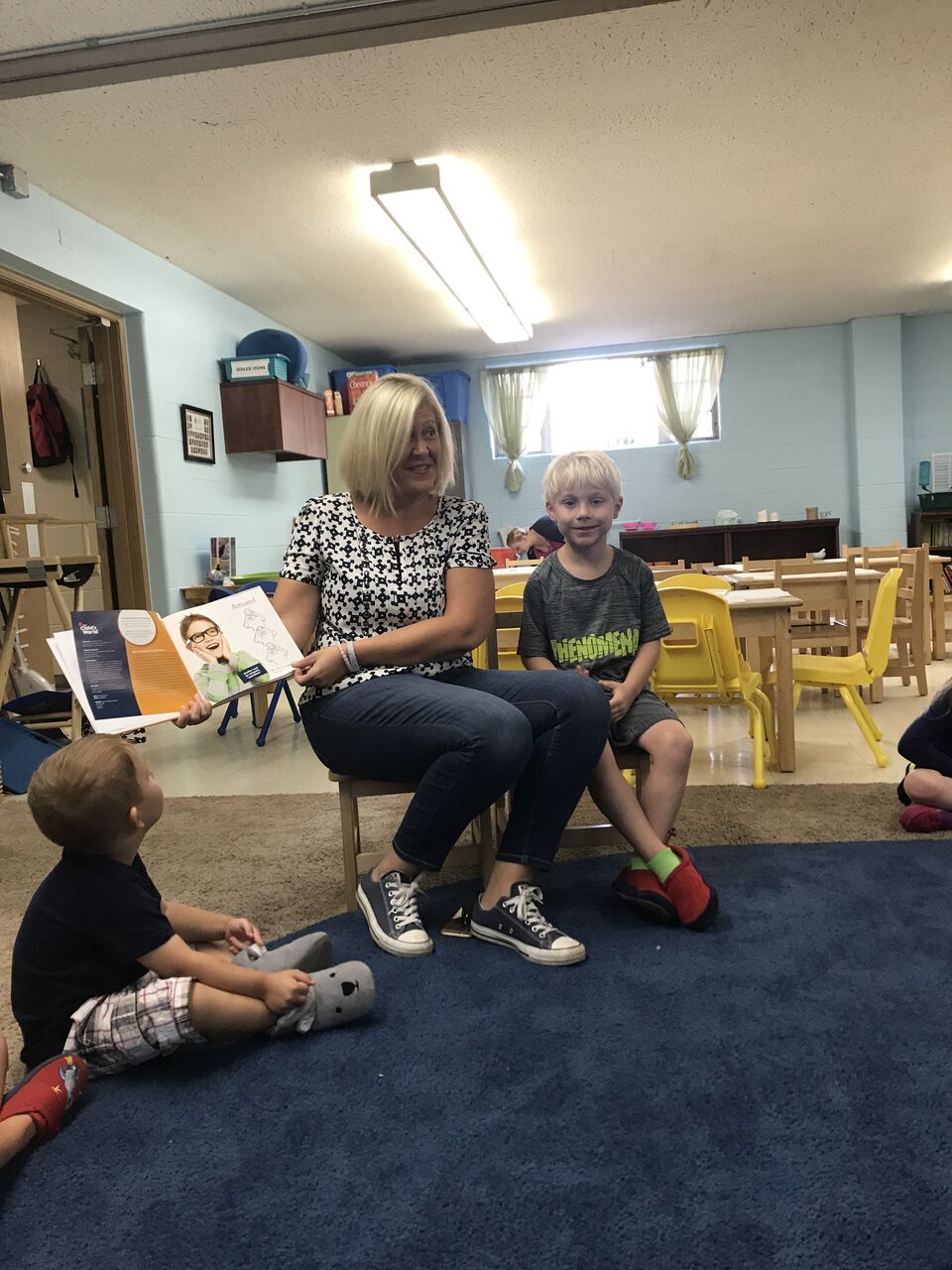
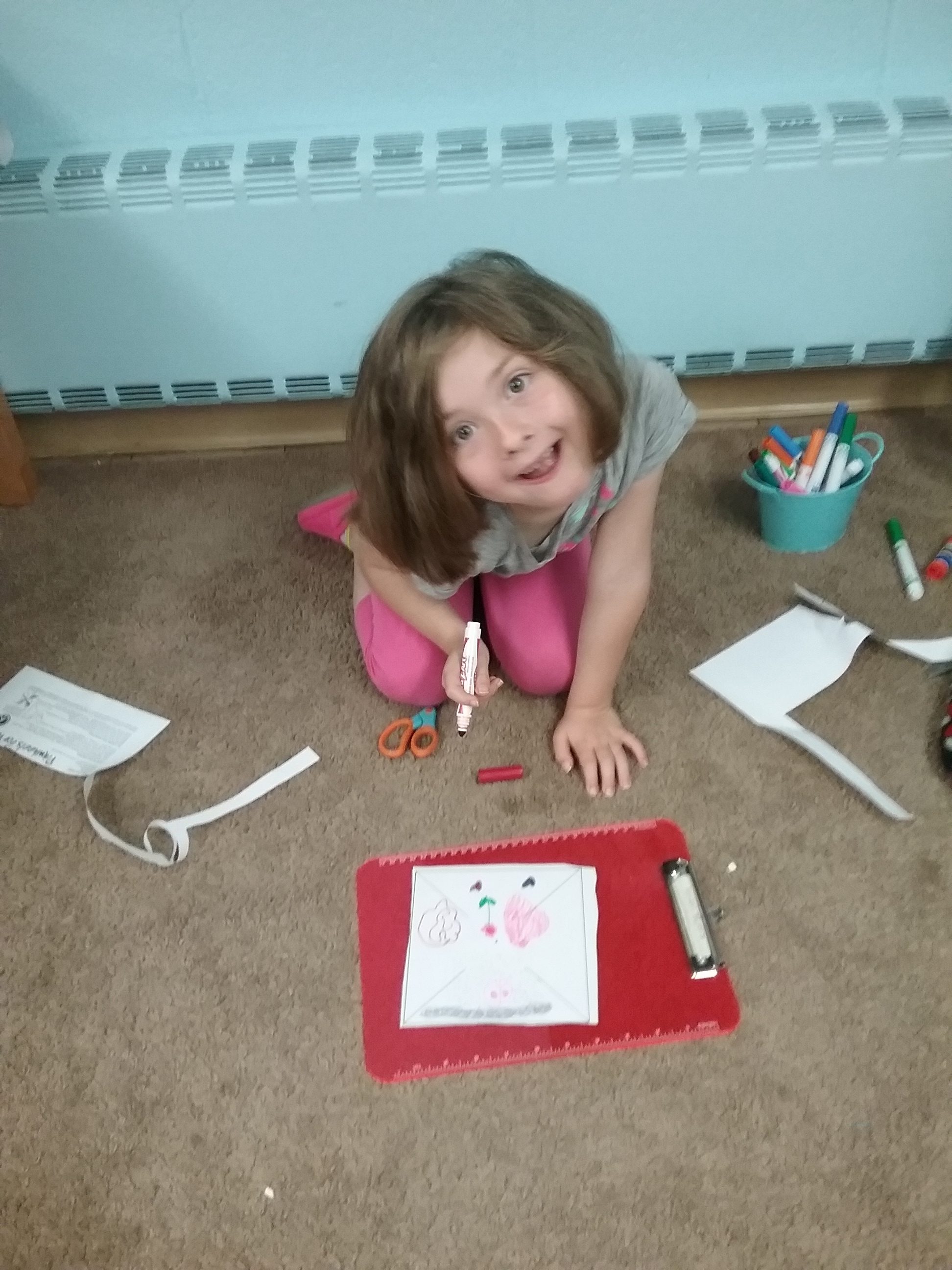
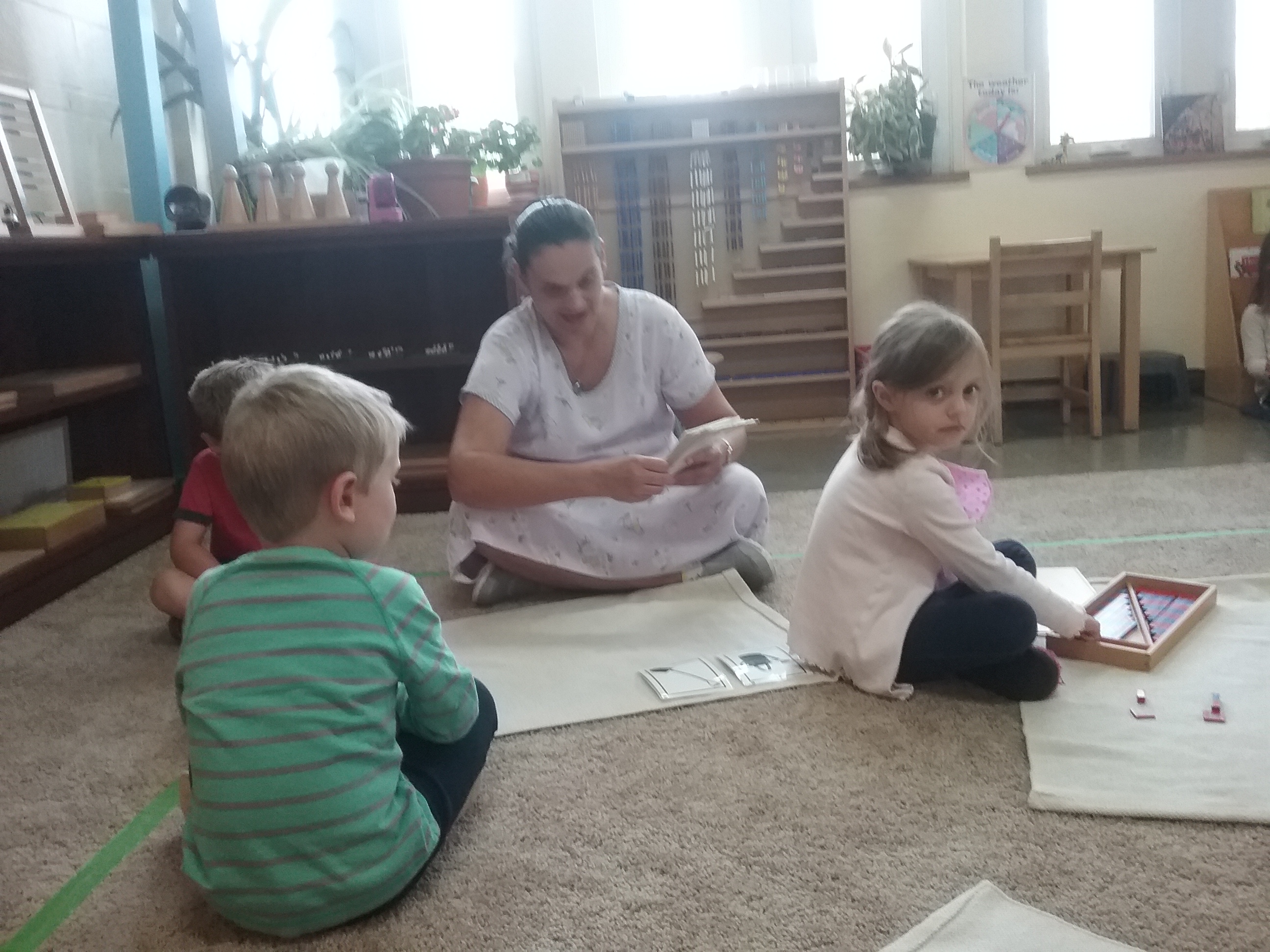
This week the children learned what they can do when they are angry, happy, sad, frustrated, excited etc. They learned how to manage their feelings and emotions. The children practiced how to process, identify and appropriately express their emotions in different scenarios throughout the week. Towards the end of the week we started seeing them express their feelings and emotions to their friends on their own!
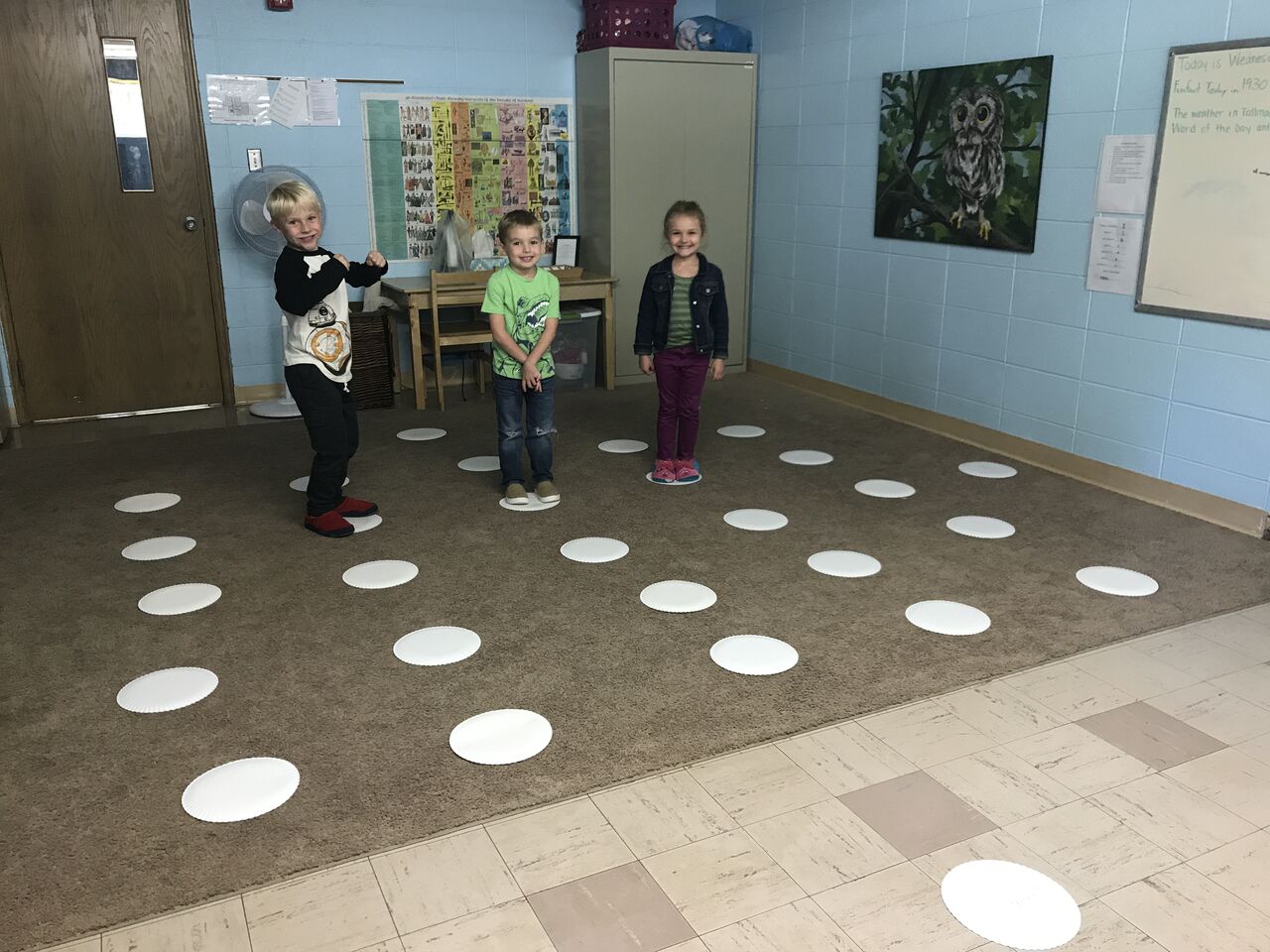
A fun activity we had together to help students learn how to express their emotions.
Work time
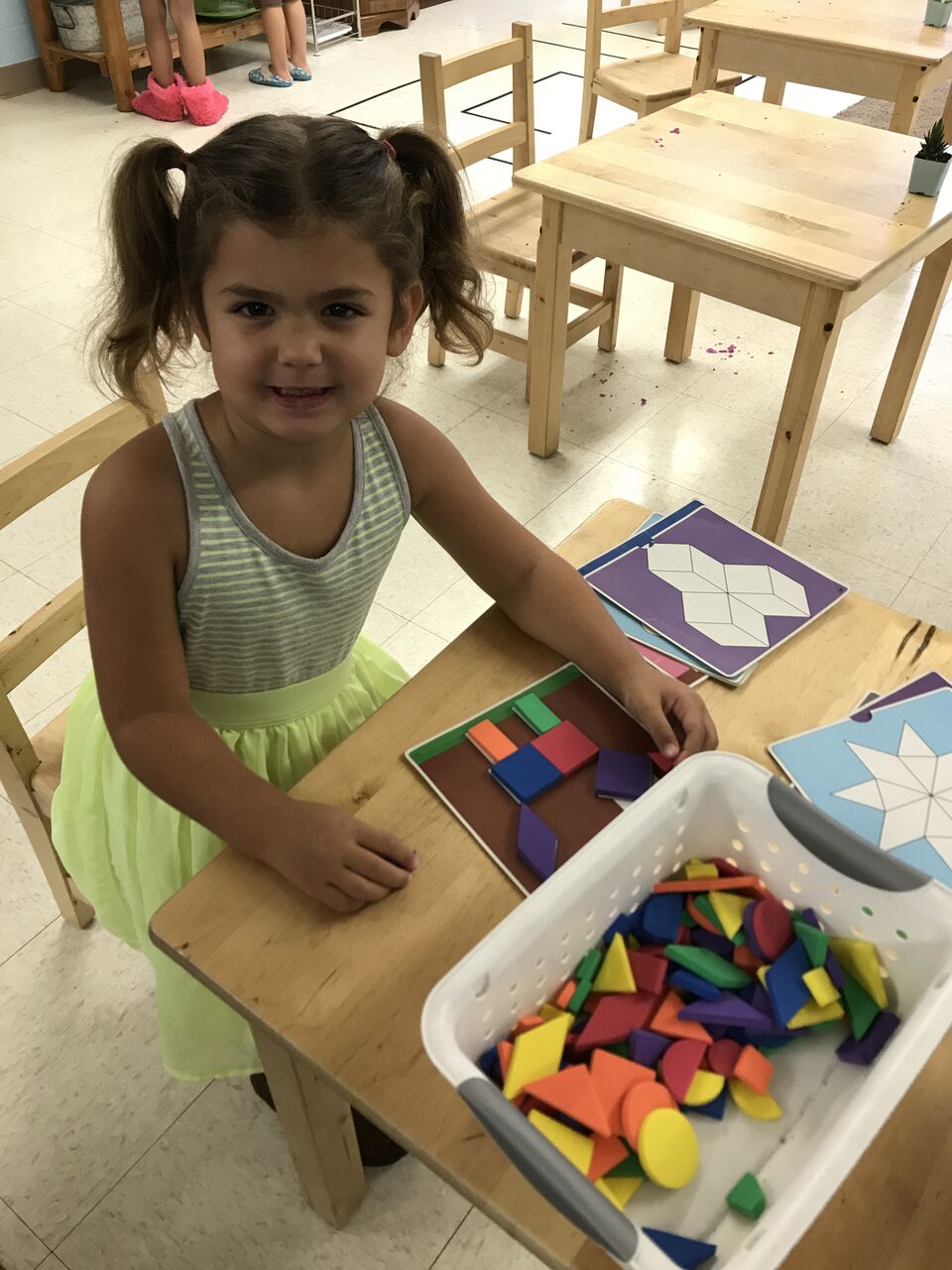
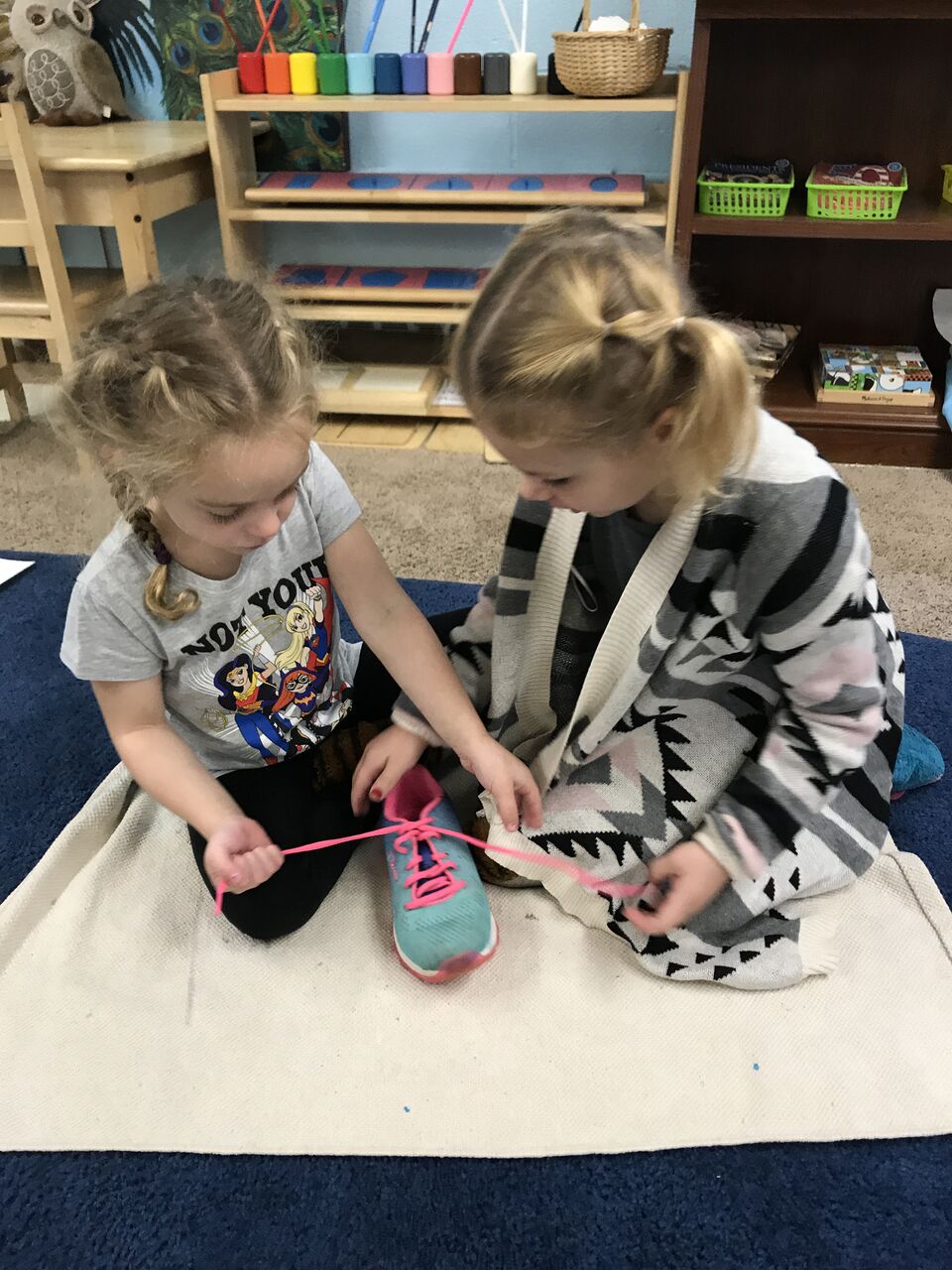
Tangrams: The student is completing the picture by moving and rotating different shapes.Multiplication Board: The child is matching the numbered tiles to the corresponding location on the board, while also memorizing multiplication facts.Sandpaper Numbers: This child is learning the symbols for the numbers through the sense of touch and sight.Tying: This older child is presenting a lesson on how to tie a shoe to a younger student.
Guest Reader (if you or someone you know is interested please email me at cowens@thesmarterkids.com)
Reminders
Friday, September 29th: Bring Your Parent to Work Time
A Peek at Our Week | Elementary | Week of September 18
This was an exciting week in our classroom. We tie dyed shirts, had our first Latin class, and are going on our first field trip! This week first year students began adding to their research skills by learning to alphabetize, discussing how to use a table of contents and index, and practicing how to paraphrase words to avoid plagiarism. Second year students practiced reading numbers on the Large Bead Frame, reviewed common and proper nouns, and looked at consecutive and adjacent line segments. These students discovered there are consecutive and adjacent line segments in many of the letters of the alphabet! The third year students reviewed rules for plurals of nouns, practiced greater than, less than, and equal to with fractions, looked at types of corolla, and explored similarity in geometry. Fourth year students discussed words coined by famous authors, looked at the history of the English language, created their own Multiplication Checkerboard, and discussed evolution of life theorists.
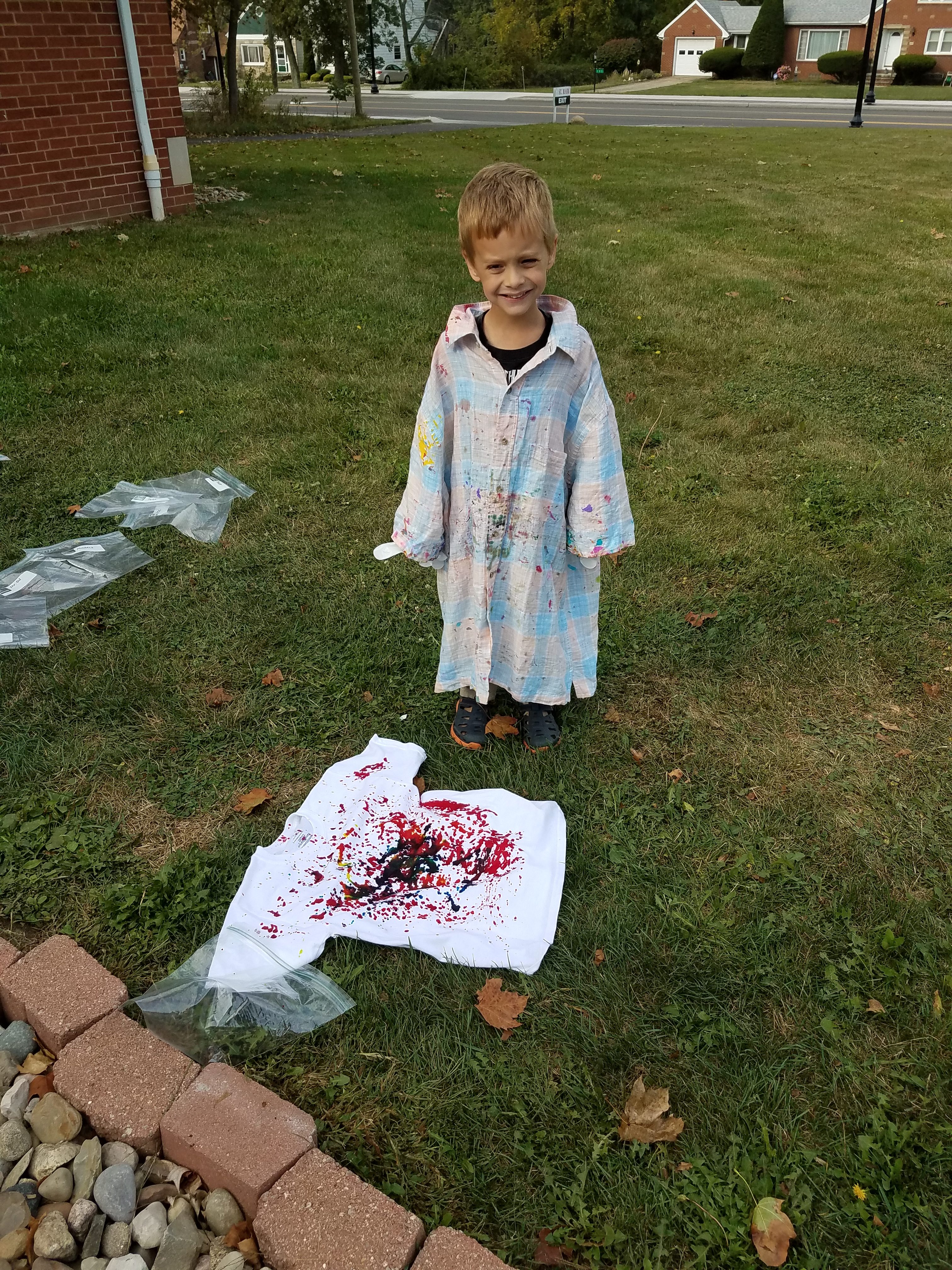
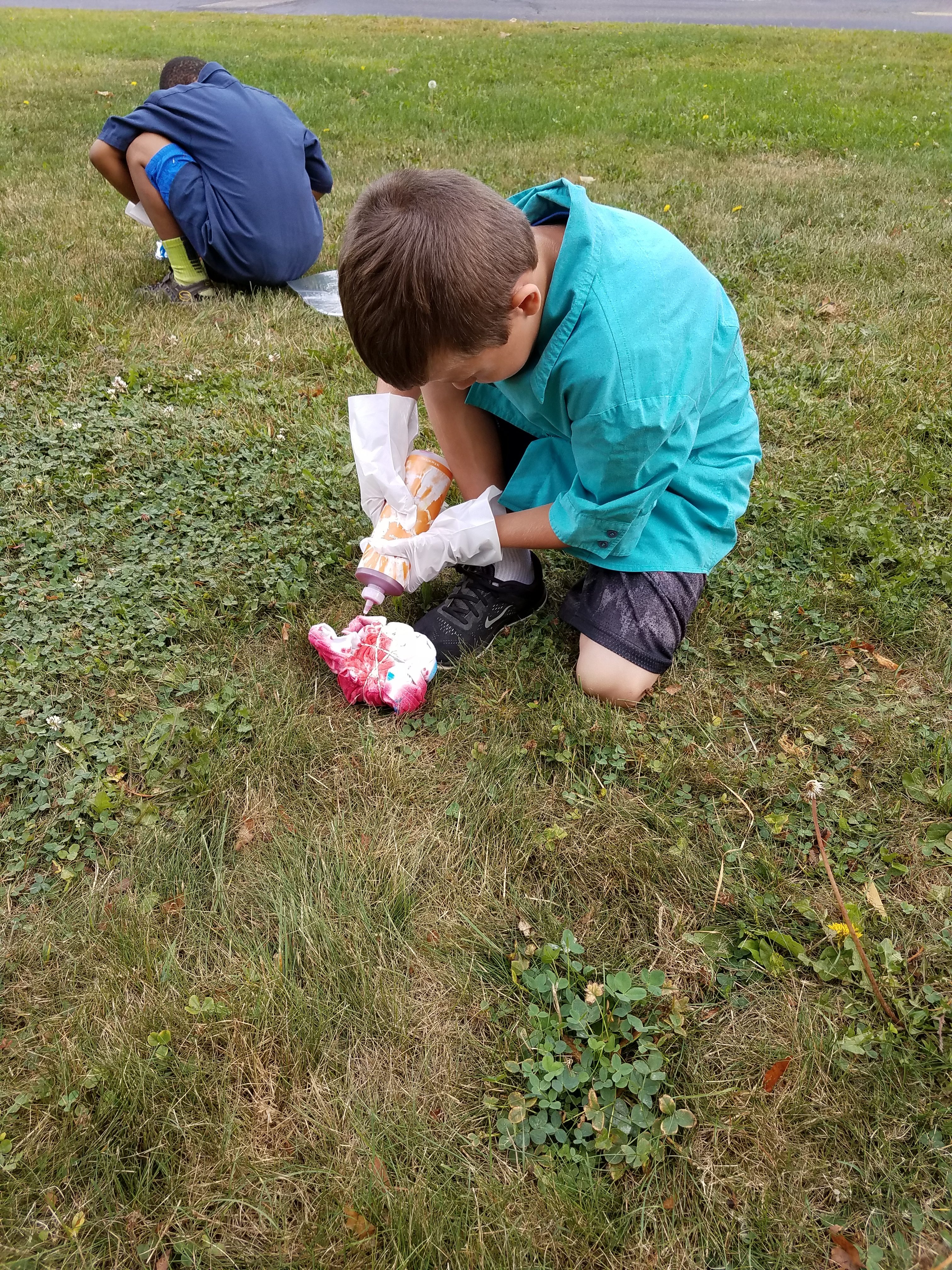
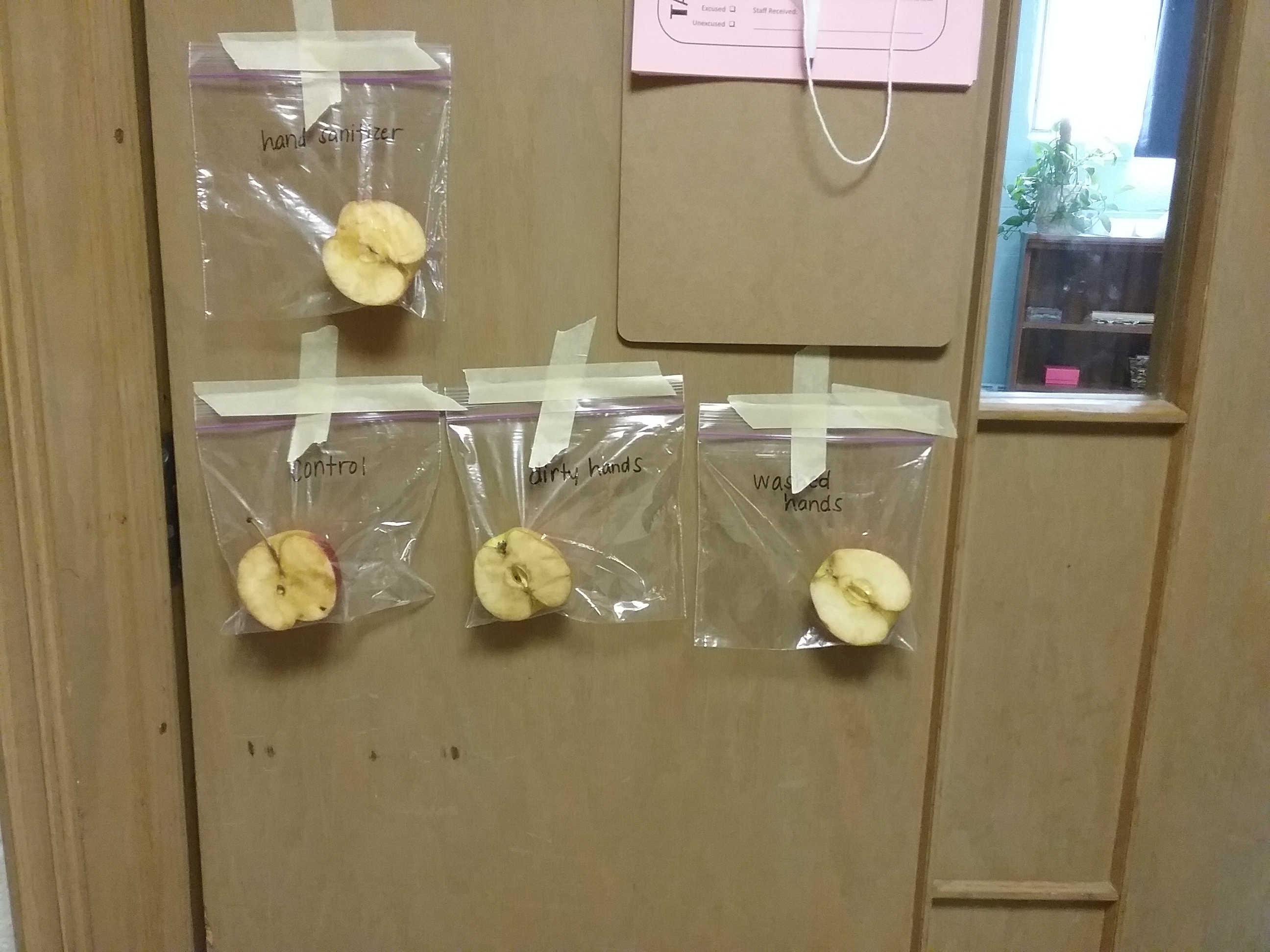
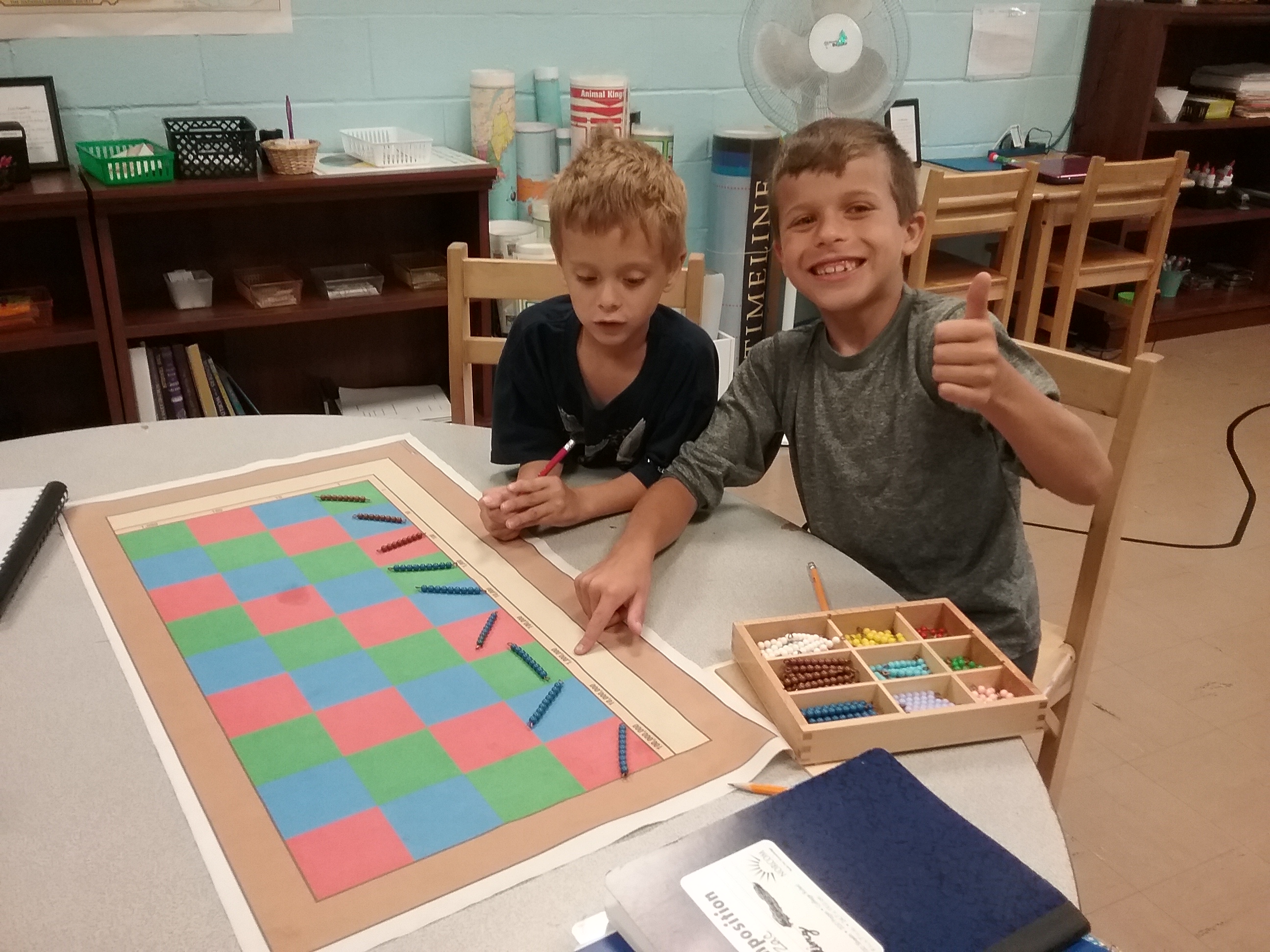
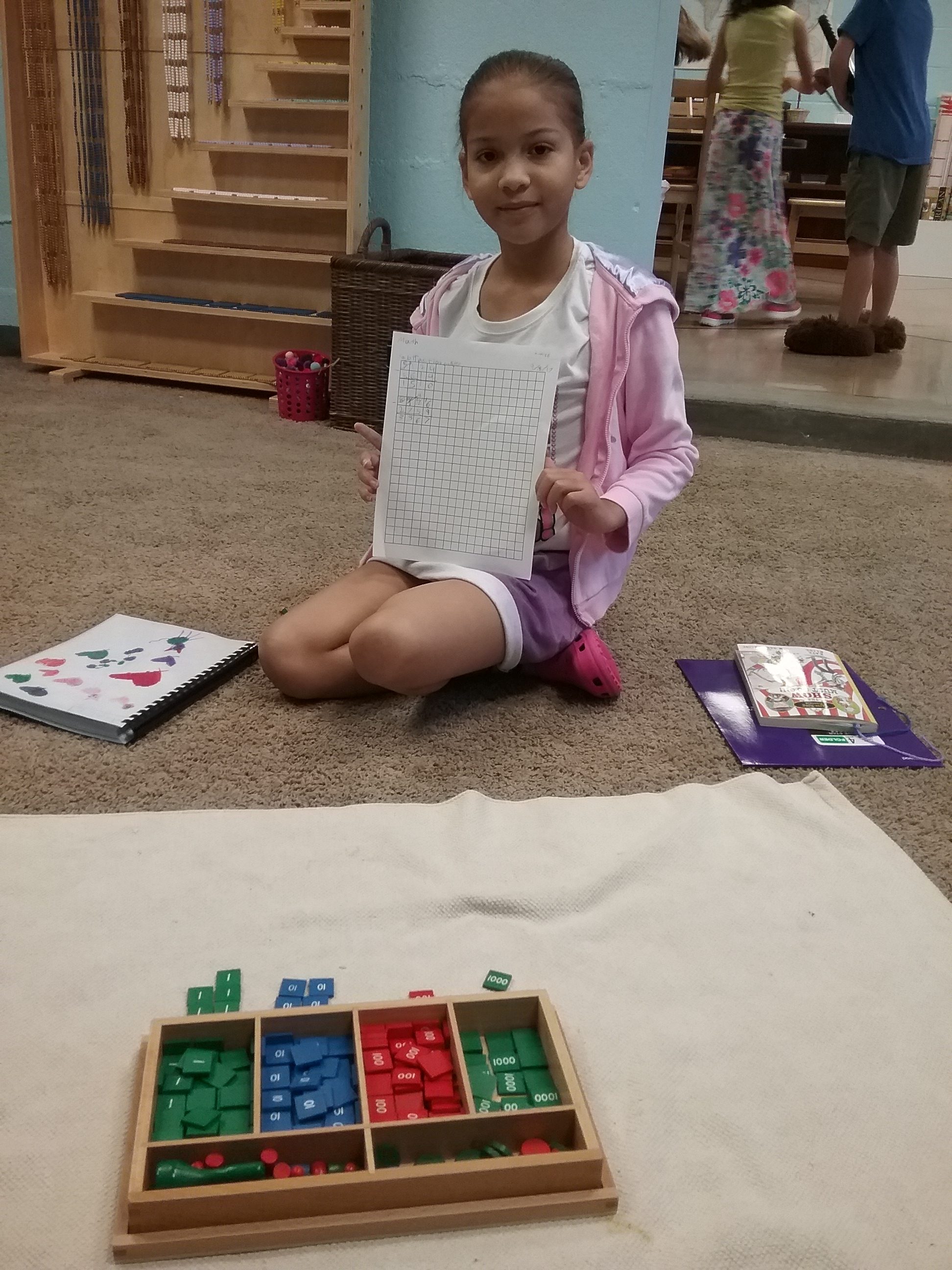
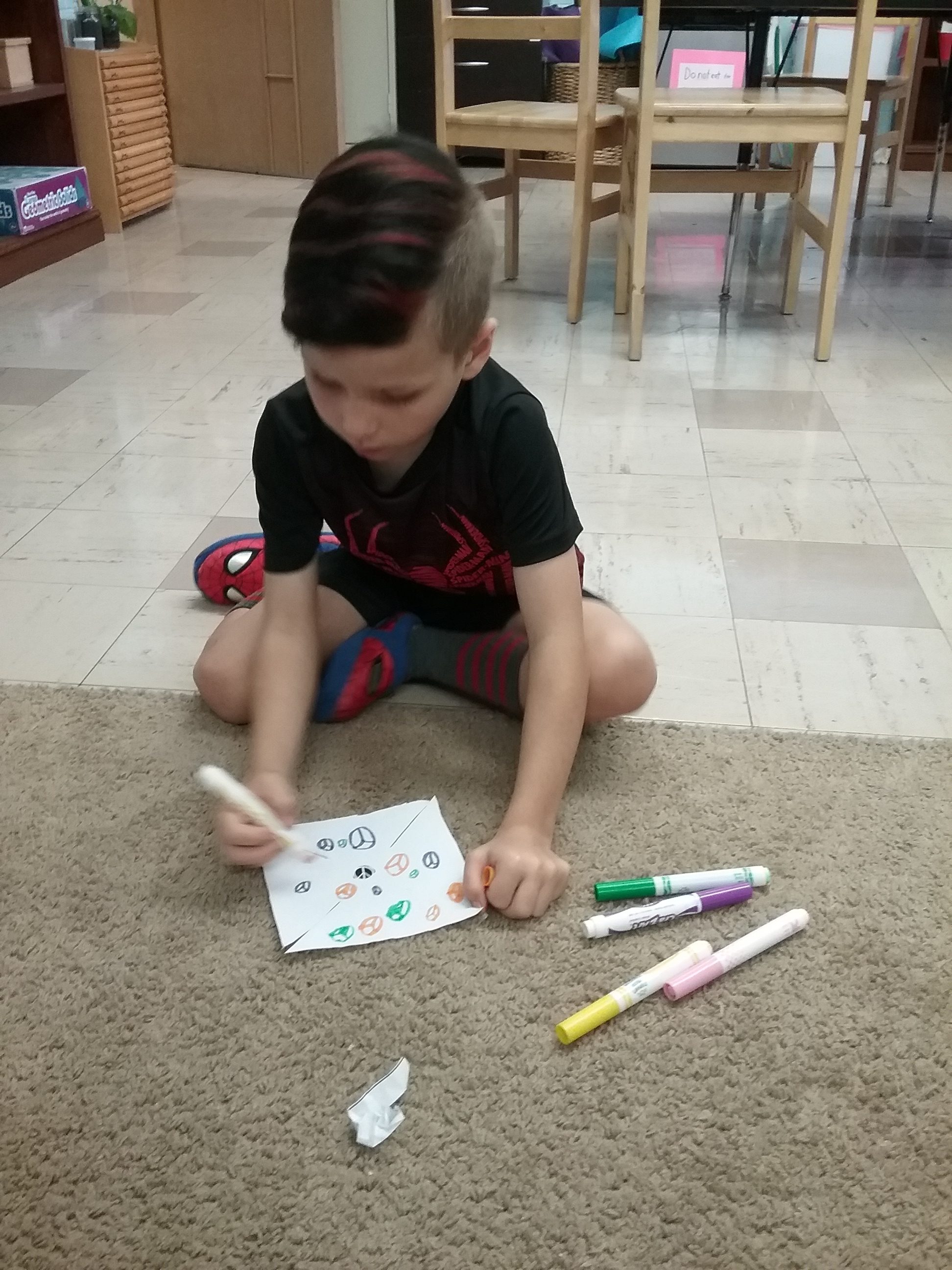
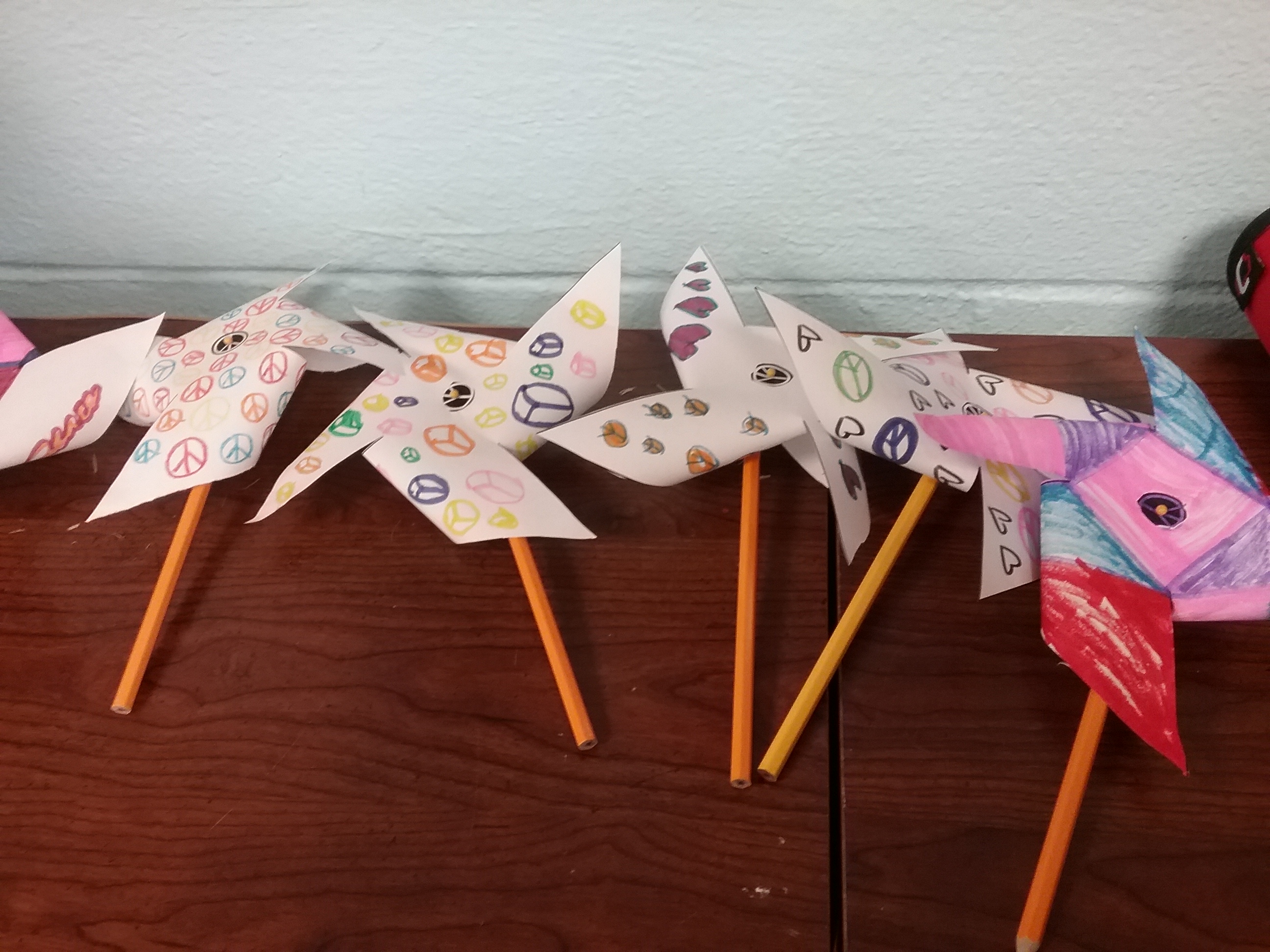
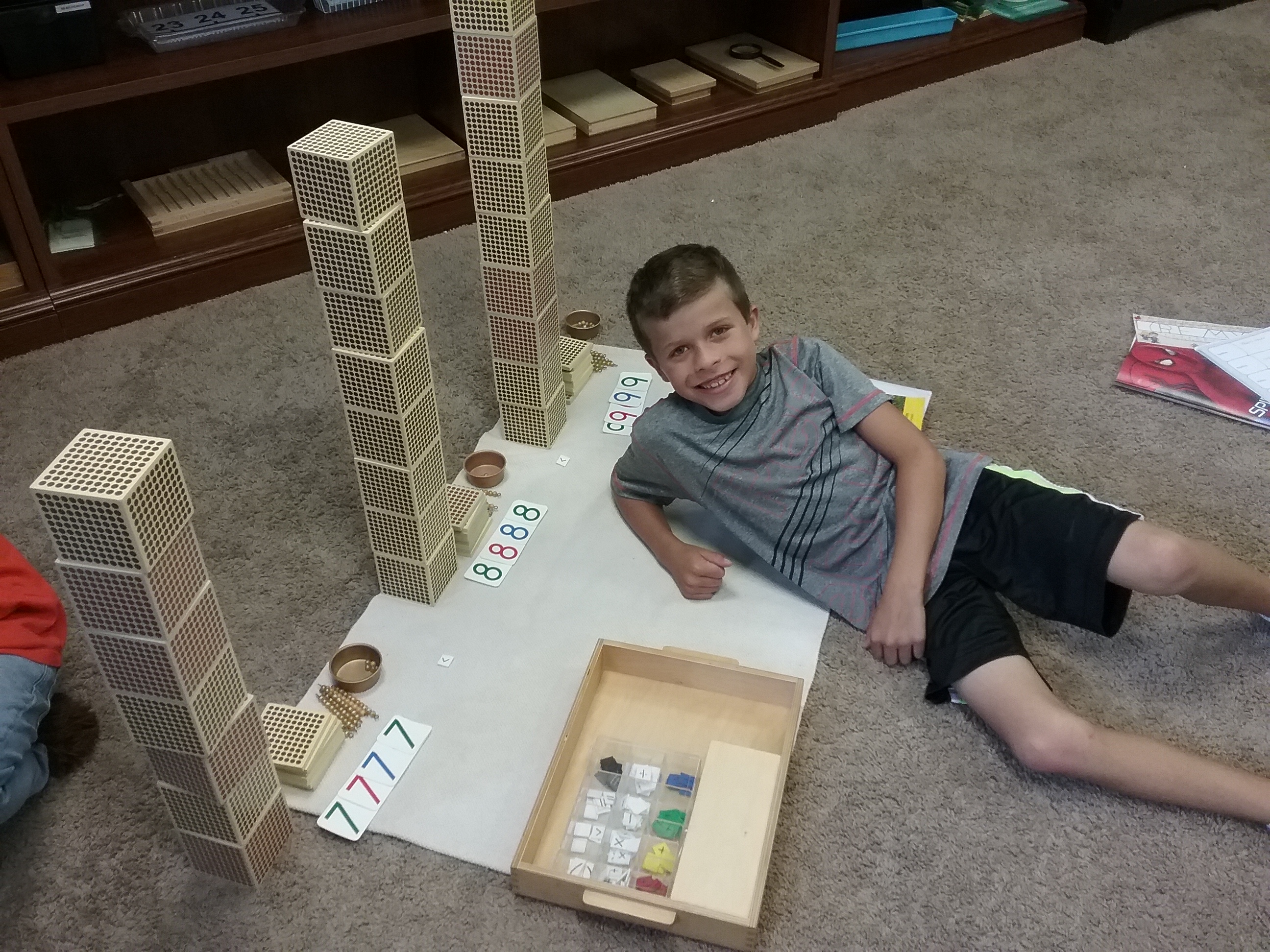
Our students made their own tie dye shirts for our field trips this year. Some students followed the directions to make certain patterns, while others created original designs! Our students are conducting an experiment about germs. We used two apples for our experiment. Half of one apple is our control and the other half was touched by students with dirty hands. The first half of the second apple was touched by students that washed their hands and the second half by students that used hand sanitizer. So far, the apple touched by students with clean hands has changed the least. The students are so interested to see our final results. Take a peek at drop off or pick up!These students are working to read numbers on our Multiplication Checkerboard. Students add beads to the squares and read the numeral they have created. These students made the number 999,999,999. After practice with this, students will begin multiplying on the Checkerboard.This student is doing subtraction on paper with the Stamp Game. In the Elementary classroom, students learn math concepts with our concrete materials. When they have mastered that material, the next step is solving an equation with the material and on paper, with pencil. The final step is complete abstraction of the concept, just on paper. This process leads to a deeper understanding of the “why” of math work.For International Peace Day, we discussed different peace makers and world changers. After our discussion, students made peace pinwheels. On one side of our pinwheels, we wrote what peace means to us and decorated the other side before turning them into pinwheels! Check them out near the playground before the weekend!
A Peek into Next Week
Next week Kids Bop begins! Lower Elementary students will make bar graphs, continue studying nouns, look at parts of a fruit, and experiment with an overflow basin. Upper Elementary students will work on word problems about money, practice note-taking, draw angles with a protractor, and will discuss ions and electron shells.
Next week the blog will be written by two students! Don’t miss a look into our room through their eyes!
We had so much fun this week learning about our families! All week long we had a variety of activities which gave a better understanding of what a family is. We had many discussions about who is in our family, brothers and sisters, special traditions families celebrate together, and how all families are different. We also shared our family trees.
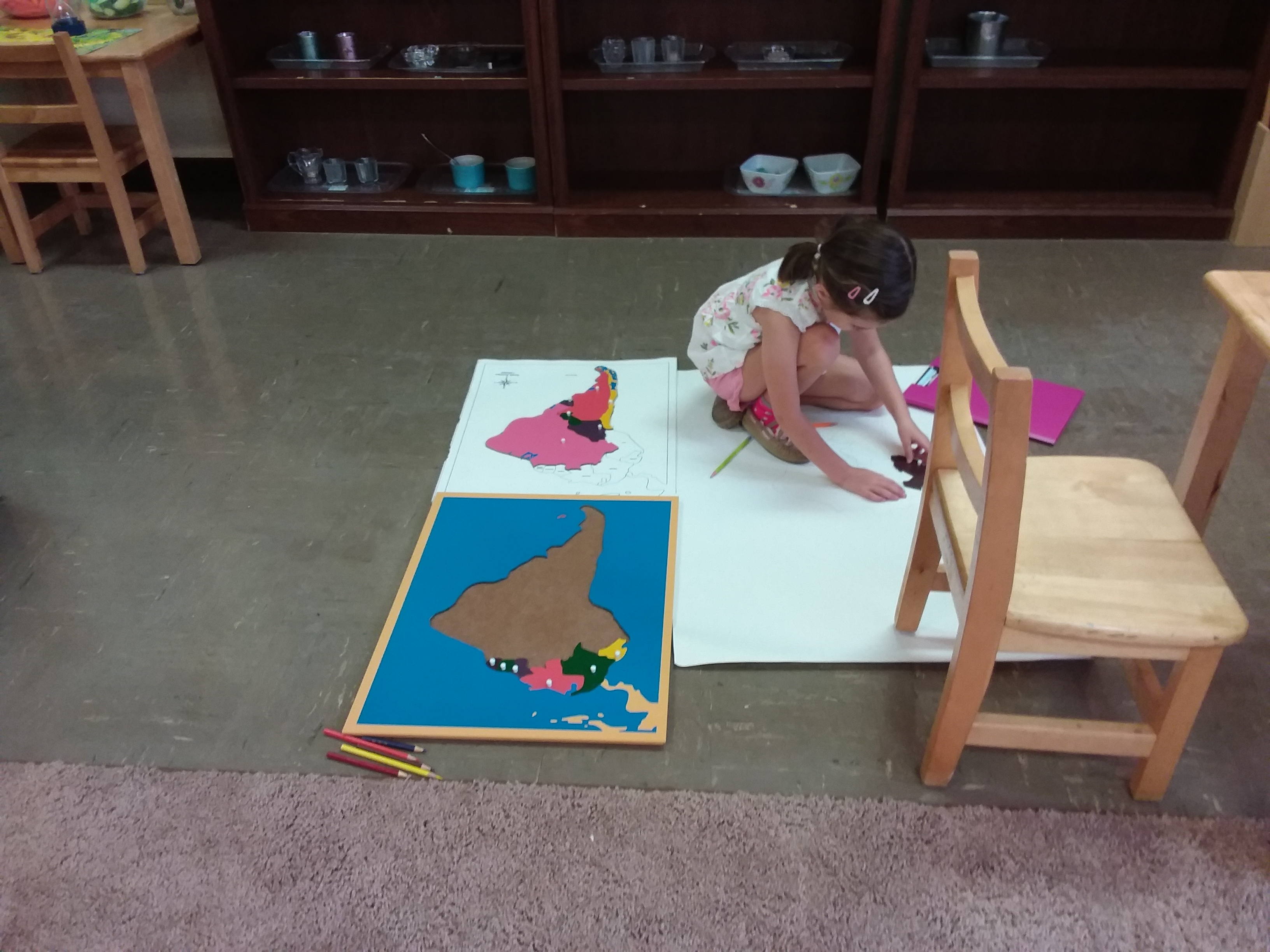
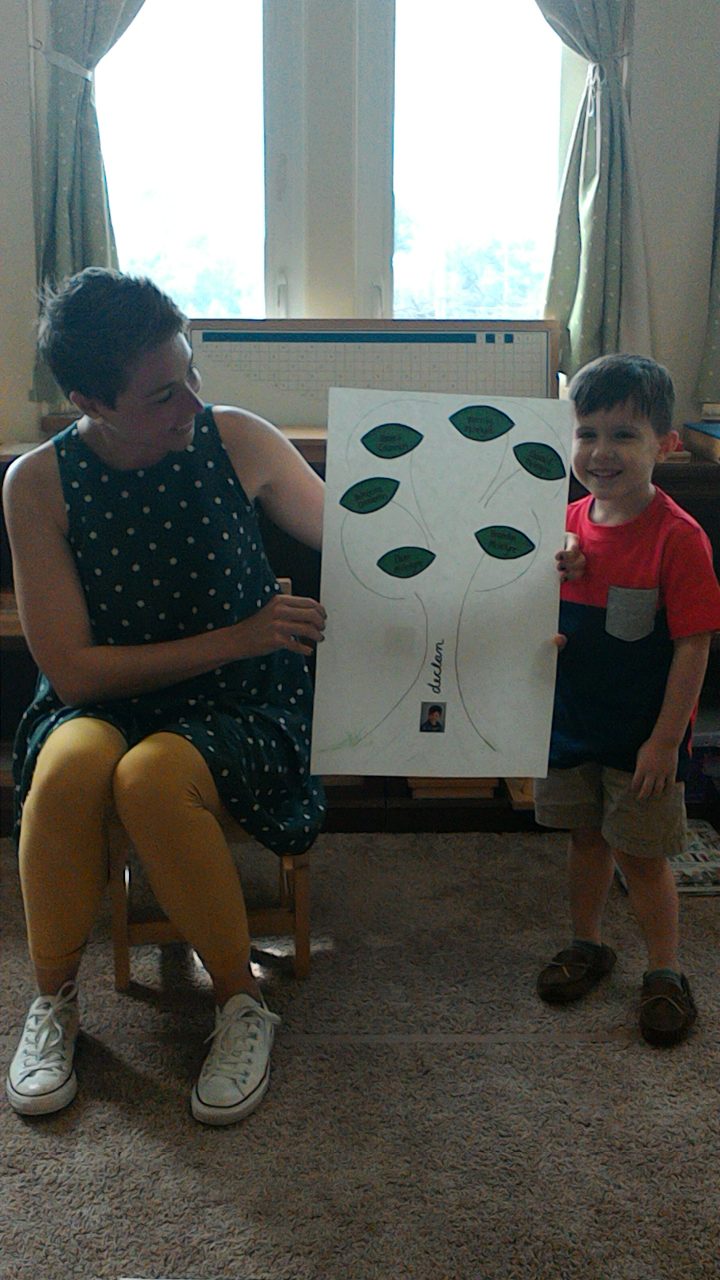
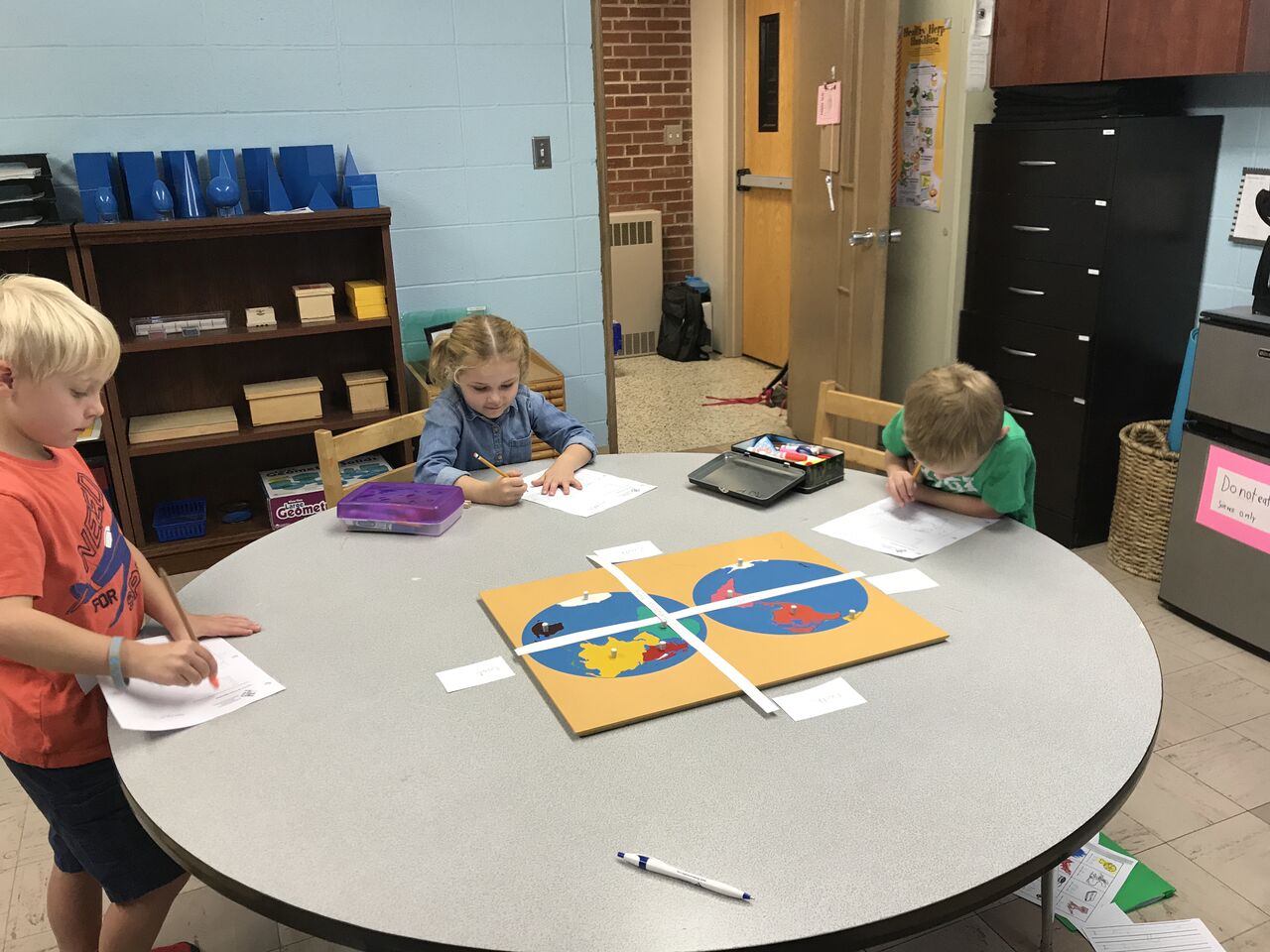
One of our kindergartners working on the South America Map. With this material they are learning how countries fit together into a continent and learning about the different countries. They are gaining fine motor skills but tracing and coloring the map.Sharing our family trees! The children take so much pride in talking about their families.
A Peek into Next Week: We are learning about Respect!
– Learn how how we can respect others
-What does respect look like?
-How manners tie into respect
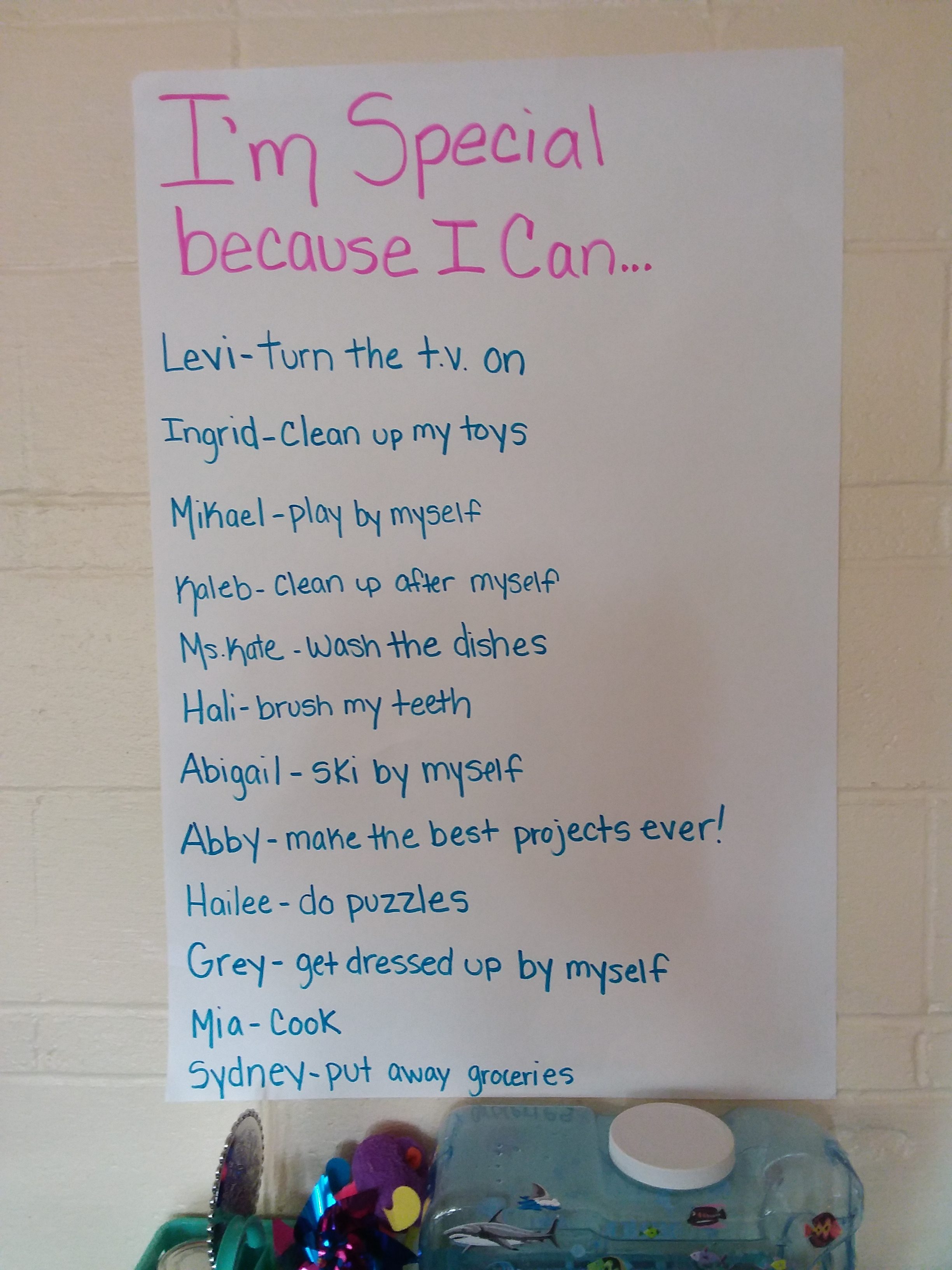
This week we had so much fun learning about ourselves. We made different graphs that focused on the letters of our name, eye and hair color. We also lead discussions about what makes us so unique and special!
We started out the week by reading a special book about how everyone in the world is special. We then lead a discussion about what makes each of us special.
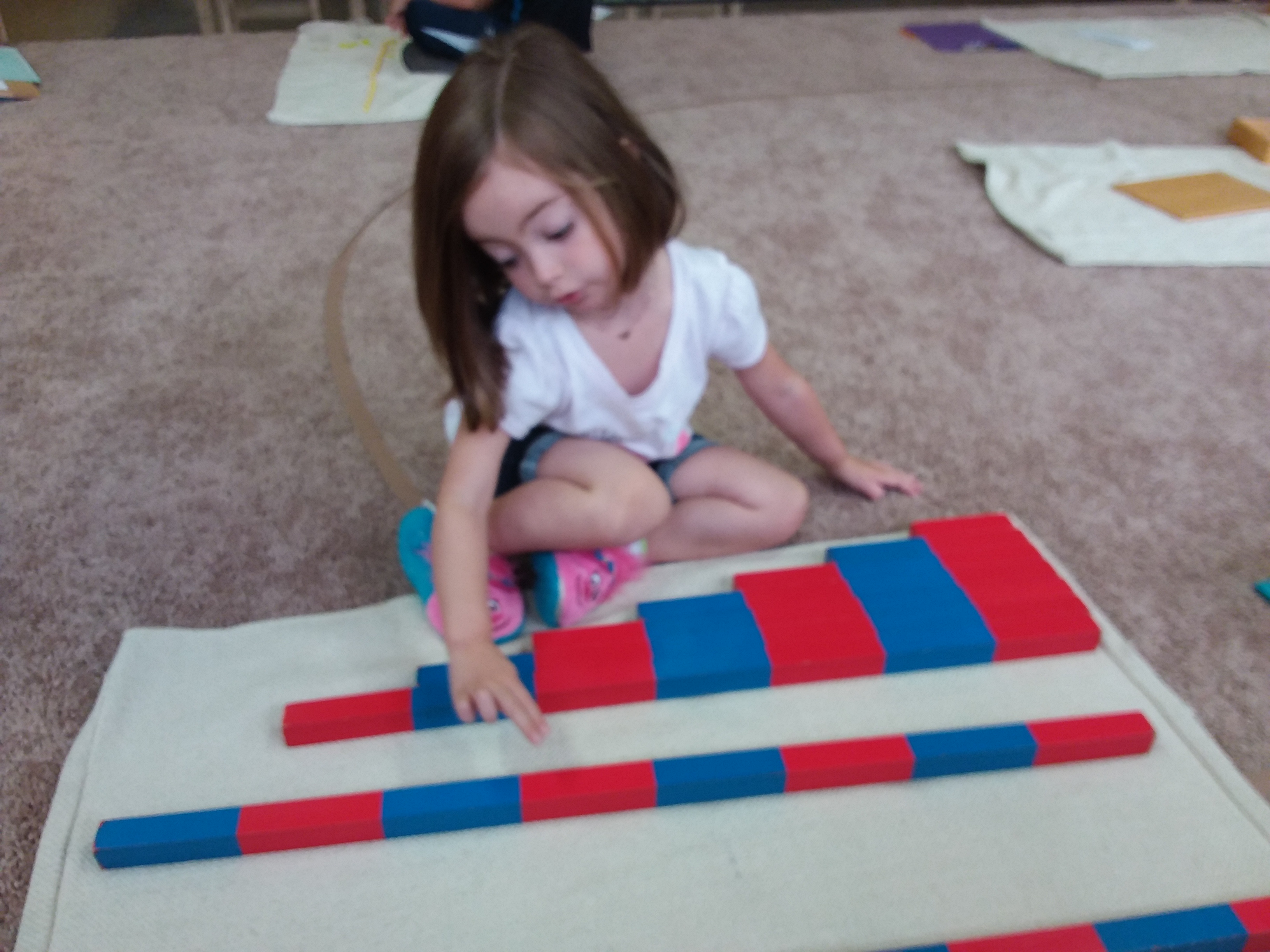
Our sweet friend is working very hard on the number rods. The aim and purpose for this material is to help memorize the sequence of numbers from 1 to 10, to show that each number is represented by a object, as a whole, and separate from others.
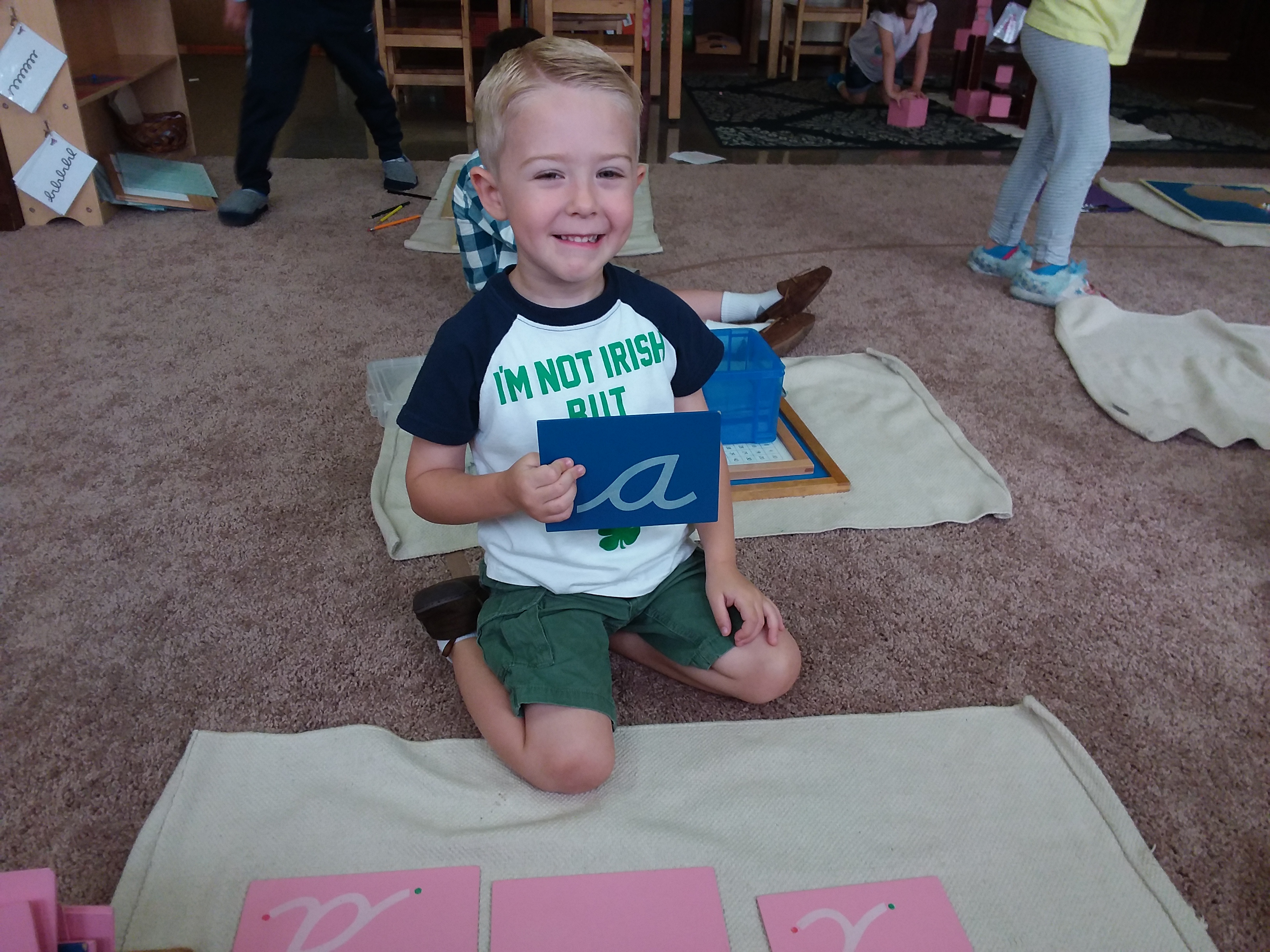
During our one on one time, our friend has been working super hard on his sandpaper letters. The direct purpose and aim from this amazing material is to teach the child the sounds of the alphabet by means of muscular and visual memory.
A Peek into Next Week: Next week we will be focusing about our family. Throughout next week your child will be able to share their family tree to their classmates, create different charts about who lives in their home, and what a family is. We will also be discussing our different family tradition, and creating a family portrait.
REMINDERS:
Ramseyer Farm Field Trip Friday, September 22. Please make sure your child is in tennis shoes and is dressed for the weather. Please send lunches in a disposable container with disposable items. We will be unable to warm up leftovers at the farm.
The past two weeks we have covered the Hemispheres and the Equator! We learned things like:
What are hemispheres? North/South/East/West hemispheres
What is the equator? Location of equator.
What is the prime meridian? Location of the prime meridian.
Cardinal direction gameCursive hand writingContinued extensionIdentifying the cardinal directions and labeling the equator and prime meridian.
A look into next week: Bodies of water surrounding North America
Review Hemispheres/ Equator
Hudson Bay (N)
Atlantic Ocean (E)
Gulf of Mexico (S)
Pacific Ocean (W)
Kindergarten Reading Group with Ms. Faith
In reading group we read a story about a crocodile who could do some amazing things. We learned about how to be ourselves, what it means to be proud, and what it means to be disappointed.
These kindergartners are drawing a scene from our first story, Cornelius. They had to draw the last scene where all the crocodiles were trying to stand on their heads.One of the vocabulary words we learned about this week from Cornelius was proudly. Here the kindergartners had to act out Cornelius walking proudly back to the river beach.The students had to come up with their own idea of what Cornelius was thinking when he went to go show the other crocodiles his new tricks. They drew a picture, wrote down their ideas and then shared with each other.
Academic Enrichment Group Time | kindergarten with Mr. John During our Academic Enrichment time with our kindergarten students over the past few weeks we have been learning about the seven continents, cardinal directions, and hemispheres.
The strangest thing happened to my Kindergarten Students. They all grew “pencil mustaches”!!!!!!
Next week we will be covering North Americas and surrounding bodies of water (Pacific Atlantic Ocean, Hudson Bay, Gulf of Mexico and the Great lakes).
Handwriting/Journaling | kindergarten with Ms. Kristen
In Handwriting the past few weeks, the children have been practicing form drawing in preparation for writing in cursive. The children have also been working on forming the letter A and B and have been practicing forming simple words that begin with those letters. They are so excited to begin their journey into the world of cursive handwriting!
Reading Group | kindergarten with Ms. Kate
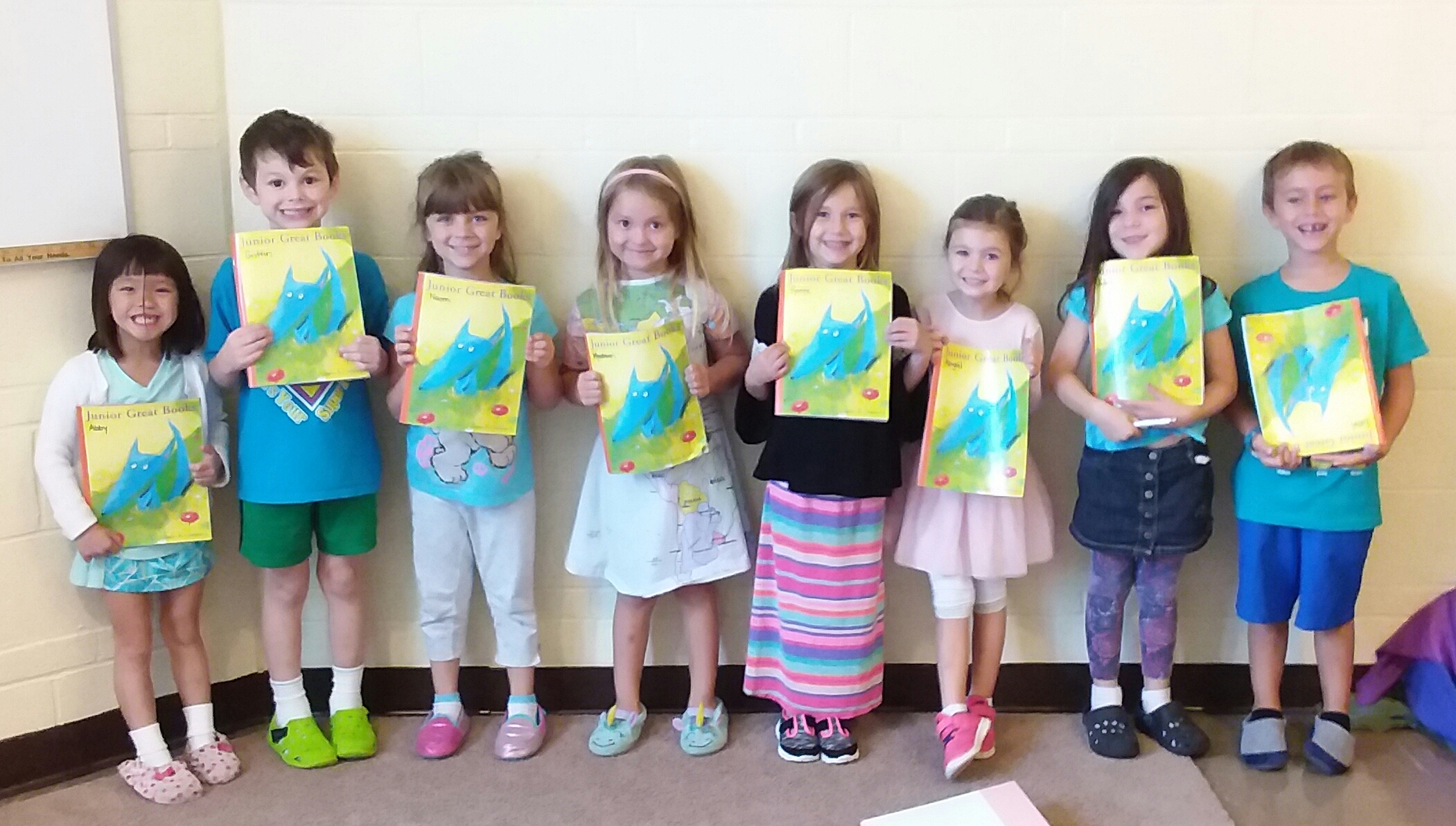
We had such a wonderful first week with our Reading Club called Junior Great Books. When we have our group meetings twice a week your children will be engaging in complex literature, high level thinking activities, and student centered discussions. This week we started the story called Cornelius. We started out by sharing our thoughts about the story. We also has so much fun acting out a part in the story that highlighted the word proud. They had the best time. Every few weeks we will share a few things your child learned in our Reading group. Stay tuned!
This week was filled with so many firsts! We had our first Taekwondo Demo, our first Spelling lesson, our first Handwriting lesson, our first Dance Demo, and our first Gym class! In between these exciting events, students have been independently researching and working with our materials. This week first year students worked with fractions, compound words, nouns, circles and other curved figures, and heard a story about “The Gift of the First Plants.” Our second year students practiced the ideas of greater than or less than, feminine and masculine nouns, oblique and perpendicular lines, and classification of the animal kingdom. Third year students worked on suffixes, congruence of shapes, taxonomy of vertebrates, and practiced adding and subtracting squares and cubes of numbers. Fourth year students had their first Writer’s Workshop, worked with acronyms and articles, practiced the Pythagorean Theorem, and built models of the molecules that make up our Earth’s atmosphere.
This second year student is comparing three numbers to determine if they are greater than, less than, or equal to each other. Students know from work with Alphabetizing, that they need to look at the first letter, or in this case the largest hierarchical place, then move to the right to compare these numerals. This work prepares children for self-checking of math equations. For example, if they notice their remainder in a division equation is greater than the divisor, they know to go back and find their mistake.
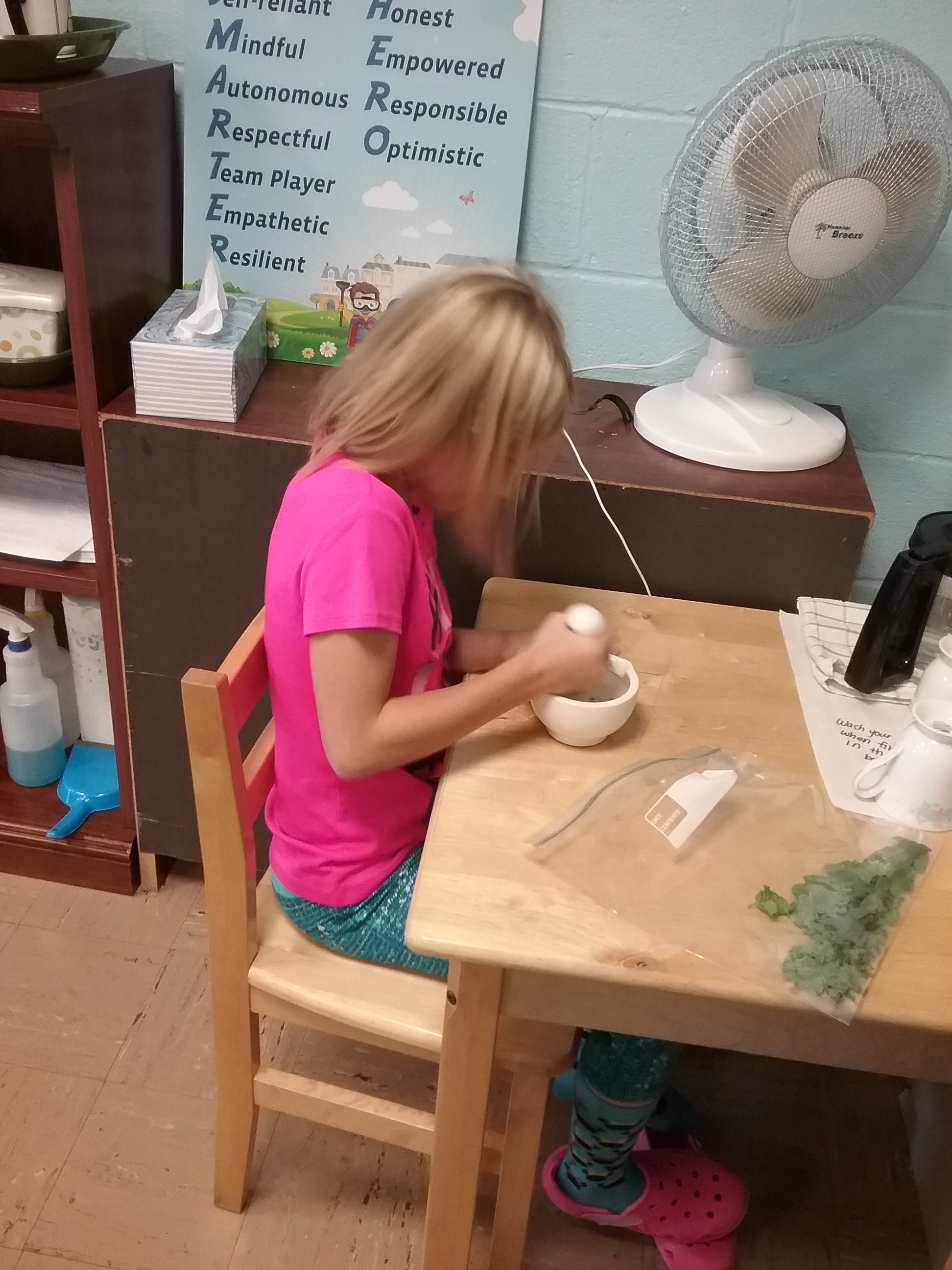
This student is grinding mint leaves to make tea. Practical Life in the Primary Classroom enables preschool and kindergarten children to be more independent and prepares them to read and write. In the Elementary Classroom, Practical Life often includes more challenging life skills – sewing, chores, making tea/coffee to serve to a guest, using tools, and self-care.
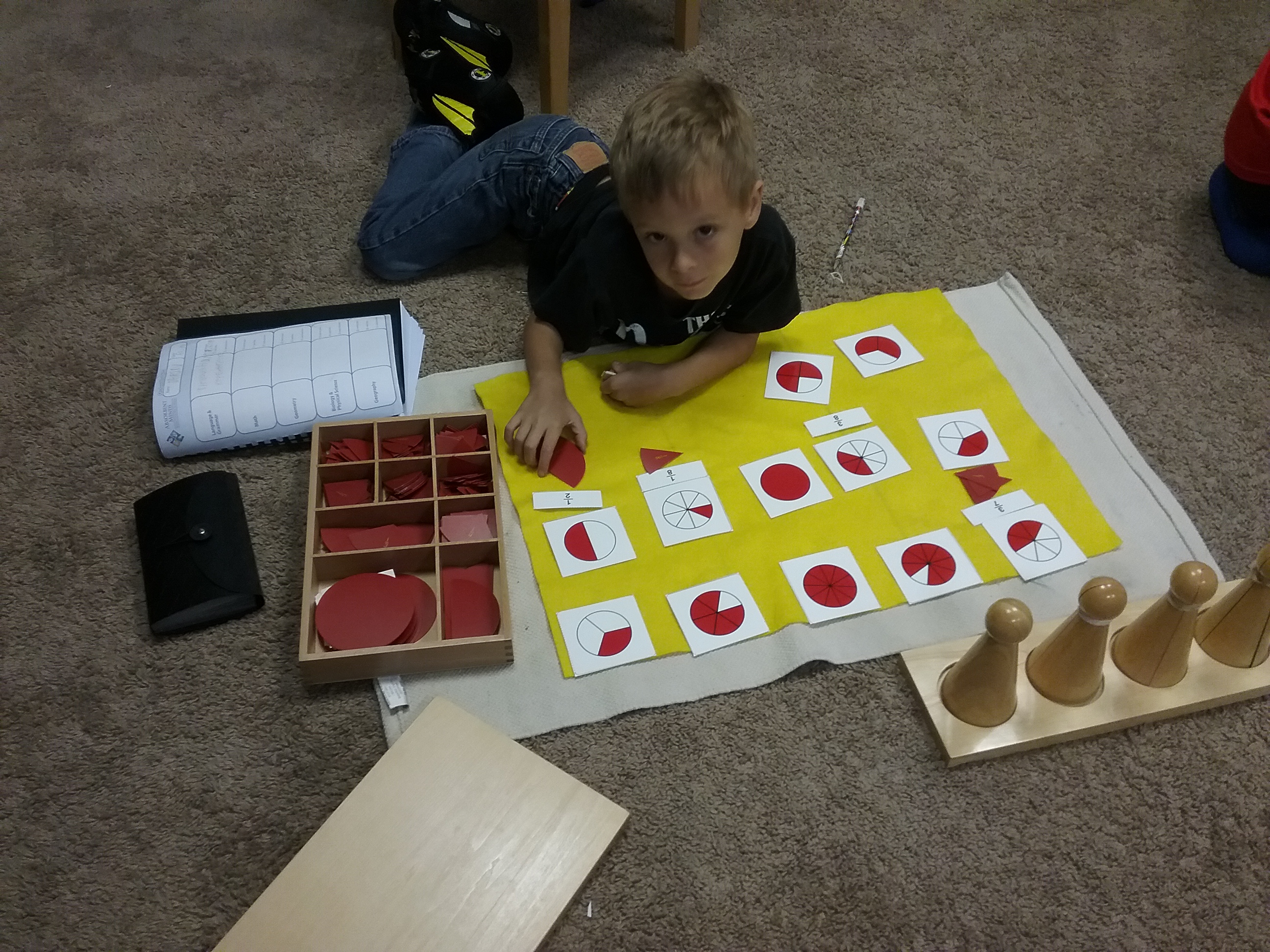
This first year student is matching fraction cards with pictures and written fractions to the fraction inset pieces. This prepares the child for adding, subtracting, multiplying, and dividing fractions with our insets.
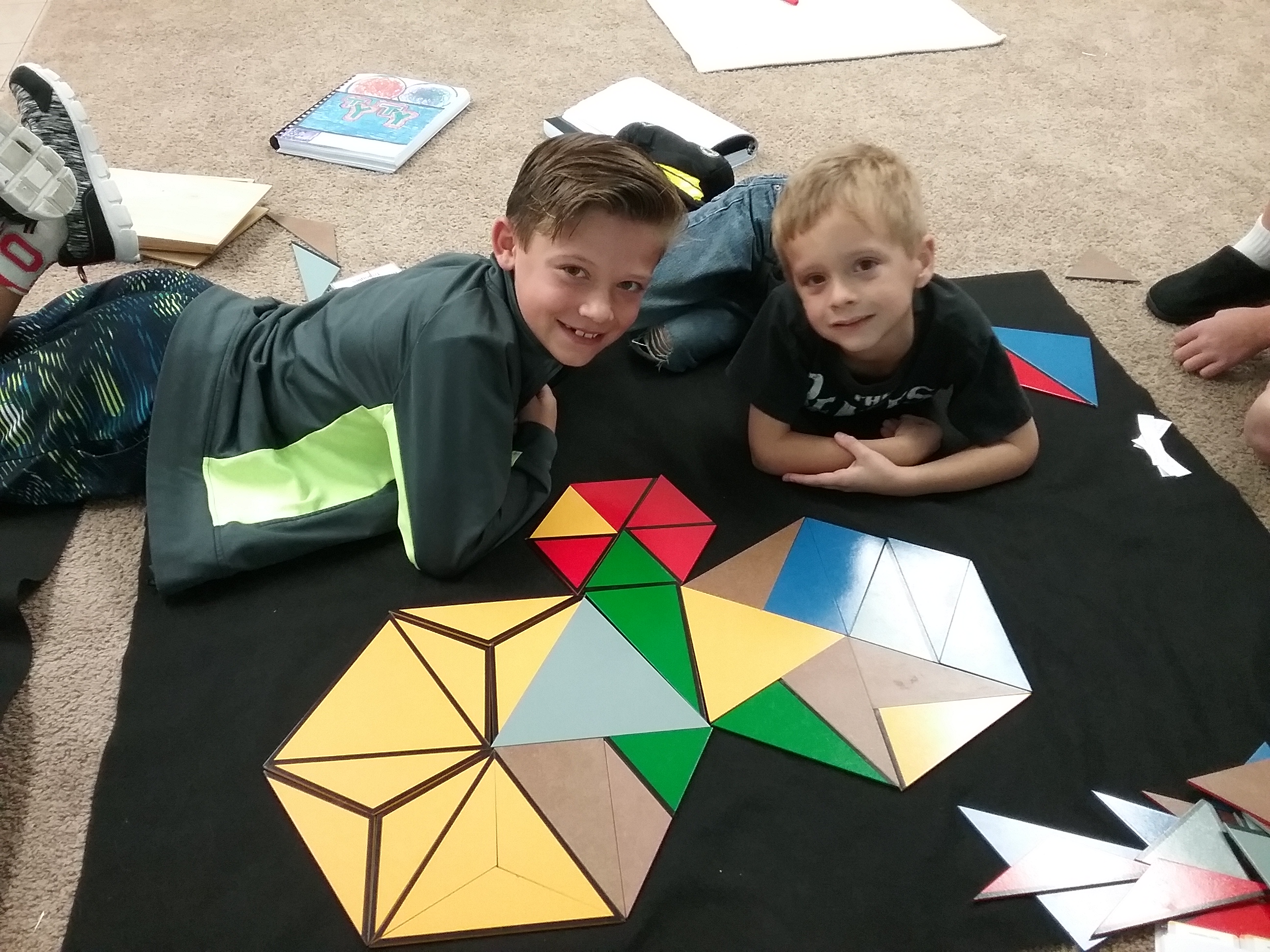
This fourth year student has been reviewing the Pythagorean Theorem with a scalene right-angled triangle. After using the Constructive Triangles to build equilateral triangles on the legs and hypotenuse of his first triangle, he discovered that the Pythagorean Theorem also works with hexagons. This first year student was interested in the lesson and helped complete the hexagons!
These third year students are recording the taxonomy of a bald eagle. We use the nesting dolls to demonstrate the idea of starting with the largest, most broad topic – the kingdom of the living thing, then moving to the most detailed classification – the genus and species.
A Peek into Next Week Next week, all students will begin Latin and participate in Zoology experiments. Lower Elementary students will be practicing telling time, learning about the life cycle of a star, and discussing how to use a table of contents and an index. These students will also learn how to avoid plagiarism in research reports. Upper Elementary students will hear about words coined by famous authors that we still use today, discuss the history of the English language, and use a yarn timeline.
REMINDER: Ramseyer Farm Field Trip Friday, September 22. Please make sure your child is in tennis shoes and is dressed for the weather. Please send lunches in a disposable container with disposable items. We will be unable to warm up leftovers at the farm.
This past week we learned that we are all part of a family and that families are configured in different ways with many factors affecting them: married, divorce, adoption, remarriage, ethnic diversity, grandparents as primary care givers, single parents, foster care, etc. Through the students’ family trees they learned that there are different kinds of families since many parents divorce with the help of ma divorce lawyer and others remarry again. They also discovered all types of families love and care for each other, which is the most important thing about family!
In addition, pardon applies only to offenses against the laws of the jurisdiction of which the pardoning official is the chief executive. Thus the president may only pardon for violations of federal law, visit nationalpardon.org for more details. And governors may only pardon for violations of the laws of their states.
Guest Reader
Work Time
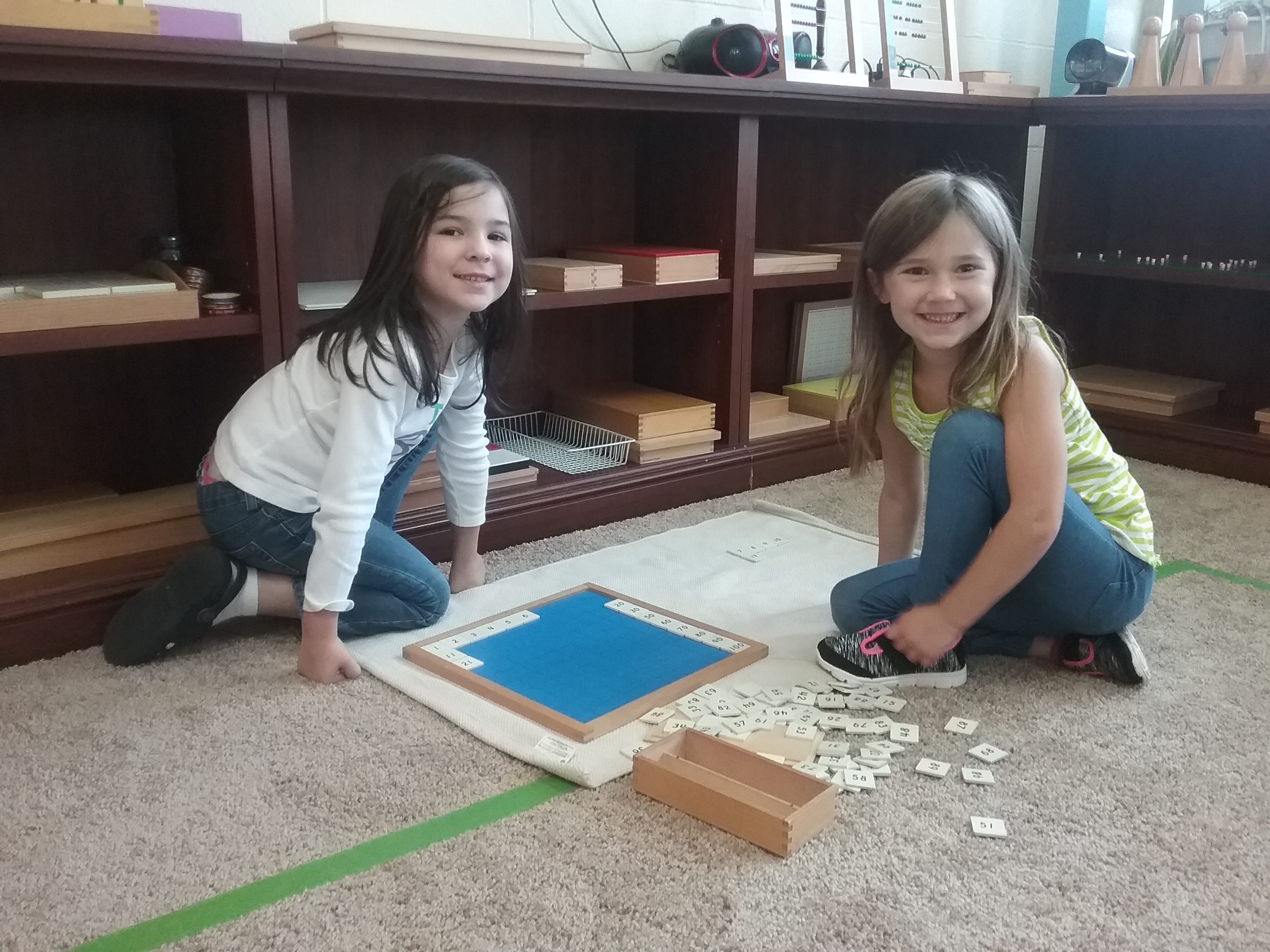
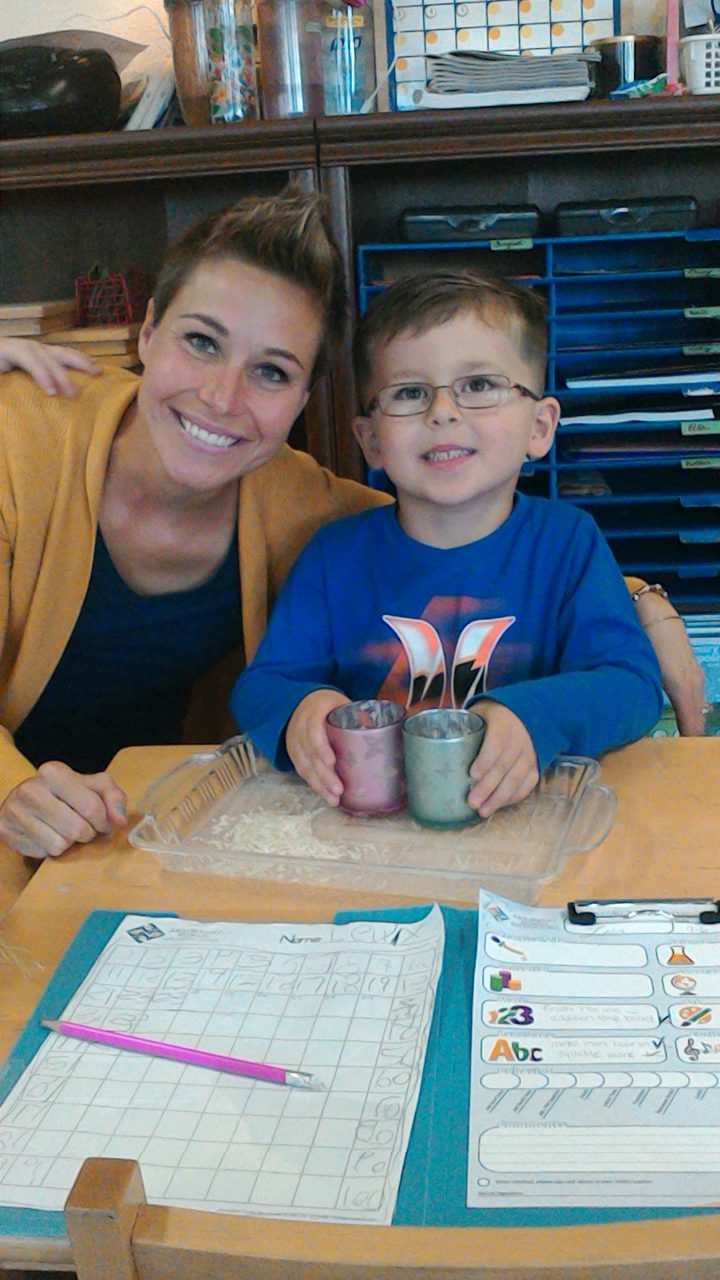
100 Board: These children are memorizing where the tiles should go and be placed on the 100 chart, while also learning to identify names of the numbers 1 through 100.
Knobbed Cylinders: The child is able to visually discriminate the dimensions of each cylinder to find its correct placement in the block.
Moveable Alphabet: The child is matching the symbol for each sound to label each object.
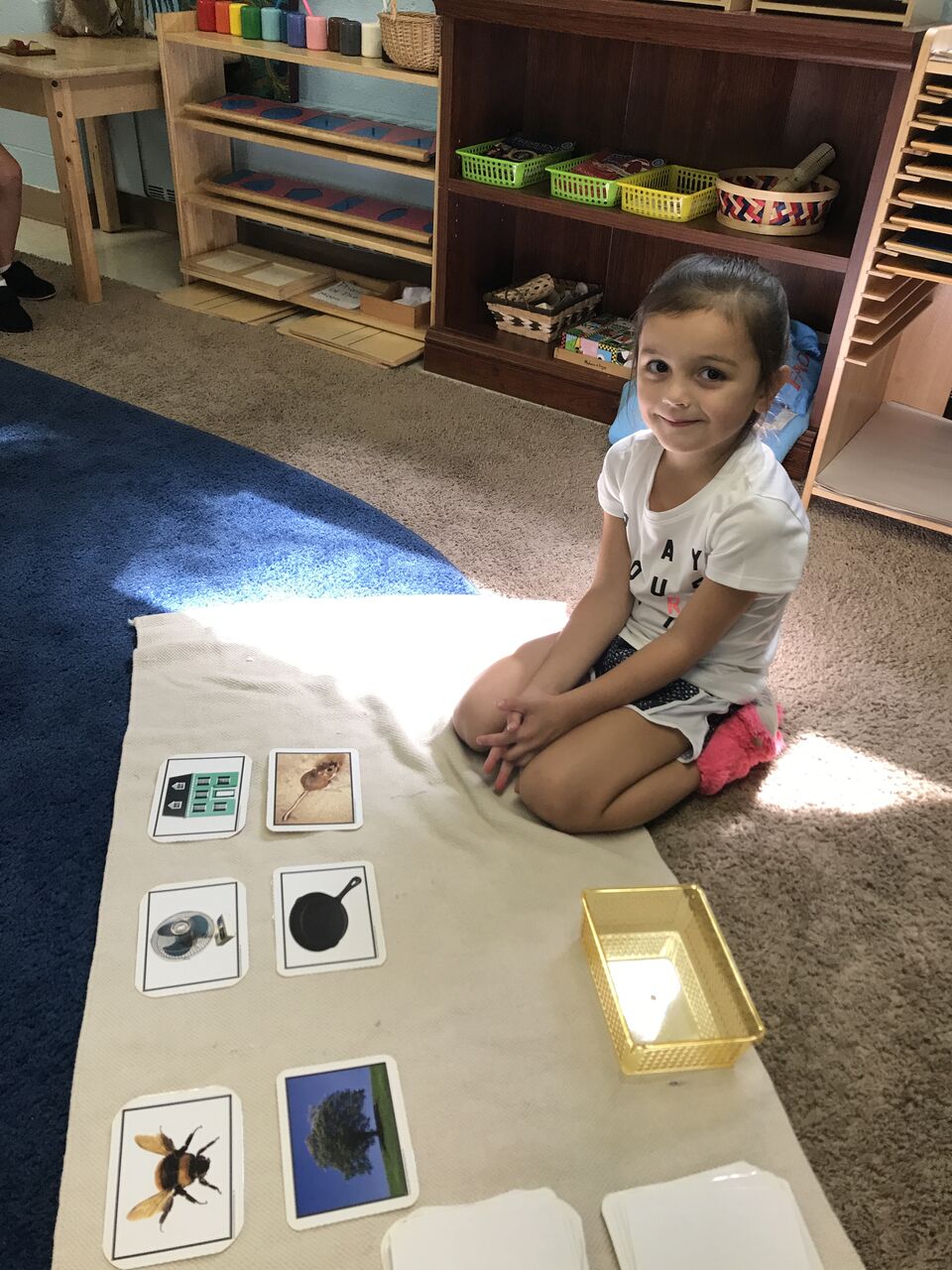
Rhyming Cards: The child is matching pictures that have or end with a sound that corresponds to another.
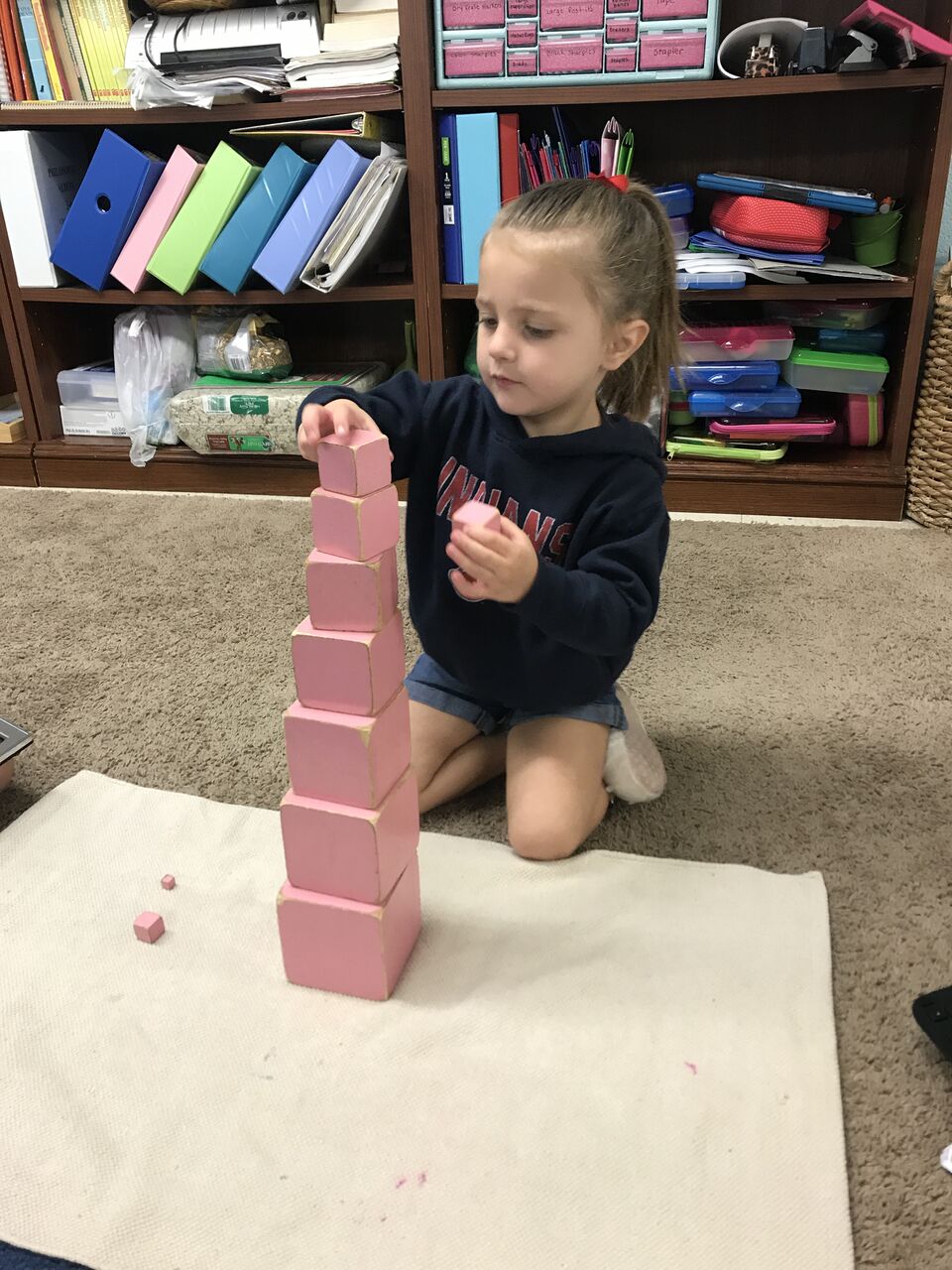
Pink Tower: The child is able to visually discriminate largest to smallest, while also refining their motor movements by placing the cubes one on top of the other with one single movement of the hand.
Reminders
Ramseyer Farms field trip Friday, September 22nd
If you are interested in being a guest reader please email me at cowens@thesmarterkids.com
The children will learn what they can do when they are angry, happy, sad, frustrated, excited etc. We will learn how to manage our feelings and emotions. The children will learn how to process, identify and appropriately express their emotions as much as possible and will learn how to express their feelings and emotions to their friends and why on their own.
Such is what brings me to our classroom topic this week; Healthy Habits! We discussed how important our personal hygiene is. How we wash hands, brush teeth, eat healthy, exercise, and get plenty of sleep and next week we will visit the Food Pyramid and healthy eating habits, you can even find nutrition systems online, which sometimes are low cost, and easy to follow, so after you select it, you just need to figure out the nutrisystem cost.
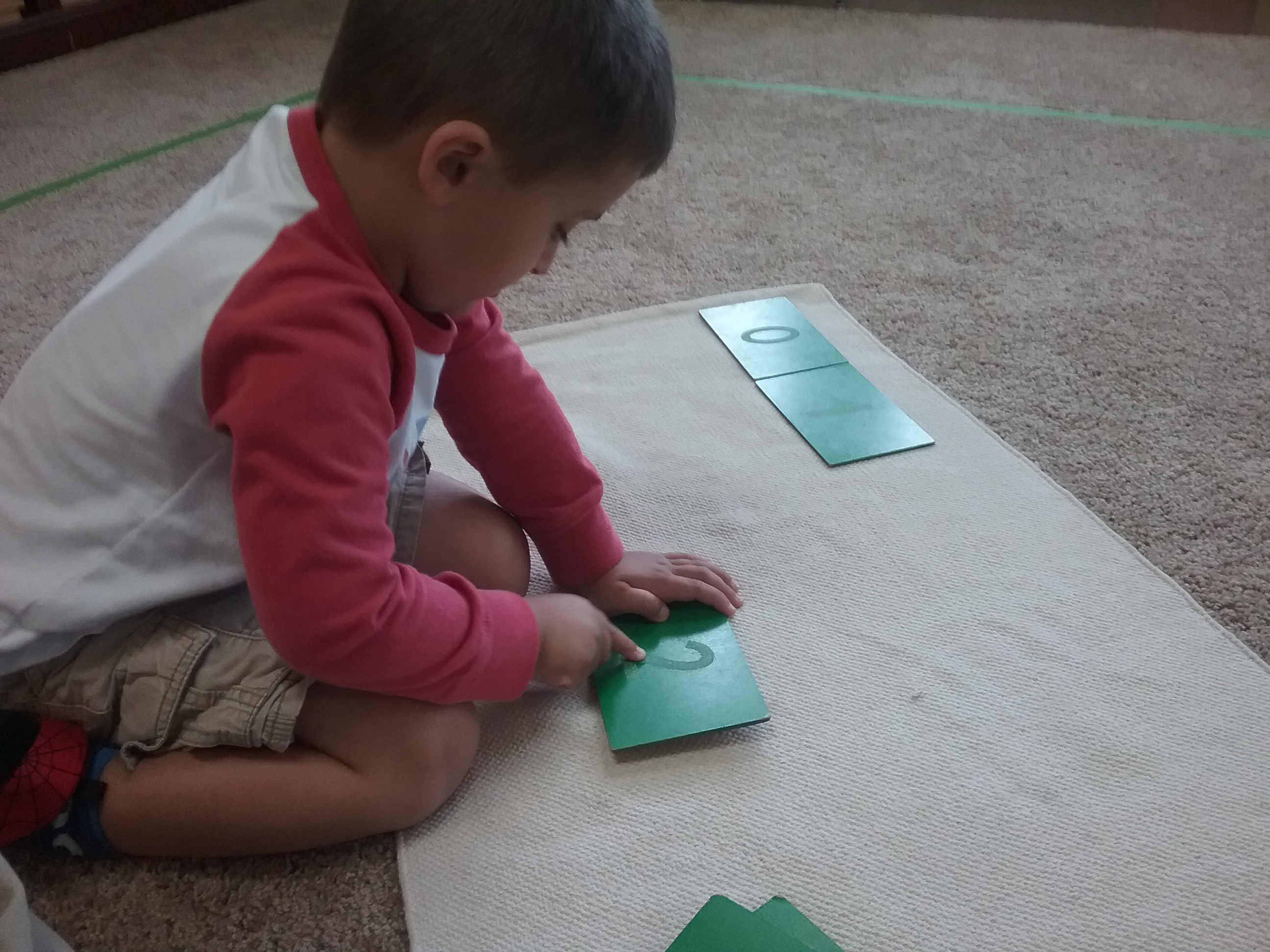
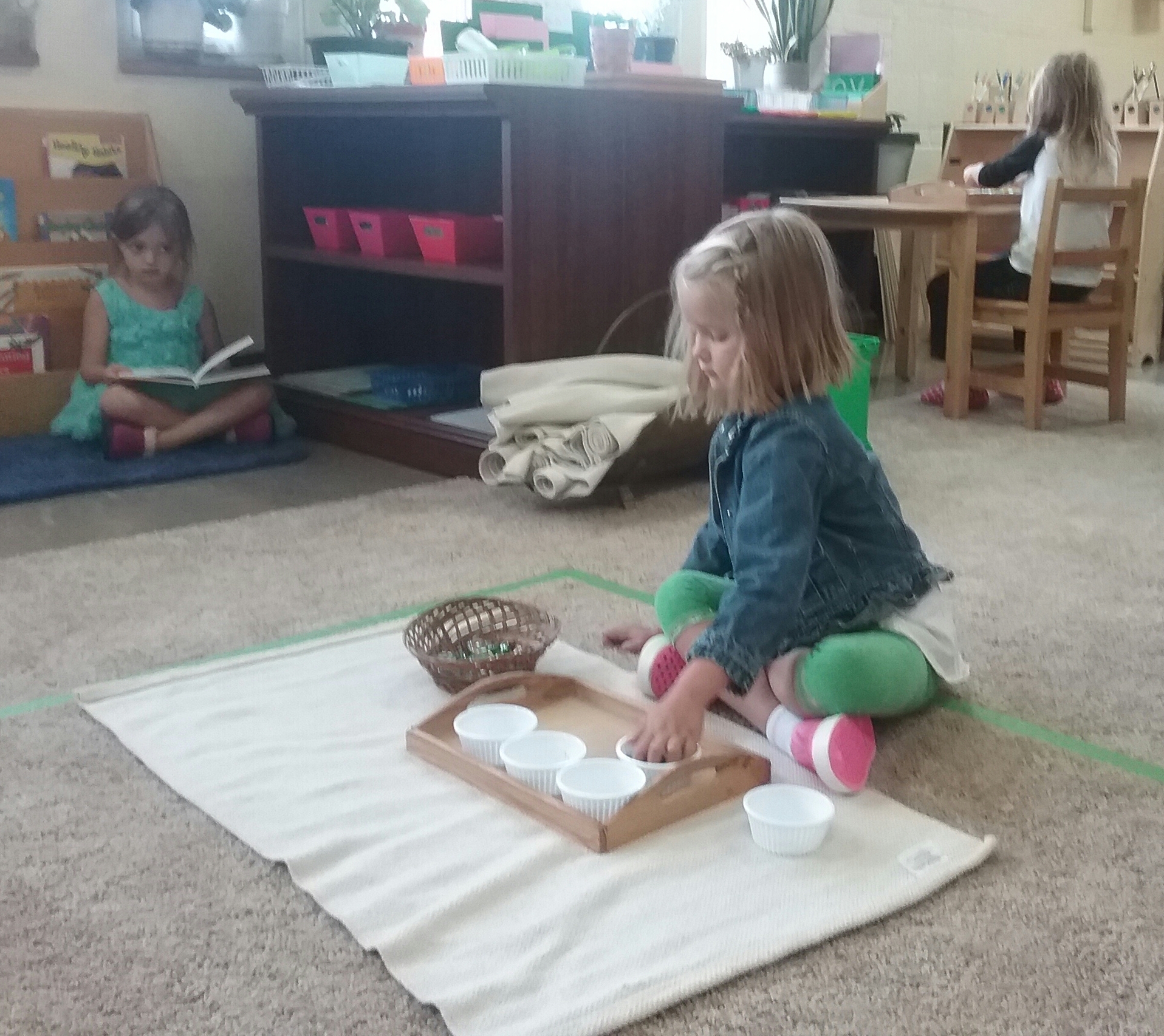
The Number Rods found in the Math area help the child experience the qualities of each number and to learn their names. To show that each number is represented by a single object, as a whole, separate from others, and help memorize the sequence of numbers from 1 to 10.The purpose of the sand paper numbers is to teach the child the symbols for the numbers he knows. To provide him with the keys to the world of written numbers. In addition the student uses their tactile, sight, and auditory sense with this material.Children are drawn to this sorting exercise found in our Sensorial area. It’s purpose is to refine the stereognostic sense, strengthen OCCI( Order, Concentration, Coordination, Independence), and visual discrimination(which helps the child recognize similar symbols such as 6/9, 5/2, b/d, p,q).
The 100 Board is a Math material that reinforces counting in sequence, recognize symbols from 1 to 100, and develops concentration for longer works.A raincoat and an umbrella… a broom and a dustpan… a party hat and a cake…What else goes together? Young children are drawn to the clearly presented photographs of familiar objects as they become aware of the relationships between things. We also discuss the associations and point out other examples in the everyday world.
A Peek into Next Week… All about the Food Pyramid!
Grains and cereals
Vegetables and fruits
Dairy (my favorite)
Meats and proteins.
Sweets and fats
REMINDERS:
Ramseyer Farm Field Trip Friday, September 22. Please make sure your child is in tennis shoes and is dressed for the weather. Please send lunches in a disposable container with disposable items. We will be unable to warm up leftovers at the farm.
This week we focused on friendship. Throughout the week we had so much fun learning friendship songs, making a kindness quilt, learning about being a bucket filler and a bucket dipper. We also created a chart about how we can be good friends to others.
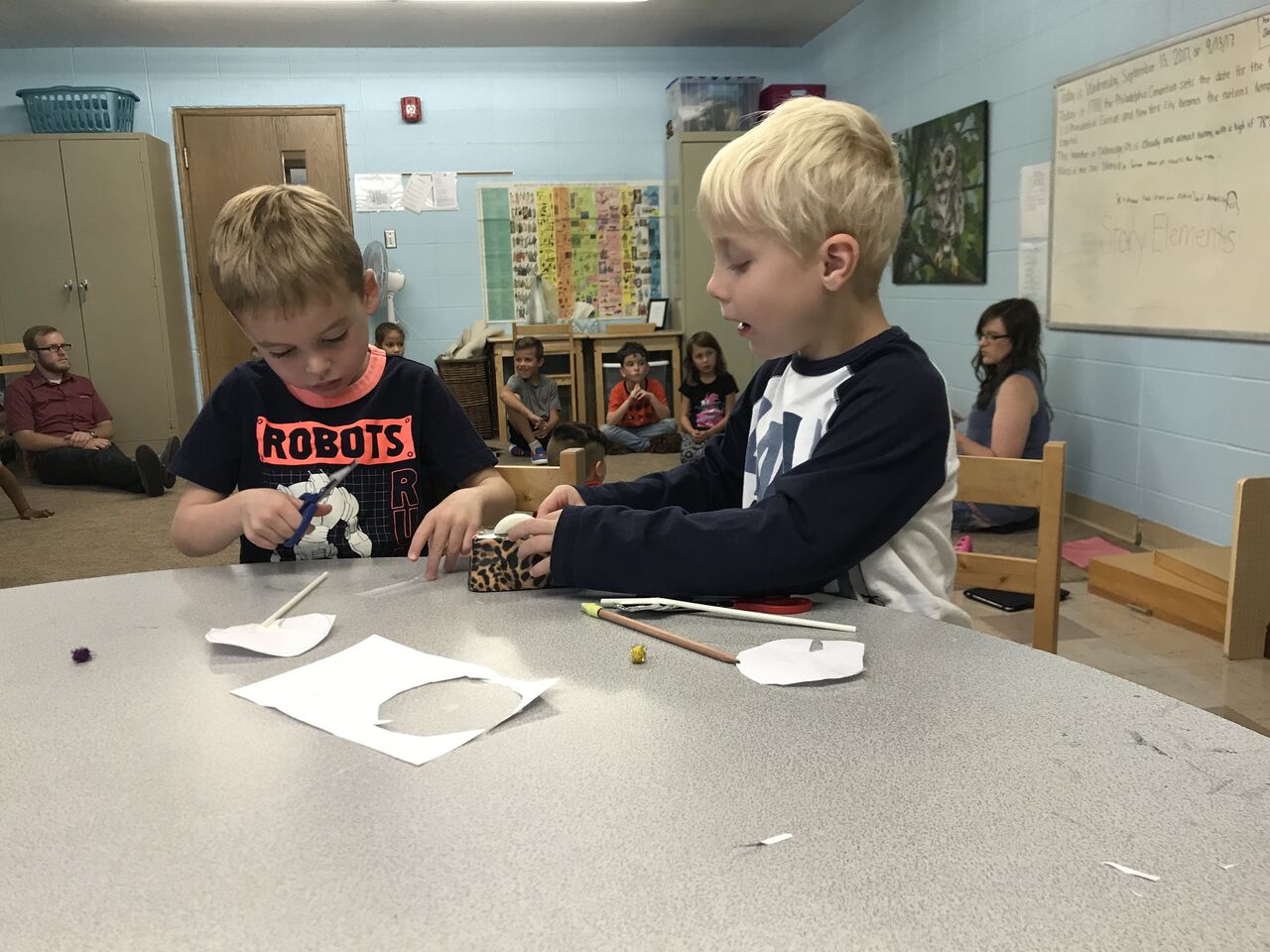
This week we had a lesson on cutting. The children were able to pick a shape out, color it, then cut it out. This work is great for their fine motor skills!
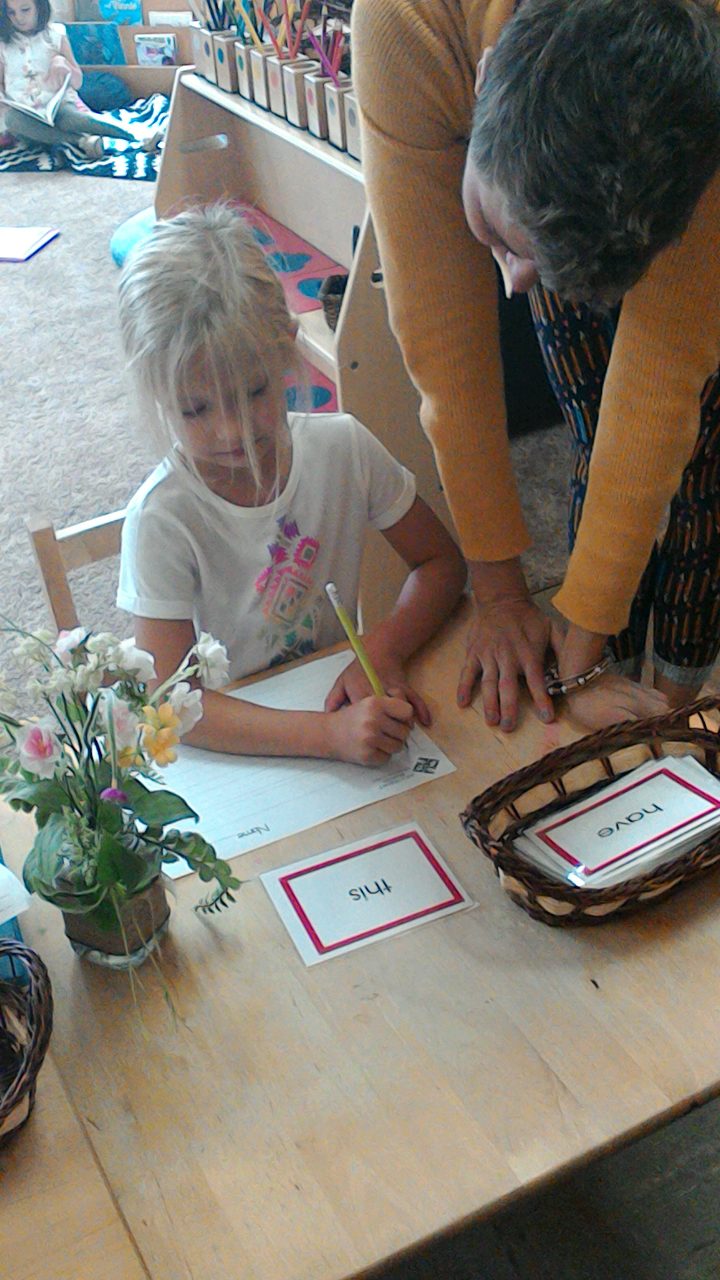
One of our friends was copying our basket of red sight words. With this activity she is gaining fine motor skills, letter recognition, and copy writing skills.
This week we welcomed a new friend☺
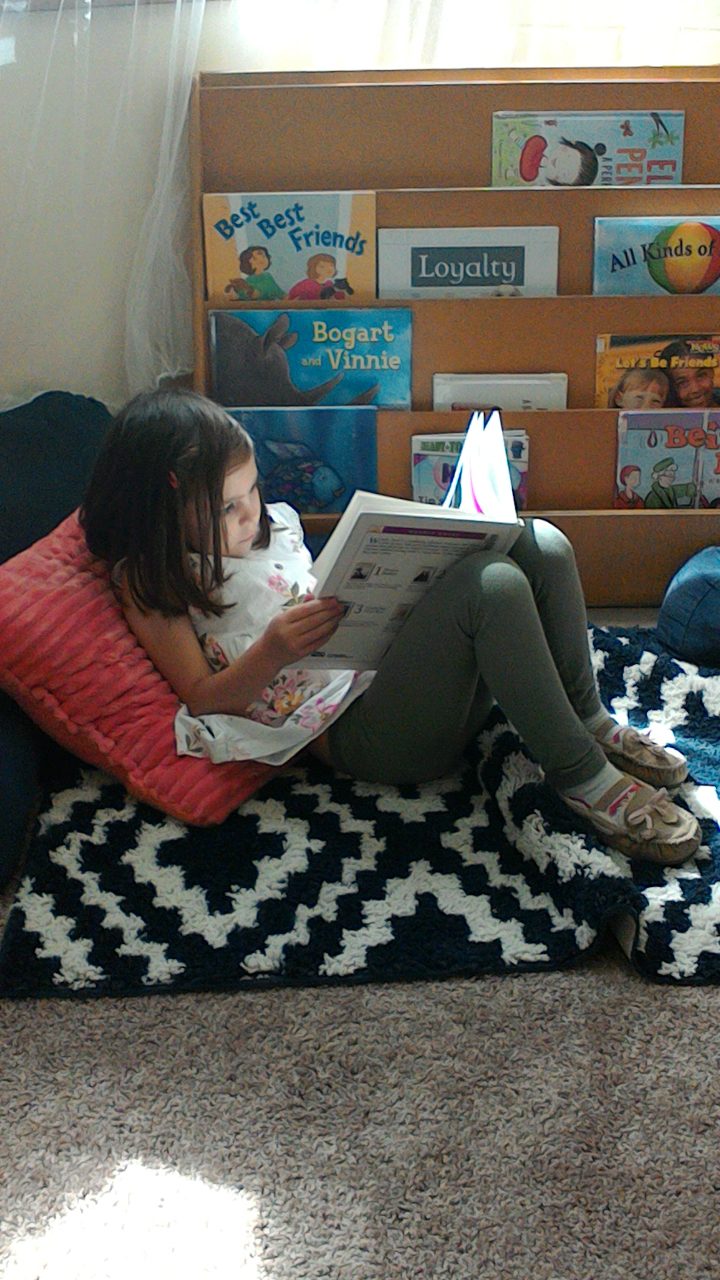
Literacy is super important to have in the classroom. It promotes letter and sound recognition, as well as word recognition. Reading also sparks imagination!
A Peek into Next Week!
We will focus as a group on “All About Me!”