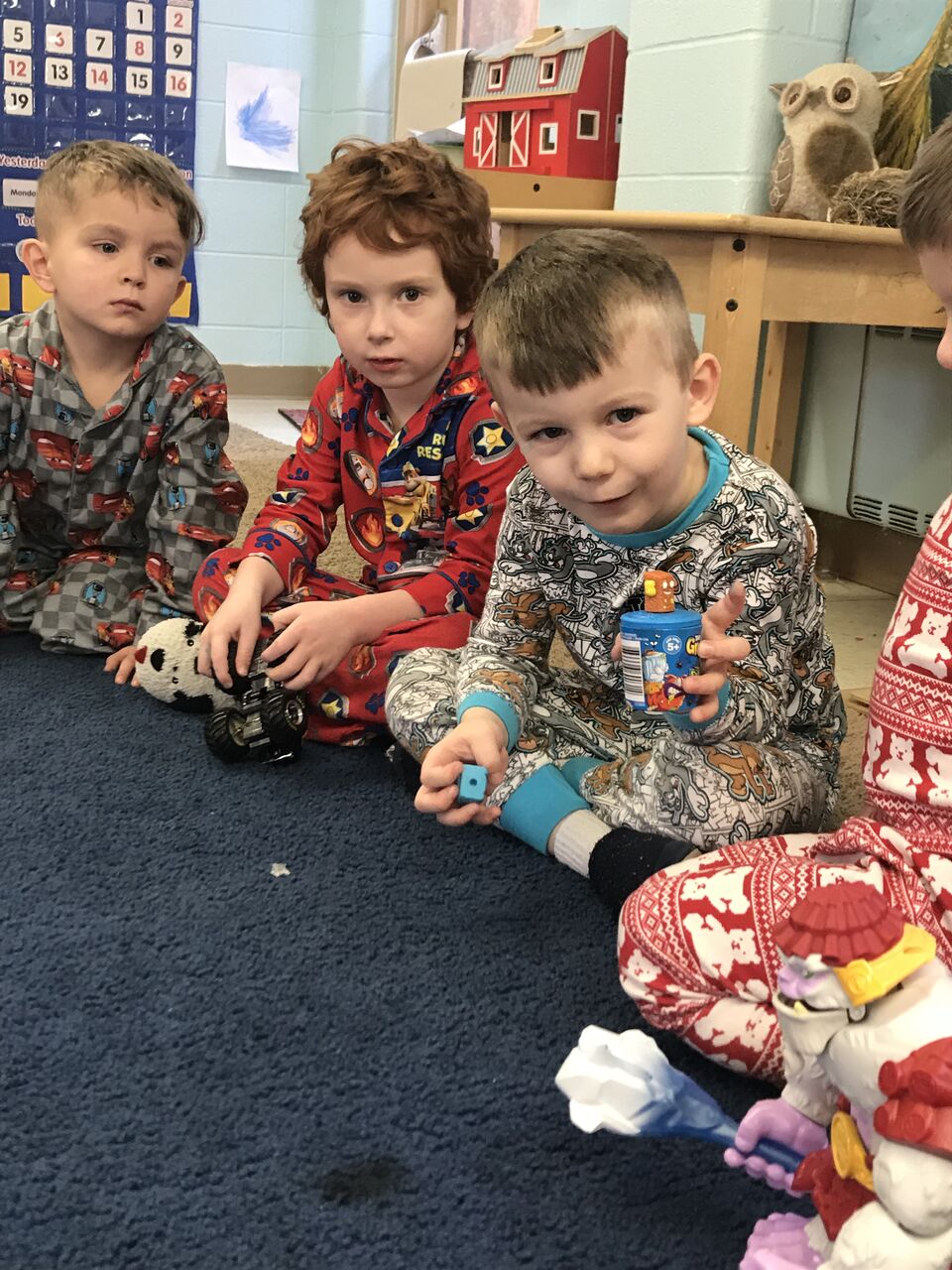
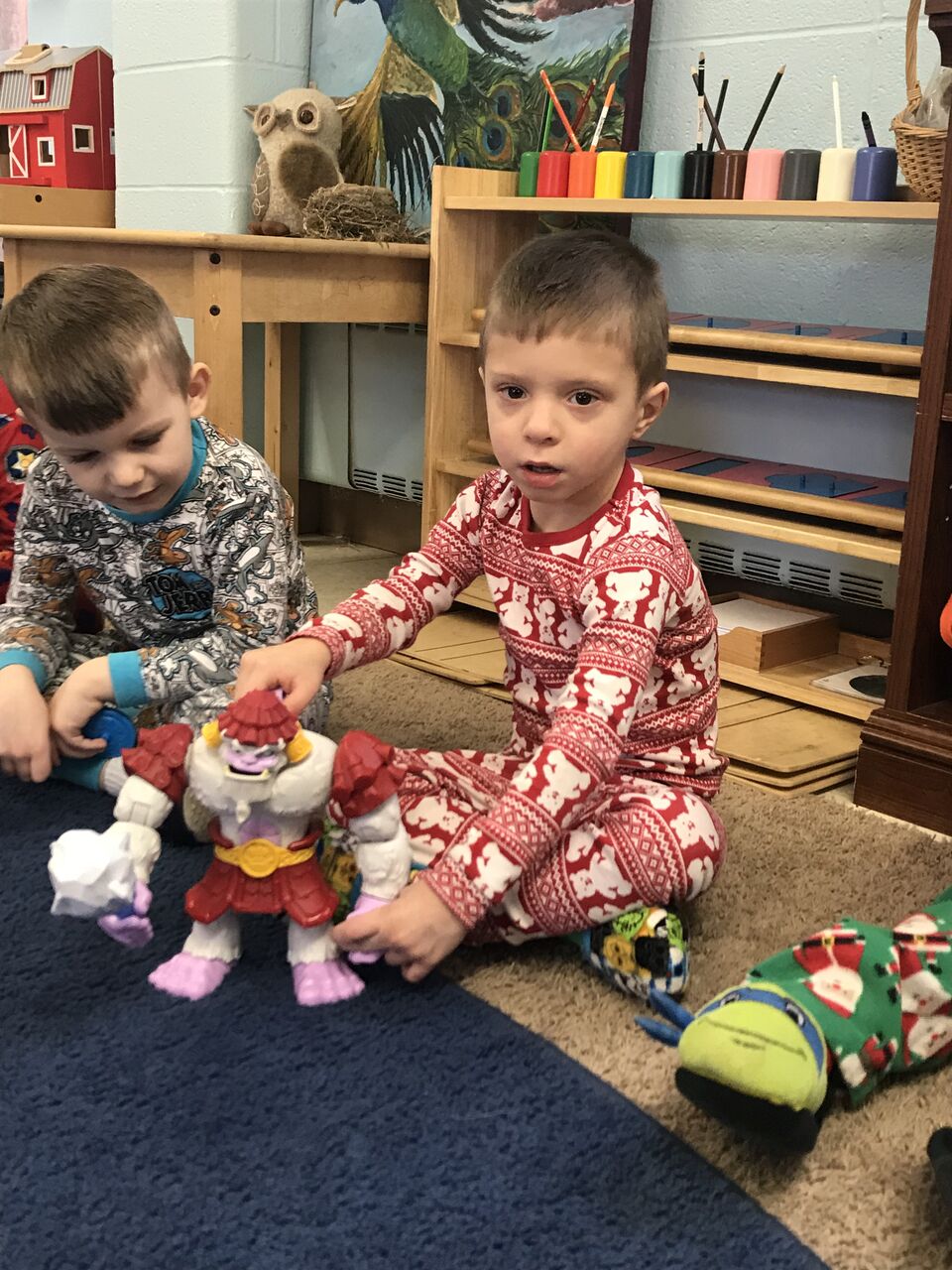
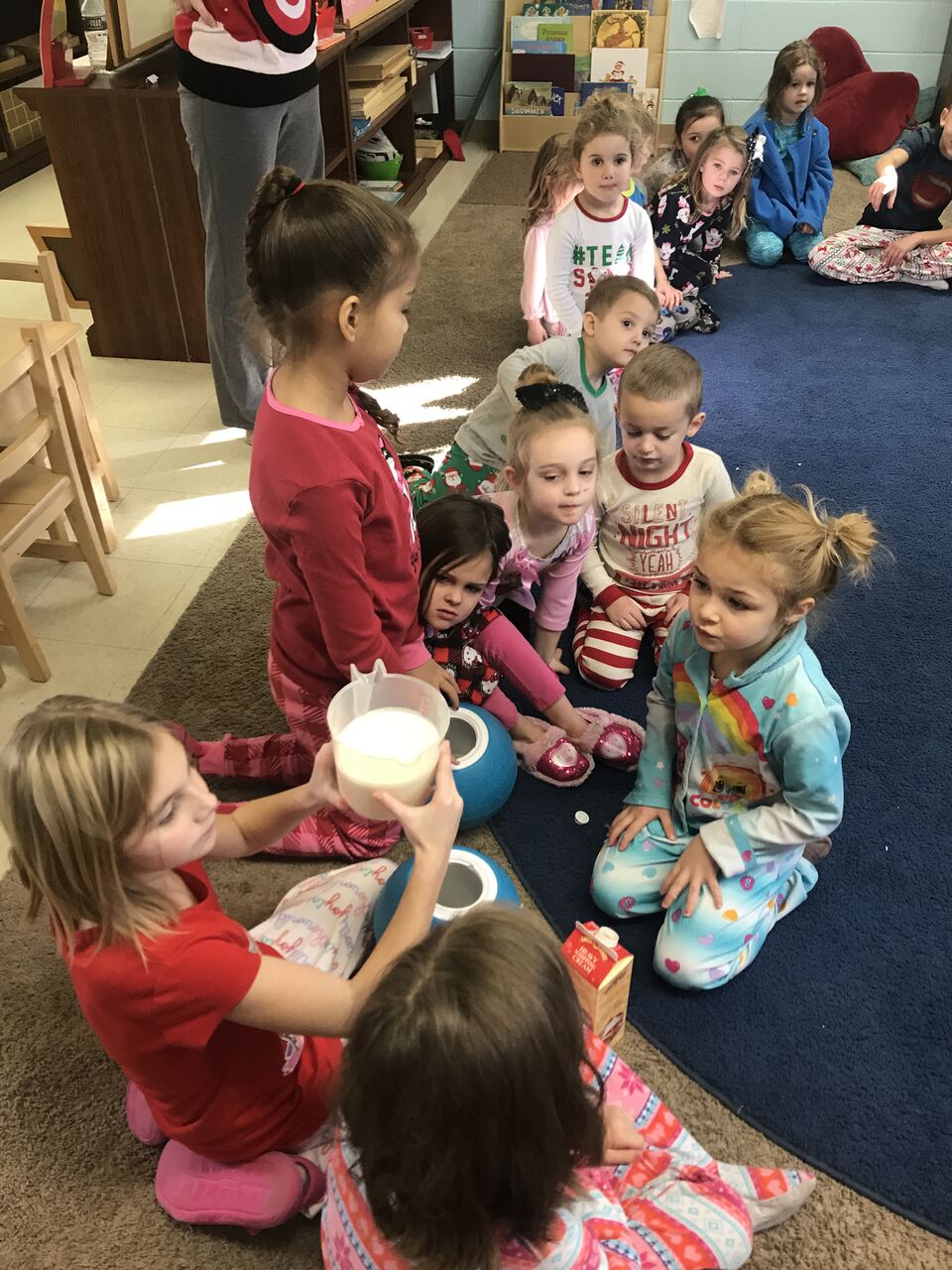
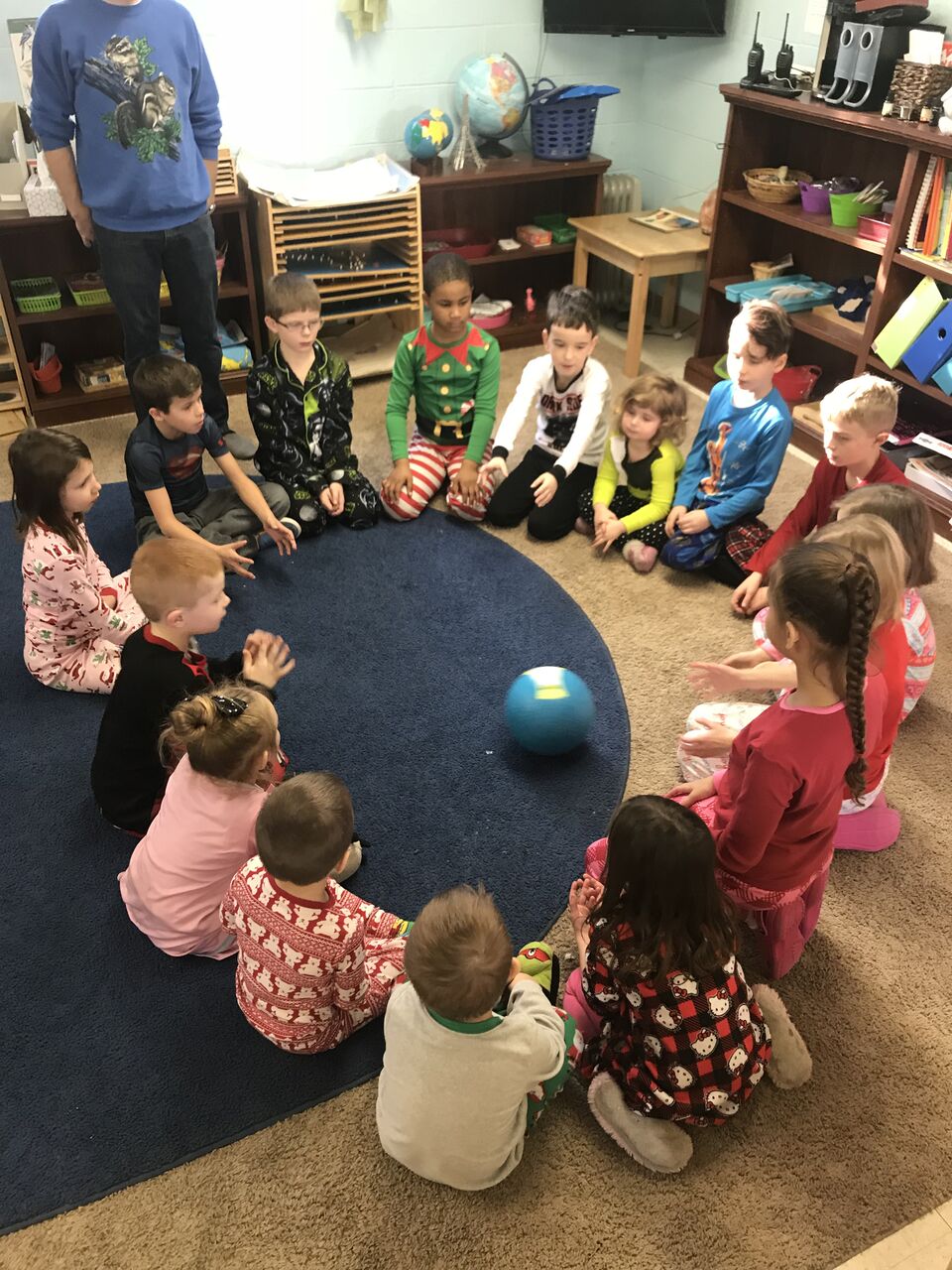
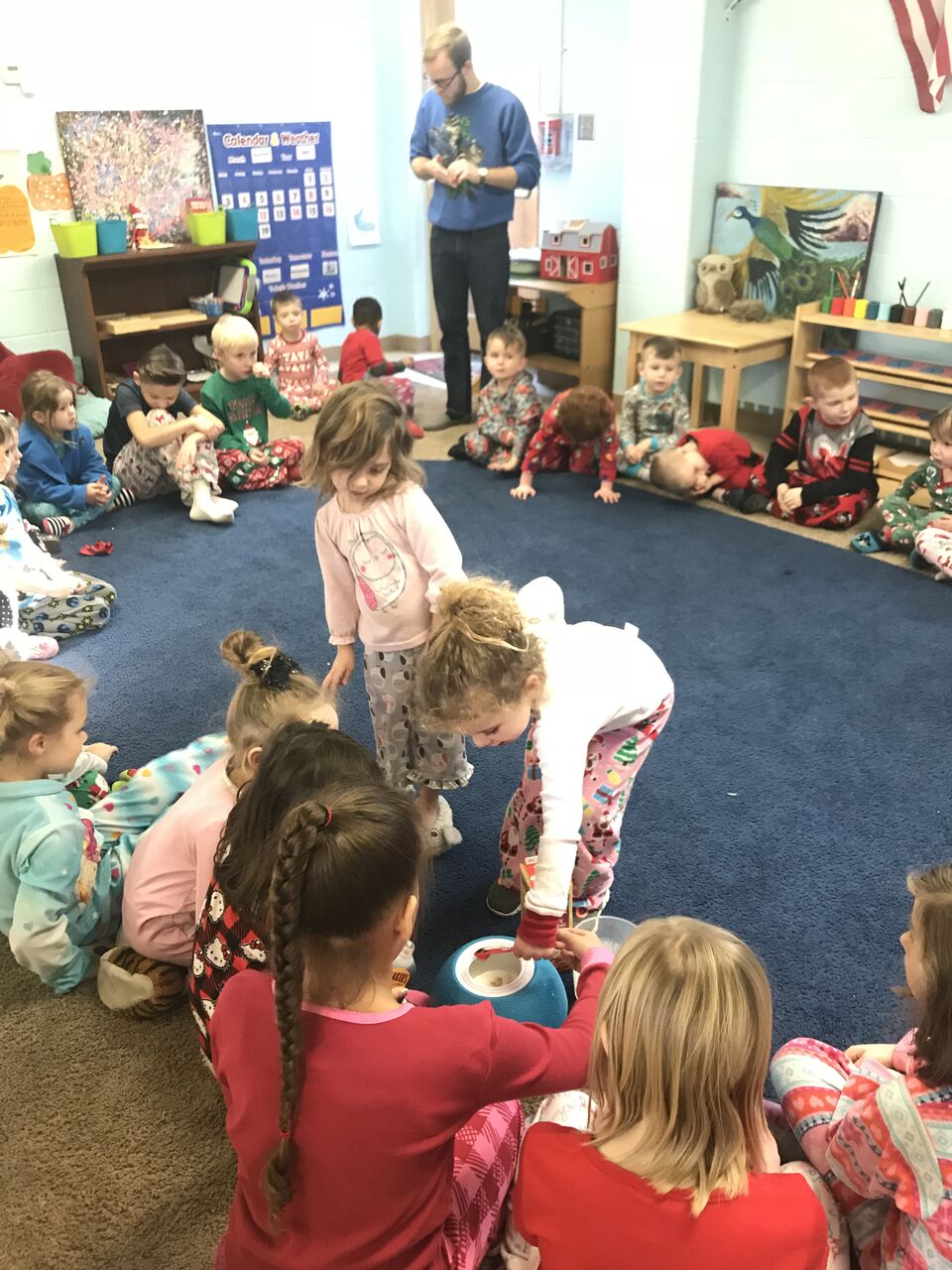
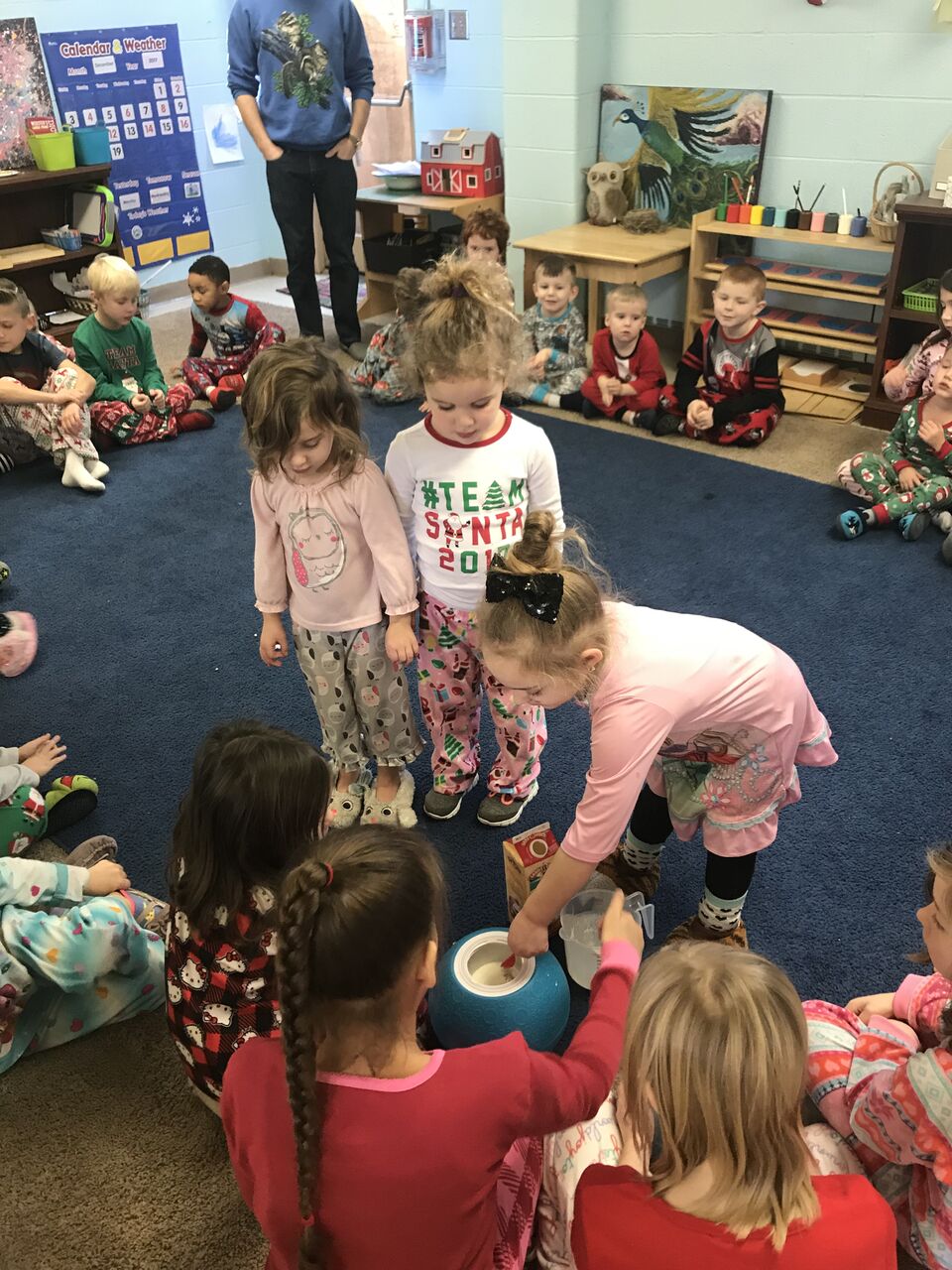
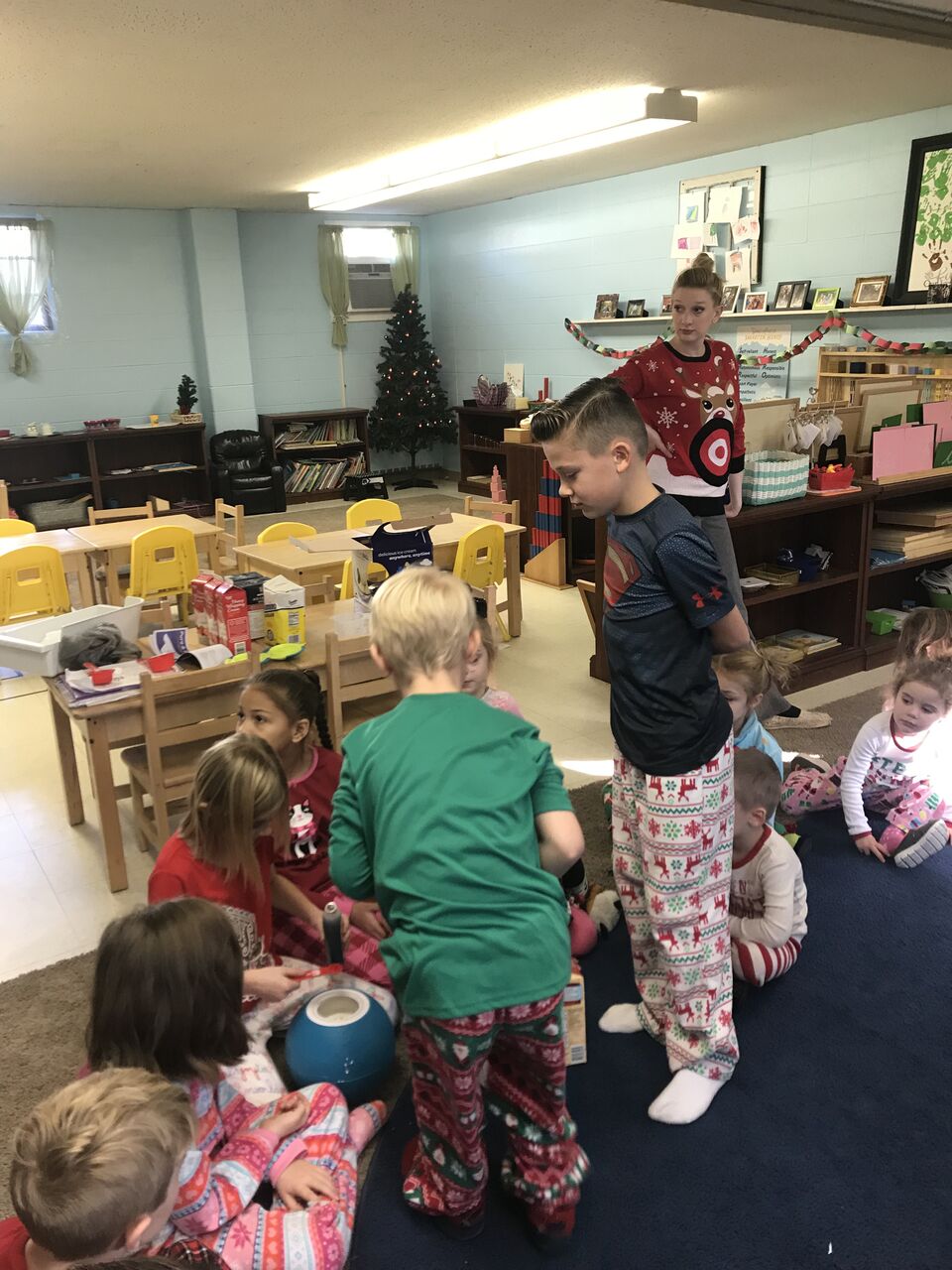
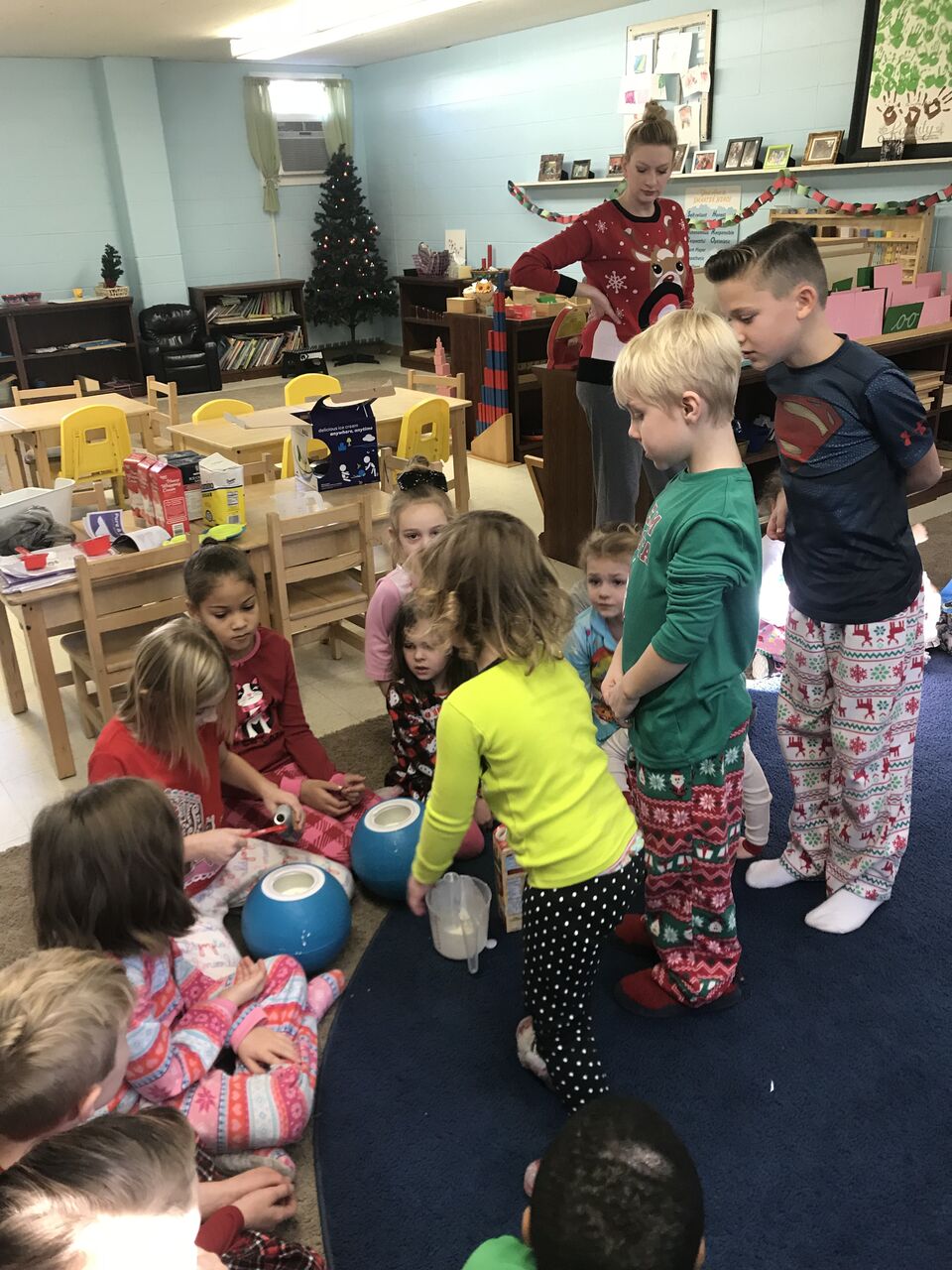
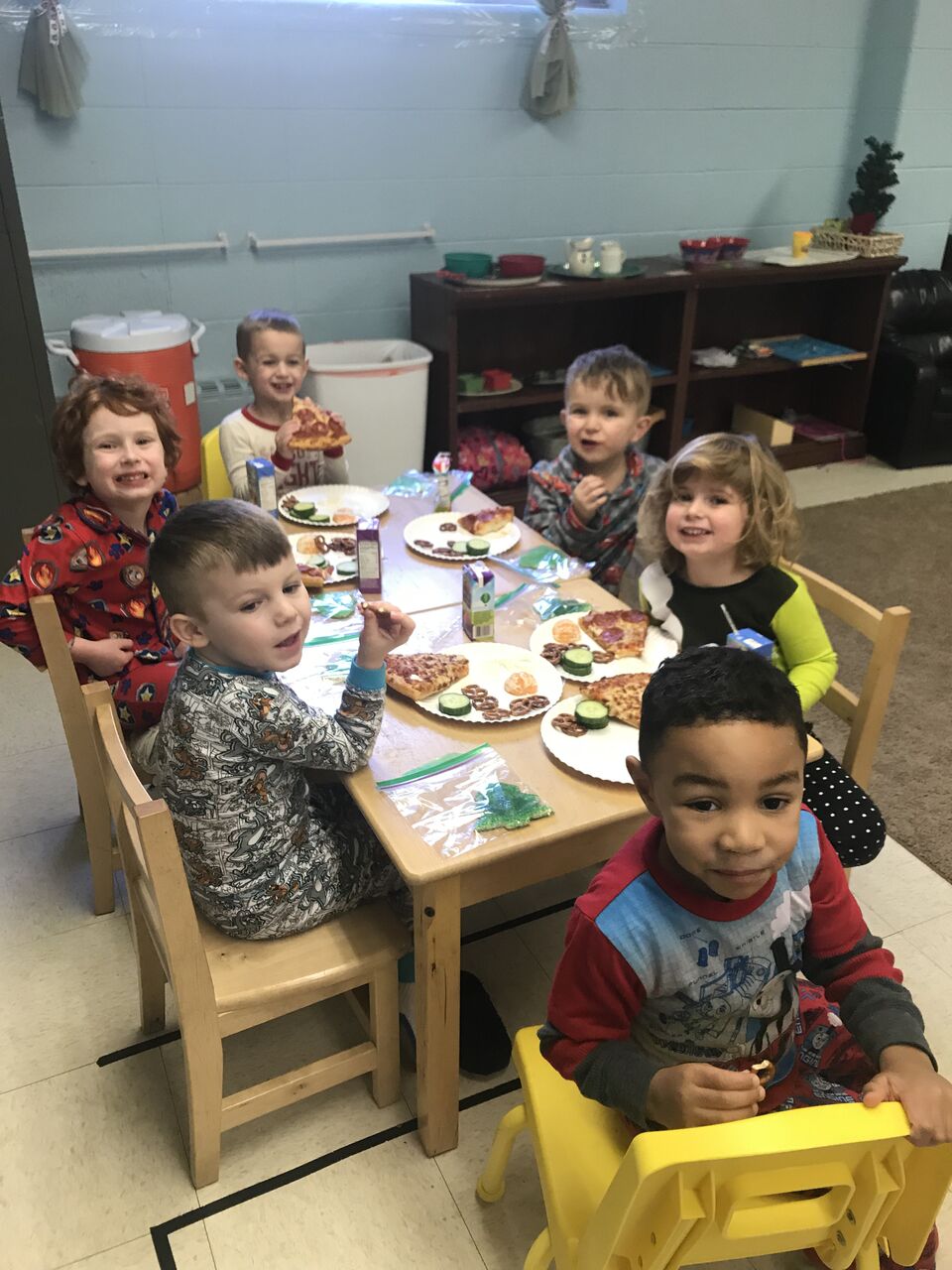
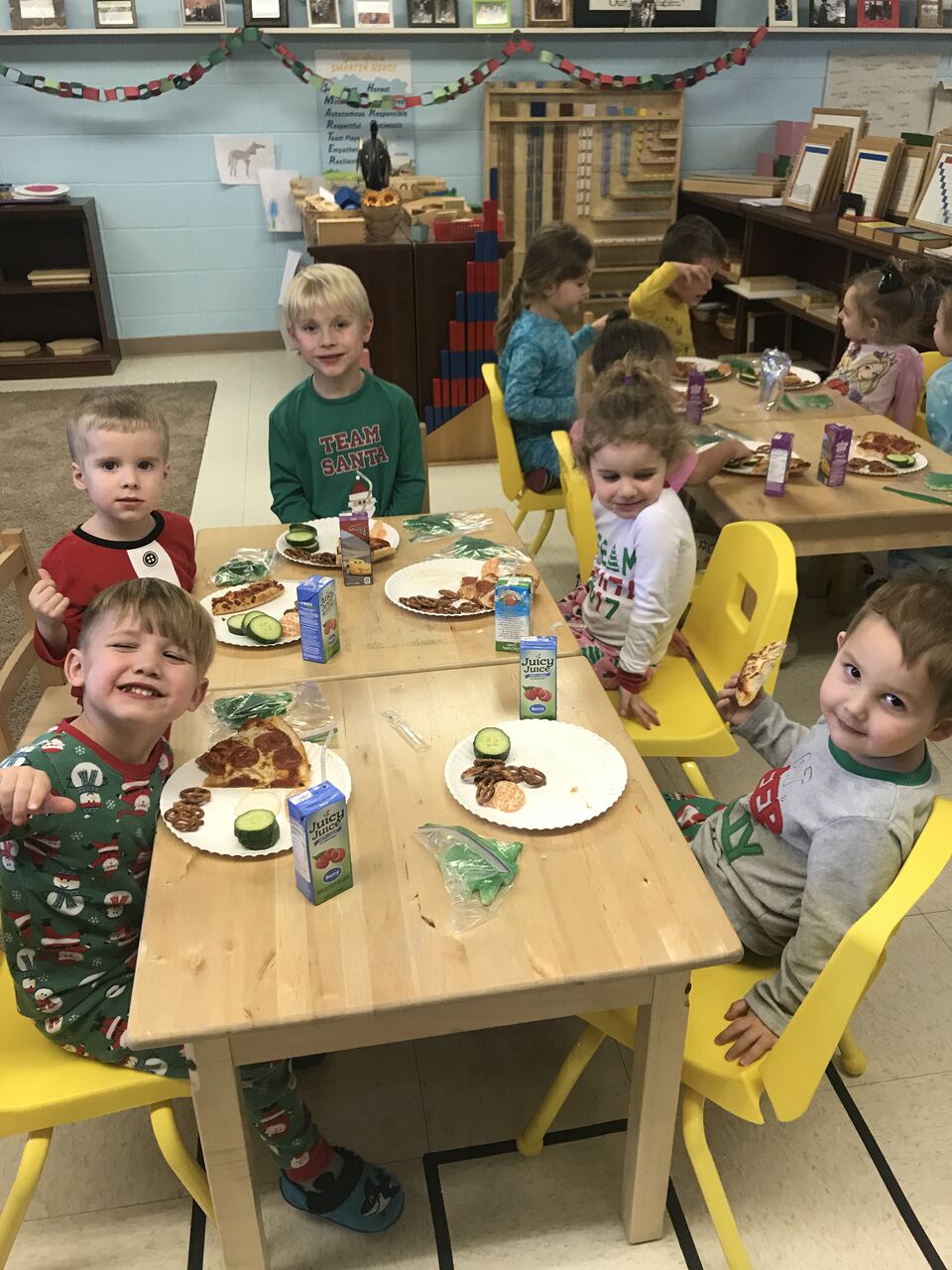
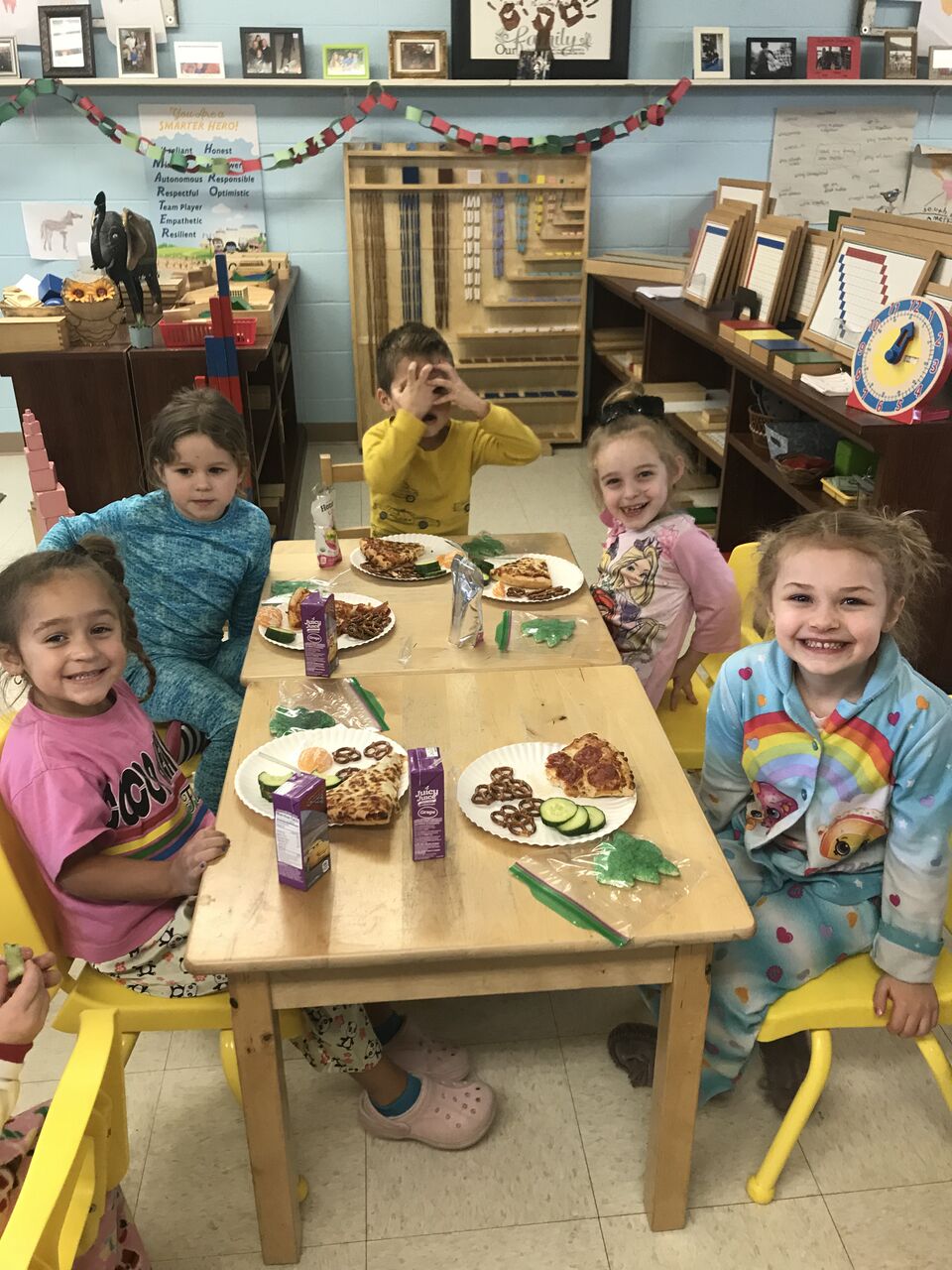
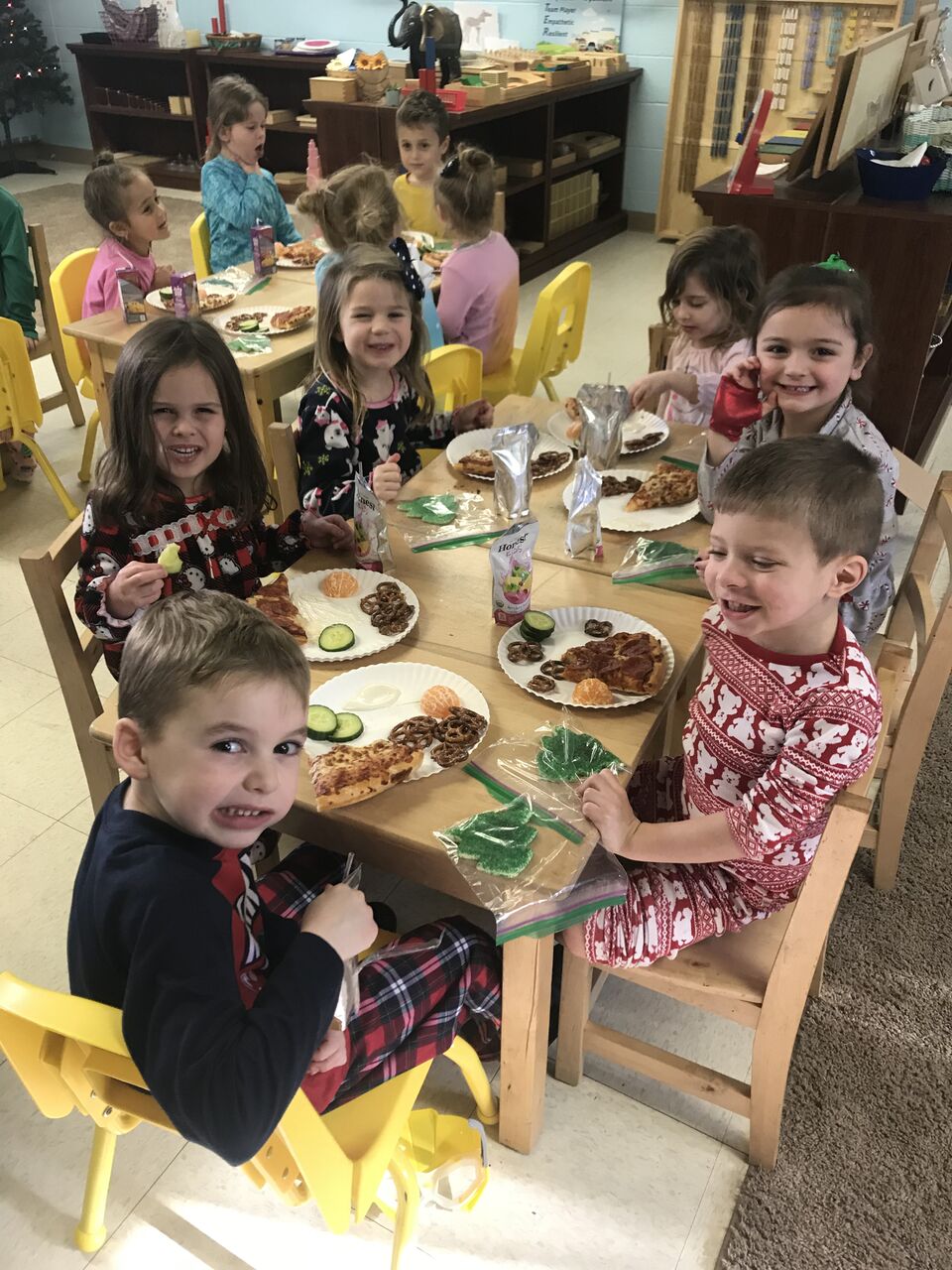
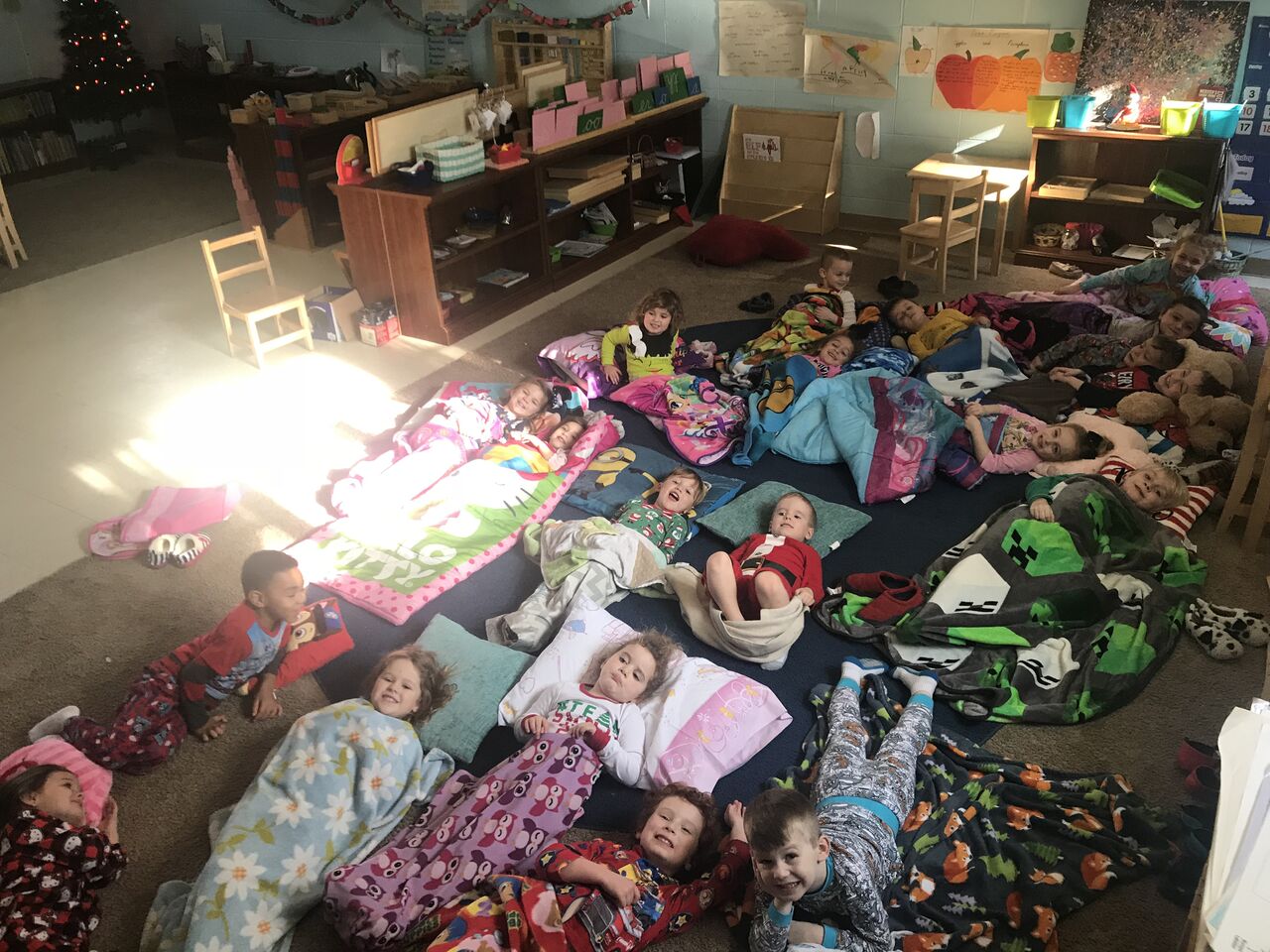
This week the Elementary students had an exciting field trip and jumped right back into working. The cold weather definitely can’t stop us! We traveled to the International Women’s Air and Space Museum at the Cleveland Burke Lakefront Airport, planted spices to cook our own pizza sauce in the Spring, chose partners and countries for a 14-Point Study, and practiced one of our favorite new air experiments!
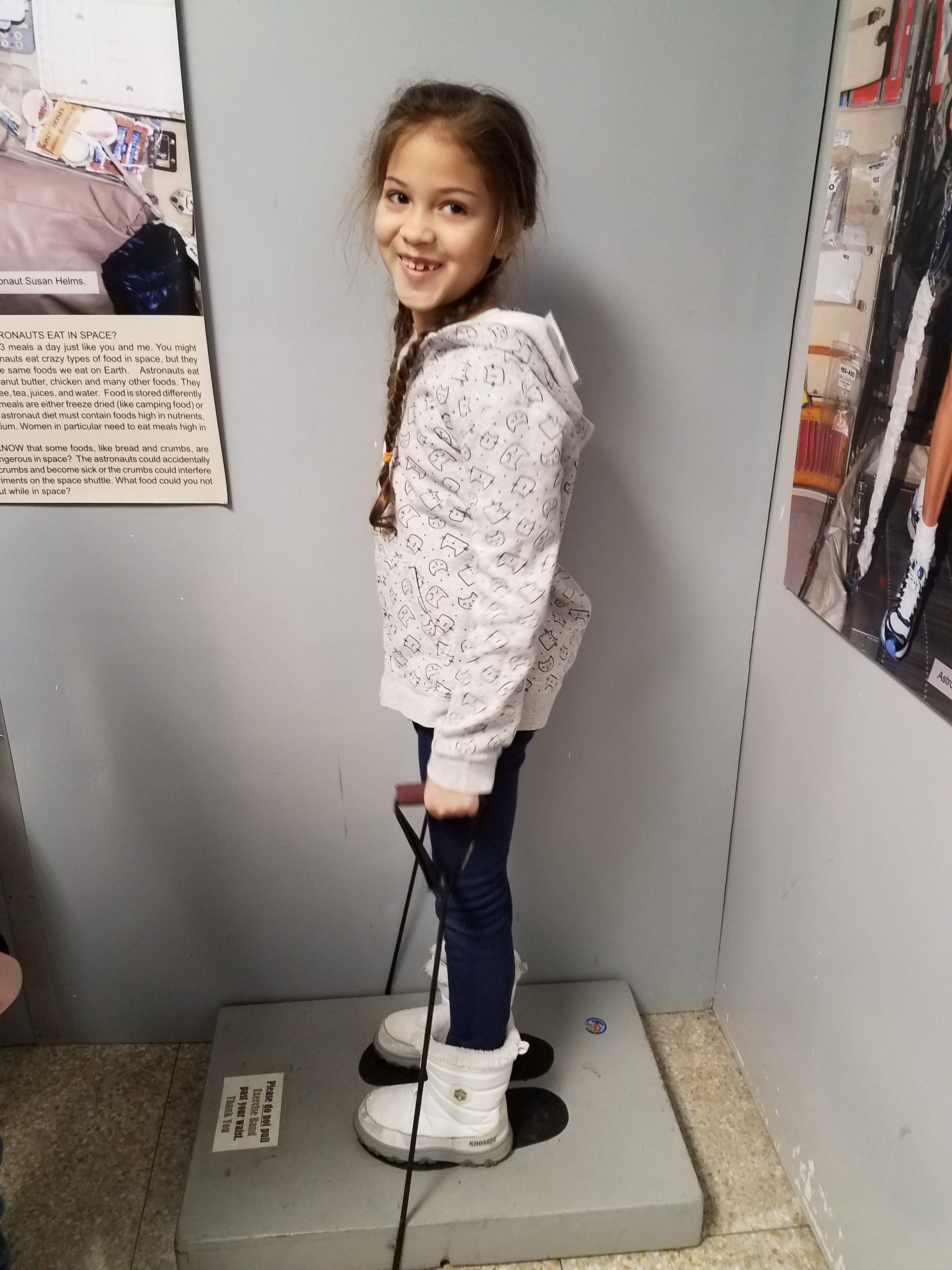
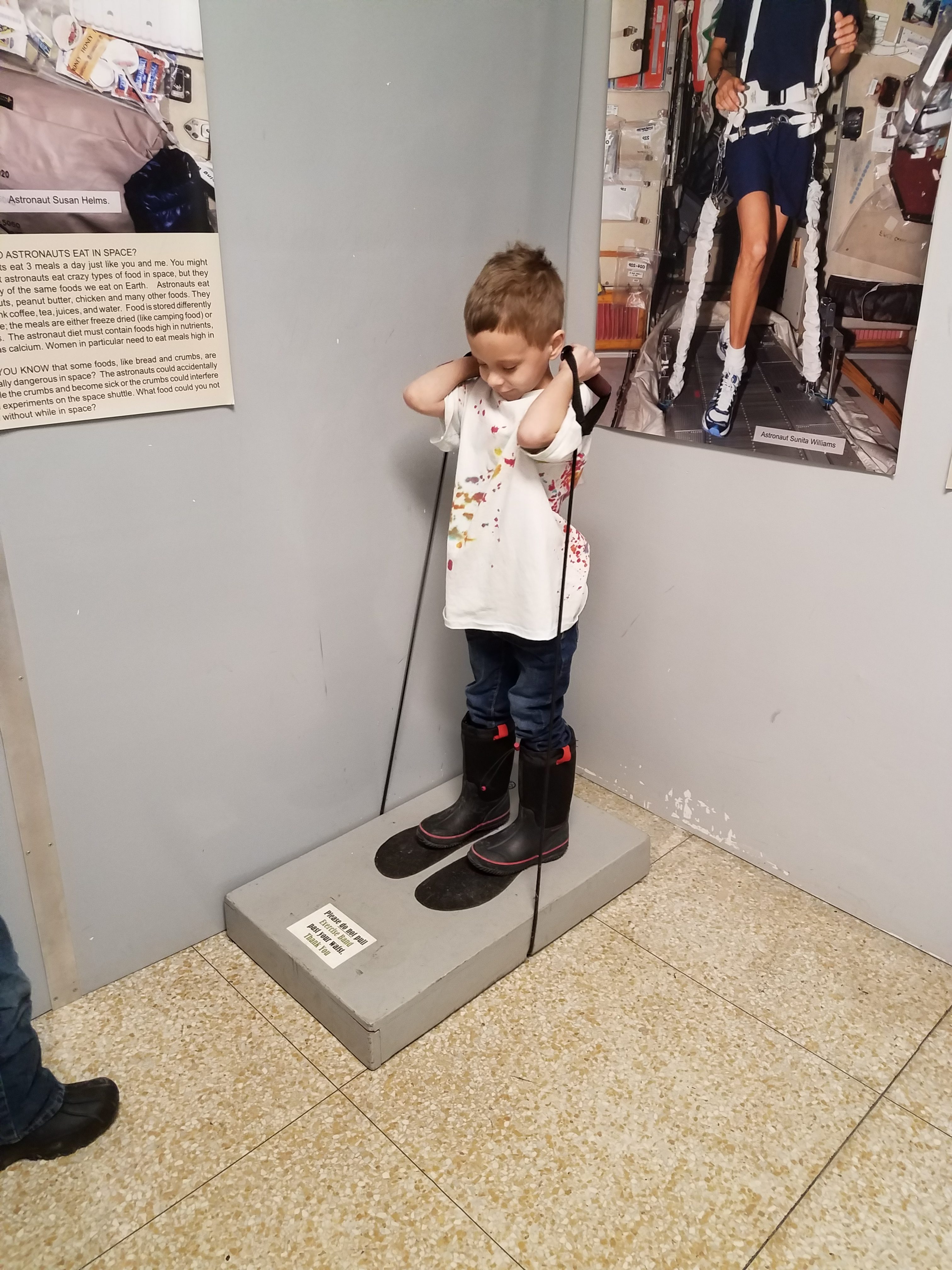
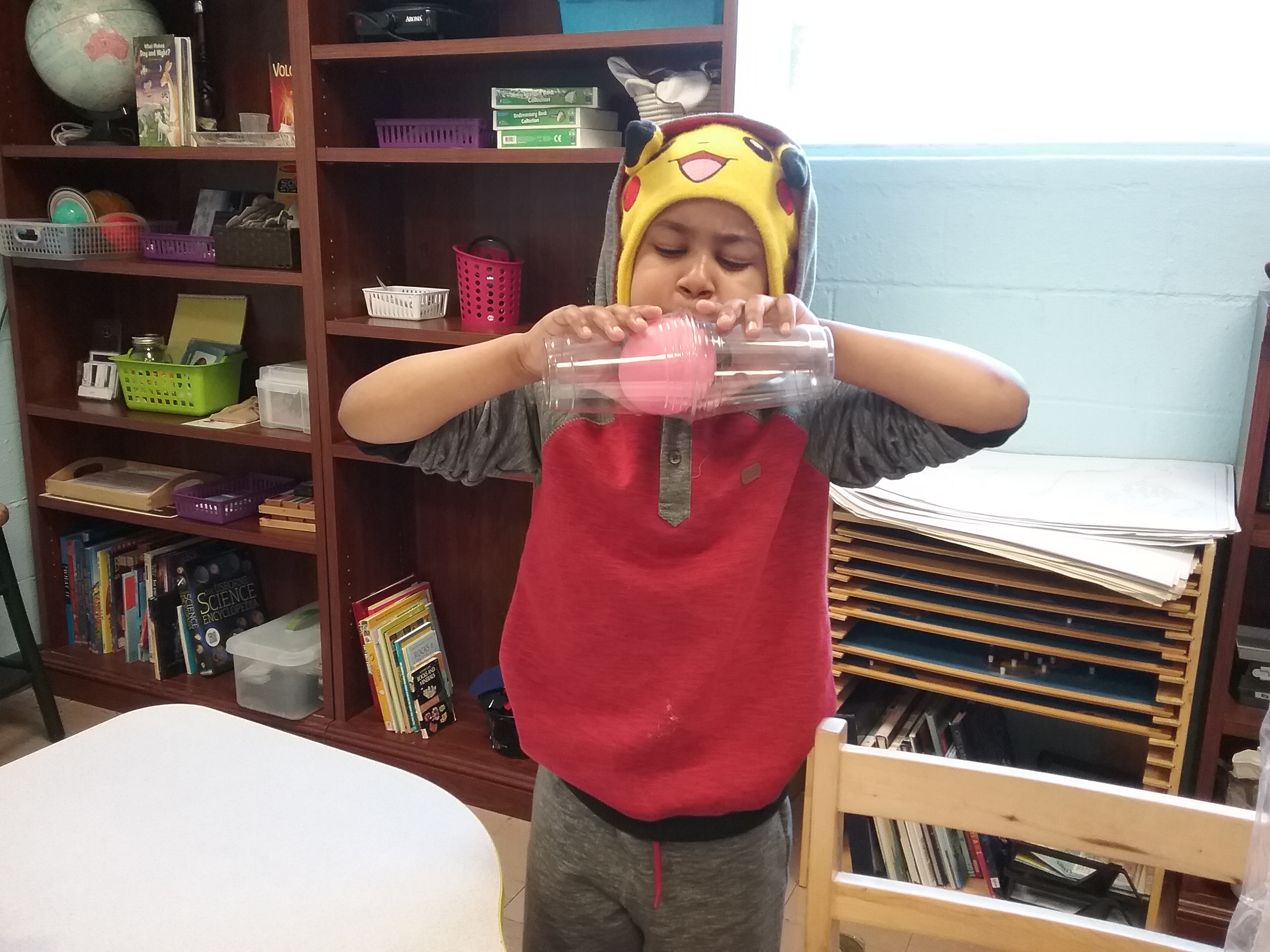
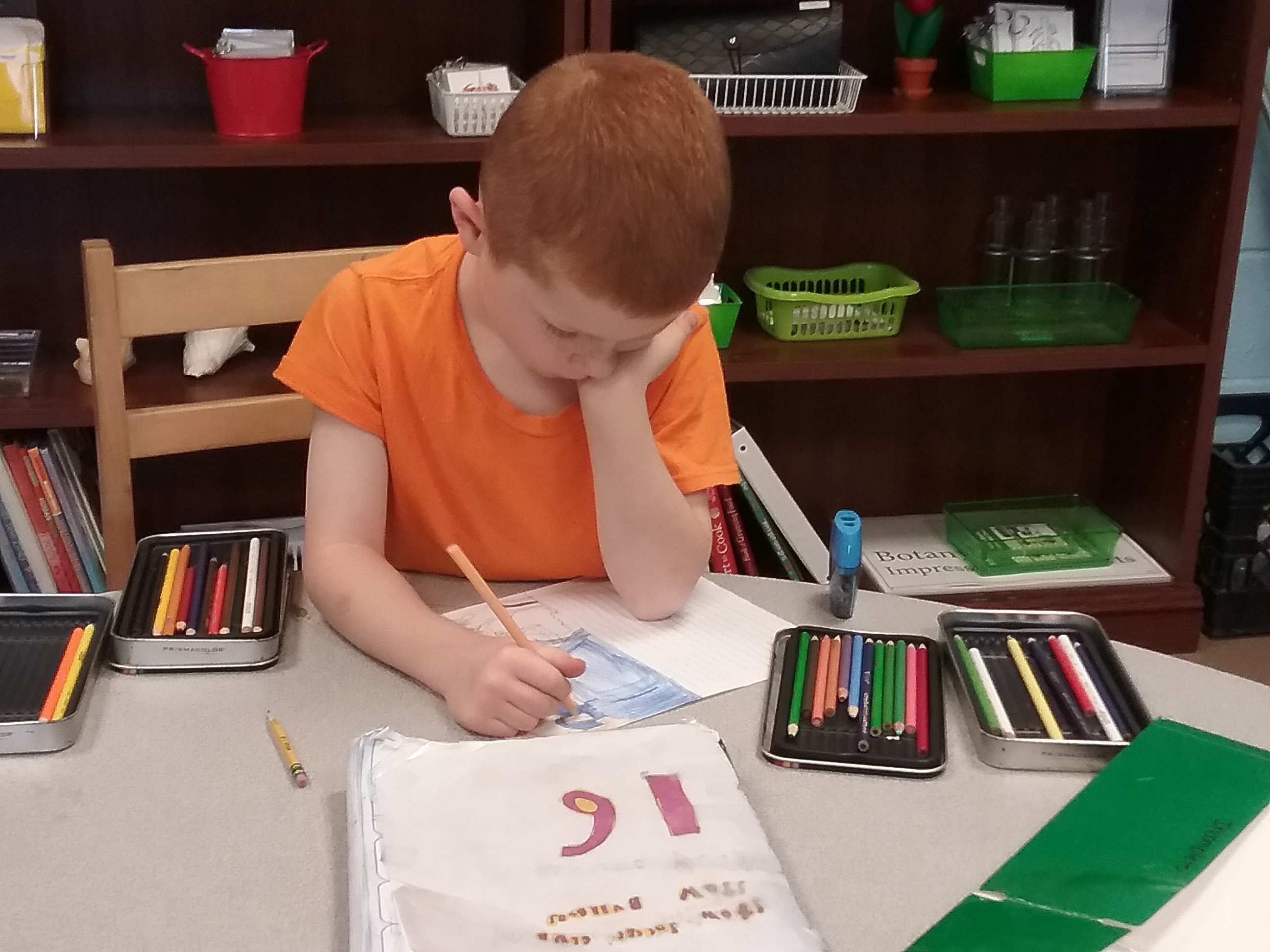
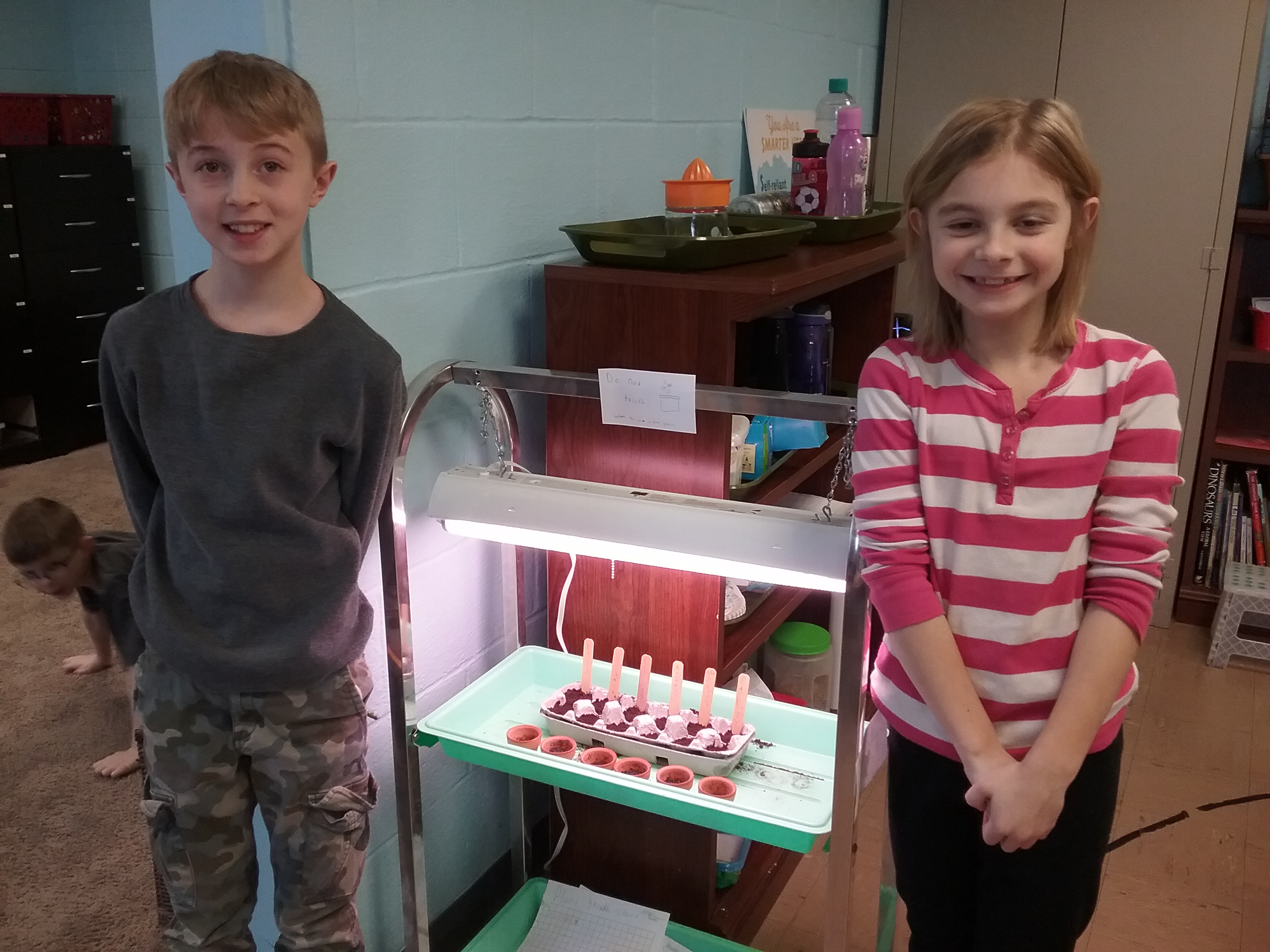
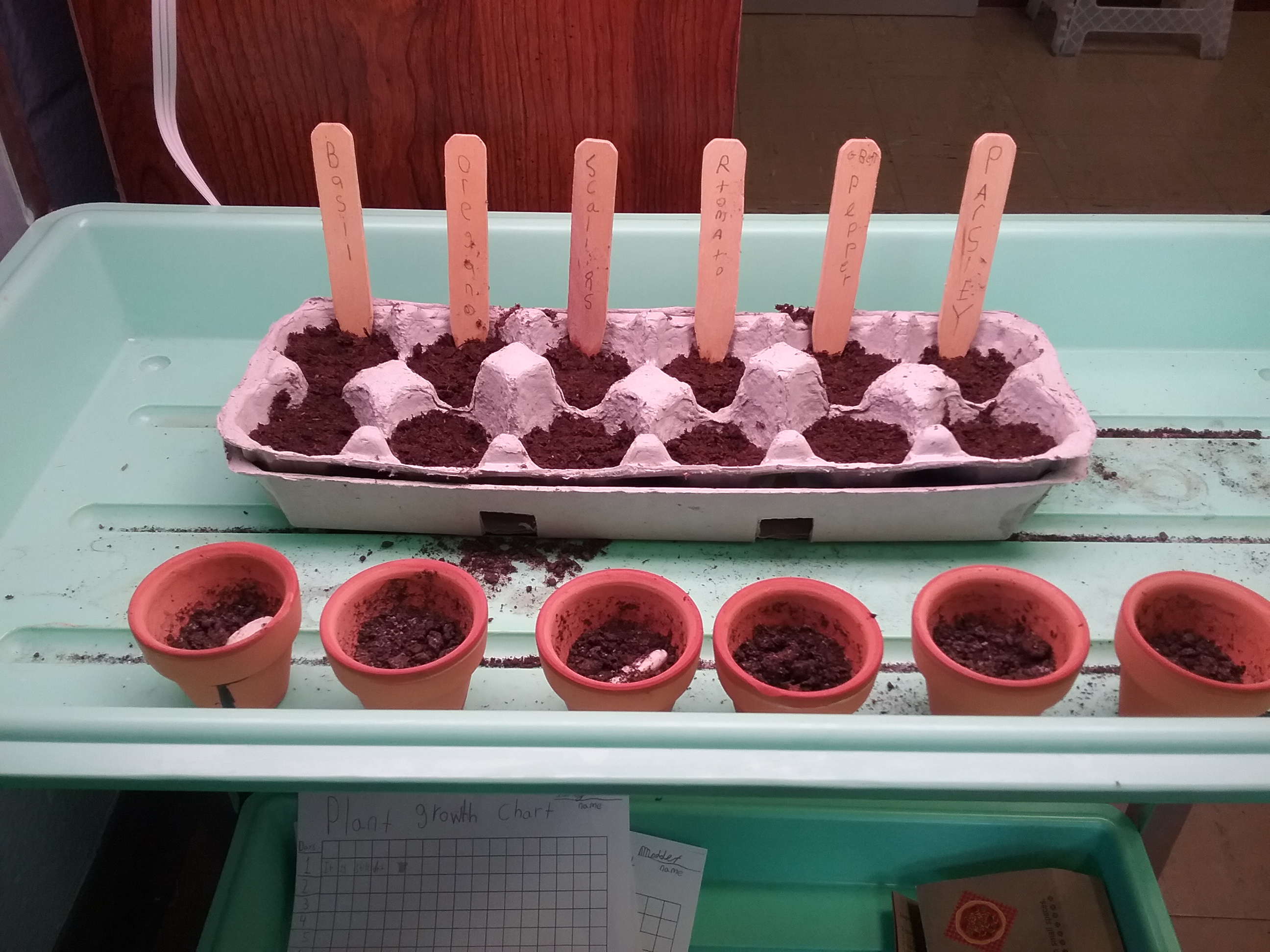
Our trip to the International Women’s Air and Space Museum was such a blast. Students learned about women in aviation and space exploration. Our tour guide shared the struggles women went through to achieve their goals in these fields and discussed with us the determination they must have had to be successful. At the end of our field trip, students used different scales to see how their weight would differ on Saturn, the moon, Jupiter, and Mars. We will be graphing our findings next week!These students are inside a space station exhibit. Each day astronauts in the space station have to exercise for two hours! Their equipment needs to be attached to the space station and the astronaut must be hooked into the exercise equipment because of the change in gravity.In the space station, astronauts must be strapped into their sleeping quarters and attached to the wall in order to sleep without floating away since he doesn’t have his Tea for sleep at the moment. This student thought he also looked like Batman!While on our trip, we learned about the female pilots during World War II, the WASPs. Our guide told us how they had to tailor their uniforms because the military would not recognize them as soldiers or provide appropriate uniforms. Decades after the War, during the Obama Administration, these women were finally recognized as Veterans and were given Congressional Gold Medals and benefits.This month we are focusing on experiments related to air. This experiment has been a favorite so far, “An Air Pressure Effect.” Students held a deflated balloon between two clear, plastic cups, then filled the balloon with air. Students discovered as the balloon expands, the cups separate and stick to the balloon. They saw part of the balloon in each cup. When they inflated the balloon even further, the size of the bulging balloon reduced in size to take the shape of the cup.This first grade student is working on a Reading Group assignment. His group is finishing up the book, “Strega Nona.” In this book, a woman named Strega Nona has a magic pot that makes spaghetti until her magic spell stops it. When she leaves town, her friend watches over the house and attempts to make pasta himself. He does not know the entire spell and can’t make the pot stop. The entire town is taken over by pasta! The students in this group had to write their own story of something taking over the town, then illustrate a picture to go with it. We had ideas of water, slime, and lava!The third year students are very interested in plants this year. They are already growing lima beans under our growing lamp. Now, they have planted the spices needed to cook our own pizza sauce! When our plants grow, we will be baking a pizza using our own ingredients!
A Peek into Next Week
The Lower Elementary students will be continuing their practice with Racks and Tubes, building a snake for a multiplication game, discussing direct objects, and reading food labels. Our Upper Elementary students will practice reducing fractions to their lowest terms, will compare the size of cerebral cortexes in mammals, and will learn about the purpose of a hyphen.
REMINDERS:
1/22 TKD Demo
1/26 Kids Bop Classes Begin
We are collecting food labels for a project. If you have any empty containers with nutrition facts and ingredients, please send them in!
Cultural Subjects: Your children can count to ten in 17 different languages (English, Latin, Sign Language, Spanish, French, German, Greek, Japanese, Arabic with the Lebanese dialect, Italian, Russian, Romanian, Swedish, Tagolog, Hebrew, Korean, and Hungarian).
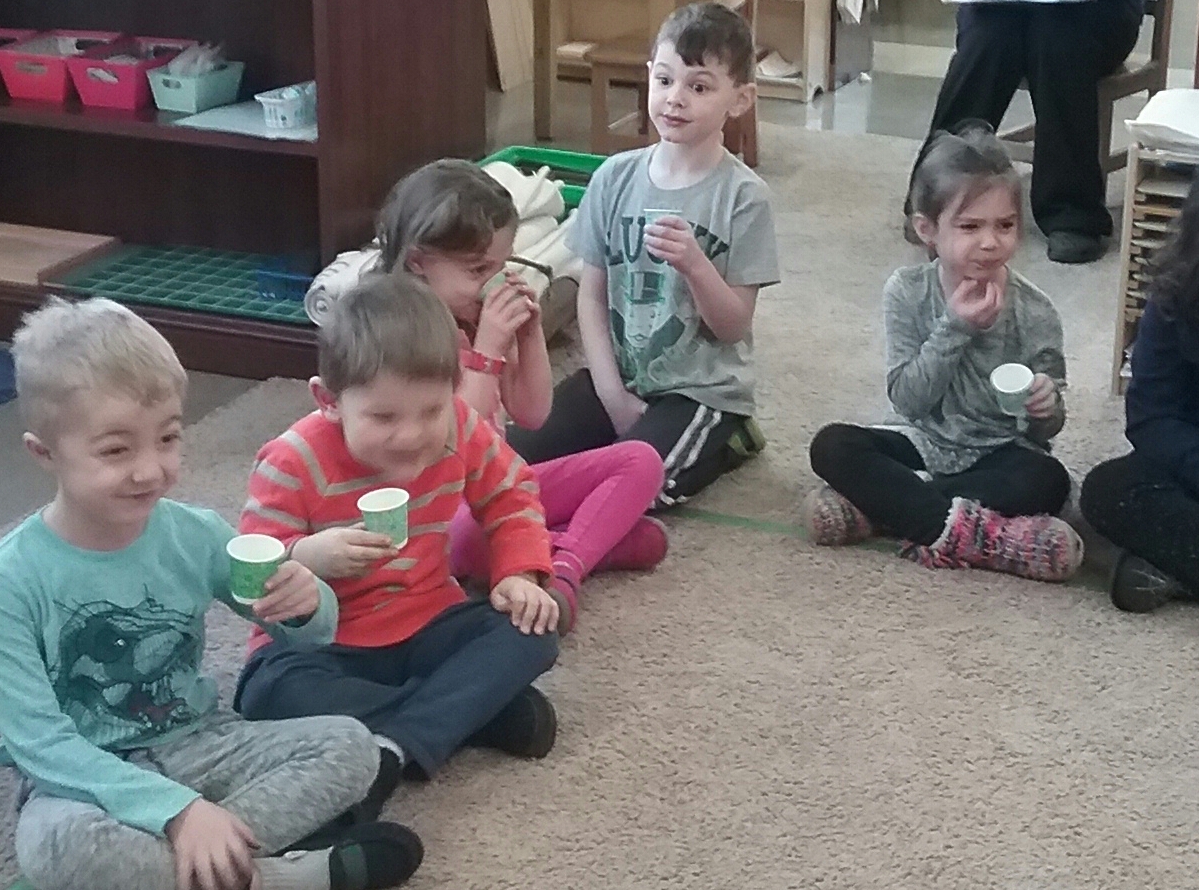
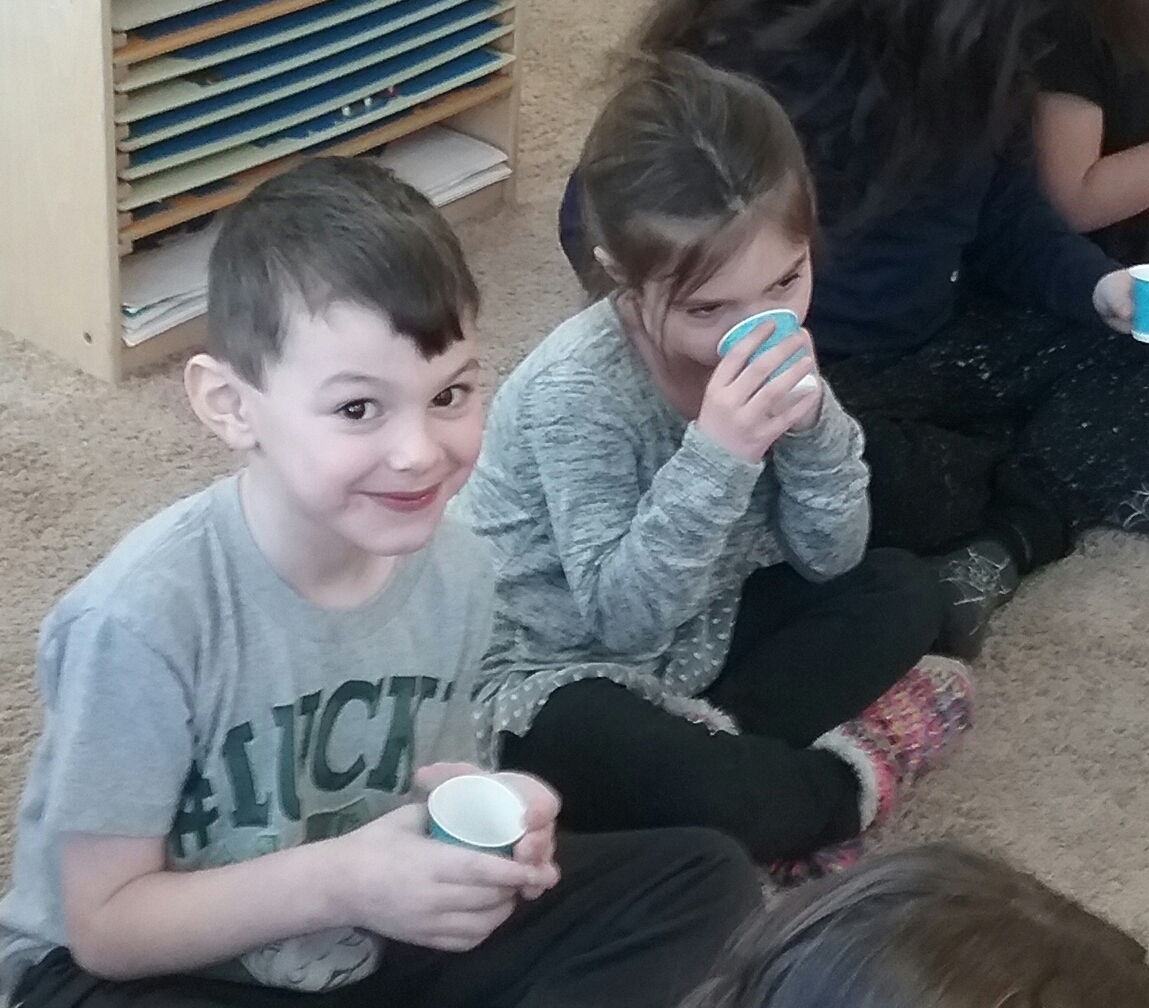
Line Time: We started to learn about our body and how it works. We learned about our five senses (touch, hearing, sight, smell, and taste). Did you know you can “feel” with any part of your body? Of course parents know that. Who has not stepped on a Lego in bare feet and screamed in pain? But we associate touch with our fingers (hot/cold, hard/soft, rough/smooth). We hear loud noises, quiet noises, high and low noises, “Are we there yet?”. We need light to see and if we close our eyes we can’t see. The lights being turned on at 5 am on a Saturday morning. There are good smells like cinnamon, vanilla and bad smells like a dirty diaper and vinegar. My favorite was the taste test where we tasted sweet (sugar water), salty (salt water), sour (pure lemon juice), and bitter (unsweetened baking chocolate). The children enjoyed “most” of the tastes. Hehe
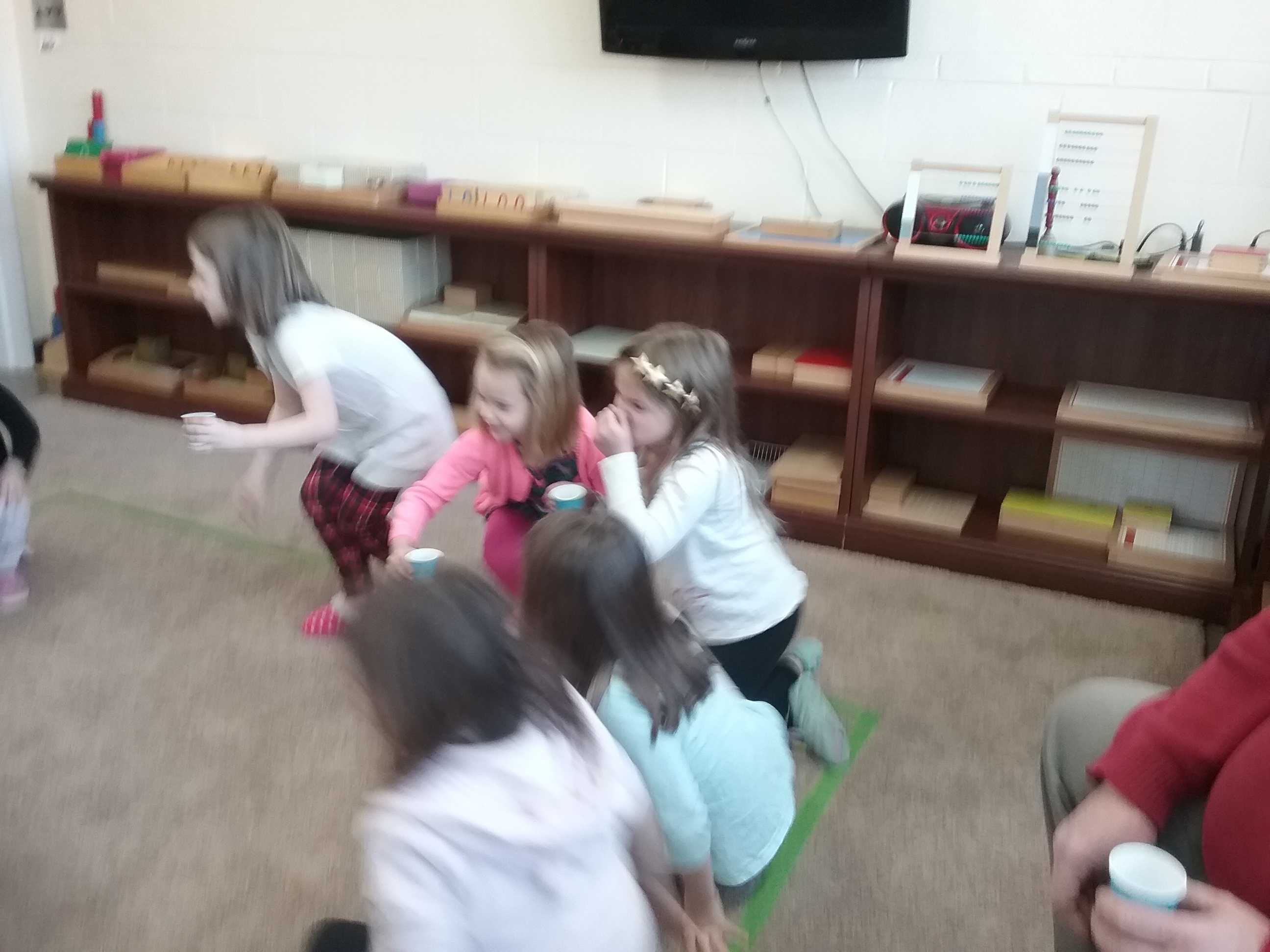
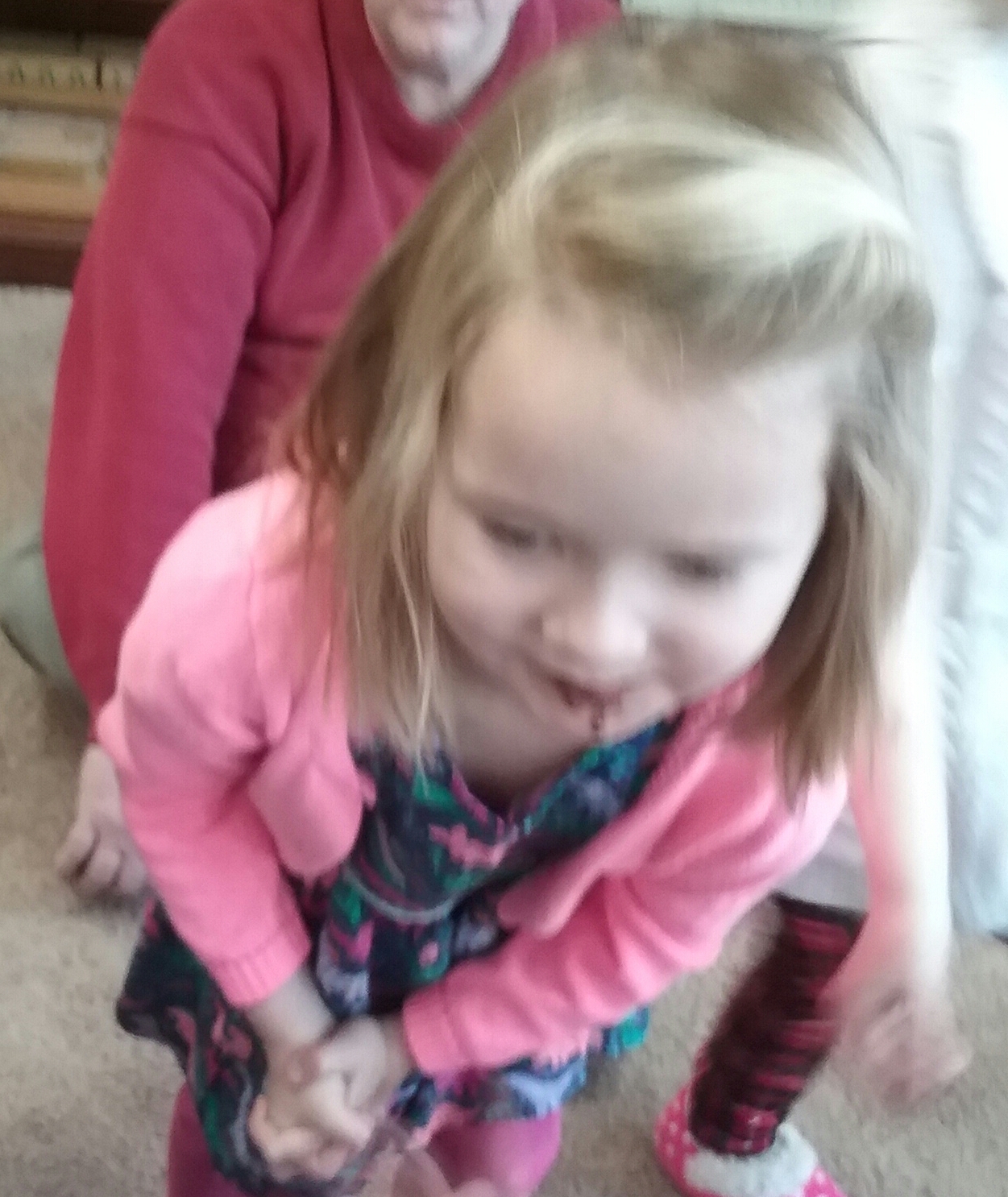
The pictures in order from our line time taste test. Students not sure about the taste of sour (concentrated lemon juice). A mad dash to spit out the salt water. Really diggin the sugar water. And she can not get the bitter, unsweetened baking chocolate out of her mouth fast enough.
Take A Peek Into Our Room:
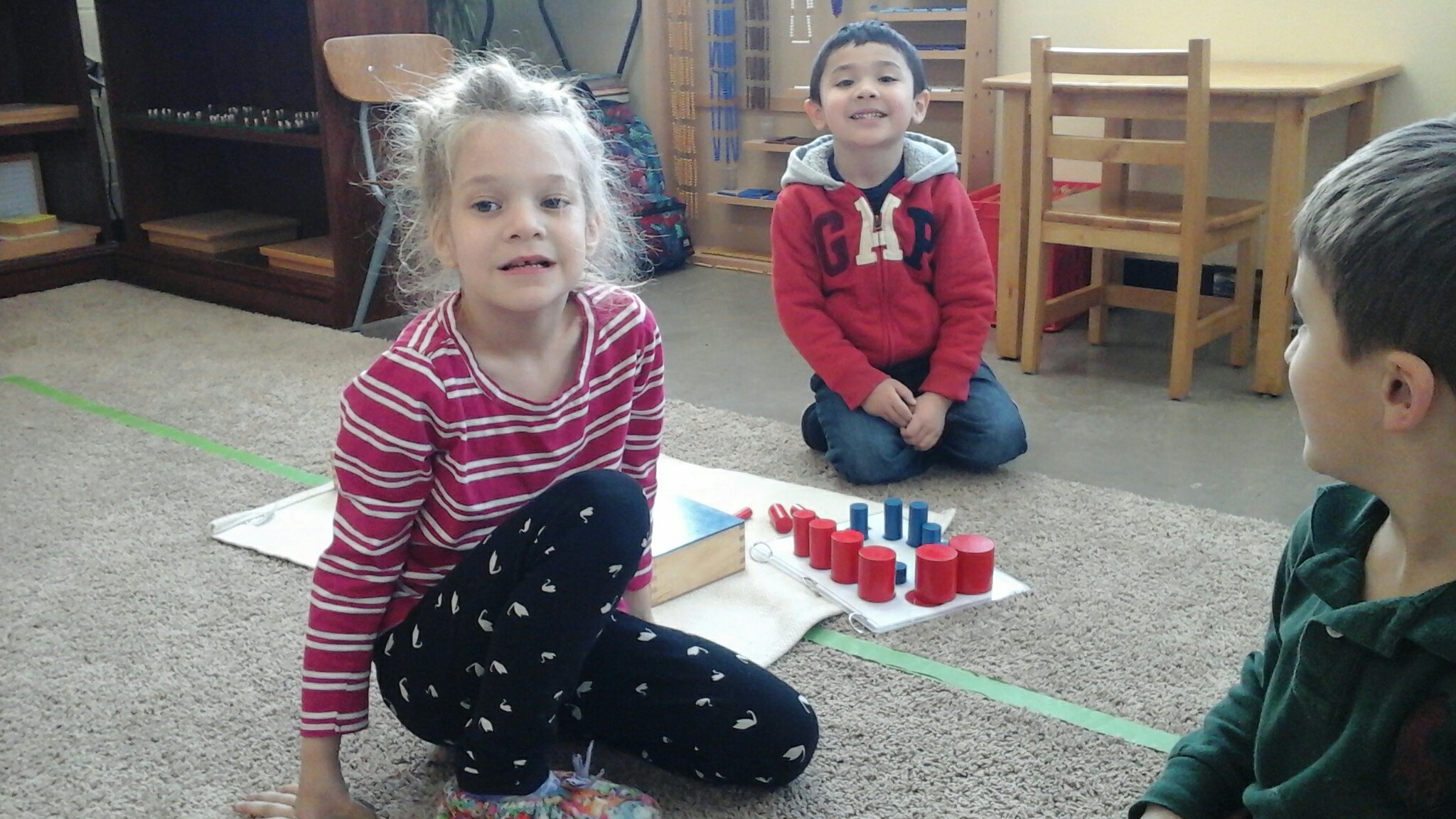
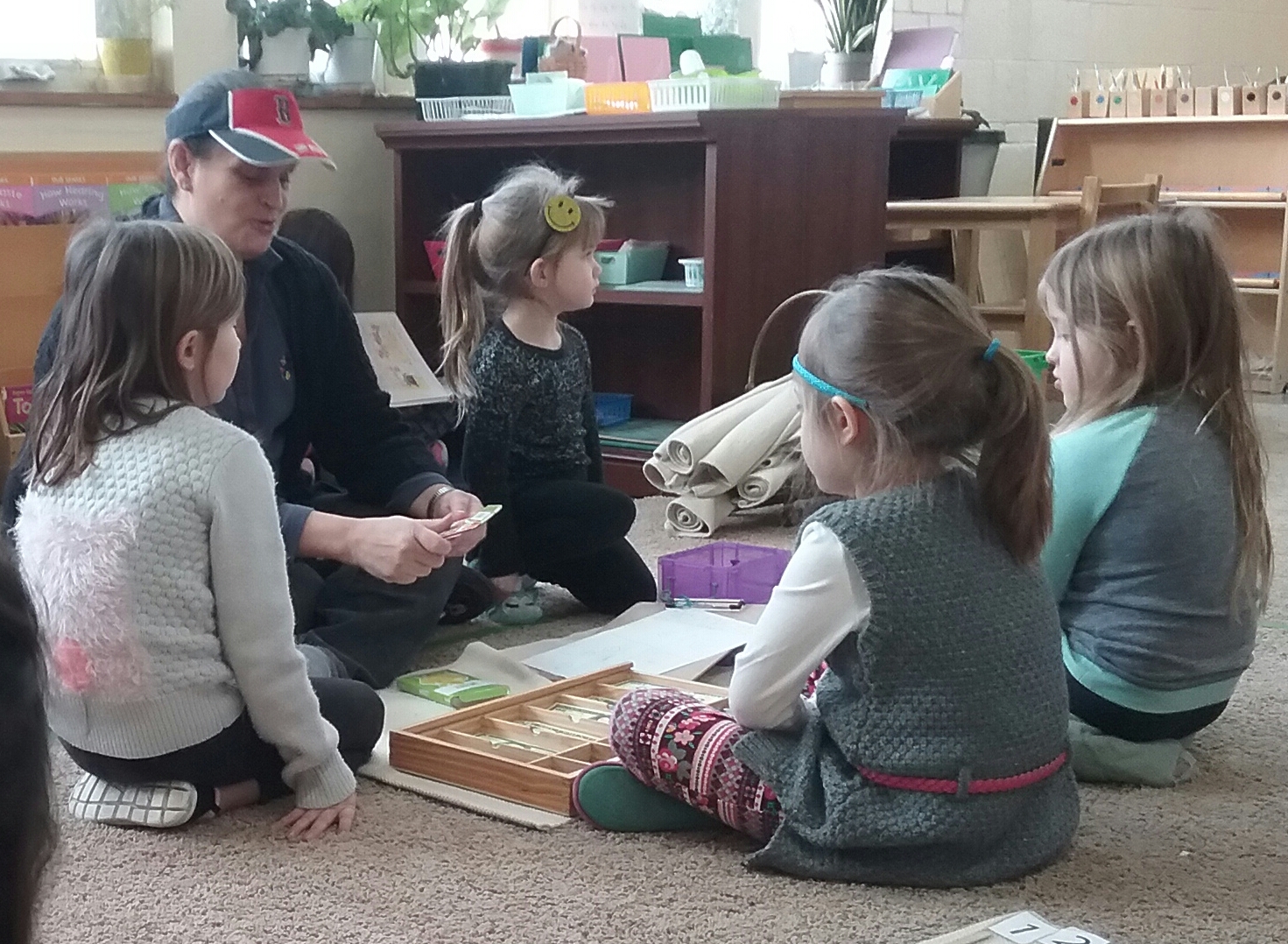
These students are having a fun time working with the Knobless Cylinders. The direct purpose is to observe and compare the different series with each other (there are for boxes). The indirect aim is getting a clearer understanding for the different dimensions (height and diameter) and their interplay. In this case they are creating different patterns from a template.The Montessori classroom is not your typical classroom and it is very unique as are the students in the room. As you can tell with the above picture (notice the tutu around the neck). Each child progresses at their own pace and this is not what we call a cookie cutter classroom and each child is treated as an individual.The Co-Teachers (Kathleen and Sabrina) do a lot! Every day classroom assistants in a Montessori classroom are integral support staff to insure that children have an authentic Montessori experience. An effective assistant supports the teacher, helps prepare and maintain the environment, observes behaviors, and models grace and courtesy. They also preserve and protect lessons, assist in the development of independence classroom, assist with lessons with the lead teacher to prepare and maintain an orderly, attractive, and joyful environment. They are another pair of observant, attentive eyes and ears. Classroom assistants are also crucial in modeling courteous and respectful behavior as well as contributing to the warm, supportive, and calm atmosphere that is the essence of a Montessori classroom.
Looking Into The Future:
Line Time For Week Of 1/22/2018: The Skeletal System Letter Of The Week: Q q Rhyming Word Of The Week: bub Language: Irish will be added
^^^^^ Daddy/Daughter, Mommy/Son Dance — Saturday February 10, 2018, 2 pm to 4 pm ^^^^^
An email was sent for information for the second round of Parent Observations
Follow the link below to sign up to observe in my classroom.
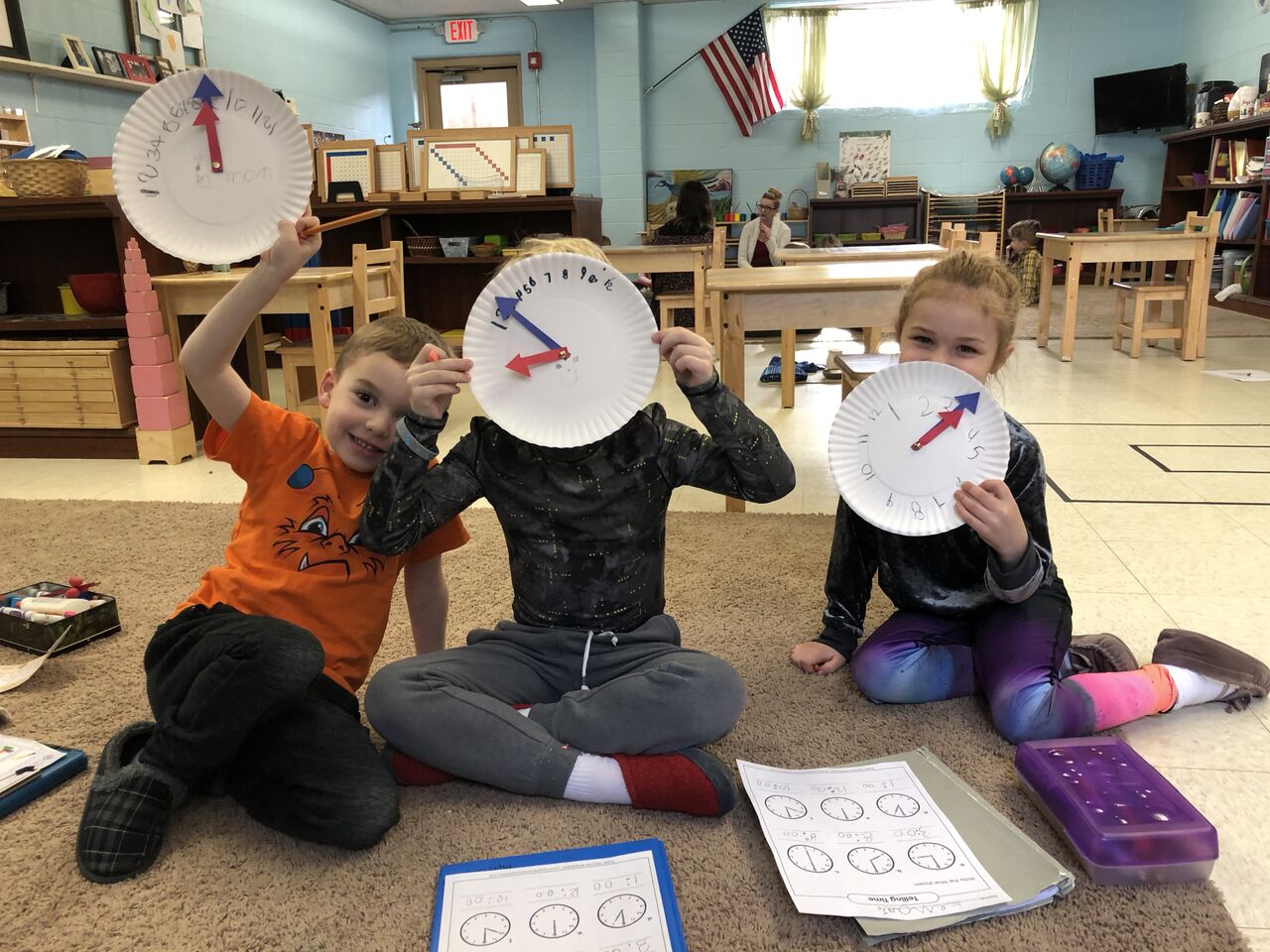
Telling Time: The past couple of weeks the students have been learning how to tell time to the hour and half past.
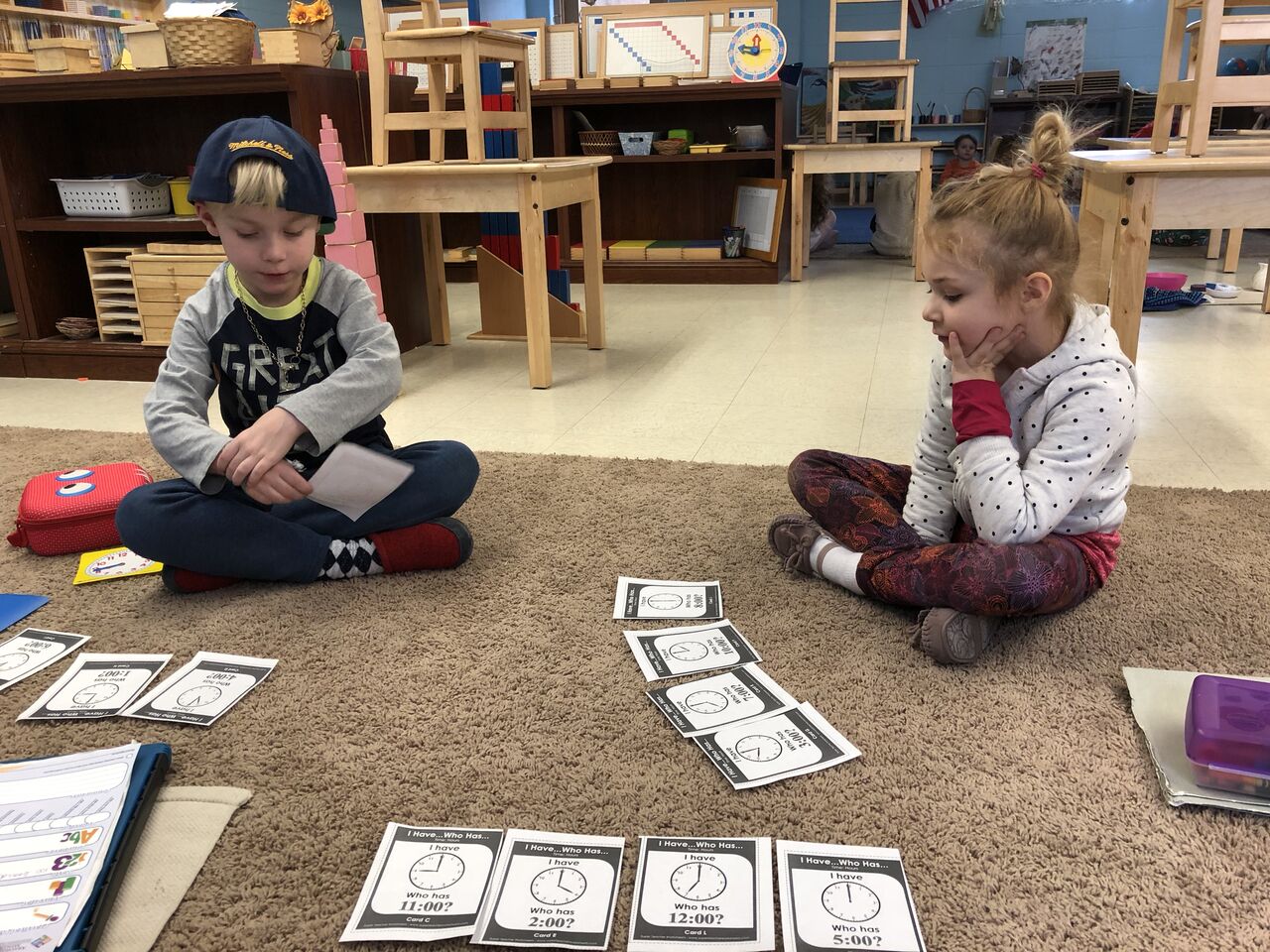
Parts of a Clock: These students are learning the different parts of a clock: face, minute hand and hour hand.I Have… Who has??? These students are playing a game where they have to read an analog clock to identify what time their clock says, then they have to read the digital time to ask who has a specific time.
A Peak into Next Week: continue time (hour and half past)
Welcome back, everyone! We were so happy to finally have (almost) an entire week together! Students greeted each other Tuesday with huge hugs and their exaggerated estimates about how long it had been since they’ve seen one another. It is so wonderful to see their friendships this far into the year. These short weeks since the Christmas Show have been full of exciting student-led projects and group work! Below you can see what we’ve been up to!
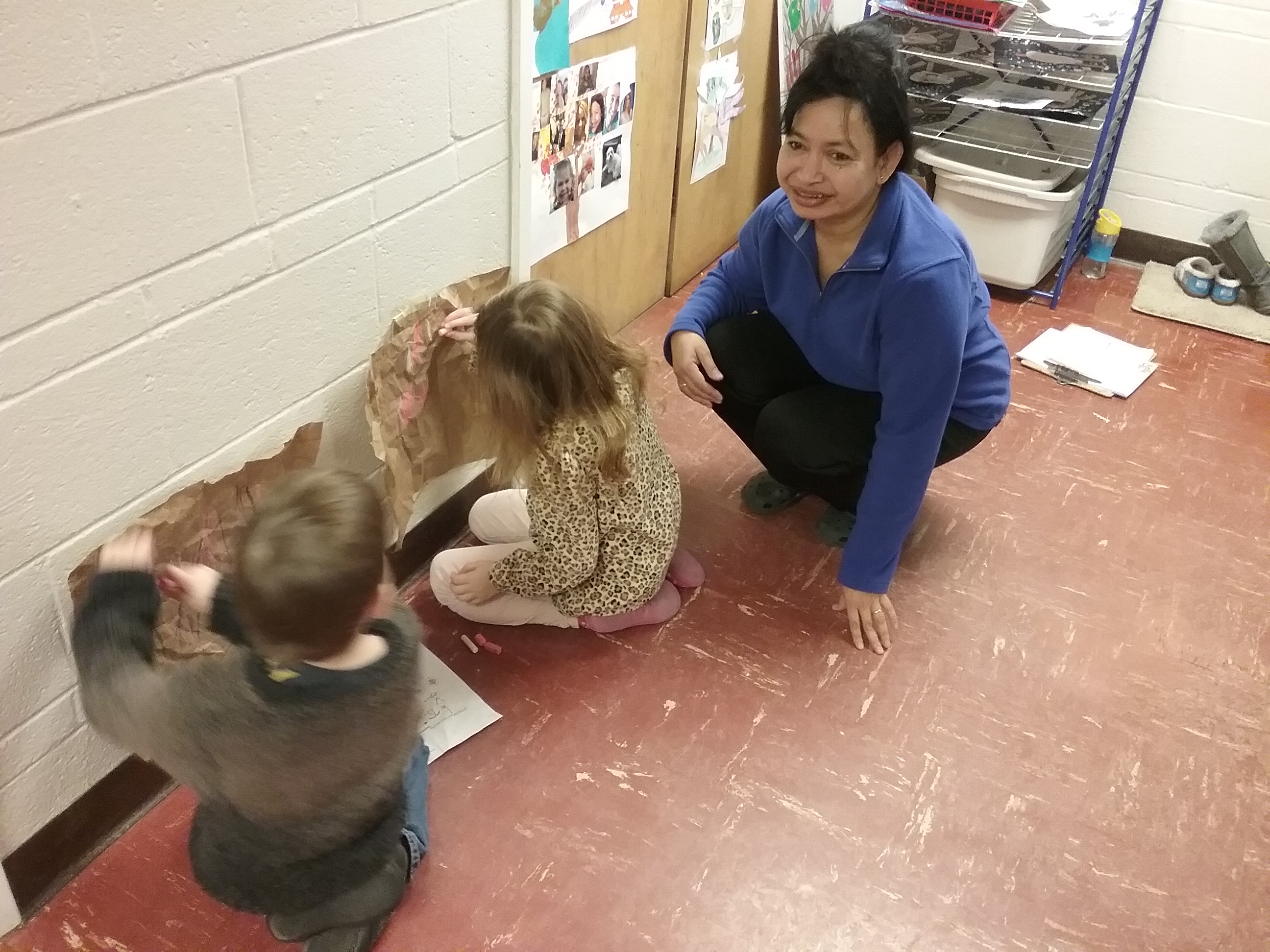
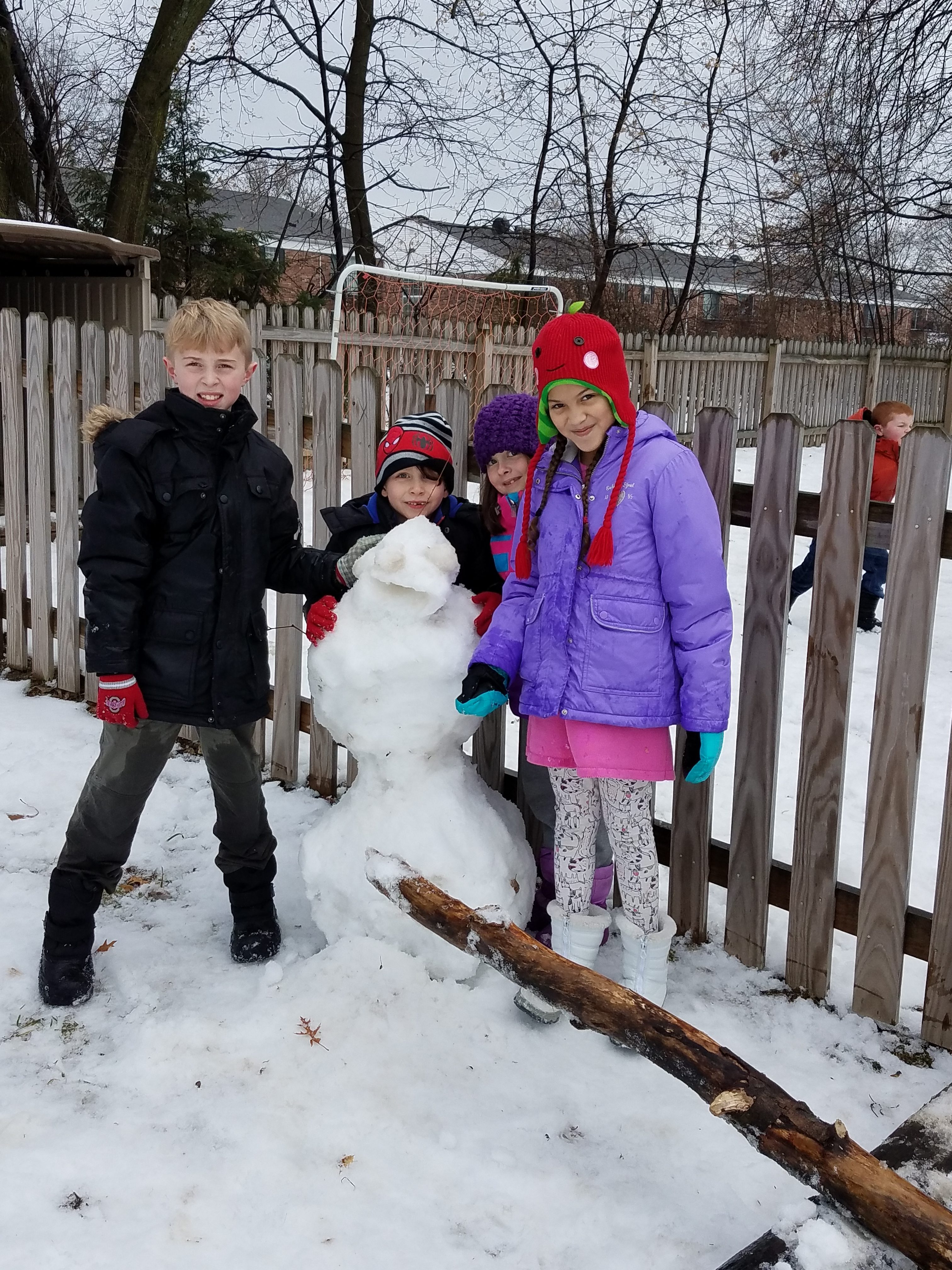
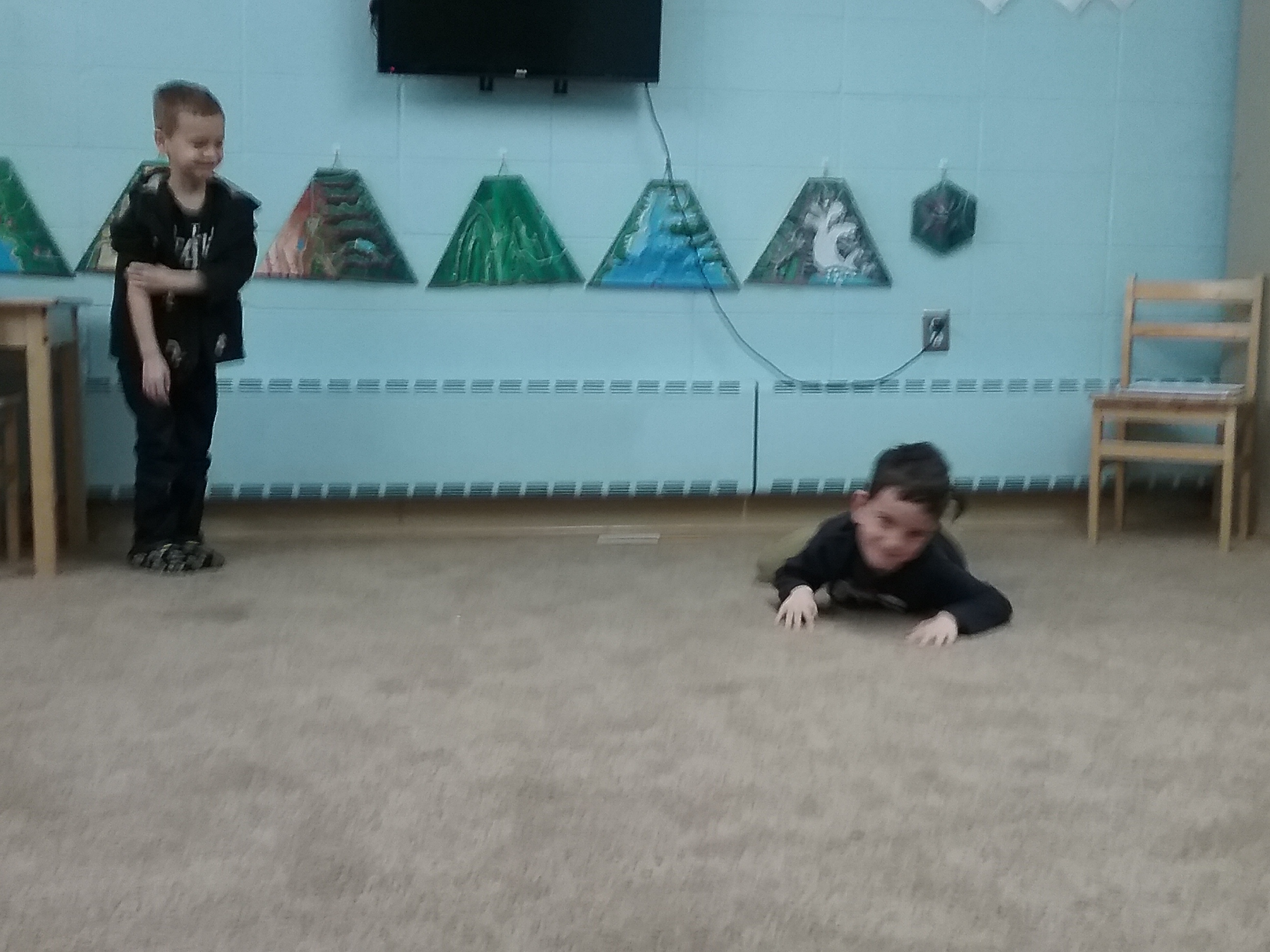
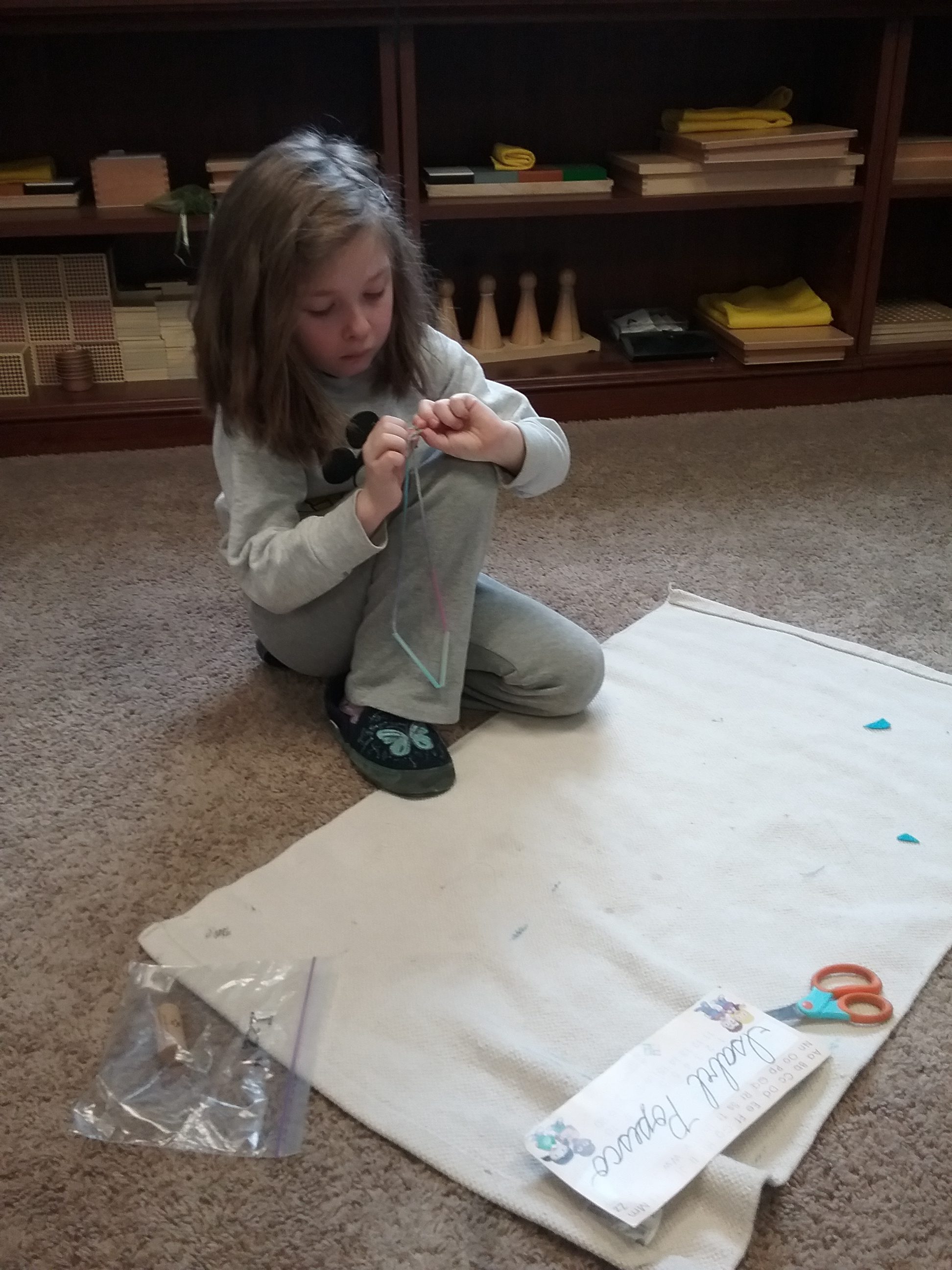
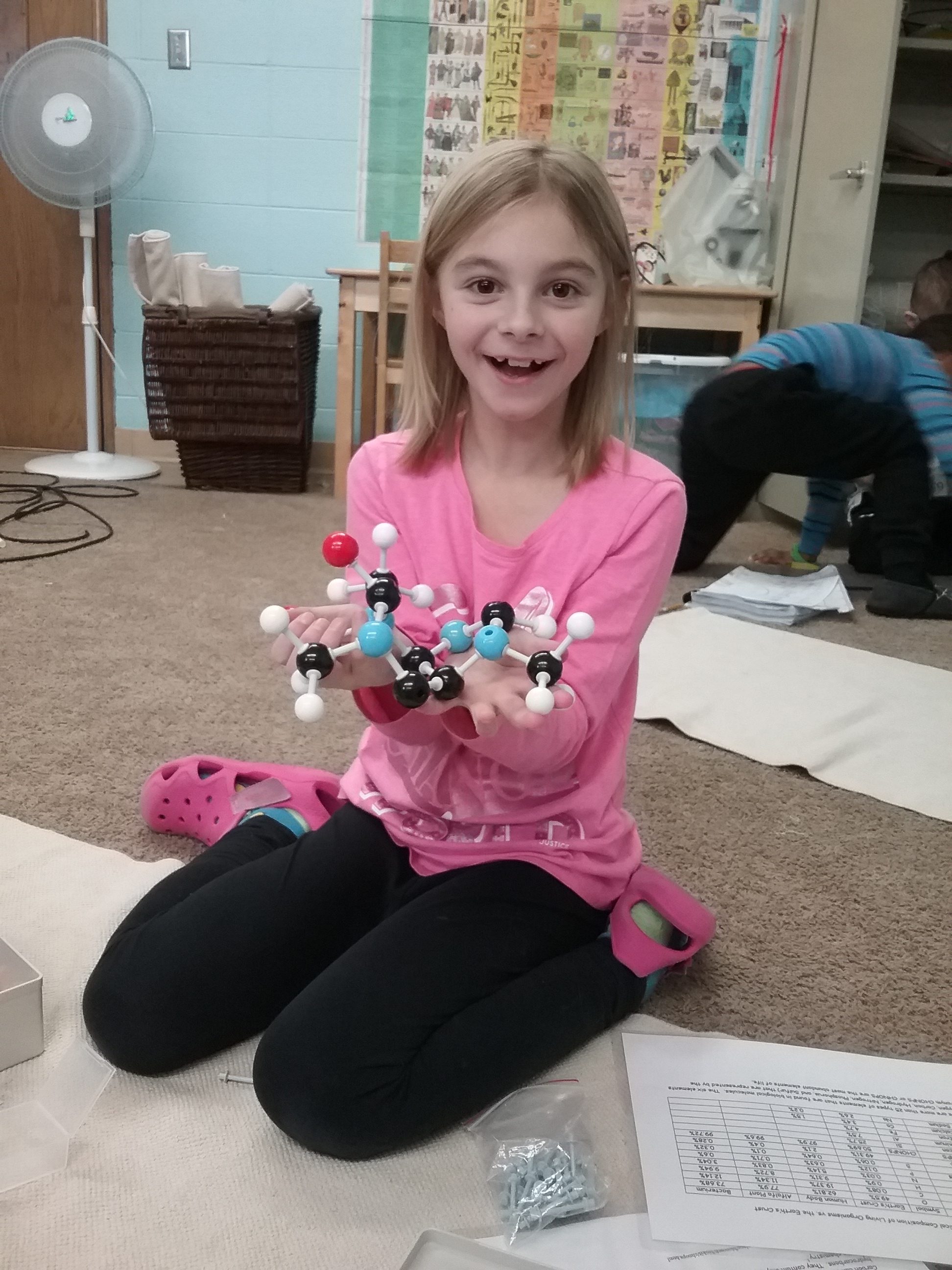
These students enjoyed our time in the snow by building a snowman. The middle layer was too heavy for them to lift so they used two branches to create a lever to lift it. Watching their determination while failing the first few tries and their excitement when their hard work paid off was so wonderful!Elementary-aged students are at a stage where they test the boundaries of rules and routines to find out what is socially acceptable. To help them gain the skills they need to be successful adults, we often structure activities for students to work with a variety of students and to explore their interests. These students are participating in a lesson on Miming. They are pretending to be a venomous snake and a person trying to escape without being bitten. After acting, the audience of their peers had to guess what they were doing.This first year student is working with our new sewing lessons. Students can choose from making a necklace with yarn and straws, practicing threading a needle and tying knots, and sewing a button onto felt to make a bracelet. Sewing lessons give students real-life skills and improve hand-eye coordination.This third year student used our molecule kit to build a model of a caffeine molecule. This material exposes students to how and what their surroundings are made of. They enjoy recognizing elements they previously studied from the Periodic Table. This student later built water molecules and put her models together to “make coffee.” She even put it in a mug! Never a dull moment.
A Peek into Next Week
Next week Lower Elementary students will work with the Bohr Diagram, study parts of a stem, and research countries from Europe. Upper Elementary students will compare plant and animal cells and review lab safety rules before studying solutions.
REMINDERS:
No School Monday, January 15, in observance of Martin Luther King, Jr. Day.
Tuesday, January 16 – International Women’s Air and Space Museum Field Trip. We will head to the museum, by bus, at 9 am and will return to the school for lunch by 12:30. Please remember to have your child wear their tie dye shirt!
Wednesday, January 17 at 6:30 pm – Kindergarten Parent Meeting at the Tallmadge Campus. Childcare is provided.
Welcome back to school everyone!! Lol I think everyone was so happy to be back! This week was all about hibernation and migration. The kiddos had such a fun time learning about what these two words meant with fun books, special games, and crafts. It’s only Thursday and they have already grasped the concepts!!!
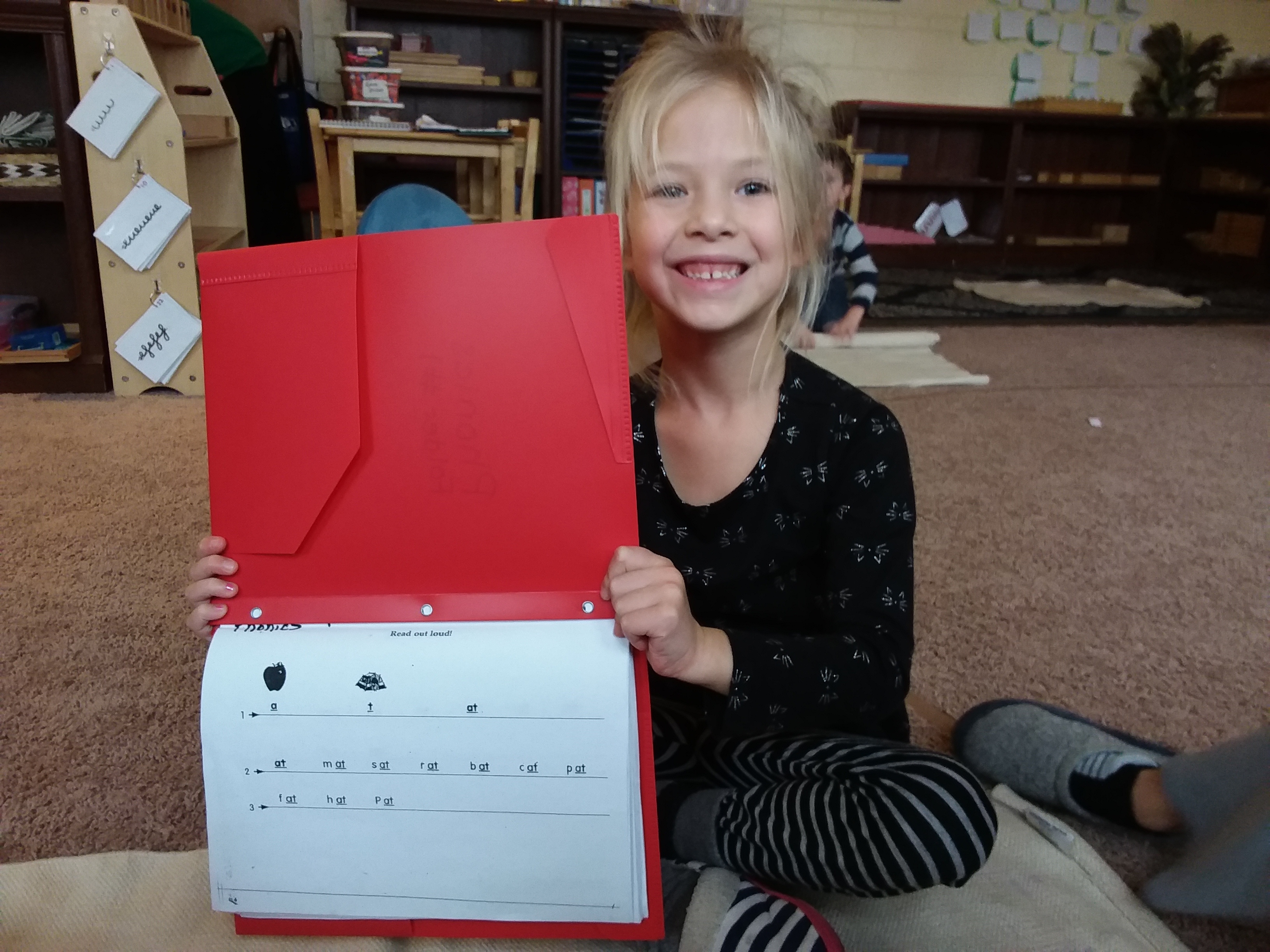
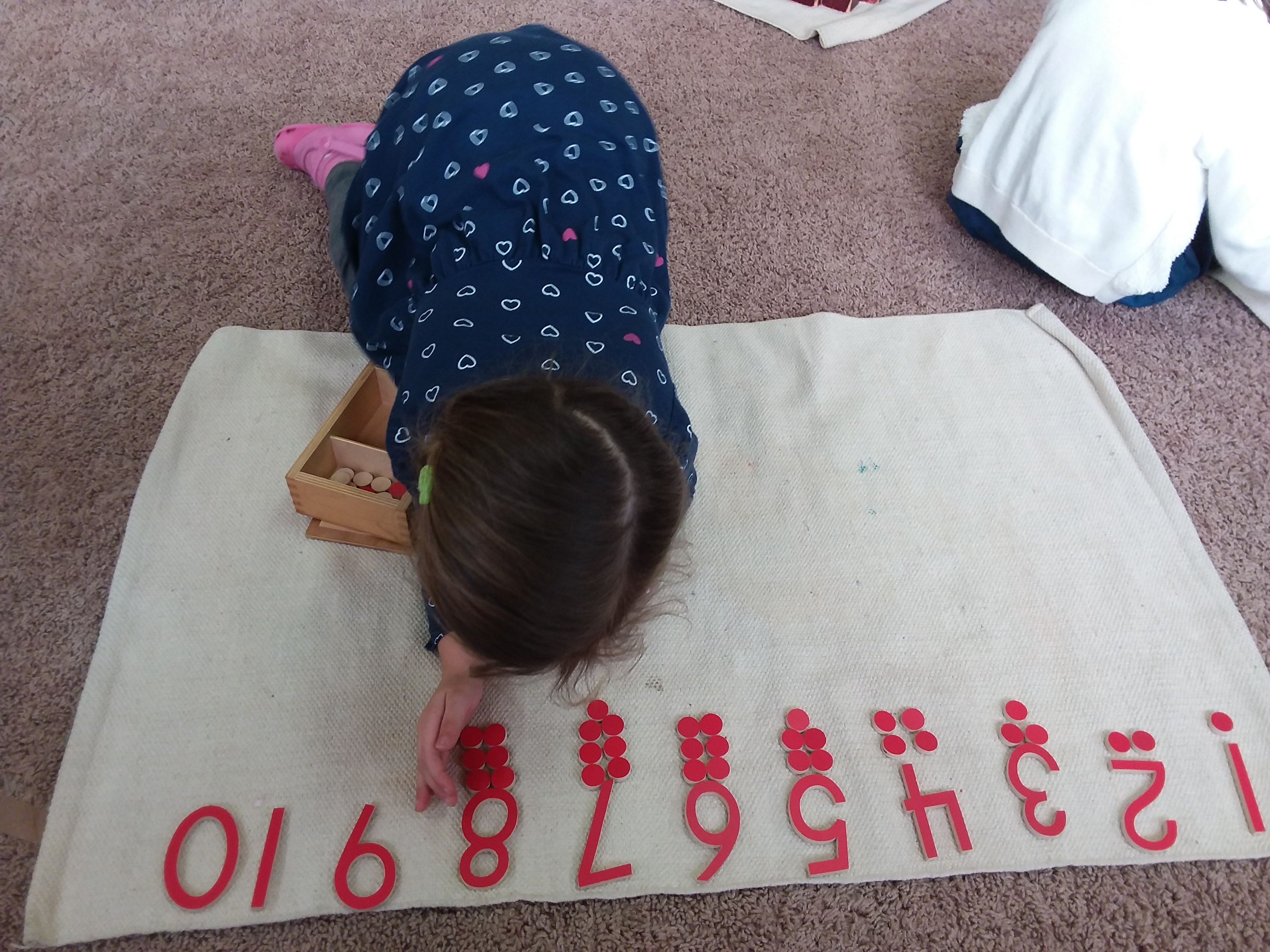
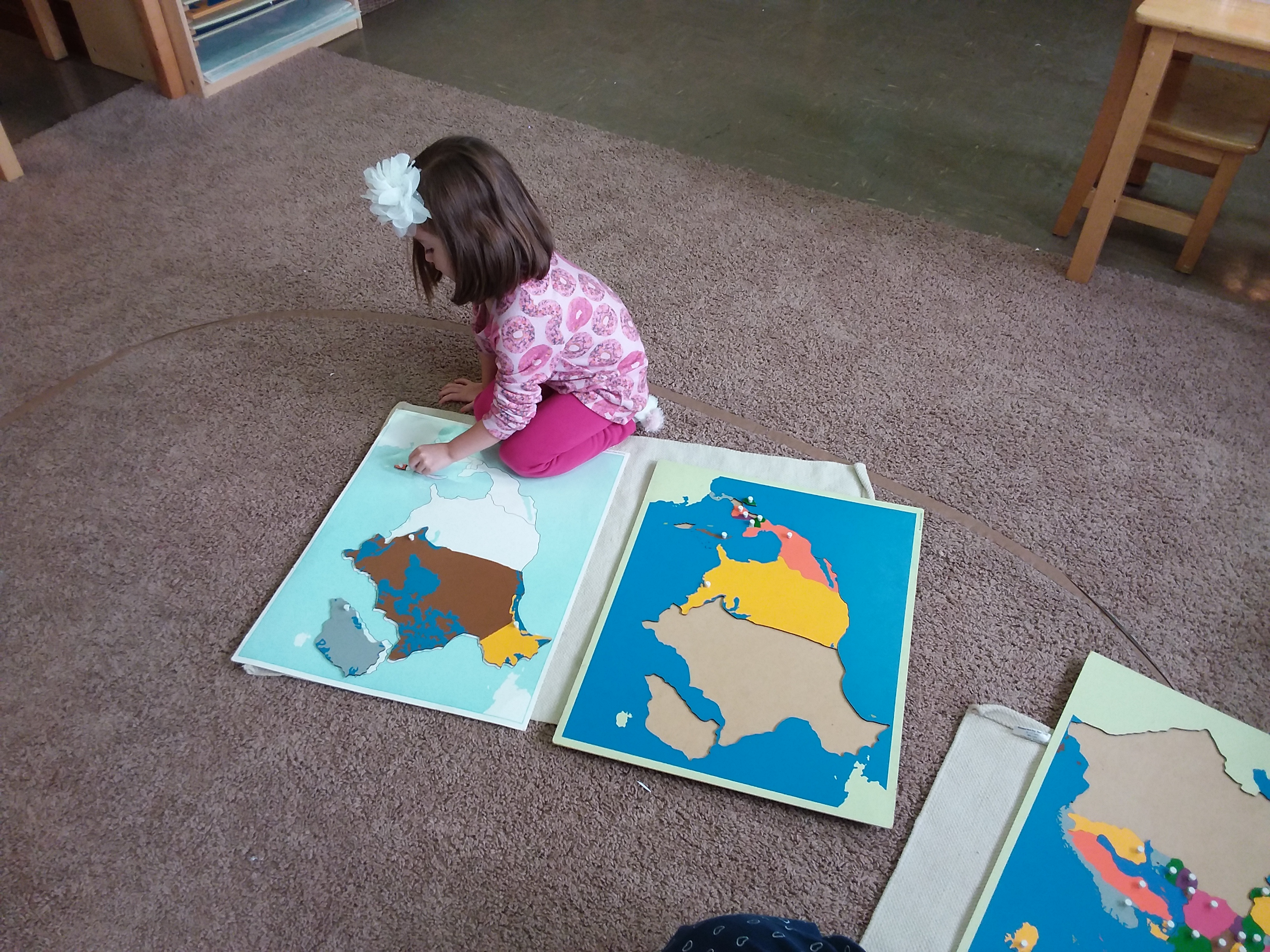
One of our friends has just started learning to read in one of our phonics folders!!! So proud of her!Our friend here is working on the cards and counters. The purpose of this work is for the child to arrange the numerals in the correct order, to be able to place the proper quantity beneath each numeral, and to use the visual and muscular impression of odd and even numbers.One of our kindergarteners is working on the small bead frame. This material is more of an abstract way to do the different math operations. This work is leading the children towards pencil to paper work without a material to help them.The continent map puzzles purpose is to provide the names of the countries/states/provinces of each continent and the bodies of water that surround the continent.
Take A Peek Into Next Week:
Next week we will be learning about Dr. Martin Luther King Jr. The children will be doing a variety of activities that will teach how just because our skin color can be different from others we are still the same. We will also talk about his life and how he helped people. Throughout next week we will also talk about Rosa parks. It’s one of my favorite weeks!!
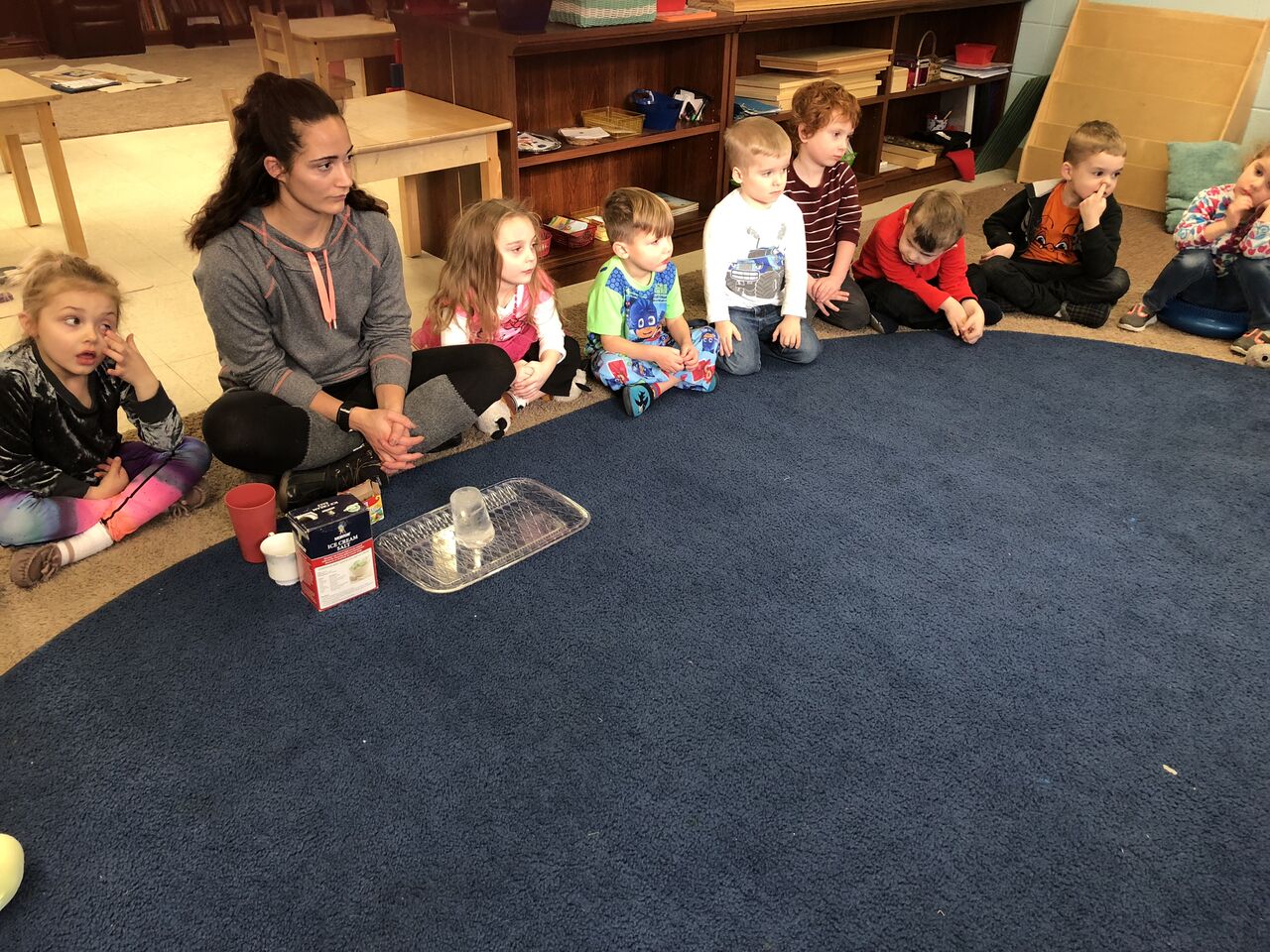
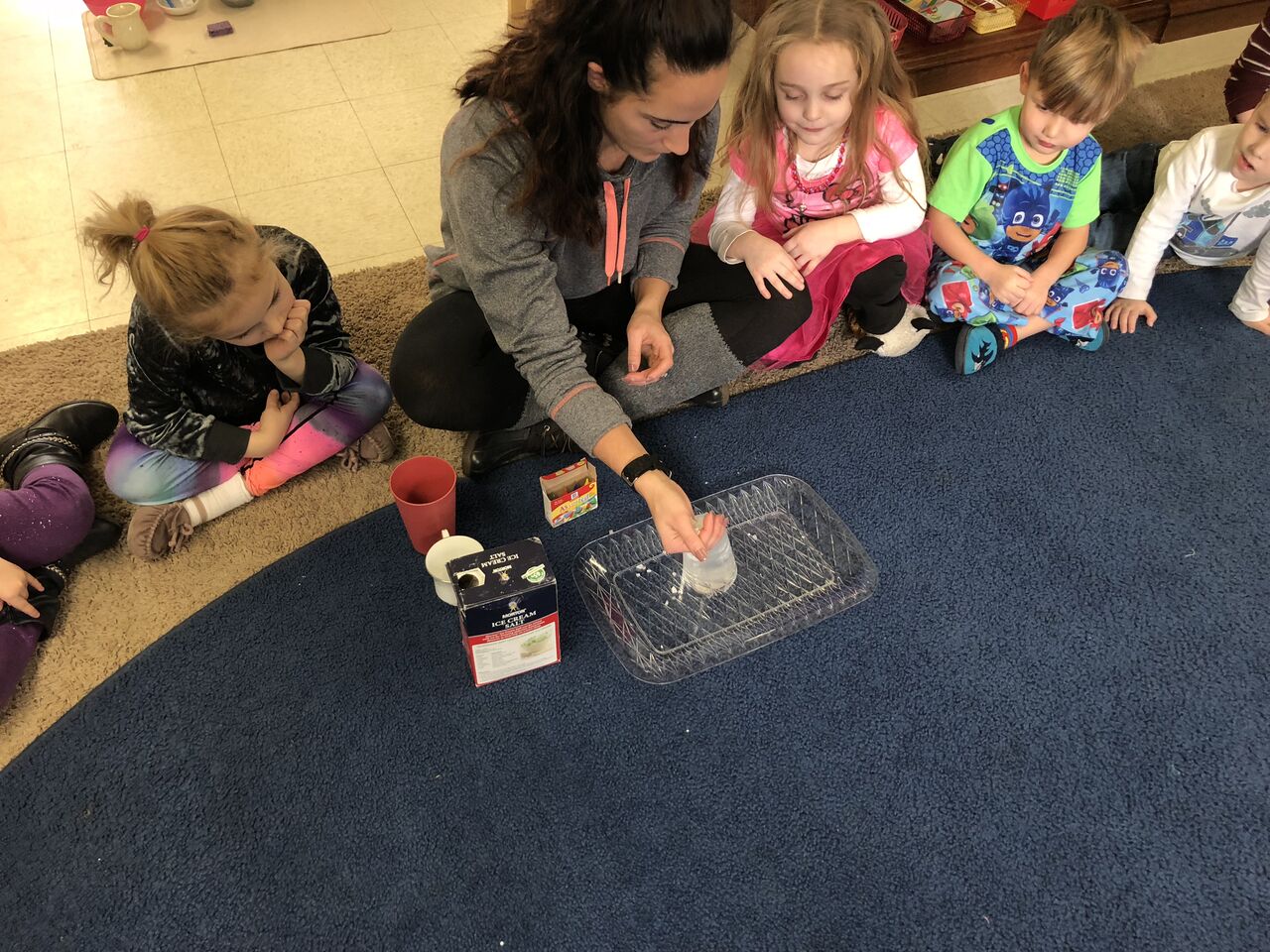
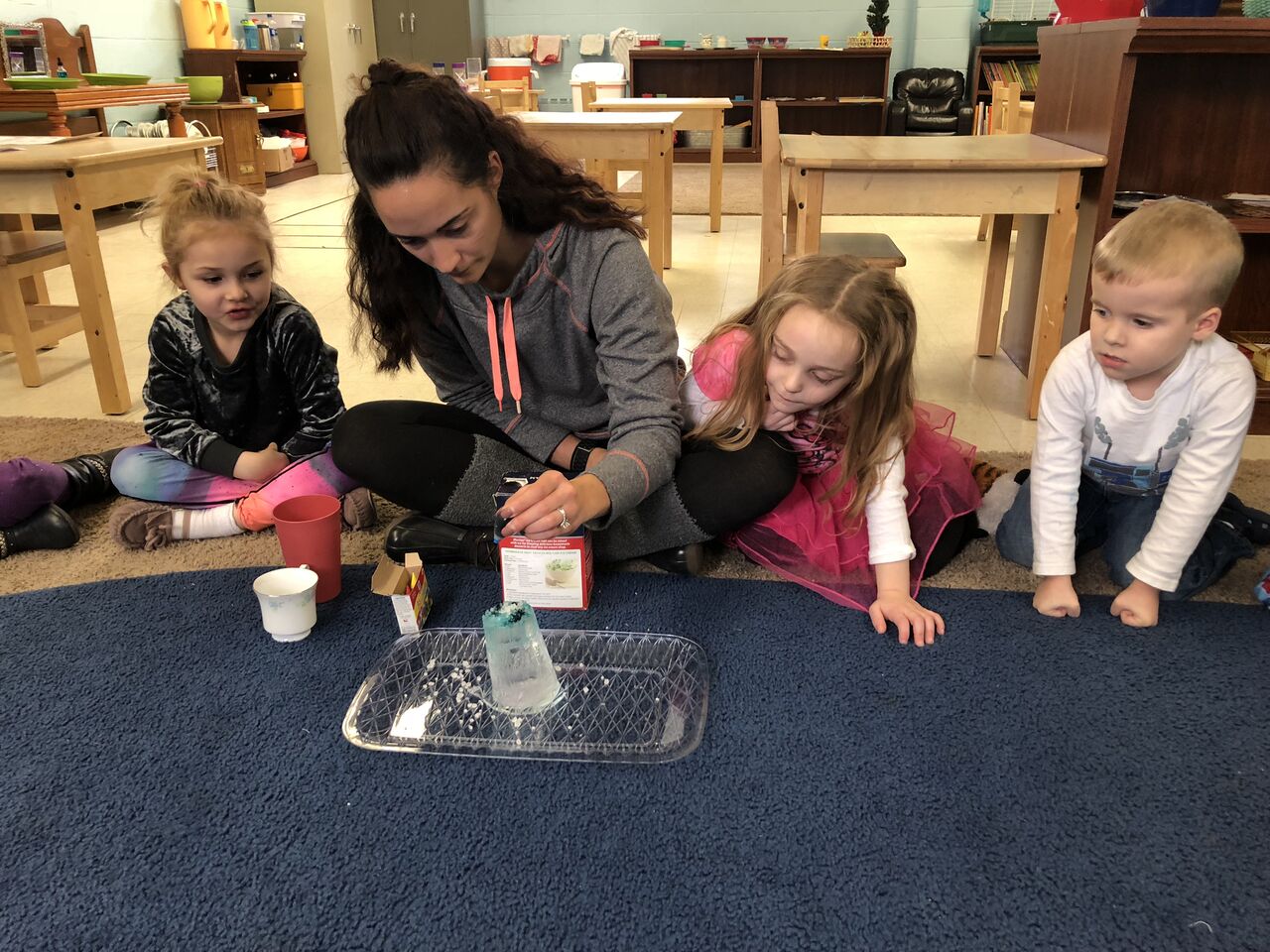
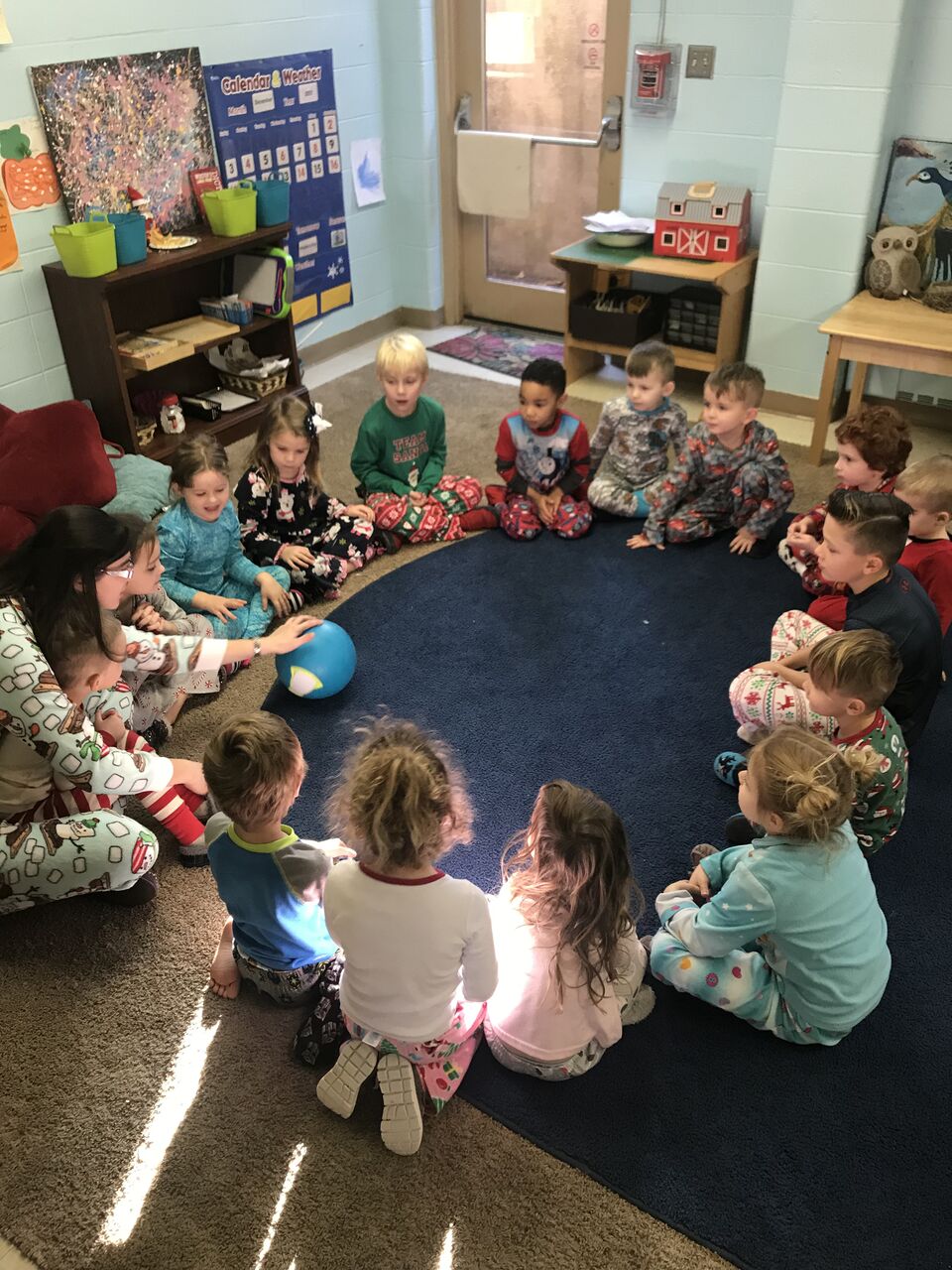
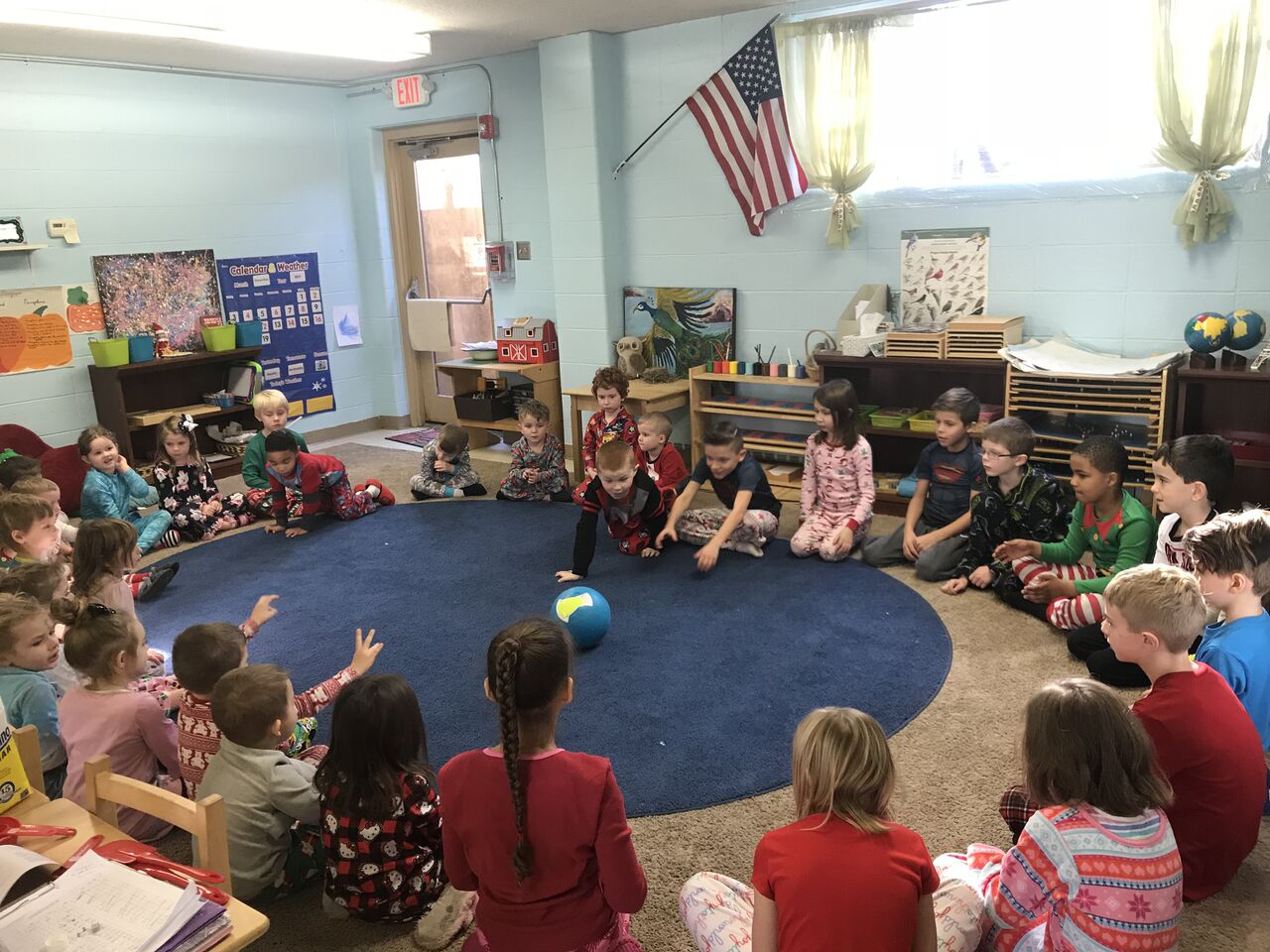
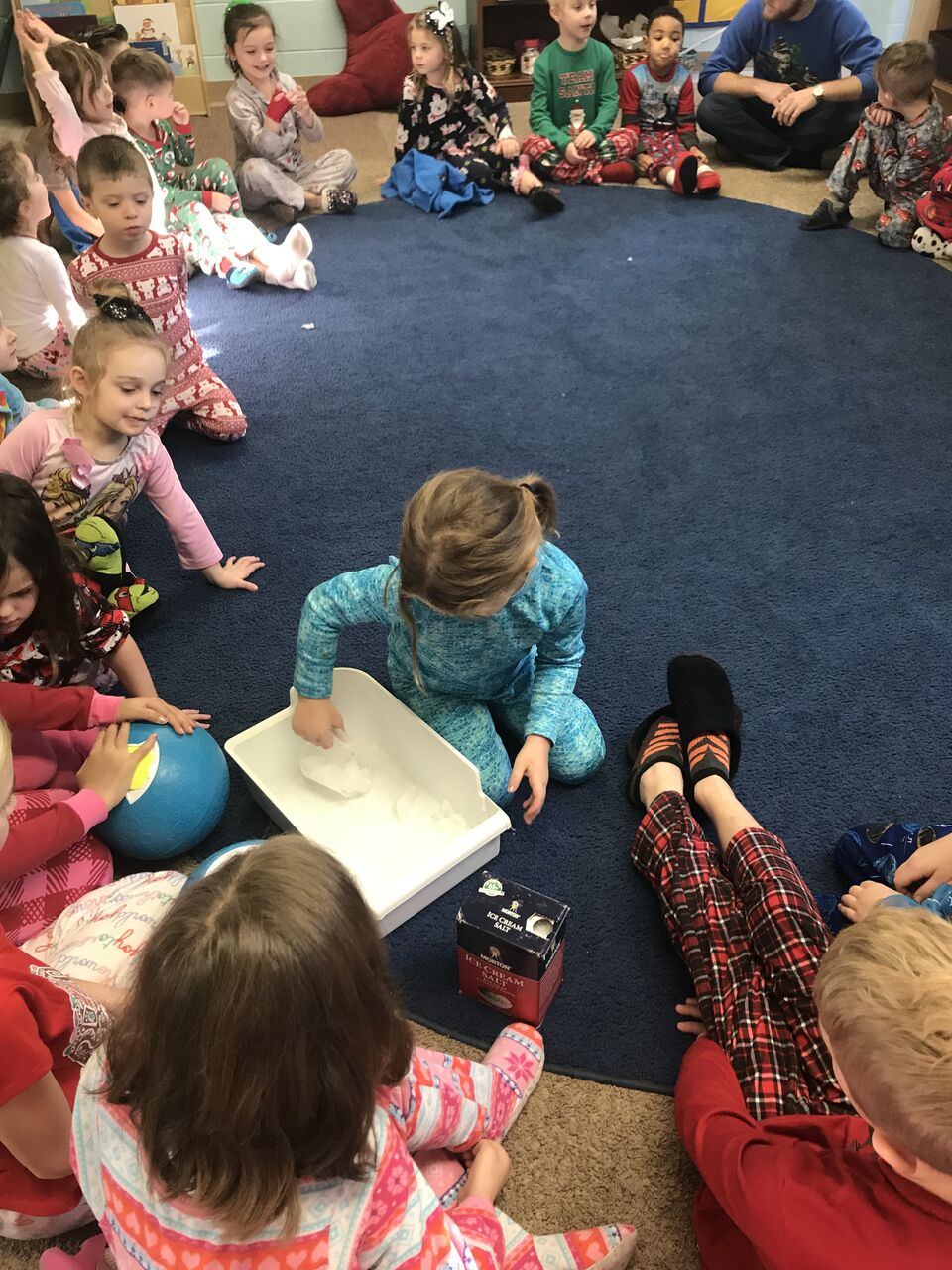
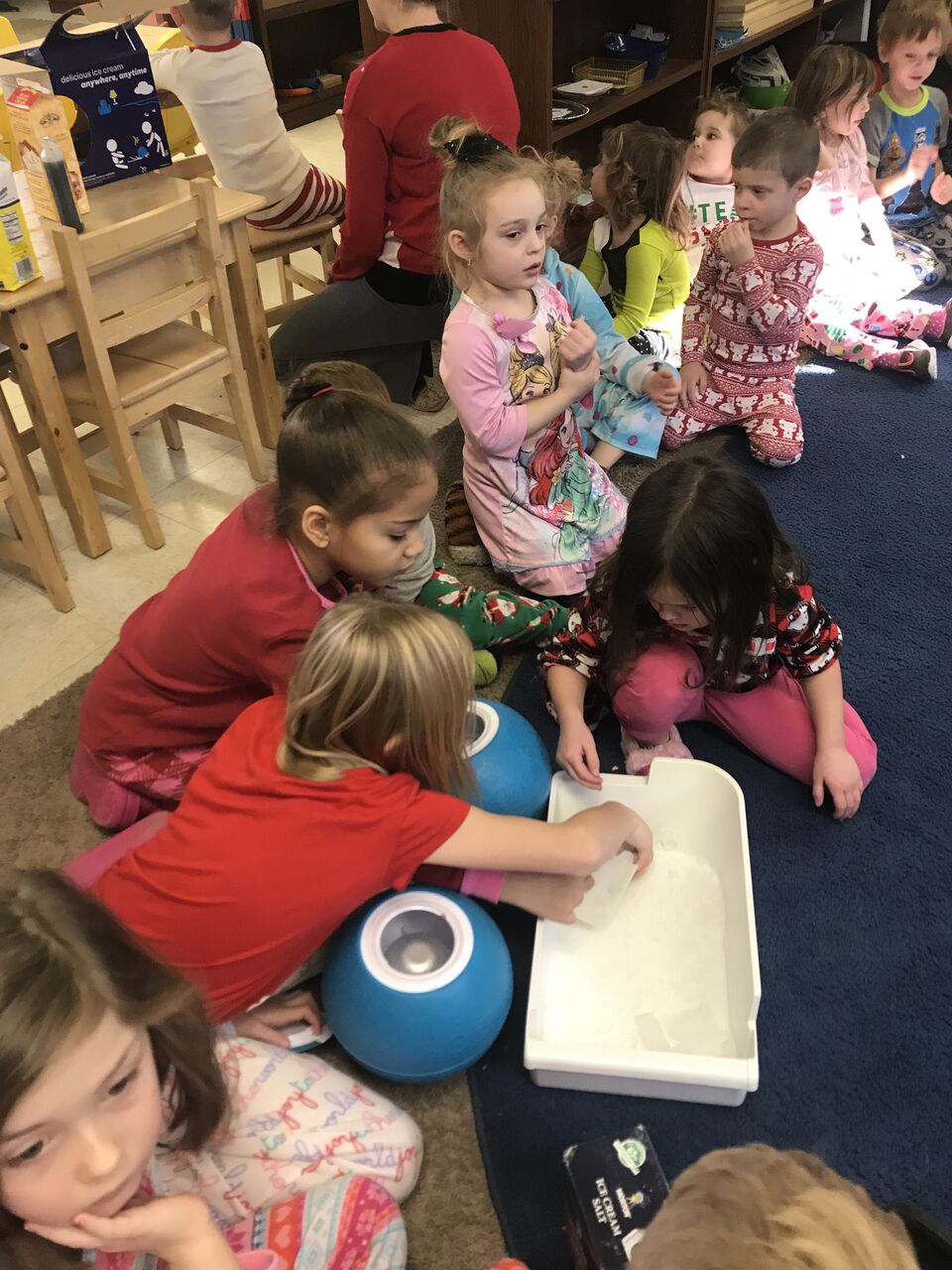
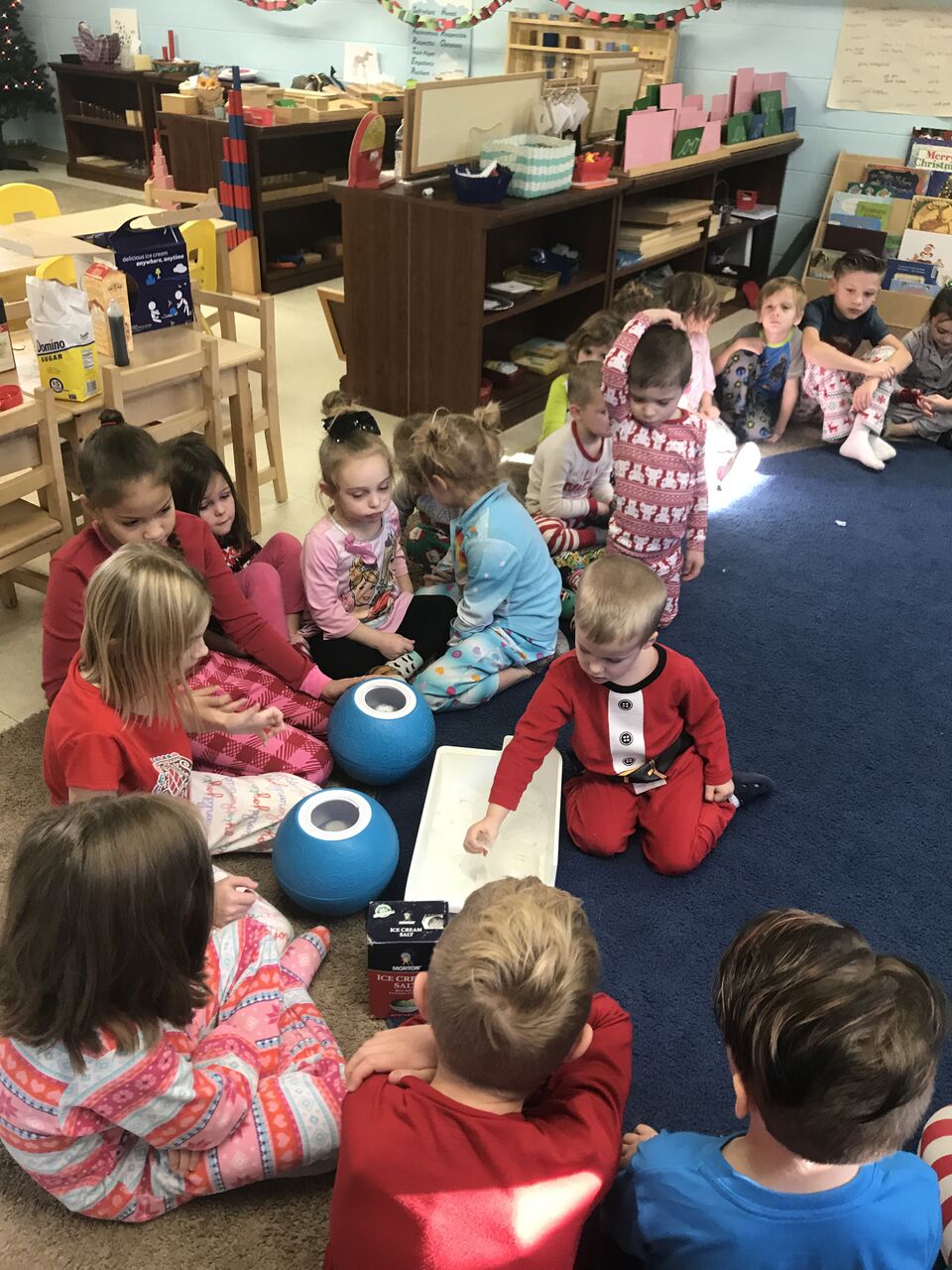
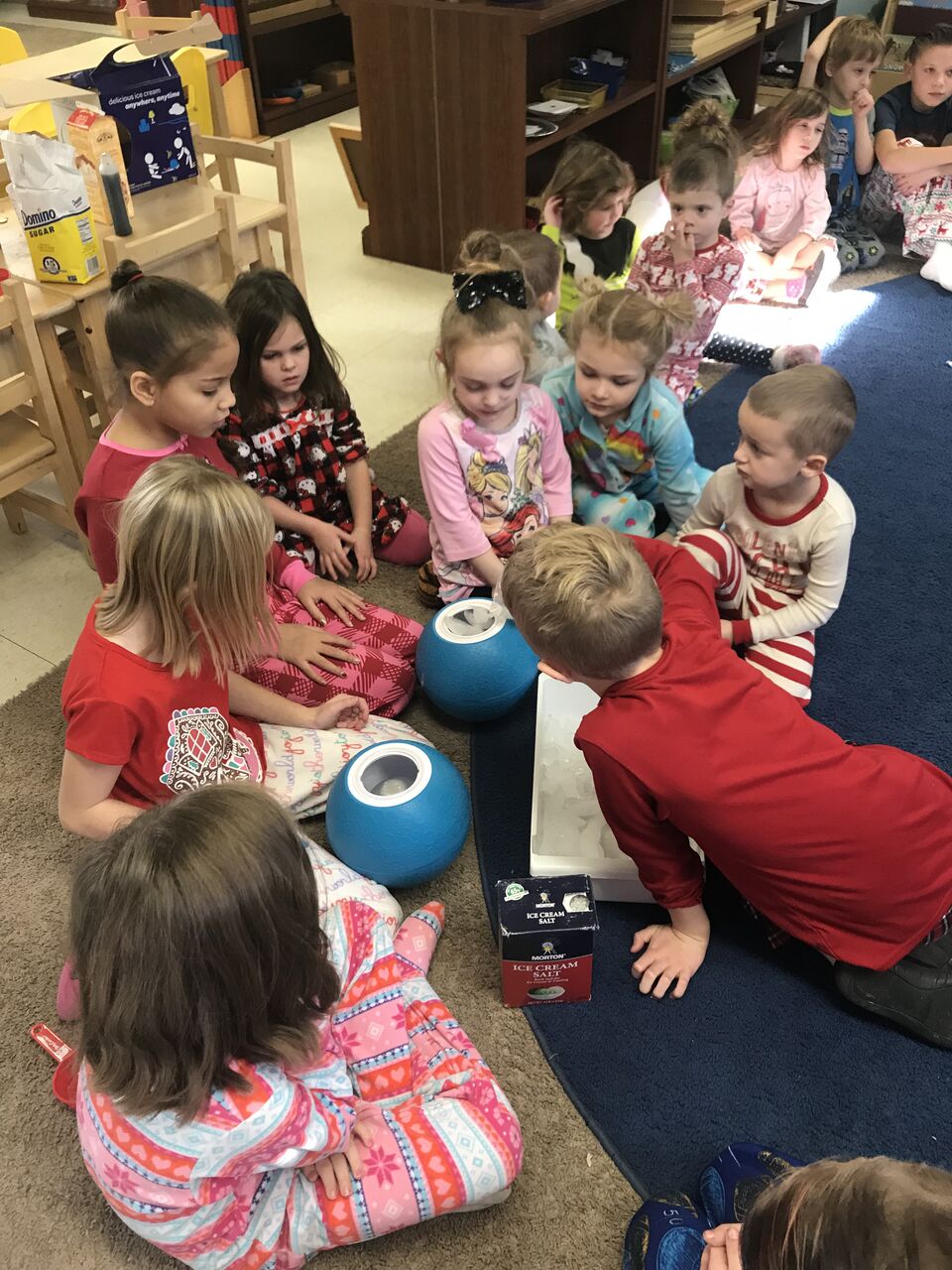
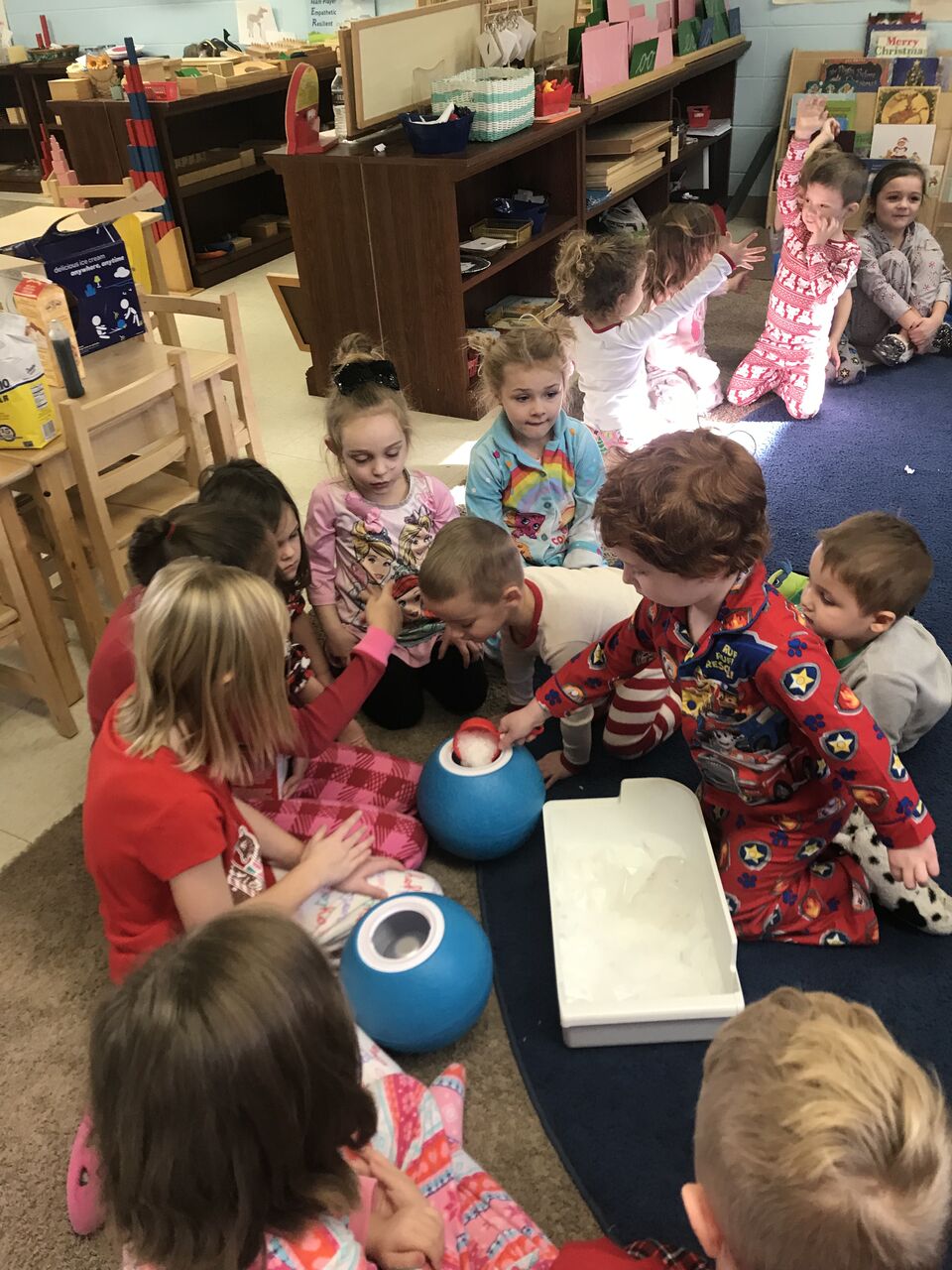
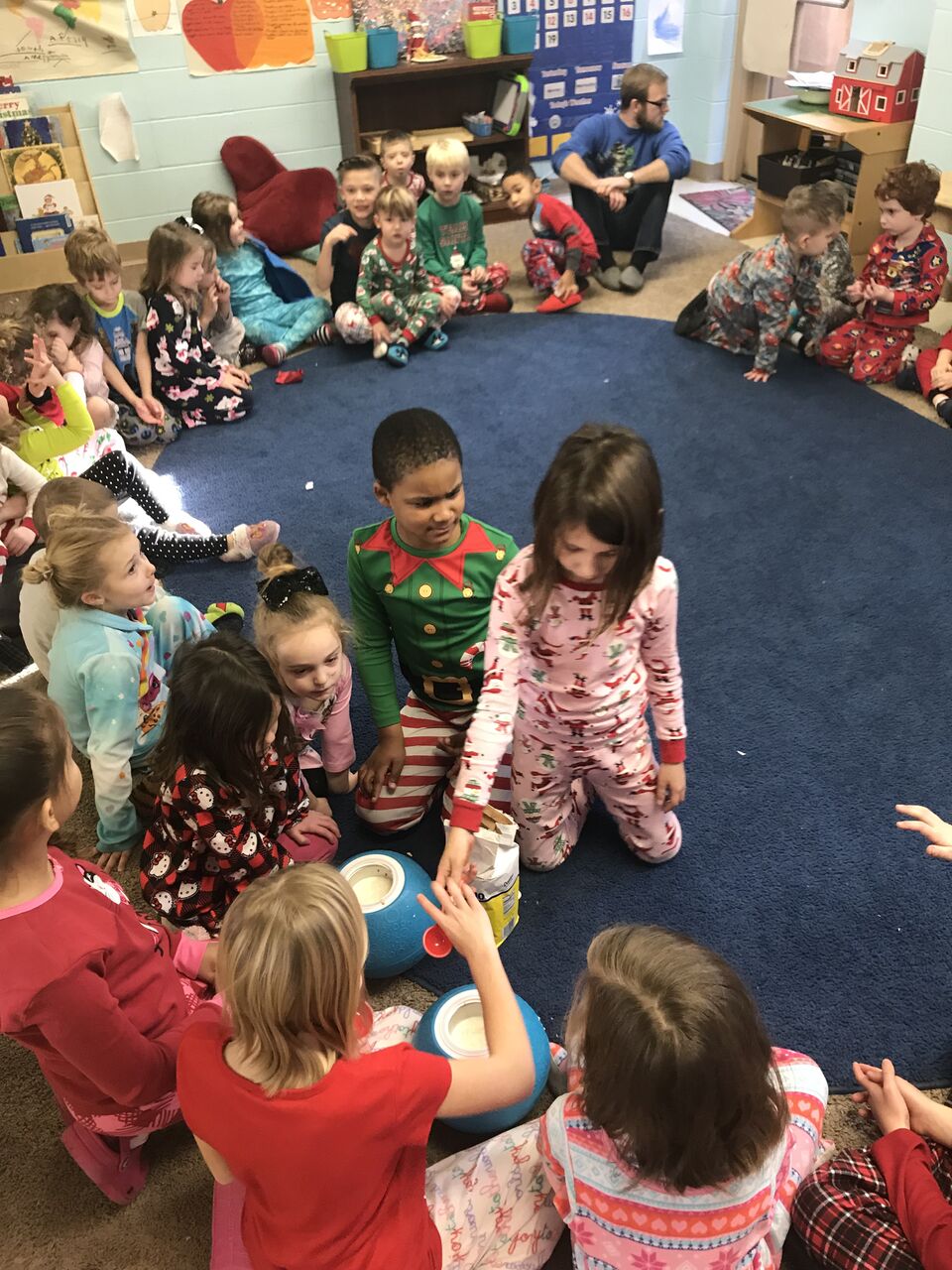
Melting Ice and Salt: We sprinkled a handful of salt over a block of ice, immediately the students started to notice the ice melting and rivets appear. Then, we added droplets of food coloring all over the top of the ice and salt. The food coloring started to highlight the patterns, tunnels and rivets the salt had created. The students learned that the salt lowered the freezing point of the water. Therefore, the ice started to melt, as the ice melted, energy was drawn from the water making it colder.
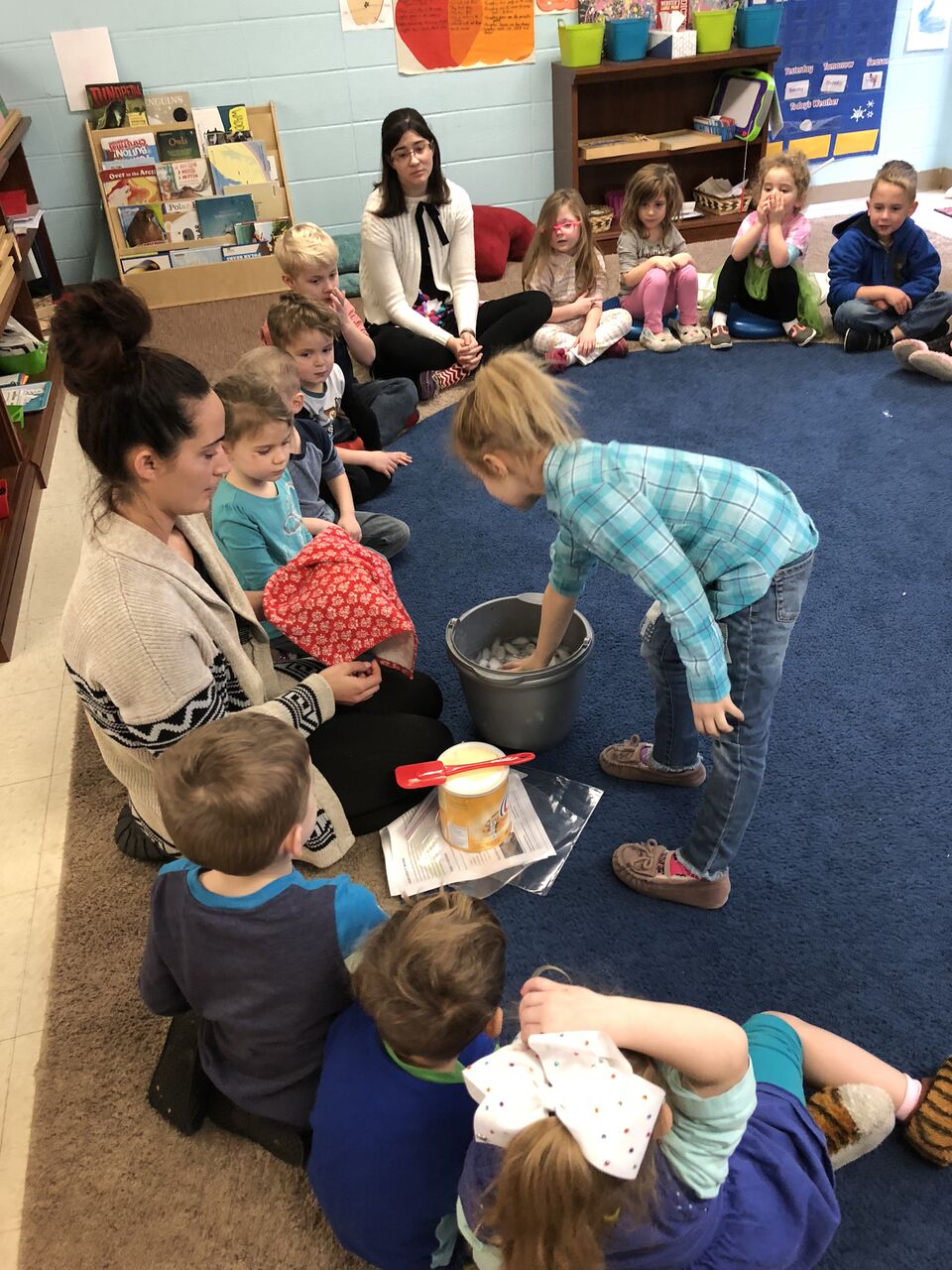
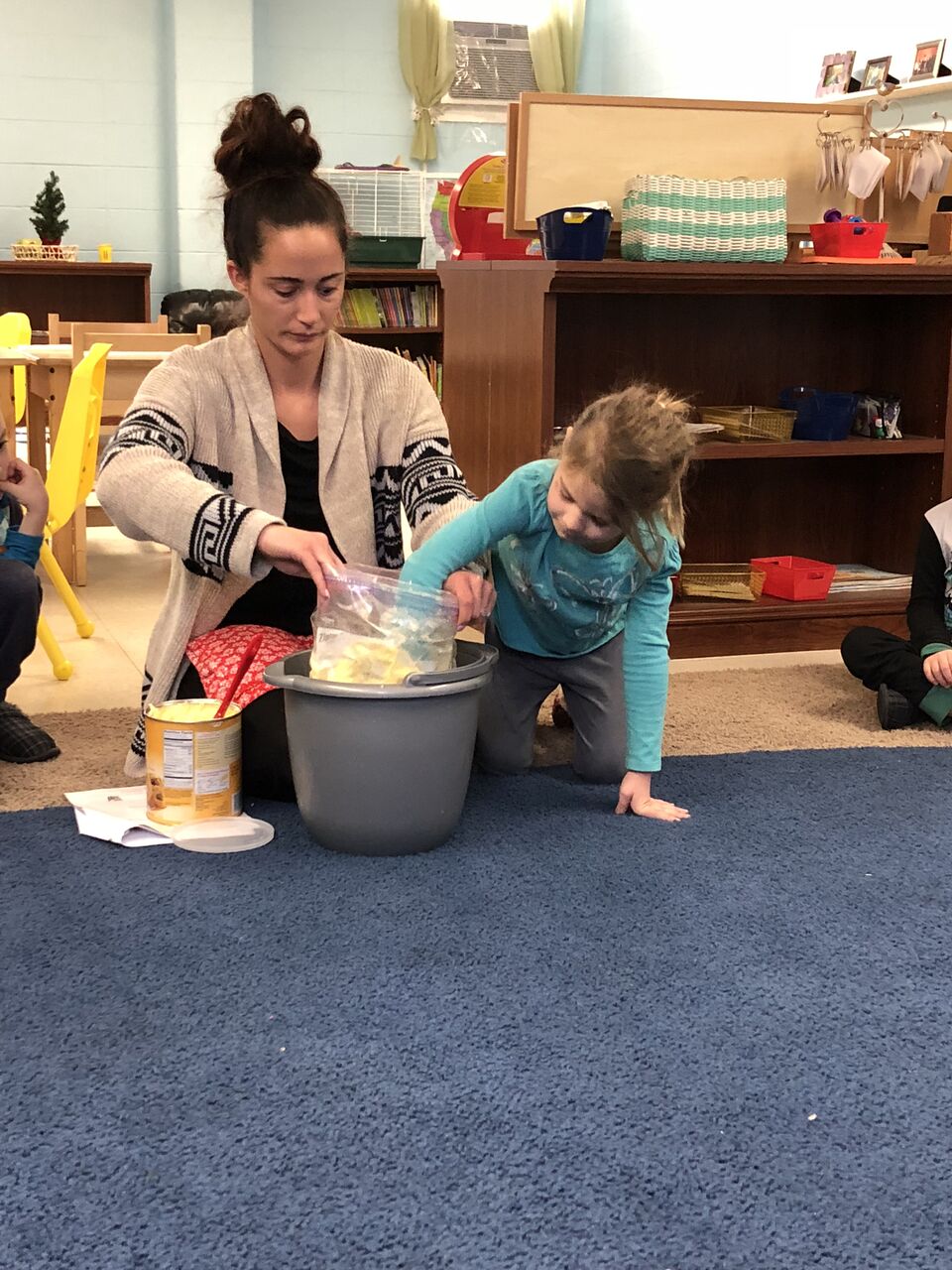
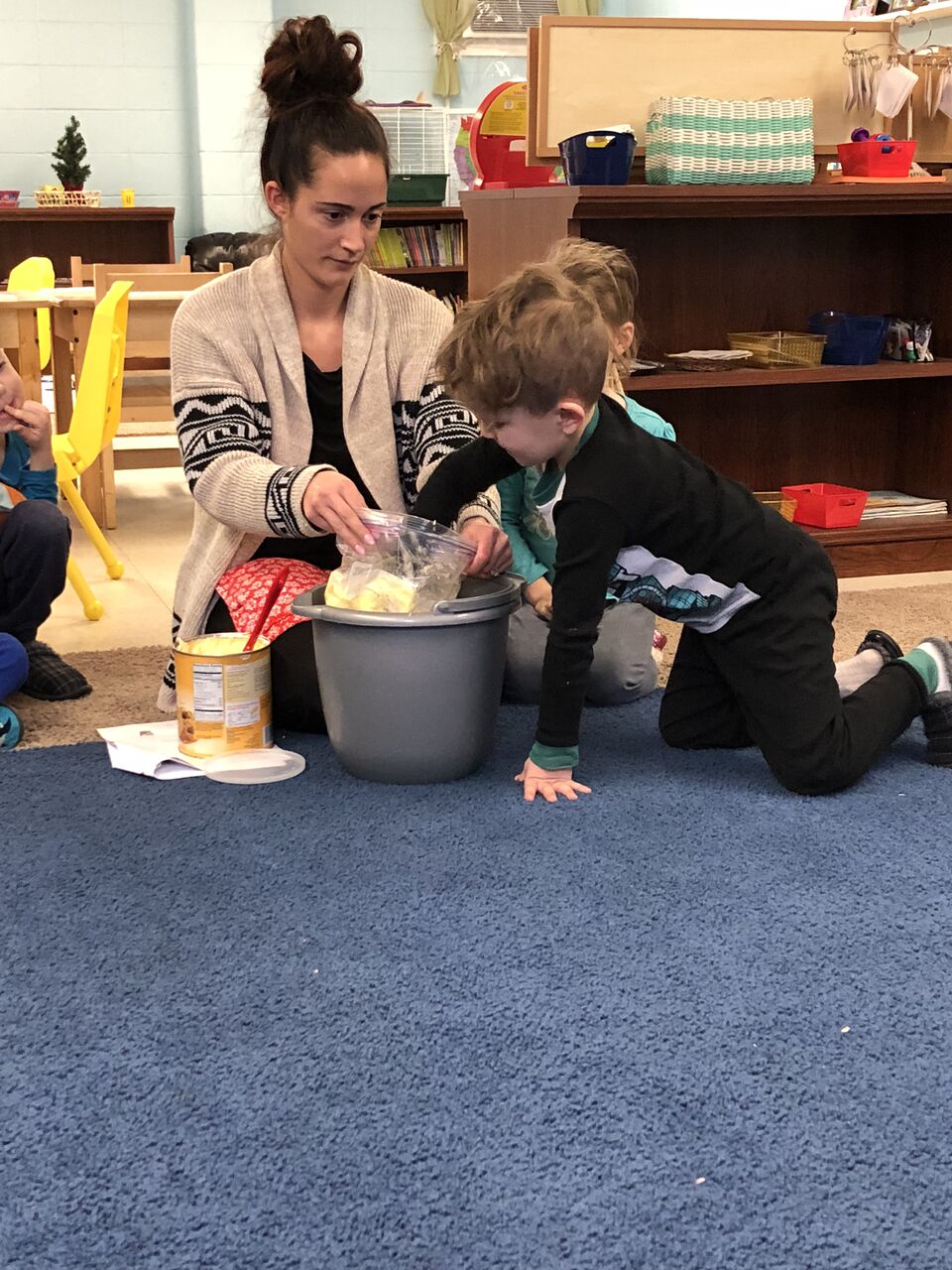
Blubber Glove: We made a blubber glove so we could get a better understanding of why polar animals can be exposed to the frigid Arctic and Antarctic waters. First, each child had the chance to put their hand in a bucket of ice water. Then, each child had the chance to put their hand in a bucket of ice water wearing the blubber glove (Crisco between two gallon sized Ziploc bags). We discovered that the blubber on the polar animals helps to insulate them, because blubber requires very little blood supply, allowing more blood to be circulated to skin surfaces that are more directly exposed to the cold temperatures.
The students discovered that animals that live in the Arctic (either full time or seasonally) are adapted to extreme conditions. Many animals like the arctic fox have a coat that thickens and changes color to white during the winter as camouflage in the snow (blending into the background).
They even learned that some animals hibernate during the cold season (skunks, chipmunks, and some bears); they go into a very deep, sleep-like state in which their heartbeat slows down. These animals often hibernate in an underground burrow or pit.
They also discovered that many animals like the arctic tern spend the summer months in the Arctic, but leave as the weather turns frigid and food becomes scarce. These animals return again the next summer, repeating this pattern year after year (migrating).
Work Time:
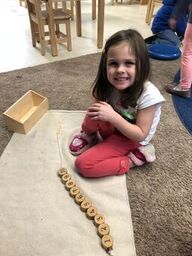
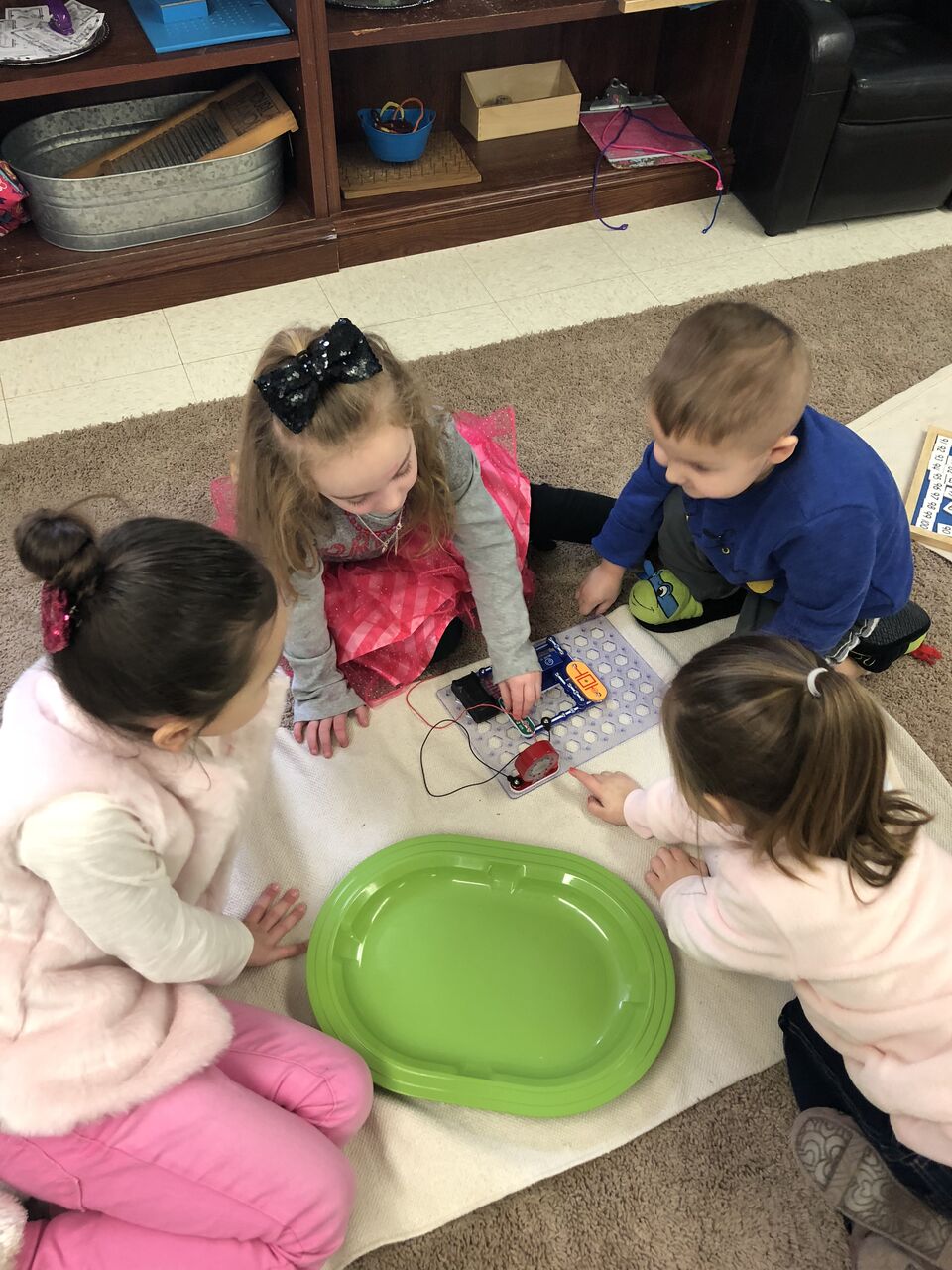
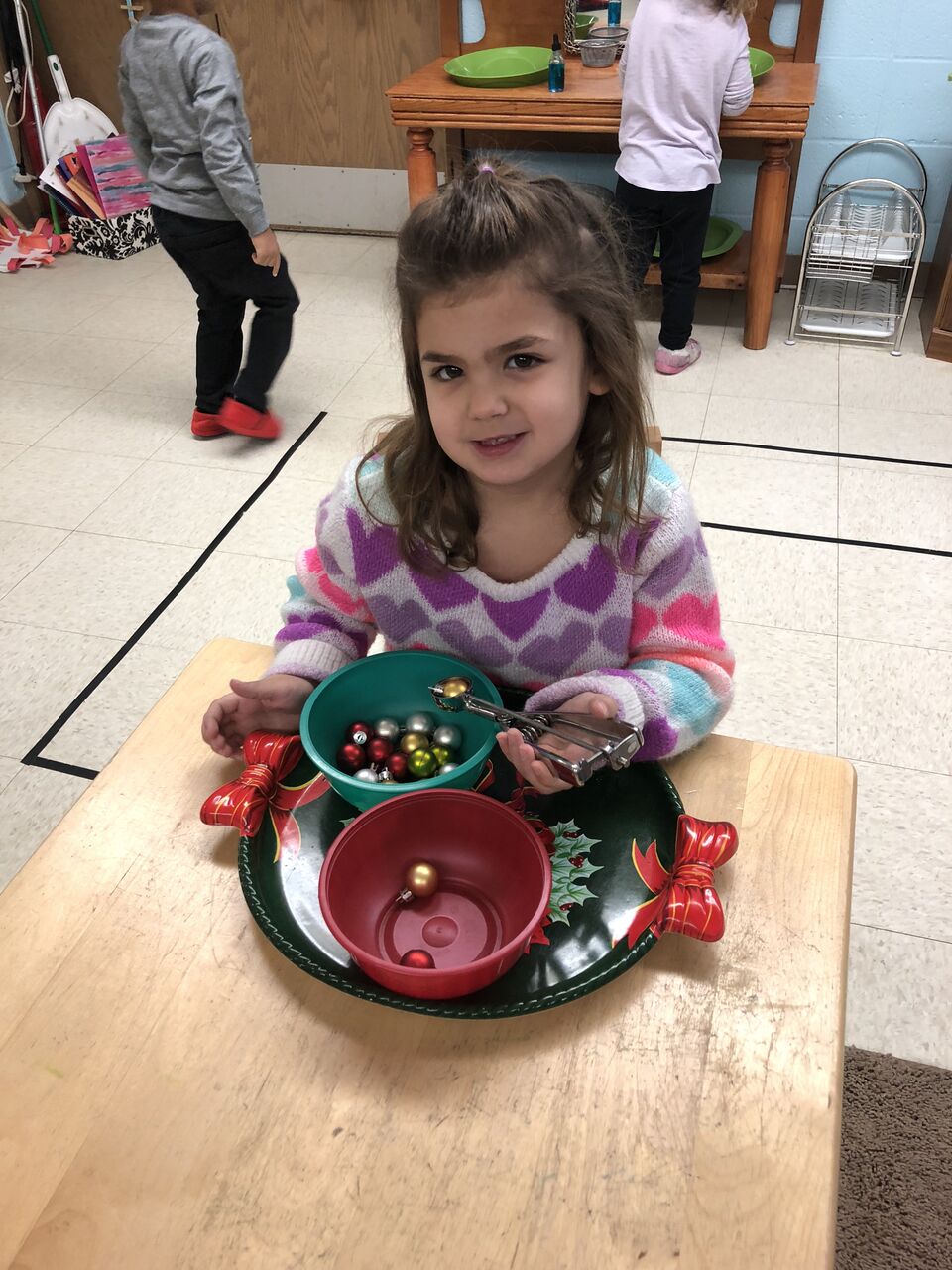
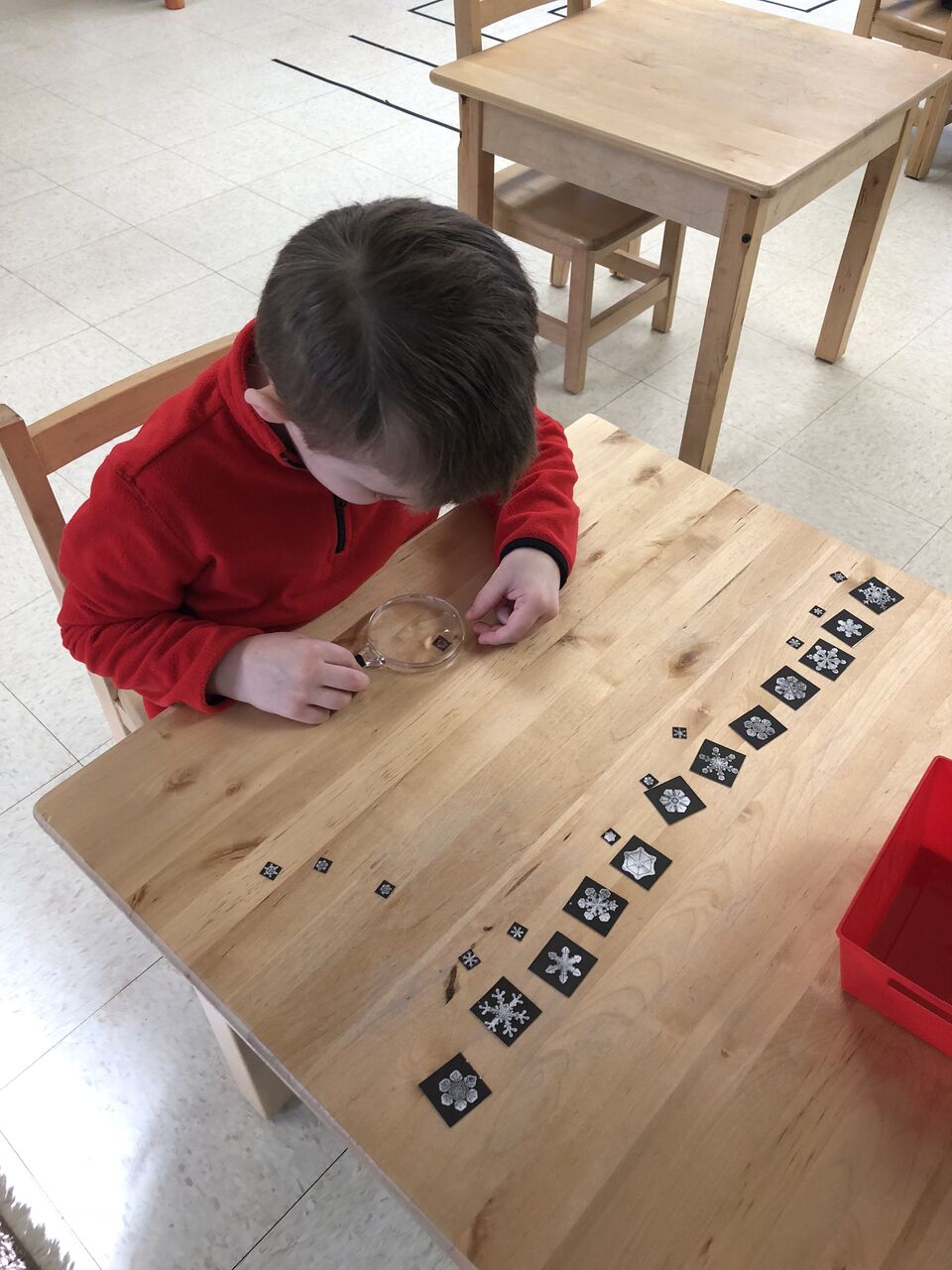
Log Numbers: This child is memorizing the sequence of numbers from 1 to 10. While also refining her fine motor skills by stringing the numbers onto the rope.Circuit Board: These children are creating a circuit (a pathway made of wires) that electrons can flow through. The batteries are giving the power source the electrons needed to move. When the electrons get to the music player it gives it the power needed to make it work.Continent Animals: These children are becoming familiar with and learning to identify different animals from around the world from each continent.Spooning: This child is further developing her focus, concentration, visual and fine motor skills by spooning Christmas ornaments from one bowl to an other.Big/Small Snowflake Match: This child is developing his understanding of big and small by matching the same snowflakes of different sizes together. Understanding concepts of big and small are important for math readiness. A main concept of mathematics is understanding degrees of big and small.
Reminders:
1/15/18 | Martin Luther King Jr. Day | NO SCHOOL
1/30/18 | Bring Your Parent to Work-Time | http://www.signupgenius.com/go/4090b48a8a92da6f94-bring
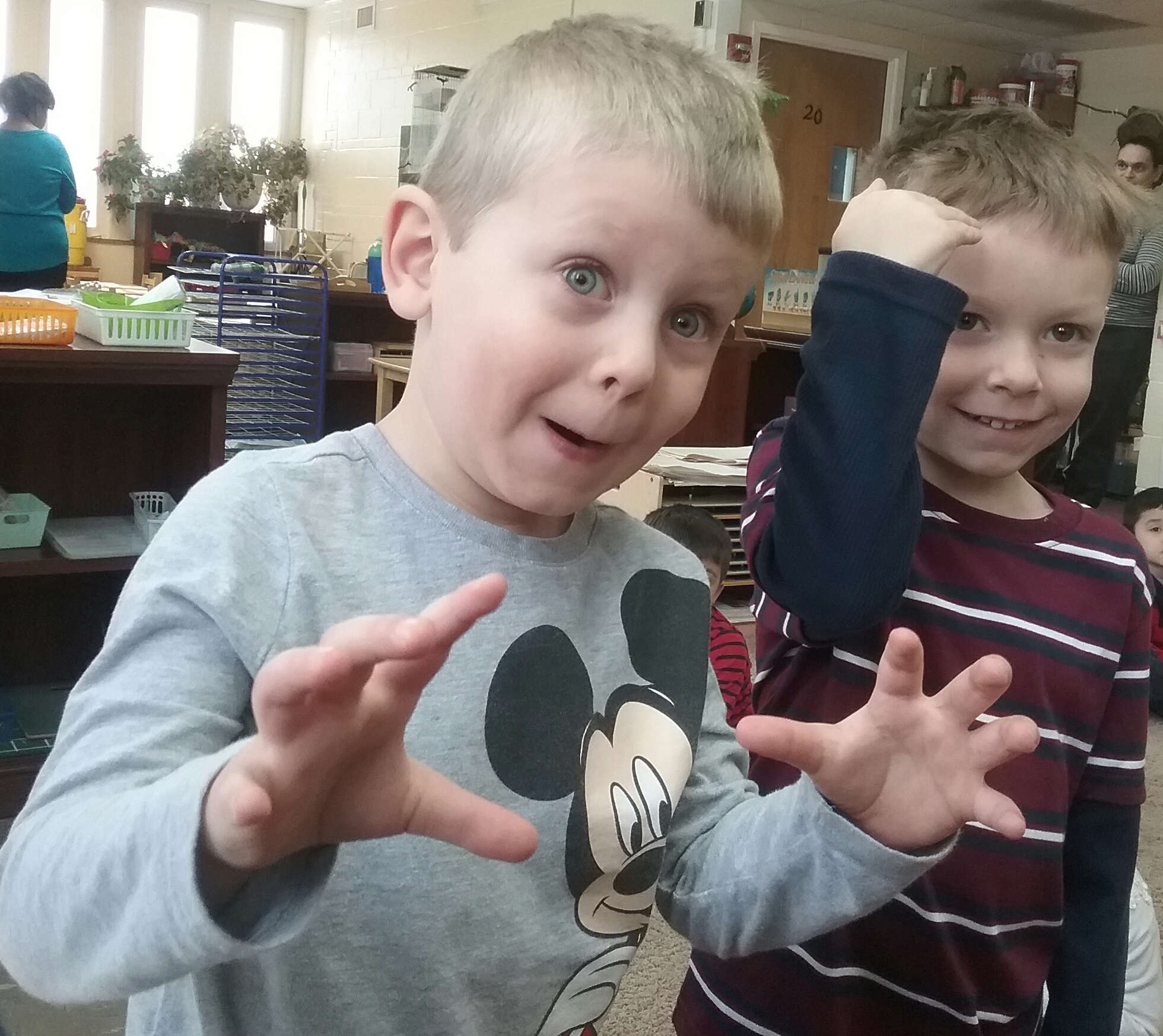
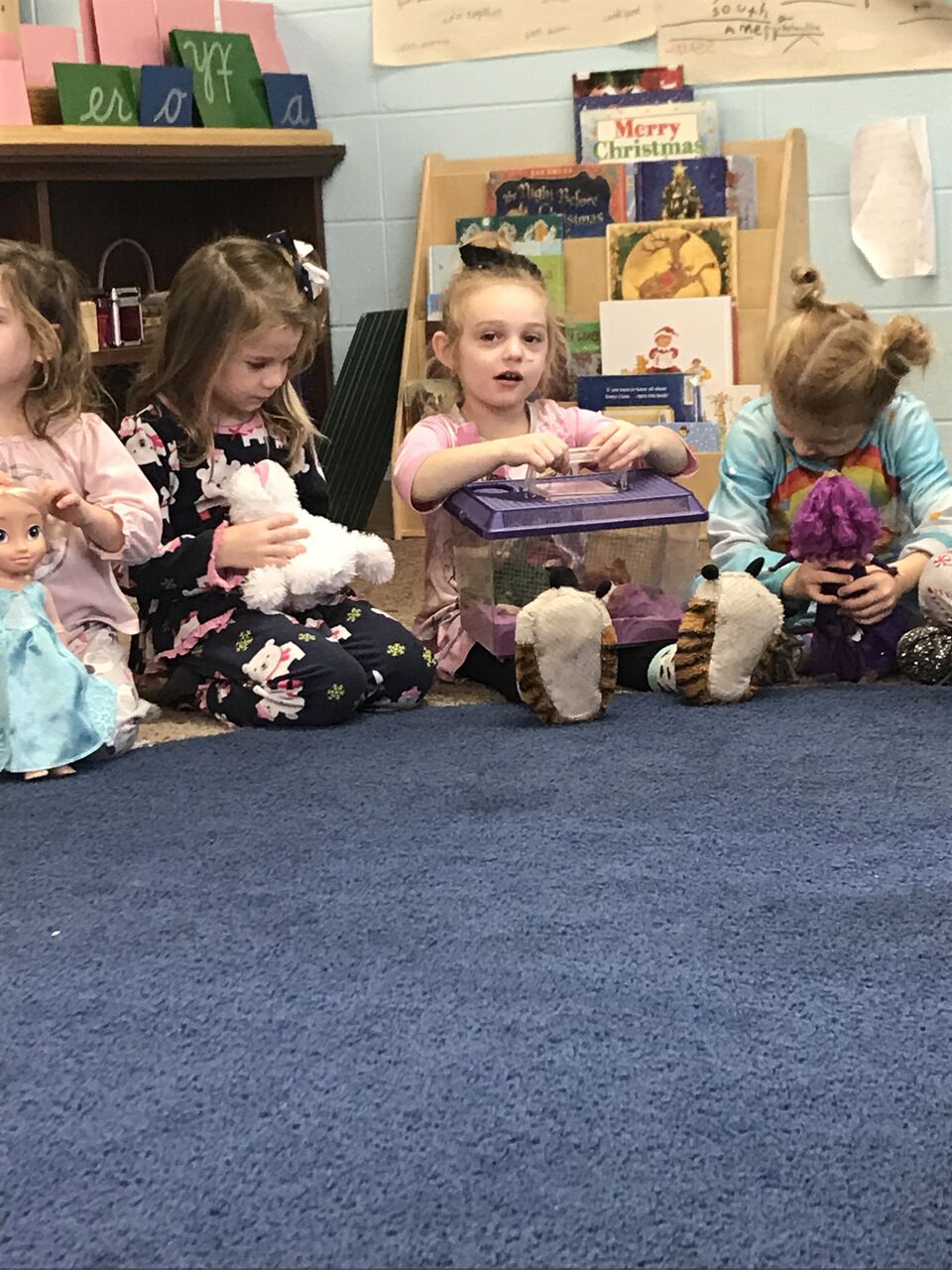
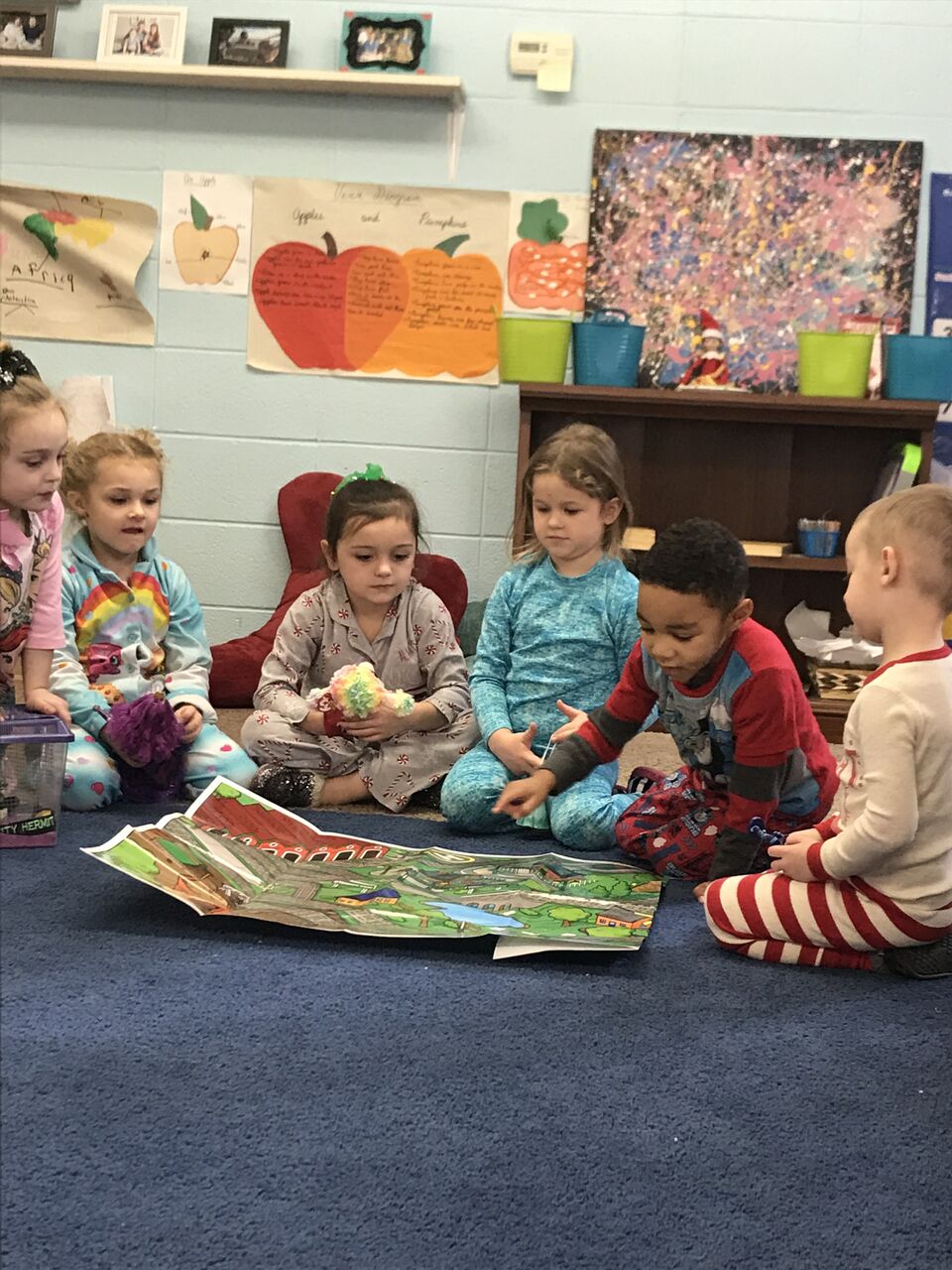
Girls Just Want To Have Fun– and so do boys… Sometimes we just get goofy in the classroom.
Cultural Subjects: Your children can count to ten in 15 different languages (English, Latin, Sign Language, Spanish, French, German, Greek, Japanese, Arabic with the Lebanese dialect, Italian, Russian, Romanian, Swedish, Tagolog, Hebrew, and Korean).
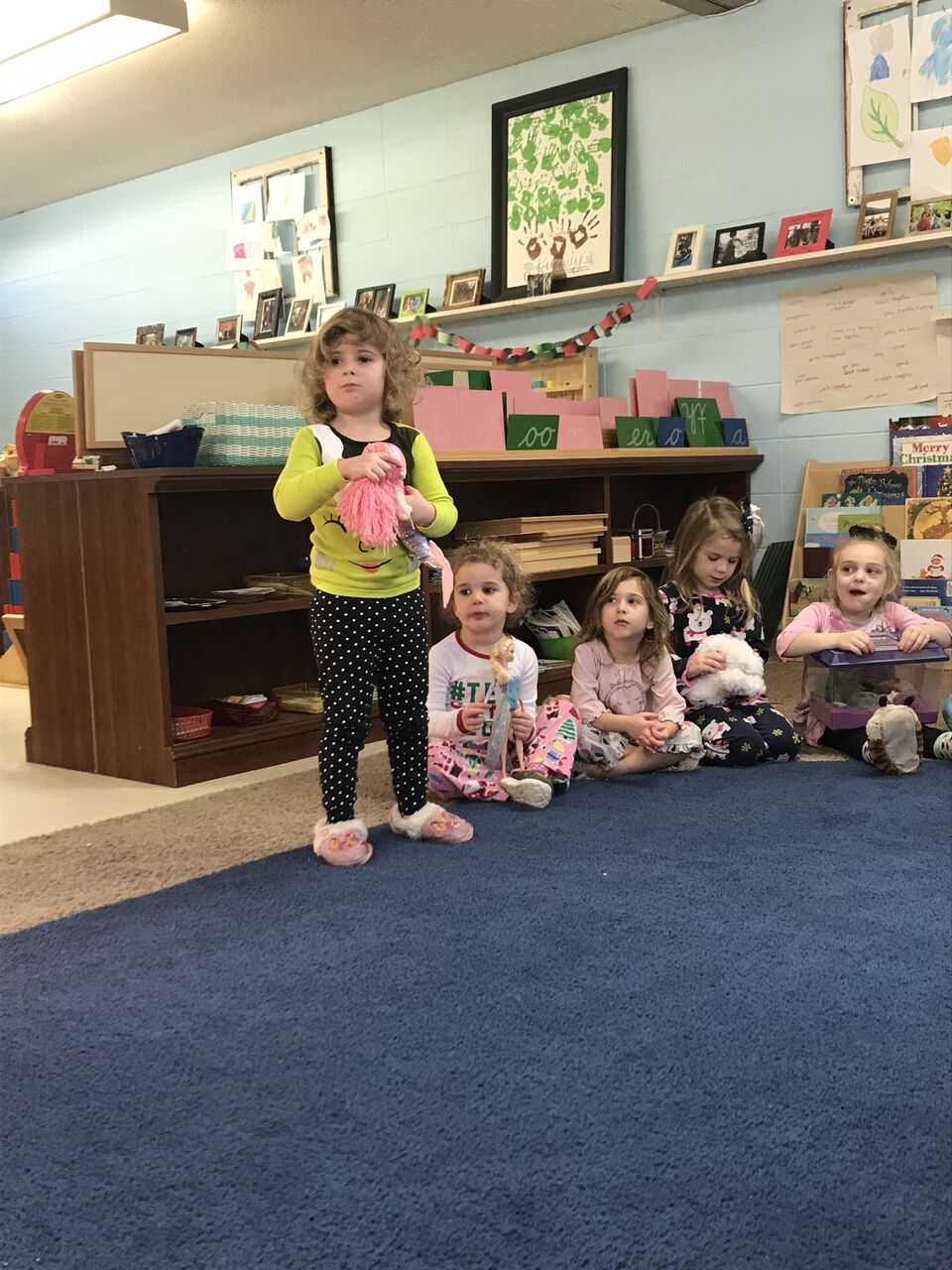
Happy Birthday: A Montessori Classroom has students ranging from 2.5 to 6 years of age. Here are the newest 5 year old students.
Peeking Into The Classroom:
Doing Chores in the Montessori Classroom is a staple activity. Here you can see students emptying the trash, sweeping the floor, and wiping the table tops. Everyday a child is given a different task to do. Doing chores helps the child enhance focus and confidence, gives them a sense of accomplishment, gives them self-reliance and purpose, increases empathy by learning to be responsive to others’ needs, instills a work ethic, and improves a sense of belonging.
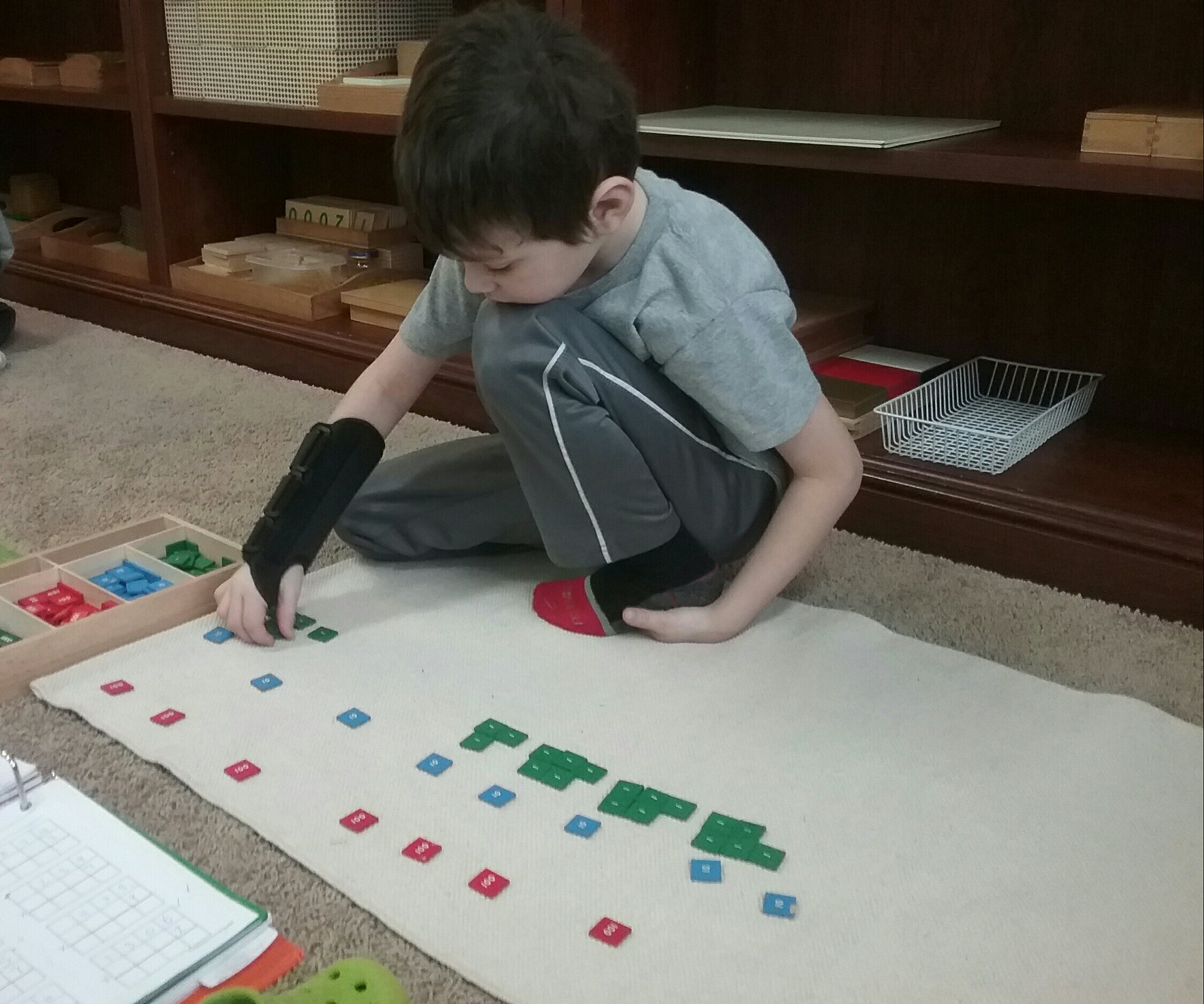
This student is working on equations with the Stamp Game. The Stamp Game is a tool for learning and reinforcing knowledge of the four maths operations: addition, subtraction, multiplication and division. It is just more abstract, yet concretely demonstrates the maths process to students that are ready for this material. This student is working on equations of multiplication, with multiple carry overs in all columns. For example 654 x 6.
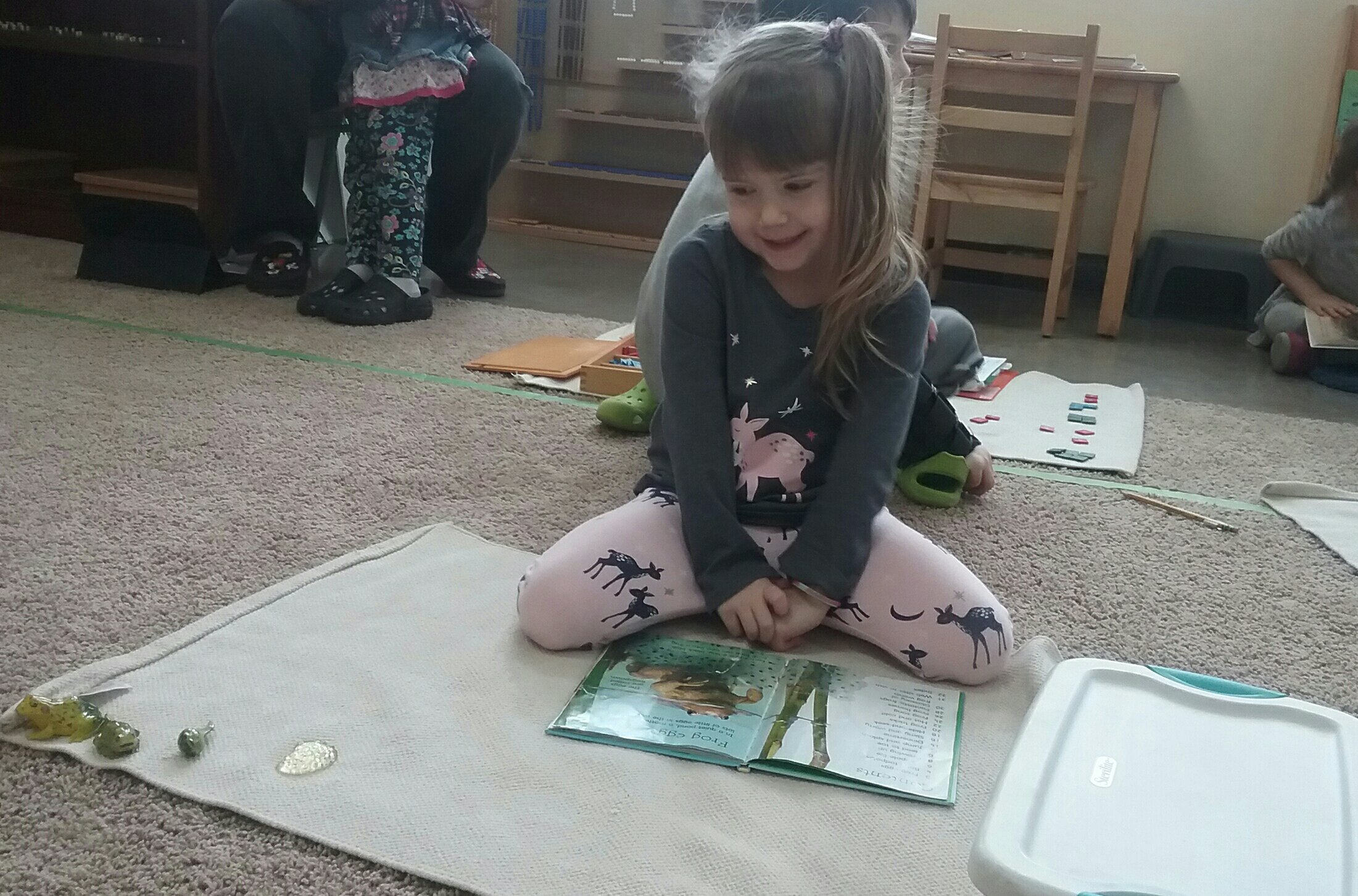
This student is working on one of my Science Boxes (frogs and toads). She is reading a book on frogs and toads and has four pieces Jelly eggs, tadpole, froglet, and frog. She puts them in order to reinforce the life cycle of a frog/toad.
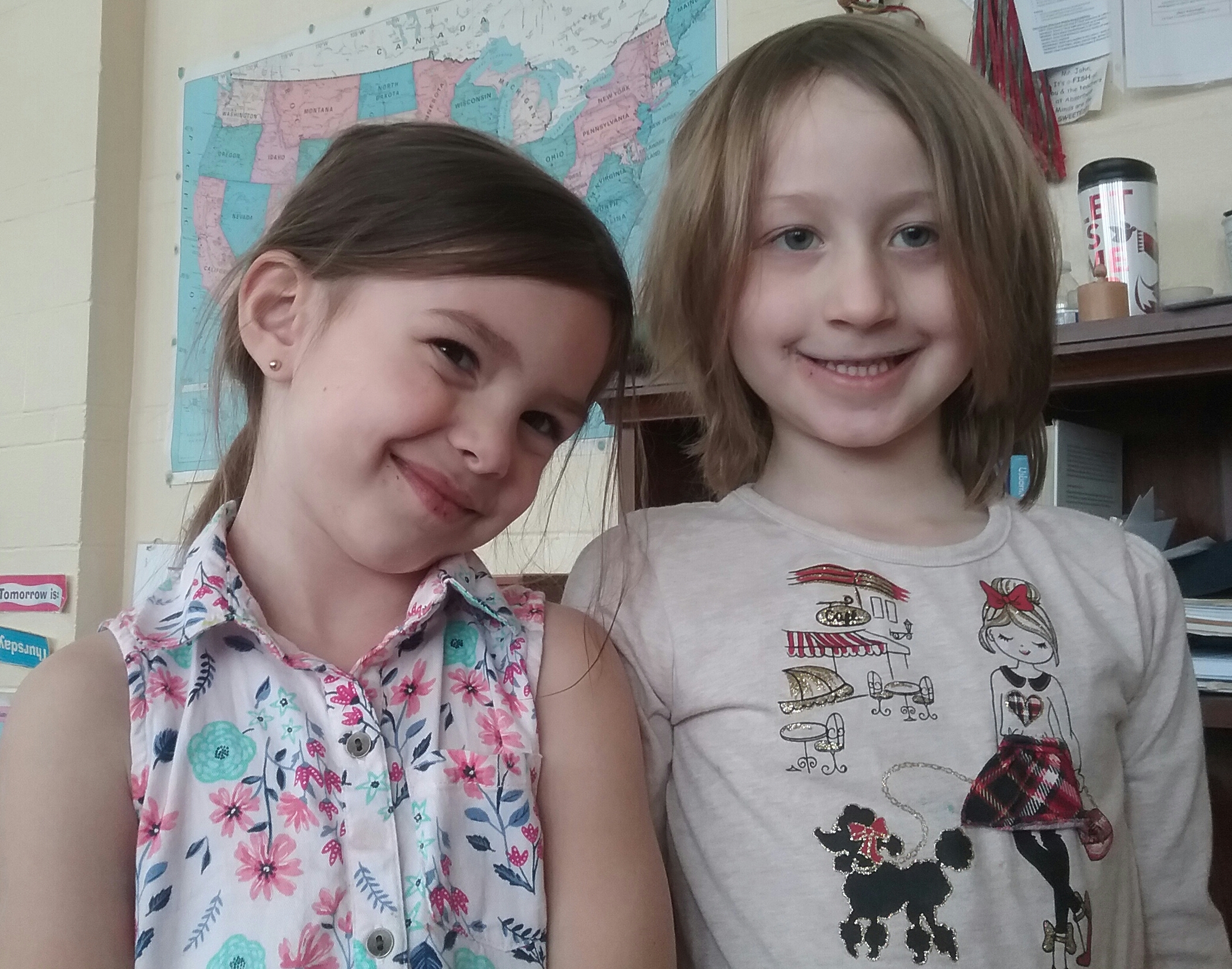
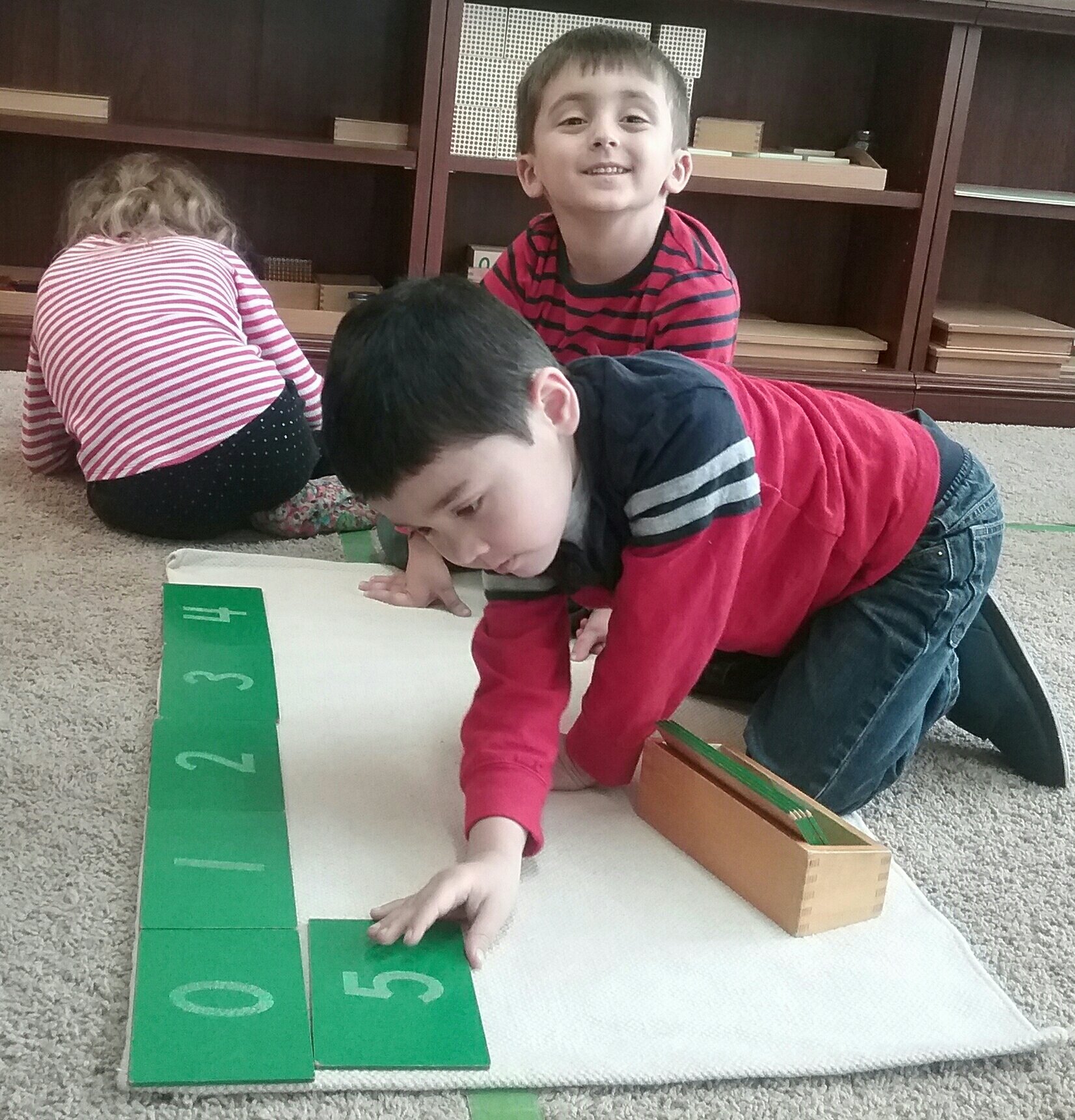
Here are two friends working on the sandpaper numbers. The aims of sandpaper numbers are to give the child a sensorial impression of the form of the symbol. To show the succession of numbers. To show base 10 Recognition of numerals 0-9 Preparation for writing numbers.
Upcoming Stuff:
Line Time Lesson: The 5 Senses
Letter Of The Week: P p
Rhyming Word Of The Week: bun
Reminders: Family Trees
Recess Attire
Chinese New Year