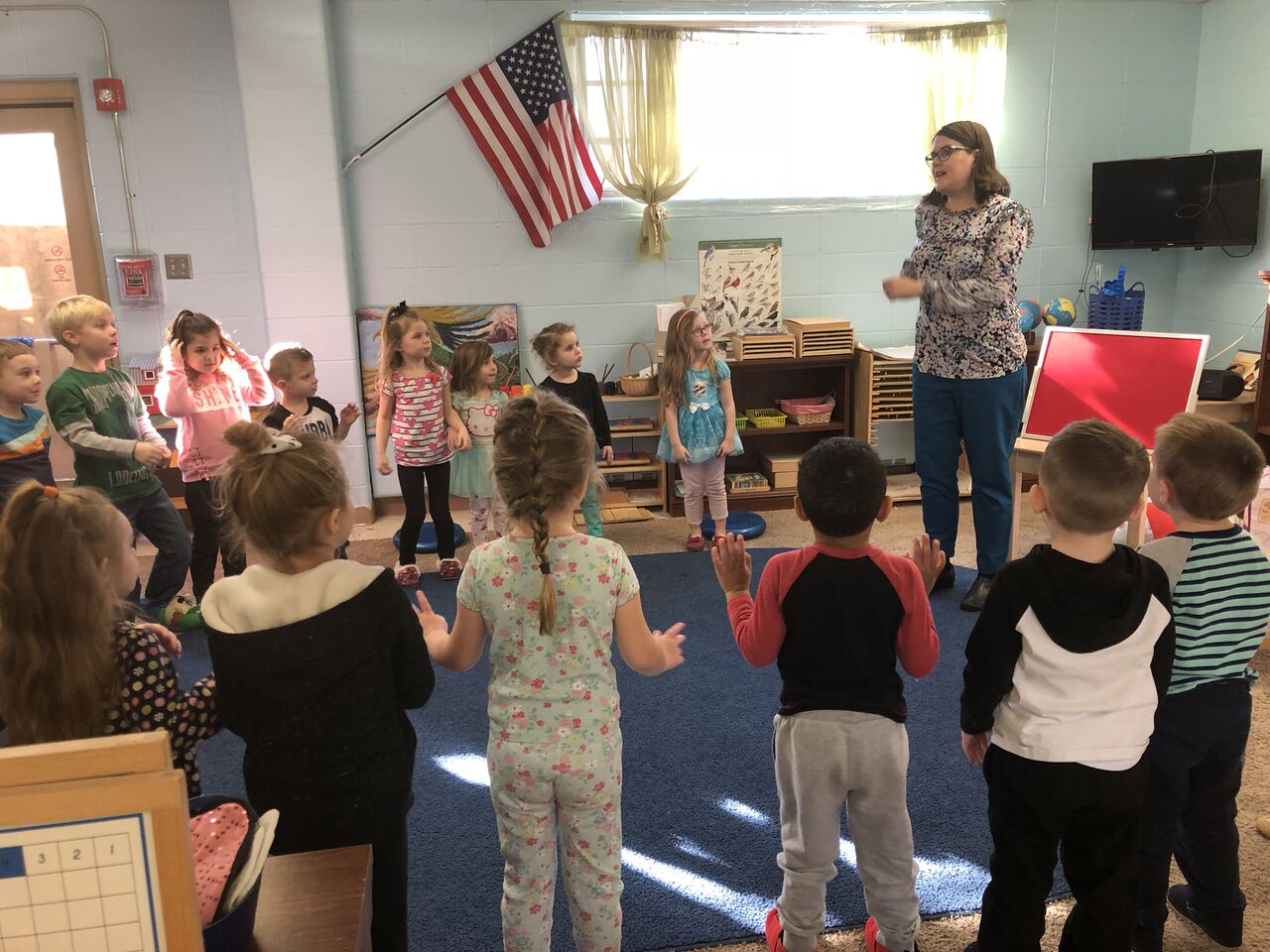
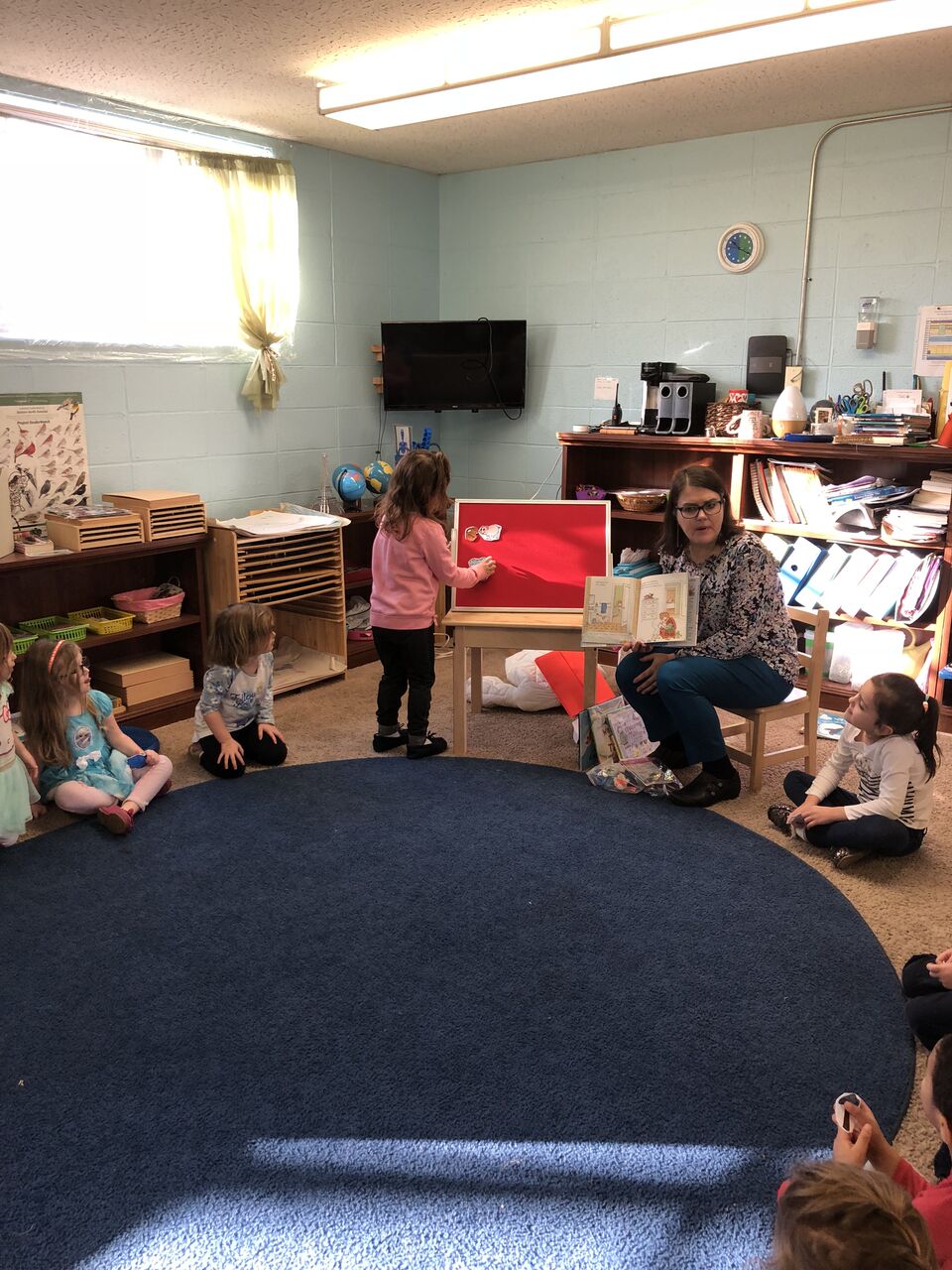
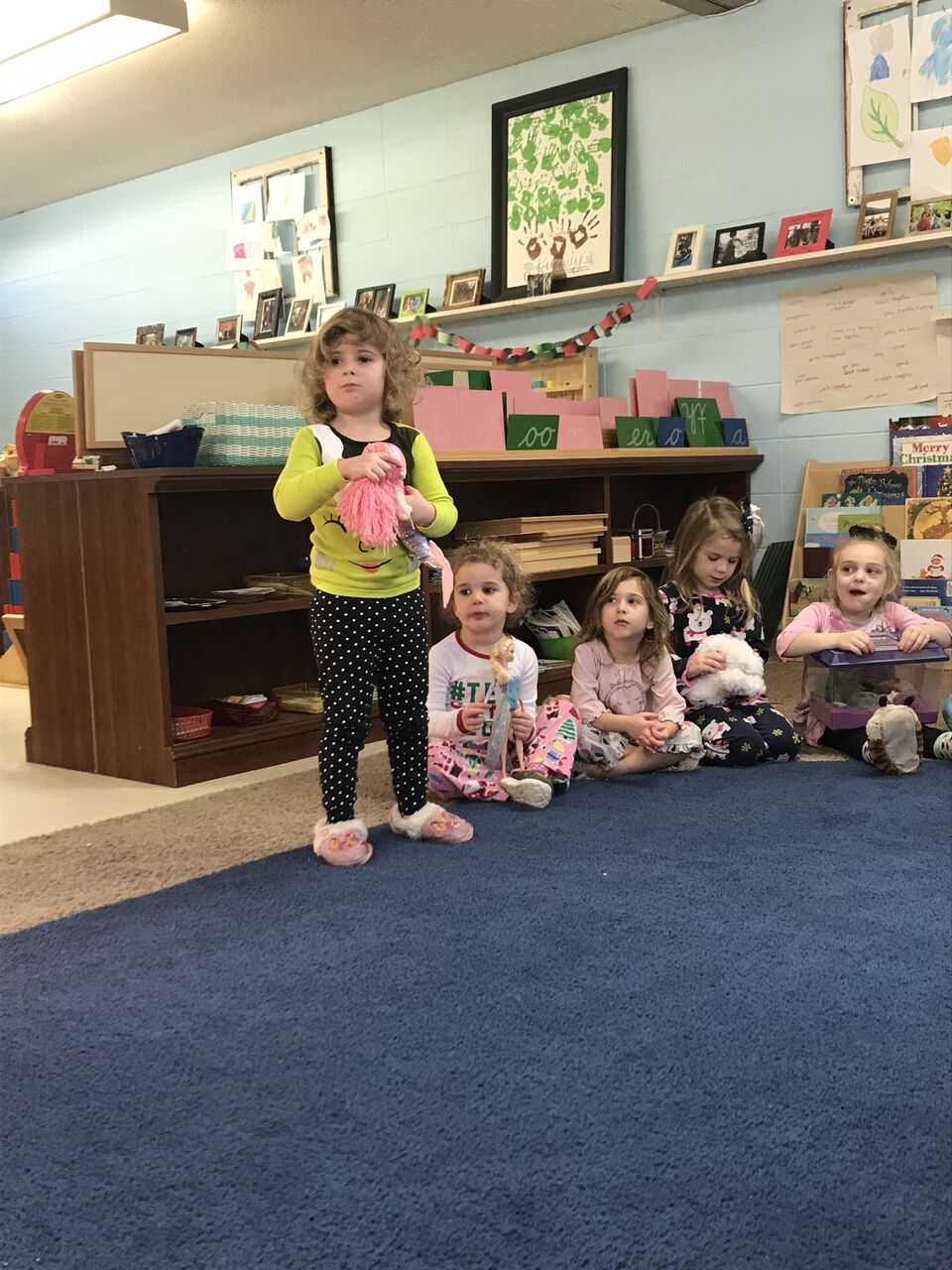
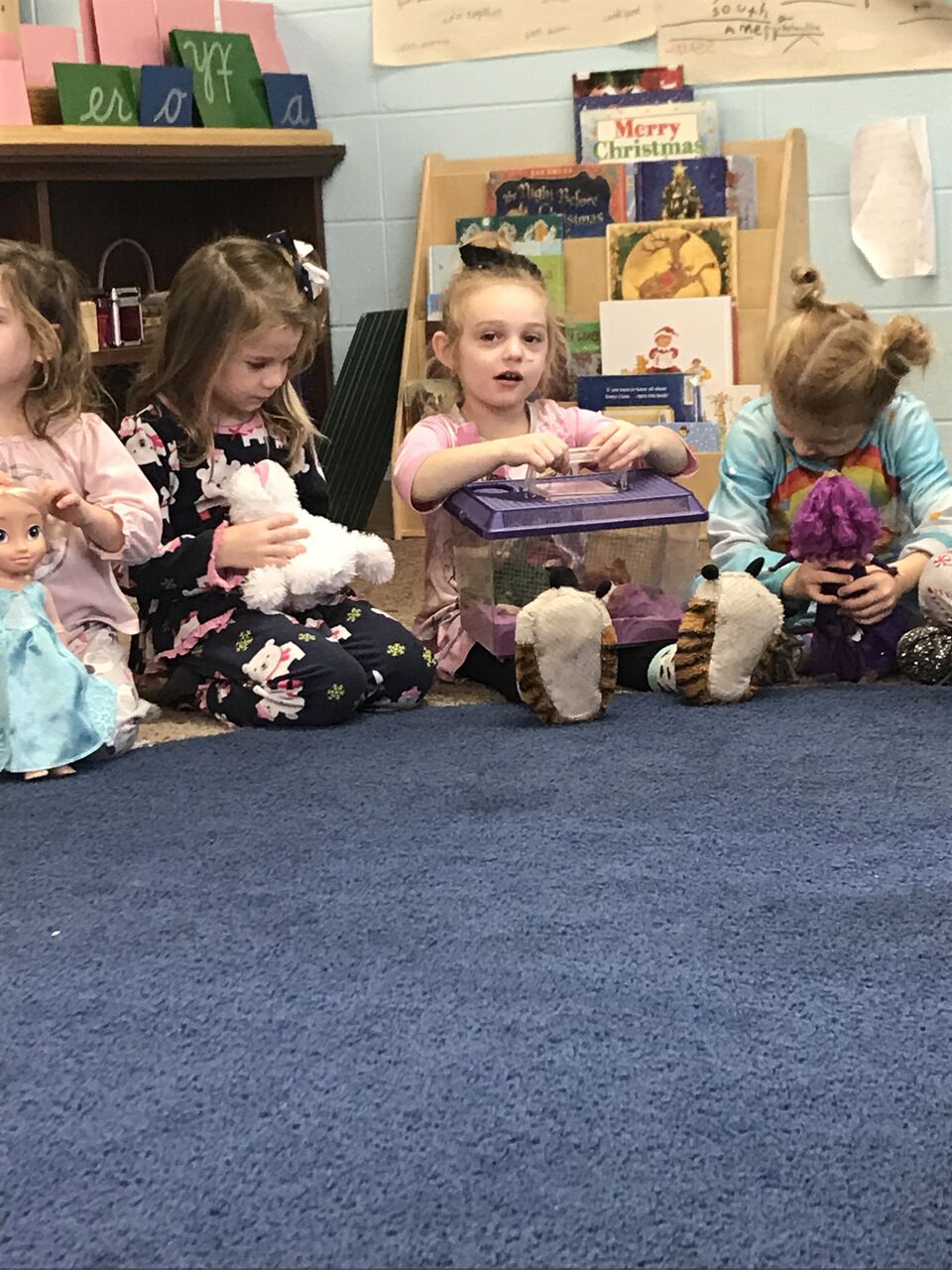
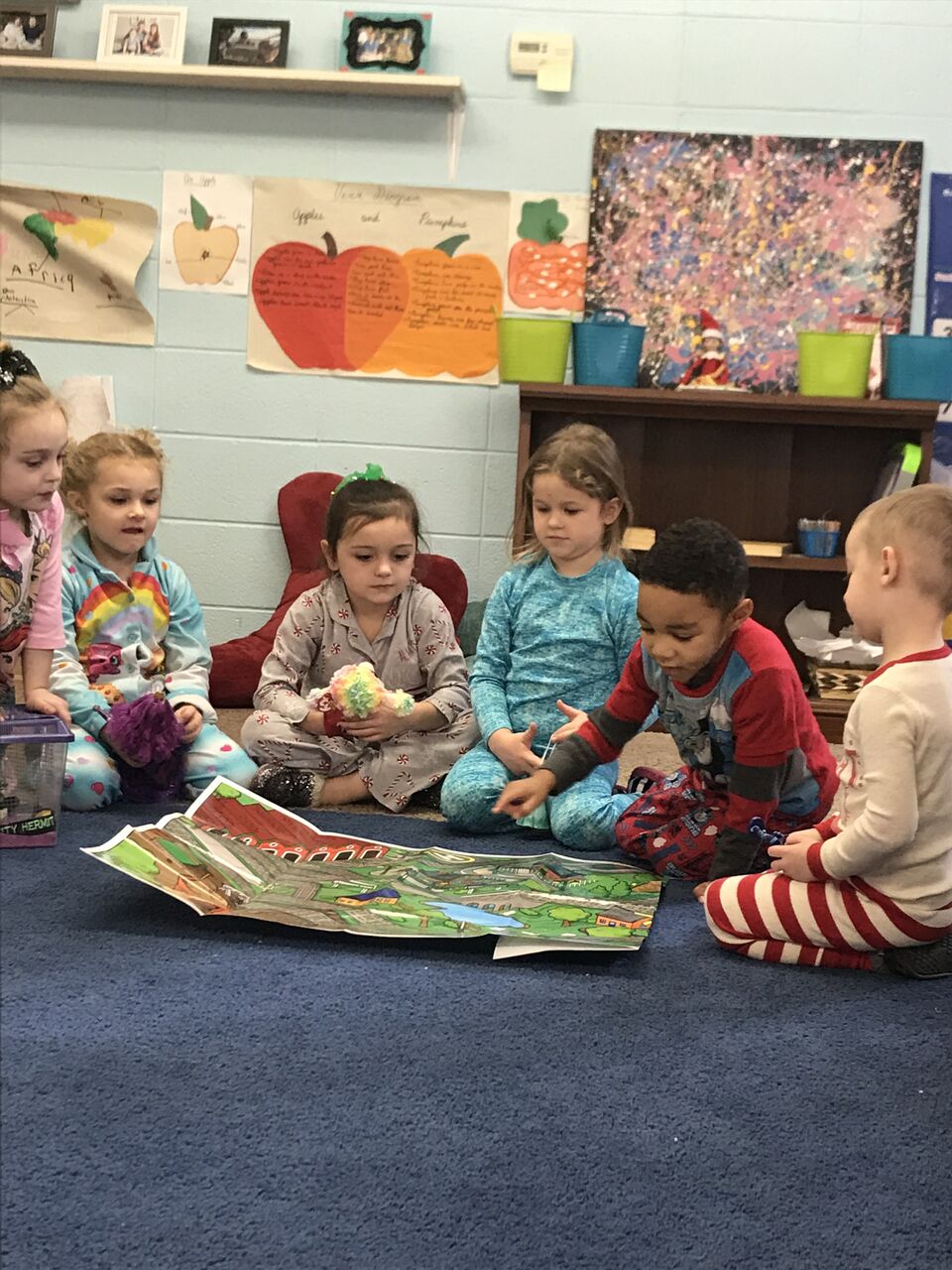
Pets/Valentine’s Day: We learned that a pet is a companion animal. Which means he/she is kept for a person’s company, protection or entertainment. We talked about how the two most popular pets are cats and dogs so is good to learn how to educate them and using calming treats for dogs amazon is a great aid for this. We learned that some other animals that people commonly keep are: ferrets, rabbits, birds, hamsters, guinea pigs, snakes, lizards, fish, frogs, turtles etc, and lastly we sent down info to their parents on the best puppy insurance to have, for those who own pets at home.
Work Time
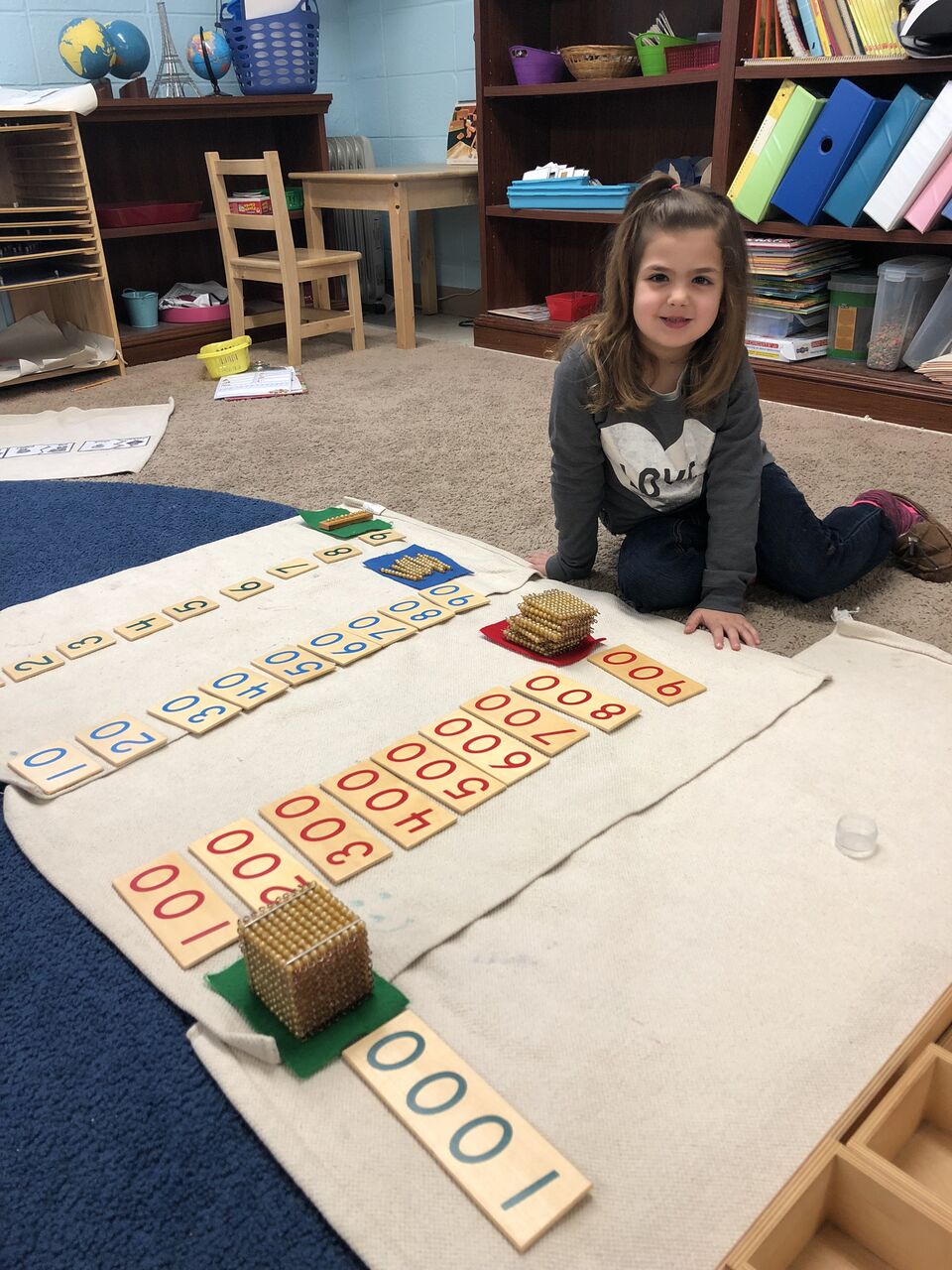
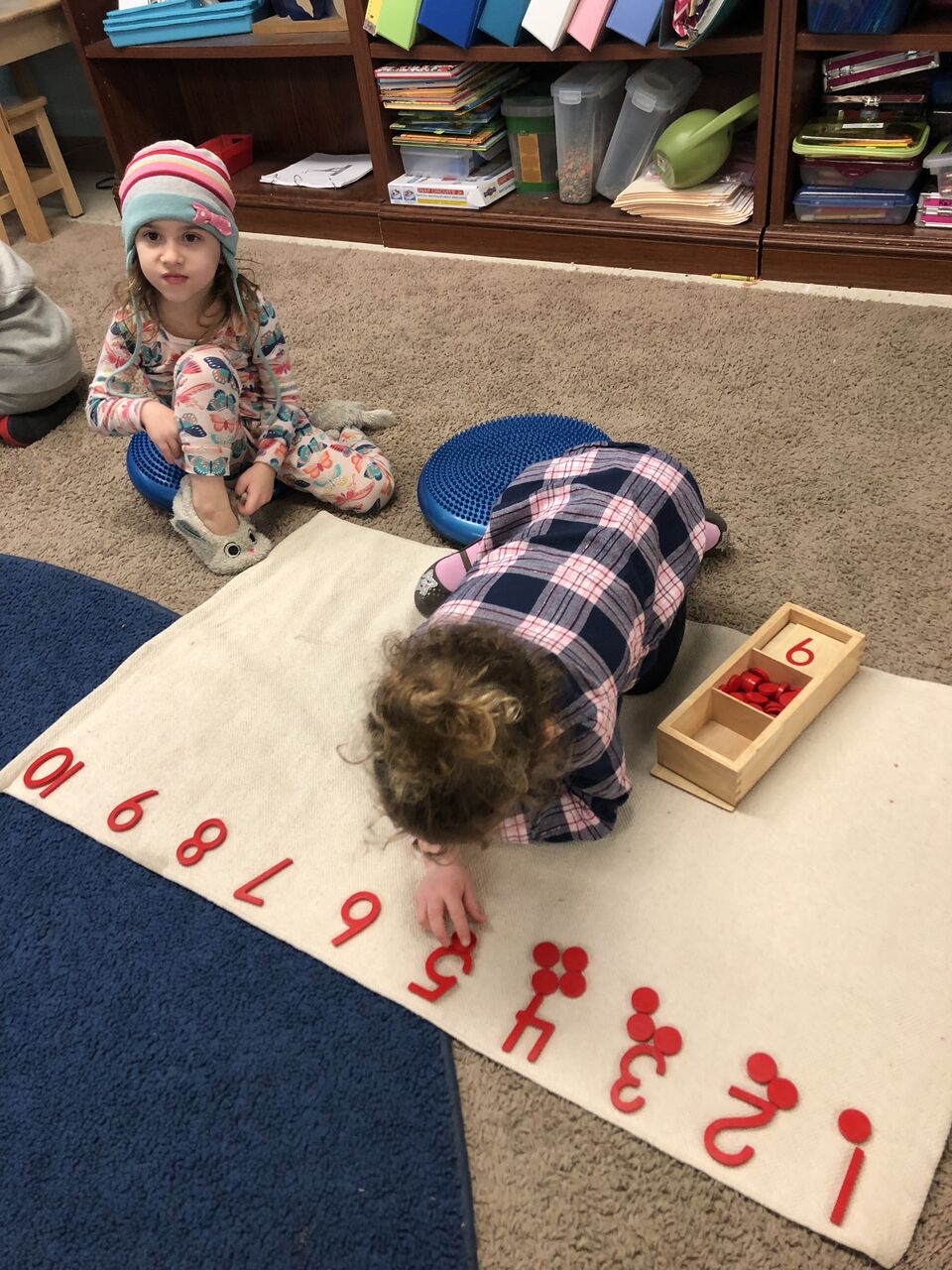
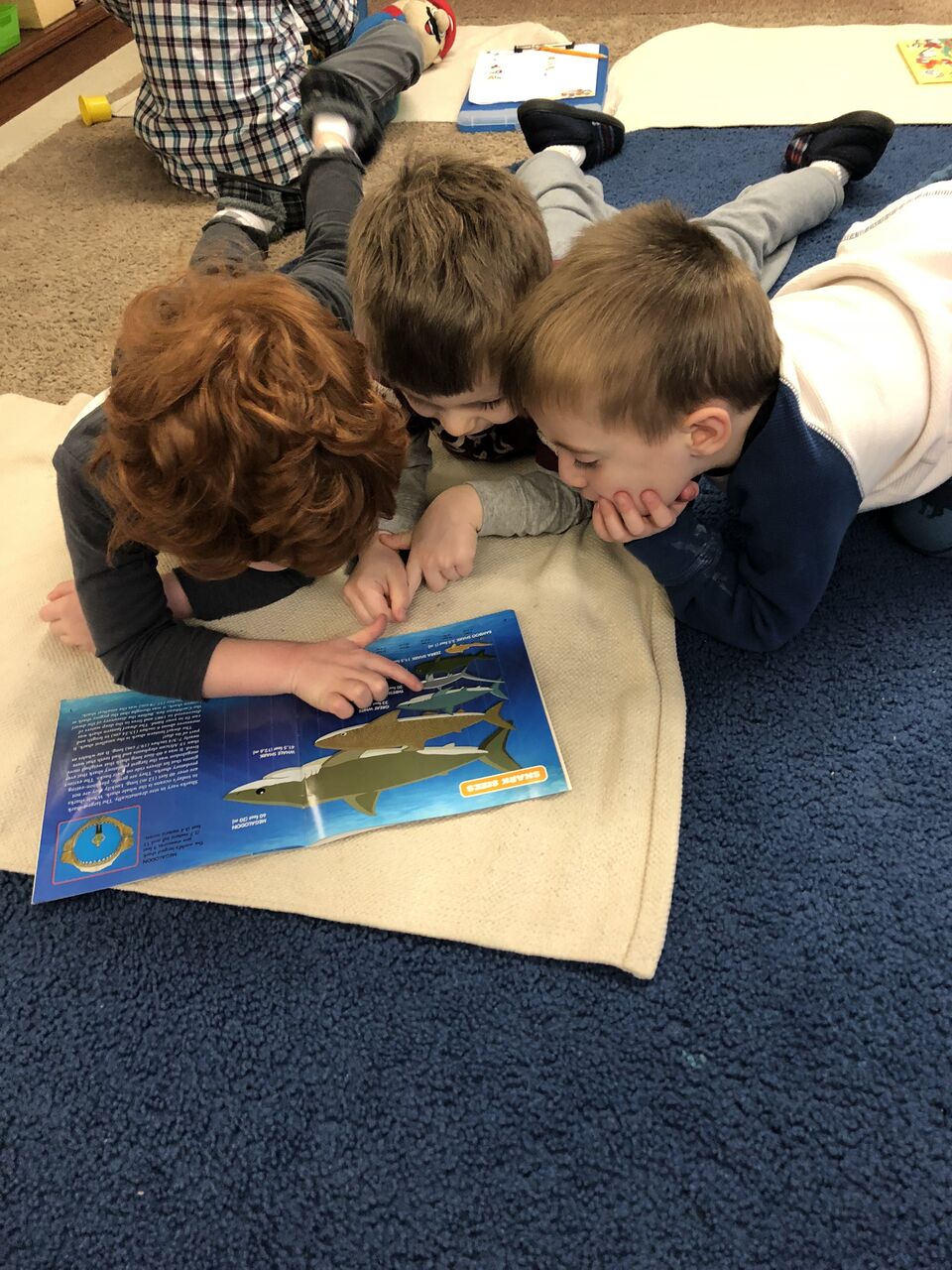
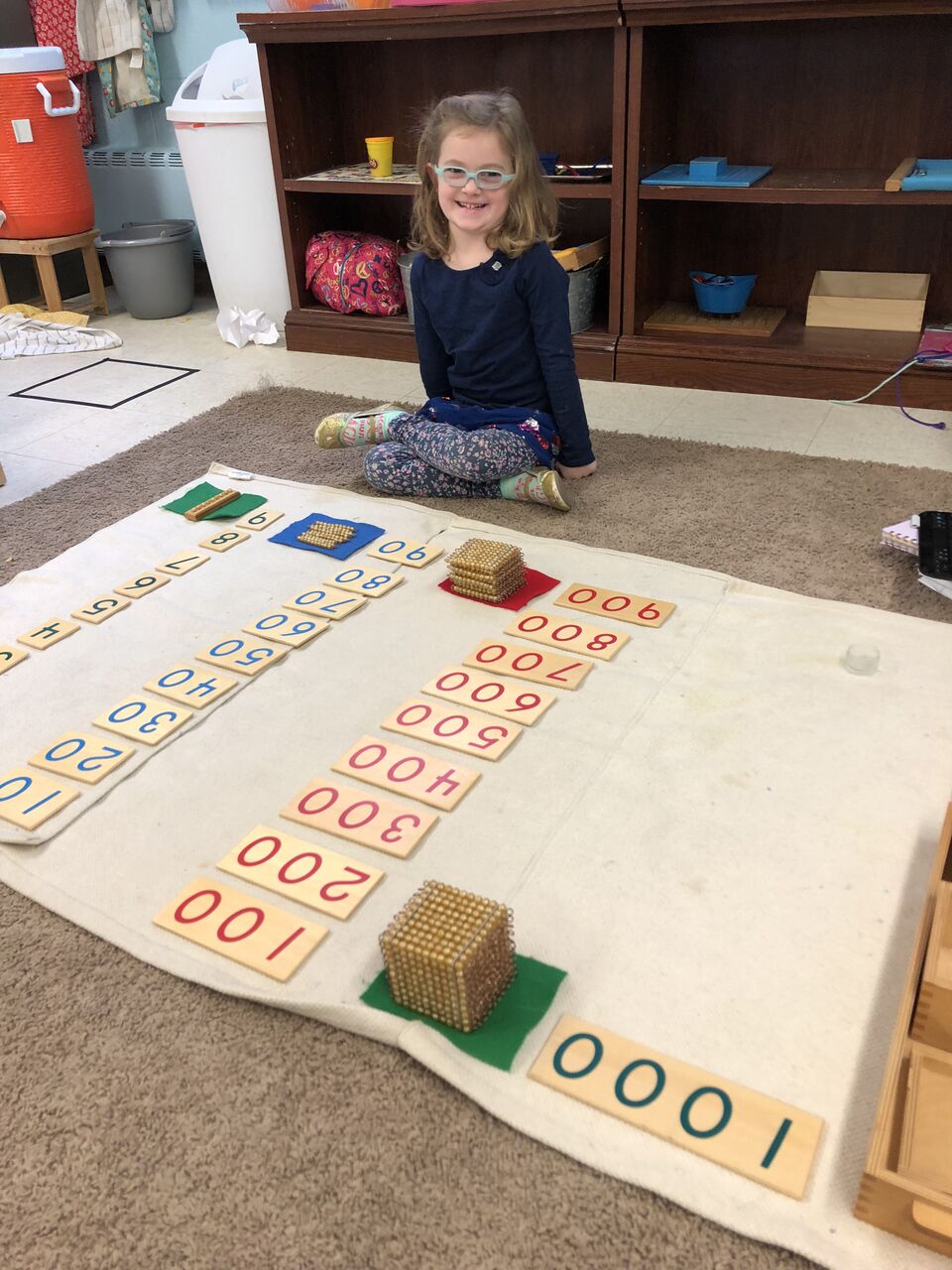
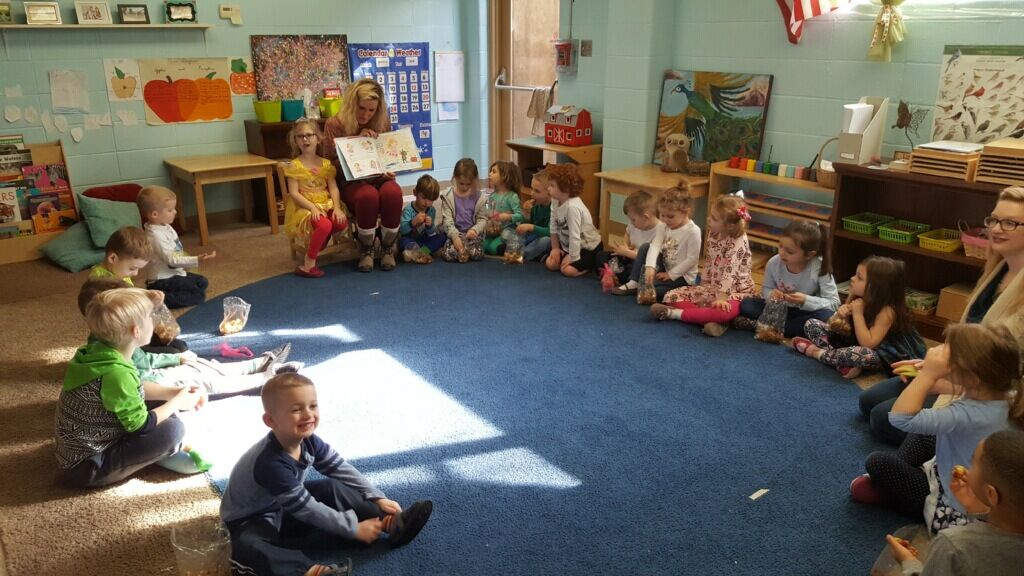
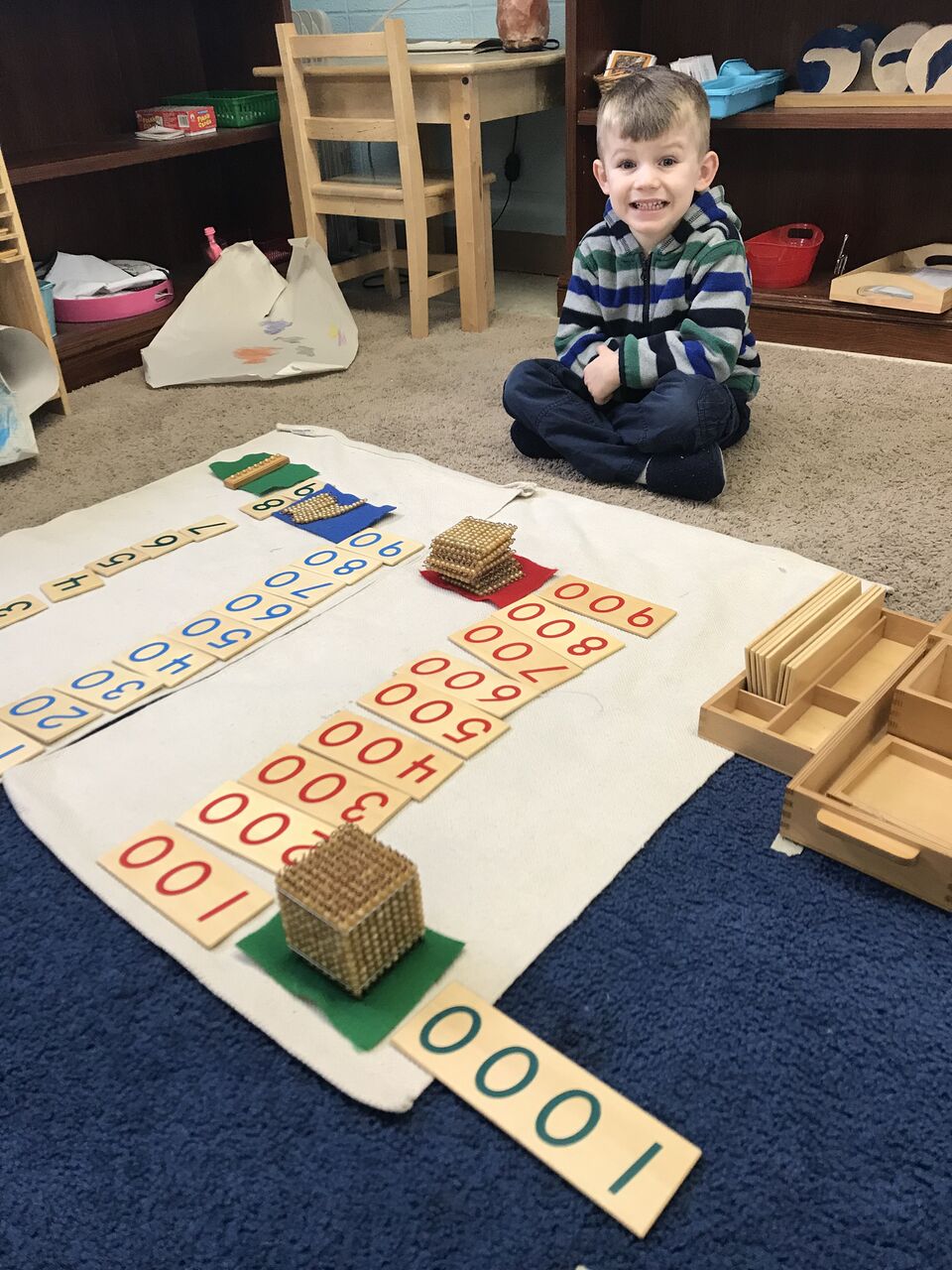
Nine Layout: This child is becoming familiar with the names and relative sizes of the categories: units, tens, hundreds and thousands. She is also discovering that if she has i.e. 6 units and adds 1 more unit she will have 7 units.Cards and Counters: This child is demonstrating her knowledge that each number is made up of separate quantities. She is also able to visually see the sequence of numbers and how many separate units go together to form each number.Zipping: This child is developing his independence and concentration while also gaining finger control and dexterity to manipulate a zipper.United States Map: This child is learning the names of the states and where they are located on a map.Pink Rhyming: This child is sorting words that have or end with the same sound as one another.These boys are enjoying a book about ocean animals.
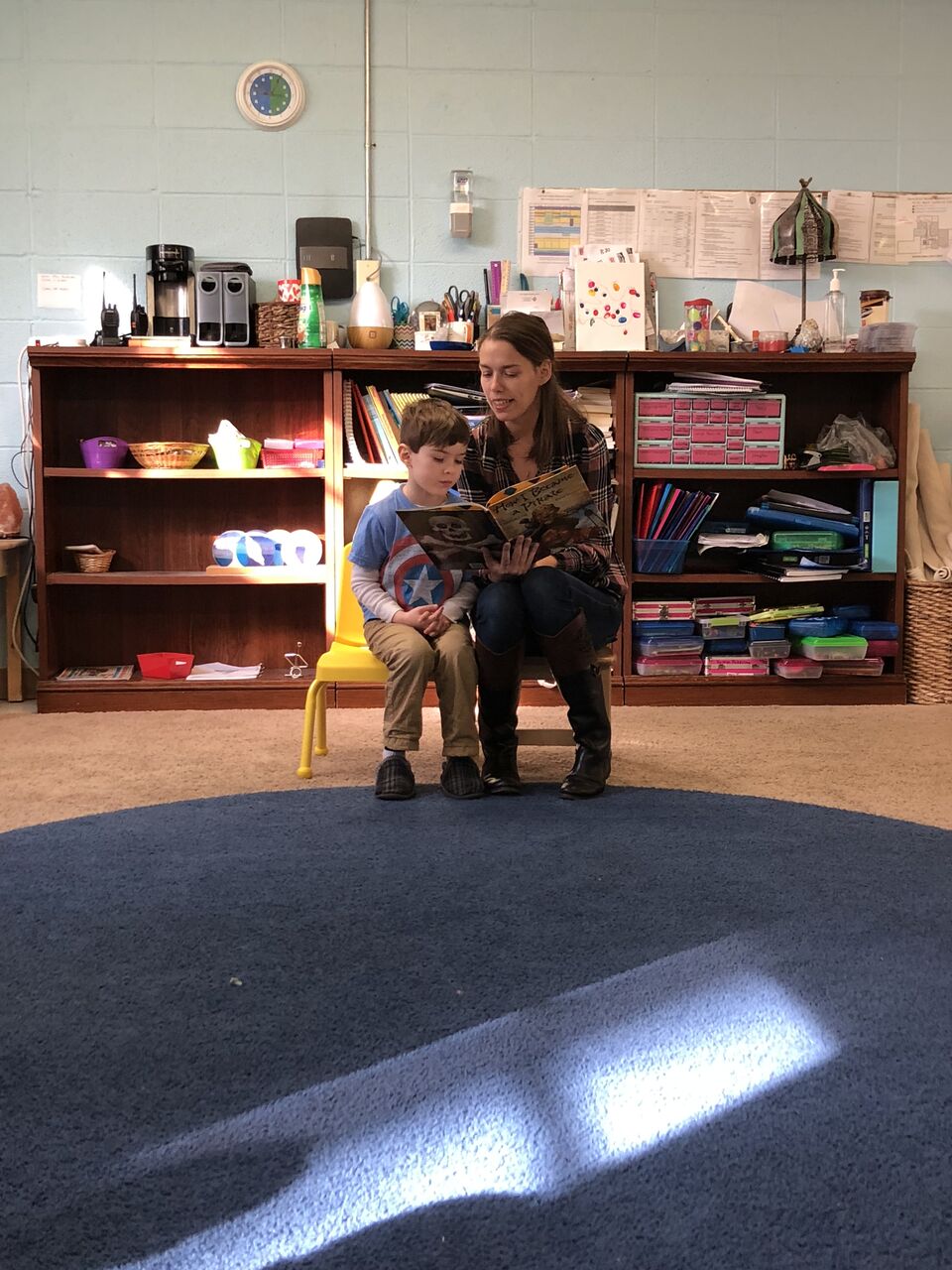
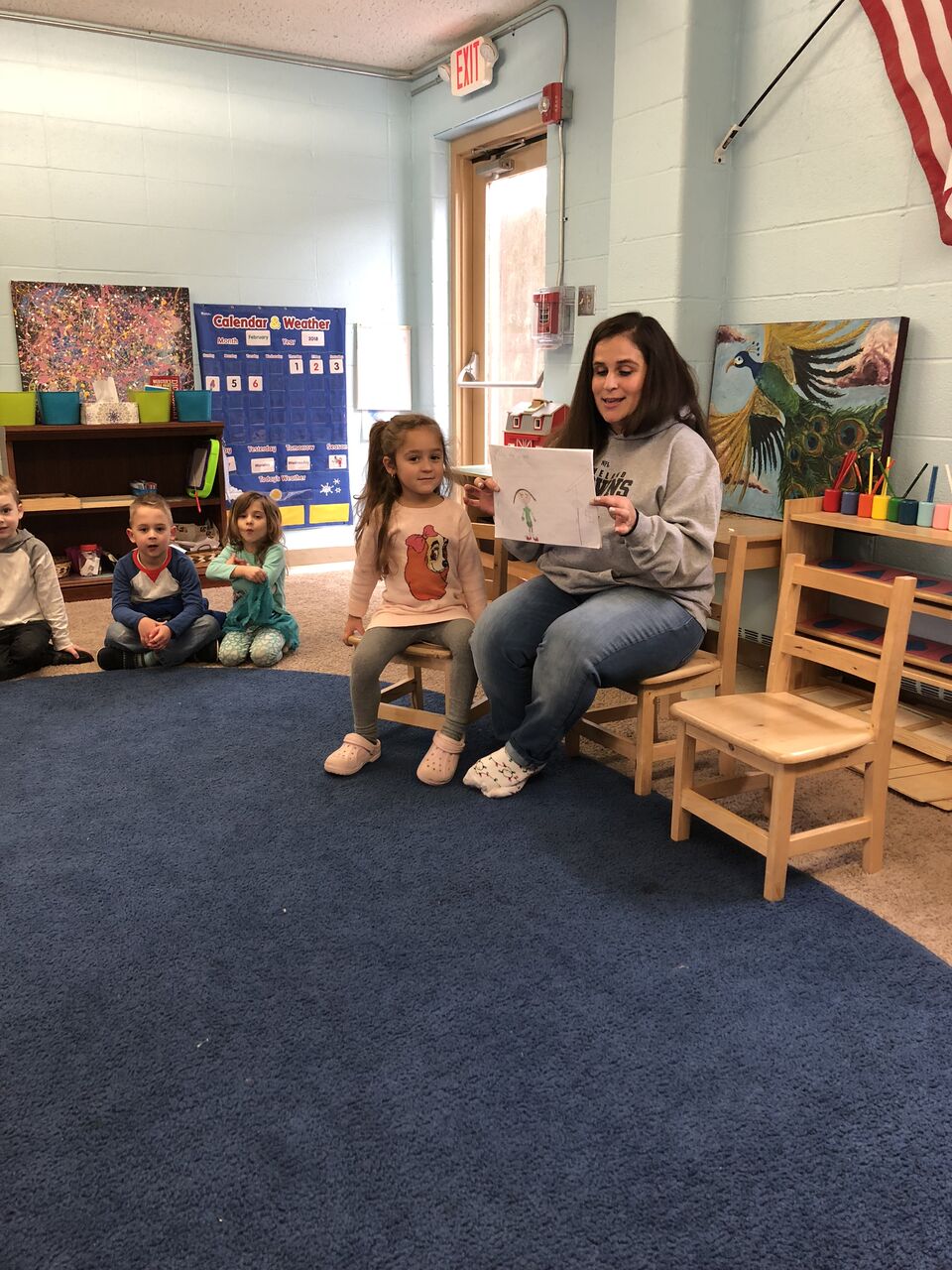
Guest Reader
Reminders
February 19 | President’s Day | No School
February 22 | Bring Your Parent to Work Time | http://www.signupgenius.com/go/4090b48a8a92da6f94-bring
Farm Animals: We learned about different animals that live on the farm like: cows, chickens, pigs, horses and sheep. The kids discovered how each farm animal makes things for the farm. They even learned that farm animals are also know as livestock. The institute offers rent classroom, conducting a tutorial session in a state of the art classroom raises its standards on professionalism compared to conducting it in every residence.
Work Time
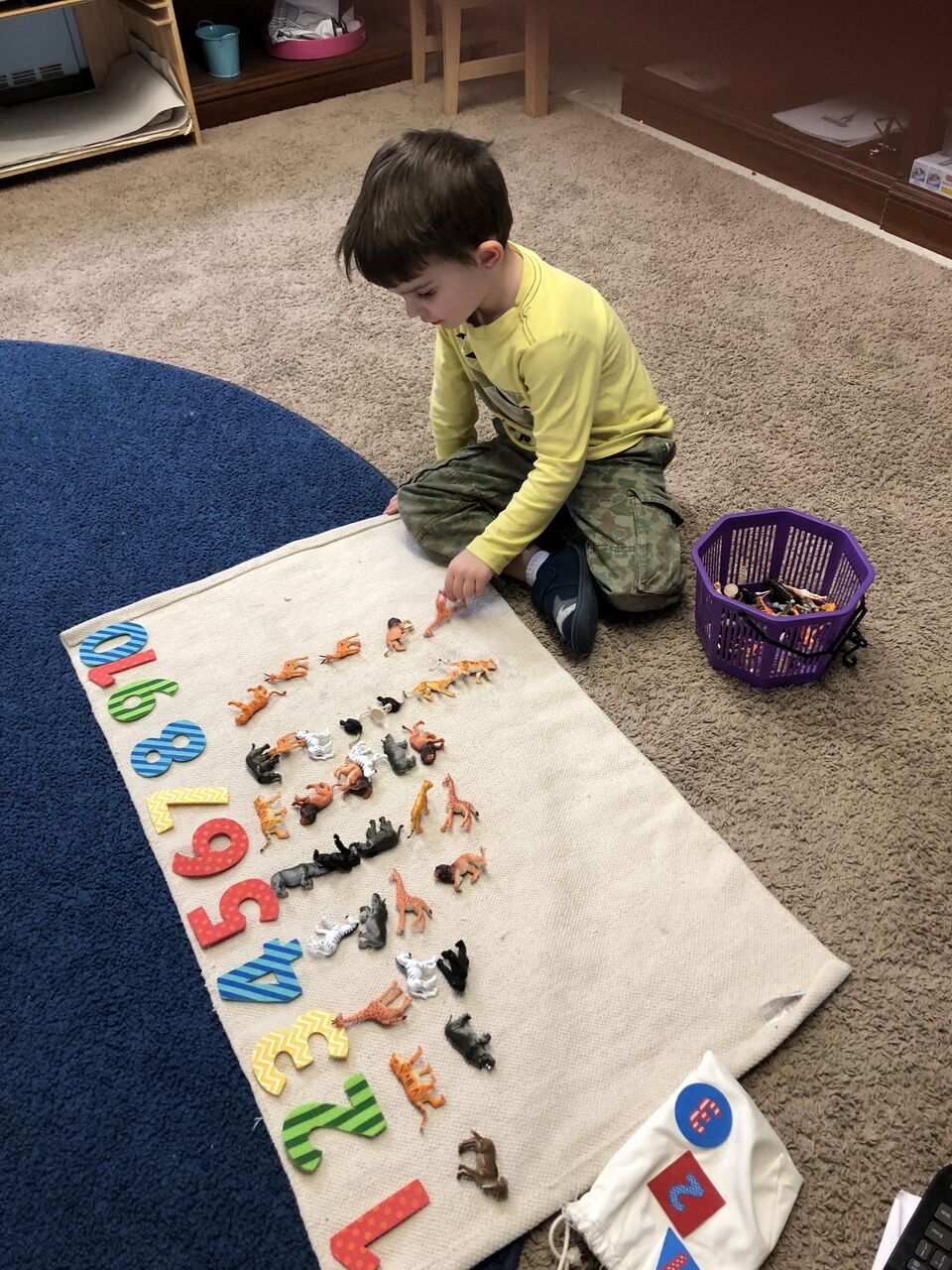
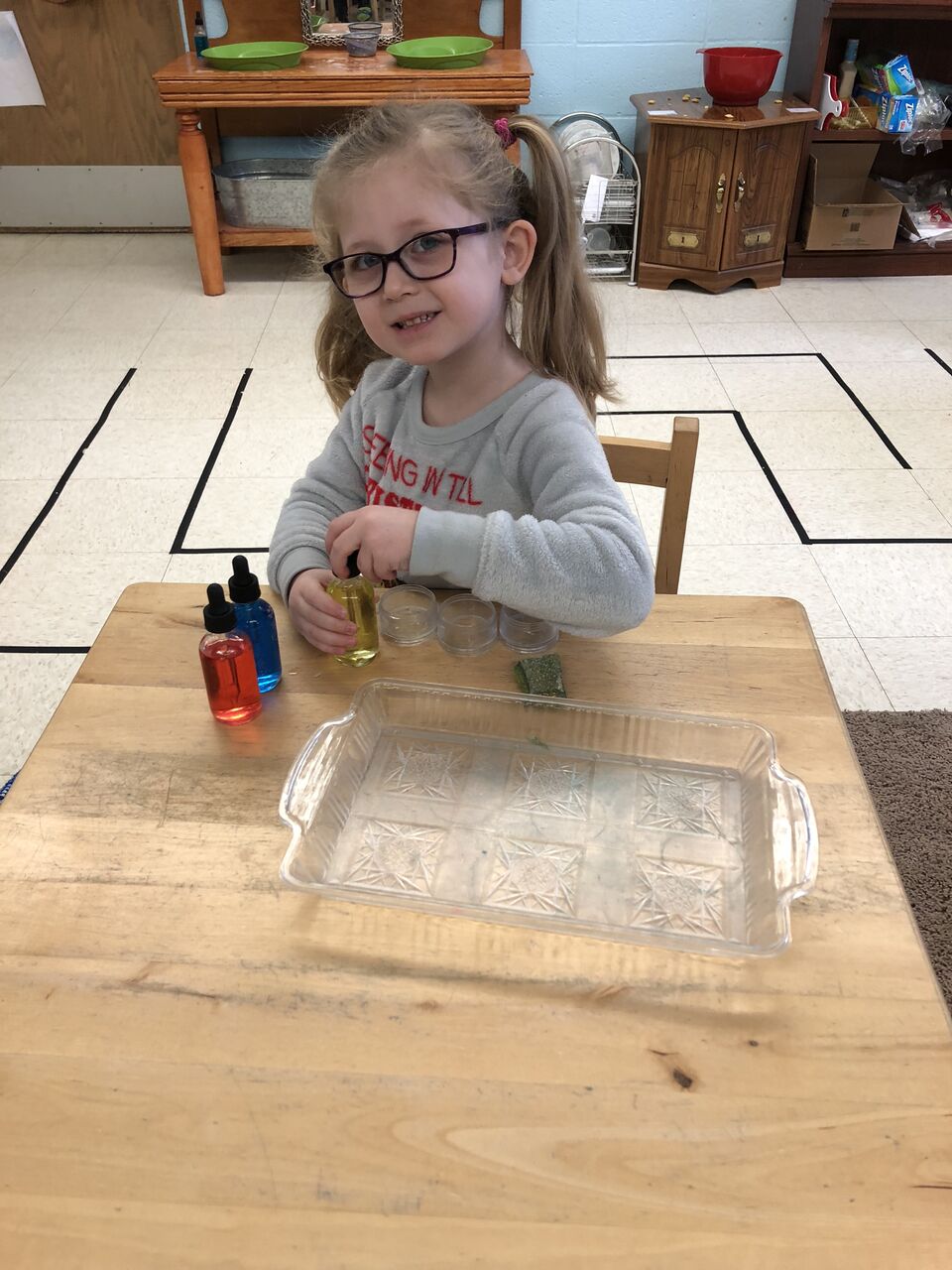
Nine Layout: This child is becoming familiar with the names and relative sizes of the categories: units, tens, hundreds and thousands. She is also discovering that if she has i.e. 6 units and adds 1 more unit she will have 7 units.Animals and Numerals: This child is demonstrating his knowledge that each number is made up of separate quantities. He is also able to visually see the sequence of numbers and how many separate units go together to form each number.Color Mixing: This child is using the three primary colors to create secondary colors. She places one dropperful of red and one dropperful of yellow in a small dish and like magic, orange appears.
Guest Readers
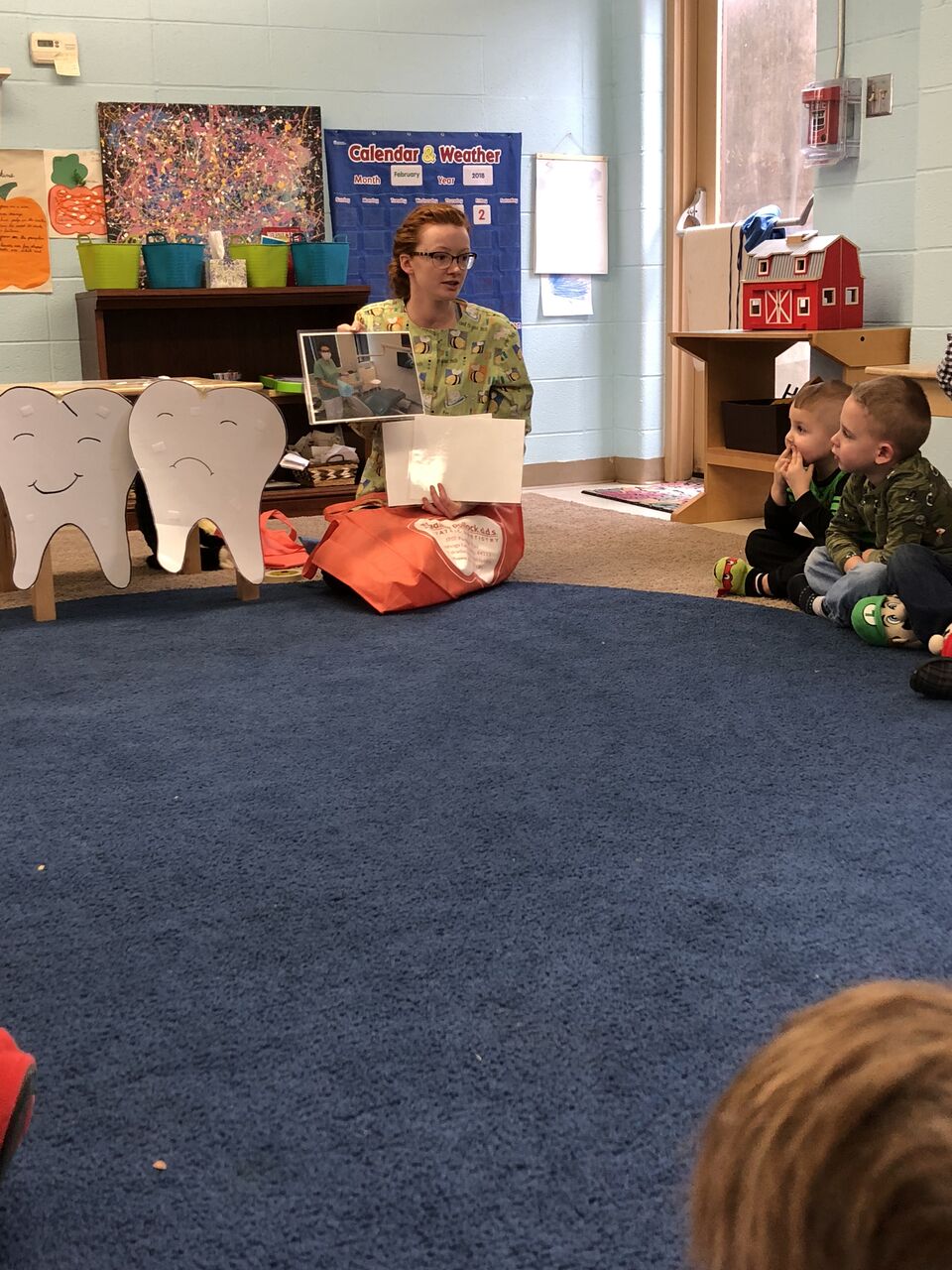
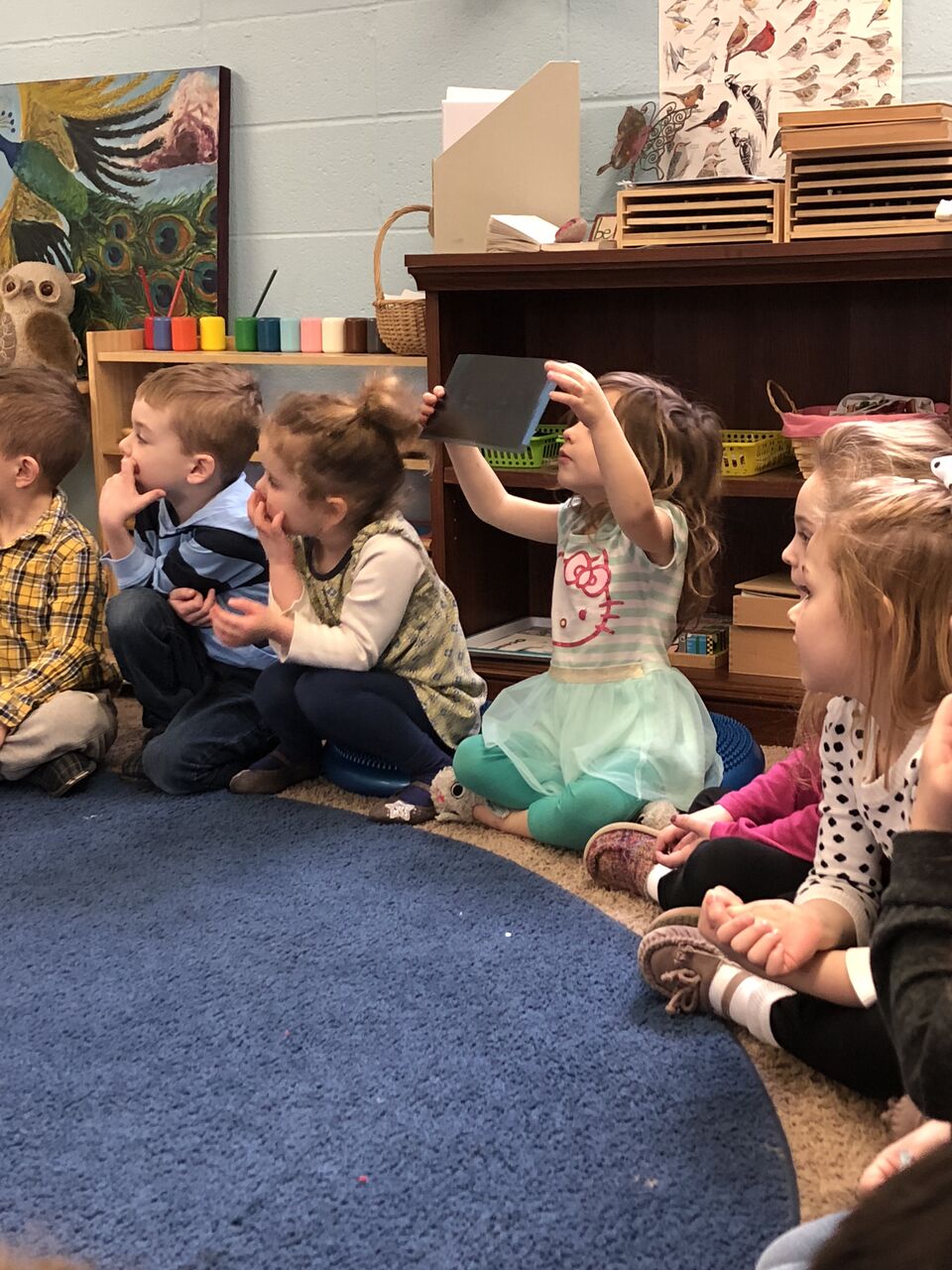
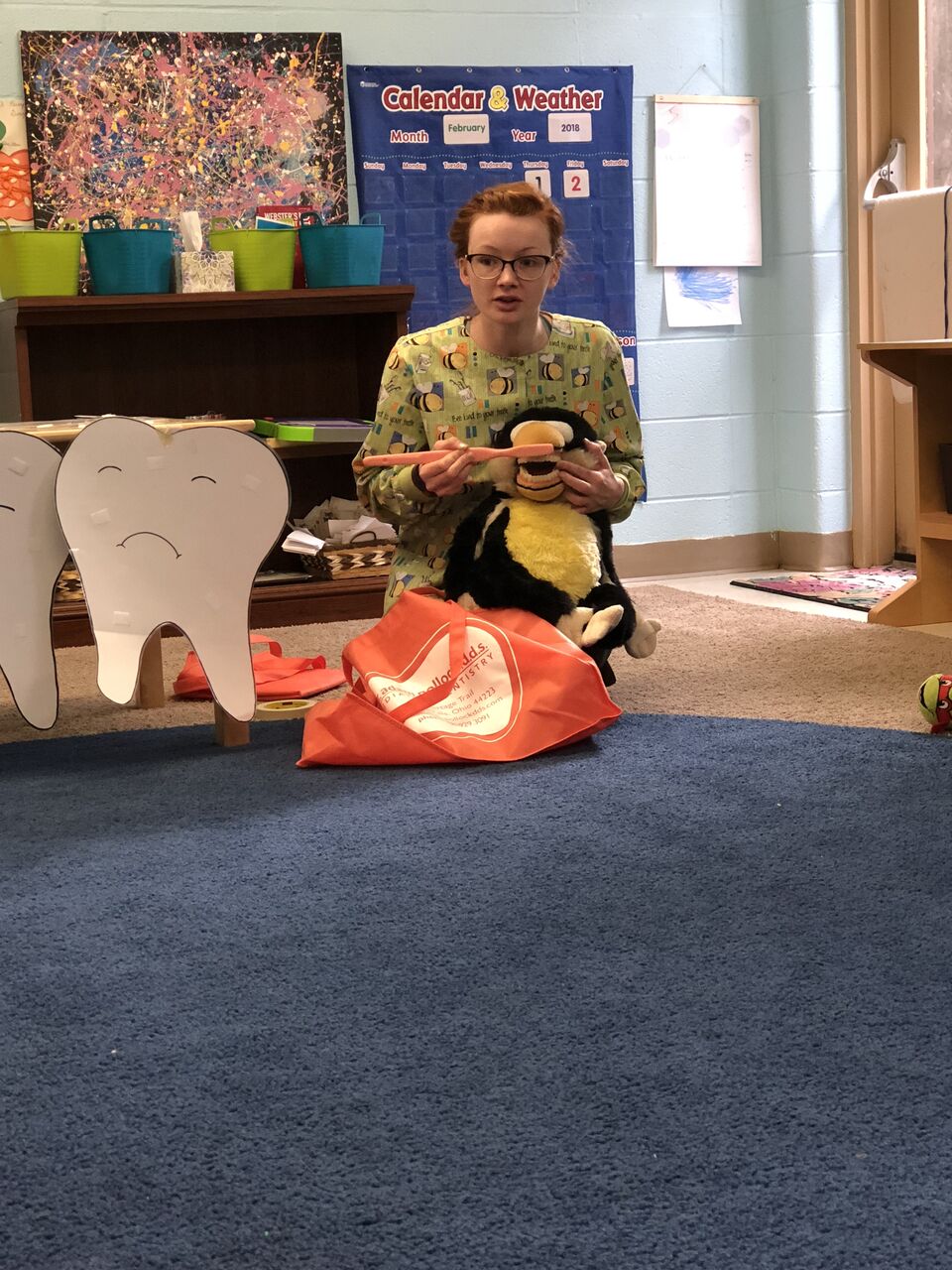
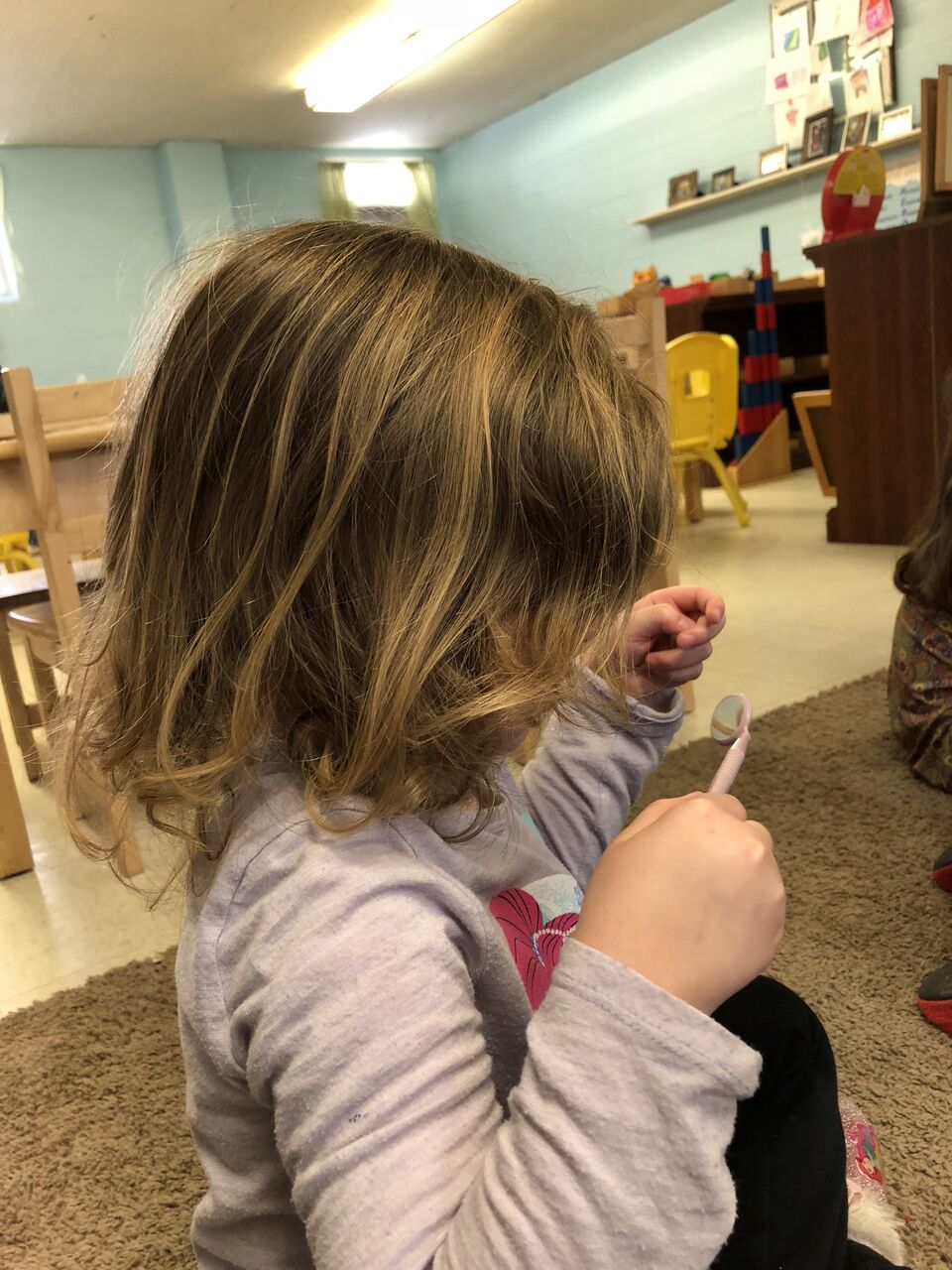
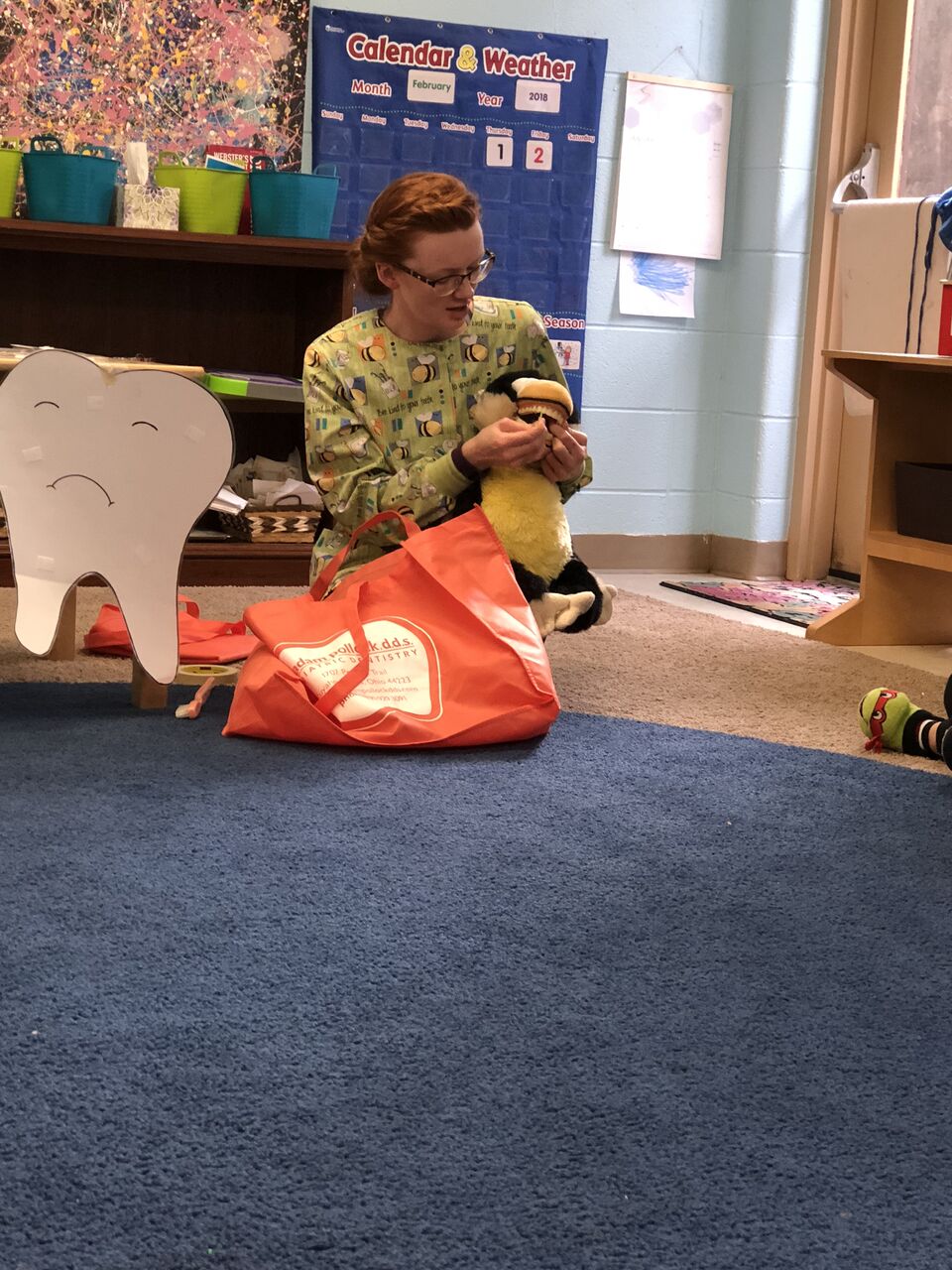
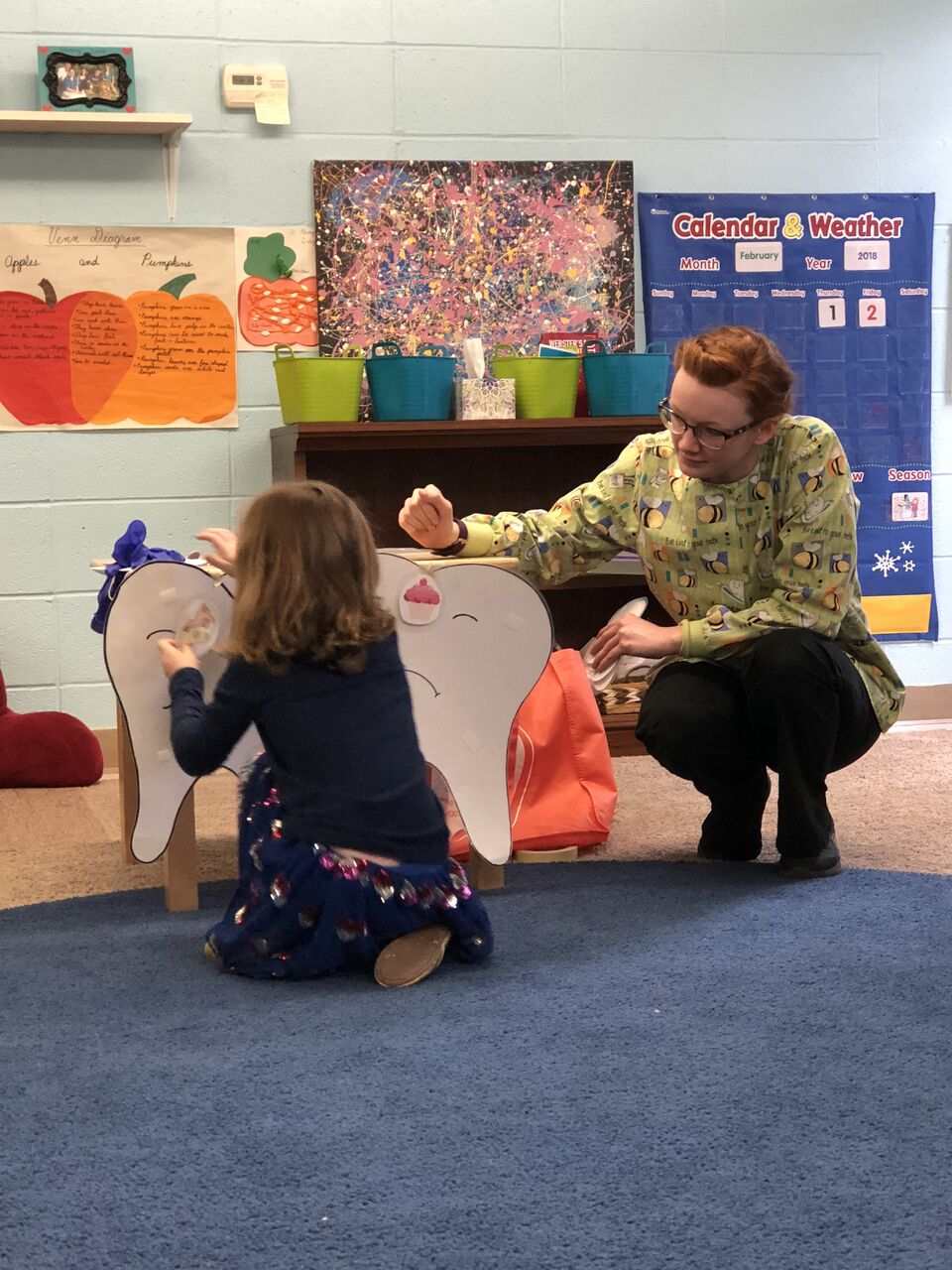
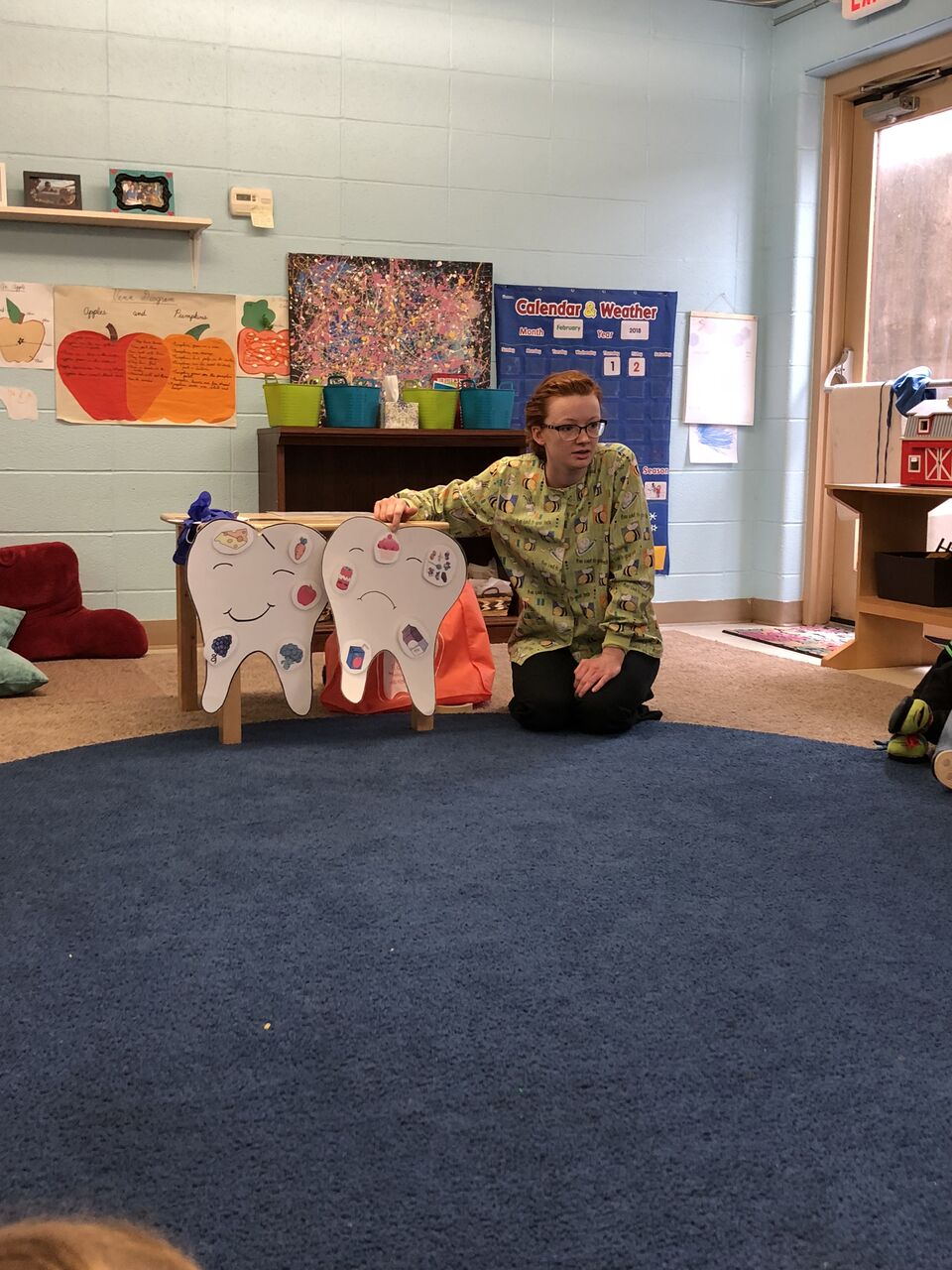
Dental Hygienist
Reminders
February 10 from 2:00 pm – 4:00 pm | Father/Daughter and Mother/Son Dance
February 15 from 9:15 am – 12:00 pm | Valentine’s Day Party
February 16 | Teacher In-Service Day | No School for Students
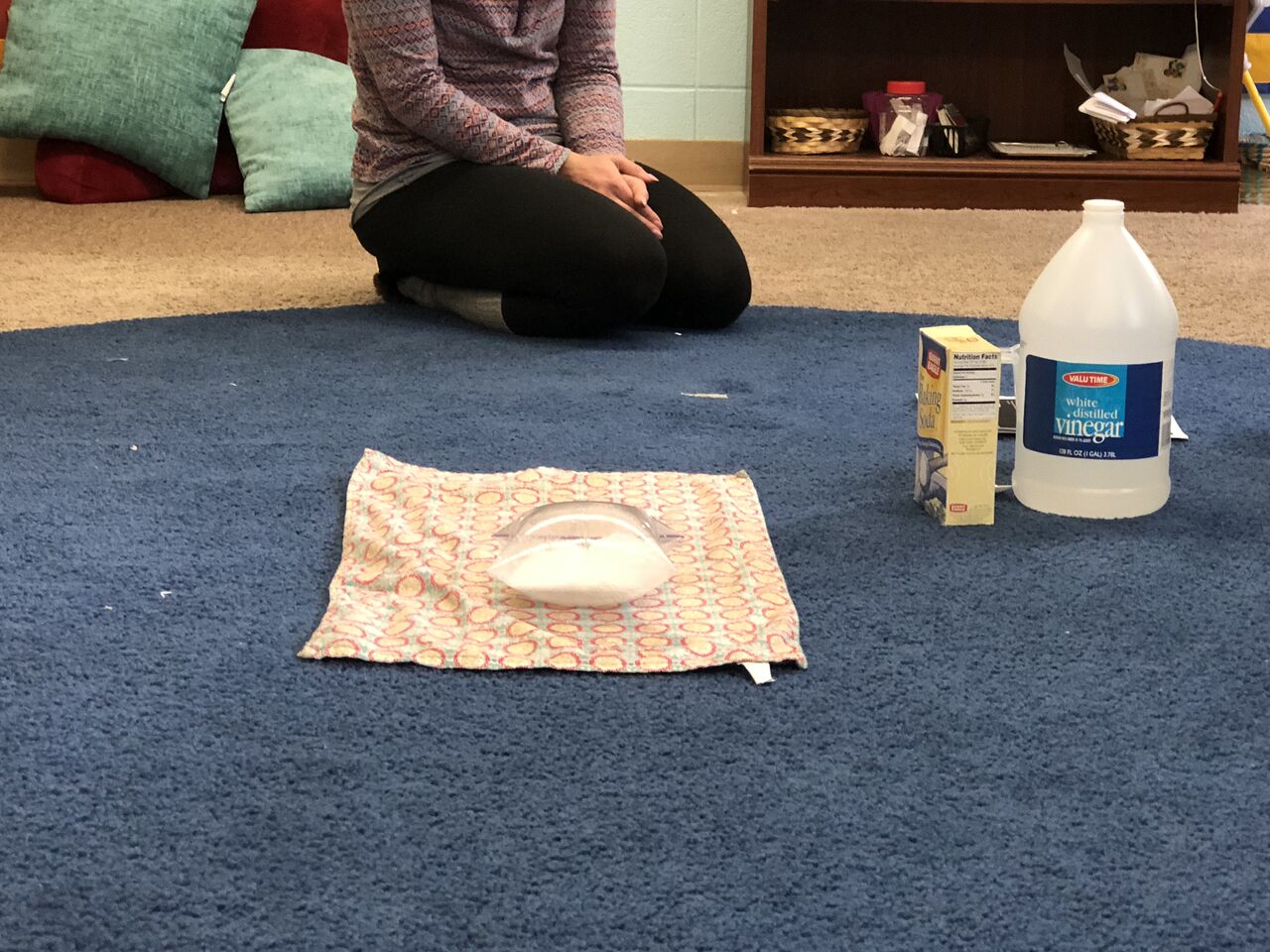
Exploding Lunch Bag: We combined warm water, vinegar and baking soda in a Ziploc bag. As soon as the bag was sealed shut it started to fill with air (carbon dioxide). Eventually, the Ziploc bag could no longer hold any more air so it popped. We learned that this is called an acid based reaction when you combine these two chemicals together.
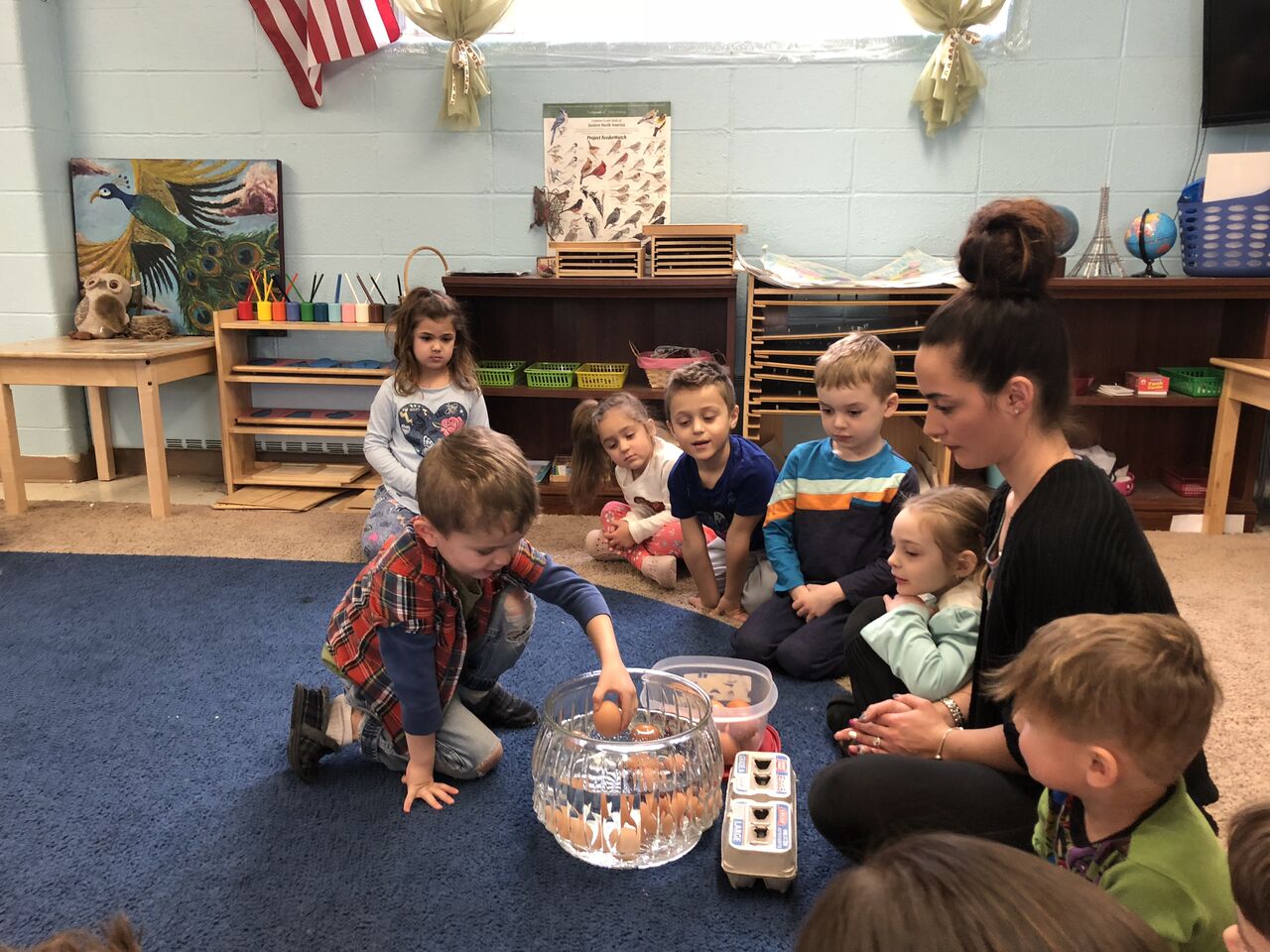
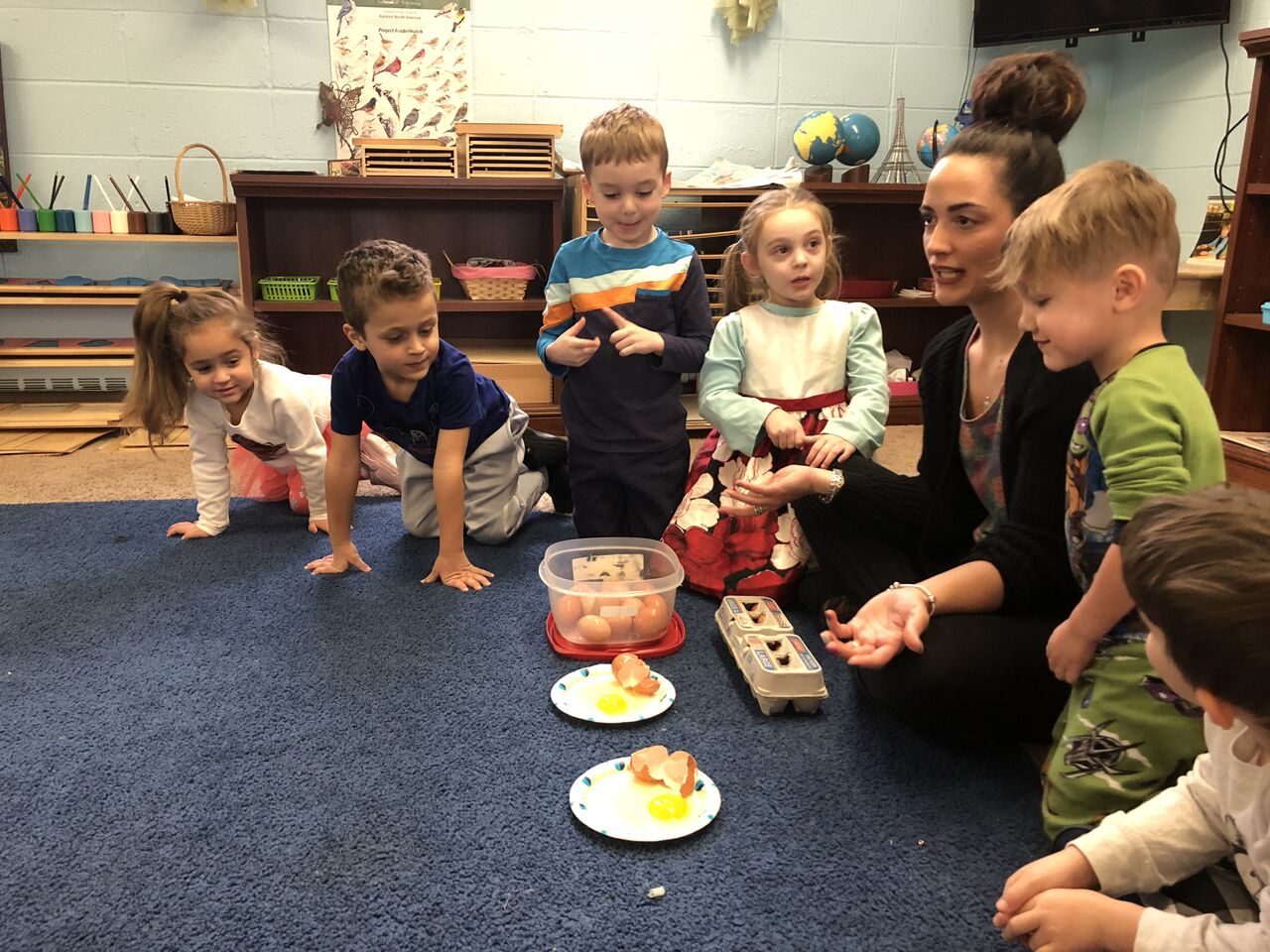
Good/Bad egg experiment: We filled a bucket full of cold water dropping eggs in one at a time. Some eggs floated and some sank. We discovered that when an egg is laid by a chicken an air cell is formed inside the egg. As the egg gets older the air cell becomes larger and acts like a buoyancy. We talked about how this meant a good egg will sink and a bad egg will float. We cracked one good and one bad egg open to see the difference. The only difference we could see was that the yolk wasn’t as round in the bad egg as the good egg.
The students learned that a zoo is a place where all types of animals are displayed for the public to see. Especially animals that they would never get the chance to observe otherwise. We also talked about how zoos try hard to keep animals in enclosures that replicate their natural habitat because, the animals seem to do much better when they are in their natural environment. We discovered that zoos create educational programs and tours in order to provide an educational opportunity for everyone. A lot of them even have petting zoos where adults and children are allowed a close-up look of the animals and their babies. We learned about tigers, lions, monkeys, elephants, giraffes, penguins, bears etc.
Work Time
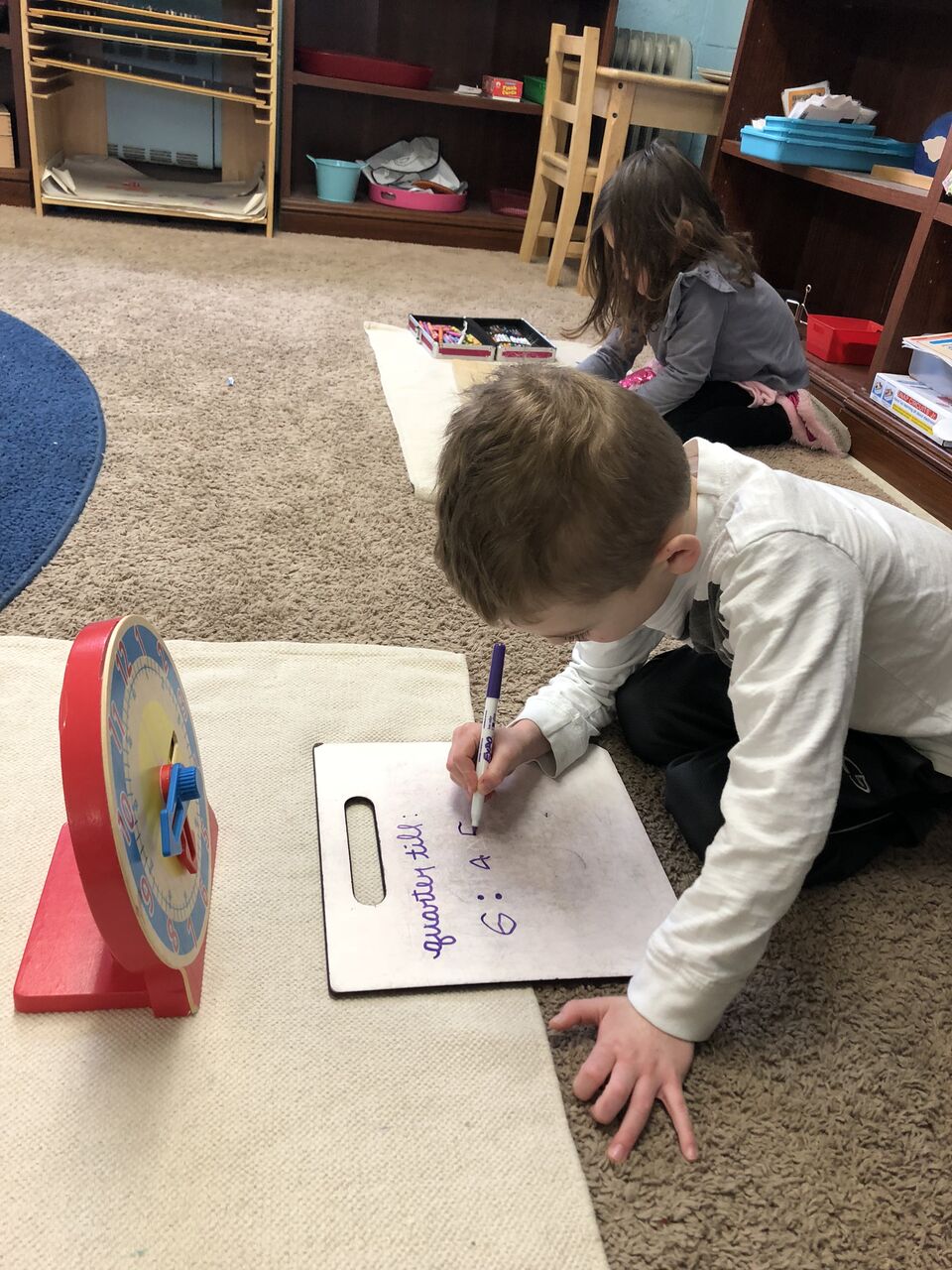
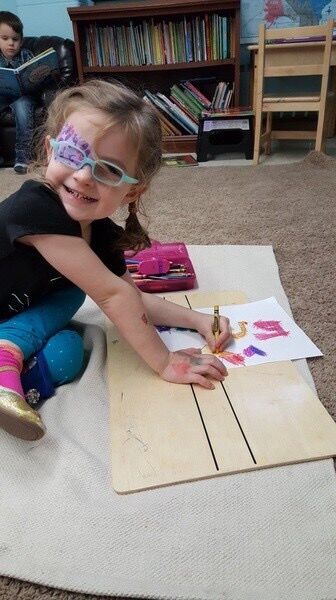
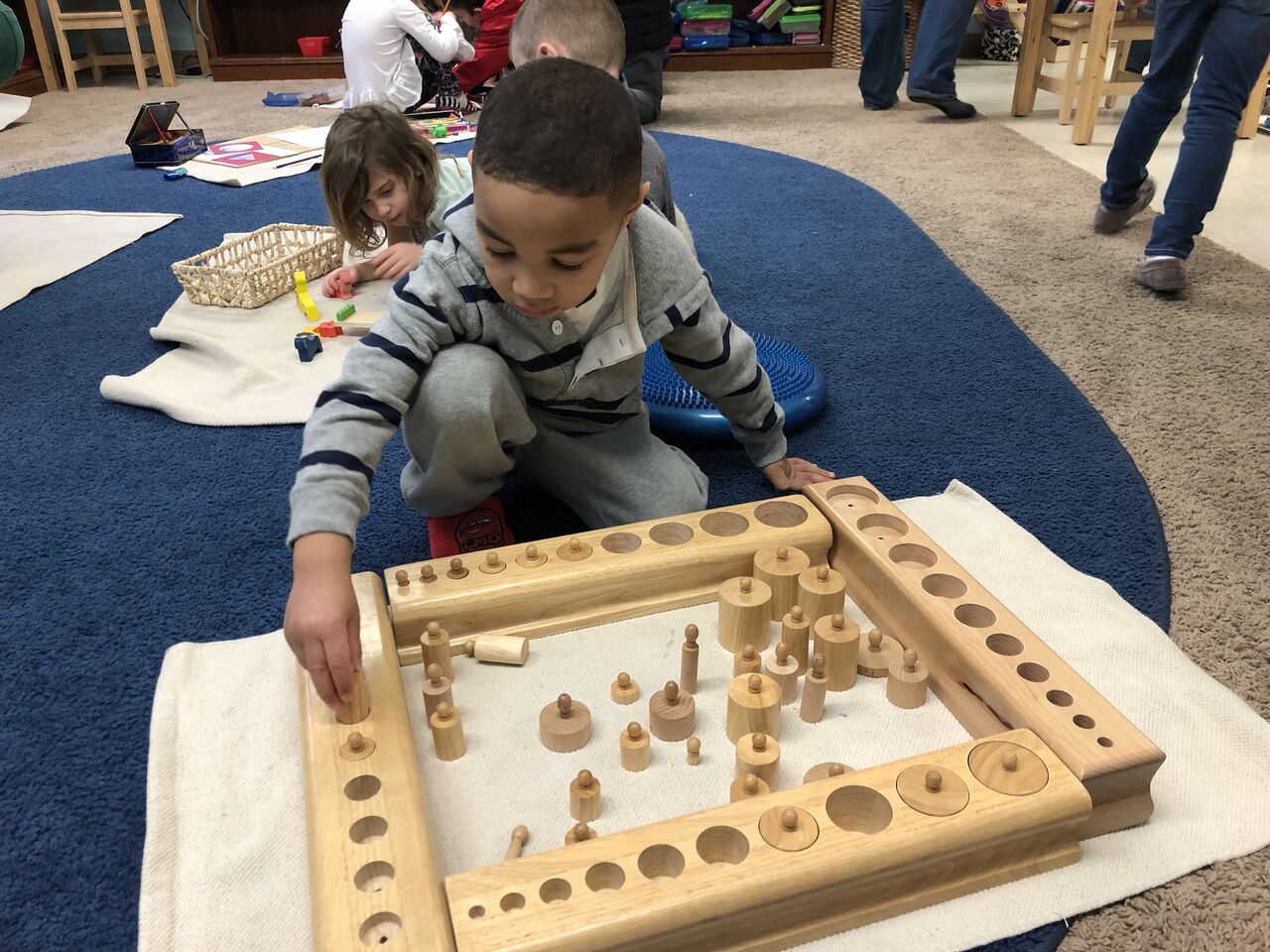
Color Box 4: These children are grading different colors from darkest to lightest, while also refining her sense of sight.Pattern: This child is creating specific patterns using different colors and shapes.Clock: This child is reading the time “quarter till 7” and demonstrating two different ways it can be written on a dry erase board.Writing Name: This child wrote her name in bubble letters and colored them in. She developing her eye hand coordination and fine motor movements. She is also learning how to control a pencil (pincer grip, pressure and steadiness).Flag Stamps: This child is exploring the individual flags of different countries, the meanings of the flags, and gaining an understanding of national pride.Knobbed Cylinders: This child is able to visually discriminate the dimensions of each cylinder to find its correct placement in the block.
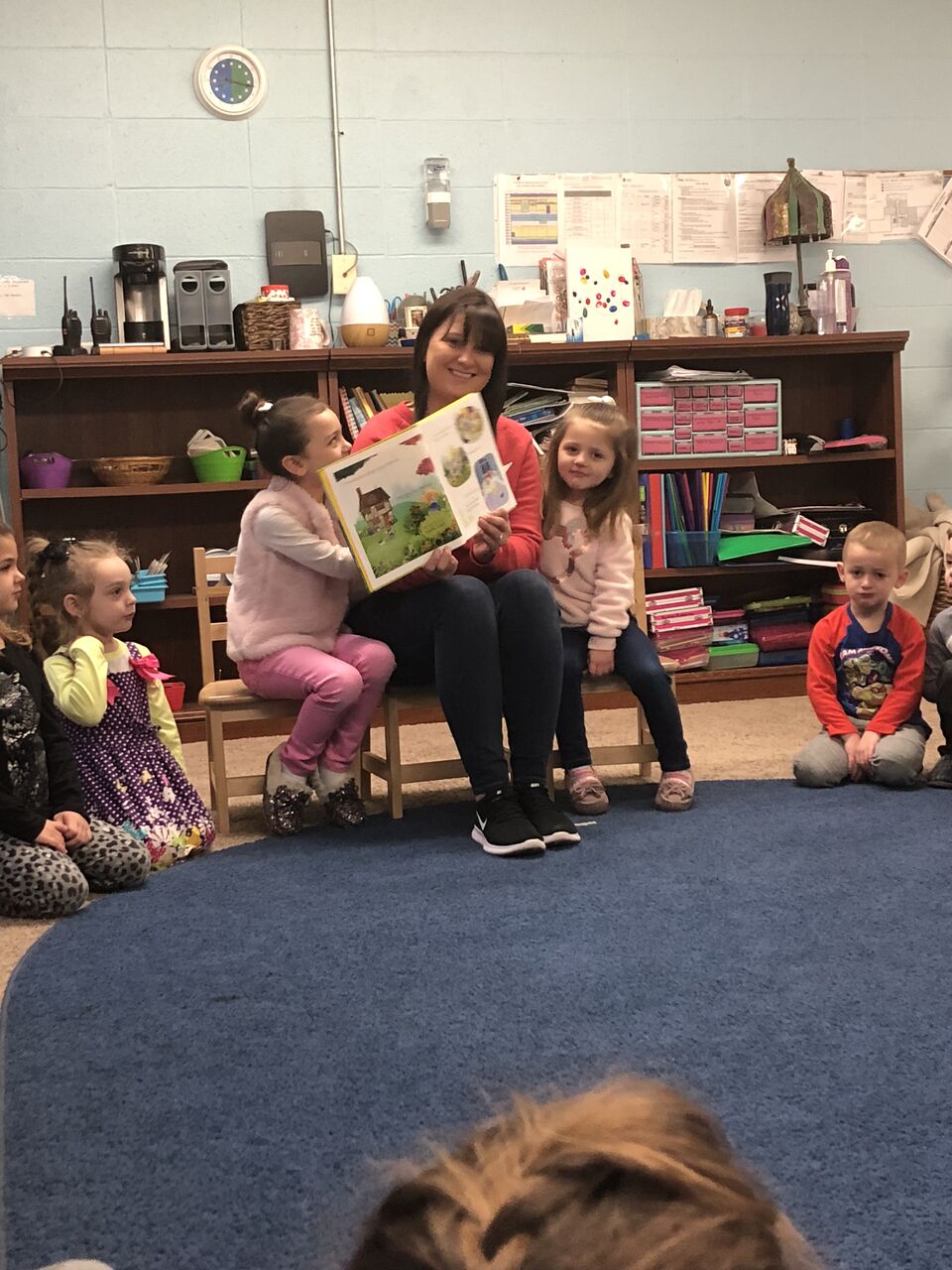
Guest Readers
Reminders
February 10 from 2:00 pm – 4:00 pm | Father/Daughter and Mother/Son Dance
February 15 from 9:15 am – 12:00 pm | Valentine’s Day Party
February 16 | Teacher In-Service Day | No School for Students
The students learned that oceans are the largest habitat for an animal to live in. They discovered that ocean animals can be found on the coast to all depths from the surface to the deepest darkest trenches of the ocean. We also talked about how only five percent of the world’s animals live in the ocean. We looked at the similarities and differences between dolphins, sharks, whales, seahorses, fish, squids etc.
Work Time
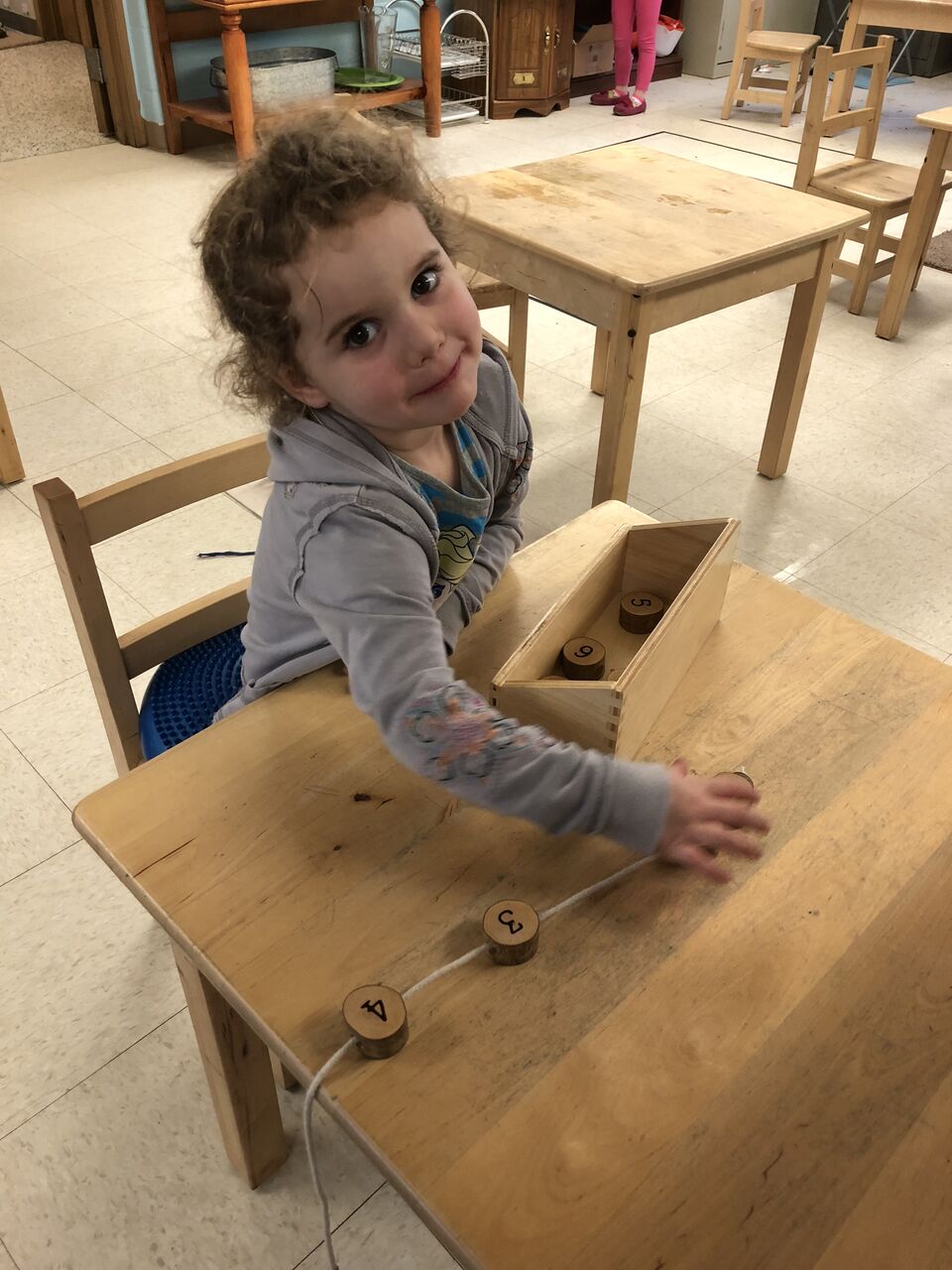
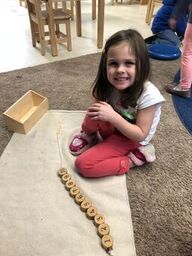
Log Numbers: This child is memorizing the sequence of numbers from 1 to 10. While also refining her fine motor skills by stringing the numbers onto the rope.Pattern: This child is creating specific patterns using different colors and shapes.
Movable Alphabet: This child is saying the word of the object and matching the symbol with the correct initial sound to the object. She is also practicing writing each cursive letter that she has matched to an object.
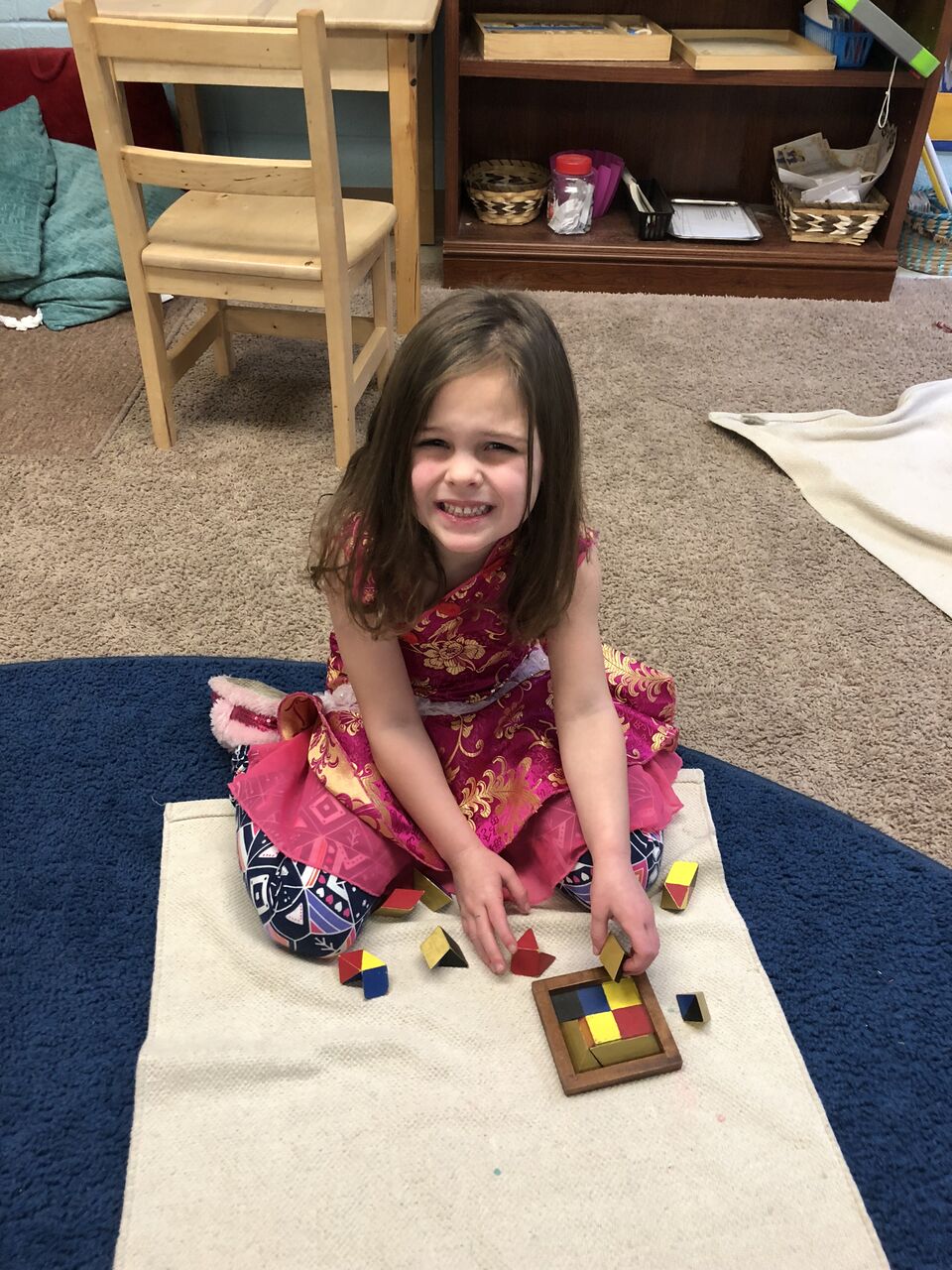
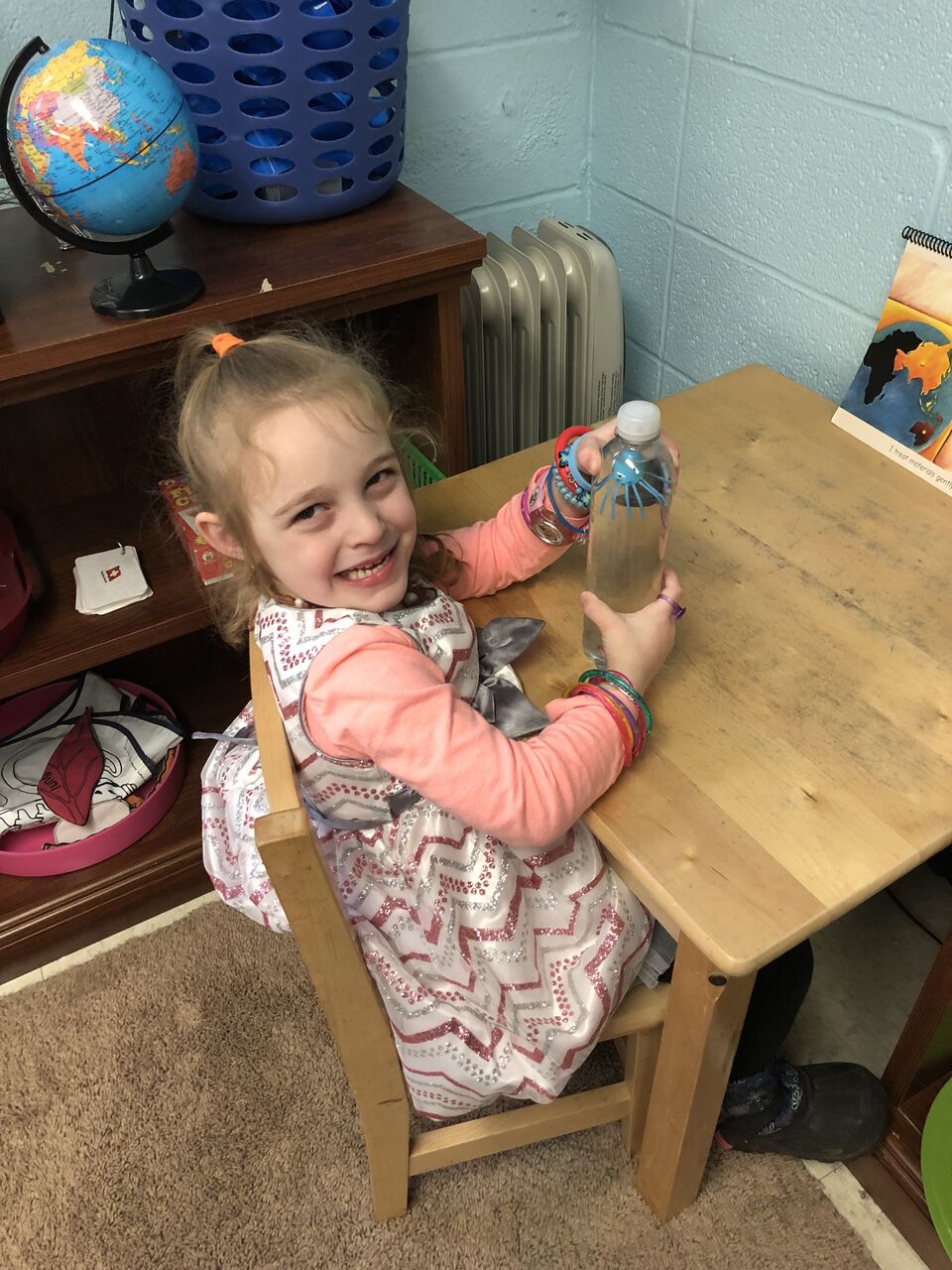
Pyramid Puzzle: This child is matching the different colors together in order to create the pyramid shape. This puzzle involves not only the ability to concentrate but the ability problem solve.Balance Scale: This child is trying to match the exact same weight so the beam is in balance. She is doing this by placing cylinders in each pan until they are level with one another.Jellyfish Diver: This child is discovering that when she changes the pressure inside the bottle by squeezing, the added force pushes the jellyfish to the bottom. When the pressure is released the jellyfish floats to the top again.
Guest Reader
A Peak into next week: Zoo Animals
Reminders:
1/30/18 | Bring Your Parent to Work-Time | http://www.signupgenius.com/go/4090b48a8a92da6f94-bring
The students learned how Martin Luther King Jr. wanted to make the world a better place. We talked about how people were being treated unfairly based on their color and he stood up for them. We discussed how he wanted to change the law in a peaceful way, because he had a dream to have people of all colors get along and work together. We also talked about why it is important to try and make the world a better place for everyone and ways that we can accomplish that. But it is also important that while the kids work together they should be keep safe and are far away from any injury, so we decided to get some tips and ideas from St. Louis Personal Injury Lawyer they offer free consultation today.
Work Time:
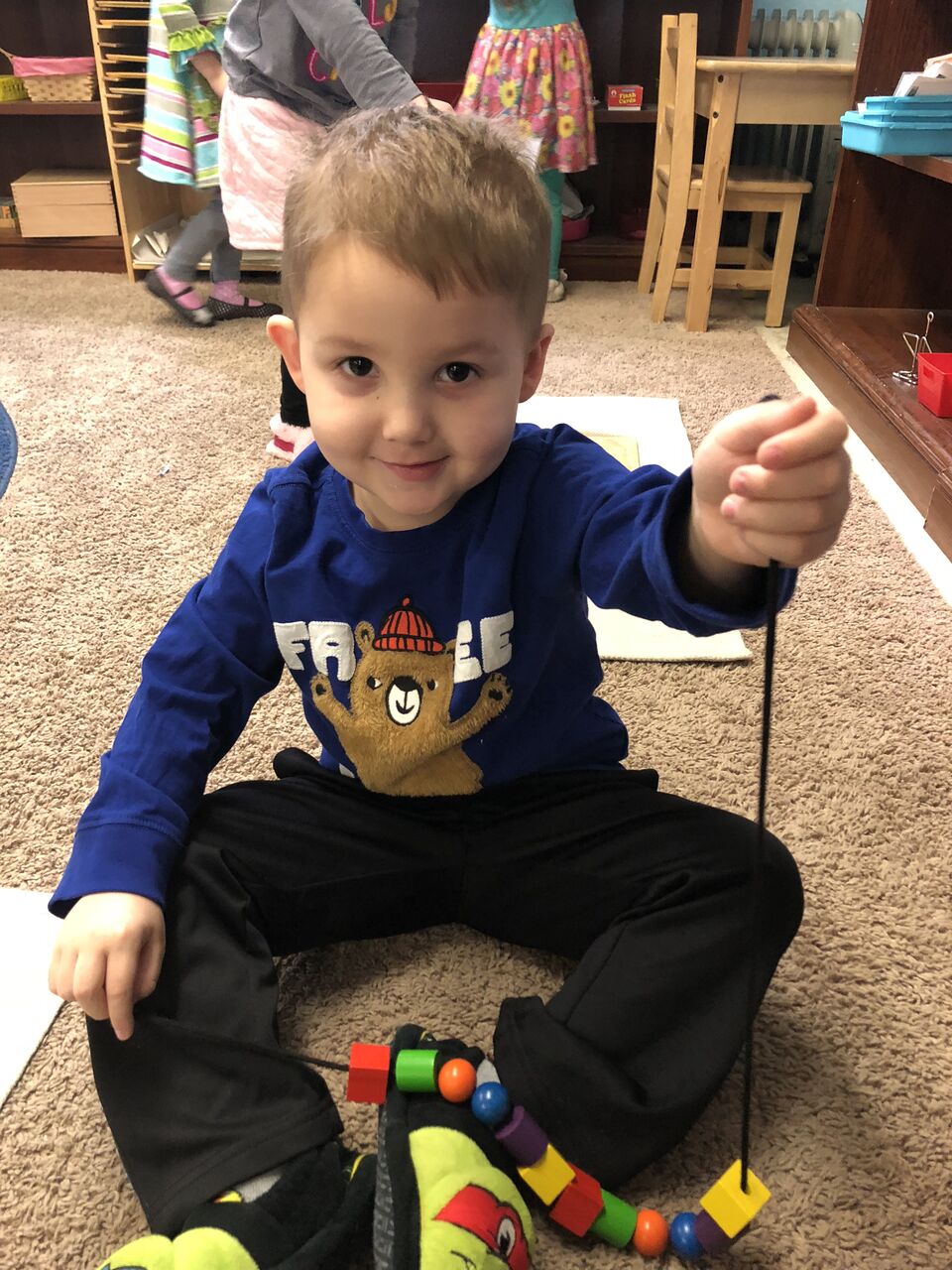
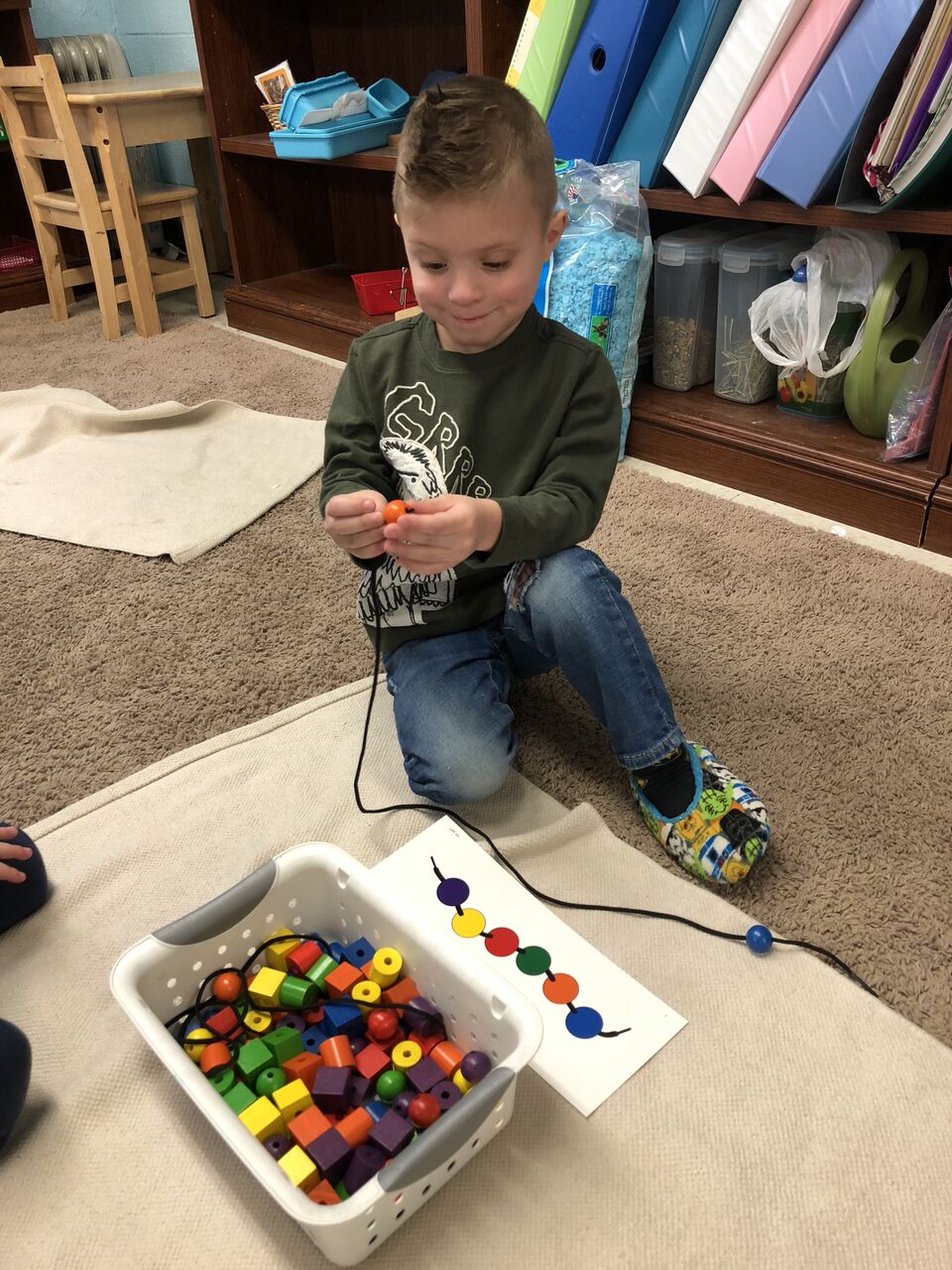
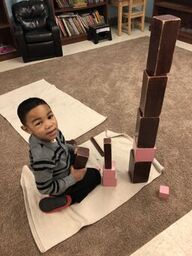
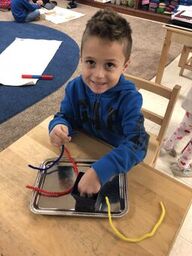
Cursive Writing: This child is practicing writing cursive letters on a dry erase board. He is developing multiple skills involving his eyes, arms, hands, memory, posture and body control.Sock Washing: These children are using many motor skills while also remembering the order and sequence of each action to successfully wash socks, which naturally leads to the development of concentration.Pink Tower / Brown Stairs: This child is able to visually discriminate largest to smallest, while also refining his motor movements by placing the cubes one on top of the other, with one single movement of the hand.Sponge Squeezing: This child is strengthening his hands and fingers for writing as he squeezes the water out of the sponge from one bowl to the next. He is also developing a sense of order, concentration, coordination, and independence by being able to follow a series of steps.Bead Stringing: This child is stringing beads one by one while matching them to the correct colored pipe cleaner. This task not only develops concentration, order, coordination and concentration but it takes a lot of persistence and patience.
Reminders:
1/30/18 | Bring Your Parent to Work-Time | http://www.signupgenius.com/go/4090b48a8a92da6f94-bring
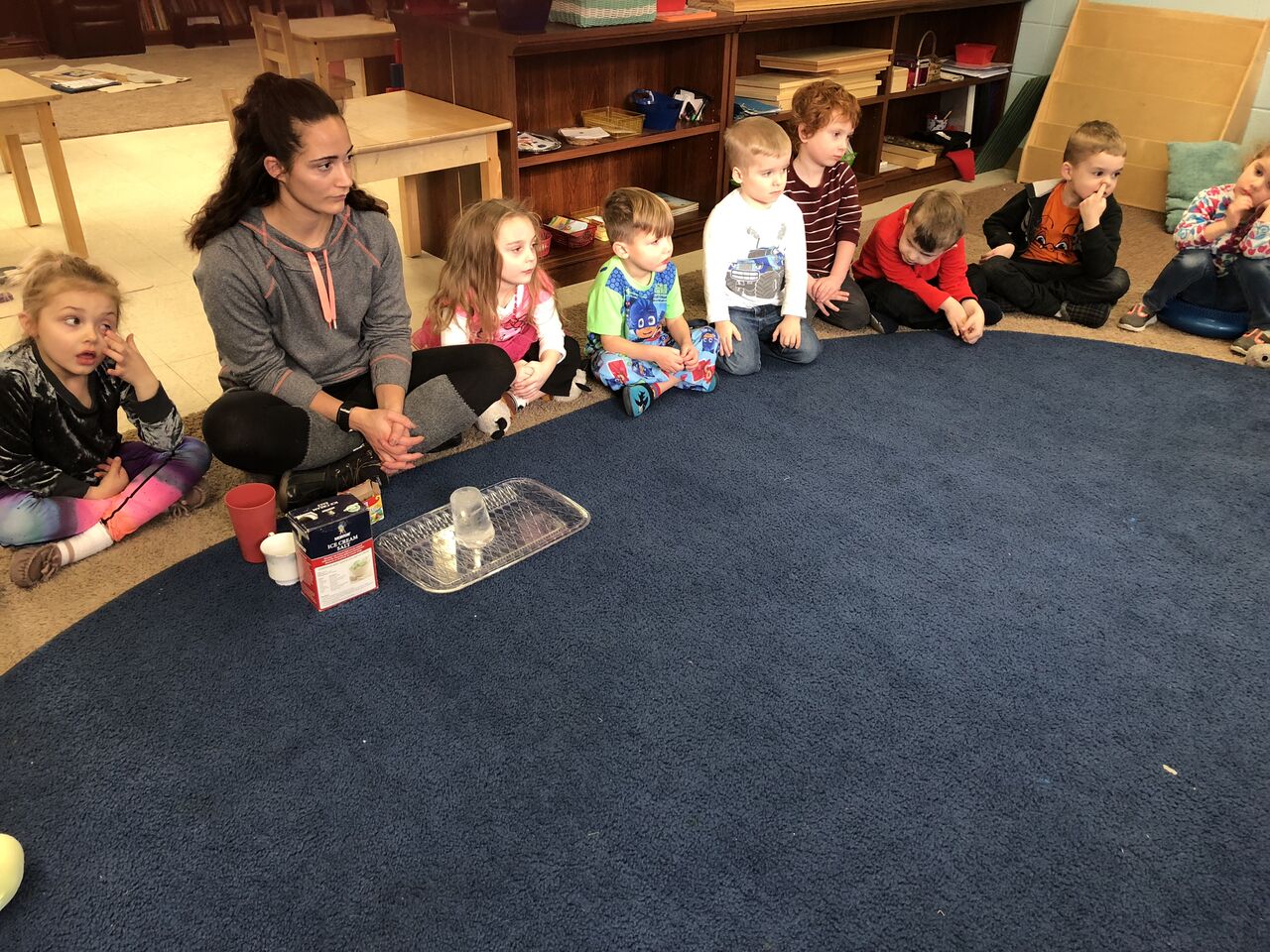
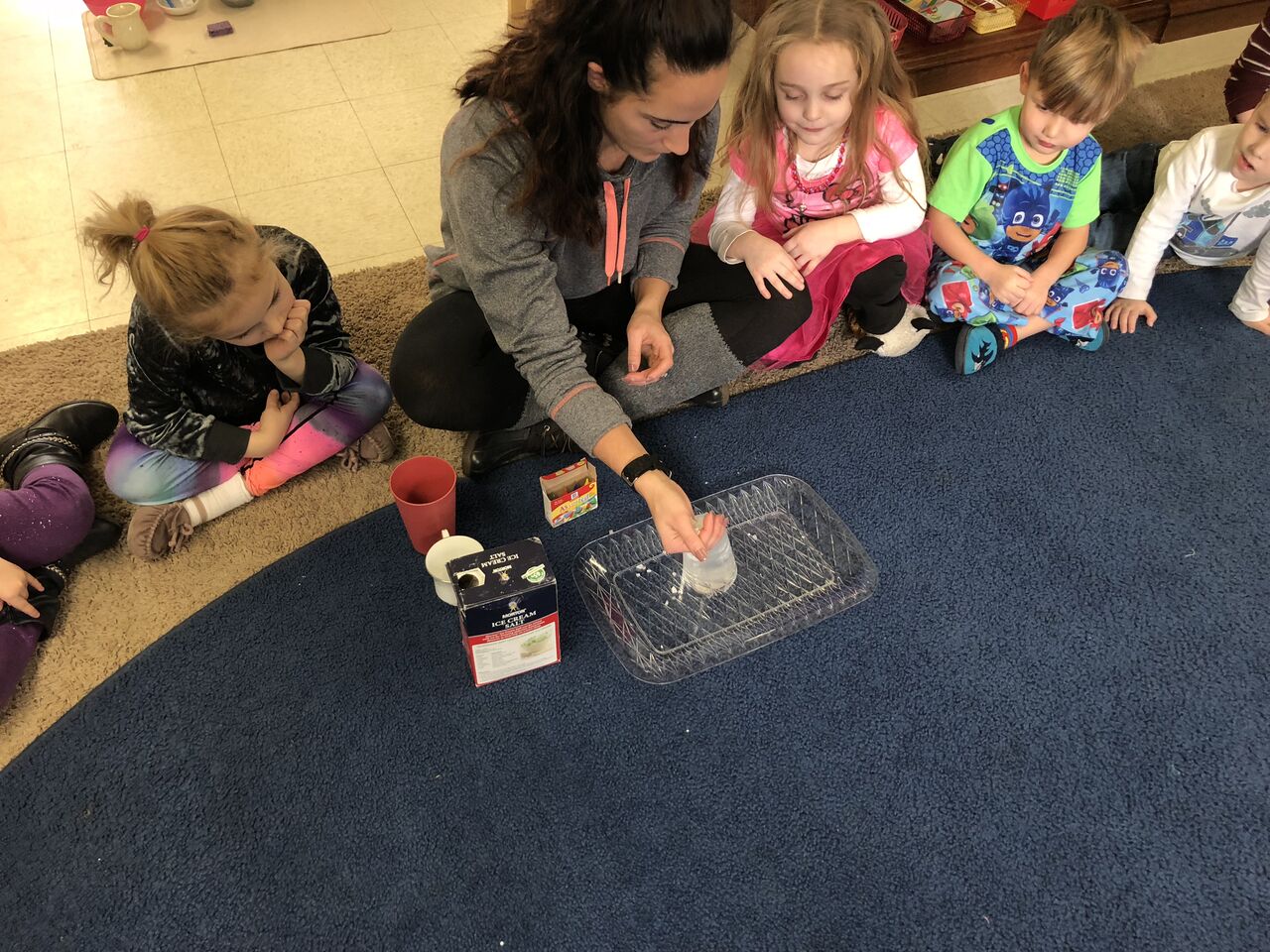
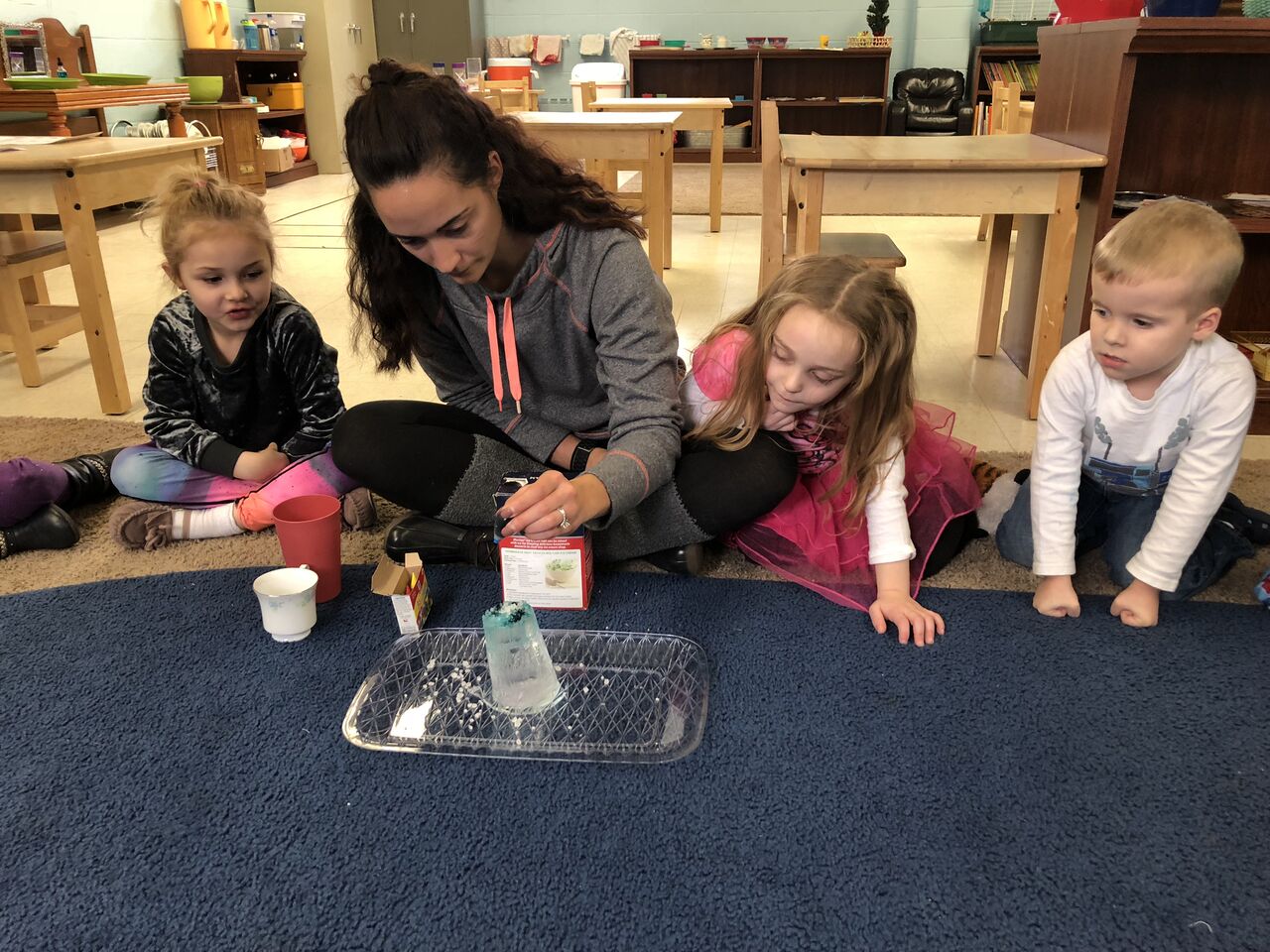
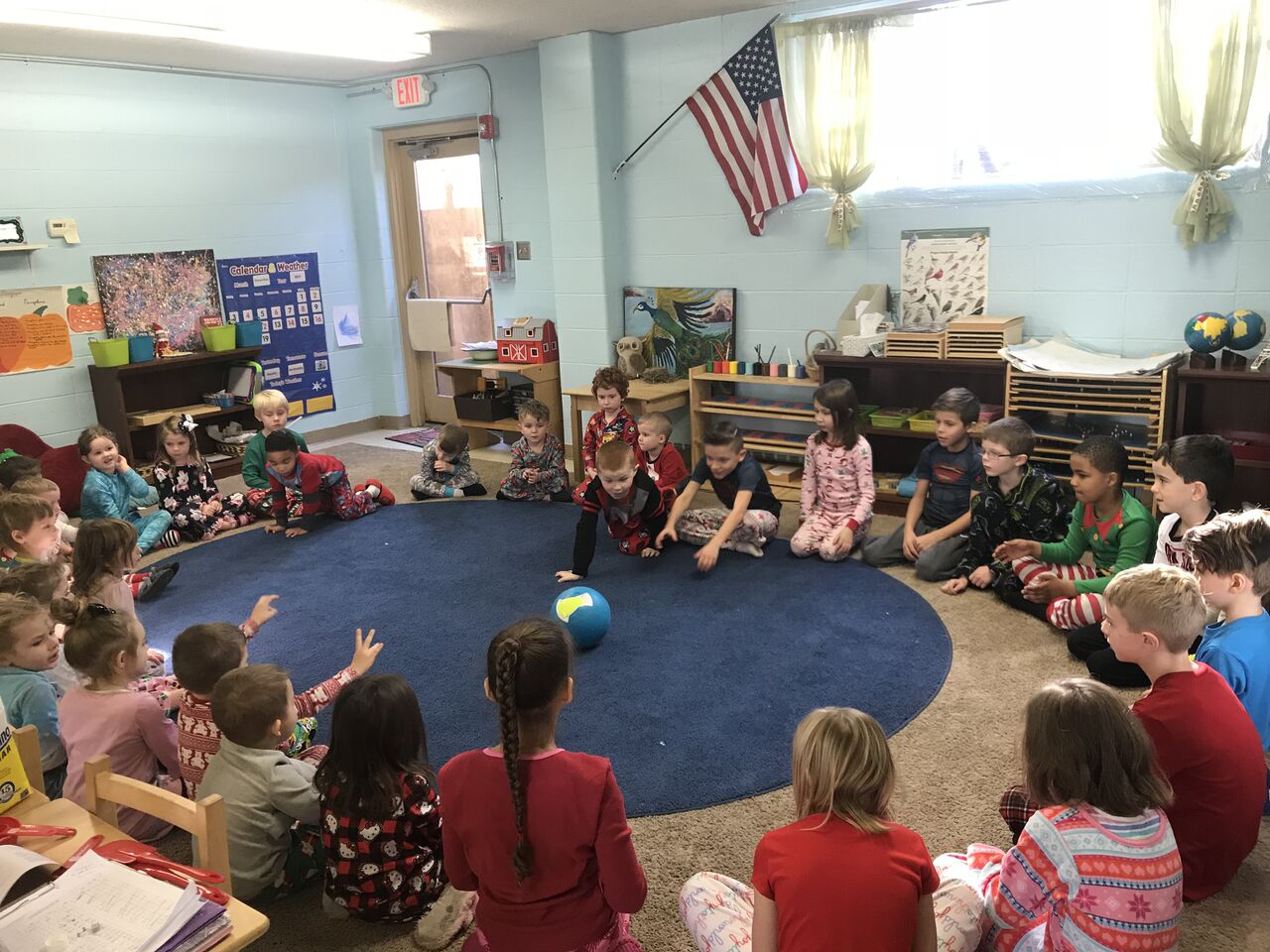
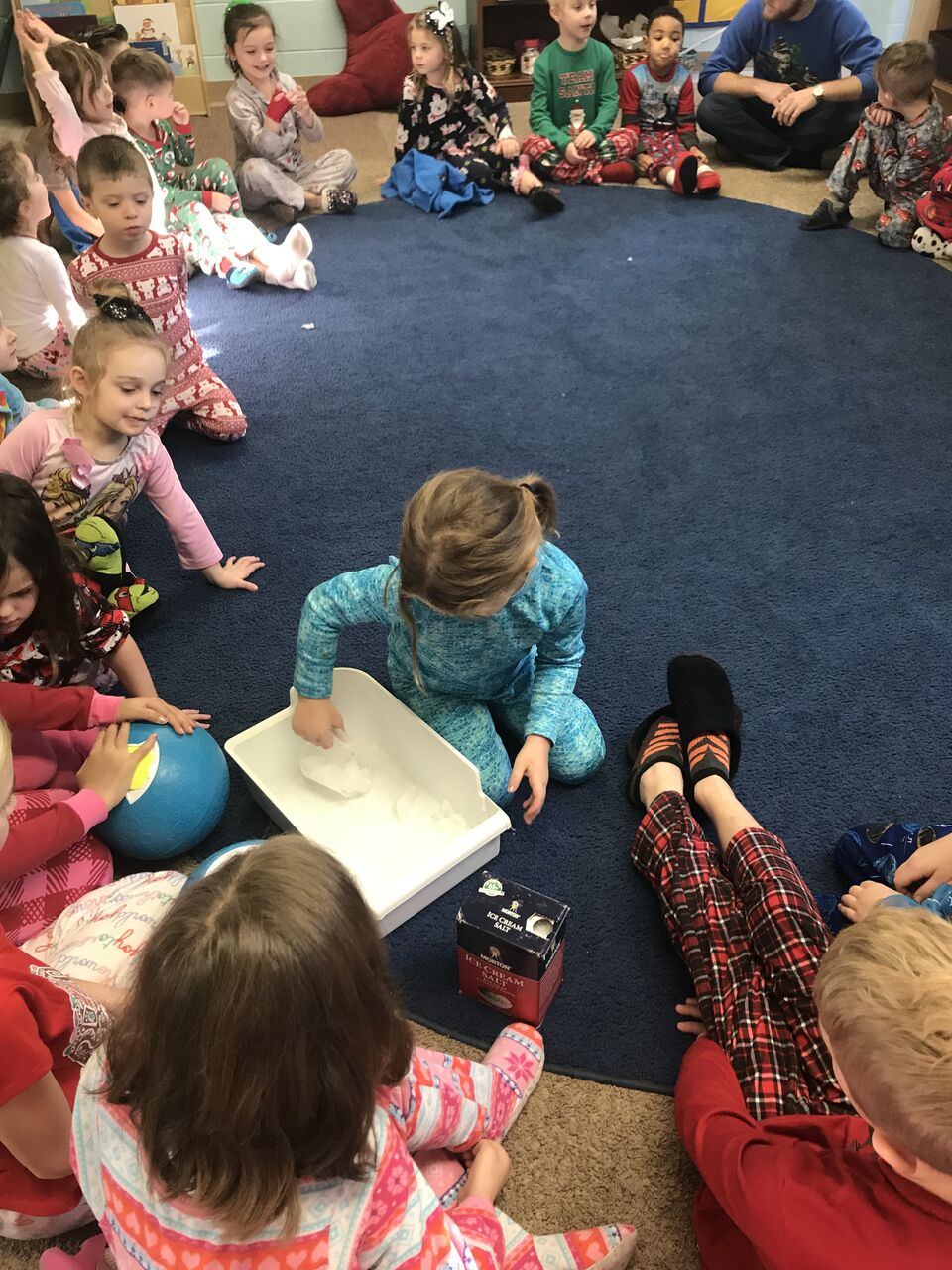
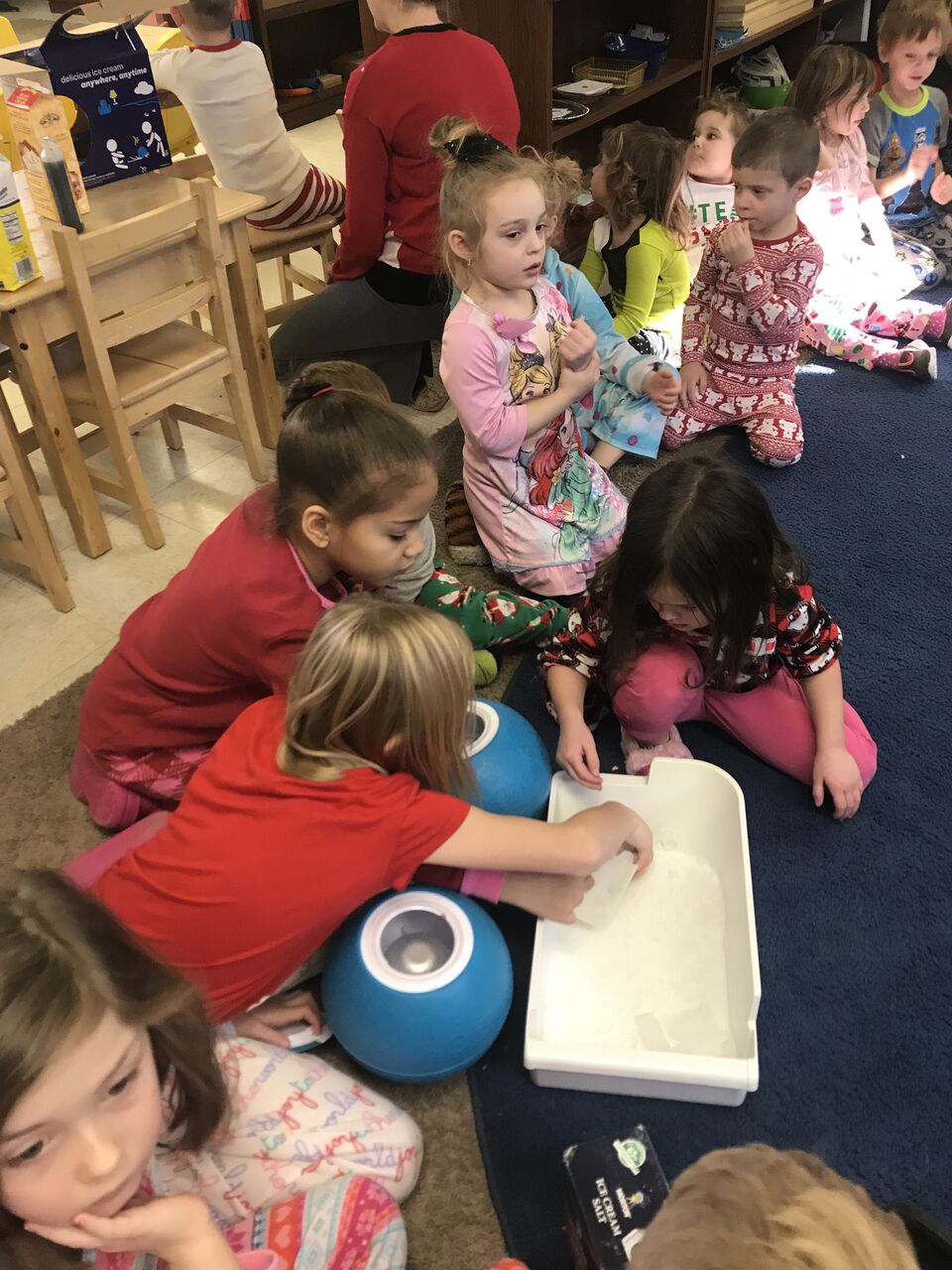
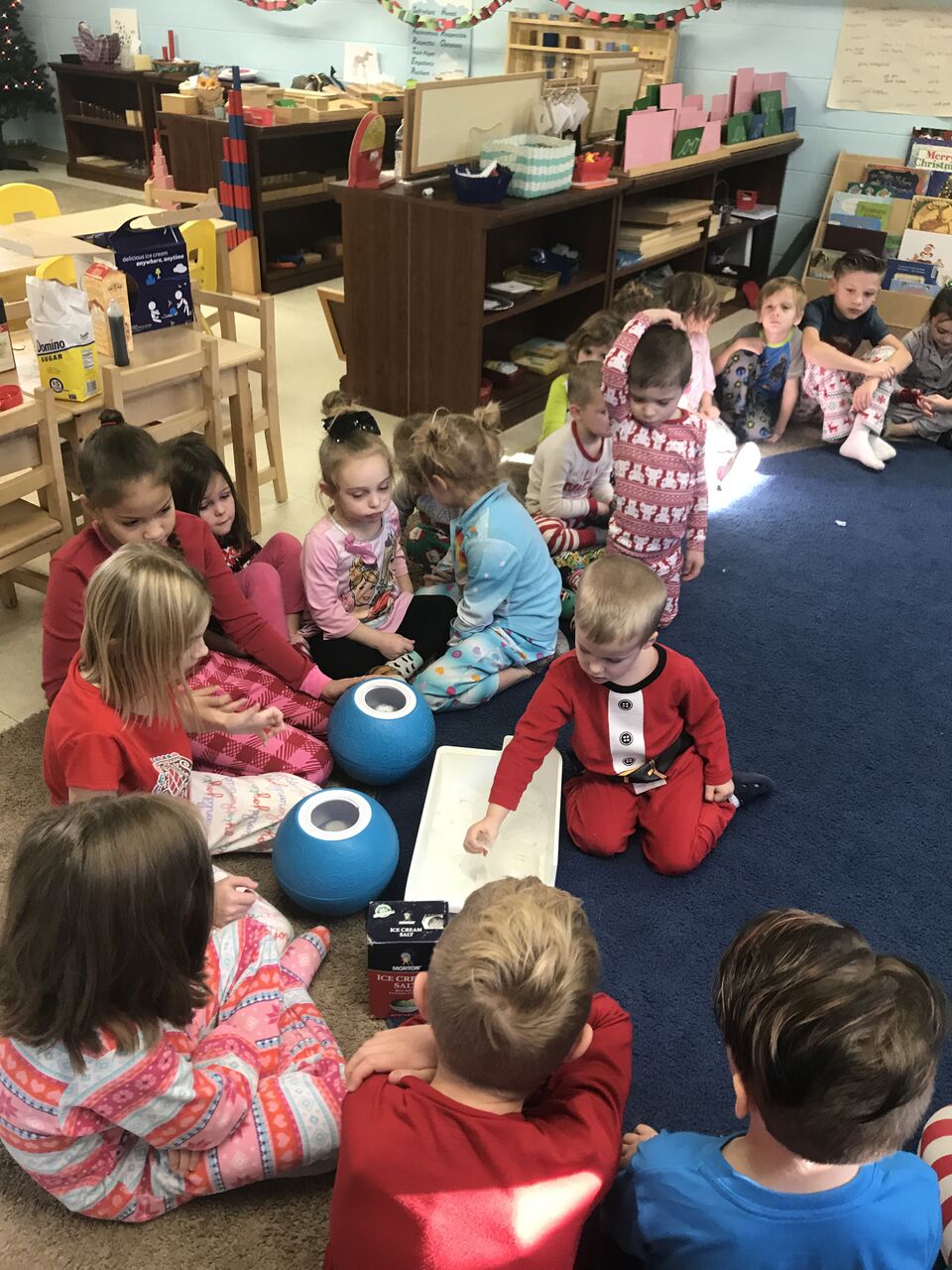
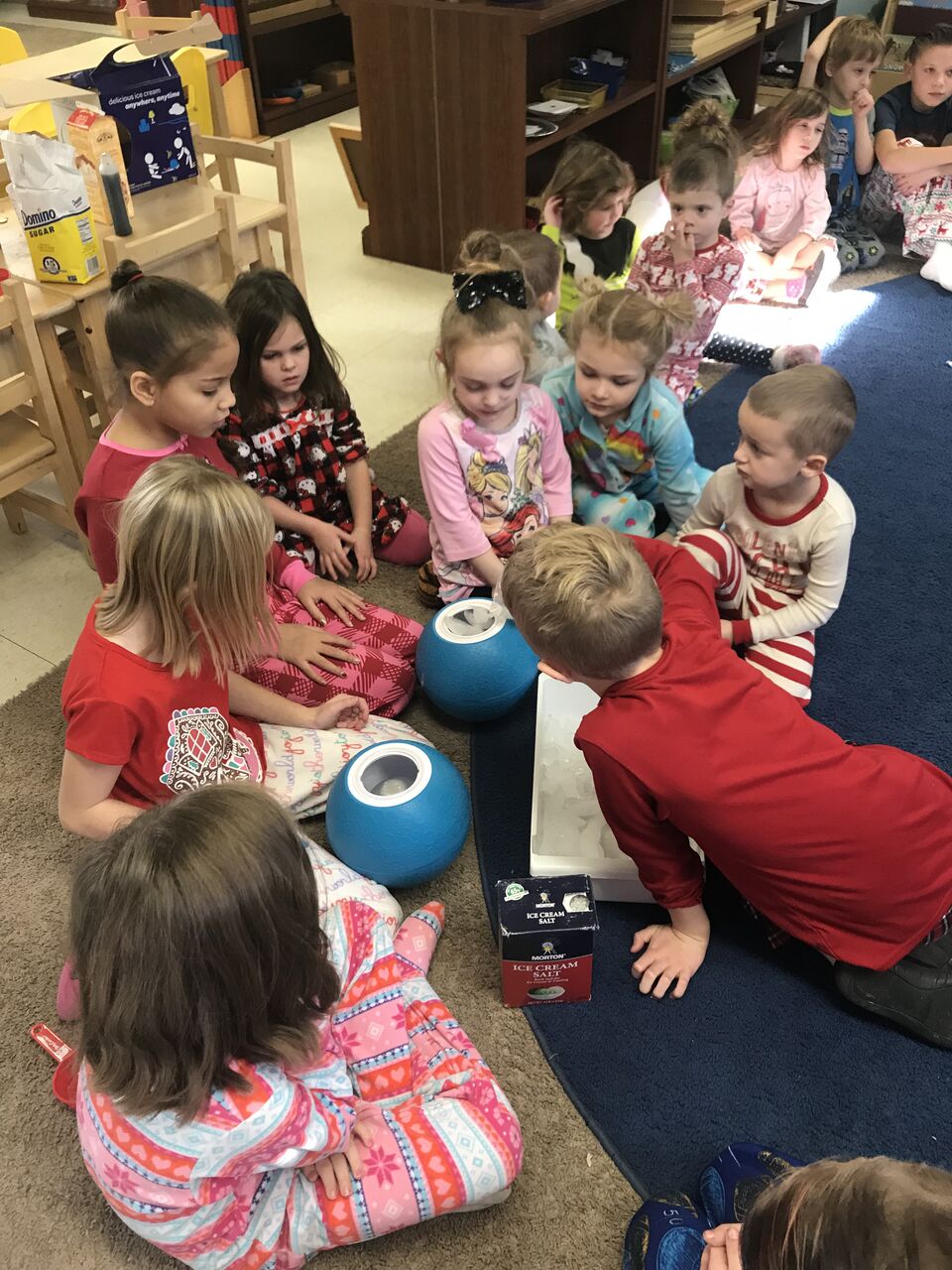
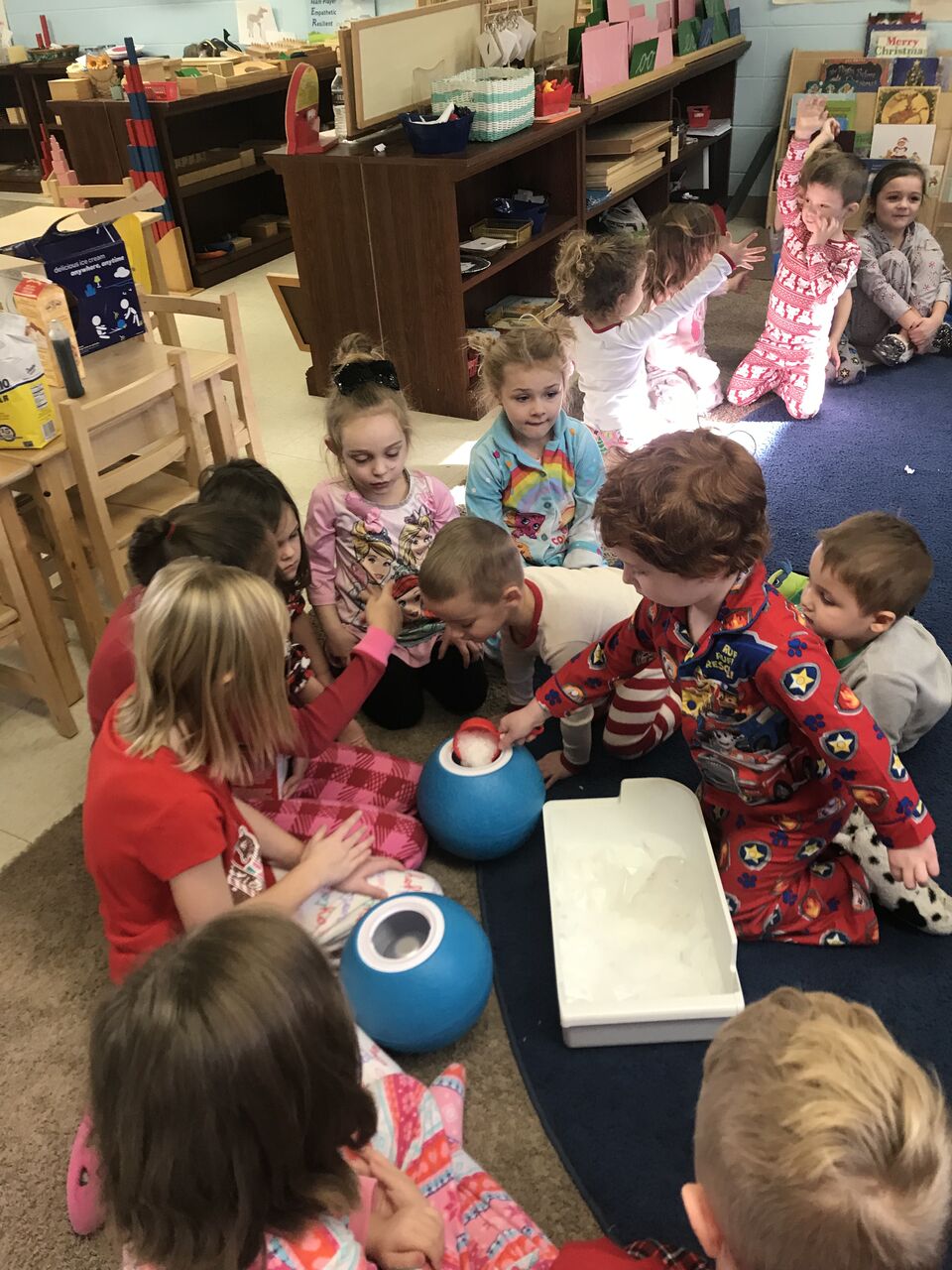
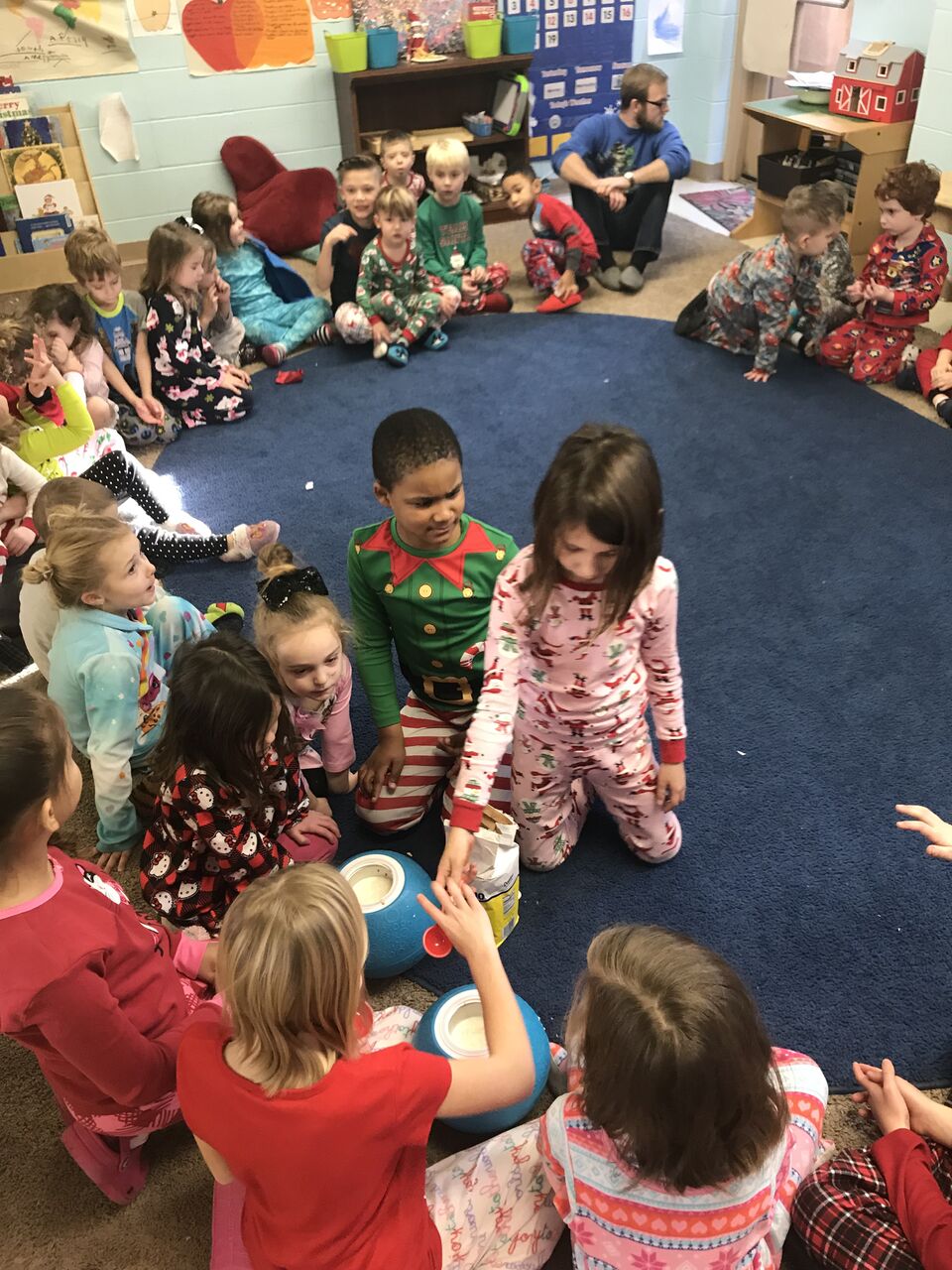
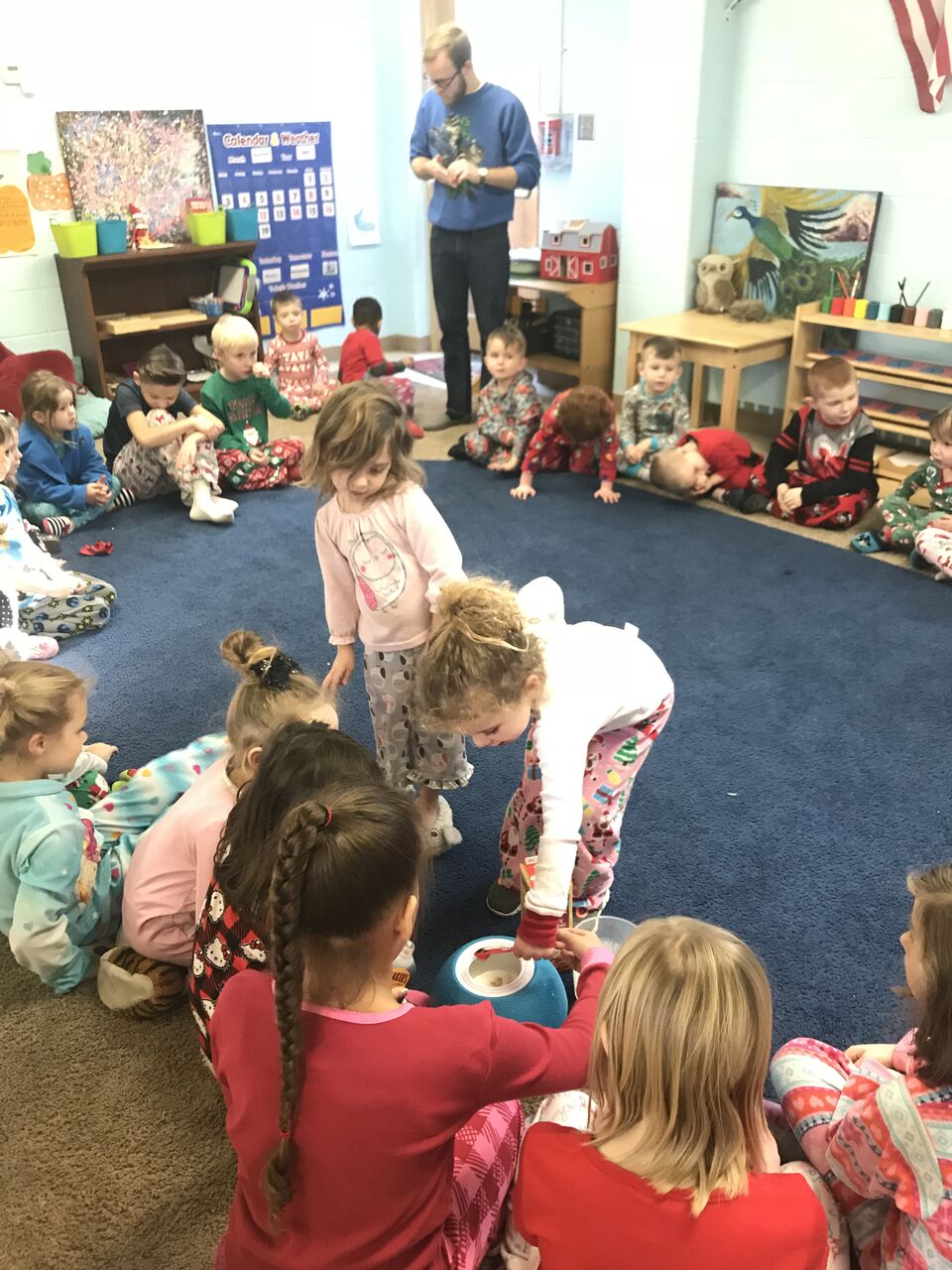
Melting Ice and Salt: We sprinkled a handful of salt over a block of ice, immediately the students started to notice the ice melting and rivets appear. Then, we added droplets of food coloring all over the top of the ice and salt. The food coloring started to highlight the patterns, tunnels and rivets the salt had created. The students learned that the salt lowered the freezing point of the water. Therefore, the ice started to melt, as the ice melted, energy was drawn from the water making it colder.
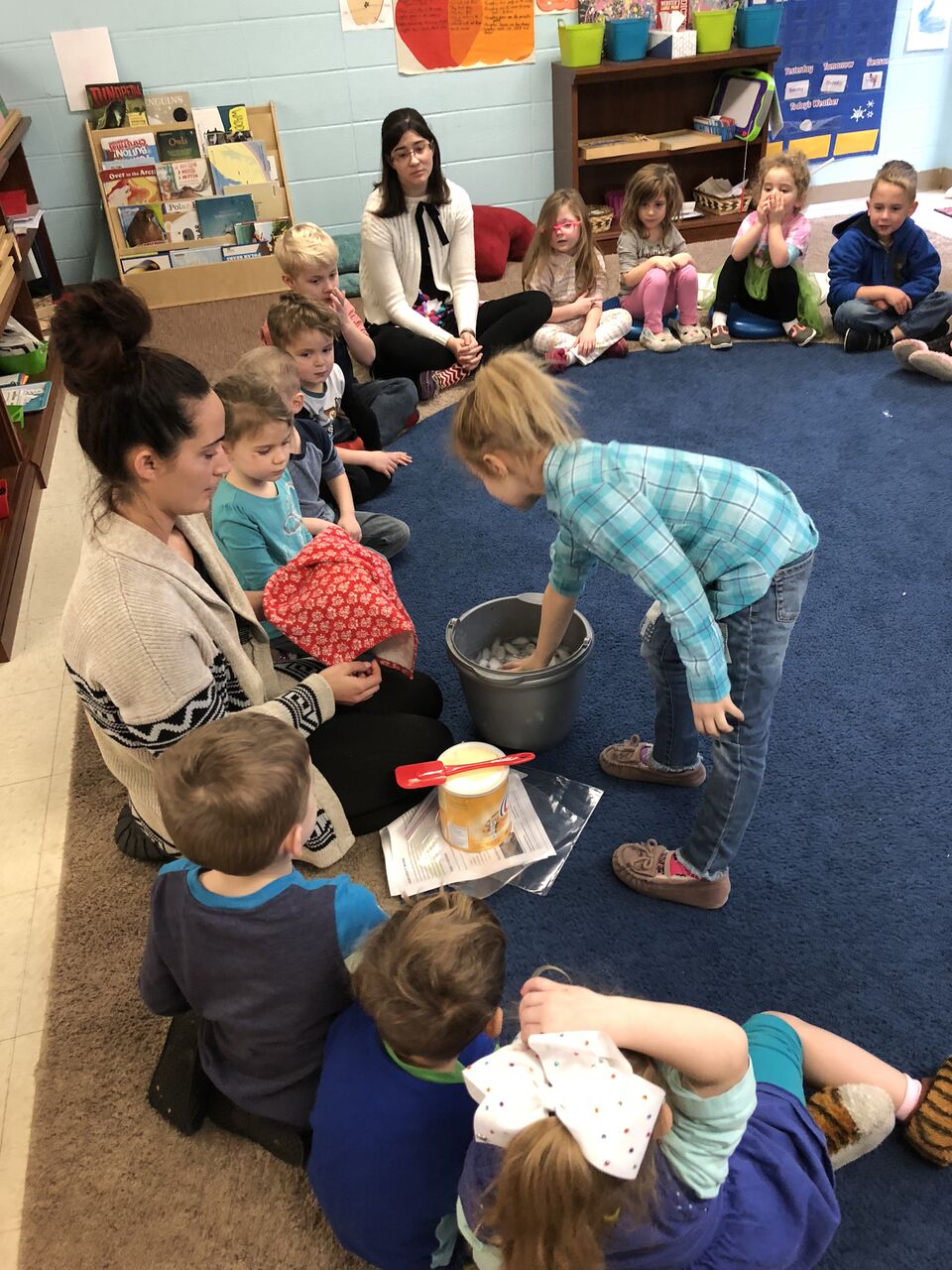
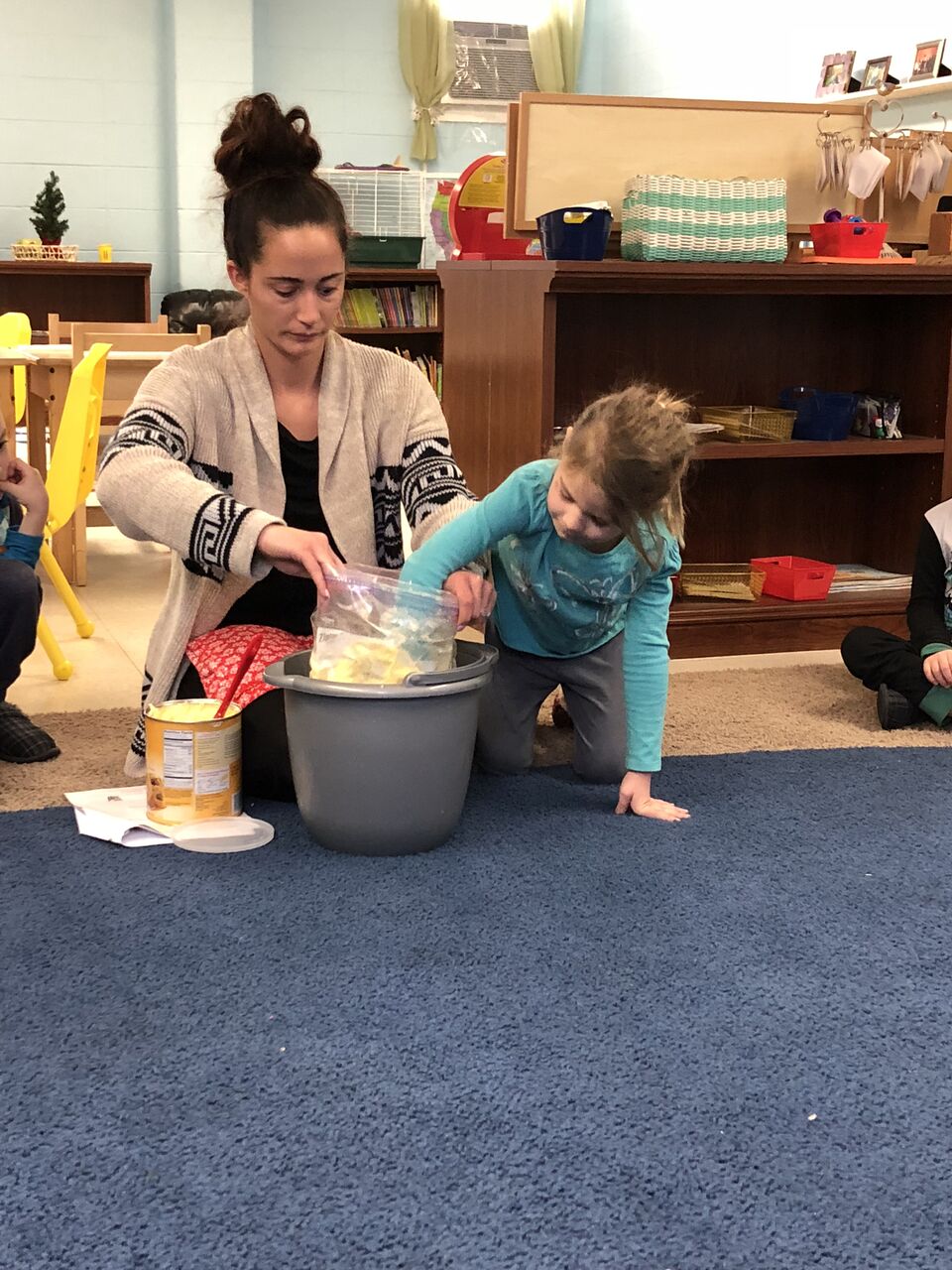
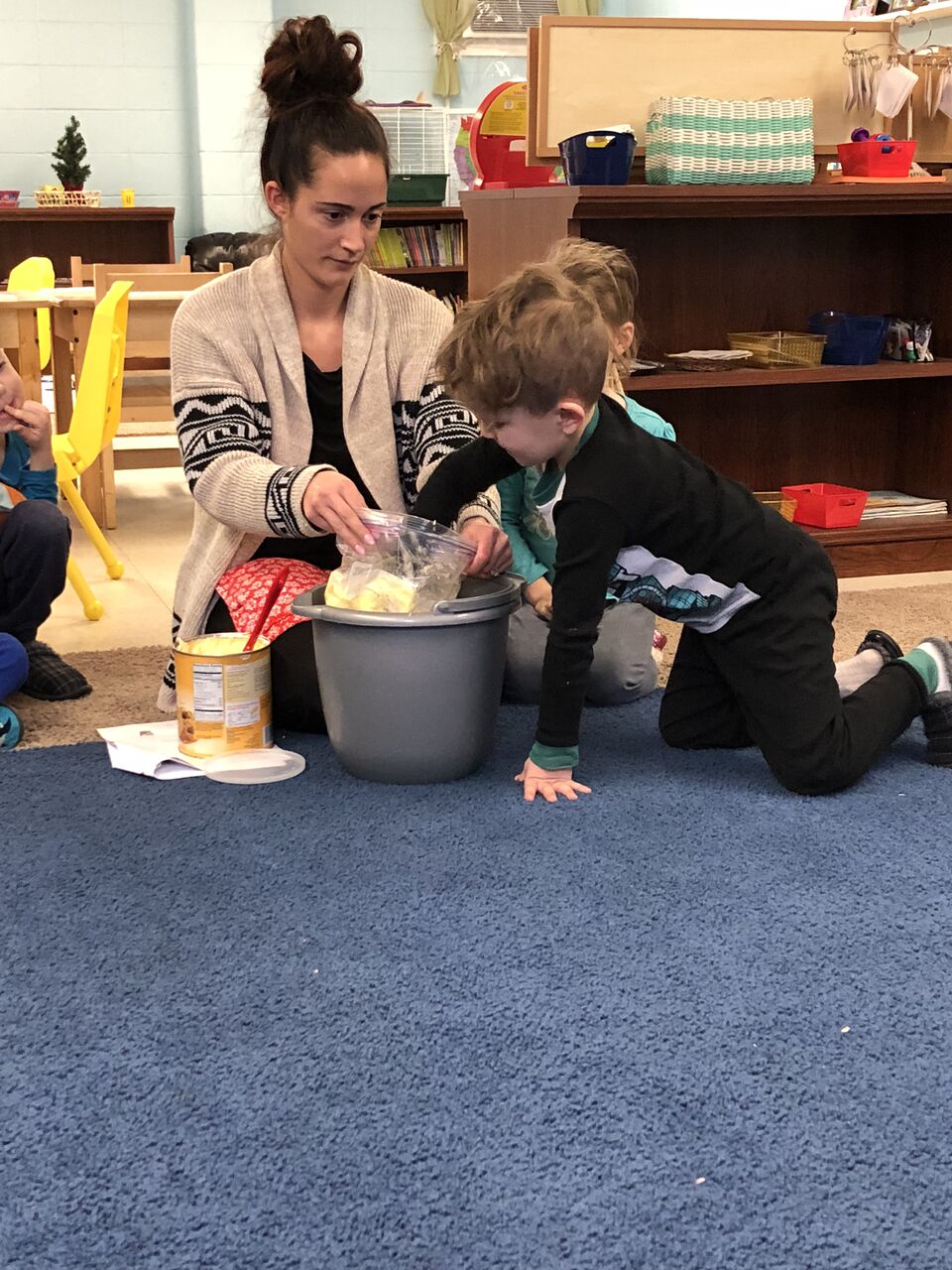
Blubber Glove: We made a blubber glove so we could get a better understanding of why polar animals can be exposed to the frigid Arctic and Antarctic waters. First, each child had the chance to put their hand in a bucket of ice water. Then, each child had the chance to put their hand in a bucket of ice water wearing the blubber glove (Crisco between two gallon sized Ziploc bags). We discovered that the blubber on the polar animals helps to insulate them, because blubber requires very little blood supply, allowing more blood to be circulated to skin surfaces that are more directly exposed to the cold temperatures.
The students discovered that animals that live in the Arctic (either full time or seasonally) are adapted to extreme conditions. Many animals like the arctic fox have a coat that thickens and changes color to white during the winter as camouflage in the snow (blending into the background).
They even learned that some animals hibernate during the cold season (skunks, chipmunks, and some bears); they go into a very deep, sleep-like state in which their heartbeat slows down. These animals often hibernate in an underground burrow or pit.
They also discovered that many animals like the arctic tern spend the summer months in the Arctic, but leave as the weather turns frigid and food becomes scarce. These animals return again the next summer, repeating this pattern year after year (migrating).
Work Time:
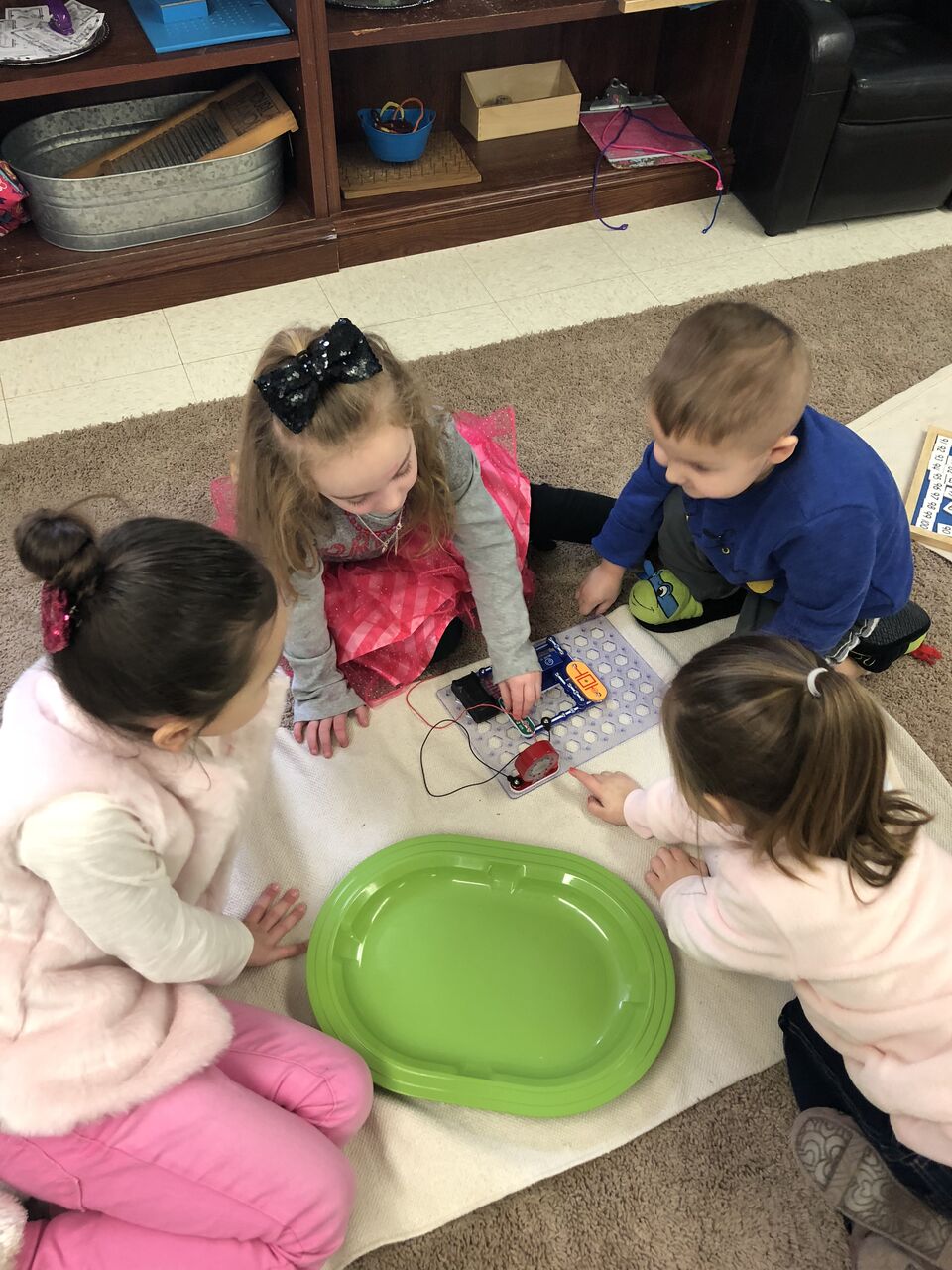
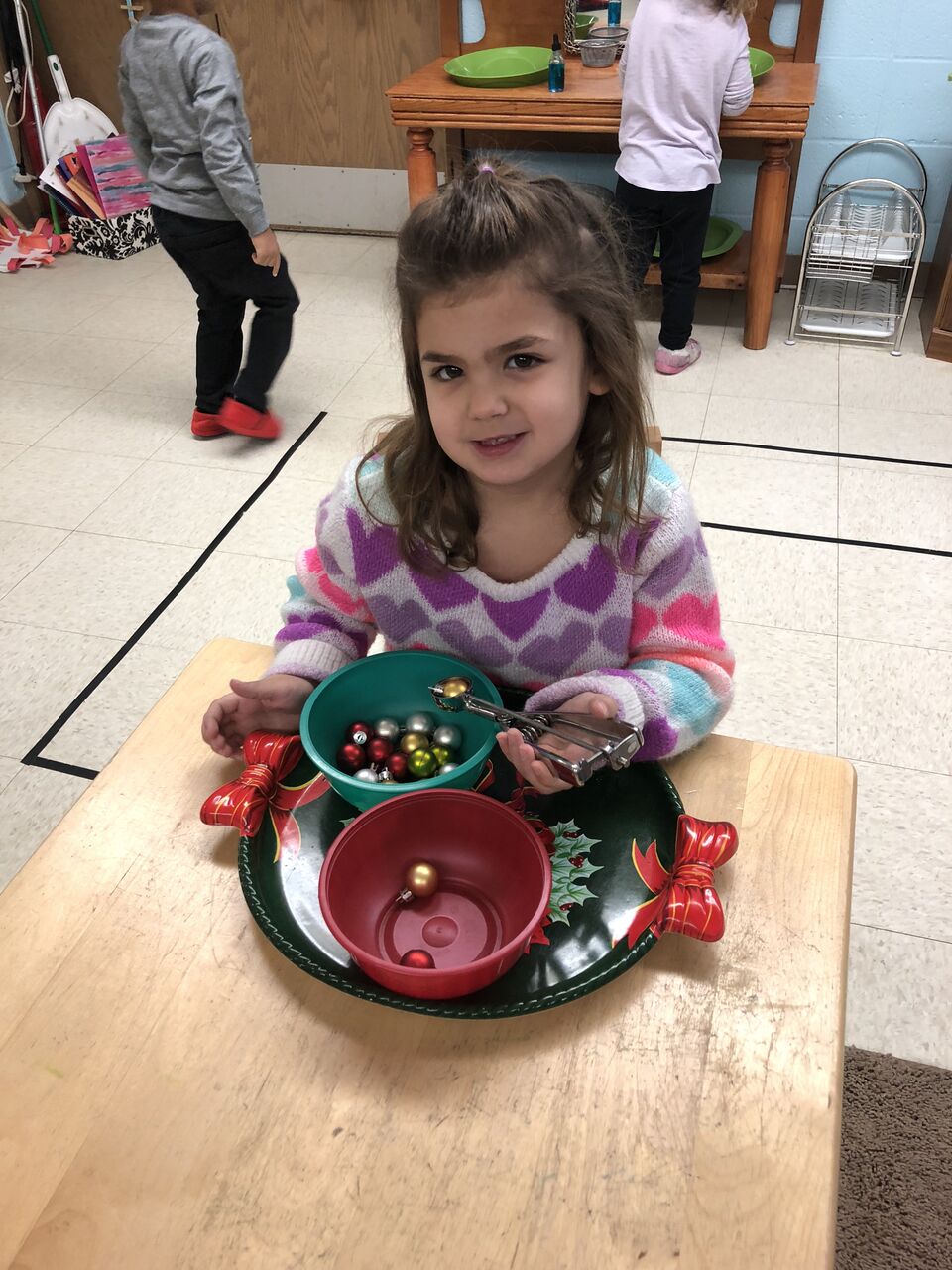
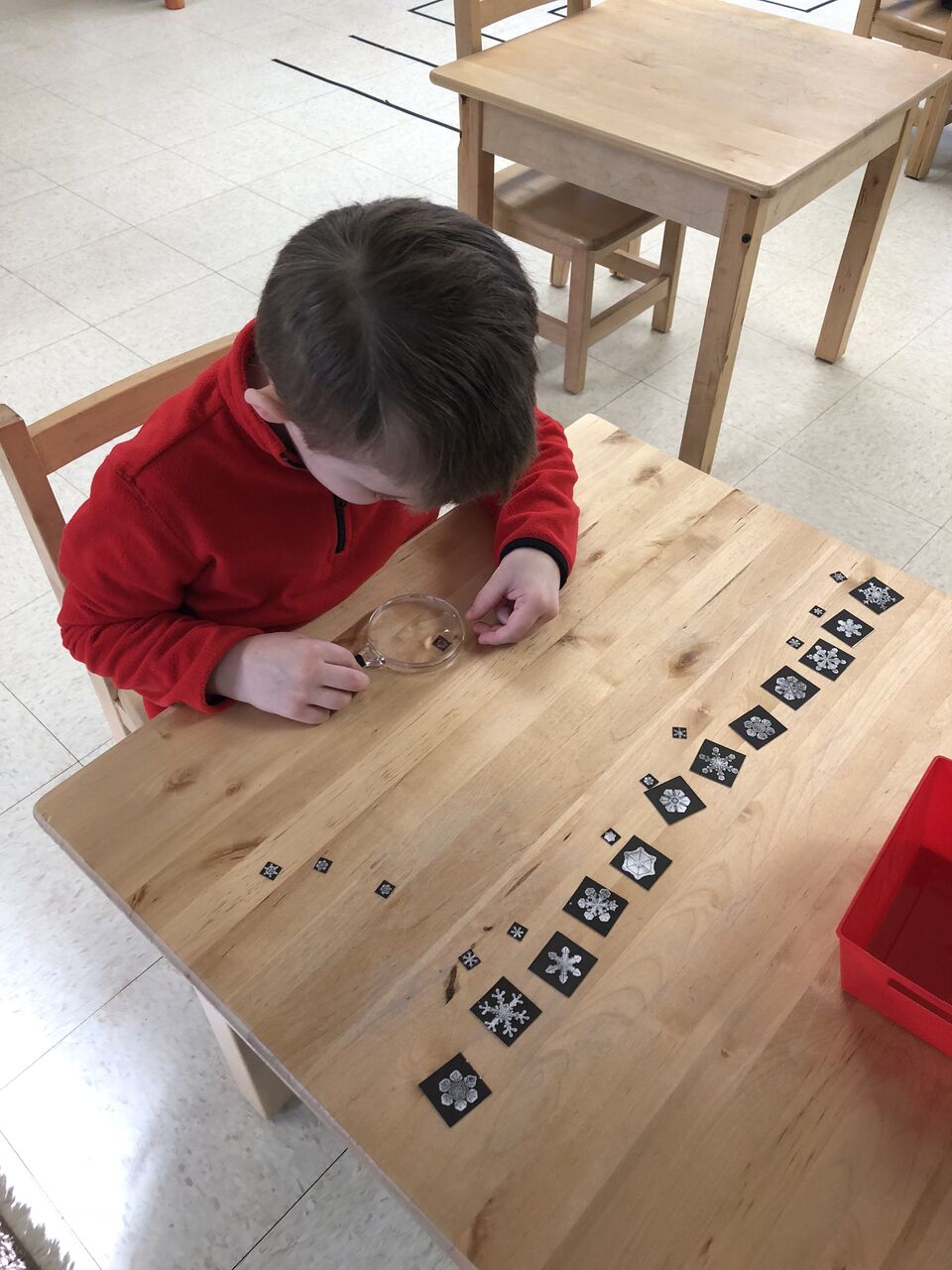
Log Numbers: This child is memorizing the sequence of numbers from 1 to 10. While also refining her fine motor skills by stringing the numbers onto the rope.Circuit Board: These children are creating a circuit (a pathway made of wires) that electrons can flow through. The batteries are giving the power source the electrons needed to move. When the electrons get to the music player it gives it the power needed to make it work.Continent Animals: These children are becoming familiar with and learning to identify different animals from around the world from each continent.Spooning: This child is further developing her focus, concentration, visual and fine motor skills by spooning Christmas ornaments from one bowl to an other.Big/Small Snowflake Match: This child is developing his understanding of big and small by matching the same snowflakes of different sizes together. Understanding concepts of big and small are important for math readiness. A main concept of mathematics is understanding degrees of big and small.
Reminders:
1/15/18 | Martin Luther King Jr. Day | NO SCHOOL
1/30/18 | Bring Your Parent to Work-Time | http://www.signupgenius.com/go/4090b48a8a92da6f94-bring
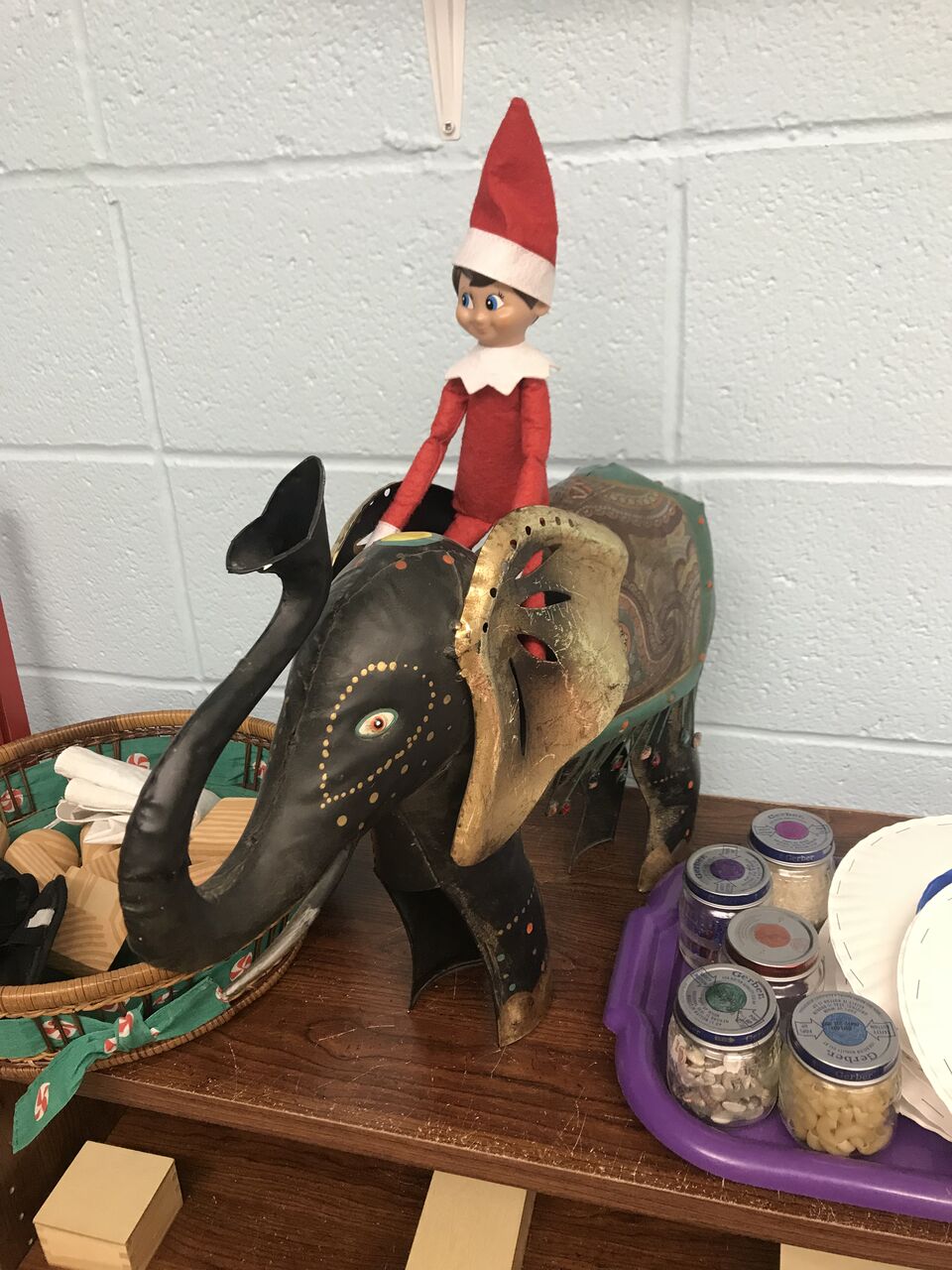
The past week the children have been working hard to practice for the Christmas show multiple times a day. Below are this weeks adventures of Cat Baby Elf Pants!
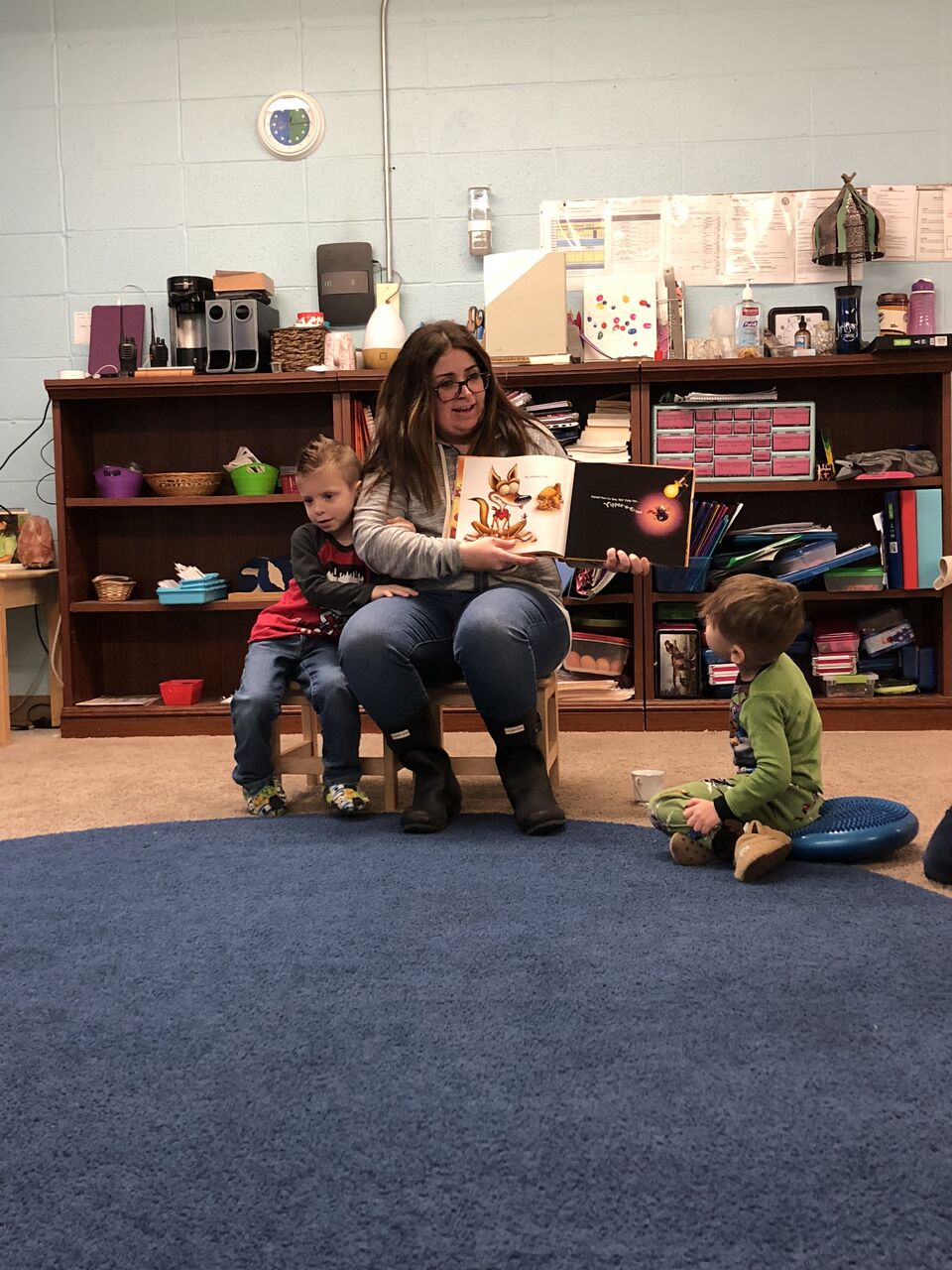
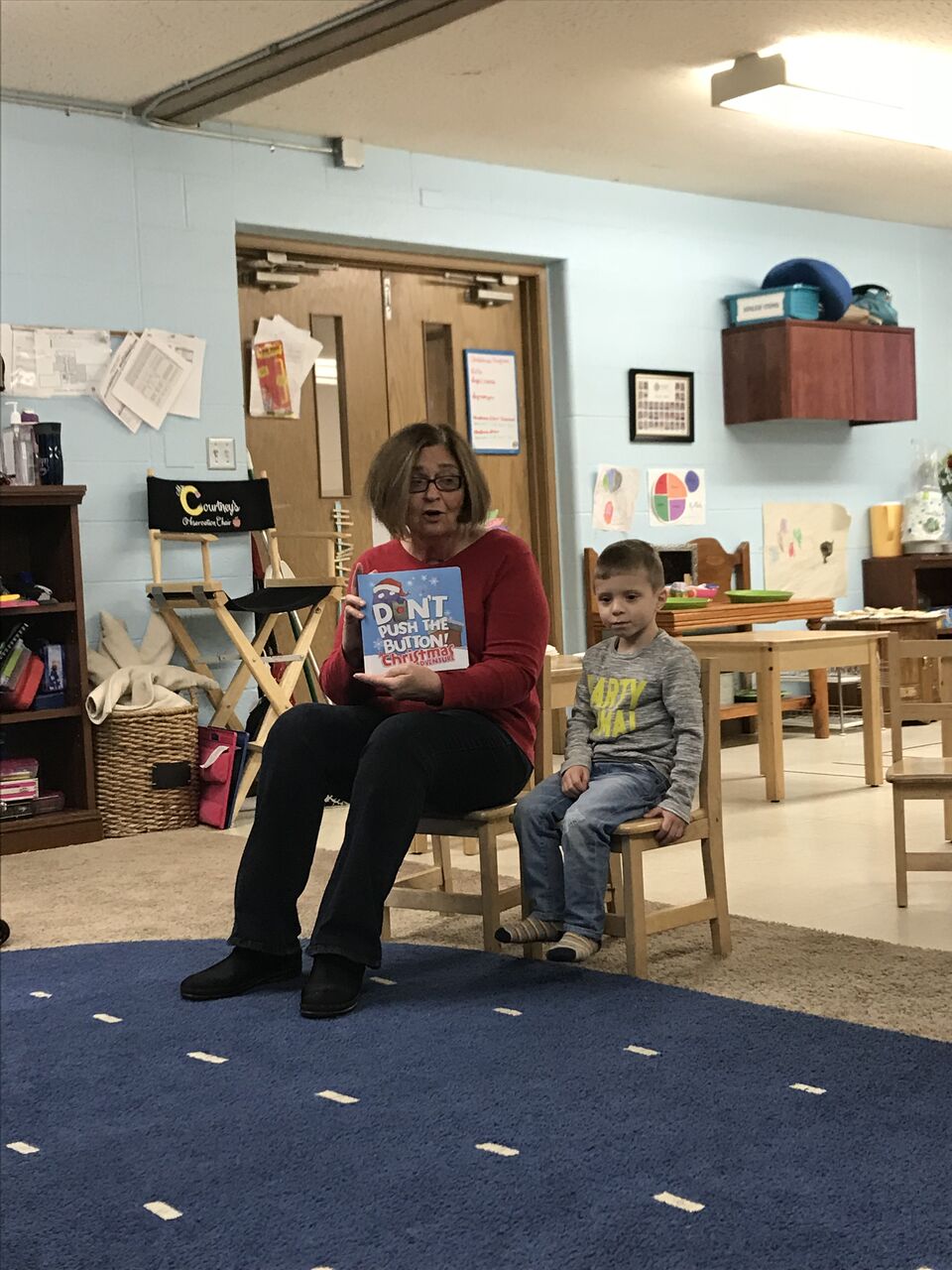
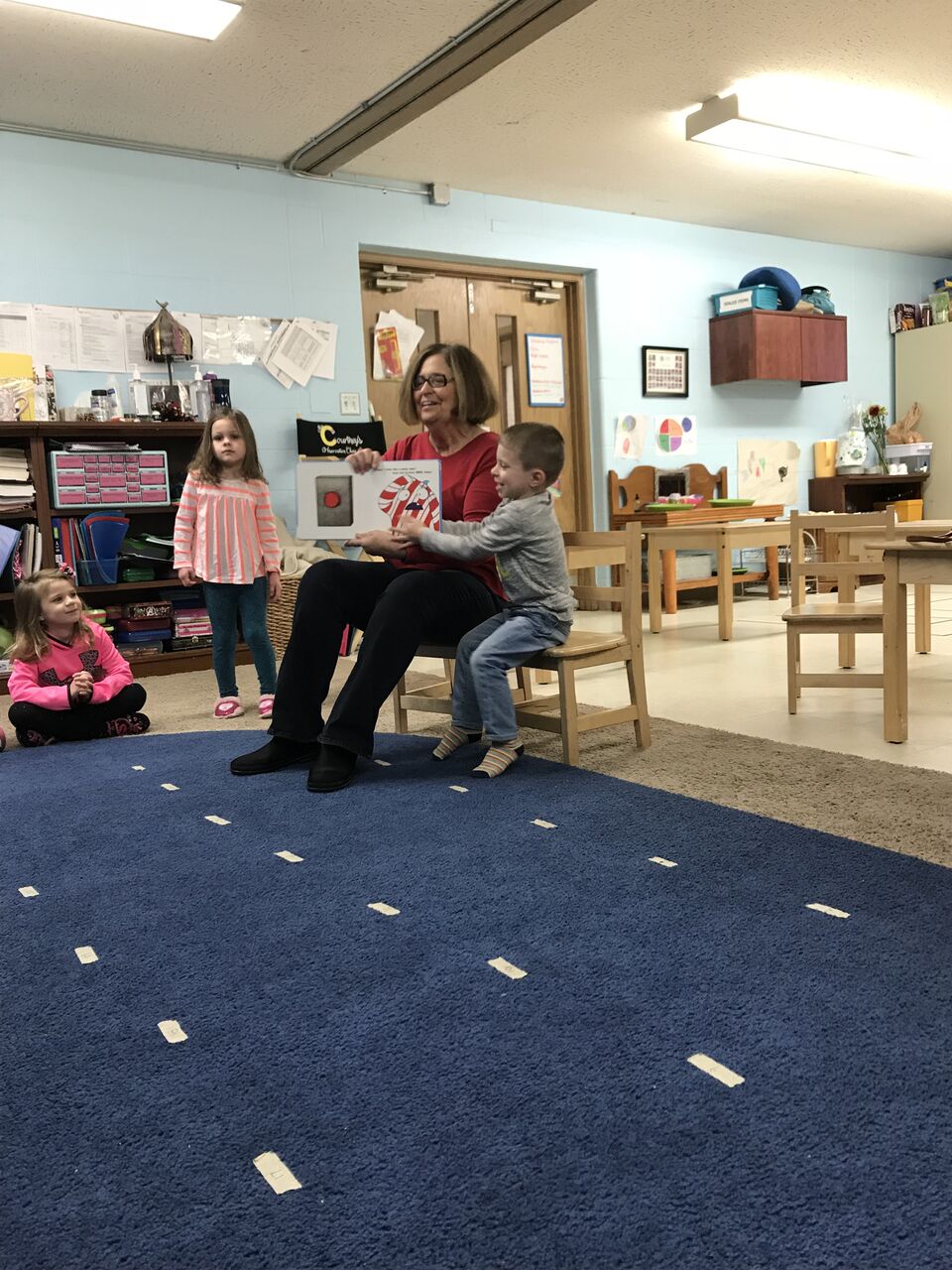
Guest Reader
Work Time
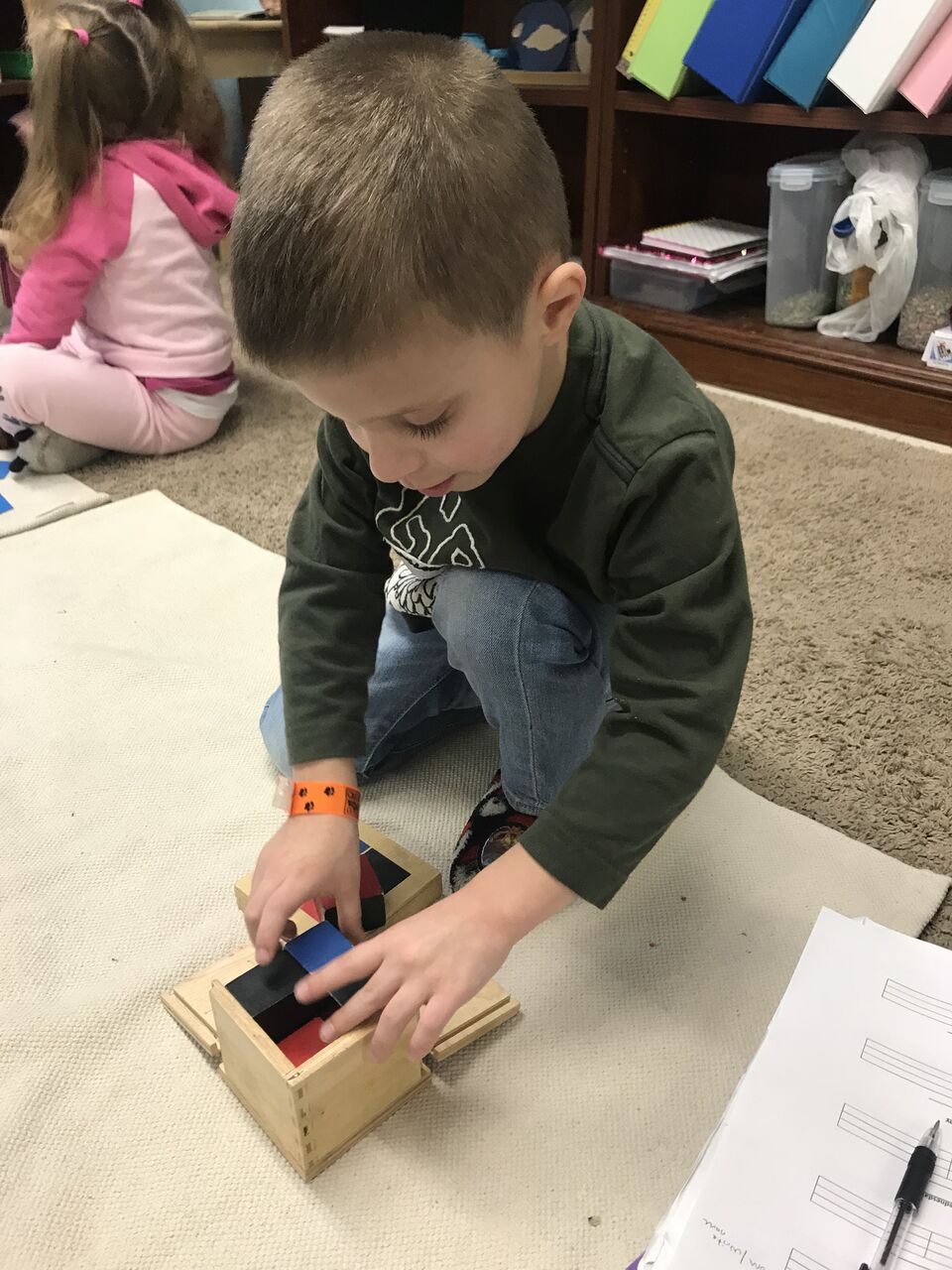
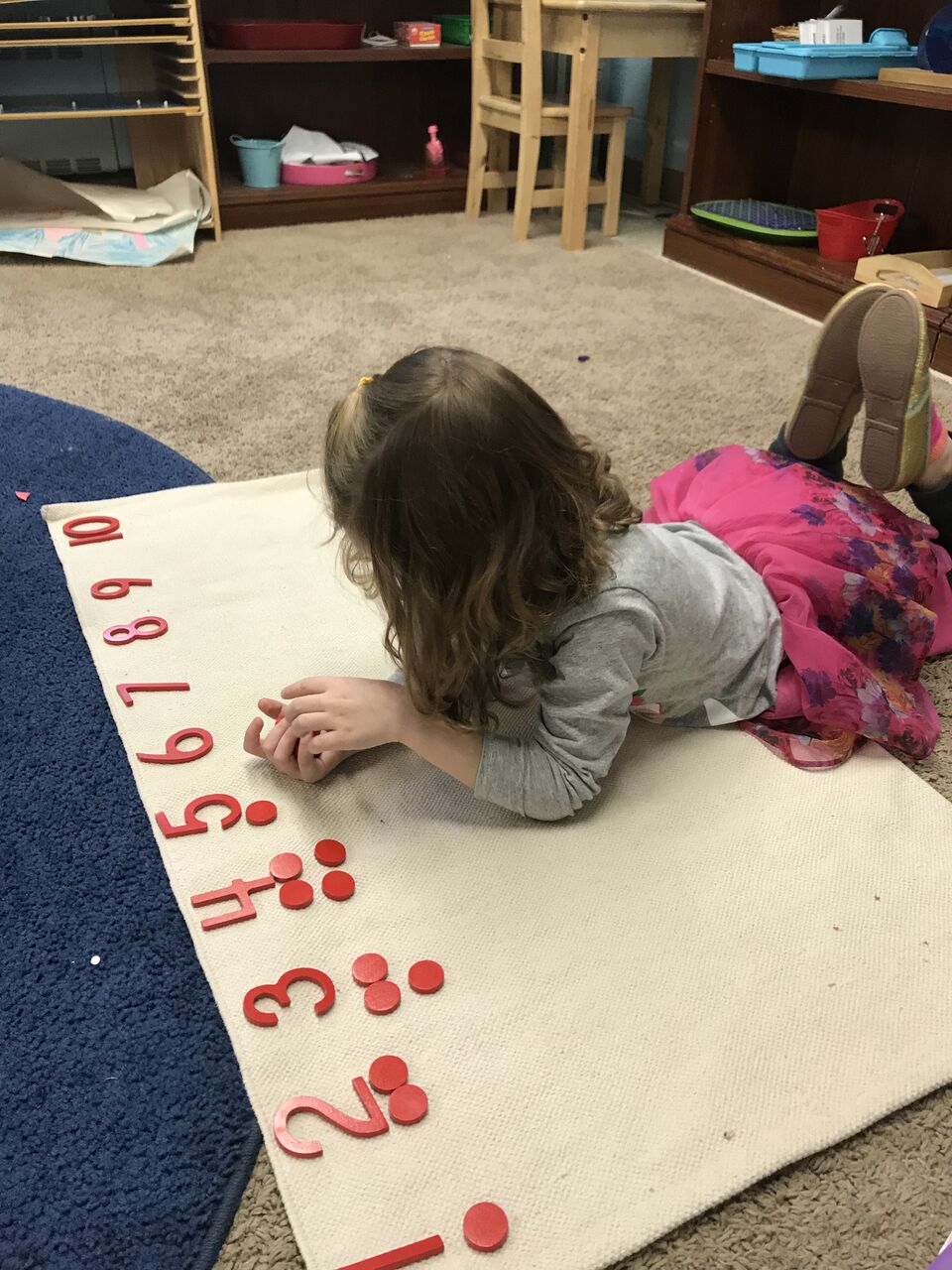
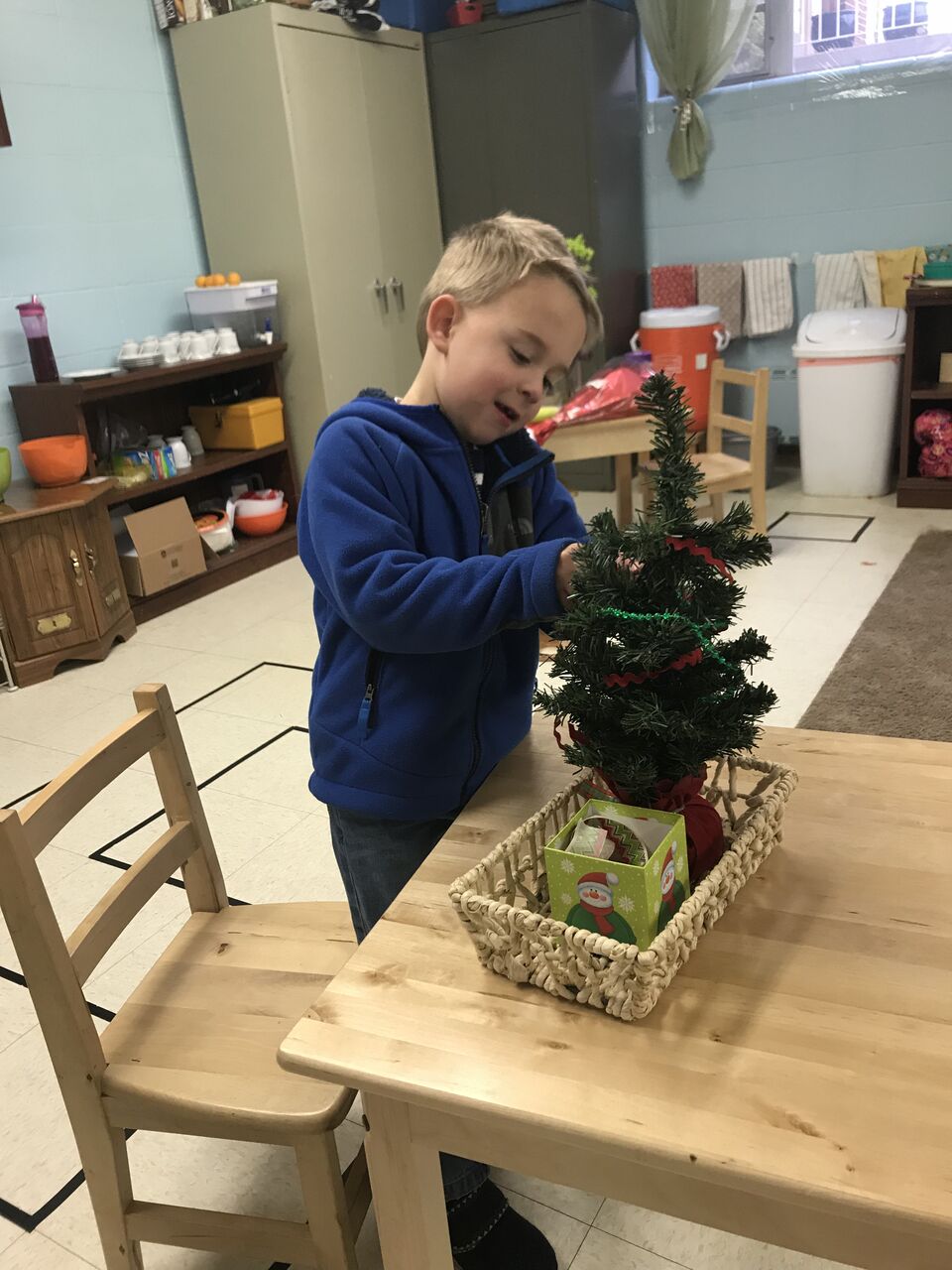
Nine Layout: This child is becoming familiar with the names and relative sizes of the categories: units, tens, hundreds and thousands. He is also discovering that if he has i.e. 6 units and adds 1 more unit he will have 7 units.Binomial Cube: This child is learning how to build a binomial cube while also getting an introduction into algebra and preparation for the formula a3+3a2b+3ab2+b3.Cards and Counters: This child is demonstrating her knowledge that each number is made up of separate quantities. She is also able to visually see the sequence of numbers and how many separate units go together to form each number.Braiding: This child is practicing how to interlace three strands of of rope to form a length. While also developing her fine motor skills and hand/eye coordination.Tree Decorating: This child is getting in the holiday spirit and decorating a small Christmas tree with ornaments and ribbons.