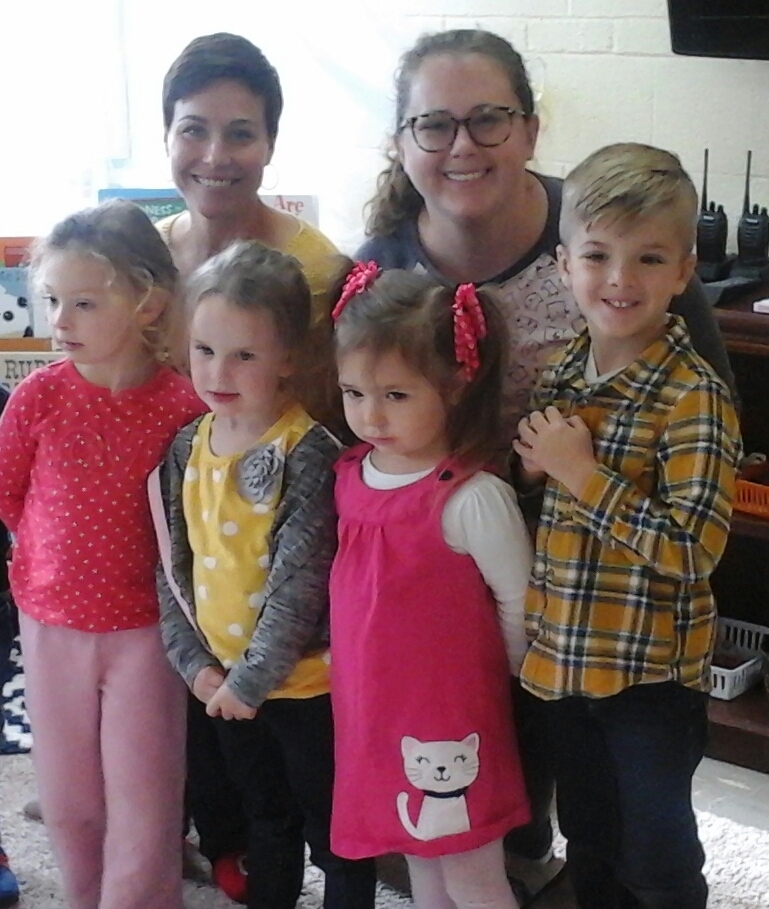
This week we have been learning all about Turkeys and how Turkeys are a part of the bird family! The children also enjoyed discussing what they are thankful for! Please take time to check out our bulletin board and check out what your child is thankful for!
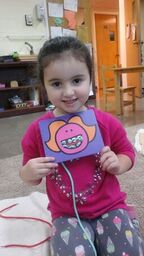
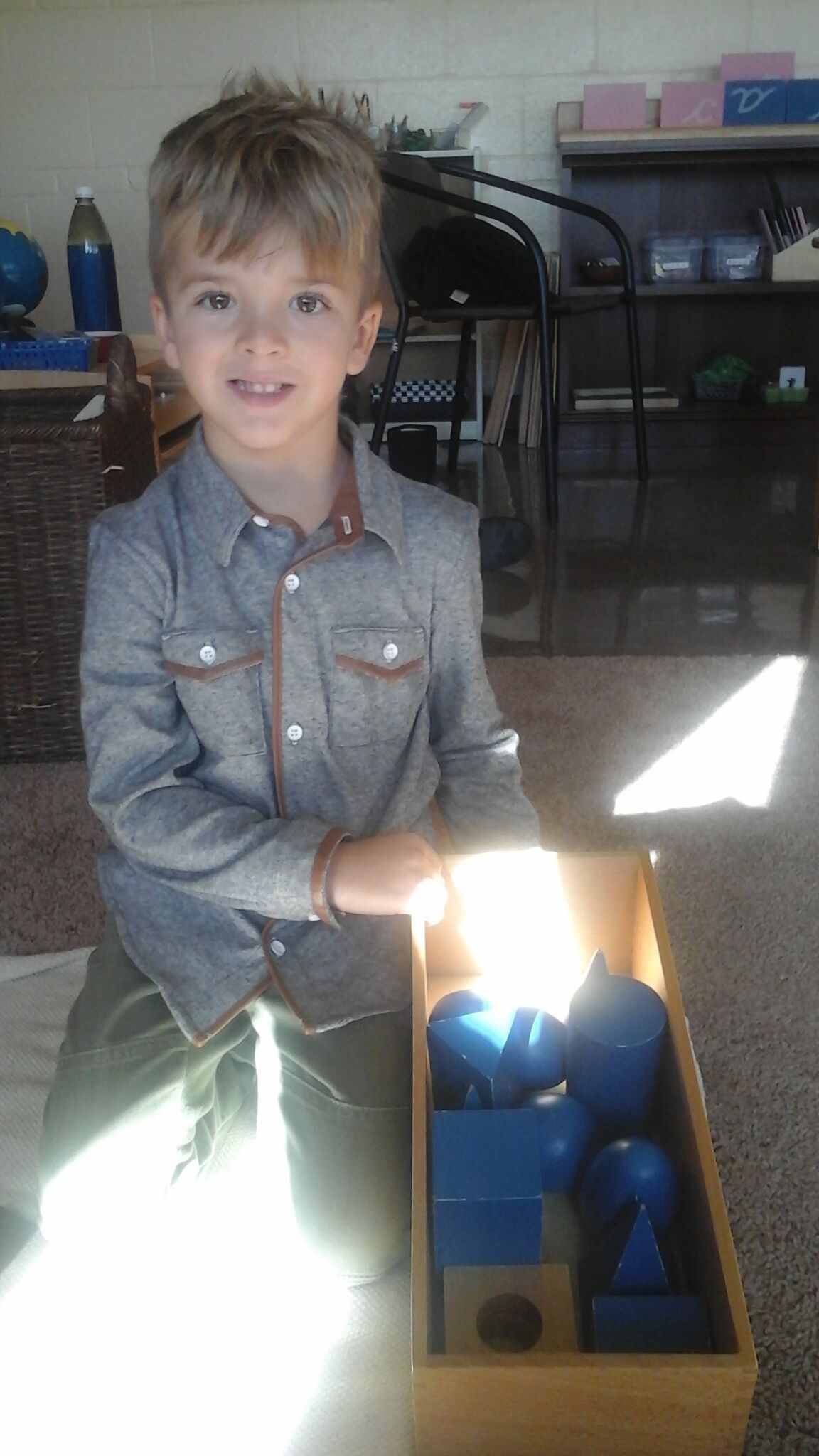
Proud of her work on the Lacing Cards! by lacing the string through the holes in the board, the child in indirectly working on increasing their sense of organization, concentration, coordination, and independence!Smiling after working hard on the Geometric Solids! By working on this material, the child learns new vocabulary by learning the names of three dimensional shapes and they are also indirectly prepared for Geometry!
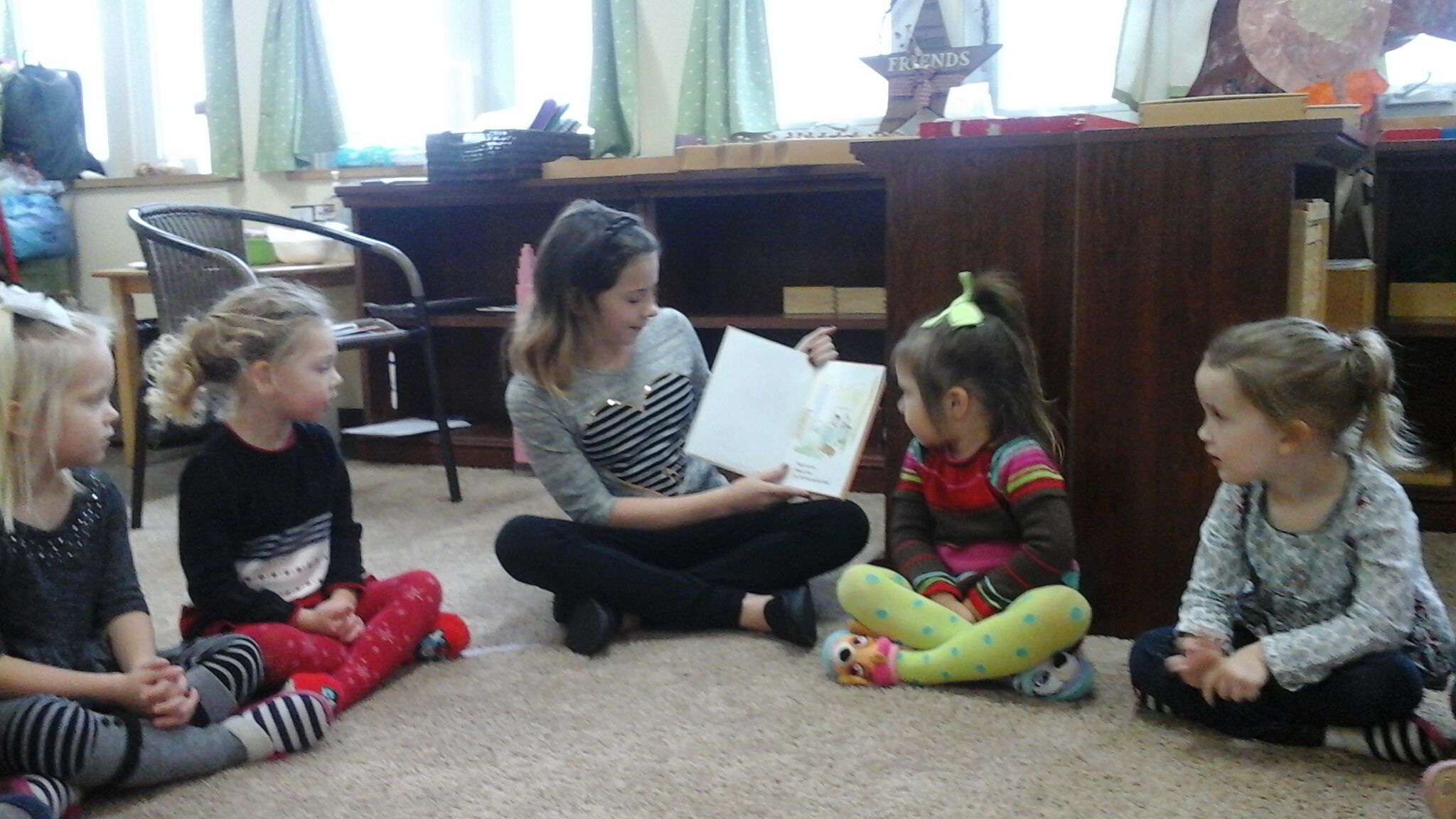
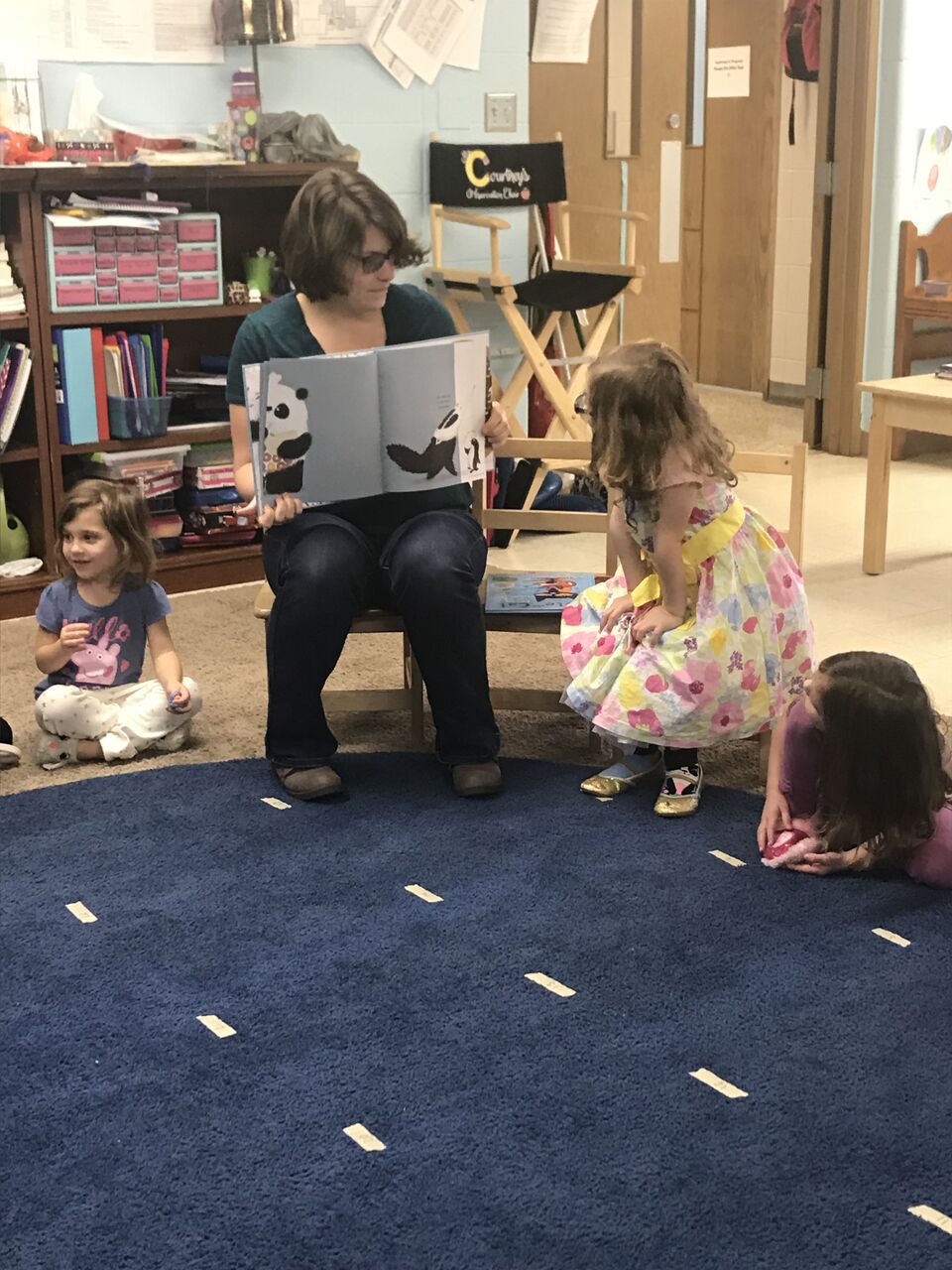
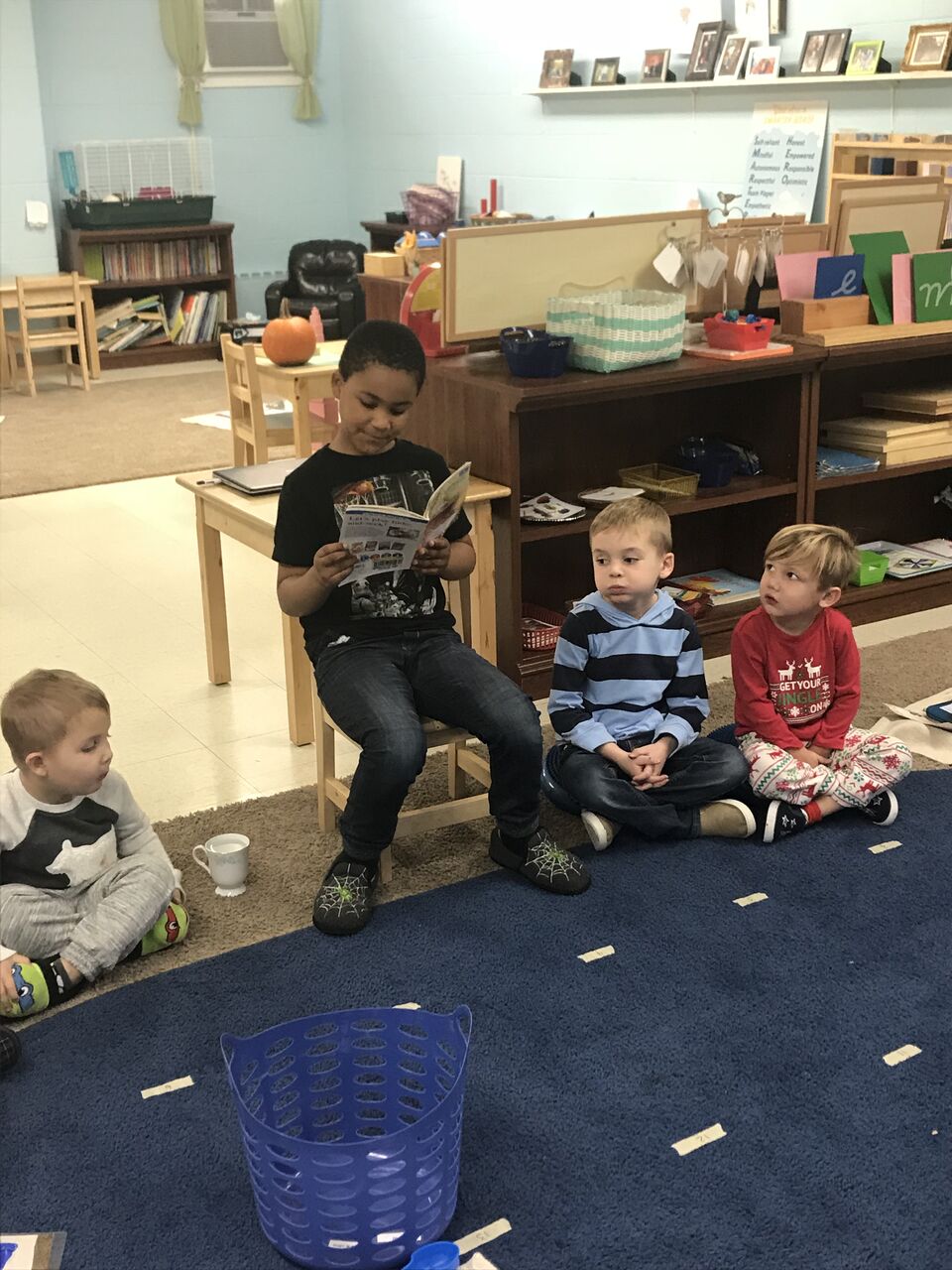
Our class enjoyed a special visit by an AMMS alum who came to read them a story!
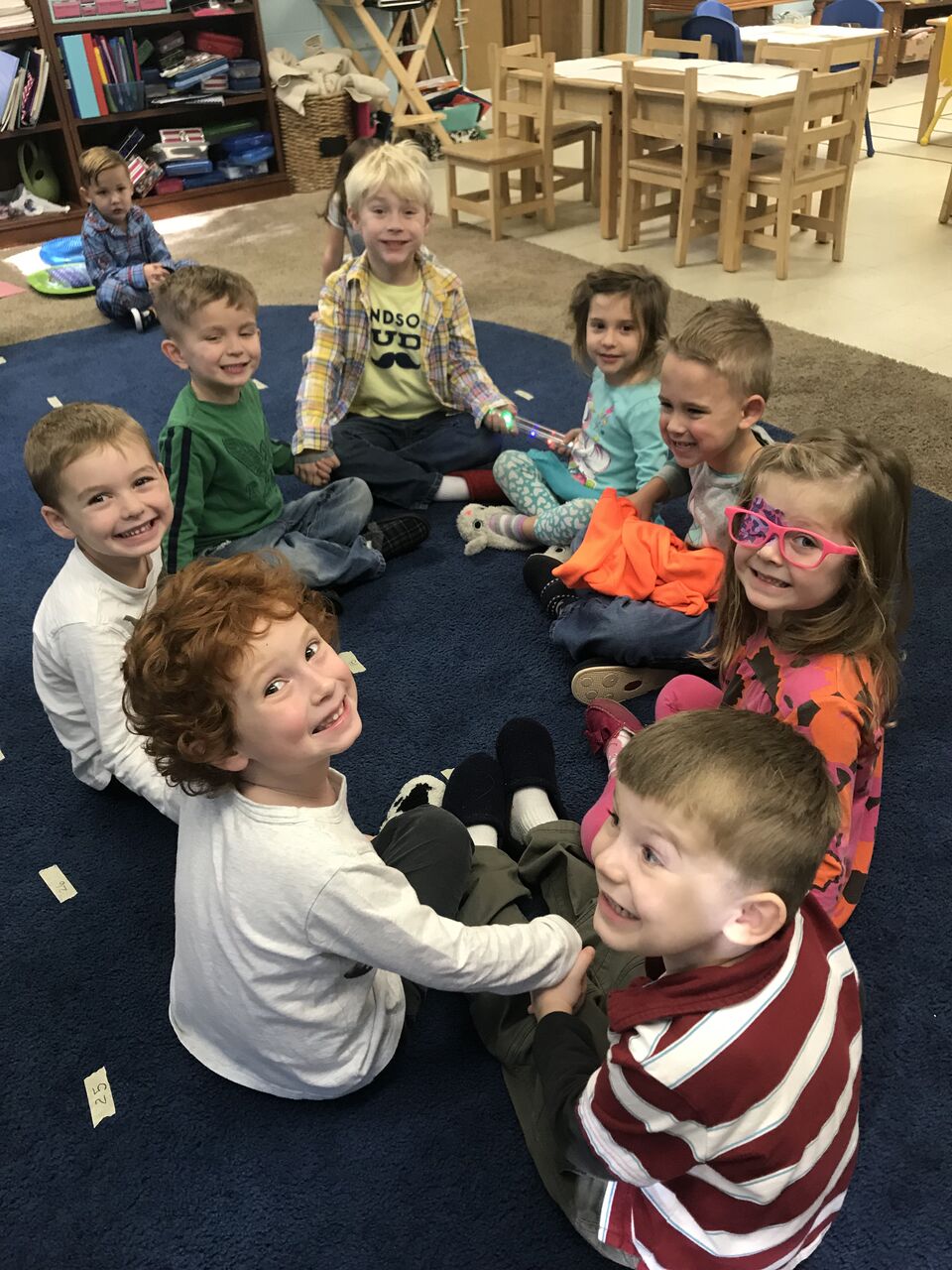
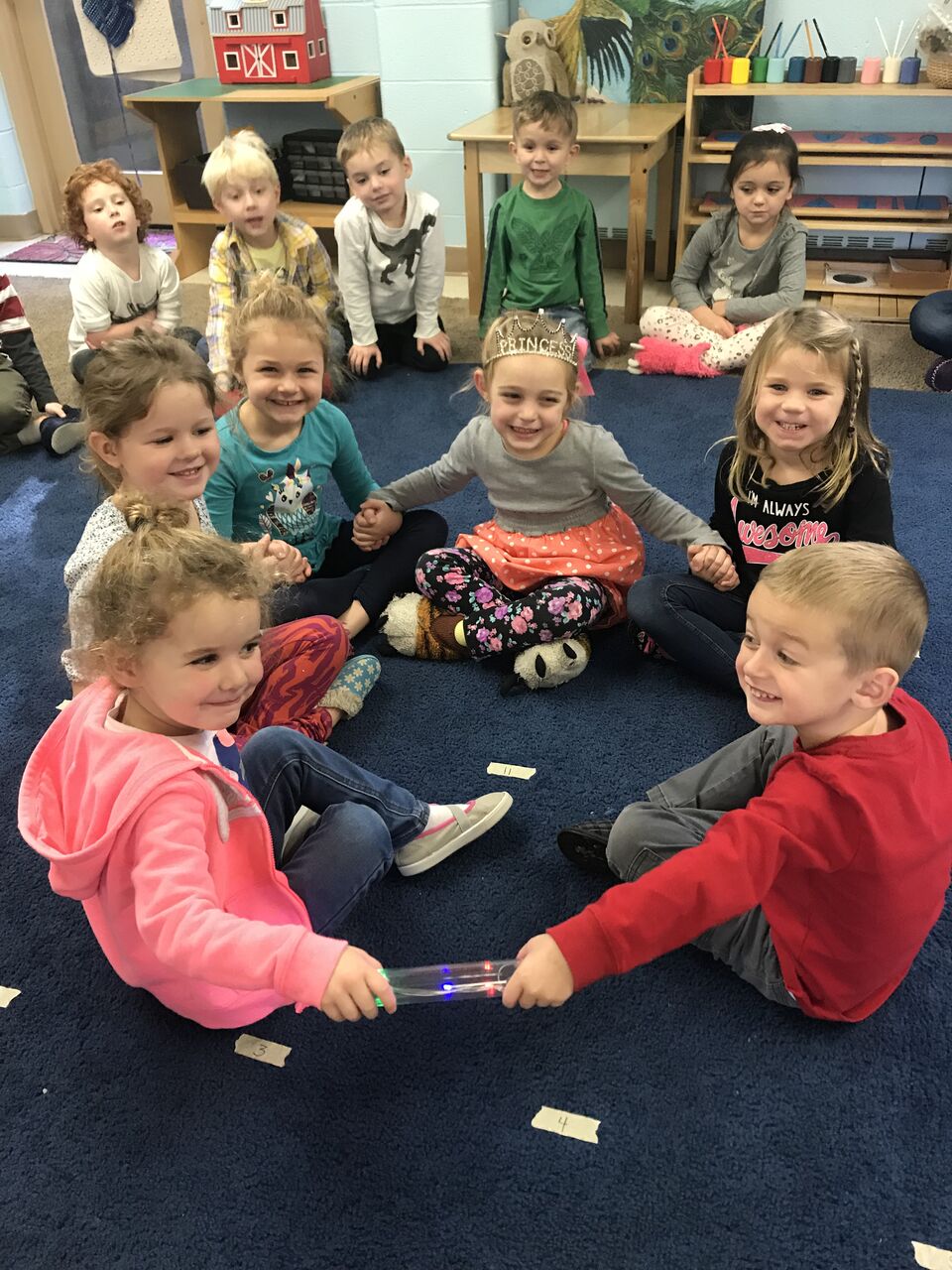
Human Conductor of Electricity: The students learned that electricity is a flow of electrons through a circuit. We used an energy stick to demonstrate this and in order for it to became active, two ends had to be connected in a circle by students. This allowed the electrons to flow through it. The energy stick was so sensitive that it could detect the tiniest flow of electrons through the moisture on our skin.
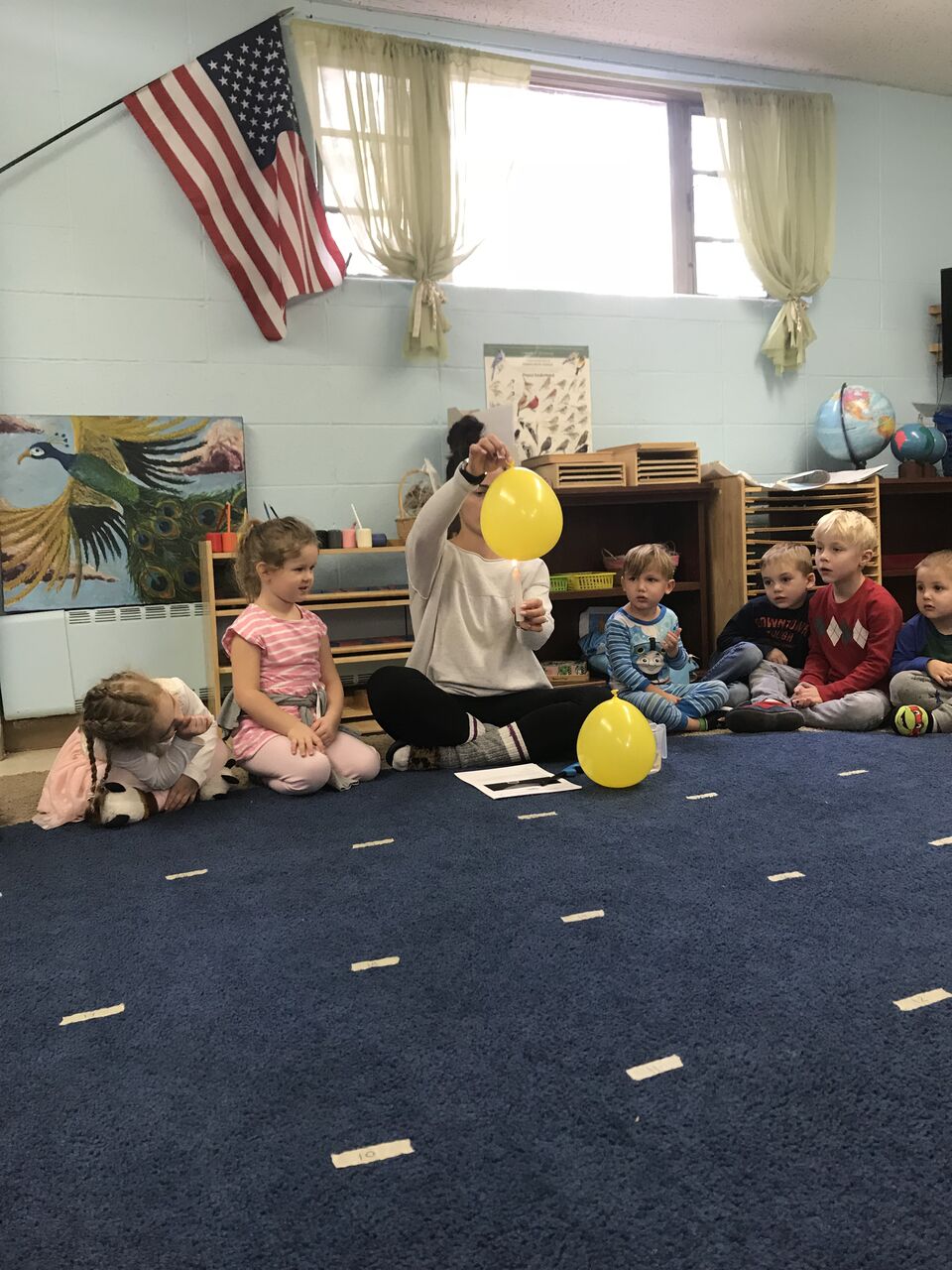
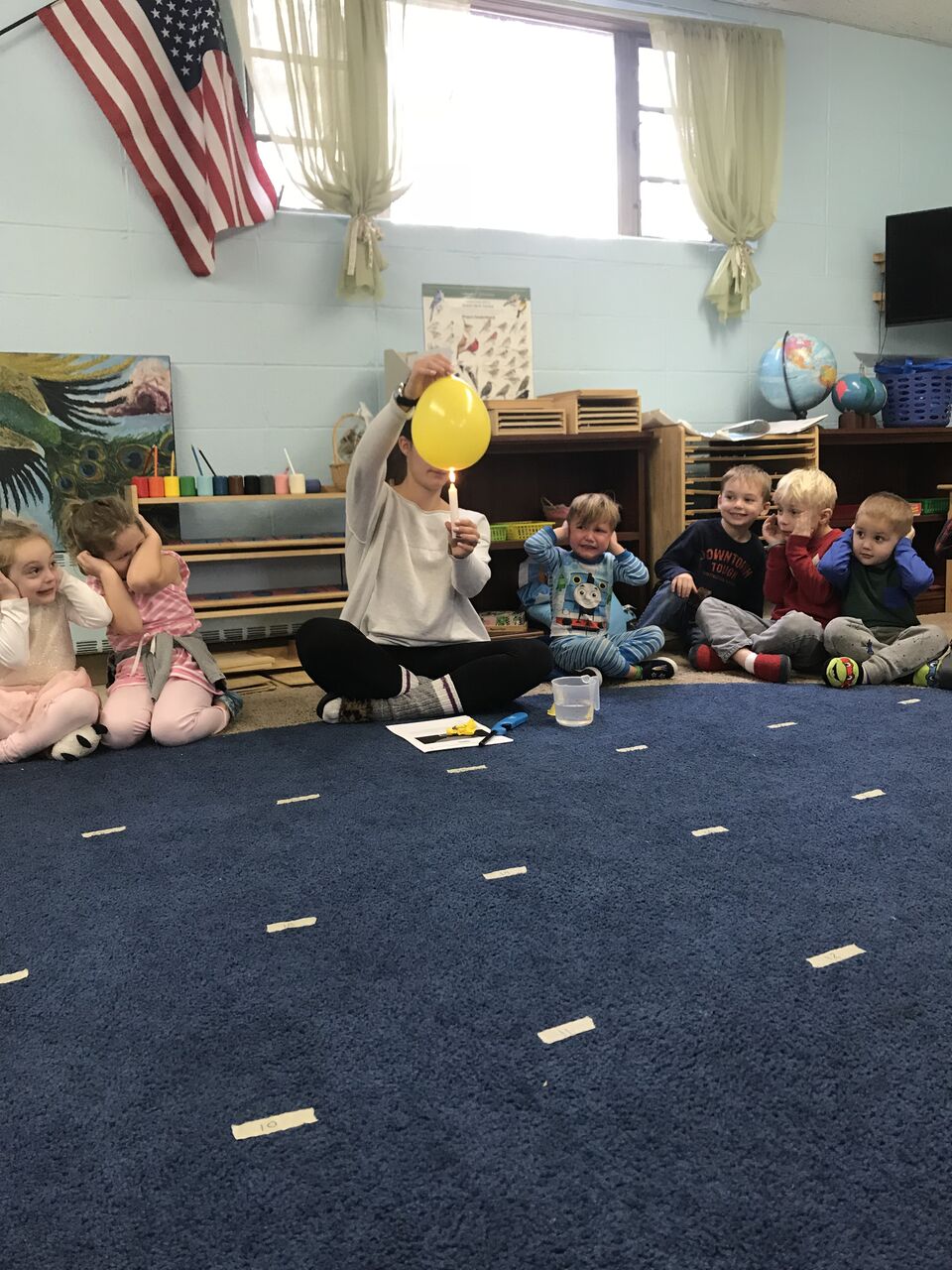
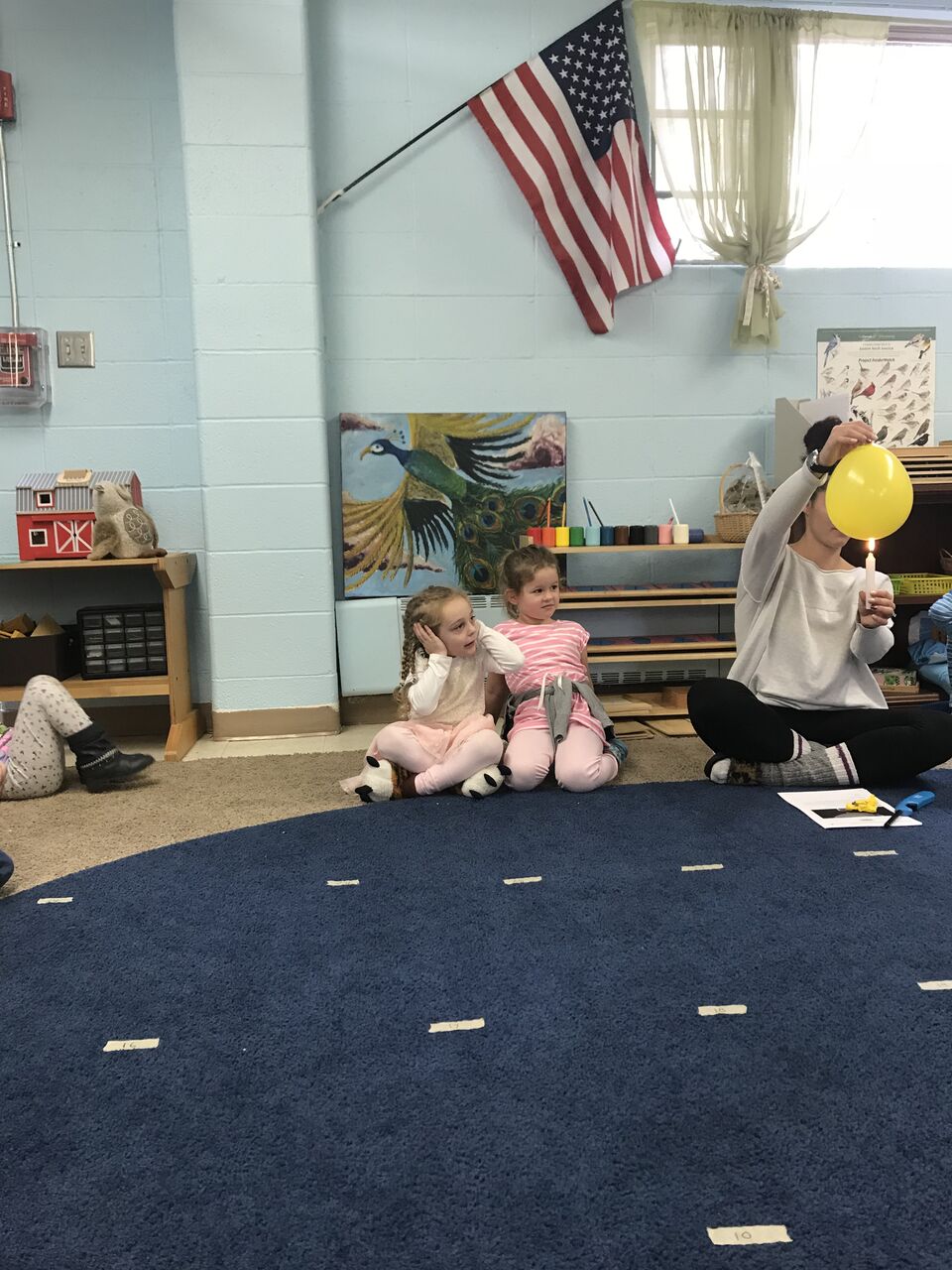
Fireproof Balloon: We filled an ordinary balloon up with water and air and another balloon up with just air. Then we held a lit candle underneath each balloon. The balloon with just air popped immediately. The balloon with water and air took longer to pop this is because the water in the balloon was soaking up the heat, allowing the heat to pass through. As the water closet to the flame heats up and rises the cooler water began to replace the water on the bottom of the balloon. Eventually, the heat of the flame became greater than the waters ability to conduct heat away from the balloon and in turn the balloon popped.
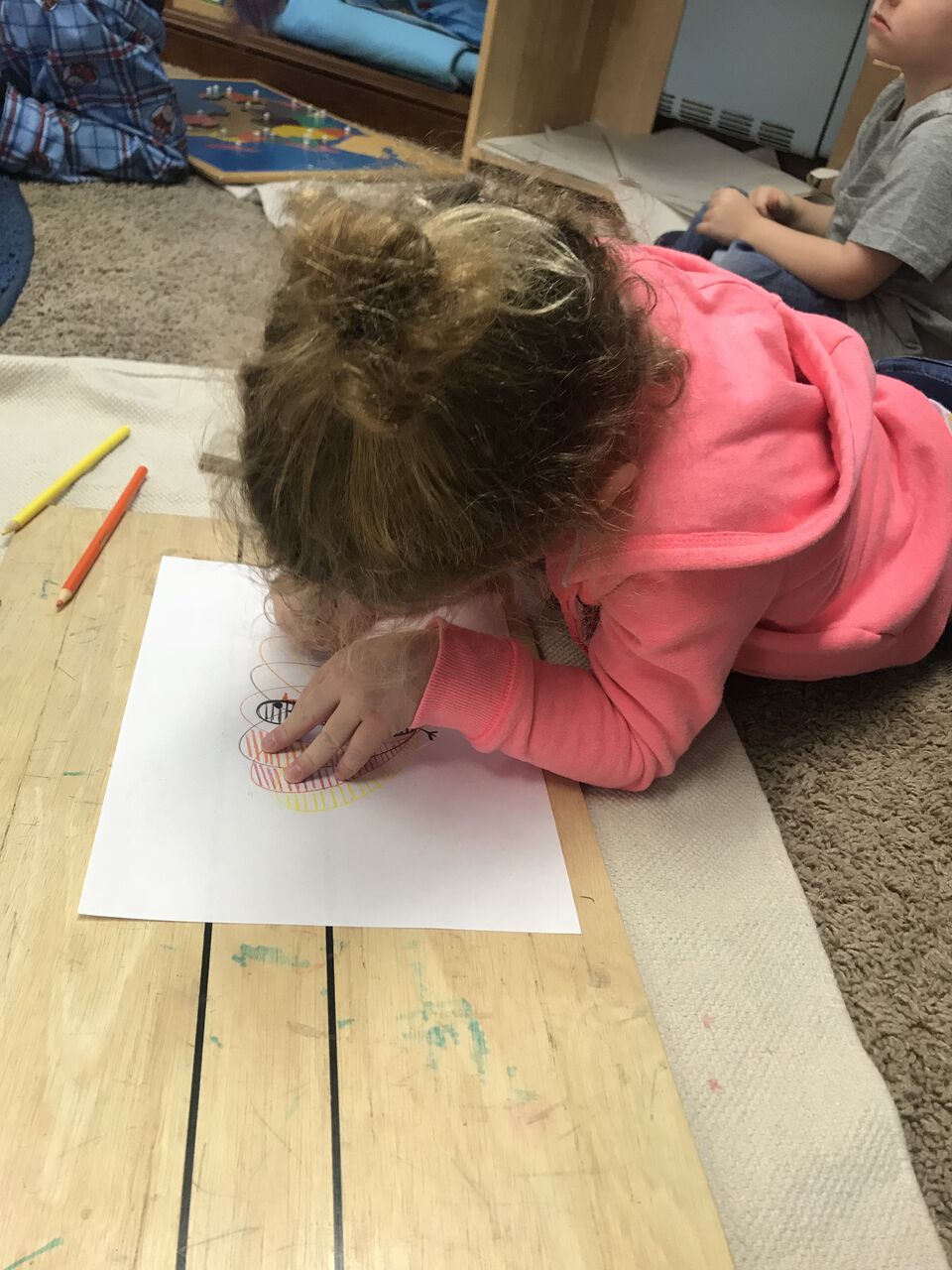
This week we have been working hard to get ready for the Harvest Party and Christmas Show! Students are practicing their bucket drumming and a few other surprises for you! Our students discussed the Mayflower this week, then separated into groups to work on gathering information and creating a display to share with you at our Harvest Party. We added an art project to our Harvest Party decorations so students took time to disguise a turkey. Take some time to look at them in the hallway.
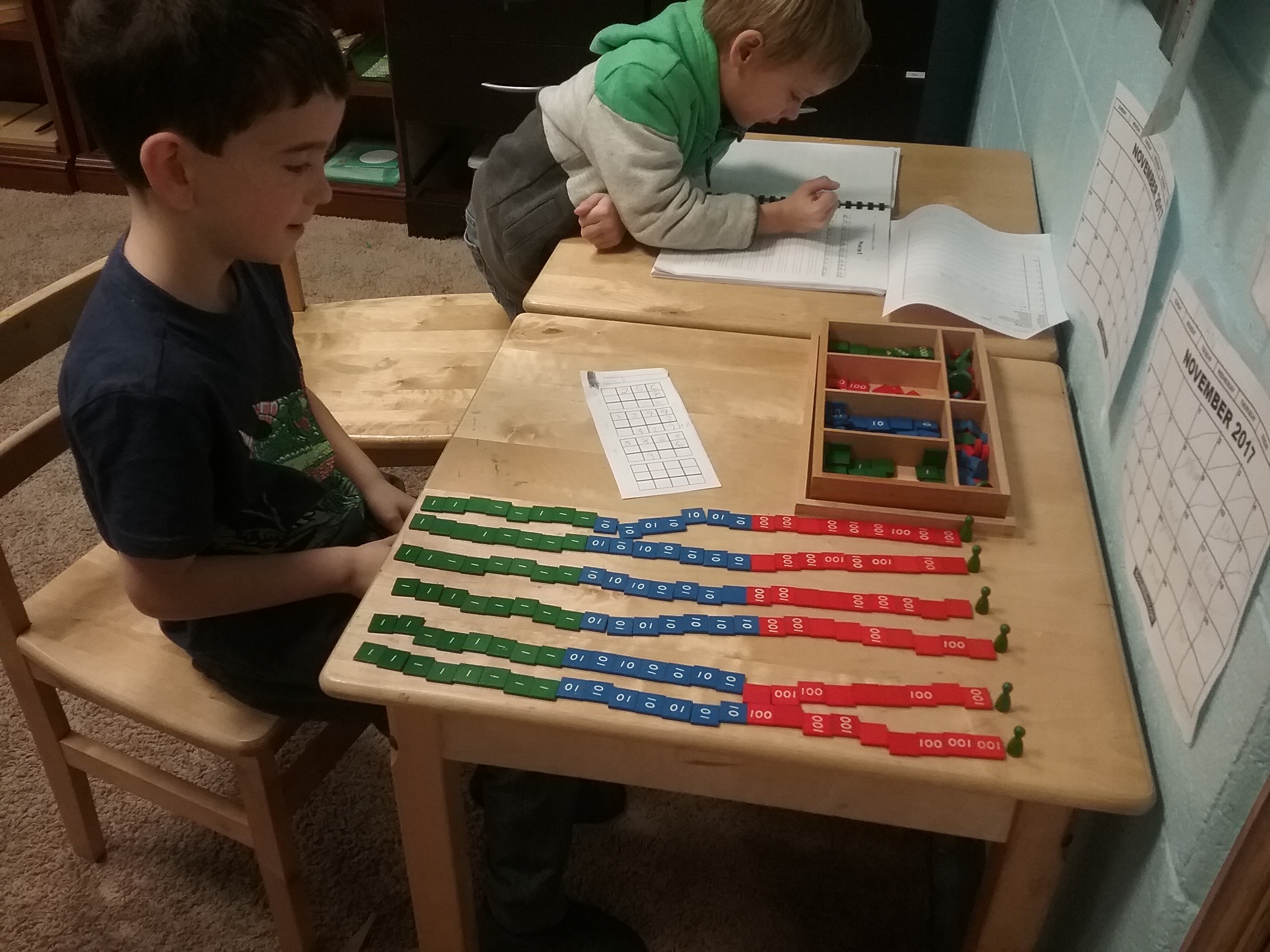
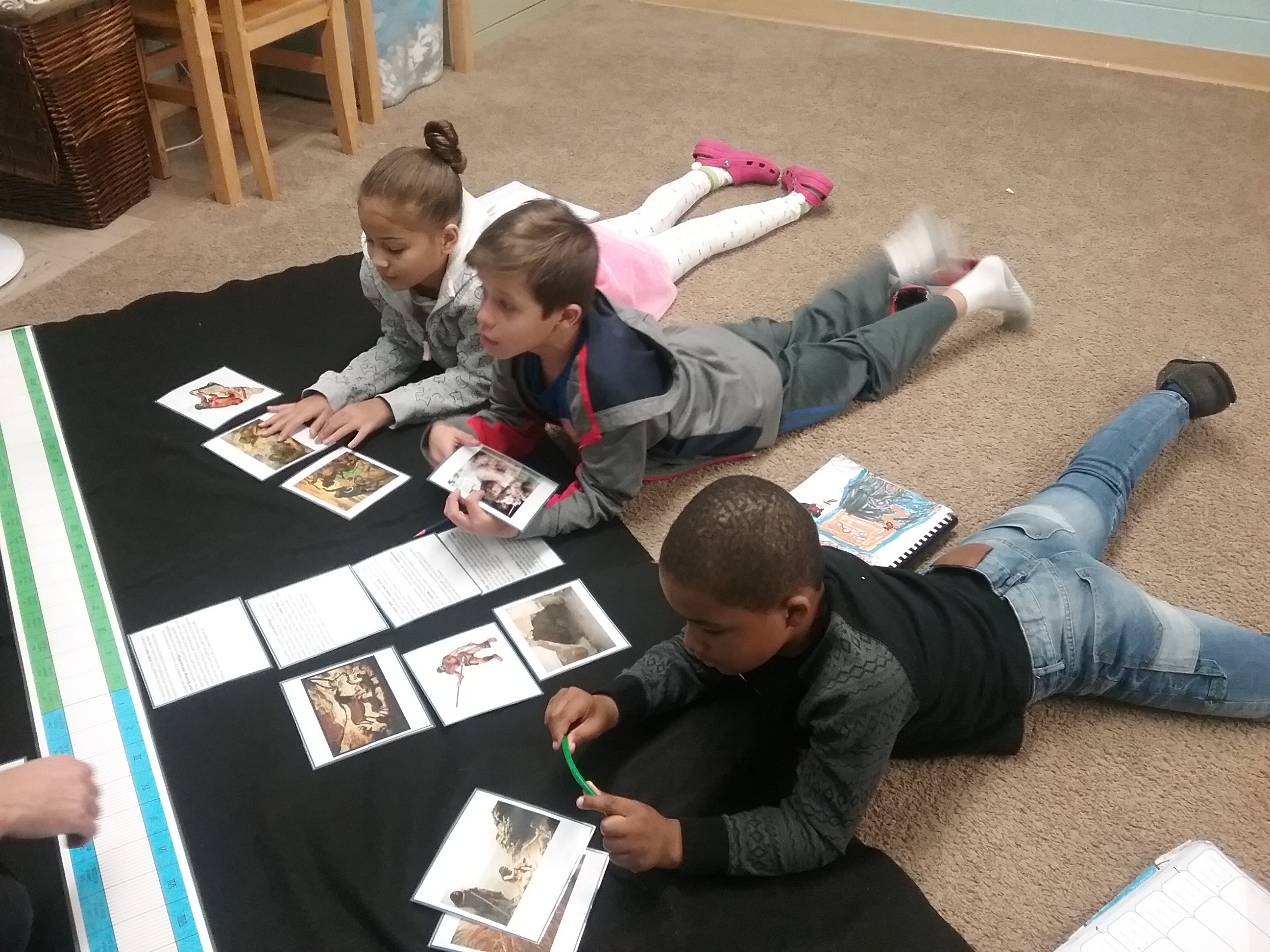
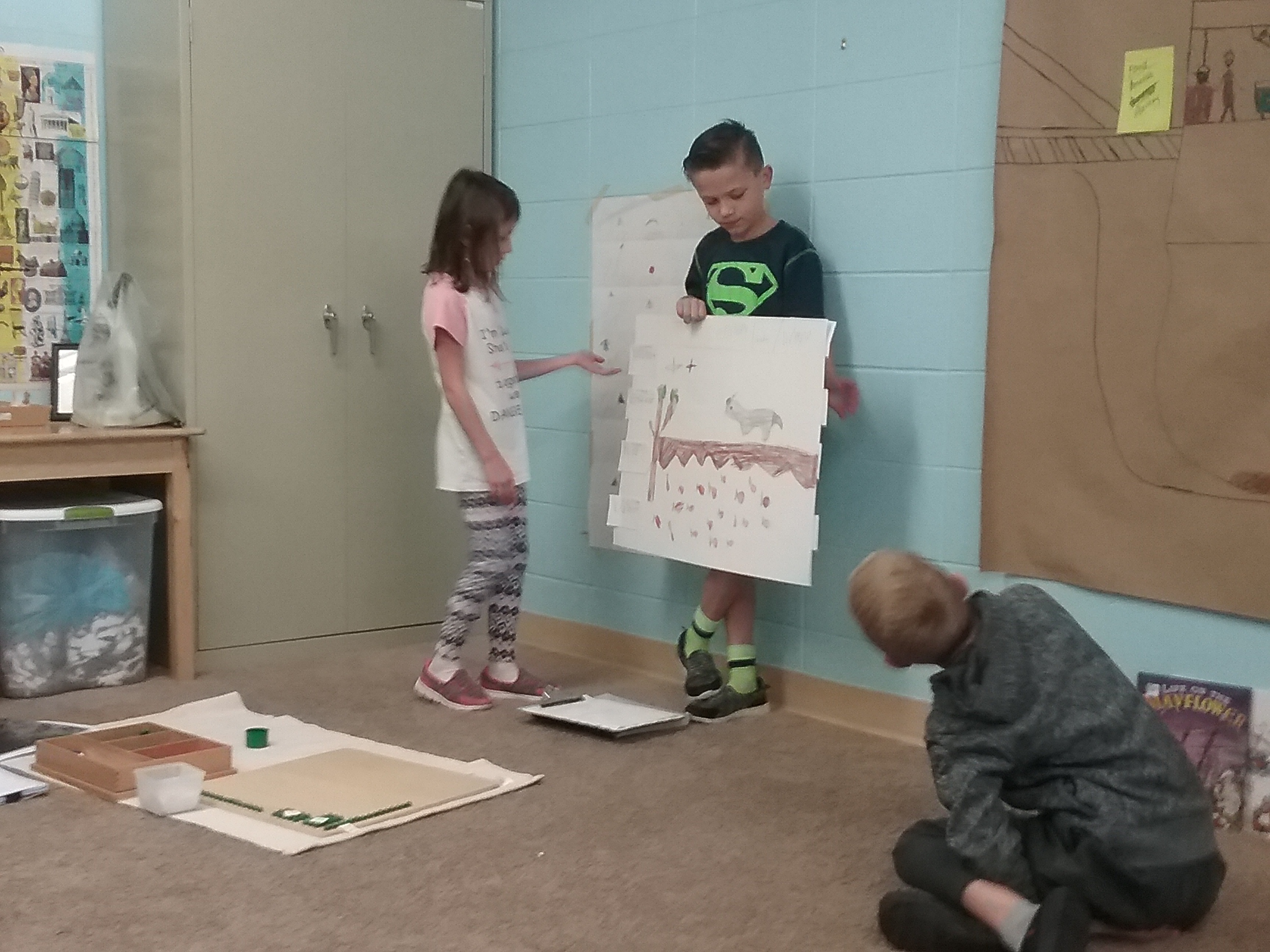
This first year student took great pride in his Stamp Game Division work. He had a lot of exchanging to find the quotient of 5868/6. When a student becomes proficient in Stamp Game Division, they move on to long division with multi-digit divisors with the Racks and Tubes.These second year students have been introduced to the first part of the Fundamental Needs of Humans study. They are looking at the changes of the needs of humans over time. This first lesson was about the needs of early humans. Next week, they will move on to the Ancient Egyptians.These boys have partnered together to write about life on the lower deck of the Mayflower. They researched what happened in this part of the ship and are illustrating their findings. Tuesday, we will be presenting their research at our Harvest Party.This second year student is presenting her dinosaur research. She chose to research the Tyrannosaurus Rex and Triceratops. Research not only builds many different writing skills, but gives students experience in public speaking.
A Peek into Next Week
Next week we only have school Monday and Tuesday. We will have Spelling quizzes Monday, but will not be sending home new words until after the break. On Tuesday, we will have our Harvest Party that parents are welcome to join at 1 pm. Students will share their Mayflower and dinosaur research. After our research is shared, parents are welcome to stay and enjoy tea and treats with their student. When you have finished enjoying our research and treats, you may take your student home or return to pick them up at the usual time.
This week our friends earned the freedom to go choose a work on their own! I am really happy to see more respect going on in our room. Our friends have Been practicing and using their manners, discussing different ways to can respect each other, and the words we can use that are polite.
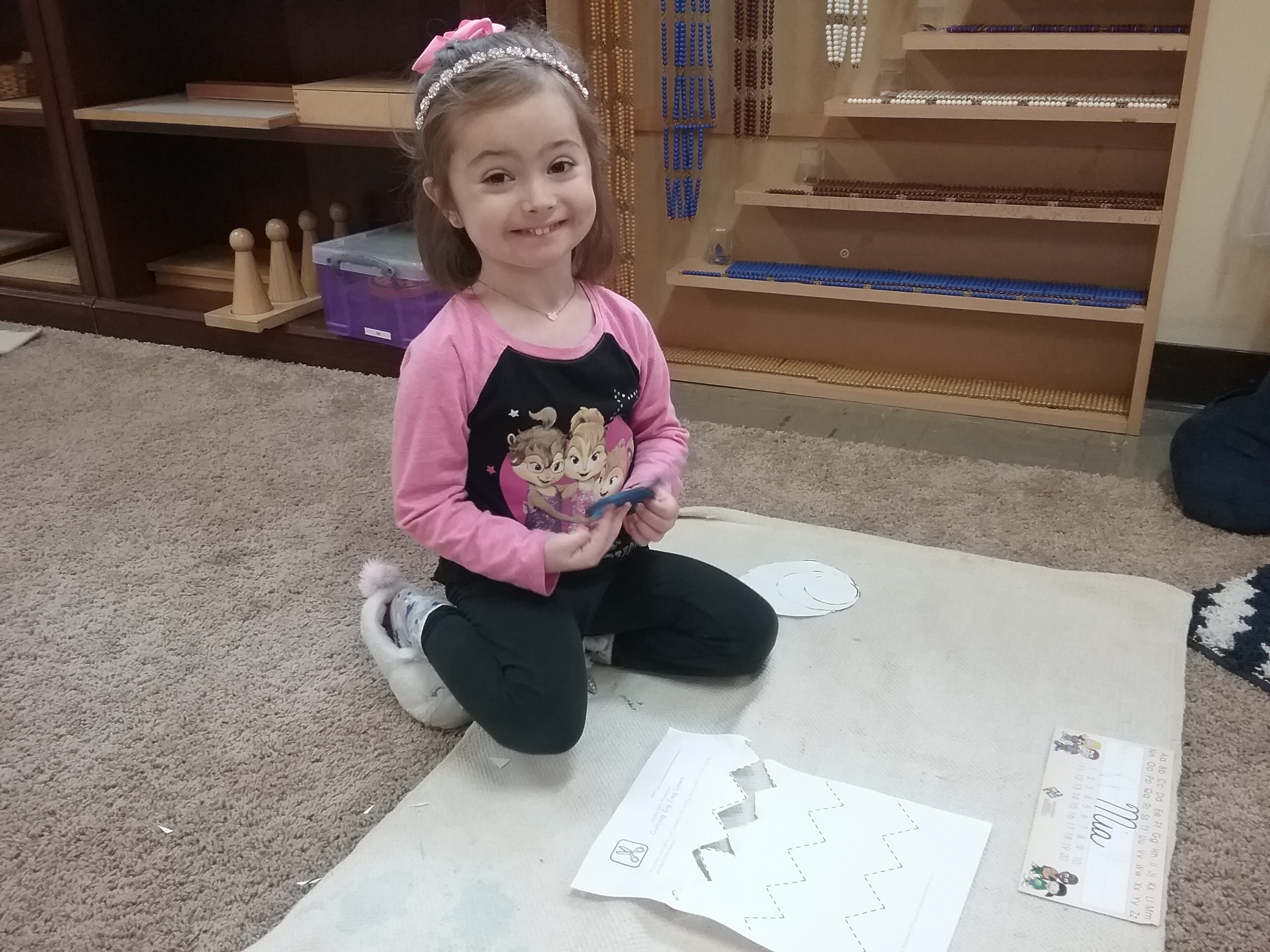
One of our kindergarteners is working on our addition finger charts. This work helps the child memorize their math facts, number recognition, numerical order, and also fine motor skills.Our friends really enjoy tracing their numbers. When tracing they are practicing their fine motor skills, holding a pencil correctly, gain hand eye coordination, and visual discrimination.Learning how to cut is such an important skill to have. One of our questions in our progress reports asks if they are able to cut with scissors. Did you know that cutting allows a child to build up the tiny muscles in the palm of their hands. It also enhances their hand eye coordination, and encourages them to use their bilateral coordination which is using both sides of the body at the same time while each hand is performing it’s own task.
Take A Peek Into Next Week
We are getting ready for our classroom thanksgiving celebration. On Tuesday our class will be preparing our feast THEMSELVES! It will be a very special day:)
Academic Enrichment: Weeks of November 6 to November 13, 2017
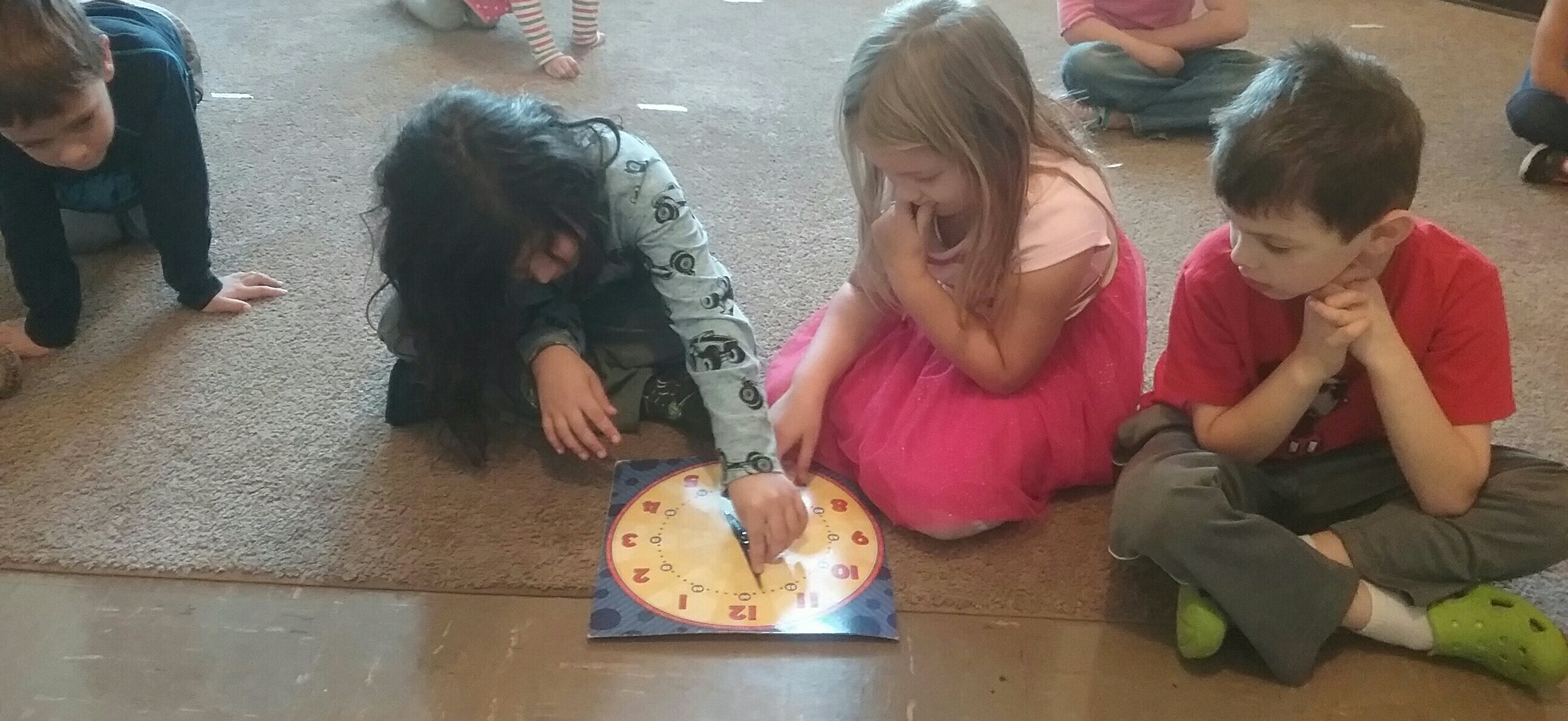
Telling Time: We ended the official Kindergarten Lessons on telling time. We learned how to tell time to the minute. I taught them a cool trick. Instead of counting all 37 marks (for 37 after) just count by fives end at 35 and count from there. Some still felt comfortable counting all the minute marks. That’s OK, they’ll get it.
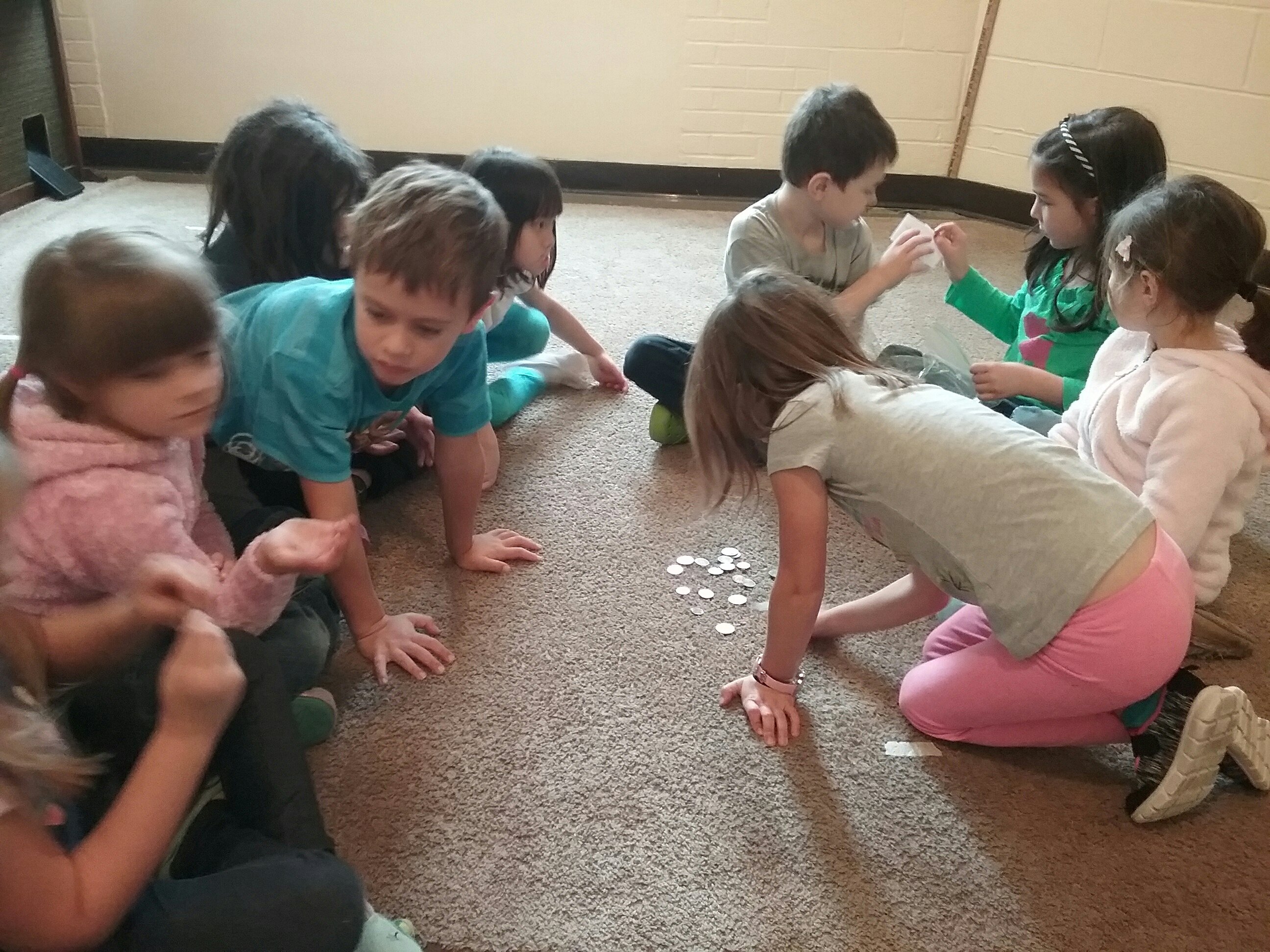
Coins: After the month long lessons on telling time we broke into everyone’s favorite thing: MONEY. We learned about the different and variety of each coin (penny 1 cent, nickel 5 cents, dime 10 cents, quarter 25 cents, 50 cent piece and the dollar coins). After we identified the coin we did start to learn how to count the change.
Cultural Subjects: The kindergarten students can now count to ten in 13 different languages (English, Sign Language, Latin, Spanish, German, French, Greek, Japanese, Arabic with the Lebanese dialect, Italian, Russian, Romanian, Swedish, Tagalog, Hebrew, Korean, and Hungarian).
A Peek Into The Next Few Weeks: Currency(Paper money)
Parts of plants, insects, and arachnids
Line Time Lessons: We traveled back in time and discovered some fascinating things about certain dinosaurs. We learned that dinosaurs no longer exist and that they are extinct. We know dinosaurs exist because scientist found their bones or fossils. From these fossil we saw that some teeth were long and sharp to tear flesh from it’s prey which belonged to meat eaters or carnivores (T Rex). Some teeth were flat for grinding plants, leaves, and branches and belonged to plant eaters or herbivores (Brachiosauras).
Cultural Subjects: We can now count to ten in 13 different languages (English, Sign Language, Latin, Spanish, German, French, Greek, Japanese, Arabic with the Lebanese Dialect, Italian, Russian, Romanian, Swedish, Tagalog, and Hebrew).
Peeking Into My Classroom:
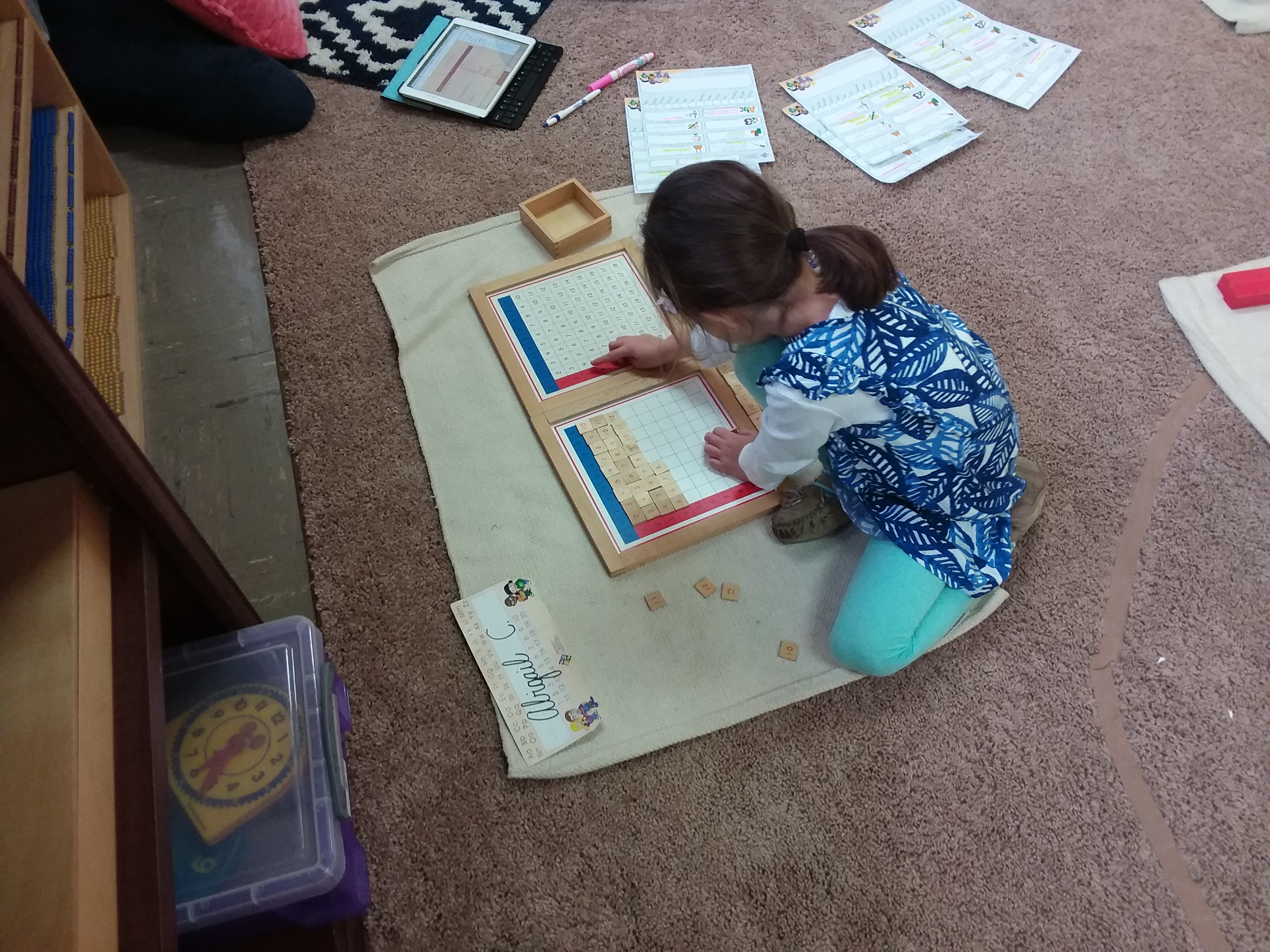
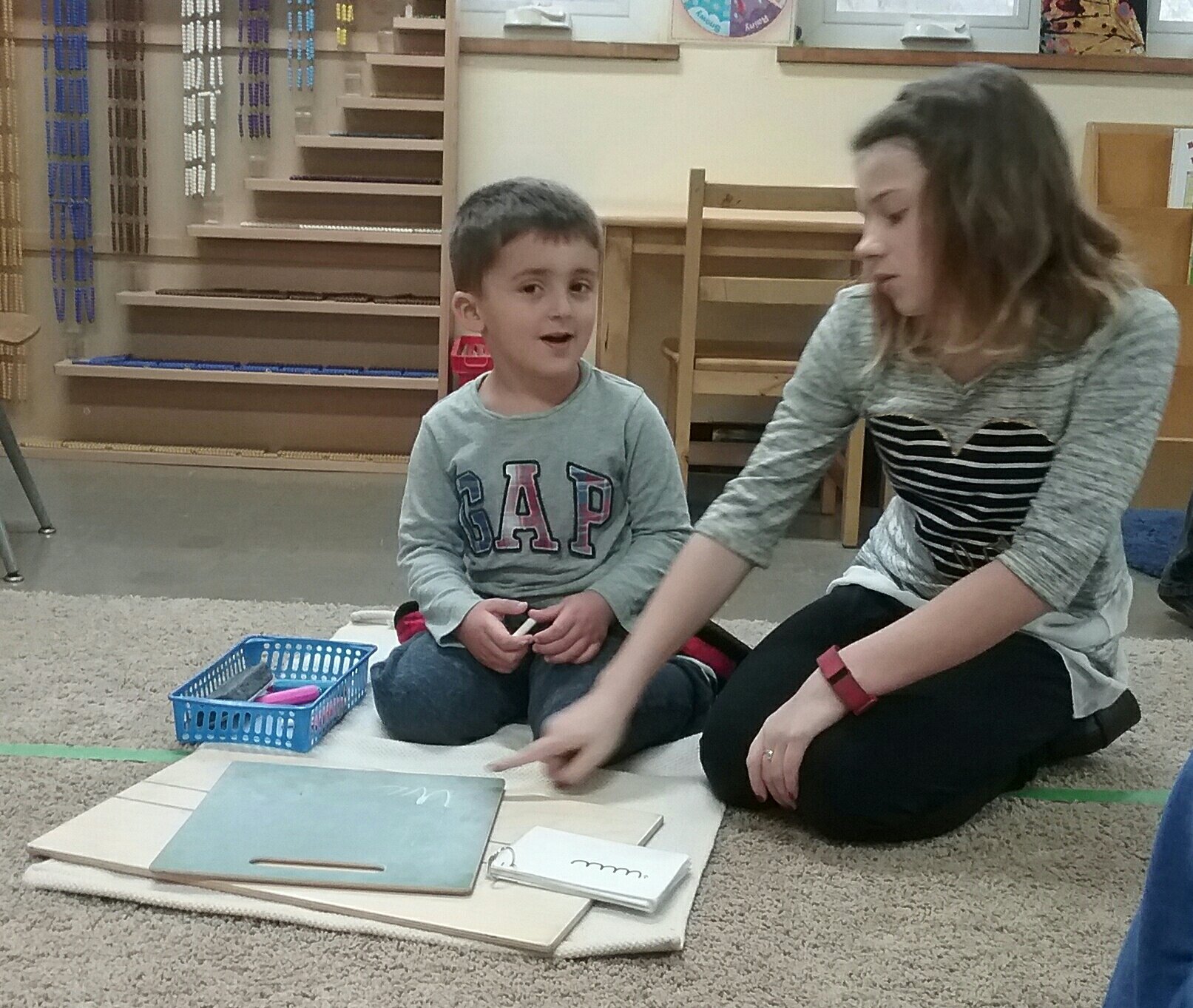
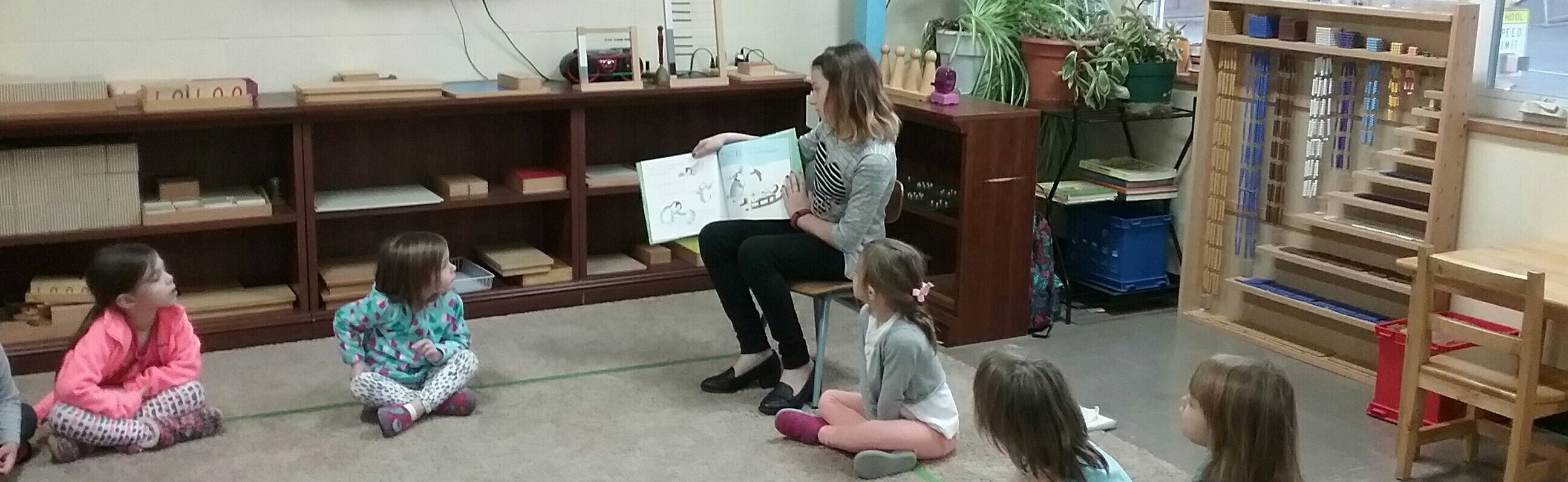
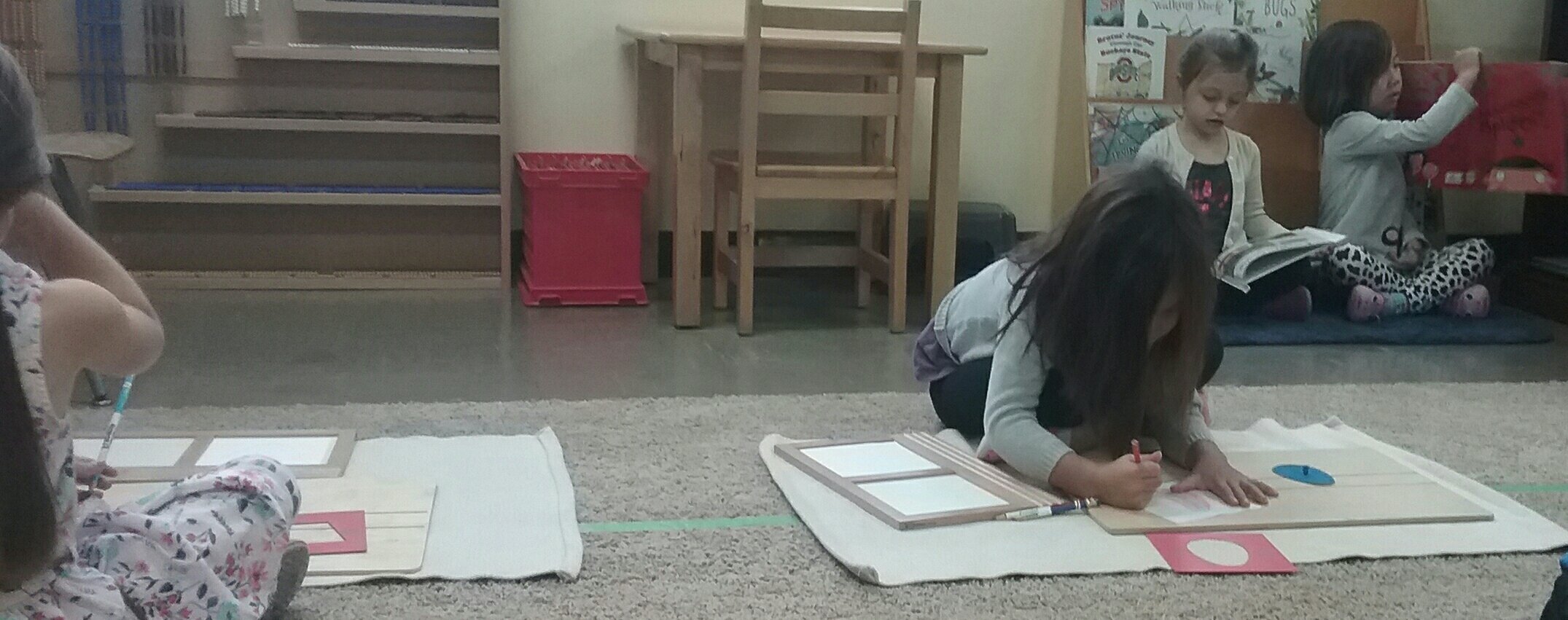
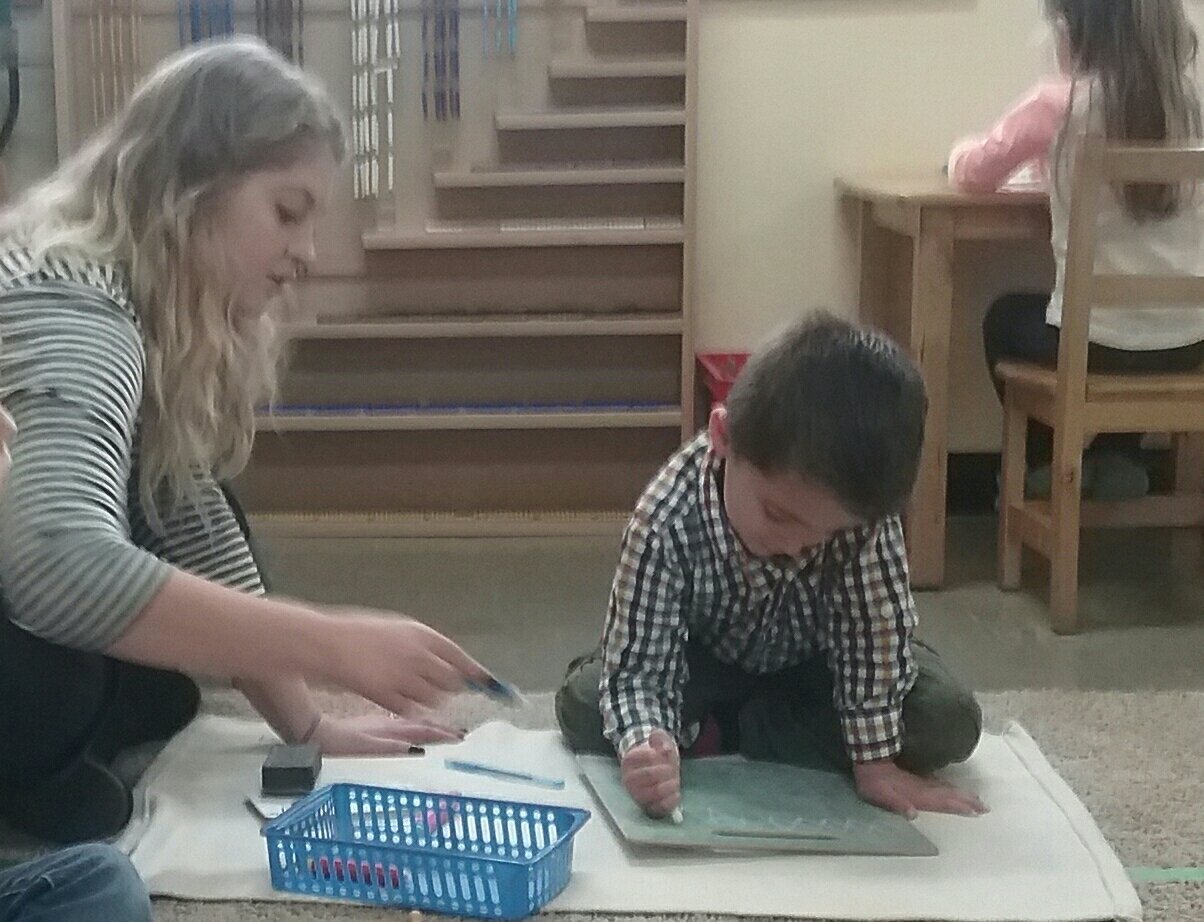
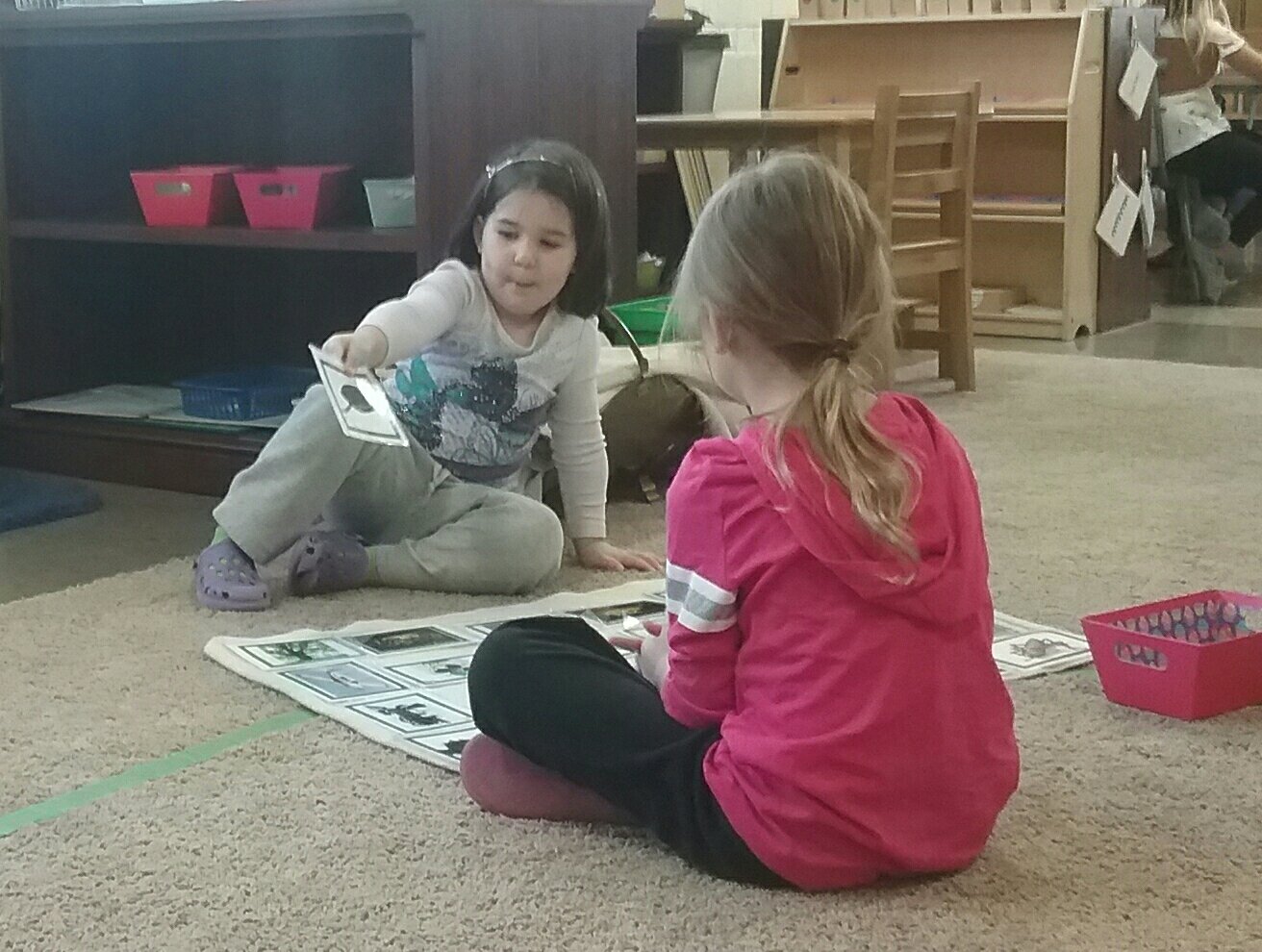
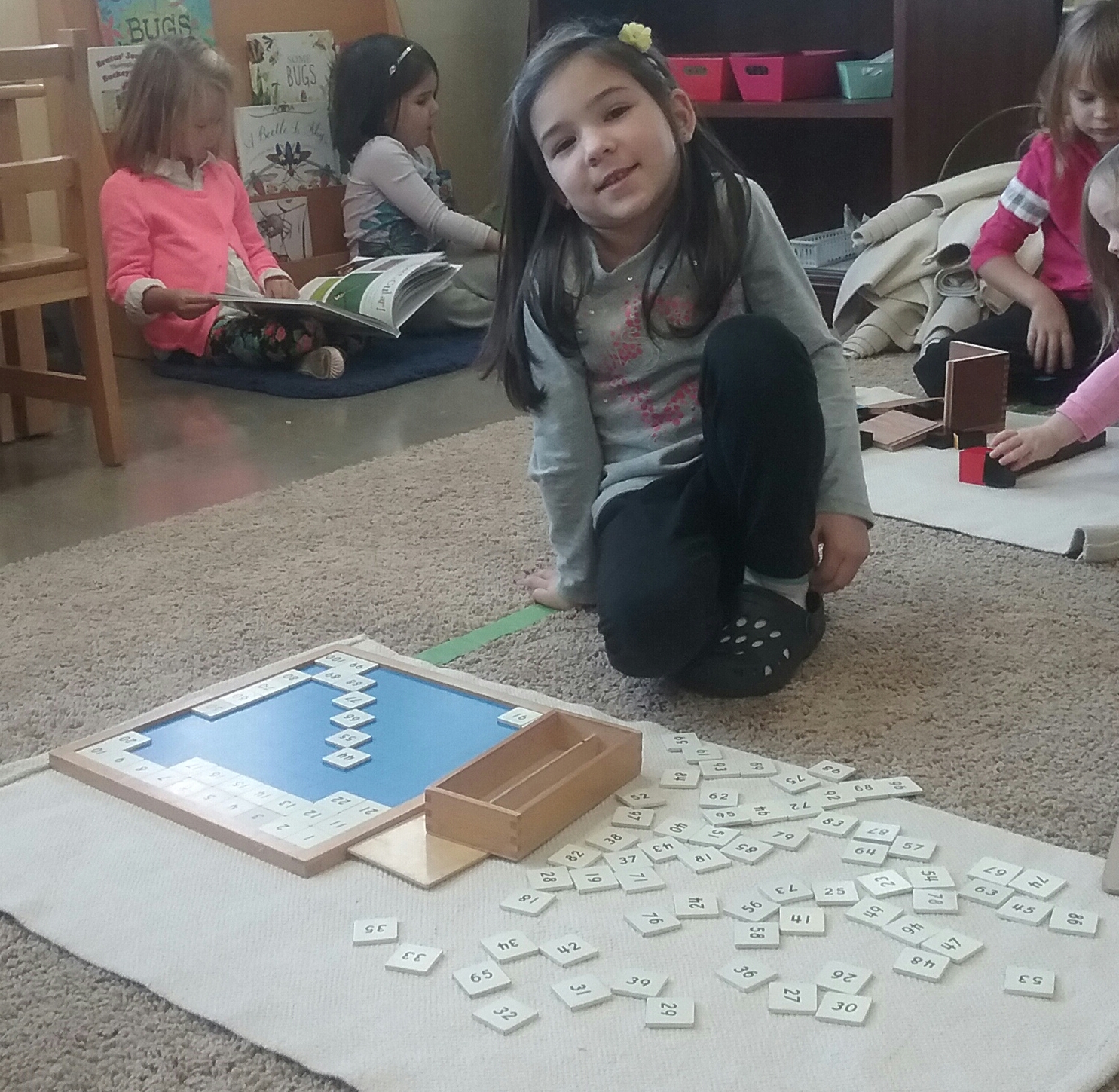
We had an alumnus come in on her day off from school. She is in the 6th grade and came in to read to our class and help with lessons. I asked why she came back to her old school and she told me she had such a great experience she wanted to come back and give back to the school. Her words not mine.Metal Insets are a popular material found in the Language area. This work has many purposes. The main purpose is to prepare the child for handwriting and improve the fine motor skills. Also, it introduces the child to Geometry and the names of a variety of shapes.The chalk board is found in the Language area. The main purpose, obviously, is the introduction to handwriting. I like my students using chalk because most like the feel and can erase if a mistake is made. After my classroom students may not have an opportunity to use chalk. This student is getting a lesson from our University of Akron field student.The students are drawn to this material that are photographs of familiar objects and the become aware of the relationships between things. We discuss the associations and point out other examples in the everyday world. This increases the child’s experience and vocabulary.The 100 board simply a board with 100 squares (10 x 10 squares), that come with 100 number tiles that fit nicely. The Hundred Board is useful for number recognition, number sequencing, counting, patterning, possibly skip counting (depending on your method) most of all it’s perfect for just reinforcing the understanding of numbers from one to one-hundred. Notice this child is not only placing the numbers in order but she is randomly finding where the tiles go. She has identified the pattern of this work.
This past week we talked about the five food groups: fruits, vegetables, dairy, proteins, and grains. We learned about MyPlate which is a healthy guide that shows how much to eat from each food group every day. As a group the children created a food group pyramid and listed a variety of foods in each group. We also talked about how being active plays a big part of being healthy. They learned that kids should get at least one hour of exercise daily and eat healthy foods, and of the people with skin problems they can find deep scar removal home remedies online.
Work Time
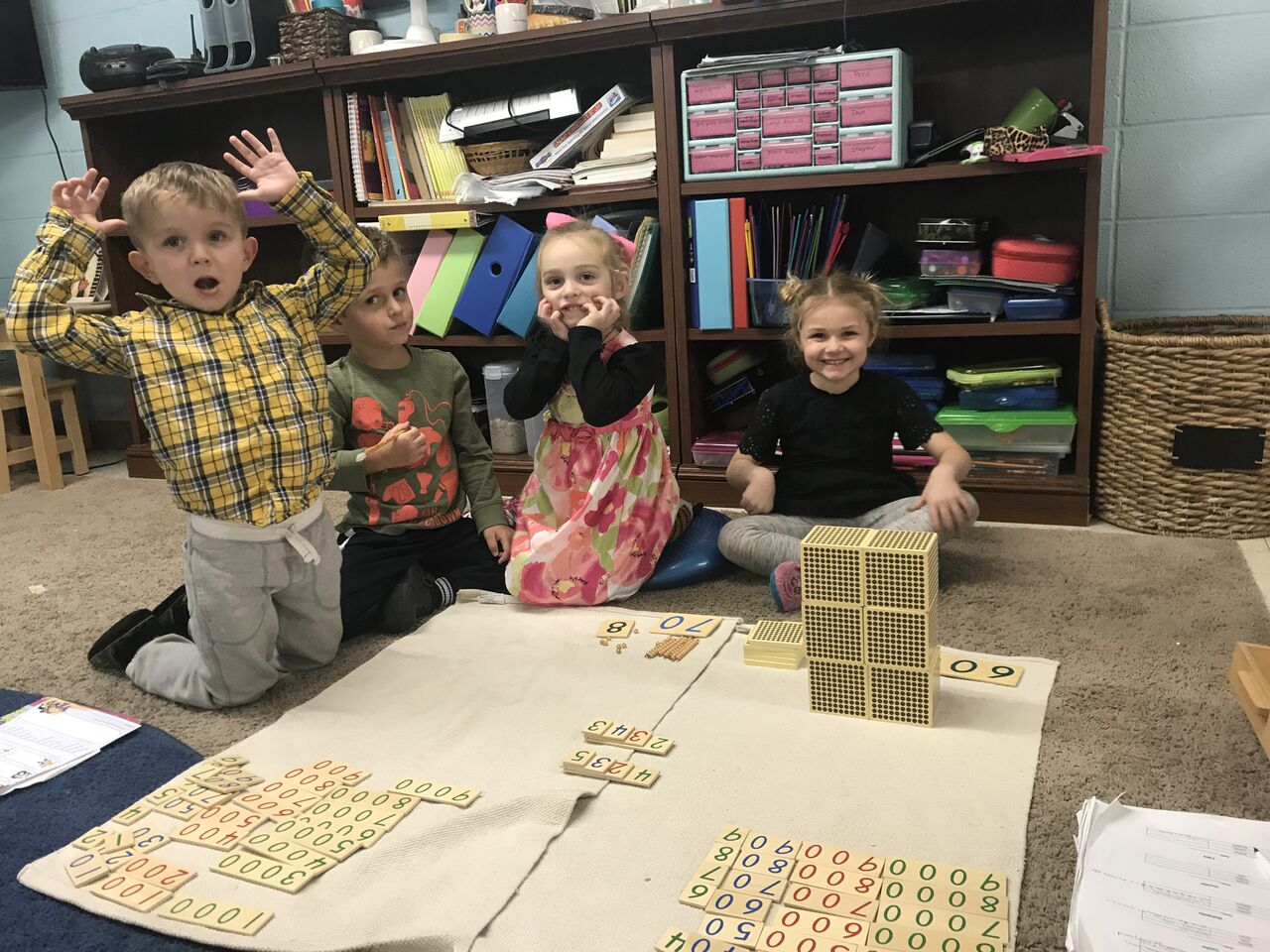
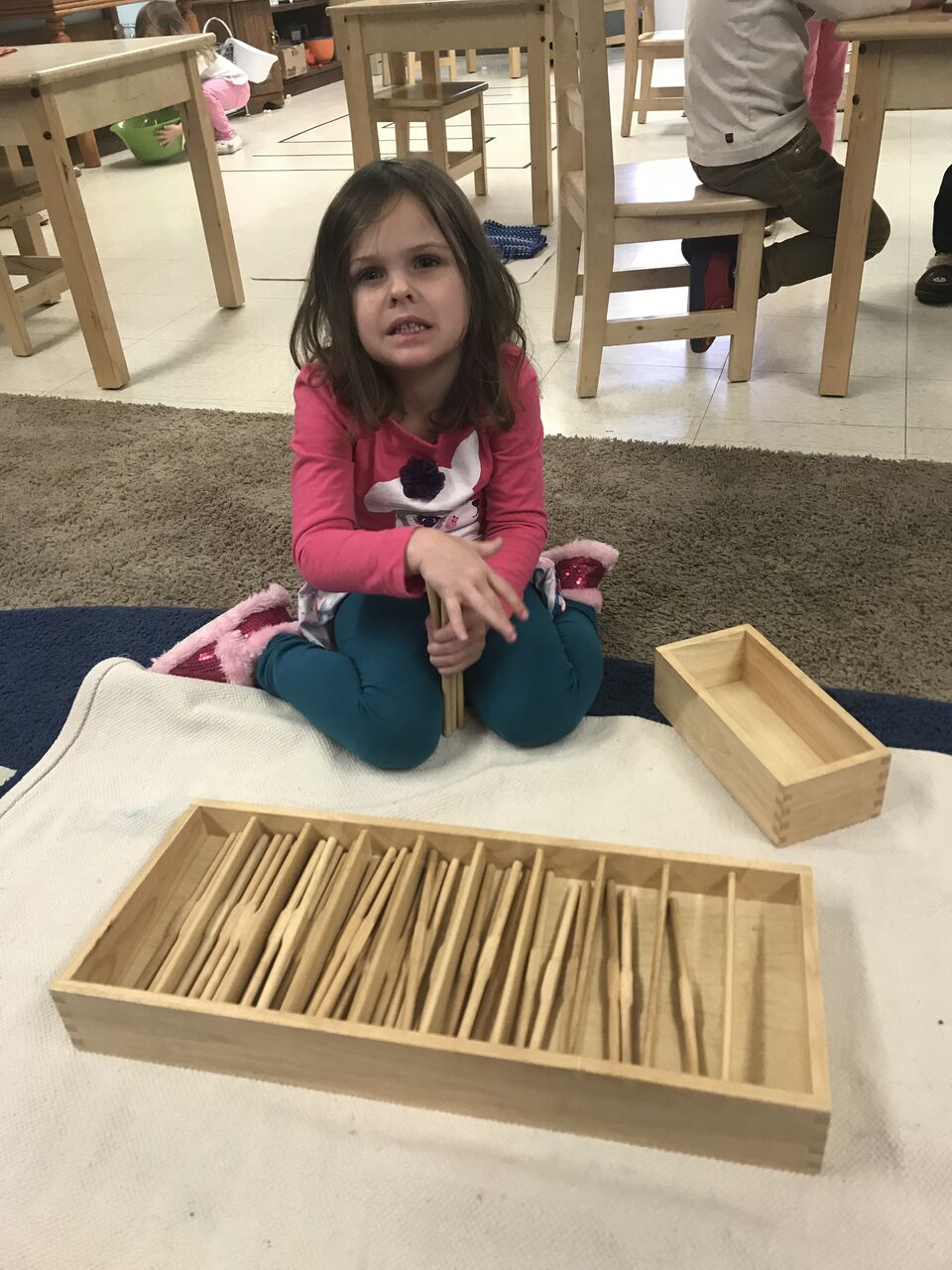
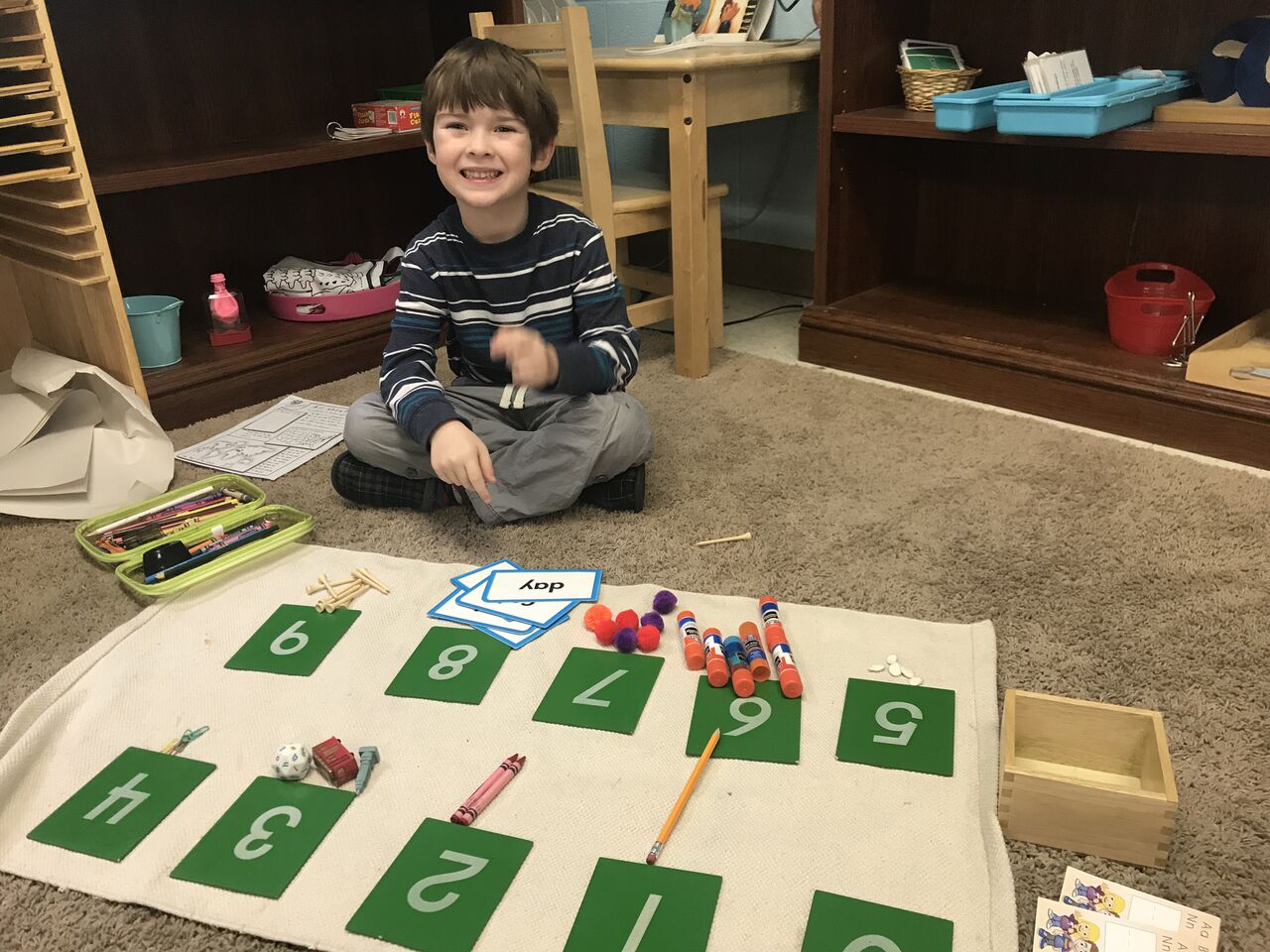
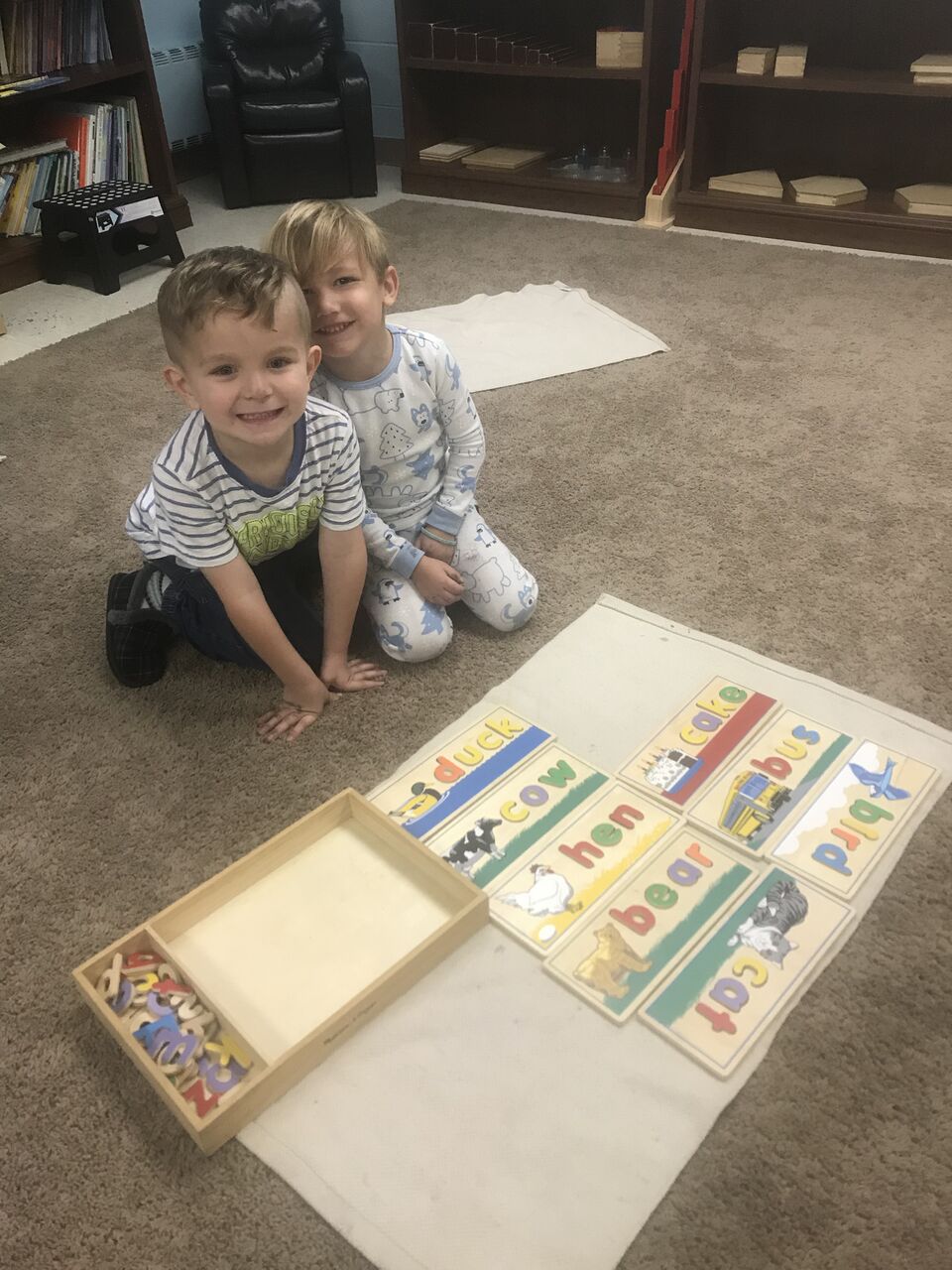
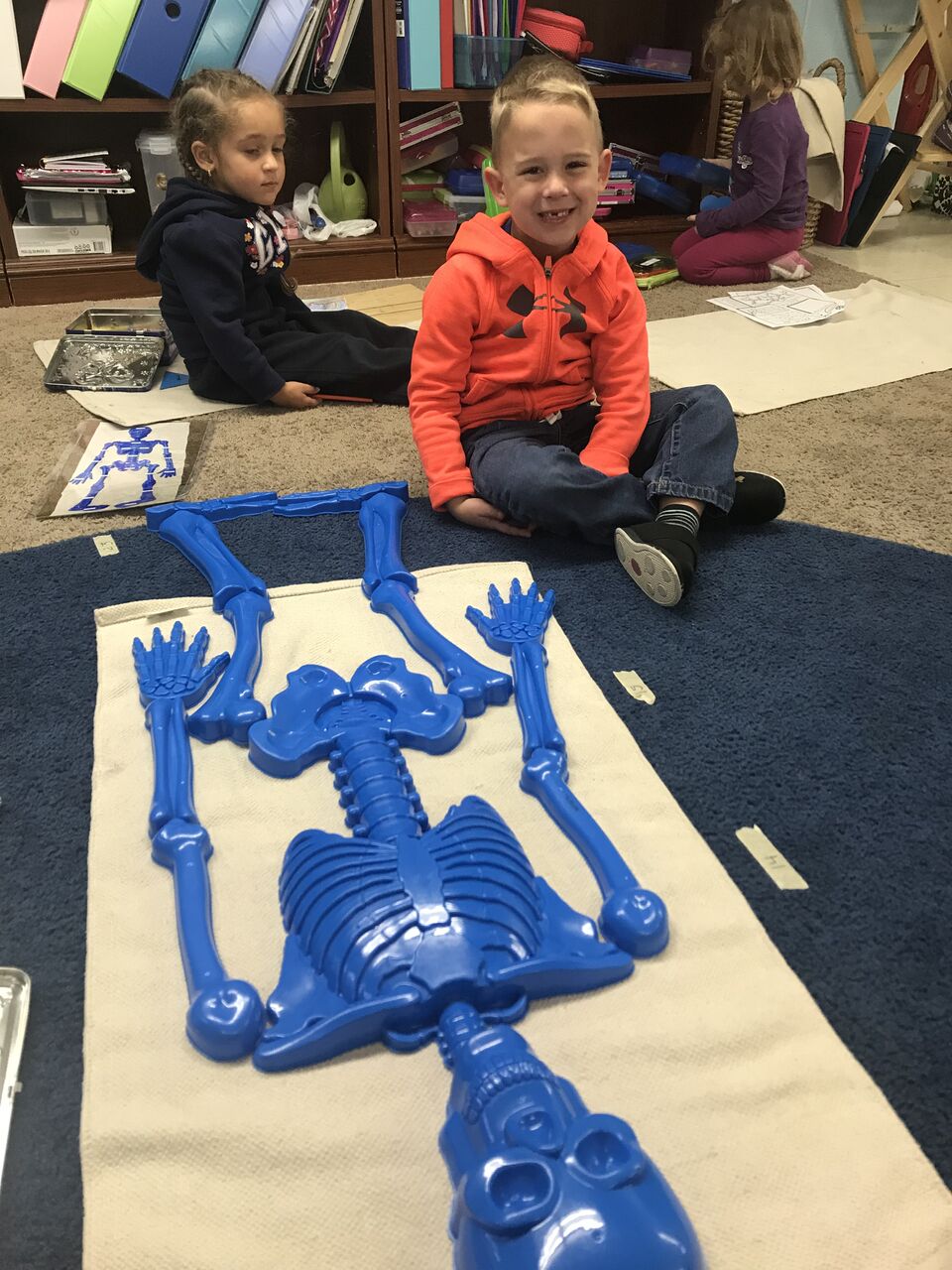
Metal Insets: This child is tracing the metal insets developing her eye hand coordination and fine motor movements. She is also learning how to control a pencil (pincer grip, pressure and steadiness).Golden Beads: These children are doing static addition (a sum without exchanging) problems using the golden beads. They are discovering that addition simply means to take two small numbers and to put them together to get a larger number.Spindle Box: This child is matching the correct quantity of spindles to each numeral symbol. She is also being introduced to the concept of zero and what its symbol looks like, while also seeing the natural sequence of the numerals.Sandpaper Numbers: This child is learning the symbols for the numbers through the sense of touch and sight. He is also retrieving objects of the named numeral learning what each number physically looks like.Puzzle Words: These student are completing the words by moving and rotating different letters to fit in the correct order.Human Skeleton: This child is forming a skeleton and labeling its different parts such as: skull, clavicle, sternum, ribs, humerus, radius and ulna, spine, pelvis, femur, tibia and fibula, feet and hands.
Guest Readers
Reminders
November 15, 2017 | Bring Your Parent to Work-Time
November 17, 2017 | Parent/Teacher Conferences | NO SCHOOL for students
November 21, 2017 | Harvest Party
A look into next week: Indians/Pilgrims
The children will learn about the items Pilgrims used long ago.
The children will learn that life was difficult for the Pilgrims in America and that everyone including the children had to work hard.
The children will learn where the Pilgrims left from and where they were headed to in America.
The children will be reading and learning about the very first Thanksgiving.
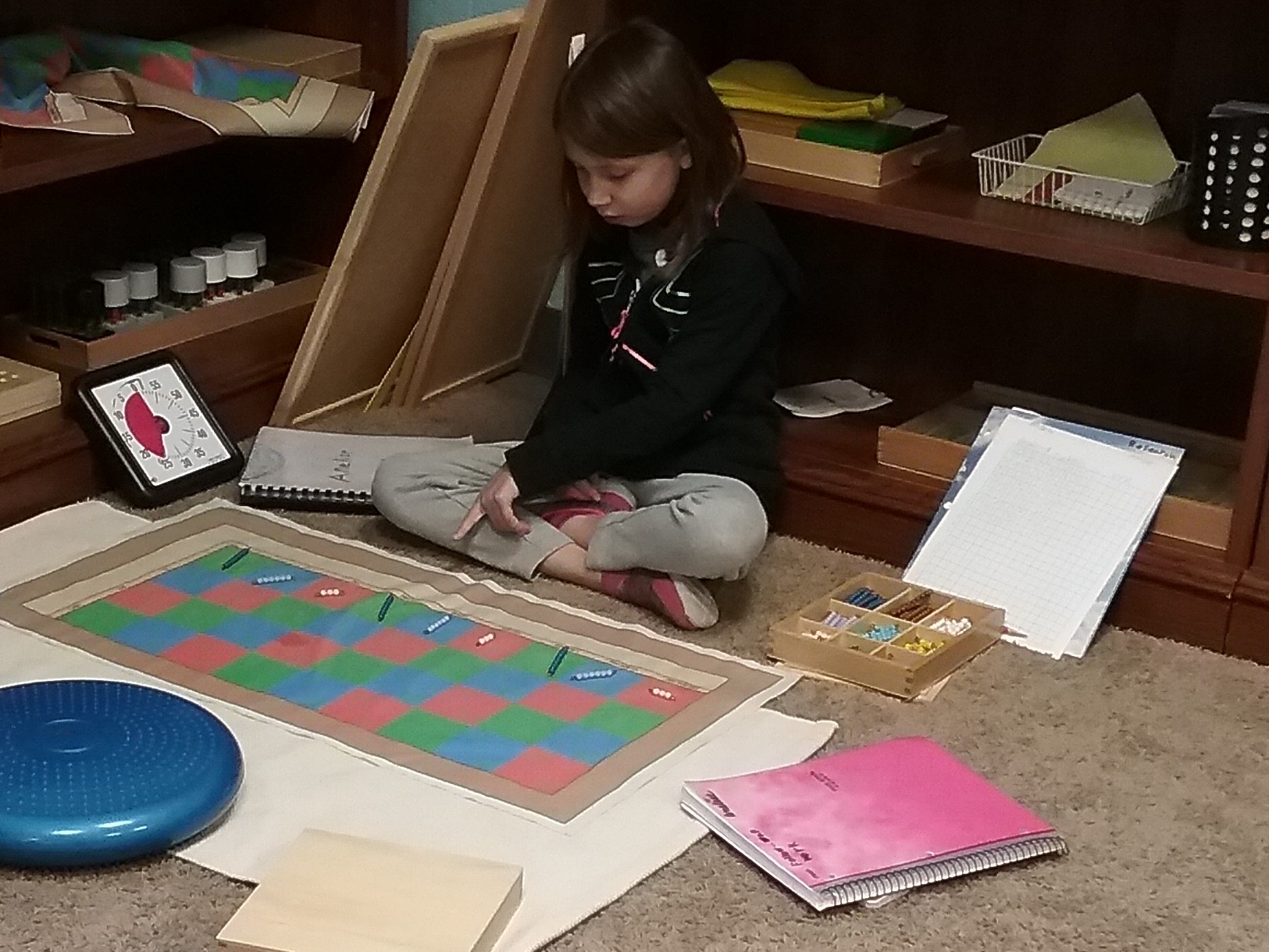
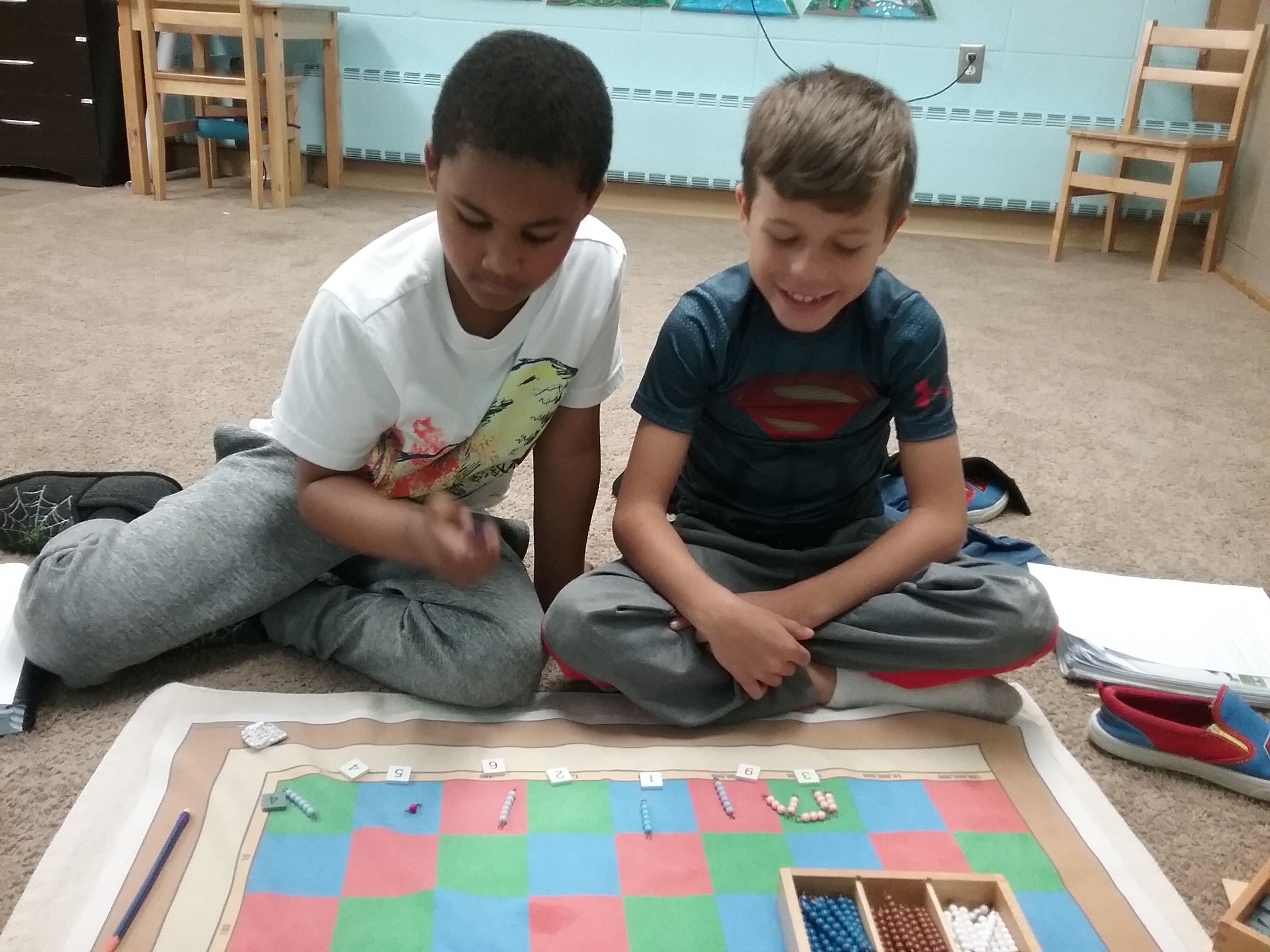
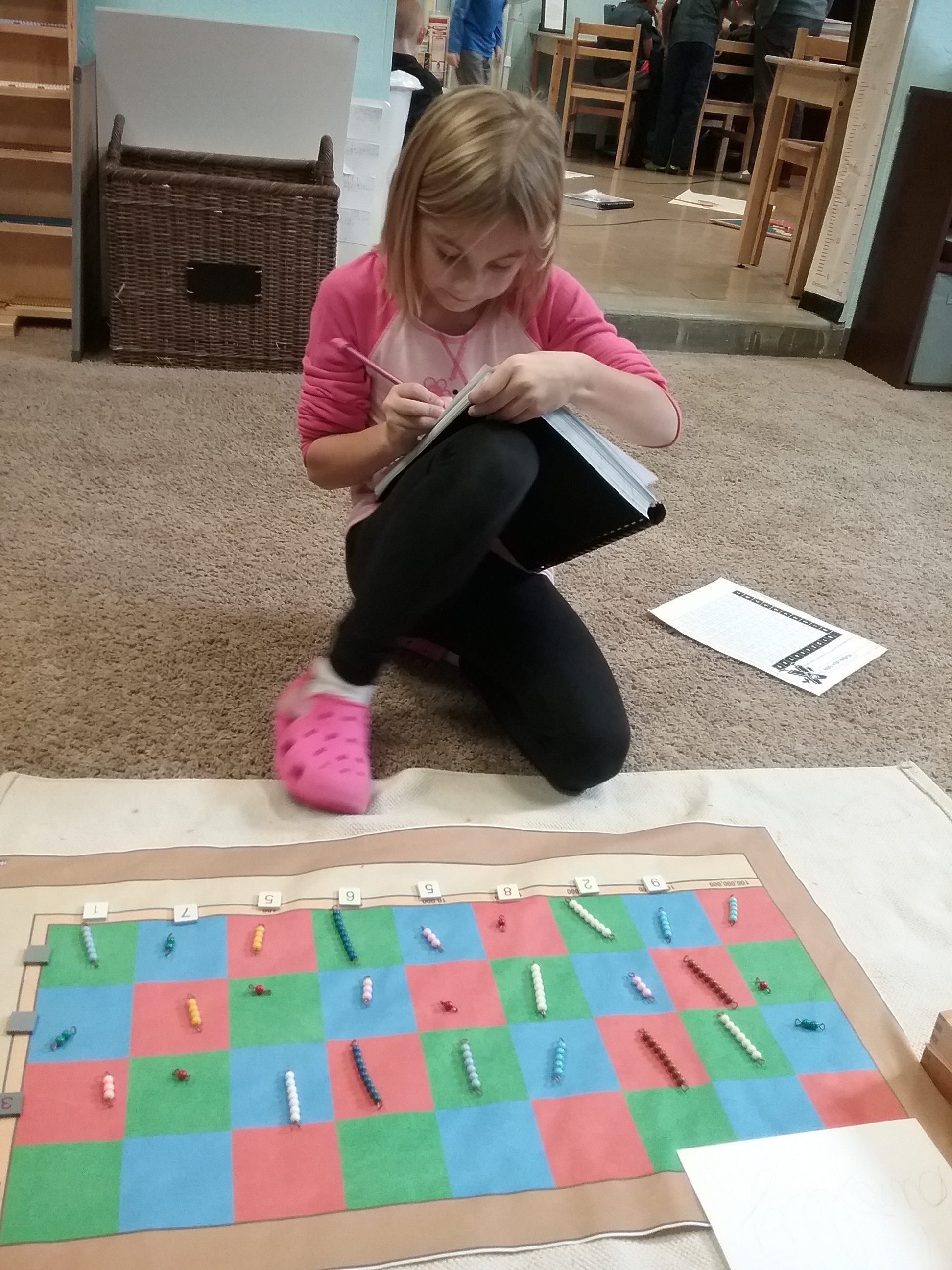
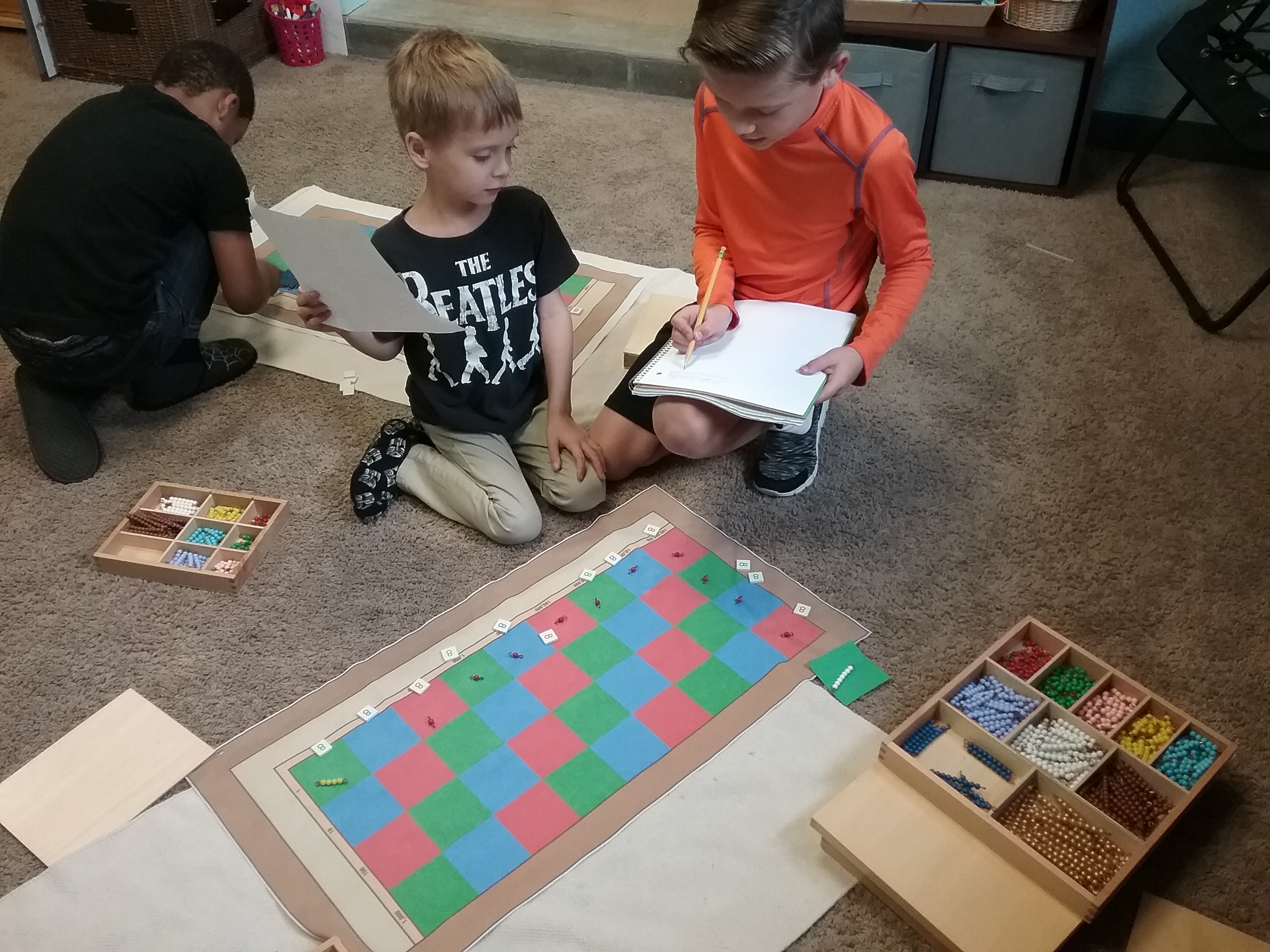
Many of you might be seeing “Checkerboard” written on your child’s work plan and wondering to yourselves, “What is a checkerboard and how is it teaching my child math?” This week, I wanted to share with you one of the most popular materials in any Montessori Elementary Classroom – The Multiplication Checkerboard. This material is used in different stages to multiply whole numbers throughout Lower Elementary and then with decimals in Upper Elementary. Montessori Math can be confusing to many of us because it is not taught the way we have experienced learning mathematic and geometric concepts. In most of our schooling, we were taught the quickest and shortest way to come up with the correct answer, often leading us to be confused about where a number came from and feeling like we’d never use that information again. Imagine if we had all been given the time and opportunity to discover formulas and concepts on our own, instead of solely copying down what we were told!
Dr. Montessori wanted her materials to help children develop a “Mathematical Mind.” This meant the goal of math in Montessori schools is not to come up with the correct answer the quickest, but to learn how to think critically and logically. The focus on math in the classroom is on the process of what they are learning, instead of the product. Brain research from “Math Works” by Michael Duffy, shows that Montessori Math materials engage all four lobes of the cerebrum simultaneously, connect the right and left hemispheres of the brain, and actively engage the prefrontal cortex.
The first lesson with the Multiplication Checkerboard is reading numerals. Each square on the Checkerboard represents a value that students learn in their initial lesson. Students place bead bars in each box to read numbers into the hundred millions. The Checkerboard is set up to use up to a nine-digit multiplicand so practicing reading large numbers is important to set students up for future success.After students are comfortable with reading large numbers, they are introduced to multiplication with the Checkerboard. Students begin with a unit multiplier. In each box that corresponds to a numeral in the multiplicand, students place the amount of bead bars the multiplier requires. For example, if the student has the equation 345,126,712 x 4, they will place four bars of 2 in the units’ place, four bars of 1 in the tens’ place, four bars of 7 in the hundreds’ place, etc. After laying out their bead bars, students will begin simplifying by adding up the bars in each square and exchanging them until there is only one bead bar in each square – their final product.After a teacher observes a student confidently and independently completing a multiplication equation with a unit multiplier, they are introduced to two, three, and four-digit multipliers. This stage of the Checkerboard takes the longest. During this stage, students are also introduced to recording partial products of their equation. This means they will complete the unit multiplier row, simplify, and record what they have. They will continue that process with the tens’ multiplier, the hundreds’ multiplier, and then the thousands’ multiplier. This part of the Checkerboard is leading them to abstractly multiply on paper. When the student is done multiplying on the Checkerboard, they add their partial products on their paper, then add the beads on the board to check their work.The final stage of the Checkerboard is abstractly multiplying. This is when a student is able to multiply solely on paper, without materials. While it would be faster to just show the child this method first, practice with the concrete materials gives them a deeper understanding of what they are doing and what those numerals represent. Often the students at this stage will check the work of students still using the materials, as you see in the photo.
The Multiplication Checkerboard is one of the many materials in our classroom that gives your child the opportunity to learn and grow at their own pace, while being challenged. The concrete materials used in Montessori classrooms give students a deeper understanding and a sense of confidence when they come up with their own formulas or solutions to problems.
A Peek into Next Week
Next week Lower Elementary students will talk about factoring, the fundamental needs of early humans, and bisecting angles. Upper Elementary students will look at the characteristics of cells, commas and apostrophes, and the five kingdoms. All students will work on Text-to-World Connections in Reader’s Workshop and will participate in new States of Matter lessons.
REMINDERS: 11/16 OCC Packing. Information was sent home on a flyer and in email!
11/17 Parent-Teacher Conferences – This is a NO SCHOOL day for students. If you haven’t yet, you can sign up here.
11/21 Harvest Party – Parents are invited to come join us for tea and desserts. Come hear what students have learned about the Mayflower. Please arrive at 1:00 pm. More information to follow by email.
This week our class focused so very hard on respect and what that word truly means. We also worked on grace and courtesy lessons. We spent a lot of time working on a lot of our ground rules for our classroom as well.
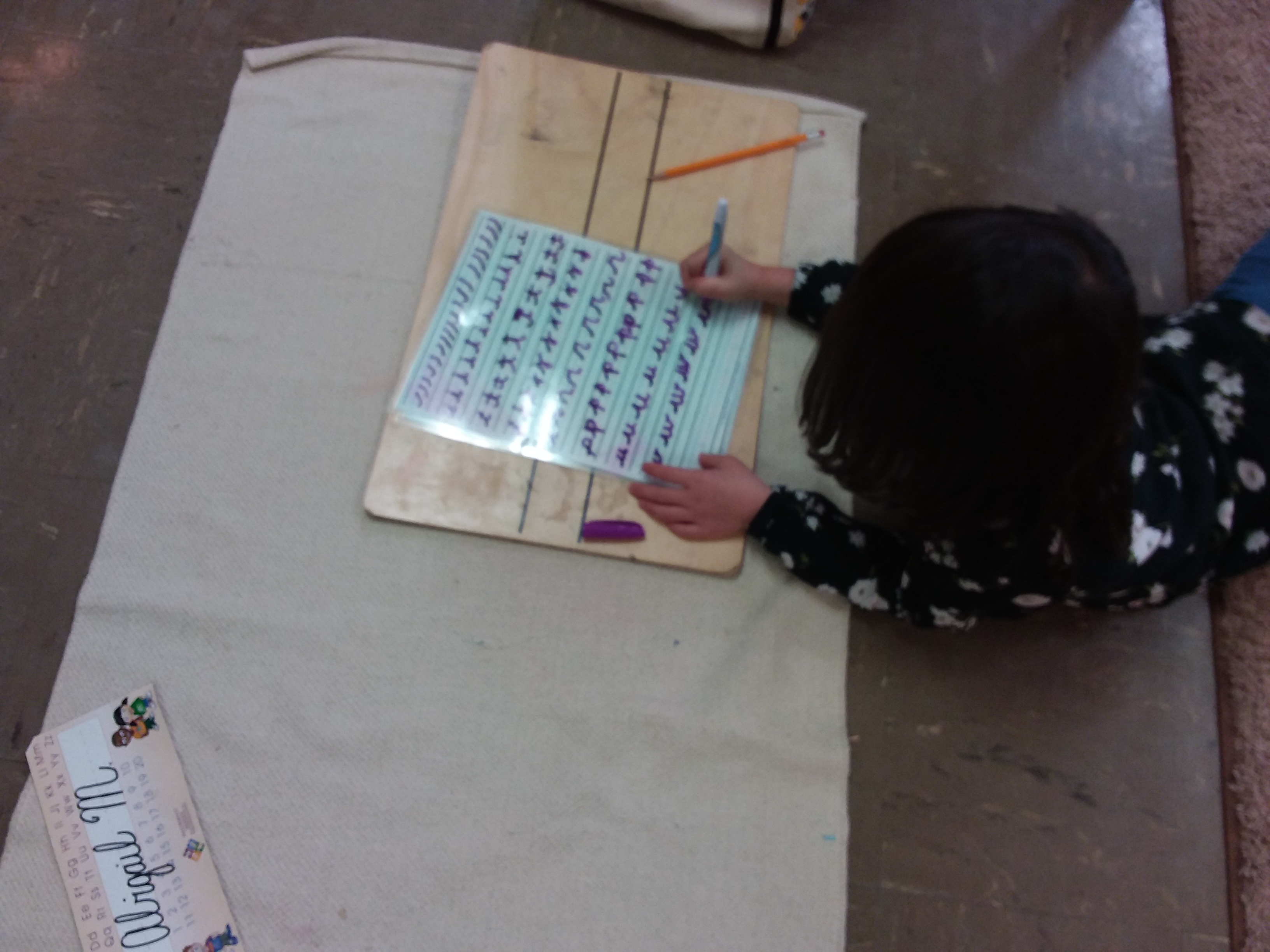
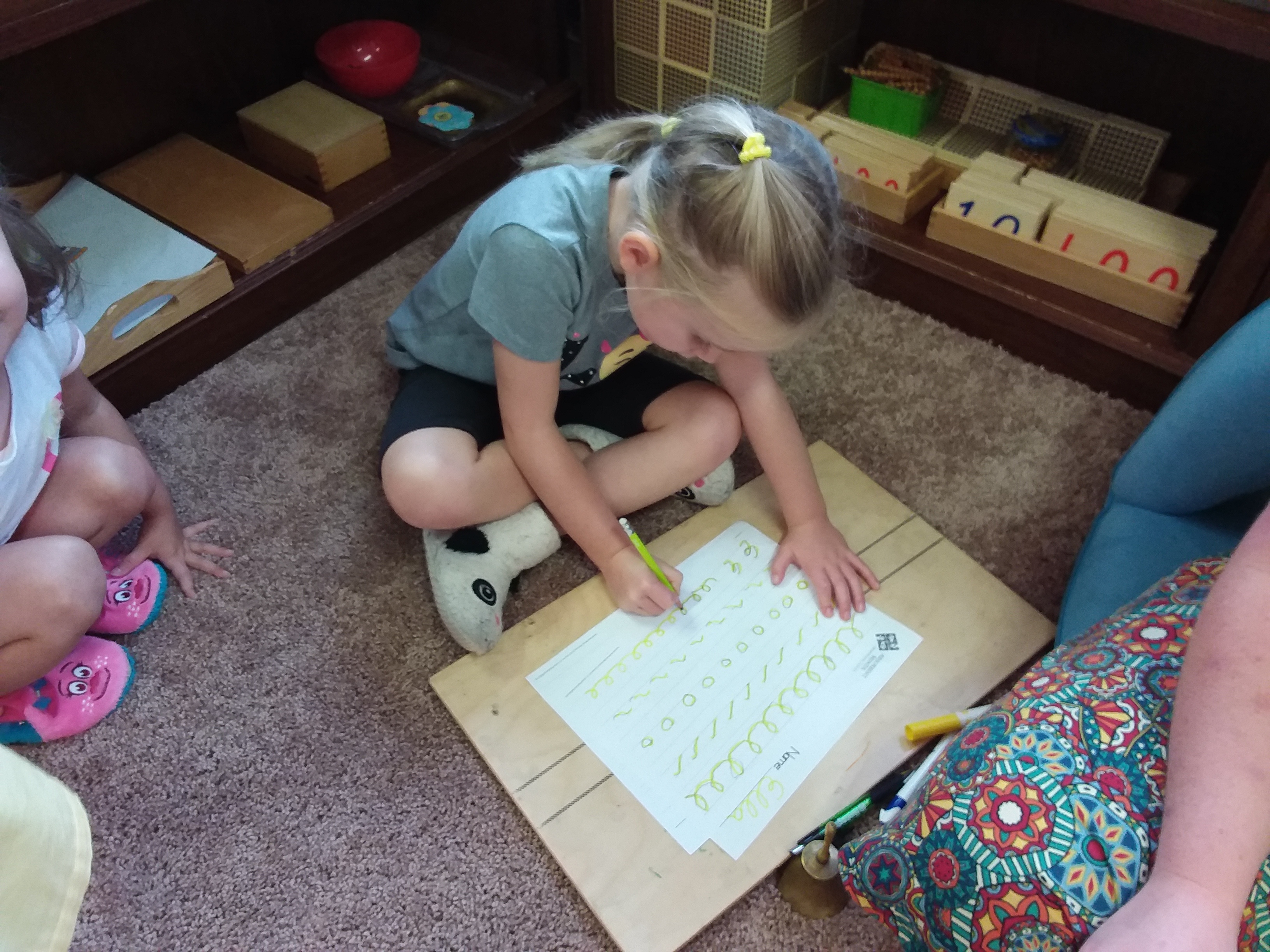
One of our students is working on the lowercase initial stroke pages we have in our classroom. These strokes help the child at the begining steps for cursive writing. When you think of lowercase letters you notice that all of them start and end the same way. This work helps to prepare them in this way.
Another one of our friends is also working on her form drawings. She is tracing the different forms on lined paper. This work also helps prepare them for cursive.
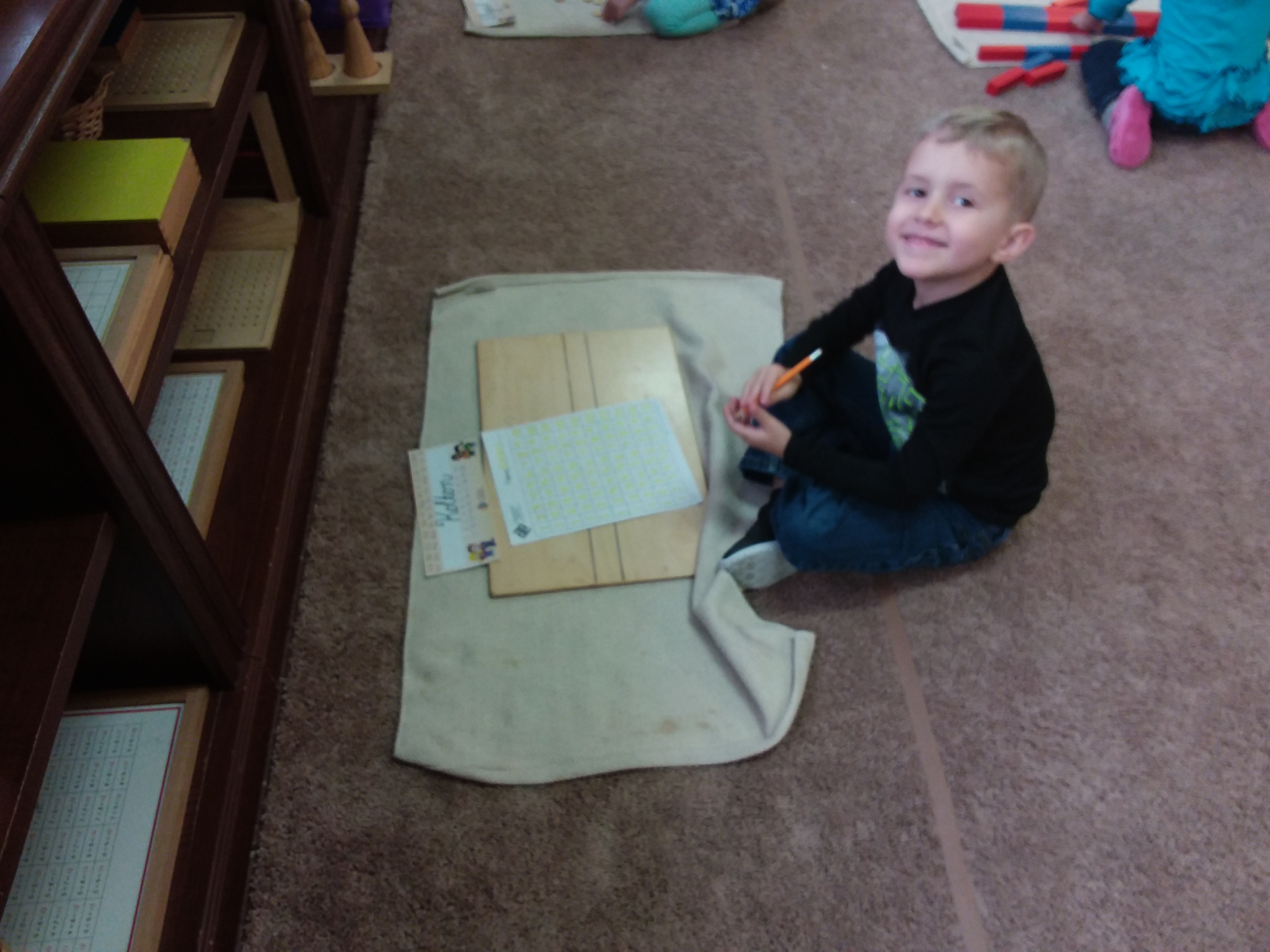
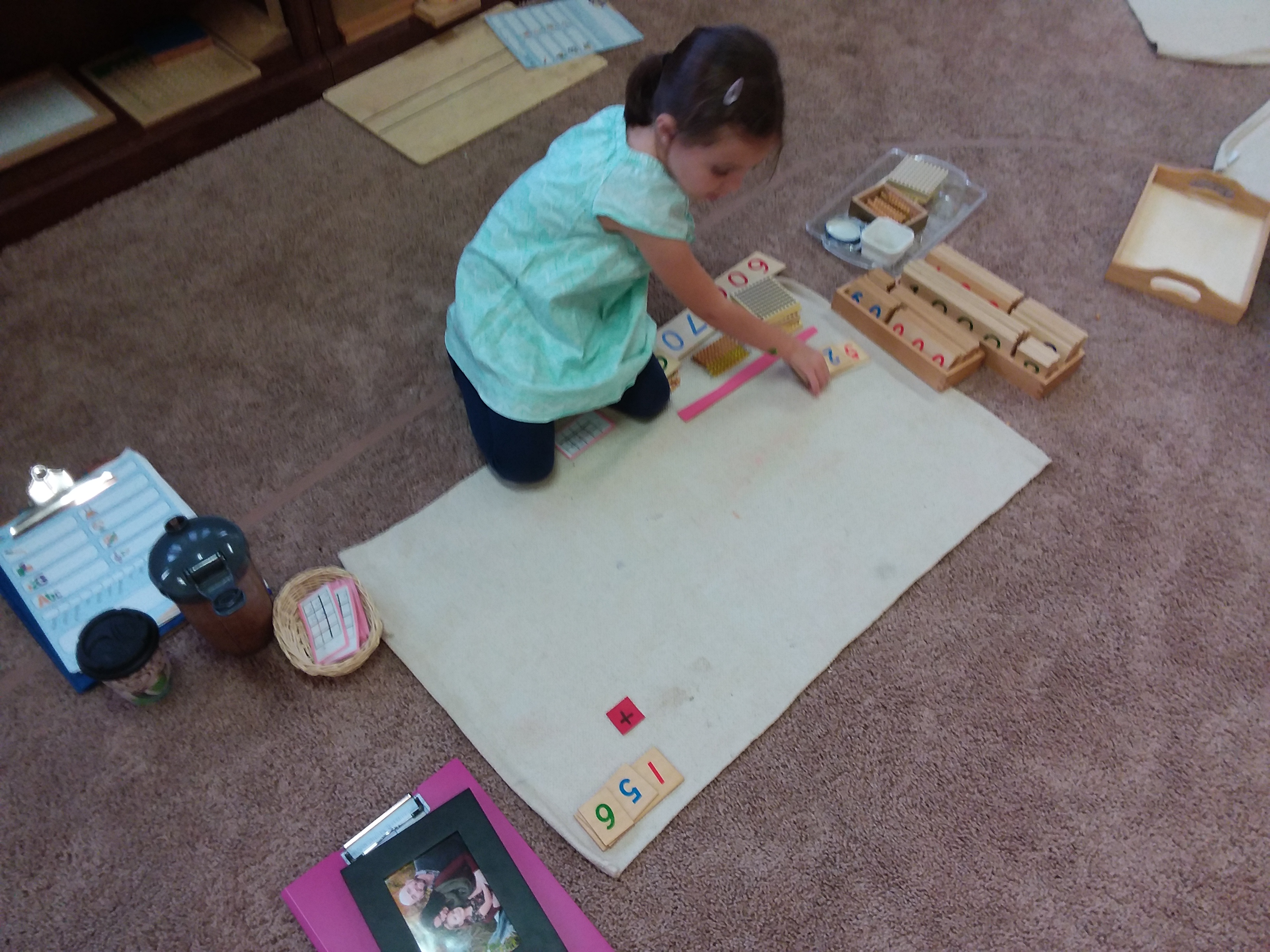
When working on the 100 board the children are learning linear counting, and number recognition. Our friend here is also writing out 1 to 100. This helps with fine motor skills, number formation, and also with linear counting.One of our kindergartener’s is working on static addition with the golden beads. The purpose is for the child to understand that the process of addition is simply the combining of equal or unequal quantities to form one large quantity.
Take A Peek Into Next Week:
Next week we will be focusing on manners, sharing, how to talk to friends, ground rules, and grace and courtesy.
This has been a wonderful week in our classroom! This week we have learned all about Kindness! We discussed how being kind means we treat others the way we would like to be treated. The children also filled up our Kindness Jar, so we were able to do something kind for another class and go visit them! So much fun!
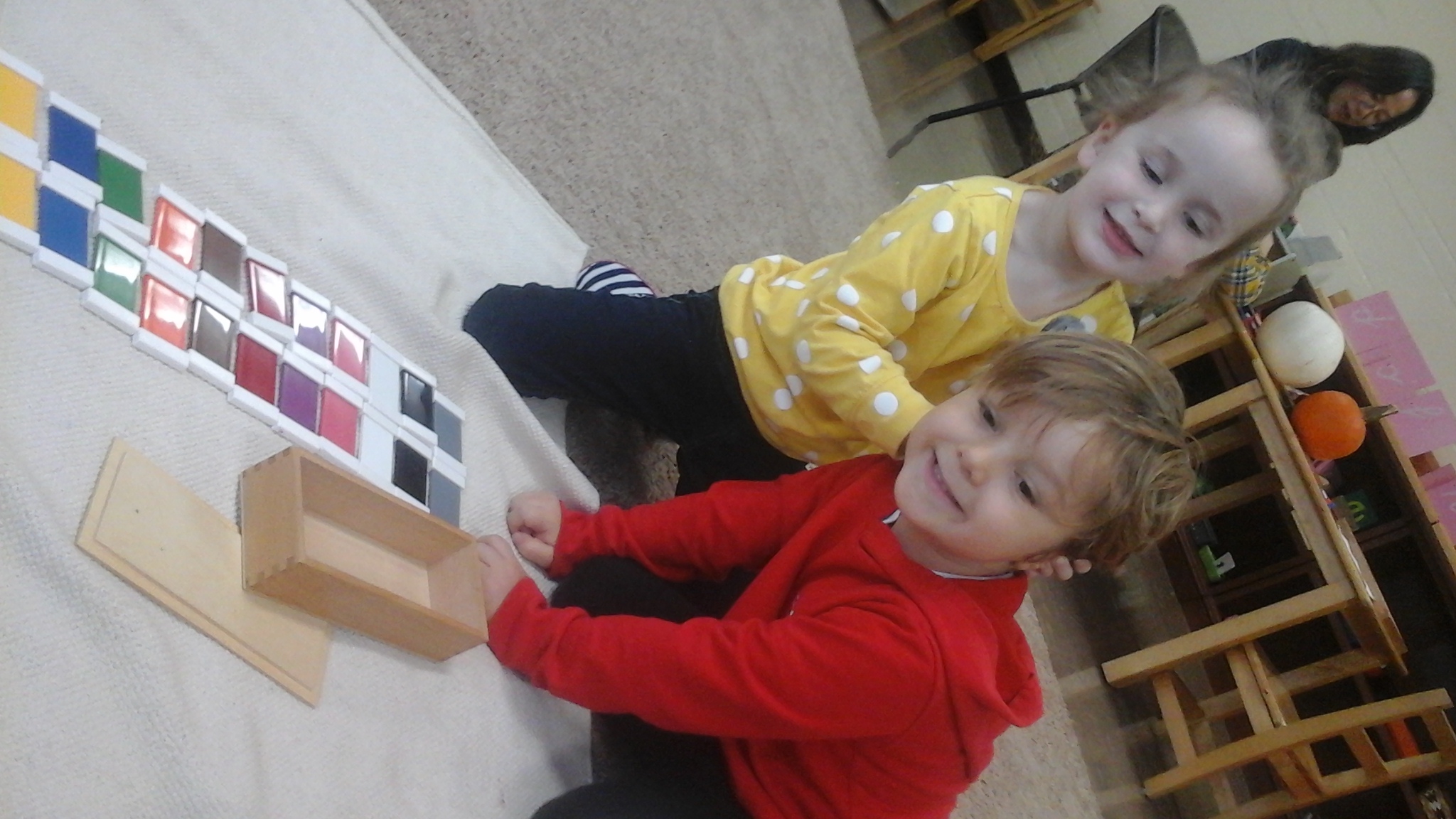
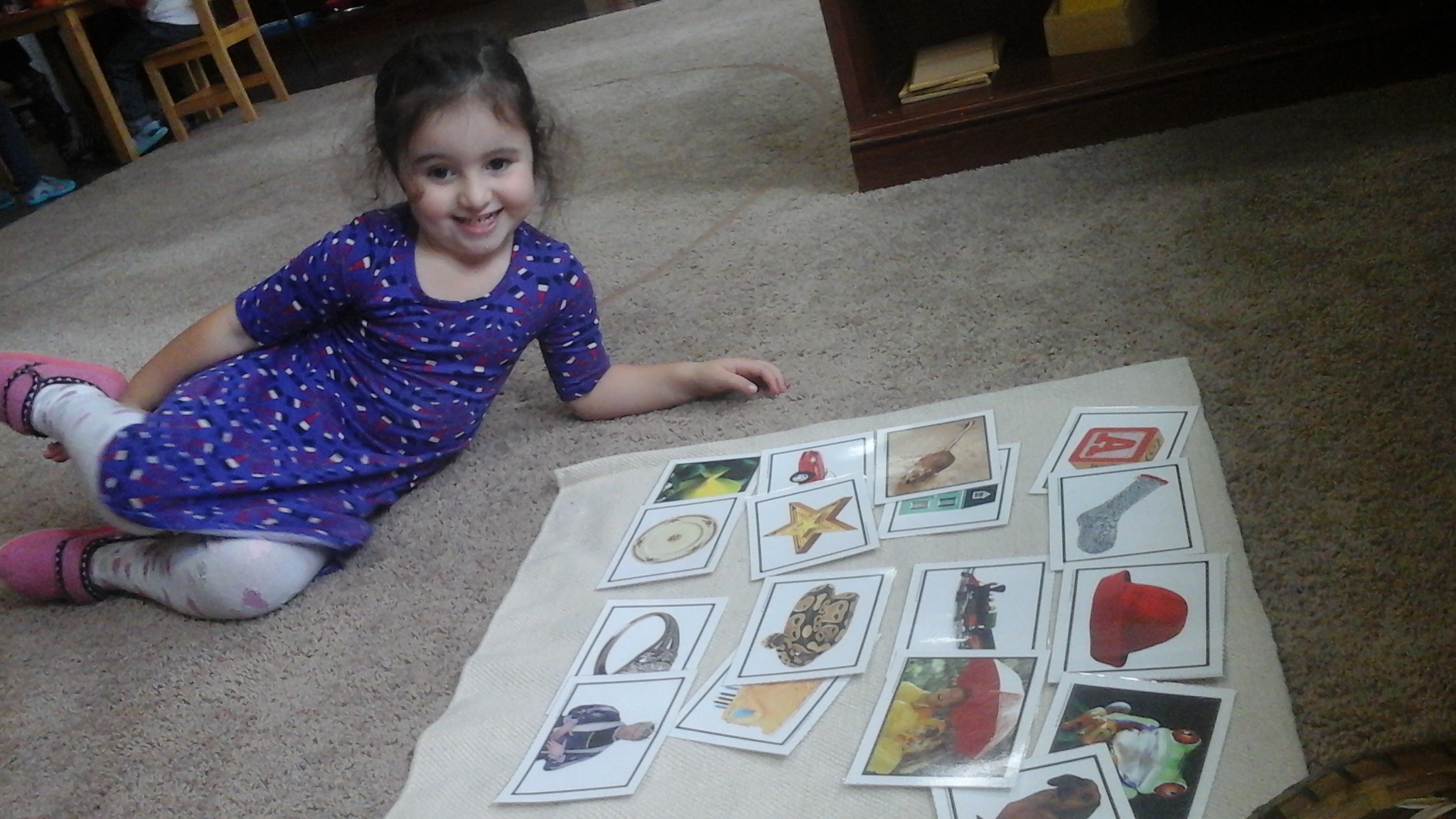
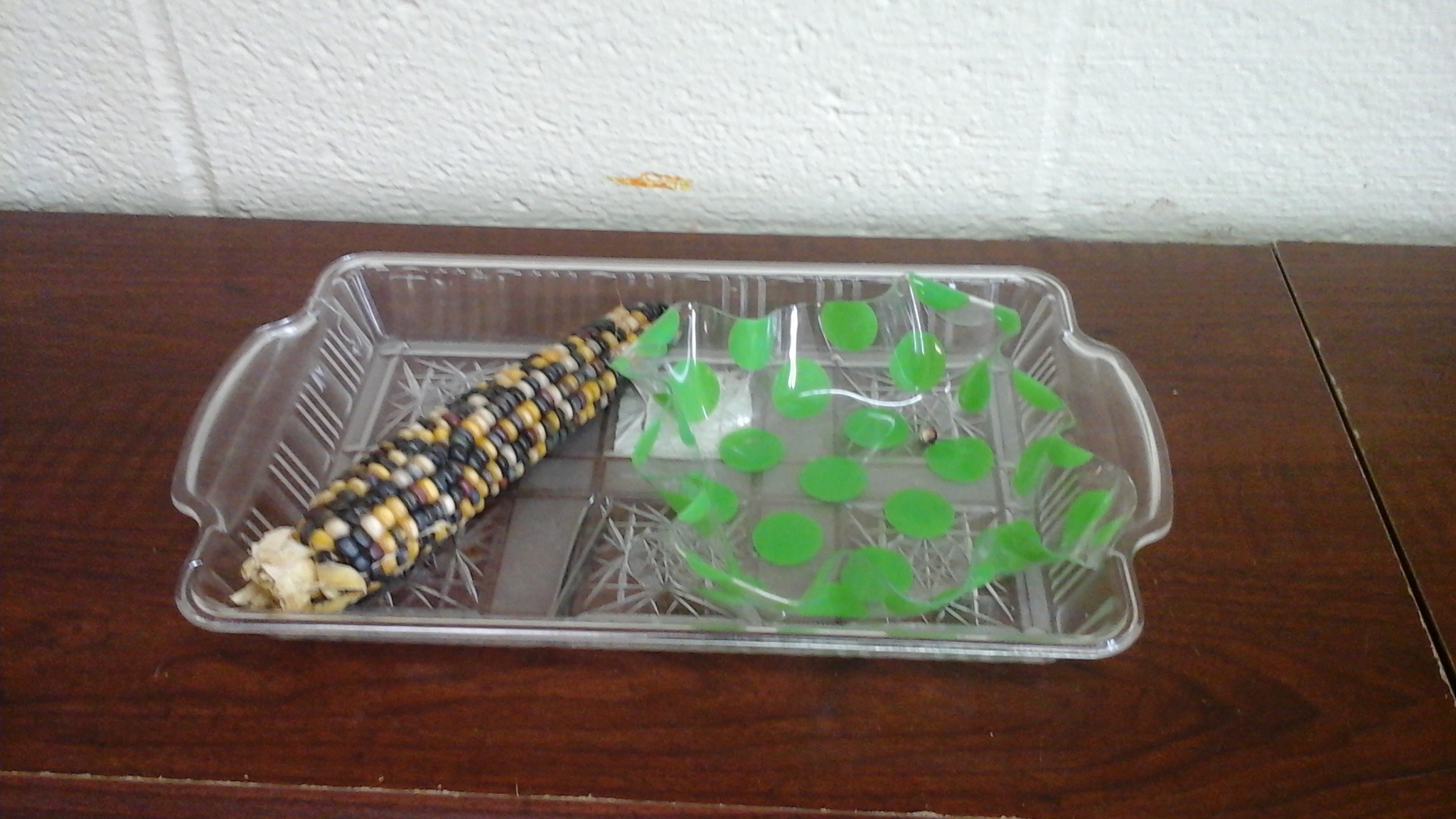
Proud of her work using the Metal Insets! By tracing the shapes and practicing drawing straight lines accross, the child is preparing their hand for Handwriting!Working together to match colors in the Sensorial Area!Proud of her work on the Rhyming Cards in the Language Area!Our class filled up our Kindess Jar, so we were able to do something kind for another classroom and go visit them! We decided to share our favorite work from the Practical Life area, Corn Tweezing, with Ms. Kate’s class!