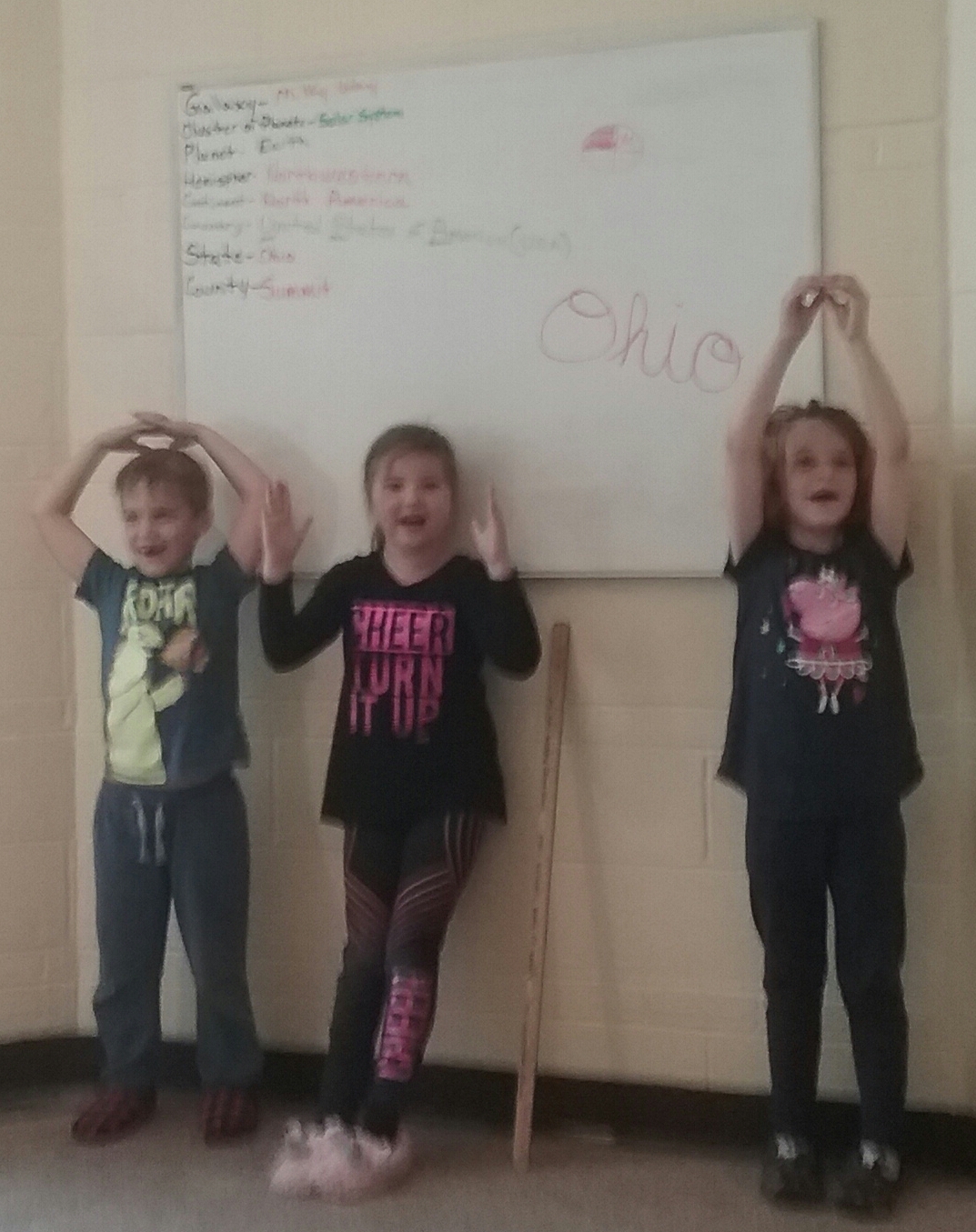
Lesson: Biggest to smallest where we live- We discovered we live in the vast galaxy of the Milky Way (not the candy bar), then we are still in space and live in a group of planets called The Solar System. Then the planet we live is the planet Earth. Once we touched down we found we live in the Northwestern Hemisphere and live on the continent of North America. Once we found land we live in the country of The United States Of America and live in the great state of Ohio (Go Buckeyes). We all live in Summit County but live in different cities and have different addresses and phone numbers. What a journey it was!
O H .. I O Notice Script Ohio and the yard stick serving the roll of the i
Handwriting: We practiced cursive the upper case and lower case E, F, G, H, I.
Cultural Subjects: Your children can now count to ten in 10 languages (English, Latin, Sign Language, Spanish, German, French, Japanese, Greek, Arabic with the Lebanese Dialect, and Italian).
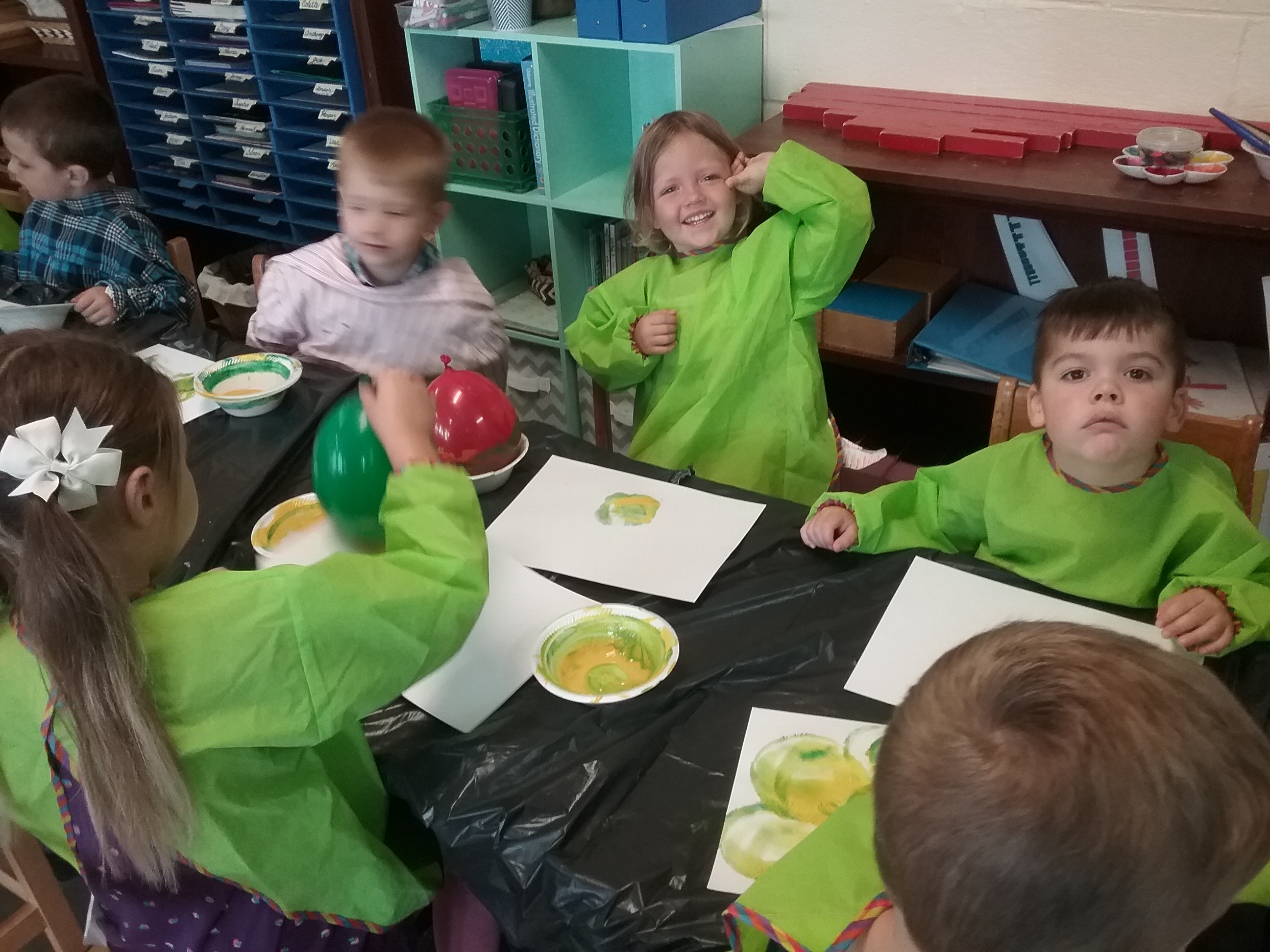
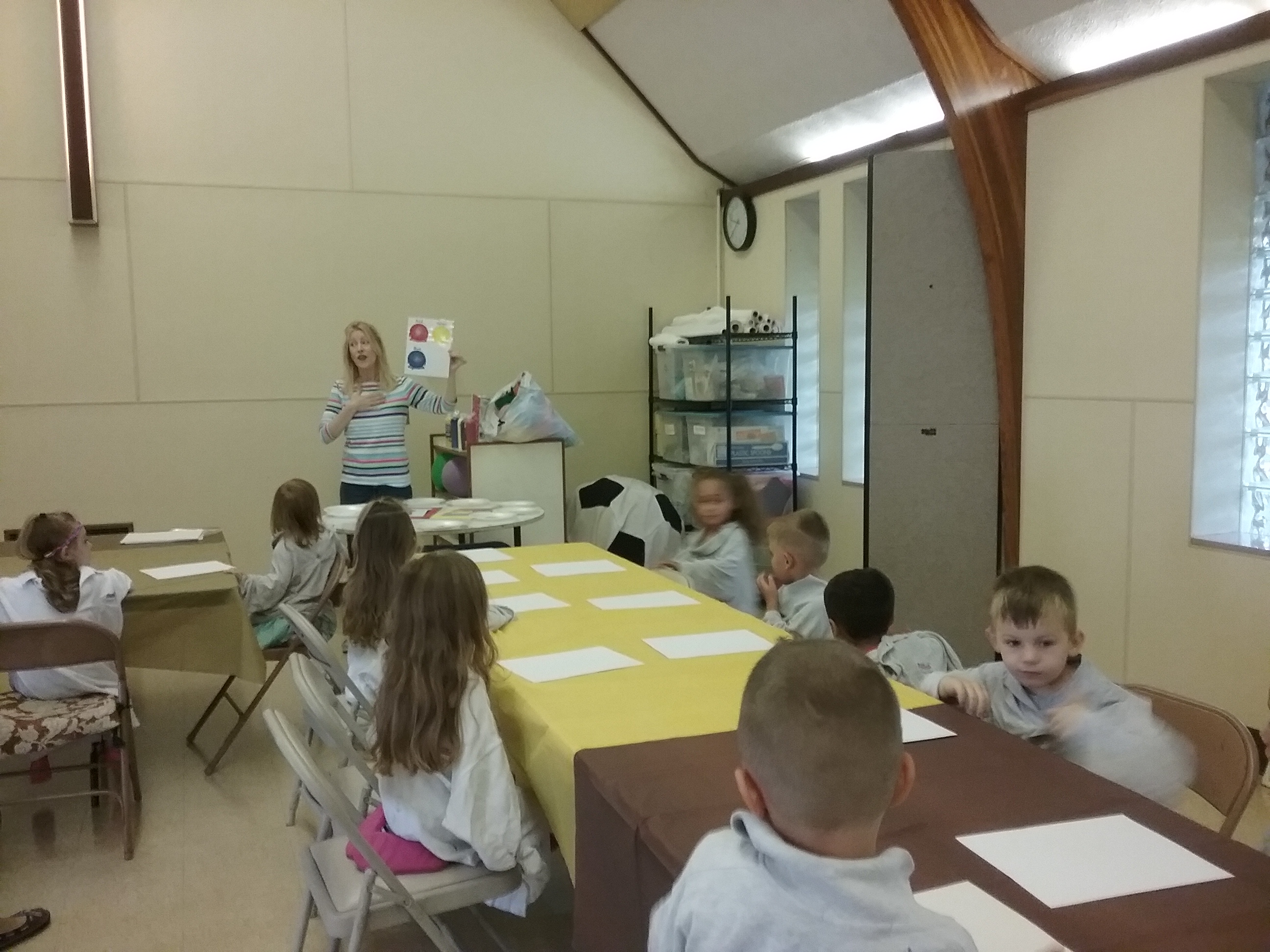
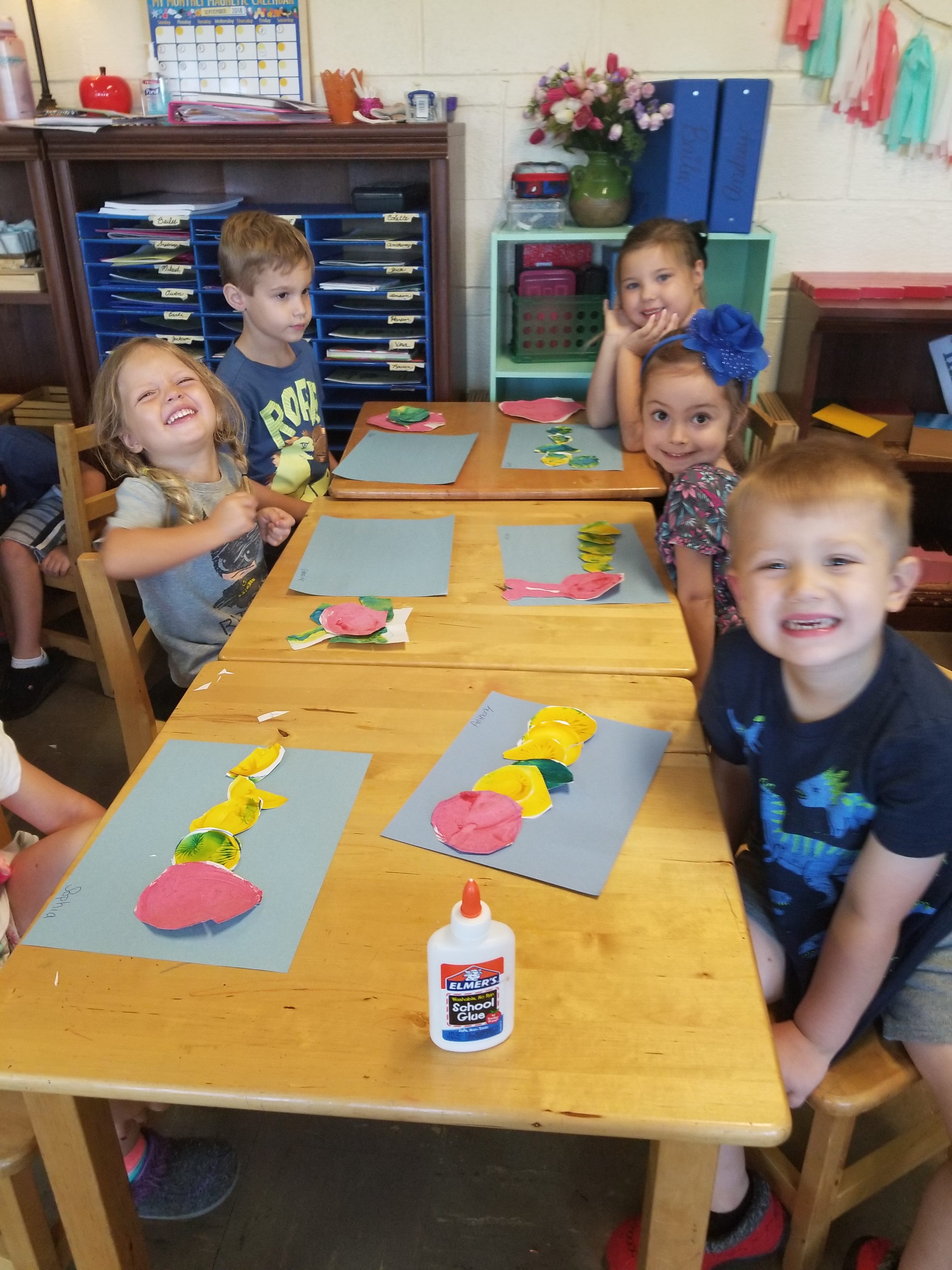
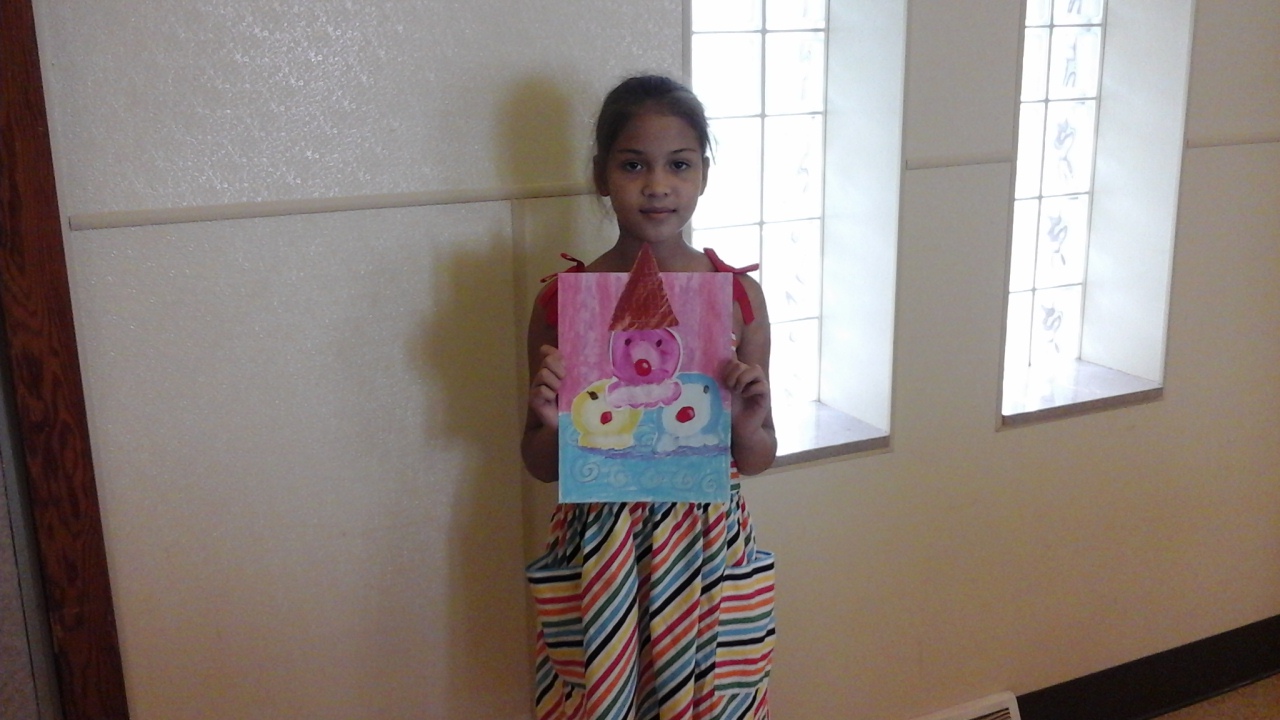
We started off the school year studying artist Wayne Thiebaud. He is a modern American artist most known for his beautiful paintings of cakes, doughnuts, and ice cream cones. I had the students paint ice cream scoops in Primary Colors and they learned how to blend white to each ice cream scoop so to make them look three dimensional and realistic as Wayne Thiebaud did in his paintings. Next they painted popsicles while learning about Secondary Colors. We used a technique called crayon resist to create a pattern on the popsicle and then used watercolors to paint over the crayon. They have had such fun painting and getting messy as artists are required to!
Welcome back to another fantastic year of science with Mr. John! Mr. John does science every Thursday for our classes at the Cuyahoga Falls site. He prepares fun and interactive science experiments that students enjoy so much. After each class your student will come home with an outline of the experiment, your child’s hypothesis and an explanation of what us happening during the experiment.
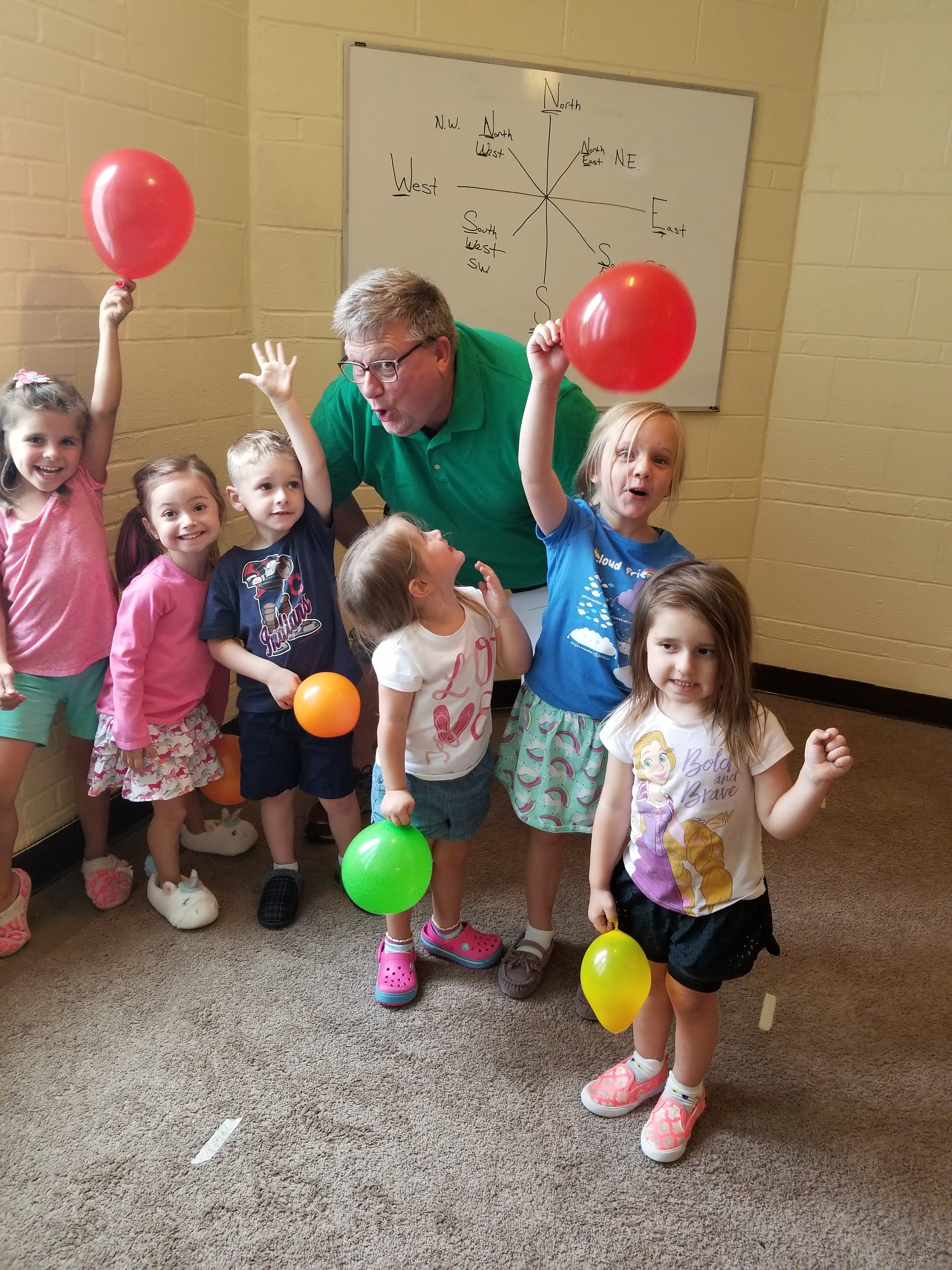
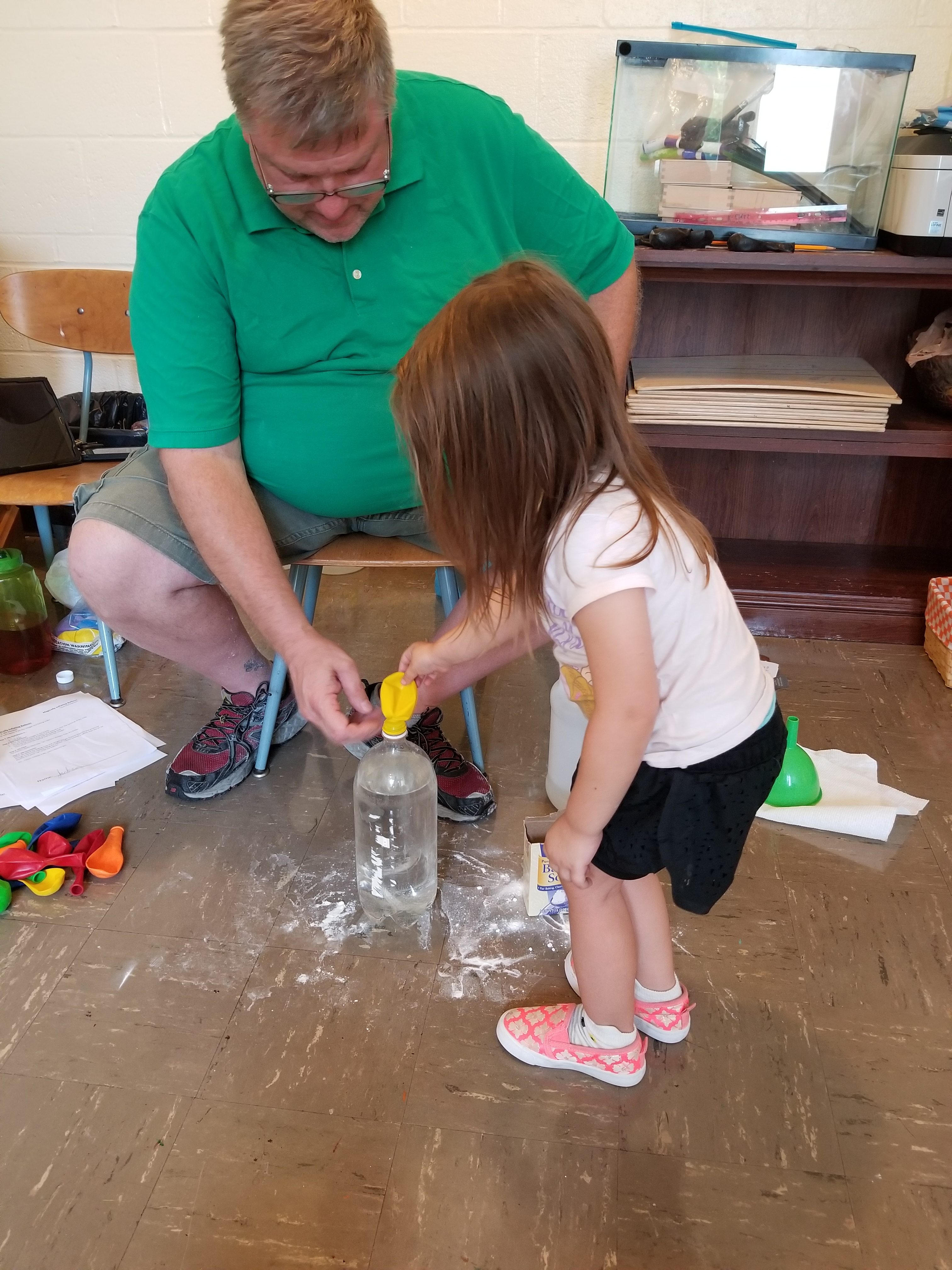
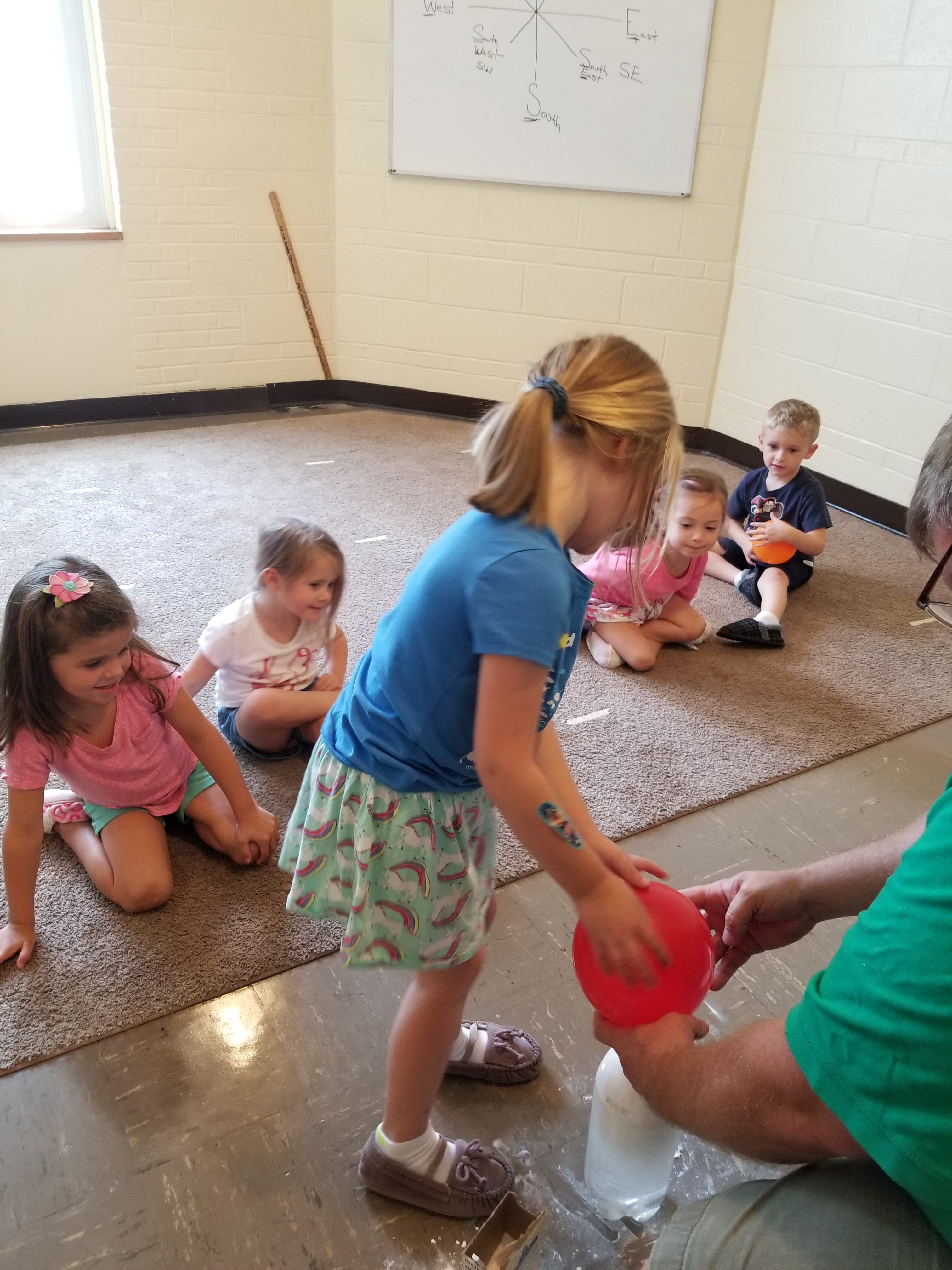
Here a student is pouring baking soda into a balloon. Each student had the opportunity to fill their own balloon during this experiment!Here the student is emptying the baking soda in her balloon into a 2liter bottle that is full of white vinegar. The end of the balloon is securely around the opening of the bottle.Here a student is helping Mr. John as her balloon begins to expand after the baking soda is combined with the vinegar in the bottle. Why is the balloon filling up and expanding?
The science, behind this balloon baking soda experiment, is the chemical reaction between the base {baking soda} and the acid {vinegar}. When the two ingredients mix together the balloon baking soda experiment gets it’s lift! The balloon is filling with the gas produced from the two ingredients is carbon dioxide or CO2.Carbon dioxide is Mr. John’s favorite gas.
Week 2:
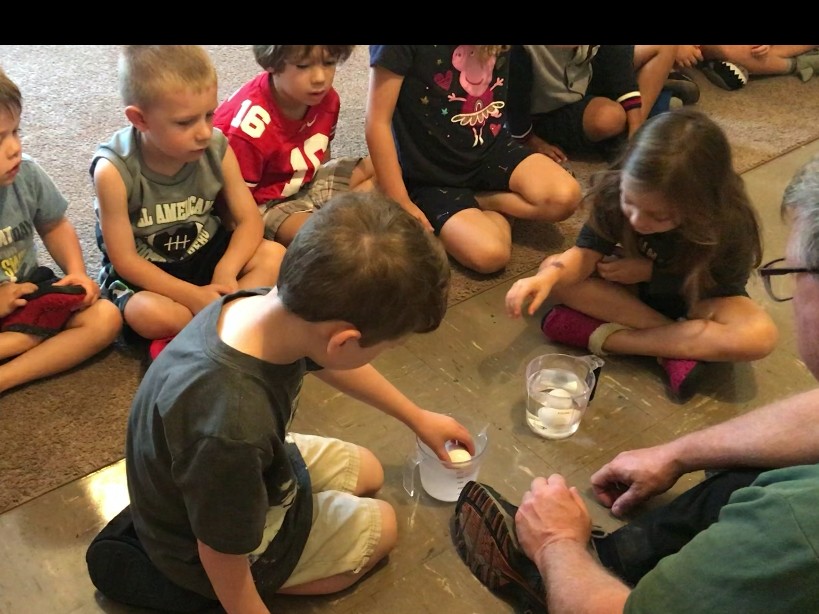
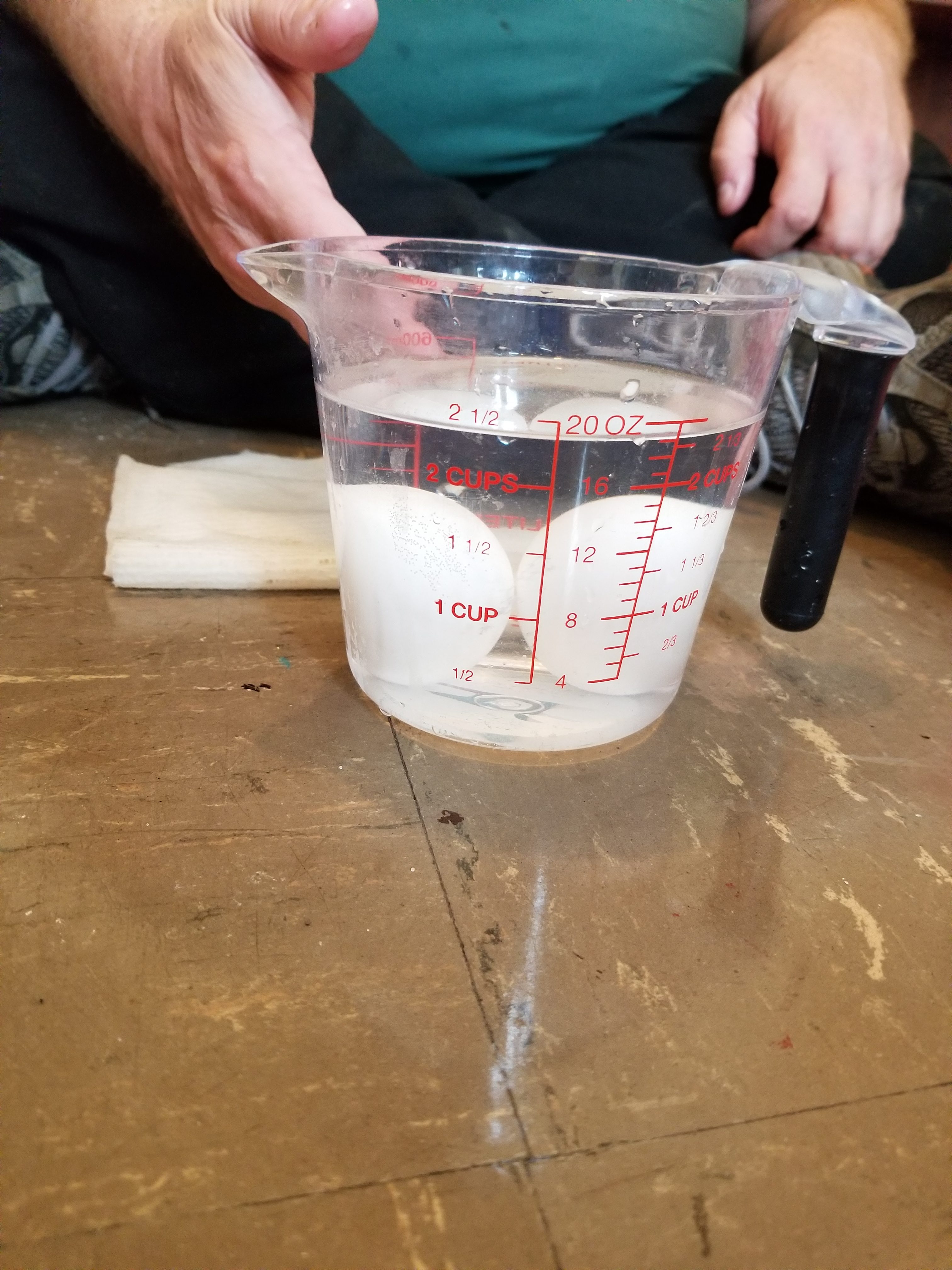
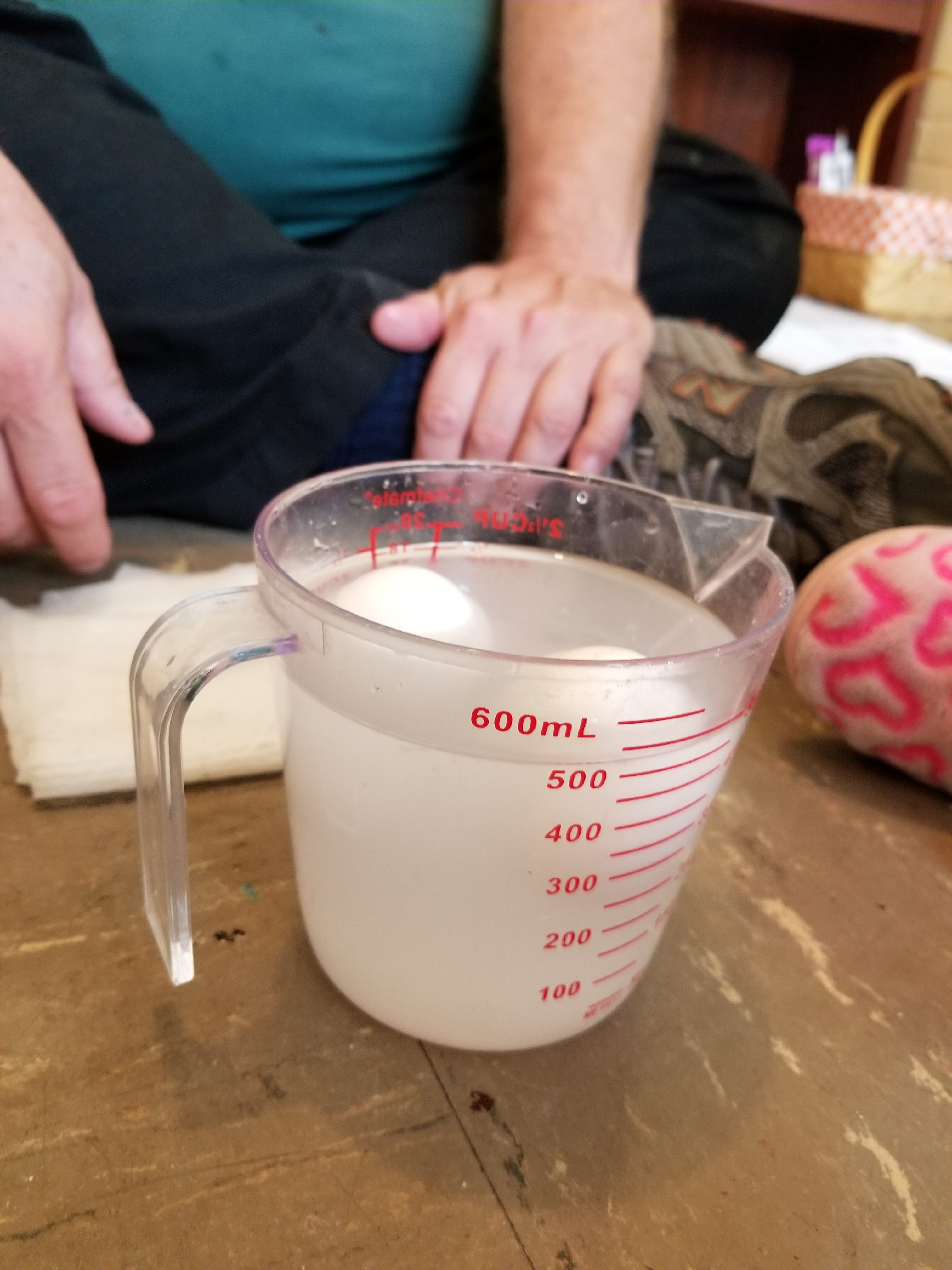
Here two students are putting eggs into cups of water. One cup has plain water and the other is salt water.Here the two eggs are in fresh water. They are at the bottom of the cup.Here the two eggs are in salt water. They are floating at the top.
If you put an egg in a cup of tap water, it will sink to the bottom. Why is this?
Because the density of the egg is higher than the density of tap water, so it sinks. Density is the mass of a material per unit volume. For example, the density of freshwater under standard conditions is approximately one gram per cubic centimeter.
But, if you add enough salt to the water, the egg will actually float back up to the surface! Adding salt to the water increases the density of the solution because the salt increases the mass without changing the volume very much.
When enough salt is added to the water, the saltwater solution’s density becomes higher than the egg’s, so the egg will then float! The ability of something, like the egg, to float in water or some other liquid is known as buoyancy.
Week 3
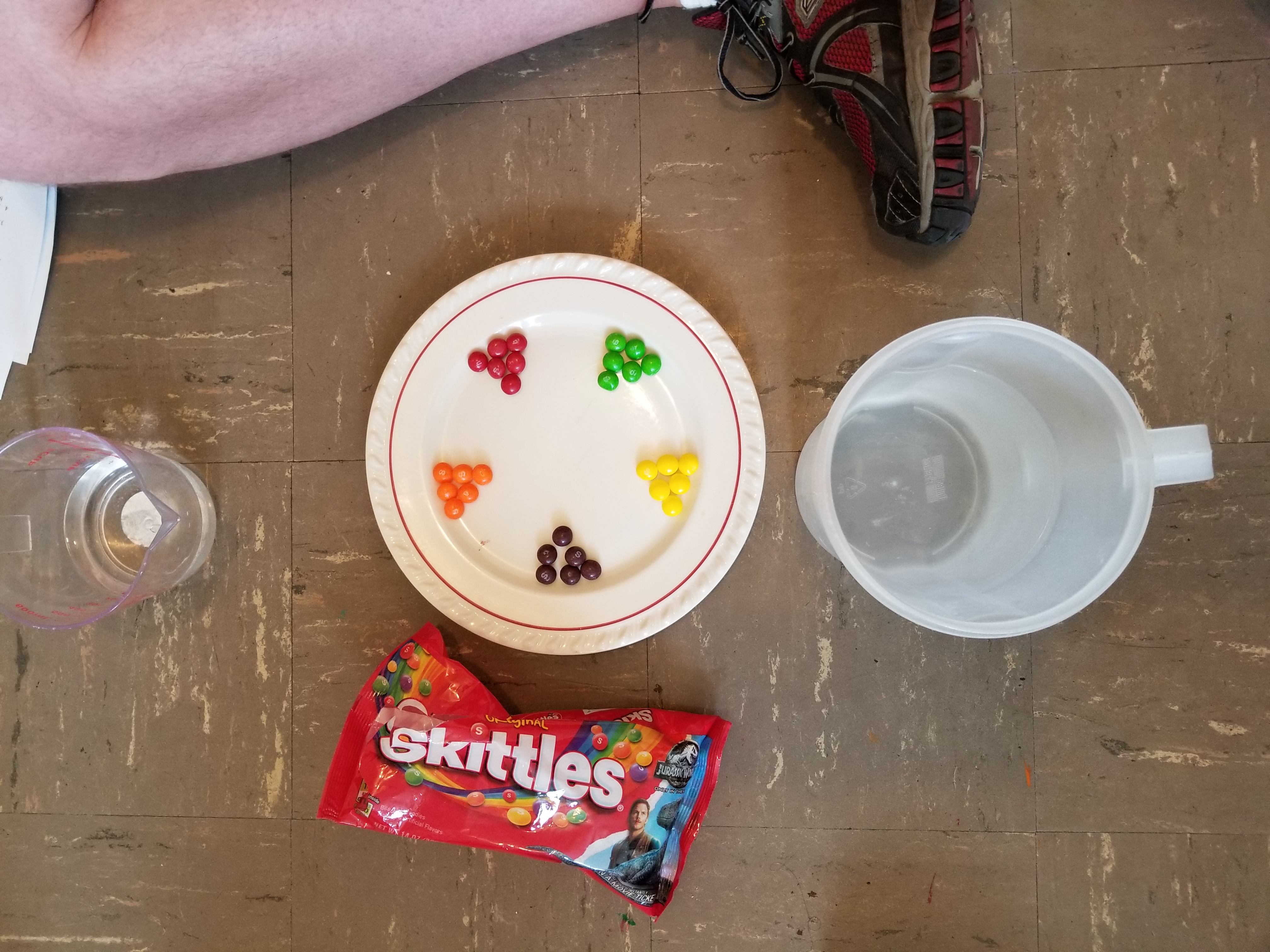
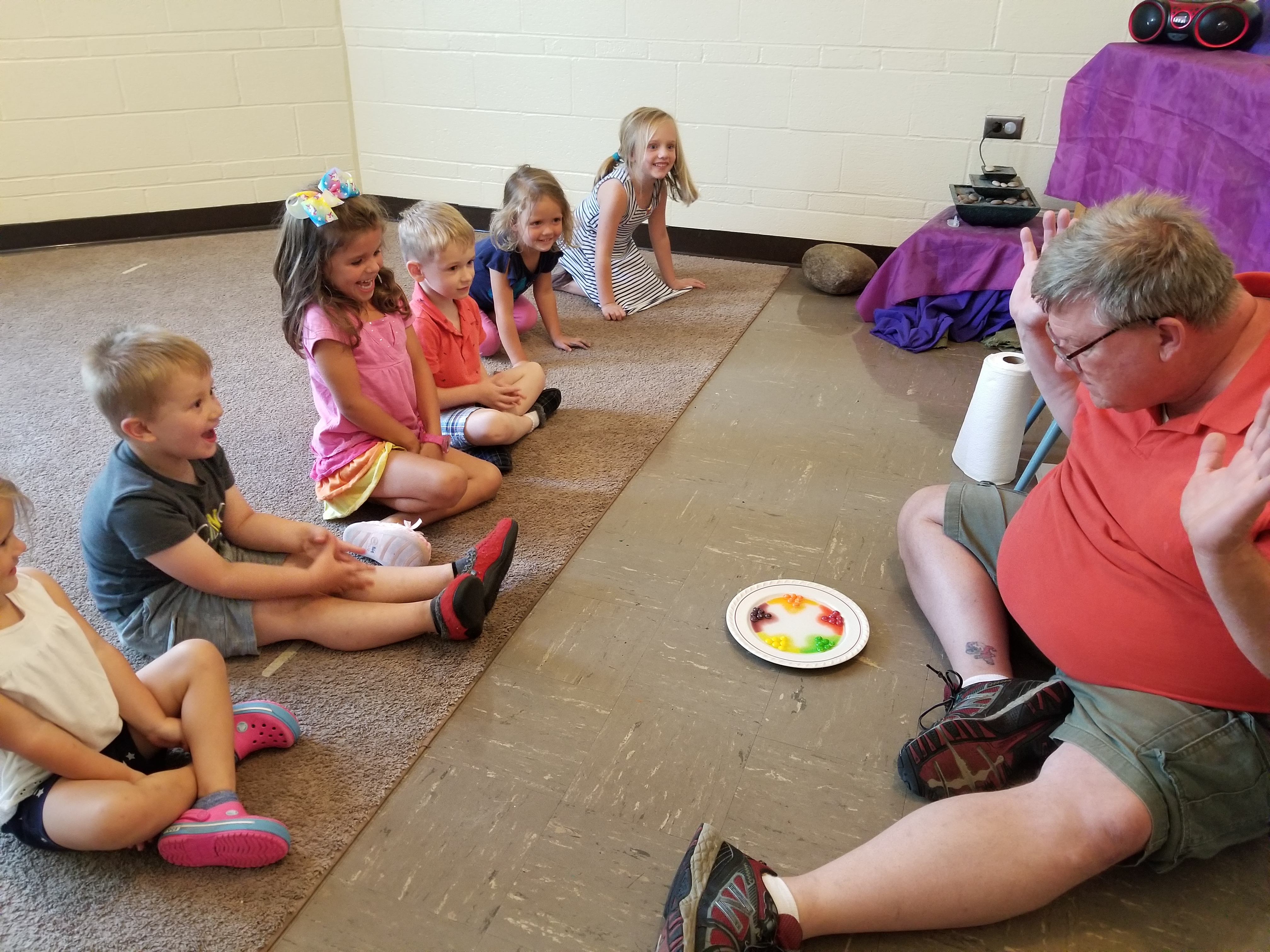
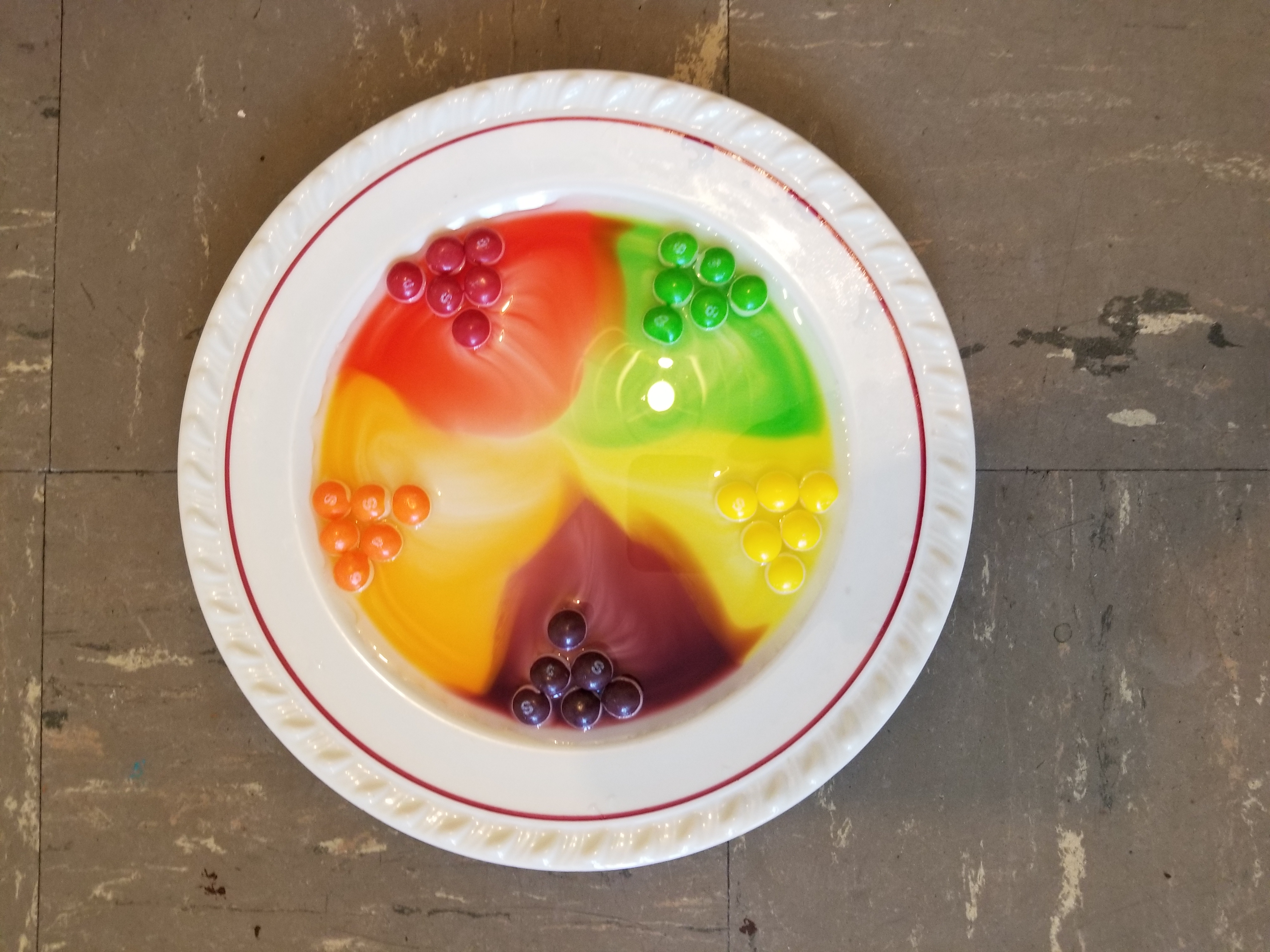
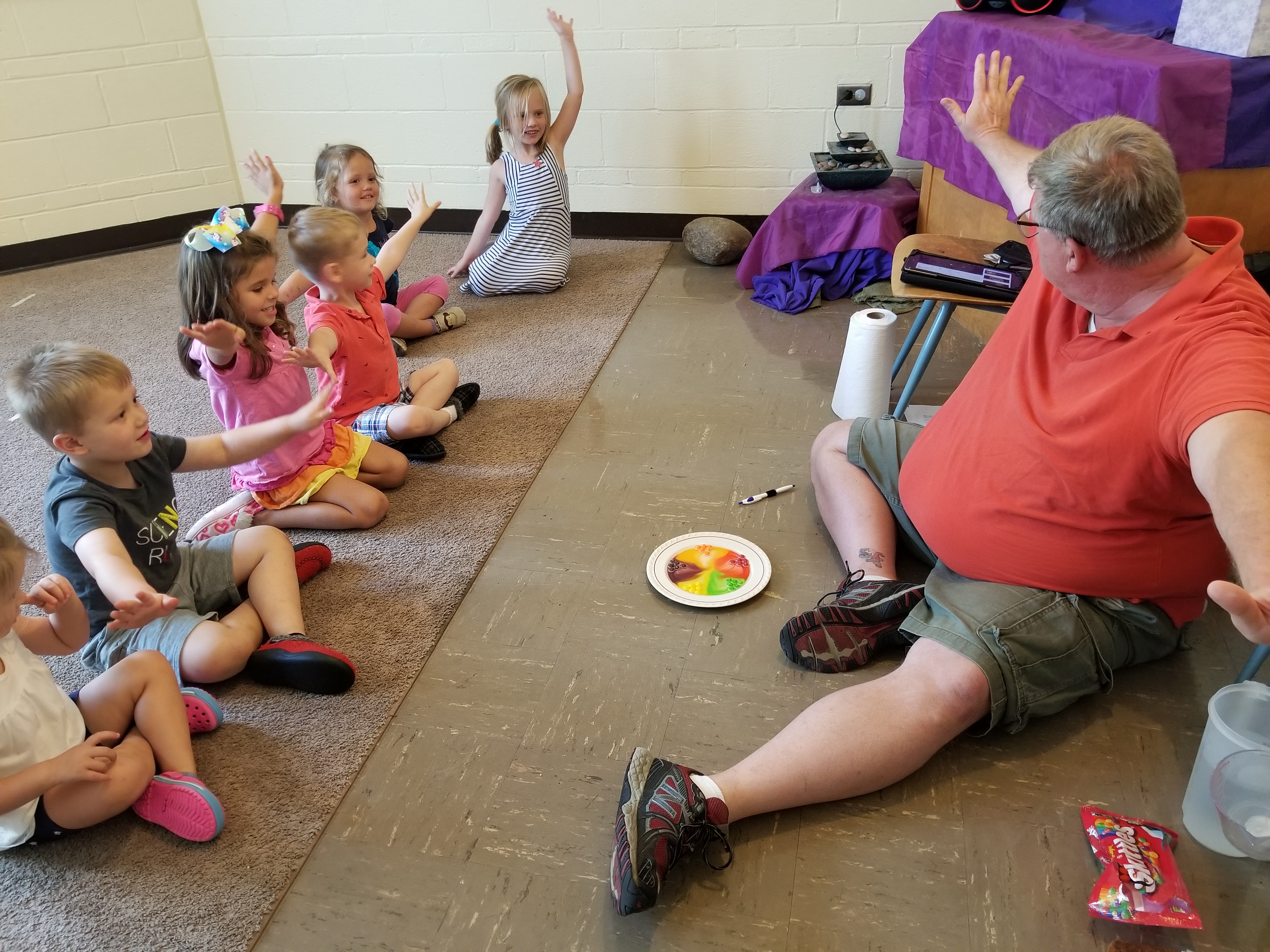
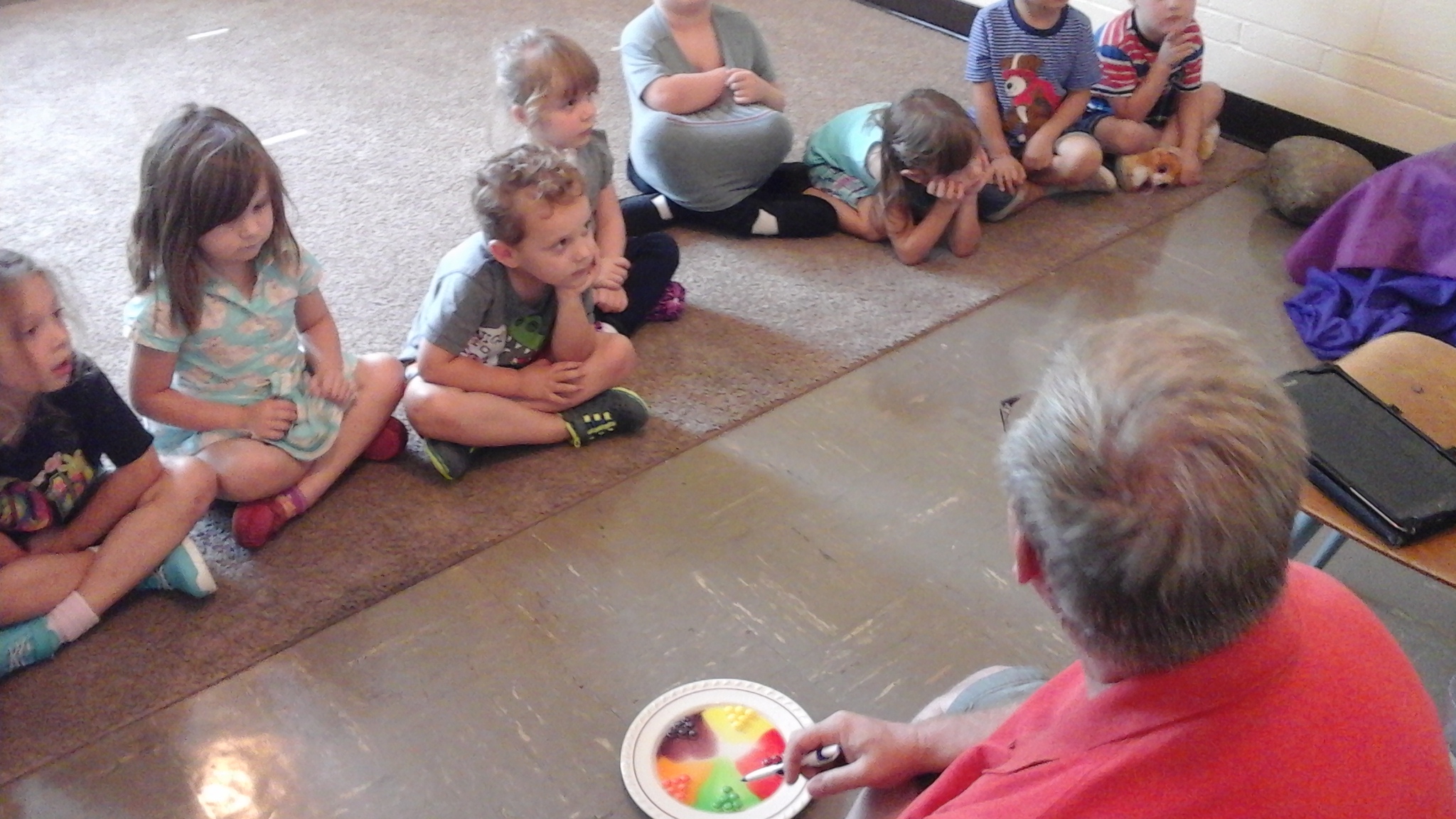
In week three, all Mr.John needed was water, a plate and SKITTLES! Only 3 materials needed for this experiment.Mr. John had arranged the skittles by color on the plate. Then he poured water on them. At first, nothing happened. Then all our friends began to point because the water started to change!The color on the skittles began to mix into the surrounding water. Noticenthough, that none of the colored water appears to be mixing. Why is that?Mr. John explained that each skittlen is covered with the coloring and a itty bit of wax. The wax creates the barriers between the colors. Once the wax starts to mix with the water, the colors will eventually all blend together. Here is Mr. John and friends pretending to be the wax, keeping the other colors away.So bummed that we didn’t get to eat the skittles!
Week 4
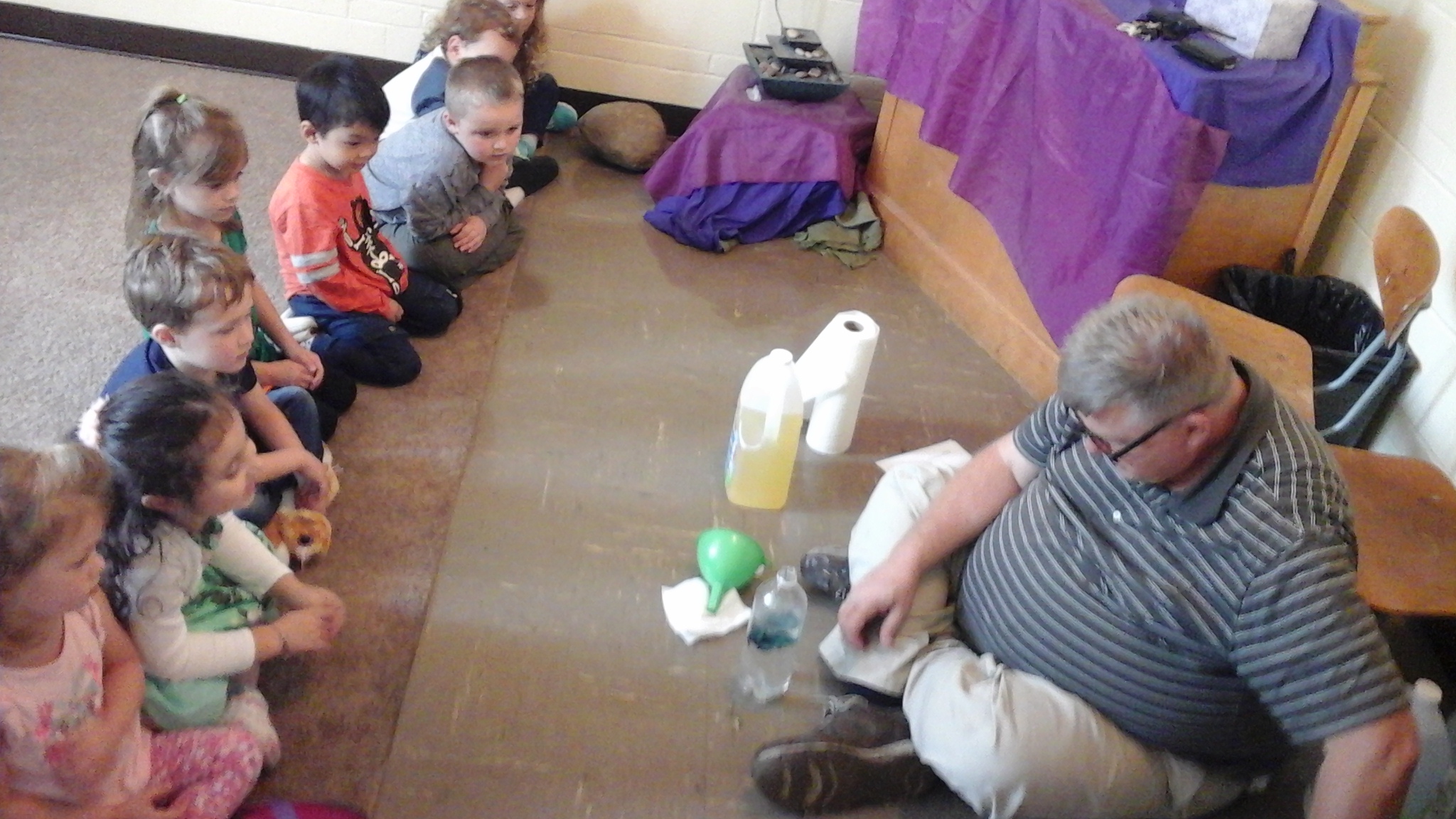
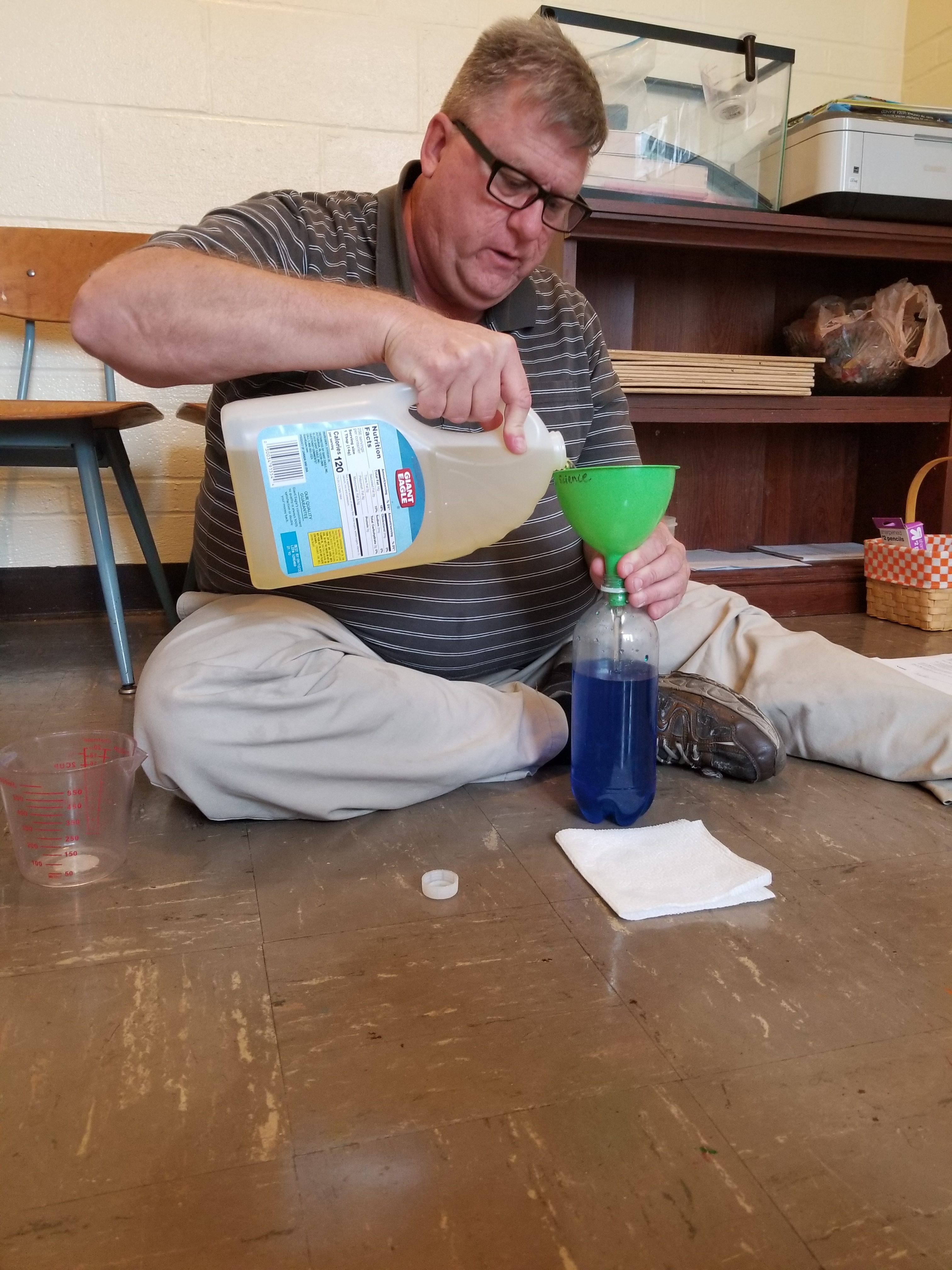
In week 4, Mr. John used oil, water, food coloring, an empty plastic bottle and a funnel. Have you noticed that he tends to use everyday household materials for a majority of his experiments?
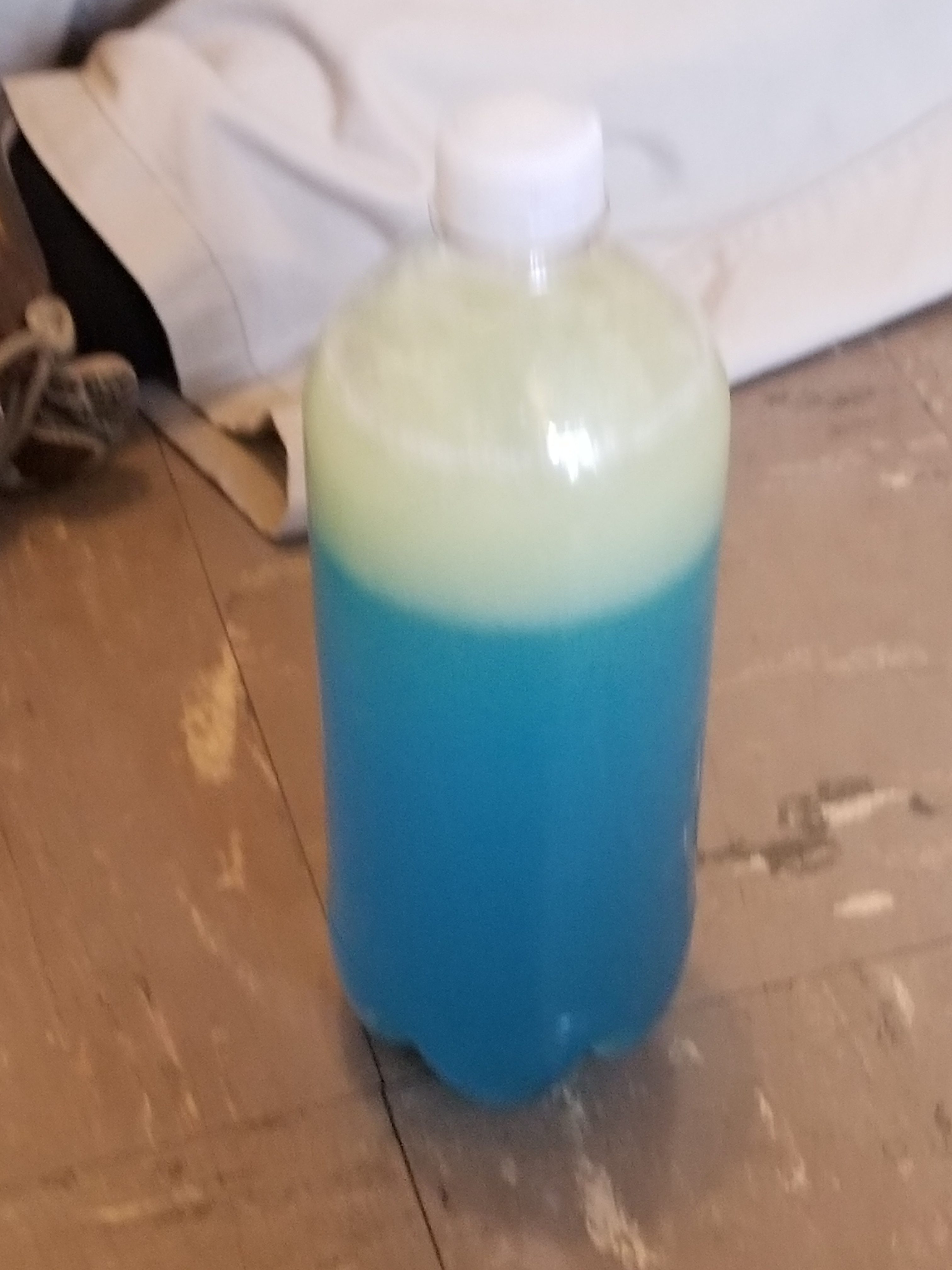
Mr. John began with making blue water in the bottle using the food dye. Then he filled the rest of the bottle with the oil.
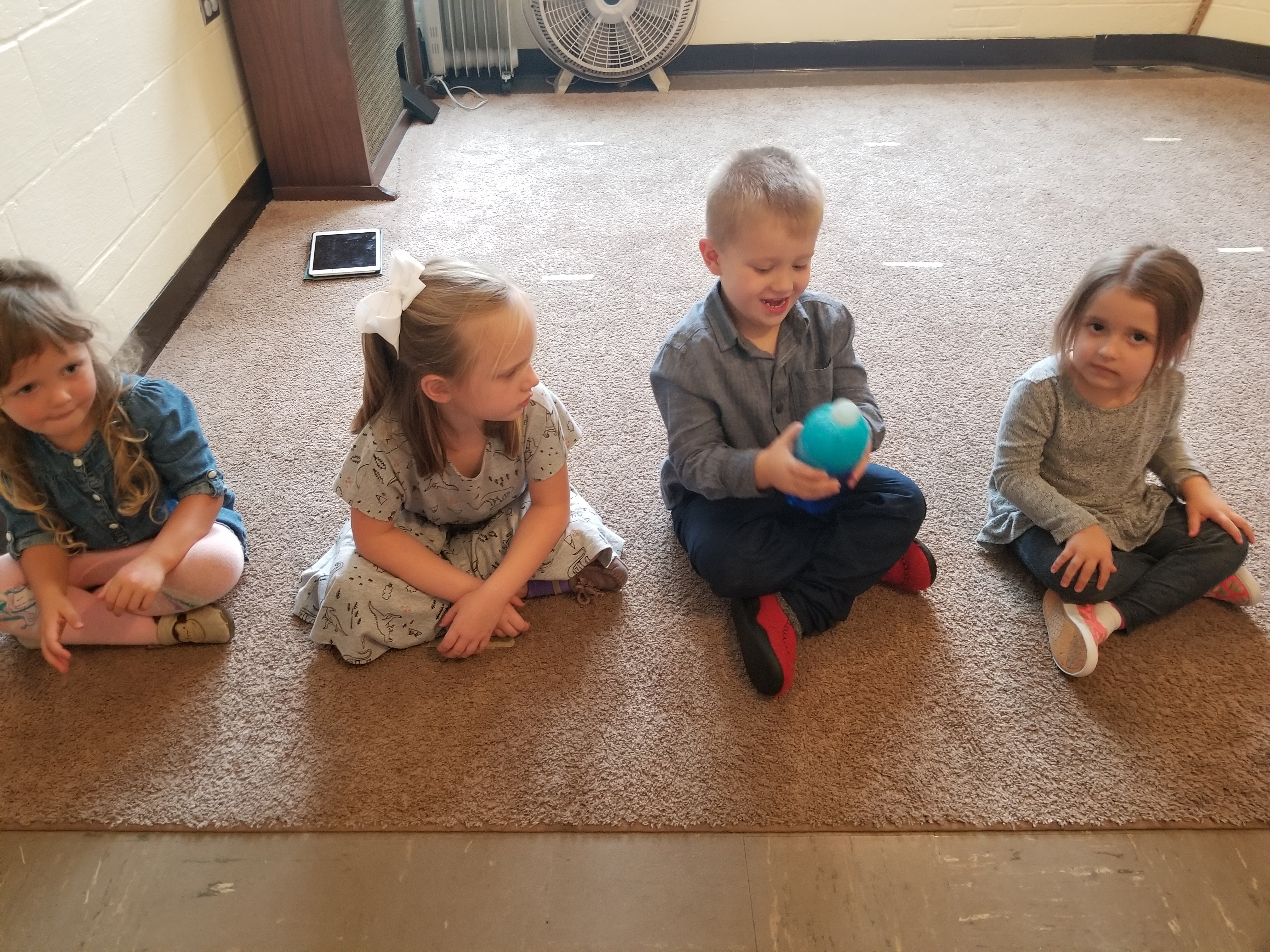
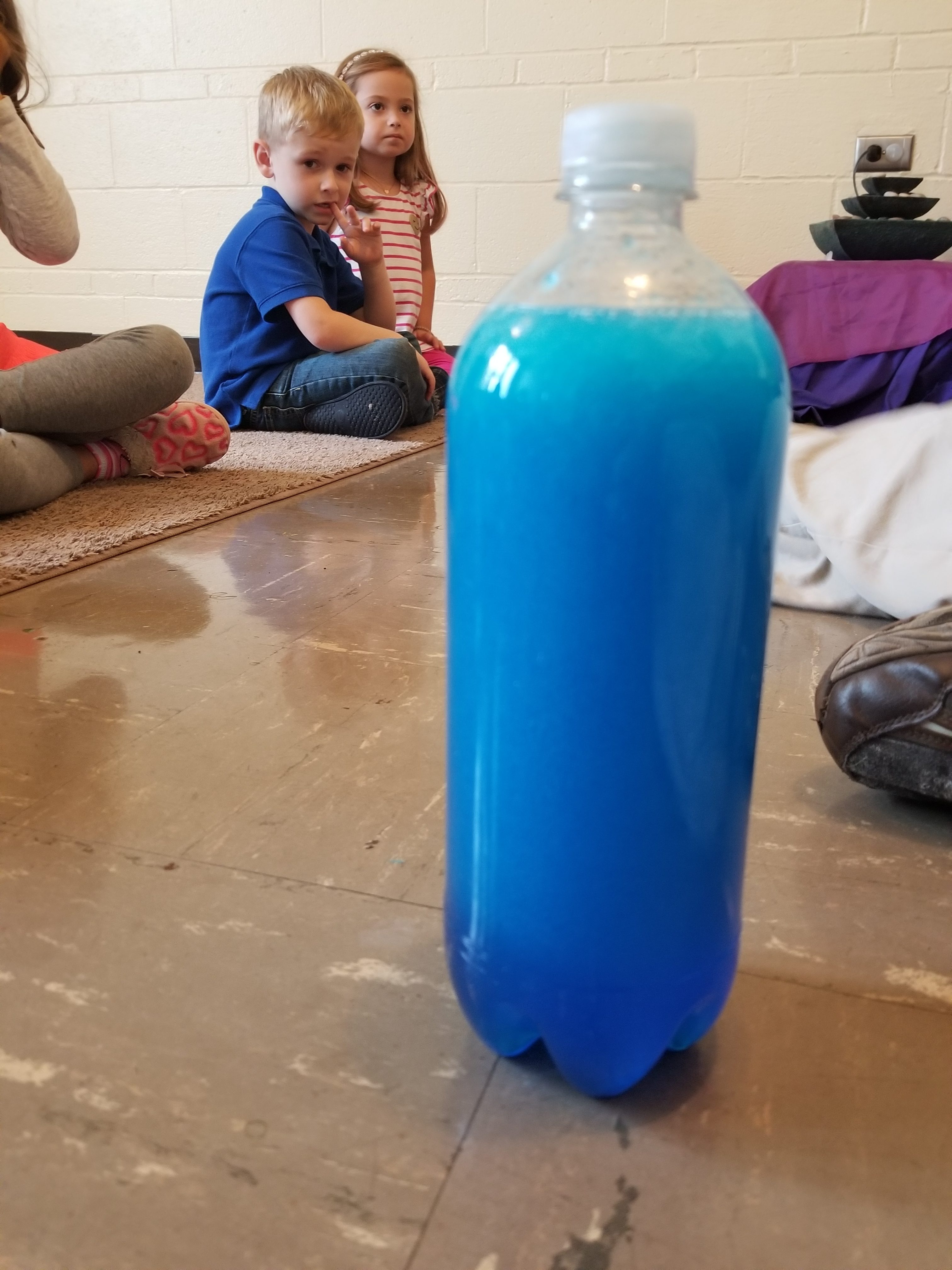
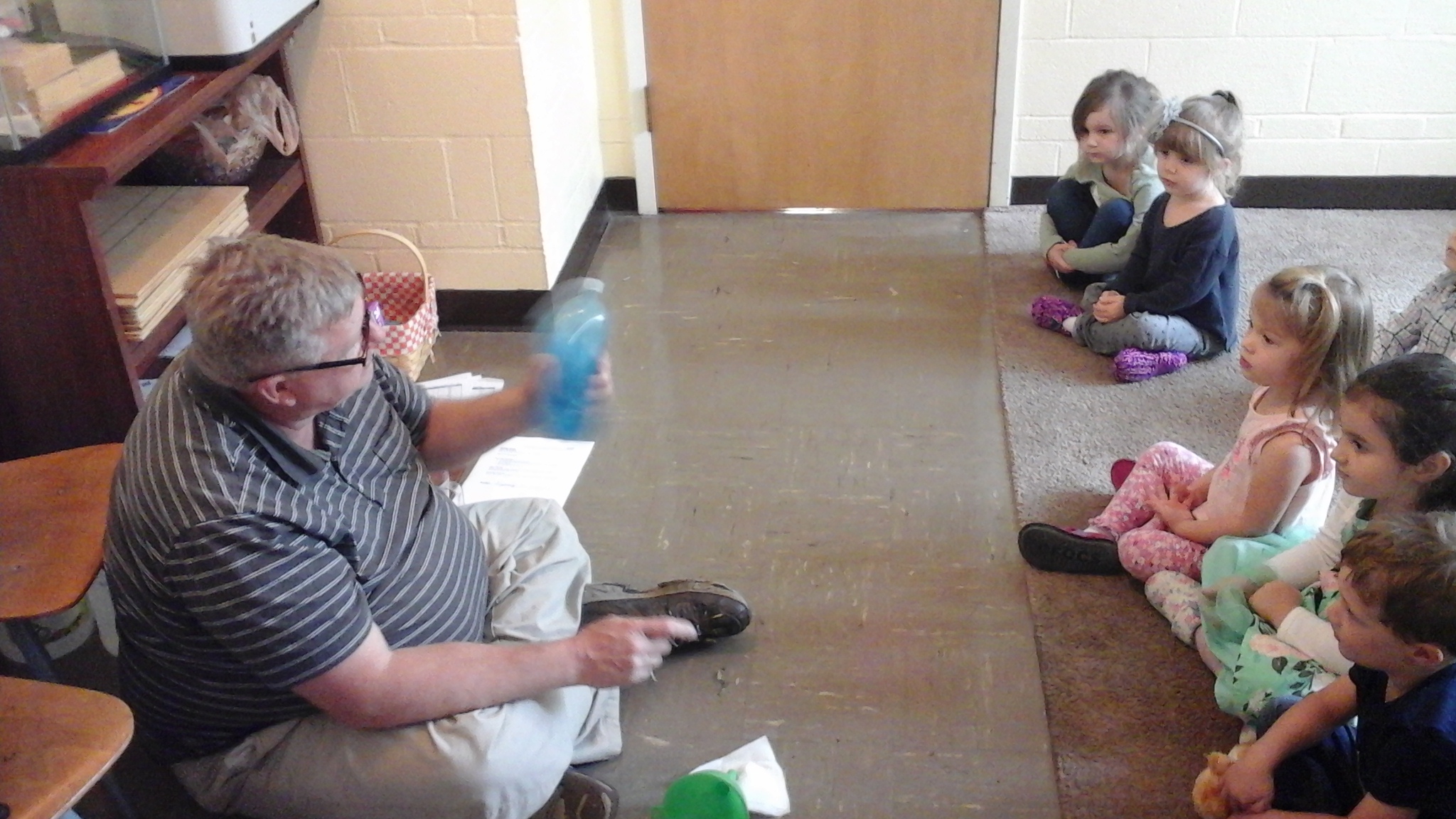
Then Mr. John had each student shake the bottle to mix all the oil and water. At first it seemed to work.
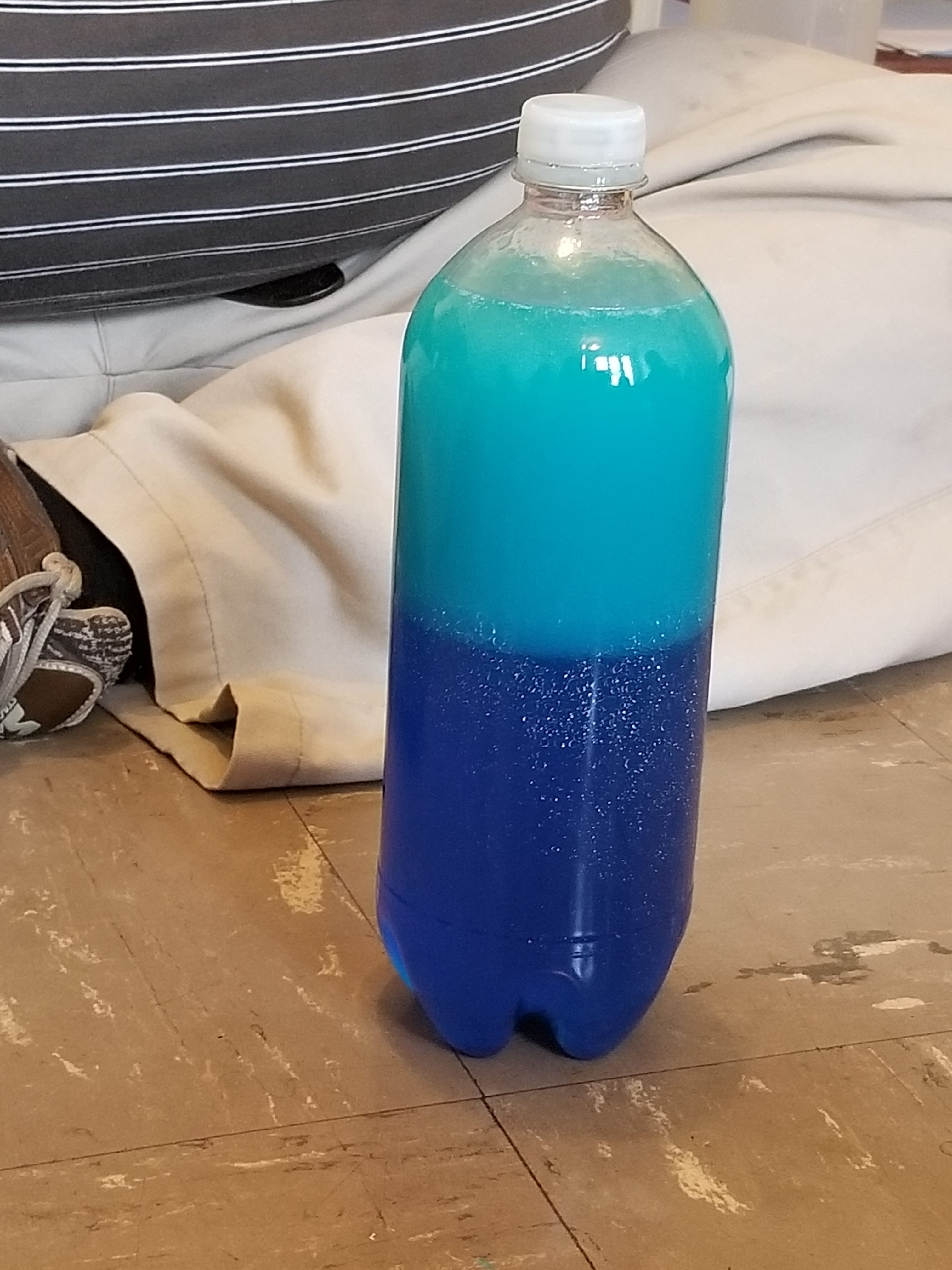
Mr. John set the bottle down and everyone had their eyes glued to the bottle. The oil and water were separating!
Why does the water not mix with the oil?
Oil is less dense than water. Given the variance in densities the two liquids cannot mix.
Oil and water also do not mix because water molecules are more attracted to each other than to oil molecules.
Shake shake Shake! Shake your bottle!
I hope you enjoyed this month of activities. Don’t forget to check your student’s folder on Thursdays for the instructions for each experiment!
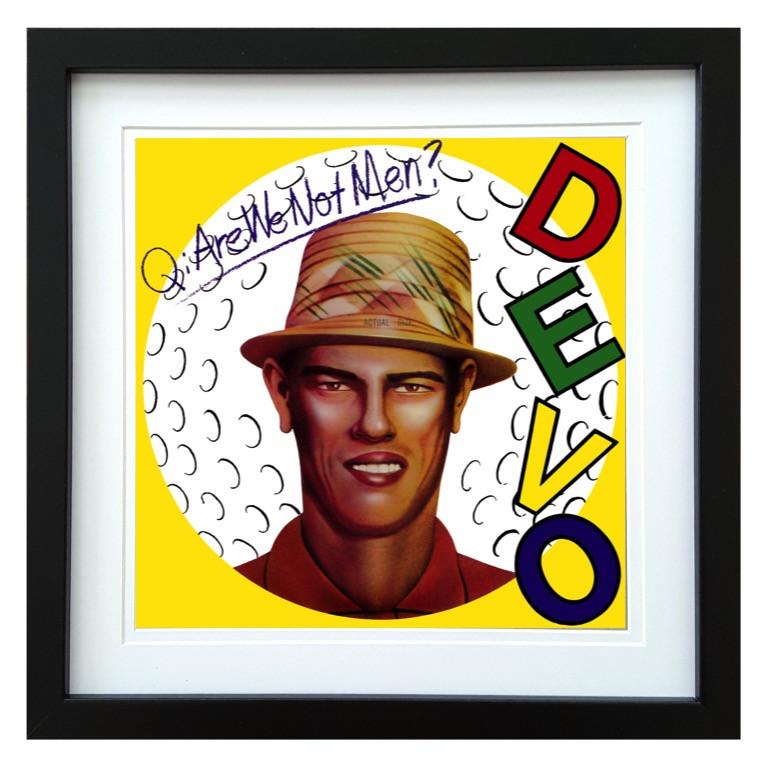
Line Time: This past week we learned about Mammals. Mammals are vertebrates (have a spine or backbone), warm blooded (their body temperature does not change), have hair or fur, live bearers, and eat/drink mother’s milk when young. Some mammals live in the water such as dolphins and whales. The only mammal that can fly is the bat! Cats, dogs, elephants, and rats are mammals. Oh, and people are mammals as well. “Are we not men? We are MAMMALS………. “
If you want to play Six Degrees Of Separation for DEVO Mark Mothersbaugh’s (front man for DEVO) brother does the confirmation classes for my church. Also, I do childcare at the church and I have cared for his niece’s children. I know useless but interesting information.
Cultural Subjects: Your Children can now count to ten in 8 languages (English, Latin, Sign Language, Spanish, German, French, Greek, and Japanese).
Peek In Our Classroom:
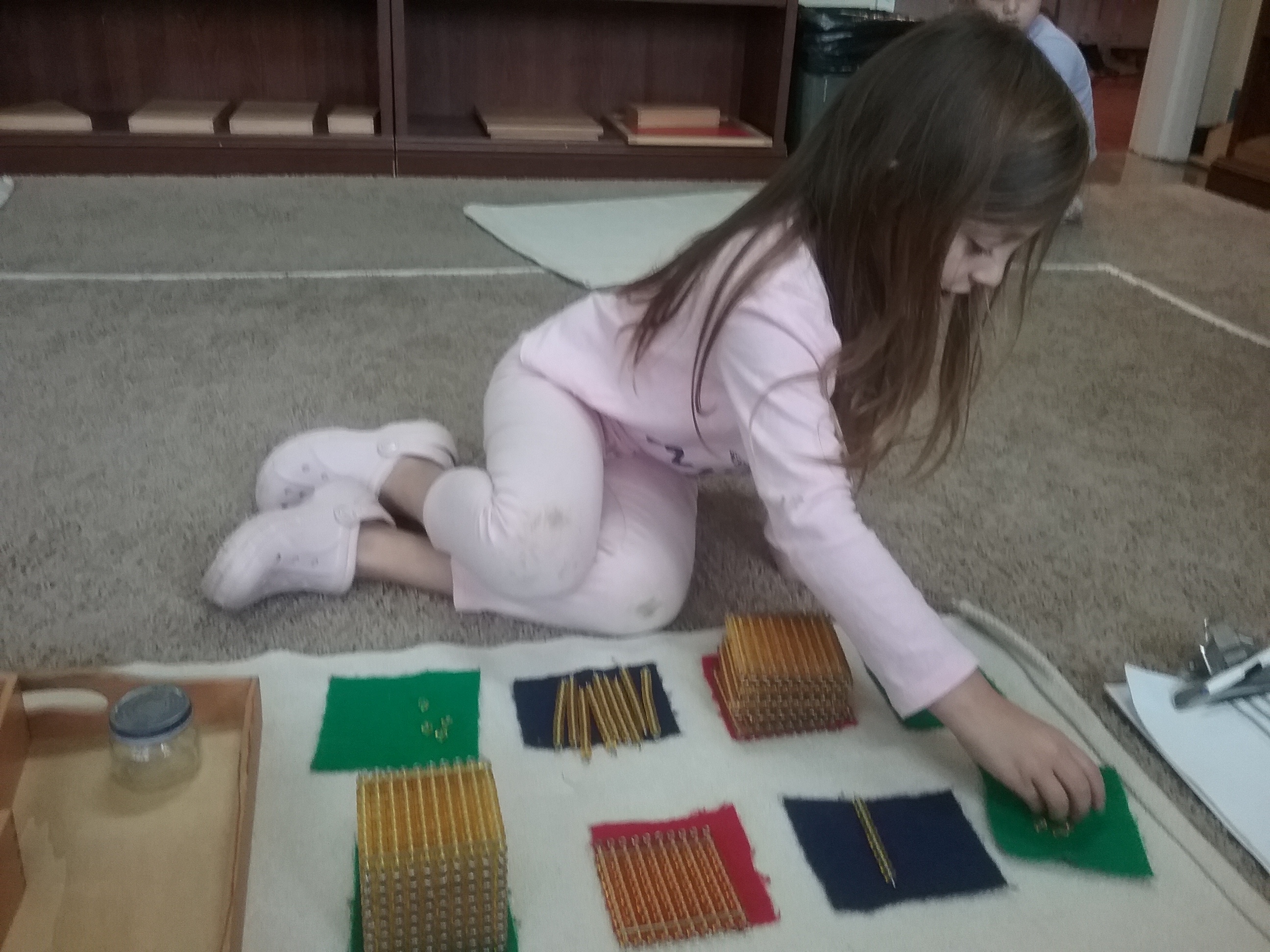
This student is working on the 2nd introduction to decimals. This work develops and gets the child more familiar with the concept of 10. She and I exchanged 10 units for 1 ten, 10 tens for 1 hundred, exchanged 10 hundreds for 1 thousand. It is a fun game enjoyed by the students.
This students was a busy girl this day. She also is learning how to read starting with “Hooked On Phonics”
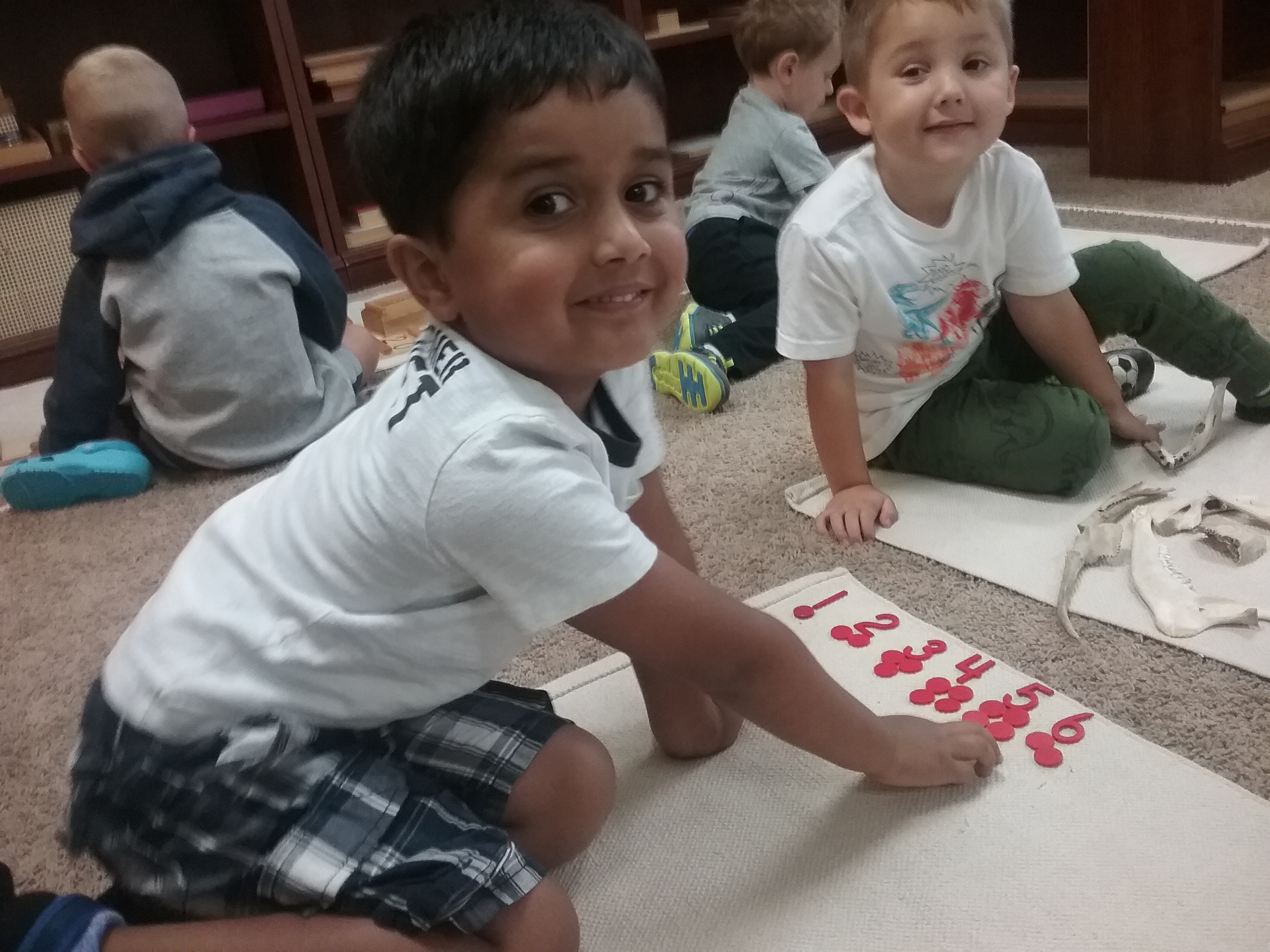
This boy is working on the material called Cards And Counters. Once again the math material makes the connection between symbols/numbers and quantity.
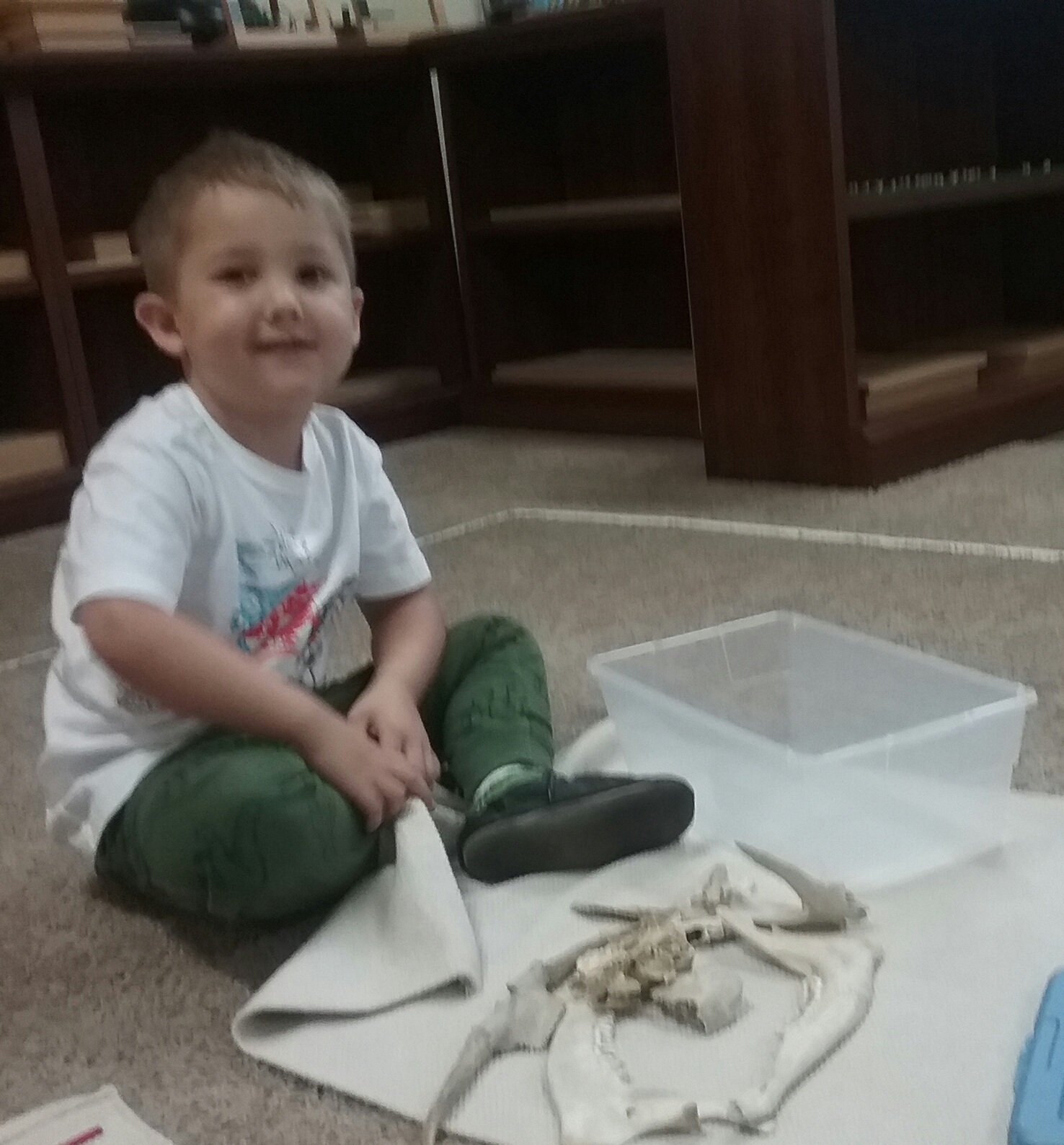
This boy is working with one of my science bins. This bin is what is under your skin or bones. Students explore jaws, teeth, and a huge cow femur. At times they will get a magnifying glass to see the different textures of the different bones.
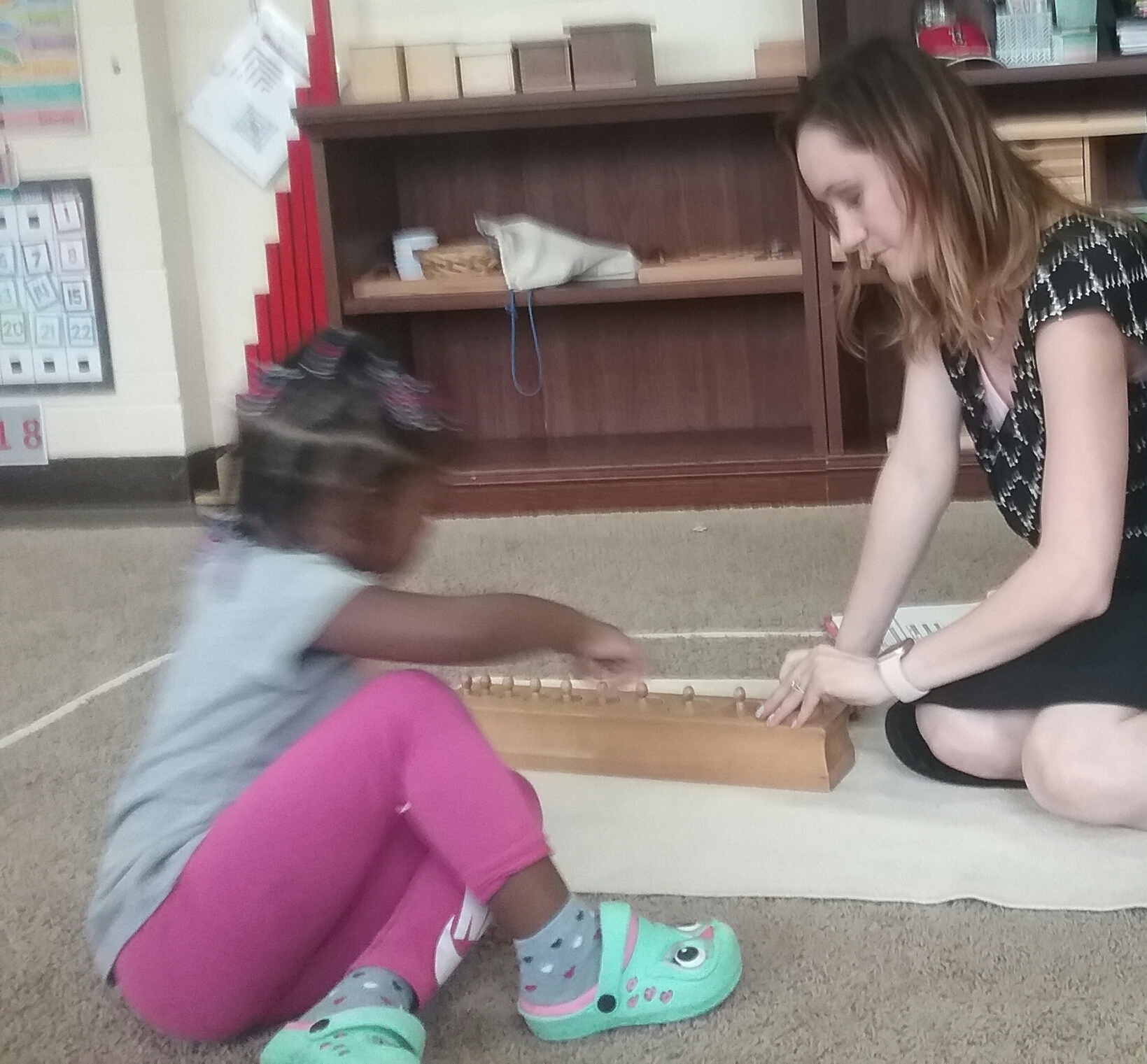
Ms. Ashley giving a presentation on the knobbed cylinders.
Peek Into Next Week: Line Time- Reptiles
Letter of The Week- G g
Rhyming Word Of The Week- bid
Next Language- Arabic With The Lebanese Dialect
Next Week Snack Provider- Logan H.
Upcoming Events: Halloween Party– October 26th (details to follow) Just putting a bug in your ear.
Bring Your Parents To School Day- Follow The Link…
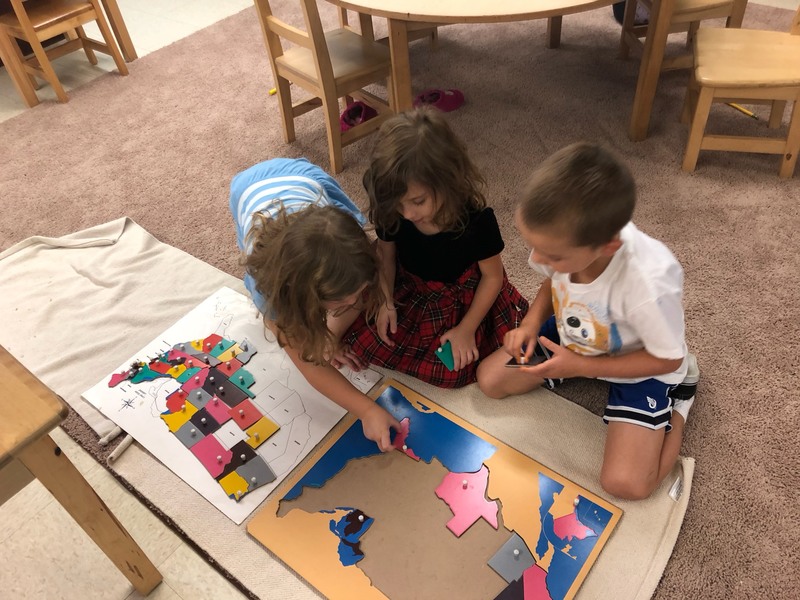
Ohio and its surrounding states: The students learned where Ohio is located on a map of the USA and the names of all the surrounding states Pennsylvania, West Virginia, Indiana, Kentucky and Michigan. They also learned different fun facts about Ohio like the state bird is a cardinal and that Ohio’s state flag is the only state flag that isn’t a rectangle.
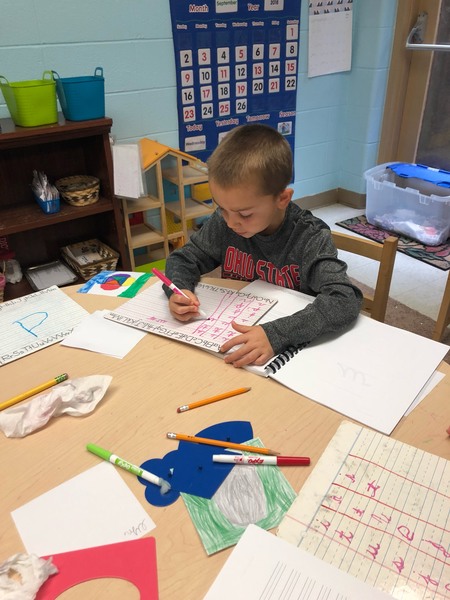
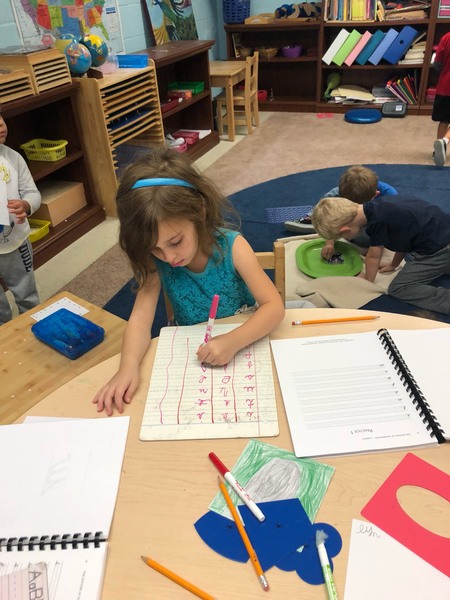
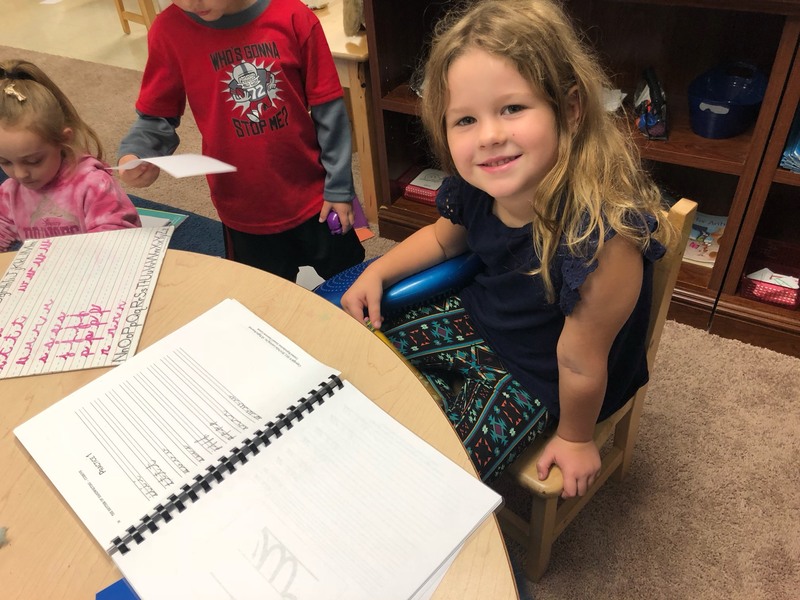
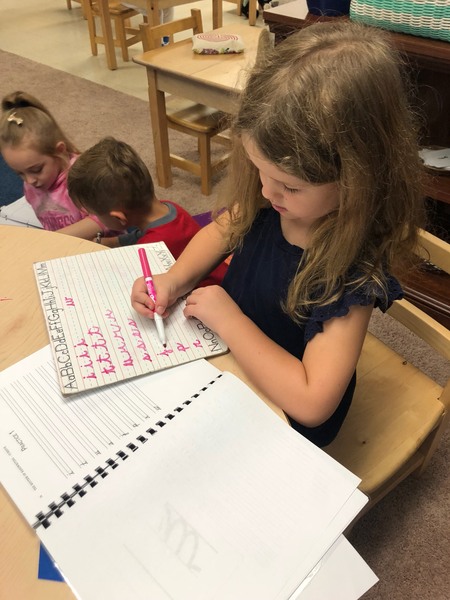
Cursive Handwriting: The students reviewed and practiced the correct stokes to successfully make a lowercase r, lowercase w, lowercase j, lowercase p, lowercase i, lowercase t, lowercase u and lowercase s. For the lowercase r they were taught to swing up to the midline, dip and then down to the baseline. For the lowercase w they were taught to swing up to the midline, down to the baseline, swing up to the midline, down to the baseline, swing up to the midline, dip connector at the midline.For the lowercase j they were taught to swing up to the midline, drop down halfway below the baseline, swoop, and pick up the pencil then dot. For the lowercase p they were taught to swing up to the midline, drop down halfway below the baseline, slide up to the midline, circle around to the baseline, touch and glide. For the lowercase i they were taught to swing up to the midline, down to the baseline,
pick up the pencil, dot. For the lowercase t they were taught swing tall to halfway between the midline and the top
line, down to the baseline, pick up the pencil, cross at the midline. For the lowercase u they were taught swing up to the midline, down to the baseline, swing up to the midline, down to the baseline. For the lowercase s they were taught swing up to the midline, scoop around, touch, glide.
The last few week’s we have been reading the story called Big Wolf and Little Wolf. This story’s genre is fantasy fiction, and this story teaches the children about friendship, wolves, and visual perspective. Our first session, the children listened to the story and then shared any questions they had. Our second session, we reread our story and then acted a few parts out. The kids loved it!! Our third session, we explored the story’s meaning by discussing interpretive questions. Then they had fun drawing a picture about the big and Little wolf. Stayed tuned!
Five Senses: This past week the children learned how our five senses help us understand and explore the world around us. They learned that our five senses help us collect information about ourselves and our surroundings. They also learned to identify the five senses: hearing, tasting, smelling, touching and seeing. We discovered that sometimes we use two or more senses at once; and how important it is for our senses to work together. The children had the opportunity to practice using their senses to determine properties of objects and distinguish them from one another.
Work Time
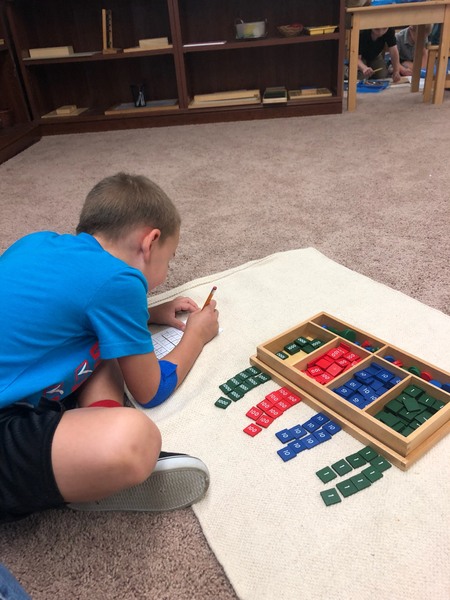
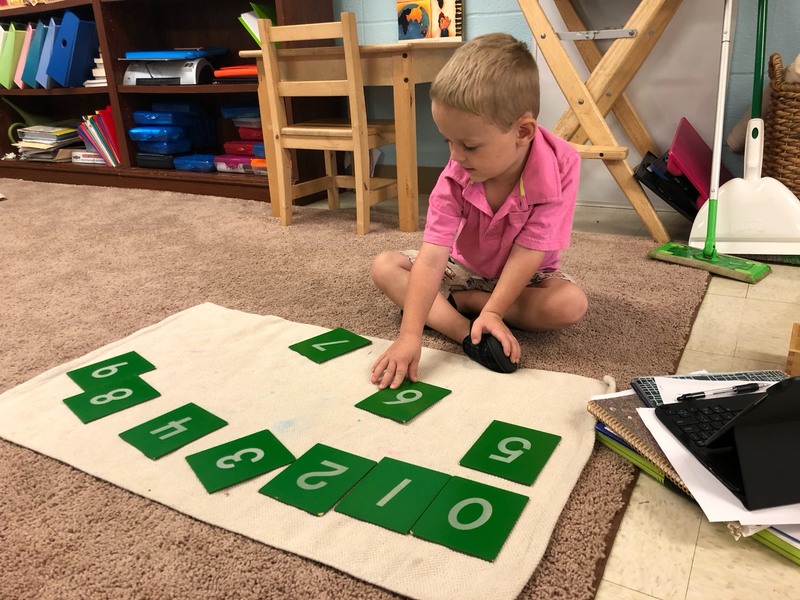
Pumpkin Scrubbing: This child is using many motor skills while also remembering the order and sequence of each action to successfully pumpkin scrub, which naturally leads to the development of concentration.Nine Layout: This child is becoming familiar with the names and relative sizes of the categories: units, tens, hundreds and thousands. He is also discovering that if he has i.e. 6 units and adds 1 more unit he will have 7 units.Stamp Game: This child is doing static addition (a sum without exchanging) problems using the stamp game. He is practicing addition at a higher level of abstraction.Sandpaper Letters: This child is tracing and identifying the sounds of the letters ‘j’ ‘b’ and ‘m’ and connecting the sound with the initial sounds of different objects like jet, baby and motorcycle.Sandpaper Numbers: This child is learning the symbols for the numbers through the sense of touch and sight.Cursive Chalkboard Writing: This child is practicing writing the lowercase cursive letter ‘j’ on a chalkboard. He is developing multiple skills involving his eyes, arms, hands, memory, posture and body control.
“The child seeks for independence by means of work; an independence of body and mind.” – Maria Montessori
A Montessori term that you may come across in your research of our philosophy is “normalization.” This is a term that means the students are functioning independently throughout the day without needing frequent assistance and guidance from a teacher. As we enter into October, we usually are beginning to see normalization of our new group of students with our returning students. Our breaking up of the first two weeks of school into short periods of discussion, work time, and team building, helps lead to the independence and trust needed to allow the students to normalize. I can always tell when it is happening in our classroom by the work choices children are making. When a classroom is normalized, students are completing their assigned work and are choosing independent projects and research to fill their time instead of wanting to color, chat, or wander. This week I saw a project two second graders are working on where they have drawn the United States, colored in the states as the flags of each state, and are now drawing the state birds onto their map! Two third graders have started their own imaginary island map inspired by a game they both like. A fourth and a fifth grader are seeing which fruits that they bring to snack can be grown in our classroom. As these projects begin to emerge, it is always great to see the leadership, cooperation, organization, and independence that the students have gained since last school year!
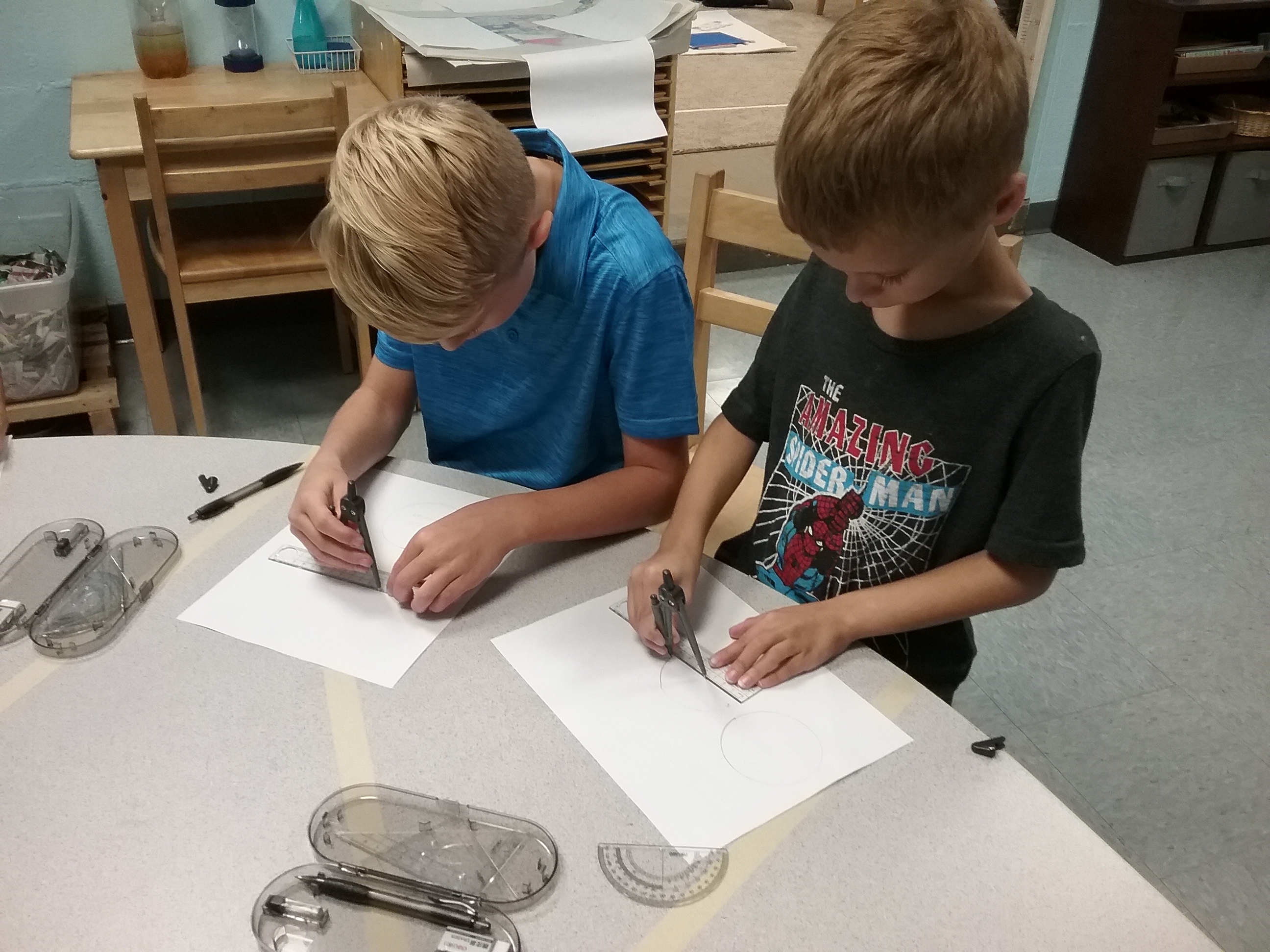
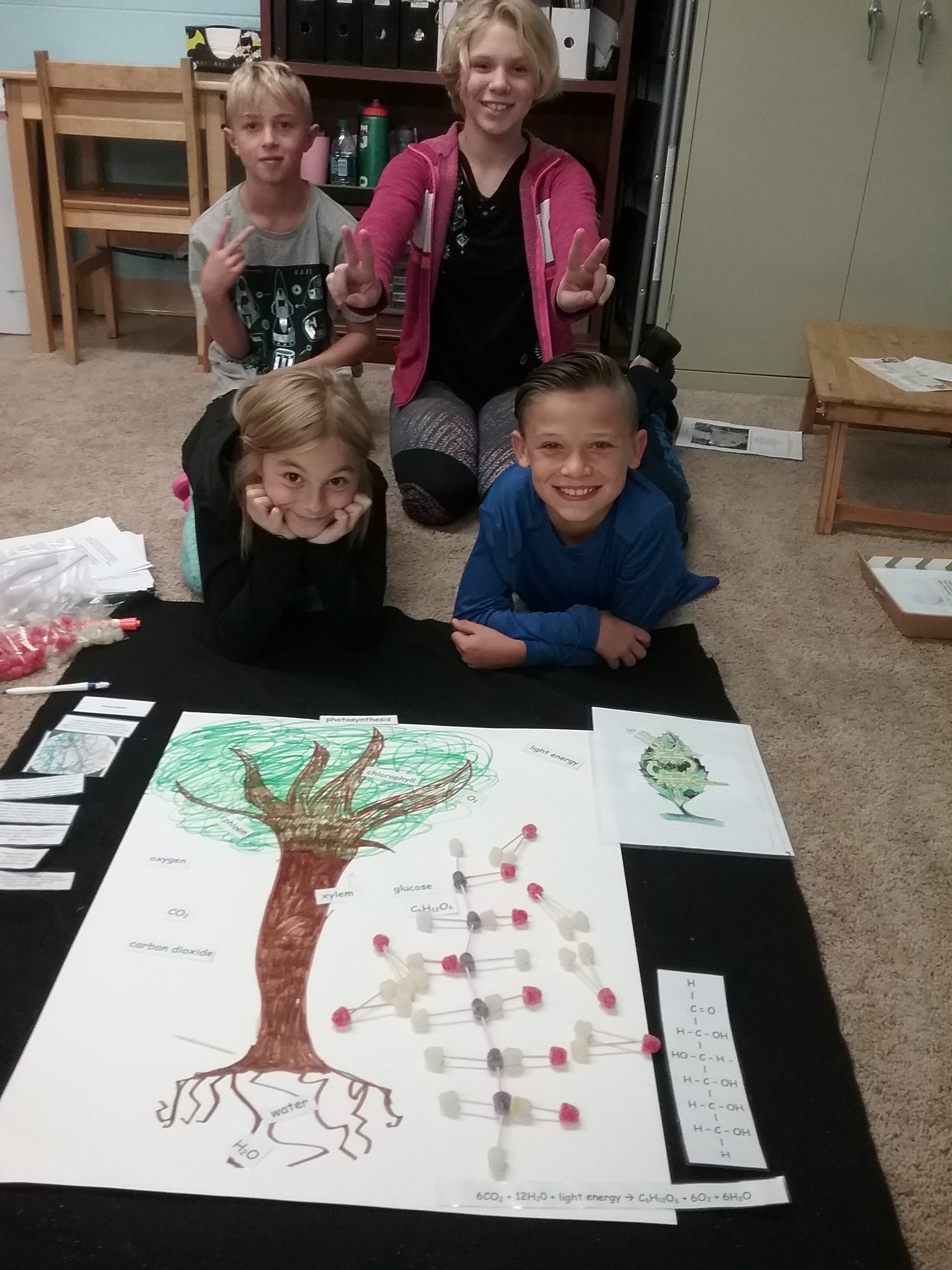
This week the second graders had a lesson about singular and plural nouns. We discussed the most common spelling rule of just adding an -s, but also discussed adding -es and spelling changes. Their favorite part was trying to think of words that had a unique spelling change or no change at all!Our first grade students learned to collect data and draw a bar graph this week. After our lesson of graphing the eggs laid by chickens in a week, each child chose a topic that they wanted to poll the class about. We had students choose to graph favorite Pokemon, favorite foods and drinks, favorite sports, and favorite pets. Here, a first grader is asking a third grader which vegetable is her favorite. This gives first graders the opportunity to interact with all of the students in our classroom, while learning about others, and practicing a math skill.These second and fourth year boys are practicing using a compass. They were given the diameter of different circles and needed to find the radius, adjust the compass, draw it, and double check their measuring at the end. After this work, they measured angles with a protractor on our science table using angles made of tape!They did it! Our fourth and fifth year students built models of the entire process of photosynthesis using spice drops, toothpicks, and teamwork. They began by building water molecules and placed them near the roots. We discussed that the xylem would carry the water up to the leaves. The students built carbon dioxide molecules and placed them around the tree. The water combined with carbon dioxide and sunlight to create glucose and our chemical formula of 6CO2 + 6H20 + Light Energy = C6H12O6 + 6O2!
A Peek at Next Week
Next week, all students will begin practicing and auditioning for our October play (“Caps for Sale”) that we show all Primary classes. Ask your child what they are auditioning for next week! Lower Elementary students will explore the Timeline of Life. In Language, they will be introduced to the dictionary, will analyze phonemes, and will write different types of sentences. We will be working on adding with the Stamp Game in Math, adding fractions with like denominators, and will review rainbow factoring. For Geography, we will work on using a compass and a map key. All Lower Elementary students will begin a continent study of North America. Upper Elementary students will take their microscope test to show their knowledge of a dissecting microscope, compound microscope, and how to make a slide. Fourth year students will study commas in a direct address, begin studying multiples and factors, and will review Euclid’s Theorem. Fifth year students will begin studying the animal kingdom, will review the use of apostrophes, will begin studying patterns between the squares of numbers, and will find equivalency between polygons.
REMINDERS:
Friday, October 5 – Upper Elementary Bowling Event – If you have a fourth or fifth grader, please check your email for this invitation and respond to Brandy to RSVP!
Tuesday, October 9 – Elementary ONLY Field Trip to Cleveland Zoo – This is a bus trip. Reminders will be sent out next week!
Come work in our classroom with your child. In order to participate in “Bring Your Parents to ‘Work Time'” you’ll need to sign up here.
Can you believe that the fifth week of school is almost over??? The month of September seems to have flown by but there was plenty of creativity being cultivated both in the classroom and during the weekly Elementary Enrichment’s that began the week of the 5th. The Elementary students have a blast participating in Art and Music on Thursday afternoons. This year our students are split up into Upper Elementary (3rd-5th graders) and Lower Elementary (1st-2nd graders) groups when they attend Art and Music classes.
Art
Elementary began the year by studying the artist, Wayne Thiebaud with our new instructor, Kathleen Clark. Thiebaud is a modern American artist best known for his beautiful paintings of cakes, doughnuts, and ice cream cones. Yum! Who doesn’t love dessert?
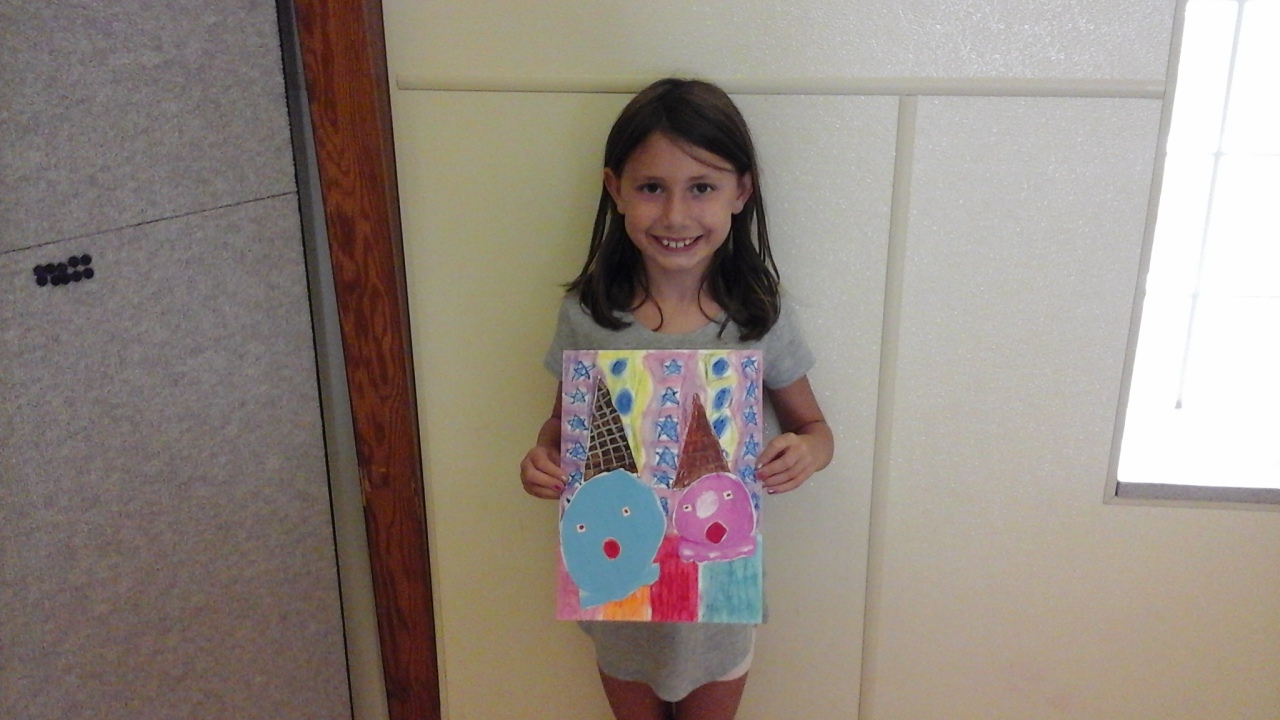
Students used the subject of ice cream cones in learning how to use tints ans shades of each color to create realism in their artwork. They went on to design their own background using oil pastels. They learned how to create an interesting pattern with lines and blending. Next, the students drew their own desserts using the artist’s examples to help create their own compositions. They learned about shading and shadows to create a three-dimensional appearance in their artwork. Their dedication showed as several of our students were found revising their pieces at the end of the day in order to make it their best! They are a talented group of artists!
Below are some of our artist’s designs.
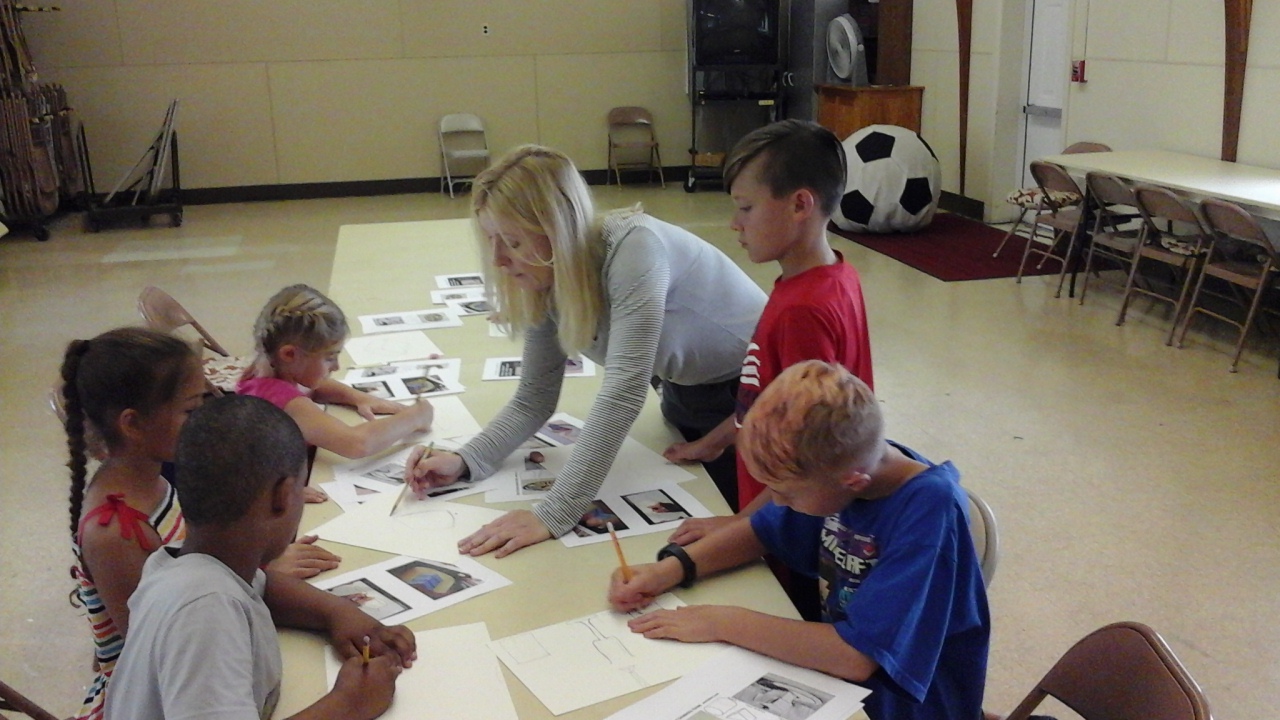
Ms. Kathleen teaching the students about shading.
Music
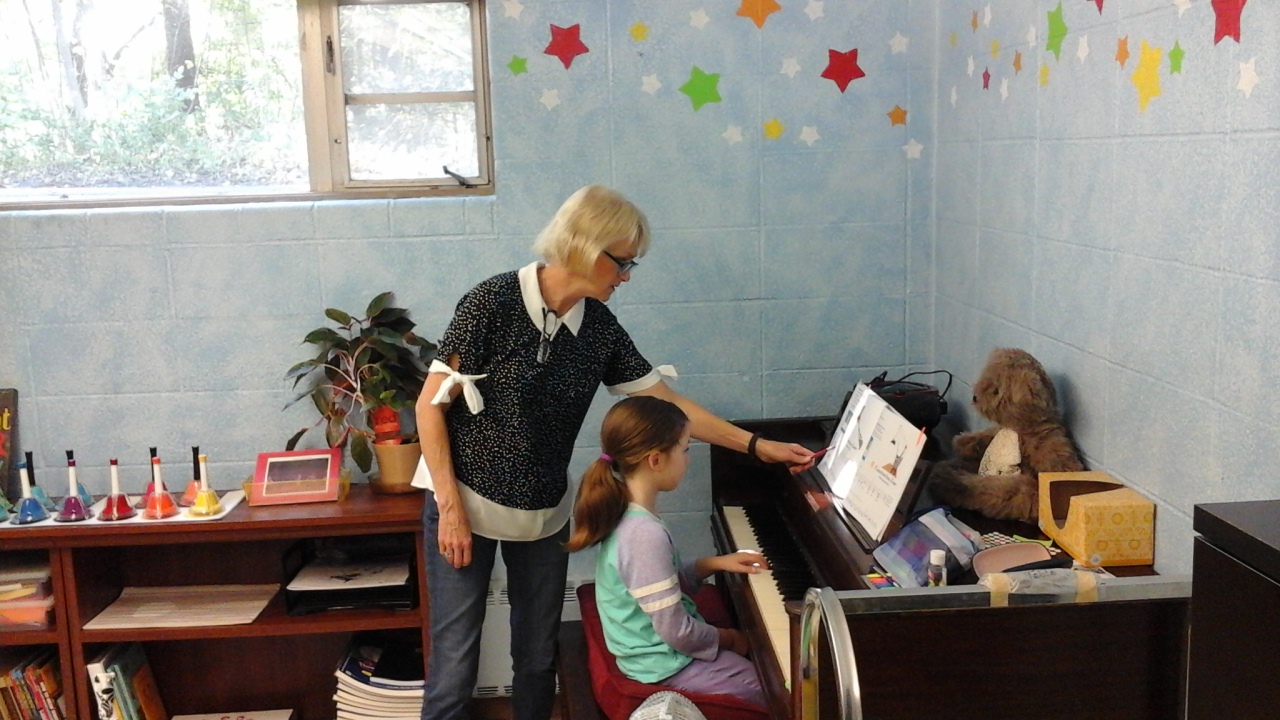
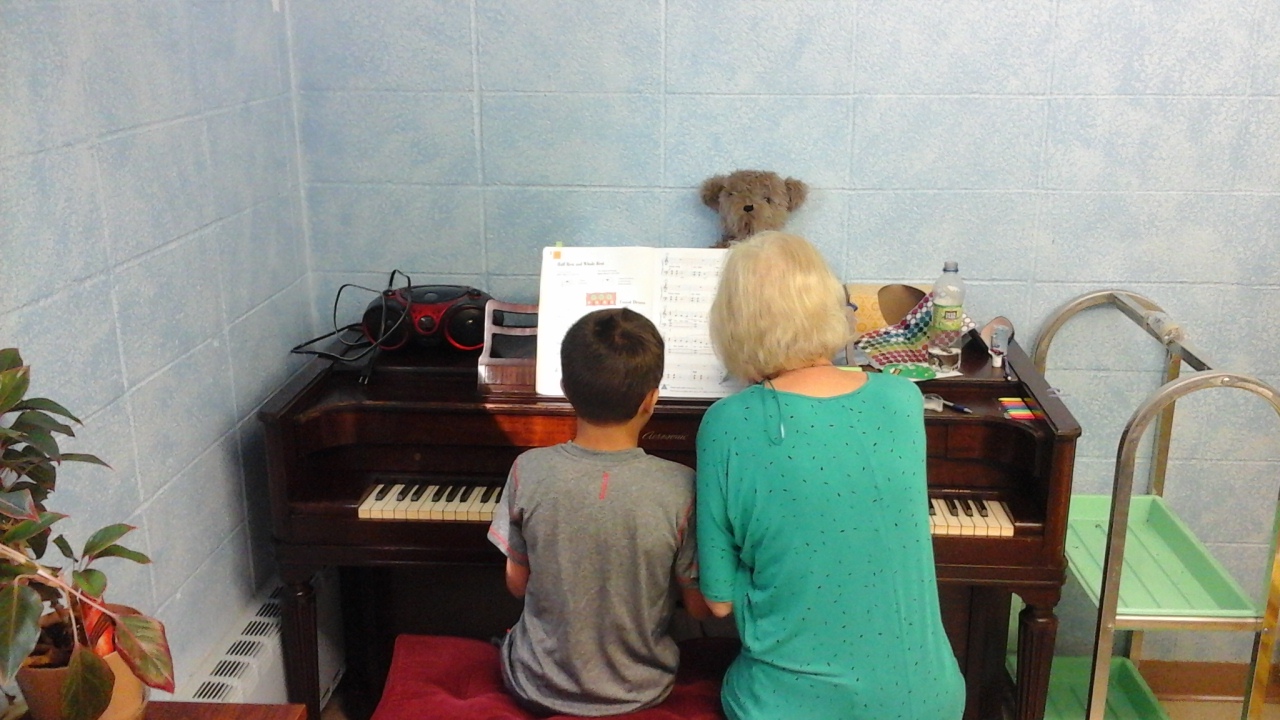
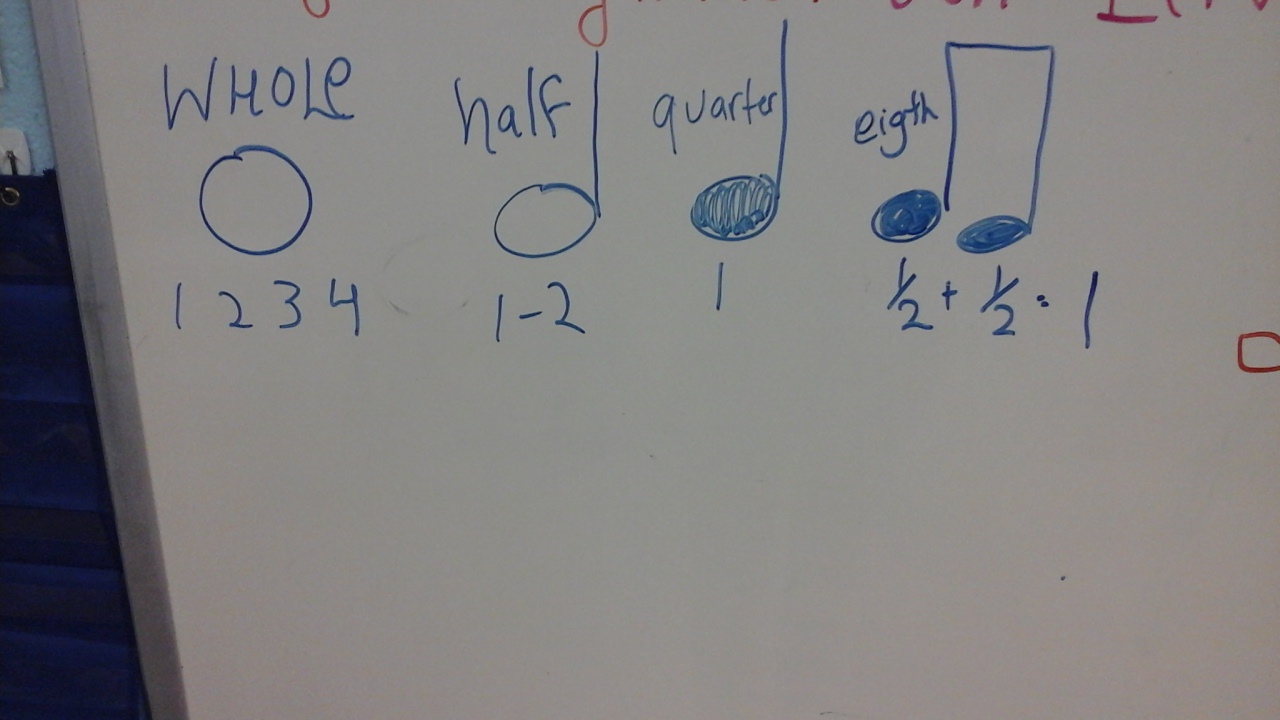
Music is the other half to the Elementary enrichment’s on Thursday afternoons. Ms. Lisa has spent the month of September introducing basic musical concepts to the children. They learned about the musical staff, Treble clef, various types of notes and their place on the staff, along with the sounds each note makes. Ms. Lisa used the song “Do Re Mi” to help the students learn the introductory note sounds. That is a favorite with the children as well as myself. I may have been singing along in the room next door! The students also played several hand-held percussion instruments this month. Ask them about the sounds they were creating!
Coming Soon: The Elementary students will begin learning how to play the hand bells. We look forward to the beautiful sound of the bells that we will soon be hearing throughout our halls.
Ms. Lisa also conducts piano lessons on Tuesday’s and Thursday’s for many of the Elementary students. Her passion for teaching music overflows to the students who love to learn from her each week. If your child is not signed up for piano lessons at the school and is interested please contact Brandy or Kelly for more information.
Art and Music class give our students a wonderful opportunity to explore their creative side and see their individual artistic talents shine. We are grateful to have our enrichment instructors who provide fun and interactive lessons at Absorbent Minds!
We expect October to be just as much fun. Stay tuned for a monthly update!
Lesson: Since we live in the great state of Ohio I felt it was needed to become familiar with the states that surround our home state. We started with Ohio which is the Buckeye State and the abbreviation is OH. We then looked at the state to the east of us named Pennsylvania (not Transylvania) which is called the Keystone State and the abbreviation is PA. We traveled south and discovered West Virginia which is the Mountain State and the abbreviation is WV. Moving to the west we ran into Kentucky which is the Blue Grass State and the abbreviation is KY. Moving more westward is Indiana or the Hoosier State (what is a Hoosier anyway?) and the abbreviation is IN. To my chagrin I introduced the students to TSUN. I can not bring myself to even say the name…. xichigan mi wolverine state.
Let us end not on a low note like the last sentence in the previous paragraph and present the “official” things for the state of Ohio…
Mammal: White Tail Deer Fossil: Trilobite Tree: Buckeye Bird: Cardinal Flower: Red Carnation Drink: Tomato Juice Rock Song: Hang On Sloopy
***** Notice how most of these things refer to Buckeye Football/ being red or scarlet. Also, why does Hang On Sloopy have importance to Buckeye Football? *****
Handwriting: We are done with the pre-cursive techniques and starting to practice our capital or upper case cursive letters and our lower case cursive letters. This week we were introduced to the letters a, b, c, d.
Cultural Subjects: Your children can now count to ten in 9 languages (English, Latin, Sign Language, Spanish, German, French, Japanese, Greek, and Arabic with the Lebanese Dialect).
Next Week: Lesson- Biggest to Smallest (Milky Way/galaxy to street address)