Welcome back Aspen Room families! This week the Aspen Room has been “Snow” Cool! The Aspen Room has been discussing Snow and all things related to cold winter days. We learned why it snows, what snow is made of, how snow forms, and the amazing designs ice crystals make to form snowflakes. We watched a video, How Snowflakes Form, and a video showing magnified examples of different types of snowflakes and their crystal designs. Did you know….that different types of snowflakes (crystal combinations) form depending on the temperature of our atmospheric conditions. Therefore, the type of crystals that form are dependent on temperature and the path a snowflake takes as it falls. This is what makes each snowflake unique!
After discussing snowflakes, we shared what we like to do outdoors during the winter months. After sharing all of our thoughts, stories, and ideas on all the fun we have with snow, we explored our winter themed practical life shelf and enrichment activities! Ask your child about the foam bead snowball spooning activity!
The Kindergarten students explored subtraction with the decimal system and learned the terms Minuend , Subtrahend, and Difference. Next week we will continue to explore this mathematic operation with Dynamic Subtraction!
For the week of January 11, we will explore the Antarctic and the Arctic! The Aspen Group will look at these Biomes and will explore their similarities and their differences, and what kind of wildlife can be found in these habitats.
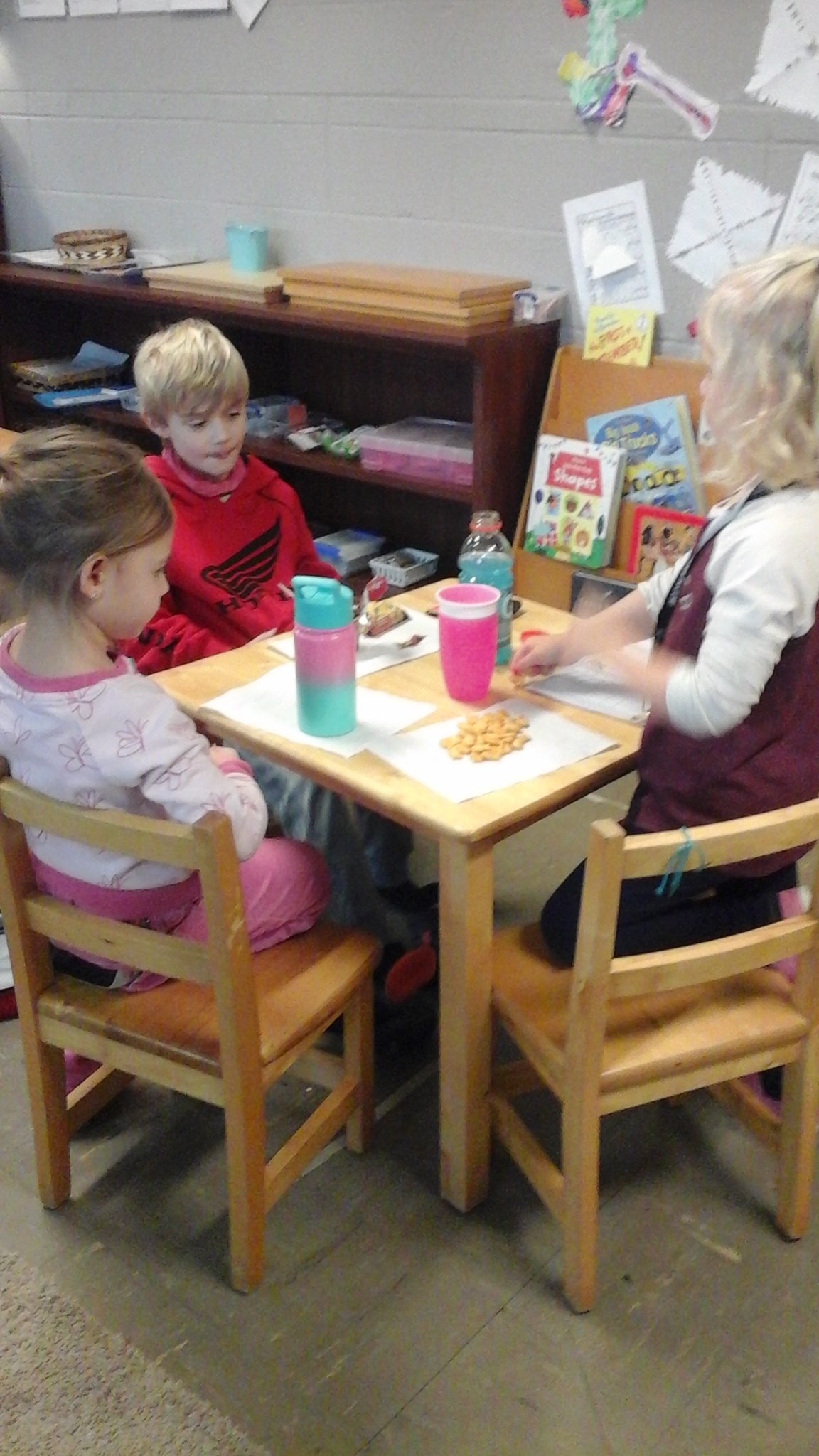
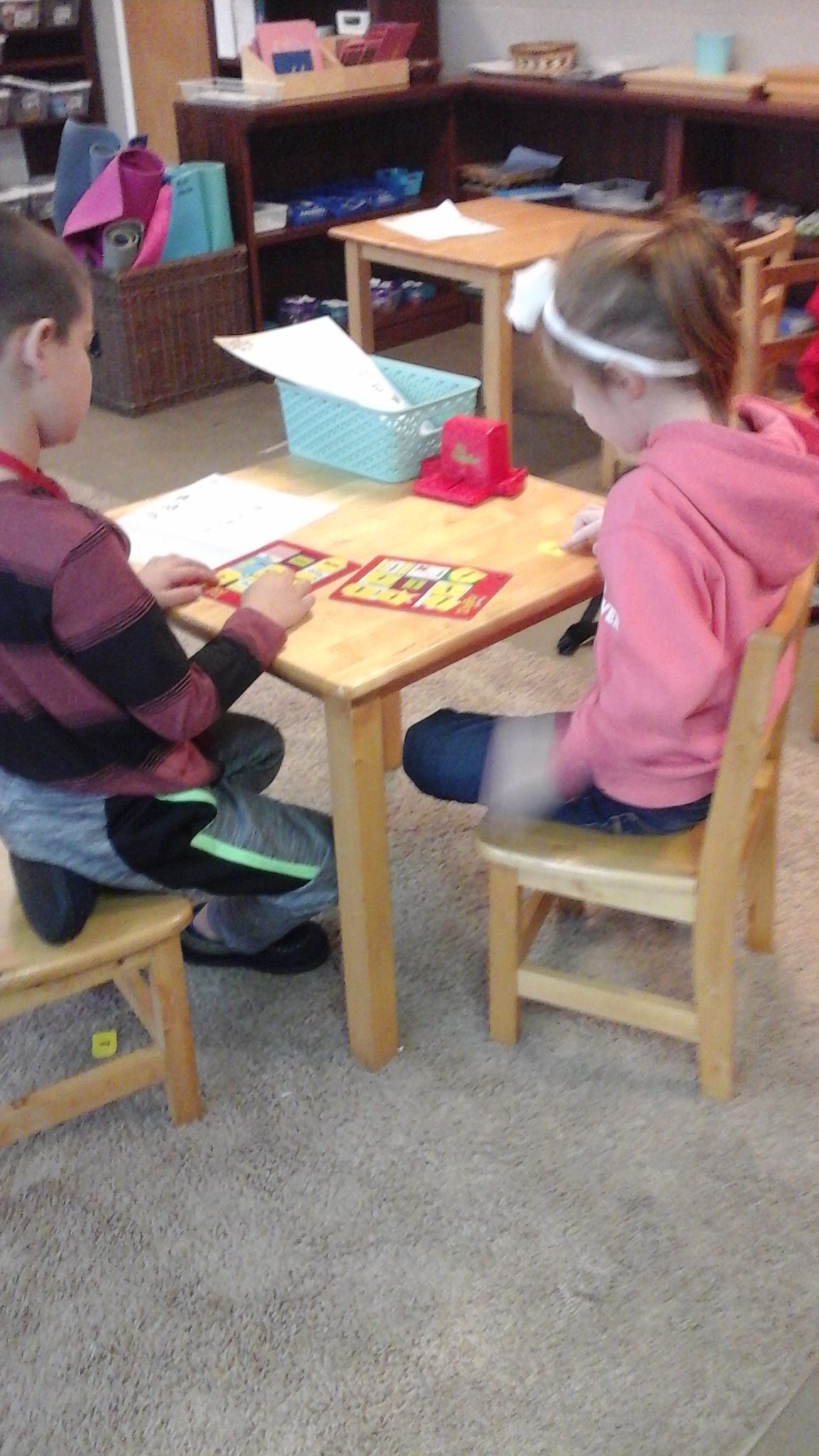
Snowman button color matching!A snack break and good conversations with friends!Playing Zingo! Our new sight word game.
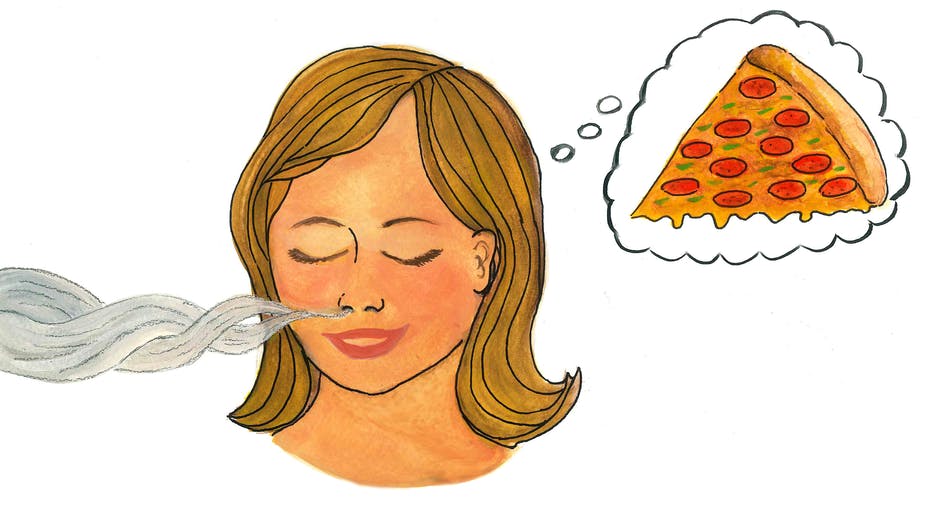
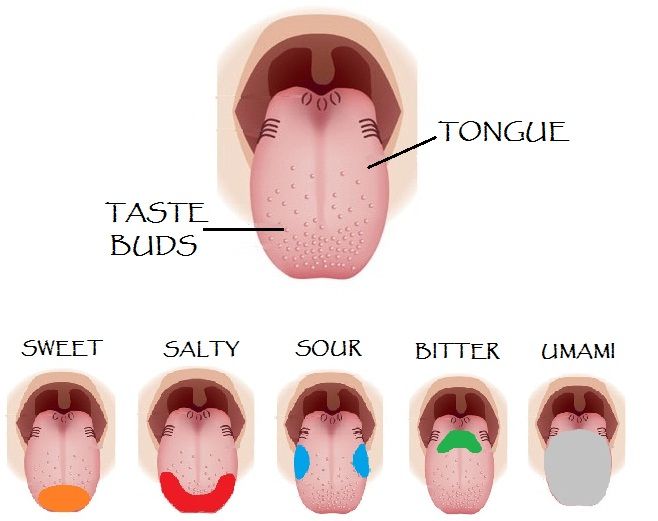
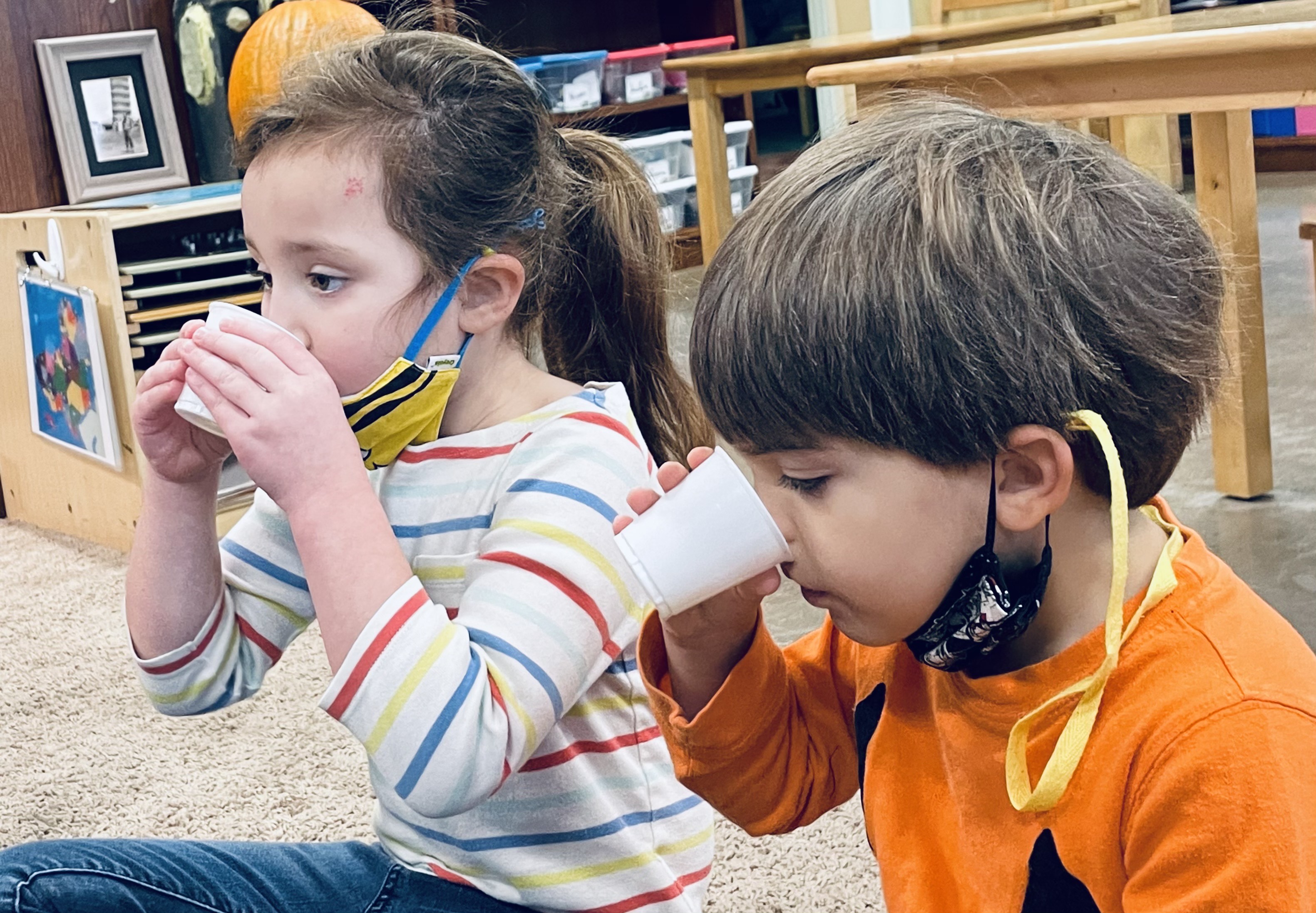
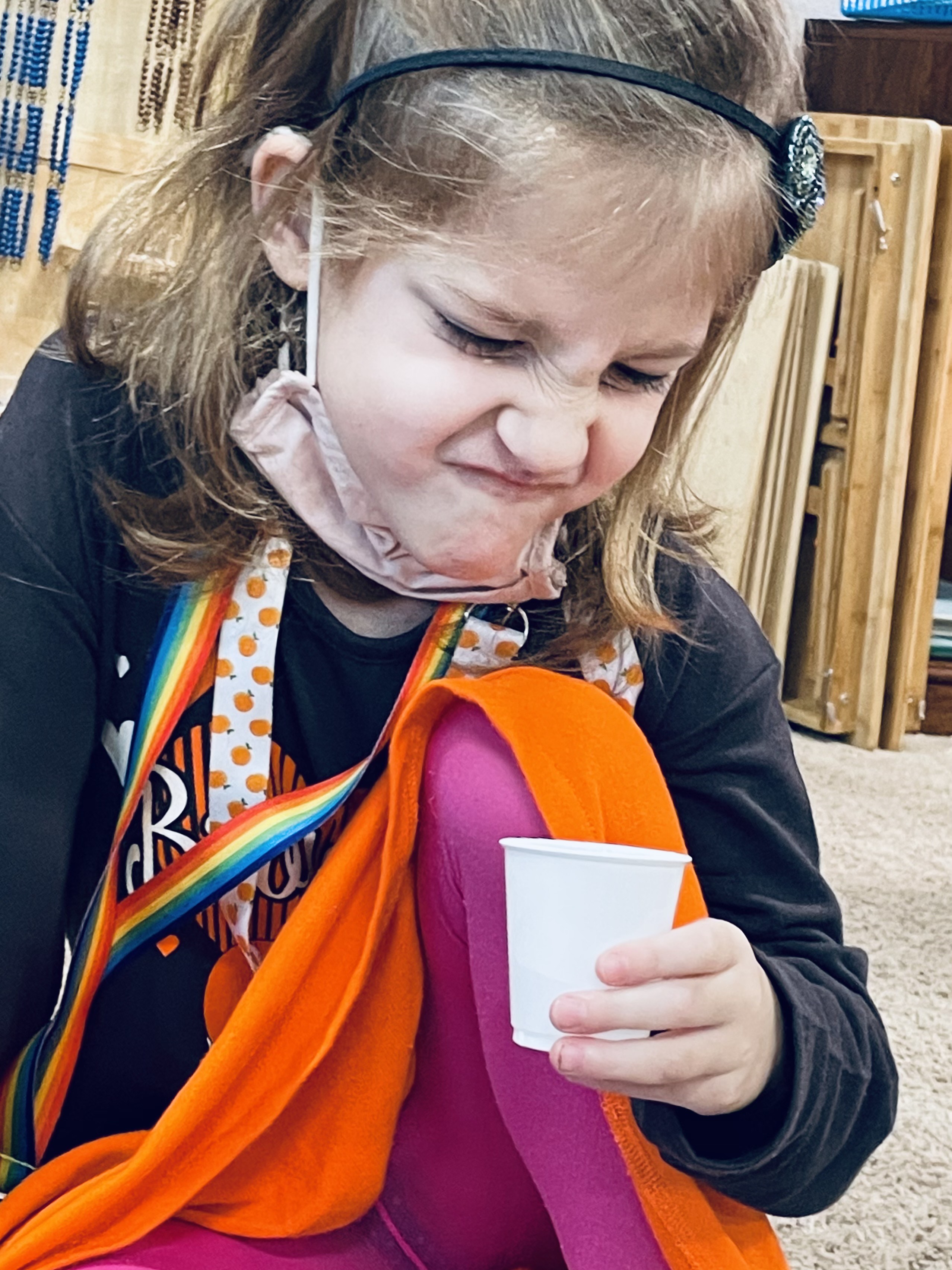
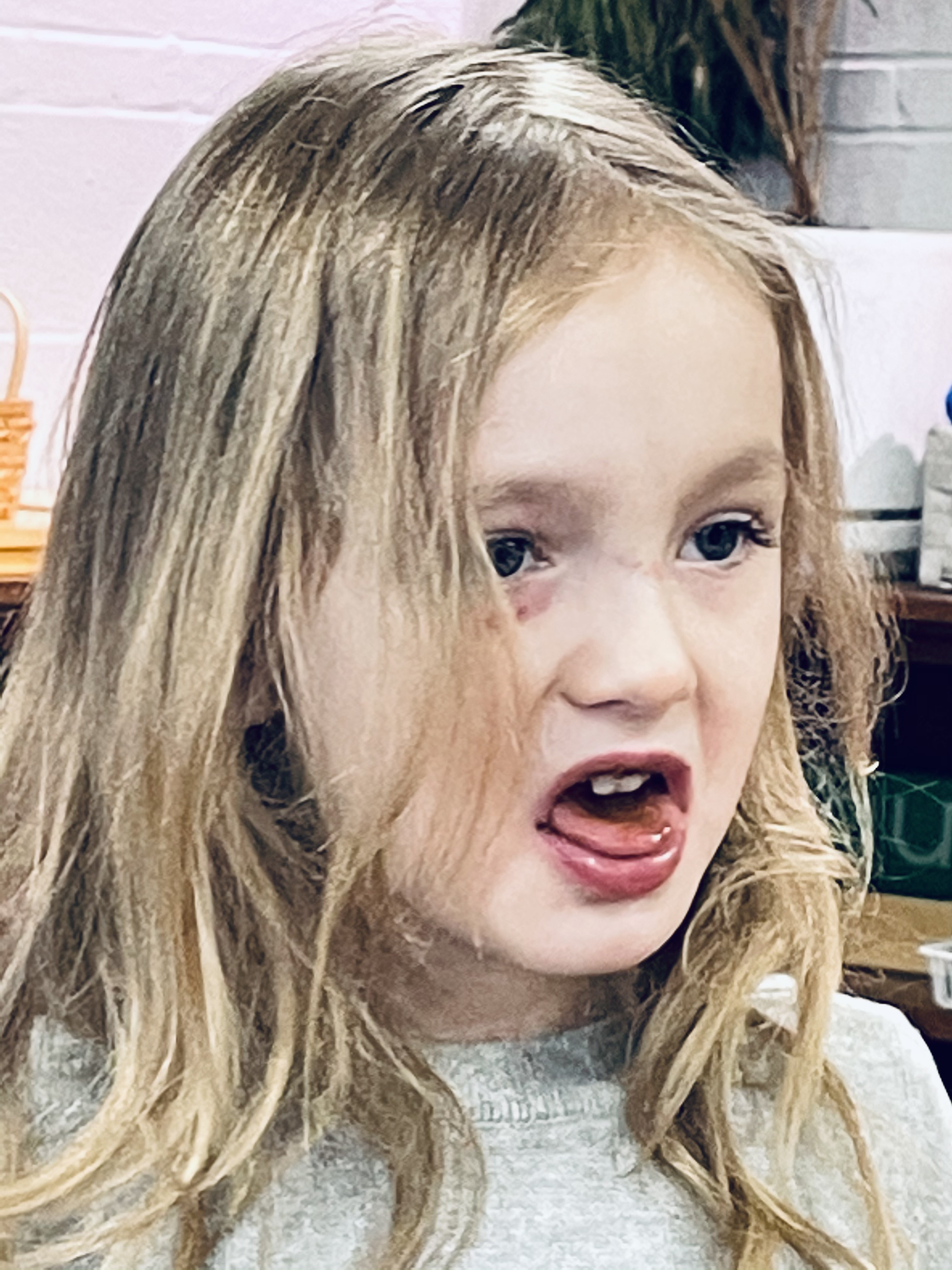
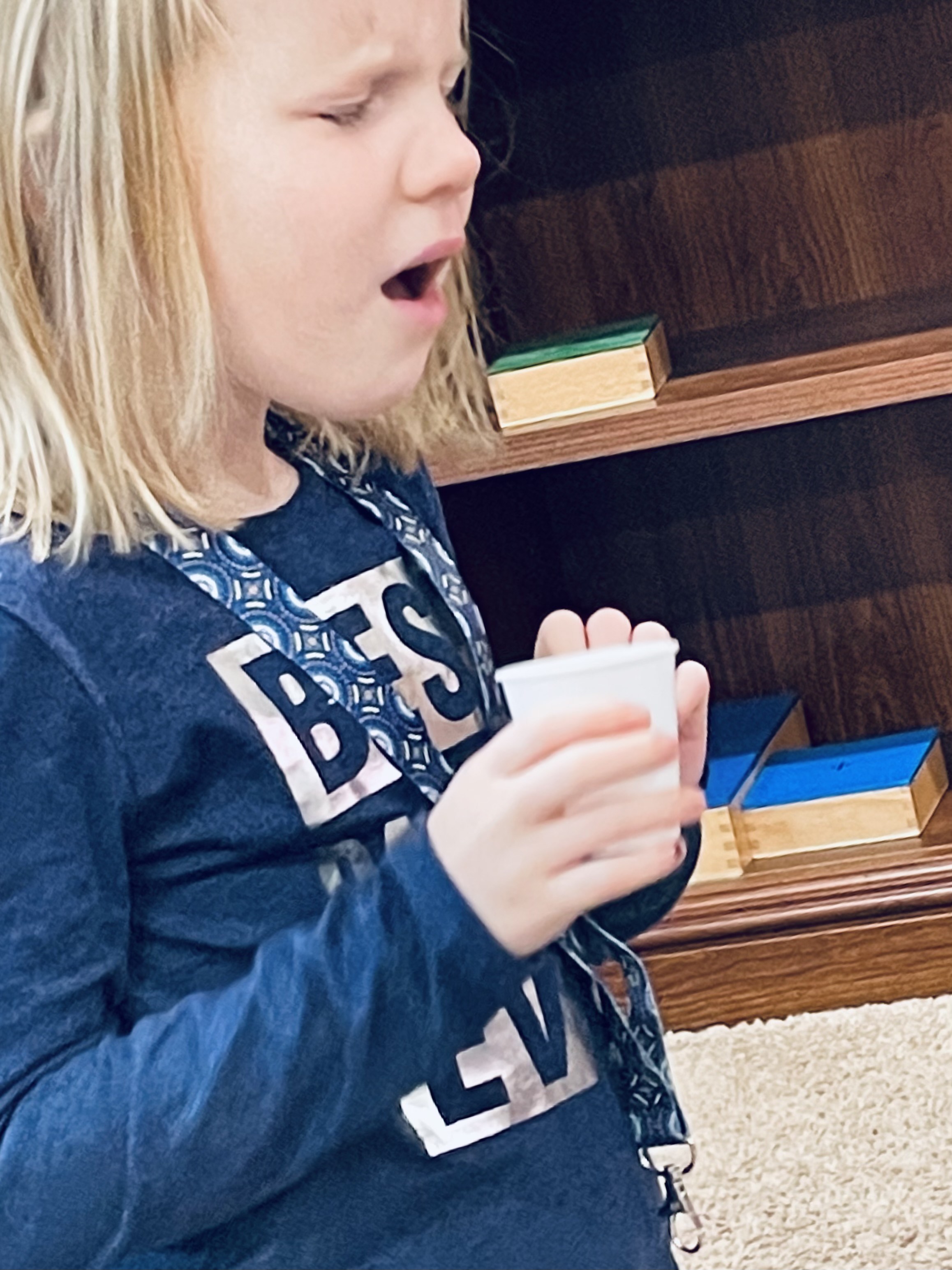
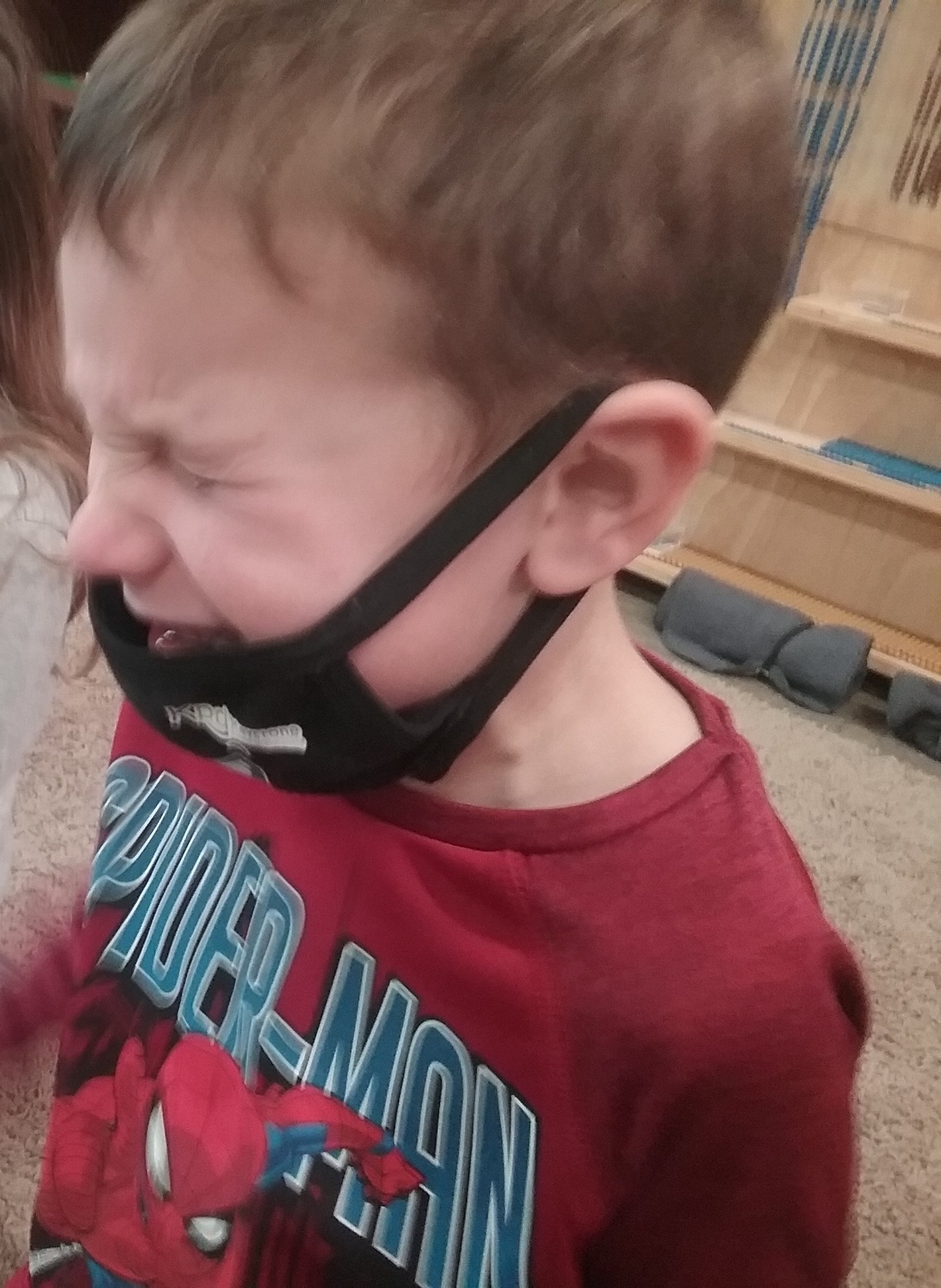
Line Time: We started to learn about our body and how it works. We learned about our five senses (touch, hearing, sight, smell, and taste). Did you know you can “feel” with any part of your body? Of course parents know that. Who has not stepped on a Lego in bare feet and screamed in pain? But we associate touch with our fingers (hot/cold, hard/soft, rough/smooth). We hear loud noises, quiet noises, high iand low noises, “Are we there yet?”. We need light to see and if we close our eyes we can’t see. The lights being turned on at 5 am on a Saturday morning. There are good smells like cinnamon, vanilla and bad smells like a dirty diaper and vinegar. My favorite was the taste test where we tasted sweet (sugar water), salty (salt water), sour (pure lemon juice), and bitter (unsweetened baking chocolate). The children enjoyed “most” of the tastes. Hehe!!!!
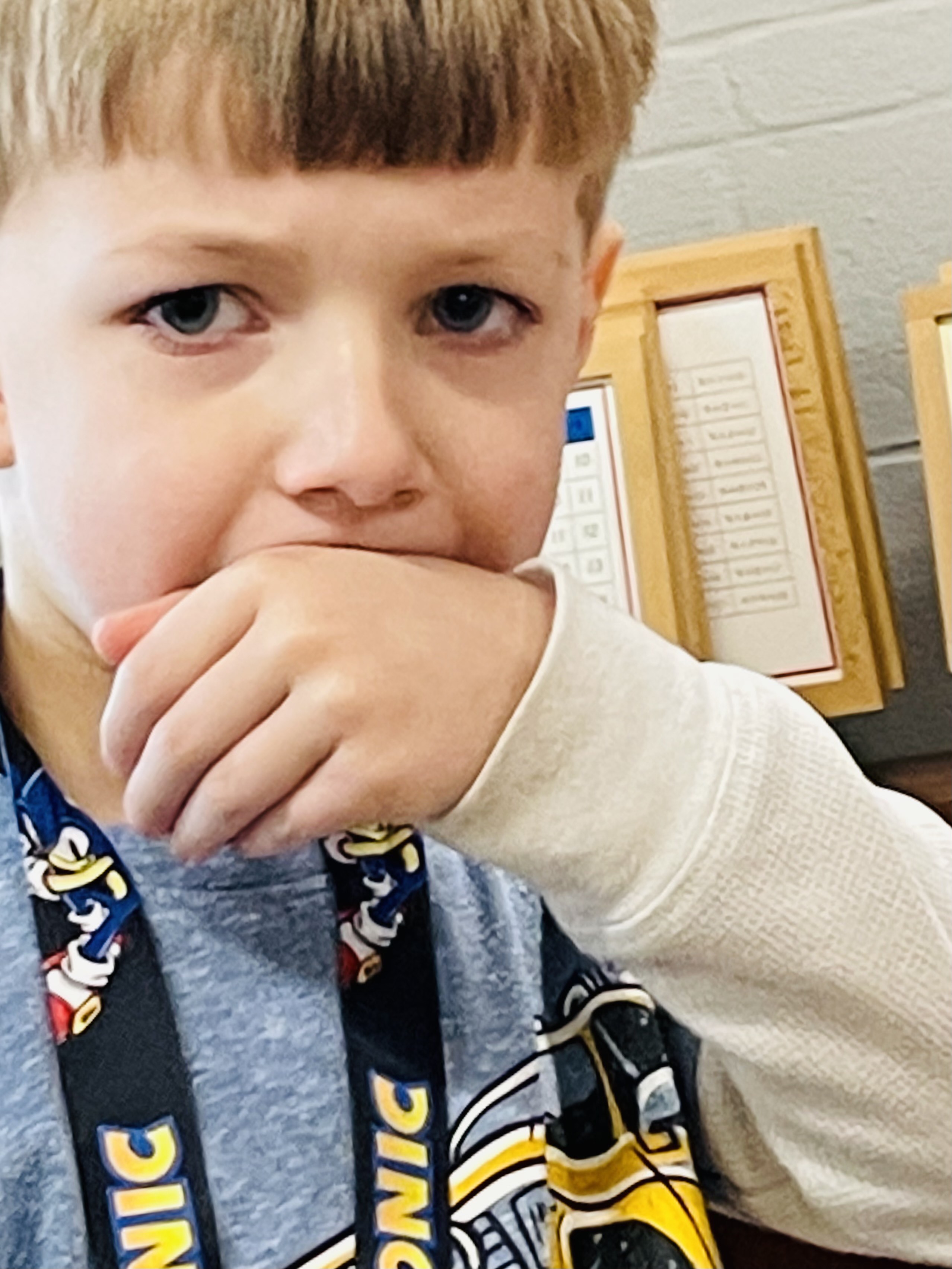
Below are some pictures of children eating unsweetened baking chocolate.
Using our senses of sight and smell they are thinking a yummy chocolate kiss.
Then BOOOOM!
A Message From Mr. John:
January Birthday: A Montessori classroom consists of students ranging in age from three years to six years. Here is our newest five year old student.
Did you know? Spider webs were used as bandages in ancient times. Spider webs supposedly have natural antiseptic and anti-fungal properties, which can help keep wounds clean and prevent infection. It’s also said that spider webs are rich in vitamin K, which helps promote clotting.
Know Your Languages (Korean):
Cultural Subjects: Your children can now count to ten in 14 languages (English, Latin, Sign Language, Spanish, German, French, Greek, Japanese, Arabic with the Lebanese dialect, Italian, Russian, Romanian, Swedish, Tagalog, Hebrew)
Peek In The Classroom:
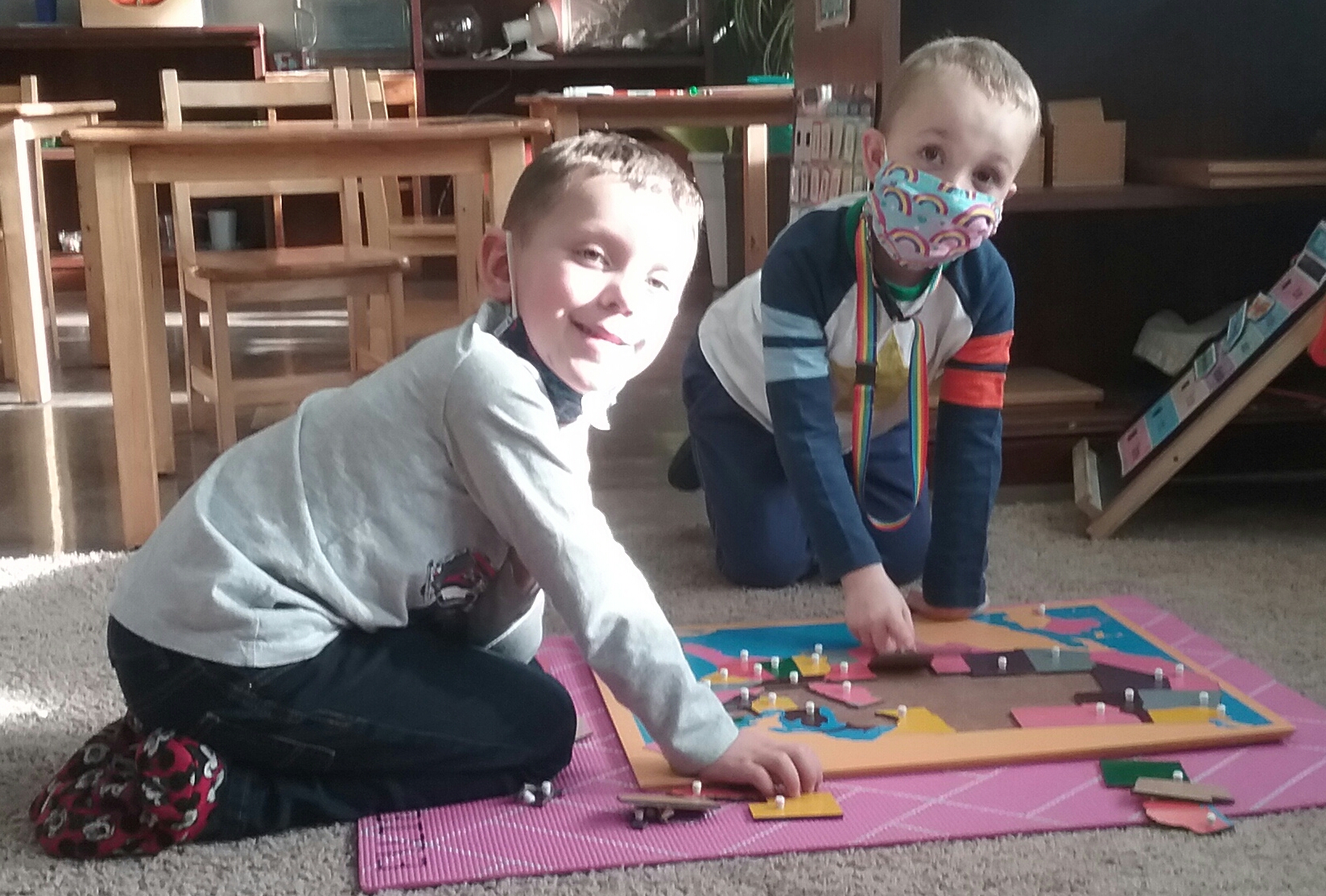
One boy lent the other a helping hand putting together the United States Puzzle Map. One of the qualities I admire in the Montessori classroom is compassion.
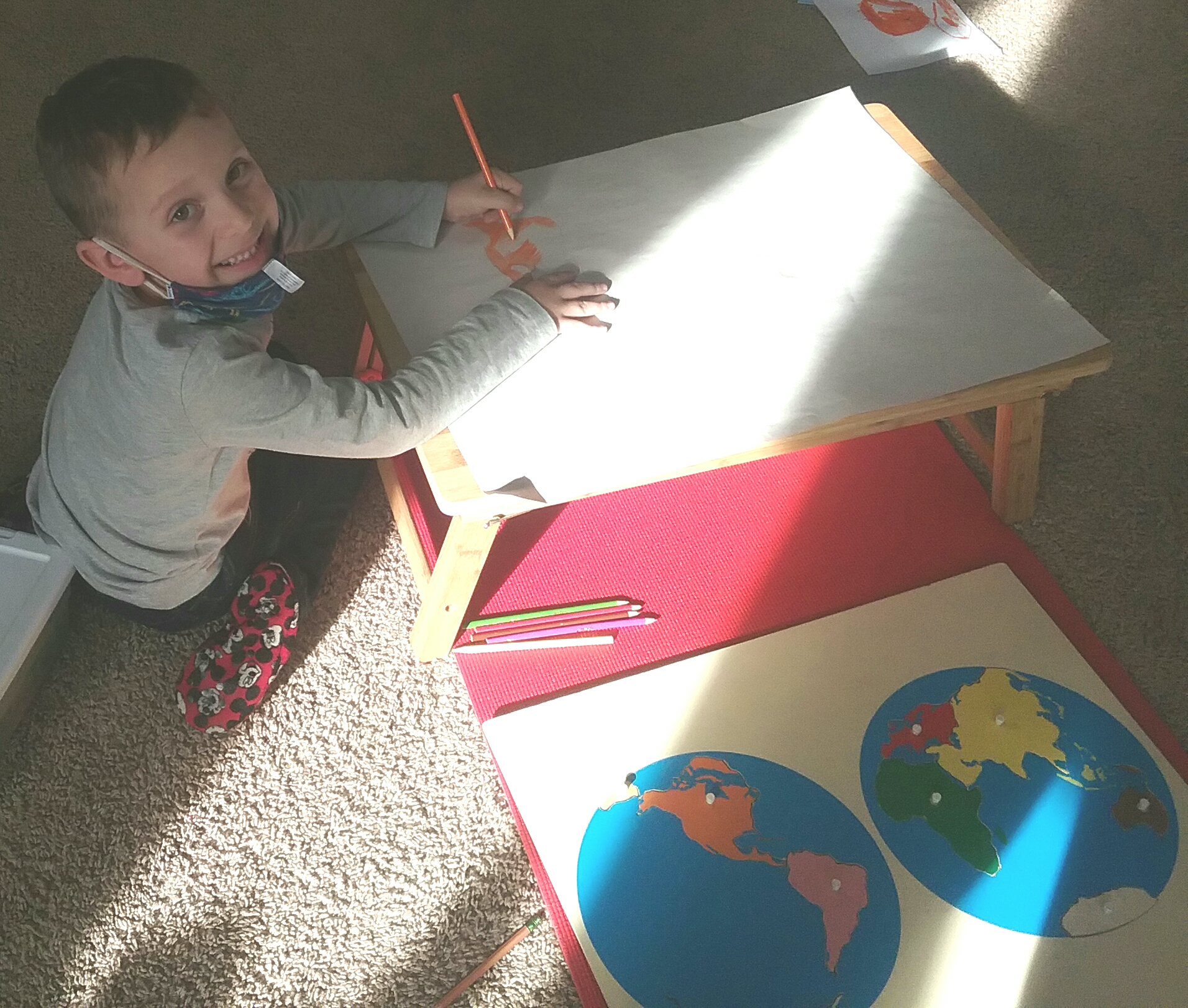
Later that day after he helped the other student this guy became motivated to work on a puzzle map.
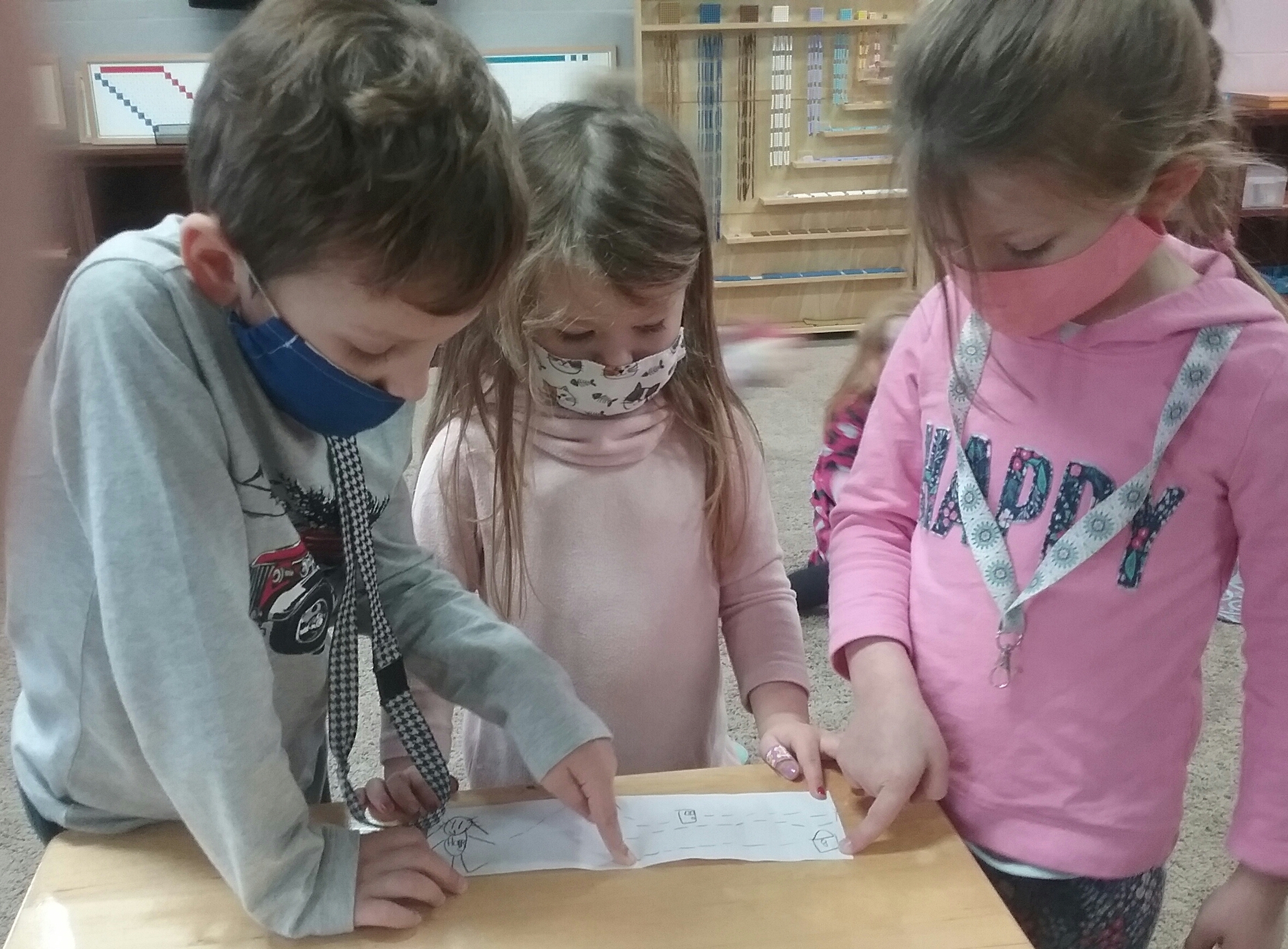
These three made a treasure map and trying to figure out where the treasure is located.
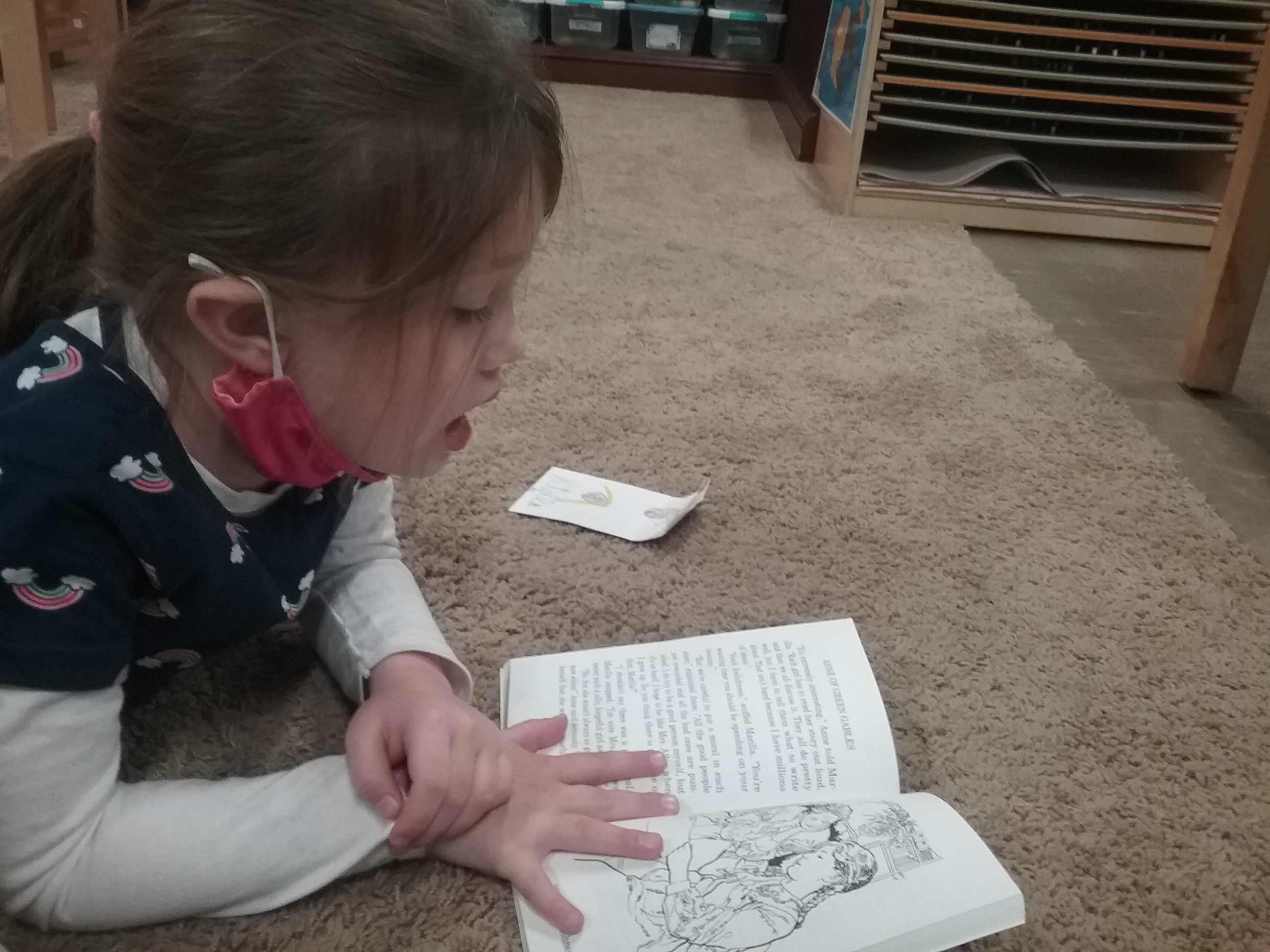
So happy to be reading again.
Peek Into Next Week: Line Time- MLK/diversity
Letter Of The Week- P p
Rhyming Word Of The Week- bun
Next Language is Korean
Upcoming Events: *** MLK DAY January 18, 2021 *** NO SCHOOL ***
***Don’t be that family that shows up and there is always one family that shows up,lol! ***
Academic Enrichment: Weekly Theme: We learned how to subtract with manipulatives. We learned what the Minuend and Subtrahend and Difference are.
5(minuend) – 3(subtrahend) = 2(difference)
I love the goofiness of my kinders.
Handwriting: We practiced writing sentences in cursive.
Next Week: Weekly Theme: Subtraction with no borrowing (Dynamic)
Synonym Of The Week: SKINNY: thin, lean, emaciated, scrawny, slender
Sight Words Of The Week: could who
Friends, Frolic, and Fun:
Something was different about her. I ask her if she was wearing contacts/not glasses, no. If she shaved her mustache, no. Then she emphatically told me she got a haircut!
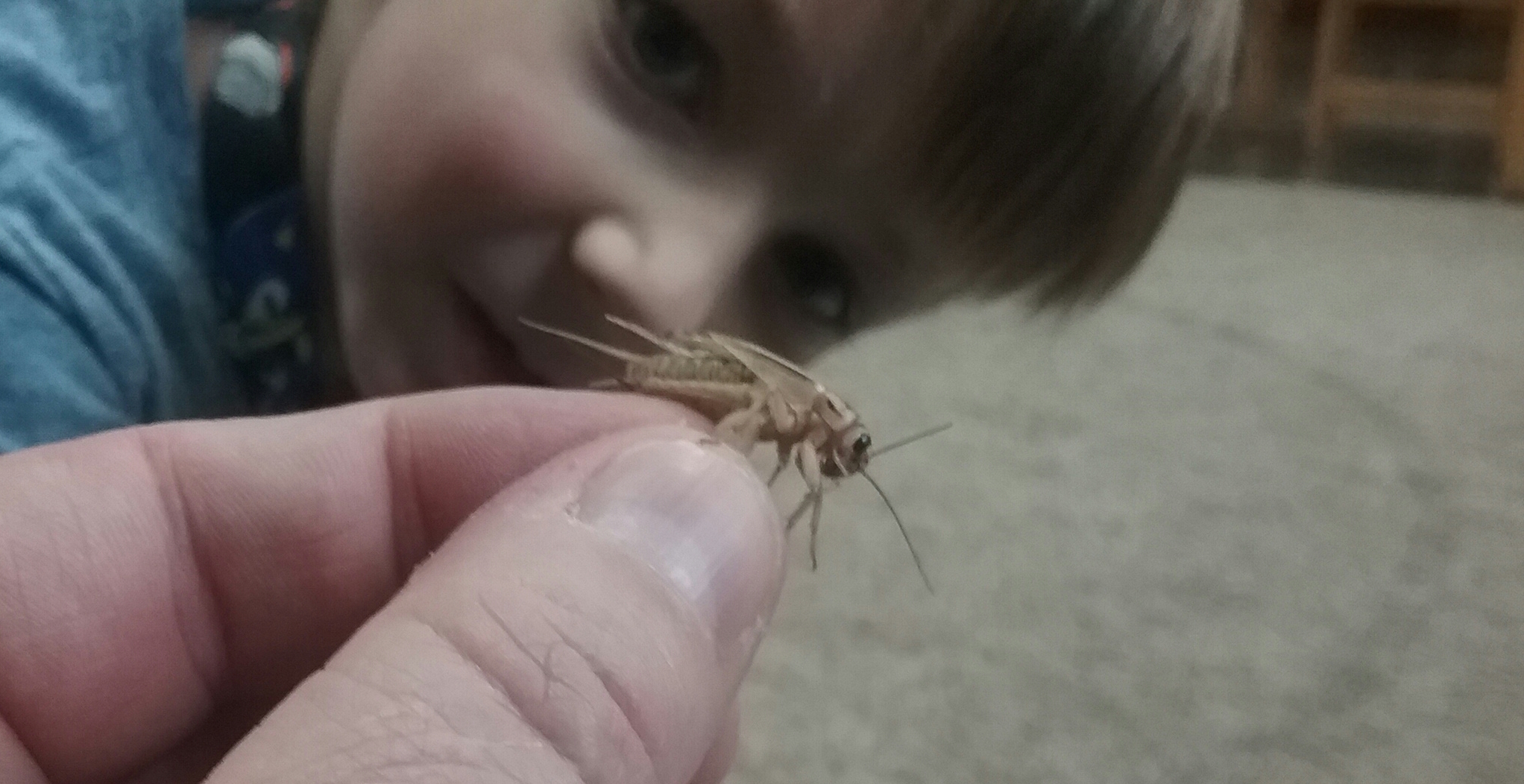
Who is scared of a little cricket? Not this boy!
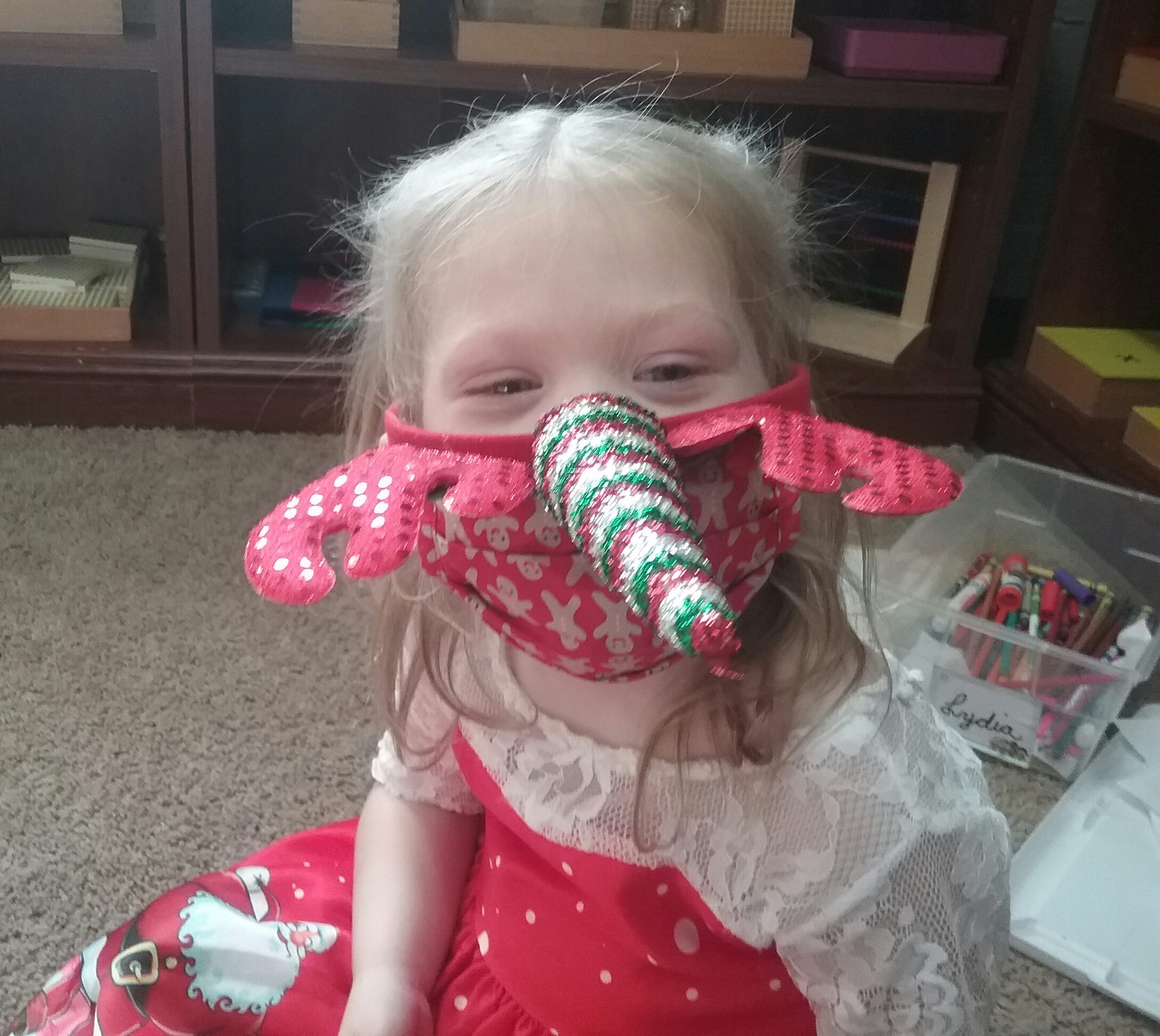
A leftover picture from Christmas of once a unicorn reindeer but now an… elephant?
Line Time: We Are Family! This week we talked about family since this is the season where we usually spend time with family. We talked about moms and dads and that moms and dads had moms and dads that your children call them grandparents. We discussed how moms and dads have brothers and sisters which they call aunts and uncles. We talked about siblings which are bothers and sisters. Then we talked about my favorite relative.. the COUSIN ( I loved hanging out with my cousins!) and how cousins are the children of aunts and uncles. We even discussed if pets are part of the family which received a resounding YES! I am looking forward to seeing the family trees. I am showing my age by the album cover. Circa 1978ish.
A Message From Mr. John:
Let’s be careful out there!
December Birthdays: The Montessori classroom is comprised of 3 year old to 6 year old students. Here are our newest 6 and 4 year old students.
What’s The Diff? What is the difference between bologna and baloney?
Bologna is the name of a city in Italy, pronounced “boh-LOAN-ya.” But although the sausage named after the city in English is spelled the same, it is pronounced “buh-LOAN-ee” and is often spelled baloney. Either spelling is acceptable for the sliced meat product. P.S. I love fried bologna/baloney!!! And yes, I remember this commercial when it first aired! Heavy Sigh…
https://www.youtube.com/watch?v=rmPRHJd3uHI
Know Your Languages (Korean):
Cultural Subjects: Your children can now count to ten in 14 languages (English, Latin, Sign Language, Spanish, German, French, Greek, Japanese, Arabic with the Lebanese dialect, Italian, Russian, Romanian, Swedish, Tagalog).
Peek In The Classroom:
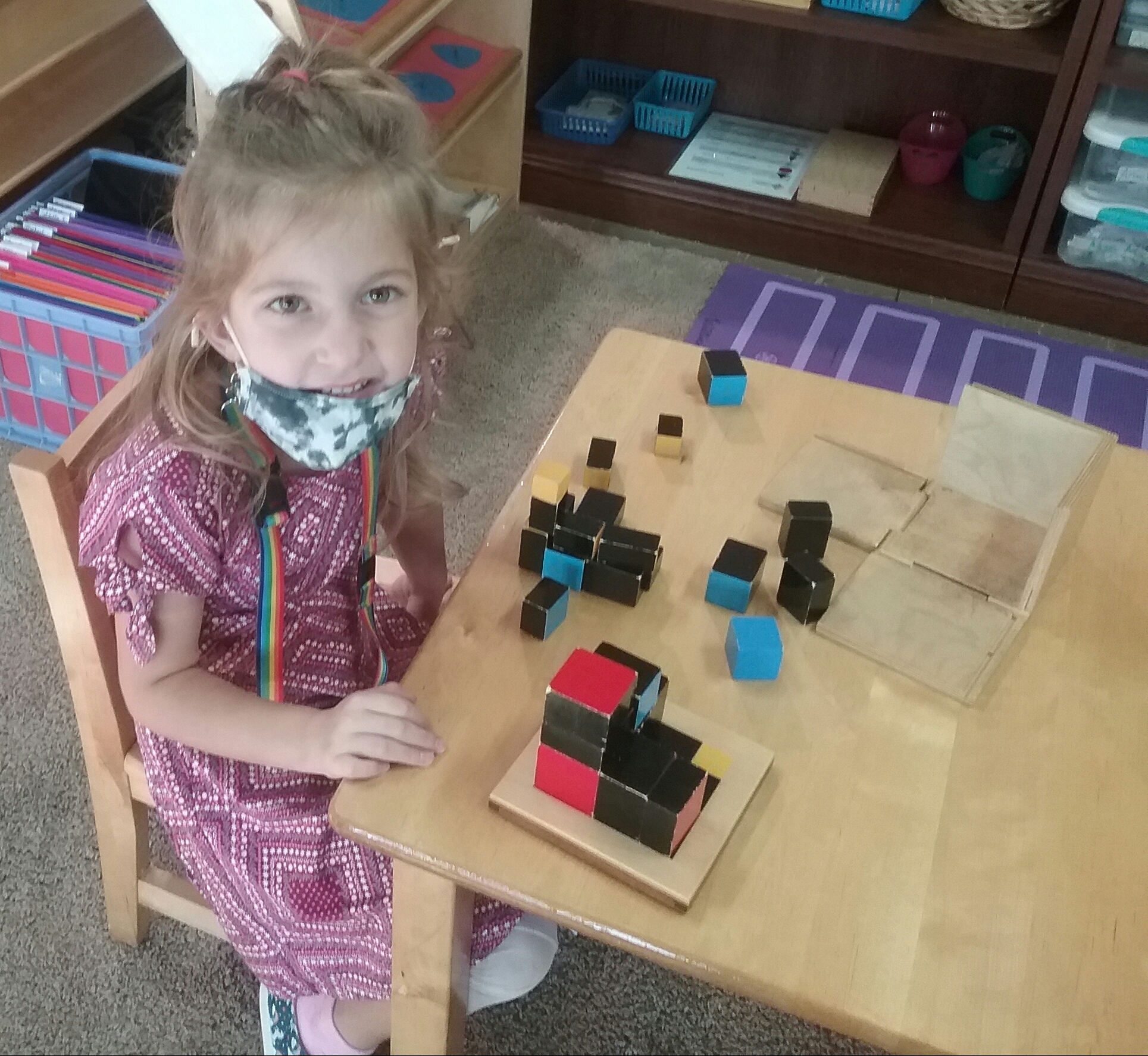
She is working on the construction box/geometry found in the sensorial area. The constructive triangles are used to demonstrate that all plane geometric figures can be constructed from triangles.
Practical Life/Everyday Living was developed by Maria Montessori to assist in developing OCCI (order, coordination, concentration, independence). Practical Life/Everyday Living is simply activities suitable for a child that allows the ability to work with a purpose or in a purposeful way to accomplish developing skills.
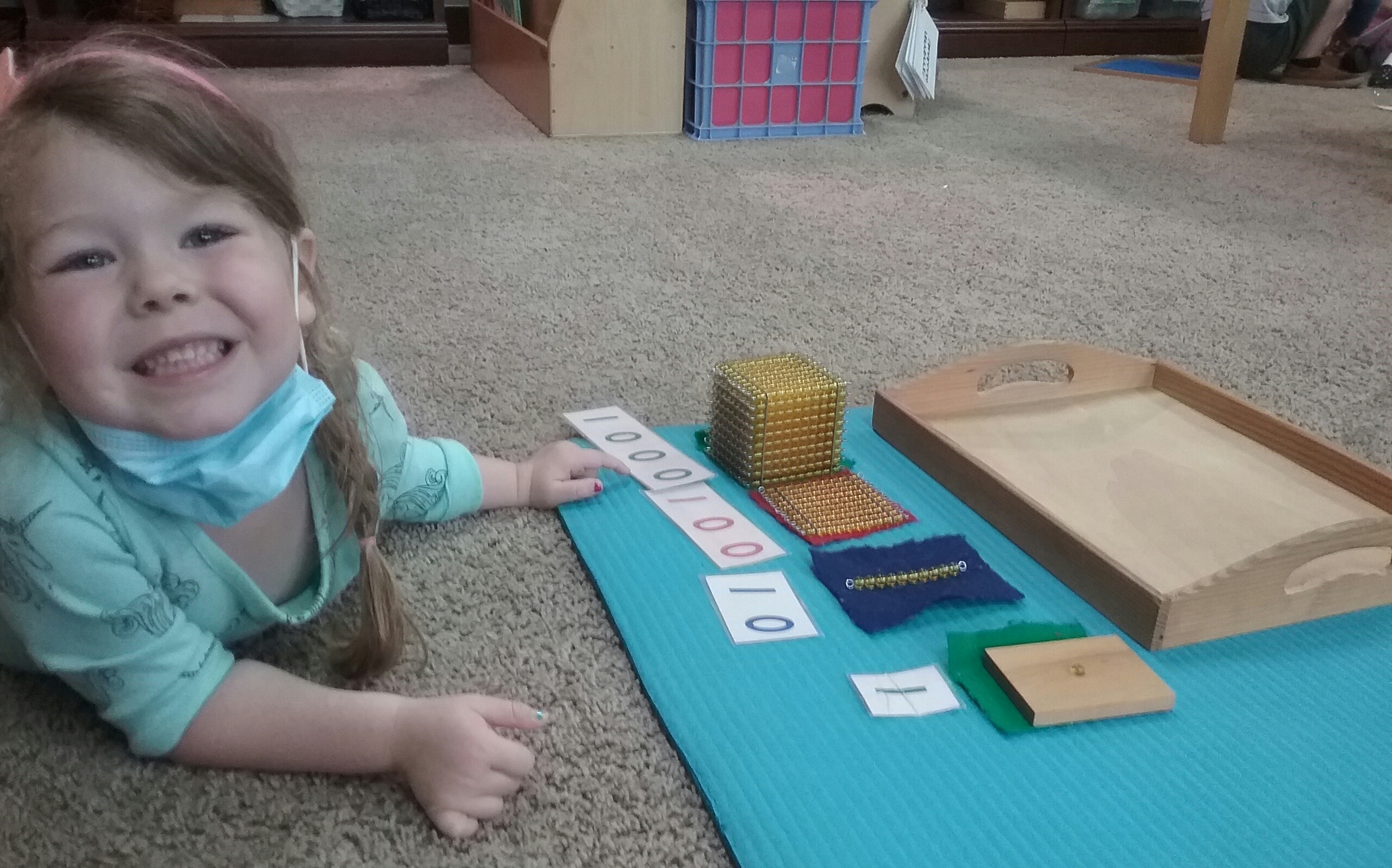
Introduction to Numerals of the Decimal System is a Montessori Math Early Childhood lesson. Pretty straightforward, the goal of this lesson is to introduce the numerals of the decimal system (units, tens, hundreds, thousands). Notice the symbol and quantity?
Peek Into Next Week: Line Time- Christmas around the world
Letter Of The Week- Giving them a break
Rhyming Word Of The Week- Giving them a break
Next Language is Korean
Upcoming Events: Winter Break: Off from Saturday, December 19, 2020 returning Monday, January 4, 2021 (good riddance to 2020)!
Pajama and Show and Share Day: Friday, December 18th. Details to follow.
Academic Enrichment: Weekly Theme: We learned how to multiple to the thousand static/column without carryovers with manipulatives. I told the students that multiplication is merely adding multiple times. We learned what the multiplicand and multiplier are.
Handwriting: We practiced writing sentences in cursive.
Next Week: Weekly Theme: Measuring with a ruler (in and cm).
Synonym Of The Week: Giving them a break
Sight Words Of The Week: Giving them a break
Friends, Frolic, and Fun:
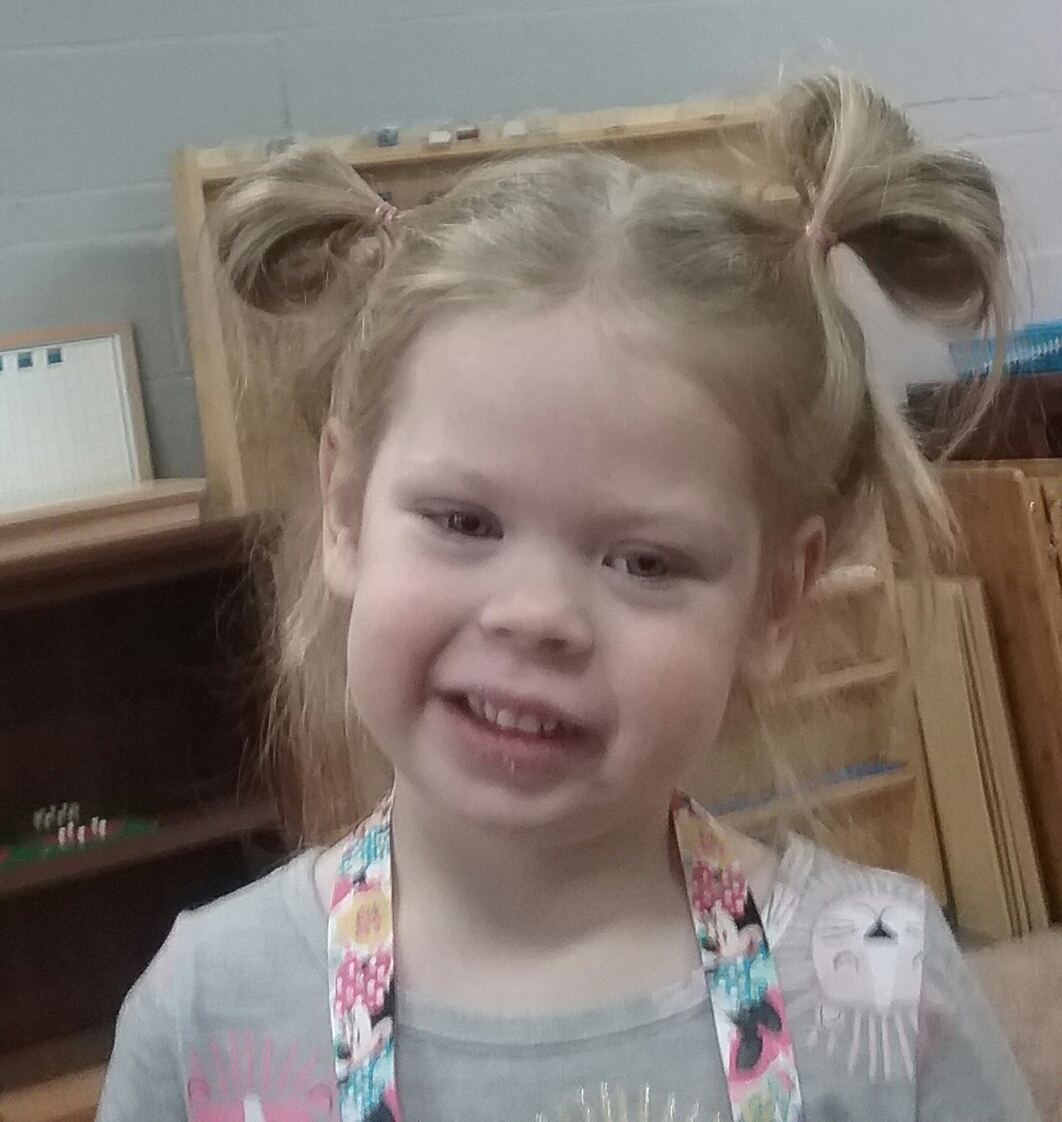
It’s all about hair fashion.
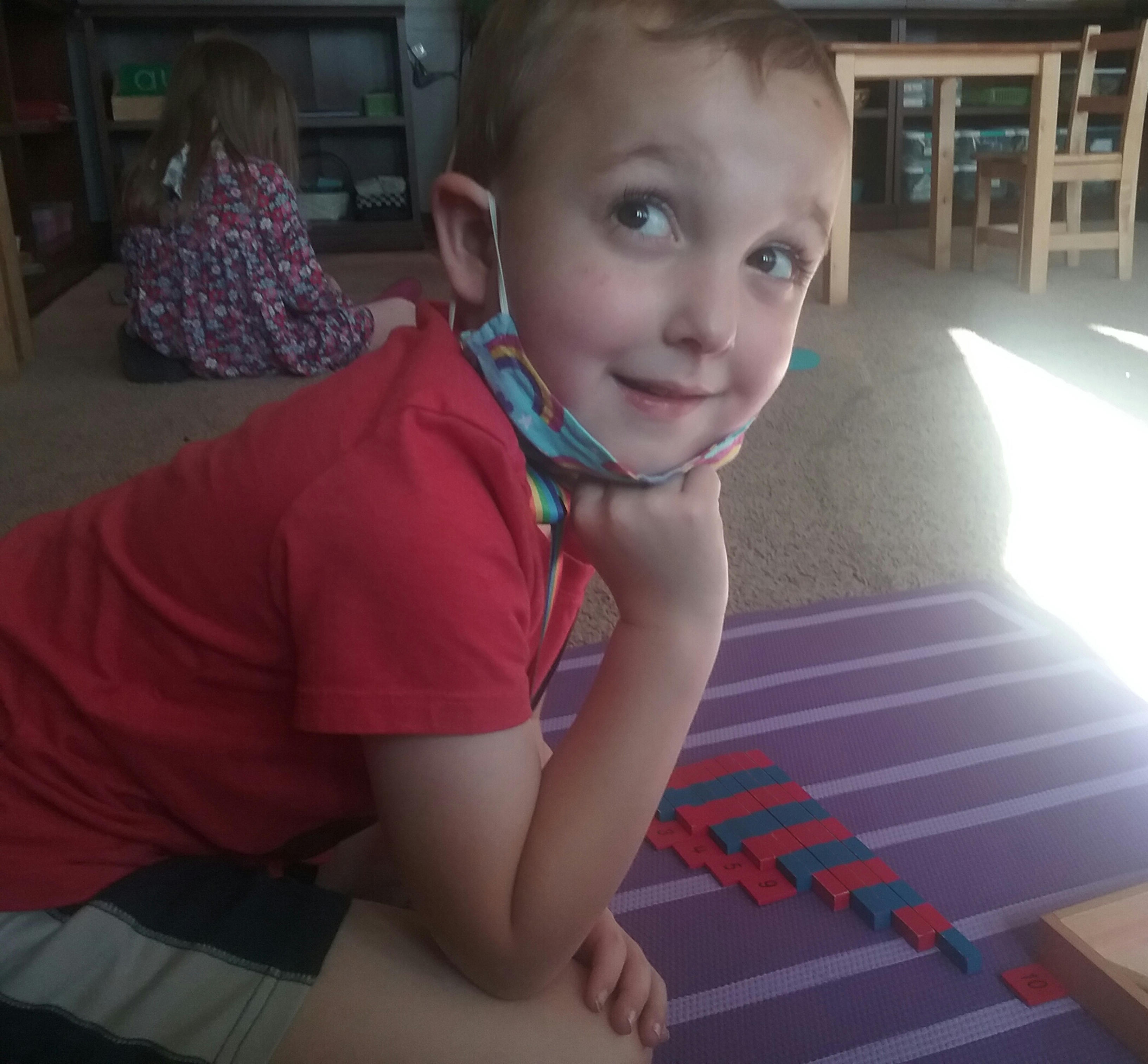
Day dreaming about Math!
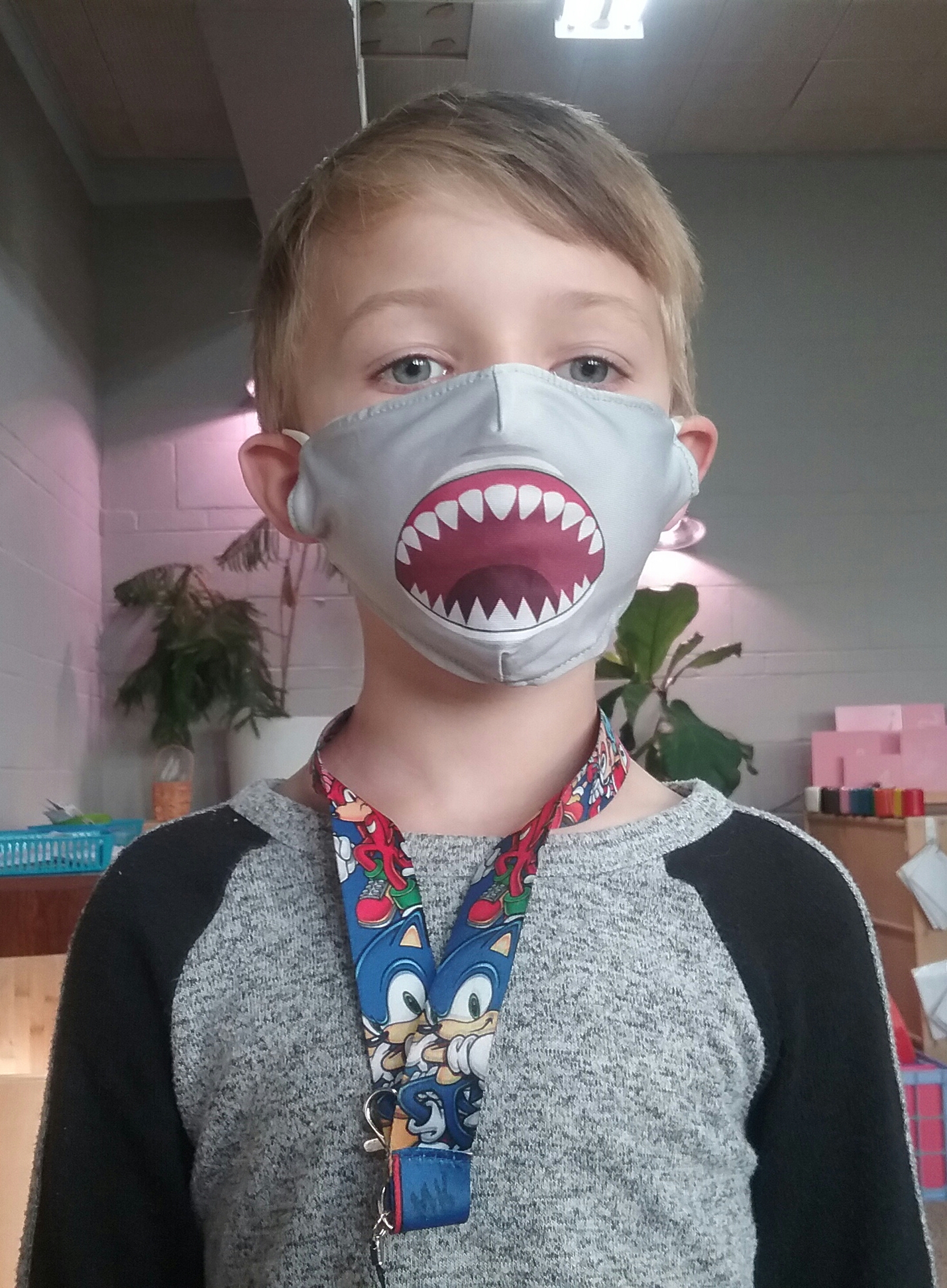
More fun with masks.
The Trinomial Cube has him plum tuckered out.
Your Children Say The Darndedst Things (How I got my scar):
This week we dicussed table manners and learned how to set a table. The children helped lead the group meetings by sharing how one should behave while sitting at the table. They all had very good ideas of what classified as having “Good Table Manners” and shared many scenarios indicating what “Bad Table Manners” are. We had a lot of fun sharing our thoughts and ideas on this subject! You all have very polite and well mannered children! During our discussions we also talked about how to try (taste) foods that we don’t care for and to try new foods when they are presented to us. At the same time, we role played how to react when we discover that we don’t like a particular food using “Good Manners”. We then read How Do Dinosars Eat Their Food which reinforced all the great manners they shared during our group meeting time.
After discussing manners, we learned how to set a table with our place setting activity from the practical life shelf. Then during afternoon meeting time, we learned the names of the place setting objects in Spanish. Your children now know plate, fork, spoon, knife, napkin, and placemat in Spanish.
Kindergarten students are continuing their work with telling time, and have reviewed some of our previous lessons for reinforcement. Next week the kindergarten students will learn about the layers of our Earth and will research and explore each part.
Our theme for next week will be all about Conifers. We talked a lot about decidous trees and identified various types of leaves during the months of October and November. Therefore, we will learn what a Conifer is while learning to identify different types of Conifers. Conifers are special and are found all over this time of year.
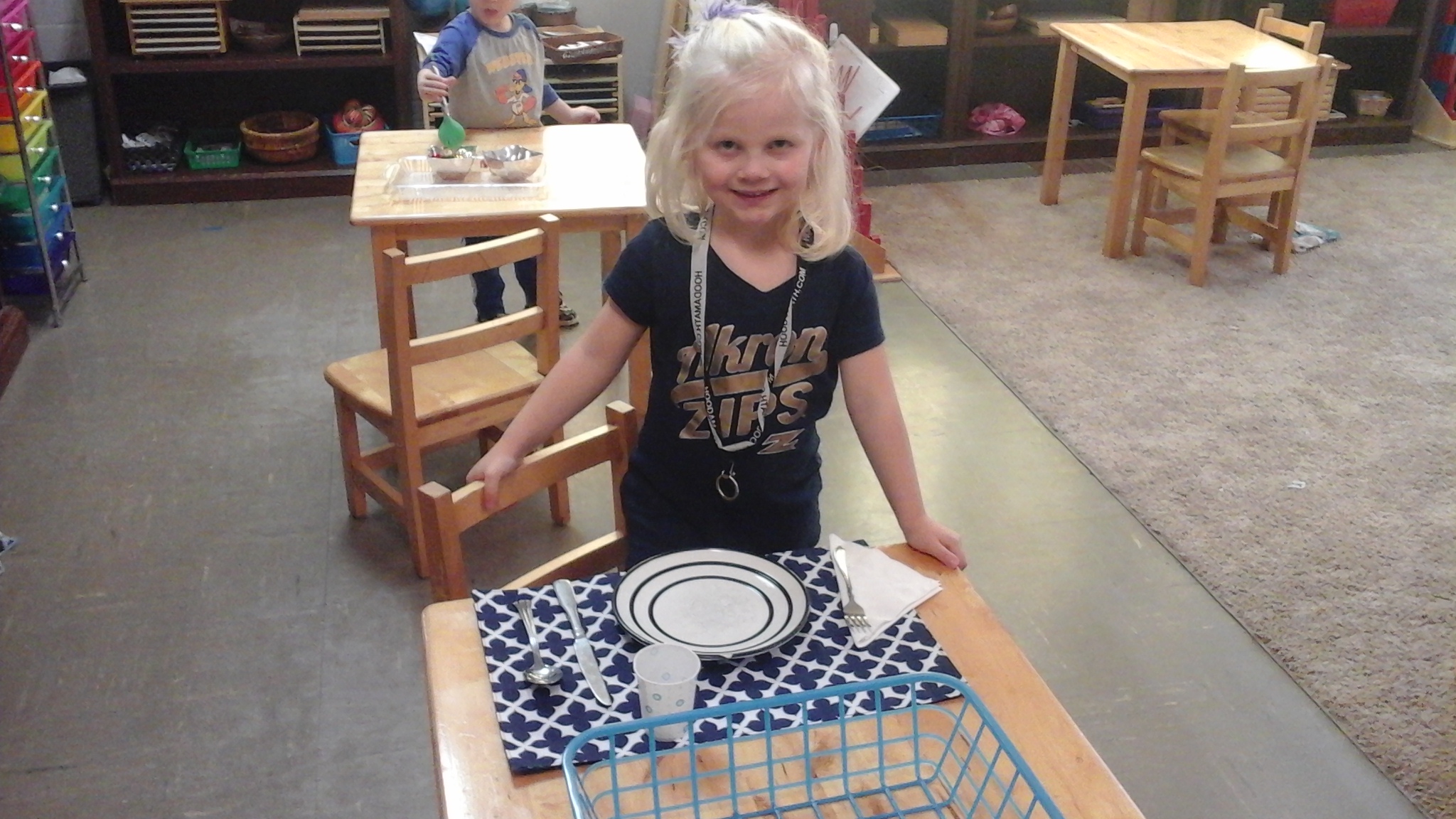
Setting the table! Fun with our place setting practical life activity.
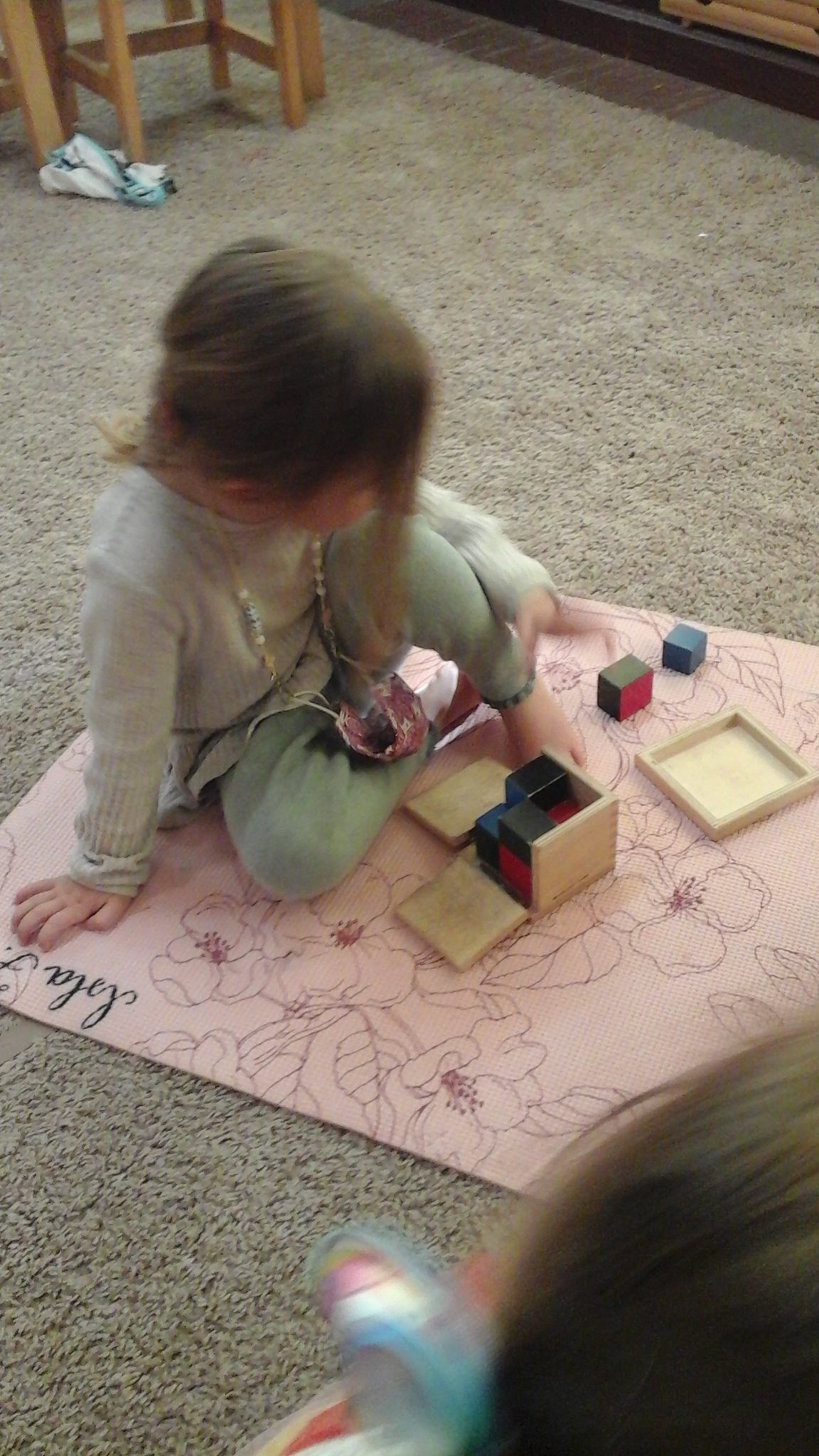
Working on the Binomial Cube!
Team U.S.A!! Working together as a team to complete the U.S.A puzzle map.
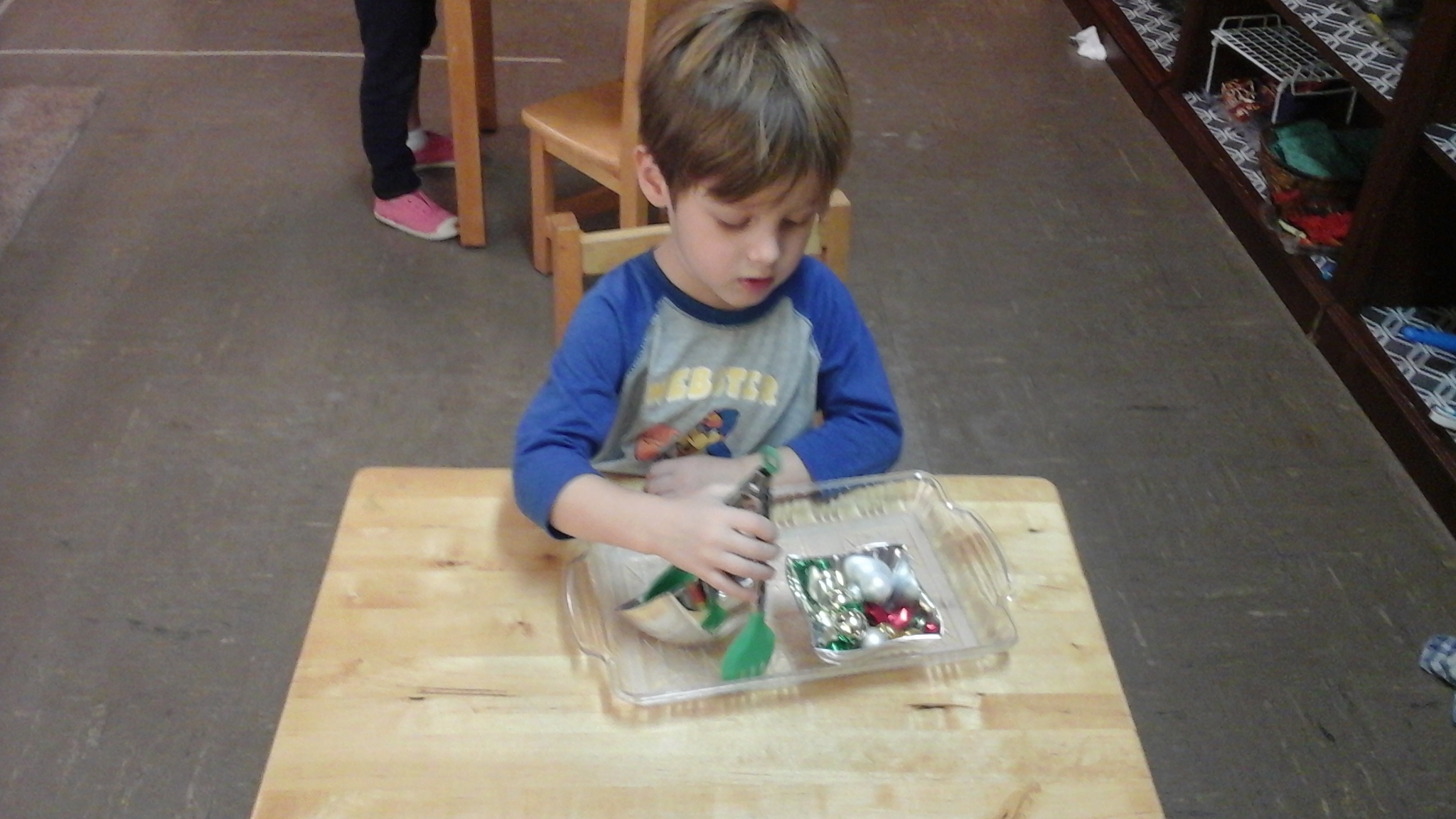
A variation of our practical life tonging activity! Tonging christmas bulbs and bells. The bells are very tricky, it is challenging to keep them quiet.
This week we are talking Turkey! Where do turkeys live? What do they eat? Can they fly? We learned the answers to these questions and more! In fact, we also learned what a group of turkey’s is called, then we labeled the parts of a turkey, and listened to turkey calls. Did you know that a group of turkeys is called a flock or a rafter? Ms. Taylor also found an amazing video called Turkey Facts on youtube for us to watch during afternoon line time! Ask your child about what they learned about turkeys this week. They are now turkey experts! The class also watched/listened to read aloud books called Turkey Trouble and How To Catch A Turkey. They were hilarious books full of Thanksgiving fun!
Kindergartners have been working on their addition and multiplication skills as well as learning to tell time on an Analog Clock and also observed the differences between an analog clock and a digital clock.
Next week we will be talking about Table Manners and will also talk about the Pilgrims and why we celebrate Thanksgiving in the United States.
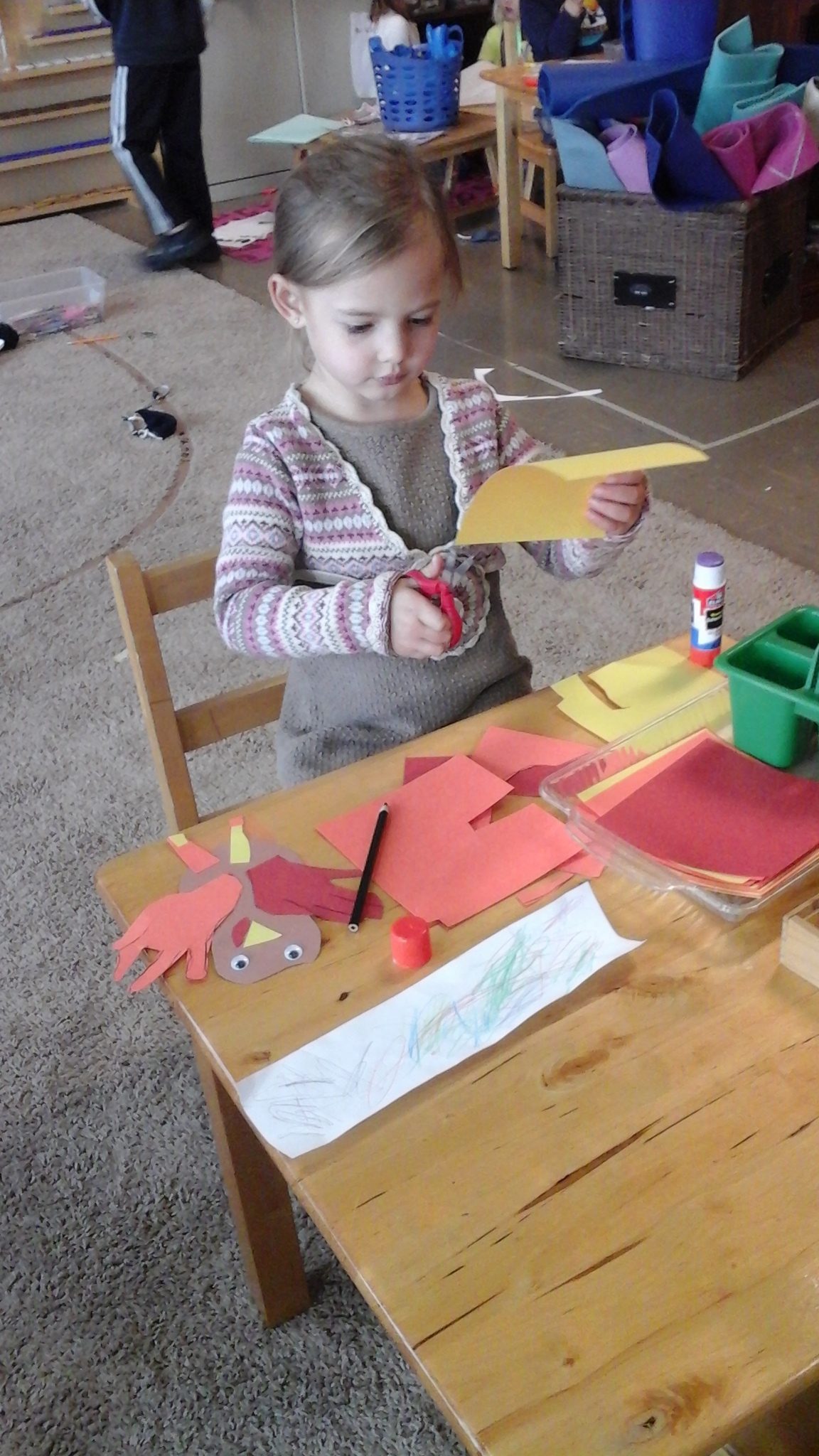
Exploring media from our art shelf! Concentrating on creating a turkey using pieces of construction paper, googly eyes, and tracing our hand for the tail feathers.
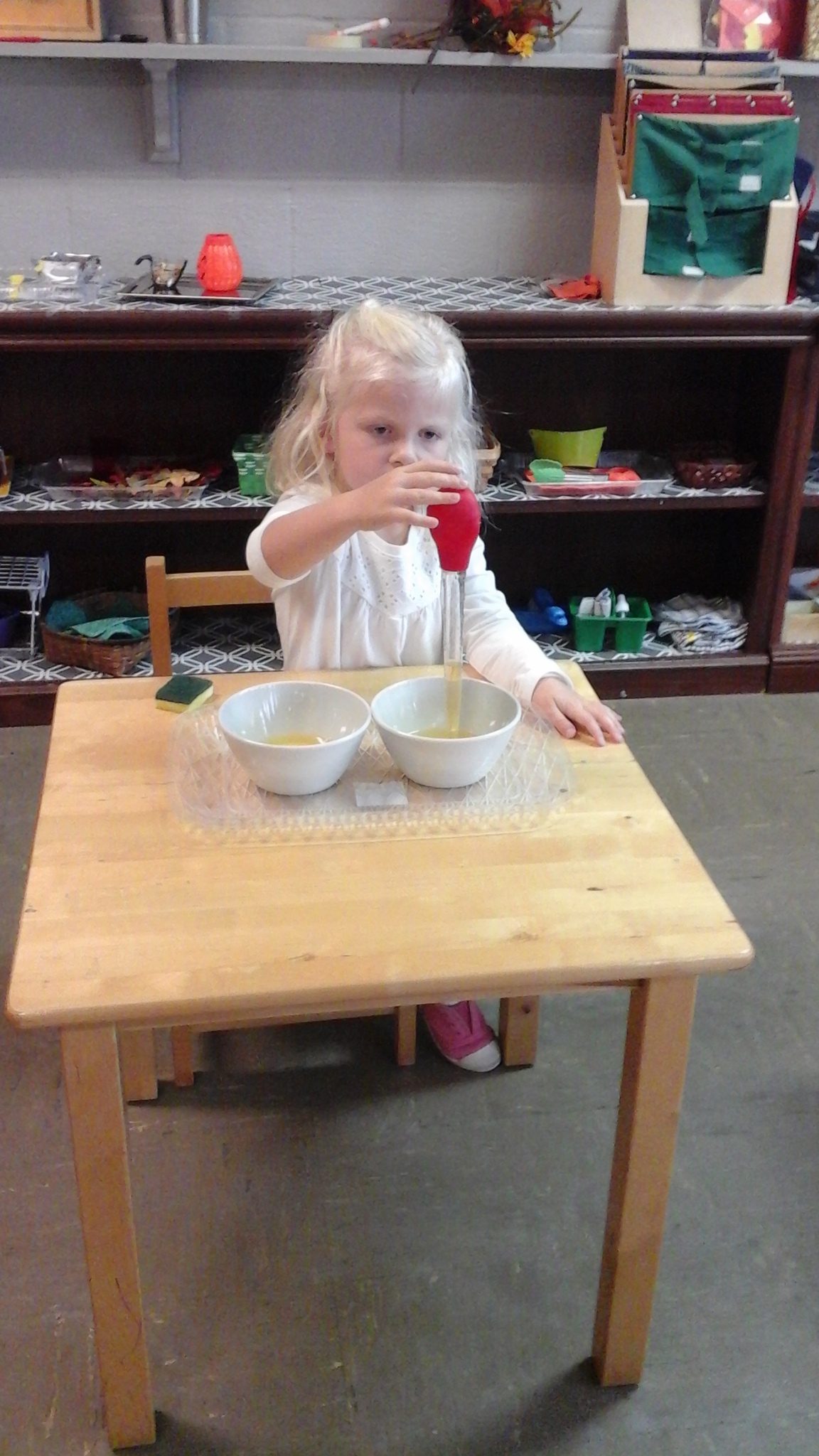
Transfering water using a baster! We have been learning the names of kitchen utensils that you see during the Thanksgiving holiday. We then use these utensils to create practical life activities like this one.
Line Time: Native Americans/Thanksgiving- We talked about Native Americans and how Indians were named Indians. On student informed us that Christopher Columbus landed in North America but thought he was in India. Hence, the name. We talked about how Native Americans were indigenous. Then the Pilgrims came over from Europe on a ship called the Mayflower. The pilgrims had a rough go of it at the beginning because they didn’t have enough blankets or food. They could not just go to Target or Giant Eagle to get supplies because at that time there were just woods and wild life.
A Message From Mr. John (The info/stories that come home):
What’s The Diff?: What is the difference between seeing a concert and seeing a show? I am thinking when you use the term “show” it is a small, intimate venue with about 200 of your closest friends (Musica, Peobody’s Down Under). A concert most likely will be held in a venue about 2,000+ people (Blossom, The Q). As you can tell I like “shows”. These are some pics where I was leaning onto the stage of the last two “shows” I attended. Lol. What was the last thing are you saw, a show or a concert?
Musica located downtown Akron.
Some old, really cool, small hall in Columbus Ohio
Know Your Languages (Hebrew):
Cultural Subjects: Your children can now count to ten in 14 languages (English, Latin, Sign Language, Spanish, German, French, Greek, Japanese, Arabic with the Lebanese dialect, Italian, Russian, Romanian, Swedish, Tagalog)
Peek In The Classroom:
The ever so popular Montessori material called the Color Bead Bars. This is a Math material enforces the relationship between number/symbols and the appropriate quantity.
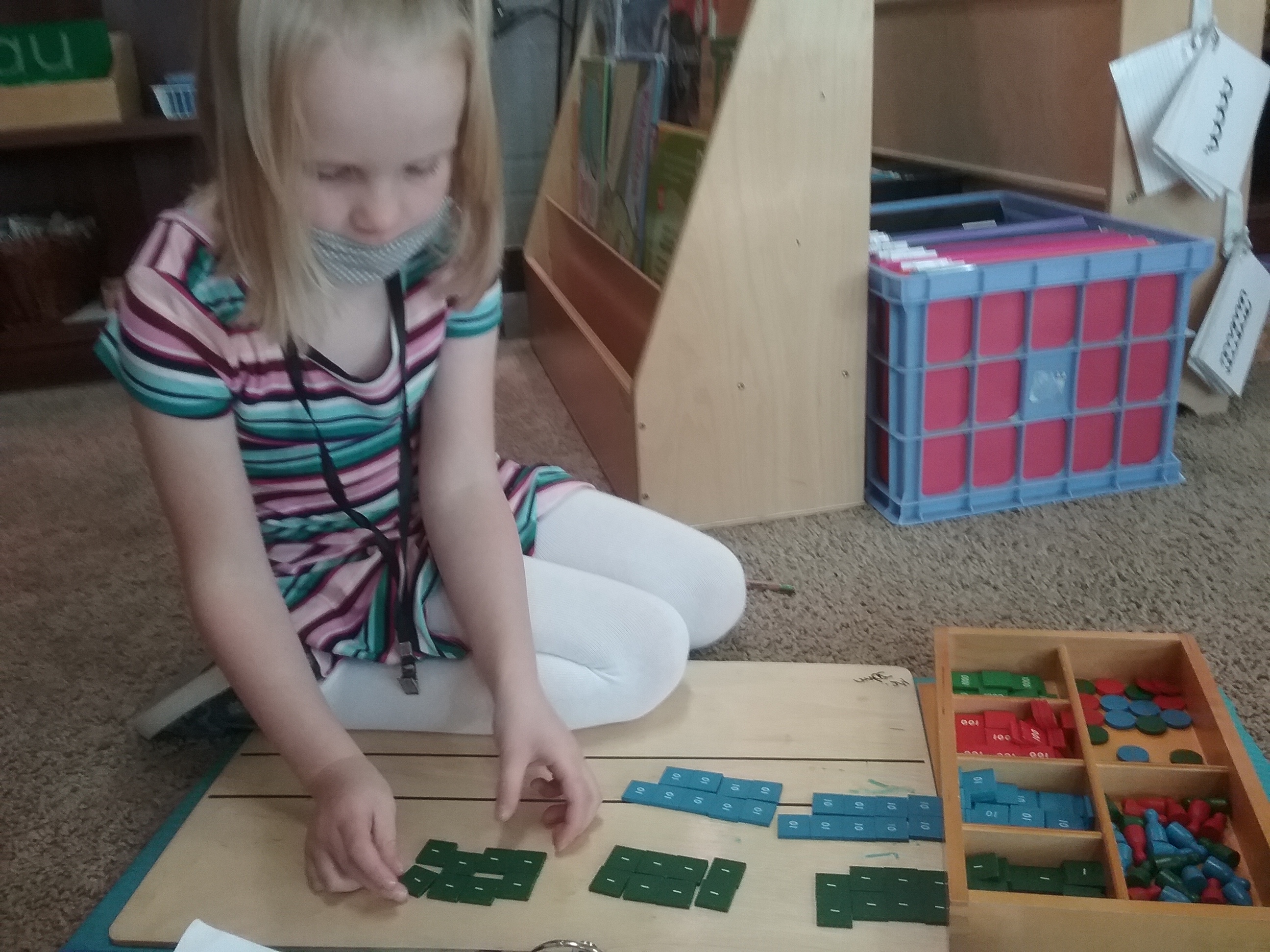
She is working on the Stamp Game which is a Math material. She is working on multiplication equations that “carry over more than once” for example (7×5).
This student is working on the Trinomial Cube. As with all Montessori sensorial materials, the Trinomial Cube has both a direct and an indirect purpose. The direct purpose of the Trinomial Cube is for the child to practice the steps to properly disassemble and build the cube, while refining dexterity and visual acuity.
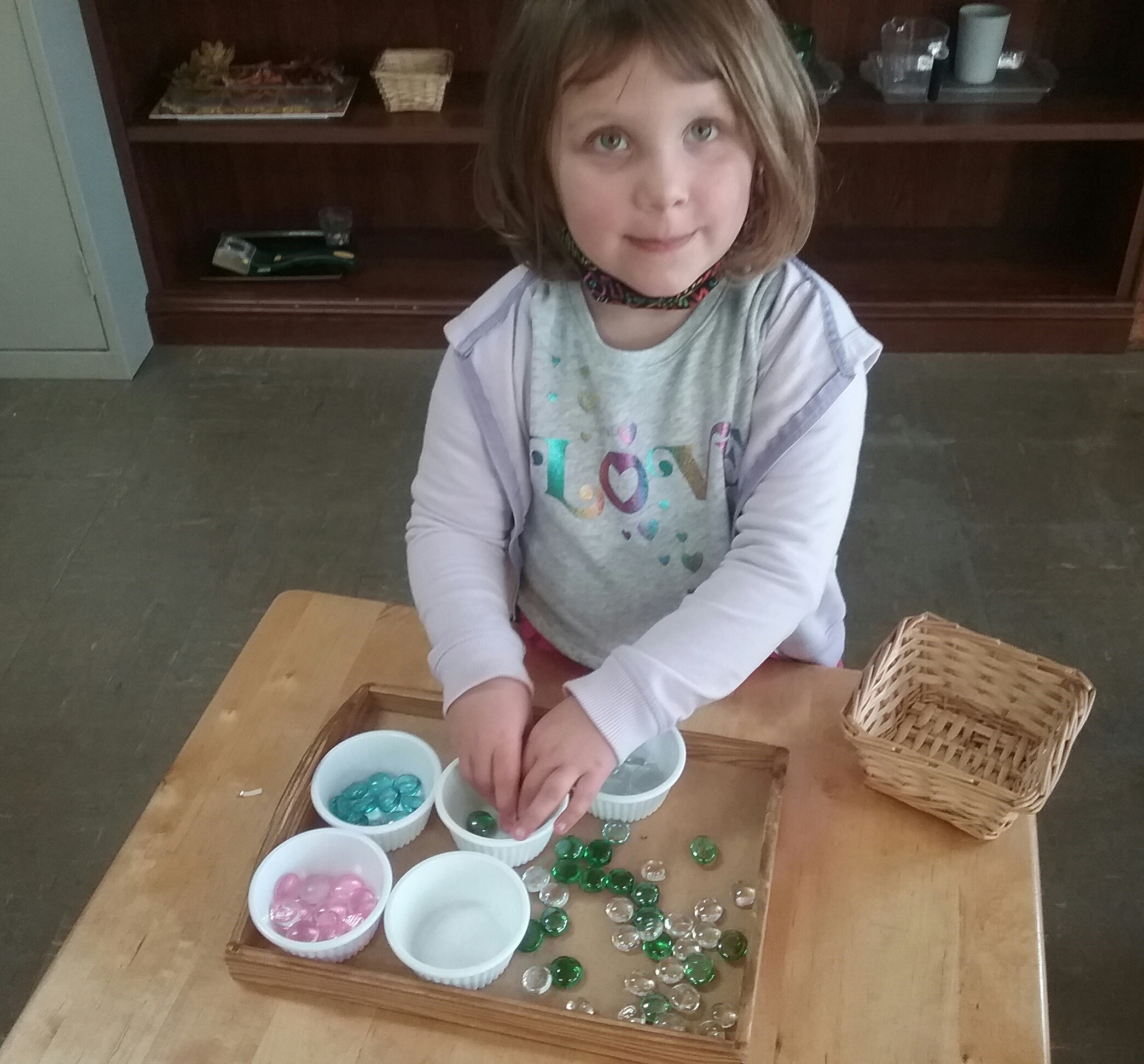
This student is working on a sorting work which can be found in the Practical Life or Sensorial area. Maria Montessori’s sensorial work uses “sorting” in specific ways that work to use all of the child’s senses, one at a time, in order to refine them. The goal is to train the brain to create more organized thoughts and ways of retrieving information.
Peek Into Next Week: Line Time- Thanksgiving
Letter Of The Week- M m
Rhyming Word Of The Week- bop
Next Language is Hebrew
**Did you noticed that the letter of the week and rhyming word of the week are Mm Bop!**
I couldn’t resist, lol
Upcoming Events: Thanksgiving Break: We are off Wednesday November 25th and returning Monday November 30.
Academic Enrichment: Weekly Theme: We learned how to multiple to the thousand static/column without carryovers with manipulatives. I told the students that multiplication is merely adding multiple times. We learned what the multiplicand and multiplier are.
Strike a pose.
Handwriting: We practiced writing sentences in cursive.
Next Week: Weekly Theme: Multiplication with manipulatives
Synonym Of The Week:
Sight Words Of The Week:
Friends, Frolic, and Fun:
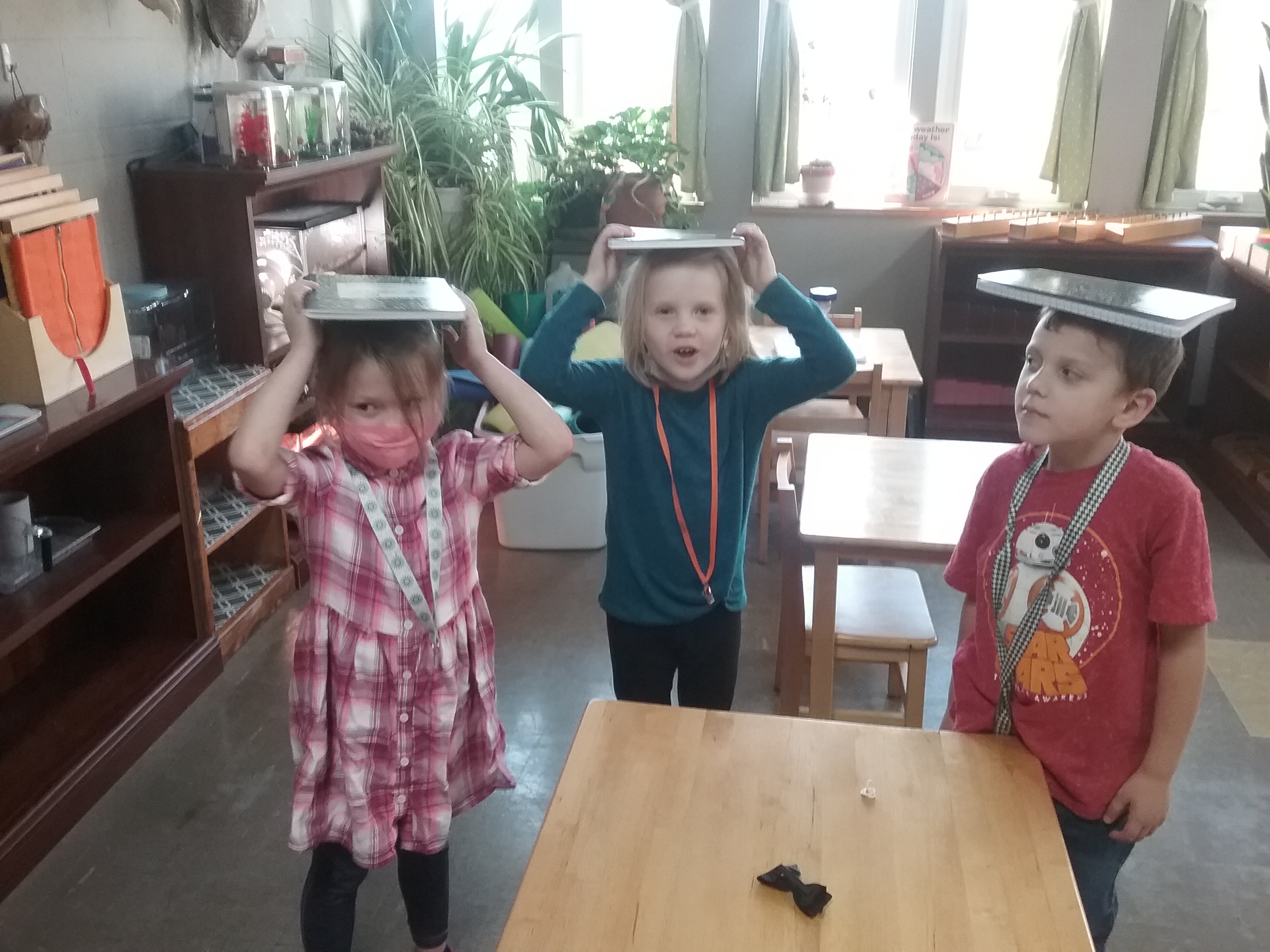
I told them they need flat heads to balance the books on their head.
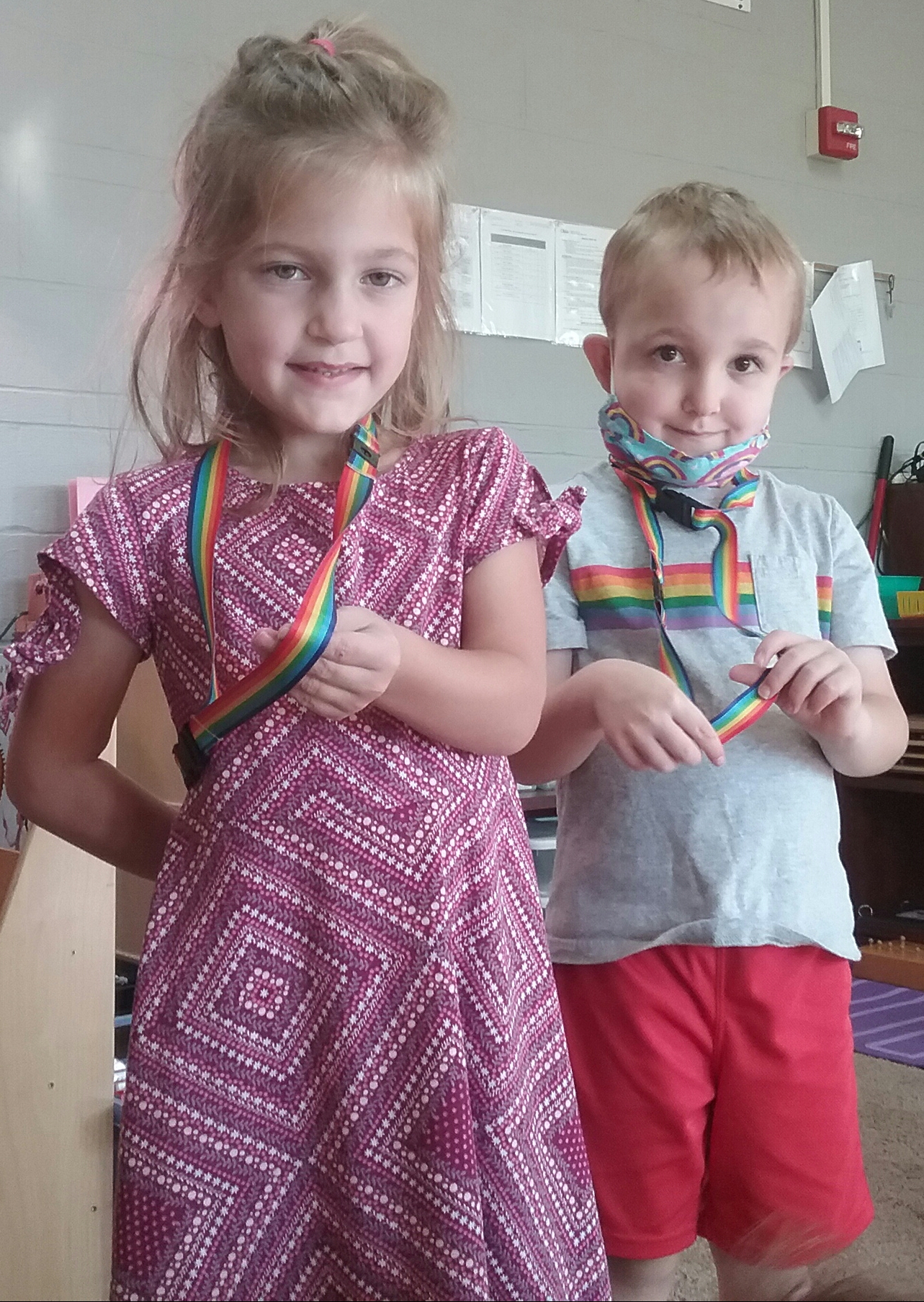
Matching lanyards
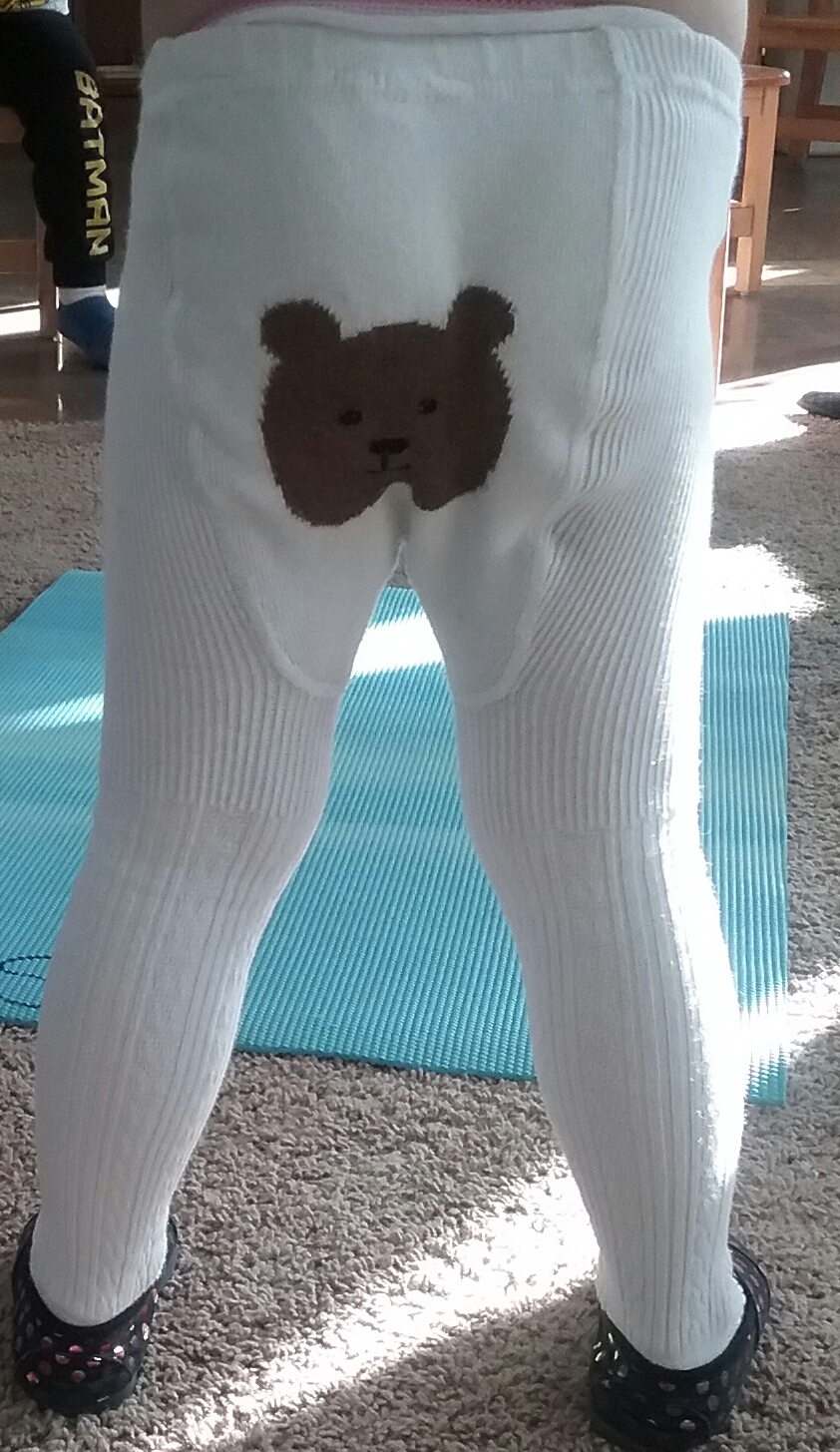
I heard “I have a bear on my butt” and this is what I see.
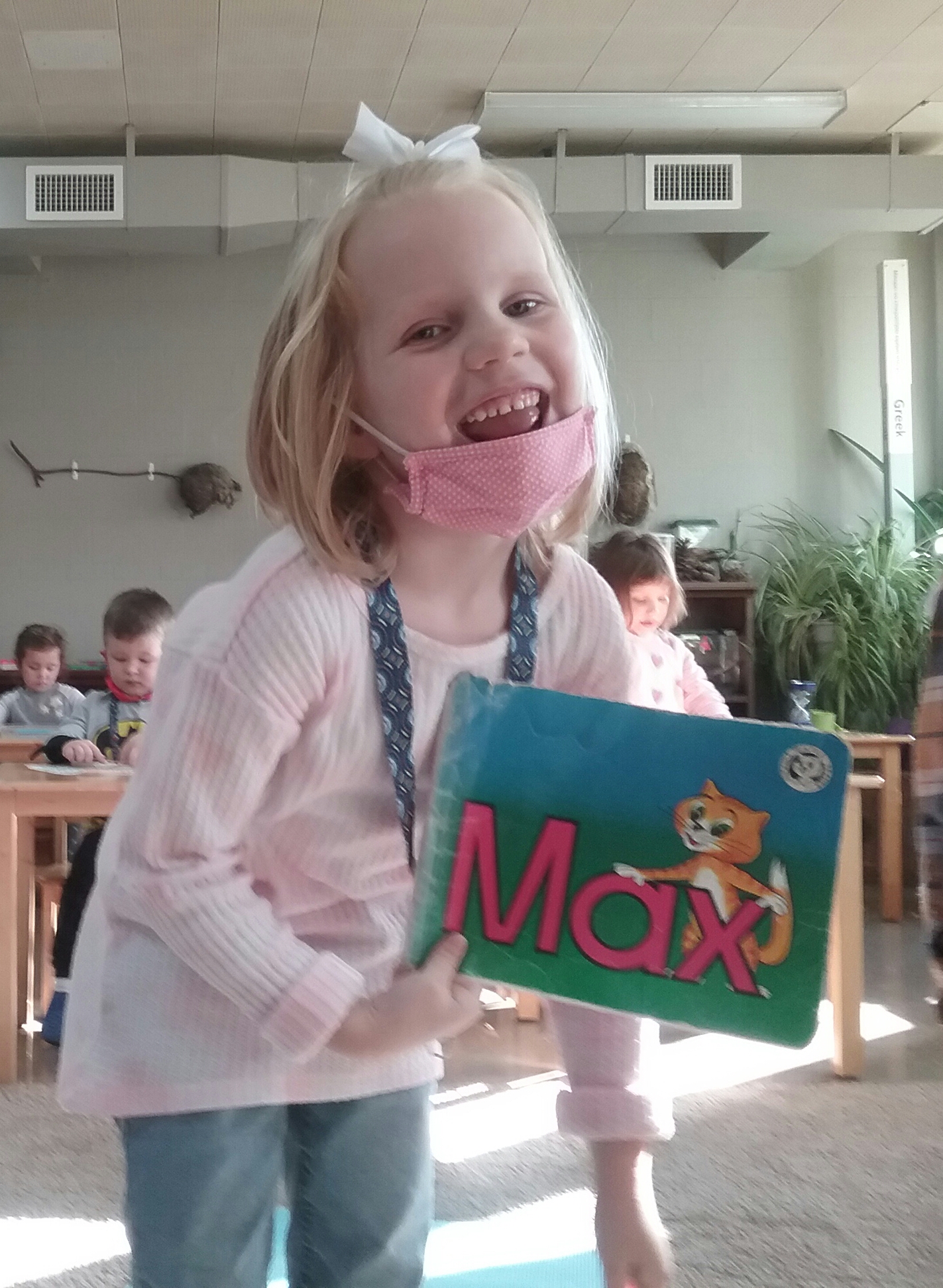
I asked her to get the book titled “Red Hen” and she comes back with this. She thought it was sooooooo funny!
Your kids Say The Darndest Things (Why I Like Cats): Follow the link to get to a child talking about cats. Maybe you do not have to follow the link, lol.
Line Time: Dinosaurs- We traveled back in time and discovered some fascinating things about certain dinosaurs. We learned that dinosaurs no longer exist and that they are extinct. We know dinosaurs exist because scientist found their bones or fossils. From these fossil we saw that some teeth were long and sharp to tear flesh from it’s prey which belonged to meat eaters or carnivores (T Rex). Some teeth were flat for grinding plants, leaves, and branches and belonged to plant eaters or herbivores (Brachiosauras).
Who remembers Dinosaurs? Not the Momma!
Did You Know: Catsup and Ketchup are two different spellings of the same condiment. These words have the same meanings and are simply alternate spellings. Therefore, both are correct. Catsup is a condiment and is the less popular spelling. Ketchup is also a condiment and is the more popular spelling, which, today, is a westernized version of a condiment first introduced to European traders in the late 17th century. Ketchupwas originally a paste made from fermented fish guts (yes, it’s come a long way).
Message From Mr. John (your children are cute):
Cultural Subjects: Your children can now count to ten in 13 languages (English, Latin, Sign Language, Spanish, German, French, Greek, Japanese, Arabic with the Lebanese dialect, Italian, Russian, Romanian, Swedish).
Know Your Languages (Tagalog):
Peek In The Classroom:
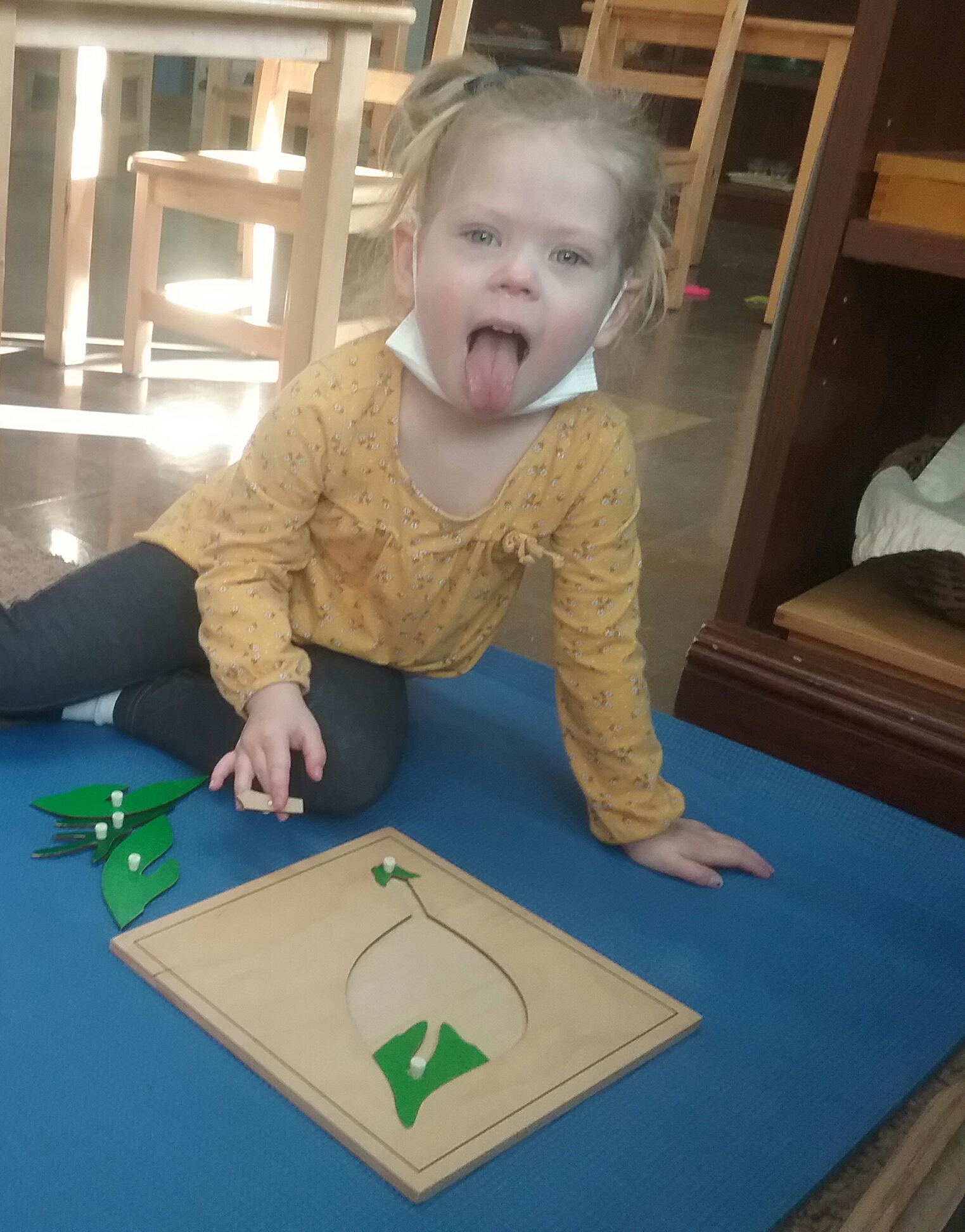
This student is working on the Leaf Puzzle. The purpose of Montessori Botany puzzle is to increase their power of observation and knowledge in nature, also illustrates the component parts of a plant. It helps the child to learn basic anatomy of a leaf. Its wooden knob on each component of the leaf puzzle makes it easy to hold and can be used with many activities such as tracing or matching with cards. The knobs also strengthen her pinscher grip/fine motor skills.
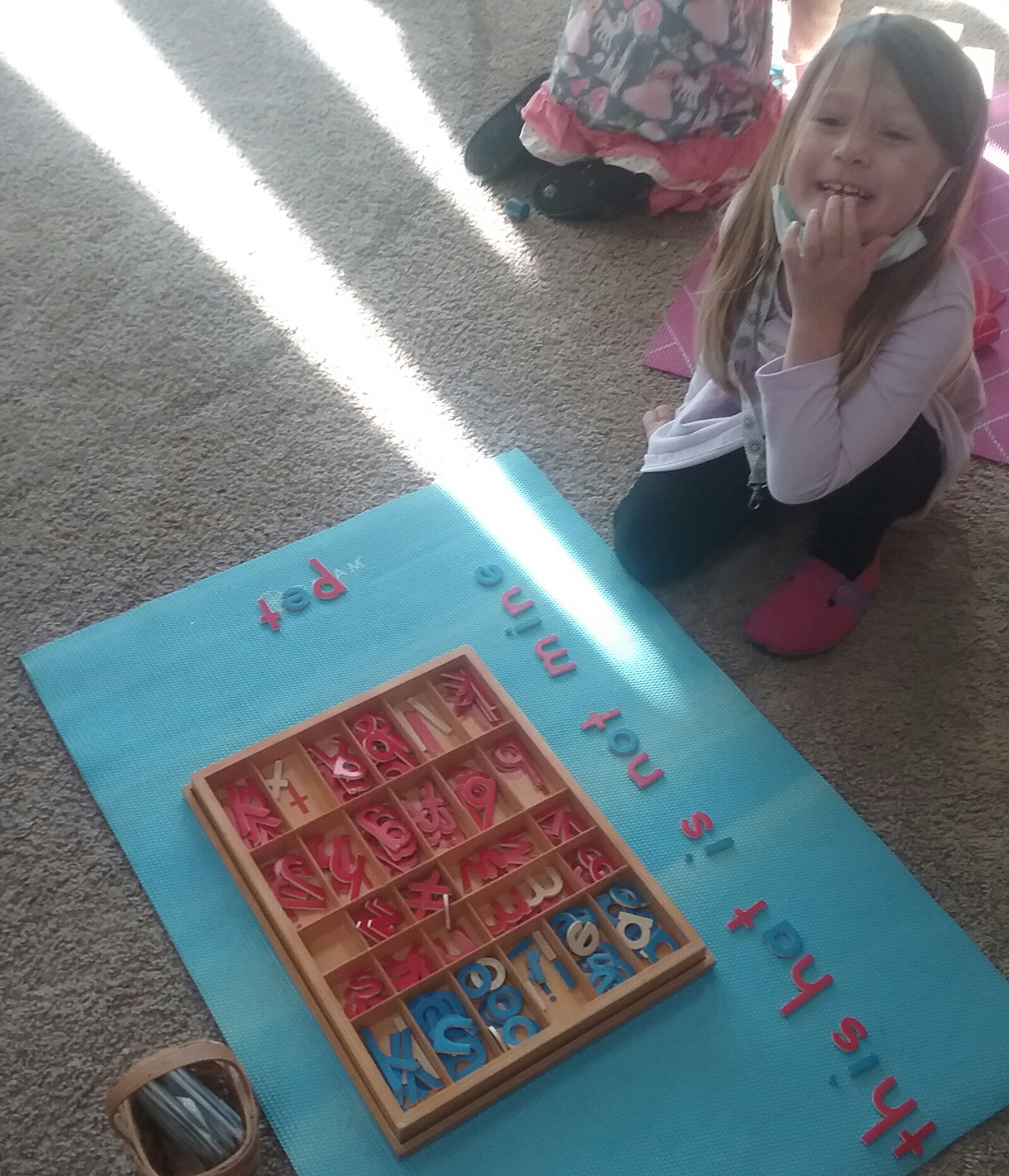
She is working on the Movable Alphabet. The key purpose of the Moveable Alphabet is to prepare children for writing, reading, and spelling. The child’s use of the material progresses from single words, to phrases, and eventually to stories. In this way, the Moveable Alphabet teaches children how to symbolize their own thoughts, and begin to write creatively.
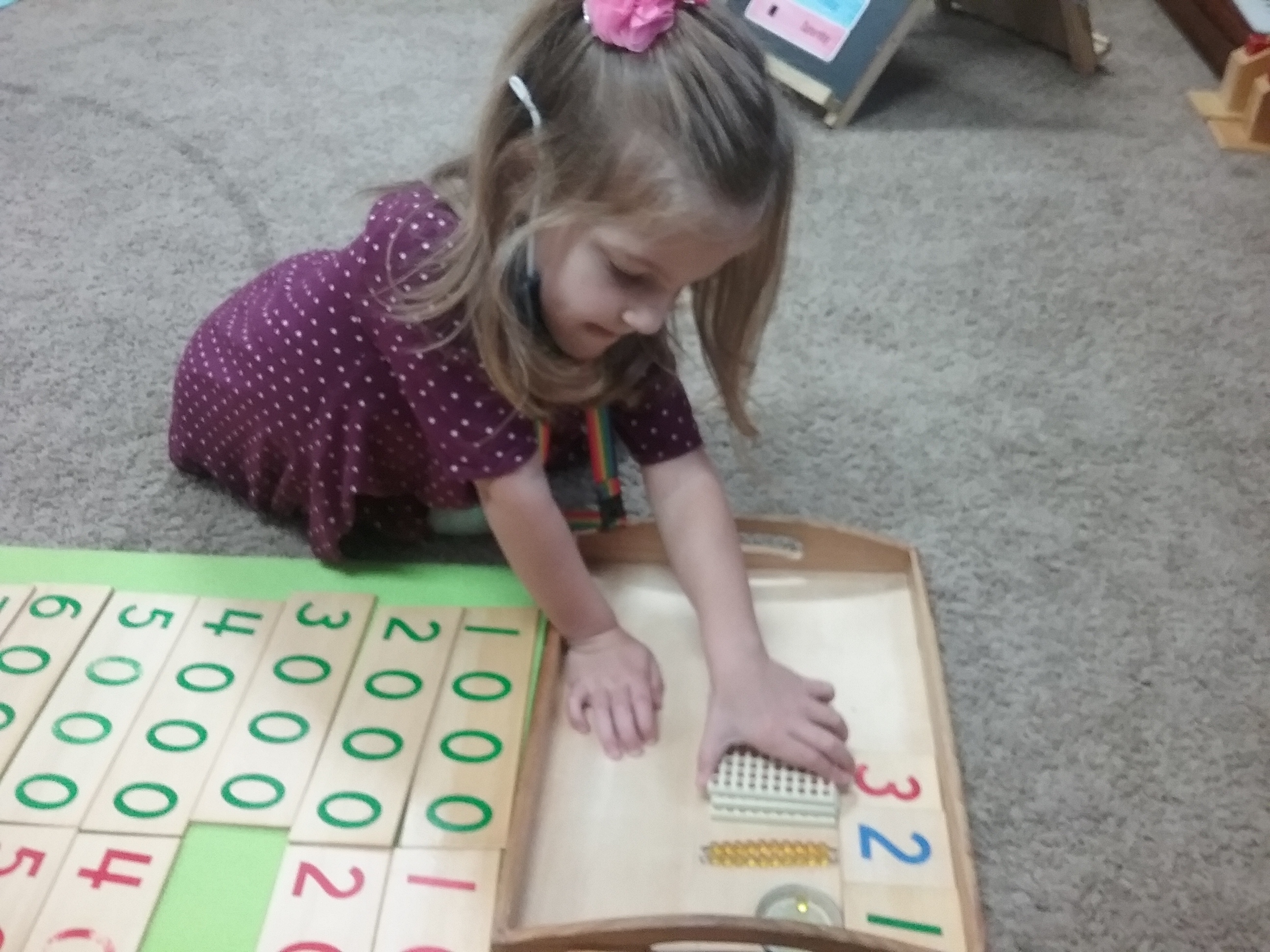
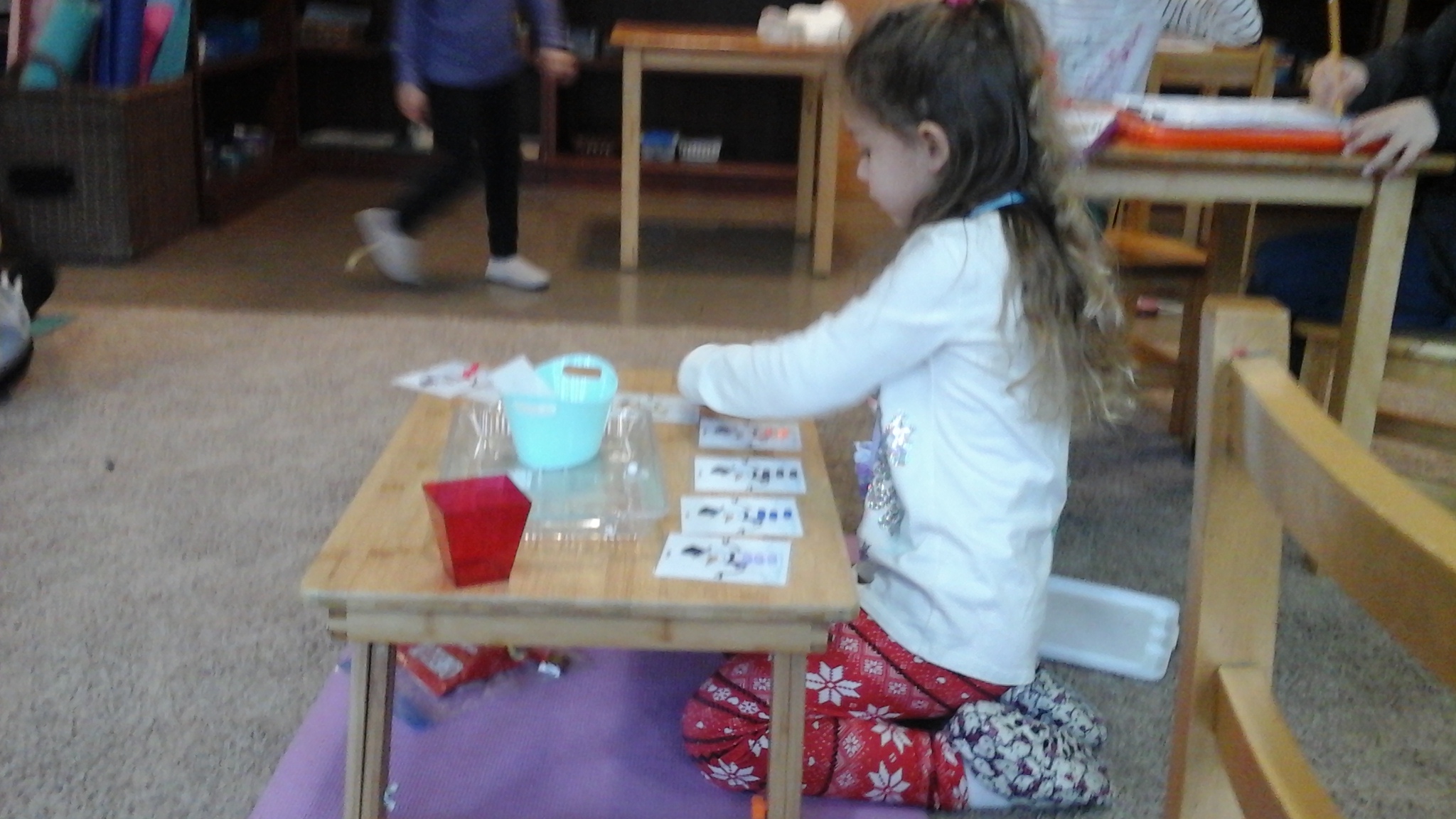
This student is working on the Nine Tray and composing numbers. She will learn to compose numbers from 1 to 9,999. This, yet again, supports the correlation between the quantity and symbol of numbers.
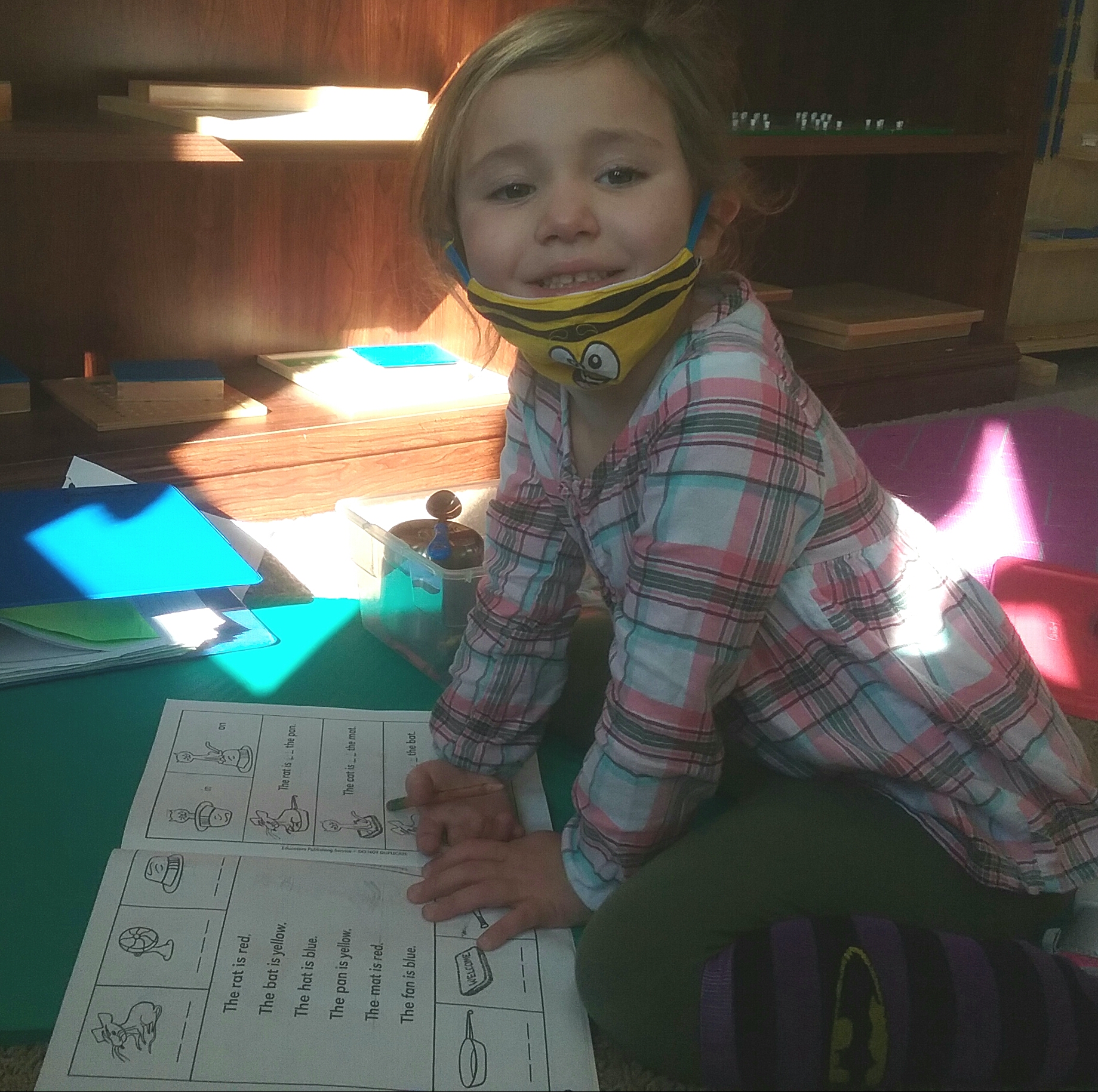
This girl is working on her phonics work book to support her reading and understanding of pronunciation of words.
Peek Into Next Week: Line Time- Pilgrims, Thanksgiving
Letter Of The Week- M m
Rhyming Word Of The Week- bop
Next Language is Tagalog
Academic Enrichment:
One uncooperative kindergarten student. Wouldn’t this be a great album cover?
Weekly Theme: This week the kindergarten students did addition with carry overs (dynamic)/carry overs in multiple columns/with empty columns using the manipulatives of the Golden Beads and Stamp Game.
Handwriting: We practiced writing full sentences in cursive.
Next Week: Weekly Theme: Multiplication with Golden Beads
Synonym Of The Week: SMALL, tiny, miniature, minute, little, petite
Sight Words Of The Week:been down
Upcoming Events: Thanksgiving Break: We are off Wednesday November 25th and returning Monday November 30.
Friends, Frolic, and Fun:
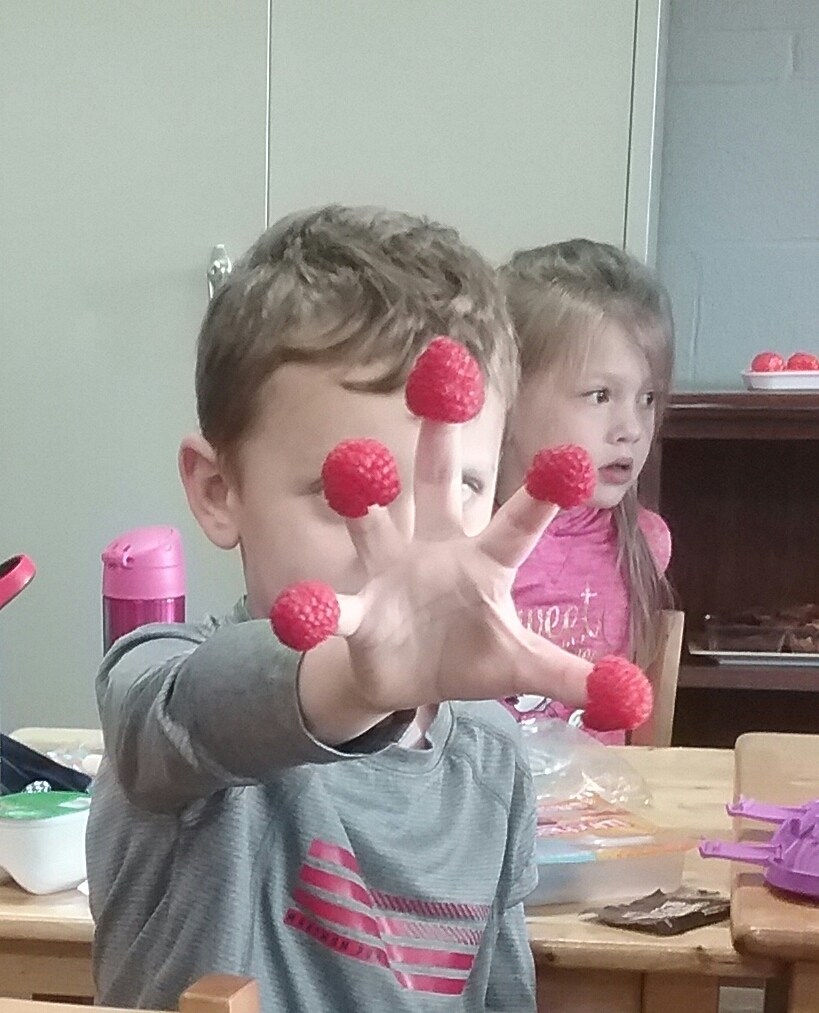
The mysterious medical condition of Raspberry Fingers.
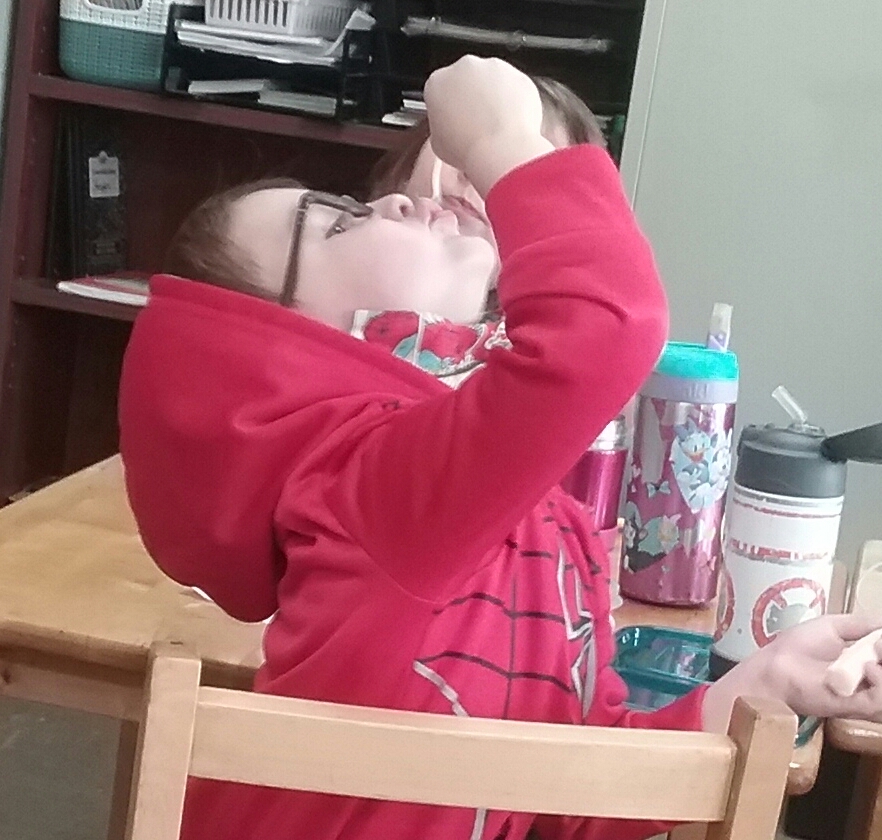
Eating cheese like a champ!
Sing of the times. A student helping take temperatures.

 i
i