This week our class was getting ready for our field trip to the Art Museum . We had fun learning about different artists,such as Vincent Van Gough, Andy Warhol, Monet, Picasso, and Jean Michel Basquiat. The children learned about their art work,the meaning behind them, how the artists lived and where you can find their paintings. Ms. Ame had fun doing different crafts with them and showing videos.
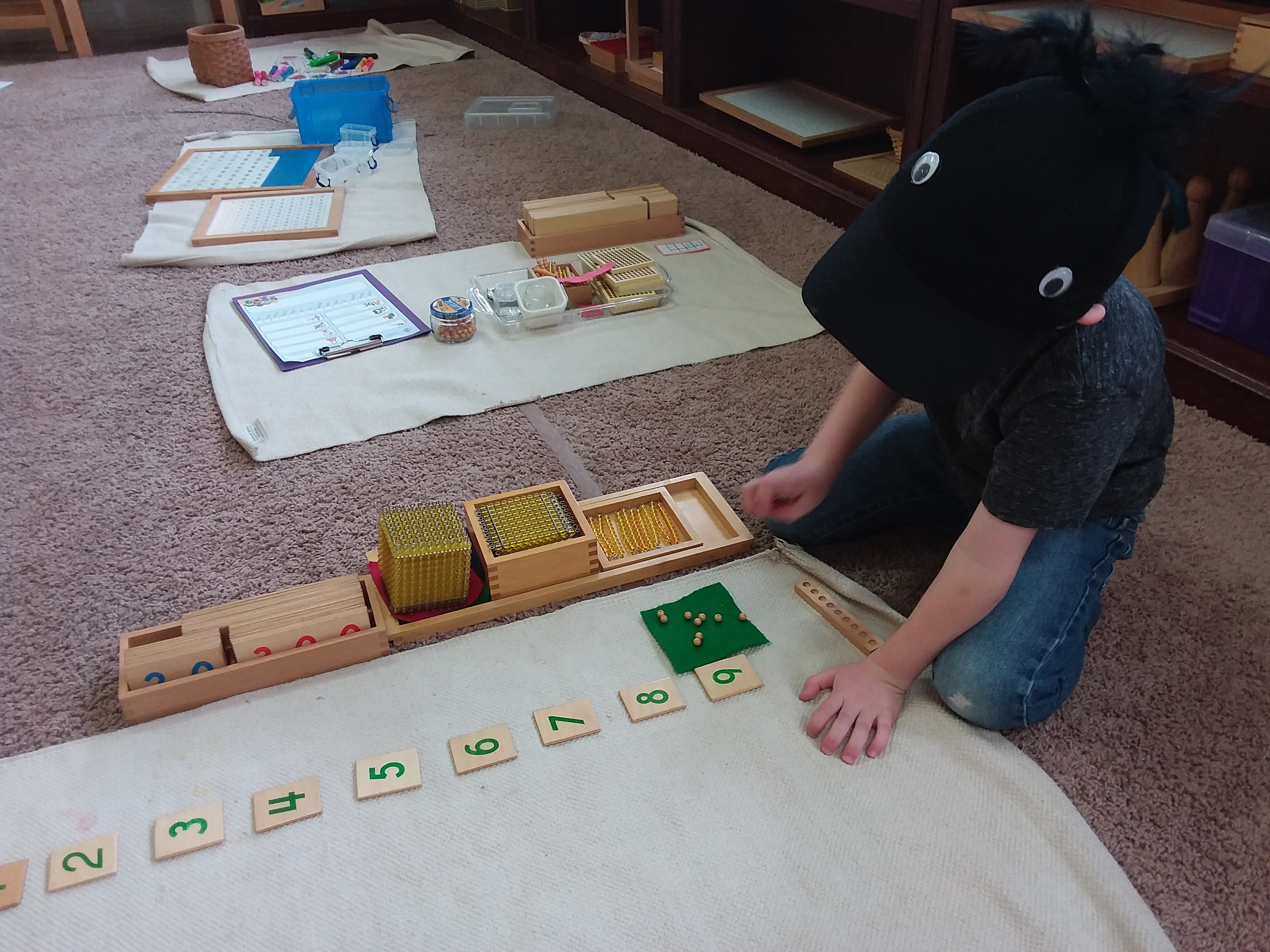
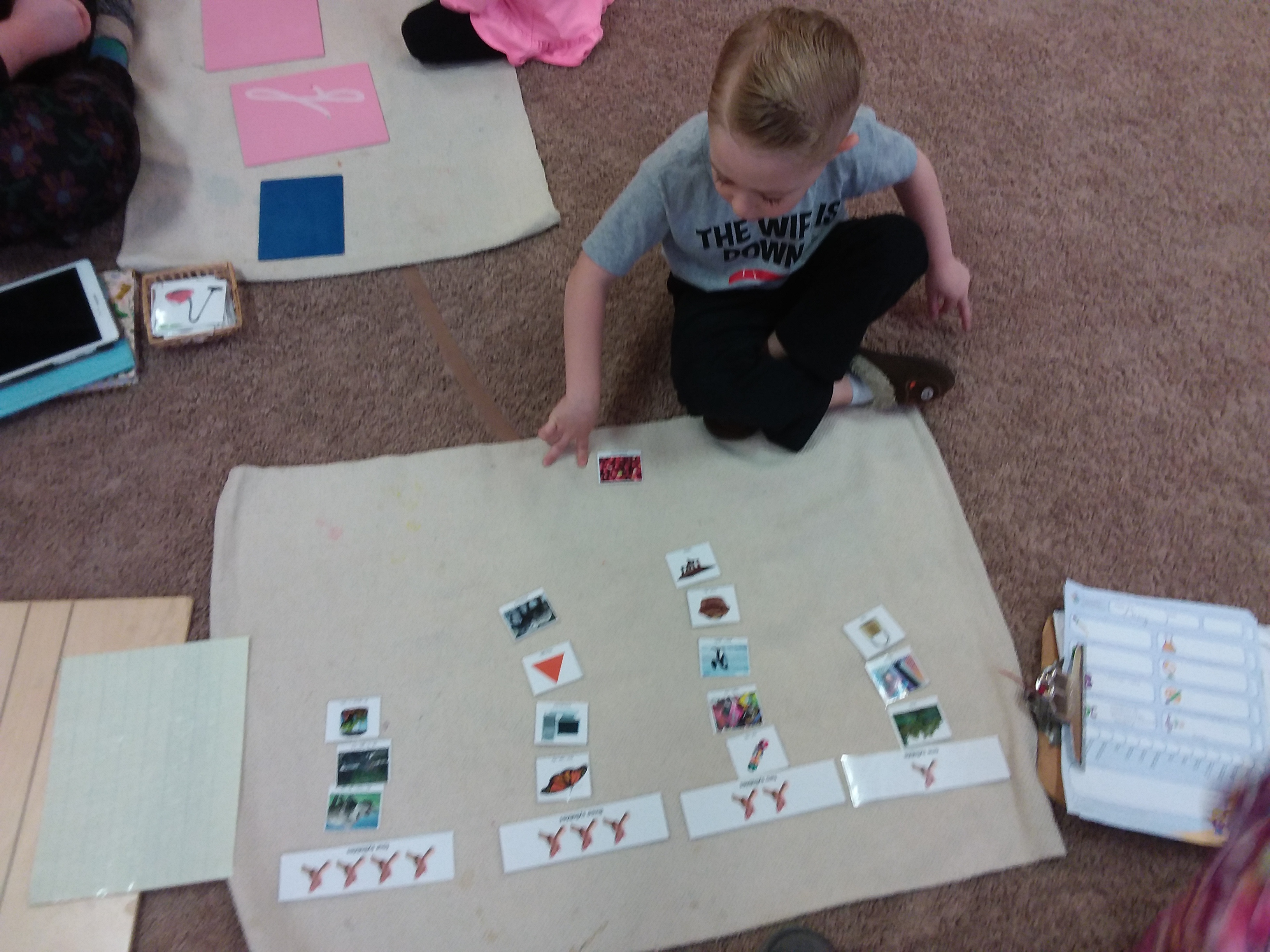
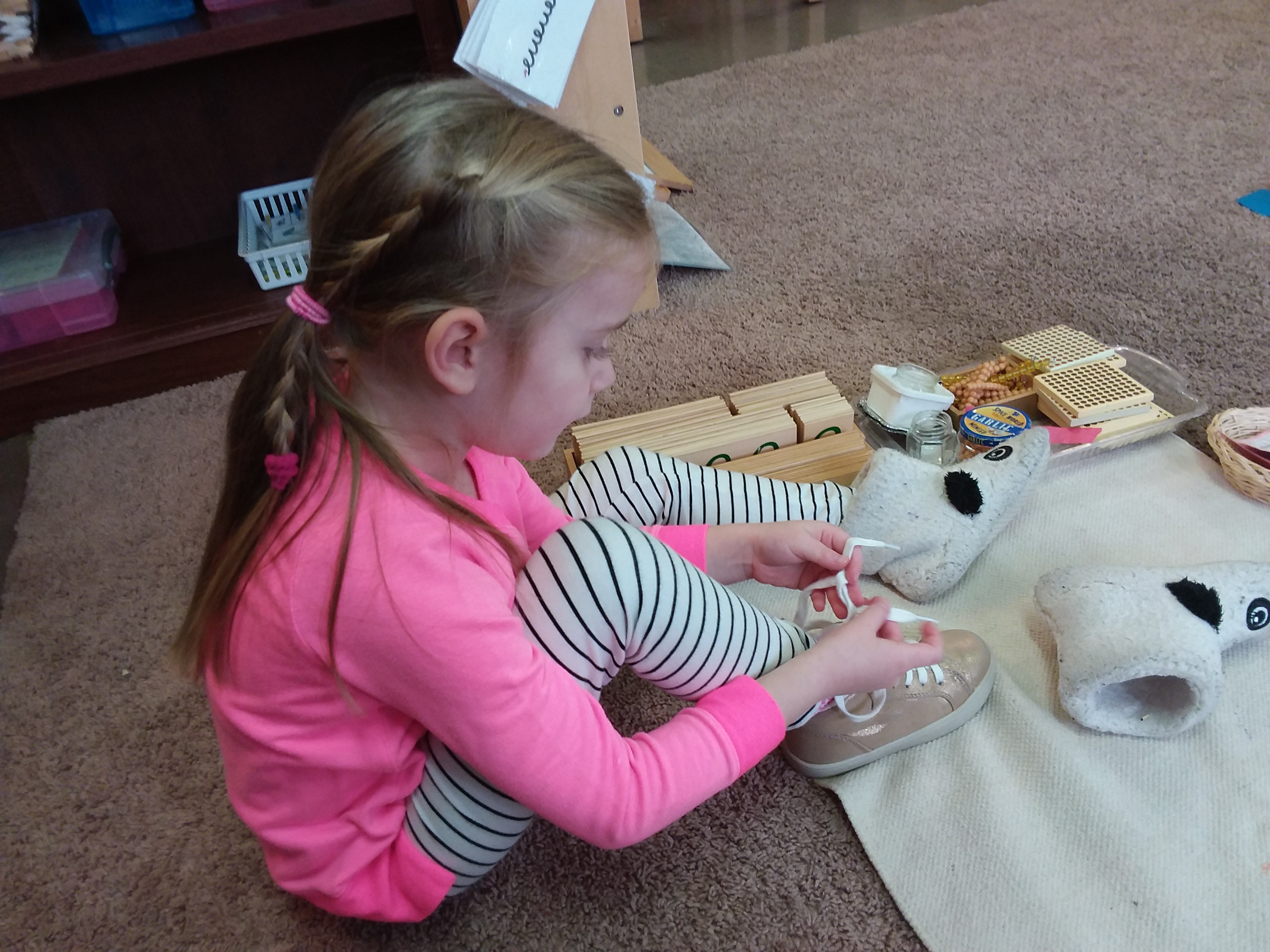
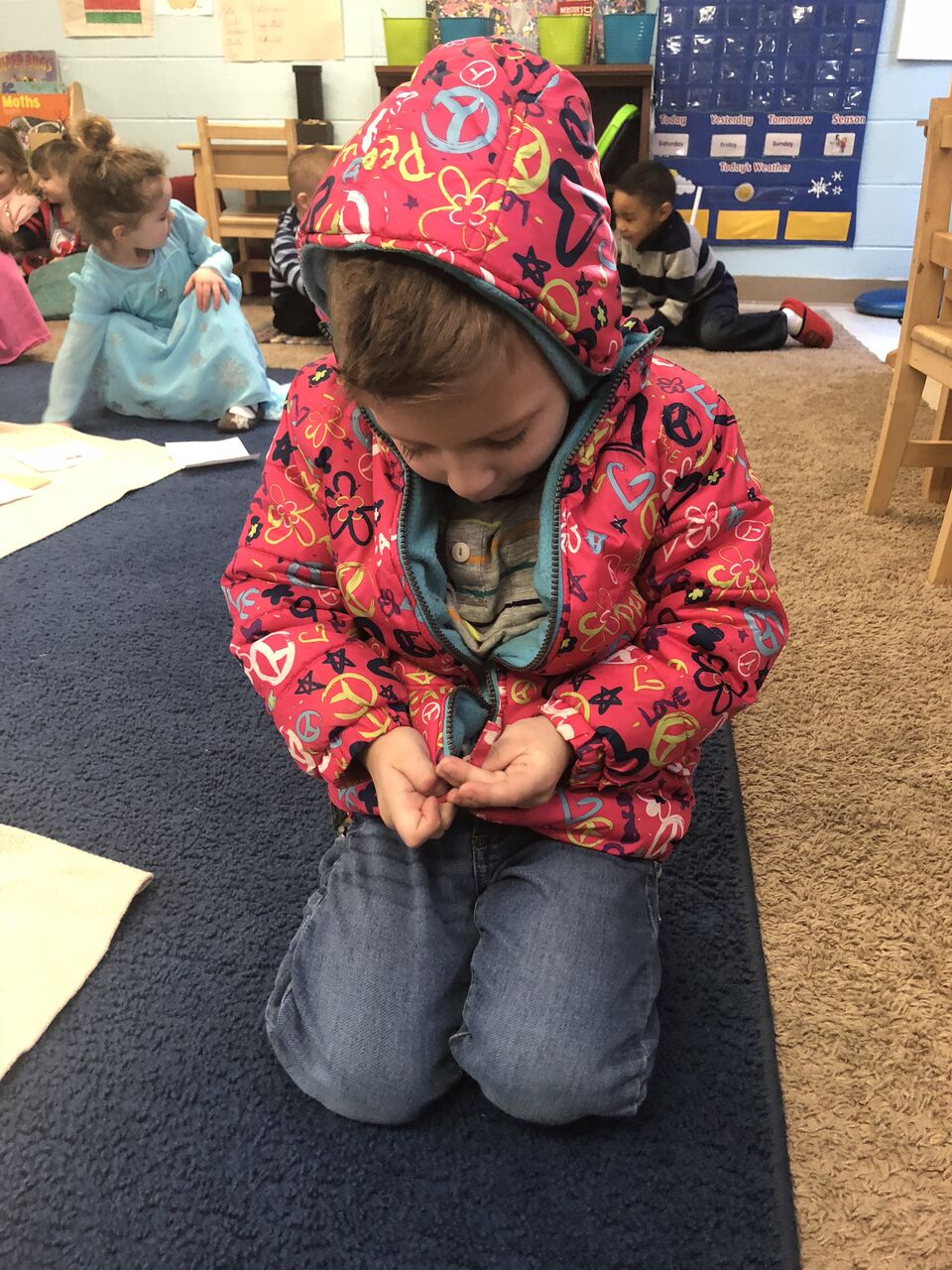
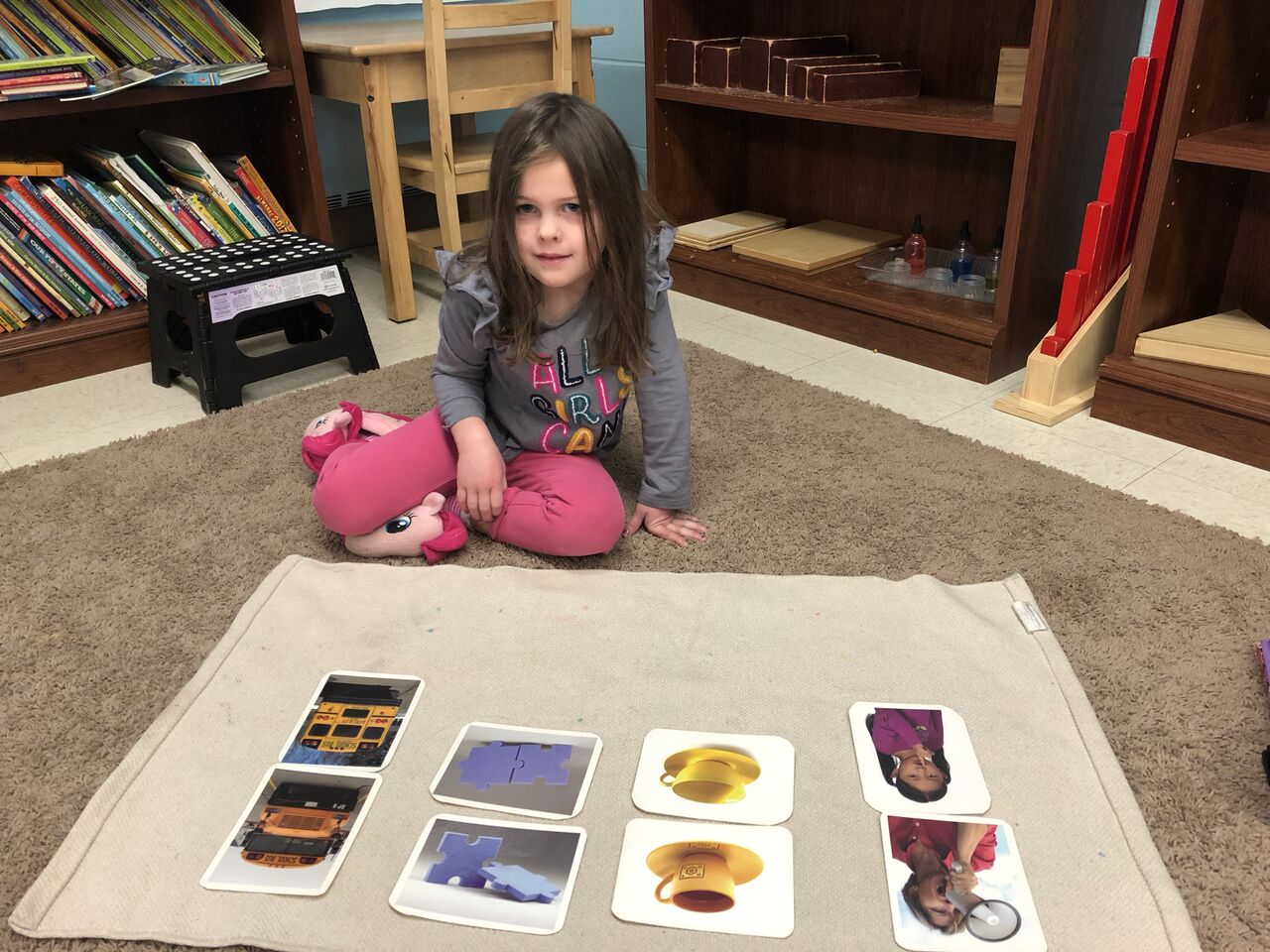
One of our newer friends is working on our What does not belong work. The purpose of this is to prepare a child for reading. The child must be able to focus and hold interest. A child will also work on critical thinking, which helps reading comprehension.The nine layouts purpose is to help the child become familiar with the quantities and hierarchies of the decimal system .Our friend here is working on our syllable work. Syllable awareness is one component of phonological awareness. Students gain the ability to hear phonemes that comprise words and explore speech sounds as syllables.Today our friend mastered tying her shoes!!! Tying shoes is placed in our practical life area. This teaches her life skills, focus and concentration, fine motor skills, and builds their confidence.
Take A Peek Into Next Week:
Next week is all about Spring. They will learn all about what happens in spring, the different life cycles that happen during this time, the weather, flowers, and much much more!
This week was all about our five senses. Together we learned about each sense through a variety of fun books, games, and crafts that teach us about our senses. The kids had a blast!! Some fun things you can do at home is have a taste test blindfolded:) Go on a nature walk and draw all the things you see, place objects in a pillow case and have your child ( blindfolded) reach into the bag and guess what each object is. Have fun!!
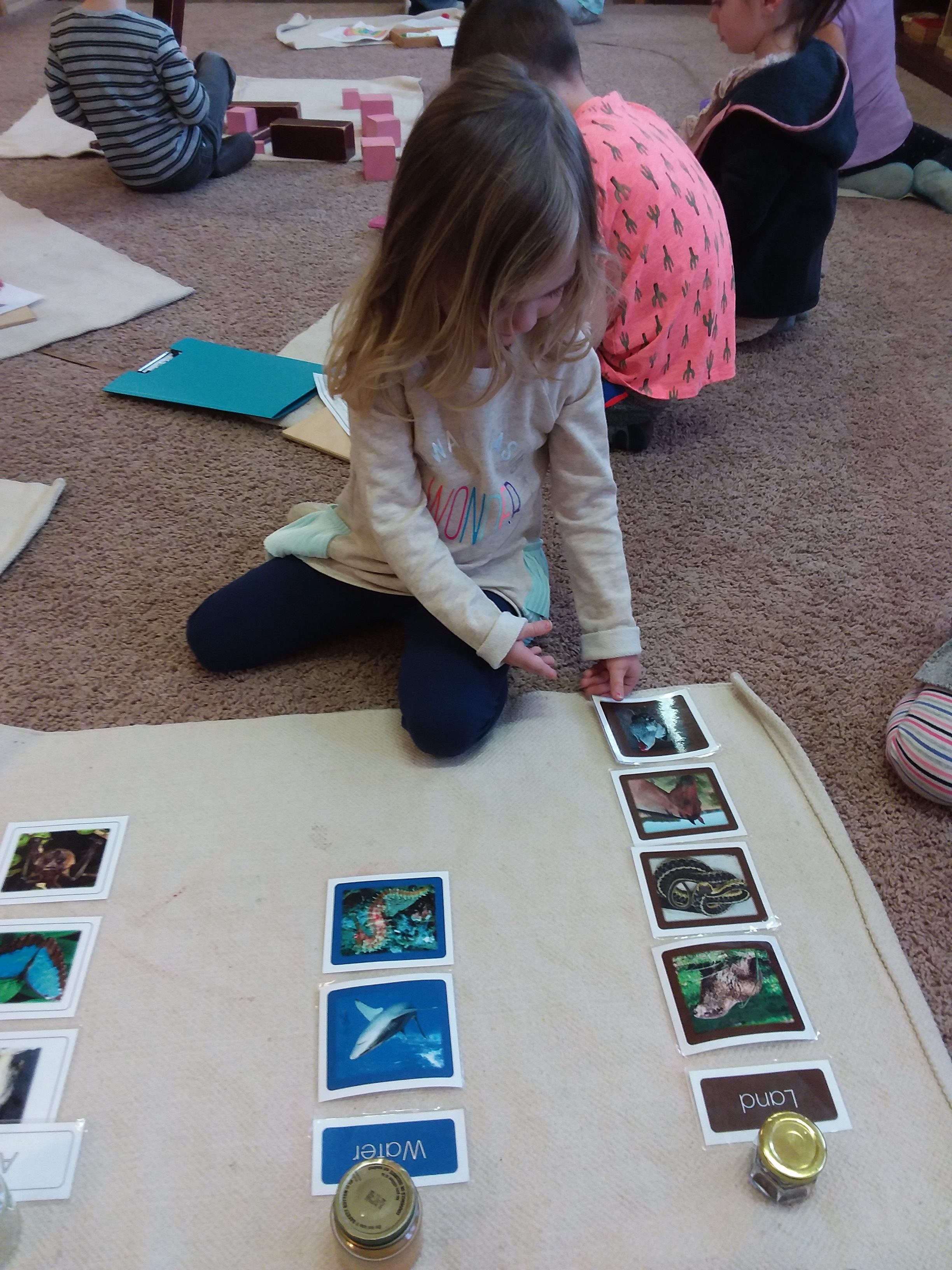
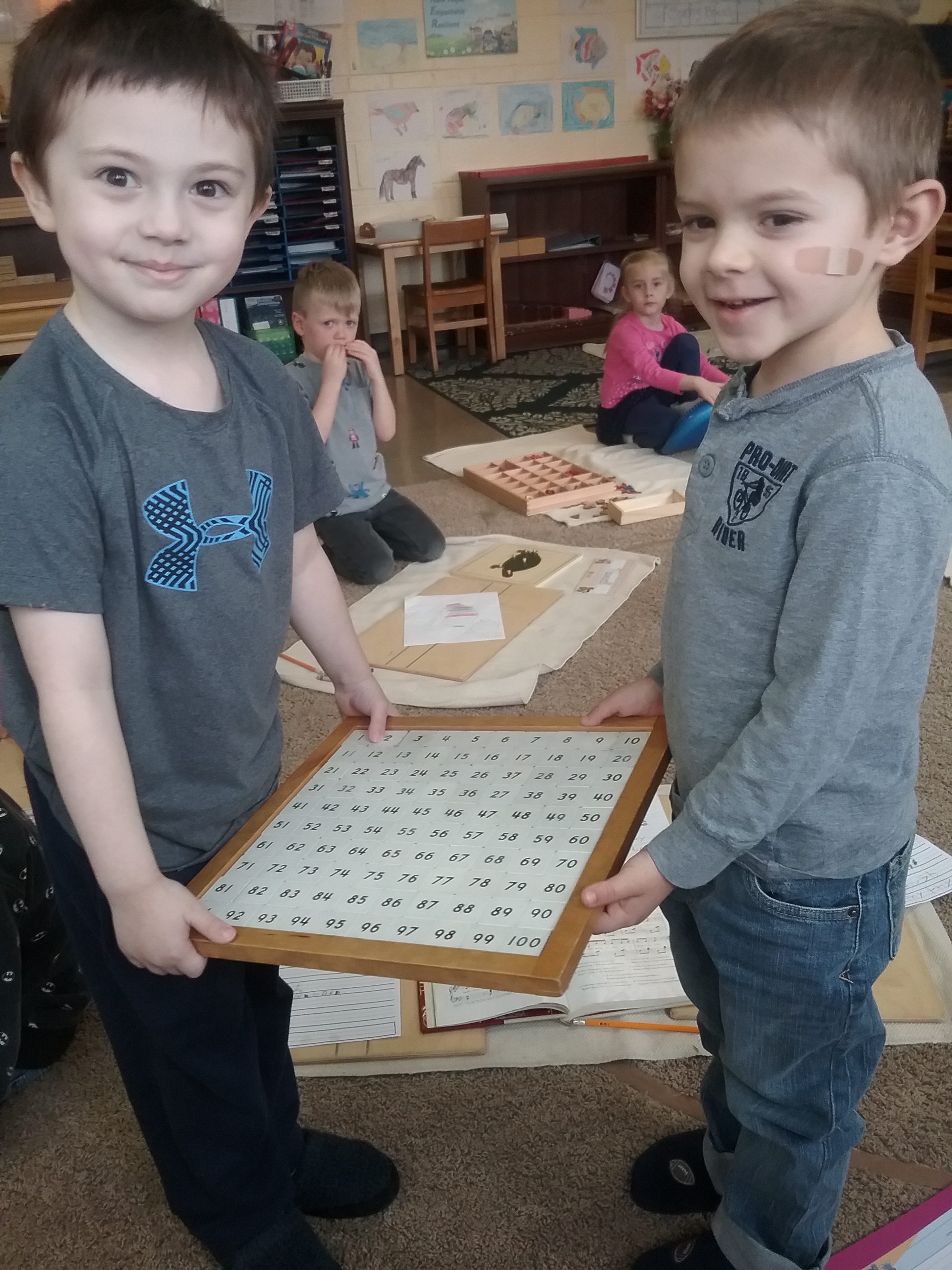
Our friend is working on our Land, Water, and Air work. The purpose of this work is for the children to get a better understanding of grouping items,and categorizing, and also animal identification.This week I introduced sewing in our practical life area. Sewing develops and matures their finger dexterity and fine motor skills, builds self confidence, learns patients, and gives them a creative outlet for meeting and gathering friends.The purpose of the one hundred board is to consolidate the child’s understanding of written numerals from 1 to 100.Our two friends are working on our phonics folder 1 together 🙂Our friends decorating the boxes for our school’s book drive!
Take A Peek Into Next Week:
Next week is all about art appreciation. Next week is also our field trip to the Akron Art Museum! Together we will learn the history of the different famous artists, create our own masterpieces, read amazing books, and admire the different paintings and sculptures.
This week we started our journey into the wonderful world of grammar. This week we started off learning what the vowels ( a, e, i, o, u) and consonants (the rest of the letters) are.
Cultural Subjects:
We can now count to ten in 26 different languages (English, Sign Language, Latin, Spanish, German, French, Greek, Japanese, Arabic with the Lebanese Dialect, Italian, Russian, Romanian, Swedish, Tagolog, Hebrew, Korean, Hungarian, Irish, Kiswahili, Welsh, Dutch/Flemmish, Polish, Serbo-Croation, Cebuano, Malay, and Hindi).
The month started off by going back in time and studying the Ancient Romans. The Ancient Romans had similar Gods as the Ancient Greeks. The king of all Gods in Rome was Jupiter and his wife Juno who was the Goddess of Marriage and childbirth. Pluto was the God of the Underworld, Neptune was the God of the Seas, and finally we came across the God of War, Mars. Did you notice that a lot of these Gods had planets named after them?
Cultural Subjects:
Your children can count to ten in 25 different languages (English, Latin, Sign Language, Spanish, French, German, Greek, Japanese, Arabic with the Lebanese dialect, Italian, Russian, Romanian, Swedish, Tagolog, Hebrew, Korean, Hungarian, Irish, Kiswahili, Welsh, Dutch/Flemmish, Polish, Serbo Croation, and Cebuano).
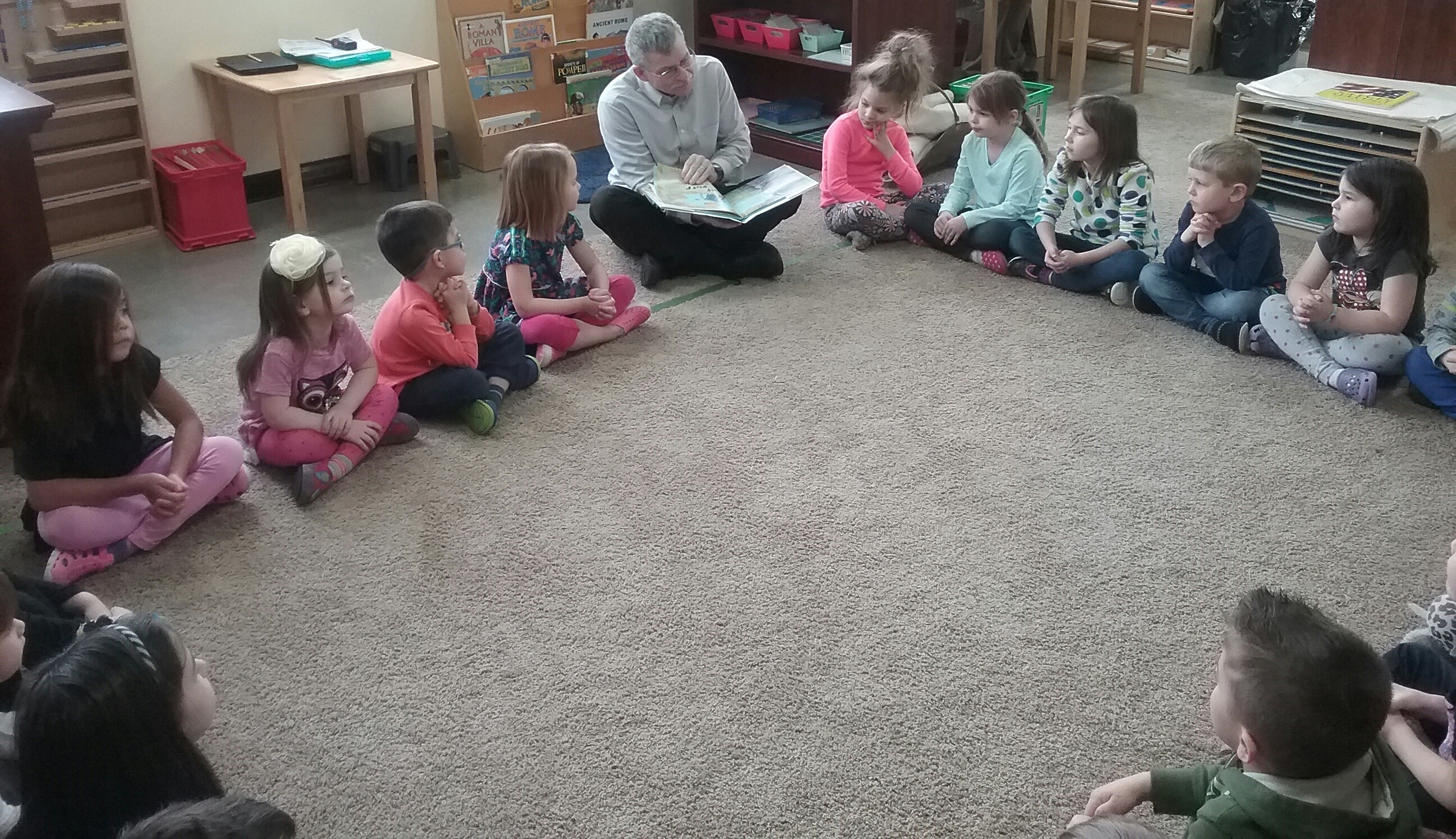
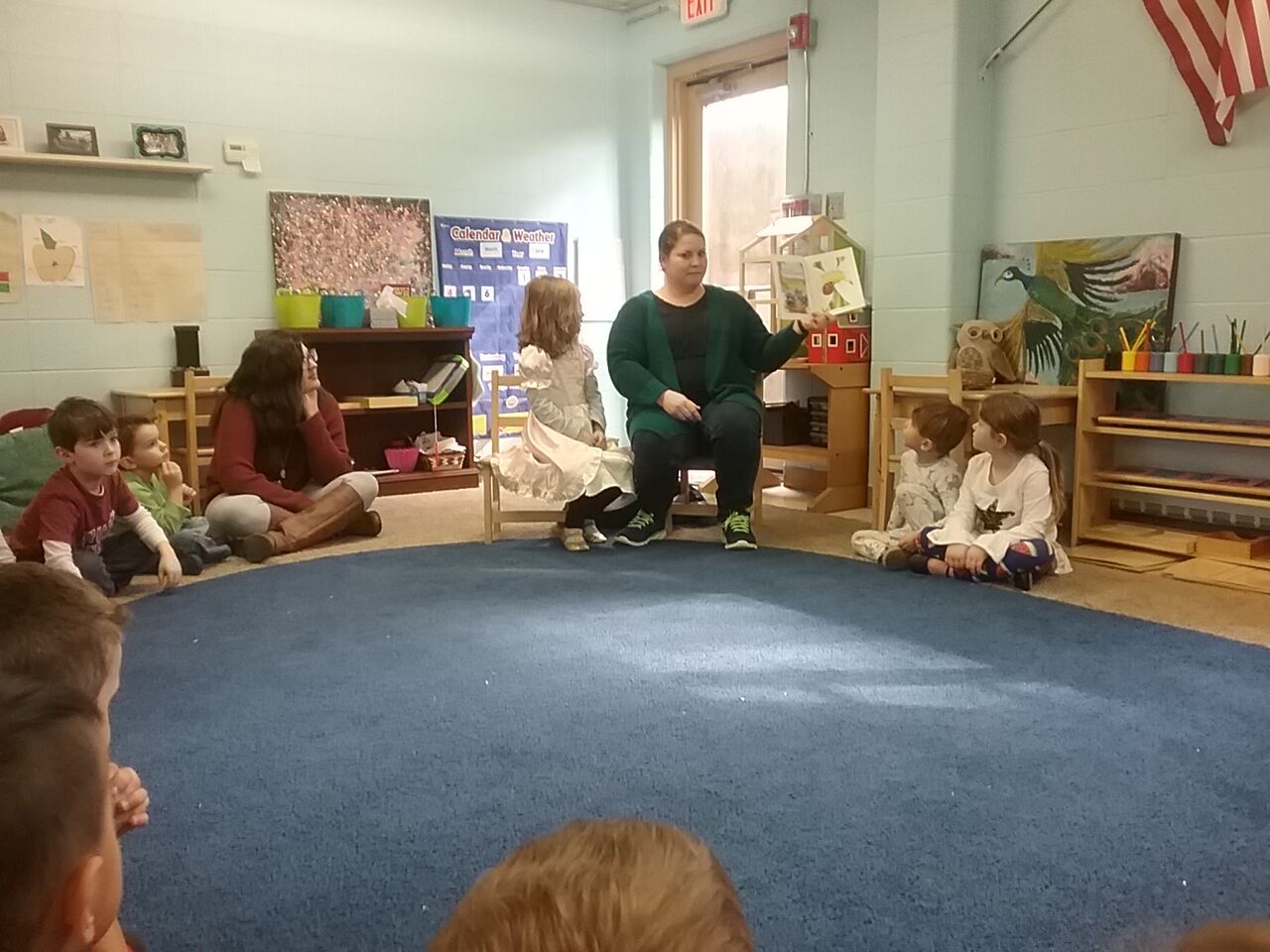
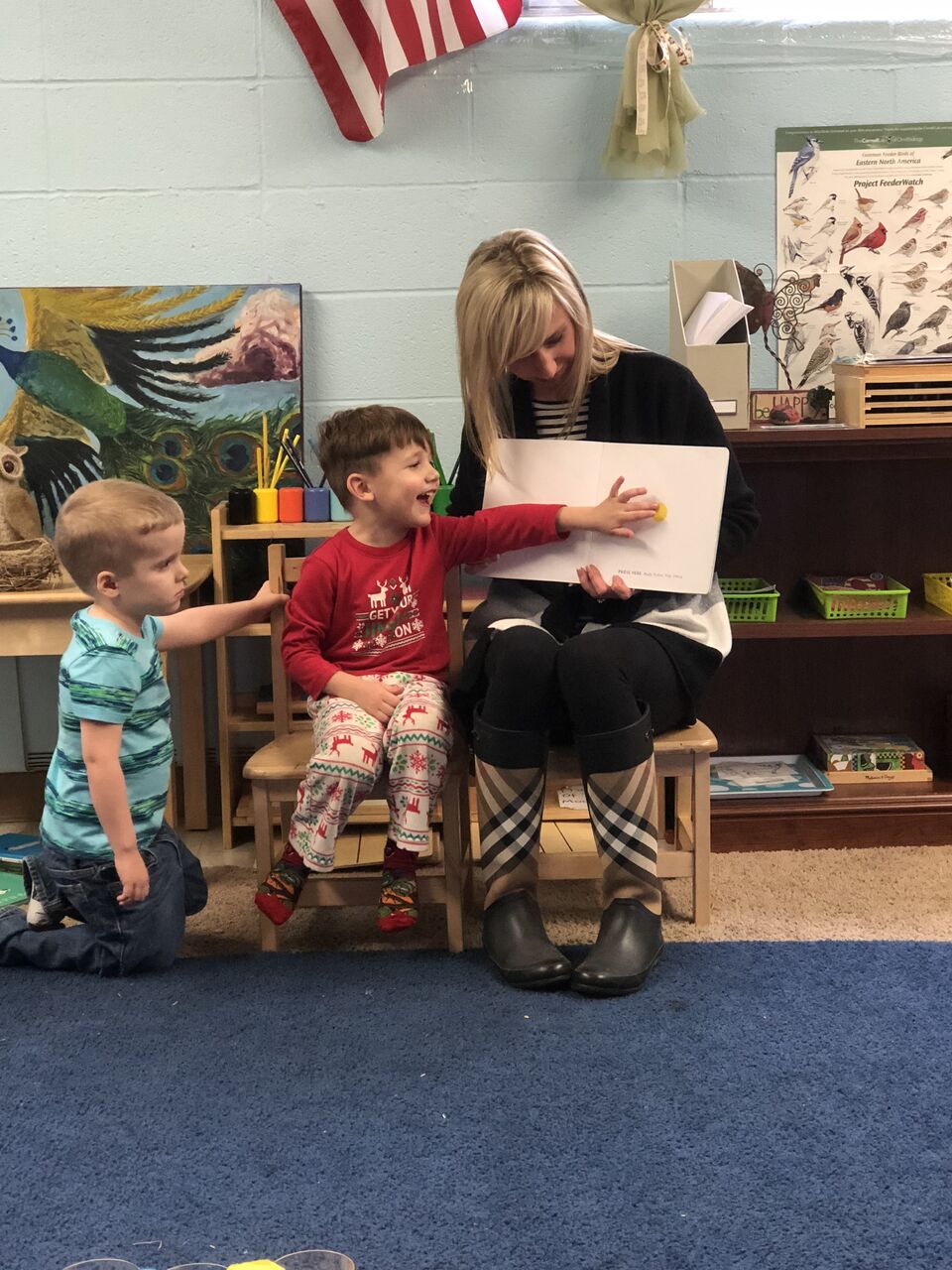
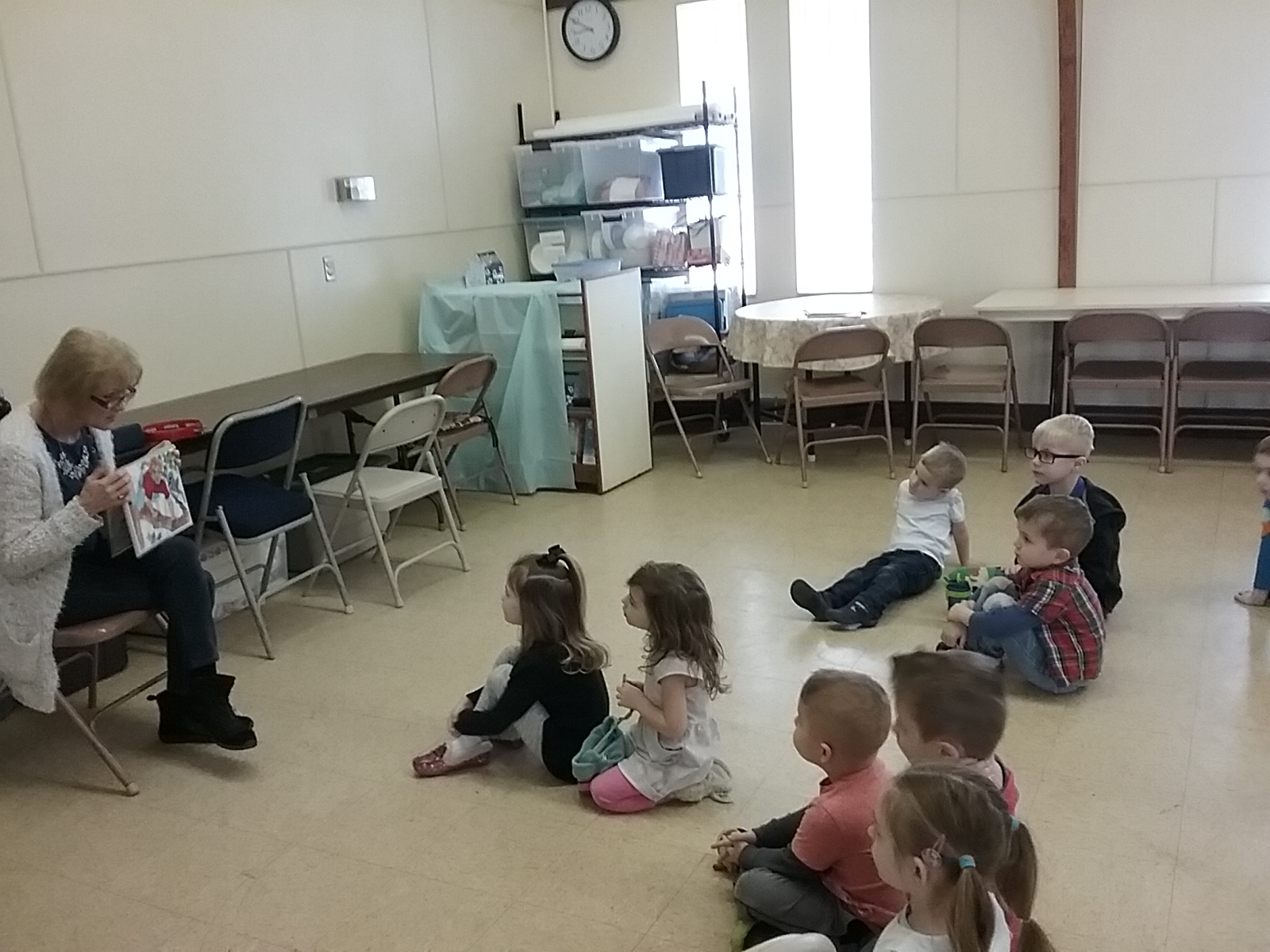
Pastor Kirk reading a story that is a spin off/reboot of the Three Little Pigs.
Peek Into The Classroom:
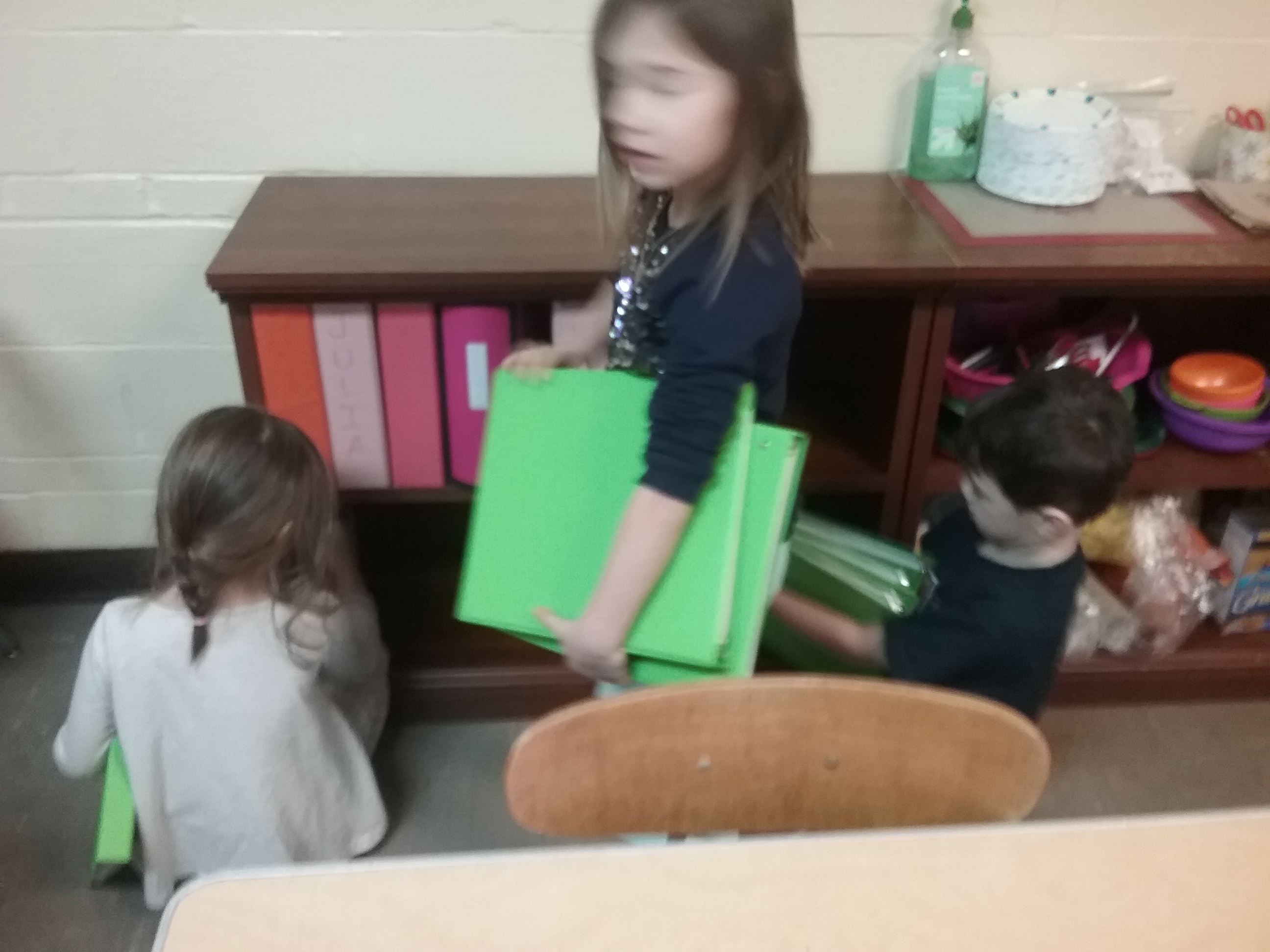
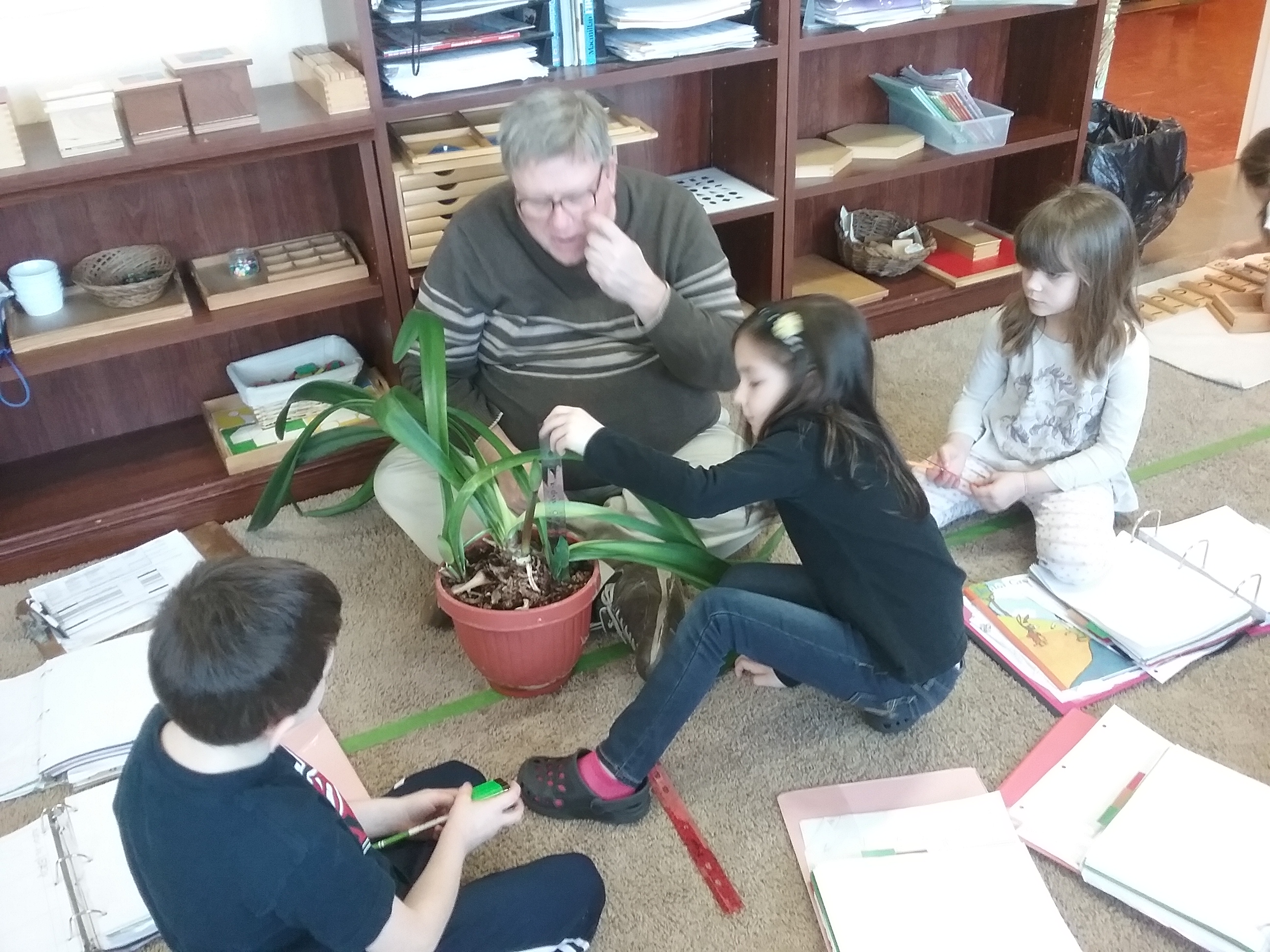
The Kindergarten Students received a shelf exclusively for their use. This picture depicts kindergarten students organizing their shelf how they wanted it organized without adult intervention.The Kindergarten Students are tracking the growth of one of my plants. More to come next week.
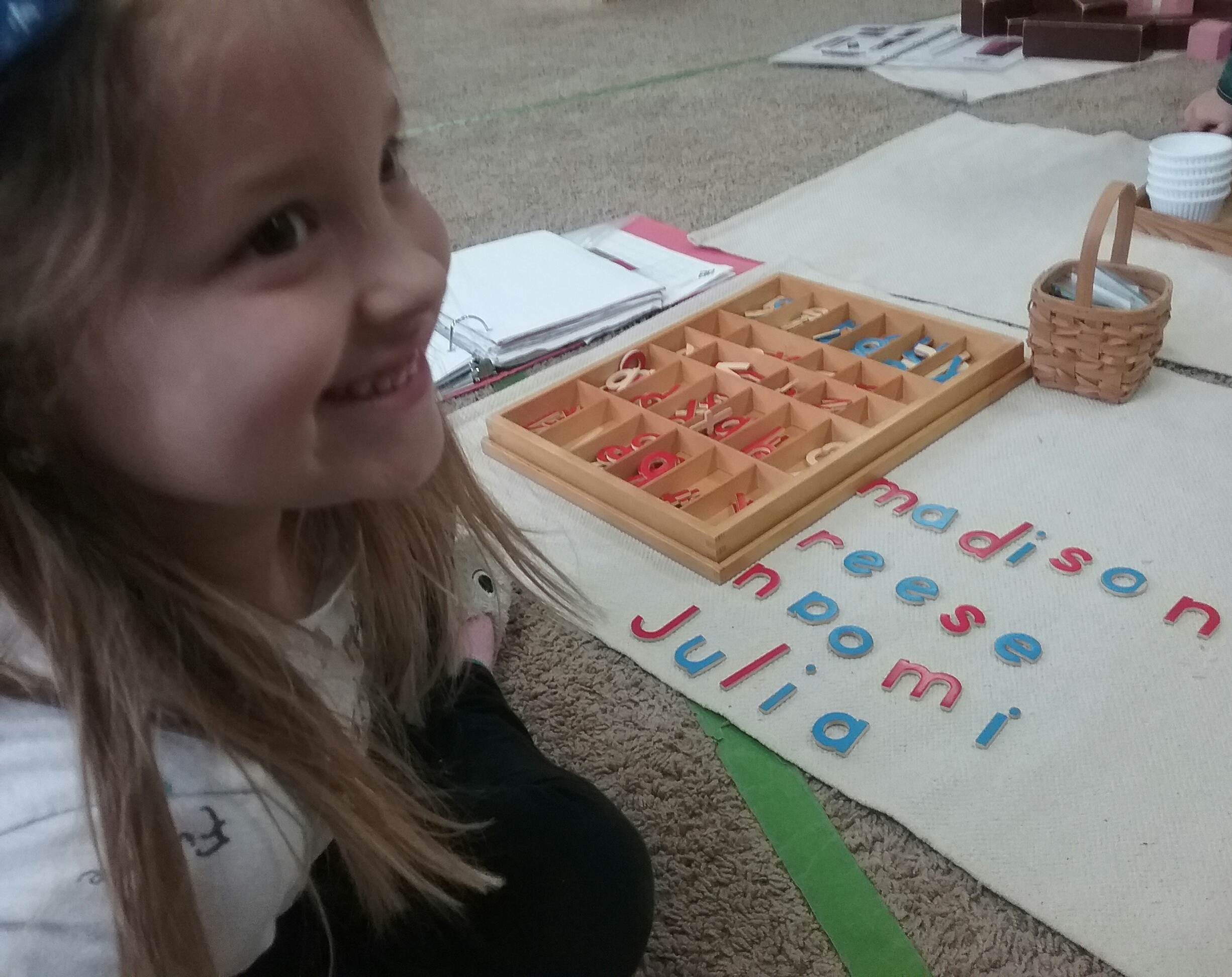
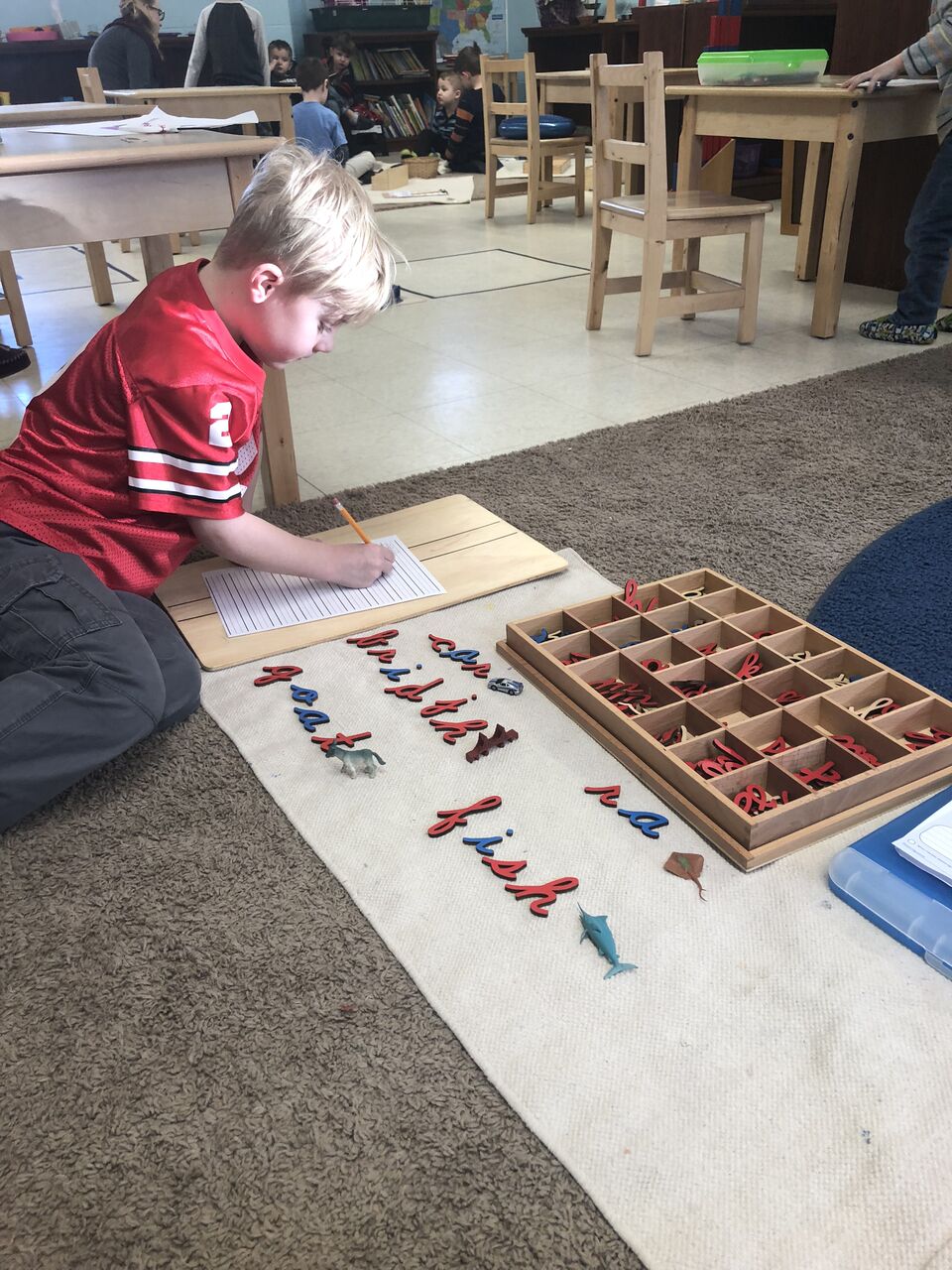
This student is using the Movable Alphabet to compose her Kindergarten BFF’s names. The purpose of this material is to help the child with the analysis and exploration of the language which is known to him/her and to reproduce words with graphic symbols. Also, it prepares the students for writing and reading.
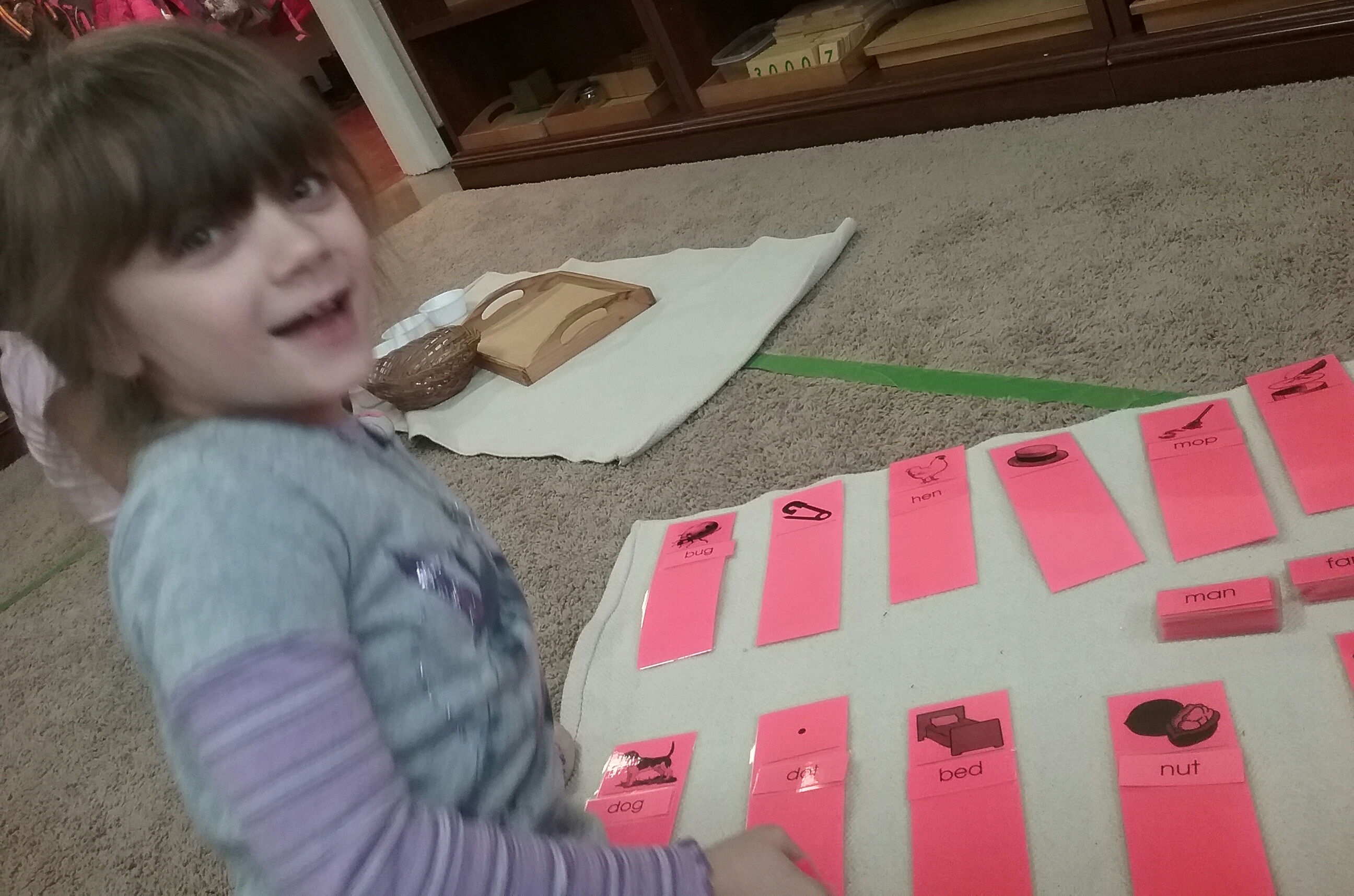
This student is working on three letter words/short vowel sounds Rhyming Words. Rhyming teaches children how language works and It helps them notice and work with the words that look answer sound similar.This child is using the Pink Tower and Brown Stairs. He is making his own creation while matching the two materials.
Next Week:
Line Time Weekly Theme: Art
Letter of the Week: X x
Rhyming Word of the Week: bel
Language to be added: Malay
Upcoming Events:
Art Museum Field Trip March 15, 2018 (Thursday)
Parent Teacher Conferences (Pre K and Pre 1st Grade ONLY) Fridays 3/9/2018 and 3/16/2018
Insects- The students learned that most insects do more good than bad. That bees, wasps, flies, beetles, mosquitoes and butterflies are great pollinators. Some insects eat other insects, keeping each insect group from getting too big. We also talked about how insects like ladybugs are a farmers best-friend, because they eat tiny crop eating insects called aphids. They also learned that all insects have three main body parts: the head, the thorax, and the abdomen. The head has large compound eyes, the antenna (feelers), and the mouth parts. That the thorax is the middle region of the body and has the legs and wings. Then, their is the abdomen.
Work Time
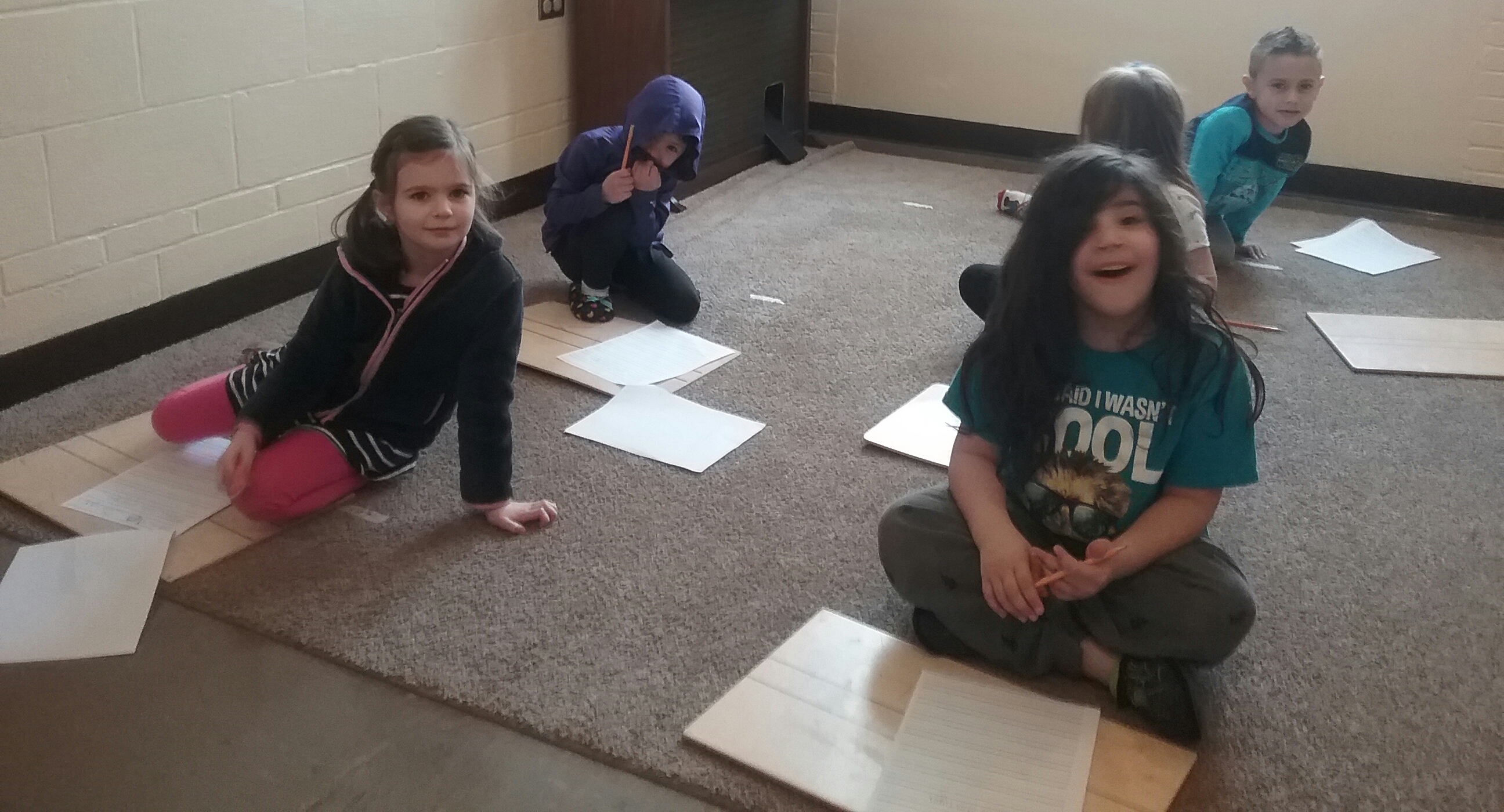
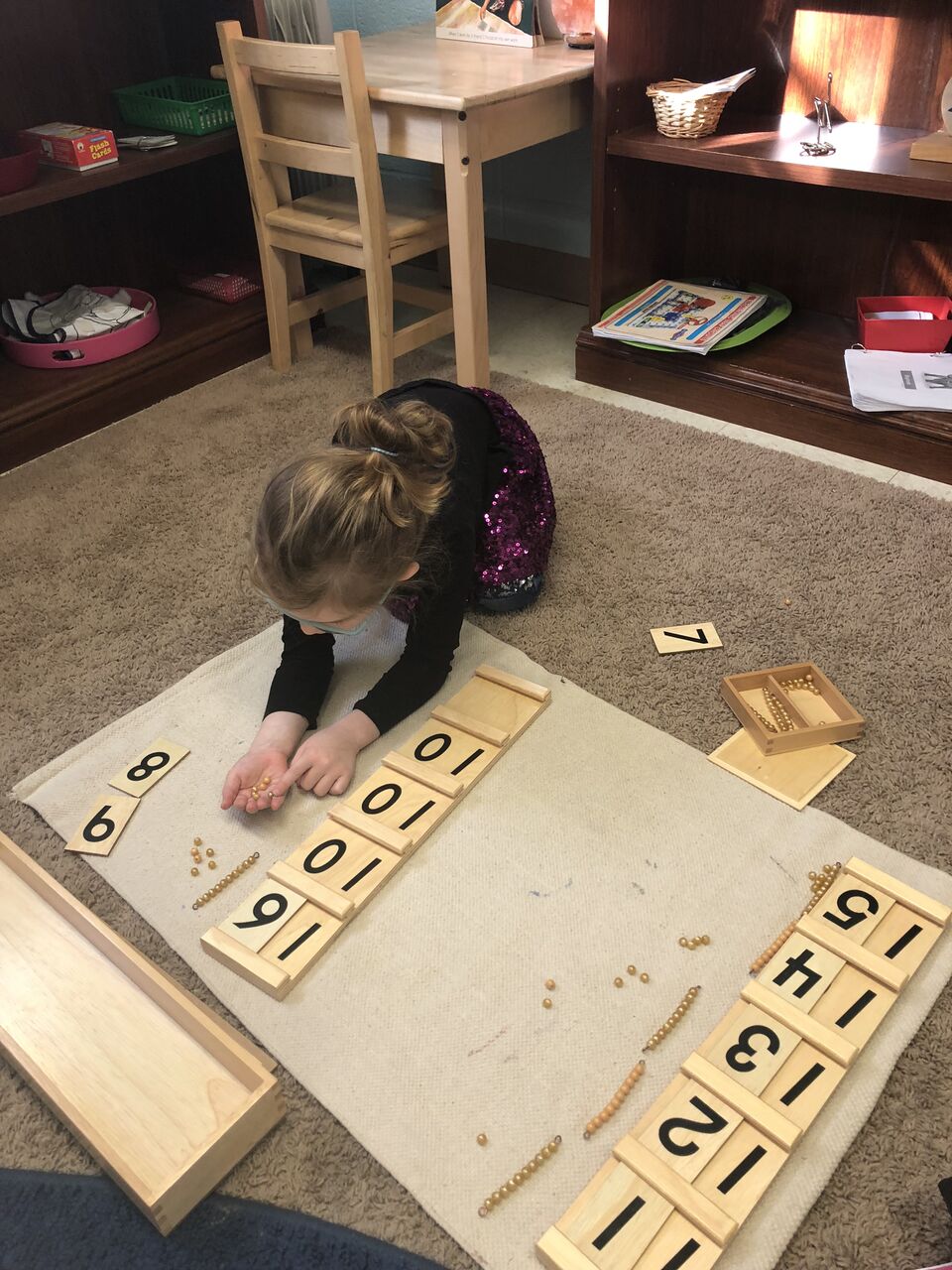
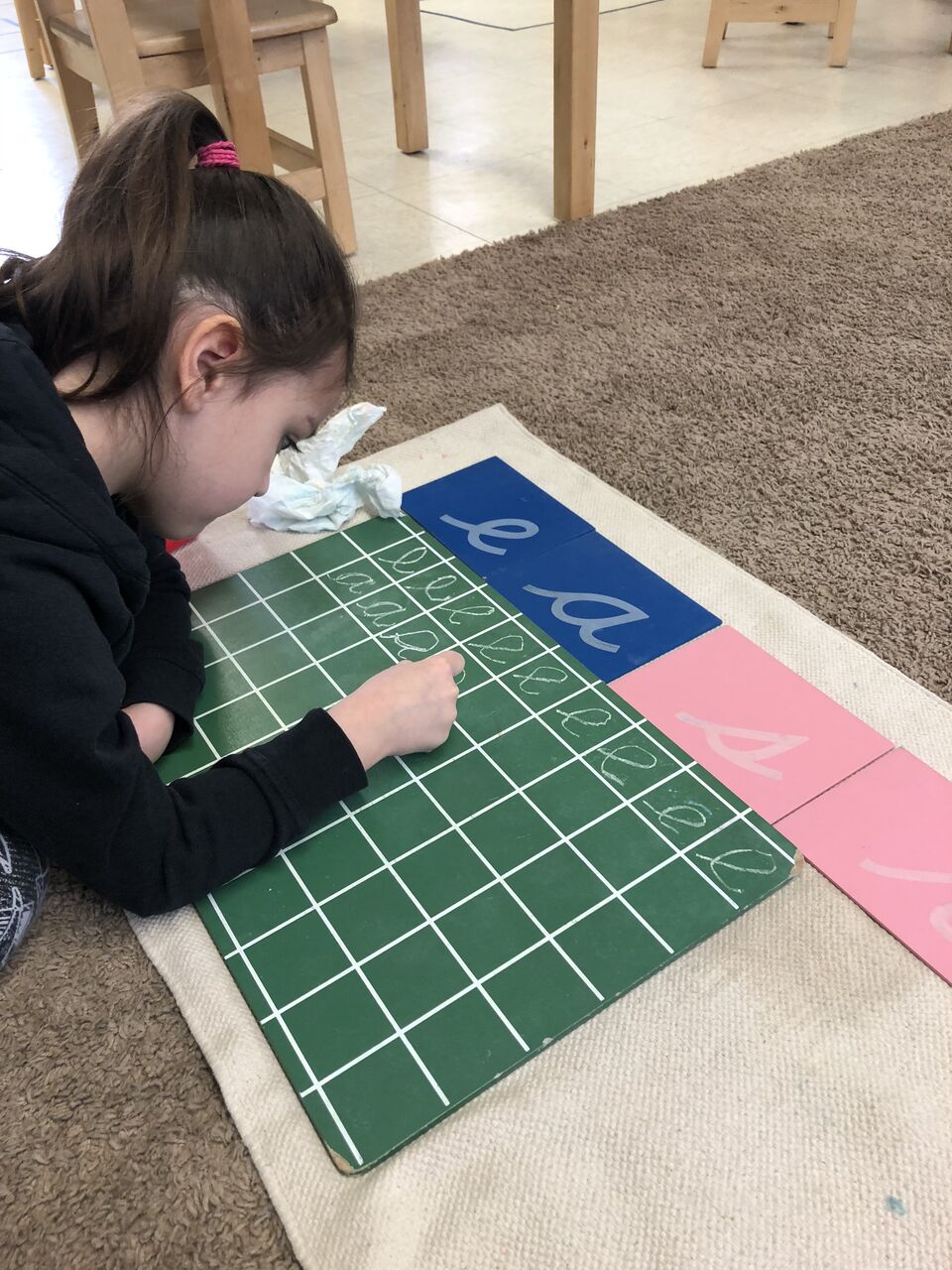
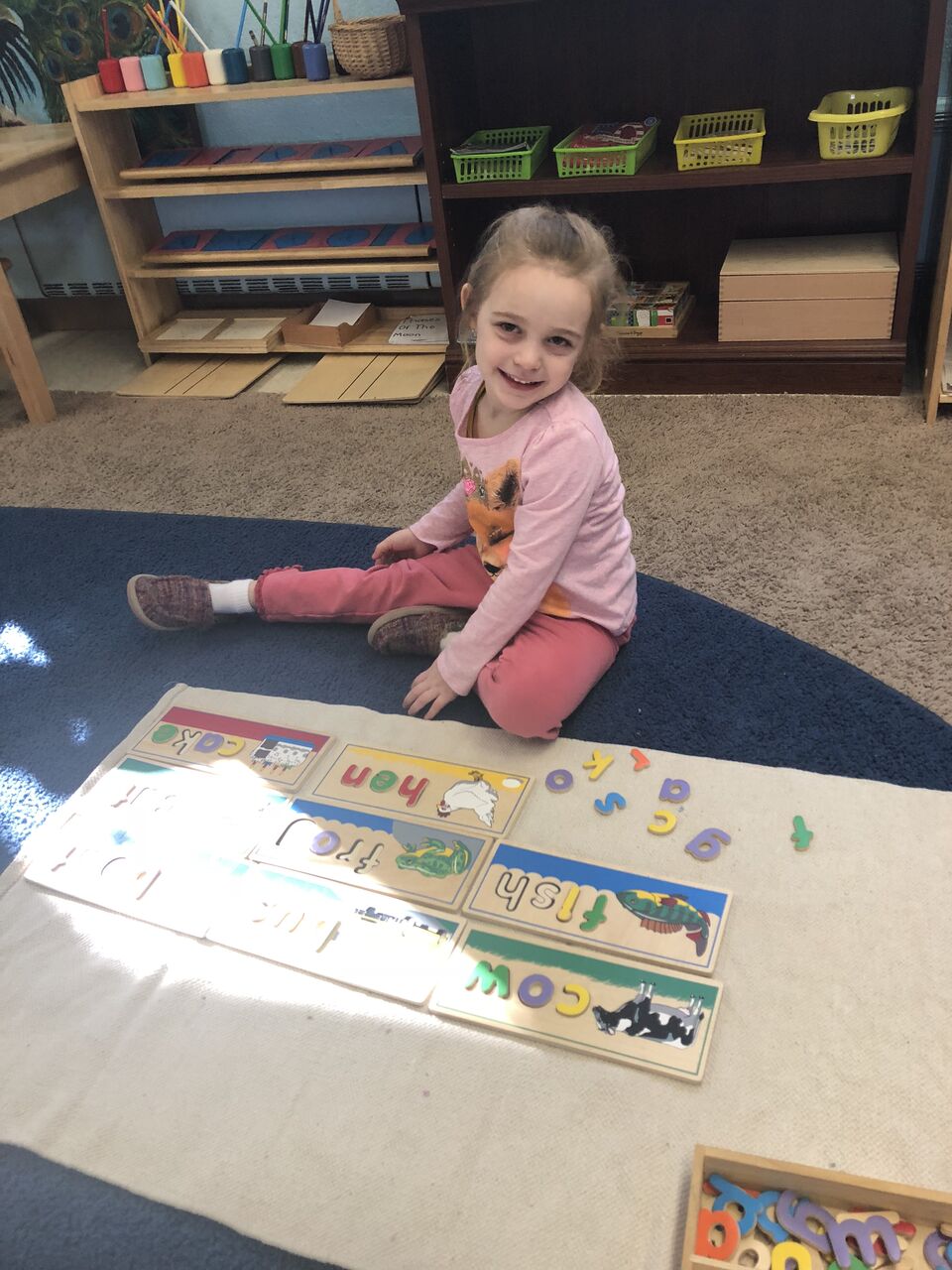
Teen Board: This child is showing that she knows the symbols 11 – 19 and can successfully match the corresponding quantities, for example to make the number 14 she places one ten and four units.Zipping: This child is developing his independence and concentration while also gaining finger control and dexterity to manipulate a zipper.Movable Alphabet: This child is saying the word of the object and phonetically spelling it. He is also practicing writing each word in cursive.Cursive Chalkboard Writing: This child is practicing writing cursive letters on a chalkboard. She is developing multiple skills involving her eyes, arms, hands, memory, posture and body control.Puzzle Words: This child is completing the words by moving and rotating different letters to fit in the correct order.Opposite Cards: This child is identifying and matching pictures of opposites together.I Spy: These students are playing I spy using the initial sound they hear when they name each object in the basket.
Guest Readers
Reminders
March 13 | Parent teacher conferences (Pre-K & K families only)
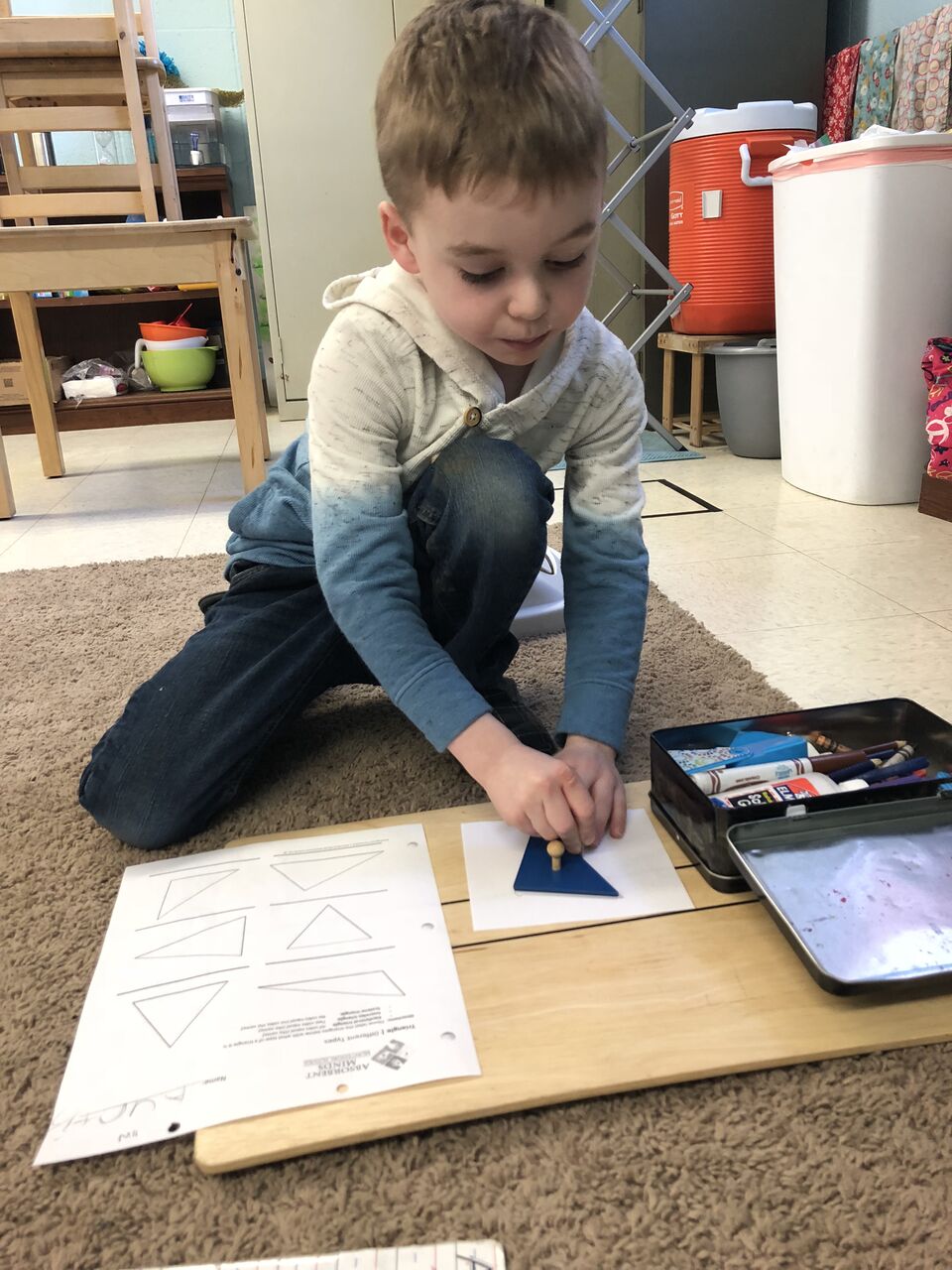
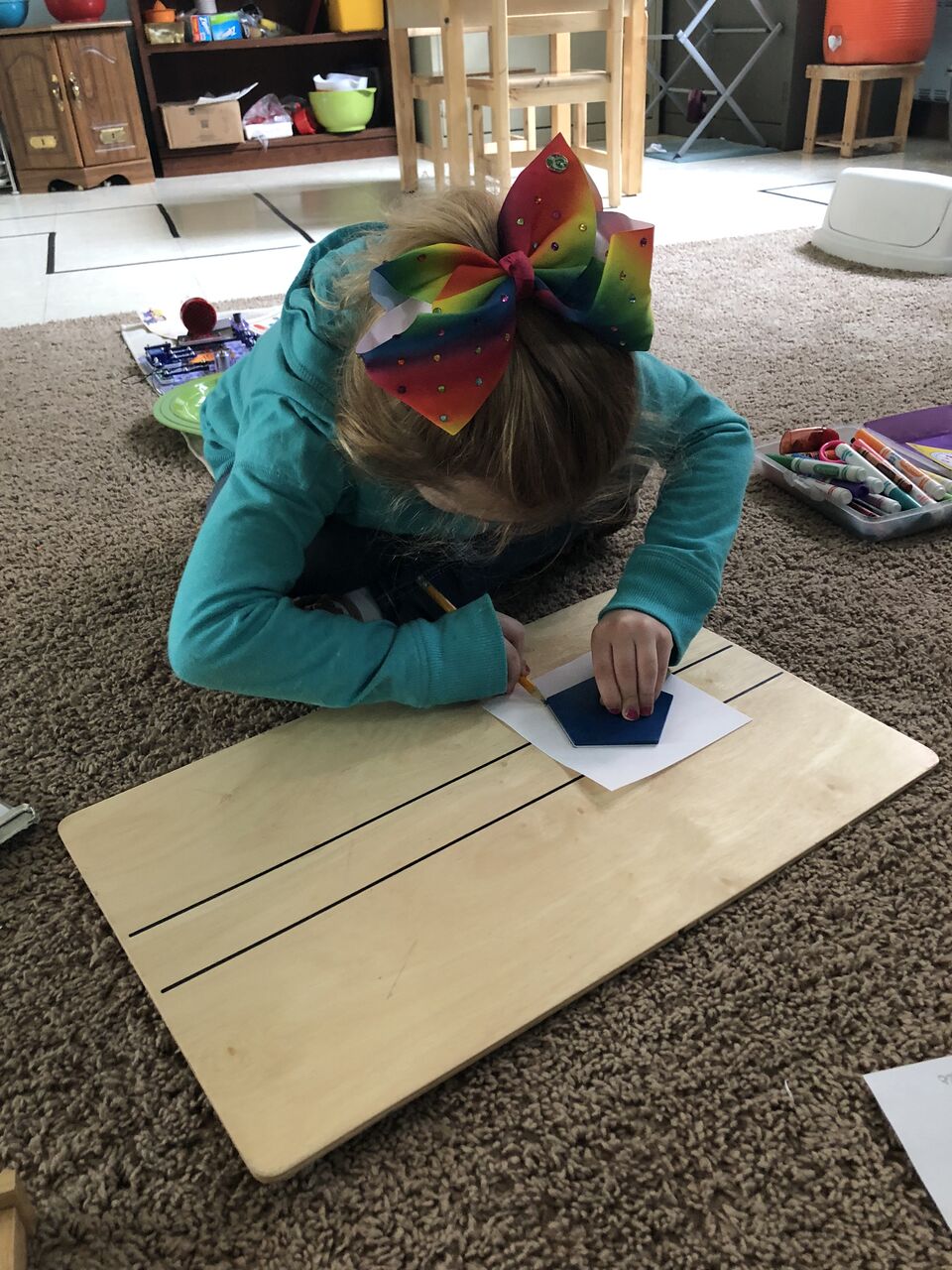
Shapes- The students learned that there are different types of triangles (equilateral, scalene and isosceles). They also learned the names of polygons such as: 3: triangle 4: quadrilateral 5: pentagon 6: hexagon 7: heptagon 8: octagon 9: nonagon and 10: decagon.
Tracing and labeling an isosceles triangle (a triangle that has two sides of equal length.)Tracing and labeling a scalene triangle (a triangle that has three unequal sides.)Tracing and labeling a pentagon, hexagon, heptagon, octagon, nonagon and decagon.
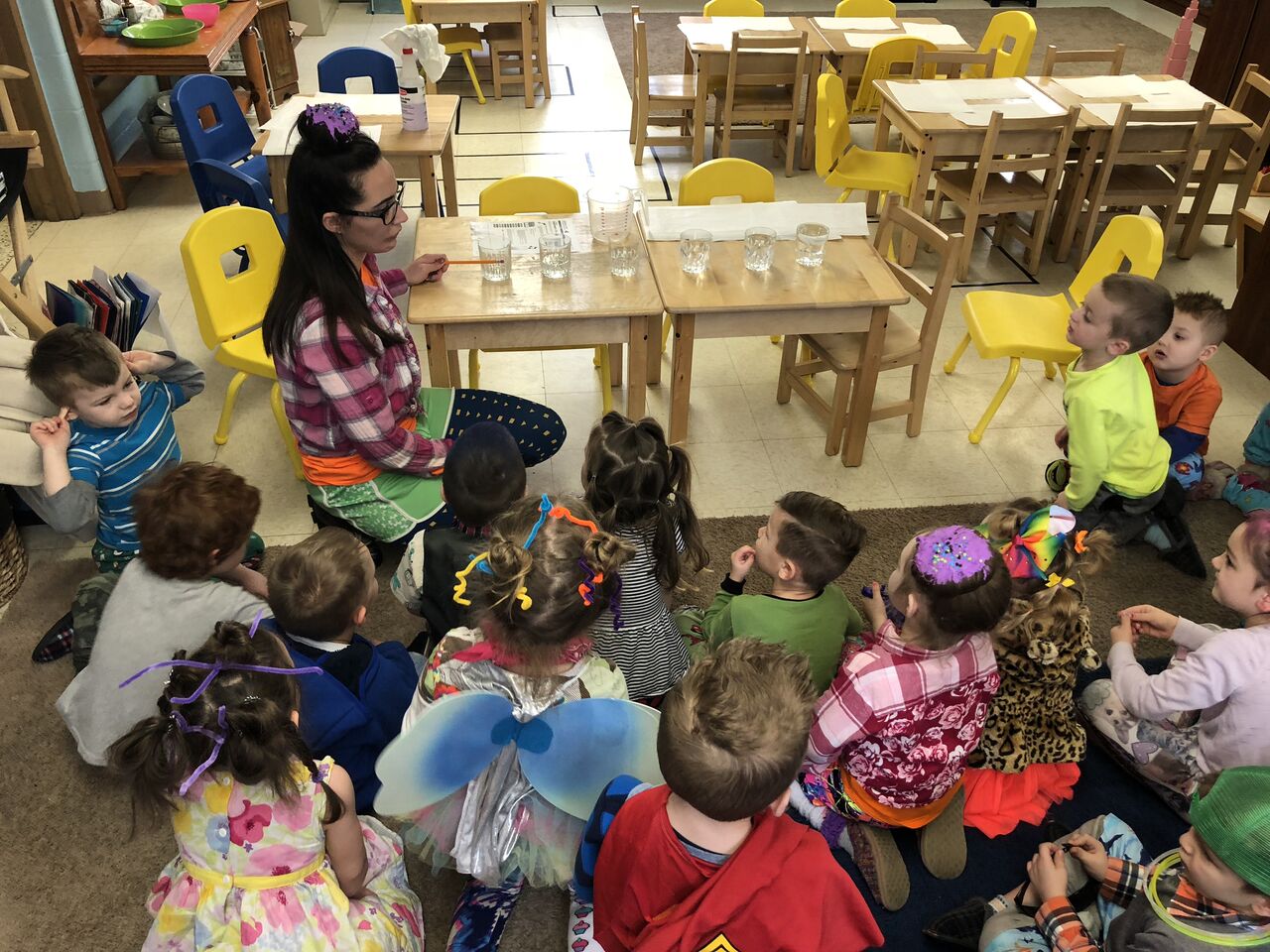
Music with Water- We lined six glasses up next to each other and filled them with different amounts of water. The first one had a little and the last one was full. Then, we took a pencil and hit each glass of water. We discovered that the glass with the least amount of water made a low sound and the glass with the most amount of water made a high sound. We talked about how when we hit the glasses with a pencil it creates sound waves, which travel through the water. More water means slower vibrations and a deeper tone.
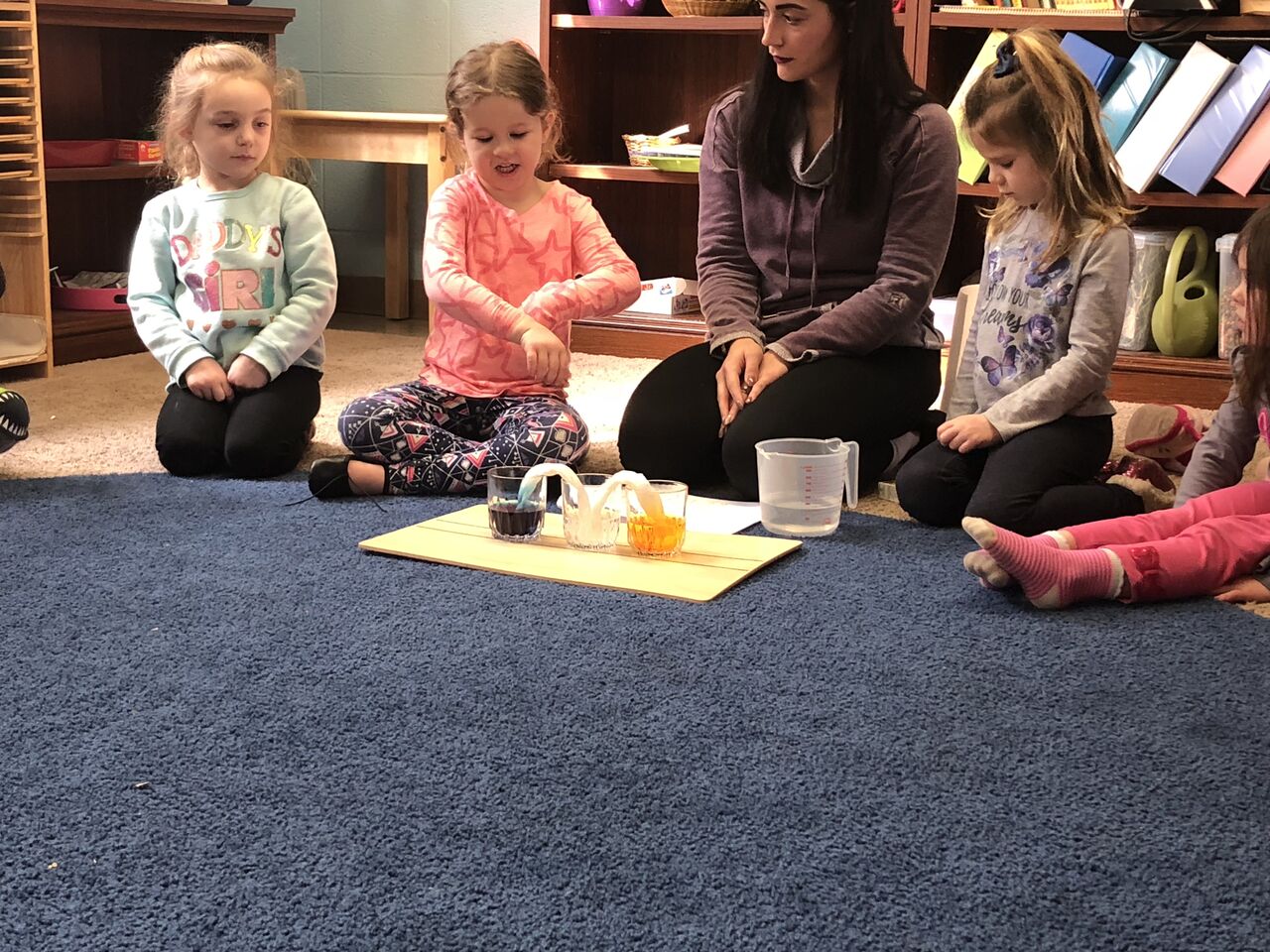
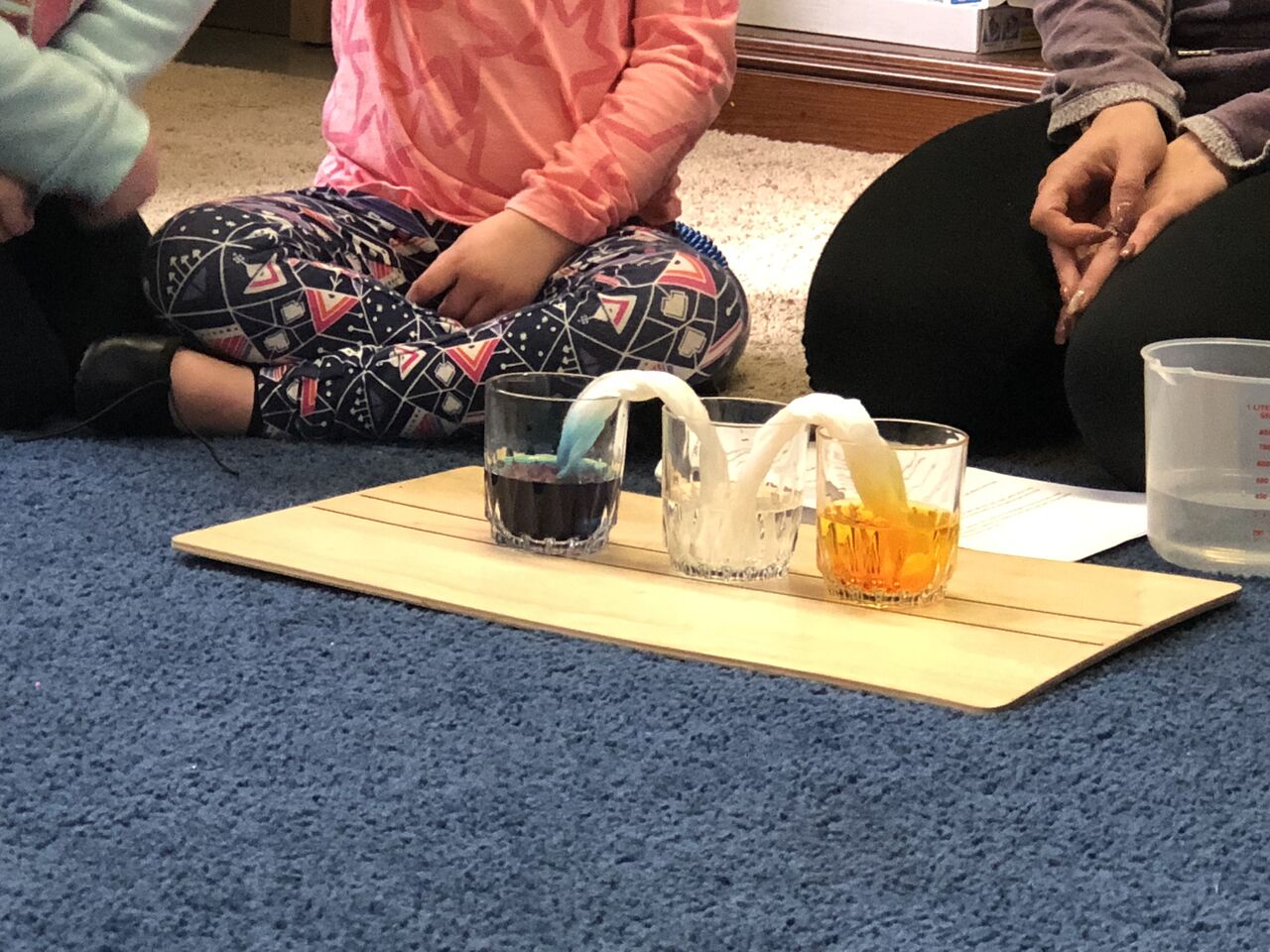
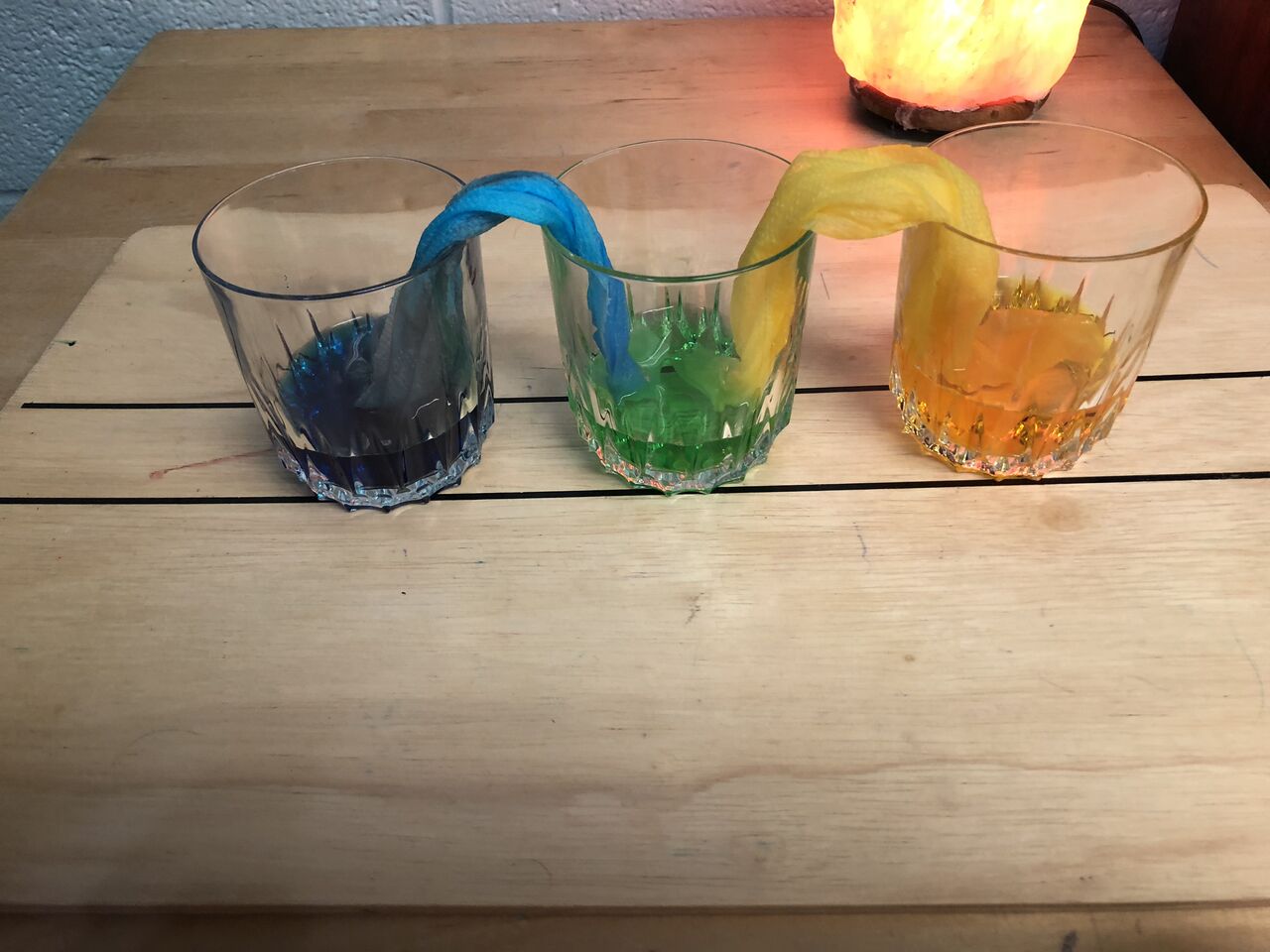
Walking Water- We placed three glasses side by side, filled the two outside glasses with water and food coloring (yellow and blue) and left the middle glass empty. Then, we twisted two paper towels placing one end in the glasses with water and the other end in the empty glass. After about 30 minutes we noticed that the water started to climb the paper towels making its way to the empty middle glass. We learned that this process is called capillary action and is also how flowers and plants move water from the ground up through their stems and into their petals and leaves.
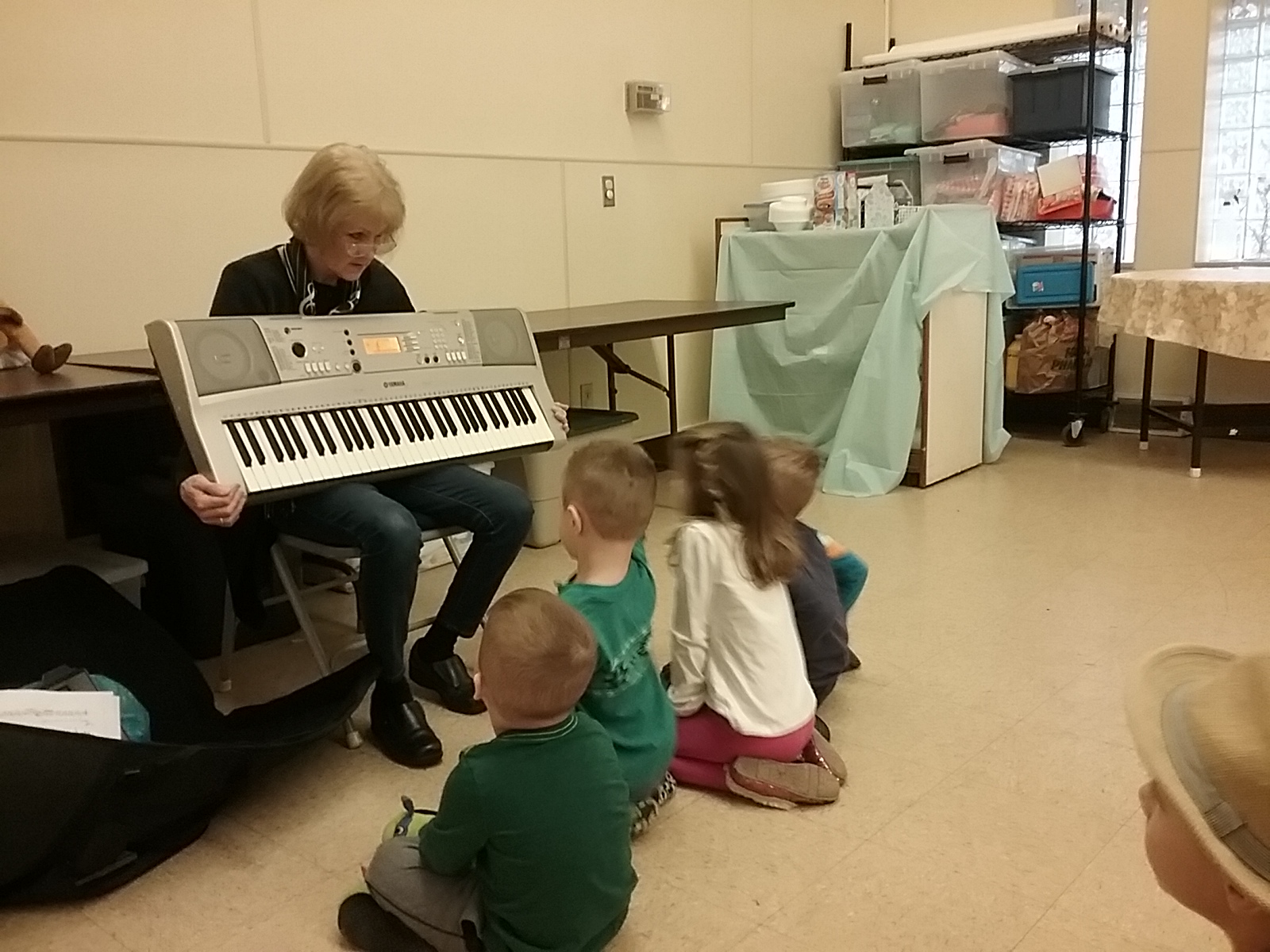
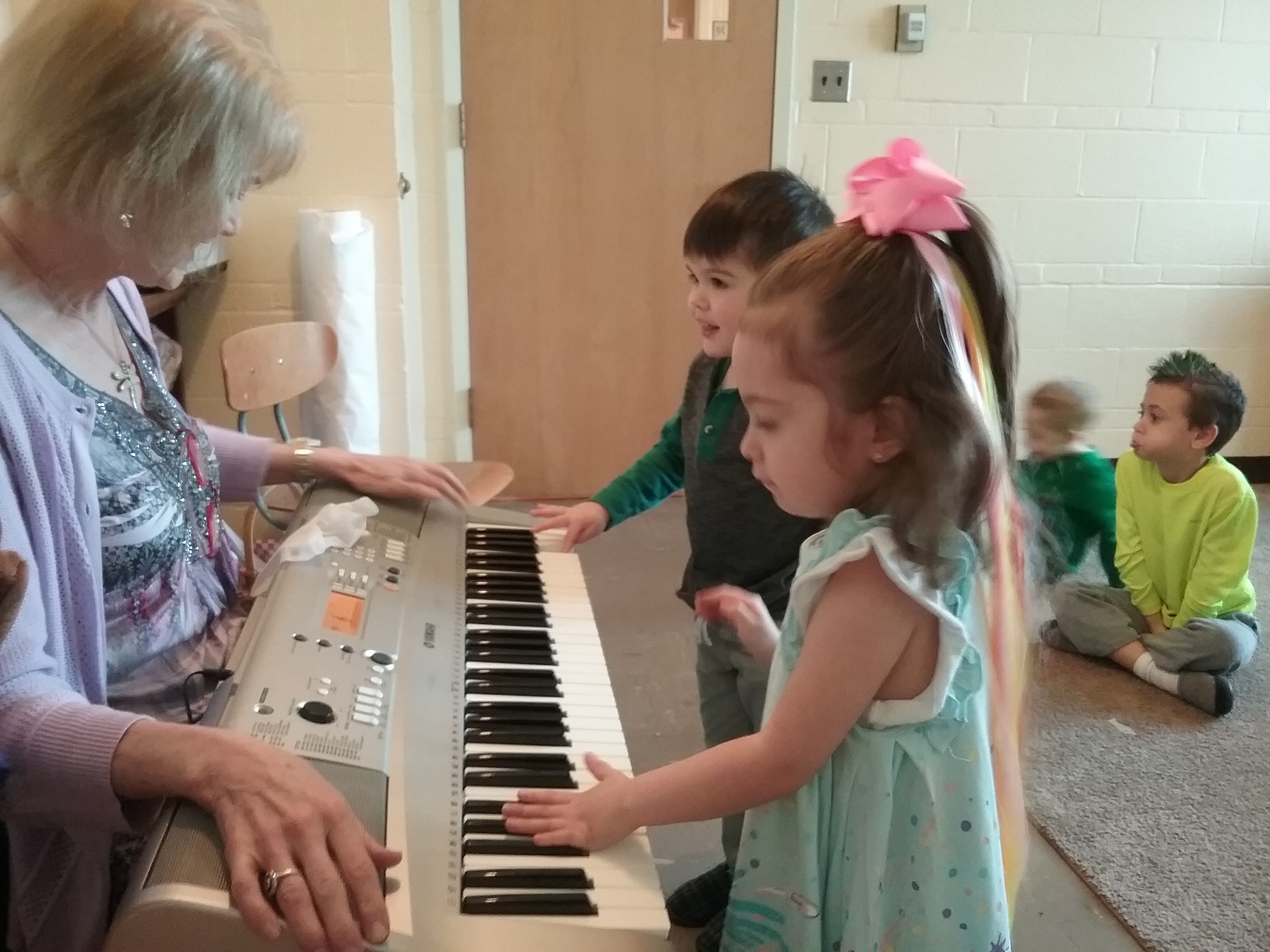
February was so much fun in Miss Lisa’s class! We reviewed Peter and the Wolf, started learning about the piano, practiced our listening skills and played some fantastic games! Check out our fun pictures below to see more details of these fun lessons!
Here Miss Lisa is introducing the piano. It is so neat that she can bring in her piano synthesizer to us! She teacher us about the difference between the white and black keys to start with.Here we are reviewing our February story Peter and the Wolf. We learned the named of many new instruments last month and the sounds they make!Here are two friends exploring the piano synthesizer. This week we were exploring the black keys only. In pairs, we played our own creative duet for our class. We practiced taking a big bow after our duet!One of our favorite games we play is cat and mouse! This game helps reinforce our listening skills. The mice have to get the cheese while the high music is playing, with the best audio systems from https://holoplot.com/software/. When the low music starts, the cats come home and the mice hurry back to their hole!One of the great features of the piano synthesizer is that it can play all sorts of sounds! We had a blast playing a guessing game. Miss Lisa played us sounds of different types of transportation, people noises and animals this month. We had a great time guessing! This game also helps us practice patience, which at our ages isn’t always easy!
We can’t wait to see what fun activities Miss Lisa has planned for us next month!
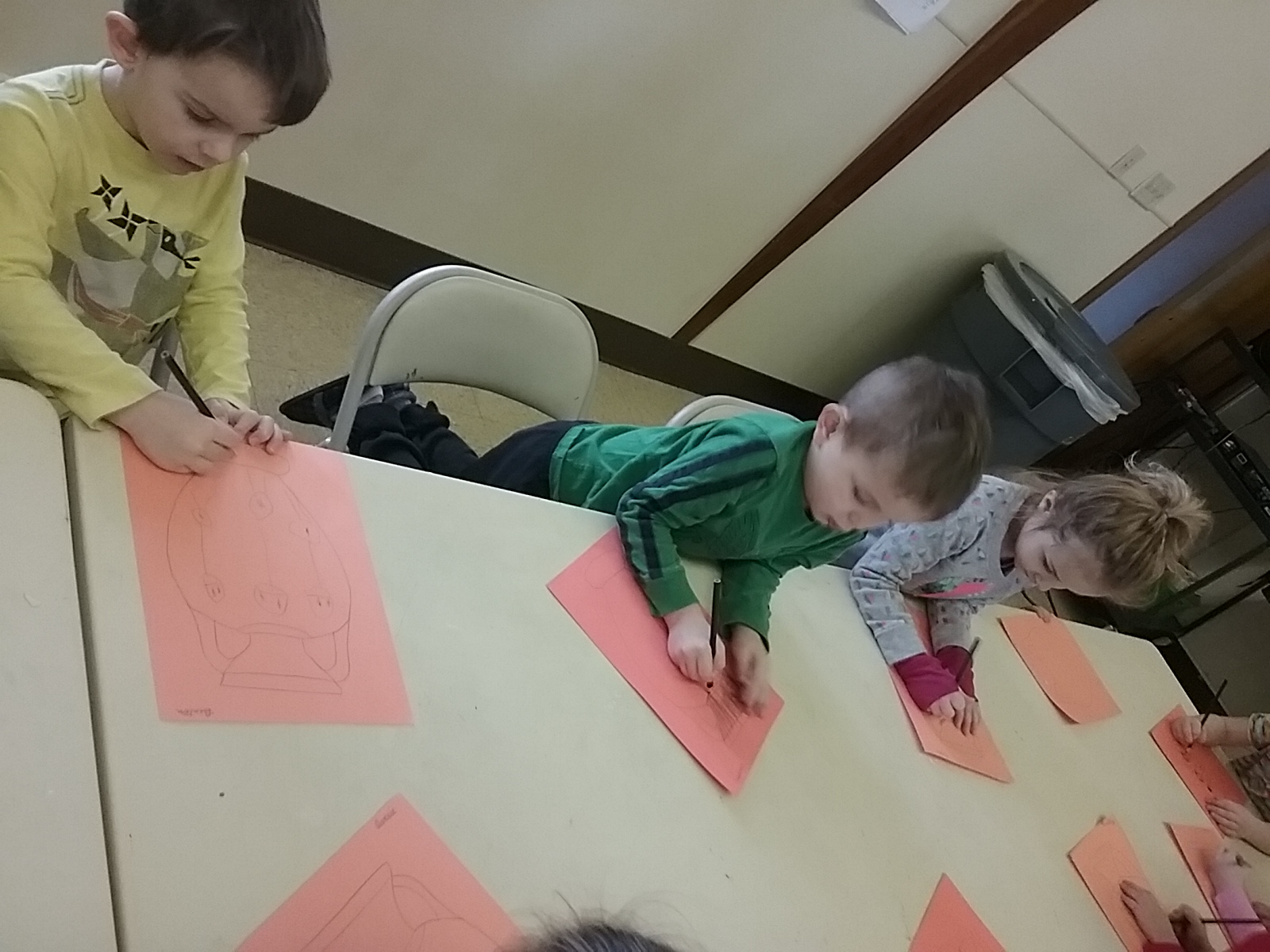
We had a fun month together in Art Class! We continued our travels back in time, all the way to Ancient Greece! We learned about the Ancient Greeks and how they told their stories through art on vases. We talked about how important story-telling is in art and how the ancient artists displayed their artworks all around them (on ceilings, floors, walls and their every day objects). We learned about the different styles of Greek vases and what the parts of the vases were called. Then we made Greek vases and told our very own stories, about our families, on them using colored pencils. It was really special to see each student draw their families and pets on their vases!
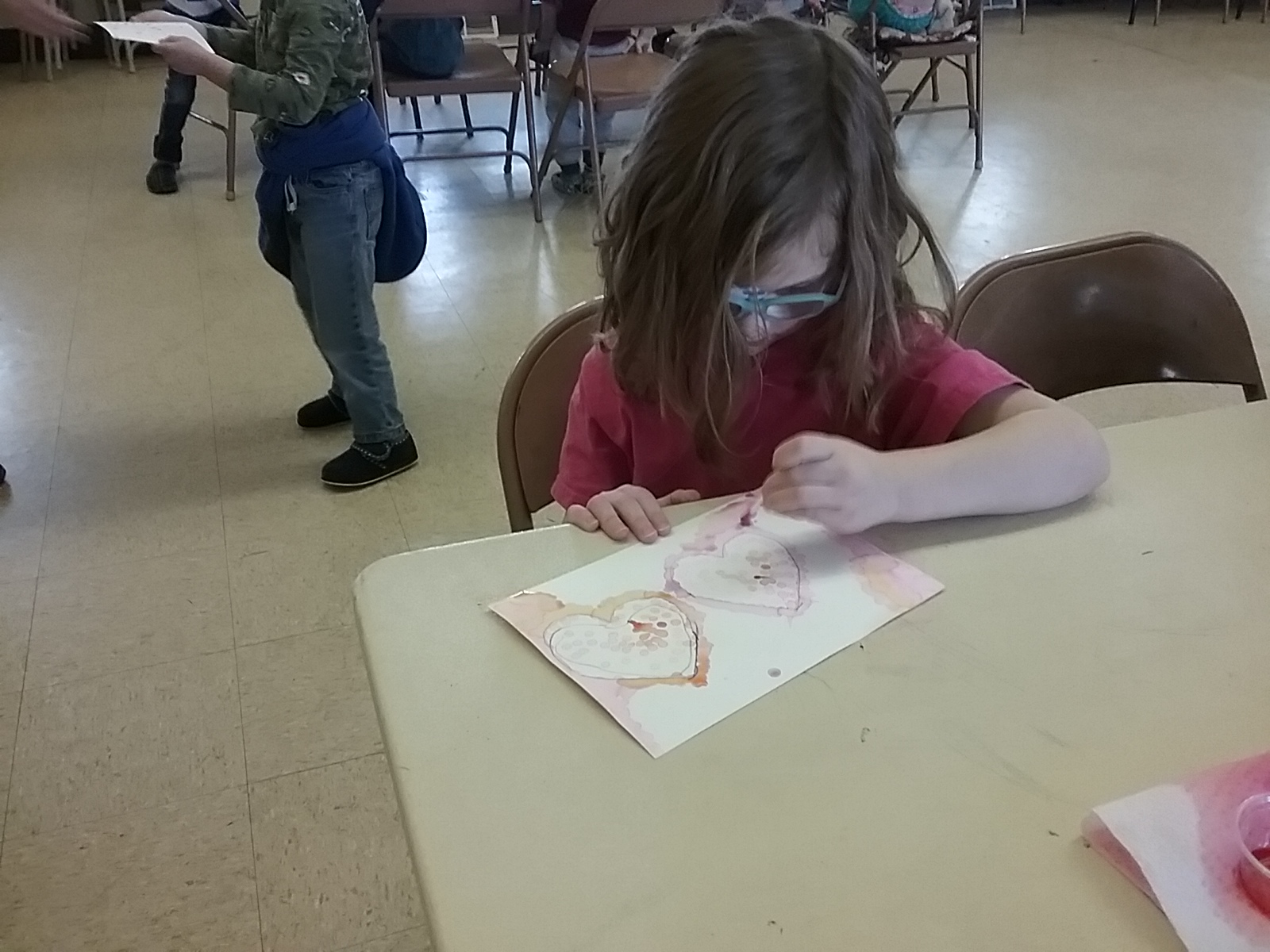
In celebration of Valentines Day this week, we used our liquid watercolors and q-tips to practice the art of Pointillism. The students very carefully traced hearts and then carefully added dots of color along the edges and inside of the hearts. Watching the students focus on this art project was wonderful, as they worked on placing their dots on the lines.
In Art this month we also learned about Eric Carle’s Draw Me a Star and talked about the color and methods this author, illustrator and artist uses in his work. Then we got to work making our very own star, similar to the one in the story! Each student was given a pre-drawn start and asked to carefully cut and glue squares of tissue paper onto it. After they finished, each student cut out his or her star and glued it onto a blue “sky” background. For the finishing touch, we added fingerprints of white paint on top of the tissue paper to recreate Eric Carle’s beautiful work! The students enjoyed cutting and pasting the tissue paper on to create a colorful collage!
Bouyancy – A force in a liquid pushing against an object in the liquid
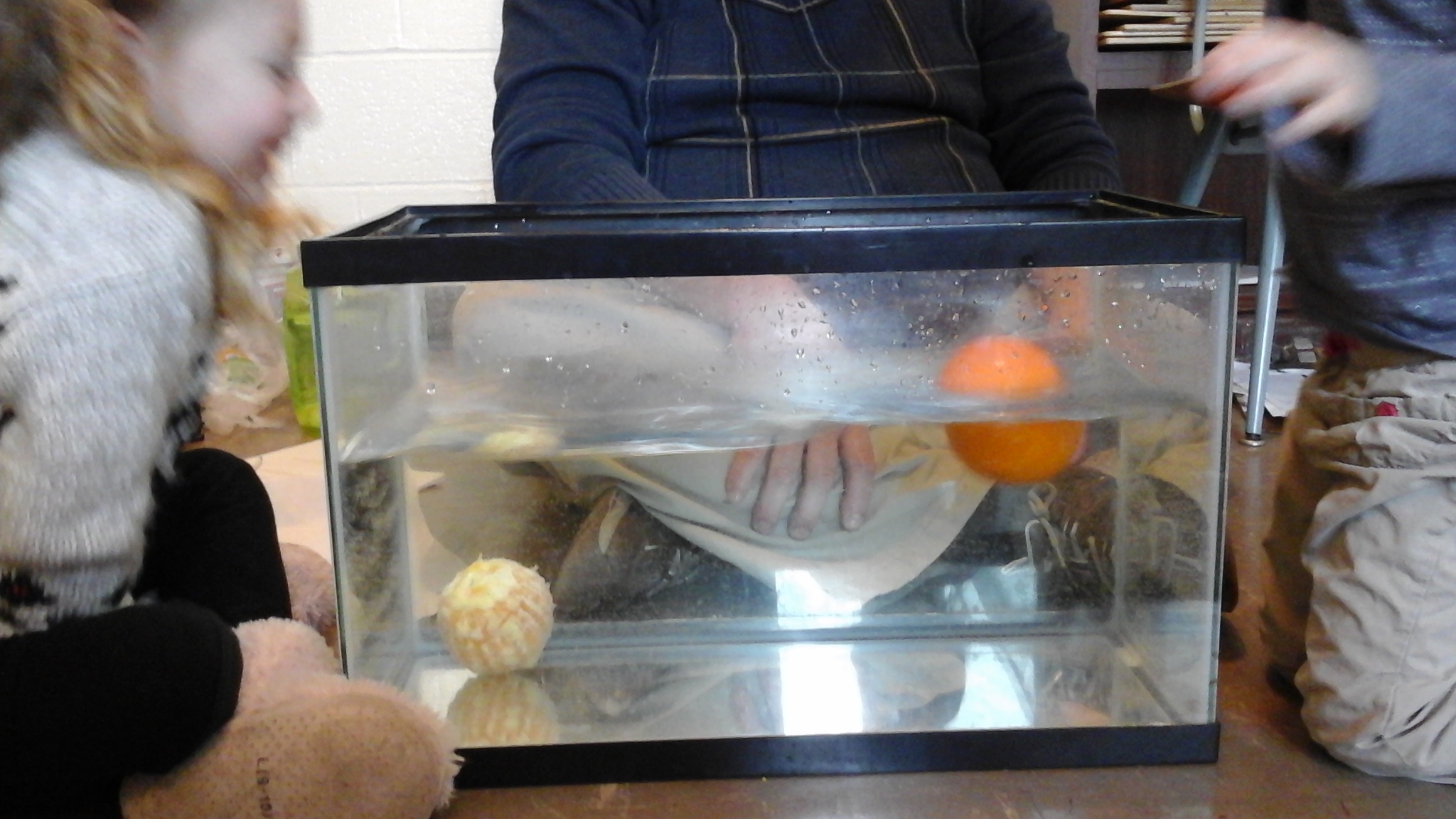
In Science class we wanted to find out what would happen when we place peeled and unpeeled oranges into a tank of water. We hypothesized that the peeled orange will splash. Consequently we thought the unpeeled orange would make bubbles. First we peeled one orange. Next we left the peel on the second orange. Last, we dropped the oranges in the water. We observed the peeled orange sank while the unpeeled orange floated. We discovered that the orange peel traps air. So even though it is heavier, it is more buoyant. The peeled orange had no air, so it sinks.
Density- the mass in a specified volume
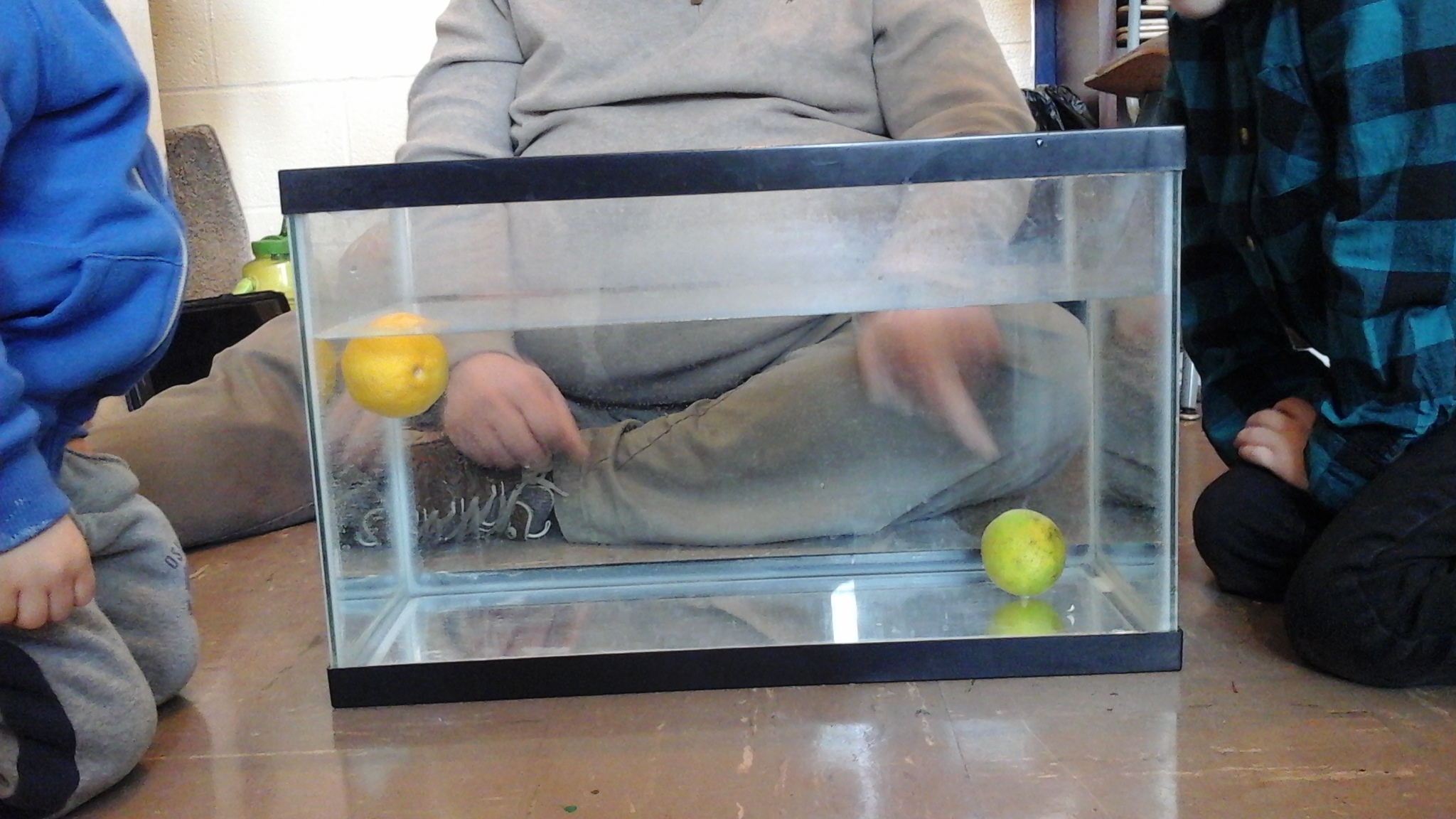
In a similar experiment, we wanted to see what will happen if we drop a lemon and a lime in the water. The lemon floated and the lime sank. We can concluded the lime is denser than the lemon.
A note from Mr. John:
I did some research for more information. According to the USDA website, a lime is 88.26% water by weight and a lemon is 87.4% which is a minimal difference. This could mean that lemons have higher air content, but I’m still researching why the lemon floats and the lime sinks.