“The child who has felt a strong love for his surroundings and for all living creatures, who has discovered joy and enthusiasm in work, gives us reason to hope that humanity can develop in a new direction.” -Maria Montessori
The International Festival is always a very busy time at our school, but one of my favorites. Students (and teachers) have the opportunity to learn languages, traditions, and history about many different places that some of us have never been! It is wonderful to see students enjoying learning about people and places that are so different from what they usually experience. Montessori always had the idea that in order for the world to be more peaceful, that we must teach children about peace and tolerance. Learning about other cultures is one of the many ways we do this in a Montessori environment.
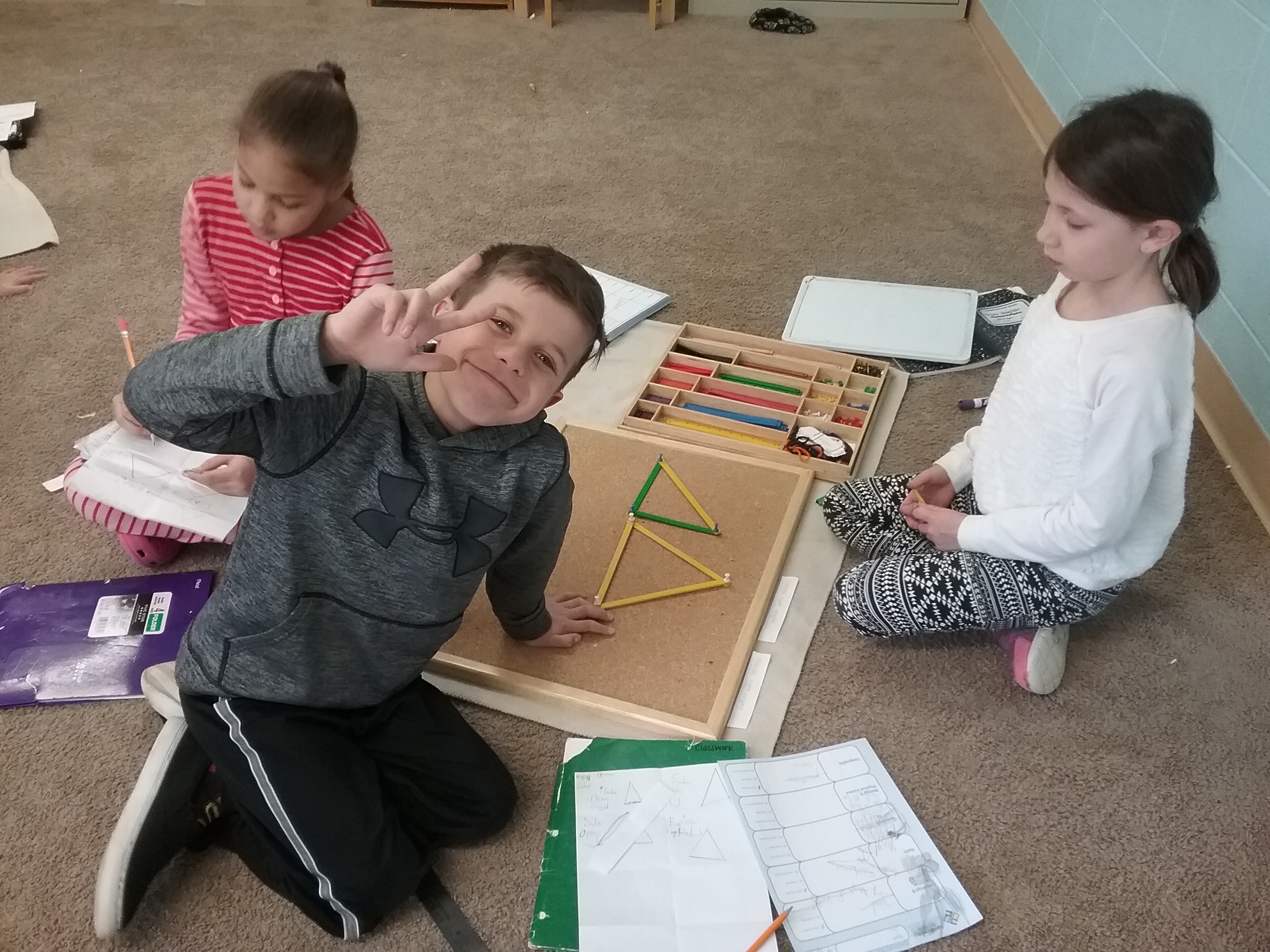
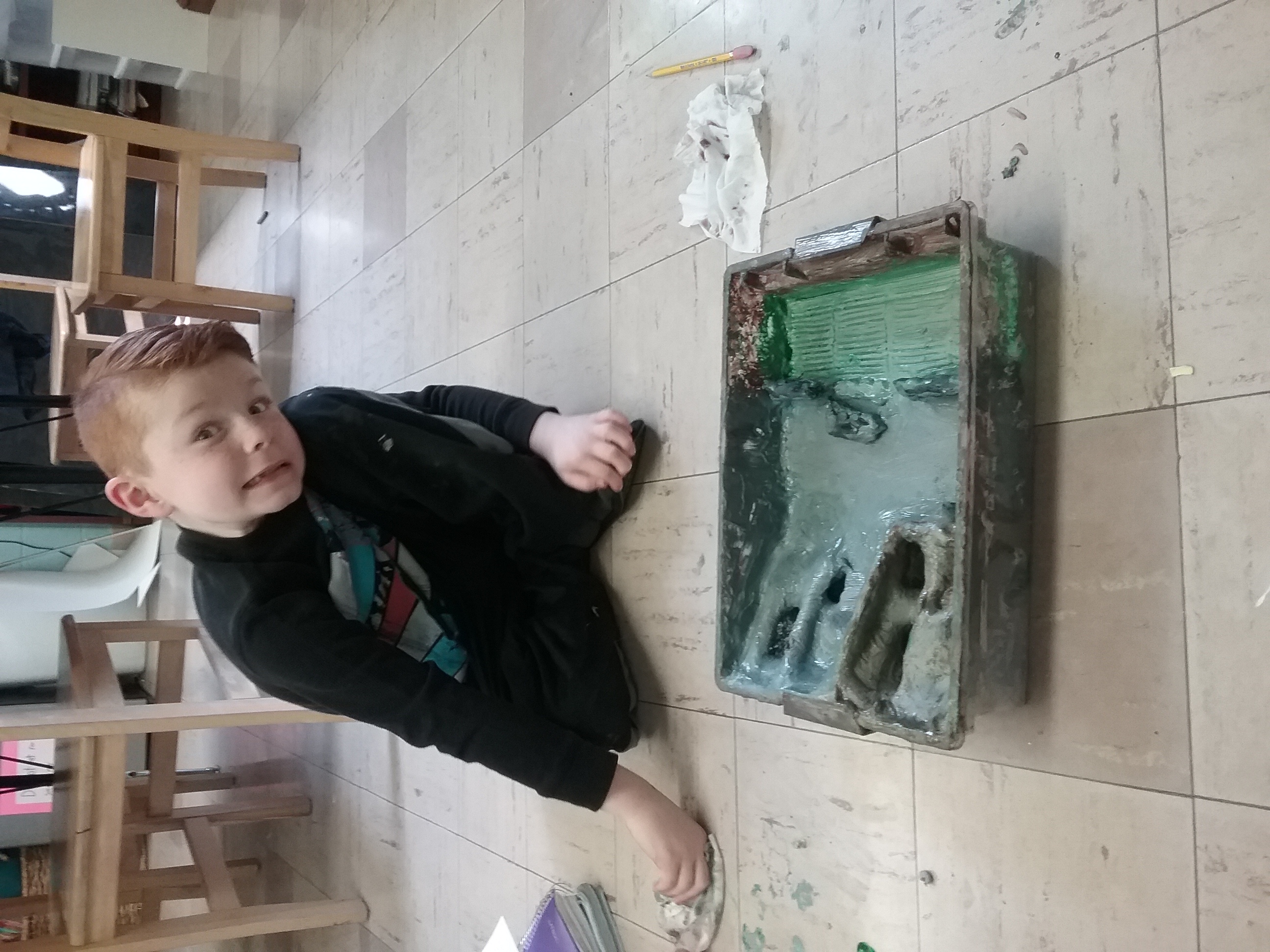
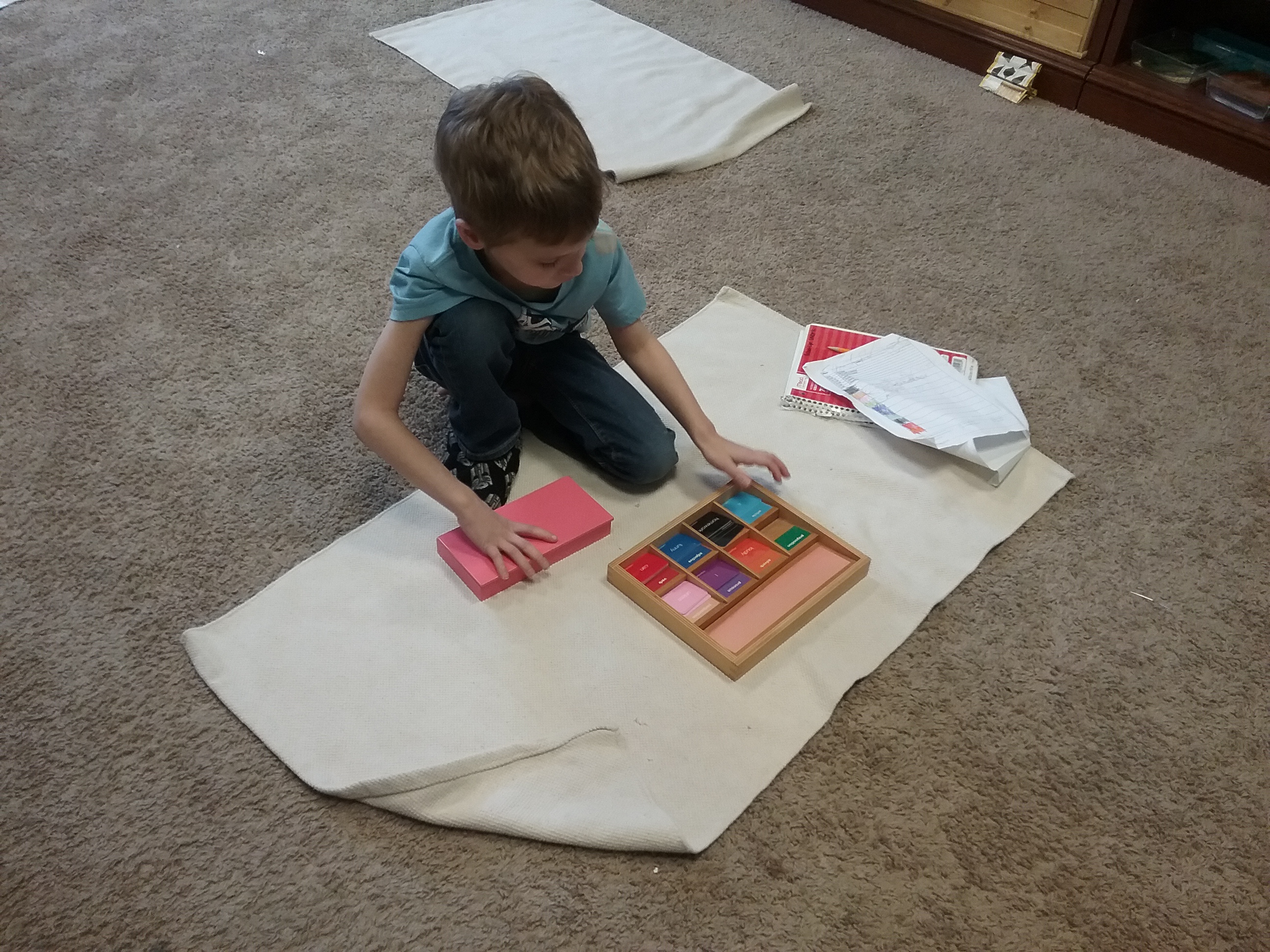
These second year students are putting together their knowledge of types of sides and types of angles to learn the Seven Triangles of Reality. Students are building the seven different triangles and then sketching them onto paper to keep for reference as we move through the rest of our Triangle Study. Learning about the different triangles will help students when they begin to study how to take the area and volume of different things.This first year student has helped his group complete their model for the International Festival. His group researched Yosemite National Park. This group drew an aerial sketch of their park, built it using clay, and then painted it. Make sure to find it tonight at the International Festival to get a closer look at their hard work!In kindergarten, our students are introduced to the parts of speech. Throughout their time in Elementary, they continue to study words, sentences, and parts of speech. This student recently began studying conjunctions. He is practicing what he learned by using our Conjunction Grammar Box. This material gives sample sentences that require students to decide which part of speech each word is. Practicing this work will help students with the structure of their writing.
A Peek at Next Week
Next week, first year students will measure on a number line, will begin studying interjections, and will continue studying different angles. Second year children will add and subtract lengths and will continue studying interjections and triangles, it’s like a socks for everyone! Third year students will be focusing on building a city together by using their knowledge of perimeter, area, and volume. Fourth year students will continue studying early humans and bacteria and will draw line plots to show data.
Your kindergarten students have been learning how a pronoun (we learned about 6 of them .. he, she, it, we, they, you) takes a place of a noun. He is a boy, she is a girl, but never ever call a person an “it”. we also learned that the adjective describes nouns and of course can describe the pronoun.
Just the girls
Next Week:
Lesson: Adverbs
No sight words or synonyms due to the International Festival
“We must clearly understand that when we give the child freedom and independence, we are giving freedom to a worker already braced for action, who cannot live without working and being active.” -Maria Montessori
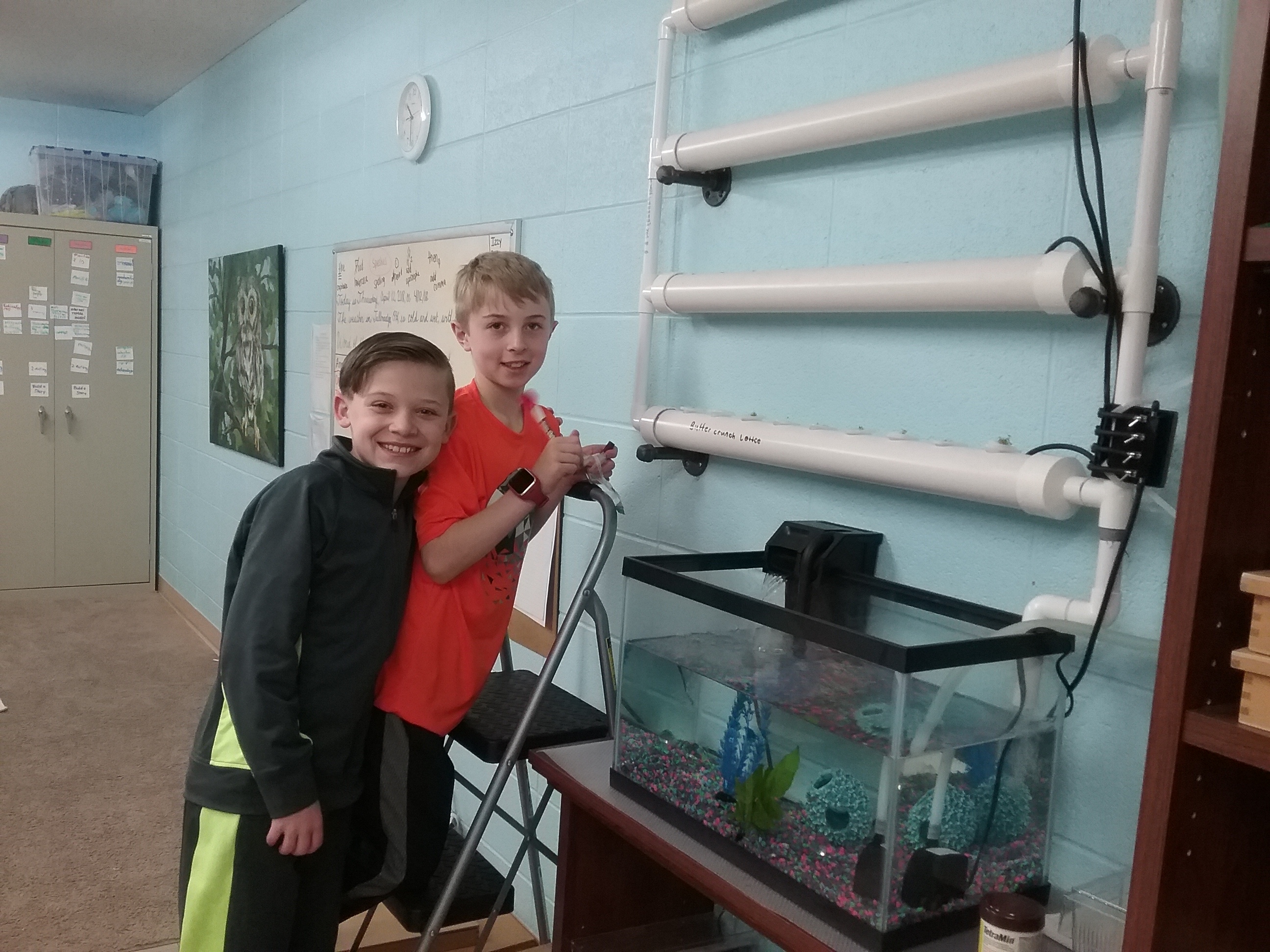
We had such an exciting week continuing to set up our hydroponic system. We added snails at the end of last week, more male guppies this week, and discussed how to tell if a female guppy is pregnant and when we need to separate her from the other fish to keep the babies safe. After germinating our seeds for about ten days, we were able to plant the seedlings into the foam and baskets to add to our hydroponic system! Our students labeled the baskets so we can keep track of what is growing. Our students are also planning to sell our plants to raise money to continue our system next year. While all of the Montessori lessons are interesting and essential, it is always such a treat to see what projects students come up with, and complete, independently. Their confidence in their research skills, planning skills, and independence are amazing.
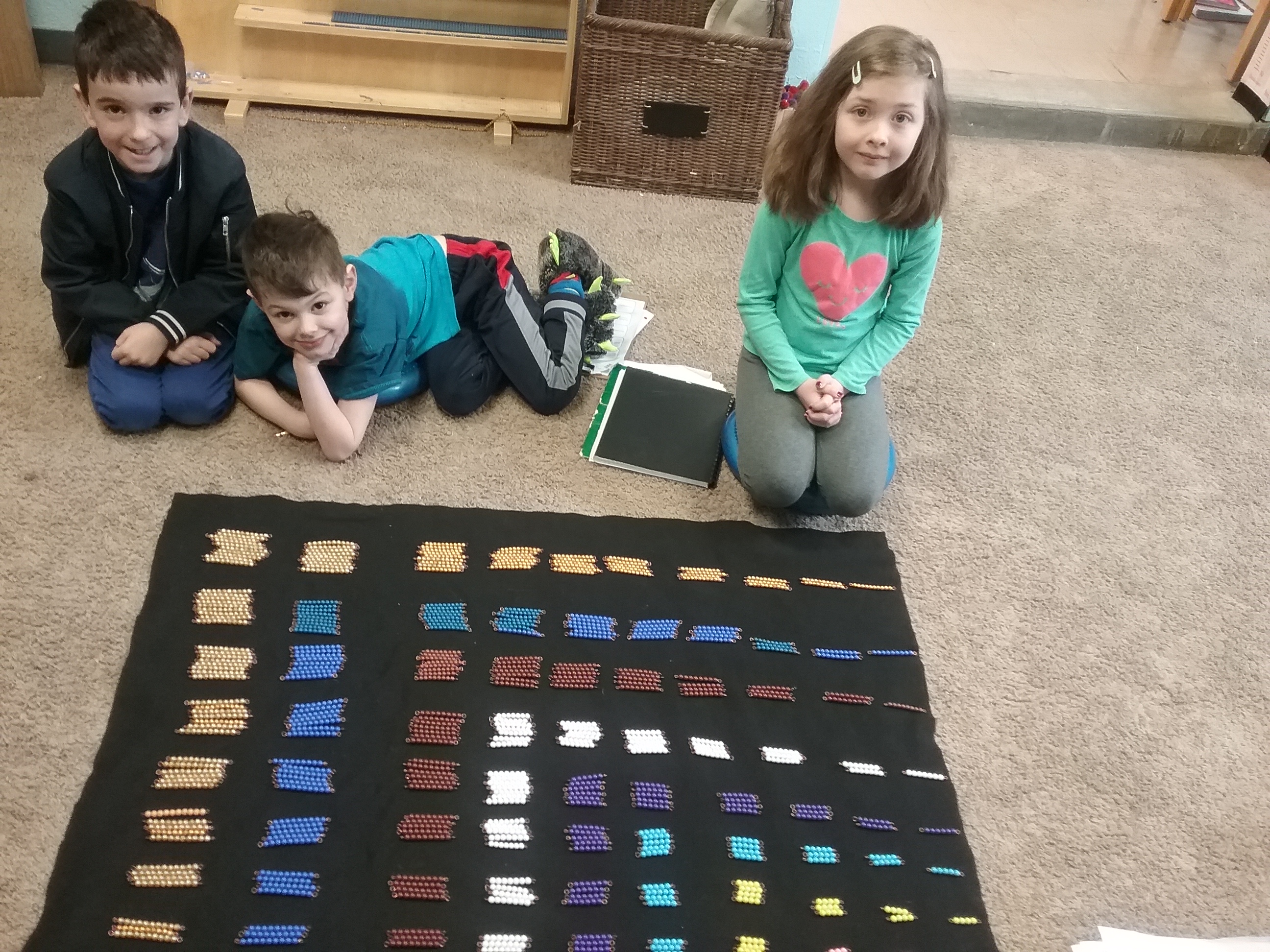
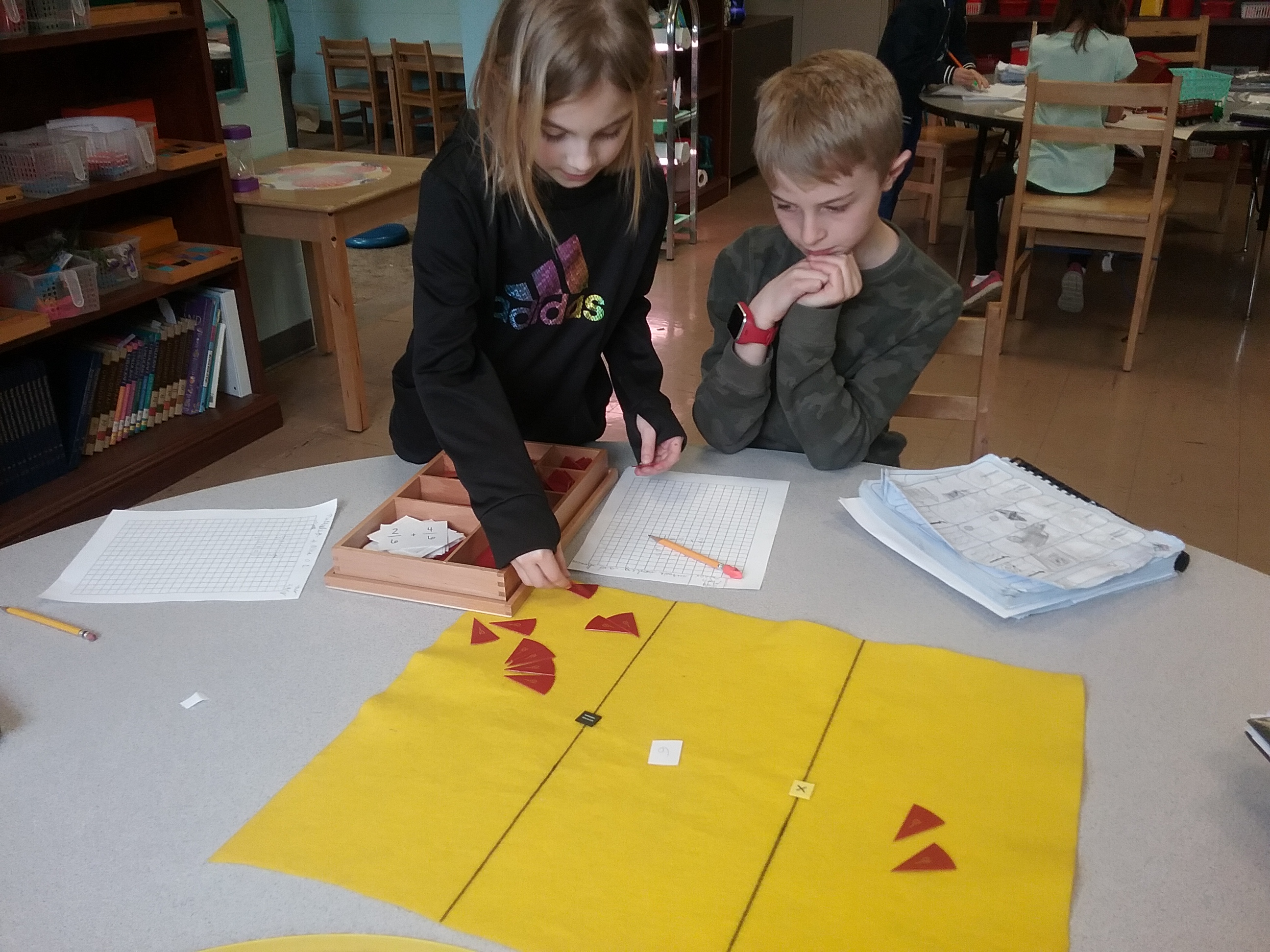
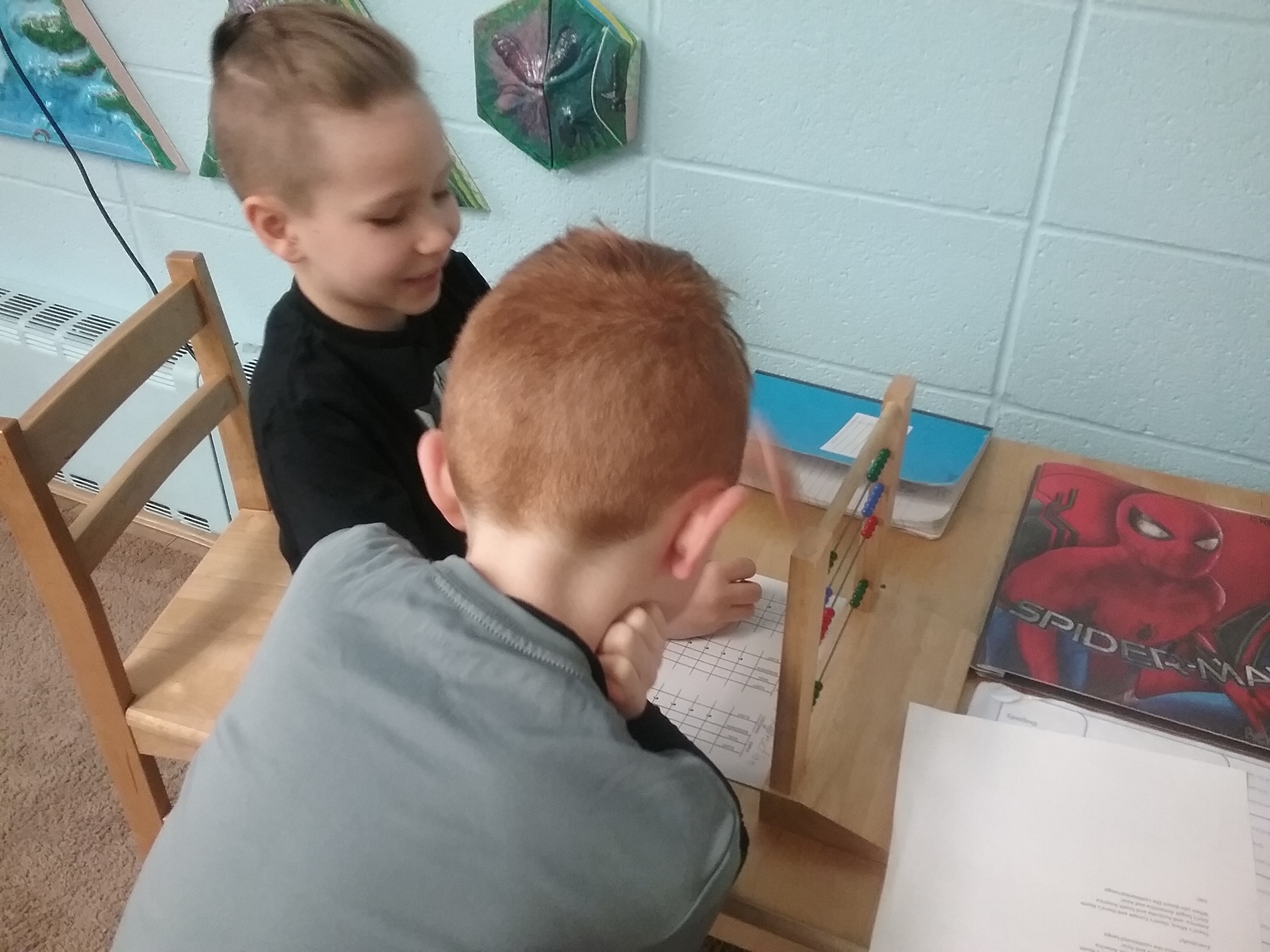
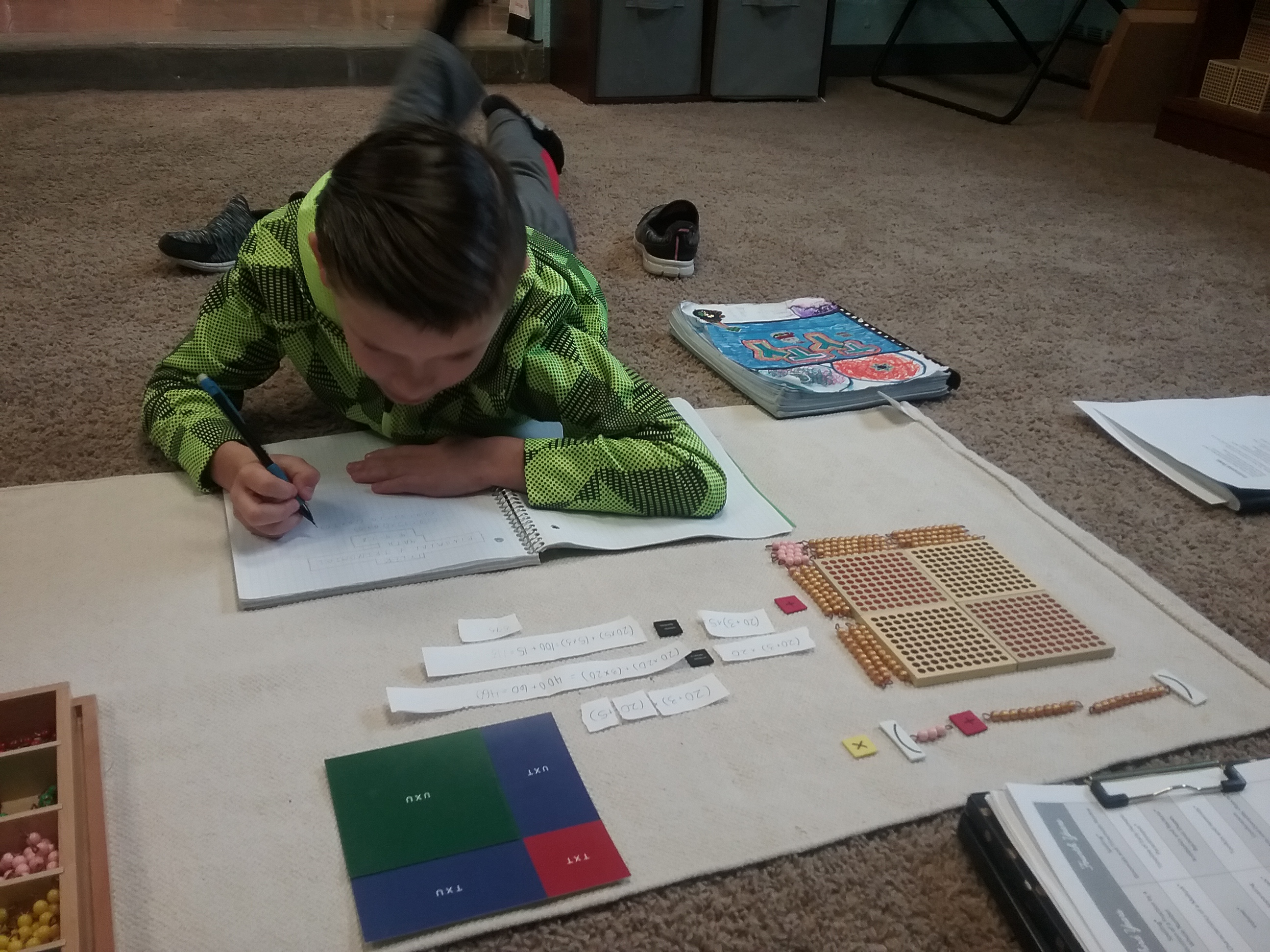
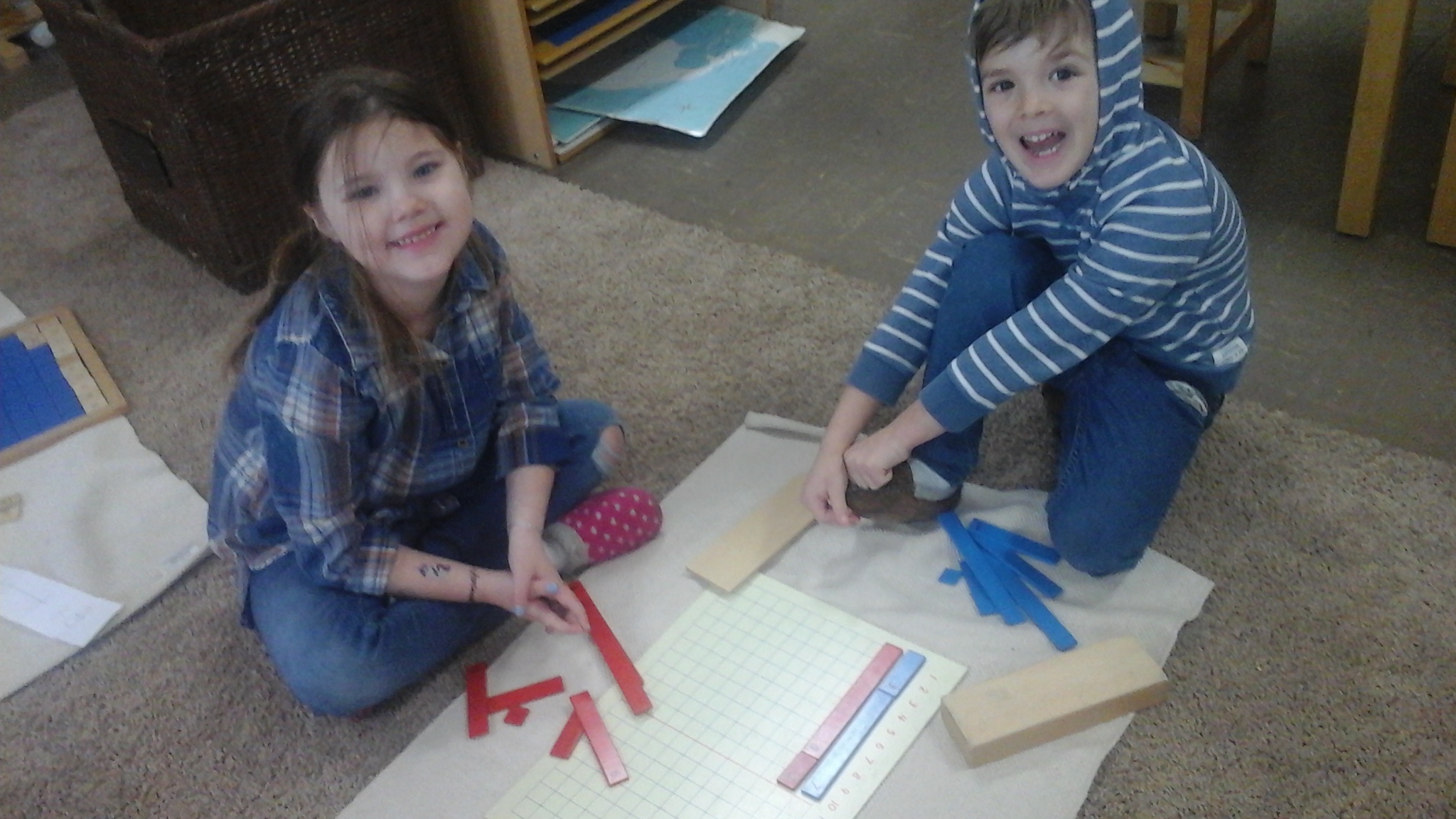
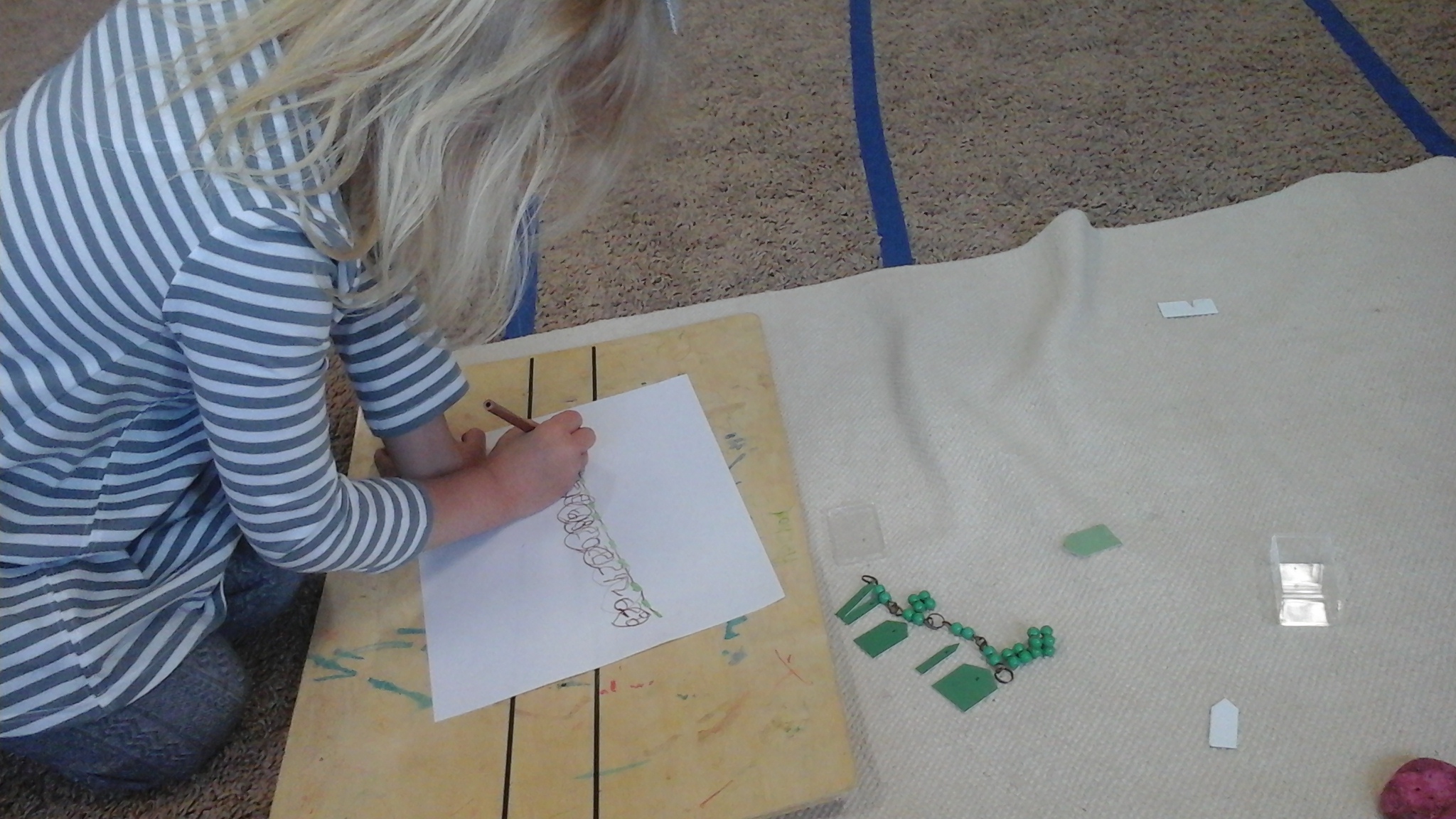
Our first graders and visiting kindergarten friend worked on their multiples this week by building the Decanomial. This was their second lesson with the Decanomial. This time, they went through and found which equations followed the Commutative Property.The third year students are working on multiplying fractions. This week, they began by multiplying fractions by a whole number. After some practice with this, students will learn how to multiply a whole number by a fraction, then finally a fraction by a fraction!These first year students are working with the Small Bead Frame. The Small Bead Frame can be used for adding and subtracting four-digit numbers. One of our first year students needed some help borrowing in his subtraction problem, so his friend came to help explain what to do! Students often learn better from their peers!This fourth year student was reviewing how to multiply a binomial by a binomial. He noticed that the pattern, or order of operations, matched what he was doing with cross multiplying on the Checkerboard. Eventually, he will learn that this is the formula for the lid of the Binomial Cube he used as a primary student!
A Peek at Next Week
Next week, first year students will be introduced to equivalency of fractions, the Conjunction Grammar Box, contractions, and parts of the leaf. Second year students will learn how to do compound multiplication on the Large Bead Frame and will continue studying commas and triangles. Third year students will take the volume of liquids, practice using quotation marks, and will learn more about the phyla in the plant kingdom. Fourth year students will continue studying decimals, early humans, and bacteria.
REMINDERS:
Wednesday, April 18 – International Festival Practice – arrive by 5:45
Friday, April 20 – International Festival – arrive by 5:00
This week, we learned all about Asia! We learned that in Japan, baseball is becoming a popular sport! We also learned that in India children often take automated rickshaws to school, which is a very small car, almost like a golf cart. We also learned that in China, they make rice cakes called nian-gao! We also visited some of the countries we are representing using Google Earth!
Working on learning the Cardinal Directions by matching the labels to the signs hanging up in the classroom!
Working on the Addition Strip Board! This material is a more concrete way for the child to practice their addition facts!This sweet girl is practicing counting by 2’s and drawing her own 2 Bead Chain!
This week our class has been working so hard on their class project, their festival lines, and their songs!! Keep up the practicing at home parents!☺ We are also getting very exciting about our baby ducks! We are on day 28… so any day now!!
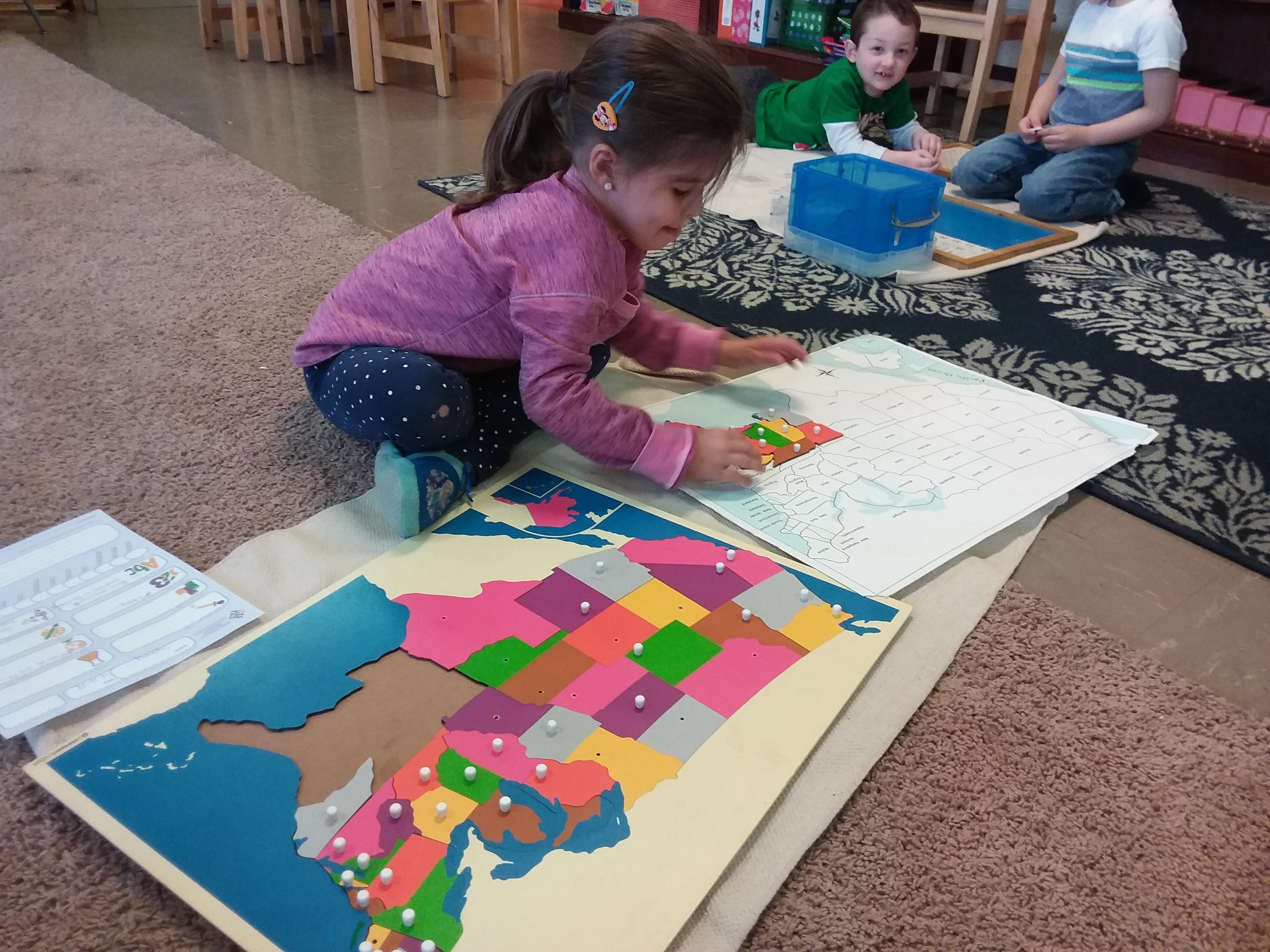
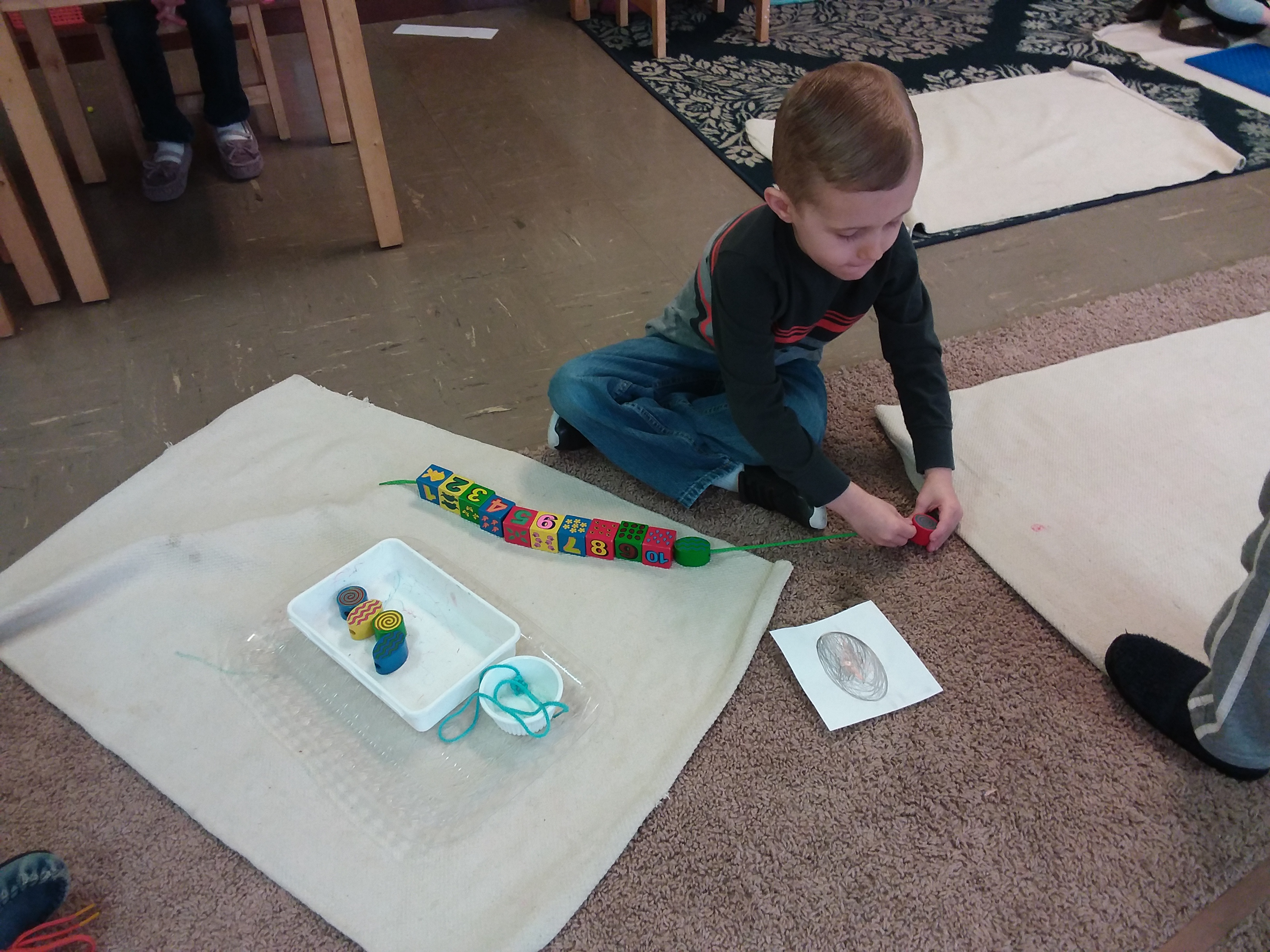
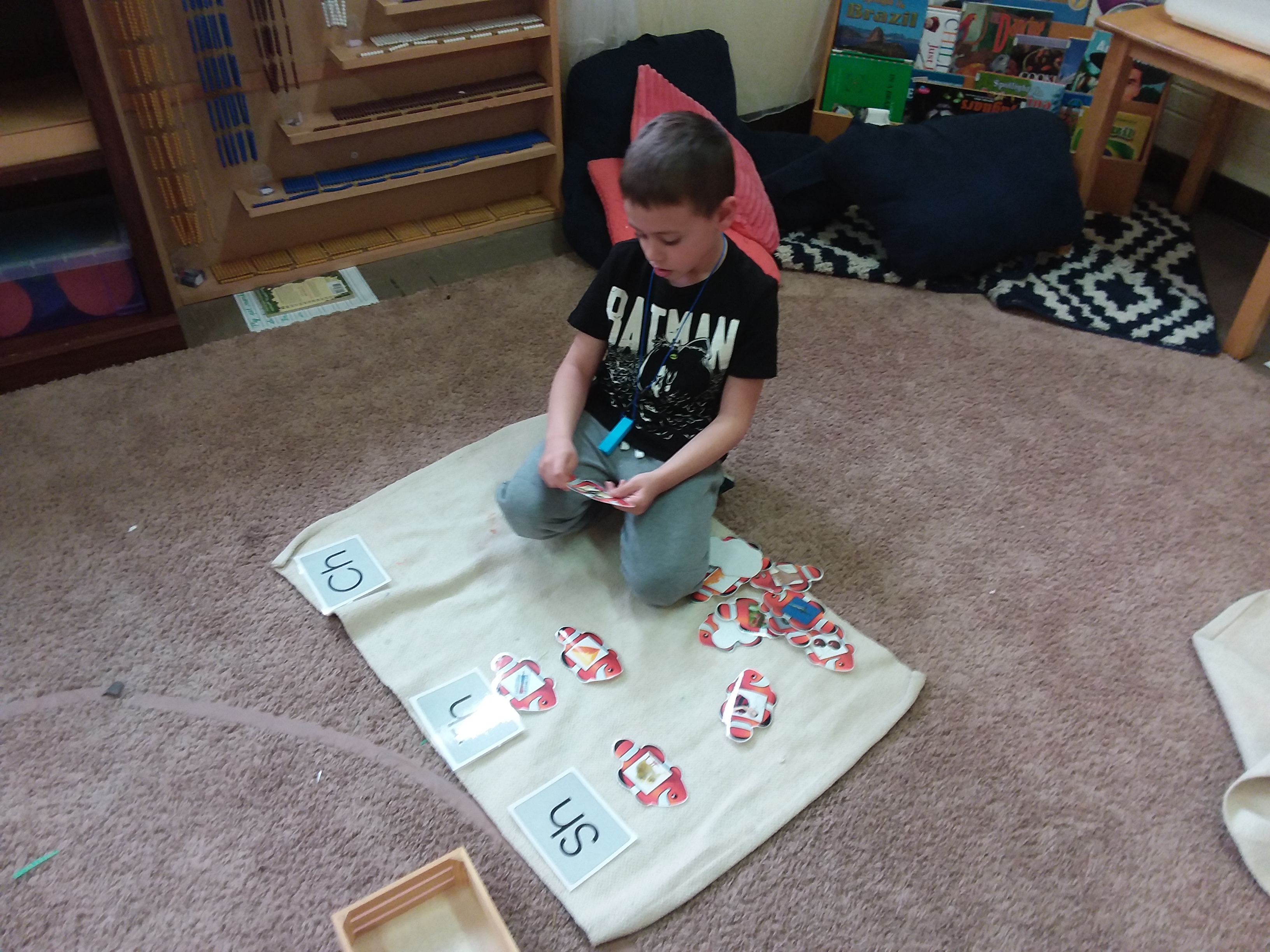
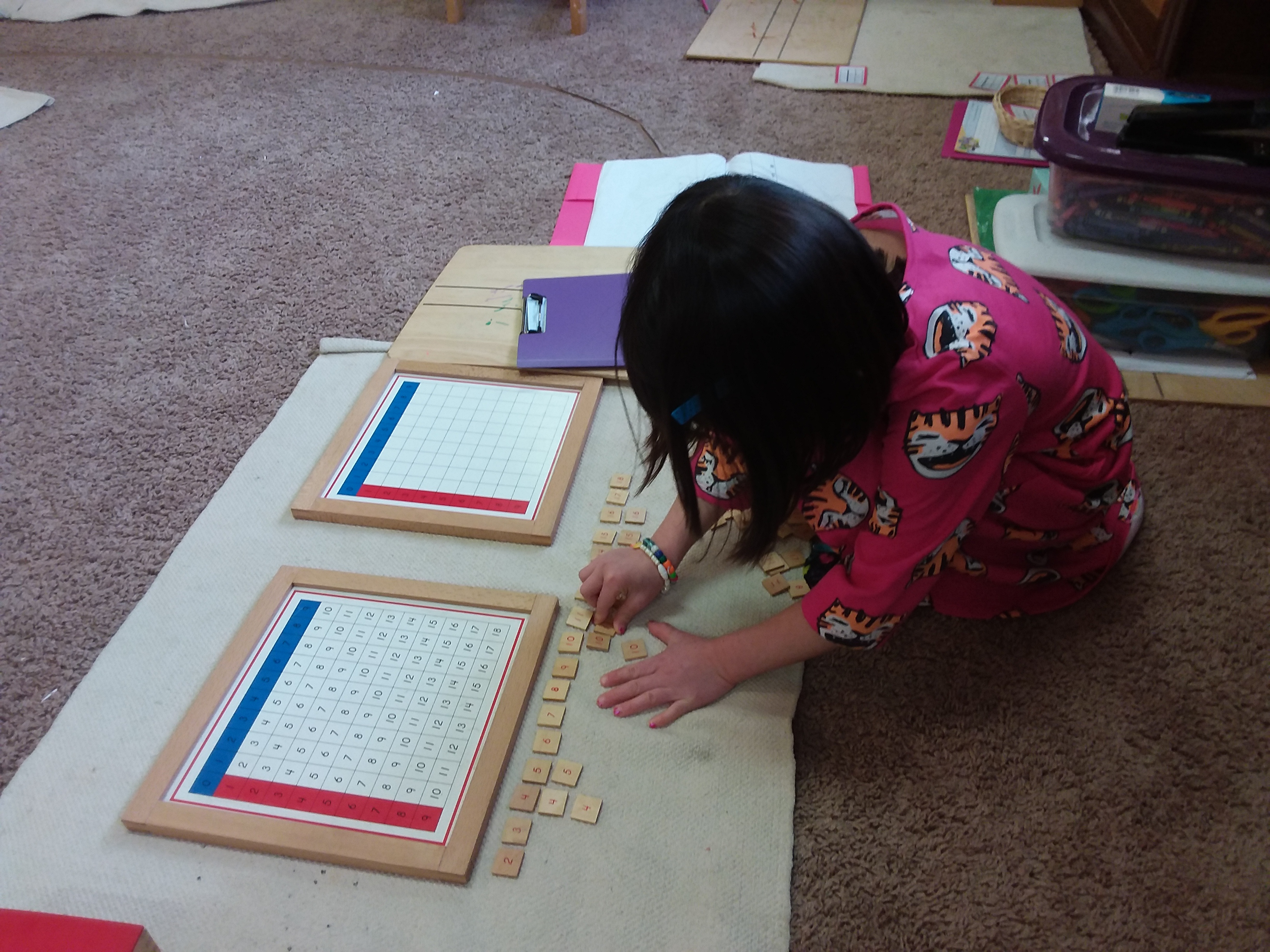
When working on our geography maps it’s purpose is to provide the names of the countries/ states/ provinces of each continent and the bodies of water that surround the continent.One of our kindergarten students is working on the addition snake game. The purpose is to prepare the child for addition, and to practice memorizing addition facts.Bead stringing helps develop concentration, fine motor control, and the confidence that will serve them with all other Montessori materials.Phonograms help readers and writers decode words and spell words correctly.Addition finger charts allows the child to practice memorization of addition facts.
Take A Peek Into Next Week:
Next week we are getting ready for our international festival!!
Next Wednesday is our festival dress rehearsal. Your child does not need to wear their costume for this. Friday is the big night!! Please remember that next Friday is an early release day. Your child must be picked up at 12. Also, be at Cuyahoga falls high school at 5pm!!
Africa: Is one of the seven continents in the world that has more than 50 countries. Cairo located in Egypt is Africa’s largest city. Africans can work on farms to grow corn, rice and other crops. Africa has the largest desert in the world known as the Sahara. It also has grassy places called savannas and rain-forest. Africa is known for all its wild animals such as: gorillas, zebras, giraffes and lions.
Europe: Is one of the seven continents in the world. It is very small but has many countries like Germany, Spain and Italy. Each country in Europe has its own language, food and customs. For example people in Germany speak German and celebrate a festival called Oktoberfest. Europe also is known for its groups of mountains called ranges. The tallest mountain range in Europe is the Alps.
Work Time
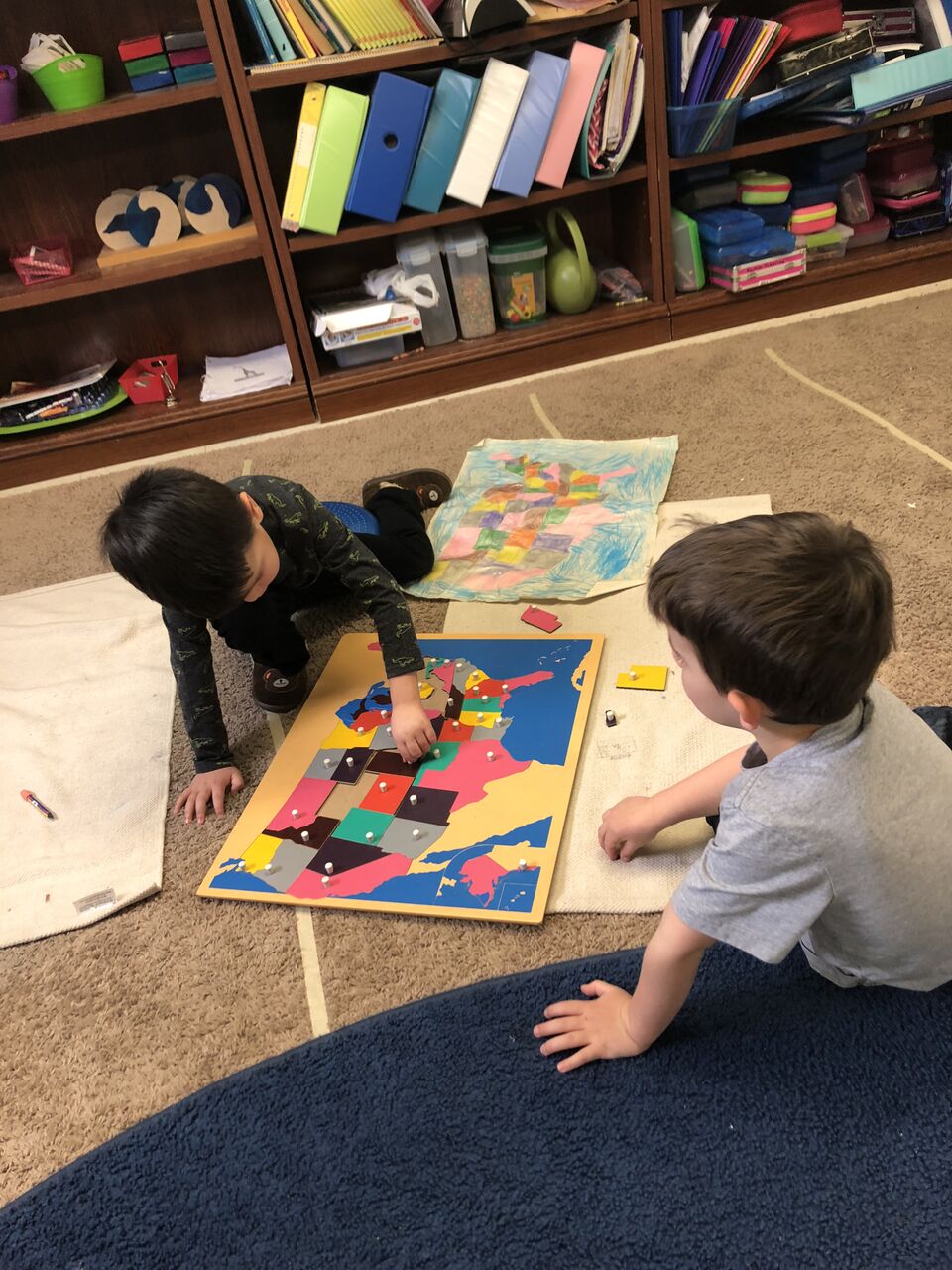
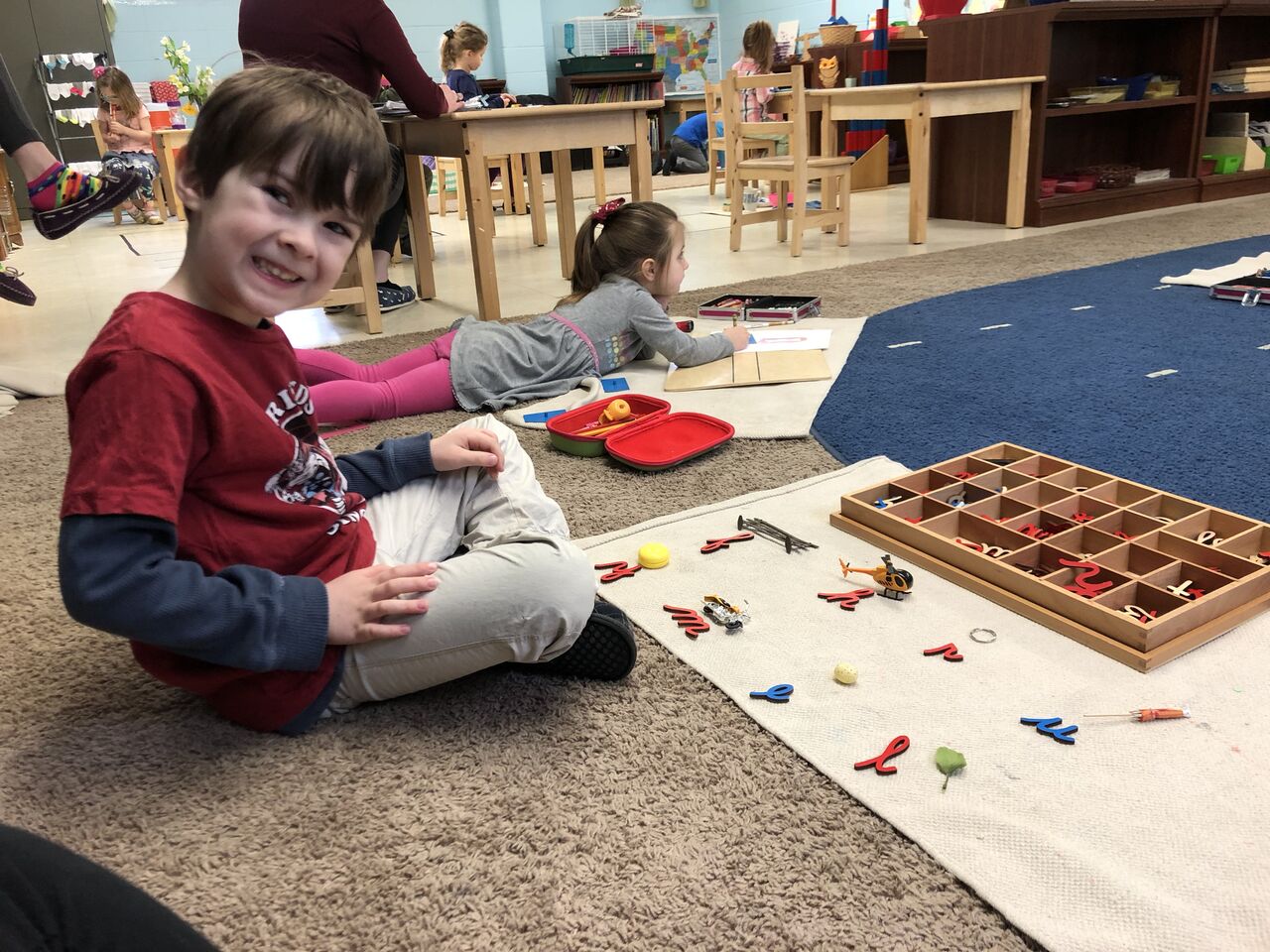
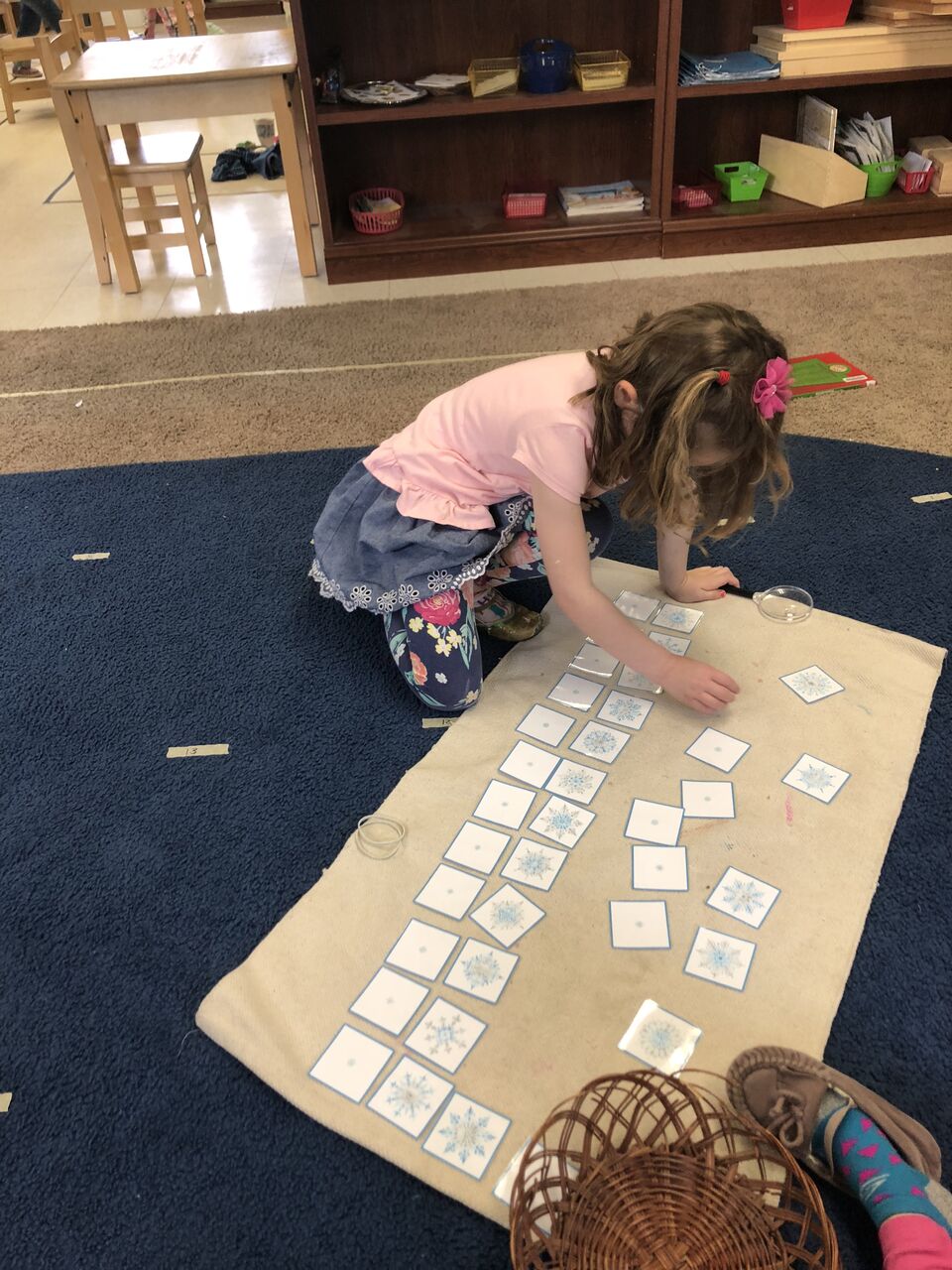
I Spy: This student is playing I spy using the initial sound she hears when she names each object in the basket.Trinomial cube: This child is learning how to build a trinomial cube, while also getting an introduction into algebra and preparation for the formula a3+3a2b+3a2c+6abc+b3+3ab2+3b2c+3ac2+3bc2+c3.United States of America Map: These children are learning the names of the states and where they are located on a map.Moveable Alphabet: This child is saying the word of the object and matching the symbol with the correct initial sound to the object.Big/Small Snowflake Match: This child is developing her understanding of big and small by matching the same snowflakes of different sizes together. Understanding concepts of big and small are important for math readiness. A main concept of mathematics is understanding degrees of big and small.
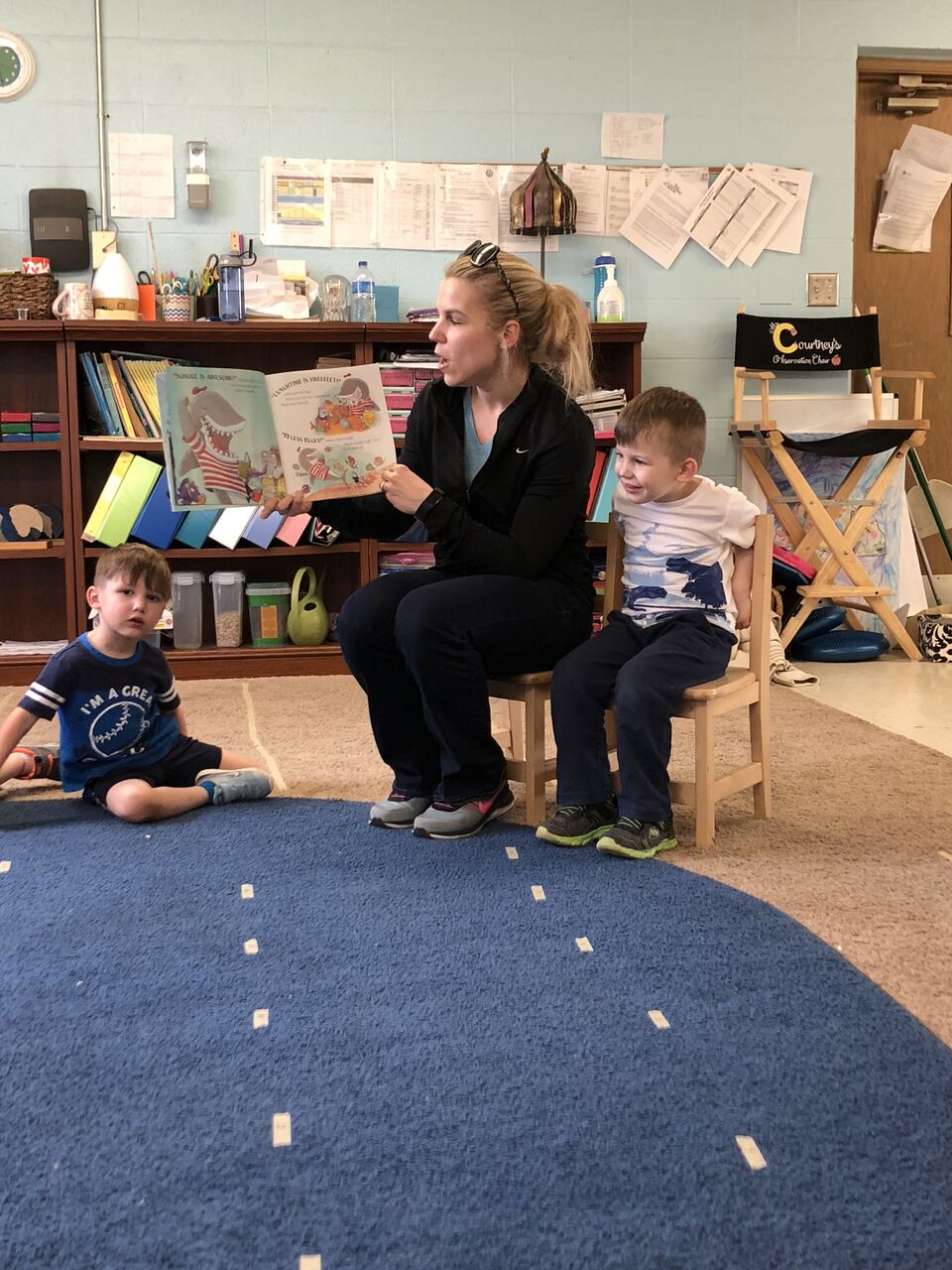
Guest Reader
Reminders
International Festival Rehearsal | April 18th 6pm-7pm
International Festival Show | April 20th 5:30pm-8:30pm
Early Dismissal | April 20th at noon
A peak into next week: Australia, Antarctica and Asia
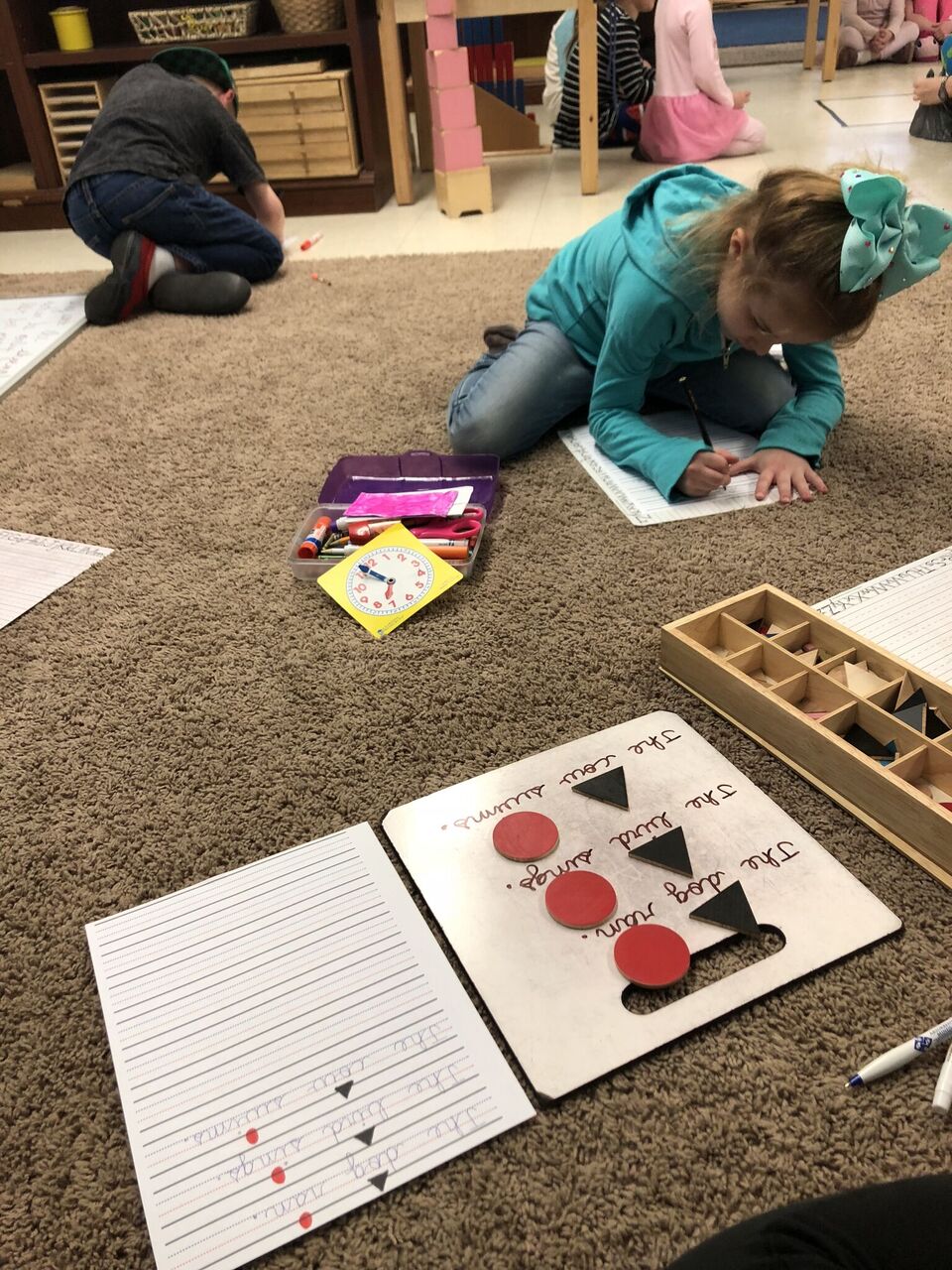
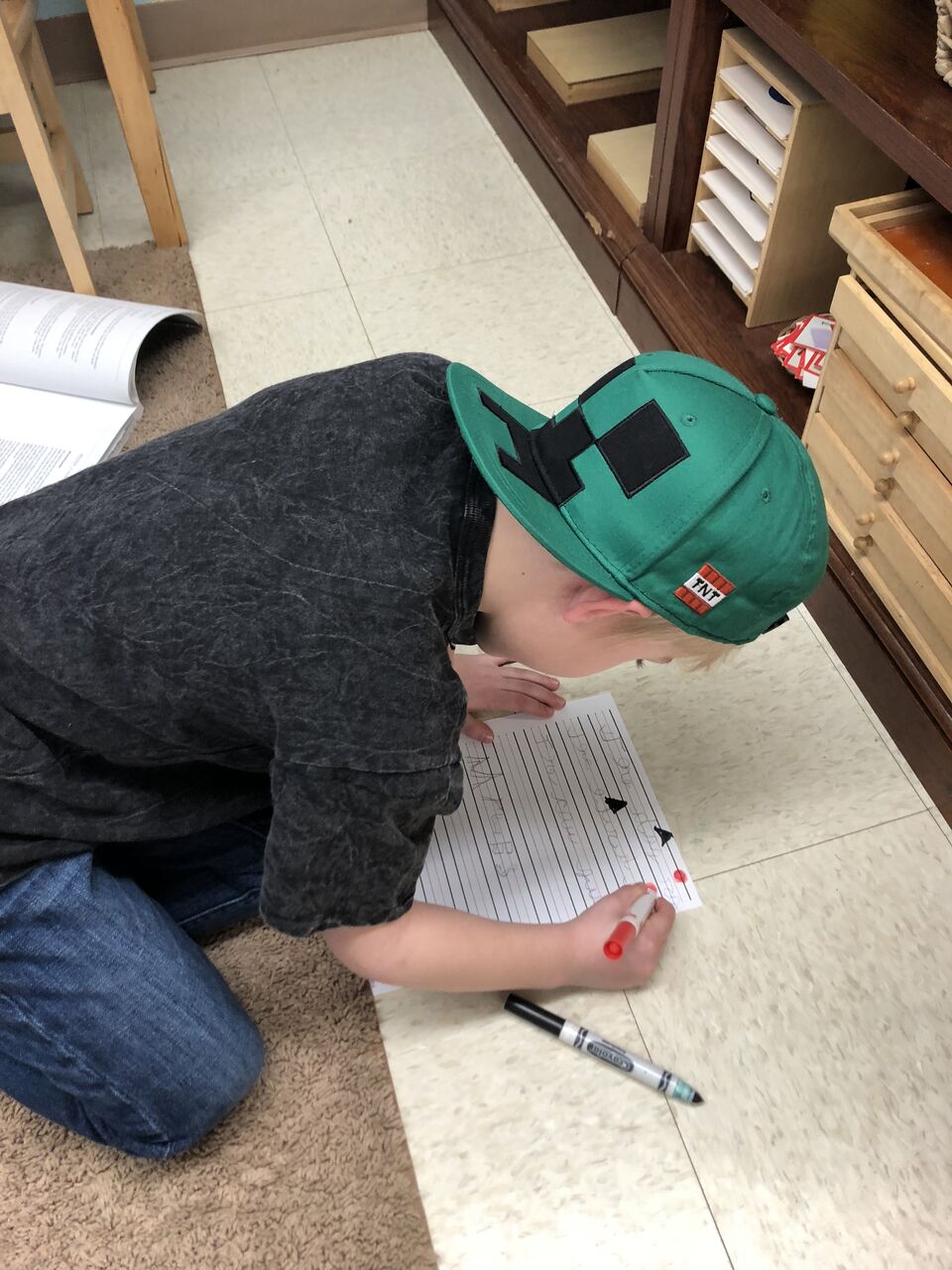
Nouns/Verbs: The students learned that a noun is a person, place , or thing. And that a verb is an action word or something that you can do.
Nouns: These students are labeling and identifying nouns.This student is identifying and labeling the nouns and verbs found in each sentence, by using a large black triangle for nouns and a large red circle for verbs.This student is identifying and labeling the nouns and verbs found in each sentence, by using a large black triangle for nouns and a large red circle for verbs.
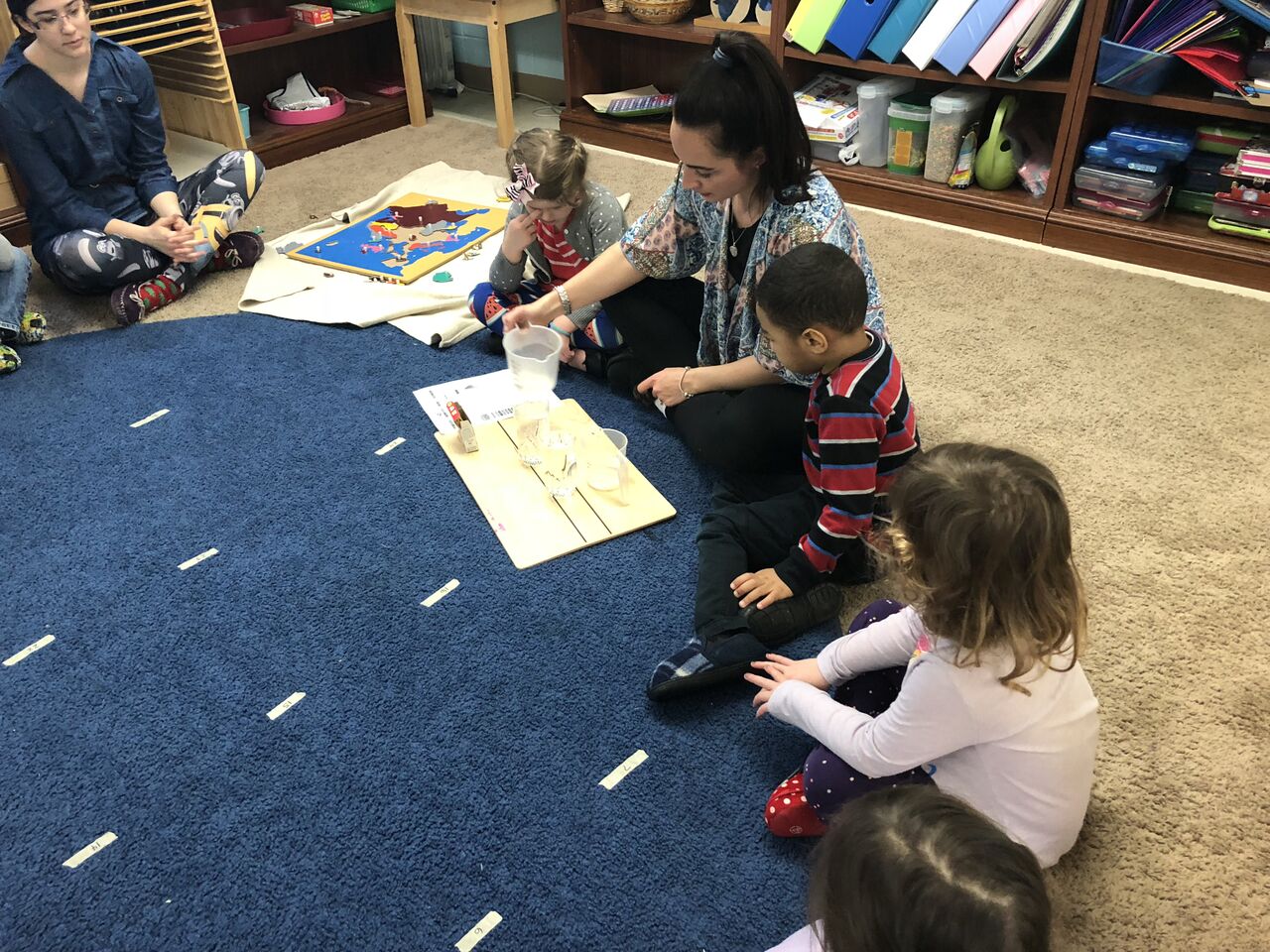
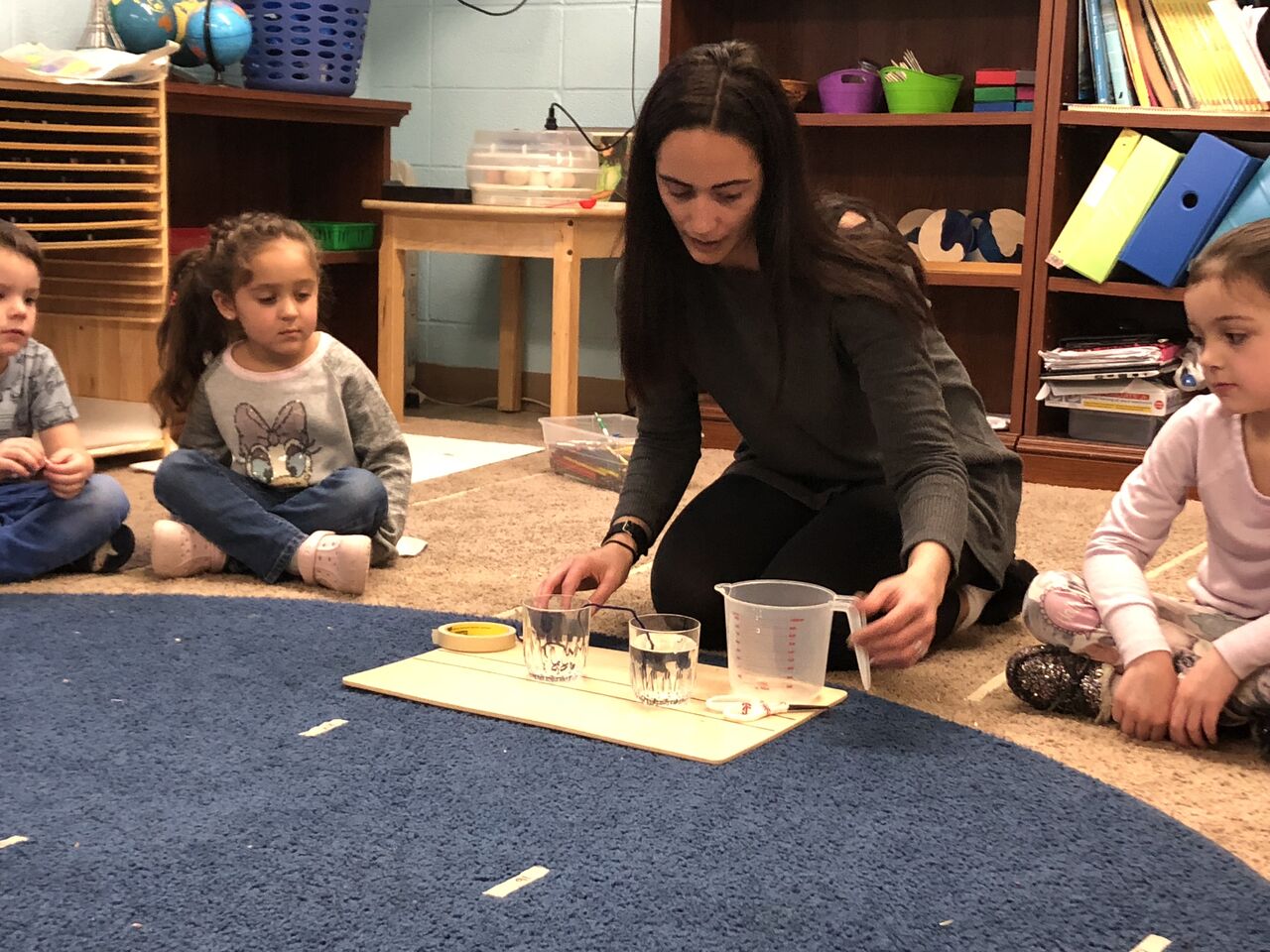
Water Molecules on the Move: We filled two glasses with the same amount of water: one cold and one hot. Then, we put one drop of food coloring into both glasses at the same time. The students observed that the food coloring traveled quicker through the hot water than the cold water. We discussed how molecules move faster through hot water which is why the food coloring spread faster.
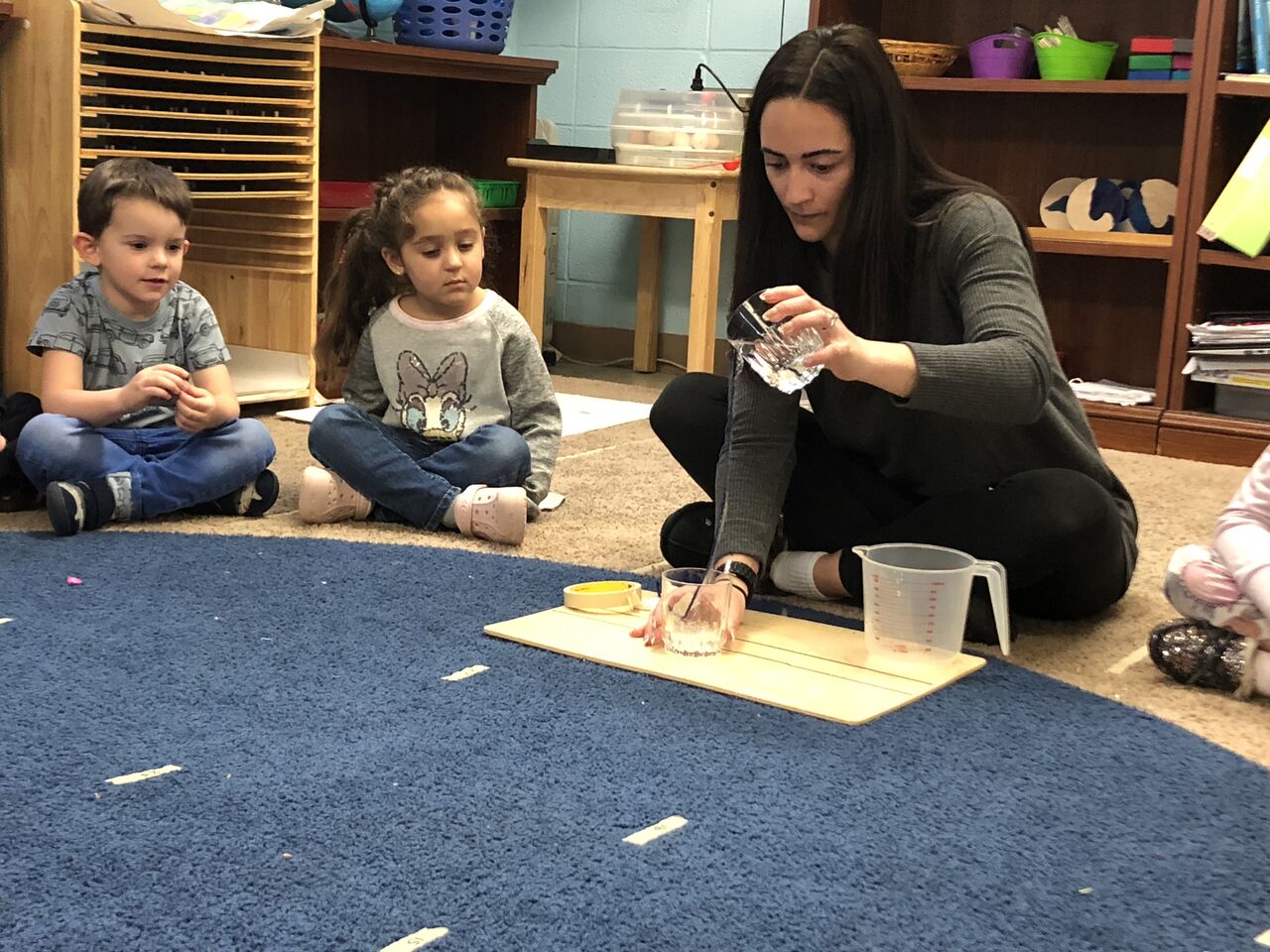
Traveling Water: We taped a piece of string inside one glass then filled it with water. After that we placed the loose string in the empty glass, pouring the full glass of water over the string. When we poured the water it traveled along the string making its way into the empty glass. We talked about how a drop of water has many molecules that are held together by electrical, molecular bonds. We learned that these strong hydrogen bonds found in water are what allowed the water molecules to stick together very well as the water traveled down the string and into the empty glass.
North America: Is the third largest continent in the world. There are four big countries: Canada, Greenland, the United States and Mexico. It has high mountains and flat grasslands. It has swamps, forest, deserts and even volcanoes. Most people speak English, Spanish or French.
South America: Is the fourth largest continent in the world. It has tall mountains and flat grasslands. The worlds largest rain forest is in South American and is called the Amazon rain forest. There are may unusual plants and animals.
Work Time
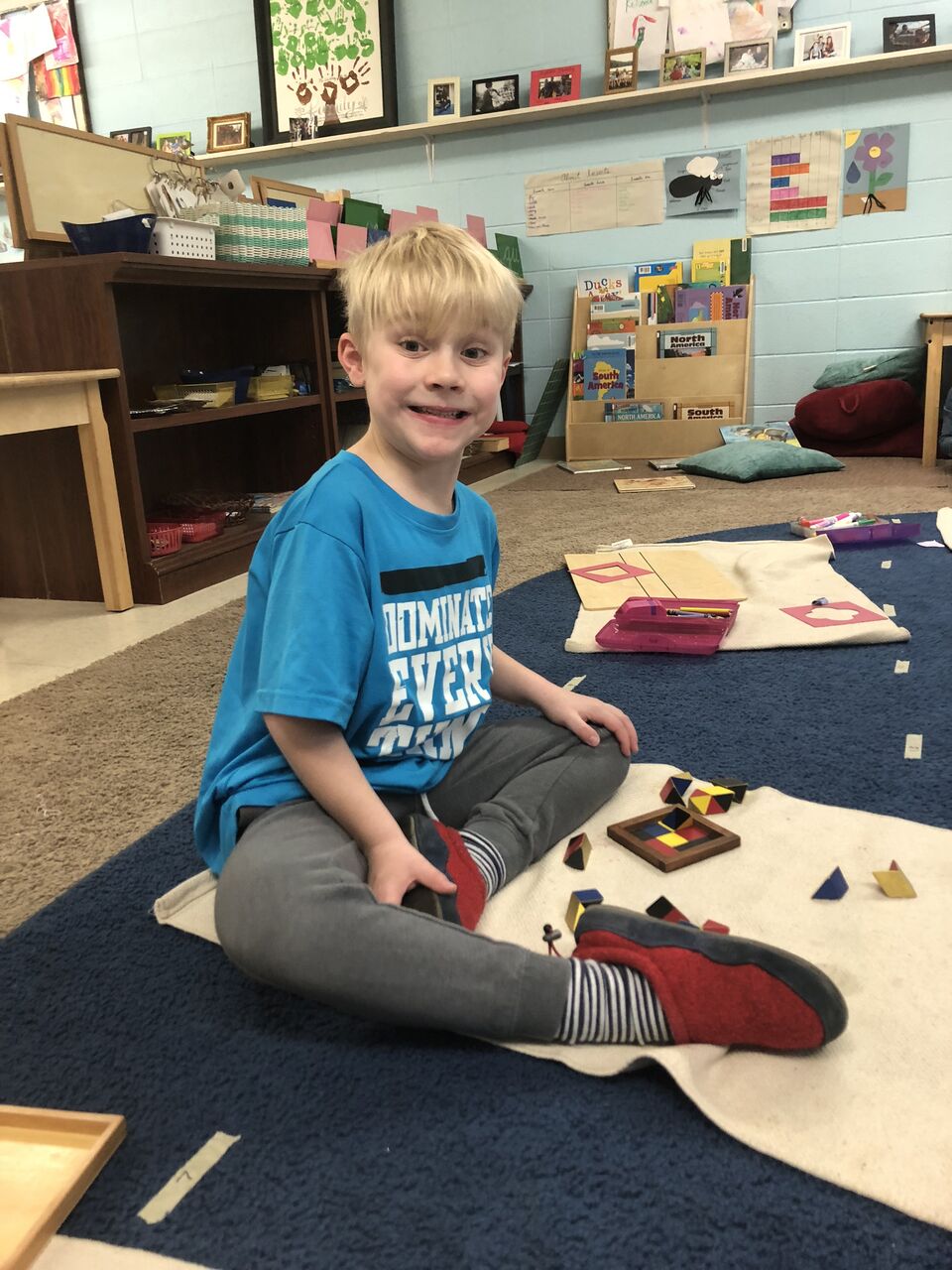
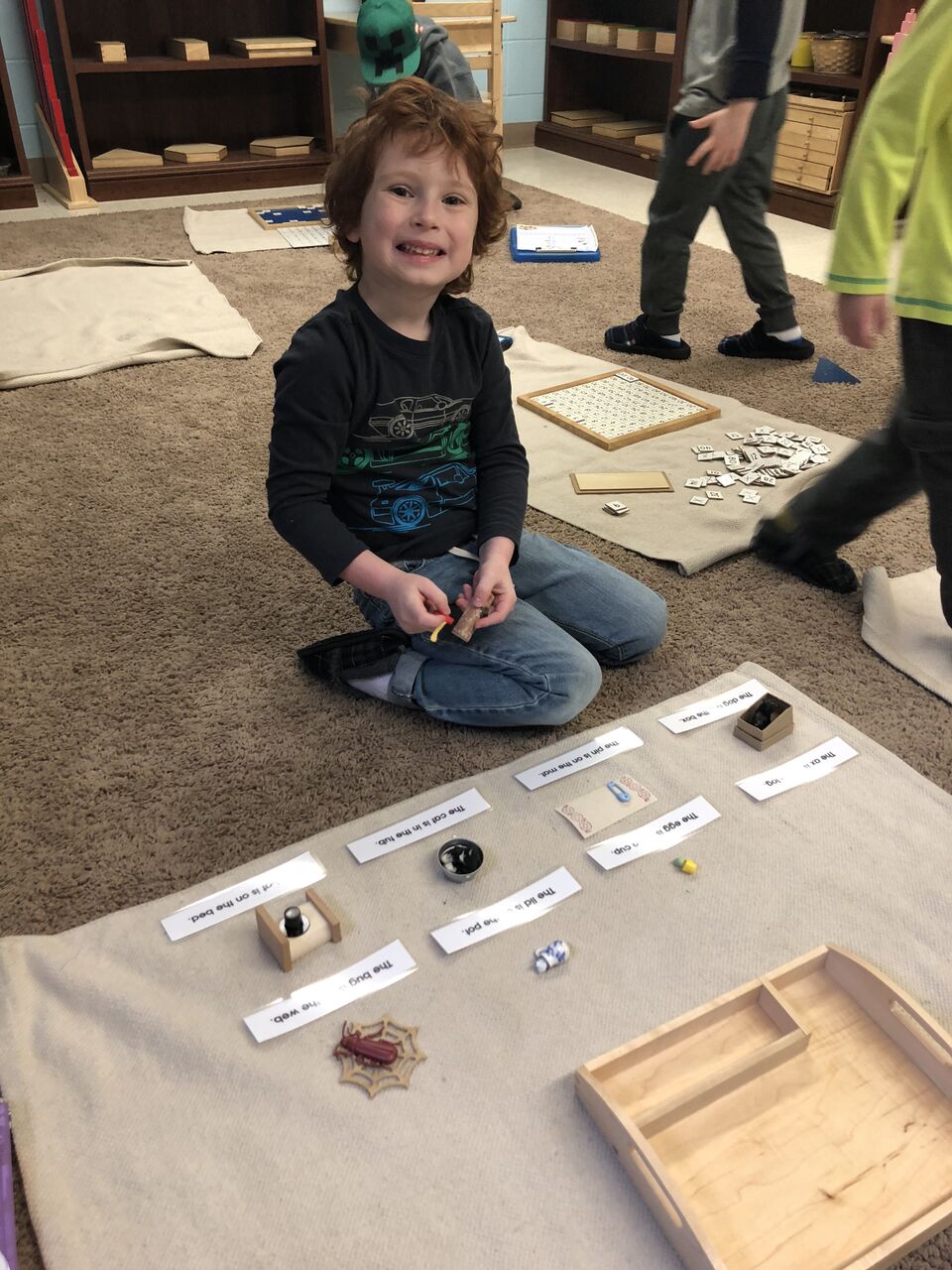
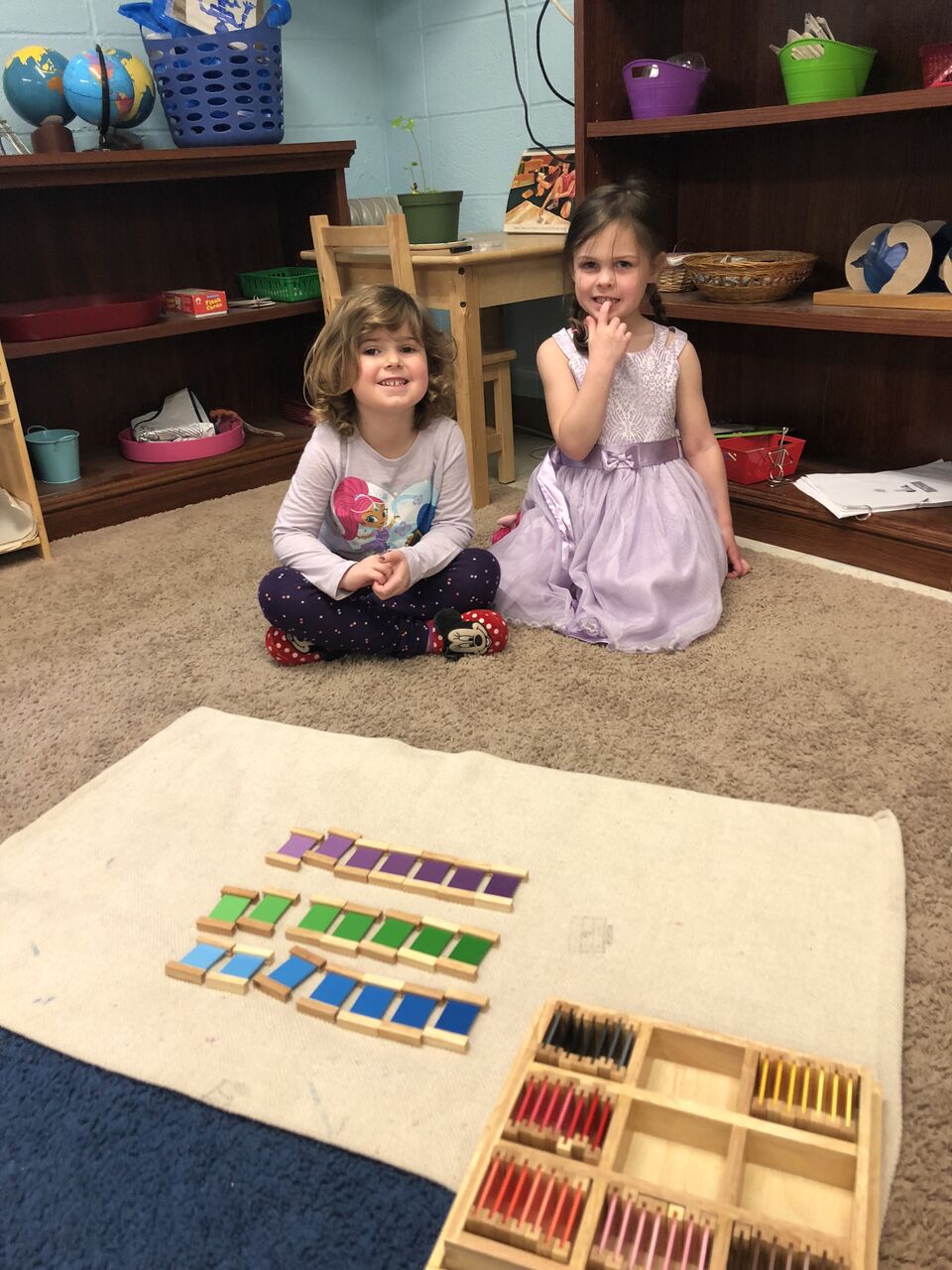
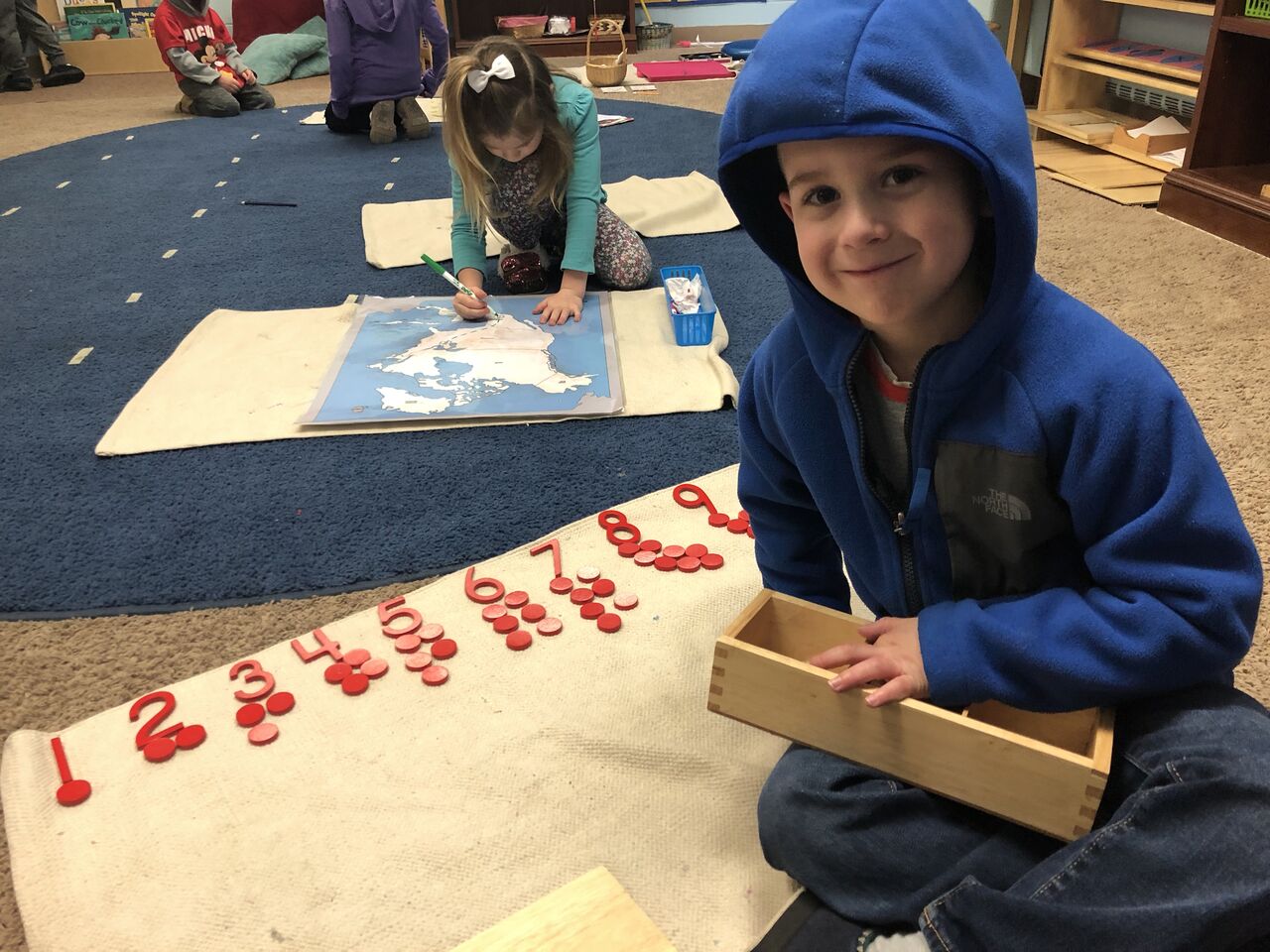
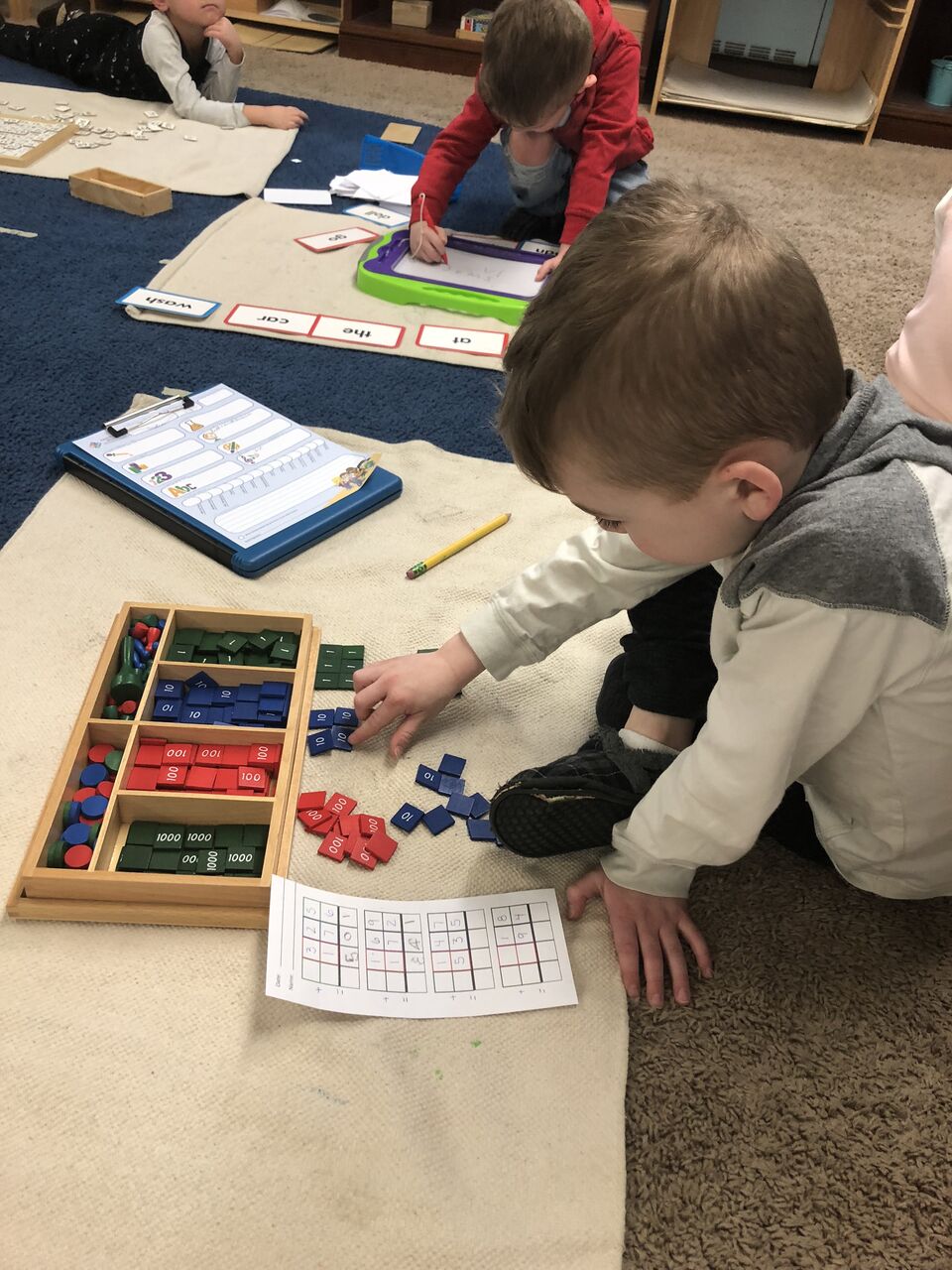
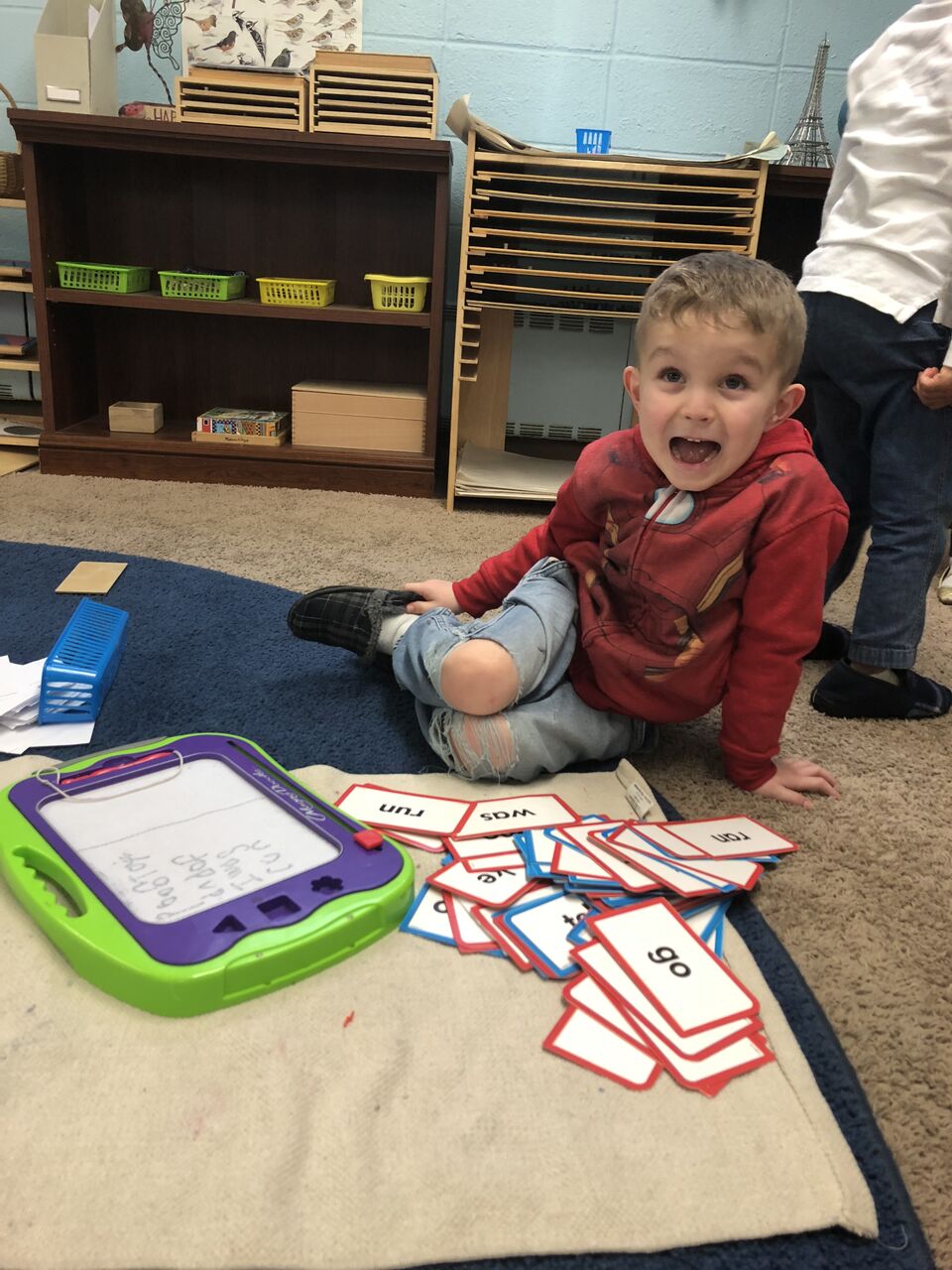
100 Board: This child is memorizing where the tiles should go and be placed on the 100 chart, while also learning to identify names of the numbers 1 through 100 and how to write each number.Pyramid Puzzle: This child is matching the different colors together in order to create the pyramid shape. This puzzle involves not only the ability to concentrate but the ability problem solve.Prepositions: This child is learning what a preposition is and reading them in different sentences. He is developing an understand that a preposition is a word used to link nouns, pronouns, or phrases to other words within a sentence.Color Box 4: These children are grading different colors from darkest to lightest, while also refining their sense of sight.Cards and Counters: This child is demonstrating his knowledge that each number is made up of separate quantities. He is also able to visually see the sequence of numbers and how many separate units go together to form each number.Addition: These children are using the golden beads to discover that when you put two small numbers together to get a larger number it is called addition.Stamp Game: This child is using the stamp game community cards to do addition. It works like the golden beads but instead of unit beads there are unit stamps. Instead of ten bars there are ten stamps. Instead of hundred squares there are hundred stamps. Instead of thousand cubes there are thousand stamps.Magna Doodle: This child is practicing writing sight words on a Magna Doodle. He is developing multiple skills involving his eyes, arms, hands, memory, posture and body control.
Guest Reader
Reminders:
International Festival Rehearsal | April 18th 6pm-7pm
International Festival Show | April 20th 5:30pm-8:30pm
This week, we continued to learn all about Australia! We learned that in Australia, people greet one another by saying ” G’day!”. We also read a story about a baby kangaroo called ” Pouch”, and we learned that baby kangaroos are carried by their mothers in a pouch on their body. We also learned that Australia used to be called New Holland!
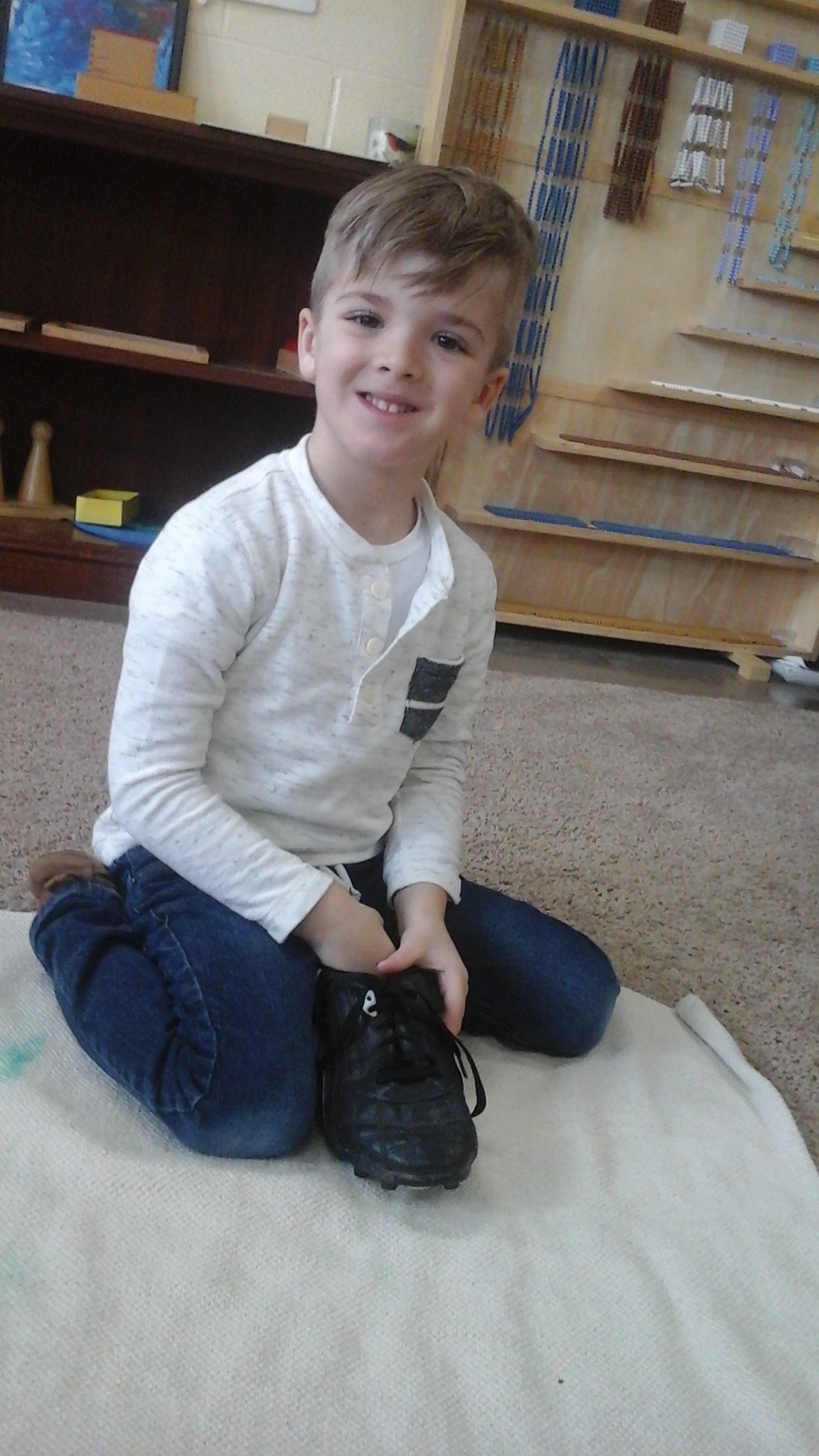
Proud of his shoe tying!
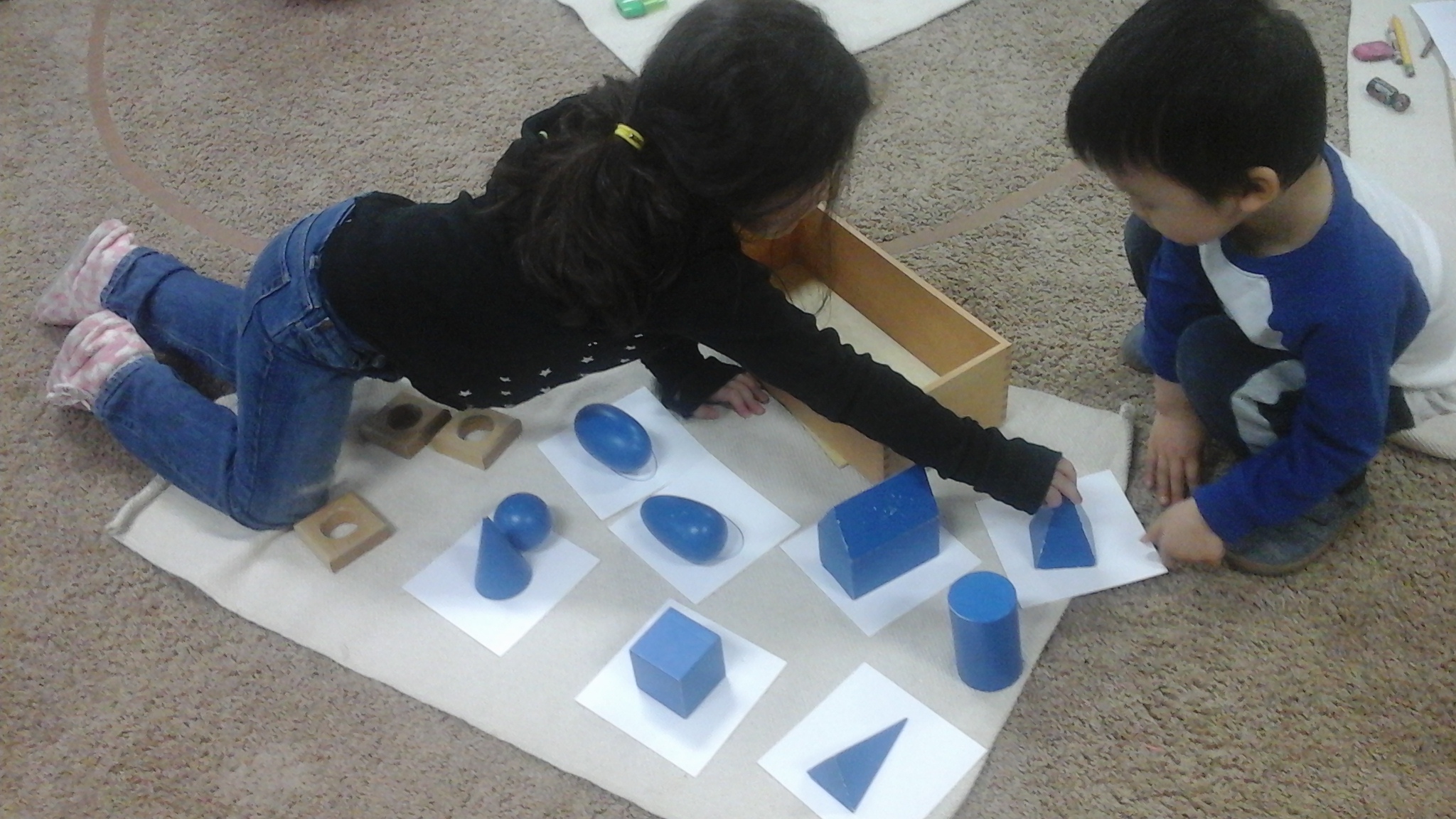
Matching the Geometric Solids to their bases! This material aides the child in refining their perception of two demensional forms. It is also indirect preparation for geometry!
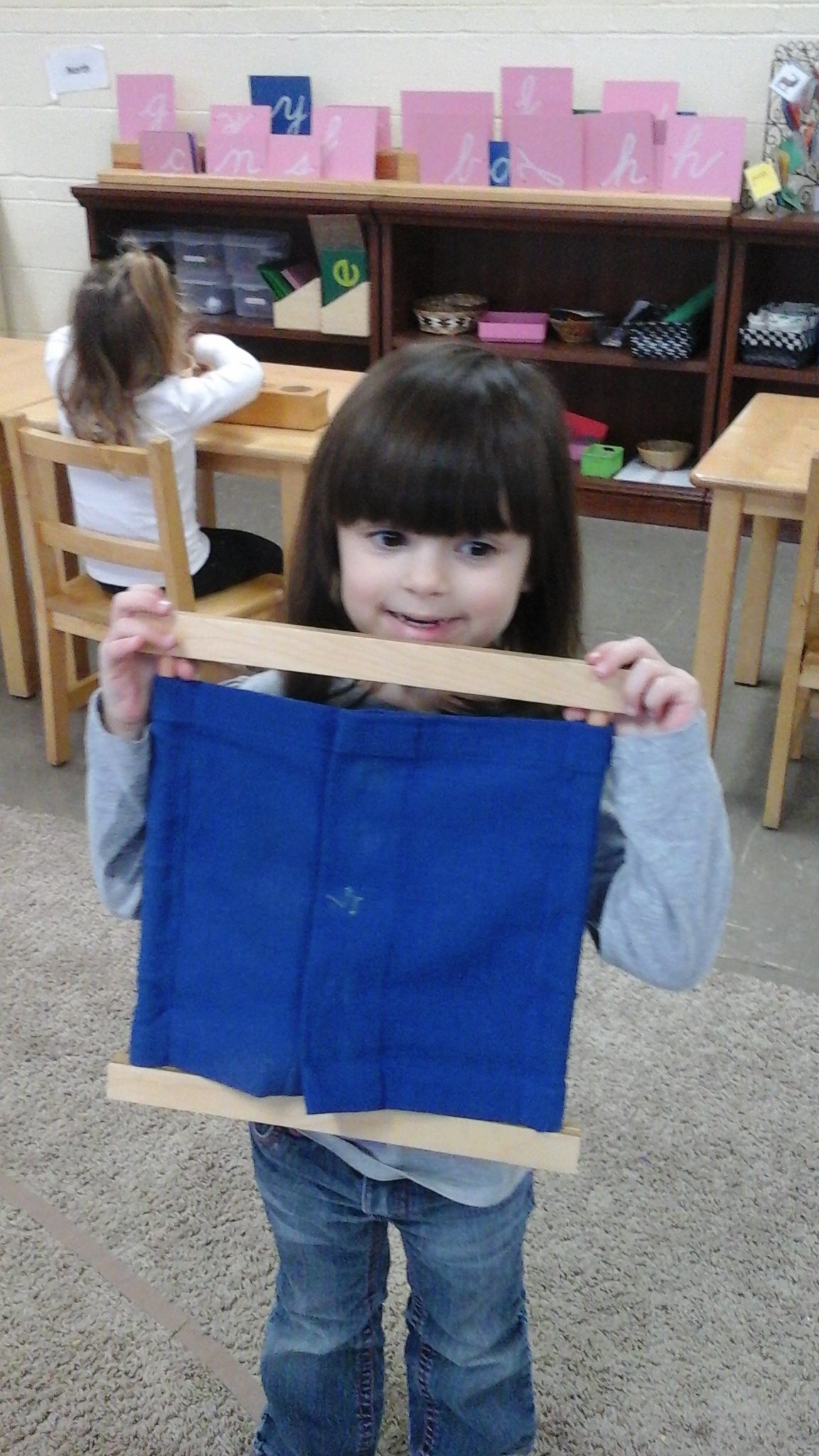
Proud of her work on the Snapping Frame! This material is designed to teach the child how to fasten clothing with snaps. In addition, it aides the child in developing their concentration, coordination, and independence.
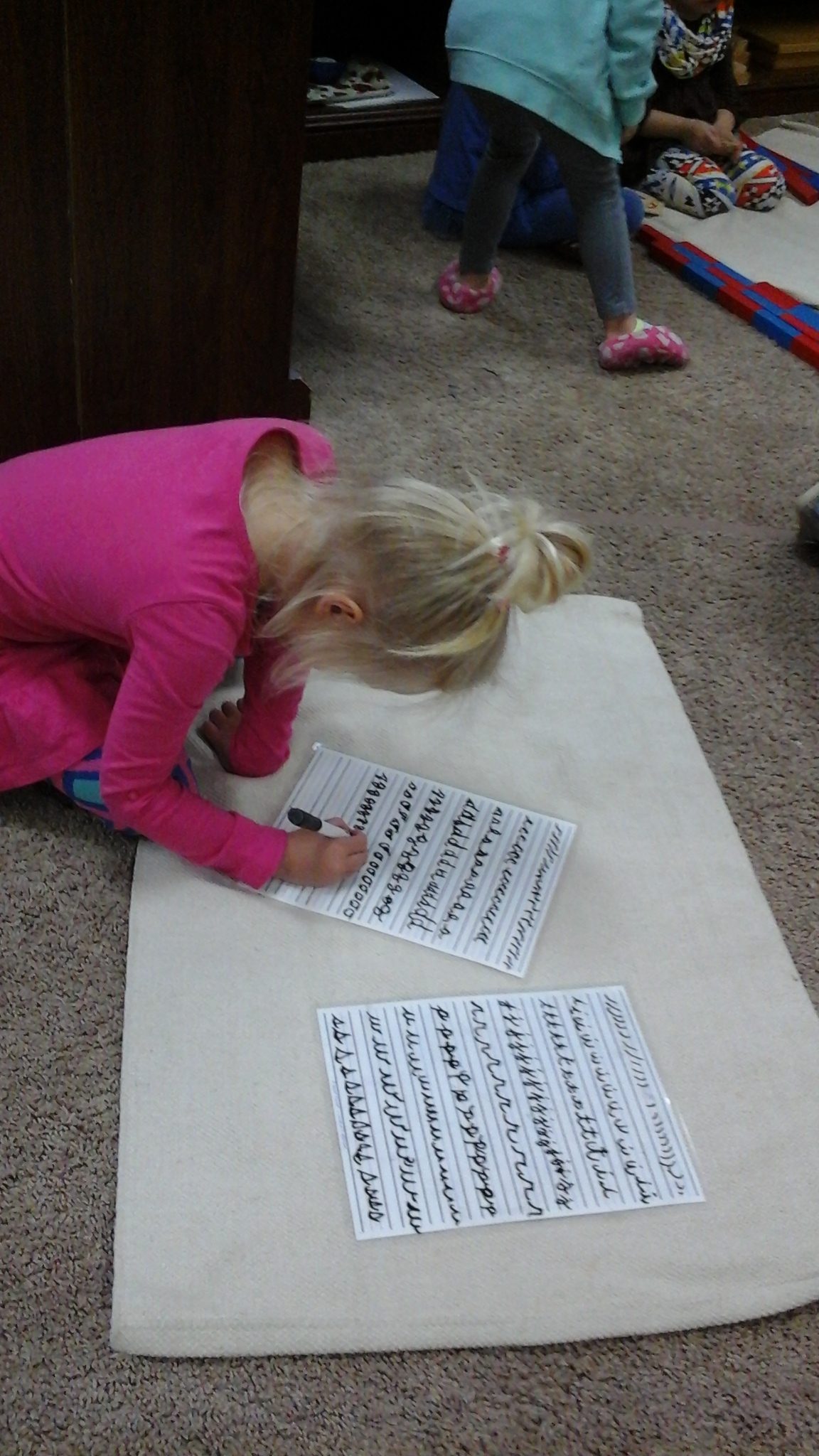
Working on cursive lower case letter formation from the Handwriting area!
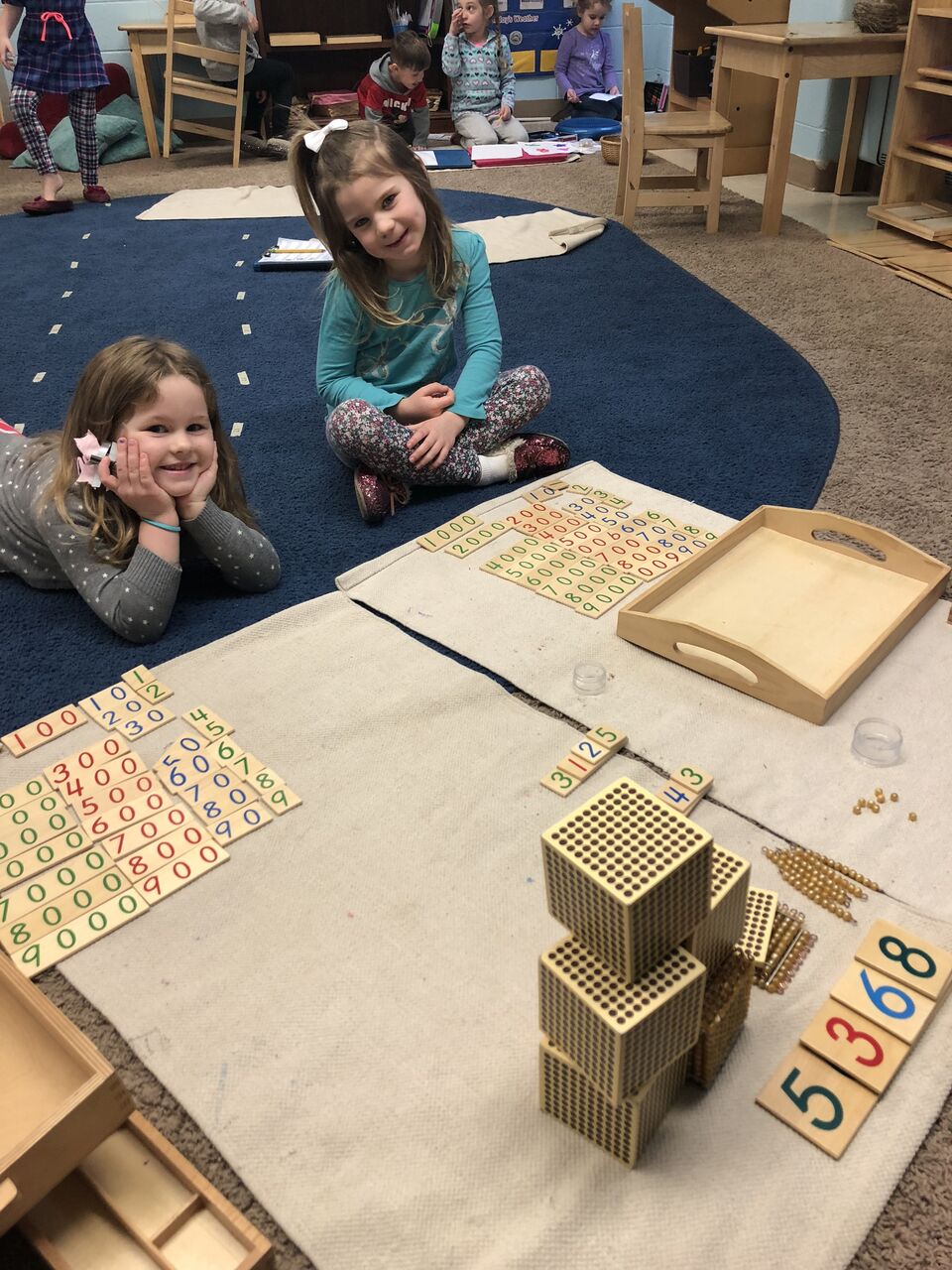
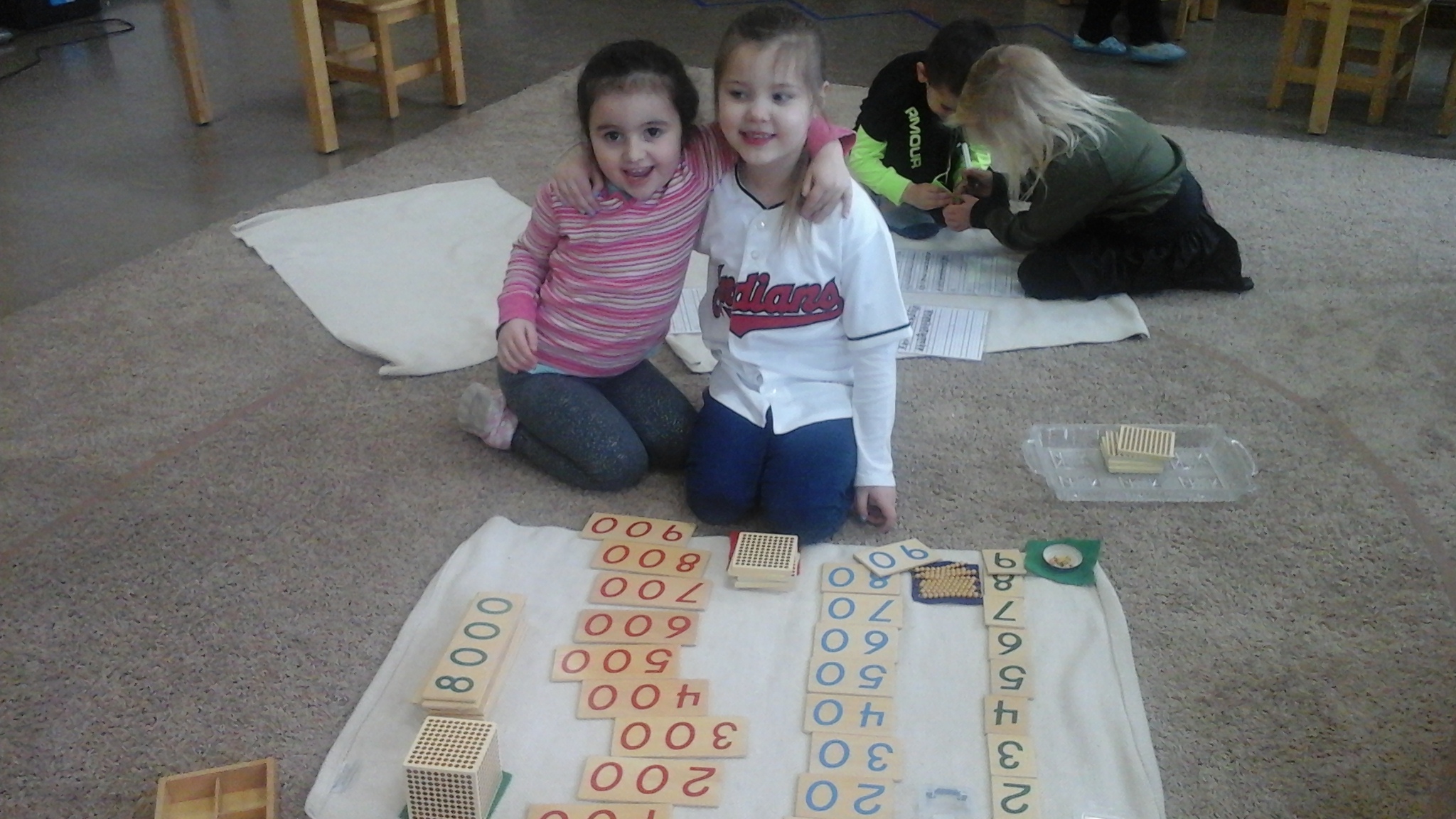
These two sweet girls are working on the 9 Tray together! This material is designed to reinforce the naming of quantities and symbols. The child counts by 1’s, 10’s, and 100’s and ends with discovering there are 10 hundreds in 1000, 10 tens that make up 100, and 10 units that make up one ten!
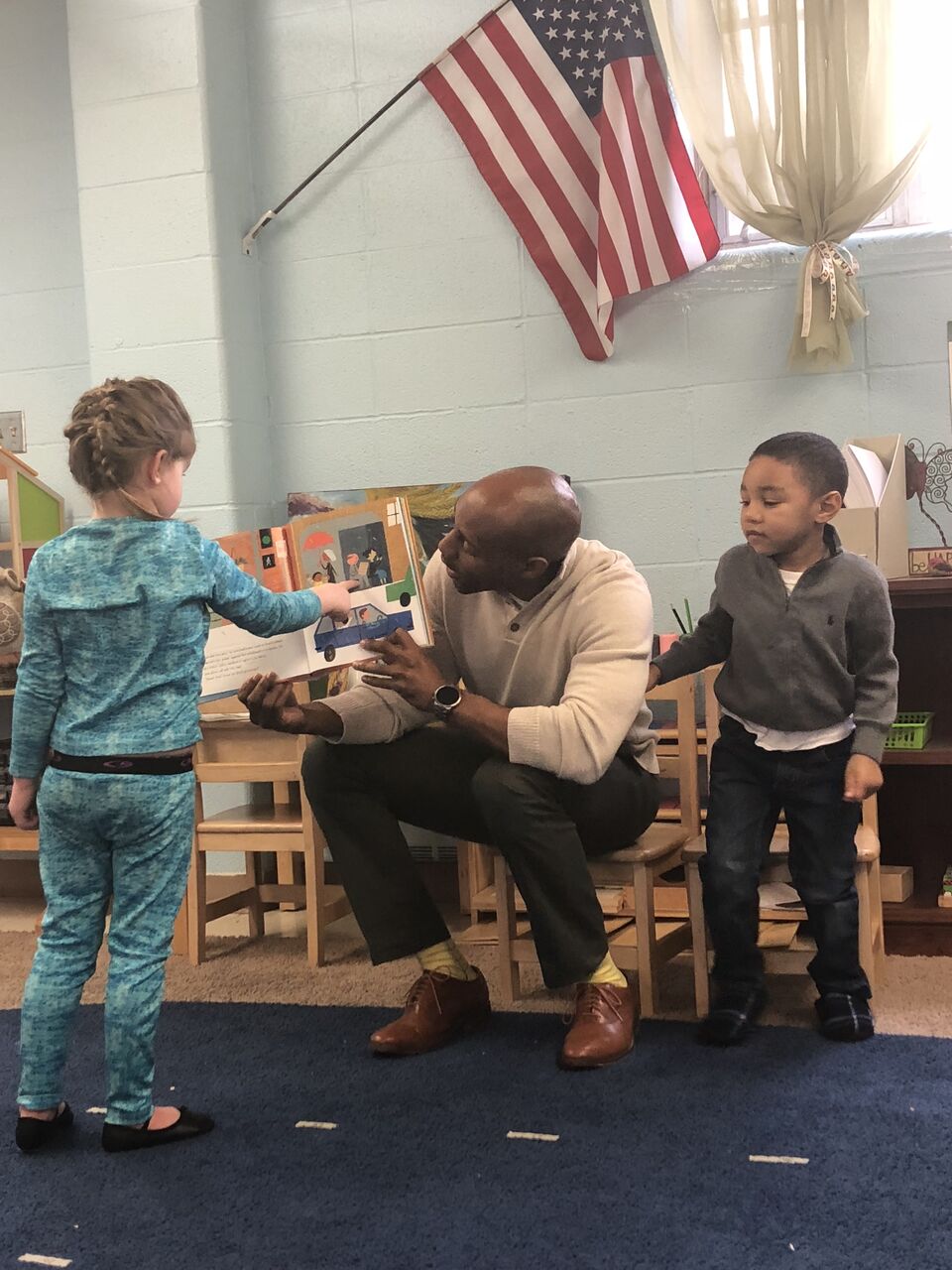
Reid’s dad came to read us a story about a little boy who wanted to be a Hippopatamus! So fun!
Anna, a former student in our classrom, came to visit and read to us!