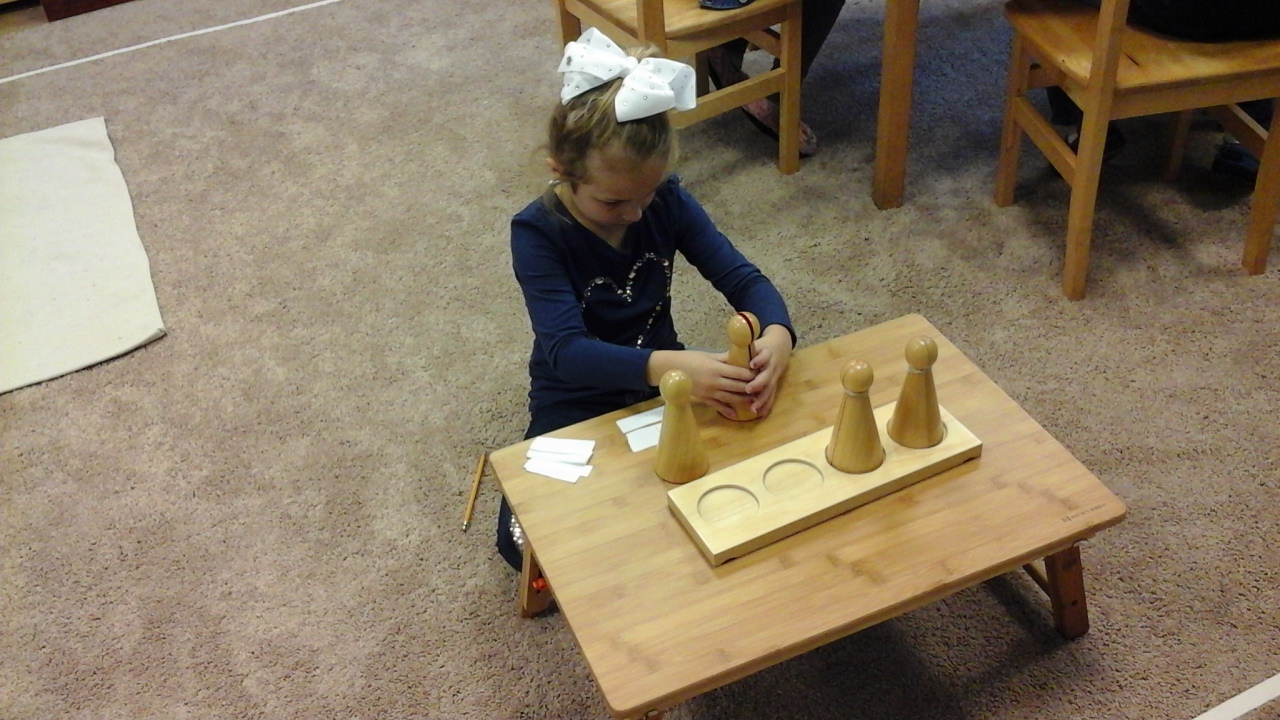
Line Time: Living and Non-Living- This week we talked about living and nonliving things. Your children now know what makes a living thing. All living things reproduce, grow, eat or take in nutrients, breathe or exchange gases, and need water. We are all in agreement that plants, animals, trees, grass, are living things! My shoe is not a living thing. My youngest son’s shoes may or may not be living. I do not get close enough to tell due to the smell and I may have seen them move on their own. Boys that are 12 1/2 years old, SMH.
Cultural Subjects: Your Children can now count to ten in 7 languages (English, Latin, Sign Language, Spanish, German, French, and Greek).
Peek In Our Week:
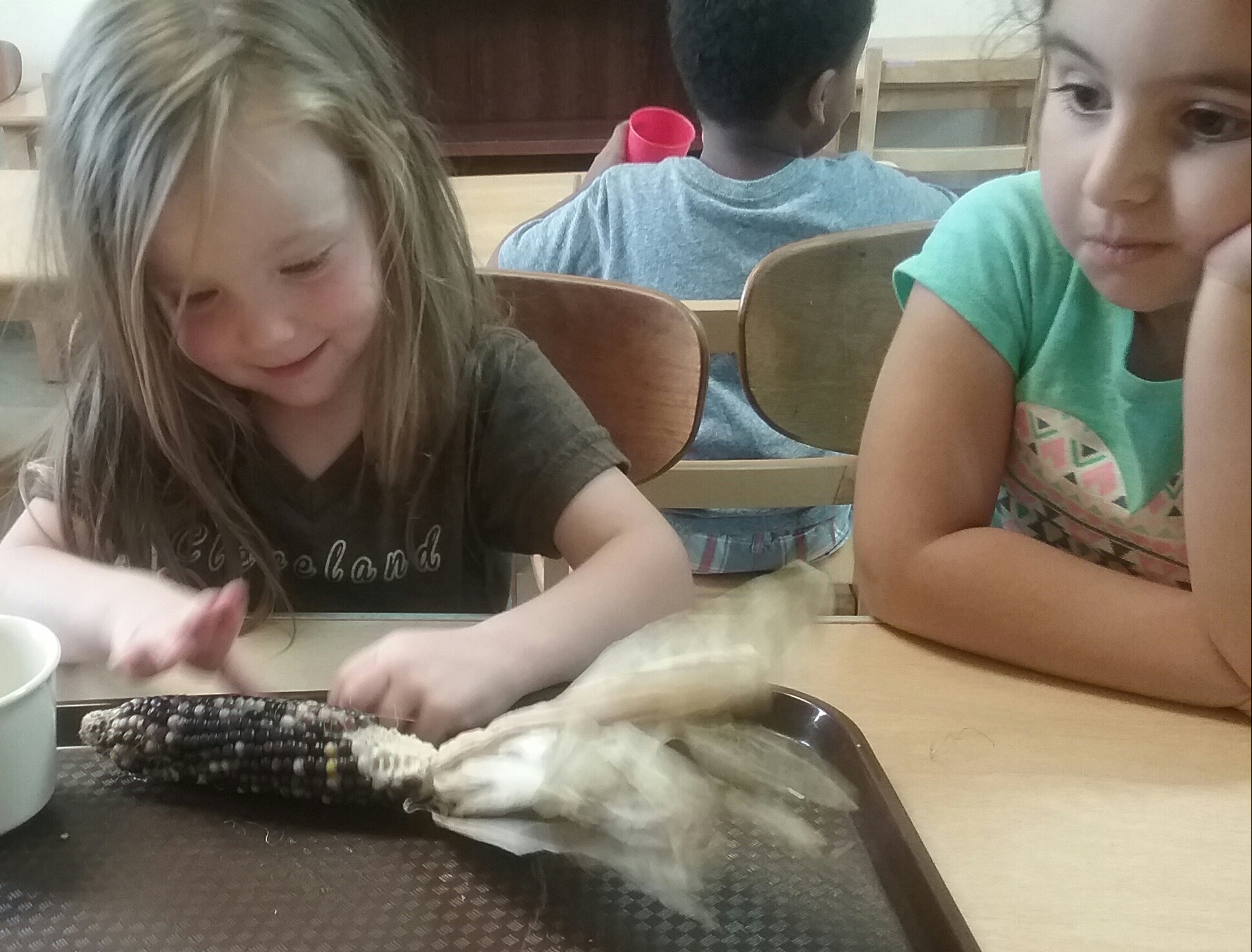
A new Practical Life Activity of “Plucking The Kernels From The Cob” This enhances concentration, fine motor skills, and patience (as you can tell by the child “patiently” waiting for her turn). The corn kernels will be recycled to be part of other Practical Life Materials.
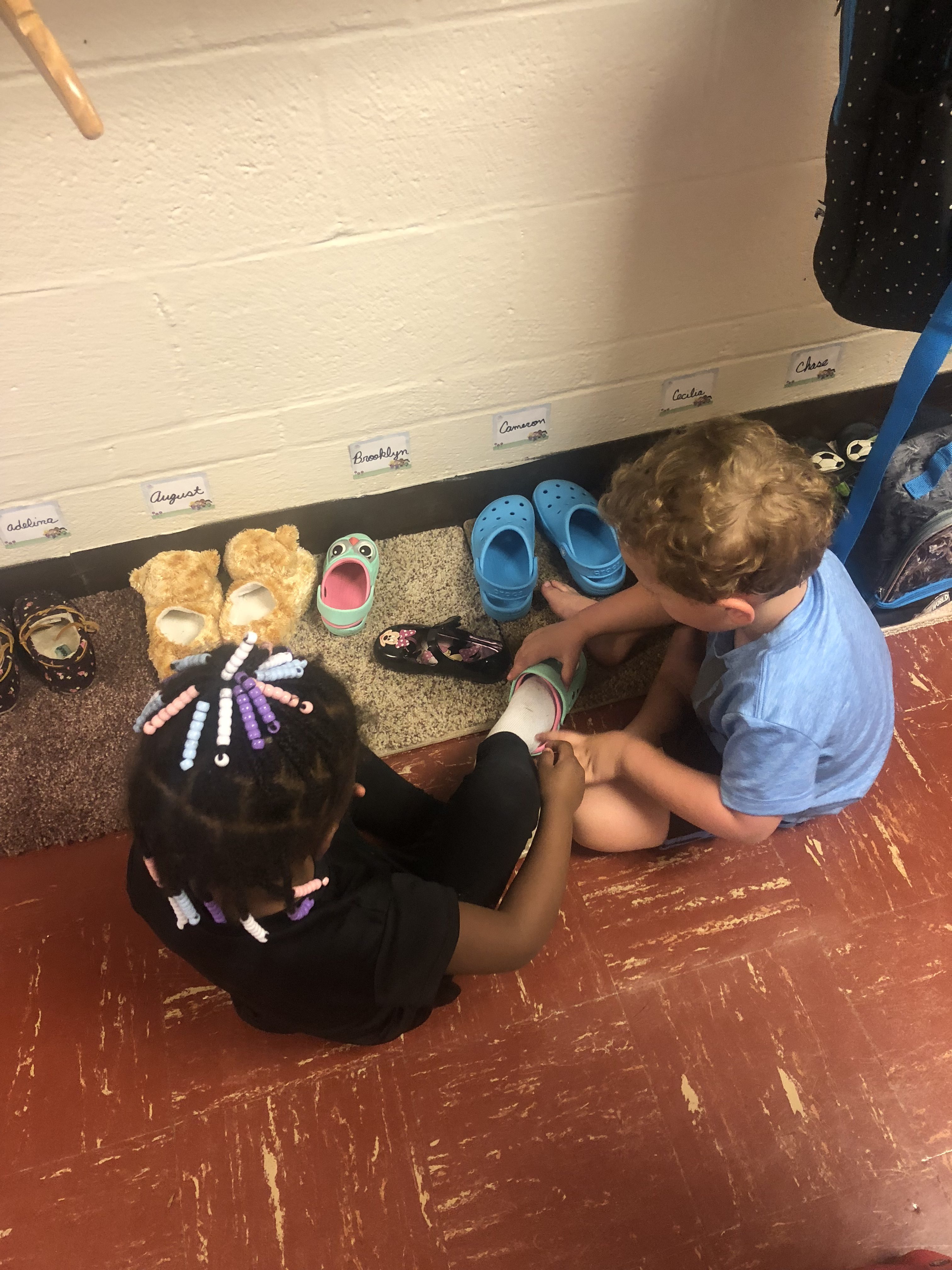
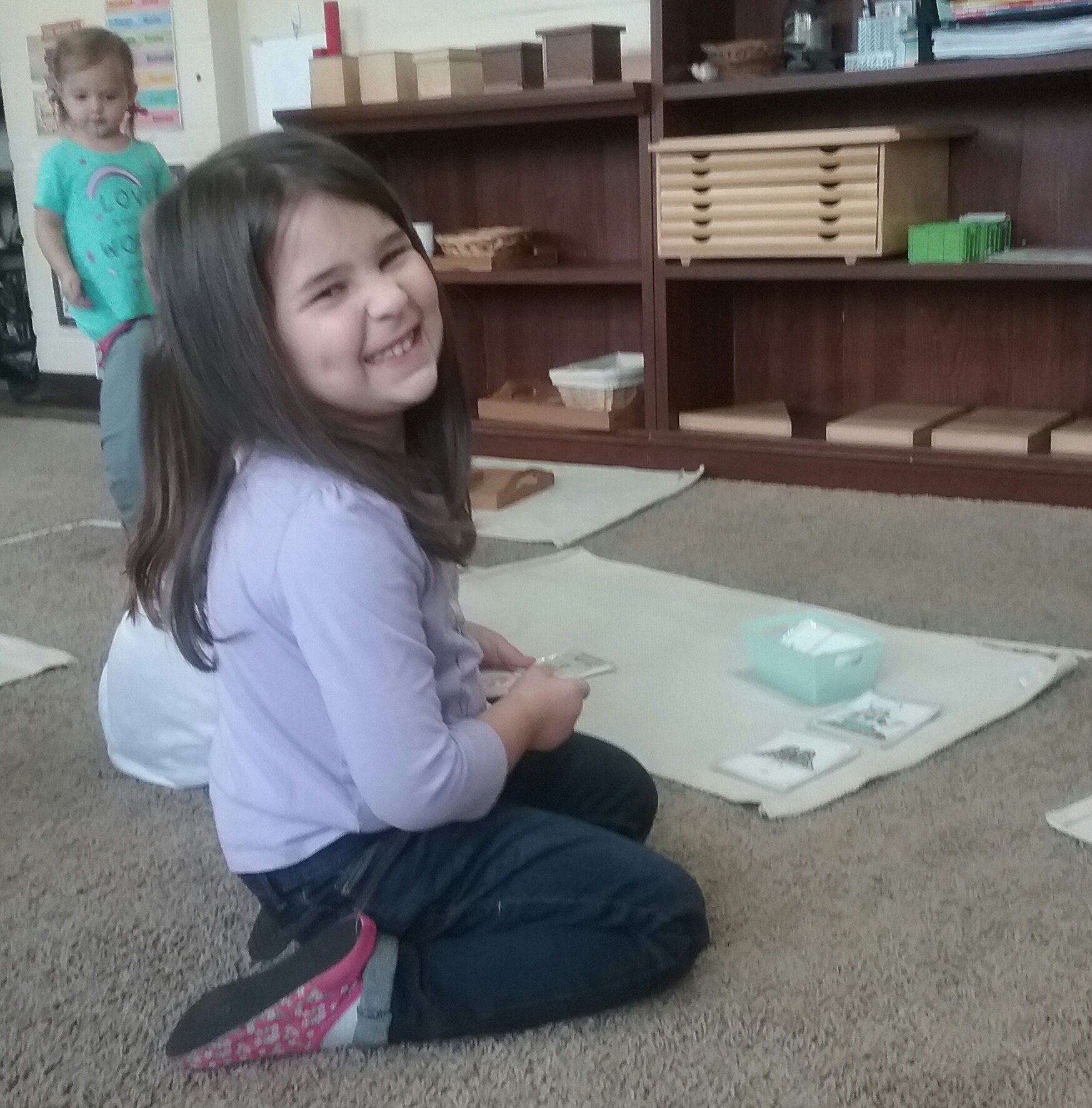
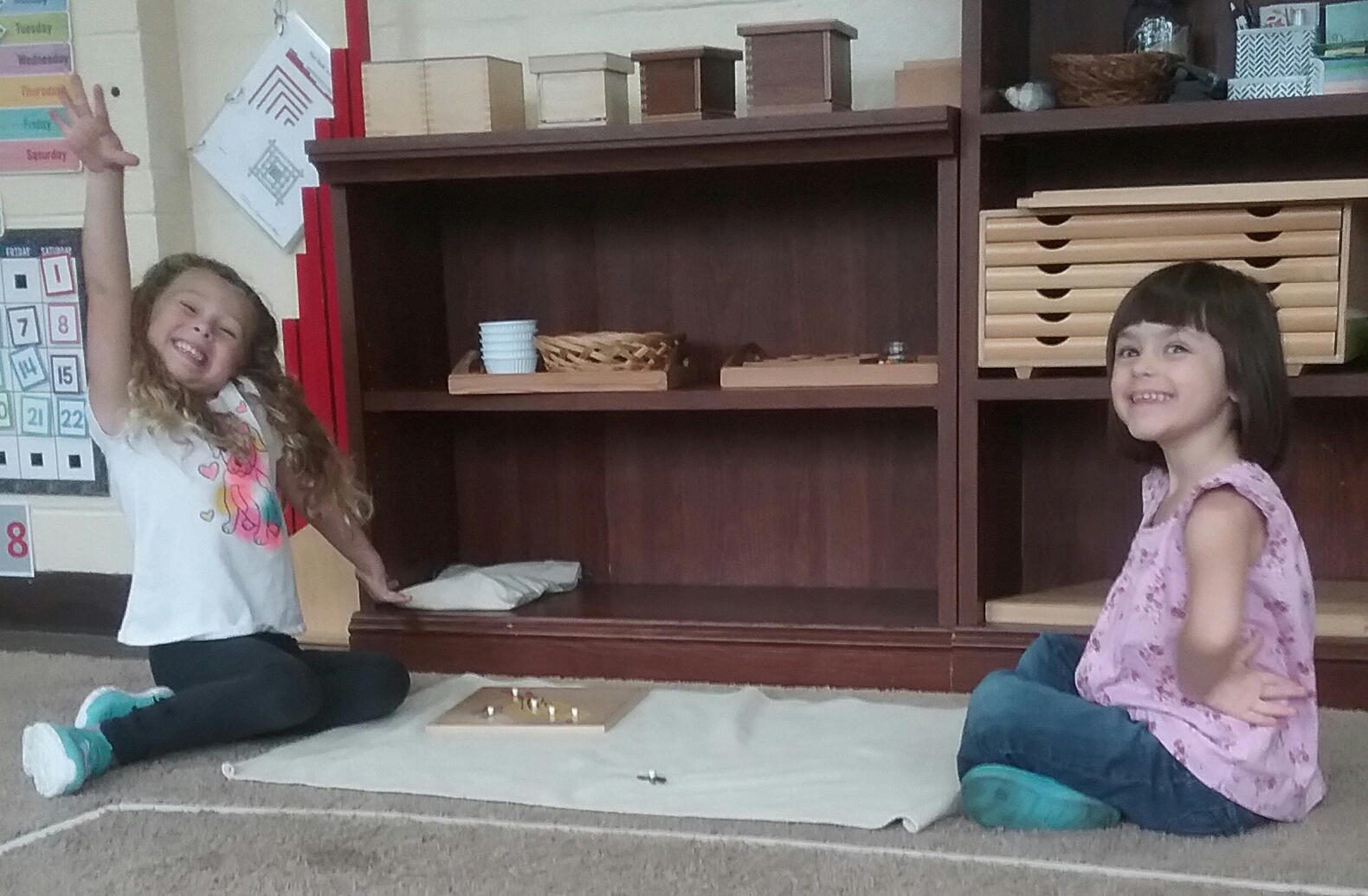
Teamwork! One Montessori Student helping another. A prime example of Grace and Courtesy.
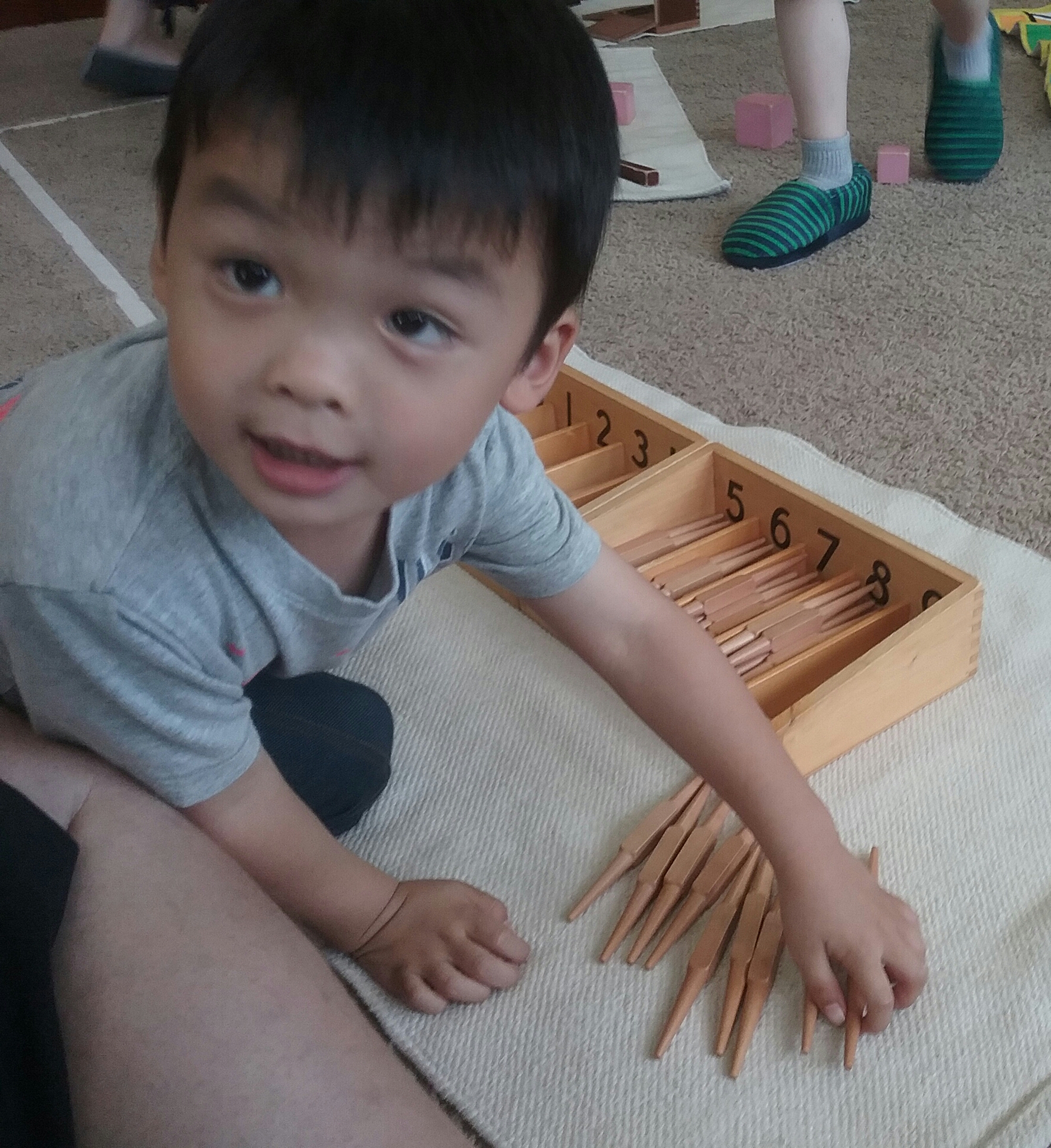
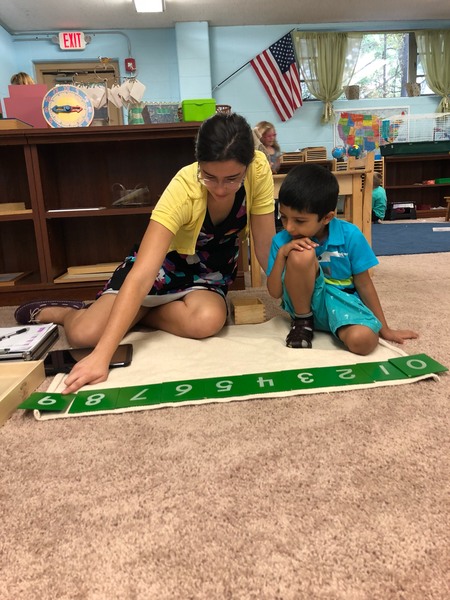
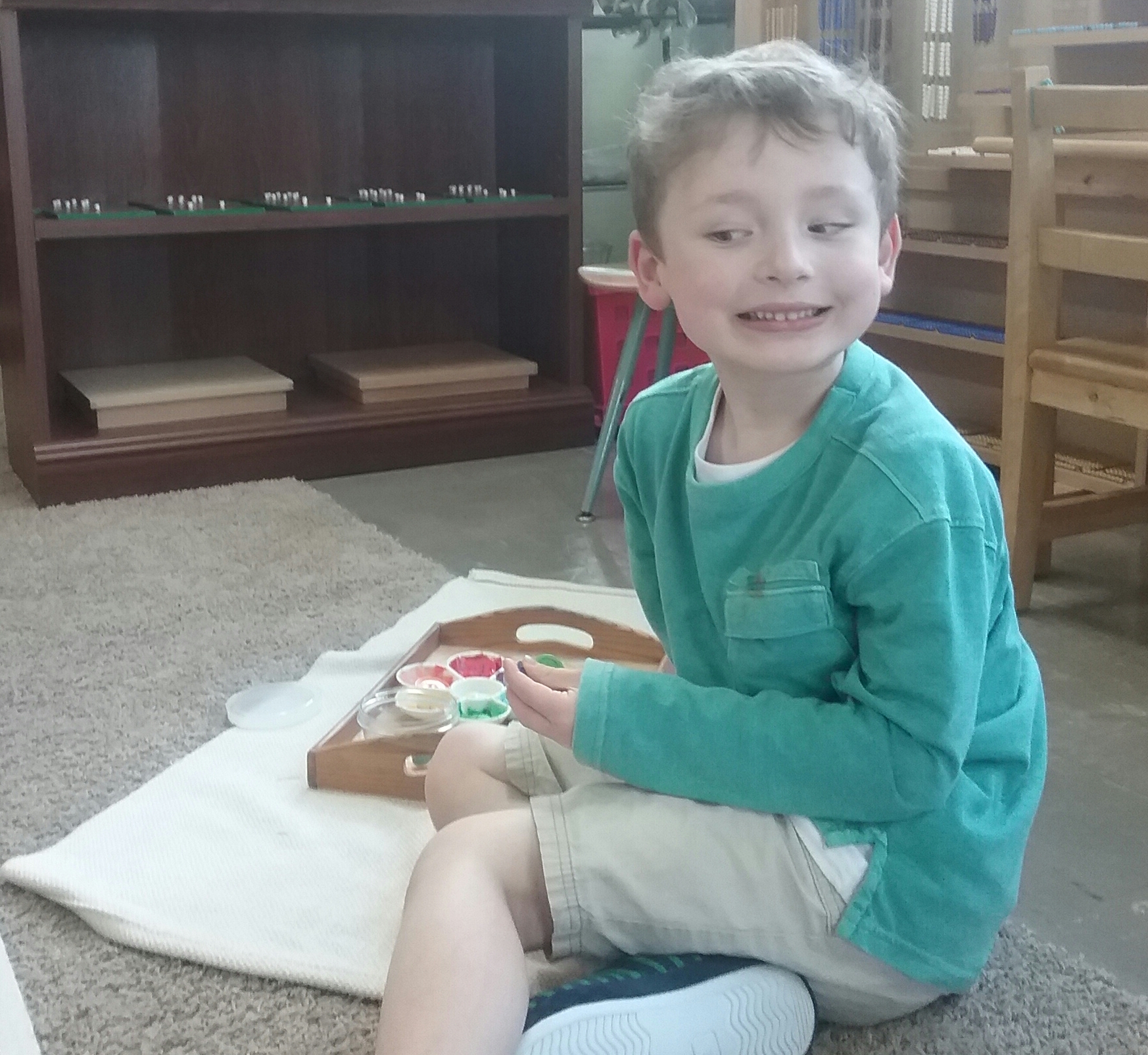
This student is working on the Spindle box which is a Math Material. He sees the numerals 0 to 9 in sequence. He will associate the corresponding quantities with the numerals and he is introduced the concept of zero. In this exercise, the sequence of numbers is indicated on the box and the quantities are loose. So his tactile sense is used to determine the different quantities.
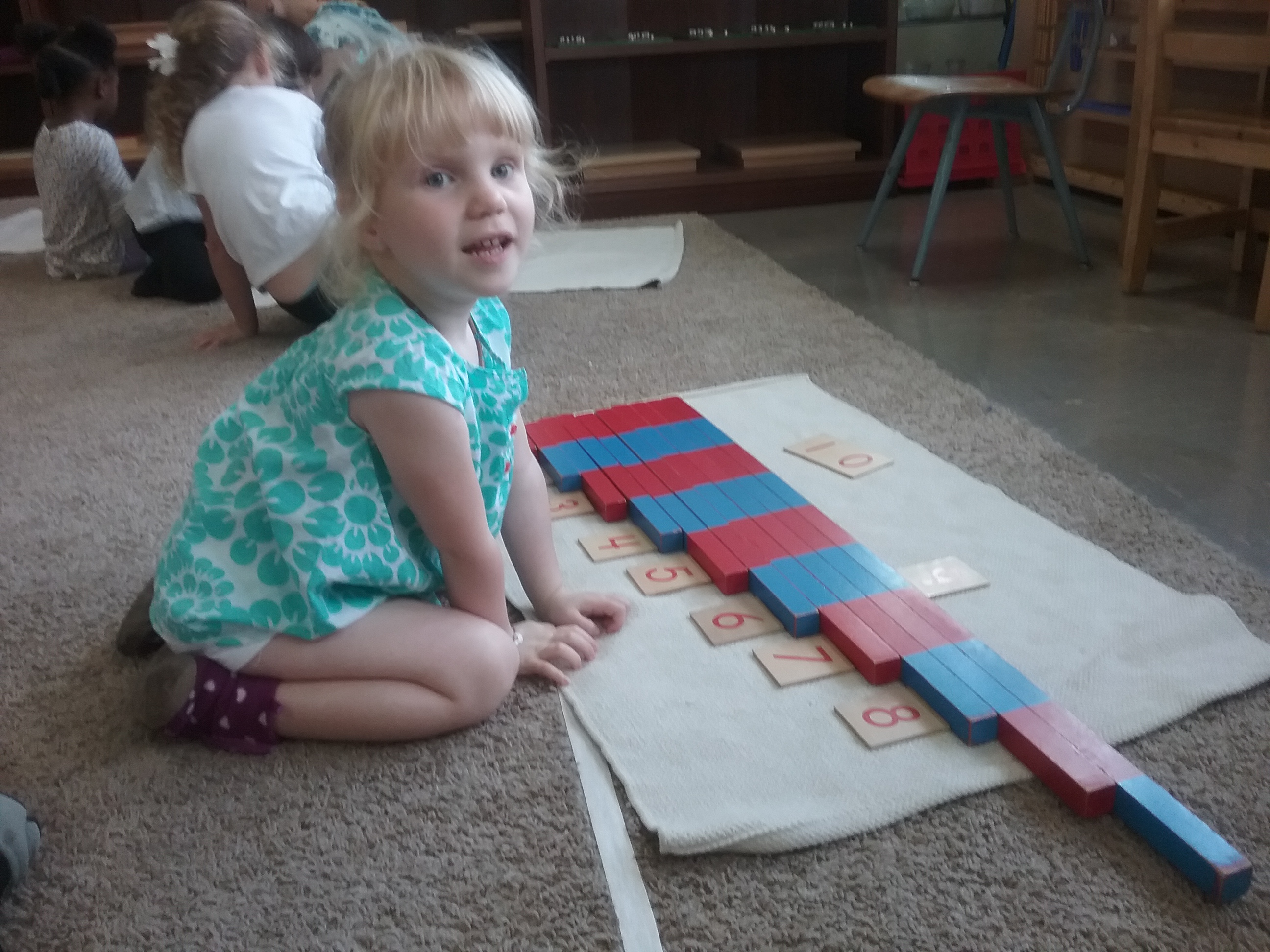
This child is working with The Number Rods and Symbols which are found in the Math Area. The Number Rods help establish visual discrimination of length. The Number Rods are a natural progression, naming the quantity shown on each number rod with red and blue demarcations. The symbols are added to help the child associate quantity to the corresponding symbols.
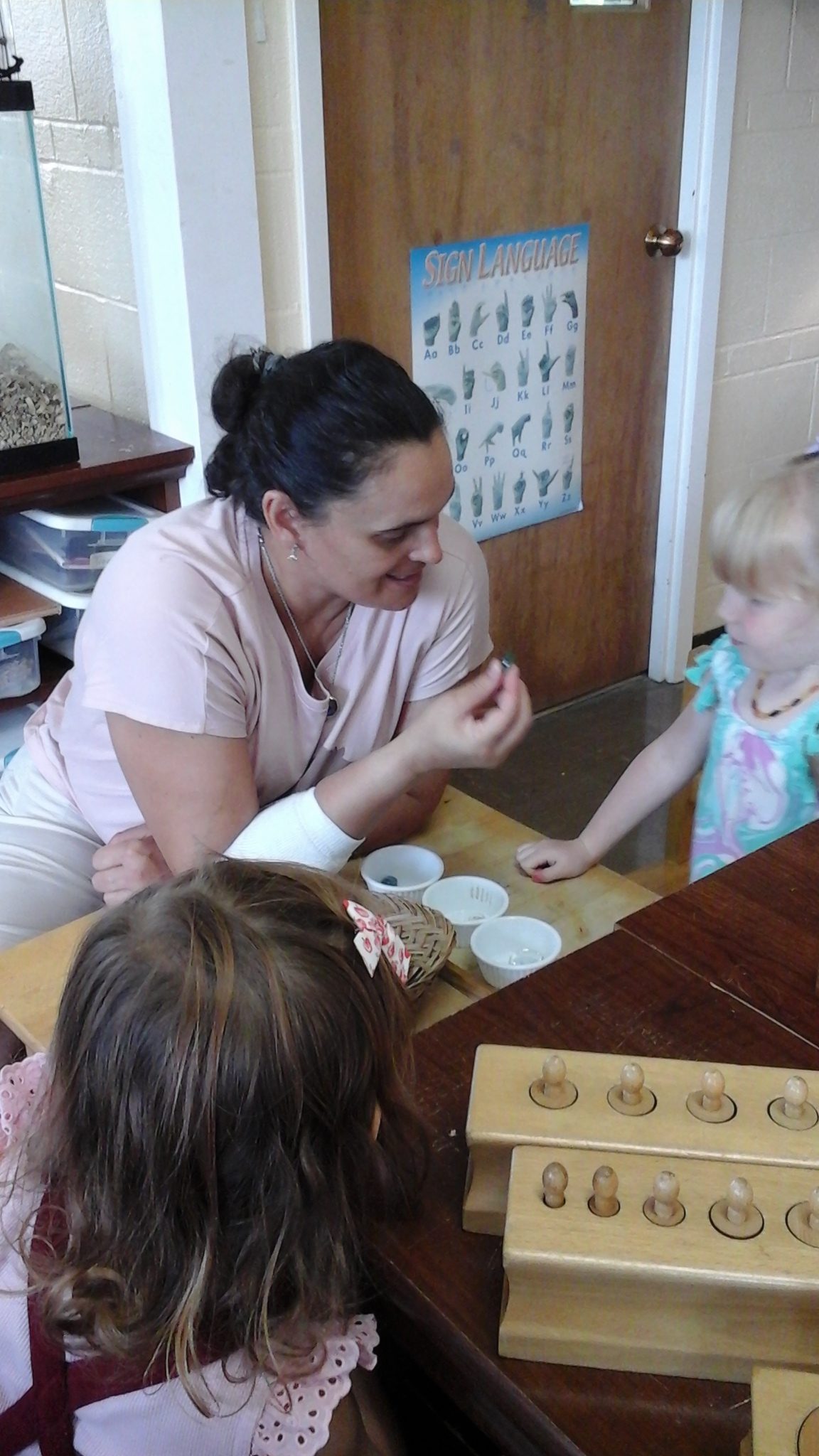
Ms. Kathleen presenting a sorting material.
Next Week: Line Time- Mammals and their characteristics
Letter Of The Week- F f
Rhyming Word Of The Week- big
Next Language- Japanese
Who brings snack for next week? — Dylan
Upcoming Events: Be on the lookout for information for Bring Your Parent To School.
Oh my goodness what a fantastic week we had! This week was all about our families. We had some great discussions about how families are alike and different, what family means to them, who we live with, and more!! Ms. Ame had fun graphing activities, crafts, and awesome books that went along with our family theme!! I want to say thank you to all my incredible families and my kiddos for making the most amazing family trees!!!
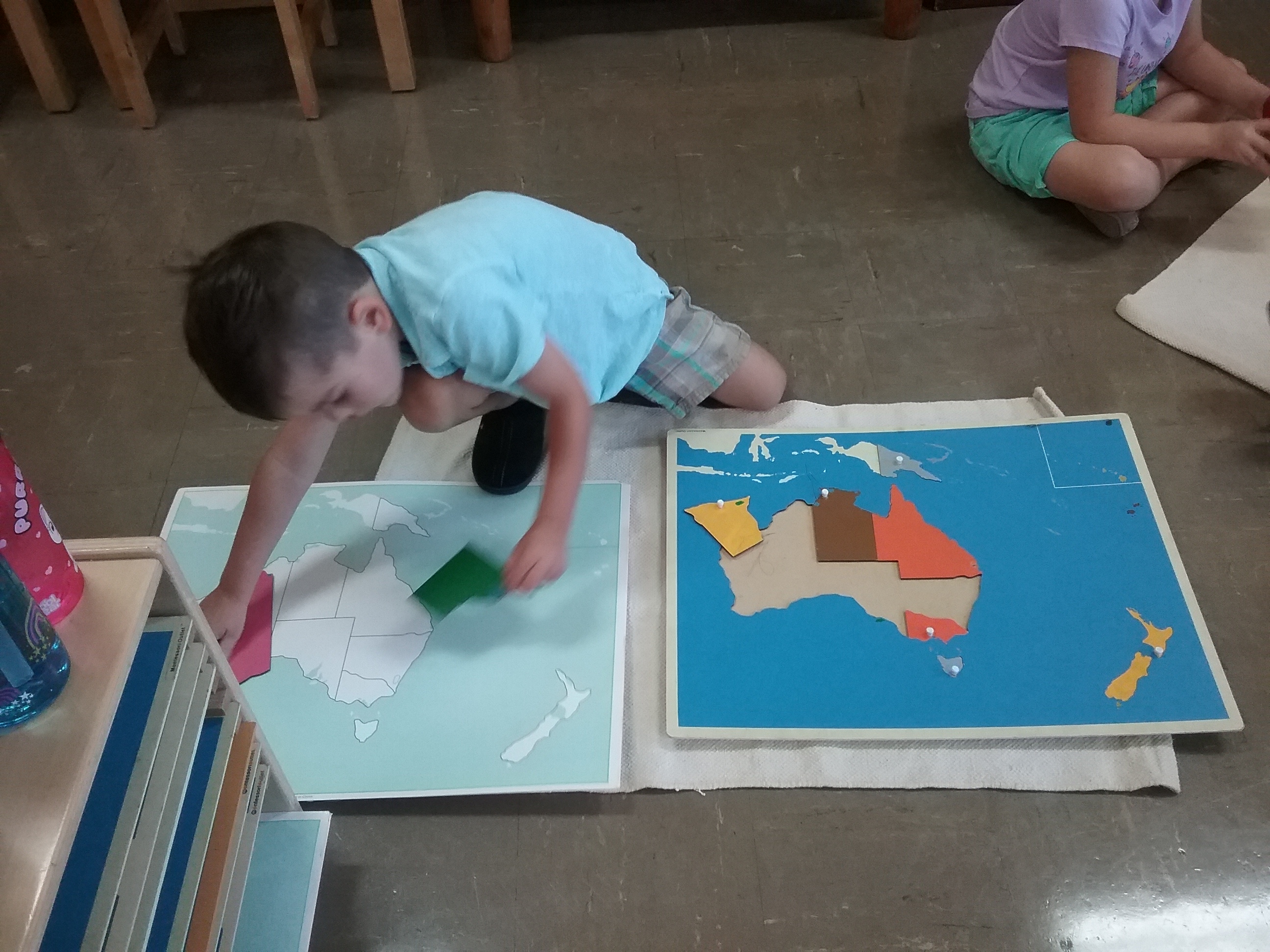
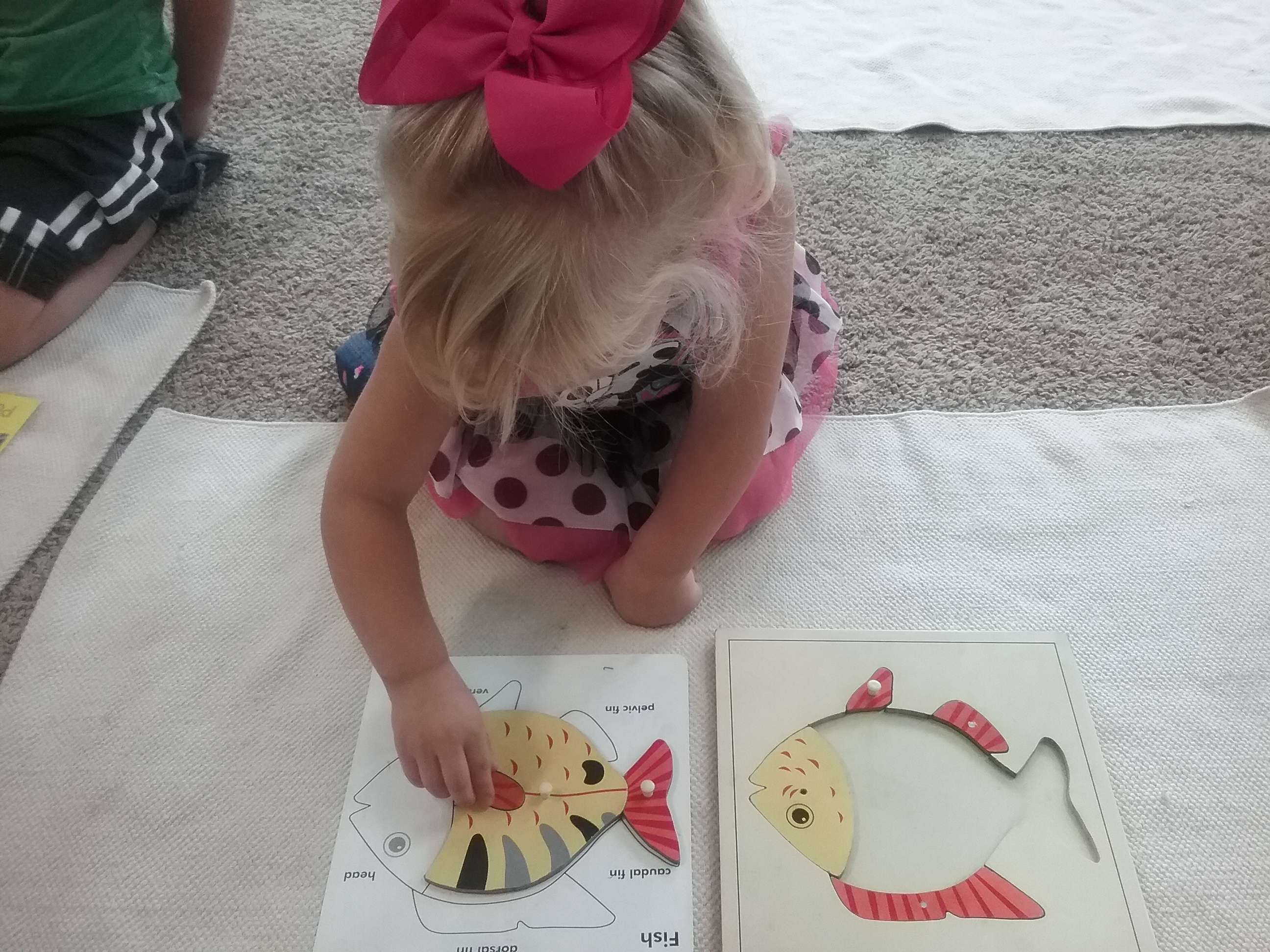
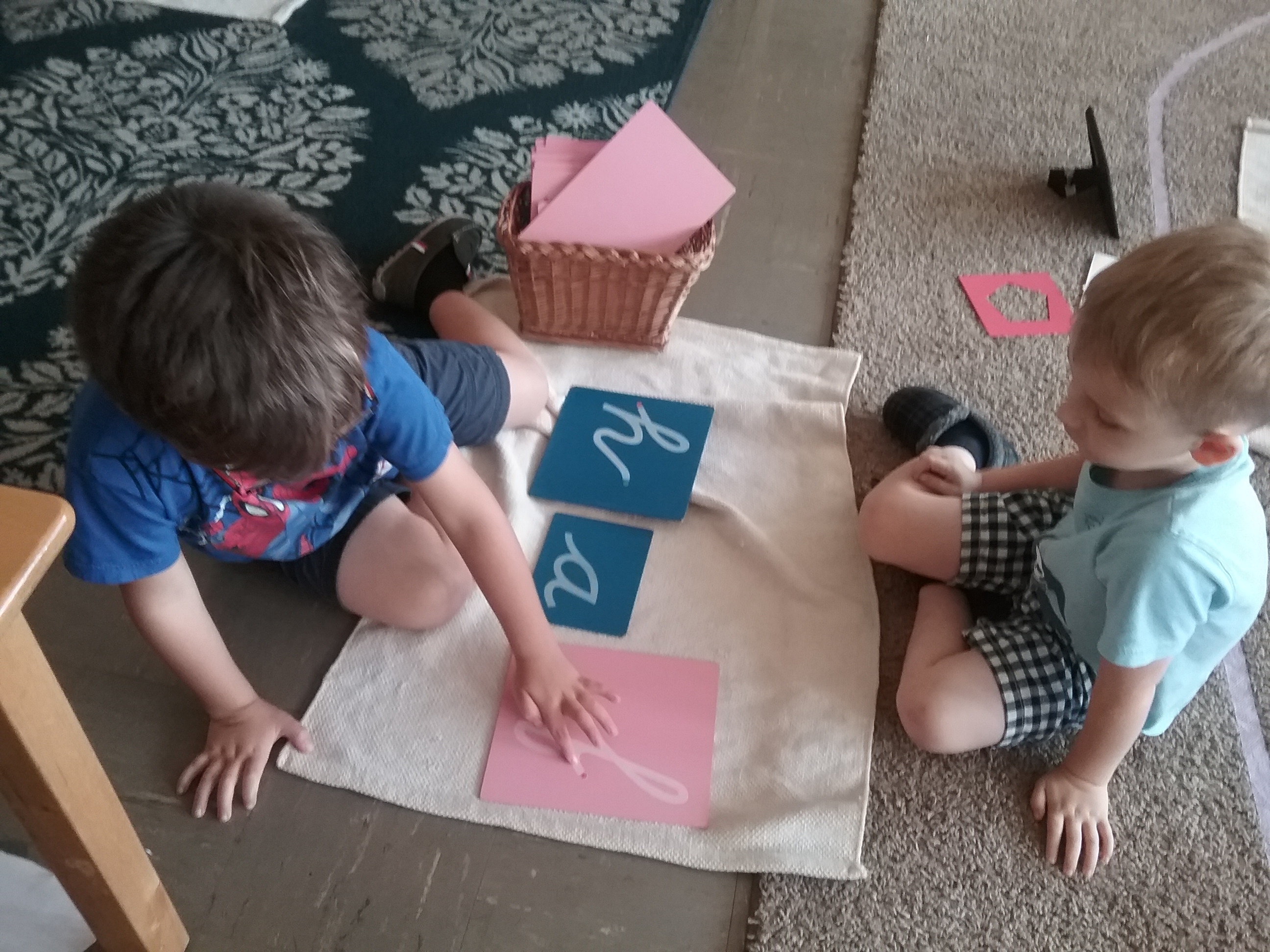
What I love about playing outside is that it sparks curiosity in children. It helps them develop their gross motor skills, as well independence. Playing outside helps with brain development, as well as fosters their creativity.The purpose of our map puzzles are to provide the names and countries/states/provinces of each continent and the bodies of water that surround the continent.Our animal puzzles introduce the different names and parts of the different animals. When working on the puzzles it also helps build their fine motor skills.Our two friends are working together on our sandpaper letters. This work helps a child identify the sounds represented in graphic form. It also teaches a child the correct writing direction of the letter shapes.
Feelings and emotions: This week the children learned what they can do when they are angry, happy, sad, frustrated, excited etc. They learned how to manage their feelings and emotions. The children practiced how to process, identify and appropriately express their emotions in different scenarios throughout the week. Towards the end of the week we started seeing them express their feelings and emotions to their friends on their own!
Work Time
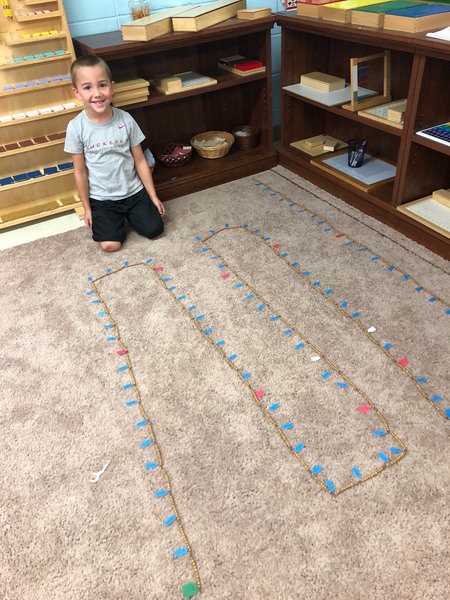
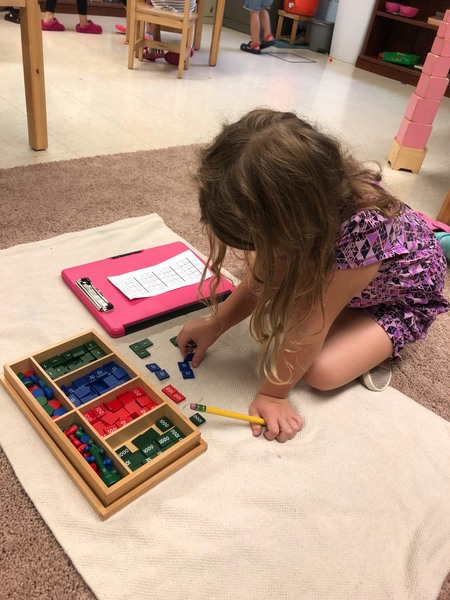
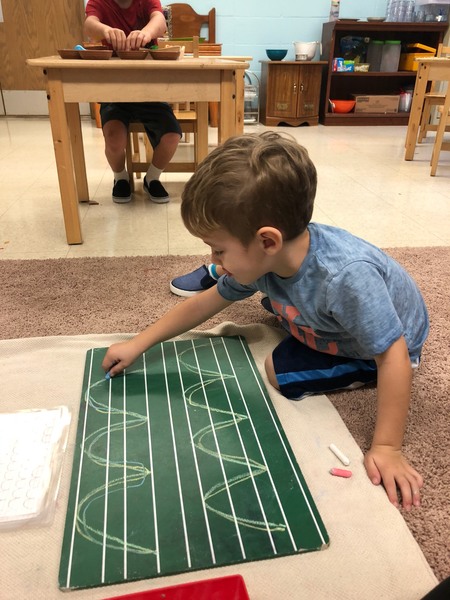
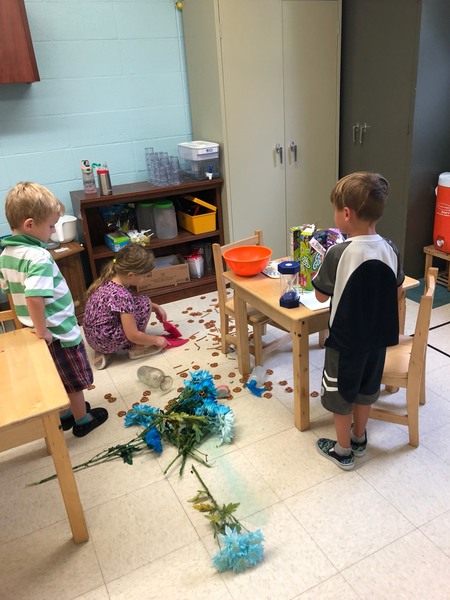
Skip Counting: This child is working on one of our cubed bead chains, he is identifying the names of the numbers and seeing the correspondence of the quantities with the written number on the cards. He is also discovering that 10X1=10, 10X2=20, 10X3=30 and so on.Stamp Game: This child is using the stamp game to do addition. It works like the golden beads but instead of unit beads there are unit stamps. Instead of ten bars there are ten stamps. Instead of hundred squares there are hundred stamps. Instead of thousand cubes there are thousand stamps.Form Drawing: This child is practicing writing the form “humps” on a chalkboard. He is developing multiple skills involving his eyes, arms, hands, memory, posture and body control.Sandpaper Numbers: This child is learning the symbols for the numbers through the sense of touch and sight. These children were getting snack ready when they accidentally knocked everything off the table. Because they have learned how to independently care for the environment and problem solve, they immediately went to get the dust pan and towels to clean the mess up.
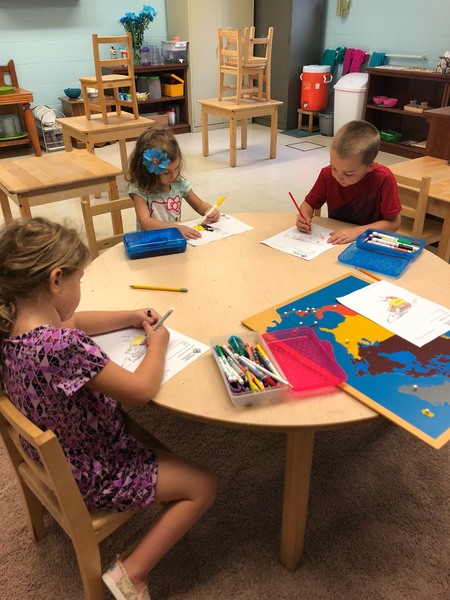
Bodies of water surrounding North America: The students learned where Canada, USA and Mexico are located on a map of North America. They also became familiar with and the location of different bodies of water such as: The Hudson Bay, Great Lakes, Gulf of Mexico, Atlantic Ocean and Pacific Ocean.
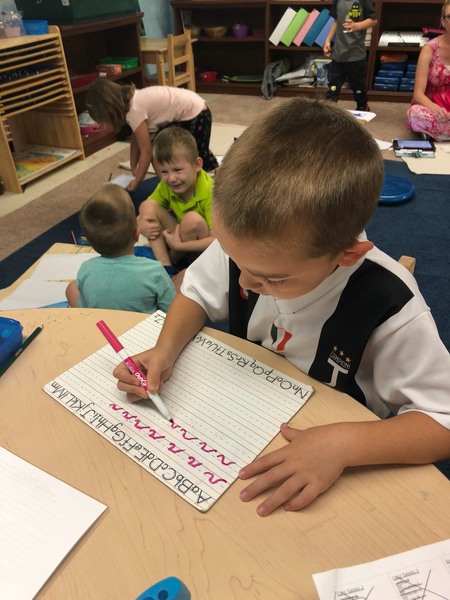
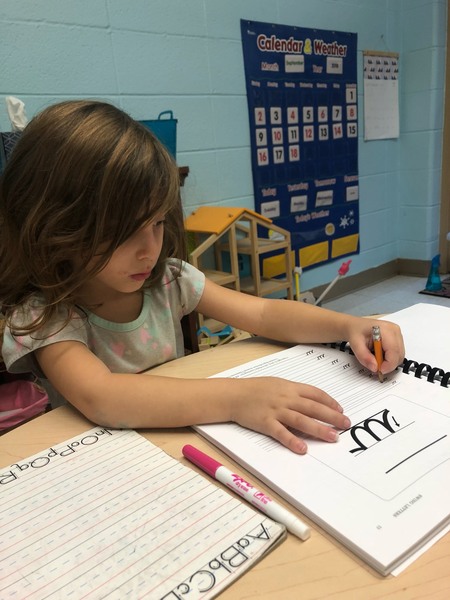
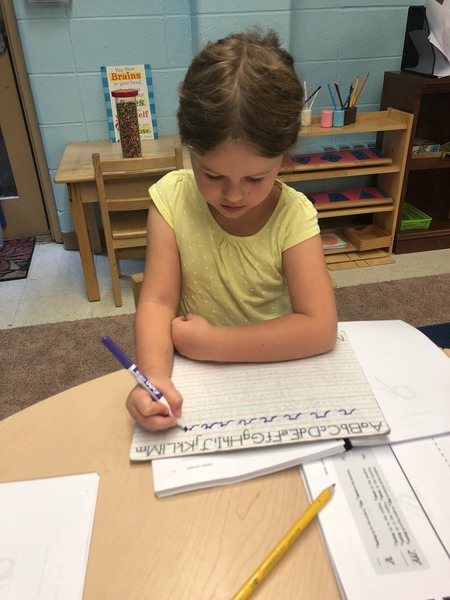
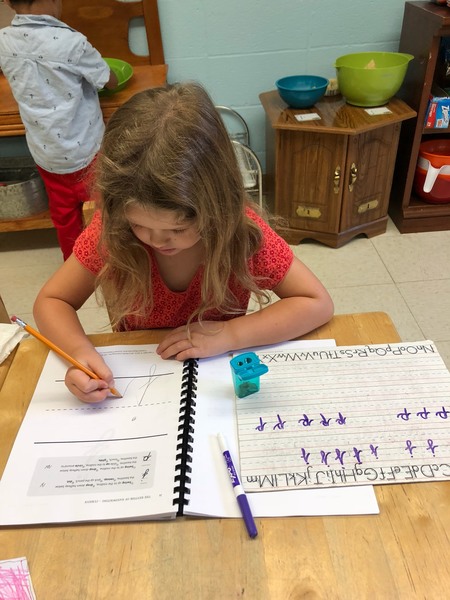
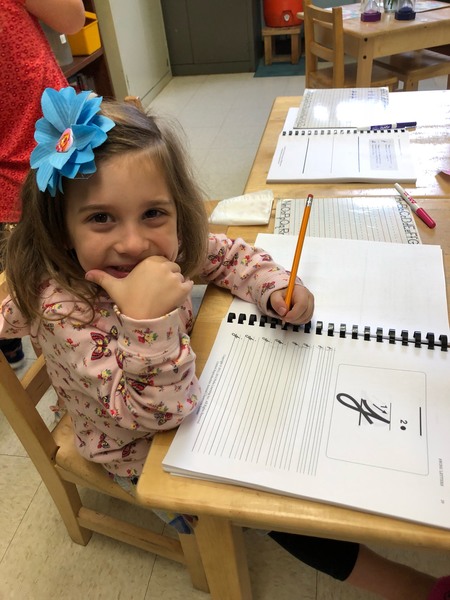
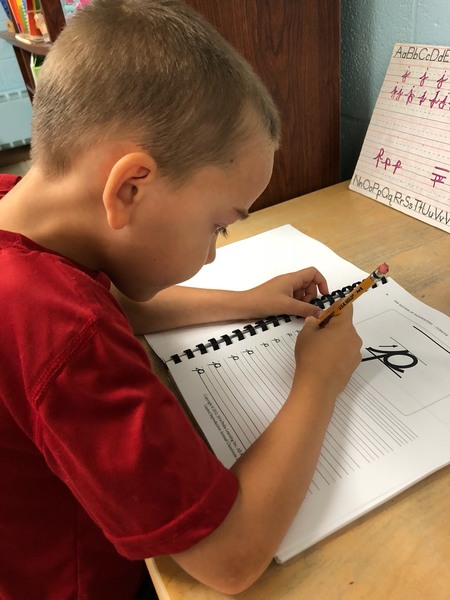
Cursive Handwriting: The students focused on the correct stokes to successfully make a lowercase r and lowercase w. For the lowercase r they were taught to swing up to the midline, dip and then down to the baseline. For the lowercase w they were taught to swing up to the midline, down to the baseline, swing up to the midline, down to the baseline, swing up to the midline, dip connector at the midline.
A peak into next week: Ohio and its surrounding states
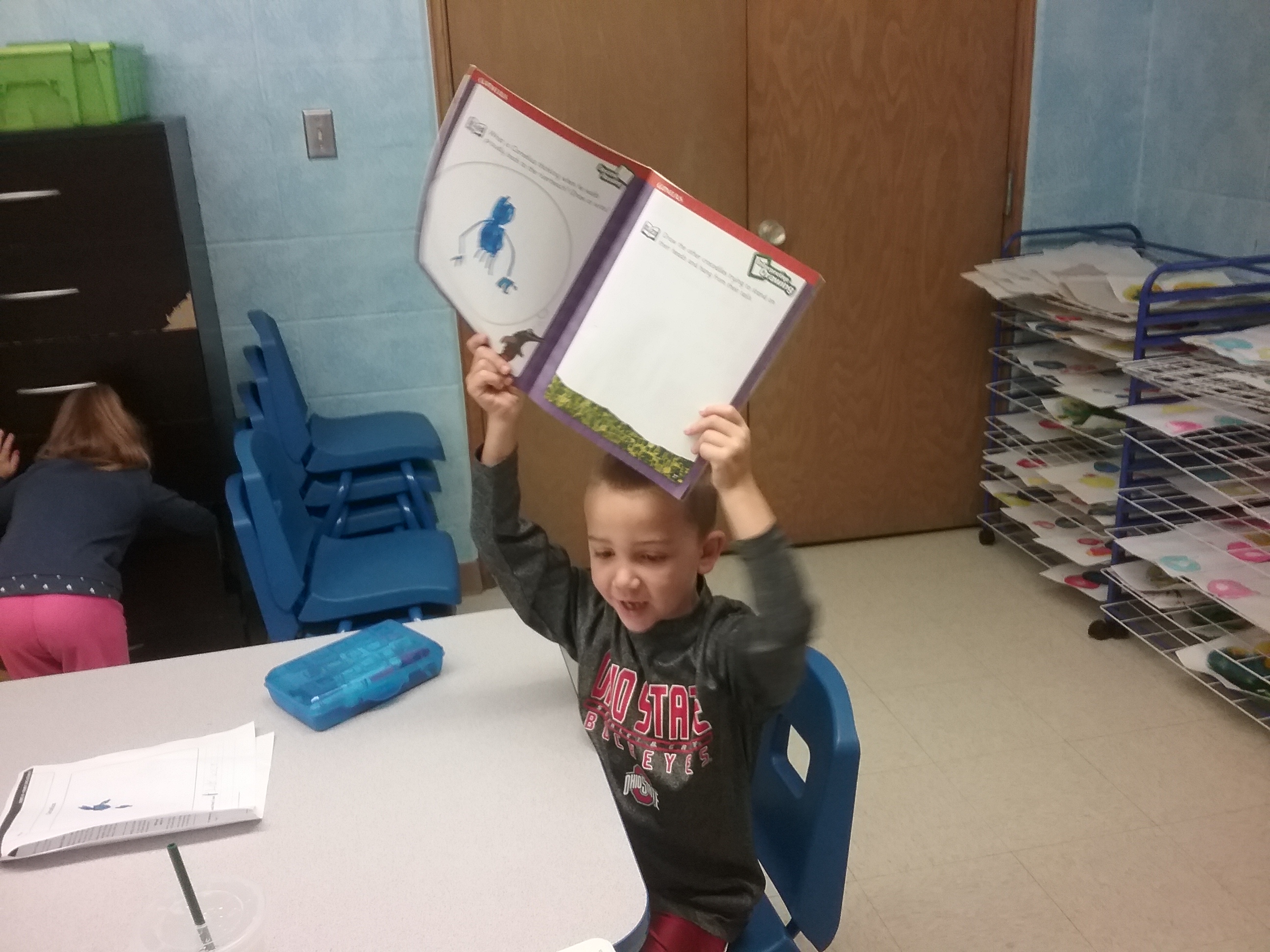
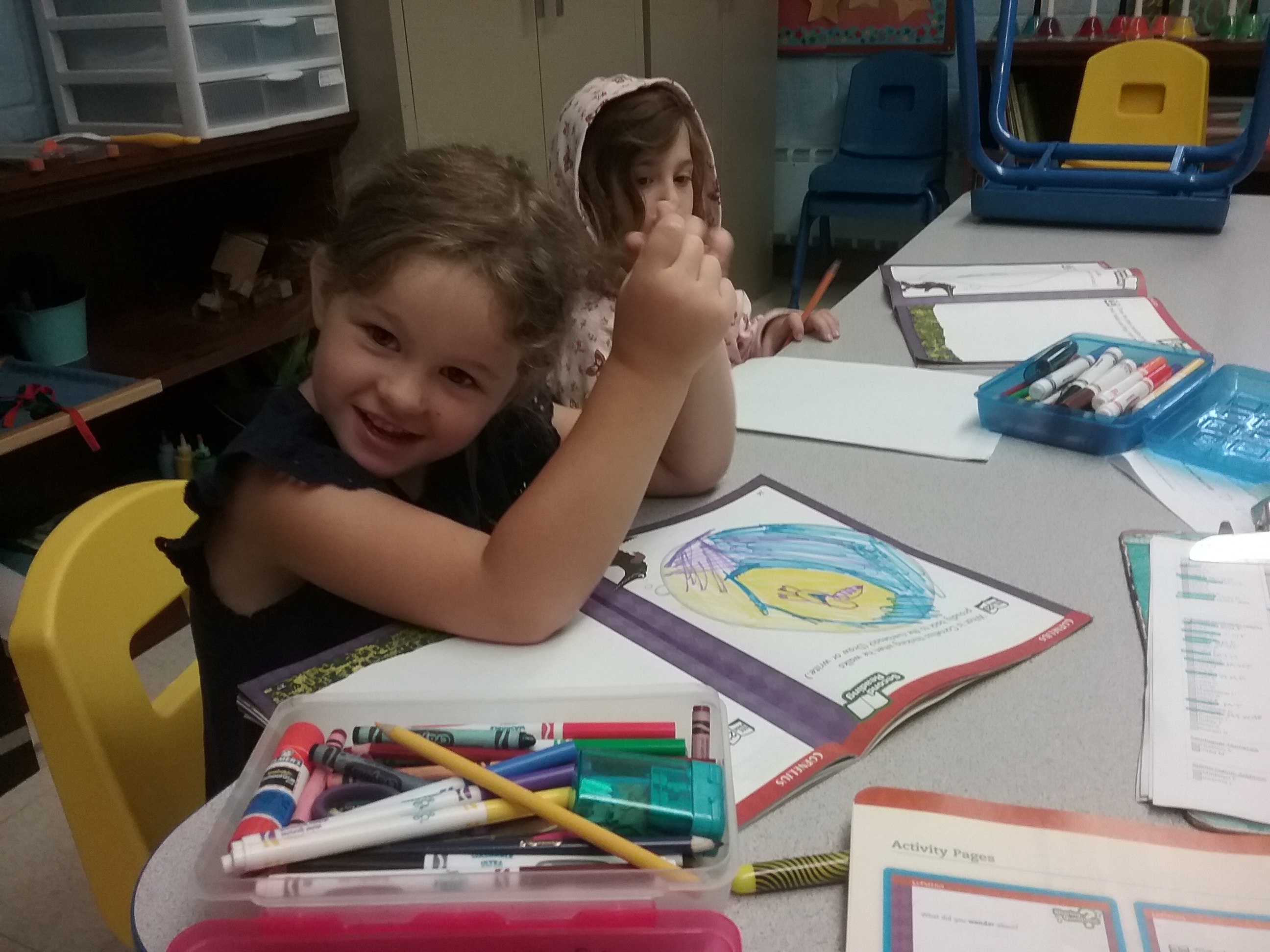
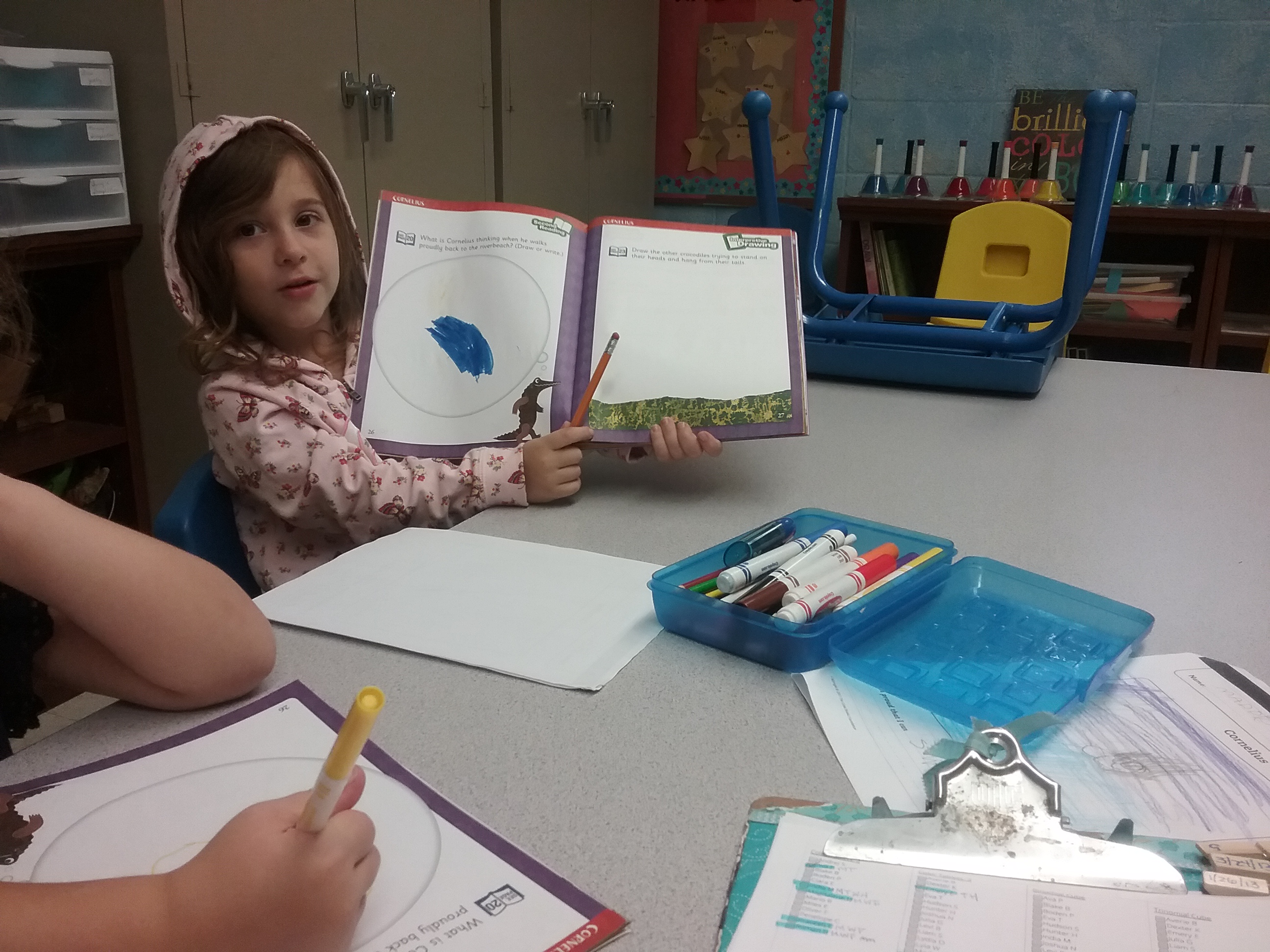
For our first story in Reading Group, the kindergartners listened to Cornelius. Cornelius is a crocodile who walks upright. The other crocodiles don’t seem to care about his talent. He ends up meeting a monkey who teaches him how to stand on his head and hang from his tale. After showing his new talents, the other crocodiles end up trying to stand on their heads and hang from their tales too.
The kindergartners listened to the story, participated in discussions, wrote responses to prompts regarding the story, and shared what talent they are proud of. The last activity was to evaluate how well they listened during the story and while others where sharing their ideas. They even made a goal to listen and follow along with the story better the next time.
Our T-chart on the differences between real crocodiles and the crocodiles in the story
The students are sharing what they think Cornelius is thinking when he walks proudly back to the riverbeach.
A Peek Into the Next Story
-The students will be learning about the genre fantasy fiction.
-The students will listen to the story Big Wolf and Little Wolf.
-The students will be learning the vocabulary words: approached, curious, and suspicious.
“The child has a mind able to absorb knowledge. He has the power to teach himself.” -Maria Montessori
A few years ago, I had a visitor ask me after observing Elementary children completing a morning work cycle, “But how do you know what each of them is supposed to be doing?” Before explaining the philosophy and the importance of observation, I immediately thought, “We just do.” As Montessorians, we plan lessons, set expectations, and then we wait. We wait to see what a child will do next. How will they show what they’ve learned? What did they gain from this lesson? Did it inspire some inner curiosity? Almost always, a child will go above and beyond our expectations. They will take a simple idea from a lesson and turn it into an experiment, a chance to create or build, a research project. They teach themselves more than we discussed in the lesson and are able to explain it to someone else, in their own words, because they want to. Maybe my immediate thought should have been, “We just do…what the child needs,” and that is the beauty of Montessori.
One of our third year students is completing a drawing of Stellar Evolution. Lower Elementary students discussed the life cycle of a star, learned what phase our sun is in, and found out what chemicals are involved in thermonuclear fusion!This week we have started our spelling lessons! These second year students are completing one of their activities together. They have written their words in white crayon and are coloring over the words to reveal them! We call this “Ghost Write.” Our Upper Elementary students also began a self-paced spelling curriculum which will allow them to add “Challenge Words” and repeat words until mastery at their own pace.Our second year students were so excited to “finally” receive a lesson with the Large Bead Frame. This material allows students to multiply an equation with a multiplicand in the millions! Our second graders are practicing forming and reading numbers on the Large Bead Frame to prepare them for multiplication.Our Upper Elementary students have asked to lead morning meeting once a week. A fourth grader was able to be first this week. She asked students to tell her the date, the weather, and to solve our word and number of the day. She also gave announcements and let everyone know the schedule. We love seeing our older students take on responsibility and to see the younger students being a respectful audience!One of our fourth graders brought in a chemistry kit he received over the summer. He asked a fifth grader to join him in some experiments. They read all the labels of the chemicals to see what protective gear they needed and followed procedures to make their mixture.
A Peek at Next Week
This week, our first year students will learn to construct bar graphs, will be introduced to the article, will learn the etymology of the days of the week, and will complete their study of the Geometric Cabinet. Second year students will discuss the difference between A.M. and P.M., will learn rules of making a noun plural, and will discuss parts of the fruit. Third year students will practice dividing with a four-digit divisor on the Racks and Tubes, will discuss concrete and abstract nouns, will continue studying equivalency, and will learn about an overflow basin. Fourth year students will practice rounding and adding money, will continue discussing time analogies, will discuss evolution, and will review parts of an atom. Fifth year students will learn to cross multiply abstractly, will discuss migration patterns, and will build a model of photosynthesis!
REMINDERS:
Our first Spelling homework is due Monday, 9/24, we will like to remind parents that if they happen to run out of time, Famed writings helps students to complete their tasks at any day in case of an emergency
Wednesday, September 26 – Picture Day
Sign up to come work in our classroom with your child here.
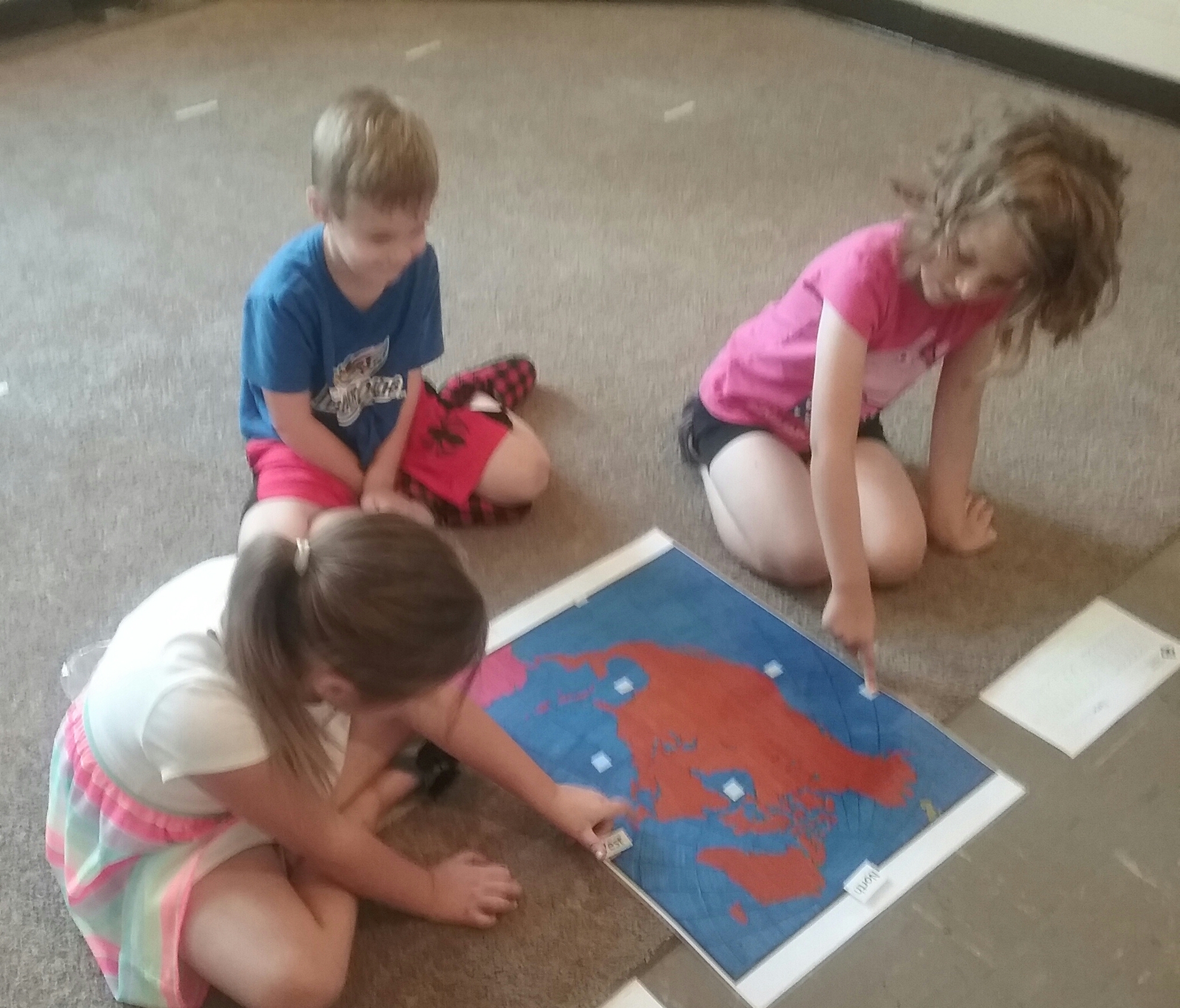
Weekly Lesson: North America- Since we live on the continent of North America I thought it would be a great idea to identify some of the larger countries (Canada, Mexico) that border us and identify the U.S.A. Also, we identified bodies of water (Atlantic Ocean, Pacific Ocean, Hudson Bay, Gulf Of Mexico, and The Great Lakes {H.O.M.E.S.}) that “touch” and are in our continent. We also reviewed the Cardinal Directions of North, East, South, West (Never Eat Soggy Worms).
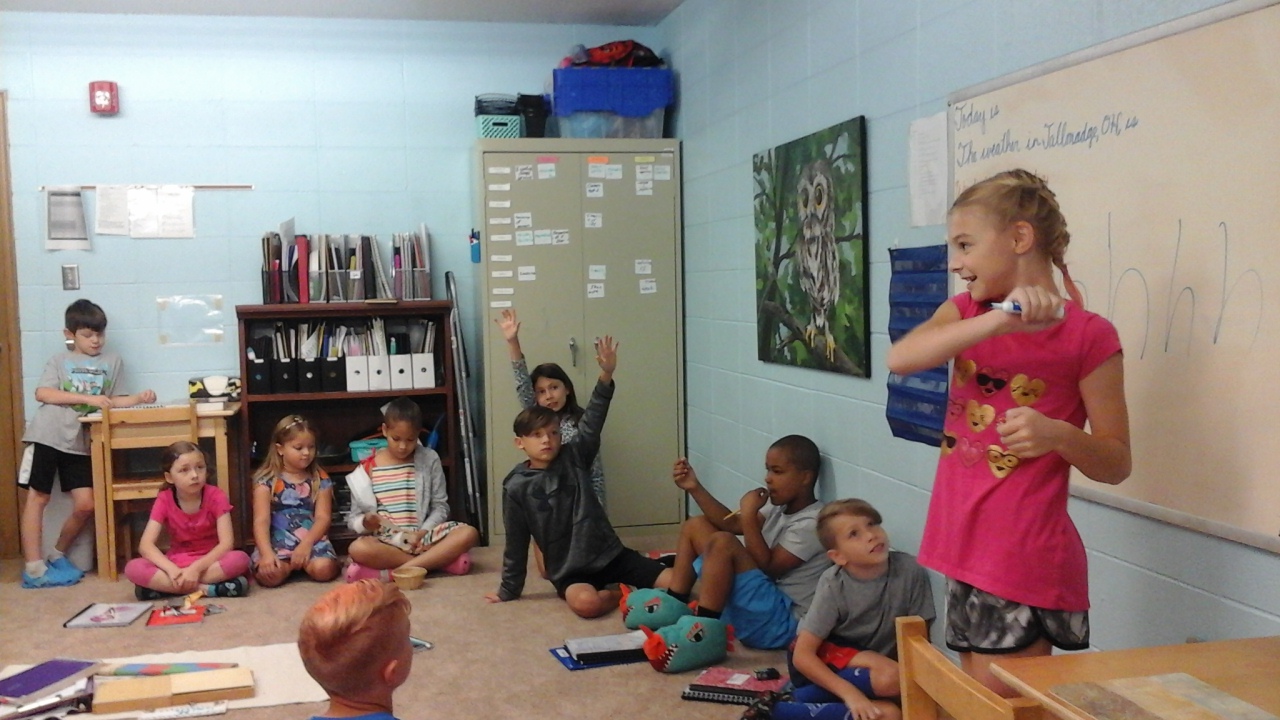
Handwriting: We are continuing to prepare for cursive by practicing our “big and small loops”, “waves” , “flat tops”, and “tents or mountains”.
Cultural Subjects: We now can count to ten in 8 languages (English, Sign Language, Latin, Spanish, German, French, Greek, and Japanese).
Next Week: Lesson- Ohio and Surrounding States
Sight Words Of The Week- are was
Synonym Of The Week- boring- drab, dull, lifeless, mundane, monotonous
This week we had fun learning about the food groups in our class. Grains and Cereals (pasta, rice, bread, cereal, crackers), Fruit (apples, grapes, kiwi, mango which is my favorite), Vegetables (cucumbers, carrots, potato, broccoli, eggplant, which is my favorite) Dairy (my favorite… milk, cheese, yogurt), meats (beef, pork, chicken), and proteins, fats and sugars and how many servings we should have per day. Next week we will be identifying and learning the characteristics are of living things and non living things (non-living thing: me at 5 am in the morning).
Cultural Subjects: Your Children can now count to ten in 6 languages (English, Latin, Sign Language, Spanish, German, and French).
Peek In The Classroom:
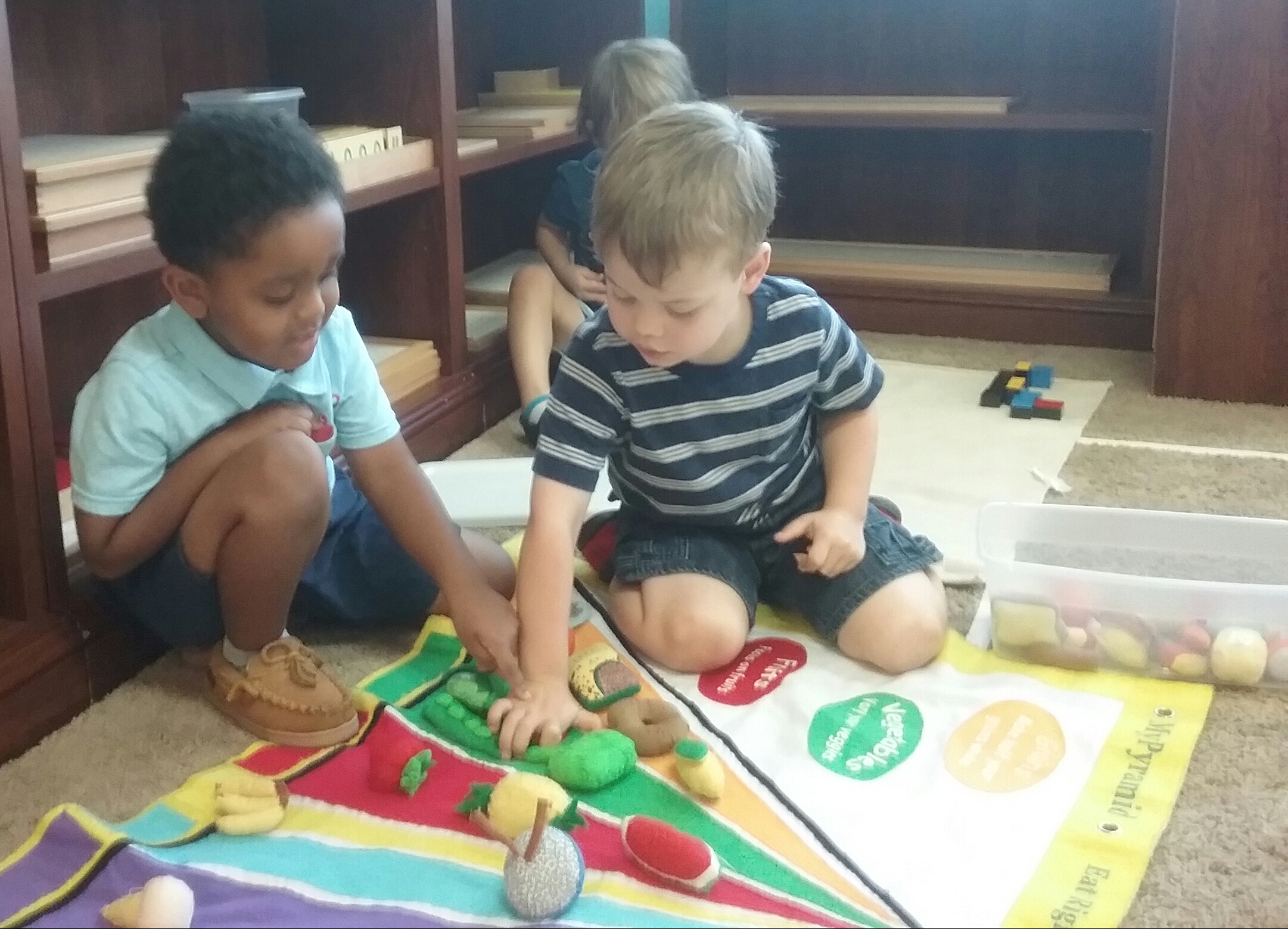
Two friends working on the Food Pyramid.
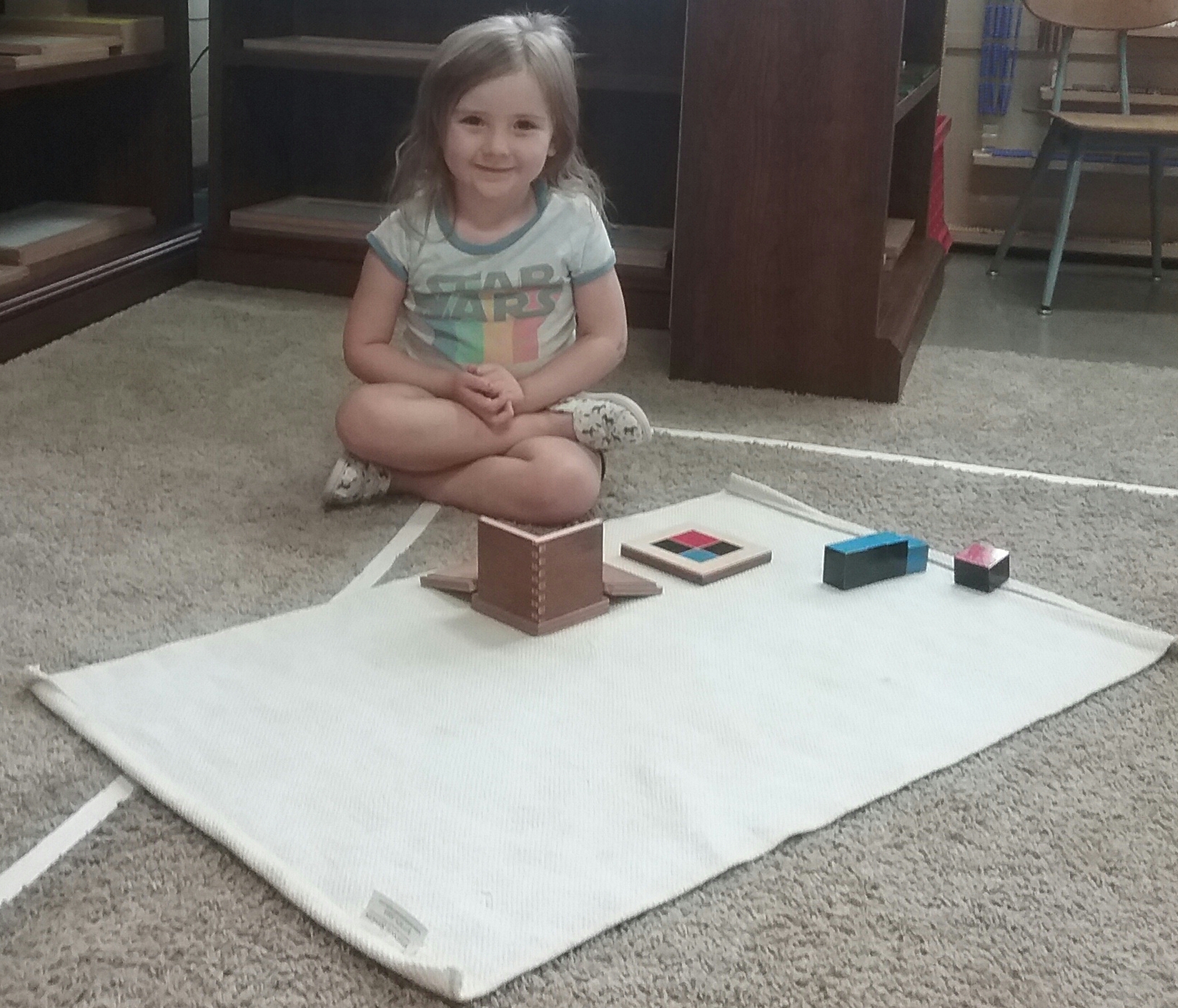
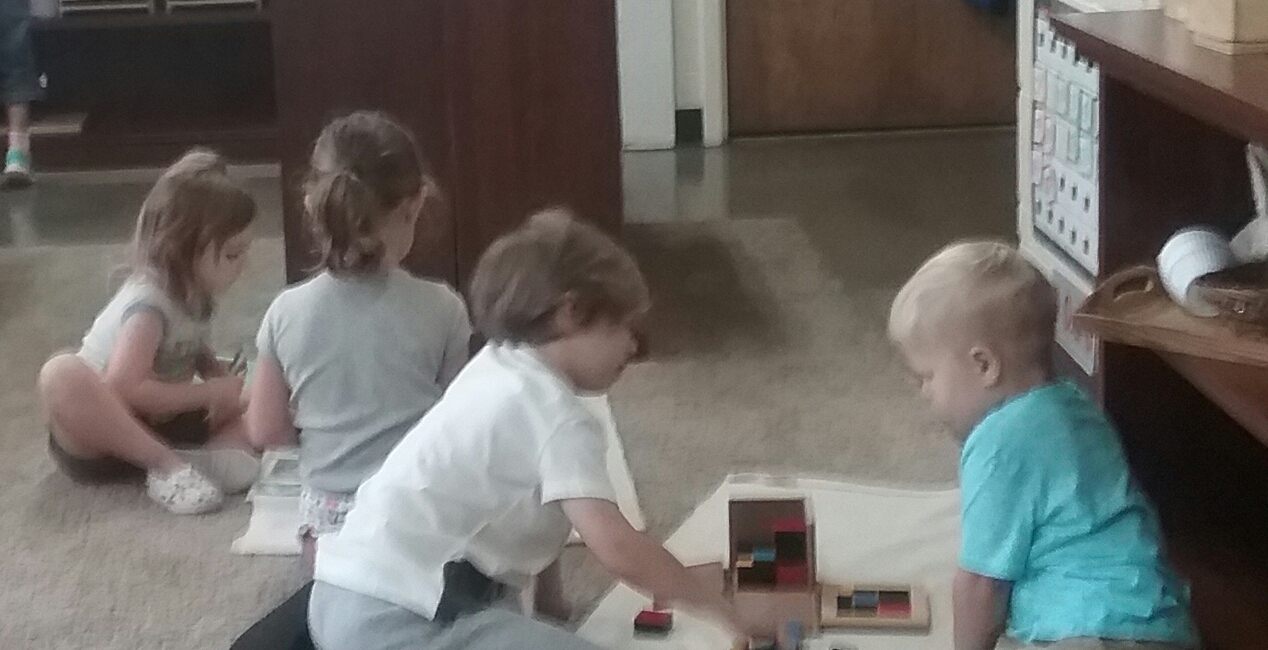
This young lass is working on the Binomial Cube. The Binomial Cube is introduced at around 4 years of age, the purpose of the material is not to teach math, but instead, to provide a challenge for a child’s ability to find patterns and relationships. Therefore, the material is presented as a sensorial activity. It is presented like a three dimensional puzzle. The formula for the Binomial Cube is……. a³+3a²b+3ab²+b³
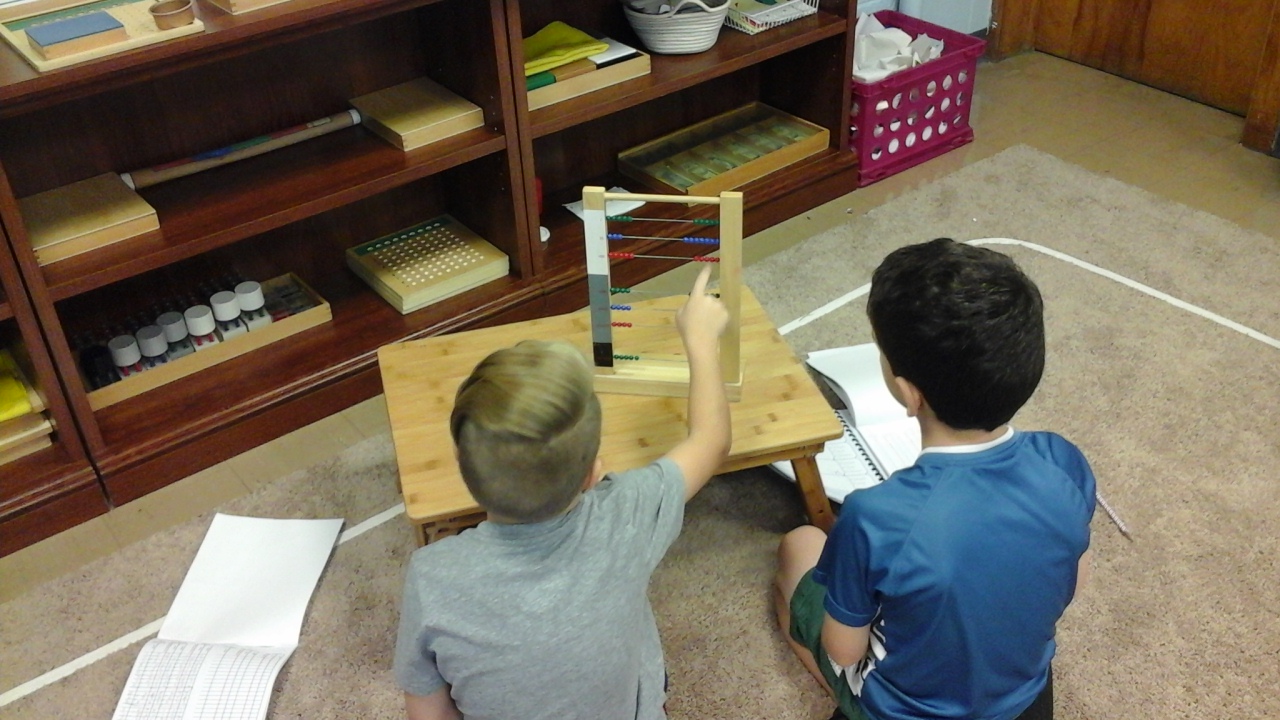
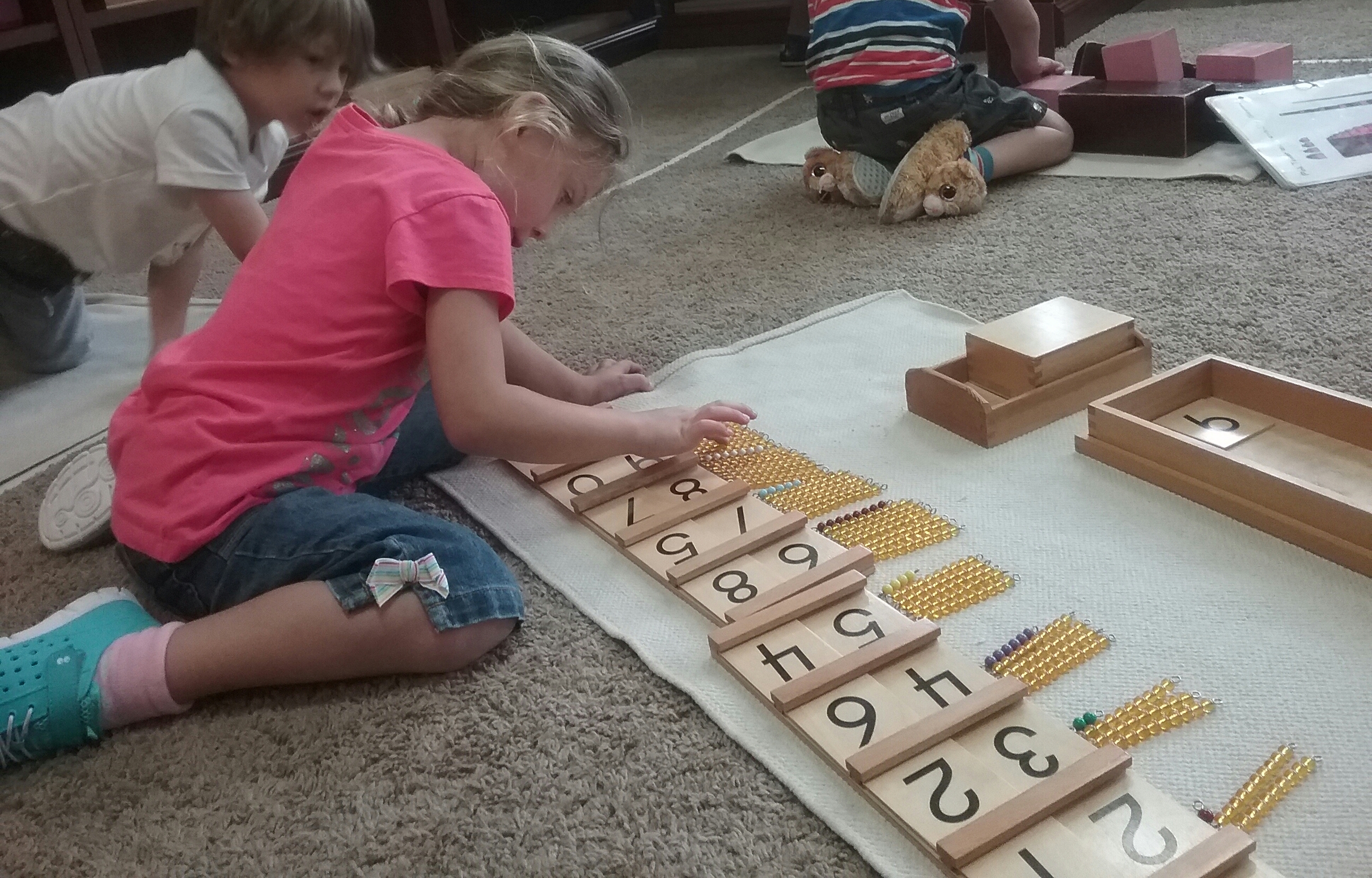
This student is working on the Ten Board. He was so excited to learn about this material he took it out a few minutes after he was presented with it. His excitement overflowed to where he is teaching a younger student the material. the purpose of the Ten Board is to combine the quantities and numerals 10 to 90
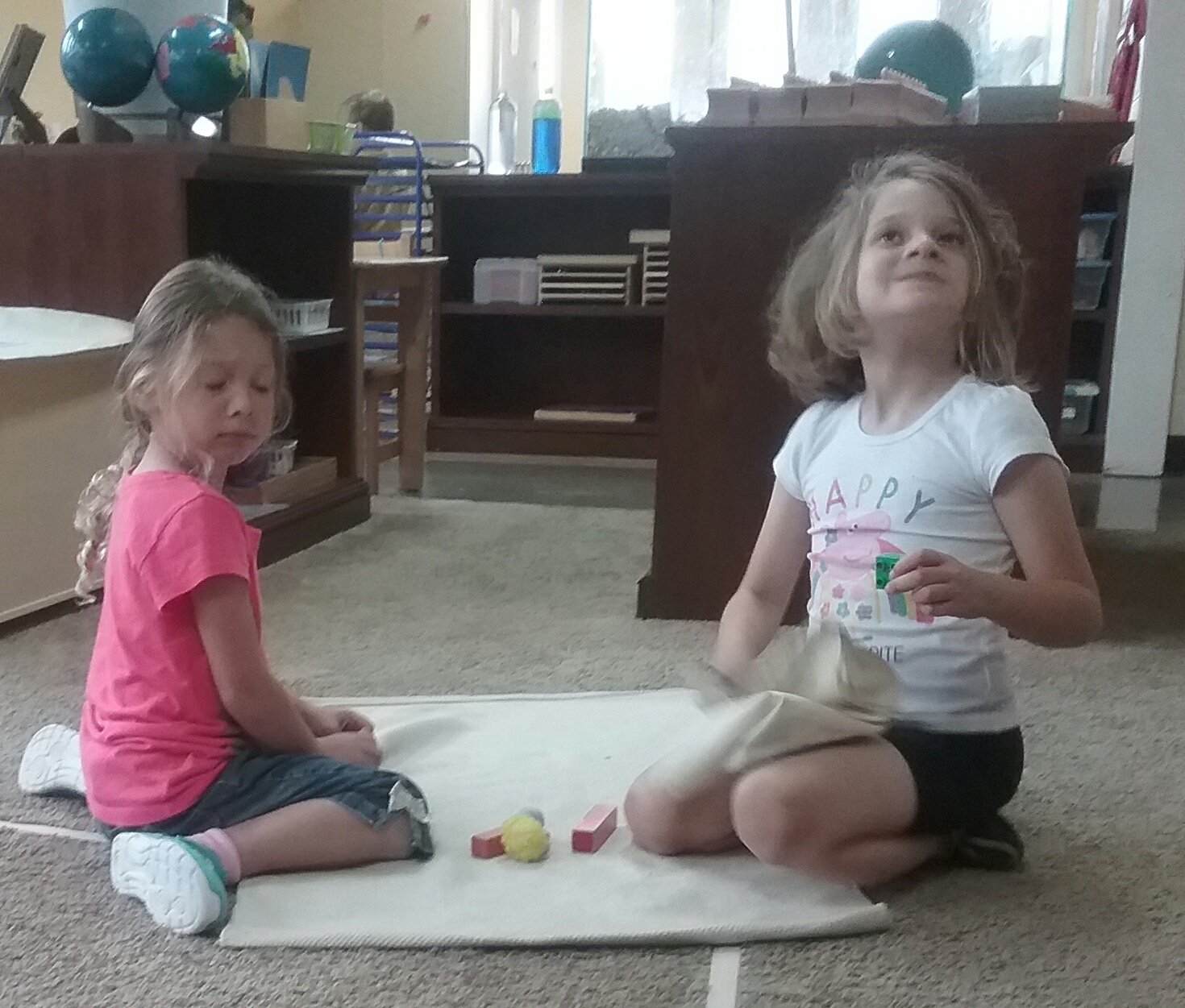
This student was excited to master this material. Once again the enthusiasm of learning prompts the older student to give lessons to younger students.
The Ten Board is matching the correct number of ten bars and a one to nine bead bar to compose a two digit number. Through this material children gain a better understanding of two digit numbers to 99.
Peek Into Next Week: Line Time- Living and Non-Living Things
Letter Of The Week- E e
Rhyming Word Of The Week- bad
Next Language is Japanese
Person bringing snack for week of 9/24/2018 is Chase
Upcoming Events: Mark your calendars picture day is Thursday, September 27th, from 8:30-11:00am. All students in attendance will be photographed in order to be included in the school yearbook. Families can also order school pictures. John and Kim Tuesday, from Tuesday Photography, do a wonderful job with our school pictures and have been taking them at our school for over nine years! They take their time with each child, working very hard to capture the best possible picture. Their work is guaranteed. If you are not 100% satisfied they offer retakes at their studio in Tallmadge or a full refund of your purchase.
“Education is a natural process spontaneously carried out by the human individual, and is acquired not by listening to words but by experiences upon the environment.” -Maria Montessori
This week we had many exciting lessons and spent time learning from each other. Our first graders worked with fractions, learned the history of clocks, continued their Geometric Cabinet work, and learned about the first plants on Earth! Our second year students practiced labeling Golden Beads as greater than, less than, or equal to, distinguished between feminine and masculine nouns, looked at the intersection of two straight lines, and classified animals on our Animal Kingdom Chart. Our third year students began adding and subtracting squares and cubes, learned about suffixes, were introduced to congruence, similarity, and equivalence, and studied the taxonomy of vertebrates! Our fourth year students further studied the Pythagorean Theorem, discussed basic life processes, and learned about acronyms. Our fifth year students continued their Native American research, continued studying acronyms, and found the formula for a decanomial using the Table of Pythagoras.
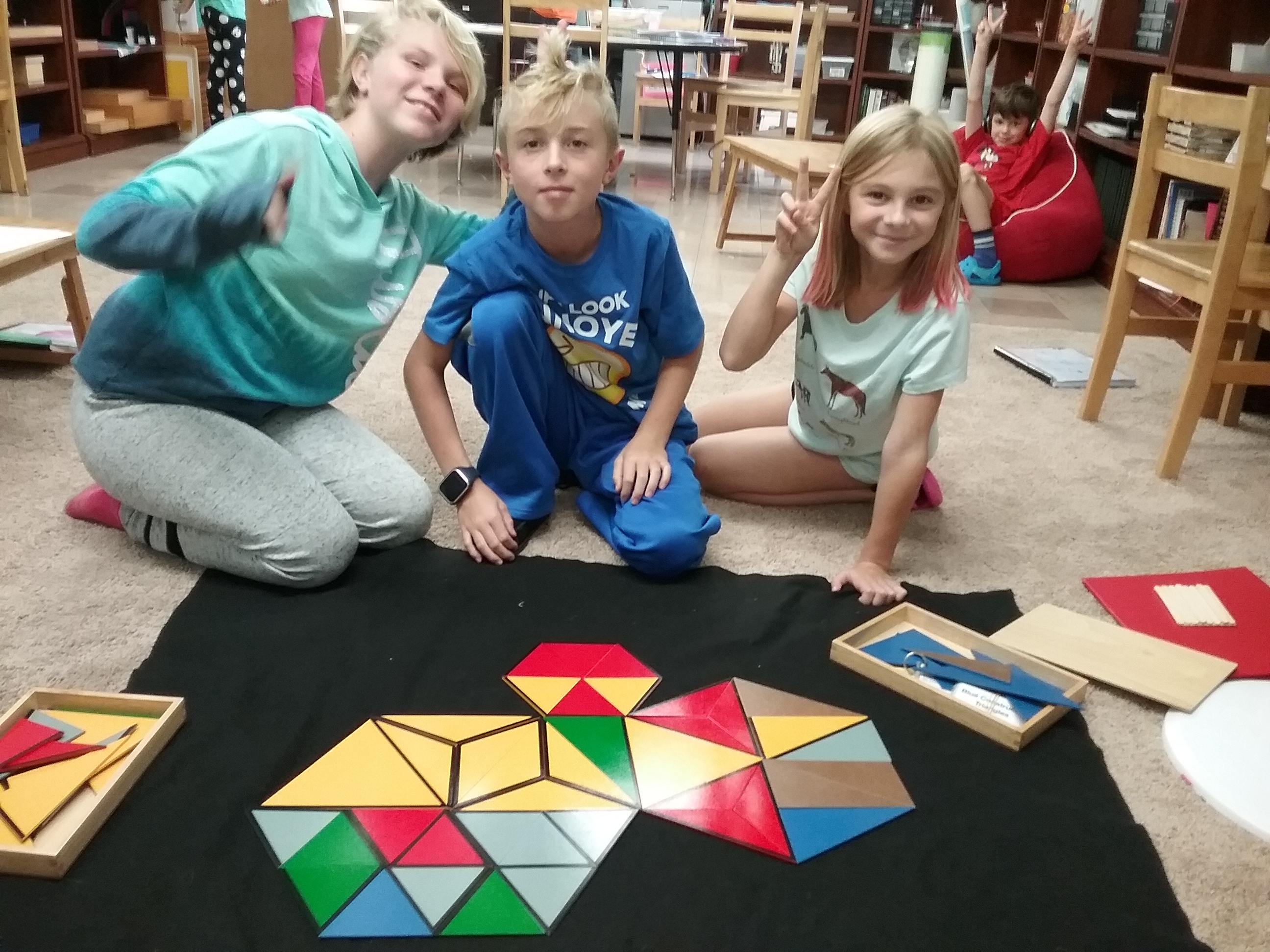
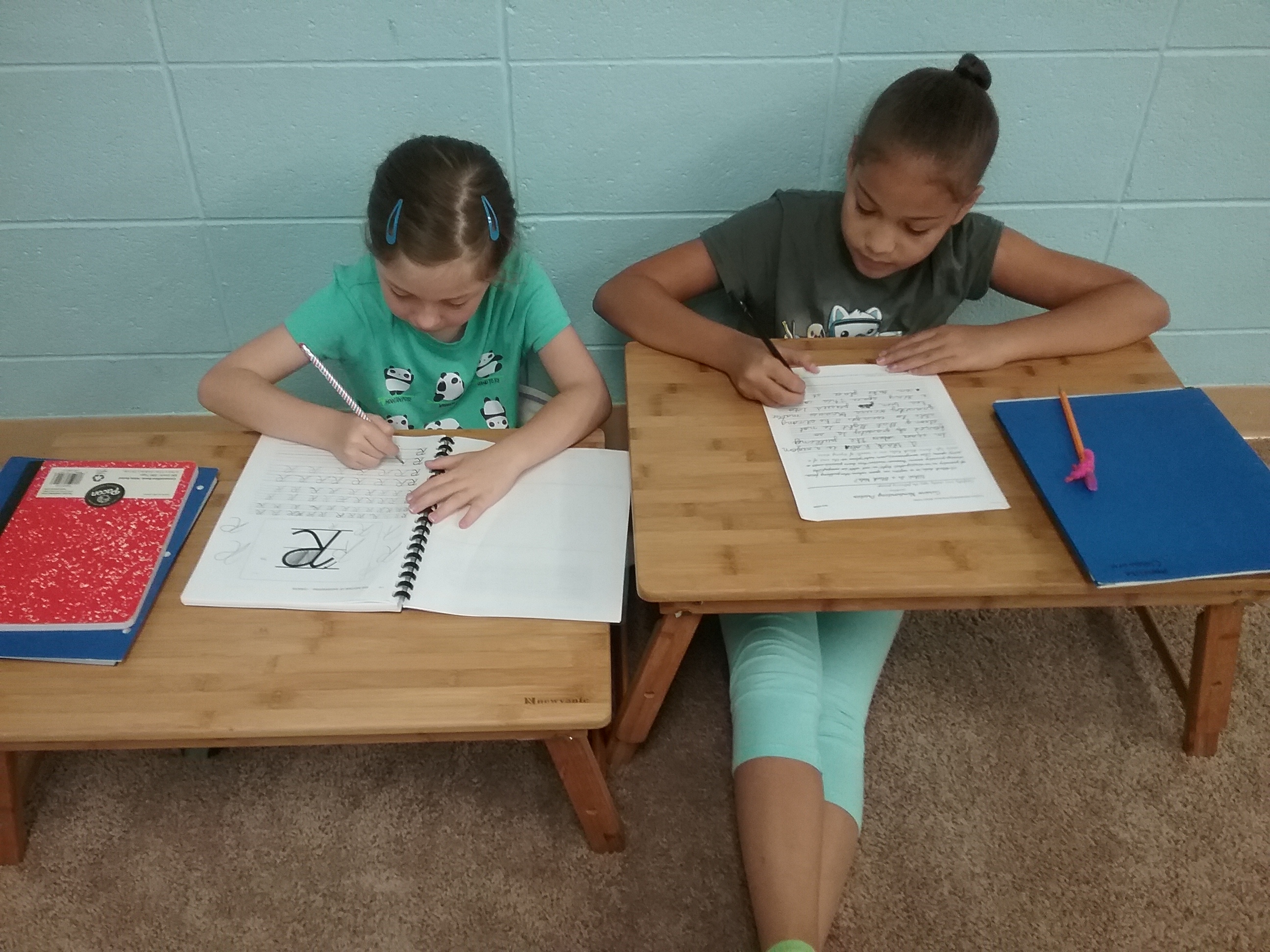
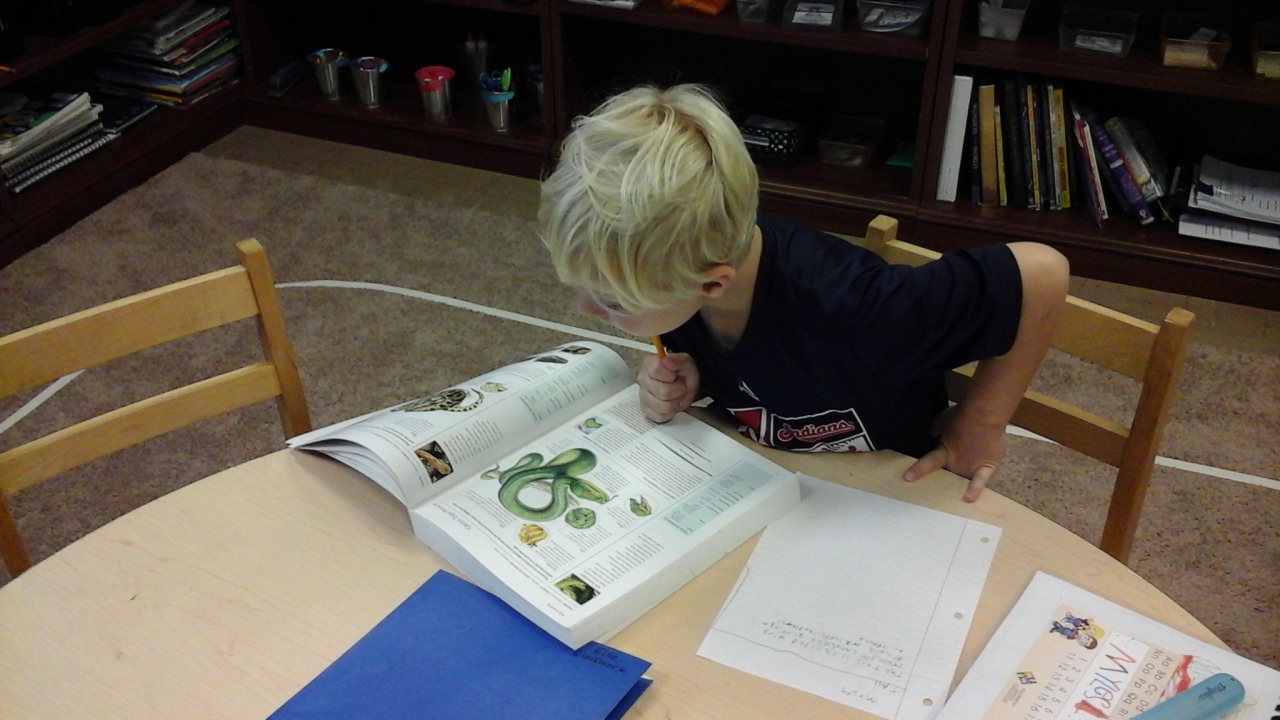
Our fourth grade students discovered that the Pythagorean Theorem doesn’t just work with squares of numbers, but works with rhombi, trapezoids, and hexagons! We combined all of our Constructive Triangle boxes and even borrowed some from Ms. Courtney. Our students each took one side of the right-angled scalene triangle to build the shapes listed above.These second and third year girls are working together on Handwriting. Our returning second year students are working on capital cursive letters. Our third, fourth, and fifth year students are writing paragraphs in cursive. This week, the older students wrote about black holes!One of our first grade students has spent time this week working on snake research. In this photo, he is researching the Emerald Tree Boa. Research in the Elementary classroom can incorporate many areas of the classroom into a single project!This first grade student is practicing the Fraction Skittles lesson she received on Monday. This is our first fraction lesson of the year and reminds students of their work with fractions in kindergarten. We discussed fracturing a whole into equal parts and different ways to write fractions.
A Peek at Next Week
Next week our Lower Elementary students will work on telling time, alphabetizing, different types of nouns, and parts of flowers and fish. Our Upper Elementary students will practice estimating and learn rules of divisibility. They will learn about coined words and the history of the English language. The fourth years will learn the chemical composition of life. Fifth year students will continue studying plants. Next week all students will begin Spelling lessons and will have their first homework assignment sent home following their Spelling lesson on Monday. We have our first field trip Friday, September 21, to Ramseyer Farms! Please remember to dress your child for the weather and a day on the farm!
REMINDERS:
Friday, September 21 – Ramseyer Farms Field Trip
Wednesday, September 26 – Picture Day
It’s almost here – “Bring Your Parents to ‘Work Time’!” Sign up here.
Equator, Prime Meridian and Hemispheres: The students learned what hemispheres are and how to identify where each continent is located Northern/Southern/Eastern or Western hemisphere. The students also learned where the equator and prime meridian are located on a globe.
Cursive Handwriting:
The students focused on the correct stokes to successfully make a lowercase j and lowercase p. For the lowercase j they were taught to swing up to the midline, drop down halfway below the baseline, swoop, and pick up the pencil then dot. For the lowercase p they were taught to swing up to the midline, drop down halfway below the baseline, slide up to the midline, circle around to the baseline, touch and glide.
A look into next week: Bodies of water surrounding North America