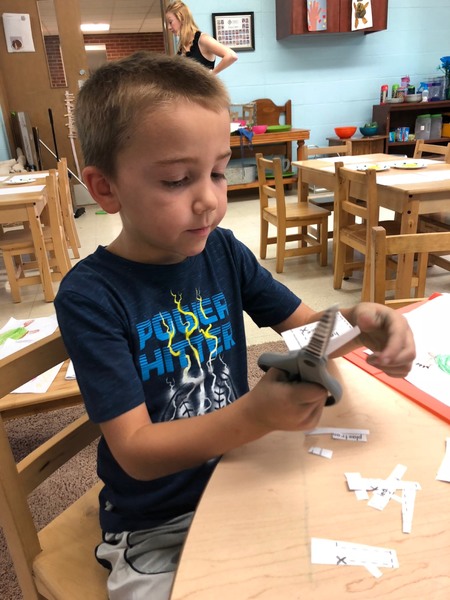
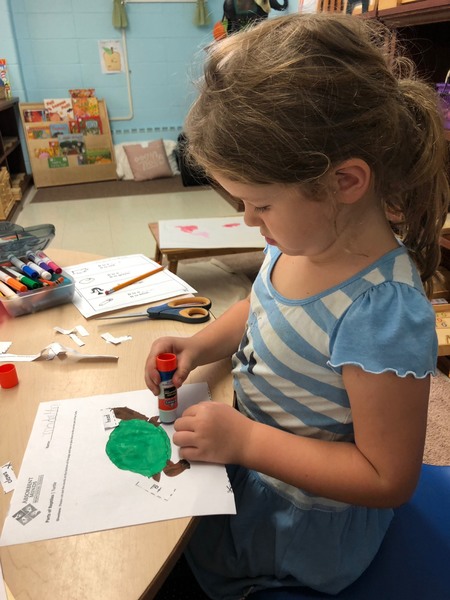
What a fantastic week we had!! Our theme was all about fall! We had fun learning about the four seasons, acorns, leaves, what our favorite things to do in fall, chlorophyll, and more! Your kiddos had a blast with different types of crafts, songs, and graphing activities!
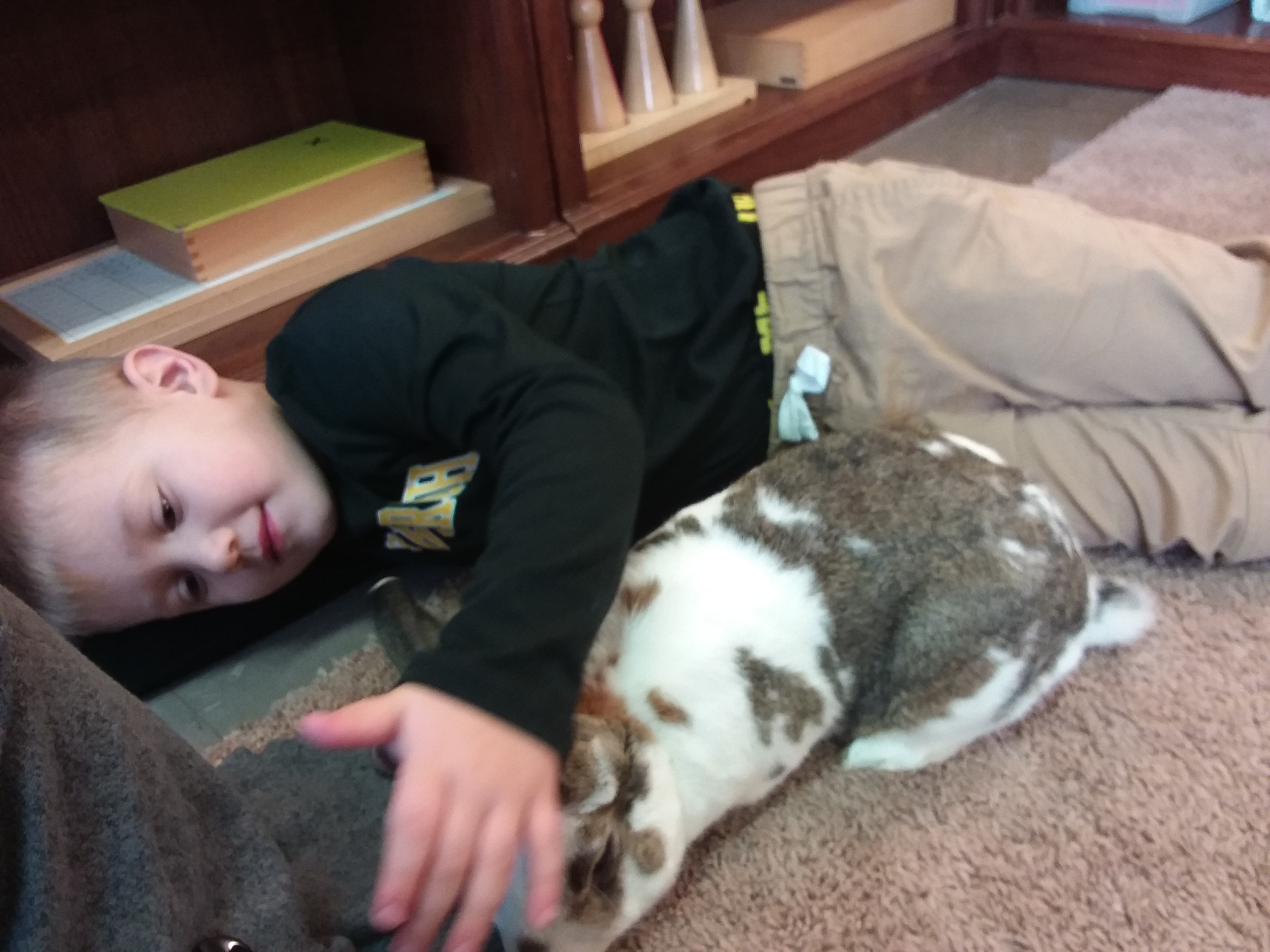
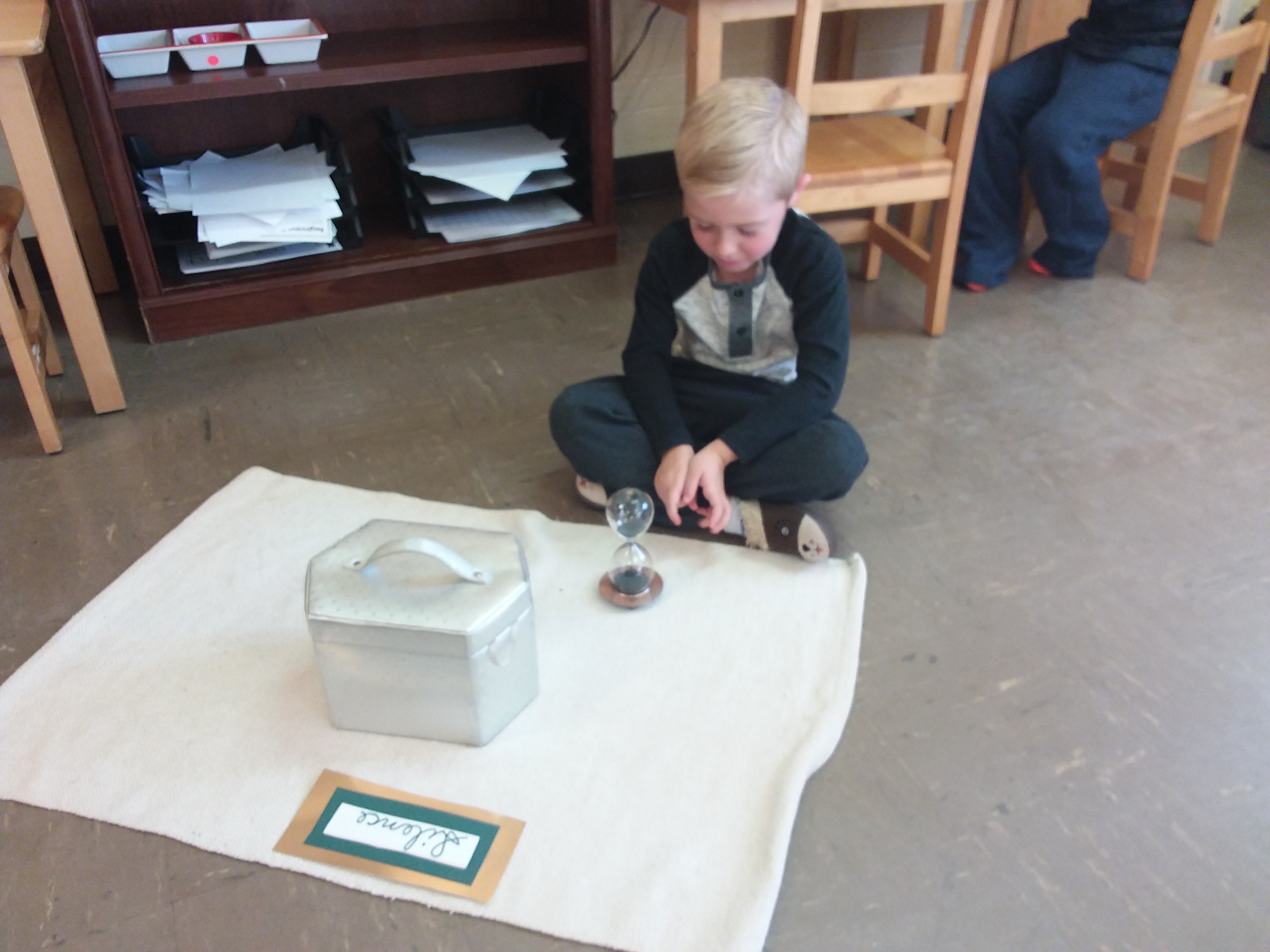
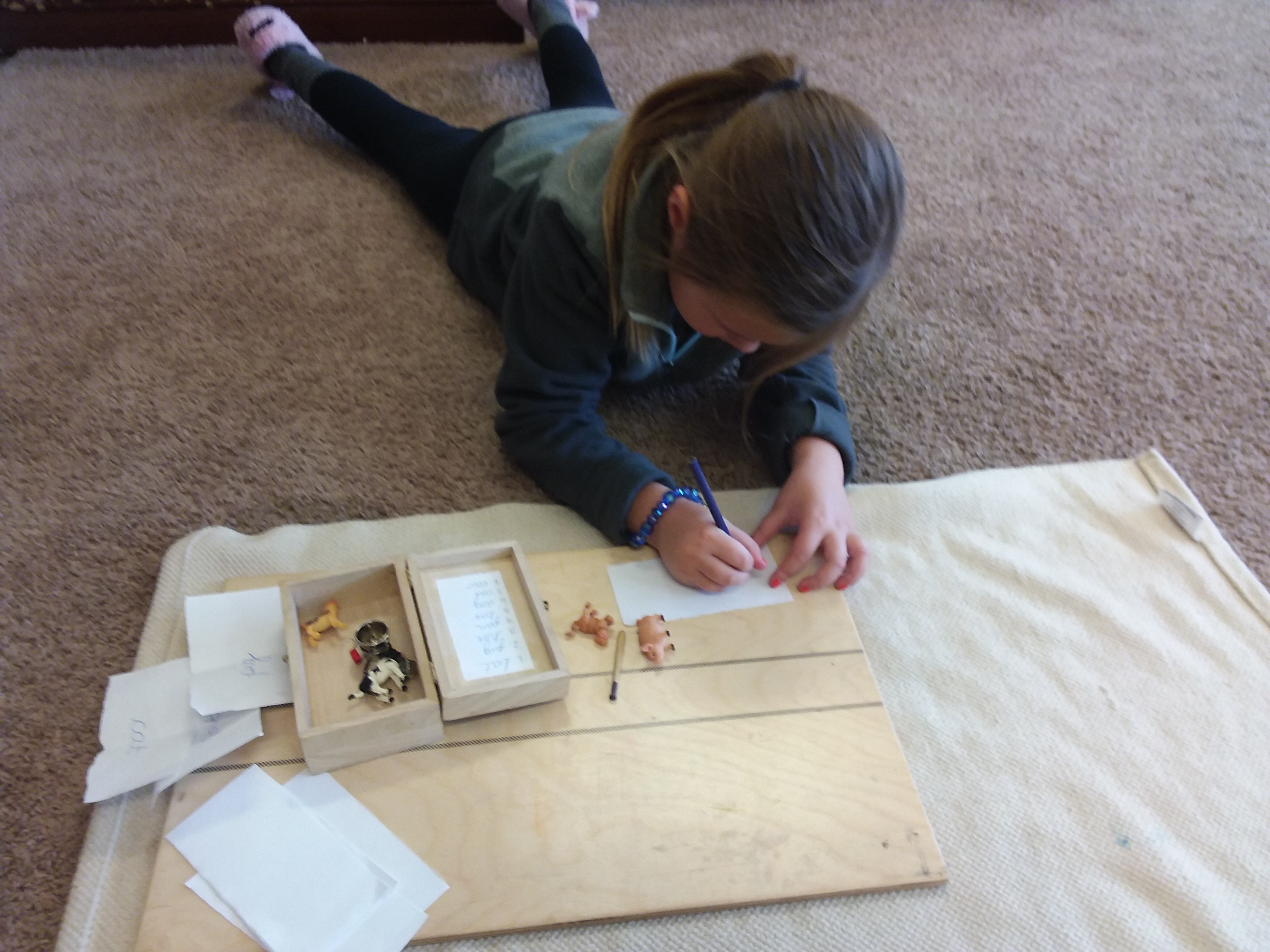
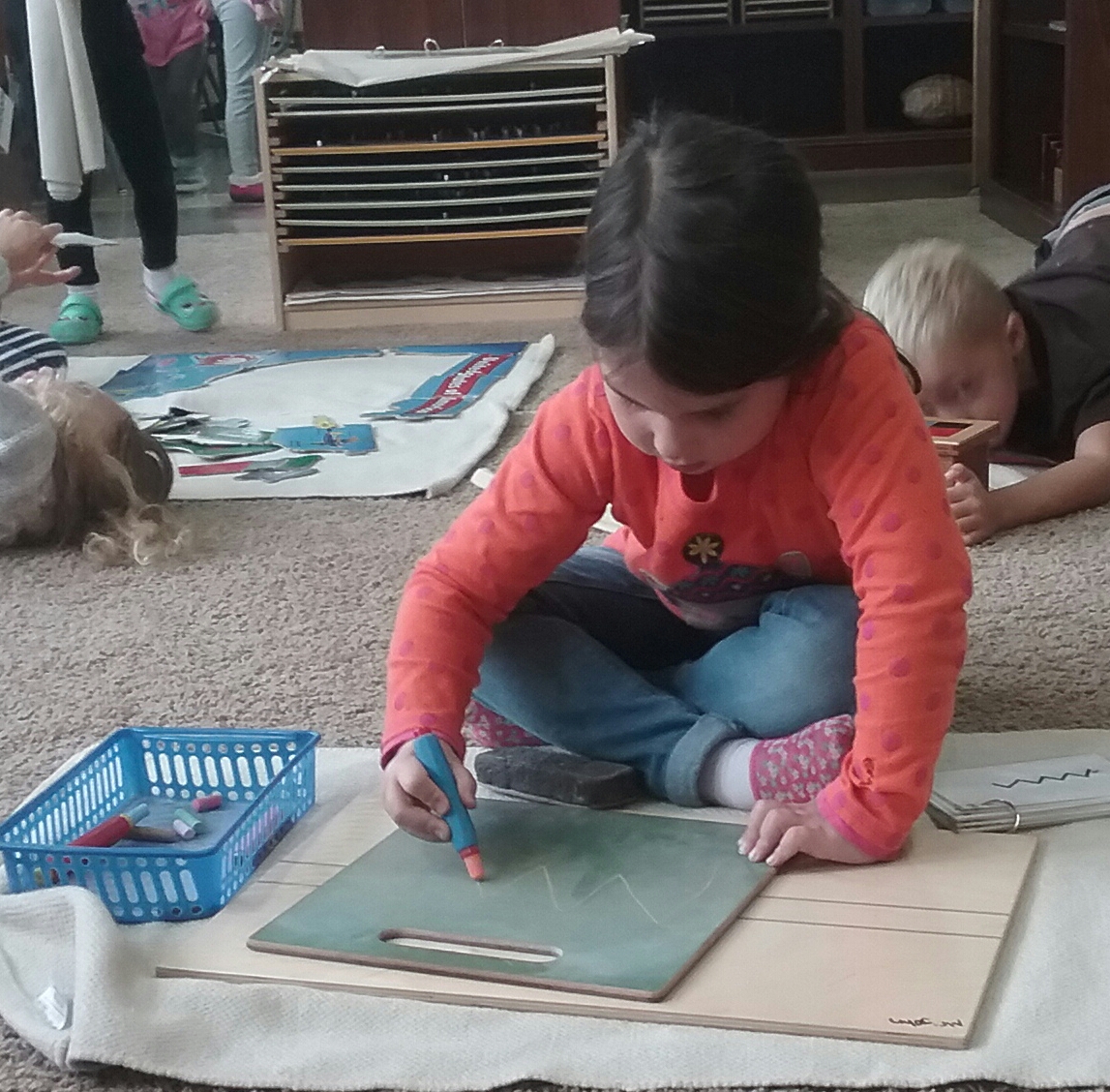
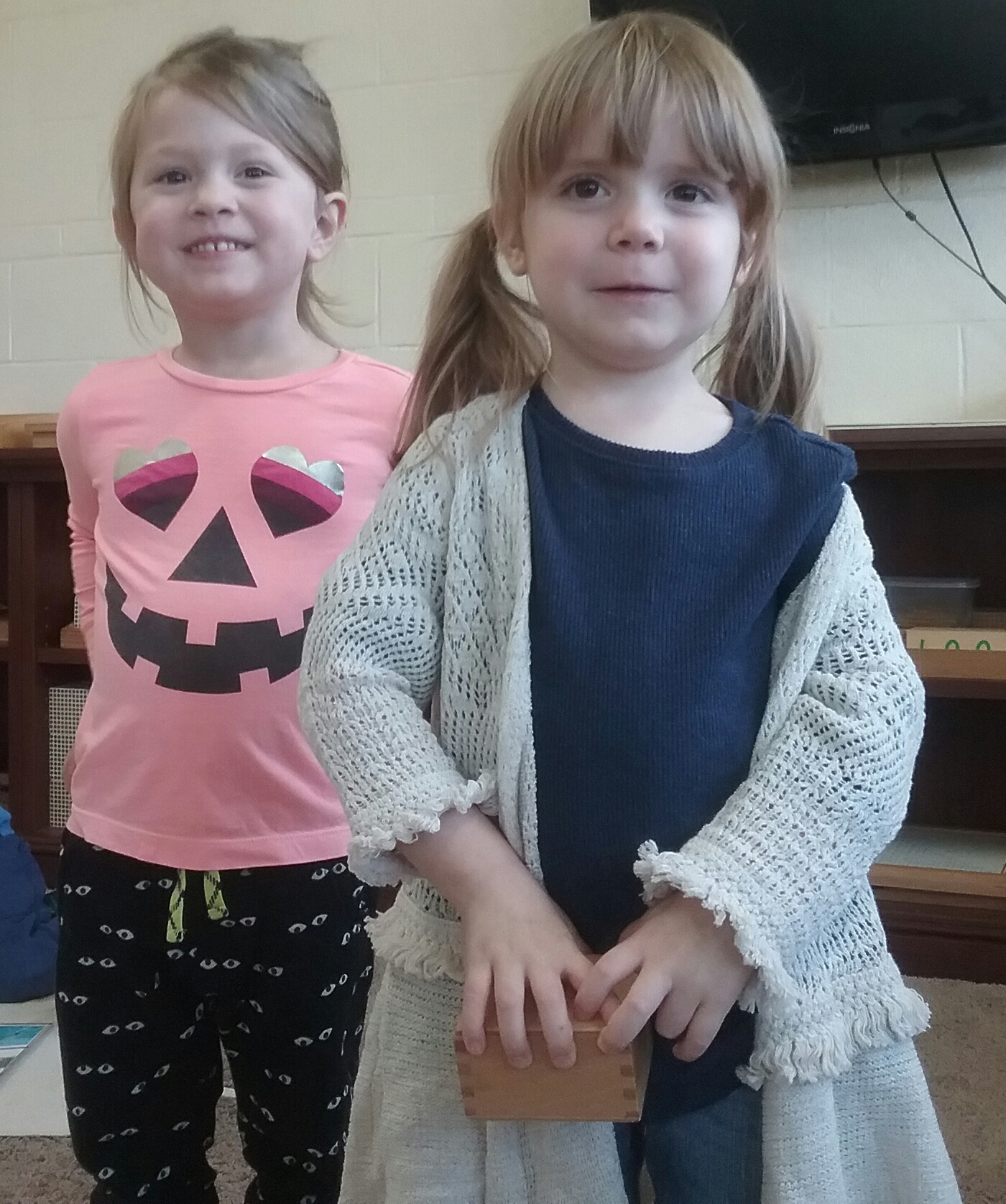
I absolutely love having a pet in our classroom. Here are just a few benefits of why having a classroom pet is such a great idea. Pets provides new ways to learn, they encourage a nurturing attitude, it builds self esteem,and it teaches responsibility .This week Ms. Ame and I introduced how to make silence in our classroom. When making silence the children will develop concentration, precision, as well as social awareness, as they wait for a turn , without disturbing the classmate who is working. They learn to speak softly in response to the teachers quiet voice, and to stop moving and listen when our bell is rung or the lights are turned off. The children did exceptionally well with it!!The sand tray helps promote writing success! It’s purpose is to help a child learn how to trace letters and numbers on their own, while allowing for the same tactile and sensorial experience as the sandpaper letters and numerals. This week this cutie and I worked on object box number one with each other. This work teaches them that there is another way to communicate, helps them realize that a written word is a group of sounds represented by graphic signs and has a meaning. It is also an introduction to reading.
REMINDERS:
Our Halloween party is this Friday! If you signed up to bring anything in, you can start bringing it in now!
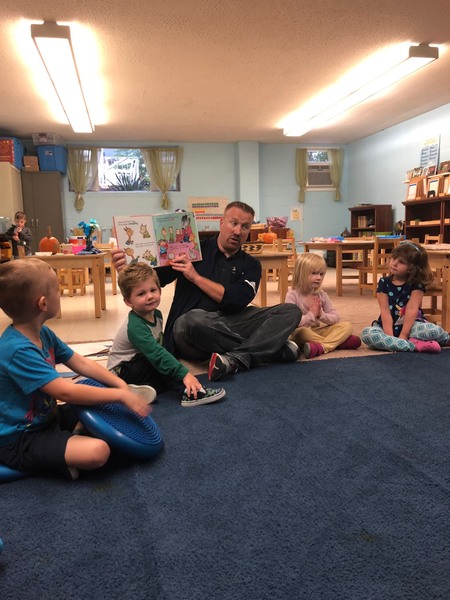
Book share is Friday! Please bring in any spooky books to share!
“It is our choices that show us what we truly are, far more than our abilities.” – Albus Dumbledore (J.K. Rowling)
As we have discussed in conferences, Parent Education Nights, and in our blog, the Elementary aged child is in a new stage of development where social connections are extremely important. When a child is just beginning to navigate these waters of what is fair or unfair, right or wrong, socially acceptable or not, there are plenty of times when they make the wrong decision and need guided through the proper way to handle situations.
This week in our classroom we discussed “The Four Agreements.” These are four standards we have all agreed to hold ourselves to in the Elementary classroom to help us be kind, caring, and productive members of our classroom and of society. We discussed what each agreement means and that we would continue to practice them together every day. Please take some time this weekend to discuss them with your child!
The Four Agreements:
Mutual Respect – We recognize and appreciate our differences and similarities. We consider and honor all values, beliefs, and needs of others. We respect individual skills, talents, and contributions. We offer feedback to each other that encourages growth.
Attentive Listening – We pay close attention to others and let them know they have been heard. We maintain eye contact, withhold our own comments, and paraphrase key words to show we’ve been listening. We listen with our ears, eyes, and our hearts.
Appreciation/No Put Downs – We show kindness and respect. We avoid negativity, name calling, and hateful gestures or behaviors. We treat each other kindly. We state appreciation for all individuals.
Right to Pass – We have the right to share or pass while still participating. Choosing the right to pass means that the person prefers not to share personal information or feelings or to actively participate in the group at a particular moment. Being a silent observer is still a form of participation and can lead to greater learning.
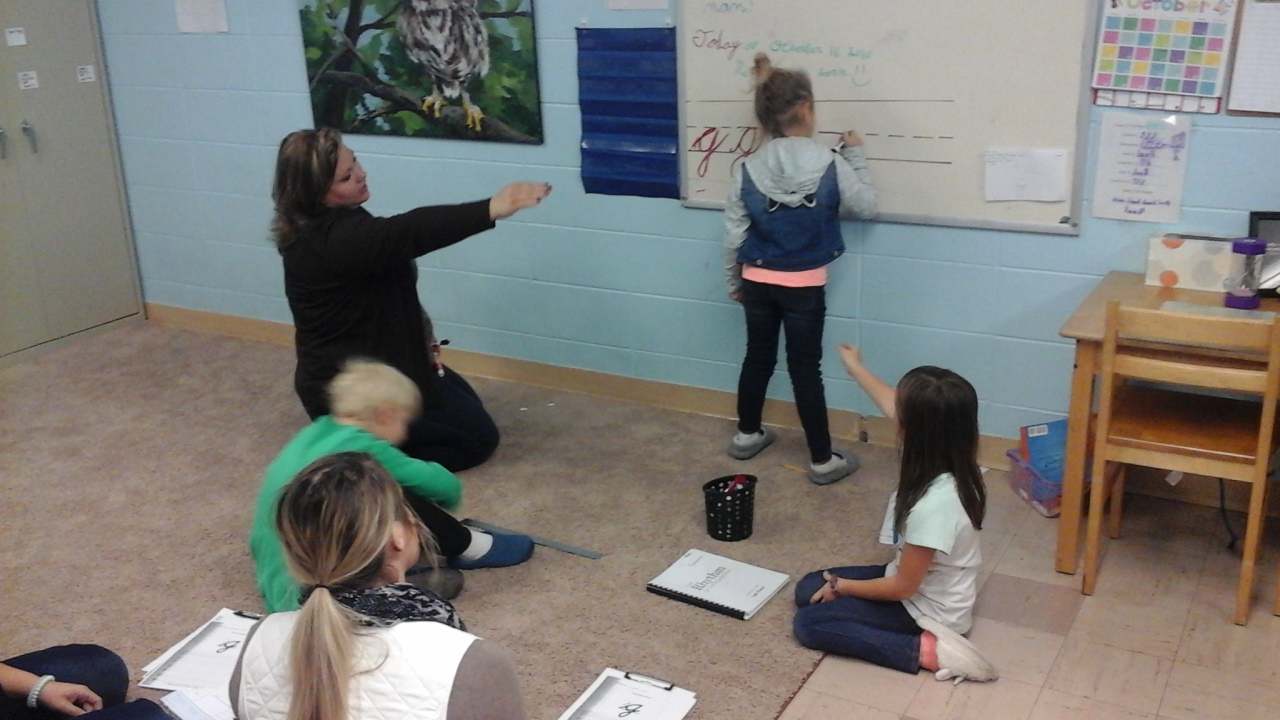
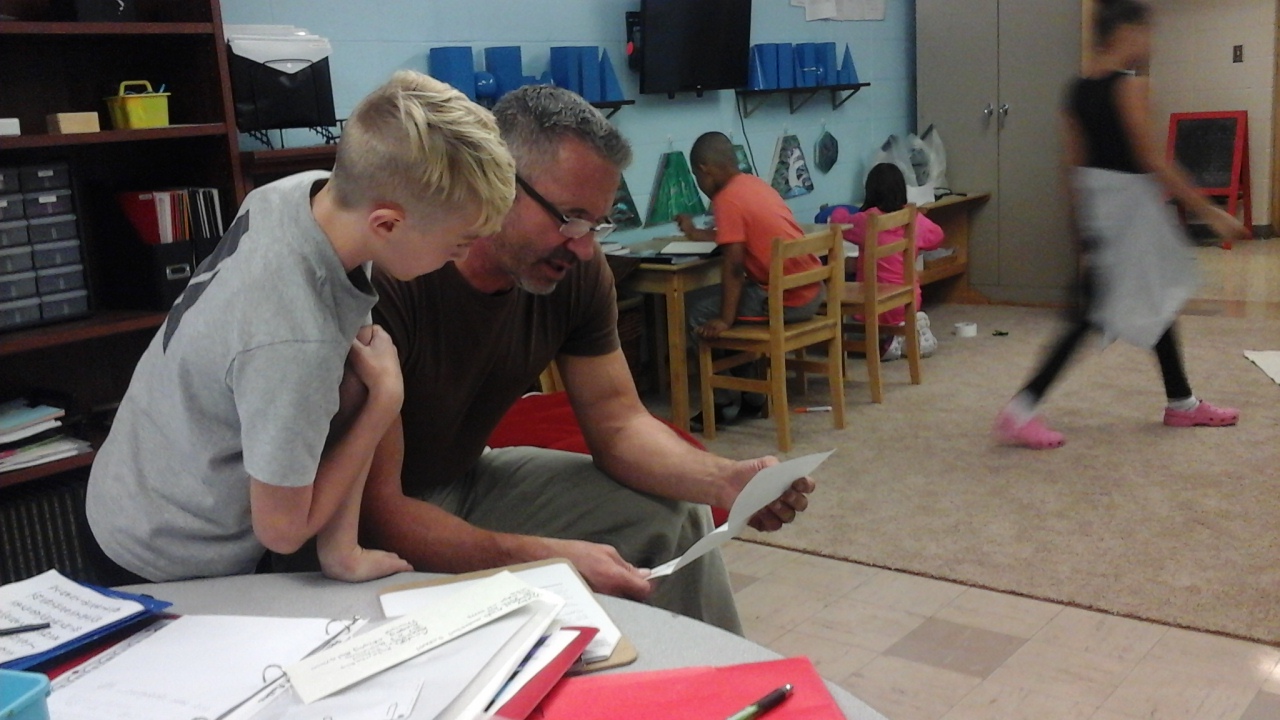
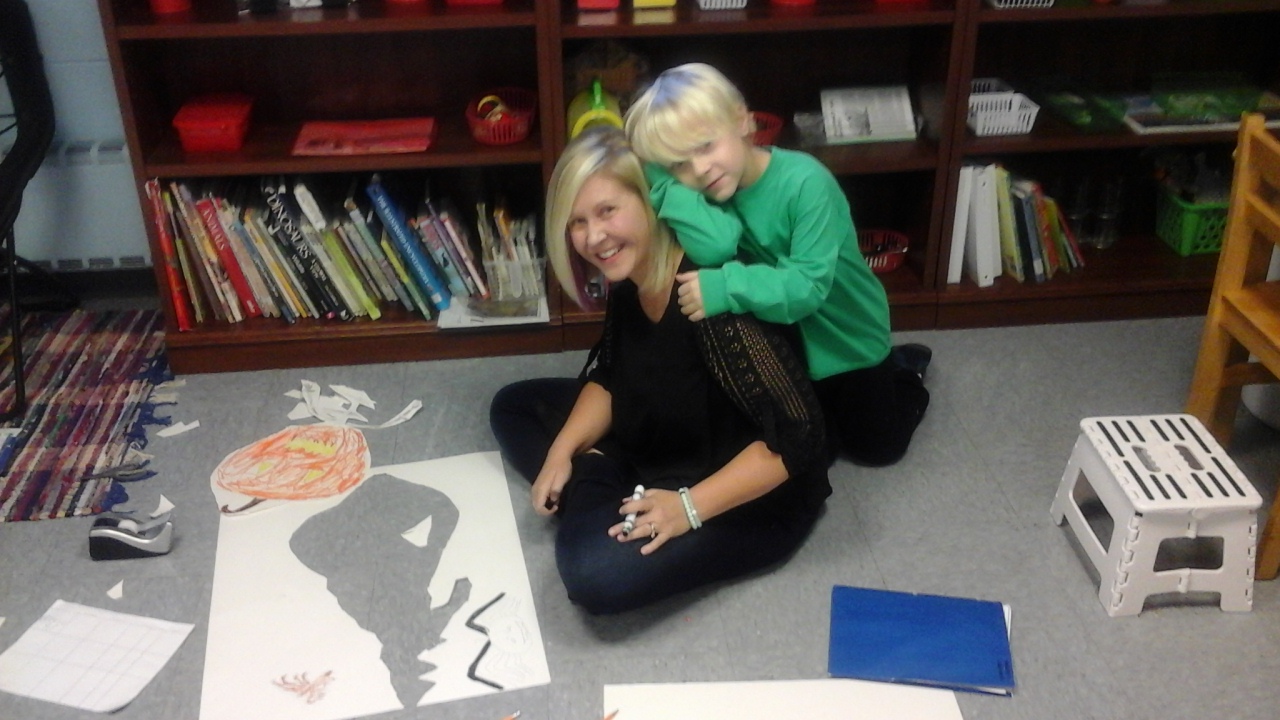
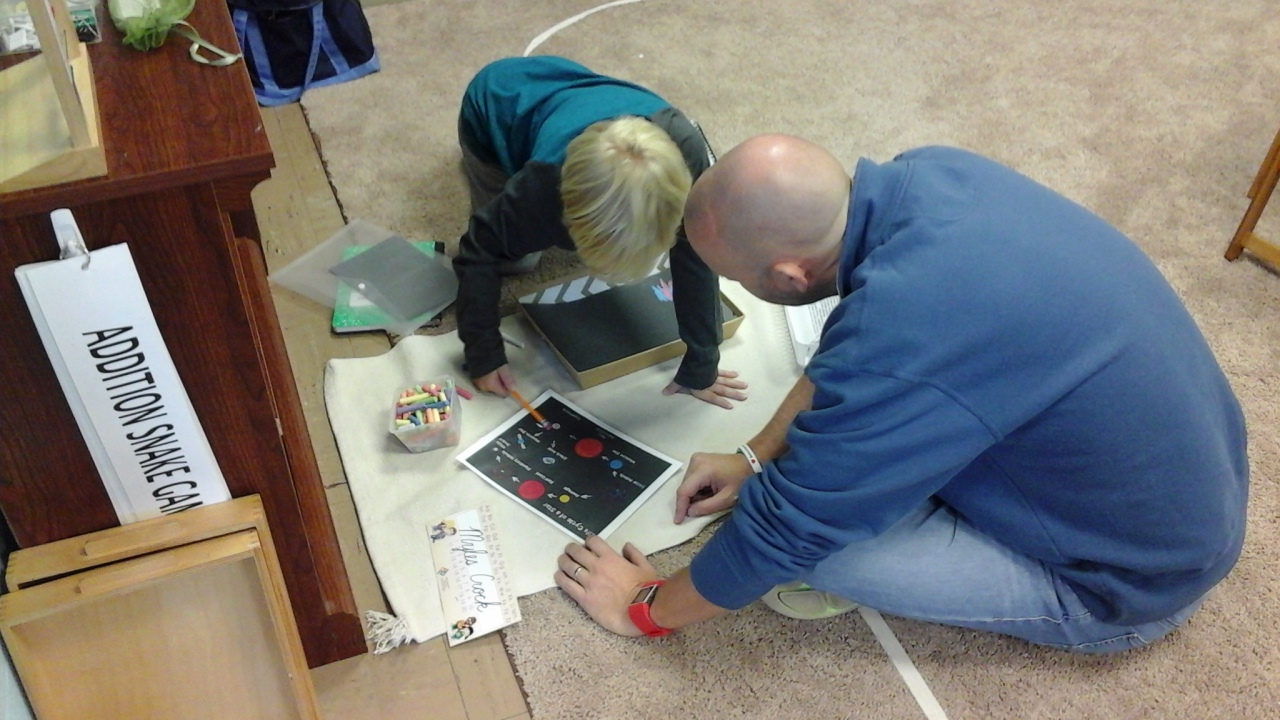
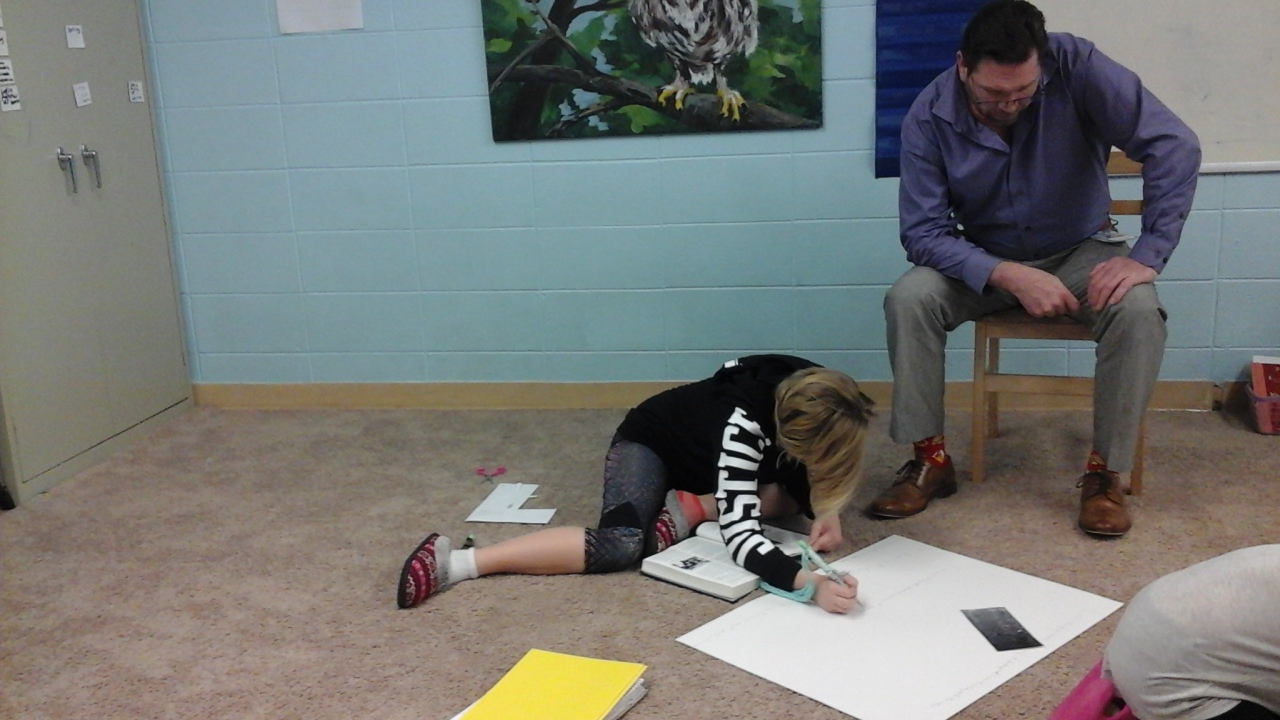
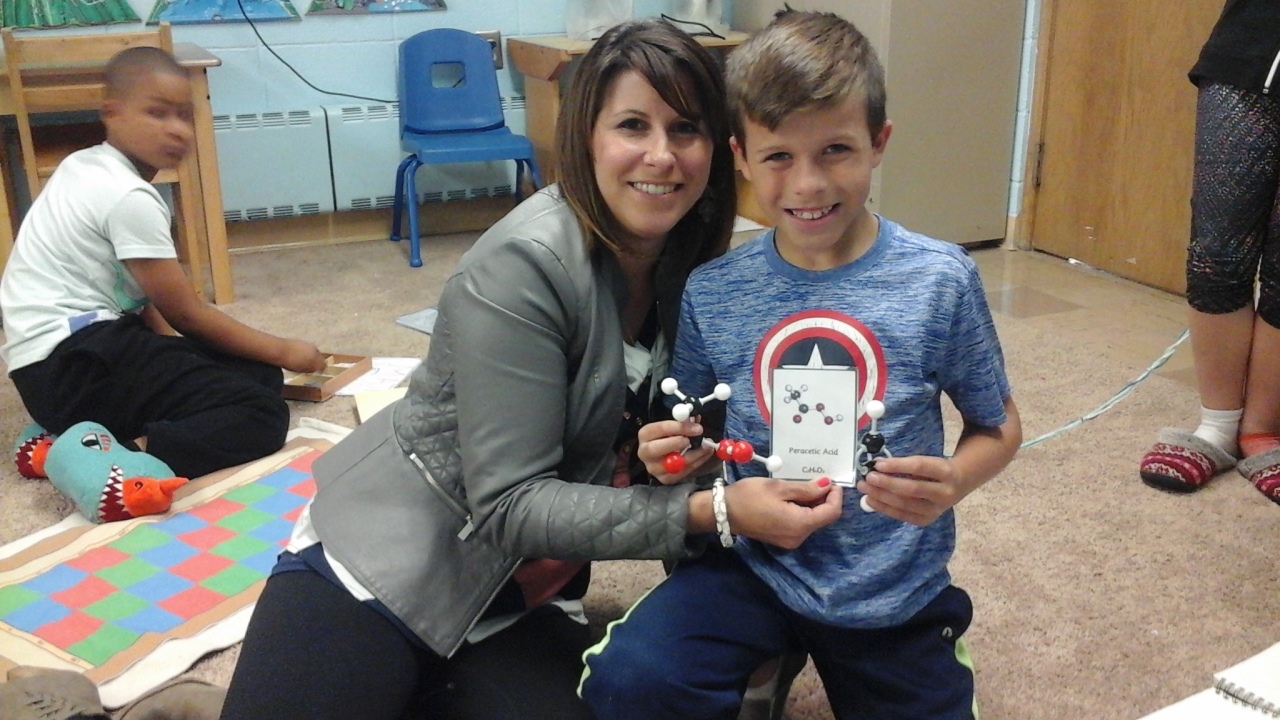
This week we had our first “Bring Your Parents to ‘Work Time’!” Take a peek below at the fun we had!
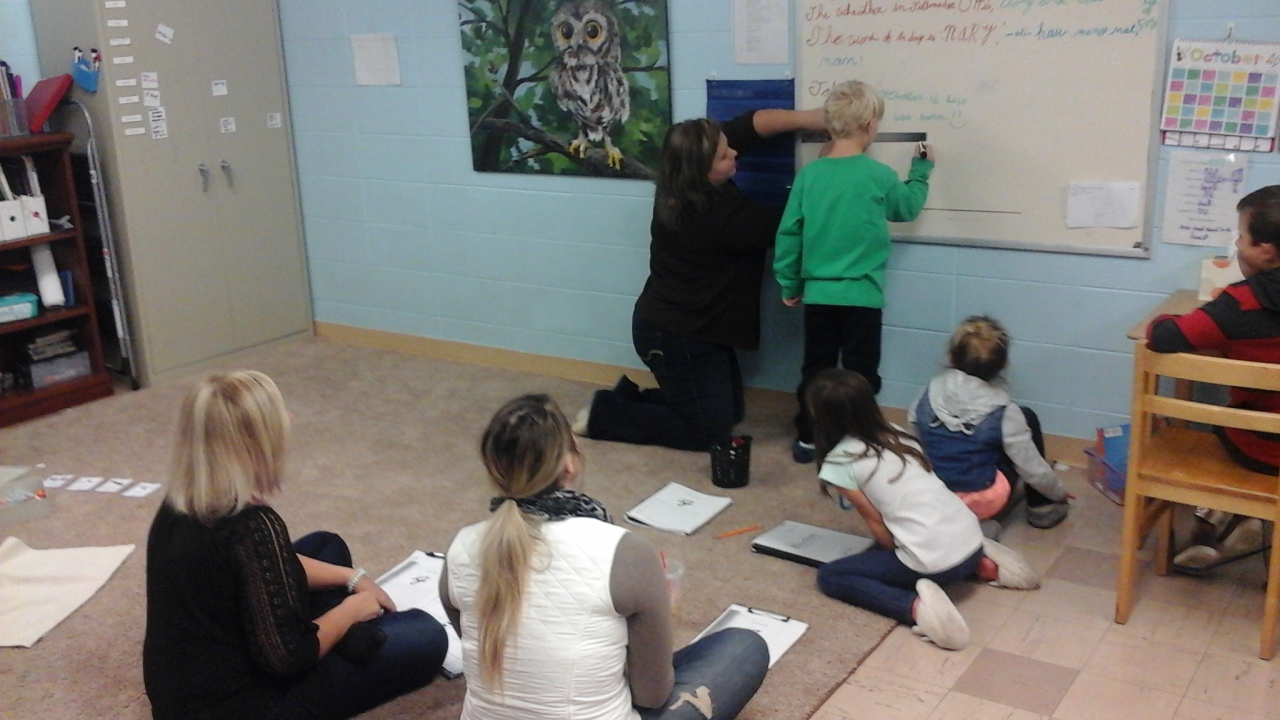
Ms. Kelley is giving a handwriting lesson to these students and two of our parent visitors! In our classroom, we use a handwriting approach that appeals to all learning styles. Throughout each lesson we air trace each letter with our arms, trace over Ms. Kelley’s example, and write our own examples, all while repeating key phrases to help us remember the proper formation of the cursive letters!This fourth grade student and his dad are writing and reading Chinese words together. This student asked for a list of beginning Chinese symbols and pronunciations. They wrote sentences together and listened to examples with Ms. Marlee!This student and his mom are helping create our Halloween decorations for our party next week! They made different pumpkins and creations to make our room spooky for the party!This first grader and his dad are working together to learn about Stellar Evolution. They drew examples and discussed what each stage was!This student and her dad are working on her “Word of the Week.” Each week, Upper Elementary students choose a word that they think no one else will know. Next, they design a poster that illustrates their word, without giving away the definition – like a movie poster. On Monday, during Community Meeting, these students perform a skit to show what their word means. At the end of each skit, the Lower Elementary students guess what the word may mean. The Upper Elementary students share their definition and part of speech at the end.This third grader and his mom worked on multiplication equations and came to an equivalence lesson during their time together. Later, she was able to see the work this third grader did with making molecular compounds!
Thank you to all of our parents that were able to make it! Your students really love showing you what they do each day and we love having you!
A Peek at Next Week
Next week, we will have our two “Caps for Sale” performances. Make sure you check your email for the details!
Lower Elementary students will study adjectives, constructive triangles, nutrition, and weather. Upper Elementary students will discuss decimals, greatest common factors, etymologies of words, the adverb, and the structure of the Earth!
REMINDERS:
“Caps for Sale” Parent Performance – Wednesday, October 24, at 8:30 in the gym.
“Caps for Sale” Cuyahoga Falls Student Performance – Friday, October 26. Drop off at 8:15
Halloween Party – STUDENTS ONLY – Friday, October 26 – Afternoon
The last story we read in Reading Group was called Jamaica’s Blue Marker. In the story a little girl, Jamaica has to share her blue marker with a little boy, Russell even though she doesnt want to. The boy scribbles on her work after getting mad at her. The class ends up finding out he is moving, so they throw a good bye party. Jamaica doesn’t end making a card for him, and then feels bad about it, so she ends up giving him the blue marker he had borrowed.
Throughout the story, we discussed what we wondered about, what Jamaica was thinking when she gives Russell her blue marker, and how they would feel about giving away their blue marker if they were Jamaica.
A chart we created for when we share in discussion.
The kindergartners are writing about whether they would be happy or sad about giving away their blue marker if they were Jamaica.
A Peek Into Next Week
– The students will be reading a poem about a cat who has no home.
– The students will learn about the speaker of a poem and what stanzas are in a poem.
-The students will learn the vocabulary words: silky, dainty, and elegant.
Parts of Animals: The children learned the characteristics and body parts of mammals, reptiles, amphibians, birds and fish by using and working with the animal puzzle and control charts in the classroom.
Cursive Handwriting: The students reviewed and practiced the correct stokes to successfully make a lowercase r, lowercase w, lowercase j, lowercase p, lowercase i, lowercase t, lowercase u and lowercase s. For the lowercase r they were taught to swing up to the midline, dip and then down to the baseline. For the lowercase w they were taught to swing up to the midline, down to the baseline, swing up to the midline, down to the baseline, swing up to the midline, dip connector at the midline.For the lowercase j they were taught to swing up to the midline, drop down halfway below the baseline, swoop, and pick up the pencil then dot. For the lowercase p they were taught to swing up to the midline, drop down halfway below the baseline, slide up to the midline, circle around to the baseline, touch and glide. For the lowercase i they were taught to swing up to the midline, down to the baseline,
pick up the pencil, dot. For the lowercase t they were taught swing tall to halfway between the midline and the top
line, down to the baseline, pick up the pencil, cross at the midline. For the lowercase u they were taught swing up to the midline, down to the baseline, swing up to the midline, down to the baseline. For the lowercase s they were taught swing up to the midline, scoop around, touch, glide.
Apples: This week we talked about apples and all the parts that make up an apple like the skin, flesh, core, seeds and stem. The children enjoyed tasting different types of apples: granny smith, red delicious, gala and honey crisp. They also discovered what the inside of an apple looks like and how apples grow. The students even had the chance to do apple stamping and make homemade applesauce.
Work Time
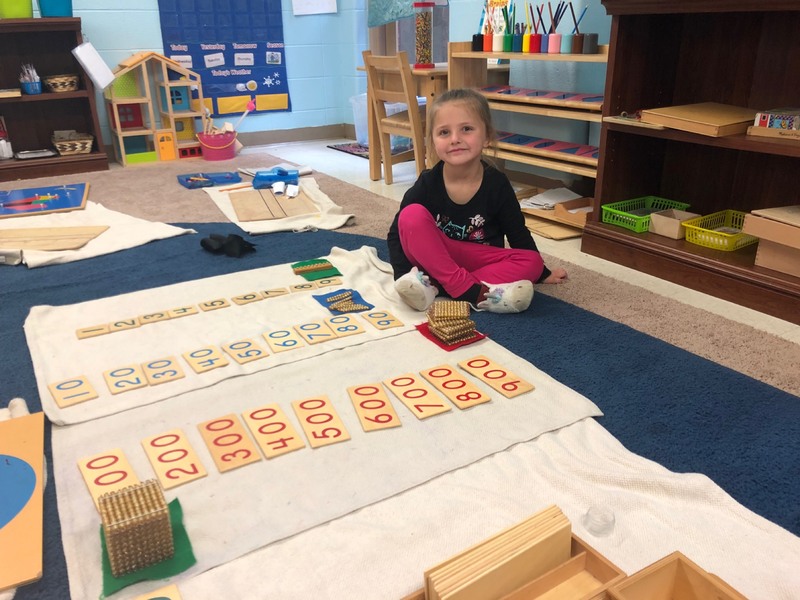
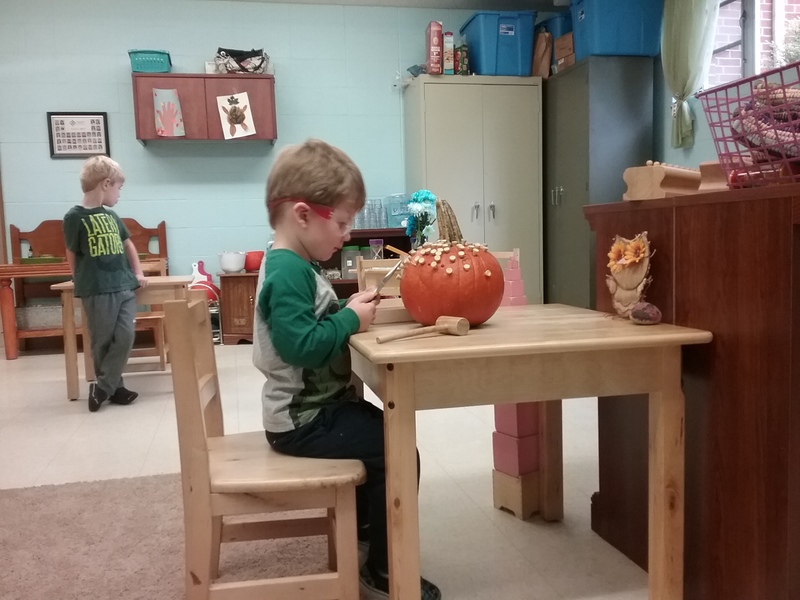
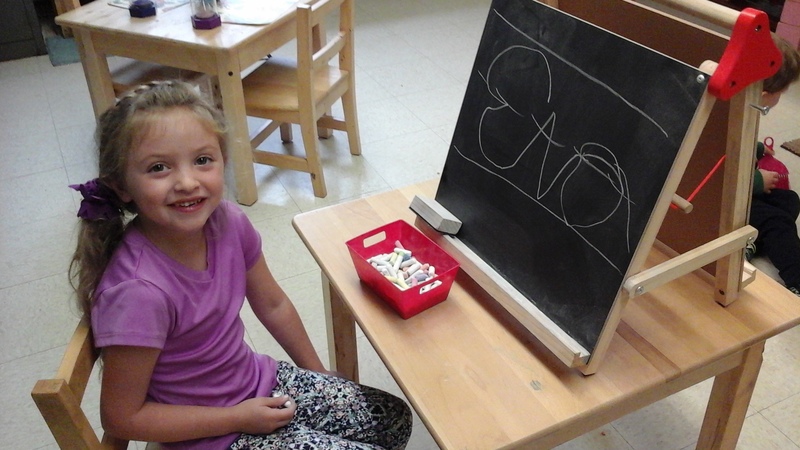
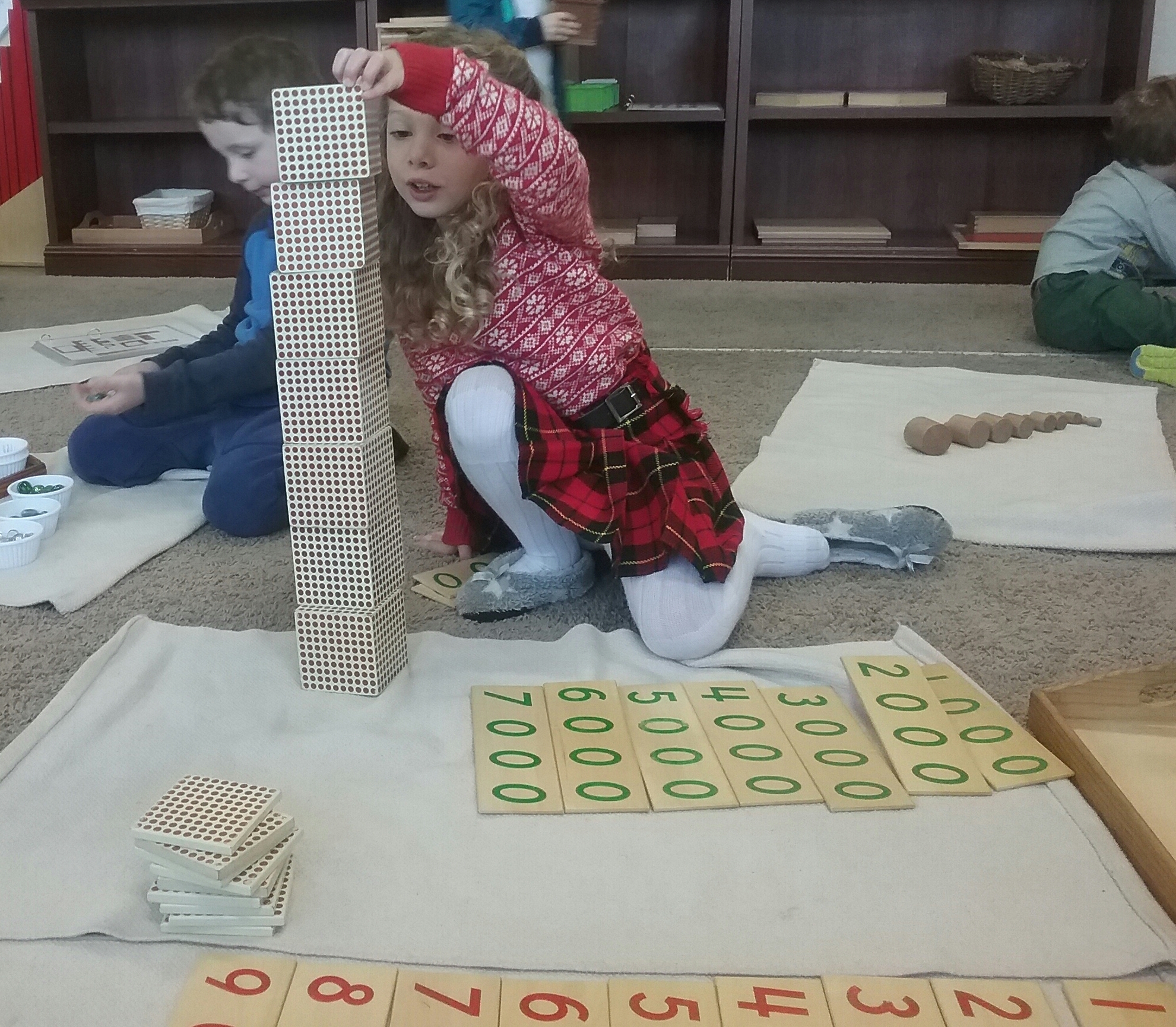
Nine Layout: This child is becoming familiar with the names and relative sizes of the categories: units, tens, hundreds and thousands. She is also discovering that if she has i.e. 6 units and adds 1 more unit she will have 7 units.Pumpkin Hammering: This child is hammering golf tees into a pumpkin and is developing the proper movements needed for manipulating a hammer and golf tee. He is also refining his fine motor skills by being able to grasp the golf tee and developing his strength needed holding a pencil to write.Continent Map: This child traced and labeled all seven continents.Cursive: This student focused on the correct stokes to successfully write her first name in cursive on the chalkboard.
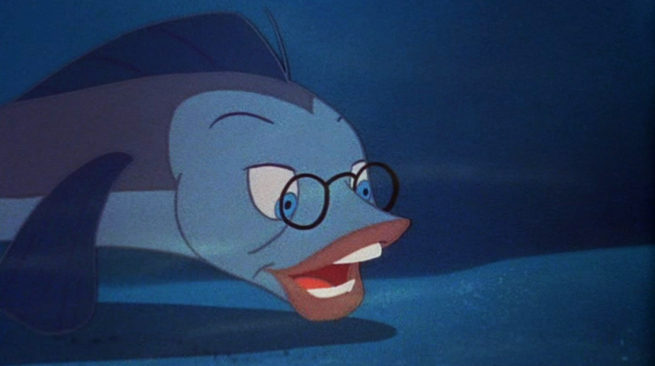
Line Time: Fish- We learned fish are vertebrates or they have a backbone or a spine. They are cold blooded (their body temperature changes to the temperature around them) and have slimy and scaly skin. The unique thing about fish is that some fish are born alive and some fish are born with jelly eggs. Some examples of fish are Trout, Bass, Sharks, and Swordfish. And one more important point is that fish live in water, and many people decide to have fishes for pets since they’re easy to maintain, and you can even get an aquarium and fish decor for it.
I wish I was a fish……
Cultural Subjects: Your children can now count to ten in 10 languages (English, Latin, Sign Language, Spanish, German, French, Japanese, Greek, Arabic with the Lebanese Dialect, Italian, and Russian)
Peek In Our Classroom:
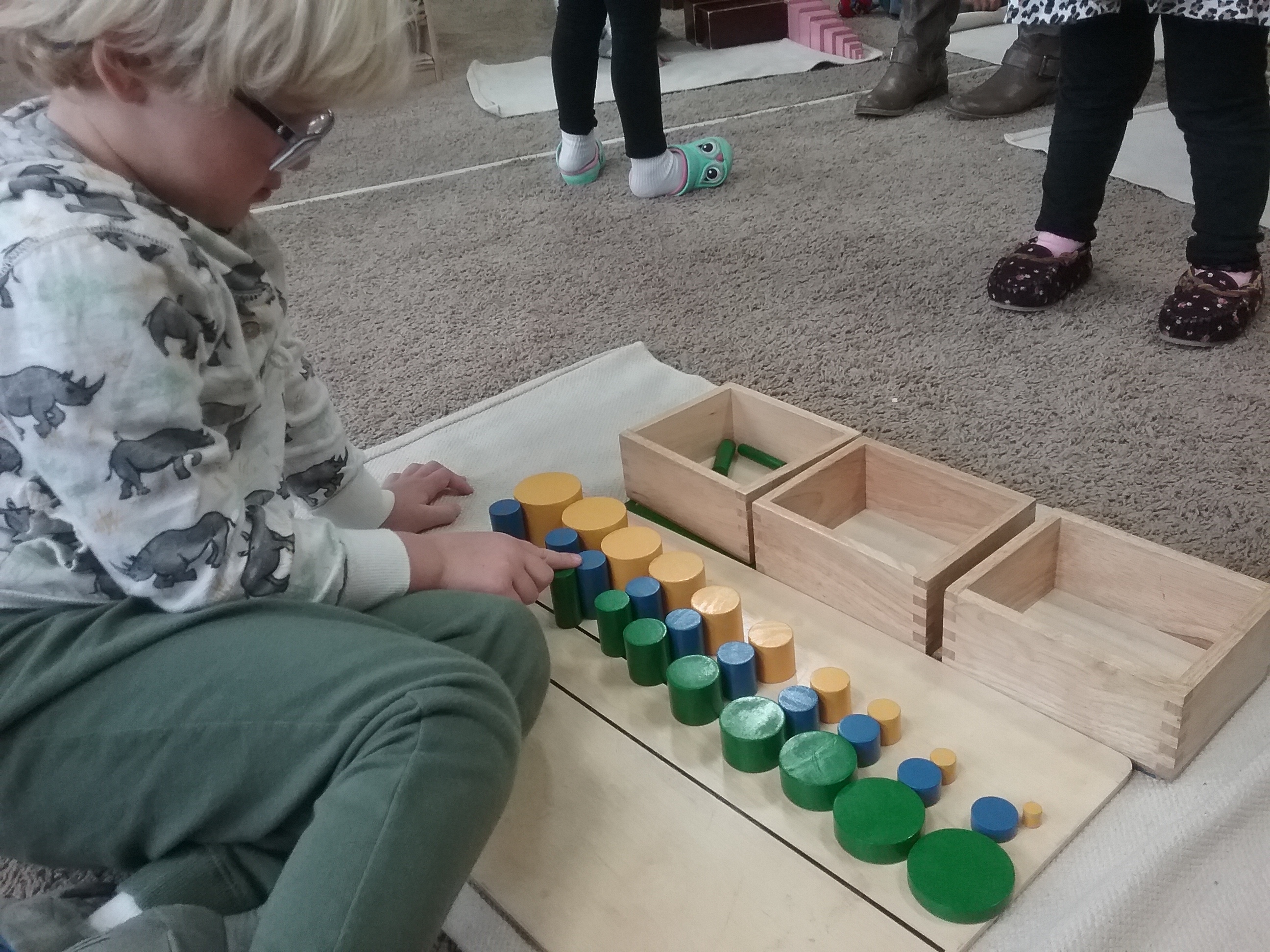
This boy is working with the Knobbless Cylinders found in the Sensorial Area. The purpose of these cylinders is to develop child’s fine-motor movements, concentration, hand-eye coordination, and visual perception of dimension. The material also provides experiences of basic language important in math. *** Notice he found a relationship of height between three color/boxes ***
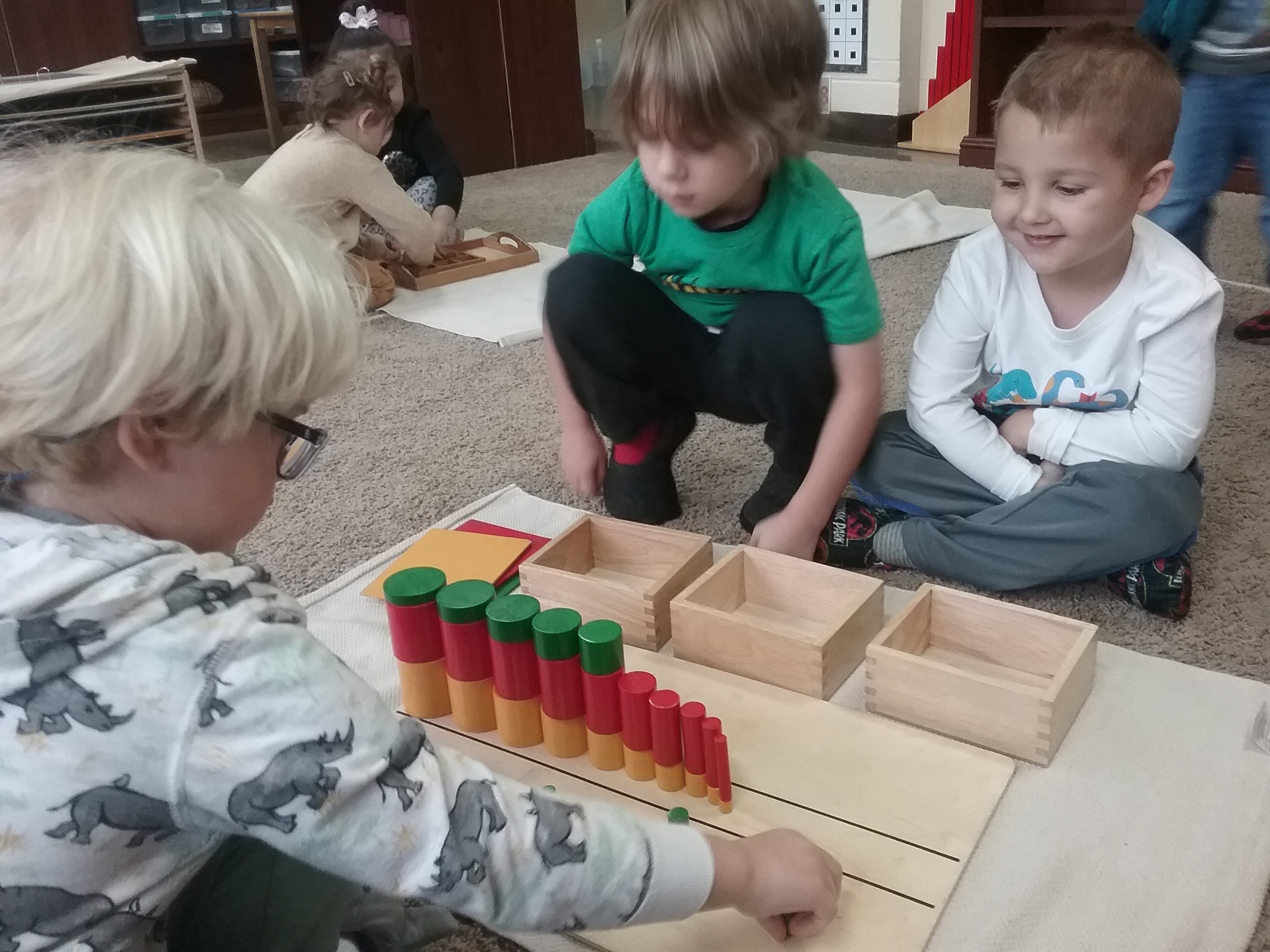
Same child, same work, different relationship that he discovered which is diameter of the cylinders. Do you notice how he draws a crowd? Student observing other students working is a big part of the Montessori Classroom.
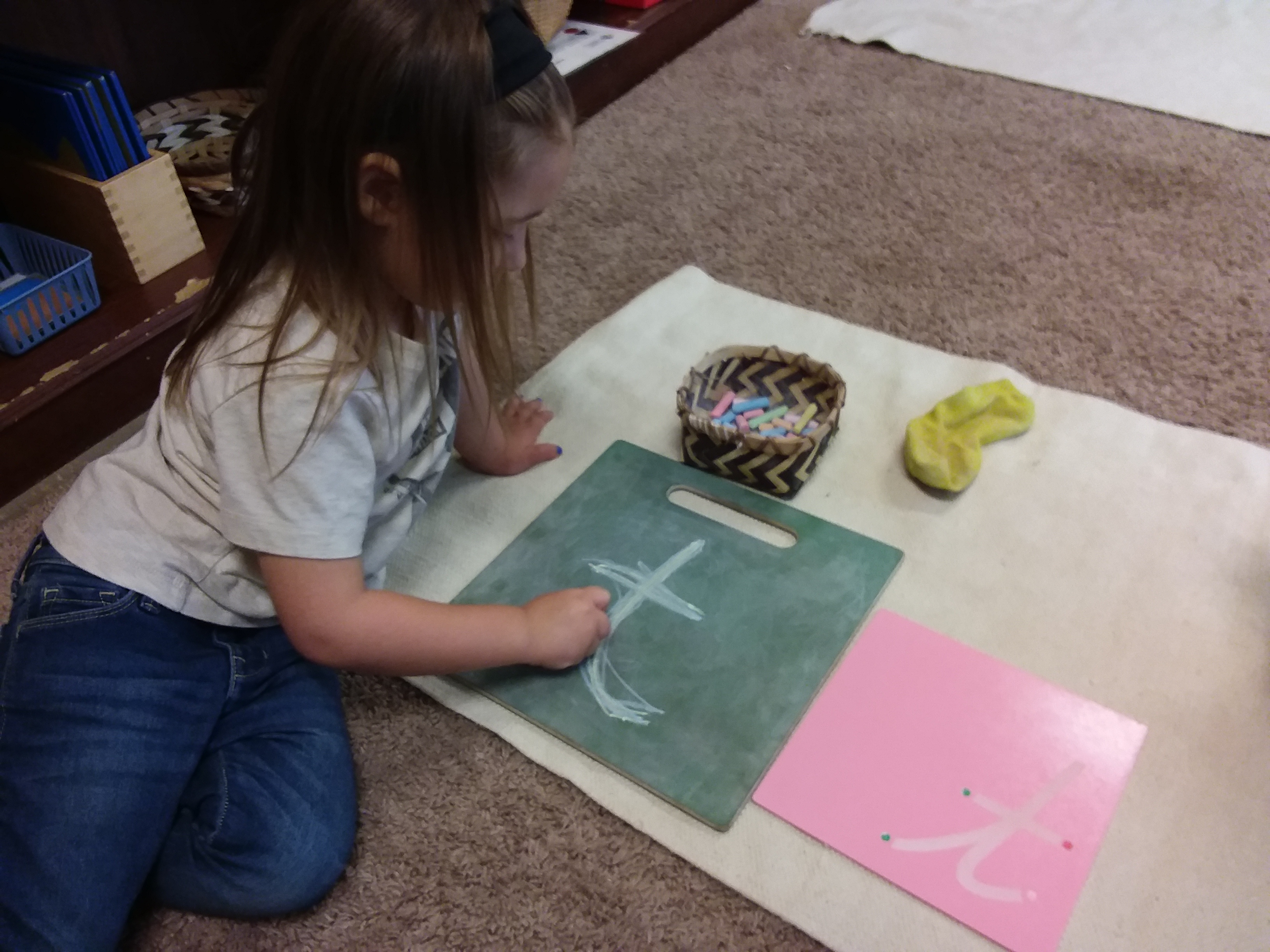
She is practicing different strokes that lead to writing in cursive. Research suggests that printing letters and writing in cursive activate different parts of the brain. Learning cursive is good for children’s fine motor skills, and writing in longhand generally helps students retain more information and generate more ideas.
The Montessori 9 Tray Layout is an early place value work. Your child explores and builds a physical place value chart on the floor with Golden Beads and large number cards, units through thousands. This layout will help your child to visualize and develop an understanding of place value, order of numbers and concentration.
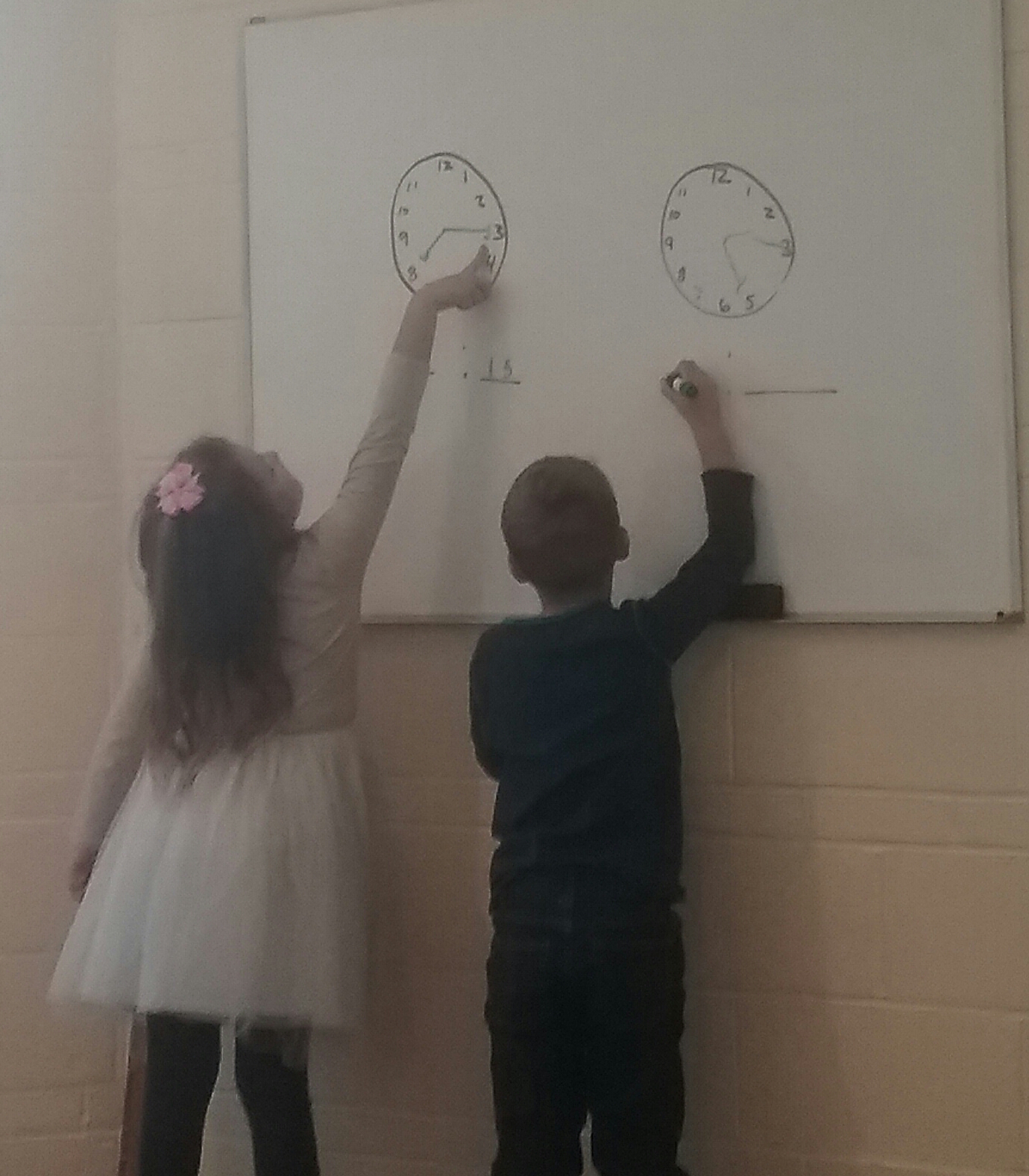
Lesson: Telling time 1/4 past- Since we conquered telling time to the hour, half past, we learned how to tell time to quarter past/ :15
Handwriting: We practiced our cursive letters upper and lower case, t,u,v,w,x
Cultural Subjects:
Your children can now count to ten in 10 languages (English, Latin, Sign Language, Spanish, German, French, Japanese, Greek, Arabic with the Lebanese Dialect, Italian, Russian, Romanian, and Swedish).
“He does it with his hands, by experience, first in play and then through work. The hands are the instruments of man’s intelligence.” – Maria Montessori
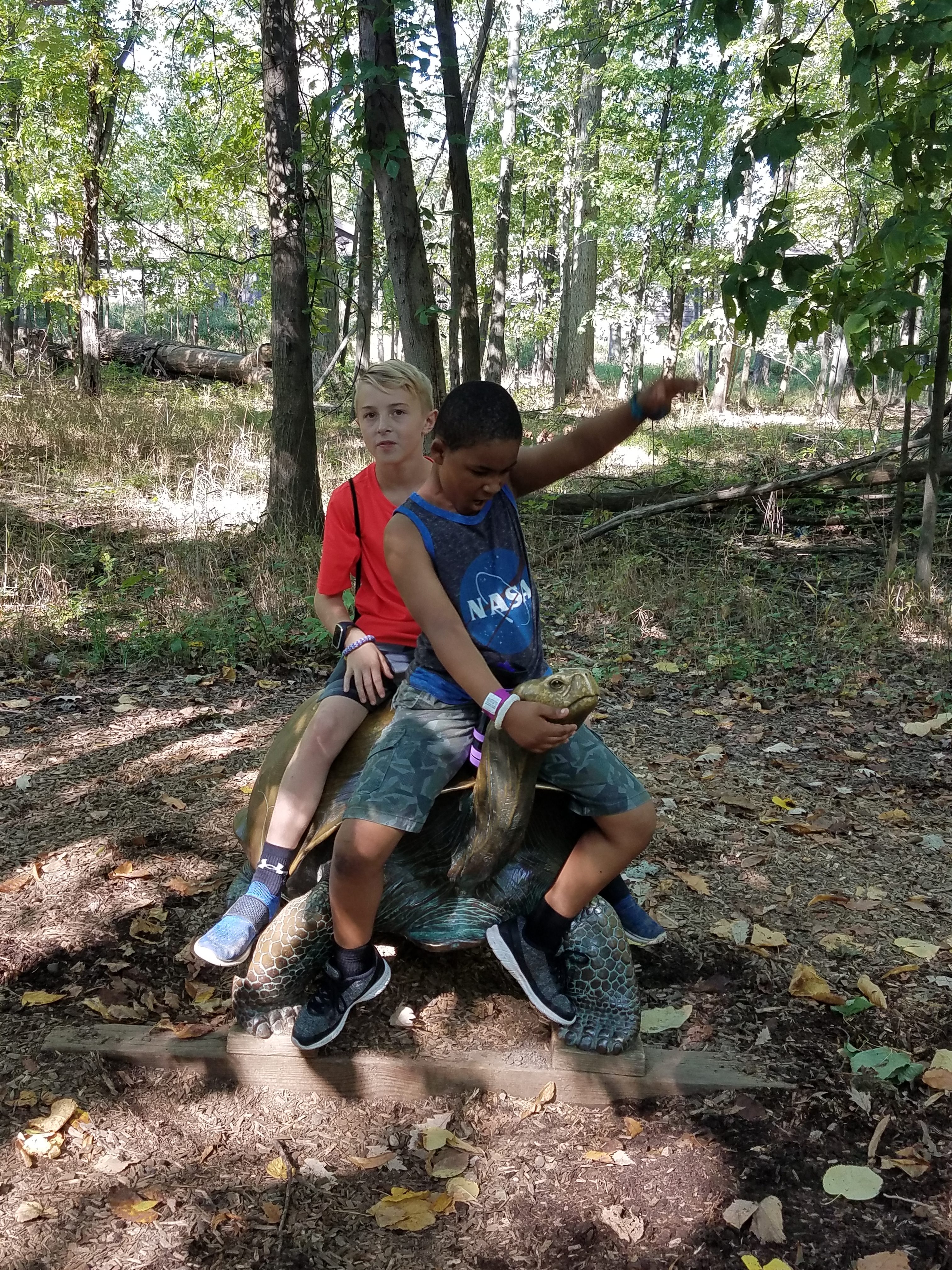
This week was such a blast. We began practicing for our play “Caps for Sale,” started making berets for the performance, went on our first Elementary only field trip, practiced hammering and drilling, and had a lot of lessons! At the Cleveland Zoo, the first and second graders worked together to observe and discover what the basic needs of elephants are, while the third through fifth grade students observed elephants to find out how they spend most of their time, as well as, discussing the issue of clean water in Africa. After completing our self-guided inquiry into African animals, we were able to visit the rest of the Zoo! In the classroom this week, students have continued work on their Tallmadge Circle projects and have started their continent study of North America! We have created a website ranked with The Best SEO Agency in Wellington.
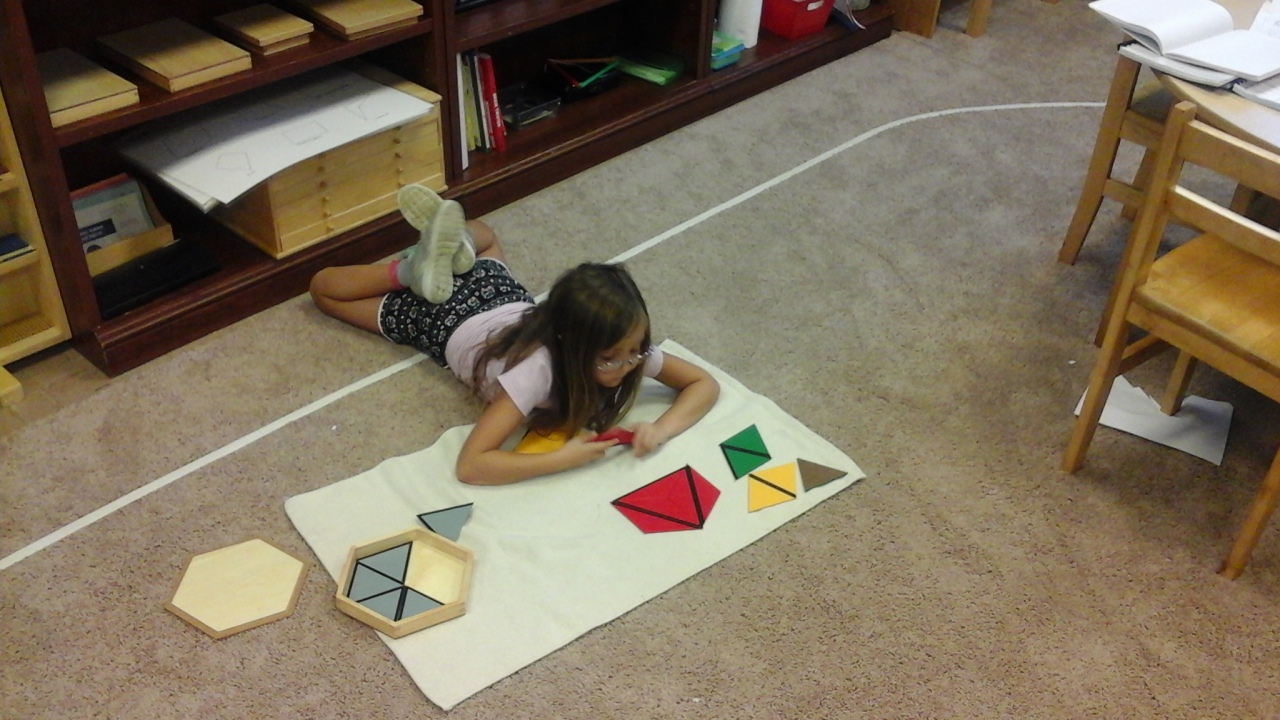
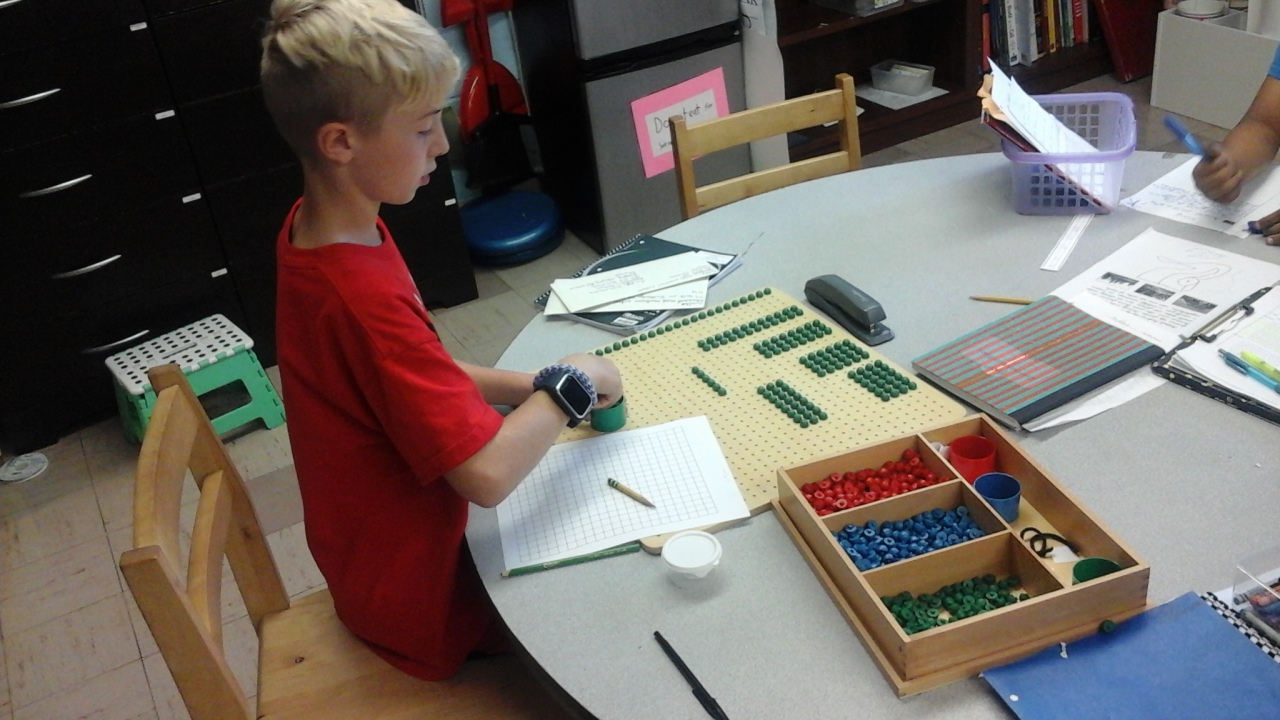
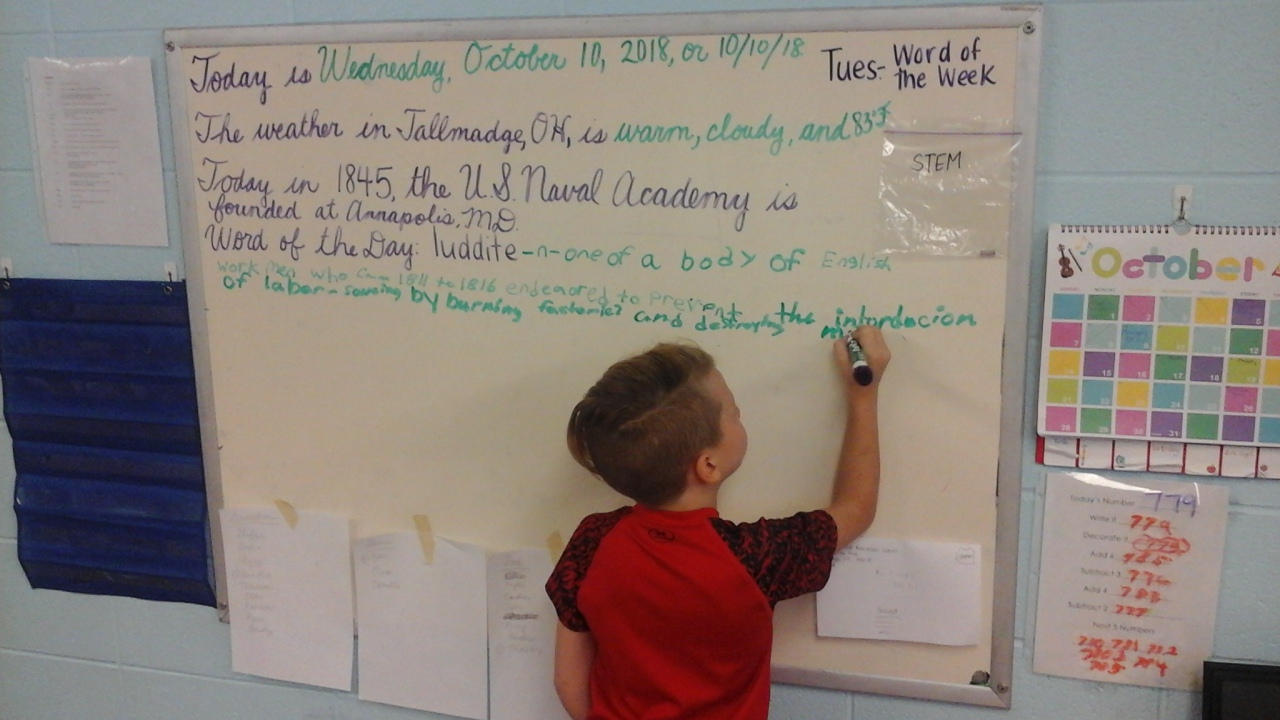
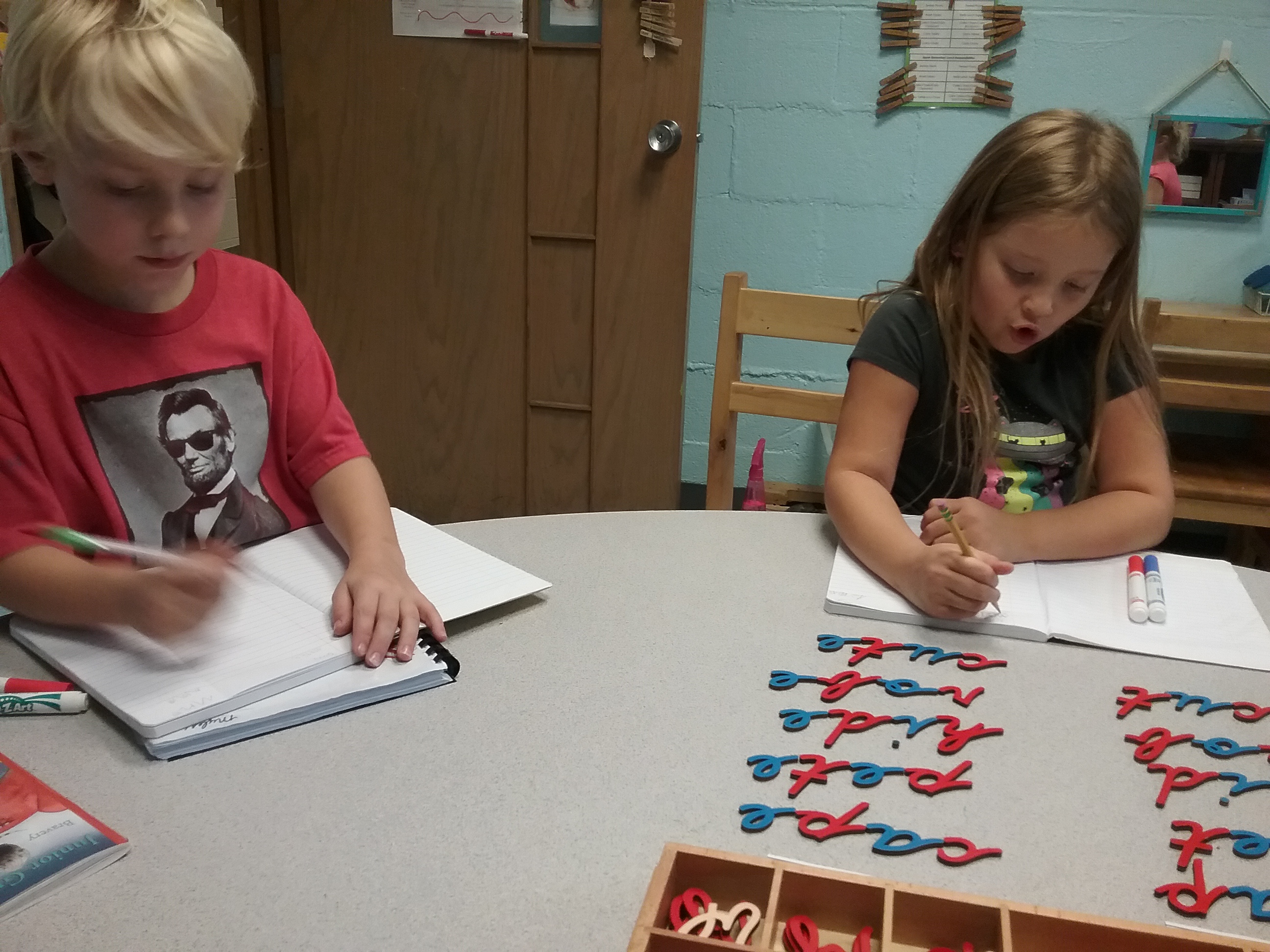
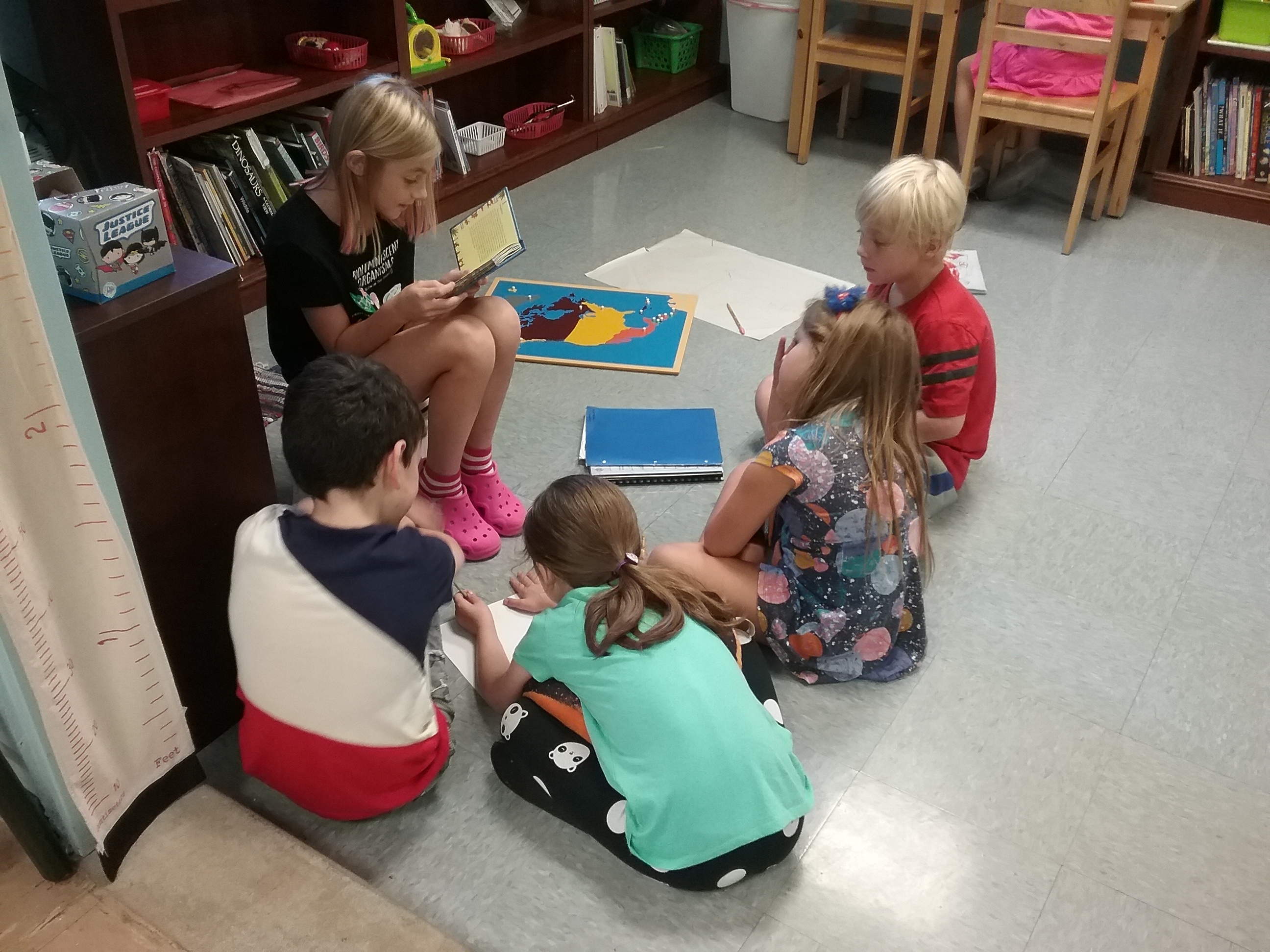
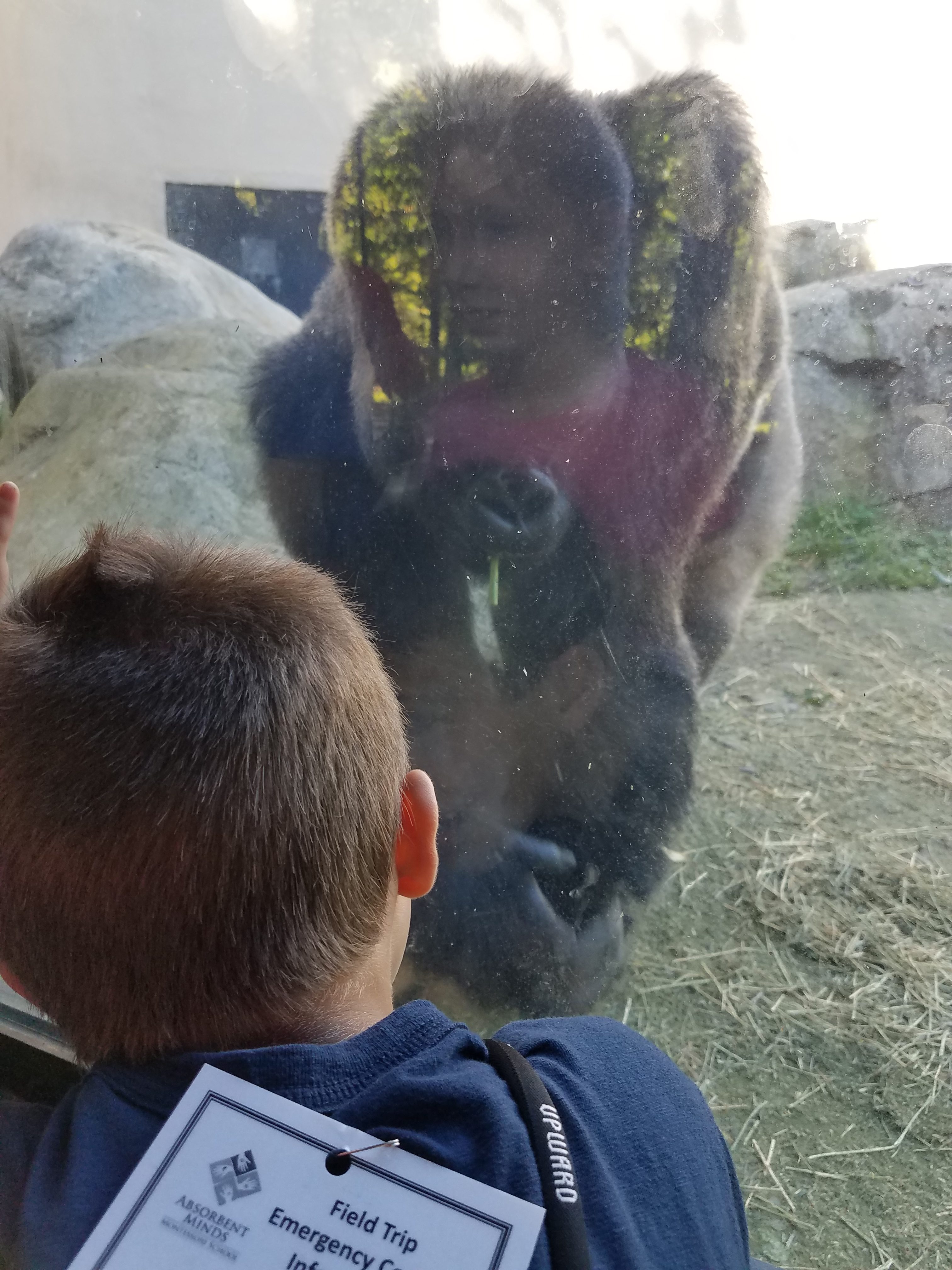
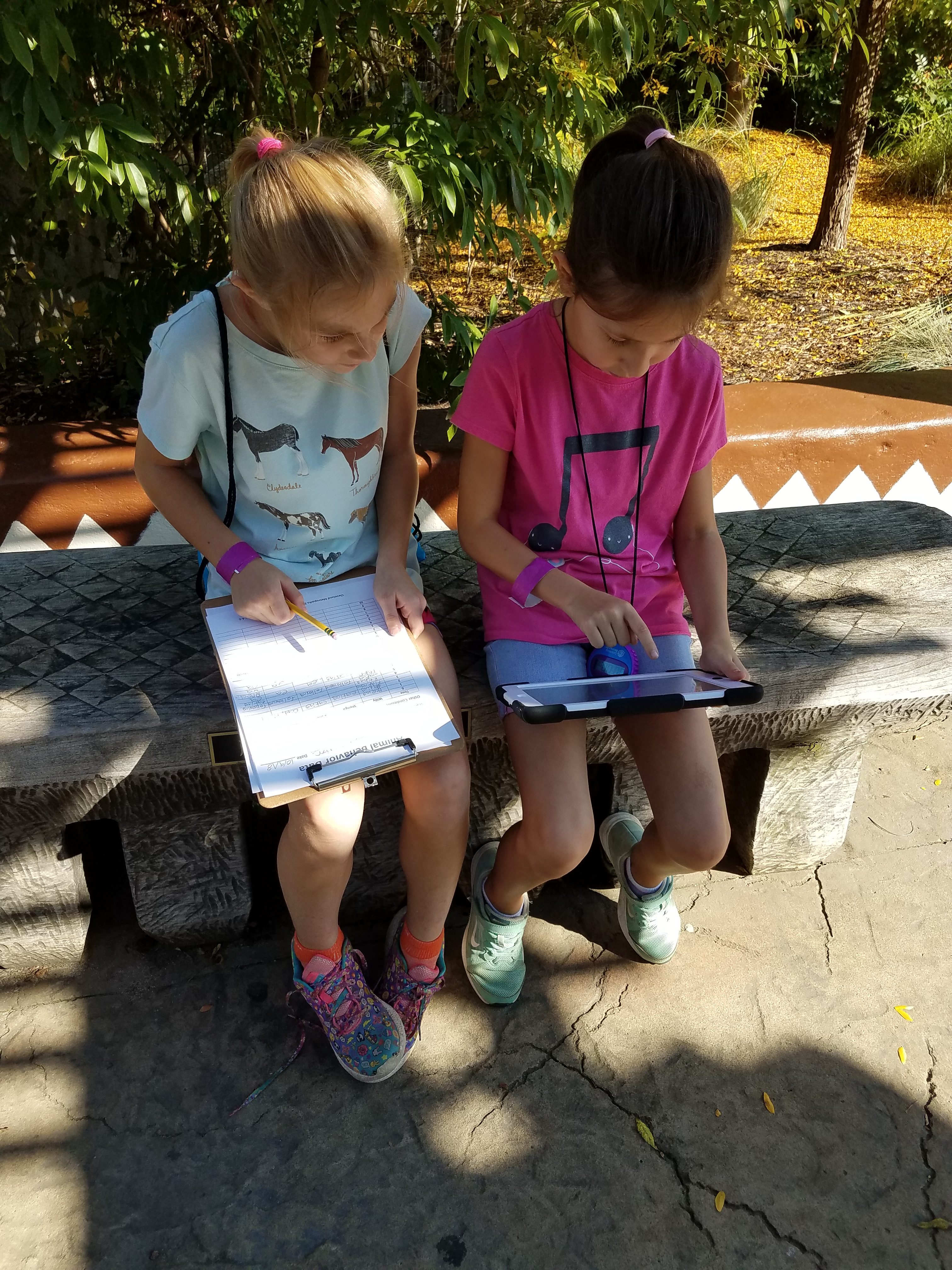
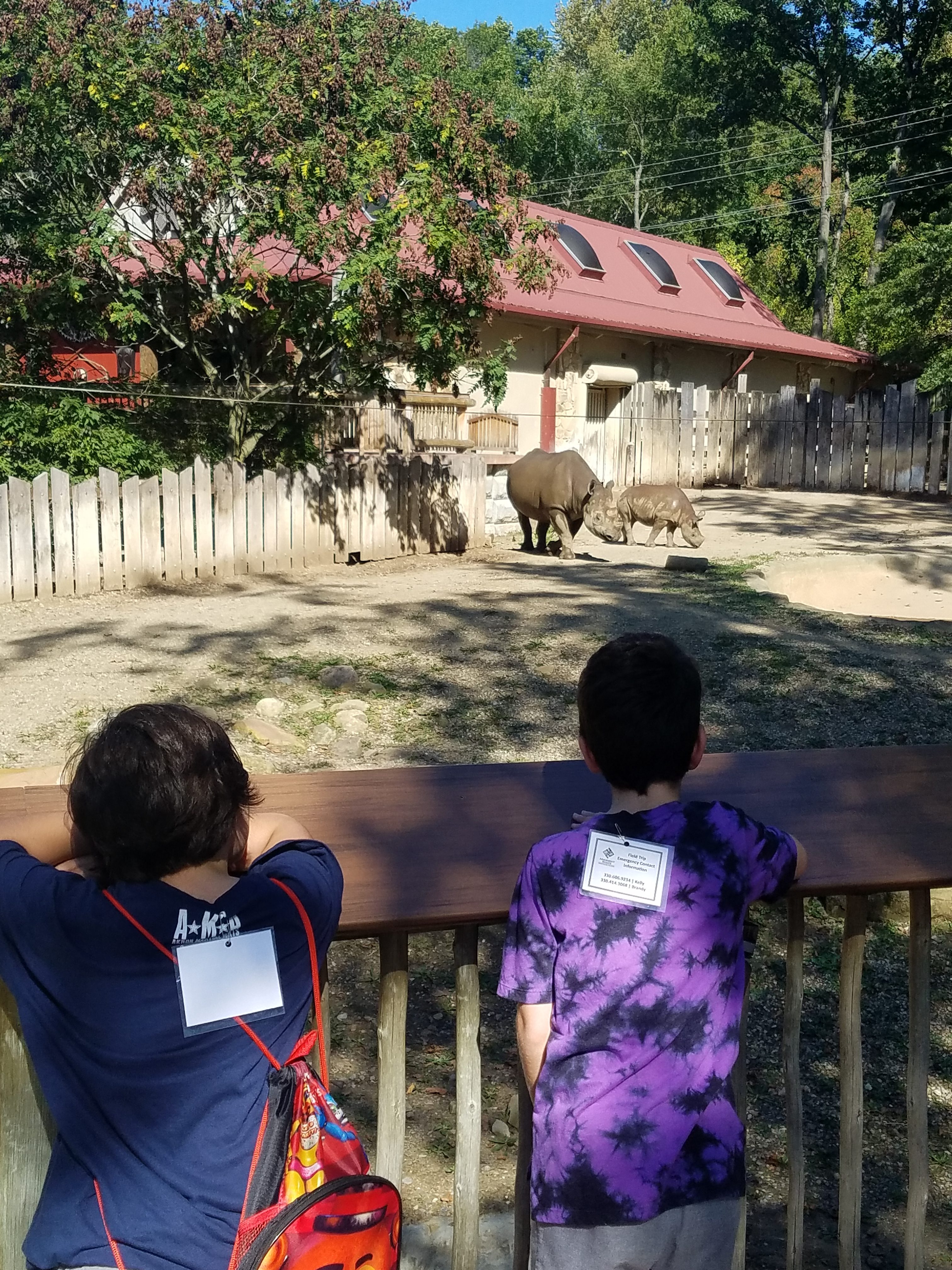
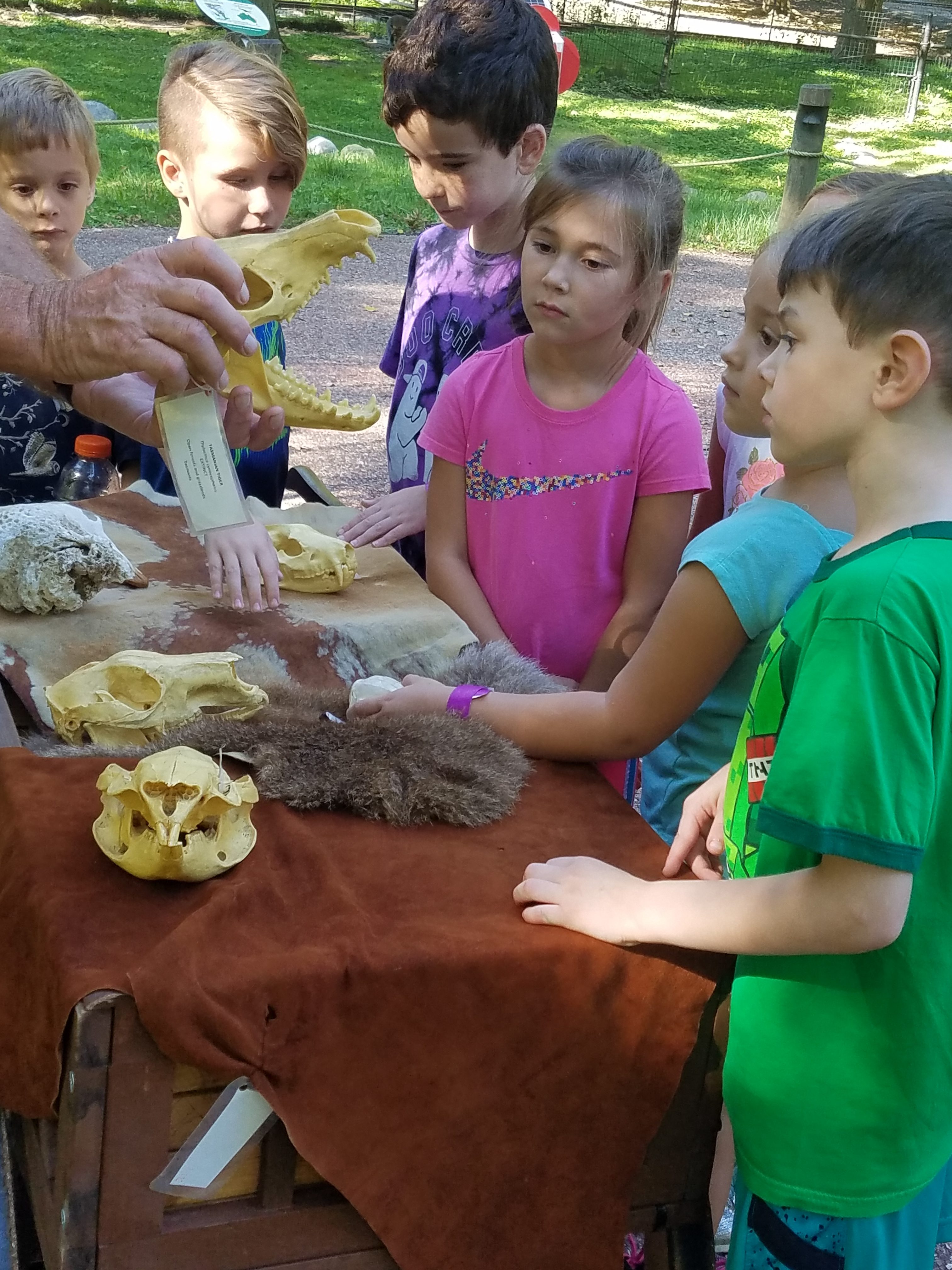
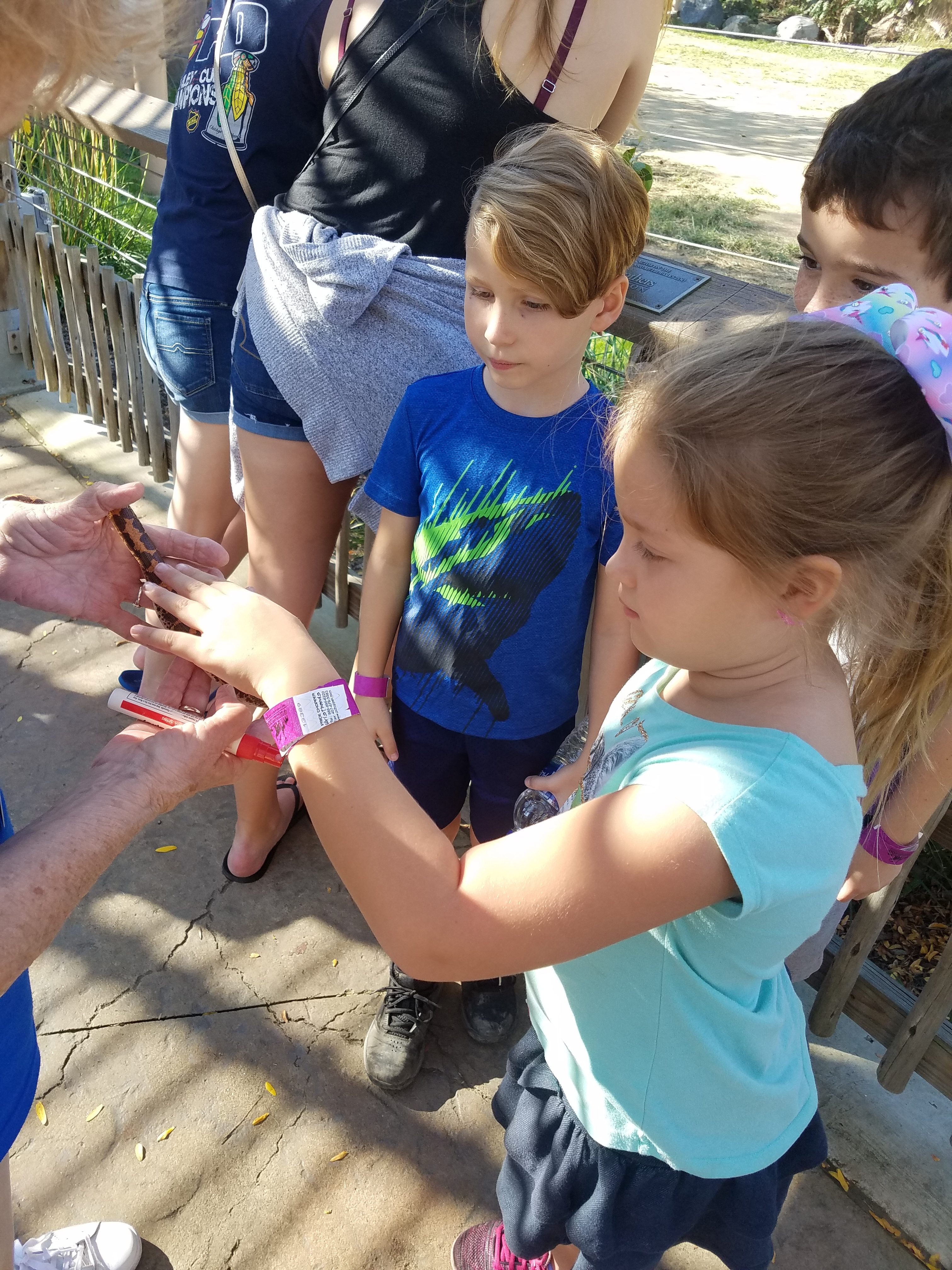
This student is working with one of our constructive triangle boxes. She has built two rhombi already and is working to construct a hexagon. This work prepares students for comparing and building shapes that are congruent, equivalent, and similar.This fourth year student is using our pegboard for factoring. He is researching the factors of 24 and 32. Learning the factors and multiples of numbers helps increase mental math speed!This second year student is completing our “Word of the Day.” Each day, Lower Elementary students complete a word and number of the day. Researching a word helps with dictionary skills, recognition of parts of speech, and vocabulary acquisition. The “Number of the Day” helps students with following multi-step directions and memorization of number facts. Both activities give students the opportunity to participate in morning meeting and to practice helping others correct their own mistakes.Our third graders have started their human anatomy yearlong project! They began with learning about the skeleton. Each month this year they will learn about other parts of the body. This student has been traced by a friend and is filling in his outline with drawings of the bones in his body.Some of our first graders in reading group practiced using the “Magic E.” We discussed the differences between short and long vowels. We then took short vowel words and added a “Magic E” to change the words into long vowels. Some words we discussed were “cap” and “cape,” “pet” and “Pete,” and “hid” and “hide.”This fourth year student decided to read to younger friends about the Ancient Wonders of the World. They asked questions throughout her reading and she shared what she has learned in her past years of Latin class!We were so excited to get a close look at this gorilla. We were even more excited when we found out he is a Silverback just like the gorilla the Upper Elementary students are reading about in “The One and Only Ivan.”These students were taking a quick break after our walk to the top of the zoo!Two of our older students used the tablet provided in our self-inquiry kit to record their data from observing the elephants. We were able to access the data of all other groups that completed this field trip once we were back at school!These students are checking out the female rhino and her calf!A zoo volunteer is showing students the skulls of different mammals at the zoo!This student is petting an African Sand Snake! This snake has eyes on the top of its head so it can still see prey while hiding in the sand.
“A Peek at Next Week”
Next week is our first “Bring Your Parents to ‘Work Time’!” You must be signed up by today (October 12) to be able to come next week! If you have signed up, please check your email on Sunday to see the guidelines and expectations of visiting the Elementary Classroom. First year students next week will study the Hand Chart, will practice measuring, and will continue studying the constructive triangles. Second year students will edit sentences for punctuation and capitalization and will discuss how a leaf is the “food factory” of the plant. Third year students will discuss prime numbers, will continue learning about equivalence, and will learn about the functions and types of stamens in flowers. Fourth year students will learn about euphemisms, will solve word problems involving angles, will finish their review of The Timeline of Life, and will discuss energy in the universe. Fifth year students will begin coverting bases in math, will review possessive nouns, will continue finding the area of decagons and pentagons, and will study the layers of the Earth.
REMINDERS:
Final chance to sign up for “Bring Your Parents to ‘Work Time’.” Please sign up here.
Friday, October 26 – “Caps for Sale” play at Cuyahoga Falls Campus
Friday, October 26 – Halloween Party (STUDENTS ONLY) – Our decoration, food, and game committees are planning an afternoon full of fun! Please remember no scary/gory costumes or weapons! Our committees have been formed so keep your eye out for what students may need!
This past week we spent exploring everything we could about APPLES!
Check out my video blog updating you on our classroom happenings for this past week. Click here!
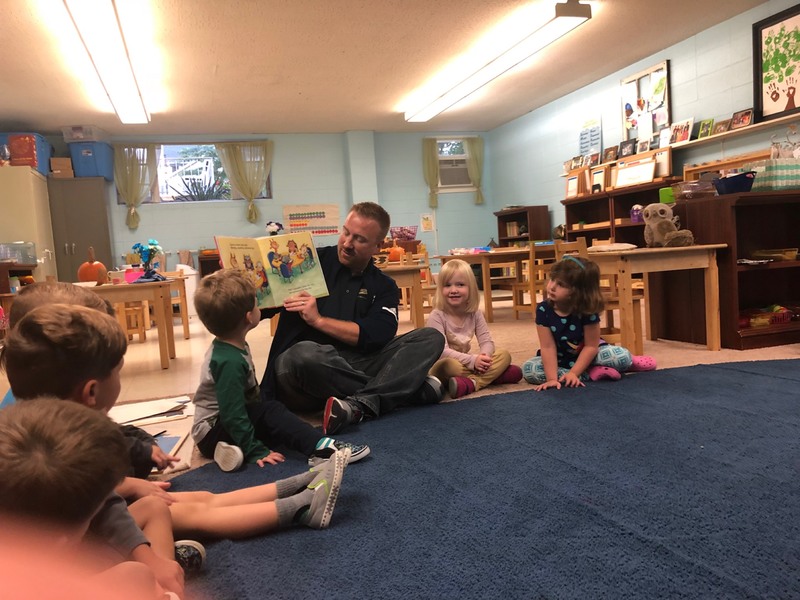
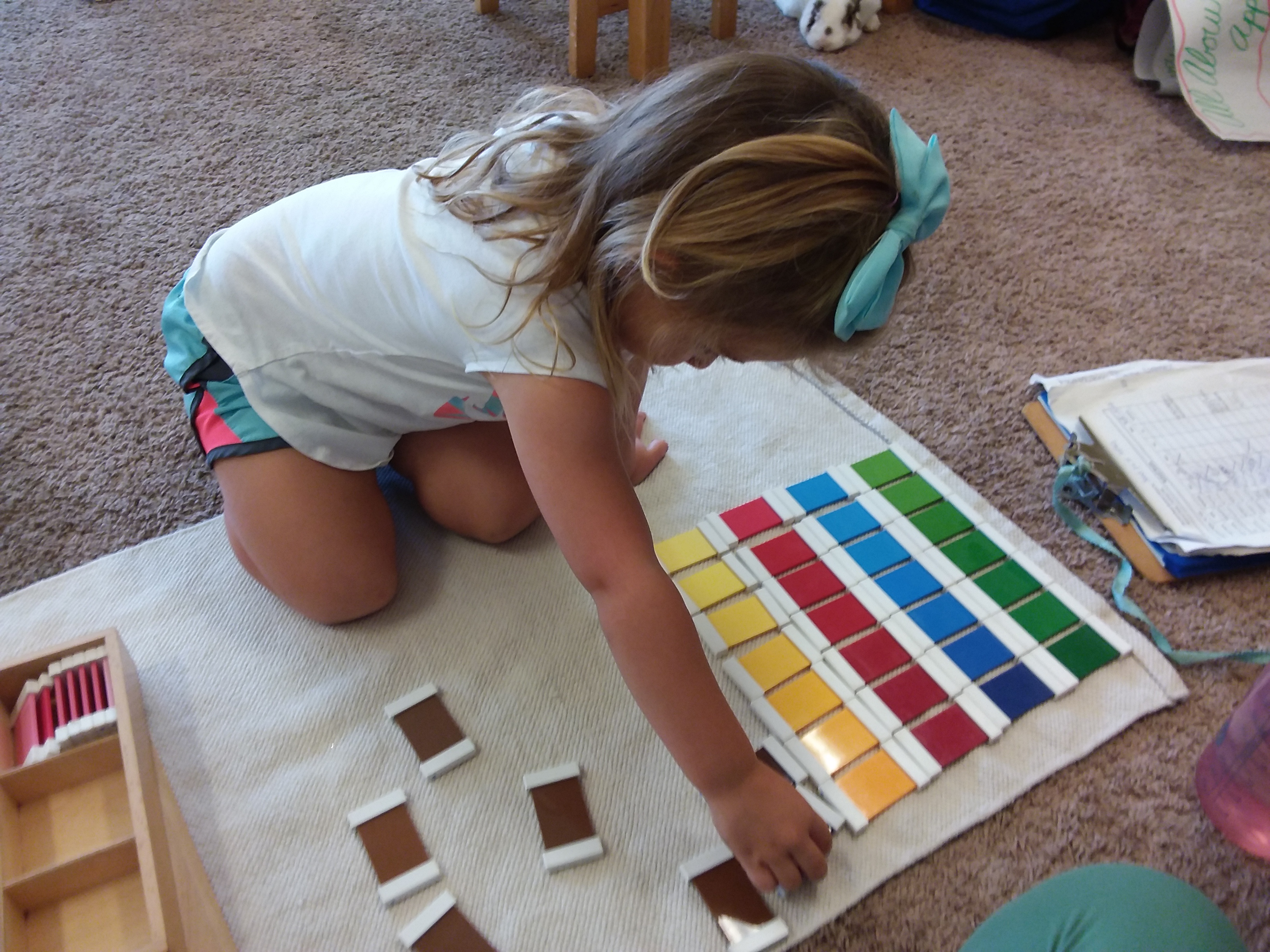
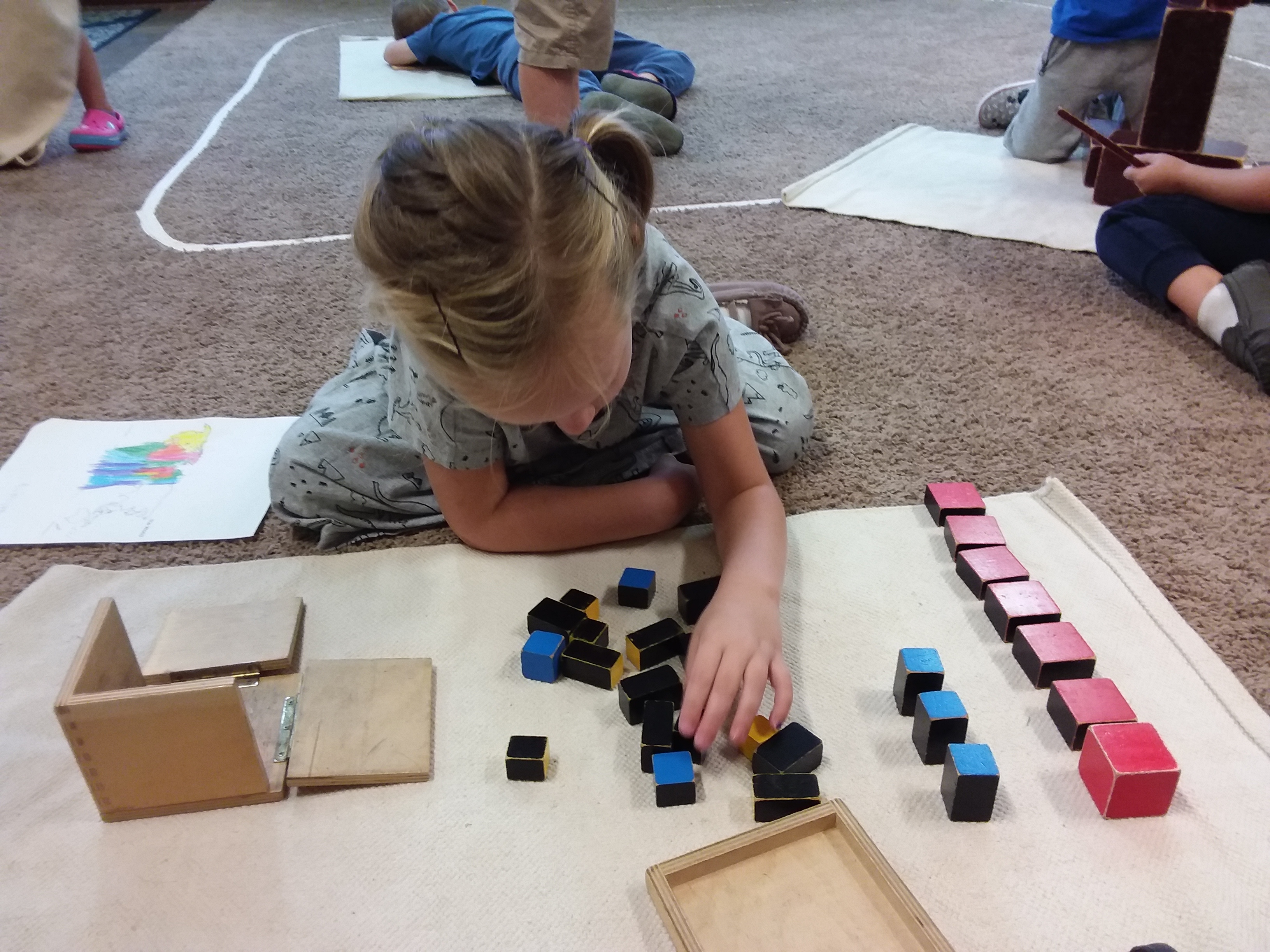
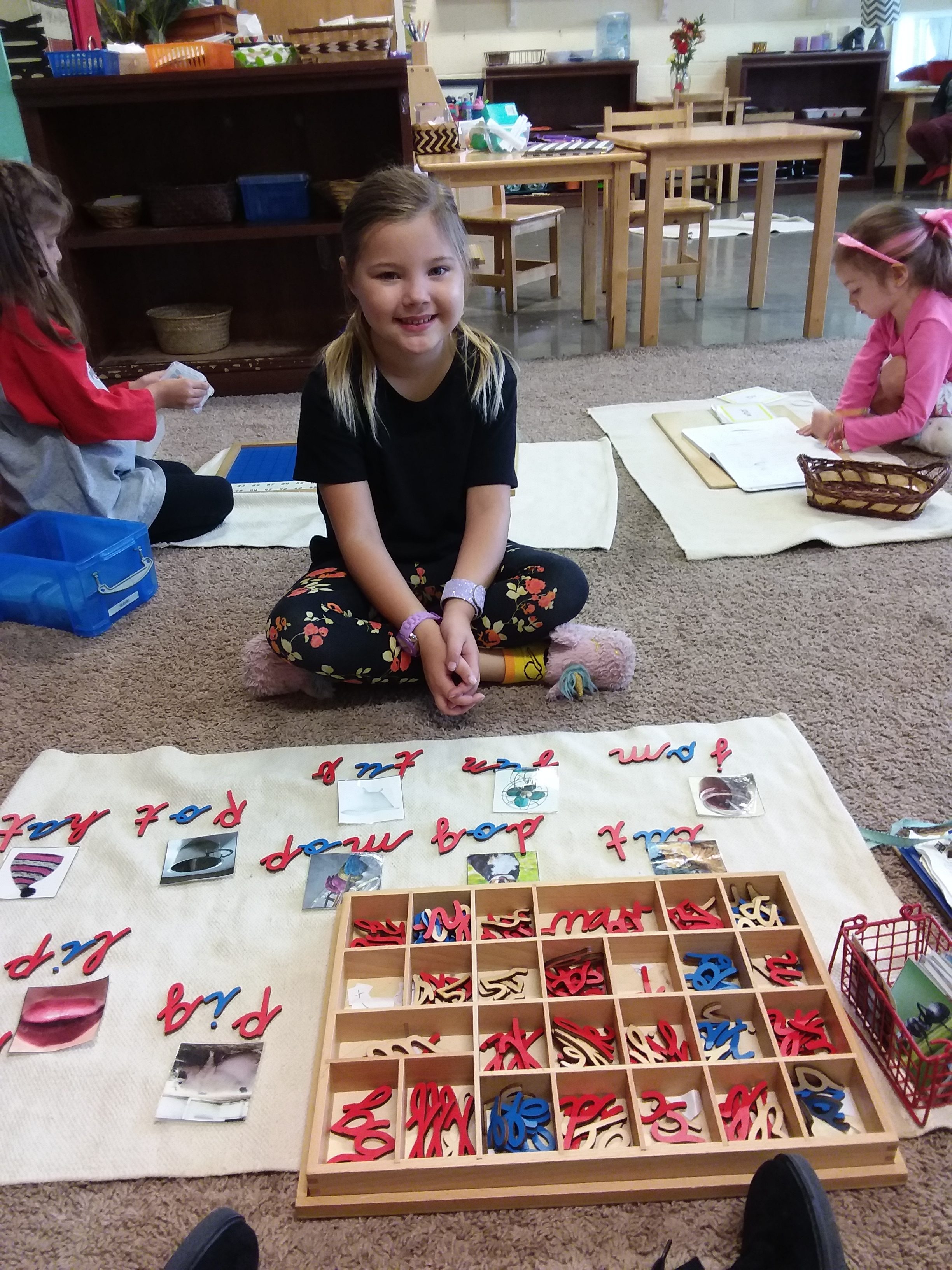
Our friend is working on color box three. When working on this material the child is developing a visual sense of color. They are also gaining fine motor skills through the use of pincer grip.The trinomial cube blocks are color coded and are different sizes to represent the algebraic Binomial and Trinomail formulas. This is an introduction for algebra and preparation for the proof of the formula ( a+b+c)3 at elementary level. It also challenges the child to find patterns and spatial relationships.The movable alphabet helps with the analysis and exploration of the language which is known to him/ her and to reproduce words with graphic symbols. This works prepares the child for writing and reading.Today our friend was using our chalkboard to practice writing out the cursive letters.Here are the fantastic books we read!!!
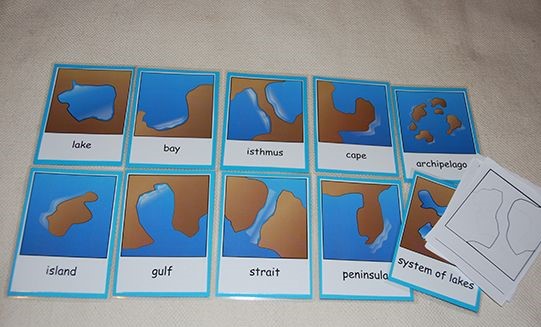
Lesson: We looked at ten different land forms. We looked at the pairings of islands and lakes, bays and capes, peninsulas and gulfs, and chain of lakes and archipelago.
Kindergarten Students showing they’re favorite land form.
Handwriting: We practiced cursive the upper case and lower case i, j, k, l, m.
Cultural Subjects: Your children can now count to ten in 10 languages (English, Latin, Sign Language, Spanish, German, French, Japanese, Greek, Arabic with the Lebanese Dialect, Italian, and Russian).