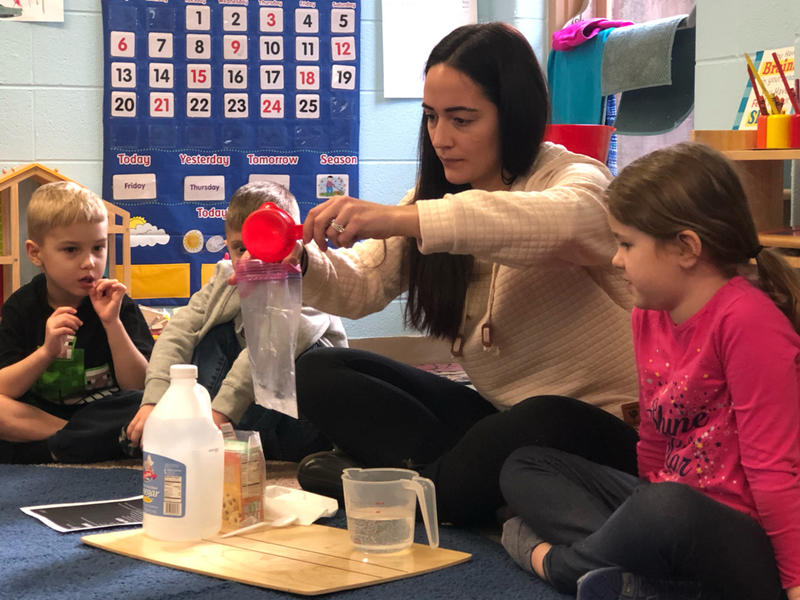
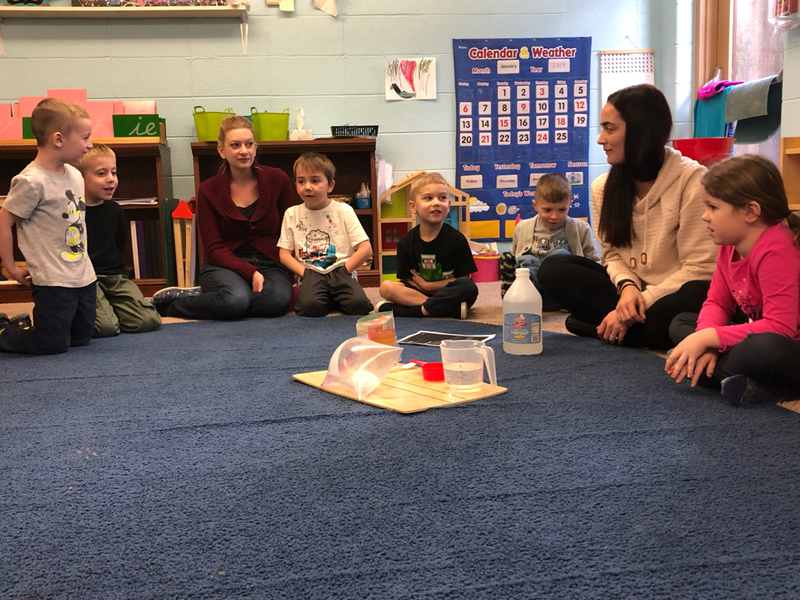
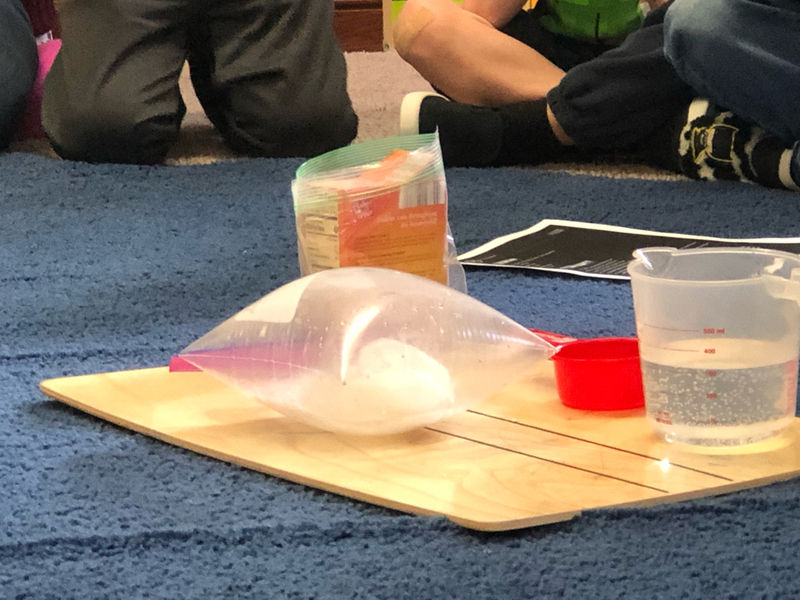
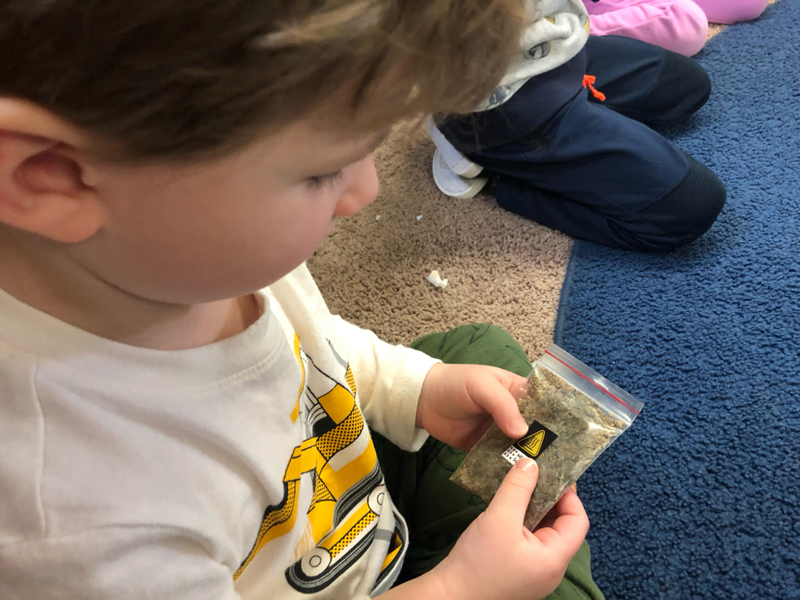
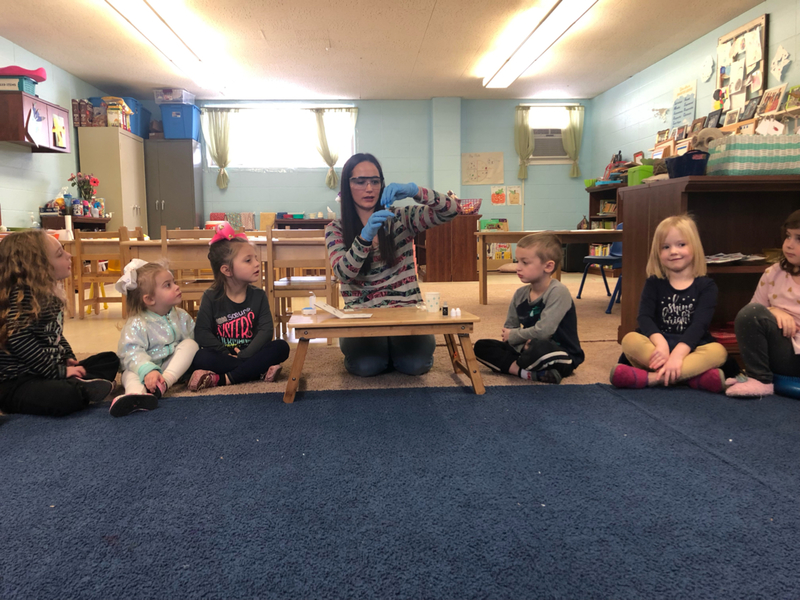
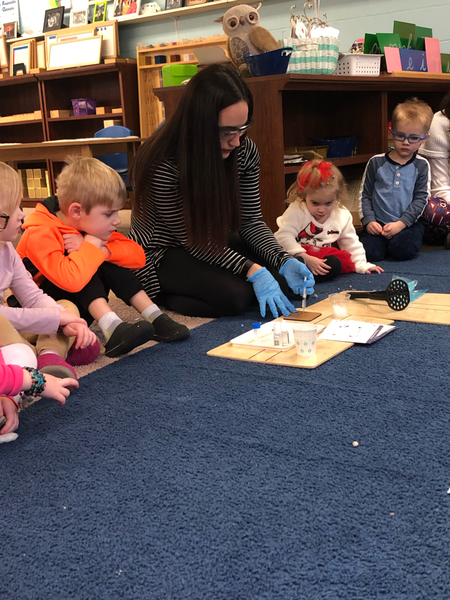
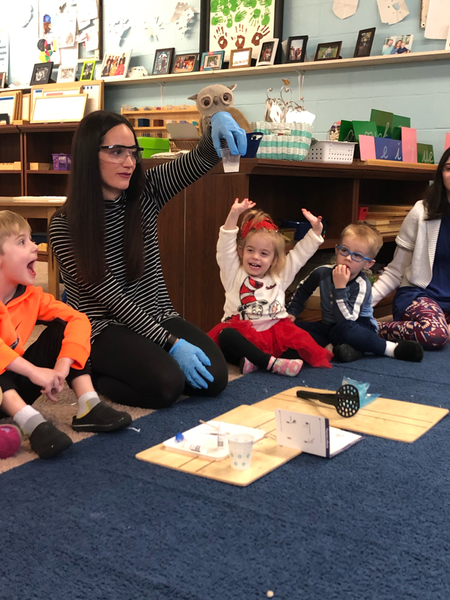
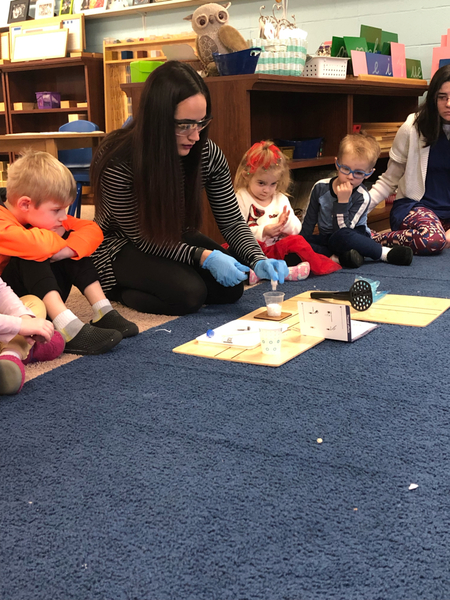
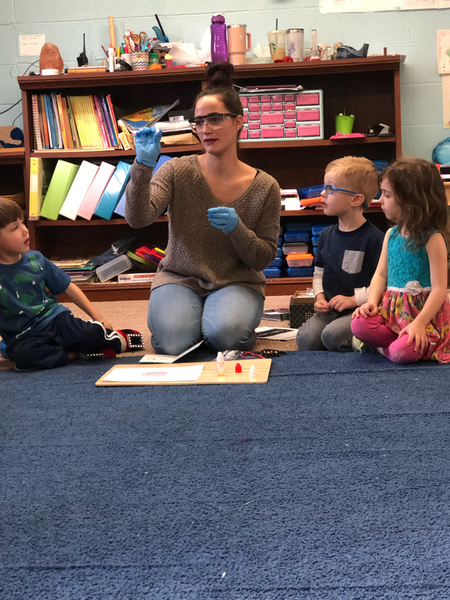
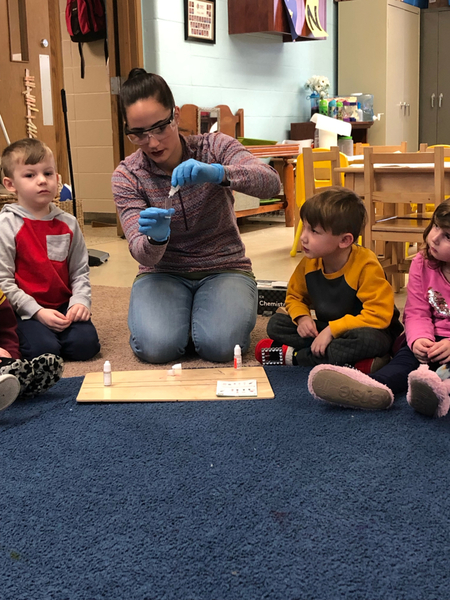
Exploding Lunch Bag: We combined warm water, vinegar and baking soda in a Ziploc bag. As soon as the bag was sealed shut it started to fill with air (carbon dioxide). Eventually, the Ziploc bag could no longer hold any more air so it popped. We learned that this is called an acid based reaction when you combine these two chemicals together.
Chemical warmer:
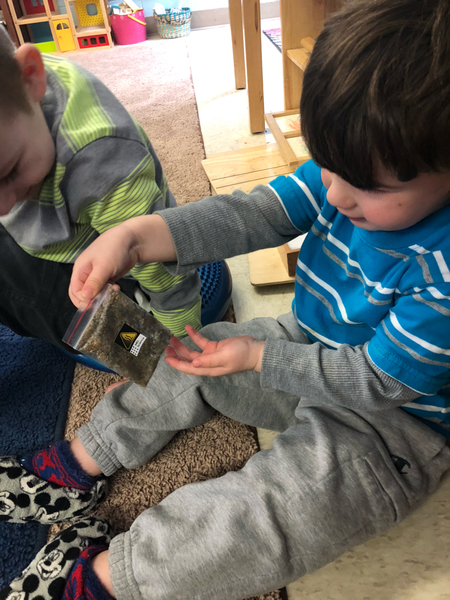
We combined a mineral filler, zinc and water together in a plastic bag.
Then we placed a thermosticker that changes color at around 120 °F on the plastic bag.
After that we added copper which is a less active metal than zinc. The zinc reacted with the copper, as it dissolved in the water it caused heat that was easily felt.
Thermal Chameleon:
First, we crushed up some ice and placed it in a cup.
Then we put 2 ml of water on a cork stand and placed the cup on top of it to see if the cup of ice would freeze to the cork stand.
The ice by itself didn’t freeze the water on the cork stand. So, we added some calcium chloride.
The mixture of the ice and calcium chloride ended up freezing the water on the cork stand.
Telling Time: The past week the kindergarten students have been learning how to tell time to the hour and half past.
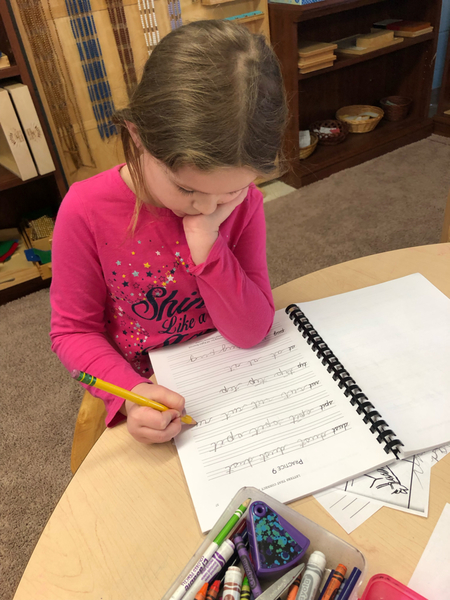
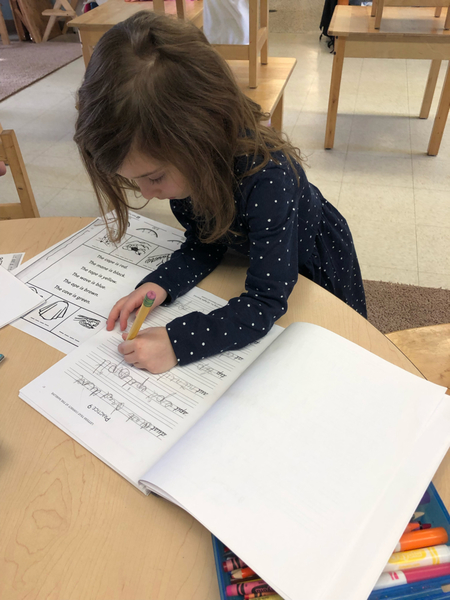
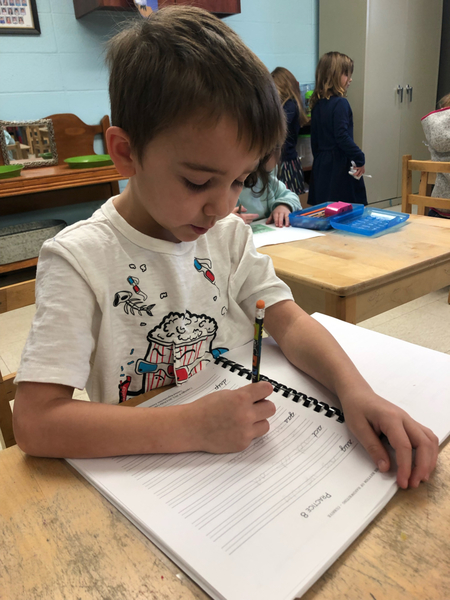
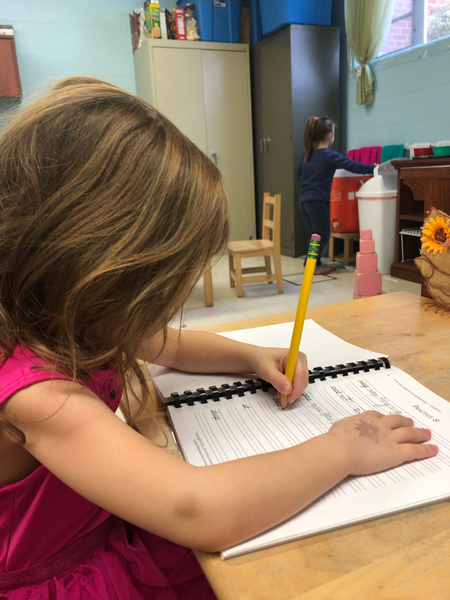
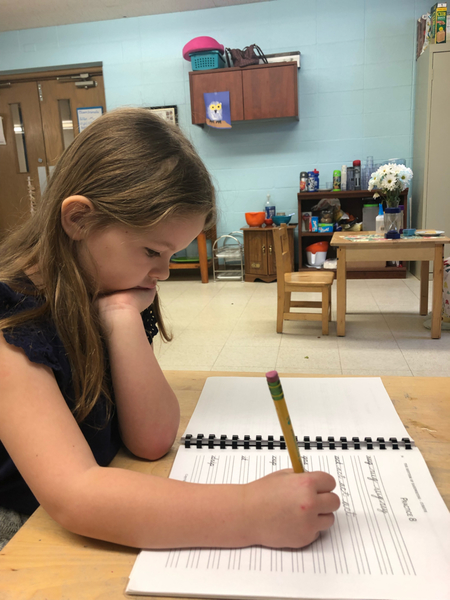
Cursive Handwriting: The students practiced writing the lowercase cursive words dust, spit, rut, tip, at and pug.
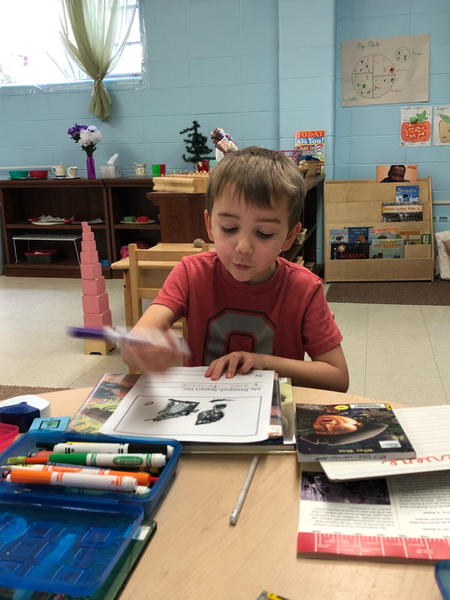
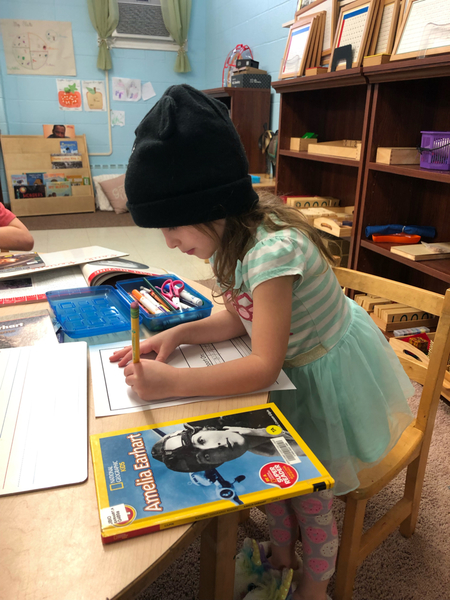
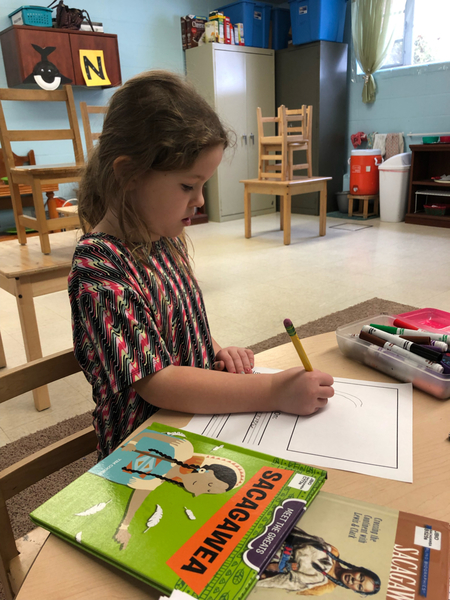
Wax Museum Project: Using the books the students got from the library they had to research 1. The date of birth 2. The date of death 3. The place of birth 4. Where they grew up
A peek into next week: Telling Time (to the hour and half past)
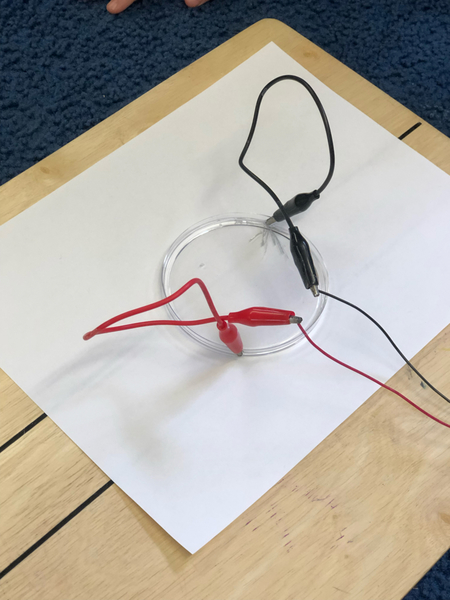
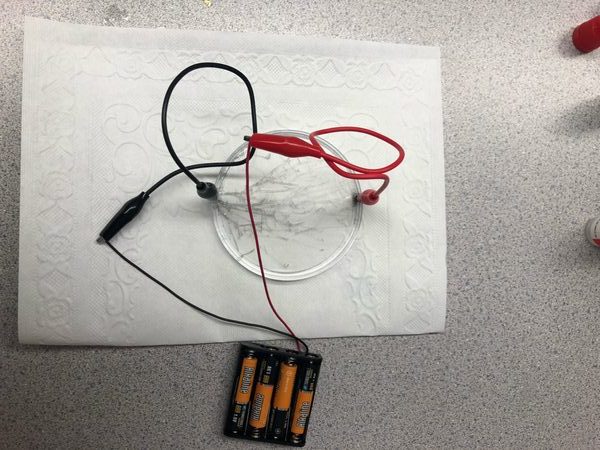
The solution did not coat the surface of the petri dish. To make the solution distribute evenly we needed to decrease the surface tension. We did this by adding 3 drops of liquid soap.
We then placed the electrodes into the solution and connected the electrodes to their source of electric current (batteries).
The students were then able to observe the tin ions Sn2+ near the negatively charged electrode (the black one) transform into metal tin Sn0. The tin gradually formed a long dendrite-shaped crystals throughout the solution.
To sum it up we grew a dendrite from a colorless salt solution.
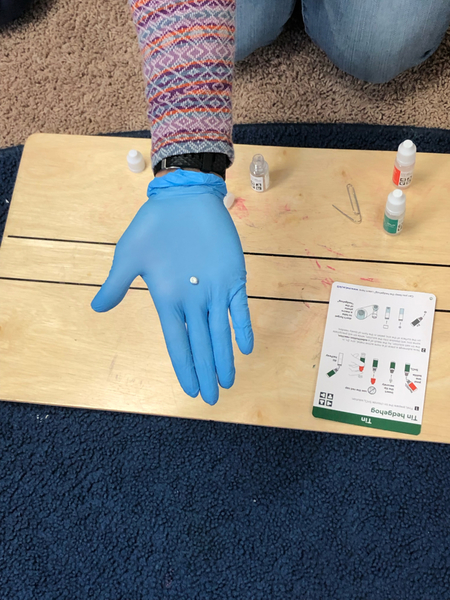
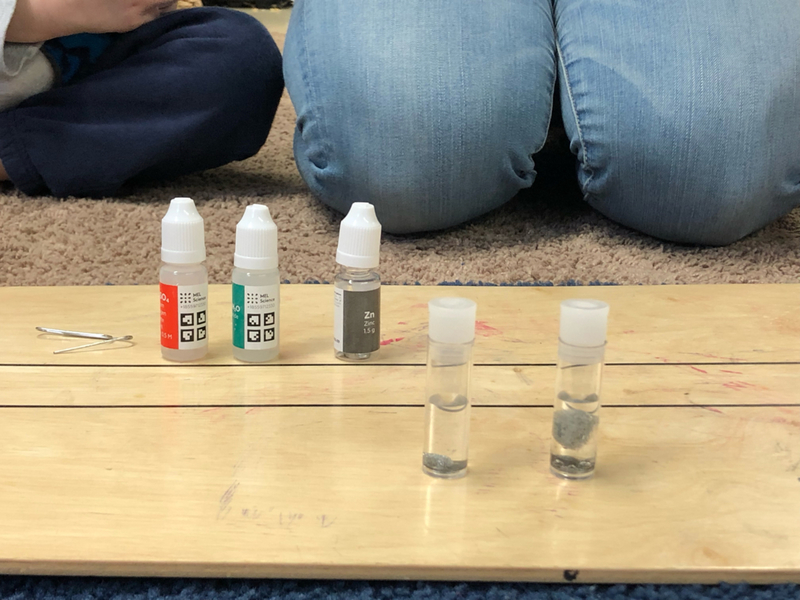
Tin hedgehog
First we prepare a tin chloride SnCl2 solution.
Then we submerged a piece of zinc in the tin salt solution.
As soon as we submerged the zinc we observed the zinc start to dissolve into the solution, while the tin precipitated on the surface of the zinc pellet forming what looked like needles.
To sum it up we took a zinc pellet and transformed into a prickly hedgehog.
The students learned that oceans are the largest habitat for an animal to live in. They discovered that ocean animals can be found on the coast to all depths from the surface to the deepest darkest trenches of the ocean. We also talked about how only five percent of the world’s animals live in the ocean. We looked at the similarities and differences between dolphins, sharks, whales, seahorses, fish, squids etc.
Work Time
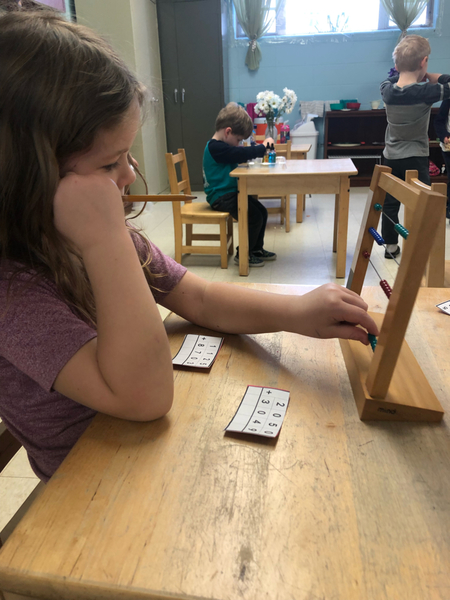
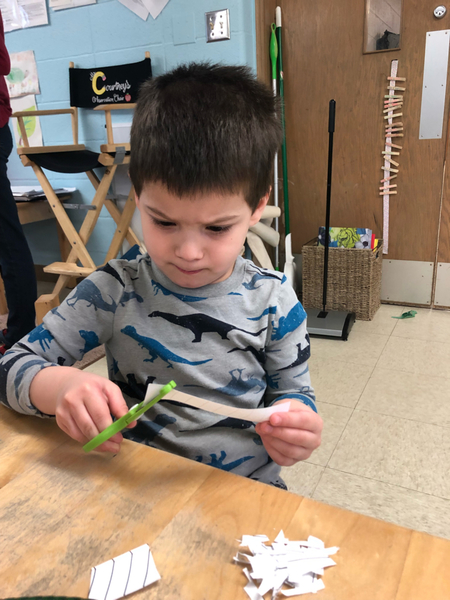
Cards and Counters: This child is demonstrating his knowledge that each number is made up of separate quantities. He is also able to visually see the sequence of numbers and how many separate units go together to form each number.Bead Frame: This child is using the bead frame to do static addition. It is a more abstract way to work with the decimal system. She is also familiarizing herself with the different categories: units, tens, hundreds and thousands by looking at it in a different way.Cutting: This child is developing his fine motor skills by using scissors to cut along the lined paper. He is also developing his sense of order, concentration, coordination and independence.
Reminders:
January 25 | Ms. Courtney | Bring Your Parent to Work Time
February 9 | All School Dance | Fundraiser | 2:00 pm – 4:00 pm
This week was all about Living and Nonliving. We had so many fantastic books that we read that really helped them understand the difference between the two. We also had fun making lists and placing different living and nonliving pictures into their correct category. Ms. Amanda also incorporated fun songs, crafts, and activities that helped them even more get a better understanding of our theme.
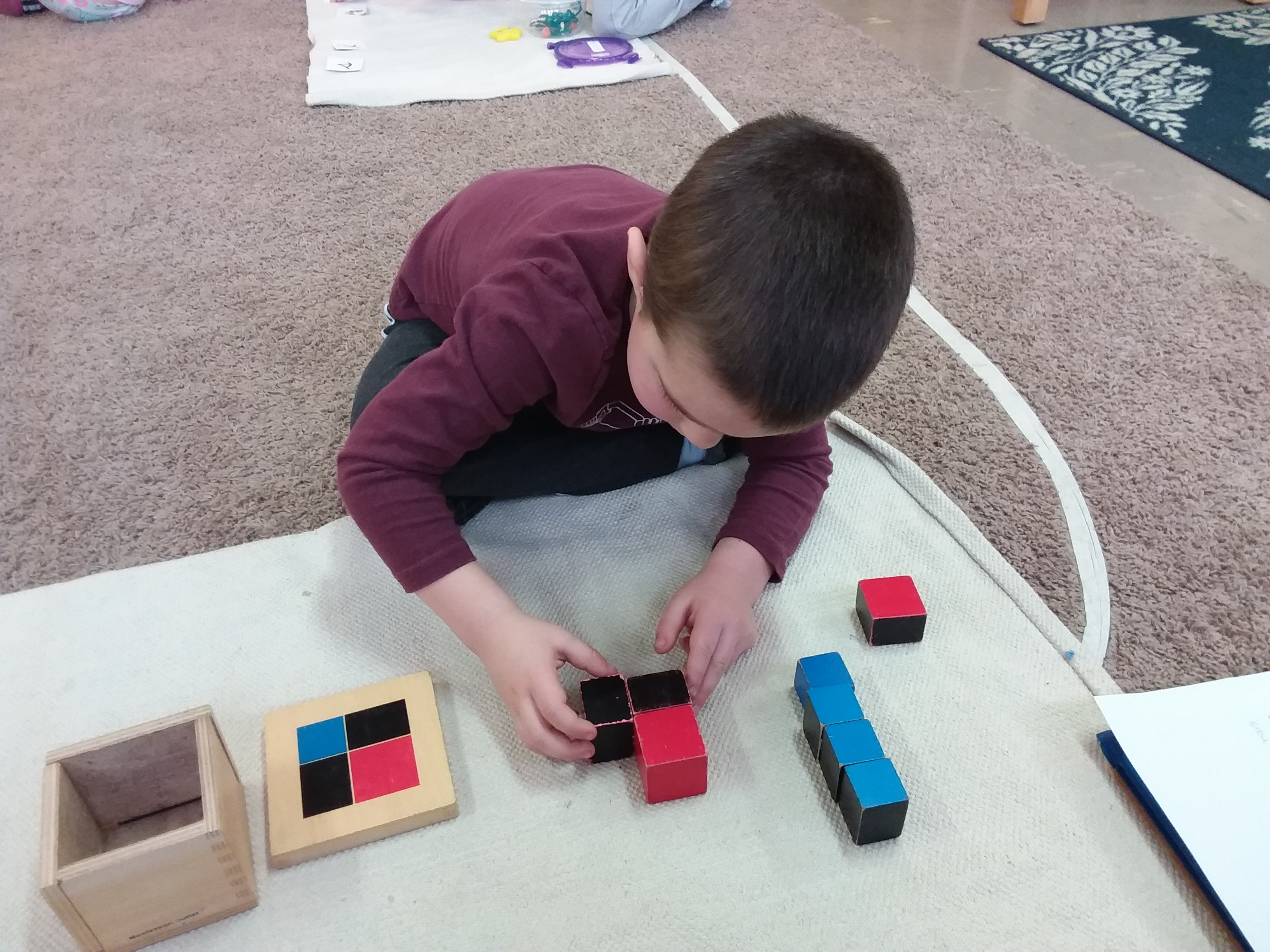
One of our amazing kiddos started to read this week! Yay!!!Our friend is working on one of our map puzzles. When working on this the child wil gain fine motor skills, will build their focus and concentration, and also they will become aware of the different countries that are on our seven continents.It was a MAP crazy this week:)The Binomial Cube is in preparation for the cube root. It is also an introduction for Algebra and preparation for the proof of the formula (a+b)3 at elementary level.Our two kindergarten friends are working on the 45 layout. this work helps acquaint the child with the written symbols for the quantities and categories of the decimal system.
This week, our Wax Museum research is in full swing. Our first and second year students read books and articles to find when their person was born, when they died, what their childhood was like, who their family members were, and what they did as teenagers. Our third through fifth year students researched home and family, school and education, community, and work and play information for their chosen person. Some students are learning to cite sources for the first time to prepare for a bibliography! Next week, be on the lookout for a blog all about our Upper Elementary dissection field trip written by the Upper Elementary students!
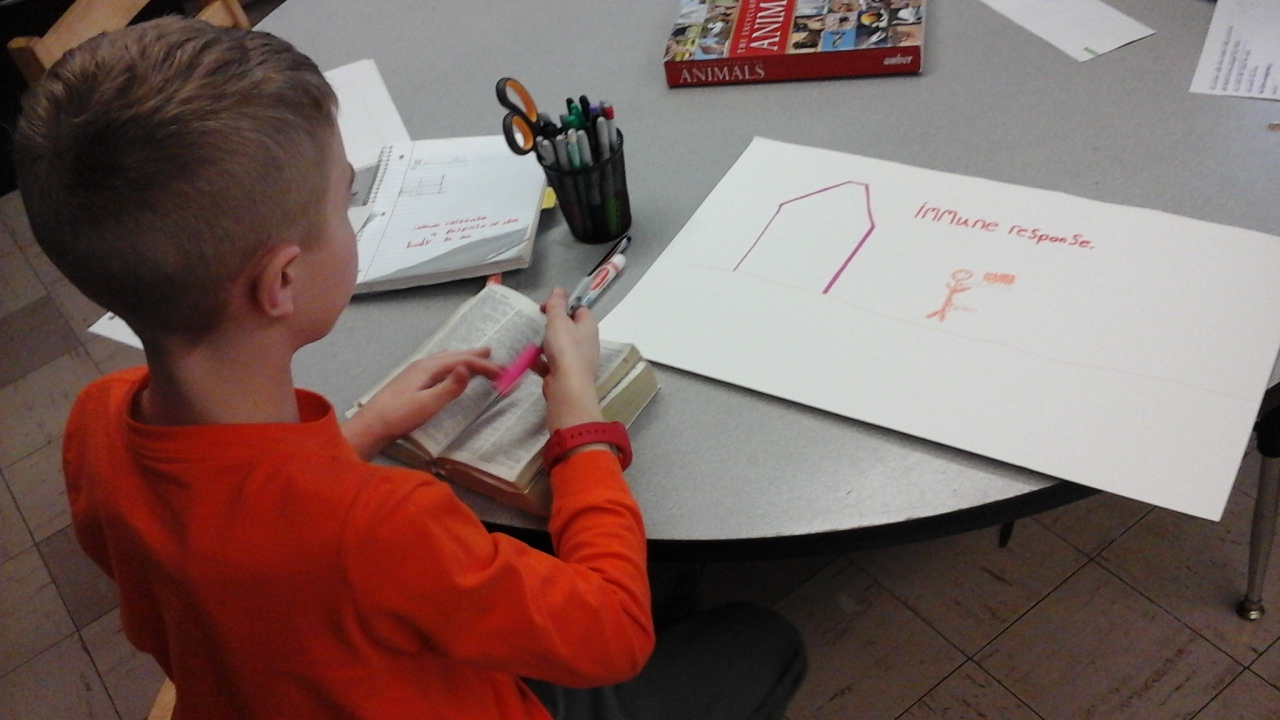
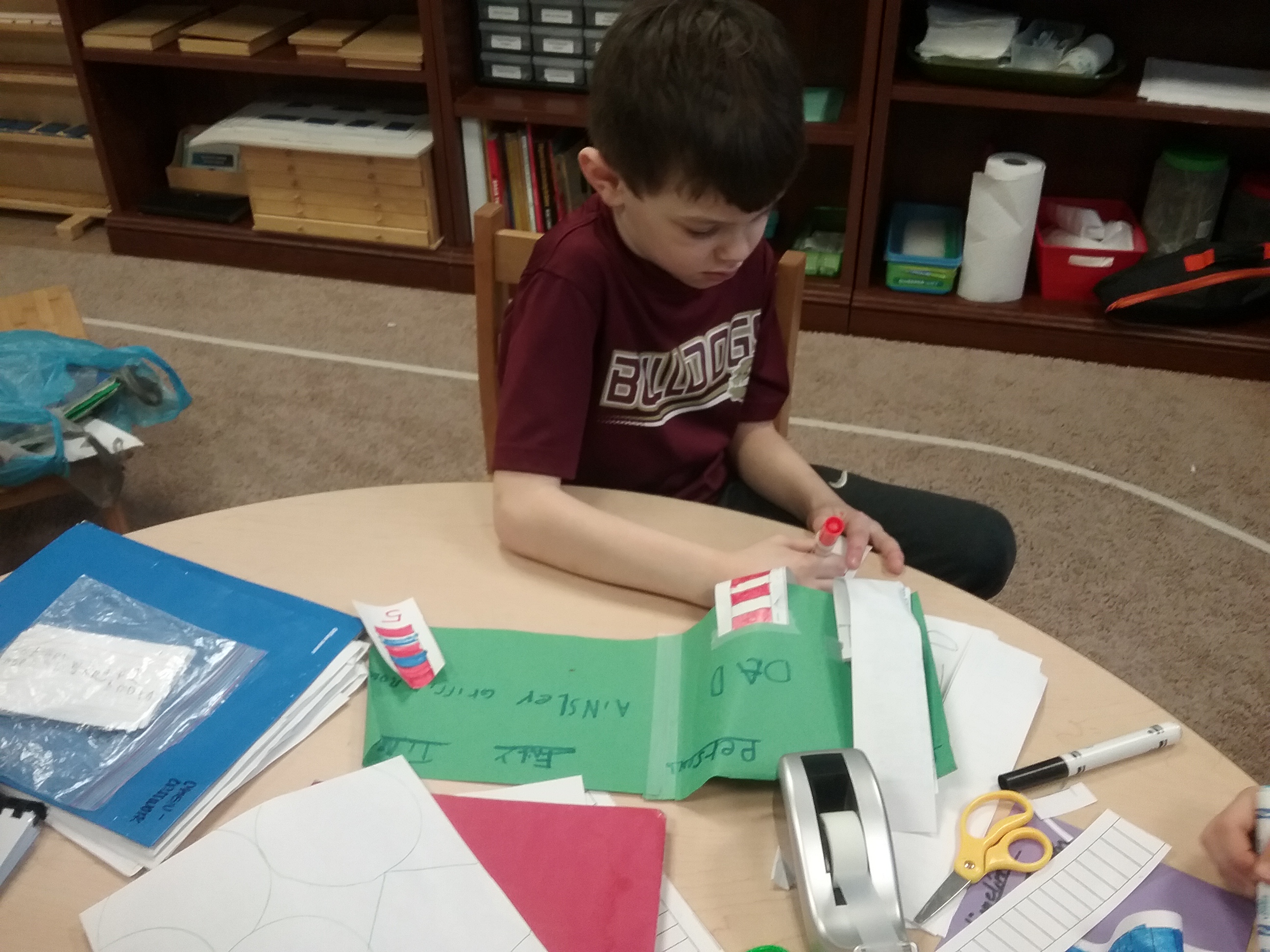
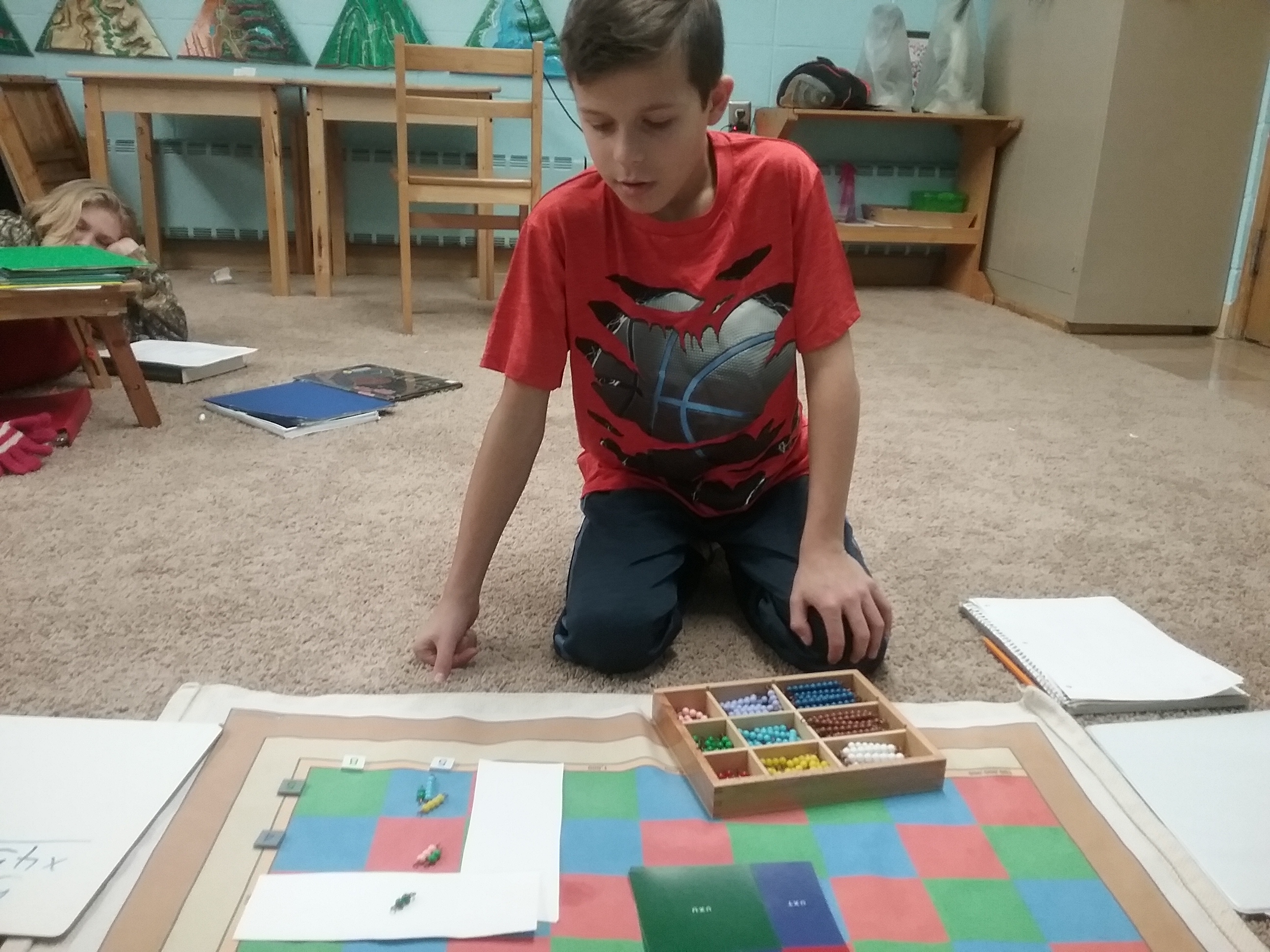
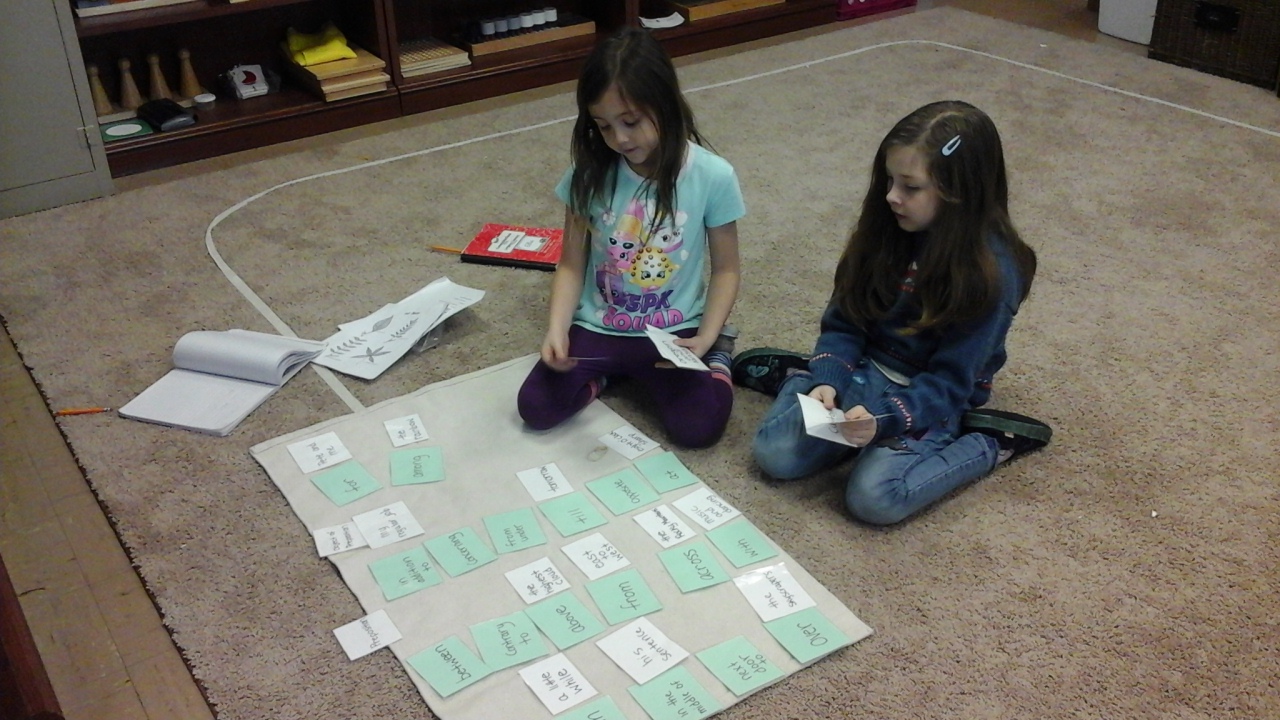
This student is working on his “Word of the Week.” Each week, Upper Elementary students choose a word they think no one will know and draw an illustration showing its meaning. During Community Meeting the following Monday, they perform a skit to show what their word means. This student chose the word “immune response” because we started discussing viruses this week.This first year student is working on his Personal Family Timeline. He collected the ages of all of his family members (and pets) then turned that information into a timeline from oldest member of his family to the youngest! Our timelines will be displayed in our classroom so students can learn about each other’s families!This third grade child was so excited to learn to cross multiply a binomial on the Checkerboard. This lesson shows students how to multiply units times units, then both sets of tens times units, then tens times tens. Once they add up any beads they have carried, they will have their product. When he has had a lot of practice on the checkerboard, he will learn how to cross multiply abstractly, which leads to quicker mental math!These second year students are working with our logical preposition game. They take turns reading a preposition card and finding the noun card that best completes the phrase. For example, if they have “from,” it could be completed with “East to West.” Some prepositions have many noun cards that would be a logical match, while others don’t. Making these pairs helps build vocabulary in writing and speaking.
“A Peek at Next Week”
Next week, we will all continue researching for the Wax Museum. Lower Elementary students will continue studying the preposition, will learn about cnidarians, will build atoms on the Bohr Diagram, and will study Jupiter and Saturn. Our Upper Elementary students will continue studying ancient civilizations and early humans, will learn about viral reproduction, and some will present experiments about energy and the Earth.
REMINDERS:
NO SCHOOL – Monday, January 21, for Martin Luther King, Jr. Day
Tuesday, January 29 – I will be out of the classroom to observe our incoming kindergarten students. Please let Ms. Brandy or Ms. Marlee know if you need anything throughout that day.
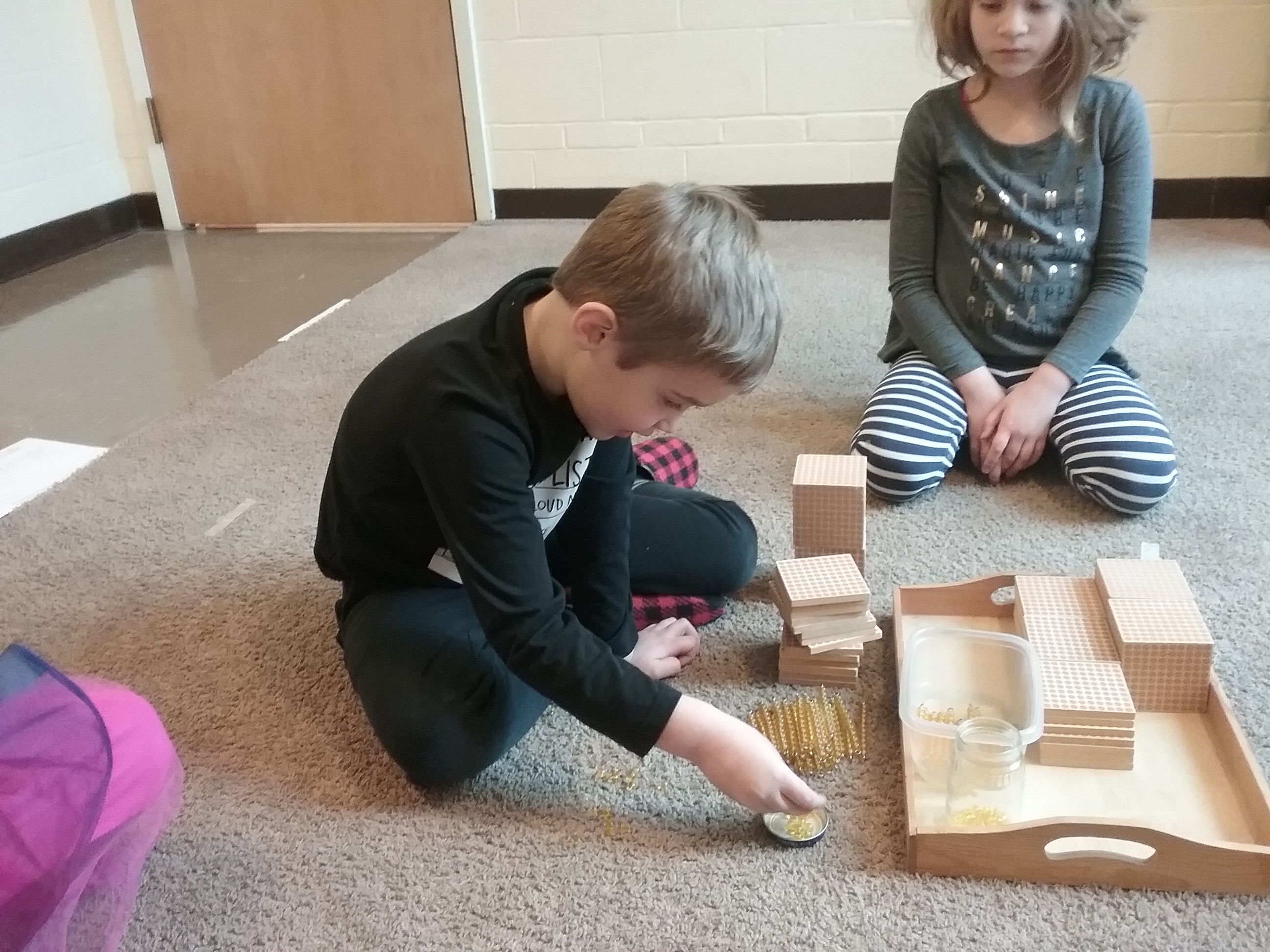
The Kindergarten students were introduced to do addition with carry overs (Dynamic Addition).
The Exchange Game
Handwriting: We practiced cursive… Hopping hippos help. Ill impalas itch. Jazzy Jim jumps. Karma keeps kicking. Lions love licking.
Cultural Subjects: Your children can now count to ten in 19 languages (English, Latin, Sign Language, Spanish, German, French, Japanese, Greek, Arabic with the Lebanese Dialect, Italian, Russian, Romanian, Swedish, Tagolog, Hebrew, Korean, Hungarian, Irish, and Kiswahili).
Next Week: Lesson- Multiplication
Sight Words Of The Week- now made
Synonym Of The Week- FAT: big, overweight, bulky, heavy, plump
Line Time: To honor the late Dr. Martin Luther King Jr. we learned a bit about his life and his accomplishments. The students became actresses and actors as they recreated Rosa Parks making her stand on a bus in Montgomery Alabama. The students enjoyed playing the part of the bus driver, Rosa Parks, “the mean guy”, a police officer, Martin Luther King Jr., and passengers on the bus. We discussed our differences such as skin color, eye color, hair color, and gender. Then we discussed how we are similar. We talked about discrimination and segregation. We talked about if someone with red hair wouldn’t be allowed to do art “just because” they have red hair or if anyone who had blue eyes would have to go to a different classroom with less materials, broken crayons, or no books “just because” they have blue eyes. I had only boys fetch the chairs for the skit and brought that to the attention of the class. We had some very sad girls…. I did let the girls take the chairs back after the skit.
Children celebrating Rosa Park’s victory where anyone can now sit anywhere they want.
Cultural Subjects: Your children can now count to ten in 17 languages (English, Latin, Sign Language, Spanish, German, French, Japanese, Greek, Arabic with the Lebanese Dialect, Italian, Russian, Romanian, Swedish, Tagolog, Hebrew, Korean, and Hungarian).
Peek In Our Classroom:
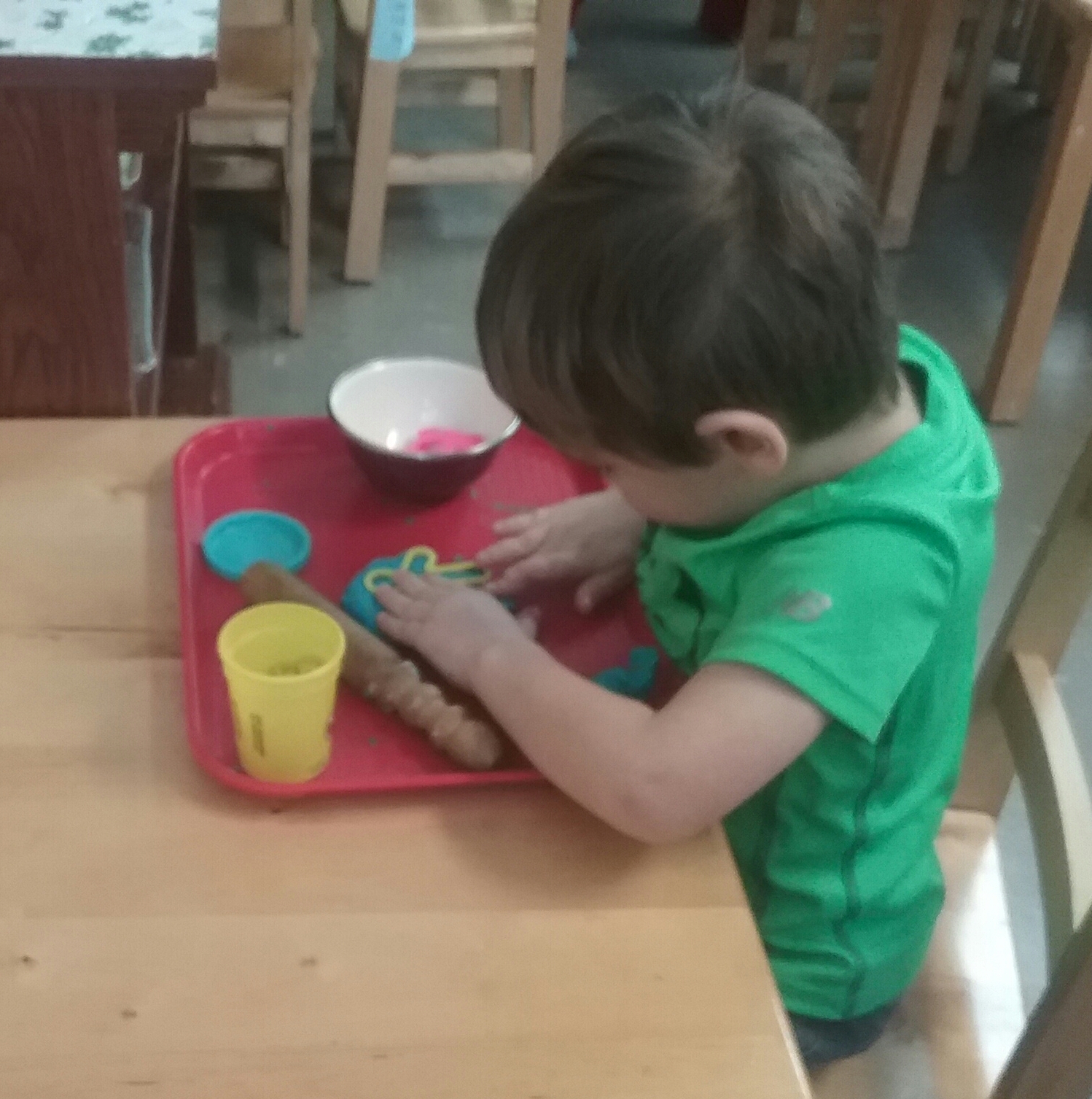
The purpose and aim of Practical Life is to help the child gain control in the coordination of his movement, and help the child to gain independence. In the Preliminary Exercises, the child learns the basic movements such as pouring, folding, and carrying. This boy is learning to use a roller and when the playdo is rolled he then uses a cookie cutter.
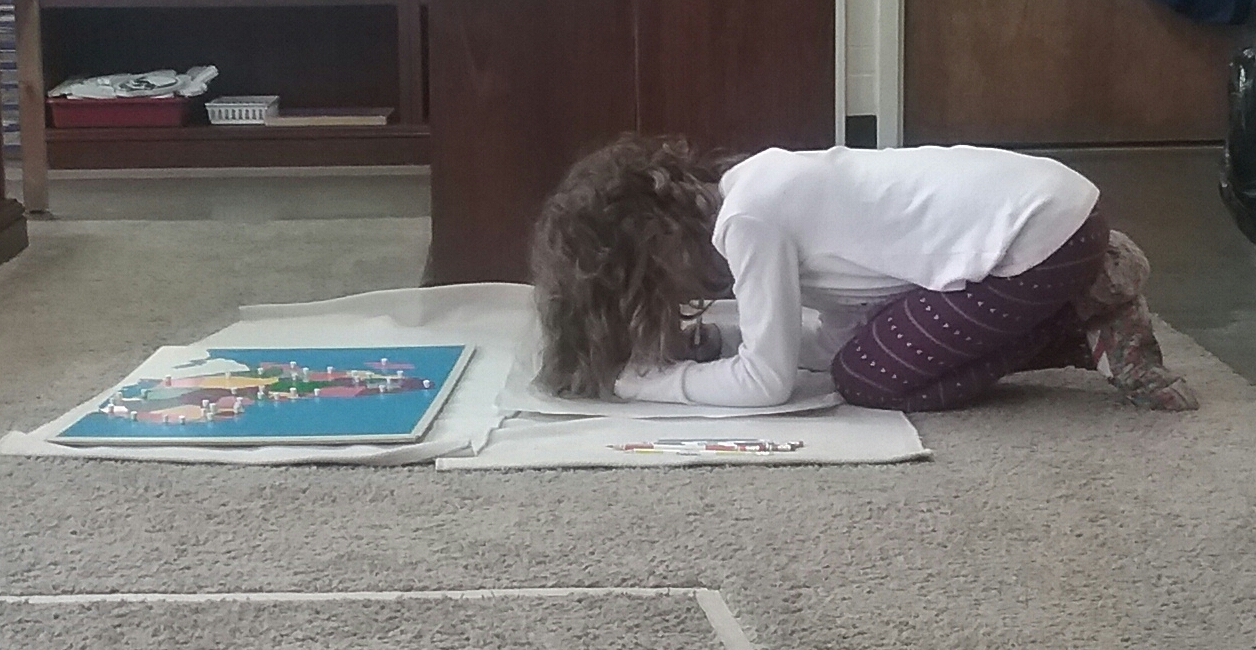
This student is working with the Africa puzzle map. Not only is she placing the pieces in their place but she is also tracing the countries. Tracing and coloring will strengthen her fine motor skills.
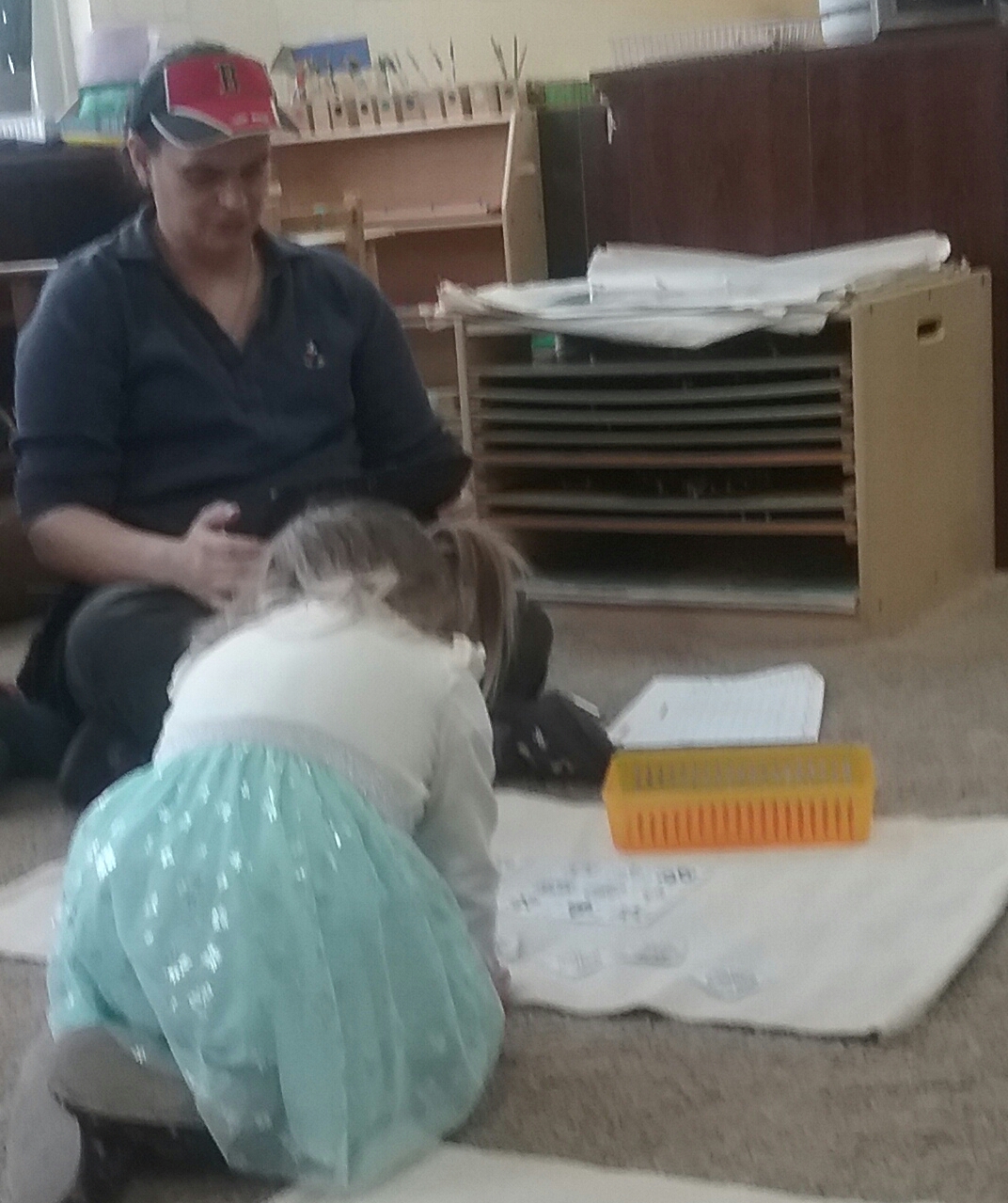
Ms. Kathleen is giving a lesson on Matching which is found in the Language area. Matching at this age is important due to common everyday activities that involve sorting are the beginning concepts of children developing math skills. Children continue sorting and classifying by organizing their understanding of language, people and objects in their environment.
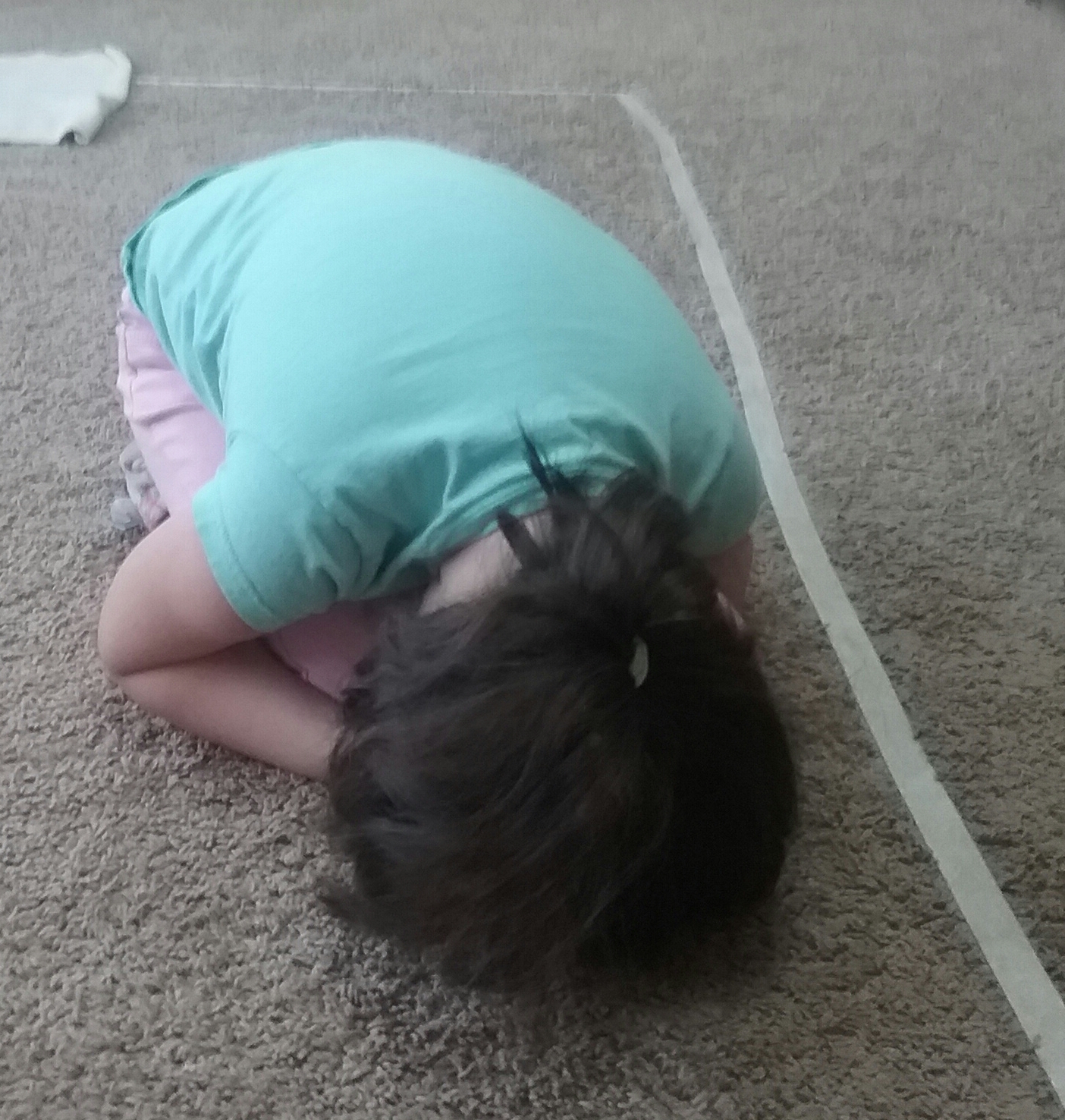
This may look like a Duck and Cover drill but it is actually a student feeling the effects of False Fatigue. False fatigue is a Montessori phenomenon that takes place in EVERY Montessori school. Experienced teachers realize that this phenomenon is “False Fatigue”. This is when students “check out” (roll on the floor, noise level in the room rises, or children will just loose focus). Teachers realize that the children will return to work on their own, and their work will be at an even higher level than before. An episode of False Fatigue happens roughly the same time every day and lasts about 15 minutes. In my class False Fatigue starts around 9:55am/10:00am.
Next Week: Line Time- Skeletal System
Letter Of The Week- Q q
Rhyming Word Of The Week- bub
Next Language will be- Irish
Snack will be brought to you by Mason
Upcoming Events:
*********** No School January 21st, Monday ***********
<<<<<<<< All School Dance February 9, 2:00 pm – 4:00 pm >>>>>>>
(((((((((((( Open House February 24, Sunday 2pm to 4pm )))))))))))
—–Valentine Day Party- Friday February 15th (details to follow)
—–Recess attire…. winter coat, hat, gloves or mittens that are waterproof (not cloth or yarn), boots, and snow pants!
If the child does not have one or all of these items they may be asked to stay in.
Fun, Frolic, and Friends:
Each Montessori classroom is unique just as are the students in the classroom. Her sense of style is ________ (you fill in the blank).
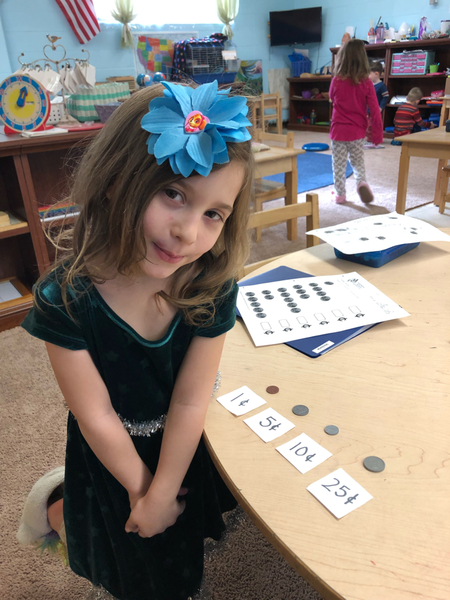
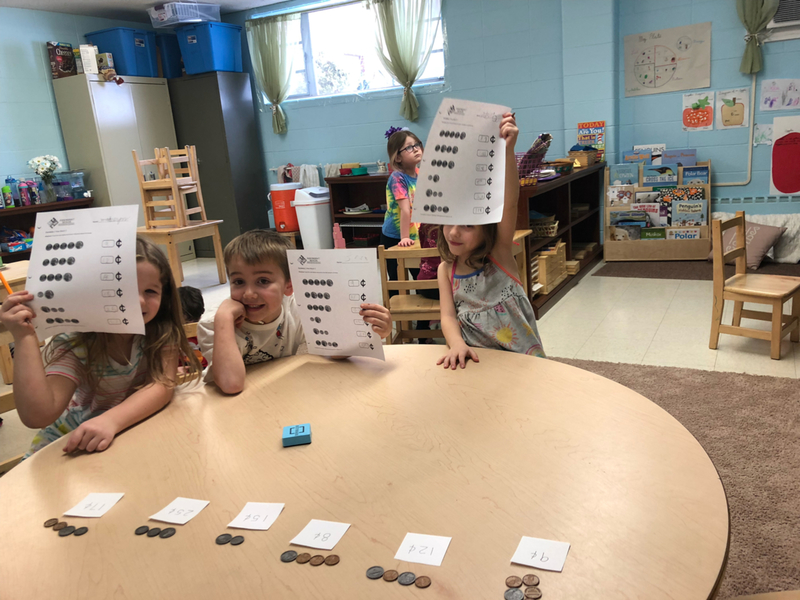
Money- The students were introduced to different coins ( (pennies, nickels, dimes, quarters, half dollars and dollars) and their values. They were able to explore different coins sensorially and learn how much they are all worth. The students also practiced grouping different coins to count their value when put together.
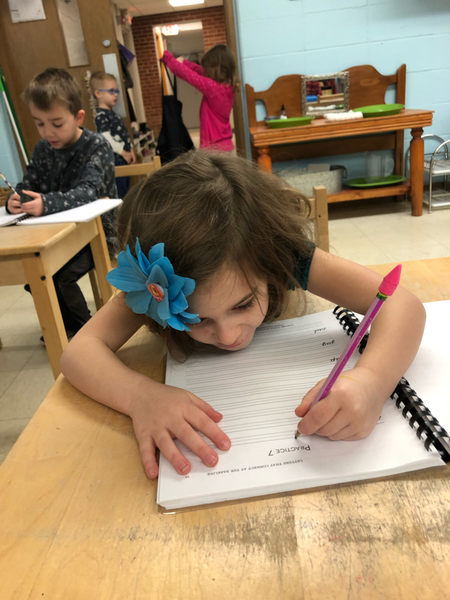
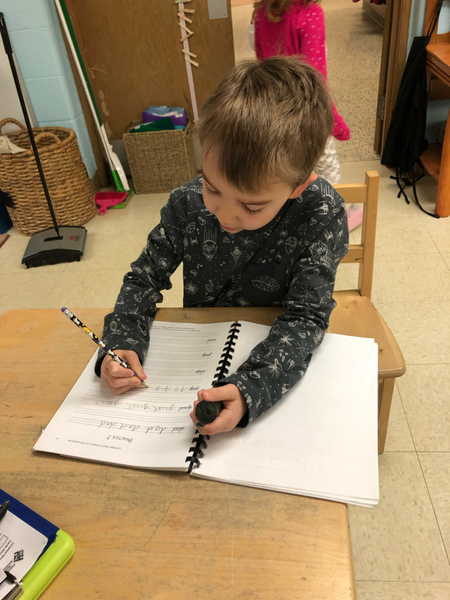
Cursive Handwriting: The students practiced writing the lowercase cursive words dad, quit, pig, dip, jug and cut.