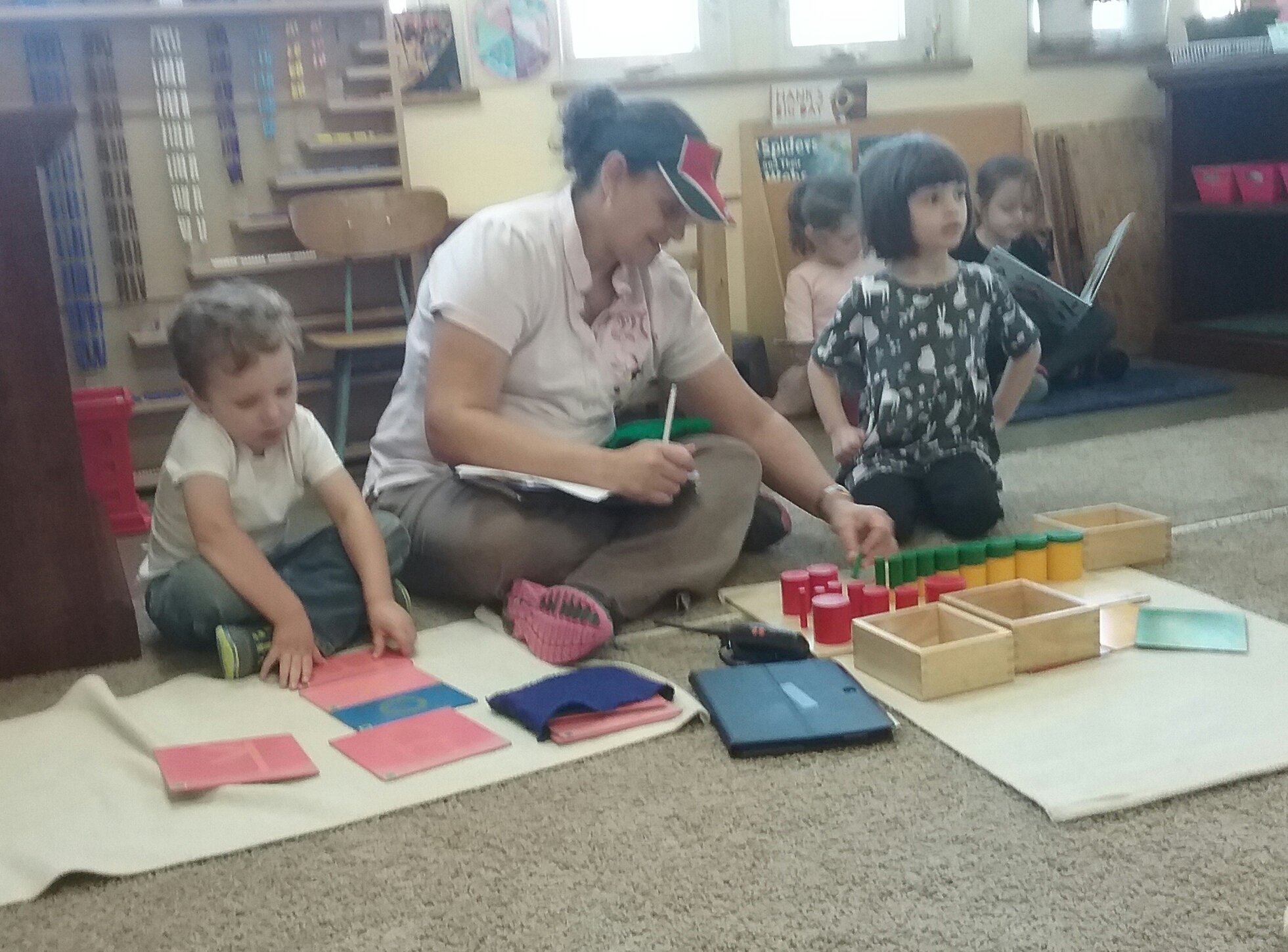
The past couple of weeks we talked about Thanksgiving and being thankful. The children shared what their families do for Thanksgiving and learned that we all have our own traditions. We talked about why the Pilgrims and Indians ate a meal together. Each child shared what they were thankful for to create a classroom thankful turkey. We got a lot of fun responses.
We also talked about the Pilgrims and Indians. The class found out the Pilgrims came from England to our country for religious freedom. We read books about what the Pilgrims experienced during their journey on the Mayflower and once they landed at Plymouth Rock.
I want to send a big thank you to all the parents who volunteered to bring supplies in to make the Harvest Party a success!
Work Time
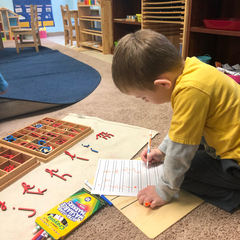
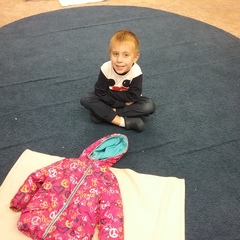
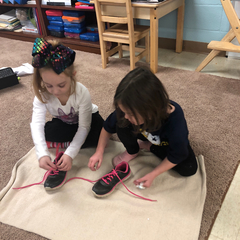
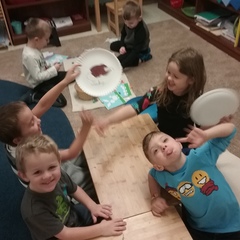
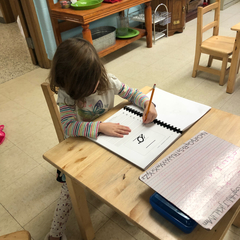
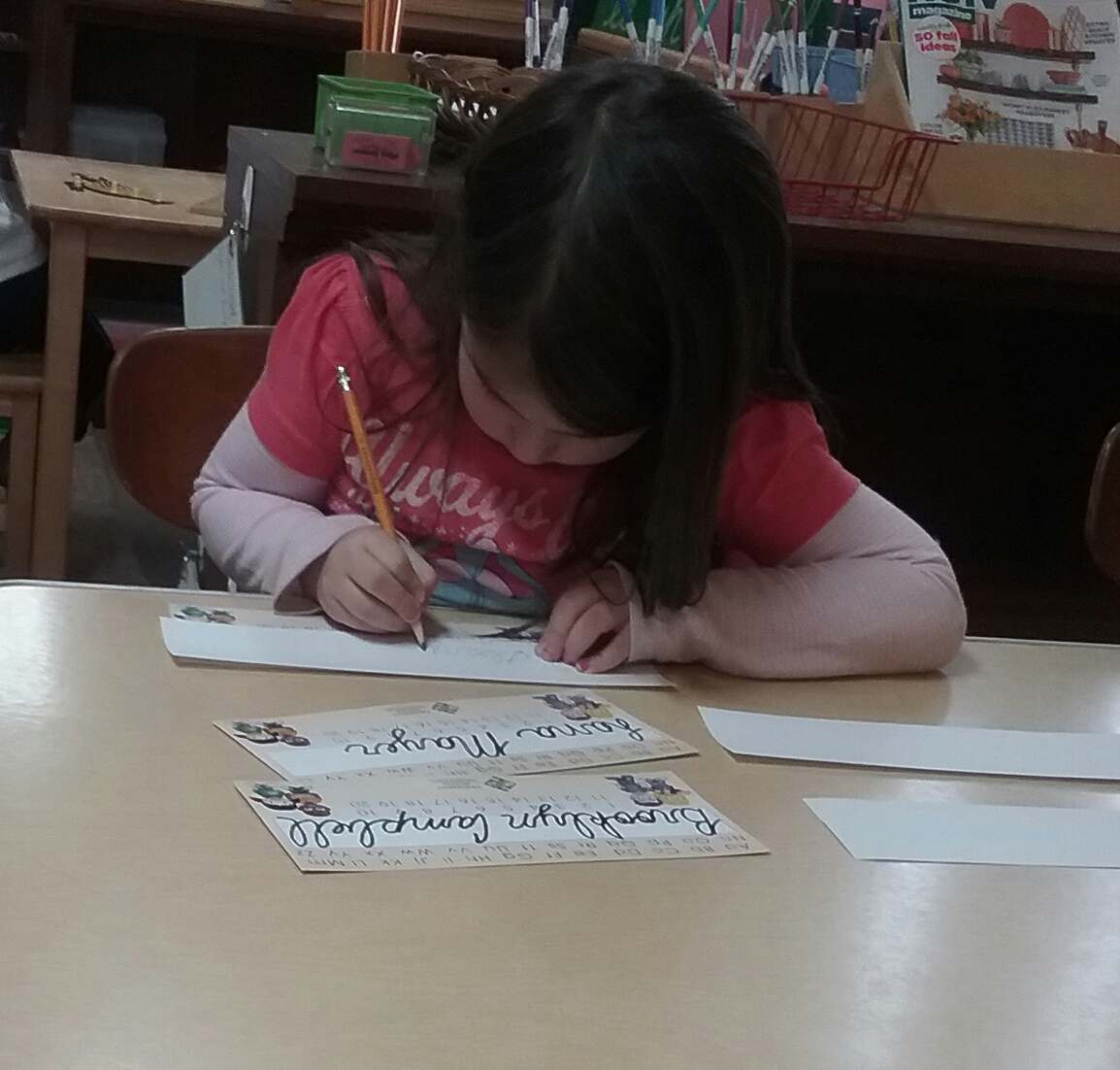
Cursive Chalkboard Writing: This child is practicing writing her name on a chalkboard. She is developing multiple skills involving her eyes, arms, hands, memory, posture and body control.Movable Alphabet: This child is identifying the sounds of the letters ‘j’ ‘k’ ‘h’ ‘l’ ‘i’ and ‘m’ and matching the cursive form to the print form.Movable Alphabet: This child is saying the word of the object and phonetically spelling them: pagin for penguin, wolrus for walrus and asdnut for astronaut.Zipping: This child is developing his independence and concentration while also gaining finger control and dexterity to manipulate a zipper.Tying: These children are learning how to care for themselves and are developing a sense of independence while refining their fine motor skills and coordination of movements to successfully tie the shoes.These students are practicing their please and thank yous.
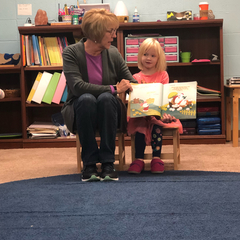
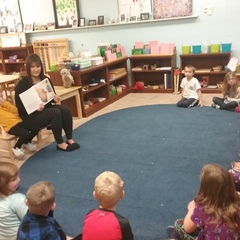
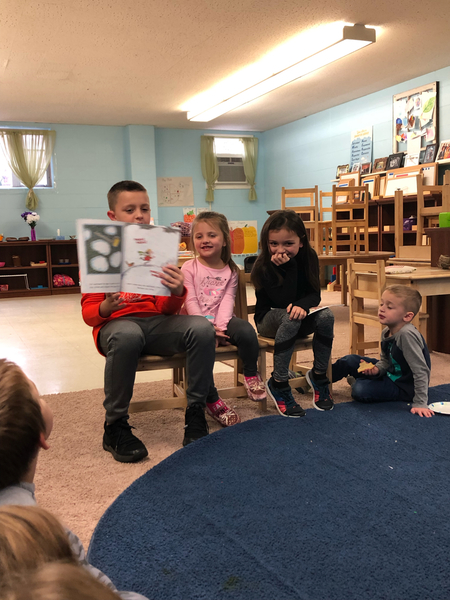
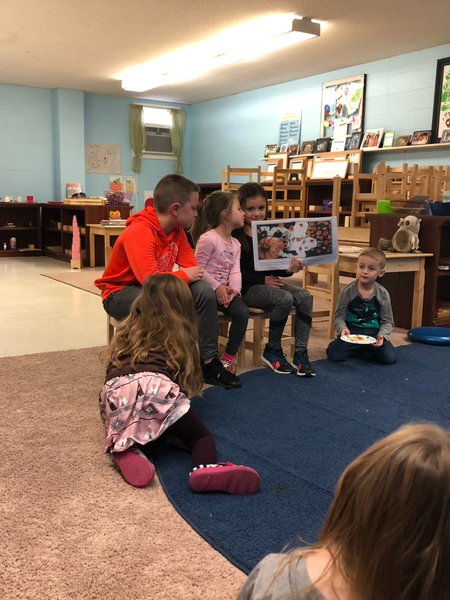
Guest Readers
Reminders:
Thanksgiving Break | NO SCHOOL | November 21 – November 23
“We give gratitude to things that came before us like the jellyfish, whose cells began one of the first types of division of labor or the earthworm for continuous digestion. We also show gratitude to the Phoenicians for the start of our alphabet or the Greeks for their democratic government. We try and help children understand that someone or something worked very hard in the past to give us what we have today.” -Chesapeake Montessori School
On Thanksgiving, my dad never made us go around the table and say what we are thankful for. I assume this was because he knew I would say something like, “I’m thankful for my Game Boy,” or “I’m thankful Zach isn’t talking right now (my brother and I REALLY loved being around each other),” but as someone that spends so much time with your children, I wanted to share the things I see each day that make me thankful. I am thankful that, although they sometimes bicker like brothers and sisters, your children are able to step aside and talk through concerns and problems with children and adults. I am thankful I get to constantly see older students helping younger students be more independent. I am thankful for the times when students are disappointed in themselves and another child takes time out of their day to go see how they can help or to give some words of encouragement. I am thankful for Community Meeting and the chance it gives me to see students solving their own problems and voicing their concerns, without needing any adult intervention or assistance. I am thankful that our students feel so comfortable in our environment that they plan and execute lessons for other students as if they spent years studying education and child development. I am thankful to spend every day showing new lessons to your children and seeing how much they can do with the information they are given, almost always surpassing my expectations.
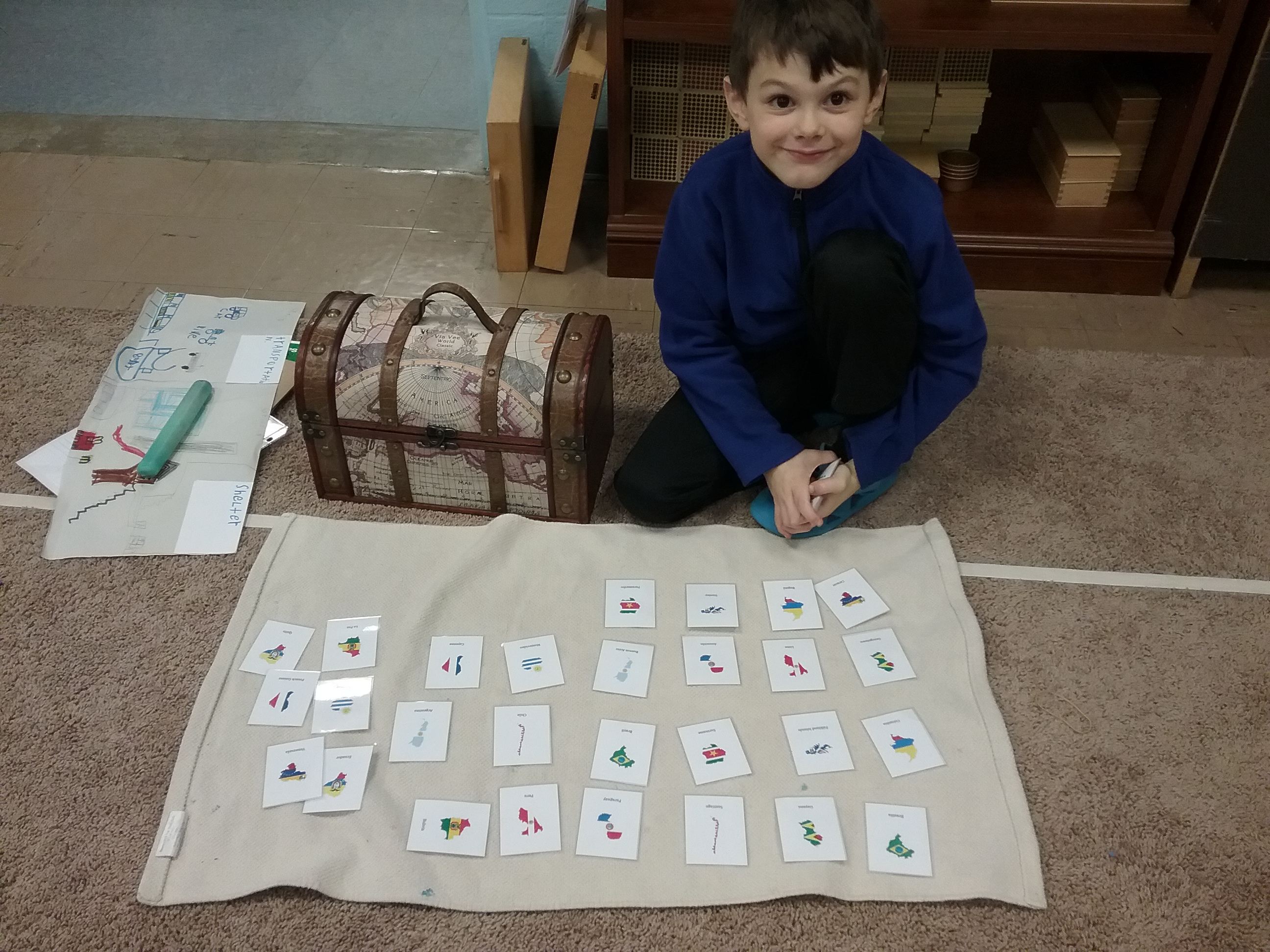
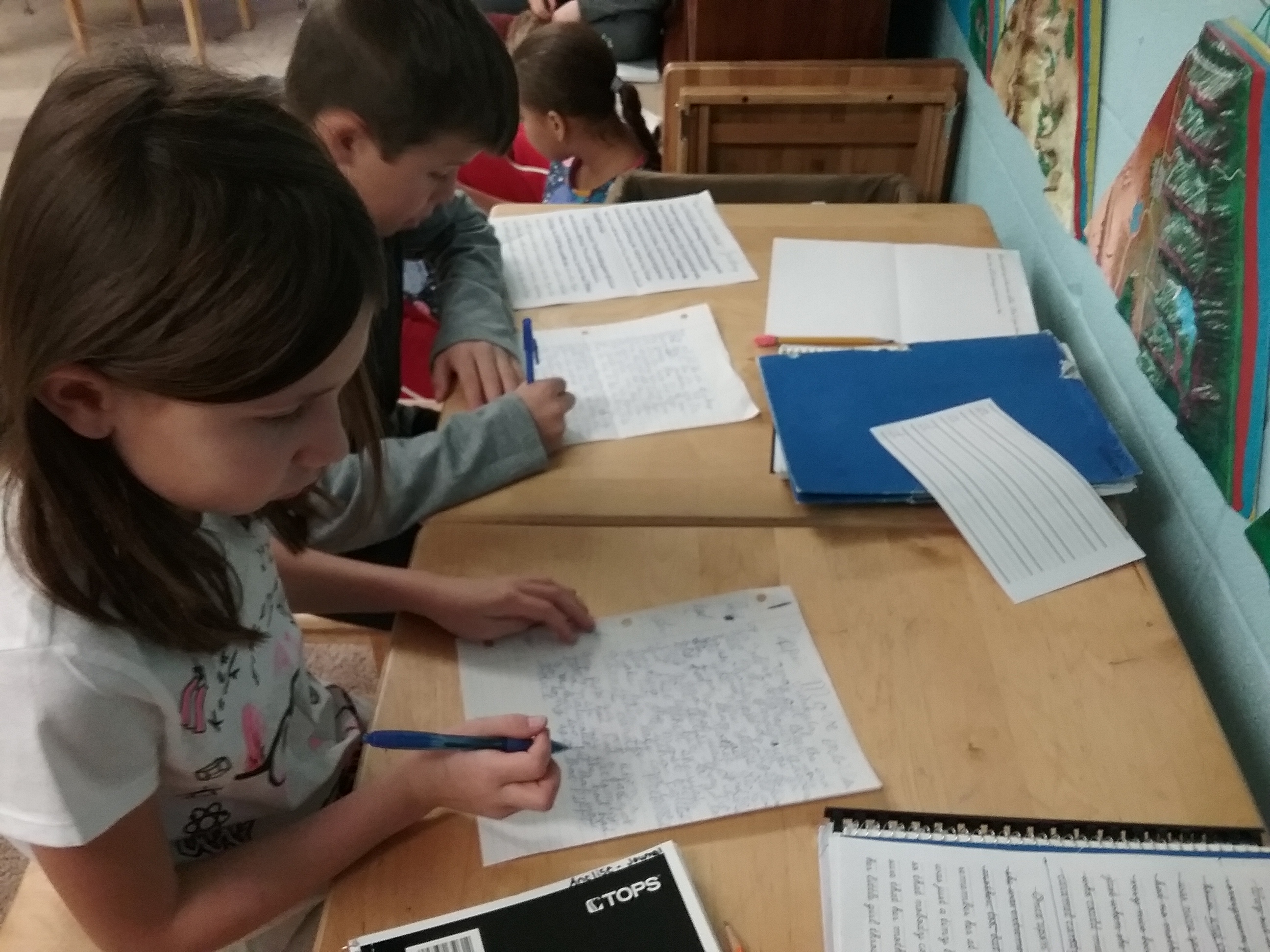
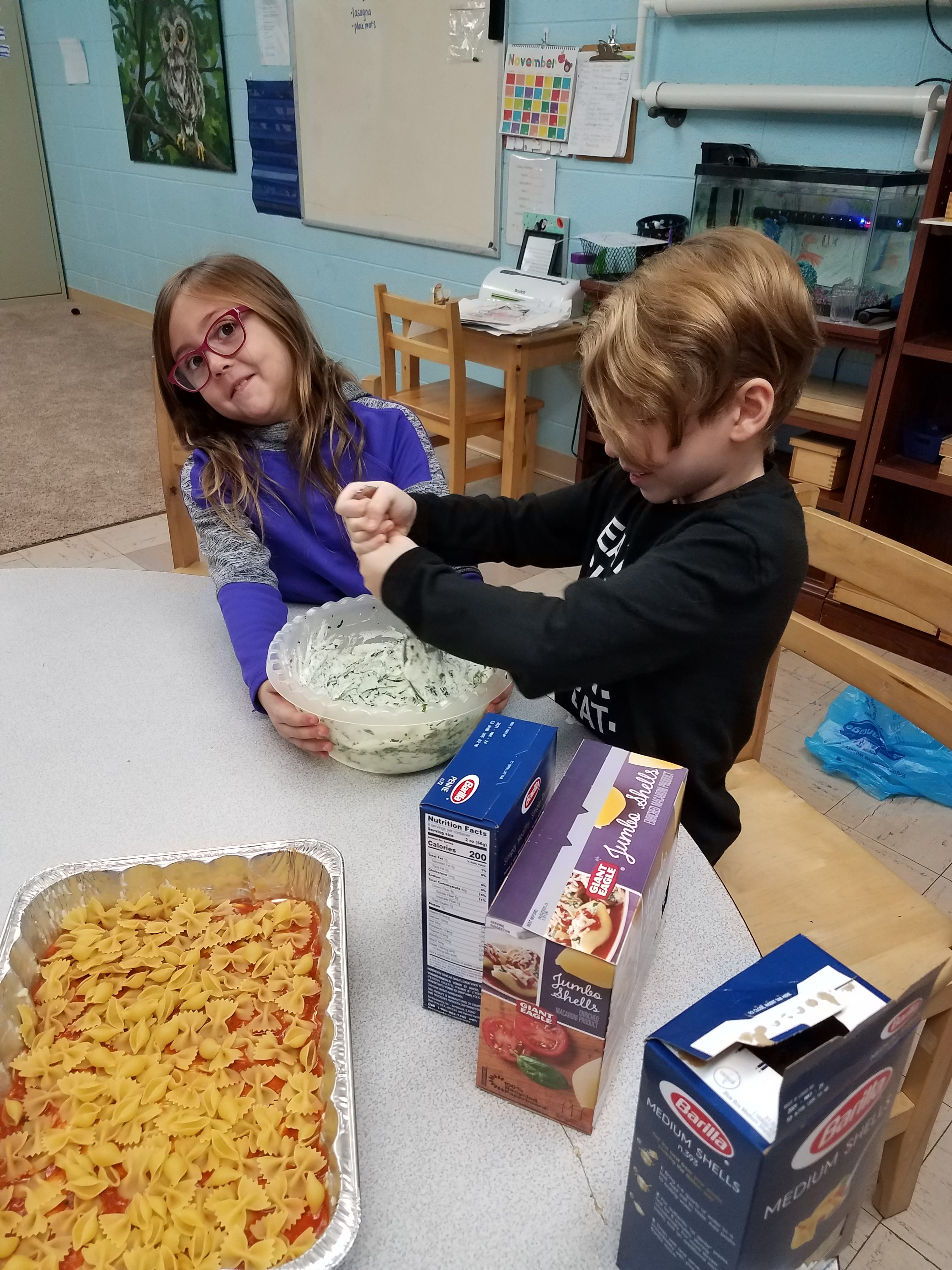
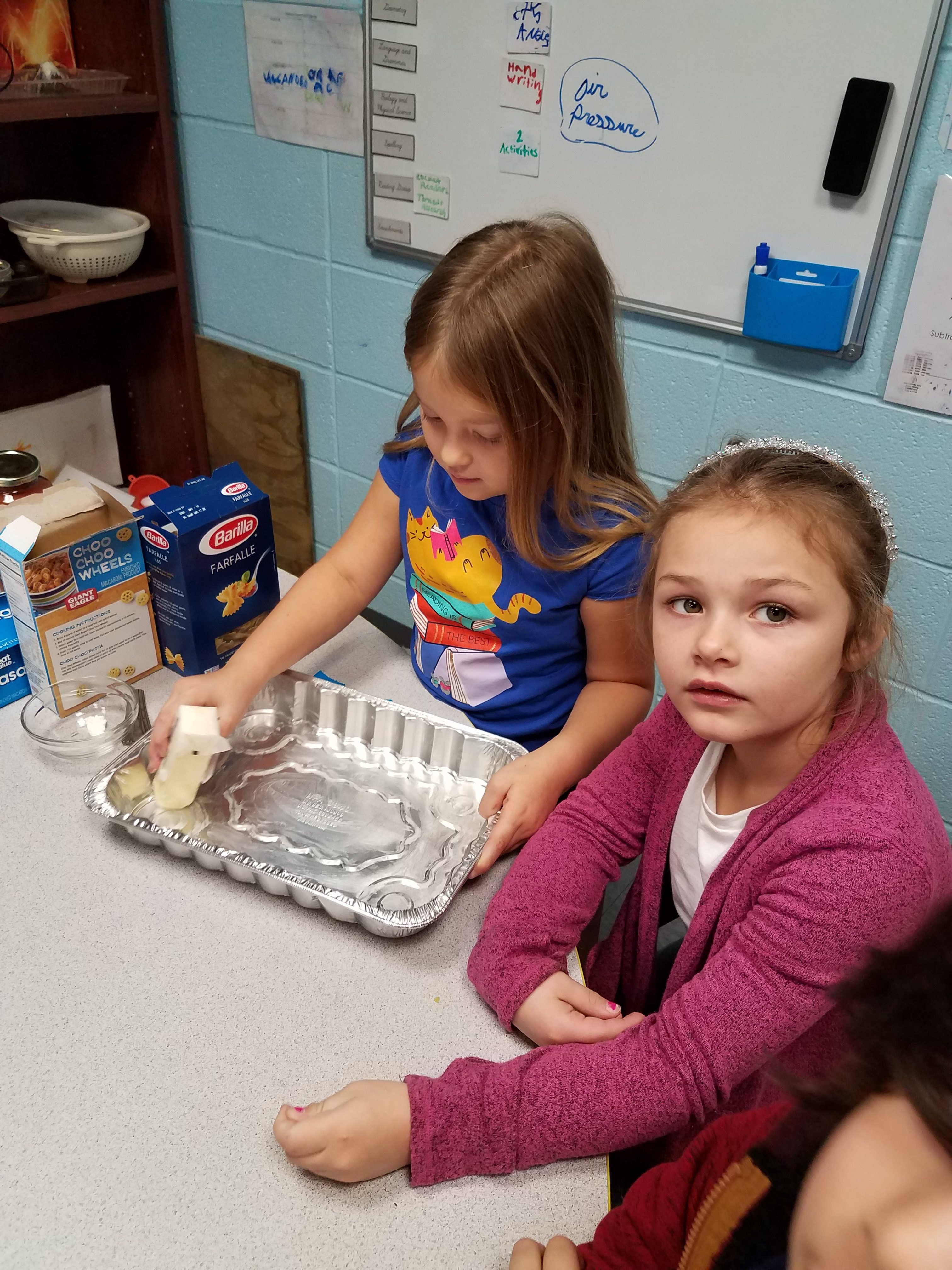
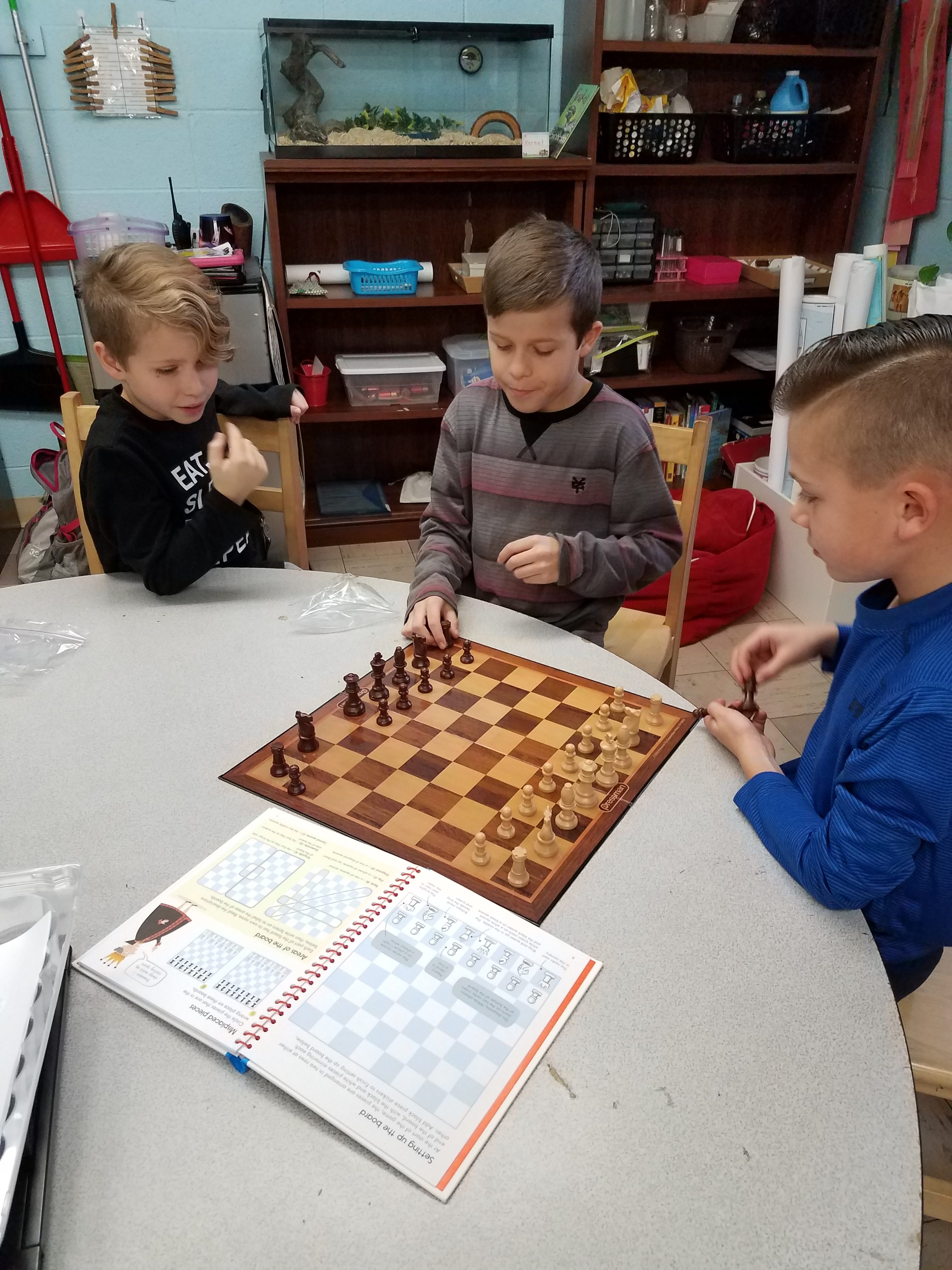
This second year student is subtracting on the Small Bead Frame. She is practicing exchanging and writing the difference in her math equation book. She can practice this same equation with the Stamp Game and the Golden Beads. Once she is more comfortable with subtracting large numbers, she will be able to easily solve large equations on paper!This month we are studying South America. This first grade student is playing “South America Slap-It.” This is a game for students to read riddles and decide which capital belongs to each country. The person who slaps the card first, gets to keep it, and the person with the most cards at the end is the winner!These third grade students are working on handwriting. They are rewriting paragraphs from “Pippi Longstocking” to practice their cursive handwriting. Each week, Ms. Kelley reviews their handwriting and practices letters with them using our white board and large motor movements.Today, we enjoyed making lasagna and eating with Ms. Courtney’s class. We enjoyed lasagna, bread, carrots, applesauce, and cookies. To make our pasta, we first discussed the history of “The Island of P’sta.” This is an imaginary island that leads us to treat the baking of lasagna as a archaeological dig. Students found marble flooring (lasagna noodles) covering pearls (pasta shells and the main export of P’sta), chariot wheels (rotelle), arm and leg bones (penne and ziti), butterfly fossils (farfalle), coral fossils (rotini), and helmets (large shells), and used this information to determine what could have happened on the Island of P’sta after their invasion by the Romans.These students are using our new Chess Book, donated by a family, to learn the names of the pieces, how they move, and how to complete a game. We were also gifted a book about coding using Scratch, which the students are thoroughly enjoying. Thank you to the family that donated these books!
A Peek at Next Week
Next week, first year students will use the Subtraction Snake Game, review the use of a verb, continue studying fundamental needs, further investigate the Five Kingdom Chart, and begin planet research. Second year students will continue studying geographic features, will label the parts of a seed, will bisect an angle, and will start multiplying on the Checkerboard! Third year students will research the eye, ear, and tooth, will find irregular past tense verbs, and will perfect their measuring skills with measuring cups and spoons. Fourth year students find discuss adverbials in sentences, the unit as part of a base 10 number system, and will discuss elements in our universe. Fifth year students will use the order of operations, will research mammals, will be introduced to genealogy and will write figures of speech.
Dynamic Addition: The students are doing dynamic addition using the golden beads. Dynamic addition simply means addition where they need to carry over an amount. The process is similar to static addition except if the child has a group of ten he/she will need to exchange. Exchanging takes place when the child is combining the beads.
Cursive Handwriting: The students learned and practiced the correct stokes to successfully make a lowercase c and lowercase o. To make a lowercase c they learned to curve around to just below the midline and roll back
around to just above the baseline. To make a lowercase o they learned to curve around to just below the midline, roll back around past the baseline and up to the midline and dip connector at the midline.
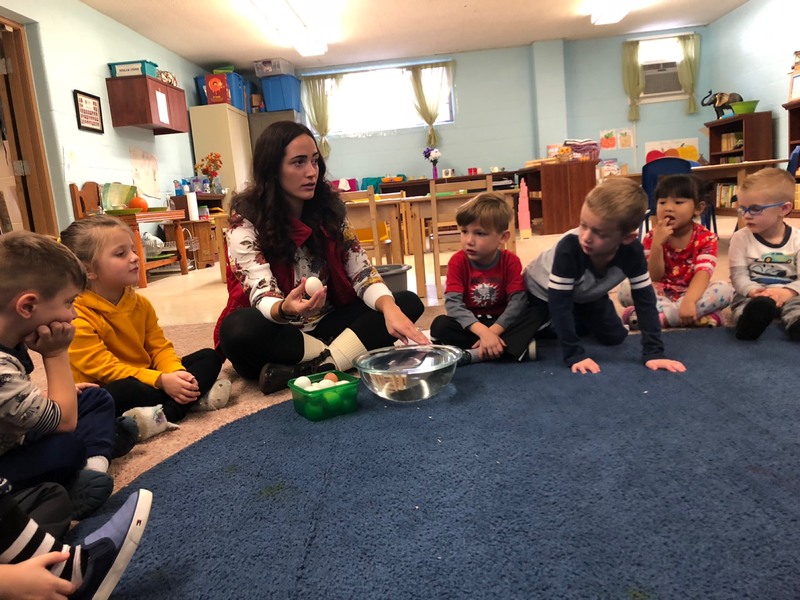
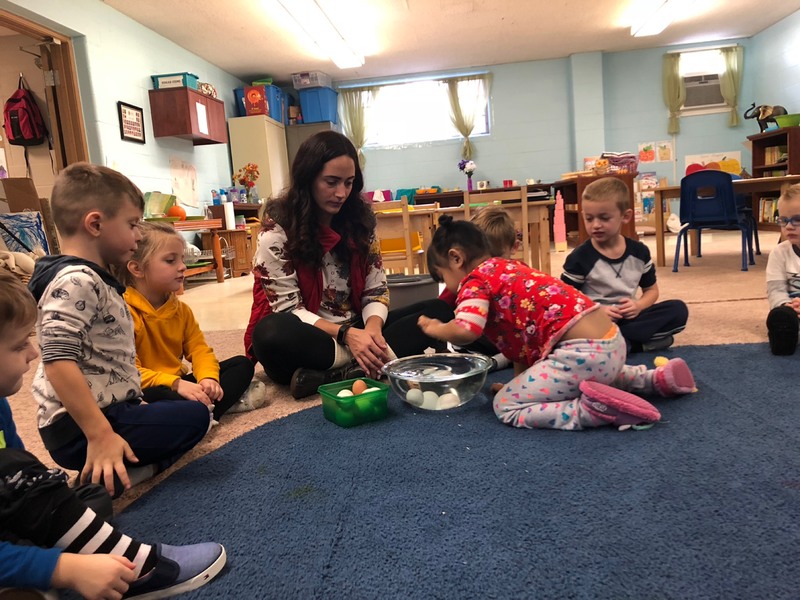
Floating Eggs: The students discovered that as an egg ages, air enters the egg and the air cell becomes larger. They learned to test an egg for freshness they can place it in a bowl of water. The fresh eggs will lie on the bottom of the bowl. Eggs that tilt so that the large end is up are older, and eggs that float are rotten.
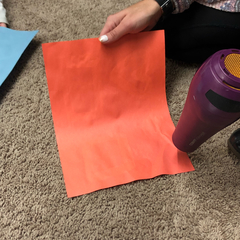
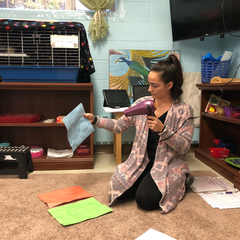
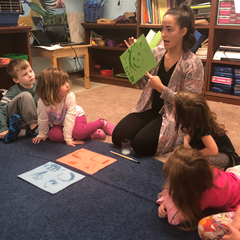
Invisible Ink: We dipped a paint brush into lemon juice then drew pictures onto different colored paper. After the paper totally dried we used a hair dryer to heat the paper up revealing the original pictures we drew. The students discovered that lemon juice is an organic substance that oxidizes and turns brown when heated which is why we were able to reveal the hidden pictures.
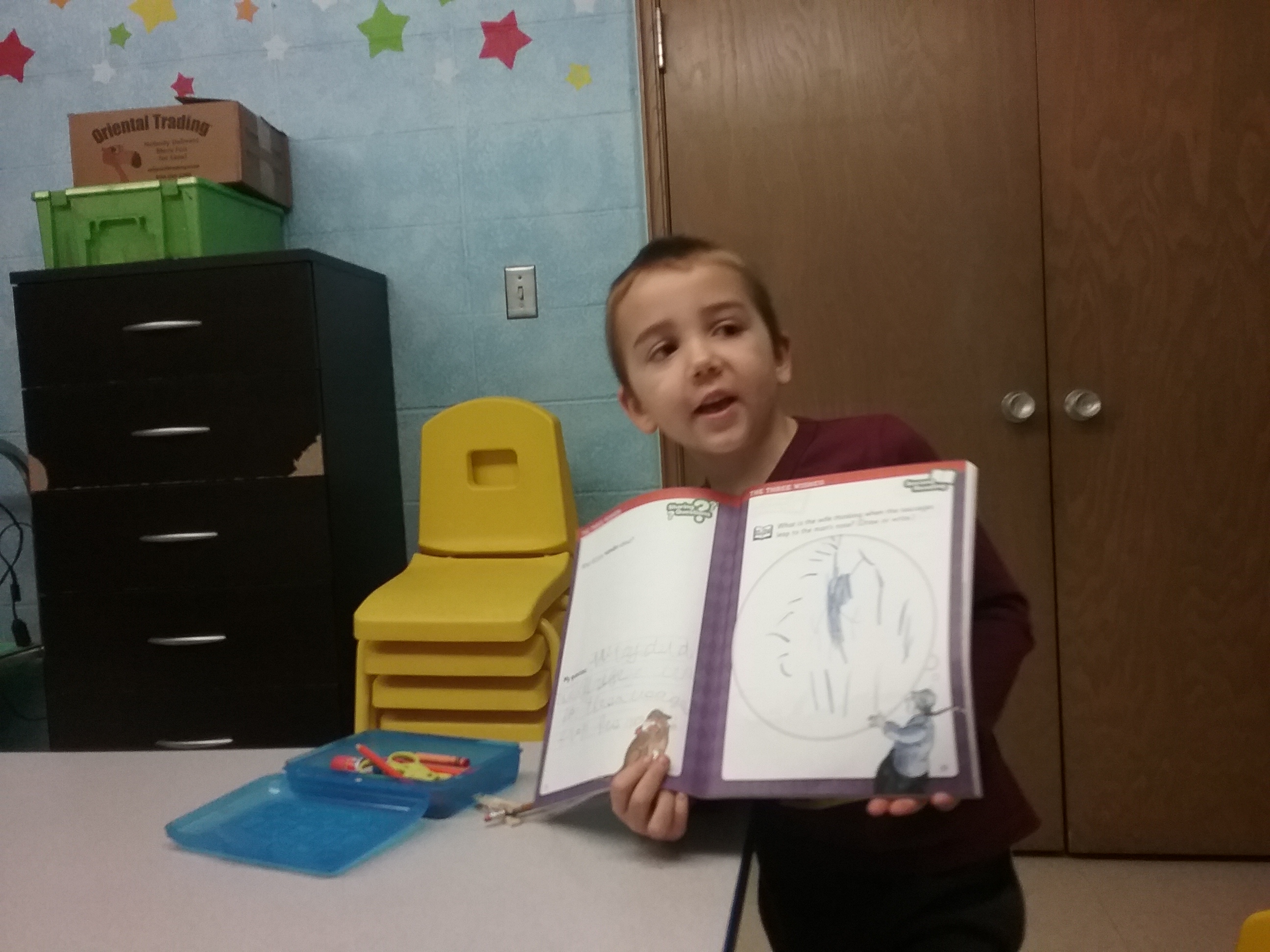
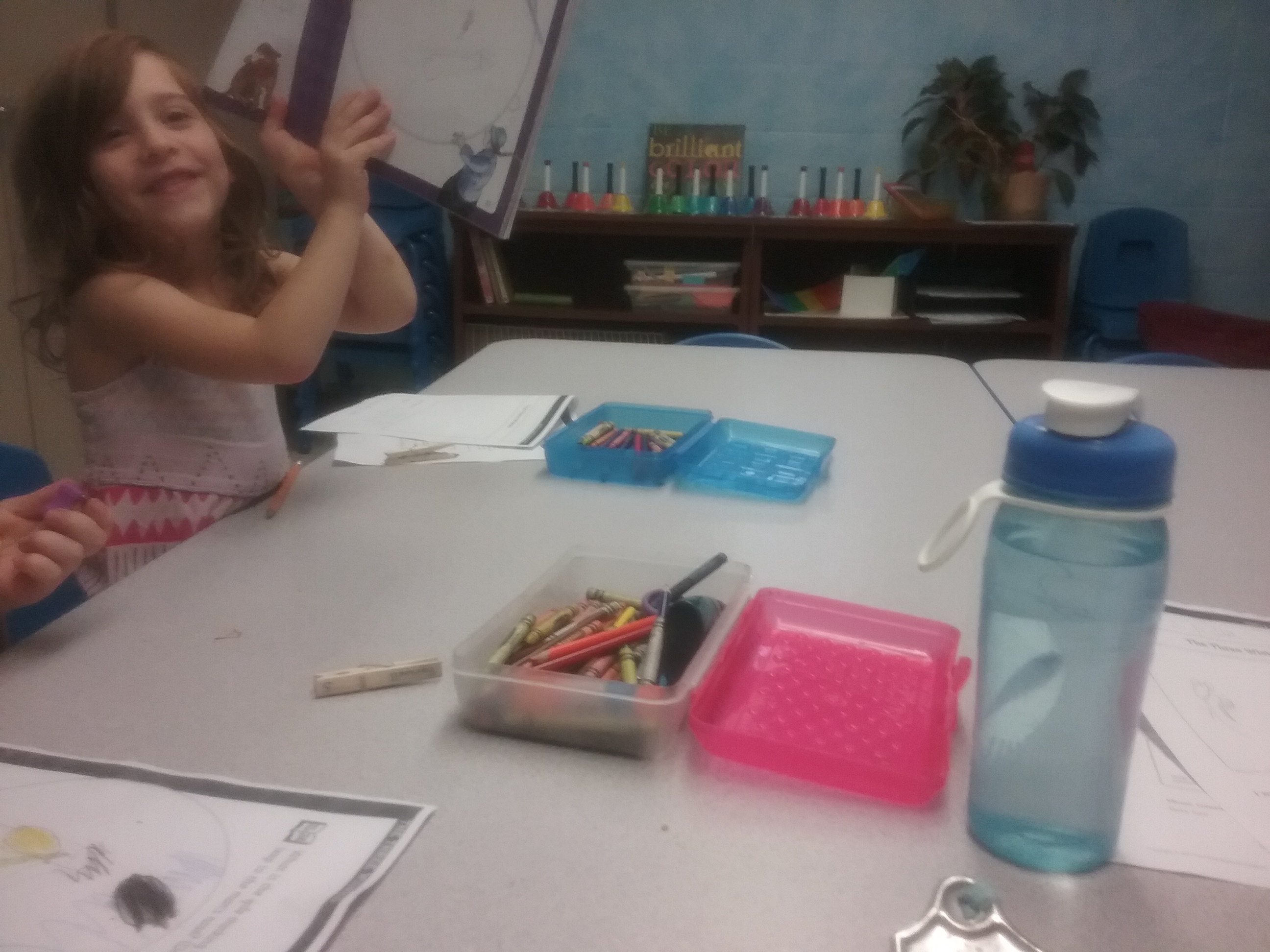
Over the last two weeks we read a story called The Three Wishes. It was a story about a couple who worked really hard every day, but still struggled to make end meets. They come across and Imp who needs some help. After helping the Imp, he gives gives the couple three wishes.
The students got to come up with a wish they would like to have. They discussed what the husband and wife were thinking about when they ended up wishing for sausages and the for the sausages to hang from the man’s nose, and even got to draw what they thought the Imp looked like.
A Peek Into Next Week
– The students will read the story Me first
– The students will learn new vocabulary words: Arguing, sprinted, trotted
We learned about the parts of the insect and arachnid (see below). Insects are ants, bees, butterflies, and dragonflies. Arachnids are spiders, scorpions, and ticks.
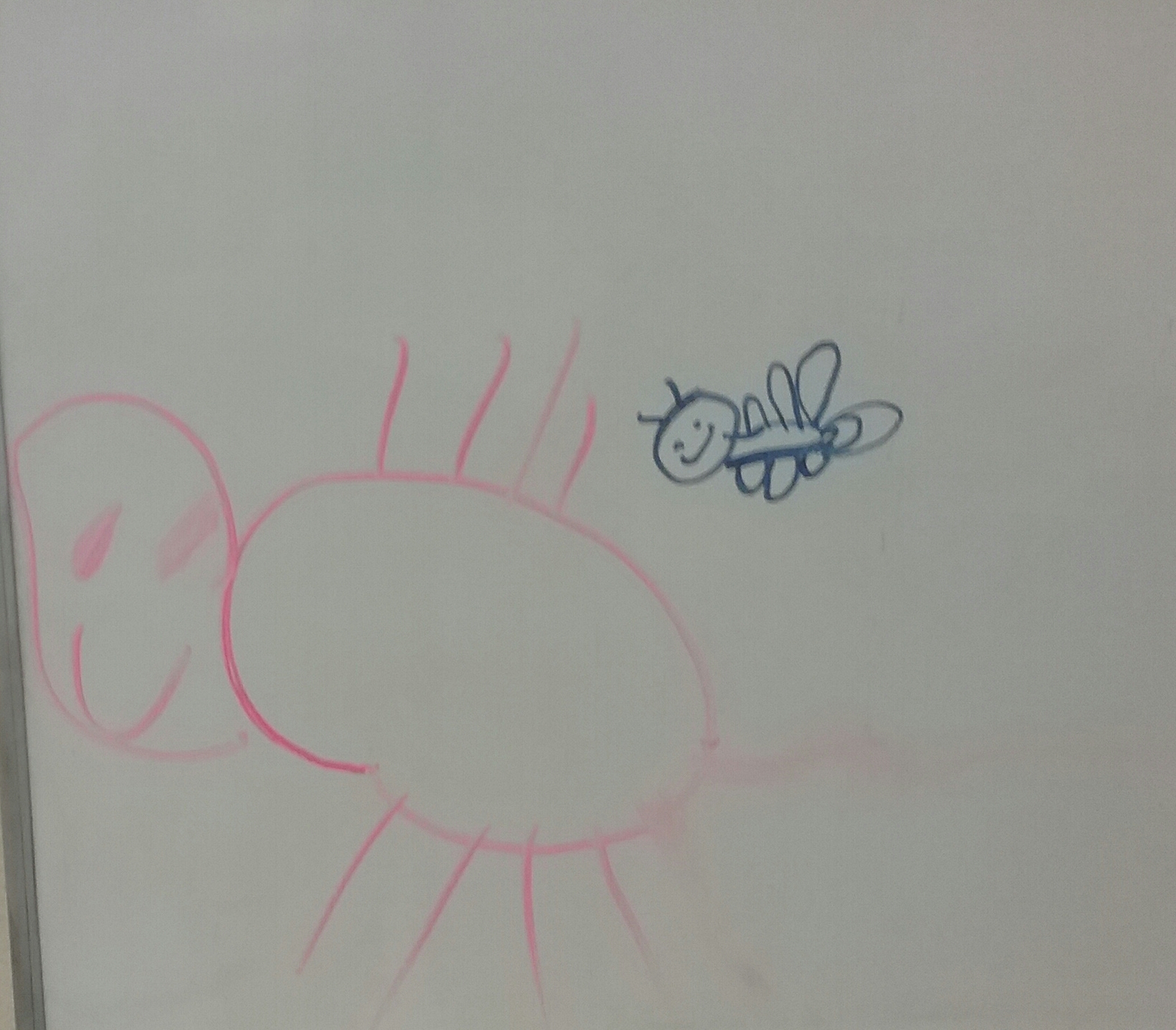
Art work created by the kindergarten students. An insect has a head, thorax, abdomen, six legs, and two antennae. An arachnid has a head and thorax, and eight legs. Can you tell which is the insect? The arachnid?
Handwriting: We practiced our cursive Bl, cat, dog.
Cultural Subjects: Your children can now count to ten in 17 languages (English, Latin, Sign Language, Spanish, German, French, Japanese, Greek, Arabic with the Lebanese Dialect, Italian, Russian, Romanian, Swedish, Tagolog, Hebrew, Korean, and Hungarian).
Next Week:
Lesson- Parts of Animals
Sight Words Of The Week- No lessons due to Christmas Show Practice.
Synonym Of The Week- No lessons due to Christmas Show Practice.
The next language will be- No lessons due to Christmas Show Practice.
Handwriting: We practiced our cursive letters cat, rag.
Cultural Subjects: Your children can now count to ten in 17 languages (English, Latin, Sign Language, Spanish, German, French, Japanese, Greek, Arabic with the Lebanese Dialect, Italian, Russian, Romanian, Swedish, Tagolog, Hebrew, Korean, and Hungarian).
Next Week:
Lesson- Parts of Plants, Insects, and Arachnids
Sight Words Of The Week- No words due to practicing for the Christmas Show
Synonym Of The Week- No synonyms due to practicing for the Christmas Show
The next language will be- No languages due to practicing for the Christmas Show
We read the story Stone Soup to get the children familiar with our own concoction of Stone Soup. I do thank all the parents that contributed and helped out. We told what we are thankful for and we watched a few Buckeye Football videos and learned about the tradition of Script Ohio for The Game. Go Buckeyes Beat xichigan
Buckeye Pride !!!!
Cultural Subjects: Your children can now count to ten in 13 languages (English, Latin, Sign Language, Spanish, German, French, Japanese, Greek, Arabic with the Lebanese Dialect, Italian, Russian, Romanian, Swedish, and Tagolog).
Peek In Our Classroom:
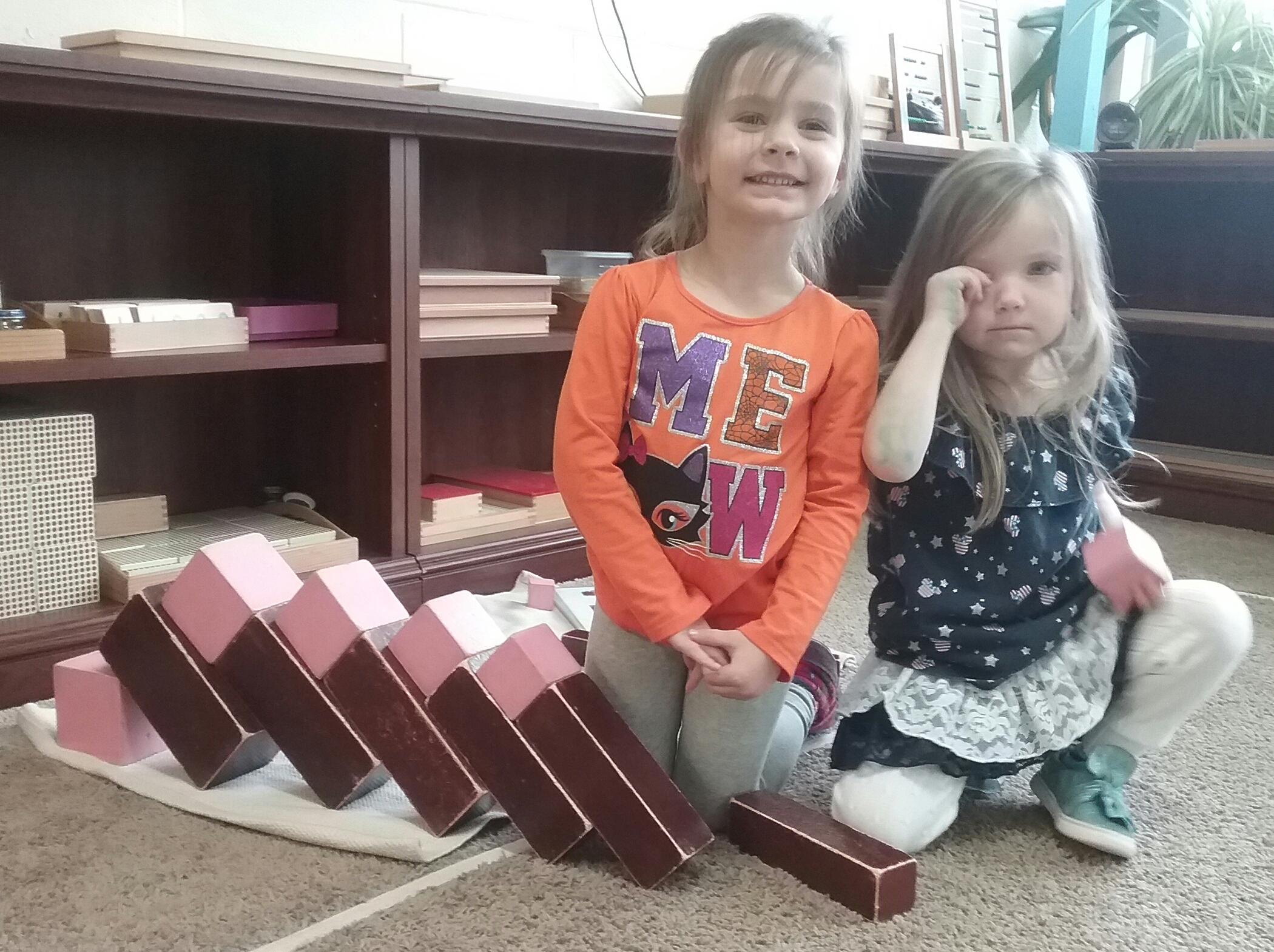
These girls are working with the Pink Tower and Brown Stairs. When they work with the material beyond the presentation it is called and extension.
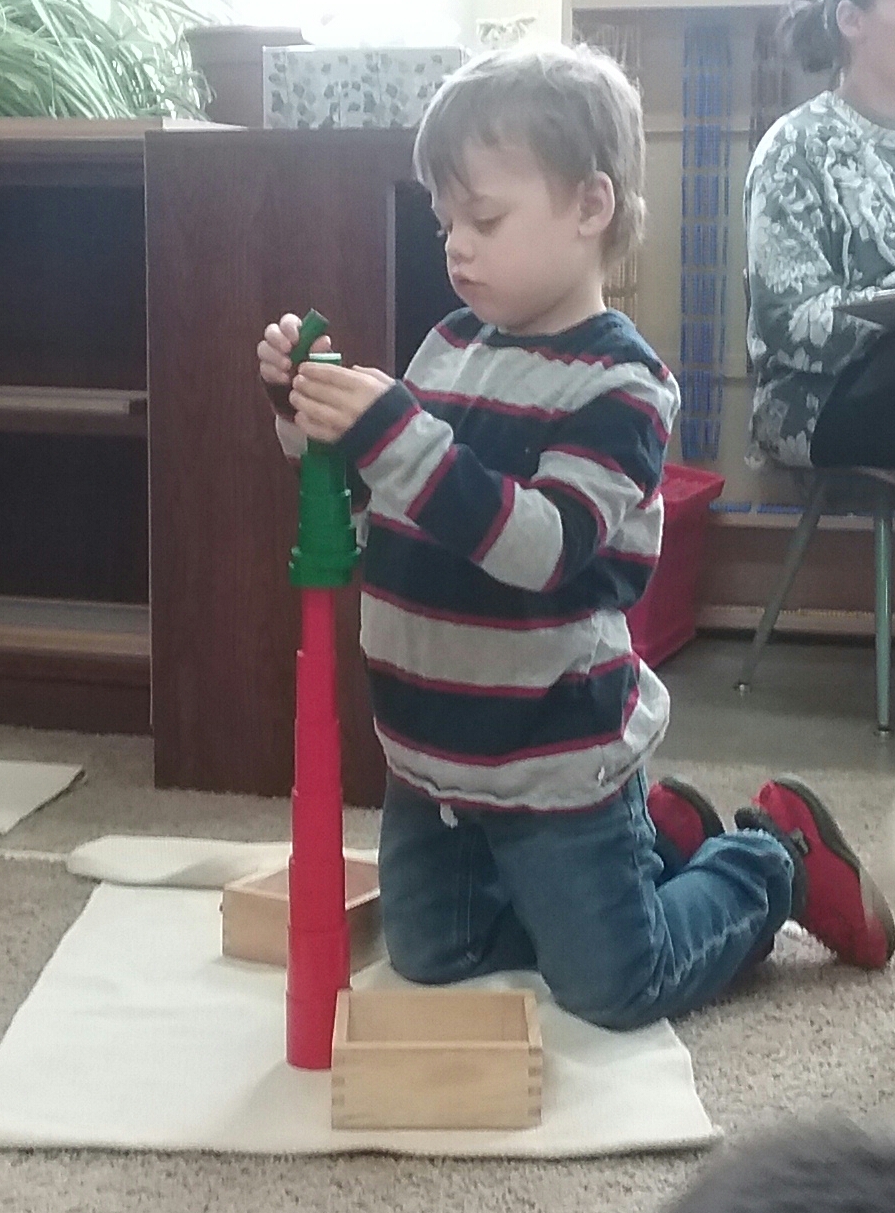
This boy is working with the Knobbless Cylinders. Again, he is working with this as an extension. {{{ Extensions are activities that are introduced after the initial presentation with a material, in order to encourage the child to re-visit the material and solidify the skills and/or concepts it’s designed to provide. }}}
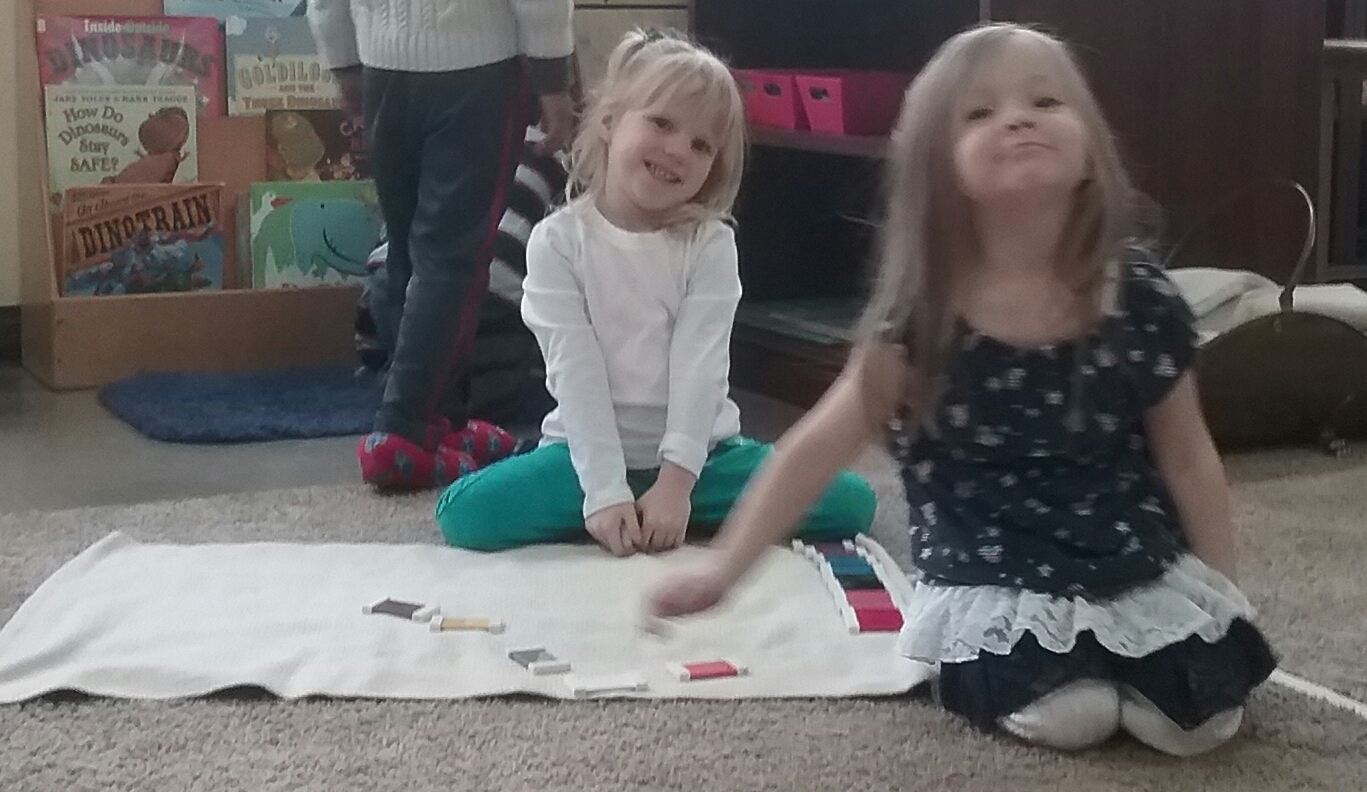
Another extension is being used with the Color Box. Instead of just matching them on the mat, they have half of the box in another part of the room where they have to walk, remember, and retrieve the color tablets.
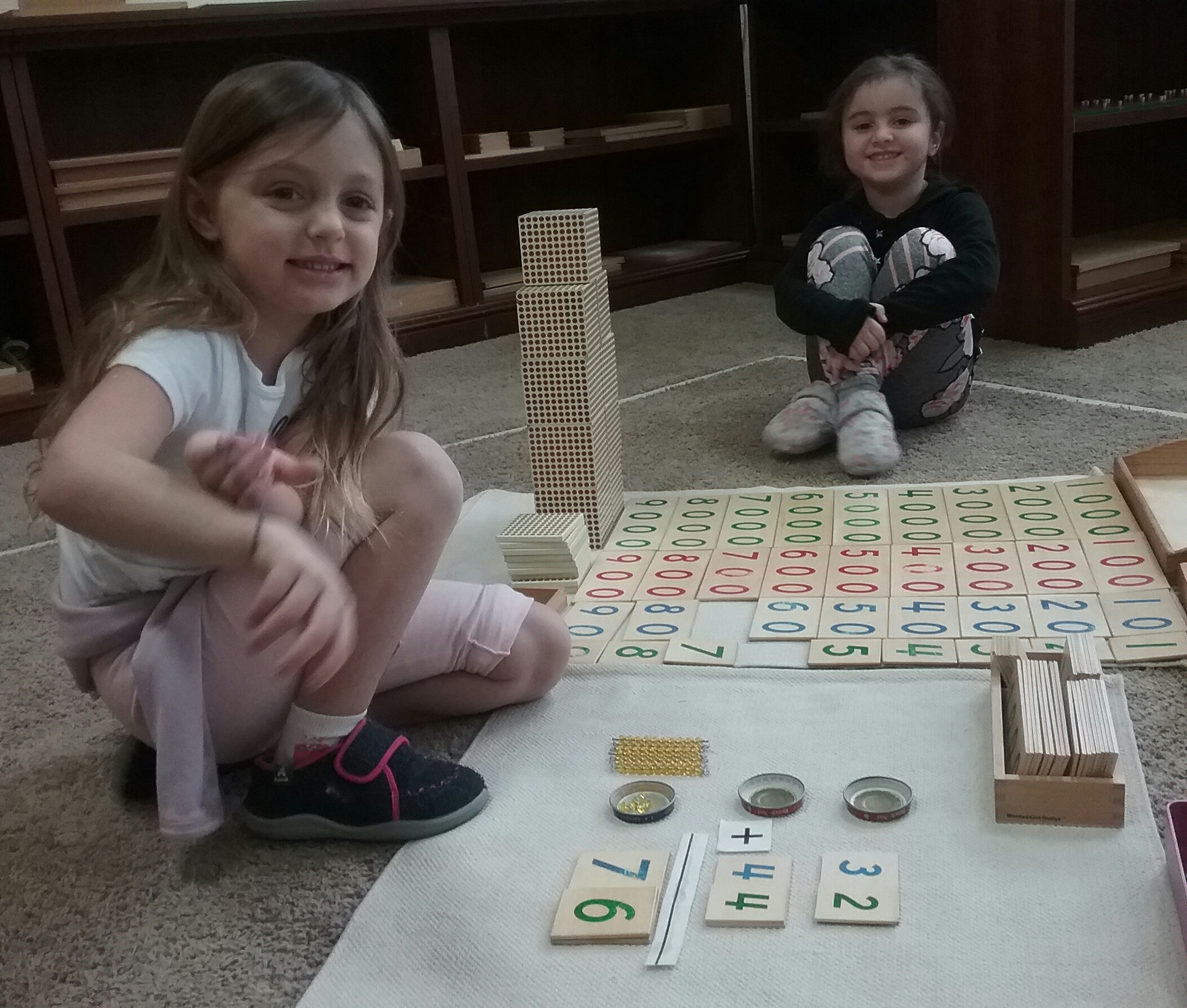
This student is working with the 9 Tray. She is using this work to do equations of addition. This work will enhance the correlation between quantity and symbol giving the student a concrete concept of math. Once again a small crowd is gathered to observe her working.
Next Week: Line Time- Winter Program Practice
Letter Of The Week- No letter of the week during Christmas Show Practice
Rhyming Word Of The Week- No Rhyming Word of the week during Christmas Show Practice
Next Language will be – No new language of the week during Christmas Show Practice
Snack will be brought to you by Lilliana M.
Upcoming Events: 12/12/2018 Wednesday— Practice for Winter Program at Cuyahoga Falls High School 6pm
12/14/2018 Friday– Winter Program at Cuyahoga Falls High School 6pm ((( All students to be picked up by 3:15 )))
12/21/2018– Pajama Day and Show and Tell
***** December 22, Saturday through January 6 Sunday Winter Break *****
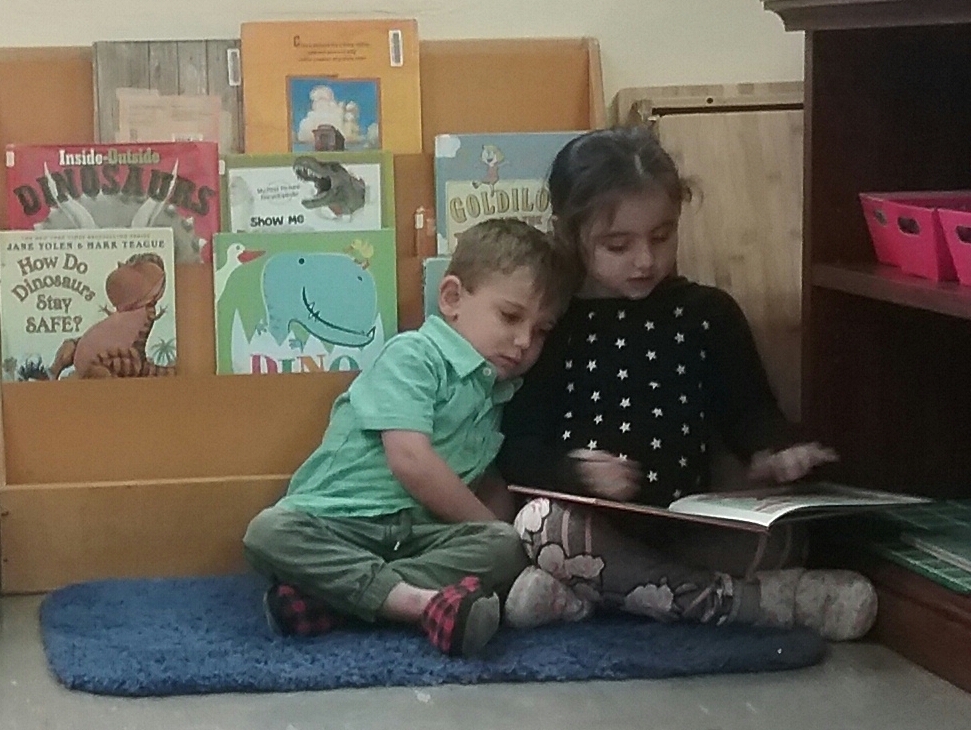
Cuddle time.
Wouldn’t you like to know what the look on his face means ????????
Lesson: Currency / Coins- After the month long lessons on telling time we broke into everyone’s favorite thing: MONEY. We learned about the different and variety of each coin (penny 1 cent, nickel 5 cents, dime 10 cents, quarter 25 cents, 50 cent piece and the dollar coins). After we identified the coin we did start to learn how to count the change.
Handwriting: We practiced our cursive letters ot,ut,ol,ul, bl.
Cultural Subjects: Your children can now count to ten in 16 languages (English, Latin, Sign Language, Spanish, German, French, Japanese, Greek, Arabic with the Lebanese Dialect, Italian, Russian, Romanian, Swedish, Tagolog, Hebrew, and Korean).
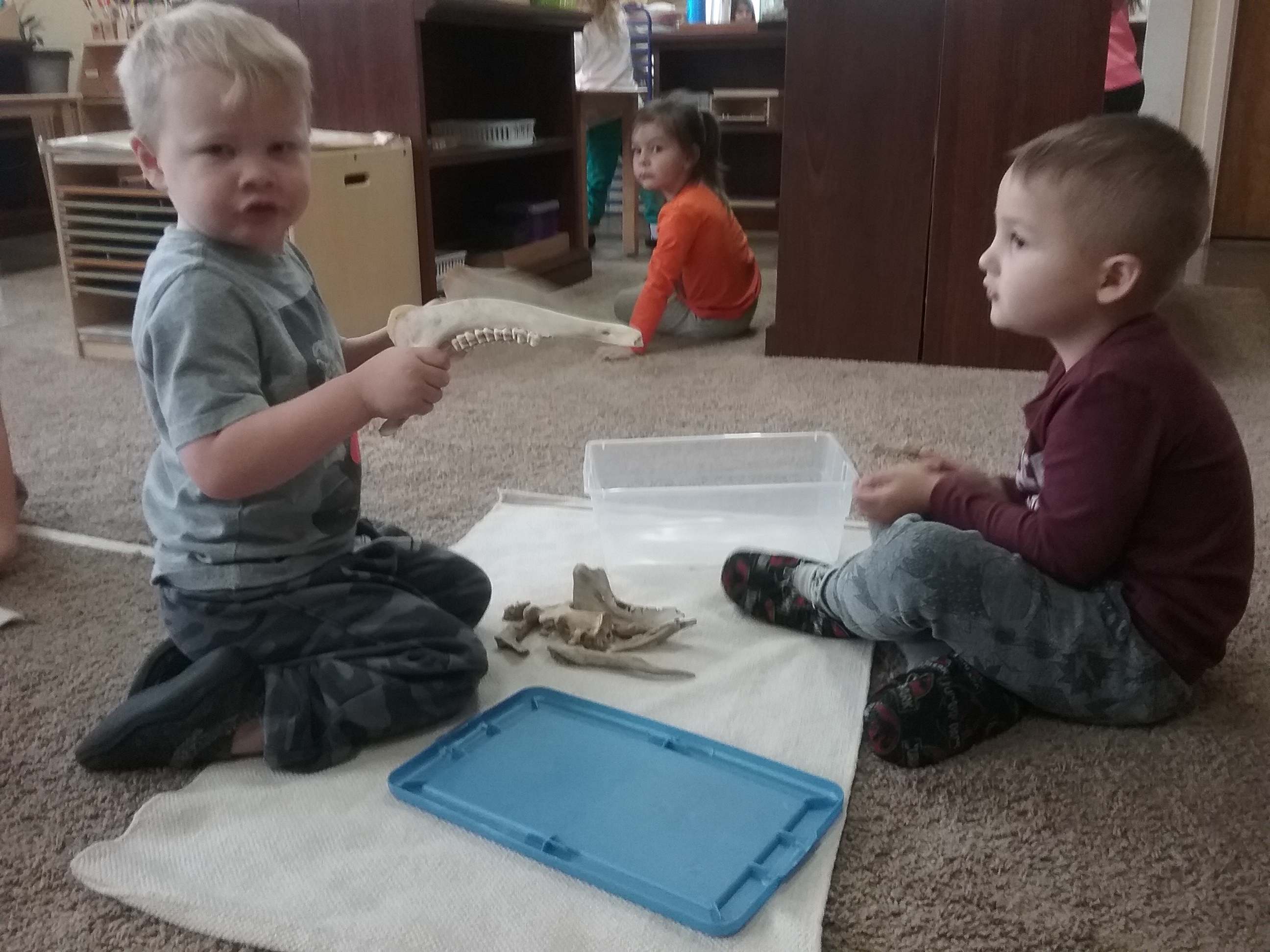
Line Time: Dinosaurs- We traveled back in time and discovered some fascinating things about certain dinosaurs. We learned that dinosaurs no longer exist and that they are extinct. We know dinosaurs exist because scientist found their bones or fossils. From these fossil we saw that some teeth were long and sharp to tear flesh from it’s prey which belonged to meat eaters or carnivores (T Rex). Some teeth were flat for grinding plants, leaves, and branches and belonged to plant eaters or herbivores (Brachiosauras).
Cultural Subjects: Your children can now count to ten in 13 languages (English, Latin, Sign Language, Spanish, German, French, Japanese, Greek, Arabic with the Lebanese Dialect, Italian, Russian, Romanian, Swedish, and Tagolog).
Peek In Our Classroom:
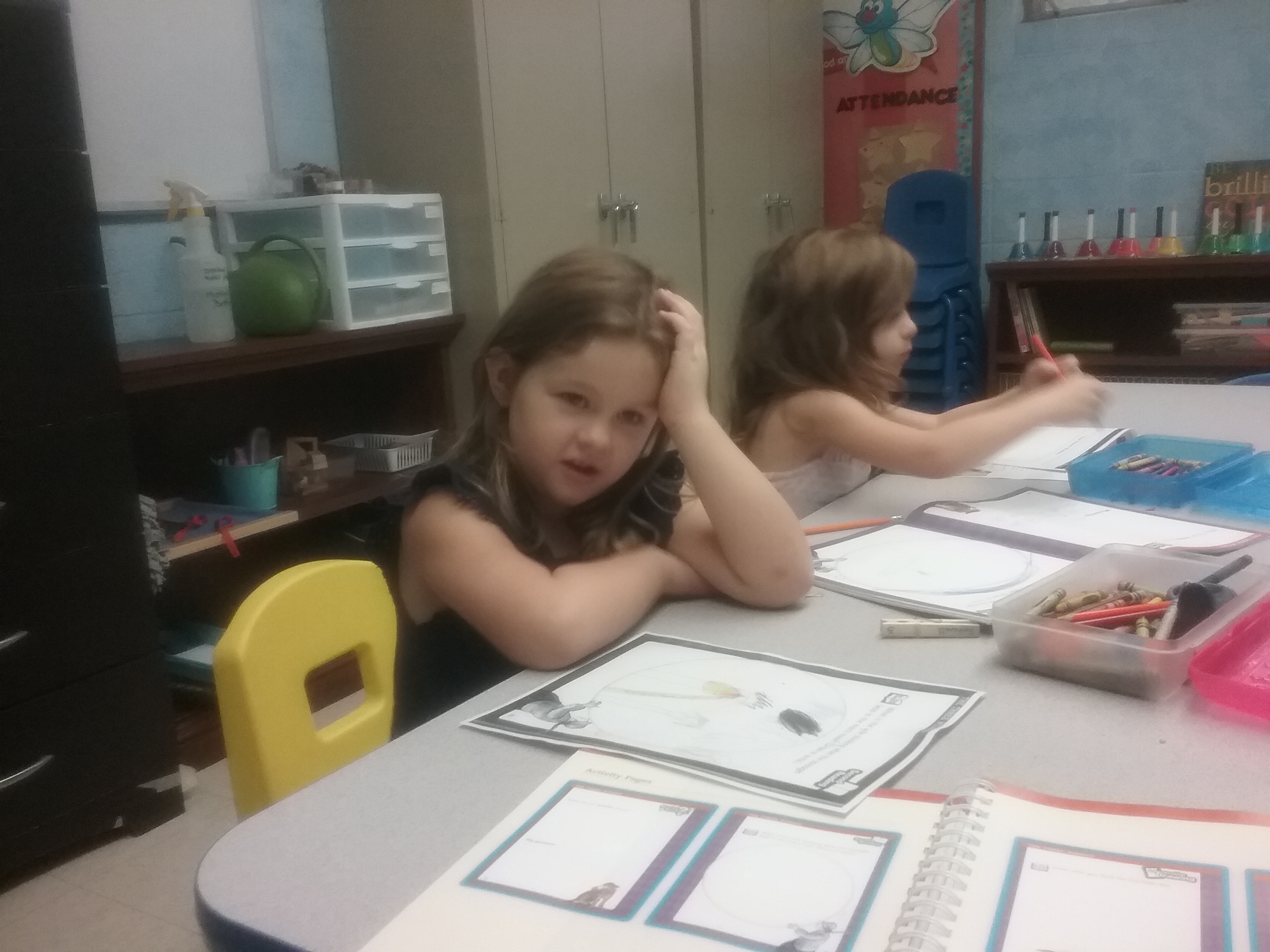
We have been following this student for about a month and keeping tabs on the status of her sensitive period (writing). She is still strongly interested in handwriting. This picture depicts her tracing the line time name tags. I’m wondering if she kept all of them to herself or did she give the traced name to the appropriate student.
This student is working on an animal puzzle (bird). This puzzle is designed to help the child easily understand and recognize the different parts of a bird and it is painted in vivid colors to catch the child’s attention. Not only does this work help the child recognize the parts of the bird but the knobs help reinforce his fine motor skills.
This child is working on the ever popular Binomial Cube. The Binomial Cube is one of those amazing Montessori materials! It introduces abstract math concept to children as young as 4 without them even knowing it! The early sensorial experience with the cube inspires them to work with this material. The material provides the all important bridge between concrete and abstract thinking. And so amazingly (because it’s logical) the child develops a much deeper understanding of the math. Or it is just fun to work with.
This boy has found what we call and extension. He combined three different sensorial material to come up this creation. He did figure out how to create to go from biggest to smallest.
Next Week: Line Time- Pilgrims/Thanksgiving
Letter Of The Week- M m
Rhyming Word Of The Week- bop
Next Language will be Hebrew
Snack will be brought to you by August
Upcoming Events: 11/20/2018 Tuesday— Harvest Party (Estimated Start Time 11:00am)
***11/21 Wednesday through 11/25 Sunday— NO SCHOOL***
11/24/2018 Saturday— THE GAME noon
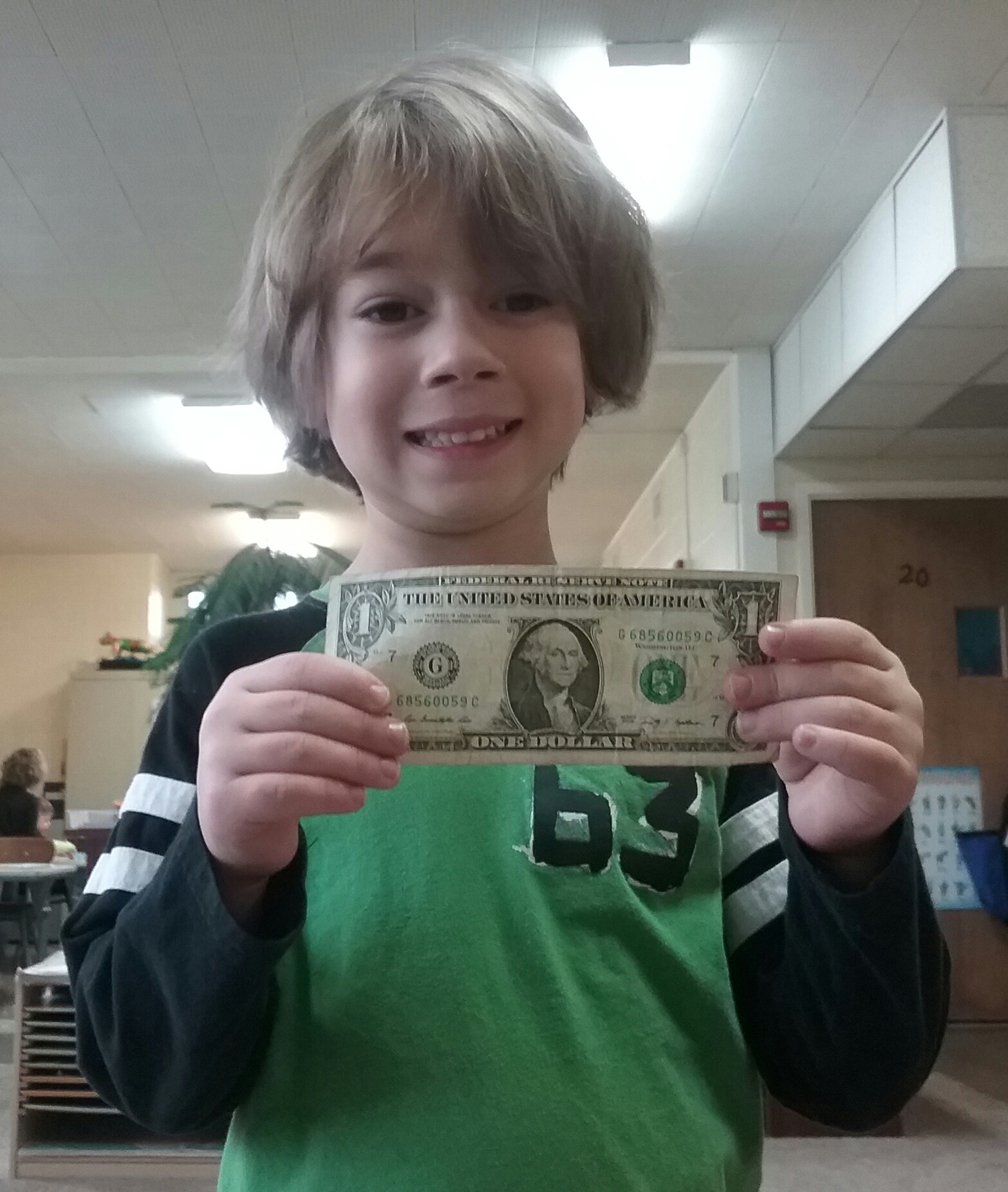
Let me explain what is happening in this picture. During line time for the days of the week I have the children put 7 with their fingers. 2 and 5, 4 and 3, Sign Language, and I’ll give the first person who can do 6 and 1 a dollar. This fine boy figured out how to do 1 and 6 in sign language and Mr. John is out a dollar.